Paraclostridium tenue Exhibits Antitumor Activity Through Generating Antitumor Metabolites and Modulating Gut Microbiota

 , , ,
, , ,
Highlights
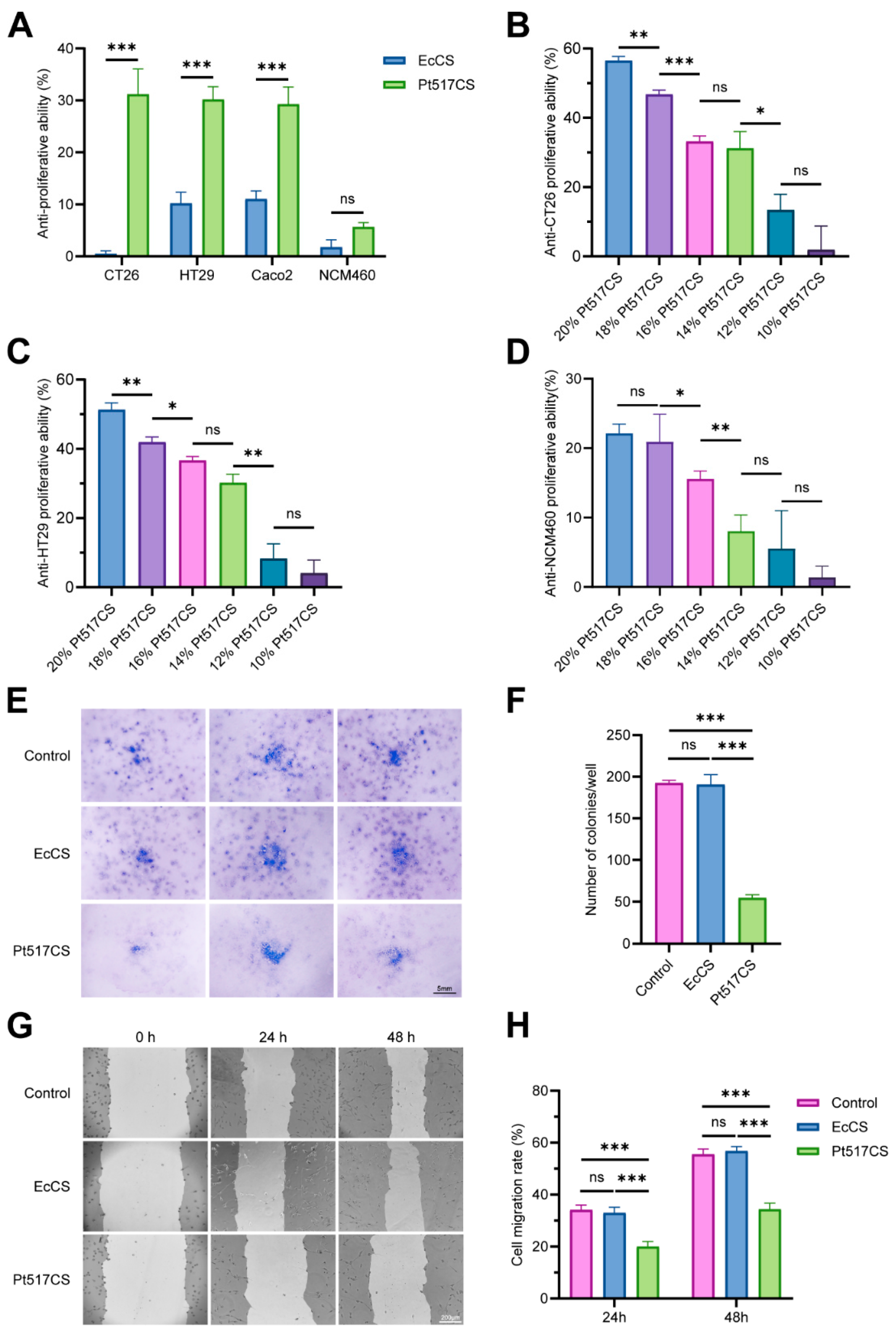
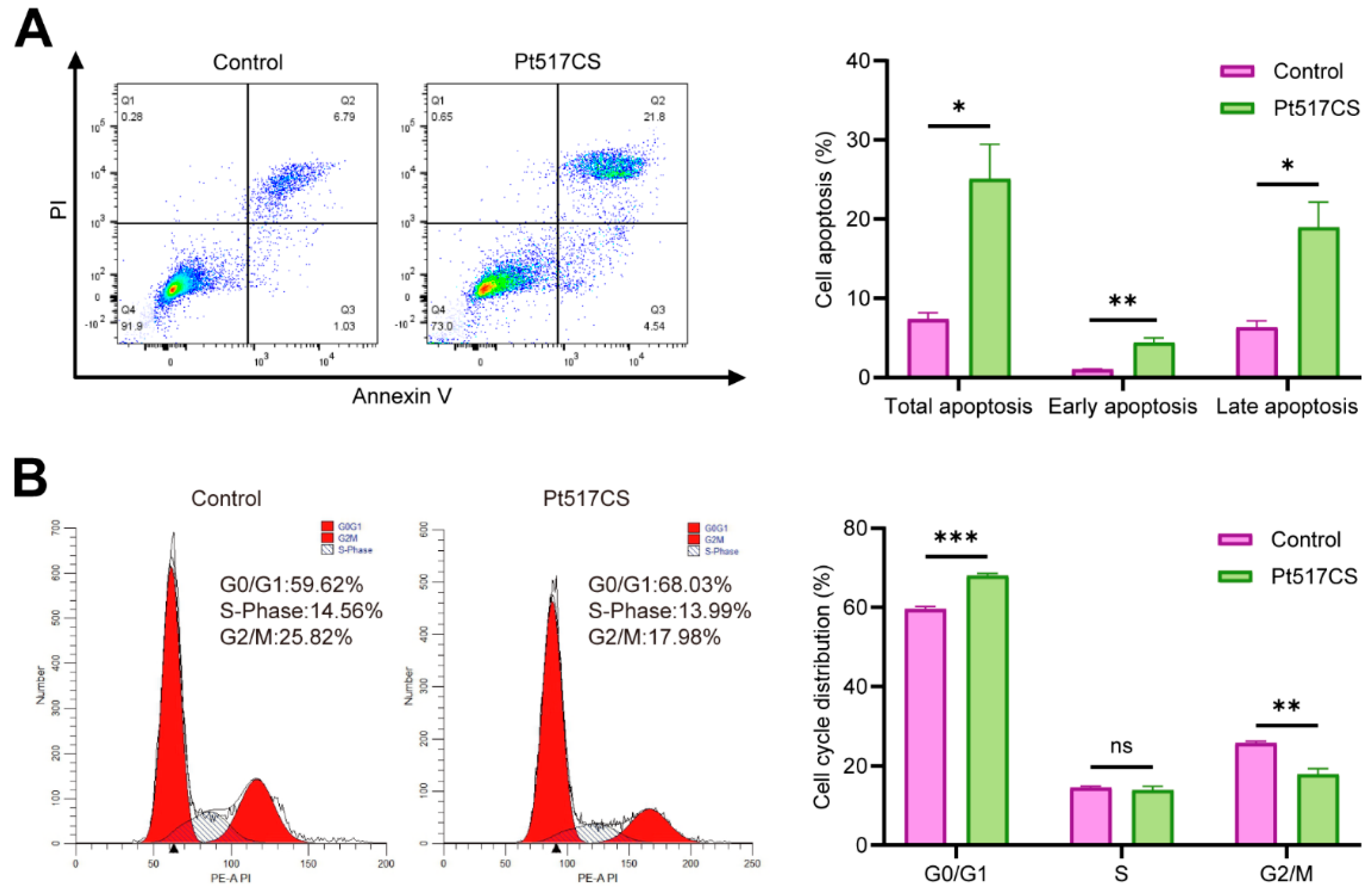
- Paraclostridium tenue strain Pt517 suppresses the proliferation and promotes the apoptosis of colorectal cancer cells in vitro.
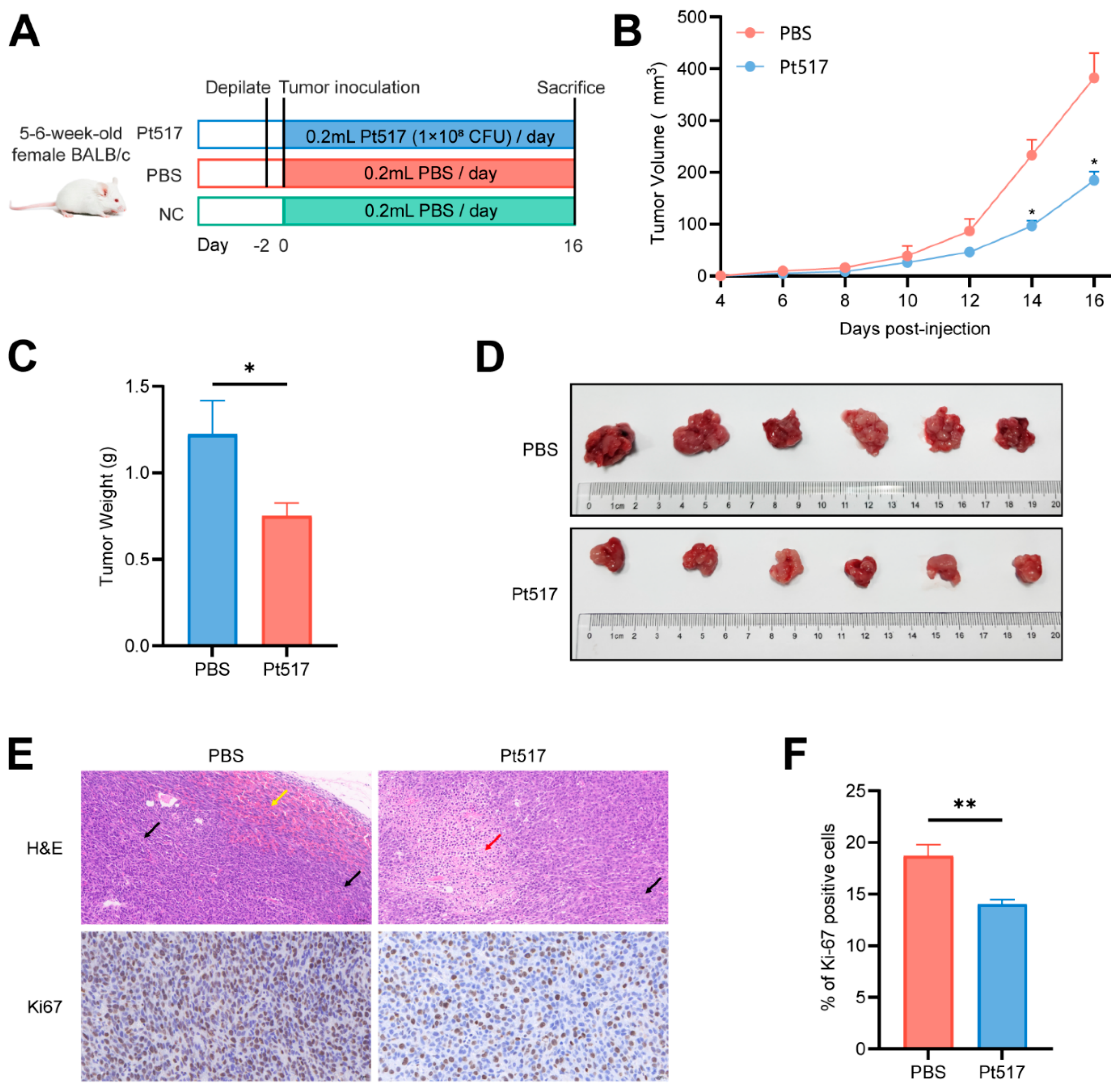
- Oral administration of Pt517 significantly suppresses tumor growth in a CT26 syngeneic mouse model.
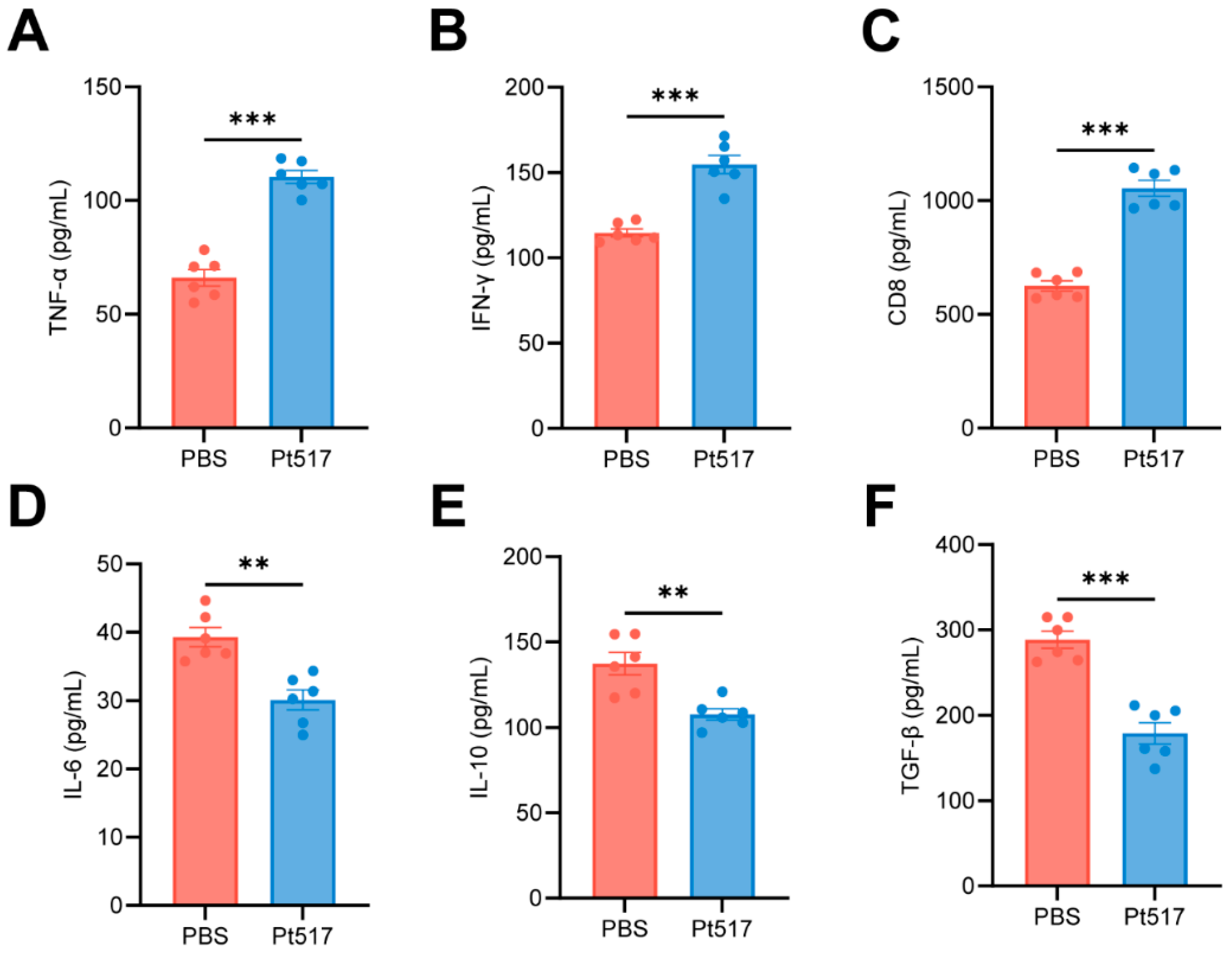
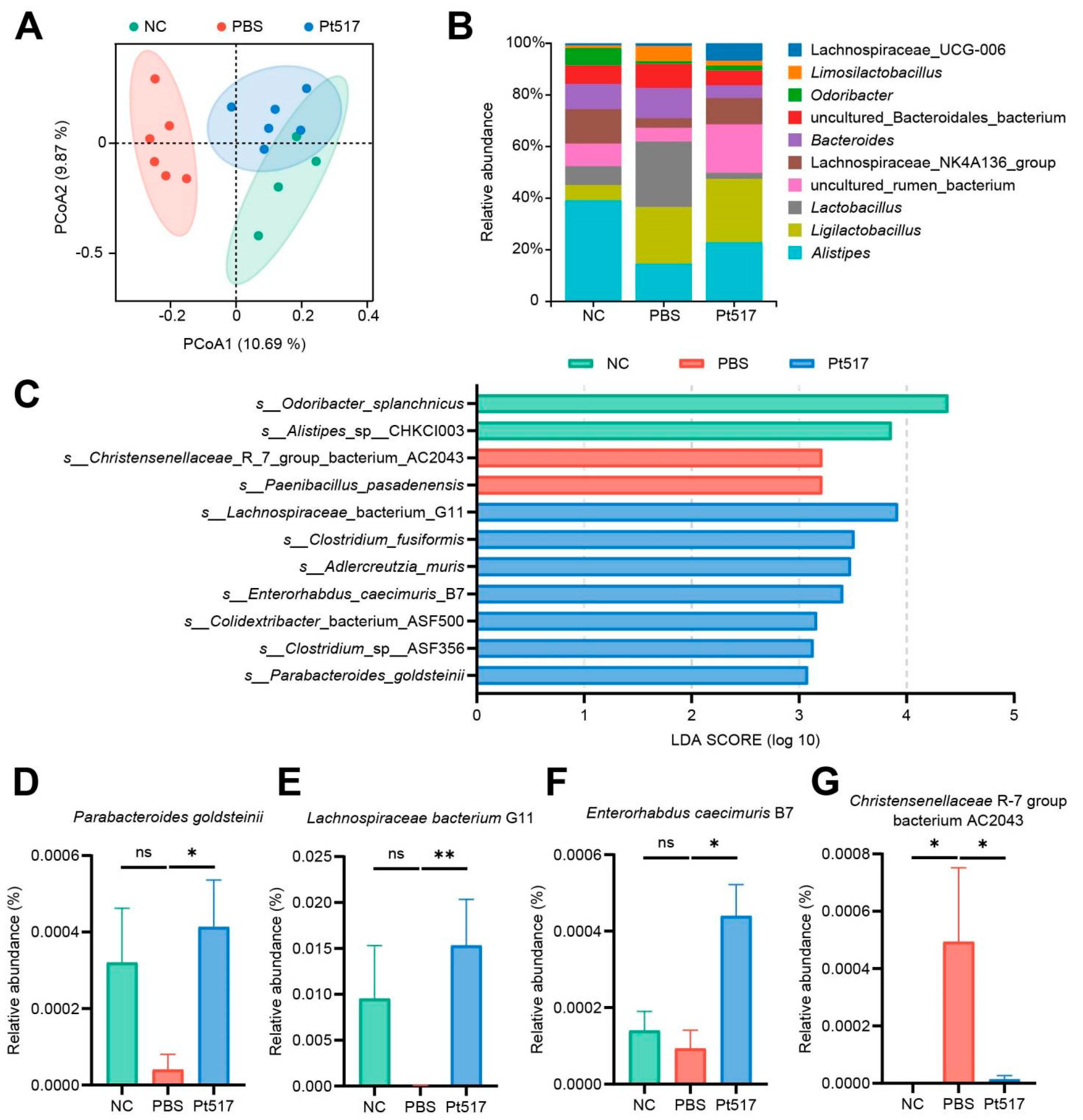
- The anti-CRC effect of Pt517 is associated with modulation of tumor immunity and remodeling of the gut microbiota.
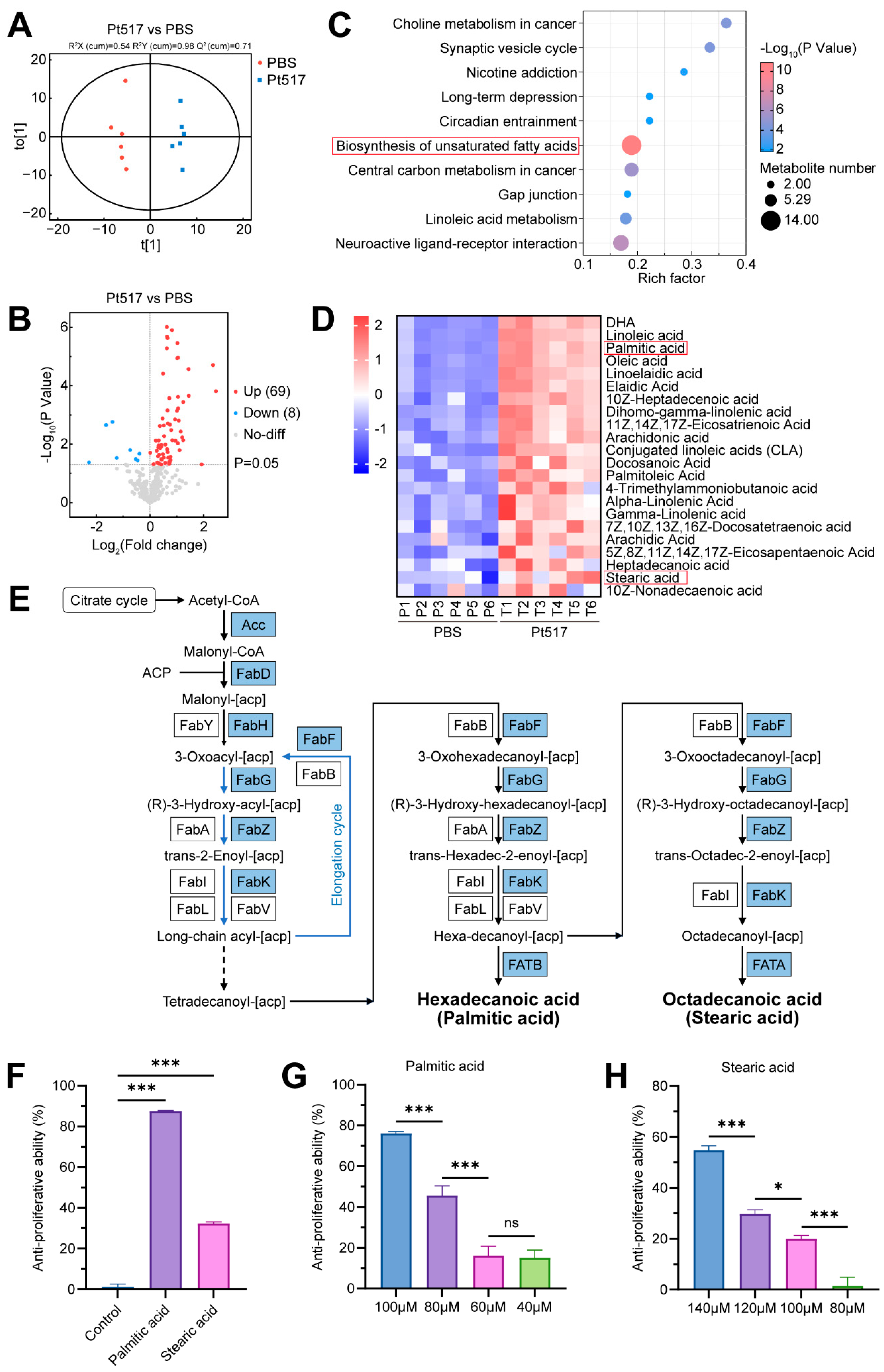
- The antitumor effects of Pt517 may be mediated via the secretion of long-chain fatty acids, including stearic acid and palmitic acid.
Abstract
1. Introduction
2. Materials and Methods
2.1. Bacterial Strains and Culture
2.2. Preparation of Bacterial Culture Supernatant
2.3. Cell Lines and Cell Culture
2.4. Cell Viability Assay
2.5. Colony Formation Assay
2.6. Cell Migration Assay/Wound Healing Assay
2.7. Apoptosis Assay and Cell Cycle Analysis
2.8. Animal Experimental Design
2.9. Histological Staining
2.10. Cytokine Assay
2.11. 16S rRNA Gene Sequence Analysis
2.12. Metabolome Detection of Mouse Serum
2.13. Genome Sequencing, Assembly, and Annotation of Pt517
2.14. Statistical Analysis
3. Results
3.1. Cytotoxic Effects of P. tenue on Colorectal Cancer Cells
3.2. Effect of Pt517CS on Apoptosis and Cell Cycle Arrest in CT26 Cells
3.3. P. tenue Suppresses Tumor Growth in the CT26 Syngeneic Mouse Model
3.4. P. tenue Alters the Expression of Immune Factors Within Tumors in the CT26 Syngeneic Mouse Model
3.5. P. tenue Modulates the Gut Microbiota of the CT26 Syngeneic Mouse Model
3.6. P. tenue Elevates Metabolites with Antitumor Effects in the Serum of the CT26 Syngeneic Mouse Model
4. Discussion
Supplementary Materials
Author Contributions
Funding
Institutional Review Board Statement
Informed Consent Statement
Data Availability Statement
Conflicts of Interest
Abbreviations
| CFU | colony-forming units |
| CLA | conjugated linoleic acid |
| CRC | colorectal cancer |
| EcCS | the culture supernatant of E. coli MG1655 |
| ELISA | enzyme-linked immunosorbent assay |
| H&E | hematoxylin-eosin |
| LCFAs | long-chain fatty acids |
| LEfSe | linear discriminant analysis effect size |
| NCBI | National Center for Biotechnology Information |
| OPLS-DA | orthogonal partial least-squares discriminant analysis |
| Pt517CS | the culture supernatant of P. tenue Pt517 |
| RCM | reinforced clostridial medium |
| SCFAs | short-chain fatty acids |
| VIP | variable importance in the projection |
References
- Sung, H.; Ferlay, J.; Siegel, R.L.; Laversanne, M.; Soerjomataram, I.; Jemal, A.; Bray, F. Global Cancer Statistics 2020: GLOBOCAN Estimates of Incidence and Mortality Worldwide for 36 Cancers in 185 Countries. CA A Cancer J. Clin. 2021, 71, 209–249. [Google Scholar] [CrossRef] [Scilit]
- Arnold, M.; Sierra, M.S.; Laversanne, M.; Soerjomataram, I.; Jemal, A.; Bray, F. Global Patterns and Trends in Colorectal Cancer Incidence and Mortality. Gut 2017, 66, 683–691. [Google Scholar] [CrossRef] [Scilit]
- Karsa, L.V.; Lignini, T.A.; Patnick, J.; Lambert, R.; Sauvaget, C. The Dimensions of the CRC Problem. Best Pract. Res. Clin. Gastroenterol. 2010, 24, 381–396. [Google Scholar] [CrossRef] [Scilit]
- Morgan, E.; Arnold, M.; Gini, A.; Lorenzoni, V.; Cabasag, C.J.; Laversanne, M.; Vignat, J.; Ferlay, J.; Murphy, N.; Bray, F. Global Burden of Colorectal Cancer in 2020 and 2040: Incidence and Mortality Estimates from GLOBOCAN. Gut 2023, 72, 338–344. [Google Scholar] [CrossRef] [Scilit] [PubMed]
- Wong, C.C.; Yu, J. Gut Microbiota in Colorectal Cancer Development and Therapy. Nat. Rev. Clin. Oncol. 2023, 20, 429–452. [Google Scholar] [CrossRef] [Scilit] [PubMed]
- Cheng, Y.; Ling, Z.; Li, L. The Intestinal Microbiota and Colorectal Cancer. Front. Immunol. 2020, 11, 615056. [Google Scholar] [CrossRef] [Scilit]
- Li, R.; Shen, J.; Xu, Y. Fusobacterium nucleatum and Colorectal Cancer. Infect. Drug Resist. 2022, 15, 1115–1120. [Google Scholar] [CrossRef] [Scilit] [PubMed]
- Ghorbani, E.; Avan, A.; Ryzhikov, M.; Ferns, G.; Khazaei, M.; Soleimanpour, S. Role of Lactobacillus Strains in the Management of Colorectal Cancer: An Overview of Recent Advances. Nutrition 2022, 103–104, 111828. [Google Scholar] [CrossRef] [Scilit]
- Shi, L.; Sheng, J.; Chen, G.; Zhu, P.; Shi, C.; Li, B.; Park, C.; Wang, J.; Zhang, B.; Liu, Z.; et al. Combining IL-2-Based Immunotherapy with Commensal Probiotics Produces Enhanced Antitumor Immune Response and Tumor Clearance. J. Immunother. Cancer 2020, 8, e000973. [Google Scholar] [CrossRef] [Scilit]
- Ryu, S.W.; Kim, J.-S.; Oh, B.S.; Choi, W.J.; Yu, S.Y.; Bak, J.E.; Park, S.-H.; Kang, S.W.; Lee, J.; Jung, W.Y.; et al. Gut Microbiota Eubacterium callanderi Exerts Anti-Colorectal Cancer Activity. Microbiol. Spectr. 2022, 10, e02531-22. [Google Scholar] [CrossRef] [Scilit]
- Chattopadhyay, I.; Dhar, R.; Pethusamy, K.; Seethy, A.; Srivastava, T.; Sah, R.; Sharma, J.; Karmakar, S. Exploring the Role of Gut Microbiome in Colon Cancer. Appl. Biochem. Biotechnol. 2021, 193, 1780–1799. [Google Scholar] [CrossRef] [Scilit]
- Pellegrino, A.; Coppola, G.; Santopaolo, F.; Gasbarrini, A.; Ponziani, F.R. Role of Akkermansia in Human Diseases: From Causation to Therapeutic Properties. Nutrients 2023, 15, 1815. [Google Scholar] [CrossRef] [Scilit] [PubMed]
- Dikeocha, I.J.; Al-Kabsi, A.M.; Chiu, H.-T.; Alshawsh, M.A. Faecalibacterium prausnitzii Ameliorates Colorectal Tumorigenesis and Suppresses Proliferation of HCT116 Colorectal Cancer Cells. Biomedicines 2022, 10, 1128. [Google Scholar] [CrossRef] [Scilit] [PubMed]
- Su, A.C.Y.; Ding, X.; Lau, H.C.H.; Kang, X.; Li, Q.; Wang, X.; Liu, Y.; Jiang, L.; Lu, Y.; Liu, W.; et al. Lactococcus lactis HkyuLL 10 Suppresses Colorectal Tumourigenesis and Restores Gut Microbiota through Its Generated Alpha-Mannosidase. Gut 2024, 73, 1478–1488. [Google Scholar] [CrossRef] [Scilit]
- Hosseini, S.S.; Goudarzi, H.; Ghalavand, Z.; Hajikhani, B.; Rafeieiatani, Z.; Hakemi-Vala, M. Anti-Proliferative Effects of Cell Wall, Cytoplasmic Extract of Lactococcus lactis and Nisin through down-Regulation of Cyclin D1 on SW480 Colorectal Cancer Cell Line. Iran. J. Microbiol. 2020, 12, 424. [Google Scholar] [CrossRef] [Scilit]
- Rivai, M.I.; Lusikooy, R.E.; Putra, A.E.; Elliyanti, A. Effects of Lactococcus lactis on Colorectal Cancer in Various Terms: A Narrative Review. Ann. Med. Surg. 2024, 86, 3503–3507. [Google Scholar] [CrossRef] [Scilit]
- Shang, F.; Jiang, X.; Wang, H.; Guo, S.; Kang, S.; Xu, B.; Wang, X.; Chen, S.; Li, N.; Liu, B.; et al. Bifidobacterium longum Suppresses Colorectal Cancer through the Modulation of Intestinal Microbes and Immune Function. Front. Microbiol. 2024, 15, 1327464. [Google Scholar] [CrossRef] [Scilit] [PubMed]
- Fahmy, C.A.; Gamal-Eldeen, A.M.; El-Hussieny, E.A.; Raafat, B.M.; Mehanna, N.S.; Talaat, R.M.; Shaaban, M.T. Bifidobacterium longum Suppresses Murine Colorectal Cancer through the Modulation of oncomiRs and Tumor Suppressor miRNAs. Nutr. Cancer 2019, 71, 688–700. [Google Scholar] [CrossRef] [Scilit]
- Lu, Y.; Lan, R.; Fan, Q.; Tang, H.; Hu, D.; Zhang, S.; Lin, X.; Wang, R.; Zhao, R.; Sun, H.; et al. Eubacterium Limosum Modulates Tumor Microenvironments and Produces Antitumor Metabolites Active against Colorectal Cancer. ISME J. 2025, 19, wraf130. [Google Scholar] [CrossRef] [Scilit]
- Bello, S.; McQuay, S.; Rudra, B.; Gupta, R.S. Robust Demarcation of the Family Peptostreptococcaceae and Its Main Genera Based on Phylogenomic Studies and Taxon-Specific Molecular Markers. Int. J. Syst. Evol. Microbiol. 2024, 74, 006247. [Google Scholar] [CrossRef] [Scilit]
- Shu, Y.; Upara, C.; Ding, Q.; Zhu, M.; Zeng, E.; Banas, J.A.; Hong, L. Spent Culture Supernatant of Streptococcus gordonii Mitigates Inflammation of Human Periodontal Cells and Inhibits Proliferation of Pathogenic Oral Microbes. J. Periodontol. 2023, 94, 575–585. [Google Scholar] [CrossRef] [Scilit]
- Shang, F.; Jiang, X.; Wang, H.; Chen, S.; Wang, X.; Liu, Y.; Guo, S.; Li, D.; Yu, W.; Zhao, Z.; et al. The Inhibitory Effects of Probiotics on Colon Cancer Cells: In Vitro and in Vivo Studies. J. Gastrointest. Oncol. 2020, 11, 1224. [Google Scholar] [CrossRef] [Scilit] [PubMed]
- Pellizzaro, C.; Coradini, D.; Daidone, M.G. Modulation of Angiogenesis-Related Proteins Synthesis by Sodium Butyrate in Colon Cancer Cell Line HT29. Carcinogenesis 2002, 23, 735–740. [Google Scholar] [CrossRef] [Scilit] [PubMed]
- Wei, S.-C.; Rosenberg, I.M.; Cao, Z.; Huett, A.S.; Xavier, R.J.; Podolsky, D.K. Tribbles 2 (Trib2) Is a Novel Regulator of Toll-like Receptor 5 Signaling. Inflamm. Bowel Dis. 2012, 18, 877–888. [Google Scholar] [CrossRef] [Scilit]
- Li, G.; Wu, Q.; Wang, C.; Deng, P.; Li, J.; Zhai, Z.; Li, Y. Curcumin Reverses Cognitive Deficits through Promoting Neurogenesis and Synapse Plasticity via the Upregulation of PSD95 and BDNF in Mice. Sci. Rep. 2025, 15, 1135. [Google Scholar] [CrossRef] [Scilit]
- Manjunathan, J.; Shyamalagowri, S.; Kamaraj, M.; Thyagarajan, S.P.; Kaviyarasan, V.; Brindhadevi, K. In Vitro Evaluation of Growth Reticence and Anticancer Potential of 5α,8α-Epidioxy-24ᶓ-Methylcholesta-6,22-Dien-3β-Ol and Ergosta-5,7,22-Trien-3β-Ol Bioactive Isolated from an Edible Mushroom Lentinus tuberregium (Fr.). Environ. Res. 2023, 216, 114765. [Google Scholar] [CrossRef] [Scilit]
- Gao, G.; Shen, S.; Zhang, T.; Zhang, J.; Huang, S.; Sun, Z.; Zhang, H. Lacticaseibacillus rhamnosus Probio-M9 Enhanced the Antitumor Response to Anti-PD-1 Therapy by Modulating Intestinal Metabolites. eBioMedicine 2023, 91, 104533. [Google Scholar] [CrossRef] [Scilit]
- Ferrer, M.; Mourikis, N.; Davidson, E.E.; Kleeman, S.O.; Zaccaria, M.; Habel, J.; Rubino, R.; Gao, Q.; Flint, T.R.; Young, L.; et al. Ketogenic Diet Promotes Tumor Ferroptosis but Induces Relative Corticosterone Deficiency That Accelerates Cachexia. Cell Metab. 2023, 35, 1147–1162.e7. [Google Scholar] [CrossRef] [Scilit]
- Zhao, M.; Xia, P.; Zhang, X.; He, H.; Hou, T. Selenium-Containing Soybean Peptides Ameliorate Intestinal Inflammation and Modulate Gut Microbiota Dysbacteriosis in DSS-Induced Ulcerative Colitis Mice. Food Funct. 2023, 14, 6187–6199. [Google Scholar] [CrossRef] [Scilit] [PubMed]
- Li, W.; Wang, Z.; Cao, J.; Dong, Y.; Chen, Y. Melatonin Improves the Homeostasis of Mice Gut Microbiota Rhythm Caused by Sleep Restriction. Microbes Infect. 2023, 25, 105121. [Google Scholar] [CrossRef] [Scilit]
- Li, J.-X.; Li, R.-Z.; Sun, A.; Zhou, H.; Neher, E.; Yang, J.-S.; Huang, J.-M.; Zhang, Y.-Z.; Jiang, Z.-B.; Liang, T.-L.; et al. Metabolomics and Integrated Network Pharmacology Analysis Reveal Tricin as the Active Anti-Cancer Component of Weijing Decoction by Suppression of PRKCA and Sphingolipid Signaling. Pharmacol. Res. 2021, 171, 105574. [Google Scholar] [CrossRef] [Scilit]
- Zhou, J.; Qian, M.; Li, C.; Zhou, W.; Yao, L.; Chen, Y.; Abliz, Z. Metabolomics and Integrated Network Pharmacology Analysis Reveal That Ginkgolides Act as Potential Active Anticancer Components by Regulating One-Carbon Metabolism. J. Ethnopharmacol. 2022, 298, 115609. [Google Scholar] [CrossRef] [Scilit]
- Elizondo-Reyna, E.; Martínez-Montoya, H.; Tamayo-Ordoñez, Y.; Cruz-Hernández, M.A.; Carrillo-Tripp, M.; Tamayo-Ordoñez, M.C.; Sosa-Santillán, G.D.J.; Rodríguez-de La Garza, J.A.; Hernández-Guzmán, M.; Bocanegra-García, V.; et al. Insights from a Genome-Wide Study of Pantoea Agglomerans UADEC20: A Promising Strain for Phosphate Solubilization and Exopolysaccharides Production. Curr. Issues Mol. Biol. 2025, 47, 56. [Google Scholar] [CrossRef] [Scilit] [PubMed]
- Chen, S.; Zhou, Y.; Chen, Y.; Gu, J. Fastp: An Ultra-Fast All-in-One FASTQ Preprocessor. Bioinformatics 2018, 34, i884–i890. [Google Scholar] [CrossRef] [Scilit]
- Hyatt, D.; Chen, G.-L.; Locascio, P.F.; Land, M.L.; Larimer, F.W.; Hauser, L.J. Prodigal: Prokaryotic Gene Recognition and Translation Initiation Site Identification. BMC Bioinform. 2010, 11, 119. [Google Scholar] [CrossRef] [Scilit] [PubMed]
- Besemer, J.; Borodovsky, M. GeneMark: Web Software for Gene Finding in Prokaryotes, Eukaryotes and Viruses. Nucleic Acids Res. 2005, 33, W451–W454. [Google Scholar] [CrossRef] [Scilit]
- Kanehisa, M.; Goto, S. KEGG: Kyoto Encyclopedia of Genes and Genomes. Nucleic Acids Res. 2000, 28, 27–30. [Google Scholar] [CrossRef] [Scilit] [PubMed]
- McGinnis, S.; Madden, T.L. BLAST: At the Core of a Powerful and Diverse Set of Sequence Analysis Tools. Nucleic Acids Res. 2004, 32, W20–W25. [Google Scholar] [CrossRef] [Scilit]
- Rock, C.O.; Cronan, J.E. Escherichia coli as a Model for the Regulation of Dissociable (Type II) Fatty Acid Biosynthesis. Biochim. Biophys. Acta 1996, 1302, 1–16. [Google Scholar] [CrossRef] [Scilit]
- Marrakchi, H.; Choi, K.-H.; Rock, C.O. A New Mechanism for Anaerobic Unsaturated Fatty Acid Formation in Streptococcus pneumoniae. J. Biol. Chem. 2002, 277, 44809–44816. [Google Scholar] [CrossRef] [Scilit]
- Rahbar Saadat, Y.; Yari Khosroushahi, A.; Movassaghpour, A.A.; Talebi, M.; Pourghassem Gargari, B. Modulatory Role of Exopolysaccharides of Kluyveromyces marxianus and Pichia kudriavzevii as Probiotic Yeasts from Dairy Products in Human Colon Cancer Cells. J. Funct. Foods 2020, 64, 103675. [Google Scholar] [CrossRef] [Scilit]
- Saber, A.; Alipour, B.; Faghfoori, Z.; Mousavi Jam, A.; Yari Khosroushahi, A. Secretion Metabolites of Probiotic Yeast, Pichia kudriavzevii AS-12, Induces Apoptosis Pathways in Human Colorectal Cancer Cell Lines. Nutr. Res. 2017, 41, 36–46. [Google Scholar] [CrossRef] [Scilit] [PubMed]
- Li, N.; Niu, L.; Liu, Y.; Wang, Y.; Su, X.; Xu, C.; Sun, Z.; Guo, H.; Gong, J.; Shen, S. Taking SCFAs Produced by Lactobacillus reuteri Orally Reshapes Gut Microbiota and Elicits Antitumor Responses. J. Nanobiotechnol. 2024, 22, 241. [Google Scholar] [CrossRef] [Scilit] [PubMed]
- Sugimura, N.; Li, Q.; Chu, E.S.H.; Lau, H.C.H.; Fong, W.; Liu, W.; Liang, C.; Nakatsu, G.; Su, A.C.Y.; Coker, O.O.; et al. Lactobacillus gallinarum Modulates the Gut Microbiota and Produces Anti-Cancer Metabolites to Protect against Colorectal Tumourigenesis. Gut 2022, 71, 2011–2021. [Google Scholar] [CrossRef] [Scilit]
- Fong, W.; Li, Q.; Ji, F.; Liang, W.; Lau, H.C.H.; Kang, X.; Liu, W.; To, K.K.-W.; Zuo, Z.; Li, X.; et al. Lactobacillus gallinarum-Derived Metabolites Boost Anti-PD1 Efficacy in Colorectal Cancer by Inhibiting Regulatory T Cells through Modulating IDO1/Kyn/AHR Axis. Gut 2023, 72, 2272–2285. [Google Scholar] [CrossRef] [Scilit]
- Chen, Y.; Ma, W.; Zhao, J.; Stanton, C.; Ross, R.P.; Zhang, H.; Chen, W.; Yang, B. Lactobacillus plantarum Ameliorates Colorectal Cancer by Ameliorating the Intestinal Barrier through the CLA-PPAR-γ Axis. J. Agric. Food Chem. 2024, 72, 19766–19785. [Google Scholar] [CrossRef] [Scilit] [PubMed]
- Chen, Y.; Zhang, Y.; Dai, M.; Qiu, C.; Sun, Q.; Fan, T.; Guo, Y.; Zhao, L.; Jiang, Y. γ-Linolenic Acid Derived from Lactobacillus plantarum MM89 Induces Ferroptosis in Colorectal Cancer. Food Funct. 2025, 16, 1760–1771. [Google Scholar] [CrossRef] [Scilit]
- Tsenkova, M.; Brauer, M.; Pozdeev, V.I.; Kasakin, M.; Busi, S.B.; Schmoetten, M.; Cheung, D.; Meyers, M.; Rodriguez, F.; Gaigneaux, A.; et al. Ketogenic Diet Suppresses Colorectal Cancer through the Gut Microbiome Long Chain Fatty Acid Stearate. Nat. Commun. 2025, 16, 1792. [Google Scholar] [CrossRef] [Scilit]
- Yu, G.; Luo, H.; Zhang, N.; Wang, Y.; Li, Y.; Huang, H.; Liu, Y.; Hu, Y.; Liu, H.; Zhang, J.; et al. Loss of P53 Sensitizes Cells to Palmitic Acid-Induced Apoptosis by Reactive Oxygen Species Accumulation. Int. J. Mol. Sci. 2019, 20, 6268. [Google Scholar] [CrossRef] [Scilit]
- Wang, X.; Zhang, C.; Bao, N. Molecular Mechanism of Palmitic Acid and Its Derivatives in Tumor Progression. Front. Oncol. 2023, 13, 1224125. [Google Scholar] [CrossRef] [Scilit]
- de Araujo Junior, R.F.; Eich, C.; Jorquera, C.; Schomann, T.; Baldazzi, F.; Chan, A.B.; Cruz, L.J. Correction to: Ceramide and Palmitic Acid Inhibit Macrophage-Mediated Epithelial-Mesenchymal Transition in Colorectal Cancer. Mol. Cell. Biochem. 2020, 469, 179–180. [Google Scholar] [CrossRef] [Scilit] [PubMed]
- González, A.; Fullaondo, A.; Rodríguez, J.; Tirnauca, C.; Odriozola, I.; Odriozola, A. Conjugated Linoleic Acid Metabolite Impact in Colorectal Cancer: A Potential Microbiome-Based Precision Nutrition Approach. Nutr. Rev. 2025, 83, e602–e614. [Google Scholar] [CrossRef] [Scilit]
- Park, H.S.; Ryu, J.H.; Ha, Y.L.; Park, J.H. Dietary Conjugated Linoleic Acid (CLA) Induces Apoptosis of Colonic Mucosa in 1,2-Dimethylhydrazine-Treated Rats: A Possible Mechanism of the Anticarcinogenic Effect by CLA. Br. J. Nutr. 2001, 86, 549–555. [Google Scholar] [CrossRef] [Scilit]
- Degen, C.; Habermann, N.; Piegholdt, S.; Glei, M.; Jahreis, G. Human Colon Cell Culture Models of Different Transformation Stages to Assess Conjugated Linoleic Acid and Conjugated Linolenic Acid Metabolism: Challenges and Chances. Toxicol. Vitr. 2012, 26, 985–992. [Google Scholar] [CrossRef] [Scilit]
- Hennessy, A.A.; Barrett, E.; Paul Ross, R.; Fitzgerald, G.F.; Devery, R.; Stanton, C. The Production of Conjugated α-Linolenic, γ-Linolenic and Stearidonic Acids by Strains of Bifidobacteria and Propionibacteria. Lipids 2012, 47, 313–327. [Google Scholar] [CrossRef] [Scilit]
- Takeuchi, T.; Kameyama, K.; Miyauchi, E.; Nakanishi, Y.; Kanaya, T.; Fujii, T.; Kato, T.; Sasaki, T.; Tachibana, N.; Negishi, H.; et al. Fatty Acid Overproduction by Gut Commensal Microbiota Exacerbates Obesity. Cell Metab. 2023, 35, 361–375.e9. [Google Scholar] [CrossRef] [Scilit]
- Song, X.; Zhang, H.; Zhang, Y.; Goh, B.; Bao, B.; Mello, S.S.; Sun, X.; Zheng, W.; Gazzaniga, F.S.; Wu, M.; et al. Gut Microbial Fatty Acid Isomerization Modulates Intraepithelial T Cells. Nature 2023, 619, 837–843. [Google Scholar] [CrossRef] [Scilit]
- Li, Q.; Hu, W.; Liu, W.-X.; Zhao, L.-Y.; Huang, D.; Liu, X.-D.; Chan, H.; Zhang, Y.; Zeng, J.-D.; Coker, O.O.; et al. Streptococcus thermophilus Inhibits Colorectal Tumorigenesis Through Secreting β-Galactosidase. Gastroenterology 2021, 160, 1179–1193.e14. [Google Scholar] [CrossRef] [Scilit] [PubMed]
- Wang, L.; Tu, Y.; Chen, L.; Zhang, Y.; Pan, X.; Yang, S.; Zhang, S.; Li, S.; Yu, K.; Song, S.; et al. Male-Biased Gut Microbiome and Metabolites Aggravate Colorectal Cancer Development. Adv. Sci. 2023, 10, 2206238. [Google Scholar] [CrossRef] [Scilit]
- Yuan, N.; Li, X.; Wang, M.; Zhang, Z.; Qiao, L.; Gao, Y.; Xu, X.; Zhi, J.; Li, Y.; Li, Z.; et al. Gut Microbiota Alteration Influences Colorectal Cancer Metastasis to the Liver by Remodeling the Liver Immune Microenvironment. Gut Liver 2022, 16, 575–588. [Google Scholar] [CrossRef] [Scilit] [PubMed]
- Lin, T.-L.; Chen, W.-J.; Hung, C.-M.; Wong, Y.-L.; Lu, C.-C.; Lai, H.-C. Characterization and Safety Evaluation of Autoclaved Gut Commensal Parabacteroides goldsteinii RV-01. Int. J. Mol. Sci. 2024, 25, 12660. [Google Scholar] [CrossRef] [Scilit] [PubMed]
- Son, M.-Y.; Cho, H.-S. Anticancer Effects of Gut Microbiota-Derived Short-Chain Fatty Acids in Cancers. J. Microbiol. Biotechnol. 2023, 33, 849–856. [Google Scholar] [CrossRef] [Scilit]
- Zhang, X.; Yu, D.; Wu, D.; Gao, X.; Shao, F.; Zhao, M.; Wang, J.; Ma, J.; Wang, W.; Qin, X.; et al. Tissue-Resident Lachnospiraceae Family Bacteria Protect against Colorectal Carcinogenesis by Promoting Tumor Immune Surveillance. Cell Host Microbe 2023, 31, 418–432.e8. [Google Scholar] [CrossRef] [Scilit]
- Chen, W.; Liu, F.; Ling, Z.; Tong, X.; Xiang, C. Human Intestinal Lumen and Mucosa-Associated Microbiota in Patients with Colorectal Cancer. PLoS ONE 2012, 7, e39743. [Google Scholar] [CrossRef] [Scilit]
- Taglialegna, A. Commensal Bacteria Fight Colorectal Cancer. Nat. Rev. Microbiol. 2023, 21, 276. [Google Scholar] [CrossRef] [Scilit]
- Yang, C.; Wusigale; You, L.; Li, X.; Kwok, L.-Y.; Chen, Y. Inflammation, Gut Microbiota, and Metabolomic Shifts in Colorectal Cancer: Insights from Human and Mouse Models. Int. J. Mol. Sci. 2024, 25, 11189. [Google Scholar] [CrossRef] [Scilit] [PubMed]
- Wu, Y.; Jiao, N.; Zhu, R.; Zhang, Y.; Wu, D.; Wang, A.-J.; Fang, S.; Tao, L.; Li, Y.; Cheng, S.; et al. Identification of Microbial Markers across Populations in Early Detection of Colorectal Cancer. Nat. Commun. 2021, 12, 3063. [Google Scholar] [CrossRef] [Scilit] [PubMed]
- Mao, J.; Zhang, S.-Z.; Du, P.; Cheng, Z.-B.; Hu, H.; Wang, S.-Y. Probiotics Can Boost the Antitumor Immunity of CD8+ T Cells in BALB/c Mice and Patients with Colorectal Carcinoma. J. Immunol. Res. 2020, 2020, 4092472. [Google Scholar] [CrossRef] [Scilit]
- Bender, M.J.; McPherson, A.C.; Phelps, C.M.; Pandey, S.P.; Laughlin, C.R.; Shapira, J.H.; Medina Sanchez, L.; Rana, M.; Richie, T.G.; Mims, T.S.; et al. Dietary Tryptophan Metabolite Released by Intratumoral Lactobacillus reuteri Facilitates Immune Checkpoint Inhibitor Treatment. Cell 2023, 186, 1846–1862.e26. [Google Scholar] [CrossRef] [Scilit]
- Bradley, R.L.; Fisher, F.M.; Maratos-Flier, E. Dietary Fatty Acids Differentially Regulate Production of TNF-α and IL-10 by Murine 3T3-L1 Adipocytes. Obesity 2016, 16, 938–944. [Google Scholar] [CrossRef] [Scilit]
- Ye, Z.; Liang, L.; Xu, Y.; Yang, J.; Li, Y. Probiotics Influence Gut Microbiota and Tumor Immune Microenvironment to Enhance Anti-Tumor Efficacy of Doxorubicin. Probiotics Antimicrob. Proteins 2024, 16, 606–622. [Google Scholar] [CrossRef] [Scilit]
- Korbecki, J.; Bajdak-Rusinek, K. The Effect of Palmitic Acid on Inflammatory Response in Macrophages: An Overview of Molecular Mechanisms. Inflamm. Res. 2019, 68, 915–932. [Google Scholar] [CrossRef] [Scilit] [PubMed]
- Xia, C.; Cai, Y.; Ren, S.; Xia, C. Role of Microbes in Colorectal Cancer Therapy: Cross-Talk between the Microbiome and Tumor Microenvironment. Front. Pharmacol. 2022, 13, 1051330. [Google Scholar] [CrossRef] [Scilit] [PubMed]
- Hung, H.-C.; Tsai, S.-F.; Chou, H.-W.; Tsai, M.-J.; Hsu, P.-L.; Kuo, Y.-M. Dietary Fatty Acids Differentially Affect Secretion of Pro-Inflammatory Cytokines in Human THP-1 Monocytes. Sci. Rep. 2023, 13, 5511. [Google Scholar] [CrossRef] [Scilit] [PubMed]


Disclaimer/Publisher’s Note: The statements, opinions and data contained in all publications are solely those of the individual author(s) and contributor(s) and not of MDPI and/or the editor(s). MDPI and/or the editor(s) disclaim responsibility for any injury to people or property resulting from any ideas, methods, instructions or products referred to in the content. |
© 2026 by the authors. Licensee MDPI, Basel, Switzerland. This article is an open access article distributed under the terms and conditions of the Creative Commons Attribution (CC BY) license.
Share and Cite
Fan, Q.; Lu, Y.; Tang, H.; Lin, X.; Lan, R.; Zhang, S.; Wang, R.; Zhao, R.; Sun, H.; Liu, L.; et al. Paraclostridium tenue Exhibits Antitumor Activity Through Generating Antitumor Metabolites and Modulating Gut Microbiota. Cells 2026, 15, 805. https://doi.org/10.3390/cells15090805
Fan Q, Lu Y, Tang H, Lin X, Lan R, Zhang S, Wang R, Zhao R, Sun H, Liu L, et al. Paraclostridium tenue Exhibits Antitumor Activity Through Generating Antitumor Metabolites and Modulating Gut Microbiota. Cells. 2026; 15(9):805. https://doi.org/10.3390/cells15090805
Chicago/Turabian StyleFan, Qianhua, Yao Lu, Huijing Tang, Xiaoying Lin, Ruiting Lan, Shuwei Zhang, Ruoshi Wang, Ruiqing Zhao, Hui Sun, Liyun Liu, and et al. 2026. "Paraclostridium tenue Exhibits Antitumor Activity Through Generating Antitumor Metabolites and Modulating Gut Microbiota" Cells 15, no. 9: 805. https://doi.org/10.3390/cells15090805
APA StyleFan, Q., Lu, Y., Tang, H., Lin, X., Lan, R., Zhang, S., Wang, R., Zhao, R., Sun, H., Liu, L., & Xu, J. (2026). Paraclostridium tenue Exhibits Antitumor Activity Through Generating Antitumor Metabolites and Modulating Gut Microbiota. Cells, 15(9), 805. https://doi.org/10.3390/cells15090805