Salvia miltiorrhiza Bunge Regulates the Differentiation of mESCs into Cardiomyocytes via the Wnt/β-Catenin Signaling Pathway


Highlights
- Salvia miltiorrhiza Bunge regulates mESC differentiation into cardiomyocytes in a stage-dependent manner.
- The pro-cardiogenic activity of Salvia miltiorrhiza Bunge is mainly mediated by suppression of canonical Wnt/β-catenin signaling, with tanshinone IIA identified as a key active constituent.
- Salvia miltiorrhiza Bunge and tanshinone IIA as natural small-molecule regulators to enhance stem cell-derived cardiomyocyte generation.
- Precise temporal modulation of Wnt/β-catenin signaling is critical for optimizing pluripotent stem cell cardiac differentiation strategies.
Abstract
1. Introduction
2. Materials and Methods
2.1. Chemicals and Reagents
2.2. Cell Culture
2.3. Cell Differentiation
2.4. Dimethylthiahiazo (-z-y1)-3,5-Di-phenytetrazoliumromide (MTT) Assay
2.5. EdU Incorporation Assay
2.6. Transient Transfection
2.7. Western Blot Analysis
2.8. RT-qPCR Analysis
2.9. Immunocytochemical Staining Analysis
2.10. RNA-Seq Analysis
2.11. Statistical Analysis
3. Results
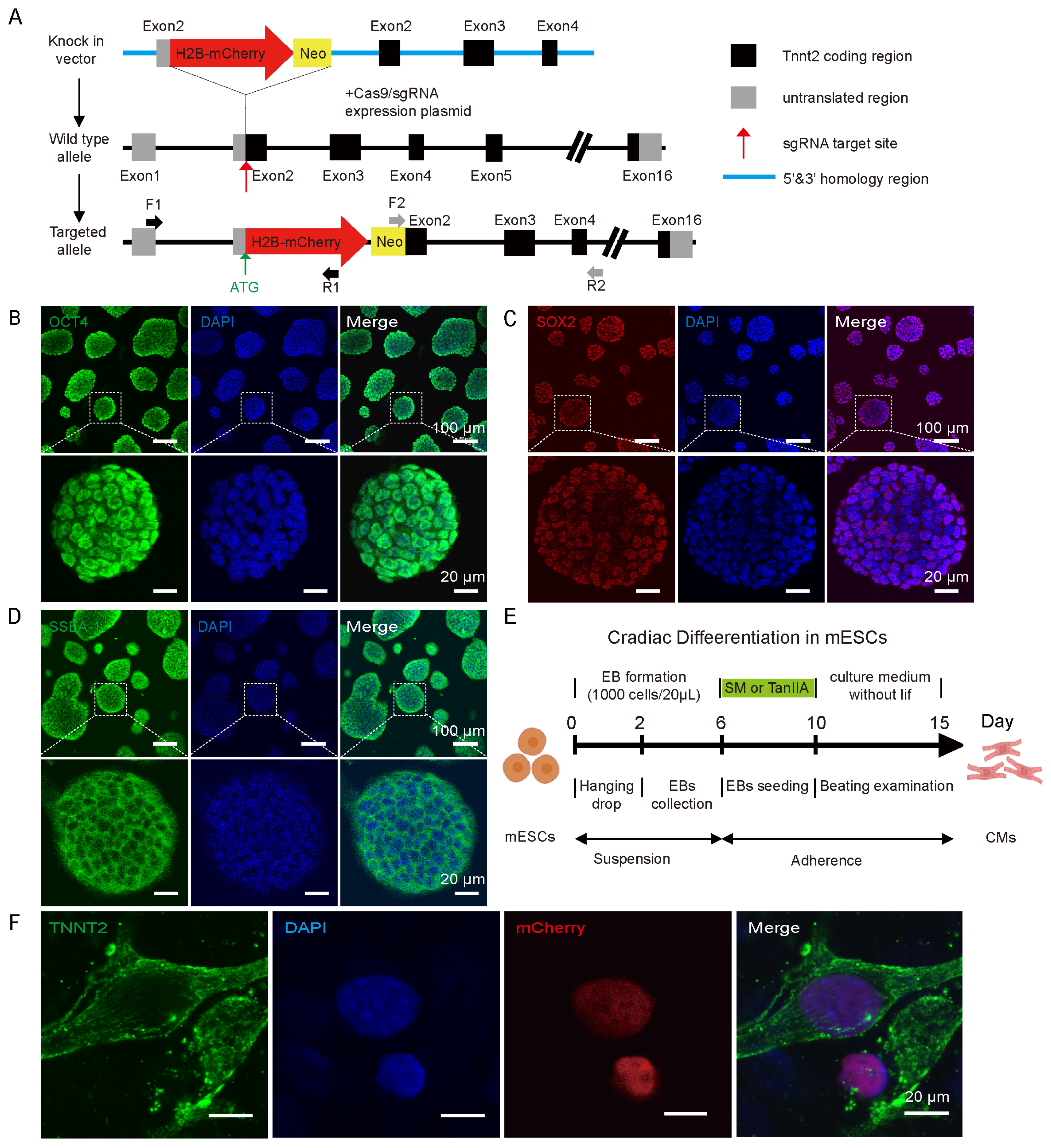
3.1. Establishment of Tnnt2-H2B mCherry Reporter Line and Differentiation into Cardiomyocytes
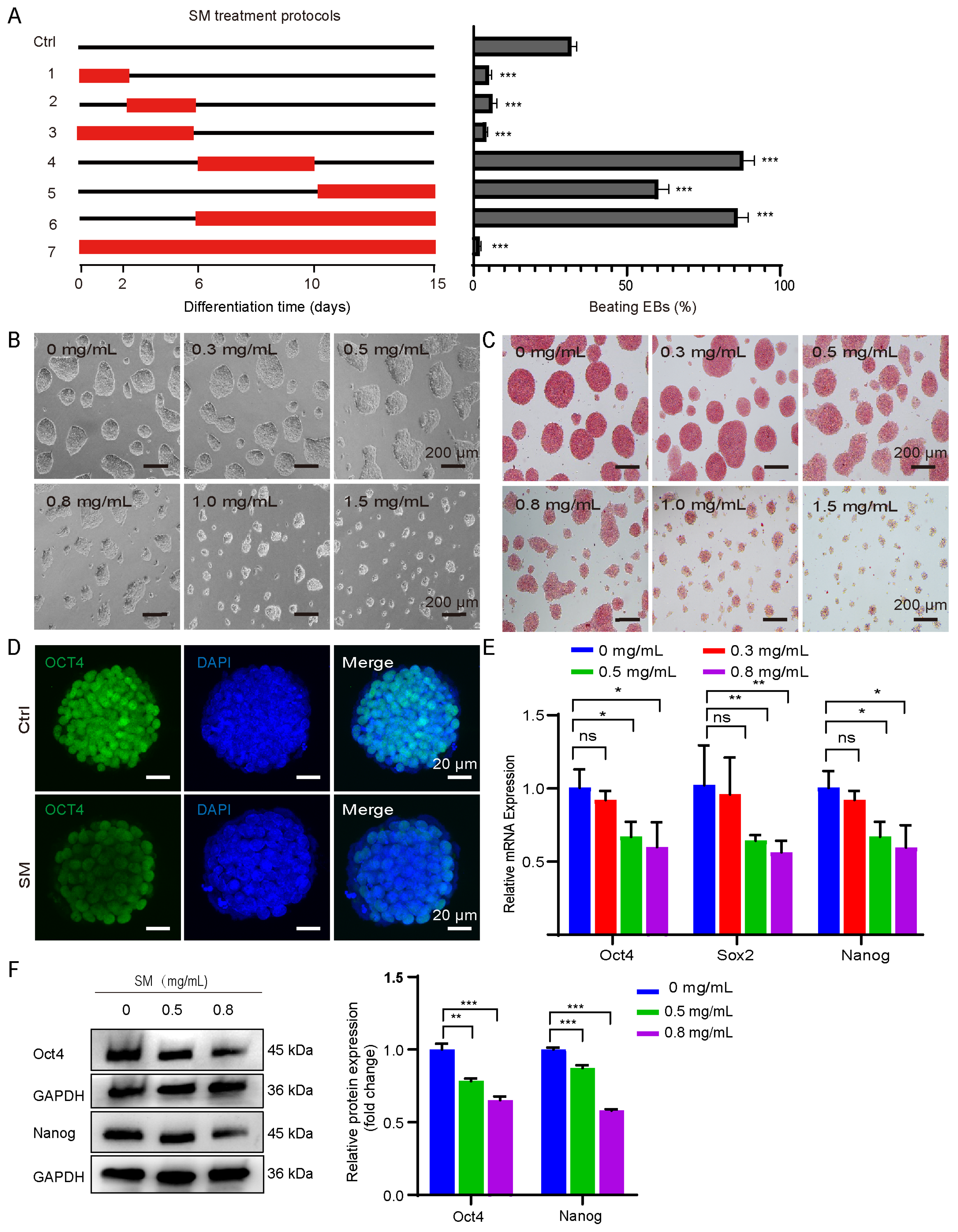
3.2. SM Inhibits the Pluripotency Maintenance and Cell Proliferation in mESCs
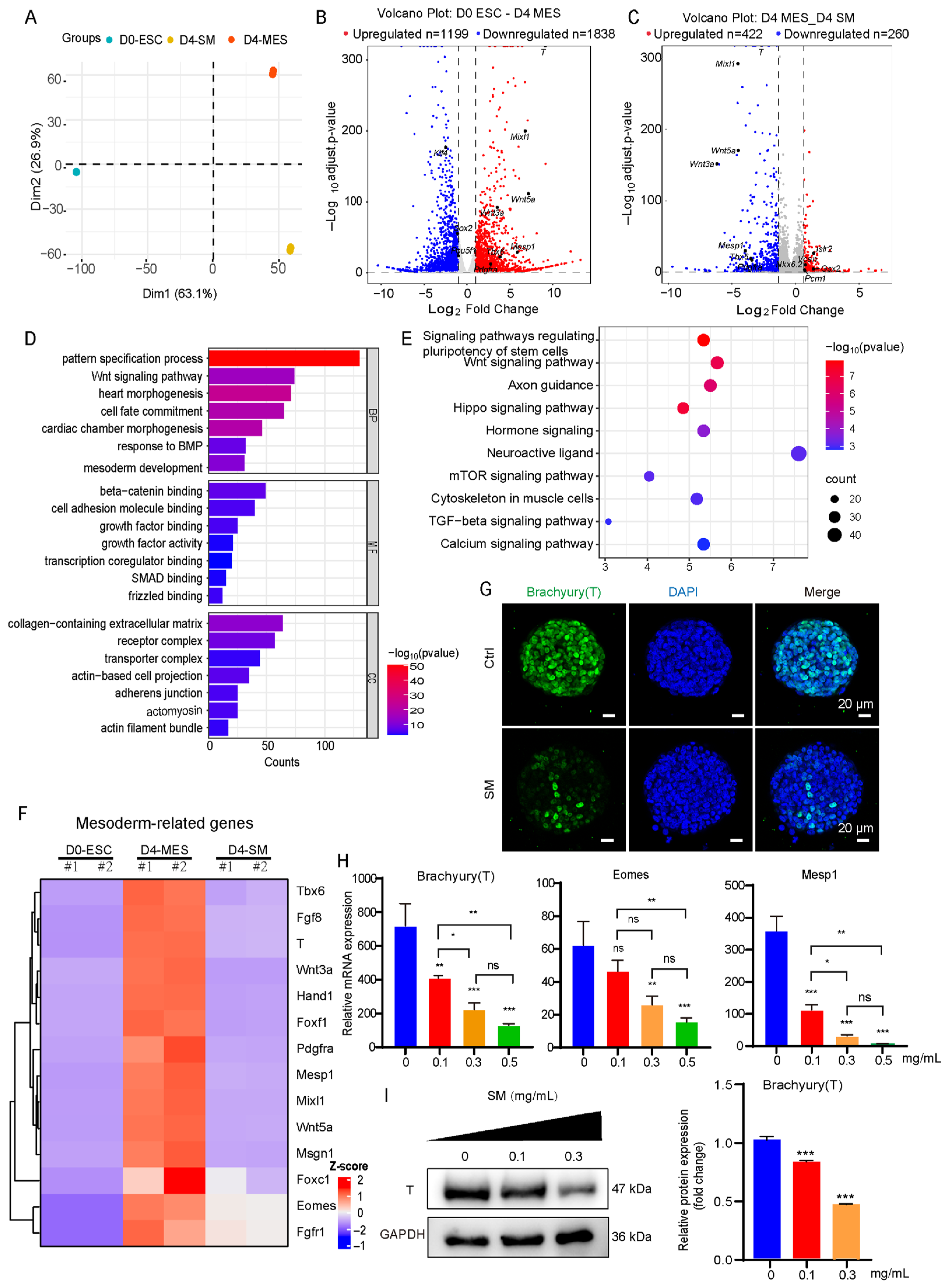
3.3. SM Inhibits the Induction of the Mesoderm
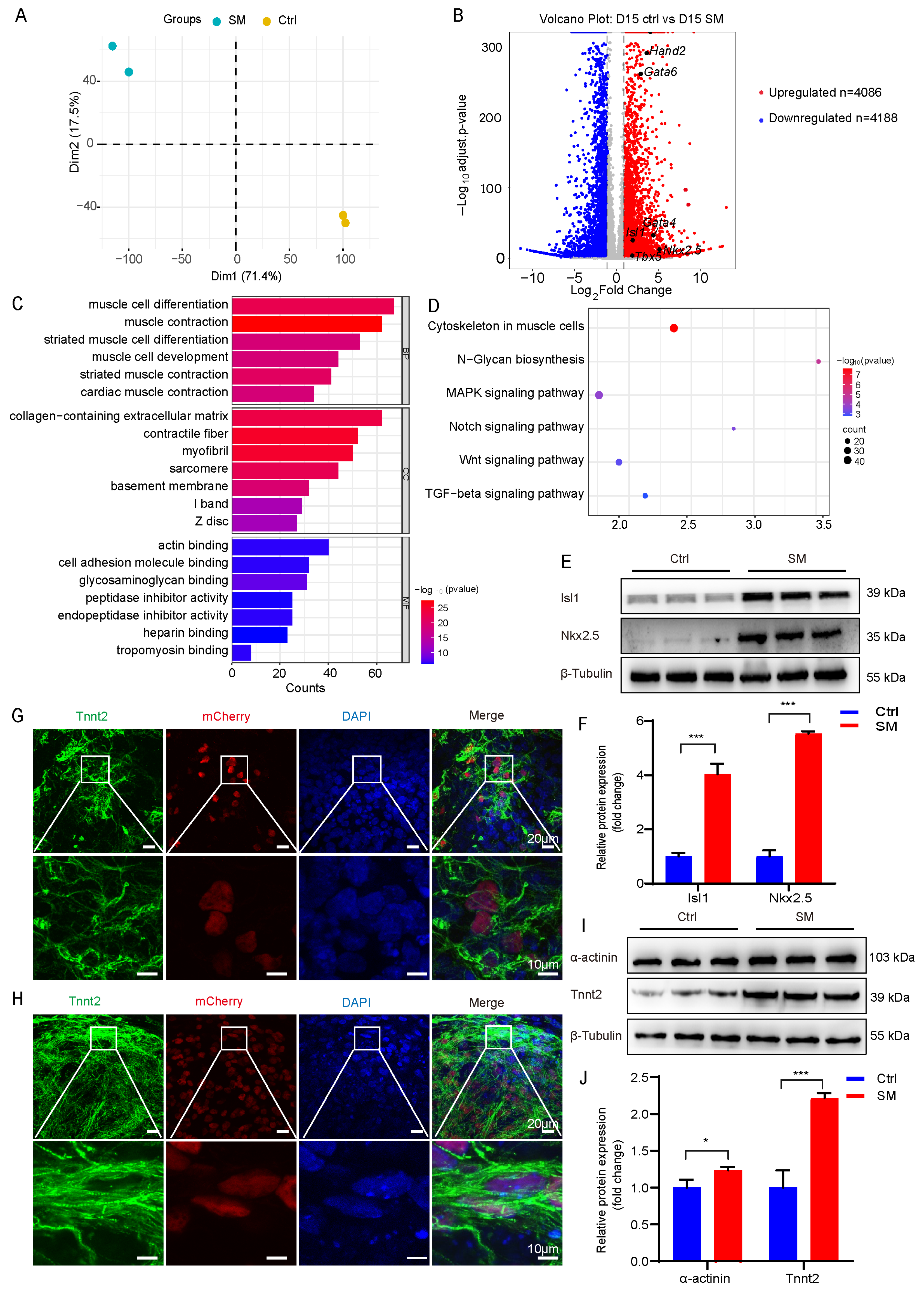
3.4. SM Promotes Cardiac Progenitor Cell Transition
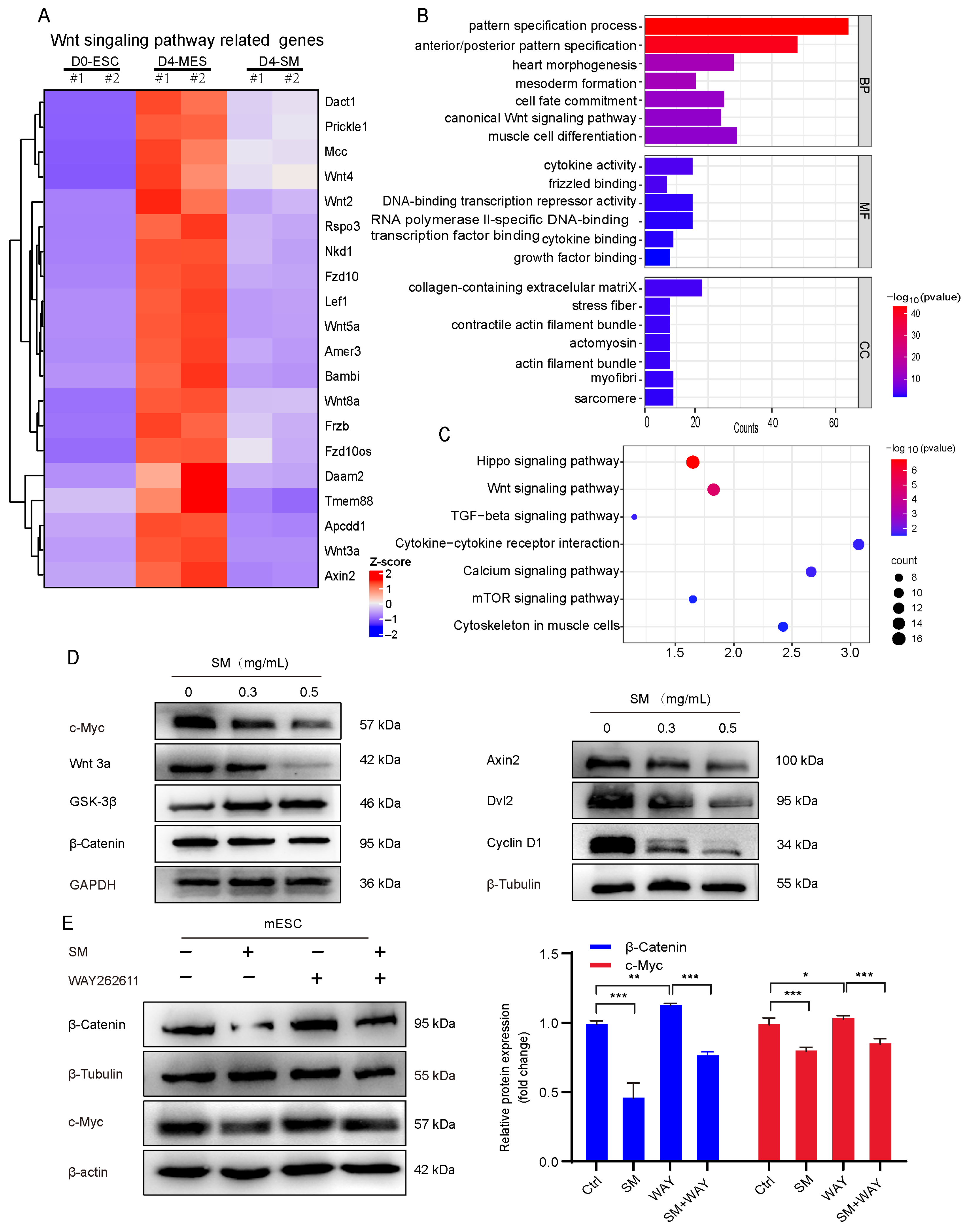
3.5. SM Orchestrates Cell Fate Transition by Suppressing the Wnt/β-Catenin Signaling Pathway
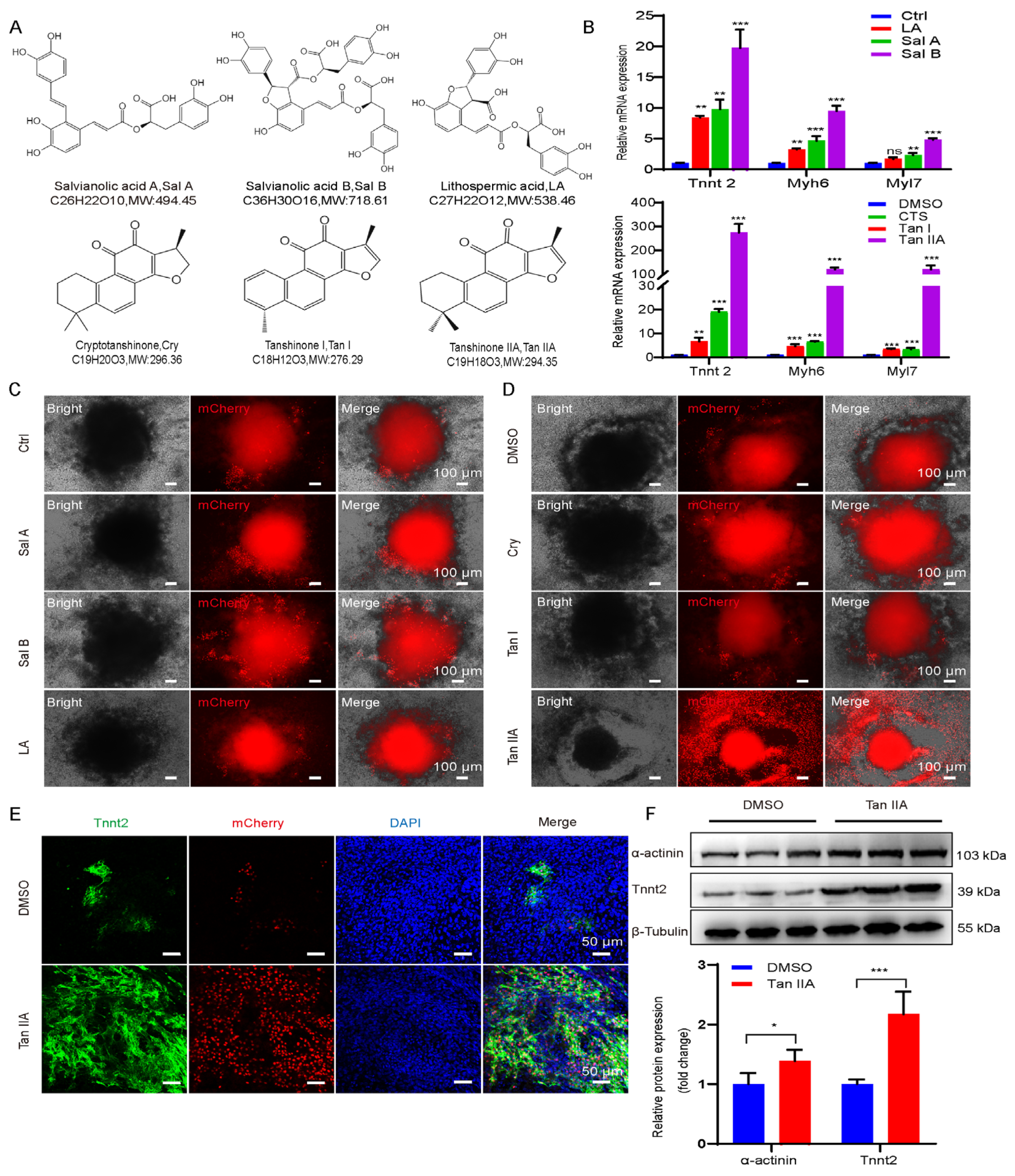
3.6. Tanshinone IIA Is Identified as the Most Potent Pro-Cardiogenic Compound Derived from SM
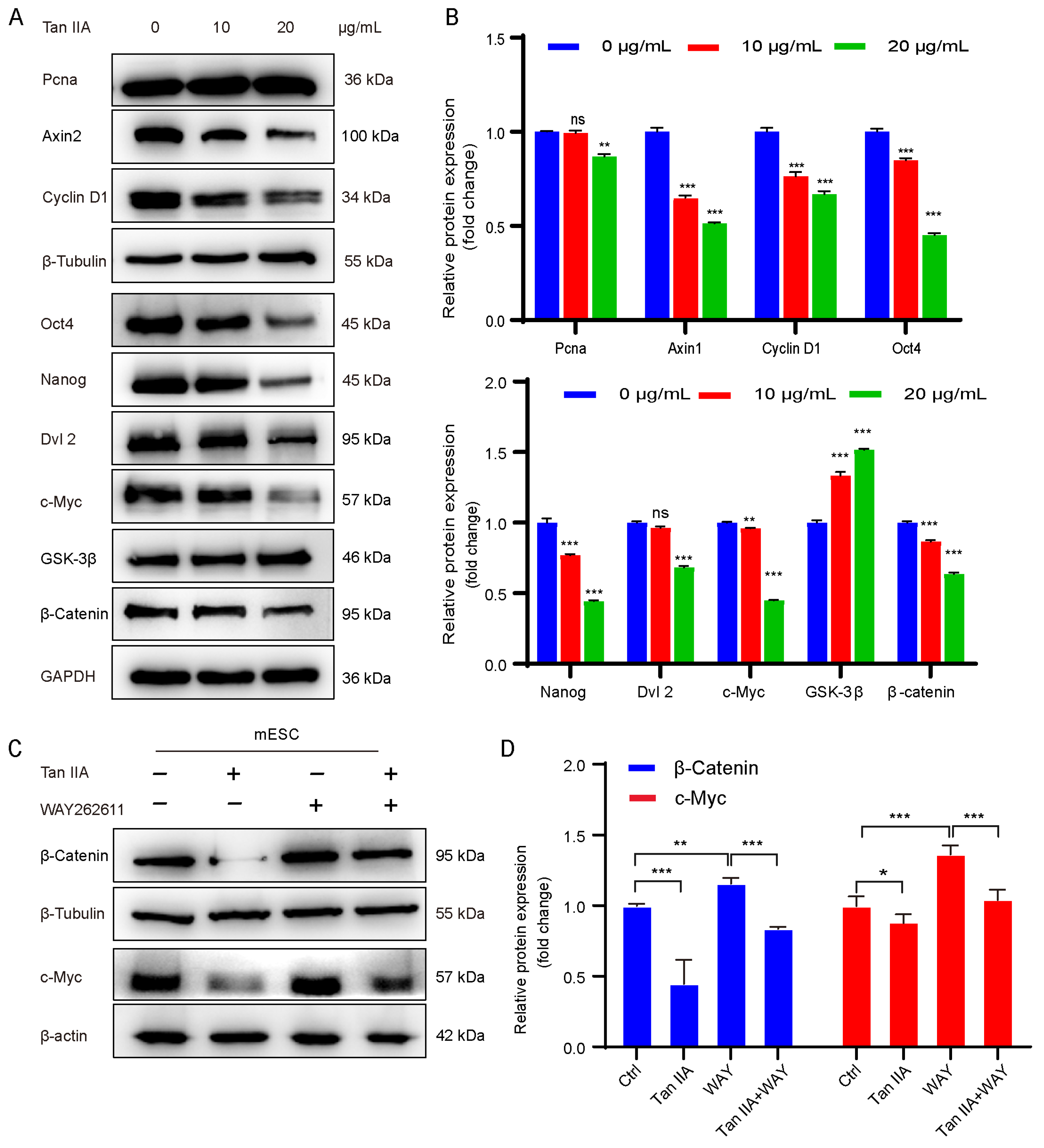
3.7. Tanshinone IIA Recapitulates the SM Function by Suppressing the Wnt/β-Catenin Pathway to Promote Cardiomyocyte Differentiation
4. Discussion
5. Conclusions
Supplementary Materials
Author Contributions
Funding
Institutional Review Board Statement
Informed Consent Statement
Data Availability Statement
Acknowledgments
Conflicts of Interest
Abbreviations
| AP | Alkaline Phosphatase |
| CPC | Cardiac Progenitor Cell |
| CM | Cardiomyocyte |
| EB | Embryoid Body |
| EdU | Ethynyl-labeled Deoxyuridine |
| GO | Gene Ontology |
| GSK-3β | Glycogen Synthase Kinase-3 Beta |
| IF | Immunofluorescence |
| iPSC | Induced Pluripotent Stem Cell |
| KEGG | Kyoto Encyclopedia of Genes and Genomes |
| Isl1 | LIM Homeobox 1 |
| mESCs | Mouse Embryonic Stem Cells |
| Nkx2.5 | NK2 Homeobox 5 |
| Oct4 | Octamer Binding Protein-4 |
| Tan IIA | Tanshinone IIA |
| Tnnt2 | Troponin T Type 2 |
| WB | Western Blotting |
| WT | Wild type |
References
- Krittanawong, C.; Khawaja, M.; Tamis-Holland, J.E.; Girotra, S.; Rao, S.V. Acute Myocardial Infarction: Etiologies and Mimickers in Young Patients. J. Am. Heart Assoc. 2023, 12, e029971. [Google Scholar] [CrossRef]
- Jin, S.; Wang, H.; Zhang, X.; Song, M.; Liu, B.; Sun, W. Emerging regulatory mechanisms in cardiovascular disease: Ferroptosis. Biomed. Pharmacother. 2024, 174, 116457. [Google Scholar] [CrossRef] [PubMed]
- Wang, Q.; Spurlock, B.; Liu, J.; Qian, L. Fibroblast Reprogramming in Cardiac Repair. JACC Basic Transl. Sci. 2024, 9, 145–160. [Google Scholar] [CrossRef]
- Chen, Q.M. Nrf2 for protection against oxidant generation and mitochondrial damage in cardiac injury. Free Radic. Biol. Med. 2022, 179, 133–143. [Google Scholar] [CrossRef] [PubMed]
- Zhang, Y.; Gong, W.; Xu, M.; Zhang, S.; Shen, J.; Zhu, M.; Wang, Y.; Chen, Y.; Shi, J.; Meng, G. Necroptosis Inhibition by Hydrogen Sulfide Alleviated Hypoxia-Induced Cardiac Fibroblasts Proliferation via Sirtuin 3. Int. J. Mol. Sci. 2021, 22, 11893. [Google Scholar] [CrossRef] [PubMed]
- Pezel, T.; Viallon, M.; Croisille, P.; Sebbag, L.; Bochaton, T.; Garot, J.; Lima, J.A.C.; Mewton, N. Imaging Interstitial Fibrosis, Left Ventricular Remodeling, and Function in Stage A and B Heart Failure. JACC Cardiovasc. Imaging 2021, 14, 1038–1052. [Google Scholar] [CrossRef]
- Barrere-Lemaire, S.; Vincent, A.; Jorgensen, C.; Piot, C.; Nargeot, J.; Djouad, F. Mesenchymal stromal cells for improvement of cardiac function following acute myocardial infarction: A matter of timing. Physiol. Rev. 2024, 104, 659–725. [Google Scholar] [CrossRef]
- Liu, Y.; Wang, M.; Yu, Y.; Li, C.; Zhang, C. Advances in the study of exosomes derived from mesenchymal stem cells and cardiac cells for the treatment of myocardial infarction. Cell Commun. Signal 2023, 21, 202. [Google Scholar] [CrossRef]
- Gao, L.; Gao, Q.; Hai, N.; Wu, Z.; Li, P.; Kang, H.; Song, X.; Hua, J.; Zhang, S.; Ren, G.; et al. Phase separation of DUX family proteins drives totipotent-like state via 3D genome reorganization and retrotransposon activation. Protein Cell 2026, pwag014. [Google Scholar] [CrossRef]
- Chen, S.; Zeng, X.; Wu, M.; Zhu, J.; Wu, Y. Sodium Alginate Hydrogel Infusion of Bone Marrow Mesenchymal Stem Cell-Derived Extracellular Vesicles and p38alpha Antagonistic Peptides in Myocardial Infarction Fibrosis Mitigation. J. Am. Heart Assoc. 2025, 14, e036887. [Google Scholar] [CrossRef]
- Karbassi, E.; Fenix, A.; Marchiano, S.; Muraoka, N.; Nakamura, K.; Yang, X.; Murry, C.E. Cardiomyocyte maturation: Advances in knowledge and implications for regenerative medicine. Nat. Rev. Cardiol. 2020, 17, 341–359. [Google Scholar] [CrossRef] [PubMed]
- Xu, Z.; Hong, W.; Mo, Y.; Shu, F.; Liu, Y.; Cheng, Y.; Tan, N.; Jiang, L. Stem cells derived exosome laden oxygen generating hydrogel composites with good electrical conductivity for the tissue-repairing process of post-myocardial infarction. J. Nanobiotechnol. 2025, 23, 213. [Google Scholar] [CrossRef]
- Cruciat, C.M.; Niehrs, C. Secreted and transmembrane wnt inhibitors and activators. Cold Spring Harb. Perspect. Biol. 2013, 5, a015081. [Google Scholar] [CrossRef]
- Lian, X.; Zhang, J.; Azarin, S.M.; Zhu, K.; Hazeltine, L.B.; Bao, X.; Hsiao, C.; Kamp, T.J.; Palecek, S.P. Directed cardiomyocyte differentiation from human pluripotent stem cells by modulating Wnt/β-catenin signaling under fully defined conditions. Nat. Protoc. 2013, 8, 162–175. [Google Scholar] [CrossRef] [PubMed]
- Liu, J.; Xiao, Q.; Xiao, J.; Niu, C.; Li, Y.; Zhang, X.; Zhou, Z.; Shu, G.; Yin, G. Wnt/β-catenin signalling: Function, biological mechanisms, and therapeutic opportunities. Signal Transduct. Target. Ther. 2022, 7, 3. [Google Scholar] [CrossRef]
- Maurice, M.M.; Angers, S. Mechanistic insights into Wnt-β-catenin pathway activation and signal transduction. Nat. Rev. Mol. Cell Biol. 2025, 26, 371–388. [Google Scholar] [CrossRef]
- Xue, C.; Chu, Q.; Shi, Q.; Zeng, Y.; Lu, J.; Li, L. Wnt signaling pathways in biology and disease: Mechanisms and therapeutic advances. Signal Transduct. Target. Ther. 2025, 10, 106. [Google Scholar] [CrossRef]
- Vaseghi, H.; Liu, J.; Qian, L. Molecular barriers to direct cardiac reprogramming. Protein Cell 2017, 8, 724–734. [Google Scholar] [CrossRef]
- Tsoi, C.; Deng, R.X.; Kwok, M.; Yan, B.; Lee, C.; Li, H.S.; Ma, C.H.Y.; Luo, R.B.; Leung, K.T.; Chan, G.C.F.; et al. Temporal Control of the WNT Signaling Pathway During Cardiac Differentiation Impacts Upon the Maturation State of Human Pluripotent Stem Cell Derived Cardiomyocytes. Front. Mol. Biosci. 2022, 9, 714008. [Google Scholar] [CrossRef]
- Fort, L.; Gama, V.; Macara, I.G. Stem cell conversion to the cardiac lineage requires nucleotide signalling from apoptosing cells. Nat. Cell Biol. 2022, 24, 434–447. [Google Scholar] [CrossRef] [PubMed]
- Yang, L.; Huang, X.; Wang, Z.; Guo, Z.; Ma, C.; Dong, L.; Luo, Y.; Hu, X.; Chen, F.; Li, D. Research progress on the pharmacological properties of active ingredients from Salvia miltiorrhiza: A review. Phytomedicine 2025, 148, 157272. [Google Scholar] [CrossRef] [PubMed]
- Li, F.; Zhao, S.; Fang, Q.; Qiao, Z.; Meng, Y.; Jin, Q.; Zong, L.; Shui, L.; Chen, S.; Han, H.; et al. Tanshinone IIA improved psychological stress-induced embryo implantation disorders by inhibiting GC/GR signaling and promoting angiogenesis. Phytomedicine 2025, 144, 156946. [Google Scholar] [CrossRef] [PubMed]
- Li, K.; Li, S.Z.; Zhang, Y.L.; Wang, X.Z. The effects of dan-shen root on cardiomyogenic differentiation of human placenta-derived mesenchymal stem cells. Biochem. Biophys. Res. Commun. 2011, 415, 147–151. [Google Scholar] [CrossRef]
- Li, K.; Song, J.; Zhao, Q.; Wang, B.; Zhang, Y.; Wang, X.; Tang, T.; Li, S. Effective component of Salvia miltiorrhiza in promoting cardiomyogenic differentiation of human placenta-derived mesenchymal stem cells. Int. J. Mol. Med. 2018, 41, 962–968. [Google Scholar] [CrossRef]
- Liu, Z.; Kraus, W.L. Catalytic-Independent Functions of PARP-1 Determine Sox2 Pioneer Activity at Intractable Genomic Loci. Mol. Cell 2017, 65, 589–603.E9. [Google Scholar] [CrossRef]
- Liao, K.M.; Chen, C.J.; Luo, W.J.; Hsu, C.W.; Yu, S.L.; Yang, P.C.; Su, K.Y. Senomorphic effect of diphenyleneiodonium through AMPK/MFF/DRP1 mediated mitochondrial fission. Biomed. Pharmacother. 2023, 162, 114616. [Google Scholar] [CrossRef]
- McGinn, J.; Hallou, A.; Han, S.; Krizic, K.; Ulyanchenko, S.; Iglesias-Bartolome, R.; England, F.J.; Verstreken, C.; Chalut, K.J.; Jensen, K.B.; et al. A biomechanical switch regulates the transition towards homeostasis in oesophageal epithelium. Nat. Cell Biol. 2021, 23, 511–525. [Google Scholar] [CrossRef]
- Qian, C.; Huang, Y.; Zhang, S.; Yang, C.; Zheng, W.; Tang, W.; Wan, G.; Wang, A.; Lu, Y.; Zhao, Y. Integrated identification and mechanism exploration of bioactive ingredients from Salvia miltiorrhiza to induce vascular normalization. Phytomedicine 2025, 138, 156427. [Google Scholar] [CrossRef]
- Aktar, S.; Kato, A.; Toda, K.; Takahashi, S.; Maeda-Yamamoto, M.; Ferdousi, F.; Isoda, H. Transcriptomic evidence of black soybean ethanolic extract and 2-aminobutyric acid in suppressing neuroinflammation and enhancing synaptic transmission. Biomed. Pharmacother. 2024, 181, 117633. [Google Scholar] [CrossRef]
- Zhang, P.; Huang, J.J.; Ou-Yang, K.F.; Liang, H.; Li, M.L.; Wang, Y.J.; Yang, H.T. Minimal contribution of IP(3)R2 in cardiac differentiation and derived ventricular-like myocytes from human embryonic stem cells. Acta Pharmacol. Sin. 2020, 41, 1576–1586. [Google Scholar] [CrossRef] [PubMed]
- Dixon, J.E.; Dick, E.; Rajamohan, D.; Shakesheff, K.M.; Denning, C. Directed differentiation of human embryonic stem cells to interrogate the cardiac gene regulatory network. Mol. Ther. 2011, 19, 1695–1703. [Google Scholar] [CrossRef]
- Gan, L.; Schwengberg, S.; Denecke, B. Transcriptome analysis in cardiomyocyte-specific differentiation of murine embryonic stem cells reveals transcriptional regulation network. Gene Expr. Patterns 2014, 16, 8–22. [Google Scholar] [CrossRef]
- Meyfour, A.; Pahlavan, S.; Maleknia, S.; Mirzaei, M.; Amirkhani, A.; Fitzhenry, M.J.; Wang, K.; Baharvand, H.; Salekdeh, G.H. Dynamic proteome profiling of differentiating human embryonic stem cells towards cardiomyocytes. Sci. Rep. 2025, 15, 40815. [Google Scholar] [CrossRef]
- Yan, J.; Zhang, L.; Sultana, N.; Oh, J.G.; Wu, B.; Hajjar, R.J.; Zhou, B.; Cai, C.L. A series of robust genetic indicators for definitive identification of cardiomyocytes. J. Mol. Cell Cardiol. 2016, 97, 278–285. [Google Scholar] [CrossRef] [PubMed]
- Chen, F.; Chen, J.; Wang, H.; Tang, H.; Huang, L.; Wang, S.; Wang, X.; Fang, X.; Liu, J.; Li, L.; et al. Histone Lysine Methyltransferase SETD2 Regulates Coronary Vascular Development in Embryonic Mouse Hearts. Front. Cell Dev. Biol. 2021, 9, 651655. [Google Scholar] [CrossRef] [PubMed]
- Shu, T.; Pang, M.; Rong, L.; Zhou, W.; Wang, J.; Liu, C.; Wang, X. Effects of Salvia miltiorrhiza on neural differentiation of induced pluripotent stem cells. J. Ethnopharmacol. 2014, 153, 233–241. [Google Scholar] [CrossRef]
- Rawat, H.; Kornherr, J.; Zawada, D.; Bakhshiyeva, S.; Kupatt, C.; Laugwitz, K.L.; Bahr, A.; Dorn, T.; Moretti, A.; Nowak-Imialek, M. Recapitulating porcine cardiac development in vitro: From expanded potential stem cell to embryo culture models. Front. Cell Dev. Biol. 2023, 11, 1111684. [Google Scholar] [CrossRef]
- Zhang, Y.; Huang, G.; Yuan, Z.; Zhang, Y.; Chang, R. Circular RNA Expression for Dilated Cardiomyopathy in Hearts and Pluripotent Stem Cell-Derived Cardiomyocytes. Front. Cell Dev. Biol. 2021, 9, 760515. [Google Scholar] [CrossRef] [PubMed]
- Wu, J.J.; Ge, Y.; Huang, W.D.; Zhang, L.; Huang, J.; Huang, N.Q.; Luo, Y. Natural bioactive compounds modified with mesenchymal stem cells: New hope for regenerative medicine. Front. Bioeng. 2025, 13, 1446537. [Google Scholar] [CrossRef]
- Zhao, Z.; Ma, Y.; Wang, S.; Zhou, M.; Tian, Y.; Yang, L.; Gu, J.; Tan, R. Natural compounds from traditional Chinese medicine regulating stem cell fate: Identification and therapeutic potential. Chin. Herbal Med. 2025, 17, 611–627. [Google Scholar] [CrossRef]
- Li, N.; Du, Z.Y.; Shen, Q.Y.; Lei, Q.J.; Zhang, Y.; Zhang, M.F.; Hua, J.L. Resveratrol Enhances Self-Renewal of Mouse Embryonic Stem Cells. J. Cell Biochem. 2017, 118, 1928–1935. [Google Scholar] [CrossRef]
- Li, K.; Wang, X.Y.; Fan, C.X.; Wu, C.X.; Li, S.Z.; Liu, H. Tanshinone IIA promotes cardiac differentiation and improves cell motility by modulating the Wnt/β-catenin signaling pathway. Mol. Med. Rep. 2020, 22, 1839–1846. [Google Scholar] [CrossRef] [PubMed]
- Choi, S.C.; Yoon, J.; Shim, W.J.; Ro, Y.M.; Lim, D.S. 5-azacytidine induces cardiac differentiation of P19 embryonic stem cells. Exp. Mol. Med. 2004, 36, 515–523. [Google Scholar] [CrossRef]
- Lal, G.; Bromberg, J.S. Epigenetic mechanisms of regulation of Foxp3 expression. Blood 2009, 114, 3727–3735. [Google Scholar] [CrossRef]
- Hsu, P.S.; Liu, S.T.; Chiu, Y.L.; Tsai, C.S. The Functional Role of Myogenin in Cardiomyoblast H9c2 Cells Treated with High Glucose and Palmitic Acid: Insights into No-Rejection Heart Transplantation. Int. J. Mol. Sci. 2023, 24, 13031. [Google Scholar] [CrossRef] [PubMed]
- Ishiguro, H.; Wakasugi, T.; Terashita, Y.; Sakamoto, N.; Tanaka, T.; Sagawa, H.; Okubo, T.; Takeyama, H. Nuclear expression of TCF4/TCF7L2 is correlated with poor prognosis in patients with esophageal squamous cell carcinoma. Cell Mol. Biol. Lett. 2016, 21, 5. [Google Scholar] [CrossRef]
- Steinhart, Z.; Angers, S. Wnt signaling in development and tissue homeostasis. Development 2018, 145, dev146589. [Google Scholar] [CrossRef]
- Akoumianakis, I.; Polkinghorne, M.; Antoniades, C. Non-canonical WNT signalling in cardiovascular disease: Mechanisms and therapeutic implications. Nat. Rev. Cardiol. 2022, 19, 783–797. [Google Scholar] [CrossRef] [PubMed]
- Lin, Q.Q.; Wu, L.M.; Chatla, S.; Chowdhury, F.A.; Atale, N.; Joseph, J.; Du, W. Hematopoietic stem cell regeneration through paracrine regulation of the Wnt5a/Prox1 signaling axis. J. Clin. Investig. 2022, 132, e155914. [Google Scholar] [CrossRef] [PubMed]
- Li, D.; Sinha, T.; Ajima, R.; Seo, H.S.; Yamaguchi, T.P.; Wang, J.B. Spatial regulation of cell cohesion by Wnt5a during second heart field progenitor deployment. Dev. Biol. 2016, 412, 18–31. [Google Scholar] [CrossRef]
- Kim, N.H.; Kwon, M.; Jung, J.; Chae, H.B.; Lee, J.; Yoon, Y.J.; Moon, I.S.; Lee, H.K.; Namkung, W.; Stankovic, K.M.; et al. Celastrol suppresses the growth of vestibular schwannoma in mice by promoting the degradation of β-catenin. Acta Pharmacol. Sin. 2022, 43, 2993–3001. [Google Scholar] [CrossRef] [PubMed]
- Willems, E.; Spiering, S.; Davidovics, H.; Lanier, M.; Xia, Z.; Dawson, M.; Cashman, J.; Mercola, M. Small-molecule inhibitors of the Wnt pathway potently promote cardiomyocytes from human embryonic stem cell-derived mesoderm. Circ. Res. 2011, 109, 360–364. [Google Scholar] [CrossRef] [PubMed]
- Gu, Y.; Liu, G.H.; Plongthongkum, N.; Benner, C.; Yi, F.; Qu, J.; Suzuki, K.; Yang, J.; Zhang, W.; Li, M.; et al. Global DNA methylation and transcriptional analyses of human ESC-derived cardiomyocytes. Protein Cell 2014, 5, 59–68. [Google Scholar] [CrossRef] [PubMed]
- Mensah, I.K.; Emerson, M.L.; Tan, H.J.; Gowher, H. Cardiomyocyte Differentiation from Mouse Embryonic Stem Cells by WNT Switch Method. Cells 2024, 13, 132. [Google Scholar] [CrossRef]
- Zhang, Y.; Wei, L.; Sun, D.; Cao, F.; Gao, H.; Zhao, L.; Du, J.; Li, Y.; Wang, H. Tanshinone IIA pretreatment protects myocardium against ischaemia/reperfusion injury through the phosphatidylinositol 3-kinase/Akt-dependent pathway in diabetic rats. Diabetes Obes. Metab. 2010, 12, 316–322. [Google Scholar] [CrossRef]
- Zhang, M.Q.; Zheng, Y.L.; Chen, H.; Tu, J.F.; Shen, Y.; Guo, J.P.; Yang, X.H.; Yuan, S.R.; Chen, L.Z.; Chai, J.J.; et al. Sodium tanshinone IIA sulfonate protects rat myocardium against ischemia-reperfusion injury via activation of PI3K/Akt/FOXO3A/Bim pathway. Acta Pharmacol. Sin. 2013, 34, 1386–1396. [Google Scholar] [CrossRef]



| Name | Primer Sequence (5′ to 3′) | Product Size (bp) |
|---|---|---|
| Tnnt2 sgRNA | F 1-gCTCGGCGTCAGACATGCTCT | 20 |
| R 1-AGAGCATGTCTGACGCCGAGc | ||
| Tnnt2 F1 + R1 | F-CAGTCCCTGTTCAGAGGTAAGACA | 5649 |
| R-TAAGATACATTGATGAGTTTGG | ||
| Tnnt2 F2 + R2 | F-GCTGTGCTCGACGTTGTCAC | 4863 |
| R-GTGACAGGACATCAAGACTCACTG | ||
| Tnnt2 F3 + R3 | F-CTACCGATCTTGAGTTTGTCACA | 2192 |
| R-CAGGGTGGACCTGCTTCAGAACCT | ||
| Tnnt2 F4 + R4 | F-CCGCTTCCTCGTGCTTTACG | 740 |
| R-CGGCAGCTCCAAGGAAAA |
| Name | Primer Sequence (5′ to 3′) | Product Size (bp) |
|---|---|---|
| β-actin | F-TAGGCACCAGGGTGTGATGG | 282 |
| R-ATGGCTGGGGTGTTGAAGG | ||
| Oct4 | F-GGCTAGAGAAGGATGTGGTTCGAG | 118 |
| R-CCTGGGAAAGGTGTCCCTGTAG | ||
| Nanog | F-TGAGCTATAAGCAGGTTAAGAC | 136 |
| R-CAATGGATGCTGGGATACTC | ||
| Sox2 | F-CGGCACAGATGCAACCGAT | 86 |
| R-CCGTTCATGTAGGTCTGCG | ||
| Pcna | F-TTTGAGGCACGCCTGATCC | 135 |
| R-GGAGACGTGAGACGAGTCCAT | ||
| Cyclin A | F-TGGCTGTGAACTACATTGA | 136 |
| R-ACAAACTCTGCTACTTCTGG | ||
| Brachyury | F-CTCGGATTCACATCGTGAGAG | 148 |
| R-AAGGCTTTAGCAAATGGGTTGTA | ||
| Mesp1 | F-TGTACGCAGAAACAGCATCC | 135 |
| R-TTGTCCCCTCCACTCTTCAG | ||
| Eomes | F-TGTGACGGCCTACCAAAACA | 112 |
| R-ACCTCCAGGGACAATCTGATG | ||
| Isl1 | F-AAGGACAAGAAACGCAGCAT | 85 |
| R-TTCCTGTCATCCCCTGGATA | ||
| Gata4 | F-CTCTATCACAAGATGAACGGCATCAAC | 100 |
| R-TCTGGCAGTTGGCACAGGAGAG | ||
| Tnnt2 | F-GTAGAGGACACCAAACCCAAG | 139 |
| R-GAGTCTGTAGCTCATTCAGGTC | ||
| Myh6 | F-GATGCCCAGATGGCTGACTT | 275 |
| R-GGTCAGCATGGCCATGTCCT | ||
| Myl7 | F-CCCATCAACTTCACCGTCTTCCT | 167 |
| R-AGAGAACTTGTCTGCCTGGGTCA |
Disclaimer/Publisher’s Note: The statements, opinions and data contained in all publications are solely those of the individual author(s) and contributor(s) and not of MDPI and/or the editor(s). MDPI and/or the editor(s) disclaim responsibility for any injury to people or property resulting from any ideas, methods, instructions or products referred to in the content. |
© 2026 by the authors. Licensee MDPI, Basel, Switzerland. This article is an open access article distributed under the terms and conditions of the Creative Commons Attribution (CC BY) license.
Share and Cite
Lu, G.; Sun, Q.; Ren, W.; Yang, J.; Yang, F. Salvia miltiorrhiza Bunge Regulates the Differentiation of mESCs into Cardiomyocytes via the Wnt/β-Catenin Signaling Pathway. Cells 2026, 15, 786. https://doi.org/10.3390/cells15090786
Lu G, Sun Q, Ren W, Yang J, Yang F. Salvia miltiorrhiza Bunge Regulates the Differentiation of mESCs into Cardiomyocytes via the Wnt/β-Catenin Signaling Pathway. Cells. 2026; 15(9):786. https://doi.org/10.3390/cells15090786
Chicago/Turabian StyleLu, Guotao, Qi Sun, Wei Ren, Jihong Yang, and Fan Yang. 2026. "Salvia miltiorrhiza Bunge Regulates the Differentiation of mESCs into Cardiomyocytes via the Wnt/β-Catenin Signaling Pathway" Cells 15, no. 9: 786. https://doi.org/10.3390/cells15090786
APA StyleLu, G., Sun, Q., Ren, W., Yang, J., & Yang, F. (2026). Salvia miltiorrhiza Bunge Regulates the Differentiation of mESCs into Cardiomyocytes via the Wnt/β-Catenin Signaling Pathway. Cells, 15(9), 786. https://doi.org/10.3390/cells15090786