Combined CDK4/6 Inhibition and Radiation: Effects on Cellular Senescence, Cell Cycle Regulation, and Cell Death in Mammary Carcinoma Cells




Highlights
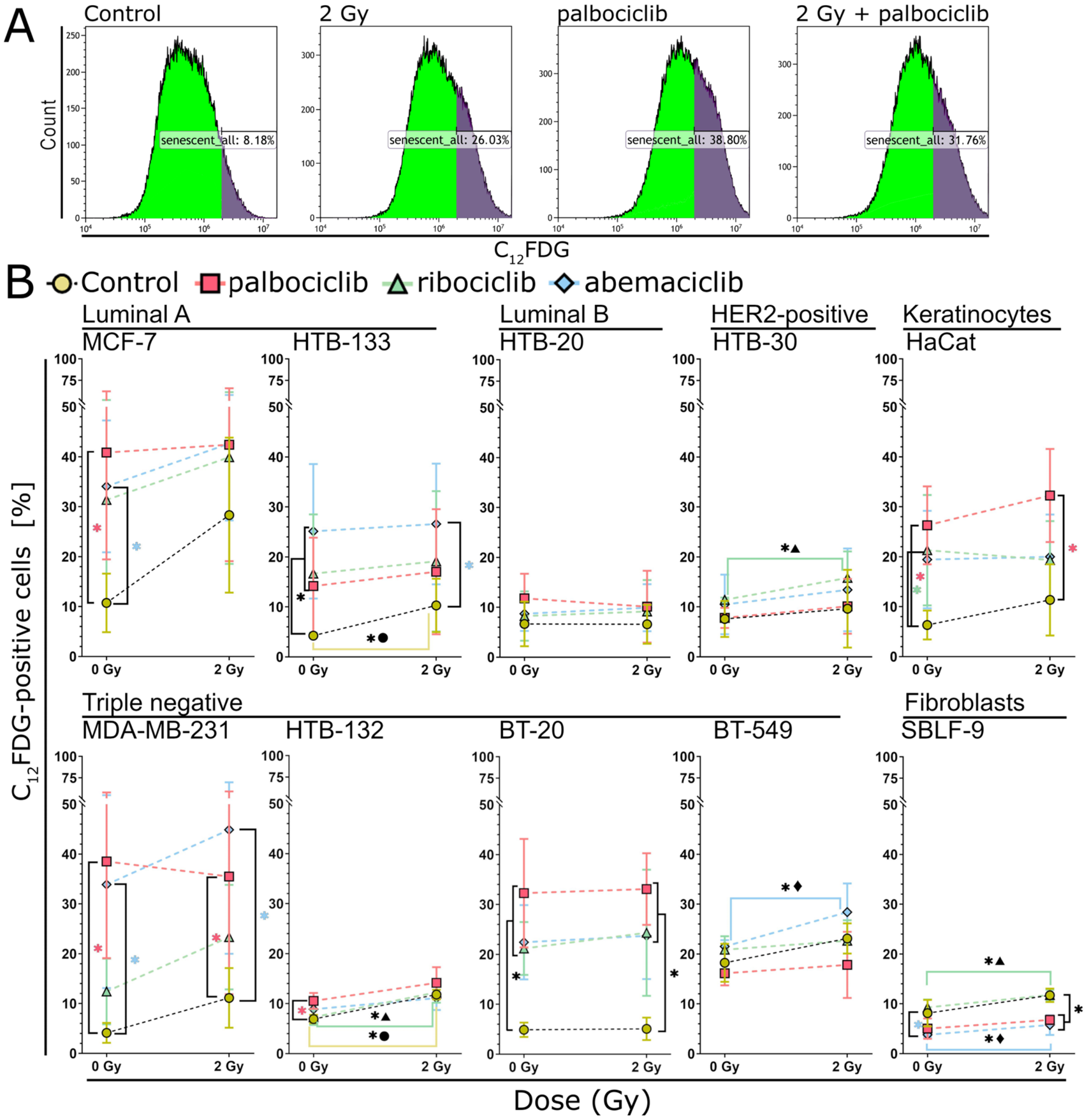
- CDK4/6 inhibitors induce senescence in many breast cancer cells, especially in MCF-7, HTB-133, MDA-MB-231 and BT-20.
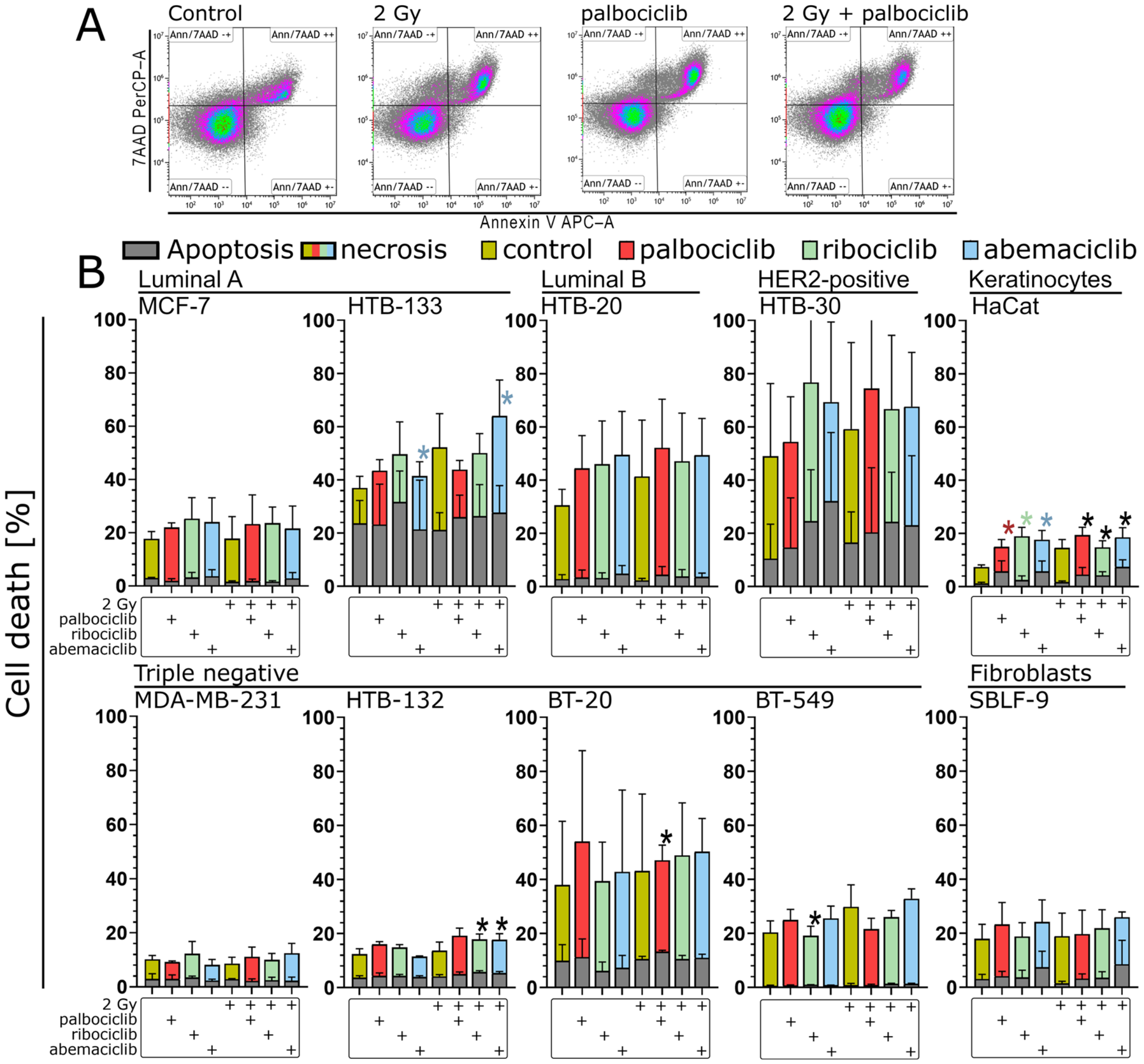
- Cell death in the form of apoptosis or necrosis was not a predominant cell fate following CDK inhibition.
- Combination therapy with CDK inhibition and irradiation showed no clear additive effect.
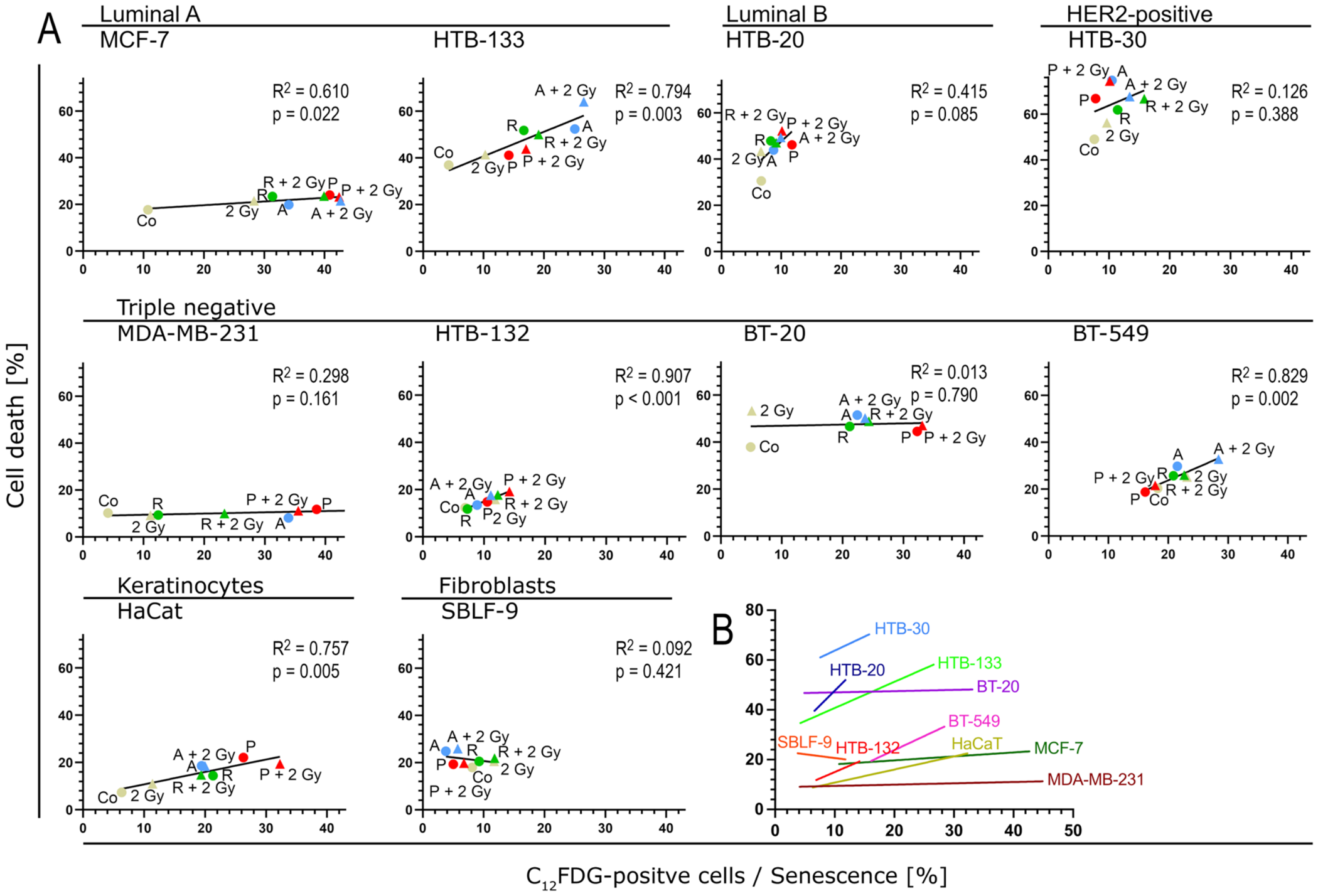
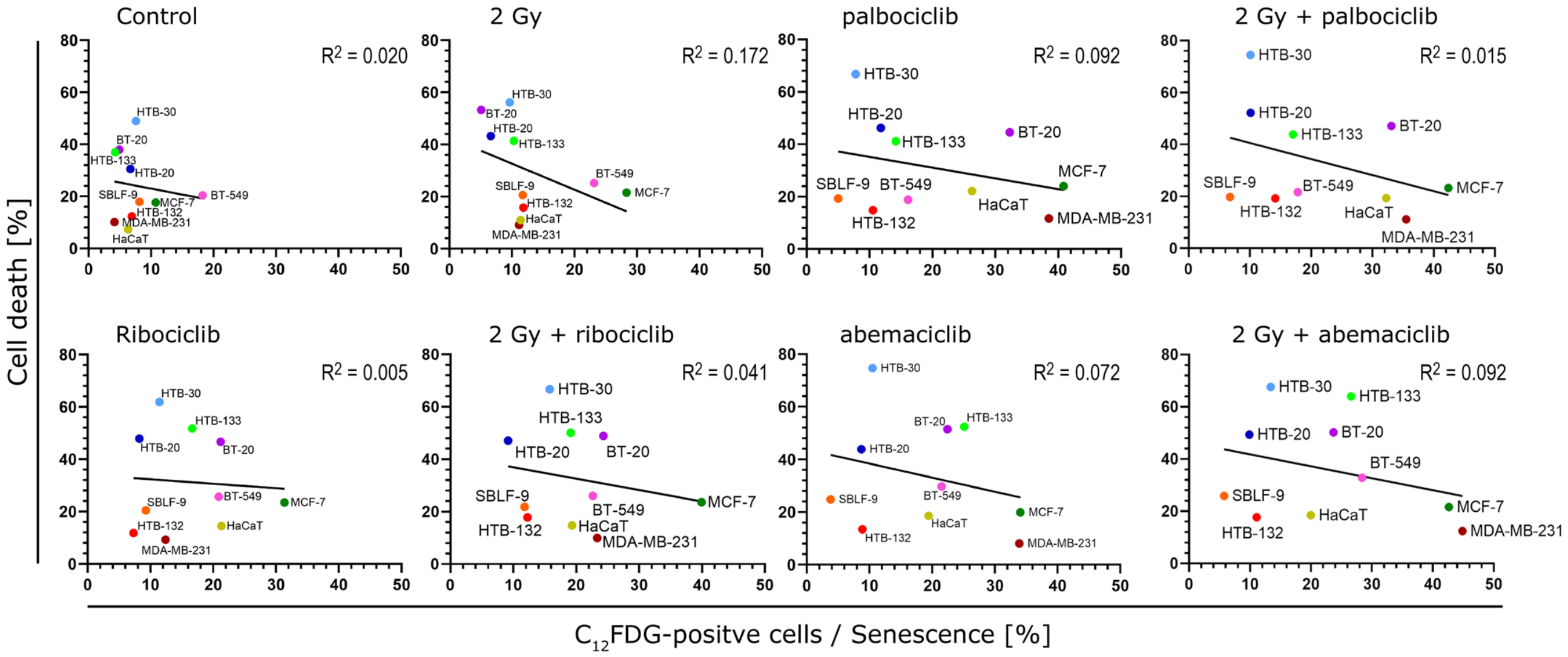
- Senescence predominates over cell death after CDK4/6 inhibition, suggesting that cell inactivation is primarily due to senescence rather than cell death.
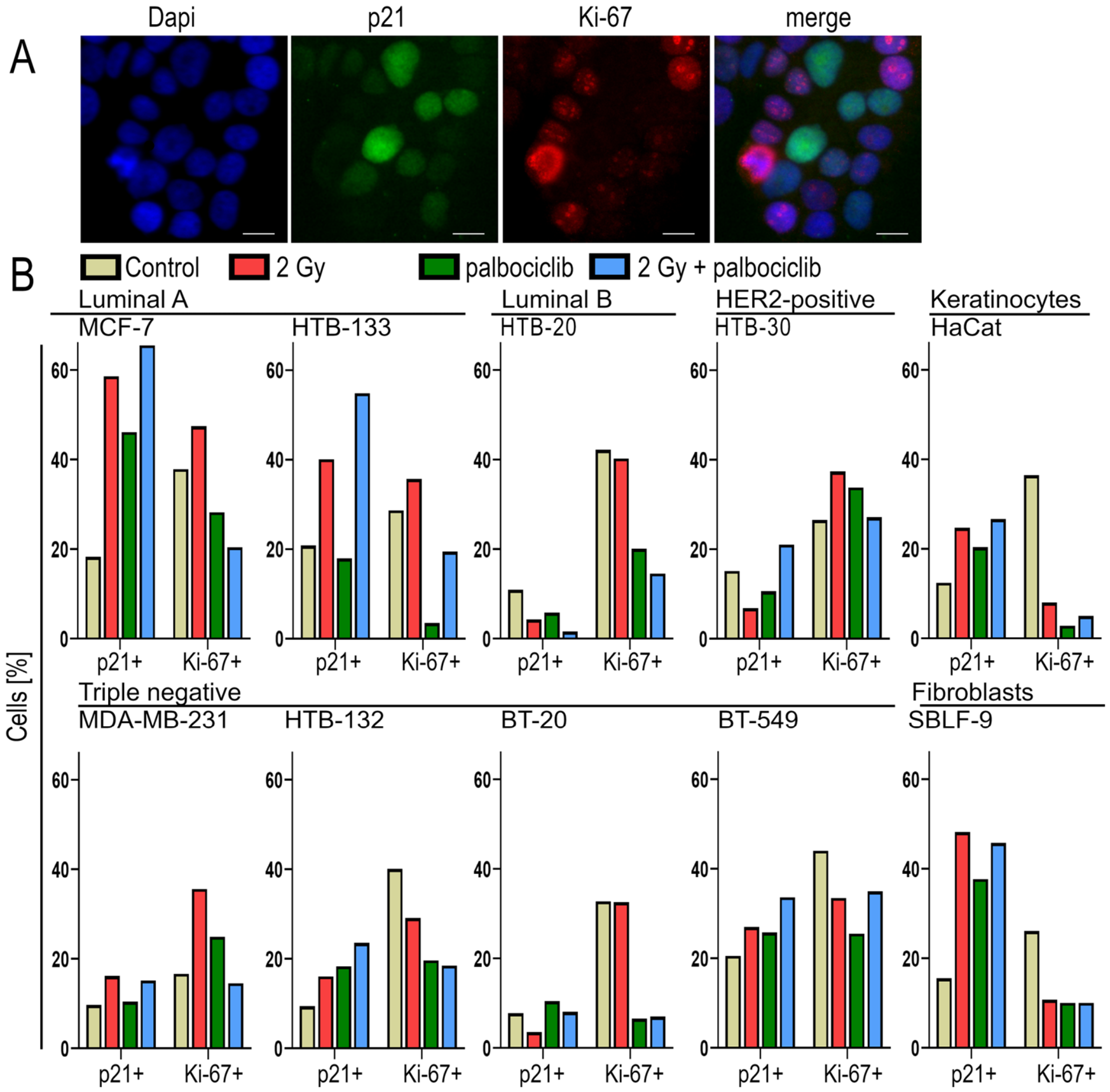
- Examination of the proliferation marker Ki-67 suggests a therapeutic window, enabling effective tumor cell treatment without increased damage to healthy tissue.
Abstract
1. Introduction
2. Materials and Methods
2.1. Cell Lines
2.2. Cell Culture
2.3. Combined Assay for Senescence, Cell Cycle, Apoptosis, and Necrosis by Flow Cytometry
2.4. Staining Process for Flow Cytometry Analysis
2.5. Flow Cytometry Analysis
2.6. Immunofluorescence Microscopy by Immunostaining
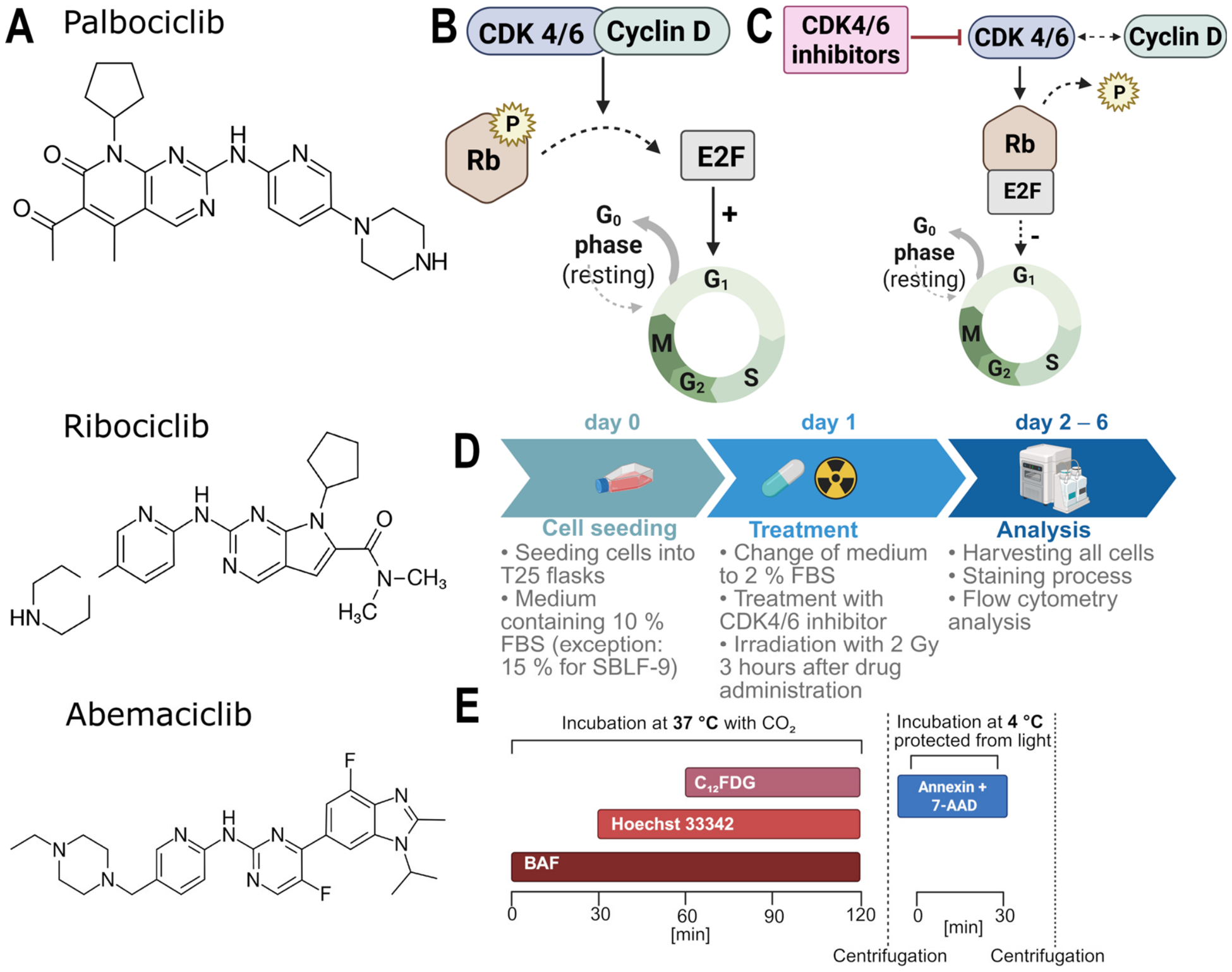
2.7. Kinase Inhibitors
2.8. Statistics
3. Results
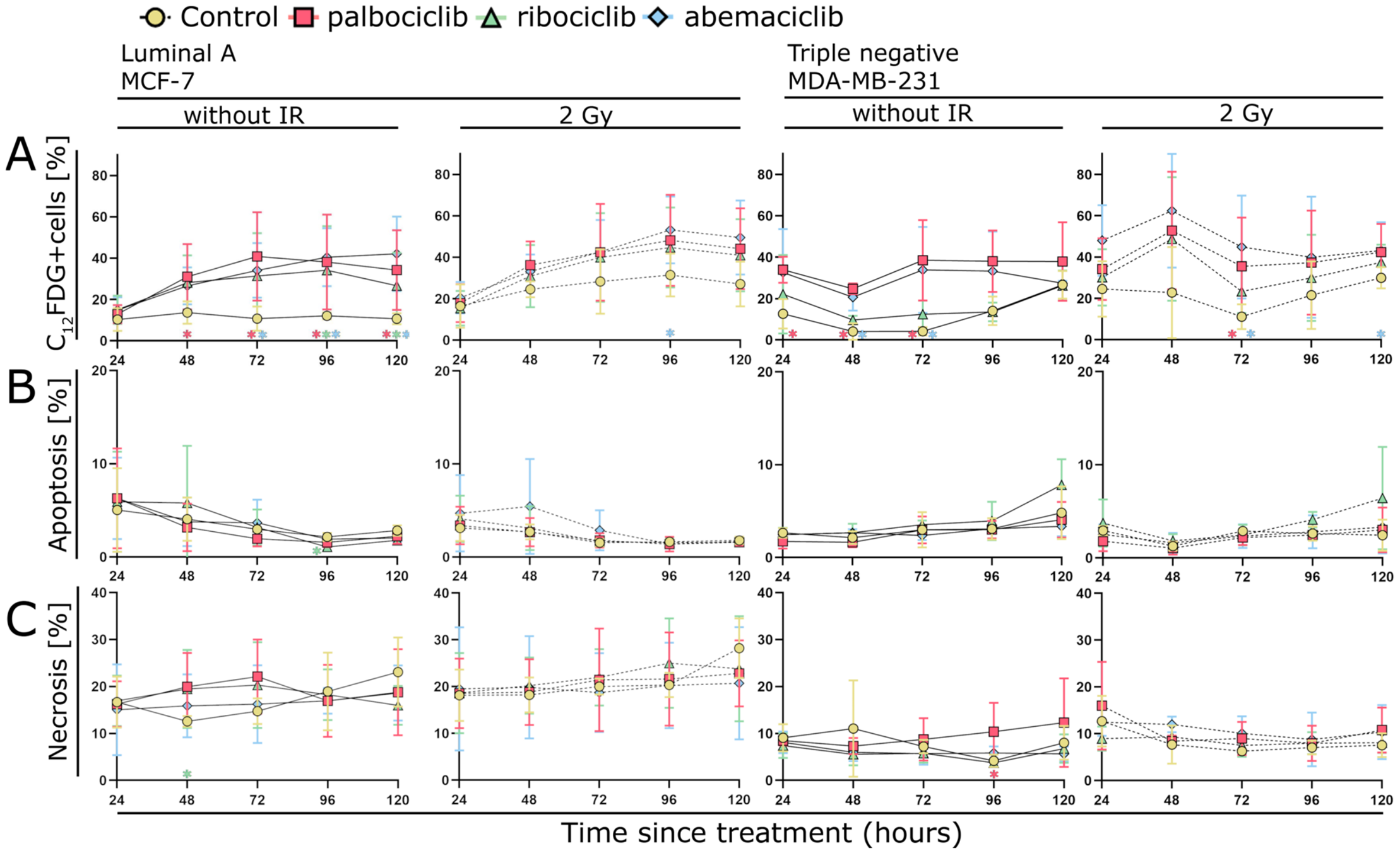
3.1. Treatment with CDK Inhibitors Increases Cellular Senescence in MCF-7 and MDA-MB-231
3.2. CDK Inhibitors Show Little Effect on Cell Death in MCF-7 and MDA-MB-231
3.3. Effect of CDK Inhibition on Senescence in All Cell Lines 72 H After Inhibitor Addition
3.4. Comparison Between p21 and C12FDG Staining: Most Cell Lines Show Similar Trends
3.5. Palbociclib Effectively Lowers Proliferation Index
3.6. Necrosis as the Main Pathway of Cell Death in All Cell Lines Examined
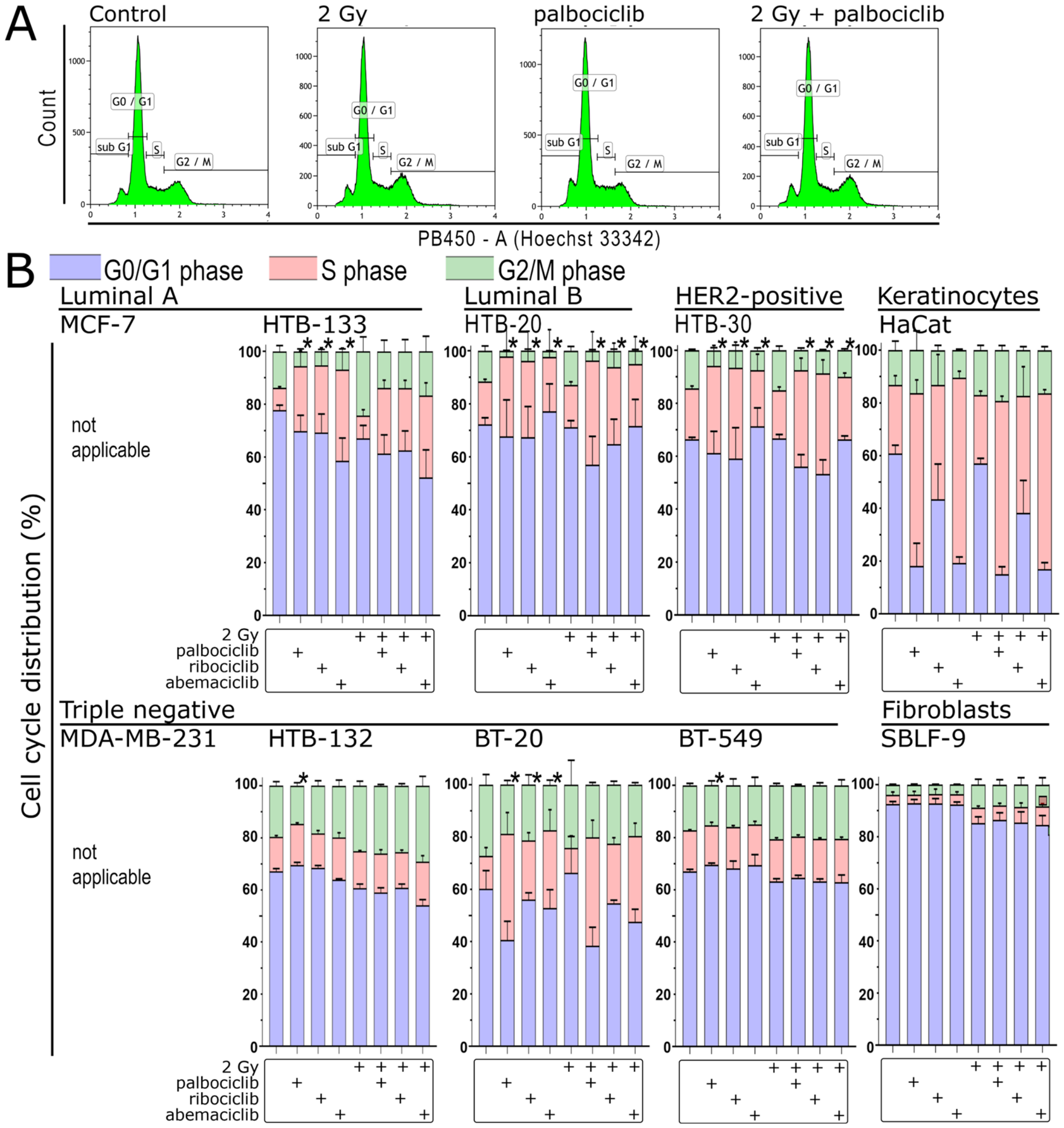
3.7. Changes in G2 Arrest Under CDK4/6 Inhibition and Radiation
3.8. A Comparison of the Occurrence of Senescence and Cell Death Following Various Treatments in Ten Cell Lines
4. Discussion
5. Conclusions
Supplementary Materials
Author Contributions
Funding
Institutional Review Board Statement
Informed Consent Statement
Data Availability Statement
Acknowledgments
Conflicts of Interest
Abbreviations
| AC | Adenocarcinoma |
| BAF | Bafilomycin A 1 |
| CDK | Cyclin-dependent kinase |
| DMEM | Dulbecco’s Modified Eagle’s Medium |
| DMSO | Dimethyl sulfoxide |
| DPBS | Dulbecco’s Phosphate-Buffered Saline |
| ER | Estrogen receptor status |
| FBS | Fetal Bovine Serum |
| HER2 | Human epithelial receptor 2 |
| HR | Hormone receptor status |
| PR | Progesterone receptor status |
| IDC | Invasive ductal carcinoma |
| NEA | Non-essential amino acids |
| OIS | Oncogene-induced senescence |
| pRB | Retinoblastoma protein |
| SA-β-GAL | Senescent-associated β-galactosidase |
| SASP | Senescence-associated secretory phenotype |
| TBS | Tris-buffered saline |
References
- Becherini, C.; Visani, L.; Caini, S.; Bhattacharya, I.S.; Kirby, A.M.; Nader Marta, G.; Morgan, G.; Salvestrini, V.; Coles, C.E.; Cortes, J.; et al. Safety profile of cyclin-dependent kinase (CDK) 4/6 inhibitors with concurrent radiation therapy: A systematic review and meta-analysis. Cancer Treat. Rev. 2023, 119, 102586. [Google Scholar] [CrossRef] [Scilit] [PubMed]
- Bosacki, C.; Bouleftour, W.; Sotton, S.; Vallard, A.; Daguenet, E.; Ouaz, H.; Cojoracu, I.; Moslemi, D.; Molekzadehmoghani, M.; Magne, N. CDK 4/6 inhibitors combined with radiotherapy: A review of literature. Clin. Transl. Radiat. Oncol. 2021, 26, 79–85. [Google Scholar] [CrossRef] [Scilit]
- Kubeczko, M.; Gabrys, D.; Gawkowska, M.; Polakiewicz-Gilowska, A.; Cortez, A.J.; Krzywon, A.; Wozniak, G.; Latusek, T.; Lesniak, A.; Swiderska, K.; et al. Safety and Feasibility of Radiation Therapy Combined with CDK 4/6 Inhibitors in the Management of Advanced Breast Cancer. Cancers 2023, 15, 690. [Google Scholar] [CrossRef] [Scilit]
- Hagen, K.R.; Zeng, X.; Lee, M.Y.; Tucker Kahn, S.; Harrison Pitner, M.K.; Zaky, S.S.; Liu, Y.; O’Regan, R.M.; Deng, X.; Saavedra, H.I. Silencing CDK4 radiosensitizes breast cancer cells by promoting apoptosis. Cell Div. 2013, 8, 10. [Google Scholar] [CrossRef] [Scilit]
- Feng, T.; Xie, F.; Lee, L.M.Y.; Lin, Z.; Tu, Y.; Lyu, Y.; Yu, P.; Wu, J.; Chen, B.; Zhang, G.; et al. Cellular senescence in cancer: From mechanism paradoxes to precision therapeutics. Mol. Cancer 2025, 24, 213. [Google Scholar] [CrossRef] [Scilit]
- Xie, J.; Shu, X.; Xie, Z.; Tang, J.; Wang, G. Pharmacological modulation of cellular senescence: Implications for breast cancer progression and therapeutic strategies. Eur. J. Pharmacol. 2025, 997, 177475. [Google Scholar] [CrossRef] [Scilit]
- Dai, X.; Cheng, H.; Bai, Z.; Li, J. Breast Cancer Cell Line Classification and Its Relevance with Breast Tumor Subtyping. J. Cancer 2017, 8, 3131–3141. [Google Scholar] [CrossRef] [Scilit] [PubMed]
- Witt, B.L.; Tollefsbol, T.O. Molecular, Cellular, and Technical Aspects of Breast Cancer Cell Lines as a Foundational Tool in Cancer Research. Life 2023, 13, 2311. [Google Scholar] [CrossRef] [Scilit] [PubMed]
- Braal, C.L.; Jongbloed, E.M.; Wilting, S.M.; Mathijssen, R.H.J.; Koolen, S.L.W.; Jager, A. Inhibiting CDK4/6 in Breast Cancer with Palbociclib, Ribociclib, and Abemaciclib: Similarities and Differences. Drugs 2021, 81, 317–331. [Google Scholar] [CrossRef] [Scilit]
- Makki, J. Diversity of Breast Carcinoma: Histological Subtypes and Clinical Relevance. Clin. Med. Insights Pathol. 2015, 8, 23–31. [Google Scholar] [CrossRef] [Scilit]
- Tamura, K.; Mukai, H.; Naito, Y.; Yonemori, K.; Kodaira, M.; Tanabe, Y.; Yamamoto, N.; Osera, S.; Sasaki, M.; Mori, Y.; et al. Phase I study of palbociclib, a cyclin-dependent kinase 4/6 inhibitor, in Japanese patients. Cancer Sci. 2016, 107, 755–763. [Google Scholar] [CrossRef] [Scilit]
- Bao, X.; Wu, J.; Sanai, N.; Li, J. Determination of total and unbound ribociclib in human plasma and brain tumor tissues using liquid chromatography coupled with tandem mass spectrometry. J. Pharm. Biomed. Anal. 2019, 166, 197–204. [Google Scholar] [CrossRef] [Scilit] [PubMed]
- Patnaik, A.; Rosen, L.S.; Tolaney, S.M.; Tolcher, A.W.; Goldman, J.W.; Gandhi, L.; Papadopoulos, K.P.; Beeram, M.; Rasco, D.W.; Hilton, J.F.; et al. Efficacy and Safety of Abemaciclib, an Inhibitor of CDK4 and CDK6, for Patients with Breast Cancer, Non-Small Cell Lung Cancer, and Other Solid Tumors. Cancer Discov. 2016, 6, 740–753. [Google Scholar] [CrossRef] [Scilit]
- Murphy, C.G.; Dickler, M.N. The Role of CDK4/6 Inhibition in Breast Cancer. Oncologist 2015, 20, 483–490. [Google Scholar] [CrossRef] [Scilit]
- Debacq-Chainiaux, F.; Erusalimsky, J.D.; Campisi, J.; Toussaint, O. Protocols to detect senescence-associated beta-galactosidase (SA-betagal) activity, a biomarker of senescent cells in culture and in vivo. Nat. Protoc. 2009, 4, 1798–1806. [Google Scholar] [CrossRef] [Scilit]
- Huang, J.; Zheng, L.; Sun, Z.; Li, J. CDK4/6 inhibitor resistance mechanisms and treatment strategies (Review). Int. J. Mol. Med. 2022, 50, 128. [Google Scholar] [CrossRef] [Scilit]
- Janostiak, R.; Torres-Sanchez, A.; Posas, F.; de Nadal, E. Understanding Retinoblastoma Post-Translational Regulation for the Design of Targeted Cancer Therapies. Cancers 2022, 14, 1265. [Google Scholar] [CrossRef] [Scilit] [PubMed]
- Inao, T.; Kotani, H.; Iida, Y.; Kartika, I.D.; Okimoto, T.; Tanino, R.; Shiba, E.; Harada, M. Different sensitivities of senescent breast cancer cells to immune cell-mediated cytotoxicity. Cancer Sci. 2019, 110, 2690–2699. [Google Scholar] [CrossRef] [Scilit]
- Kartika, I.D.; Kotani, H.; Iida, Y.; Koyanagi, A.; Tanino, R.; Harada, M. Protective role of cytoplasmic p21Cip1/Waf1 in apoptosis of CDK4/6 inhibitor-induced senescence in breast cancer cells. Cancer Med. 2021, 10, 8988–8999. [Google Scholar] [CrossRef] [Scilit] [PubMed]
- Kishino, E.; Ogata, R.; Saitoh, W.; Koike, Y.; Ohta, Y.; Kanomata, N.; Kurebayashi, J. Anti-cell growth and anti-cancer stem cell activity of the CDK4/6 inhibitor palbociclib in breast cancer cells. Breast Cancer 2020, 27, 415–425. [Google Scholar] [CrossRef] [Scilit]
- Lee, D.H.; Imran, M.; Choi, J.H.; Park, Y.J.; Kim, Y.H.; Min, S.; Park, T.J.; Choi, Y.W. CDK4/6 inhibitors induce breast cancer senescence with enhanced anti-tumor immunogenic properties compared with DNA-damaging agents. Mol. Oncol. 2024, 18, 216–232. [Google Scholar] [CrossRef] [Scilit]
- Nehme, J.; Maassen, S.; Bravaccini, S.; Zanoni, M.; Gianni, C.; De Giorgi, U.; Soto-Gamez, A.; Altulea, A.; Gheorghe, T.; Wang, B.; et al. Pharmacological CDK4/6 inhibition promotes vulnerability to lysosomotropic agents in breast cancer. EMBO J. 2025, 44, 1921–1942. [Google Scholar] [CrossRef] [Scilit]
- Vijayaraghavan, S.; Karakas, C.; Doostan, I.; Chen, X.; Bui, T.; Yi, M.; Raghavendra, A.S.; Zhao, Y.; Bashour, S.I.; Ibrahim, N.K.; et al. CDK4/6 and autophagy inhibitors synergistically induce senescence in Rb positive cytoplasmic cyclin E negative cancers. Nat. Commun. 2017, 8, 15916. [Google Scholar] [CrossRef] [Scilit]
- Jost, T.; Heinzerling, L.; Fietkau, R.; Hecht, M.; Distel, L.V. Palbociclib Induces Senescence in Melanoma and Breast Cancer Cells and Leads to Additive Growth Arrest in Combination with Irradiation. Front. Oncol. 2021, 11, 740002. [Google Scholar] [CrossRef] [Scilit] [PubMed]
- Finn, R.S.; Dering, J.; Conklin, D.; Kalous, O.; Cohen, D.J.; Desai, A.J.; Ginther, C.; Atefi, M.; Chen, I.; Fowst, C.; et al. PD 0332991, a selective cyclin D kinase 4/6 inhibitor, preferentially inhibits proliferation of luminal estrogen receptor-positive human breast cancer cell lines in vitro. Breast Cancer Res. 2009, 11, R77. [Google Scholar] [CrossRef] [Scilit] [PubMed]
- Glaviano, A.; Wander, S.A.; Baird, R.D.; Yap, K.C.; Lam, H.Y.; Toi, M.; Carbone, D.; Geoerger, B.; Serra, V.; Jones, R.H.; et al. Mechanisms of sensitivity and resistance to CDK4/CDK6 inhibitors in hormone receptor-positive breast cancer treatment. Drug Resist. Updat. 2024, 76, 101103. [Google Scholar] [CrossRef] [Scilit] [PubMed]
- Zhai, J.; Han, J.; Li, C.; Lv, D.; Ma, F.; Xu, B. Tumor senescence leads to poor survival and therapeutic resistance in human breast cancer. Front. Oncol. 2023, 13, 1097513. [Google Scholar] [CrossRef] [Scilit]
- Wagner, V.; Gil, J. Senescence as a therapeutically relevant response to CDK4/6 inhibitors. Oncogene 2020, 39, 5165–5176. [Google Scholar] [CrossRef] [Scilit]
- Yuan, L.; Alexander, P.B.; Wang, X.F. Cellular senescence: From anti-cancer weapon to anti-aging target. Sci. China Life Sci. 2020, 63, 332–342. [Google Scholar] [CrossRef] [Scilit]
- Pesch, A.M.; Hirsh, N.H.; Chandler, B.C.; Michmerhuizen, A.R.; Ritter, C.L.; Androsiglio, M.P.; Wilder-Romans, K.; Liu, M.; Gersch, C.L.; Larios, J.M.; et al. Short-term CDK4/6 Inhibition Radiosensitizes Estrogen Receptor-Positive Breast Cancers. Clin. Cancer Res. 2020, 26, 6568–6580. [Google Scholar] [CrossRef] [Scilit]
- Yang, Y.; Luo, J.; Chen, X.; Yang, Z.; Mei, X.; Ma, J.; Zhang, Z.; Guo, X.; Yu, X. CDK4/6 inhibitors: A novel strategy for tumor radiosensitization. J. Exp. Clin. Cancer Res. 2020, 39, 188. [Google Scholar] [CrossRef] [Scilit] [PubMed]
- Fernandez-Aroca, D.M.; Roche, O.; Sabater, S.; Pascual-Serra, R.; Ortega-Muelas, M.; Sanchez Perez, I.; Belandia, B.; Ruiz-Hidalgo, M.J.; Sanchez-Prieto, R. P53 pathway is a major determinant in the radiosensitizing effect of Palbociclib: Implication in cancer therapy. Cancer Lett. 2019, 451, 23–33. [Google Scholar] [CrossRef] [Scilit] [PubMed]
- Petroni, G.; Buque, A.; Yamazaki, T.; Bloy, N.; Liberto, M.D.; Chen-Kiang, S.; Formenti, S.C.; Galluzzi, L. Radiotherapy Delivered before CDK4/6 Inhibitors Mediates Superior Therapeutic Effects in ER(+) Breast Cancer. Clin. Cancer Res. 2021, 27, 1855–1863. [Google Scholar] [CrossRef] [Scilit]
- van Aken, E.S.M.; Beeker, A.; Houtenbos, I.; Pos, F.J.; Linn, S.C.; Elkhuizen, P.H.M.; de Jong, M.C. Unexpected toxicity of CDK4/6 inhibitor palbociclib and radiotherapy. Cancer Rep. 2022, 5, e1470. [Google Scholar] [CrossRef] [Scilit]
- Ashraf, H.M.; Fernandez, B.; Spencer, S.L. The intensities of canonical senescence biomarkers integrate the duration of cell-cycle withdrawal. Nat. Commun. 2023, 14, 4527. [Google Scholar] [CrossRef] [Scilit]
- Goy, E.; Martin, N.; Drullion, C.; Saas, L.; Molendi-Coste, O.; Pineau, L.; Dombrowicz, D.; Deruy, E.; Bauderlique-Le-Roy, H.; Samyn, O.; et al. Flow Cytometry-based Method for Efficient Sorting of Senescent Cells. Bio Protoc. 2023, 13, e4612. [Google Scholar] [CrossRef] [Scilit]
- Shtutman, M.; Chang, B.D.; Schools, G.P.; Broude, E.V. Cellular Model of p21-Induced Senescence. In Oncogene-Induced Senescence; Methods in Molecular Biology; Humana: New York, NY, USA, 2017; Volume 1534, pp. 31–39. [Google Scholar] [CrossRef] [Scilit]
- Hou, J.; Wang, F.; Kong, P.; Yu, P.K.; Wang, H.; Han, W. Gene profiling characteristics of radioadaptive response in AG01522 normal human fibroblasts. PLoS ONE 2015, 10, e0123316. [Google Scholar] [CrossRef] [Scilit]
- Gonzalez, L.C.; Ghadaouia, S.; Martinez, A.; Rodier, F. Premature aging/senescence in cancer cells facing therapy: Good or bad? Biogerontology 2016, 17, 71–87. [Google Scholar] [CrossRef] [Scilit]
- Park, S.S.; Choi, Y.W.; Kim, J.H.; Kim, H.S.; Park, T.J. Senescent tumor cells: An overlooked adversary in the battle against cancer. Exp. Mol. Med. 2021, 53, 1834–1841. [Google Scholar] [CrossRef] [Scilit]
- Liu, Y.; Lomeli, I.; Kron, S.J. Therapy-Induced Cellular Senescence: Potentiating Tumor Elimination or Driving Cancer Resistance and Recurrence? Cells 2024, 13, 1281. [Google Scholar] [CrossRef] [Scilit] [PubMed]
- Krizhanovsky, V.; Xue, W.; Zender, L.; Yon, M.; Hernando, E.; Lowe, S.W. Implications of cellular senescence in tissue damage response, tumor suppression, and stem cell biology. Cold Spring Harb. Symp. Quant. Biol. 2008, 73, 513–522. [Google Scholar] [CrossRef] [Scilit]
- Soti, C.; Sreedhar, A.S.; Csermely, P. Apoptosis, necrosis and cellular senescence: Chaperone occupancy as a potential switch. Aging Cell 2003, 2, 39–45. [Google Scholar] [CrossRef] [Scilit]
- Calcinotto, A.; Kohli, J.; Zagato, E.; Pellegrini, L.; Demaria, M.; Alimonti, A. Cellular Senescence: Aging, Cancer, and Injury. Physiol. Rev. 2019, 99, 1047–1078. [Google Scholar] [CrossRef] [Scilit]
- Dong, Z.; Luo, Y.; Yuan, Z.; Tian, Y.; Jin, T.; Xu, F. Cellular senescence and SASP in tumor progression and therapeutic opportunities. Mol. Cancer 2024, 23, 181. [Google Scholar] [CrossRef] [Scilit]
- Ohtani, N.; Hara, E. Roles and mechanisms of cellular senescence in regulation of tissue homeostasis. Cancer Sci. 2013, 104, 525–530. [Google Scholar] [CrossRef] [Scilit] [PubMed]
- Chembukavu, S.N.; Lindsay, A.J. Therapy-induced senescence in breast cancer: An overview. Explor. Target Antitumor. Ther. 2024, 5, 902–920. [Google Scholar] [CrossRef] [Scilit] [PubMed]
- Klapp, V.; Buque, A.; Bloy, N.; Sato, A.; Yamazaki, T.; Zhou, X.K.; Formenti, S.C.; Galluzzi, L.; Petroni, G. Cellular senescence in the response of HR(+) breast cancer to radiotherapy and CDK4/6 inhibitors. J. Transl. Med. 2023, 21, 110. [Google Scholar] [CrossRef] [Scilit] [PubMed]
- Chen, C.; Zheng, M.; Hou, H.; Fang, S.; Chen, L.; Yang, J.; Yao, W.; Zhang, Q.; Hei, Z. Cellular senescence in ischemia/reperfusion injury. Cell Death Discov. 2022, 8, 420. [Google Scholar] [CrossRef] [Scilit] [PubMed]




| Cell Lines | ER | PR | HER2 | Tumor Subtype |
|---|---|---|---|---|
| Luminal A | ||||
| MCF-7 (HTB-22) | + | + | − | IDC |
| HTB-133 (T-47D) | + | + | − | IDC |
| Luminal B | ||||
| HTB-20 (BT-474) | + | + | + | IDC |
| HER2-positive | ||||
| HTB-30 (SK-BR-3) | − | − | + | AC |
| Triple-Negative | ||||
| MDA-MB-231 (HTB-26) | − | − | − | AC |
| HTB-132 (MDA-MB-468) | − | − | − | AC |
| BT-20 (HTB-19) | − | − | − | IDC |
| BT-549 (HTB-122) | − | − | − | IDC |
| Drug | Dosage | Plasma Concentration in µM |
|---|---|---|
| Palbociclib [11] | 125 mg daily for 3 weeks | Mean: 0.415 |
| Ribociclib [12] | 900 mg daily for 5 days | Mean: 1.496 ± 0.674 |
| Abemaciclib [13] | 200 mg twice daily | min: 0.389, max: 0.588 |
| Time | Action | Time After Treatment |
|---|---|---|
| Day 0 | Cell seeding | |
| Day 1 | Treatment with inhibitor and/or irradiation | |
| Day 2 | Flow cytometry analysis: MCF-7 and MDA-MB-231 | 24 |
| Day 3 | Flow cytometry analysis: MCF-7 and MDA-MB-231 | 48 |
| Day 4 | Flow cytometry analysis: All cell lines | 72 |
| Day 5 | Flow cytometry analysis: MCF-7 and MDA-MB-231 | 96 |
| Day 6 | Flow cytometry analysis: MCF-7 and MDA-MB-231 | 120 |
Disclaimer/Publisher’s Note: The statements, opinions and data contained in all publications are solely those of the individual author(s) and contributor(s) and not of MDPI and/or the editor(s). MDPI and/or the editor(s) disclaim responsibility for any injury to people or property resulting from any ideas, methods, instructions or products referred to in the content. |
© 2026 by the authors. Licensee MDPI, Basel, Switzerland. This article is an open access article distributed under the terms and conditions of the Creative Commons Attribution (CC BY) license.
Share and Cite
Quarz, L.; Distel, L.V.; Corradini, S.; Hildebrand, L.S. Combined CDK4/6 Inhibition and Radiation: Effects on Cellular Senescence, Cell Cycle Regulation, and Cell Death in Mammary Carcinoma Cells. Cells 2026, 15, 734. https://doi.org/10.3390/cells15080734
Quarz L, Distel LV, Corradini S, Hildebrand LS. Combined CDK4/6 Inhibition and Radiation: Effects on Cellular Senescence, Cell Cycle Regulation, and Cell Death in Mammary Carcinoma Cells. Cells. 2026; 15(8):734. https://doi.org/10.3390/cells15080734
Chicago/Turabian StyleQuarz, Lisa, Luitpold V. Distel, Stefanie Corradini, and Laura S. Hildebrand. 2026. "Combined CDK4/6 Inhibition and Radiation: Effects on Cellular Senescence, Cell Cycle Regulation, and Cell Death in Mammary Carcinoma Cells" Cells 15, no. 8: 734. https://doi.org/10.3390/cells15080734
APA StyleQuarz, L., Distel, L. V., Corradini, S., & Hildebrand, L. S. (2026). Combined CDK4/6 Inhibition and Radiation: Effects on Cellular Senescence, Cell Cycle Regulation, and Cell Death in Mammary Carcinoma Cells. Cells, 15(8), 734. https://doi.org/10.3390/cells15080734