Dual Characteristics of Apoptosis and Survival in Cerebellar Purkinje Cells Four Days After Transient Global Ischemia

Abstract
1. Introduction
2. Materials and Methods
3. Analysis
4. Results
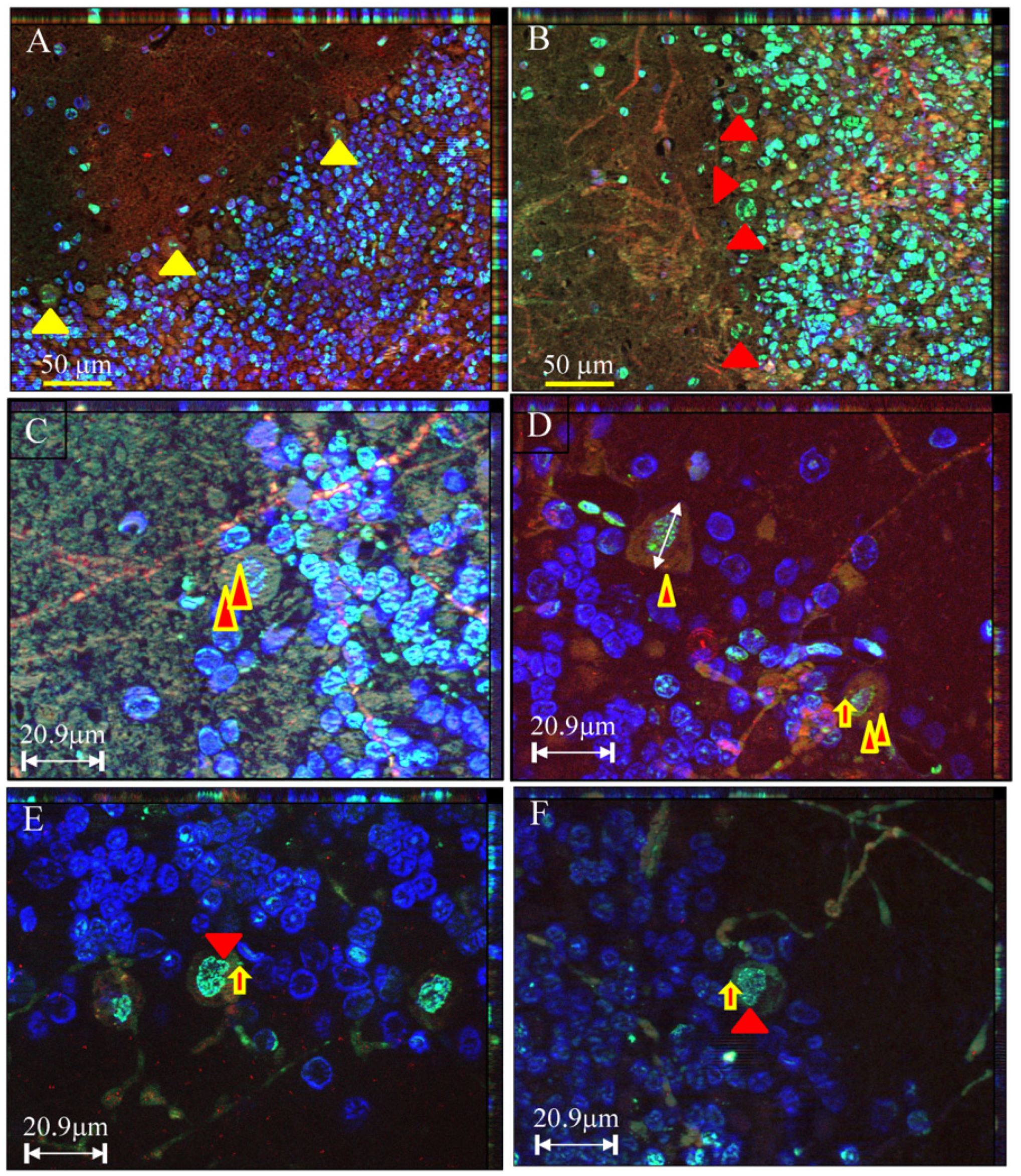
4.1. Pilot Study with a Triple Fluorescent Approach Exhibiting Apoptotic Characteristics of Purkinje Cells Following Transient Global Ischemia
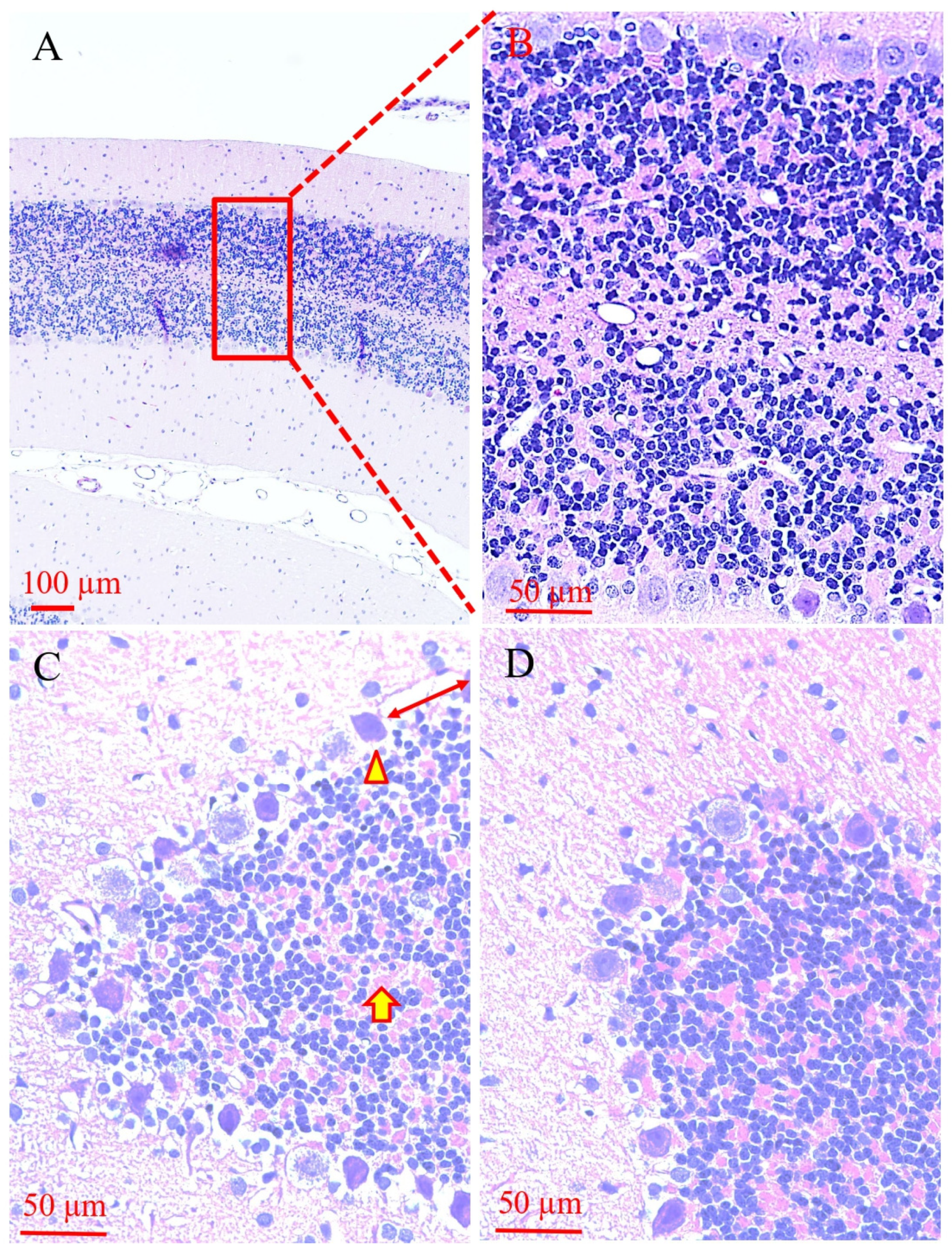
4.2. Formal Follow-On Study, Through Histological Assessment, Revealed Cerebellar Ischemic Injury
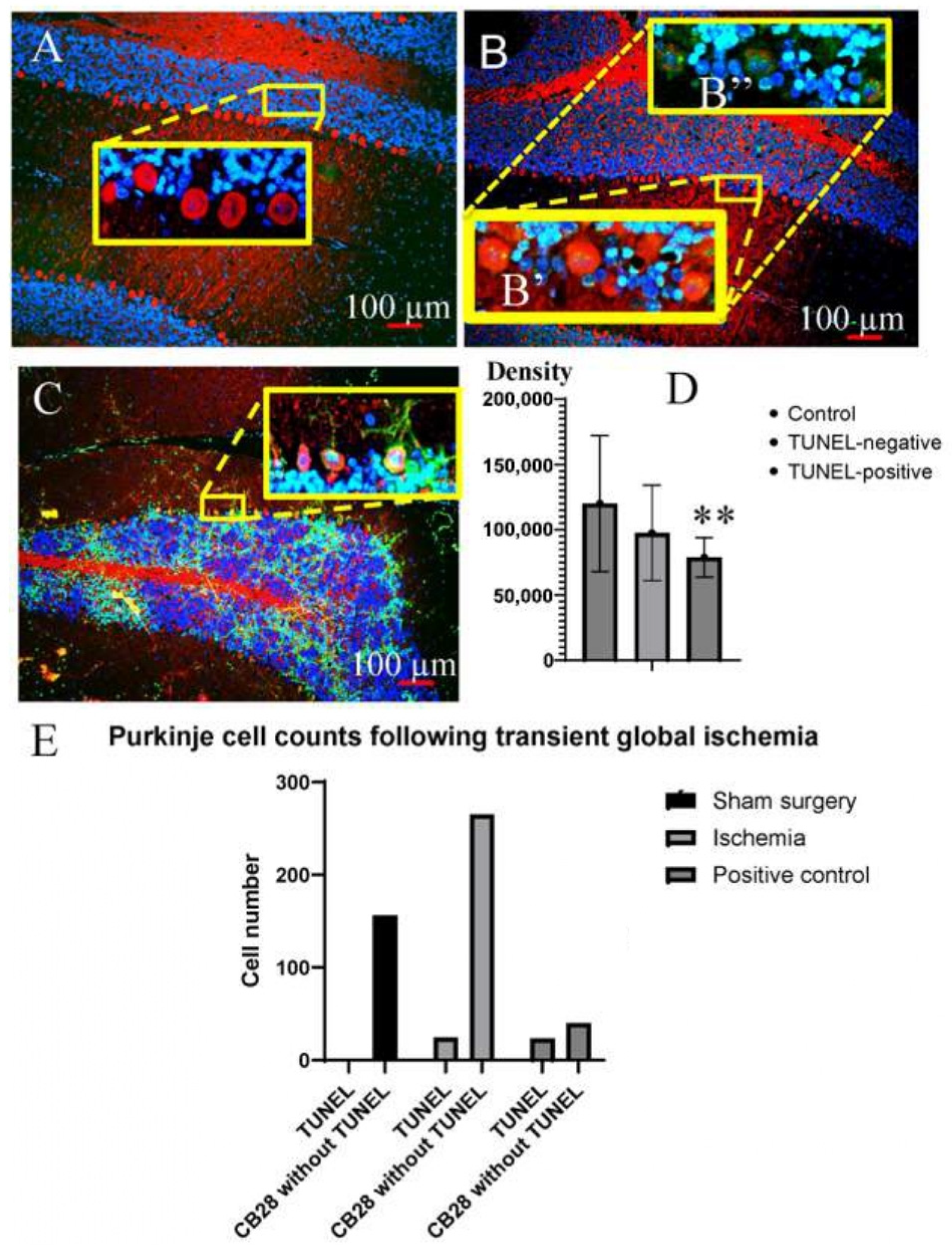
4.3. Formal Follow-On Study with Immunofluorescent Assessment Highlighted Coexistence of Apoptotic Signals and Living Signs


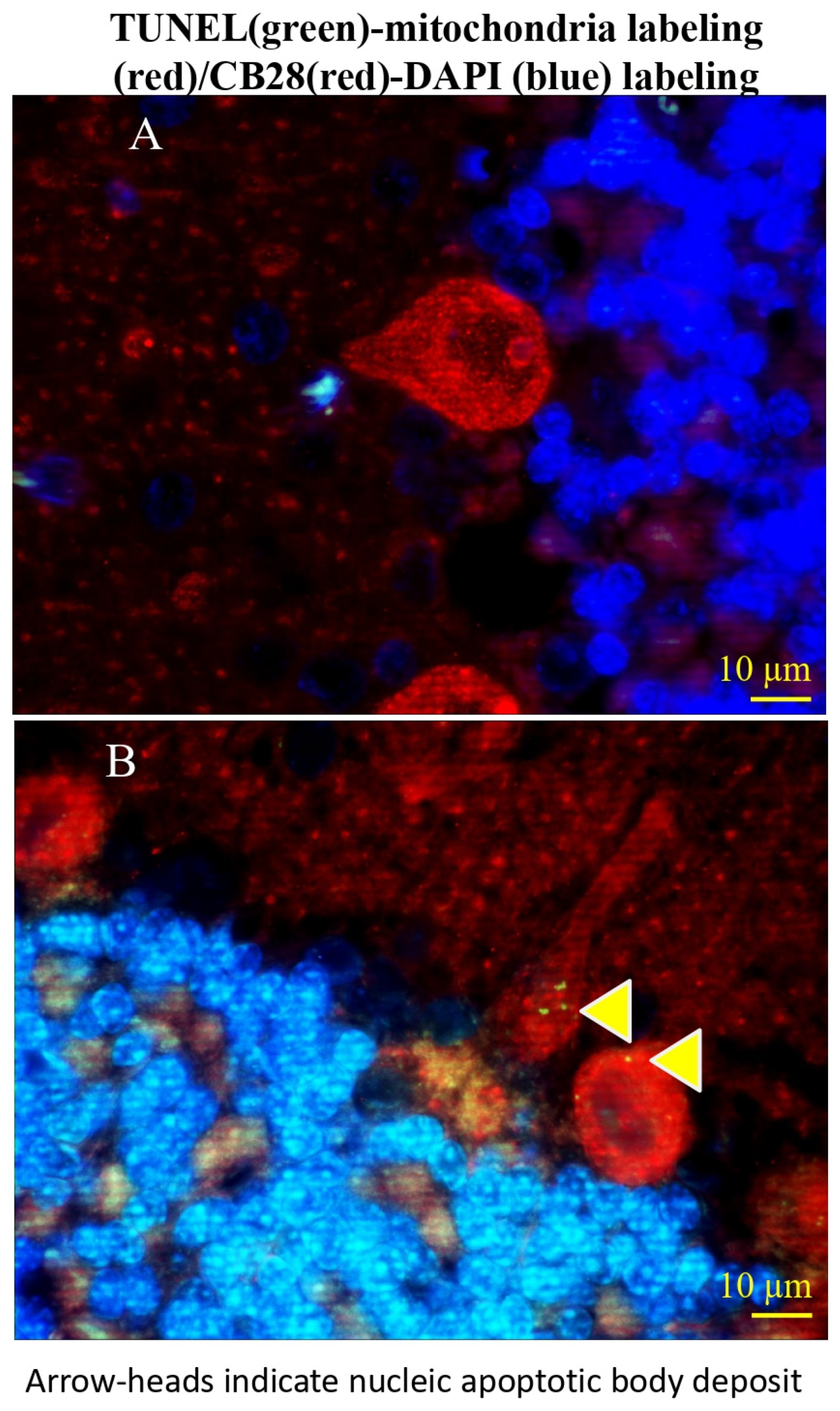
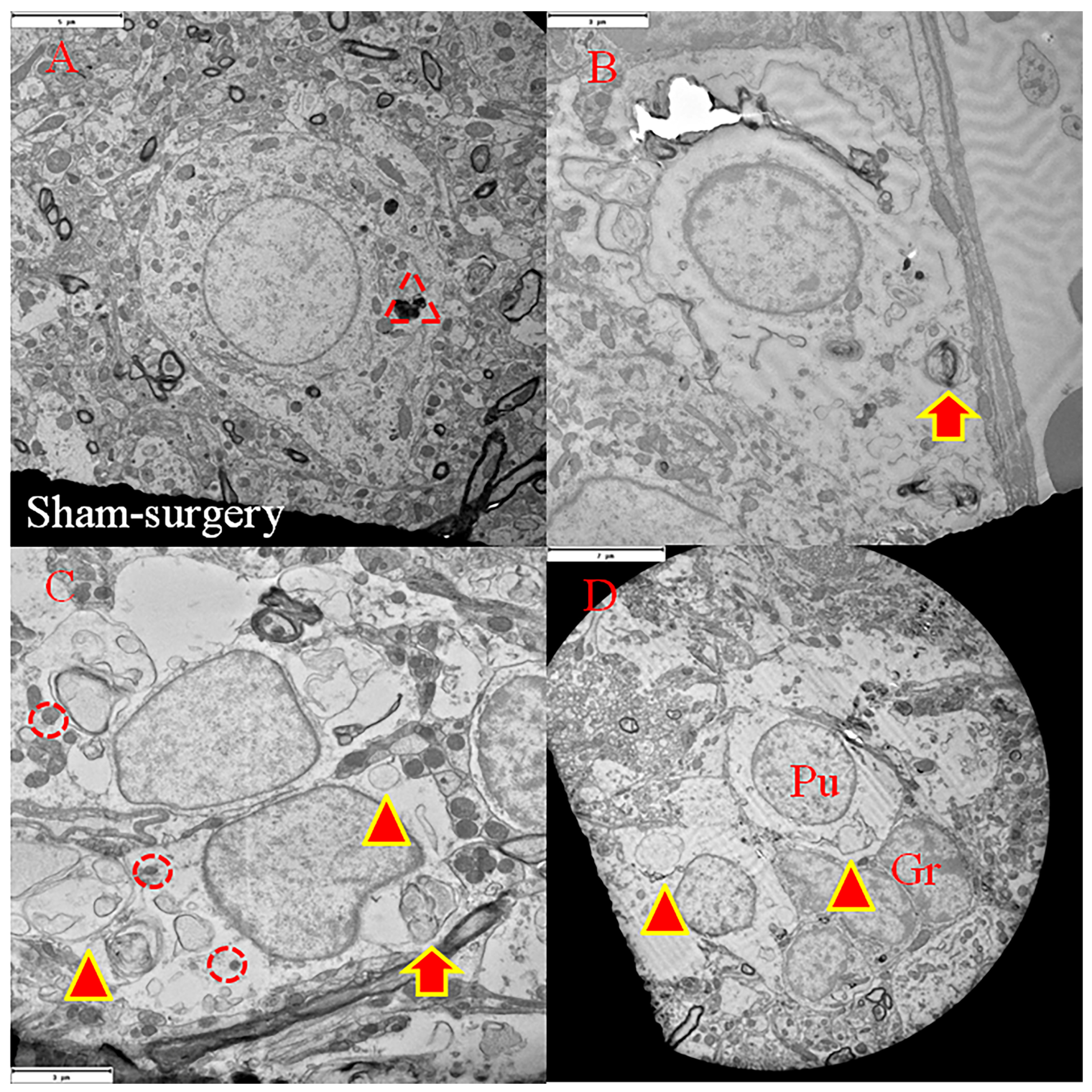
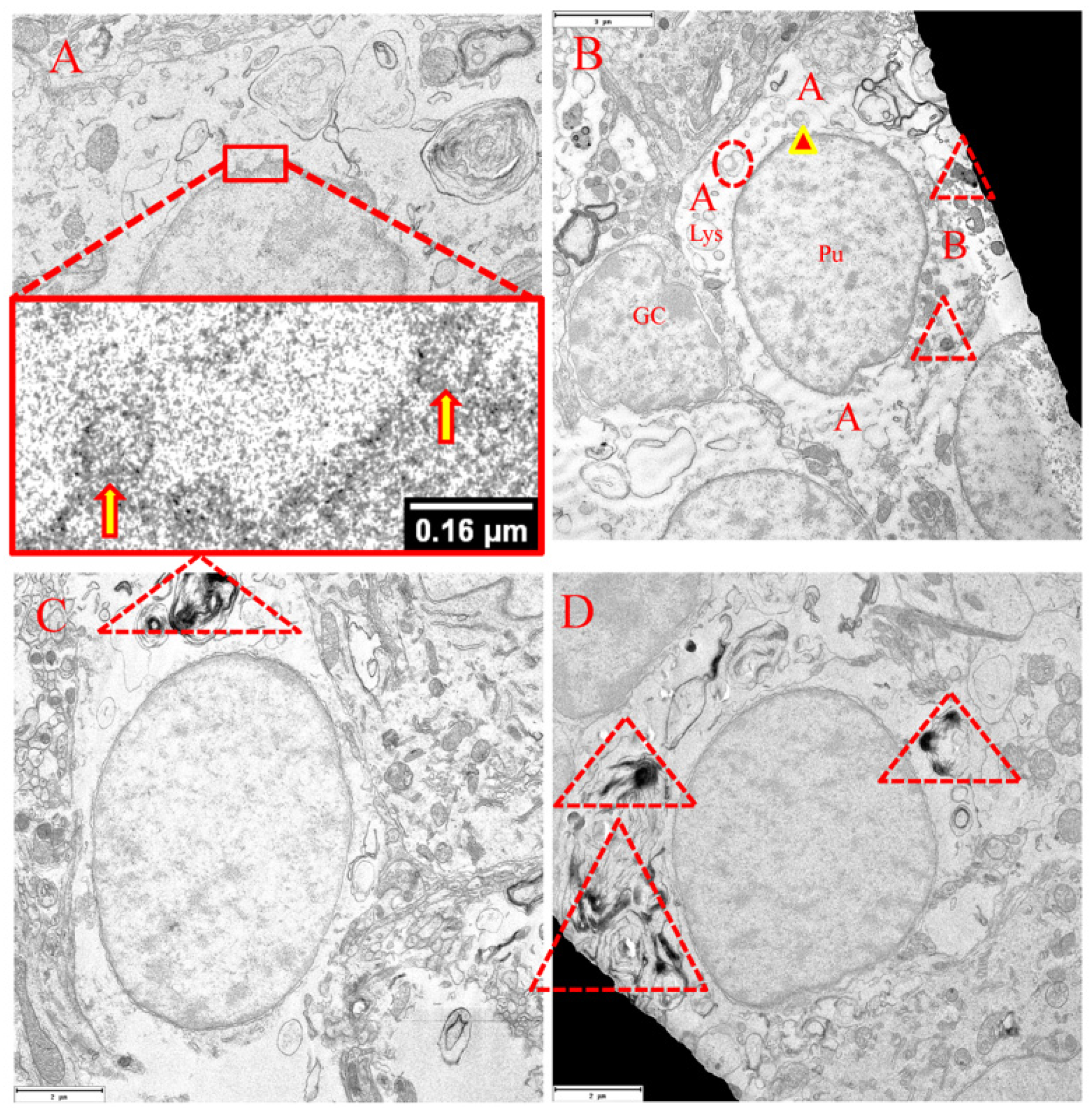
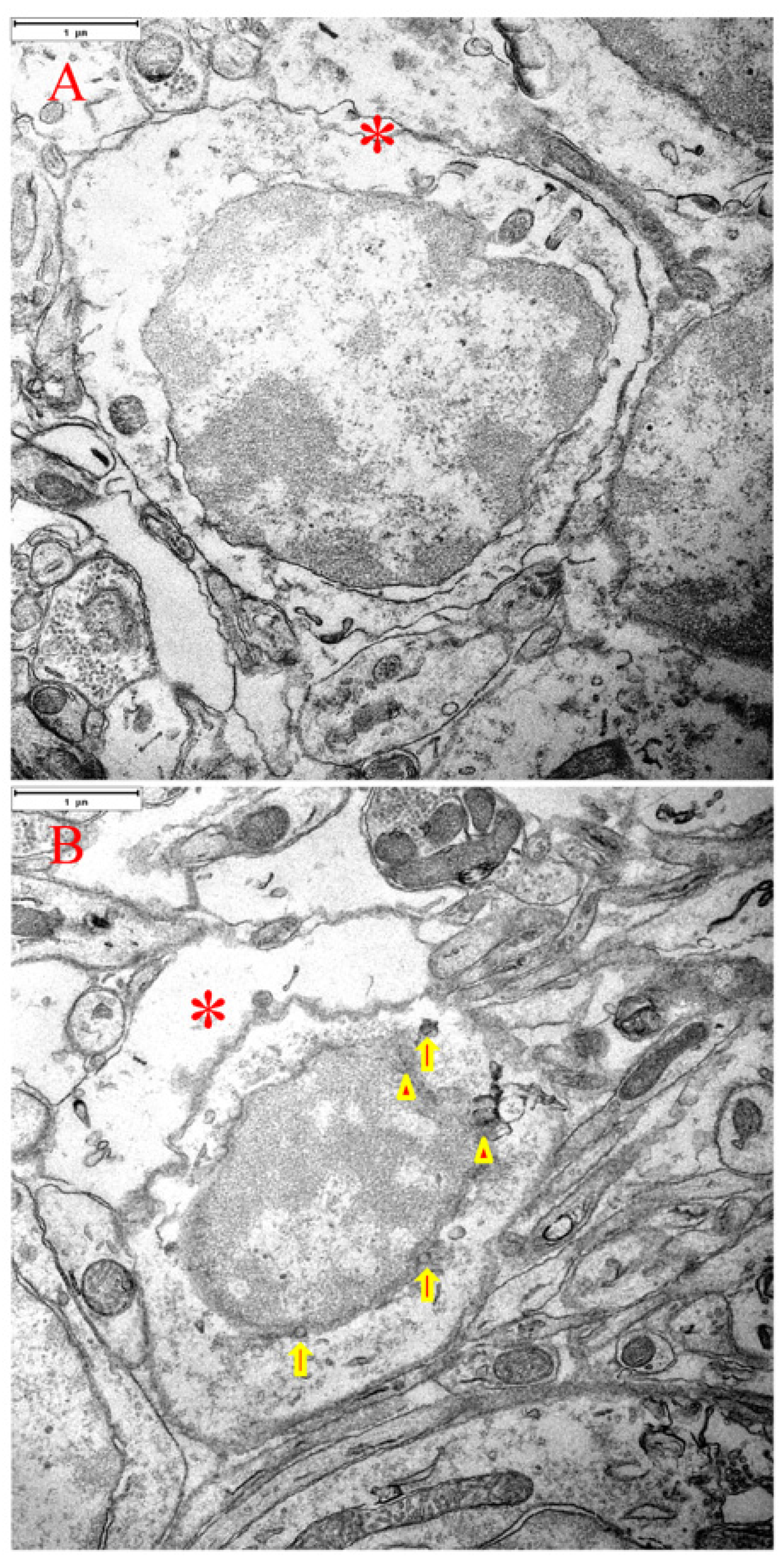
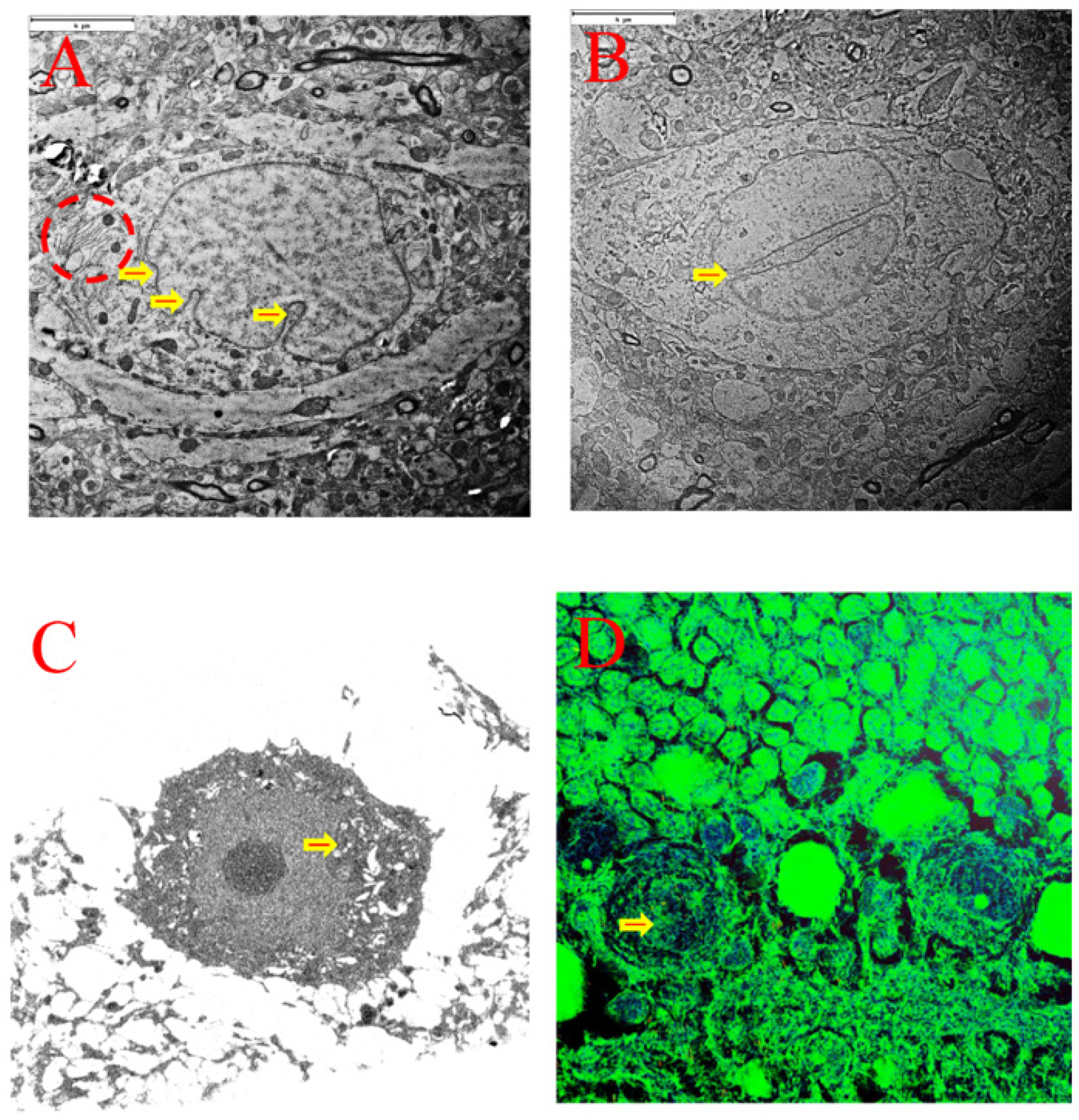
4.4. Ultramicroscopic Findings Addressing Both Ischemic Damage and Evidence of Viability in Purkinje Cells


5. Discussion
5.1. Immunohistochemical Evidence Highlighting Both Apoptotic and Viability Manifestations of Purkinje Cells
5.2. Ultrastructural Evidence Suggests That Damaged Cerebellar Purkinje Cells May Have Self-Rescue Capabilities
Author Contributions
Funding
Institutional Review Board Statement
Informed Consent Statement
Data Availability Statement
Acknowledgments
Conflicts of Interest
References
- Quillinan, N.; Grewal, H.; Deng, G.; Shimizu, K.; Yonchek, J.-C.; Strnad, F.; Traystman, R.-J.; Herson, P.-S. Region-specific role for GluN2B-containing NMDA receptors in injury to Purkinje cells and CA1 neurons following global cerebral ischemia. Neuroscience 2015, 284, 555–565. [Google Scholar] [CrossRef]
- Ardeshiri, A.; Kelley, M.-H.; Korner, I.-P.; Hurn, P.-D.; Herson, P.-S. Mechanism of progesterone neuroprotection of rat cerebellar Purkinje cells following oxygen-glucose deprivation. Eur. J. Neurosci. 2006, 24, 2567–2574. [Google Scholar] [CrossRef]
- Martin, L.-J.; Sieber, F.-E.; Traystman, R.-J. Apoptosis and necrosis occur in separate neuronal populations in hippocampus and cerebellum after ischemia and are associated with differential alterations in metabotropic glutamate receptor signaling pathways. J. Cereb. Blood Flow Metab. 2000, 20, 153–167. [Google Scholar] [CrossRef]
- Horn, M.; Schlote, W. Delayed neuronal death and delayed neuronal recovery in the human brain following global ischemia. Acta Neuropathol. 1992, 85, 79–87. [Google Scholar] [CrossRef]
- Hara, A.; Yoshimi, N.; Hirose, Y.; Ino, N.; Tanaka, T.; Mori, H. DNA fragmentation in granular cells of human cerebellum following global ischemia. Brain Res. 1995, 697, 247–250. [Google Scholar] [CrossRef]
- He, Z.; He, Y.-J.; Day, A.-L.; Simpkins, J.-W. Proestrus levels of estradiol during transient global cerebral ischemia improves the histological outcome of the hippocampal CA1 region: Perfusion-dependent and-independent mechanisms. J. Neurol. Sci. 2002, 193, 79–87. [Google Scholar] [CrossRef] [PubMed]
- He, Z.; Cui, L.; Wu, S.-S.; Li, X.-Y.; Simpkins, J.-W.; McKinney, M.; Day, A.-L. Increased severity of acute cerebral ischemic injury correlates with enhanced stem cell induction as well as with predictive behavioral profiling. Curr. Neurovasc. Res. 2004, 1, 399–409. [Google Scholar] [CrossRef] [PubMed]
- He, Z.; Cui, L.; Meschia, J.-F.; Dickson, D.-W.; Brott, T.-G.; Simpkins, J.-W.; Day, A.-L.; McKinney, M. Hippocampal progenitor cells express nestin following cerebral ischemia in rats. Neuroreport 2005, 16, 1541–1544. [Google Scholar] [CrossRef] [PubMed]
- He, Z.; Crook, J.E.; Meschia, J.F.; Brott, T.G.; Dickson, D.W.; McKinney, M. Aging blunts ischemic-preconditioning-induced neuroprotection following transient global ischemia in rats. Curr. Neurovasc. Res. 2005, 2, 365–374. [Google Scholar] [CrossRef] [PubMed]
- He, Z.; He, B.; Behrle, B.L.; Fejleh, M.P.; Cui, L.; Paule, M.G.; Greenfield, L.J. Ischemia-induced increase in microvascular phosphodiesterase 4D expression in rat hippocampus associated with blood brain barrier permeability: Effect of age. ACS Chem. Neurosci. 2012, 3, 428–432. [Google Scholar] [CrossRef] [PubMed] [PubMed Central]
- He, Z.; Meschia, J.-F.; Brott, T.-G.; Dickson, D.-W.; McKinney, M. Aging is neuroprotective during global ischemia but leads to increased caspase-3 and apoptotic activity in hippocampal neurons. Curr. Neurovasc. Res. 2006, 3, 181–186. [Google Scholar] [CrossRef] [PubMed]
- Tawa, P.; Hell, K.; Giroux, A.; Grimm, E.; Han, Y.; Nicholson, D.W.; Xanthoudakis, S. Catalytic activity of caspase-3 is required for its degradation: Stabilization of the active complex by synthetic inhibitors. Cell Death Differ. 2004, 11, 439–447. [Google Scholar] [CrossRef] [PubMed]
- Deerinck, T.-J.; Shone, T.-M.; Bushong, E.-A.; Ramachandra, R.; Peltier, S.-T.; Ellisman, M.-H. High-performance serial block-face SEM of nonconductive biological samples enabled by focal gas injection-based charge compensation. J. Microsc. 2018, 270, 142–149. [Google Scholar] [CrossRef] [PubMed]
- Wong, C. How to kill the ‘zombie’ cells that make you age. Nature 2024, 629, 518–520. [Google Scholar] [CrossRef]
- Keilhoff, G.; Nguyen Thi, T.-M.; Esser, T.; Ebmeyer, U. Relative Resilience of Cerebellar Purkinje Cells in a Cardiac Arrest/Resuscitation Rat Model. Neurocrit. Care 2020, 32, 775–789. [Google Scholar] [CrossRef]
- Geske, F.-J.; Lieberman, R.; Strange, R.; Gerschenson, L.-E. Early stages of p53-induced apoptosis are reversible. Cell Death Differ. 2001, 8, 182–191. [Google Scholar] [CrossRef]
- Elmore, S. Apoptosis: A review of programmed cell death. Toxicol. Pathol. 2007, 35, 495–516. [Google Scholar] [CrossRef]
- Ouyang, L.; Shi, Z.; Zhao, S.; Wang, F.-T.; Zhou, T.-T.; Liu, B.; Bao, J.-K. Programmed cell death pathways in cancer: A review of apoptosis, autophagy and programmed necrosis. Cell Prolif. 2012, 45, 487–498. [Google Scholar] [CrossRef]
- Fairlie, W.-D.; Tran, S.; Lee, E.-F. Crosstalk between apoptosis and autophagy signaling pathways. Int. Rev. Cell Mol. Biol. 2020, 352, 115–158. [Google Scholar]
- Colotta, F.; Re, F.; Polentarutti, N.; Sozzani, S.; Mantovani, A. Modulation of granulocyte survival and programmed cell death by cytokines and bacterial products. Blood 1992, 80, 2012–2020. [Google Scholar] [CrossRef]
- Lee, A.; Whyte, M.-K.; Haslett, C. Inhibition of apoptosis and prolongation of neutrophil functional longevity by inflammatory mediators. J. Leukoc. Biol. 1993, 54, 283–288. [Google Scholar] [CrossRef]
- Iba, T.; Hashiguchi, N.; Nagaoka, I.; Tabe, Y.; Murai, M. Neutrophil cell death in response to infection and its relation to coagulation. J. Intensive Care 2013, 1, 13. [Google Scholar] [CrossRef] [PubMed]
- Rosales, C. Neutrophil: A Cell with Many Roles in Inflammation or Several Cell Types? Front. Physiol. 2018, 9, 113. [Google Scholar] [CrossRef] [PubMed]
- Ewald, A.; Kossner, U.; Scheer, U.; Dabauvalle, M.-C. A biochemical and immunological comparison of nuclear and cytoplasmic pore complexes. J. Cell Sci. 1996, 109, 1813–1824. [Google Scholar] [CrossRef] [PubMed]
- Raghunayakula, S.; Subramonian, D.; Dasso, M.; Kumar, R.; Zhang, X.-D. Molecular Characterization and Functional Analysis of Annulate Lamellae Pore Complexes in Nuclear Transport in Mammalian Cells. PLoS ONE 2015, 10, e0144508. [Google Scholar] [CrossRef]
- Matunis, M.-J.; Coutavas, E.; Blobel, G. A novel ubiquitin-like modification modulates the partitioning of the Ran-GTPase-activating protein RanGAP1 between the cytosol and the nuclear pore complex. J. Cell Biol. 1996, 135, 1457–1470. [Google Scholar] [CrossRef]
- Stiekema, M.; Houben, F.; Verheyen, F.; Borgers, M.; Menzel, J.; Meschkat, M.; van Zandvoort, M.-A.-M.-J.; Ramaekers, F.-C.-S.; Broers, J.-L.-V. The Role of Lamins in the Nucleoplasmic Reticulum, a Pleiomorphic Organelle That Enhances Nucleo-Cytoplasmic Interplay. Front. Cell Dev. Biol. 2022, 10, 914286. [Google Scholar] [CrossRef]
- Krishnankutty, R.-K.; Kukday, S.-S.; Castleberry, A.-J.; Breevoort, S.-R.; Schmidt, W.-K. Proteolytic processing of certain CaaX motifs can occur in the absence of the Rce1p and Ste24p CaaX proteases. Yeast 2009, 26, 451–463. [Google Scholar] [CrossRef]
- Broers, J.-L.; Machiels, B.-M.; van Eys, G.-J.; Kuijpers, H.-J.; Manders, E.-M.; van Driel, R.; Ramaekers, F.-C. Dynamics of the Nuclear Lamina as Monitored by GFP-Tagged A-type Lamins. J. Cell Sci. 1999, 112, 3463–3475. [Google Scholar] [CrossRef]
- Prüfert, K.; Vogel, A.; Krohne, G. The lamin CxxM motif promotes nuclear membrane growth. J. Cell Sci. 2004, 117, 6105–6116. [Google Scholar] [CrossRef]
- Iadecola, C.; Alexander, M. Cerebral ischemia and inflammation. Curr. Opin. Neurol. 2001, 14, 89–94. [Google Scholar] [CrossRef] [PubMed]
- Mehrotra, S.; Maqbool, S.-B.; Kolpakas, A.; Murnen, K.; Calvi, B.-R. Endocycling cells do not apoptose in response to DNA rereplication genotoxic stress. Genes Dev. 2008, 22, 3158–3171. [Google Scholar] [CrossRef] [PubMed]
- Yamagishi, M.; Ito, E.; Matsuo, R. DNA endoreplication in the brain neurons during body growth of an adult slug. J. Neurosci. 2011, 31, 5596–5604. [Google Scholar] [CrossRef] [PubMed]
- Del Monte, U. The puzzle of ploidy of Purkinje neurons. Cerebellum 2006, 5, 23–26. [Google Scholar] [CrossRef]
- Dusart, I.; Flamant, F. Profound morphological and functional changes of rodent Purkinje cells between the first and the second postnatal weeks: A metamorphosis? Front. Neuroanat. 2012, 6, 11. [Google Scholar] [CrossRef]
- Weimann, J.-M.; Johansson, C.-B.; Trejo, A.; Blau, H.-M. Stable reprogrammed heterokaryons form spontaneously in Purkinje neurons after bone marrow transplant. Nat. Cell Biol. 2003, 5, 959–966. [Google Scholar] [CrossRef]
- Lapham, L.-W. Tetraploid DNA content of Purkinje neurons of human cerebellar cortex. Science 1968, 159, 310–312. [Google Scholar] [CrossRef]
- Larkins, B.-A.; Dilkes, B.-P.; Dante, R.-A.; Coelho, C.-M.; Woo, Y.-M.; Liu, Y. Investigating the hows and whys of DNA endoreduplication. J. Exp. Bot. 2001, 52, 183–192. [Google Scholar] [CrossRef][Green Version]
- Zanet, J.; Freije, A.; Ruiz, M.; Coulon, V.; Sanz, J.-R.; Chiesa, J.; Gandarillas, A. A mitosis block links active cell cycle with human epidermal differentiation and results in endoreplication. PLoS ONE 2010, 5, e15701. [Google Scholar] [CrossRef]
- Gandarillas, A.; Molinuevo, R.; Sanz-Gómez, N. Mammalian endoreplication emerges to reveal a potential developmental timer. Cell Death Differ. 2018, 25, 471–476. [Google Scholar] [CrossRef]


Disclaimer/Publisher’s Note: The statements, opinions and data contained in all publications are solely those of the individual author(s) and contributor(s) and not of MDPI and/or the editor(s). MDPI and/or the editor(s) disclaim responsibility for any injury to people or property resulting from any ideas, methods, instructions or products referred to in the content. |
© 2026 by the authors. Licensee MDPI, Basel, Switzerland. This article is an open access article distributed under the terms and conditions of the Creative Commons Attribution (CC BY) license.
Share and Cite
He, Z.; Savenka, A.; Cino Ozuna, A.G.; Davis, K.J.; Paredes, A. Dual Characteristics of Apoptosis and Survival in Cerebellar Purkinje Cells Four Days After Transient Global Ischemia. Cells 2026, 15, 572. https://doi.org/10.3390/cells15070572
He Z, Savenka A, Cino Ozuna AG, Davis KJ, Paredes A. Dual Characteristics of Apoptosis and Survival in Cerebellar Purkinje Cells Four Days After Transient Global Ischemia. Cells. 2026; 15(7):572. https://doi.org/10.3390/cells15070572
Chicago/Turabian StyleHe, Zhen, Alena Savenka, Ada G. Cino Ozuna, Kelly J. Davis, and Angel Paredes. 2026. "Dual Characteristics of Apoptosis and Survival in Cerebellar Purkinje Cells Four Days After Transient Global Ischemia" Cells 15, no. 7: 572. https://doi.org/10.3390/cells15070572
APA StyleHe, Z., Savenka, A., Cino Ozuna, A. G., Davis, K. J., & Paredes, A. (2026). Dual Characteristics of Apoptosis and Survival in Cerebellar Purkinje Cells Four Days After Transient Global Ischemia. Cells, 15(7), 572. https://doi.org/10.3390/cells15070572