Temperature-Dependent and Semi-Quantitative Enzyme Profiles of Malacosoma disstria (Lepidoptera: Lasiocampidae) Hemocytic Cell Lines



Highlights
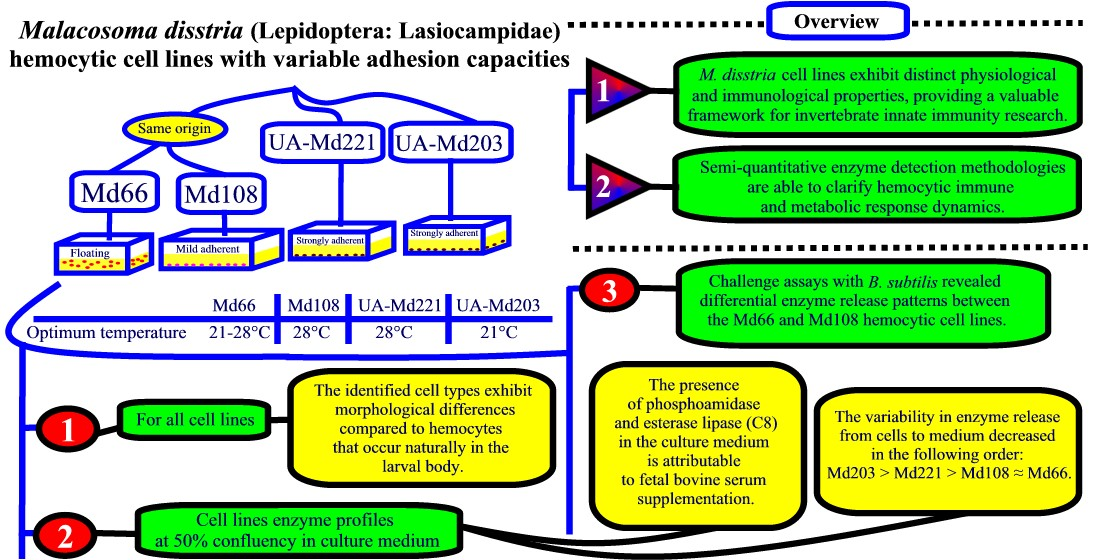
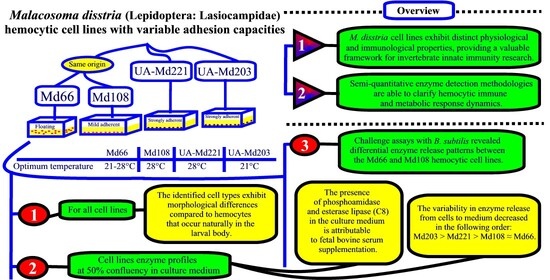
- Ex vivo hemocyte populations derived from Malacosoma disstria (Lepidoptera: Lasiocampidae) demonstrated the capacity to preserve select temperature-dependent characteristics observed under in vivo conditions; however, notable variations in cellular morphology and population frequency per hemocyte type were evident when compared with their natural physiological state.
- Established hemocytic cell lines from M. disstria exhibit the ability of autonomous innate immune responses independent of systemic regulatory influences present in vivo, with such responses being readily detectable using semi-quantitative methodologies.
- The floating and adherent polystyrene-cultured cell lines derived from M. disstria demonstrate distinctive physiological and immunological properties, establishing a valuable experimental framework for elucidating innate immune mechanisms in invertebrates.
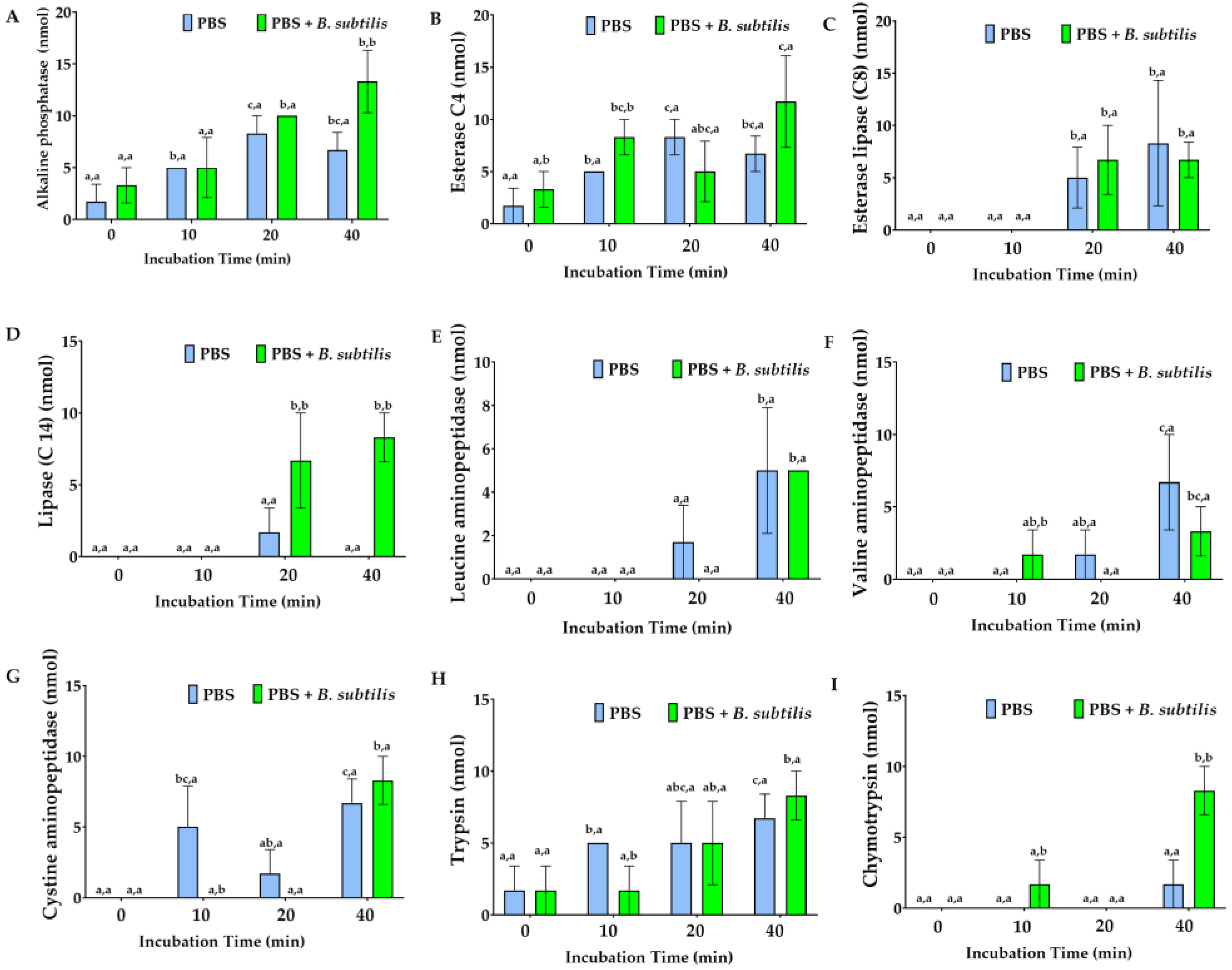
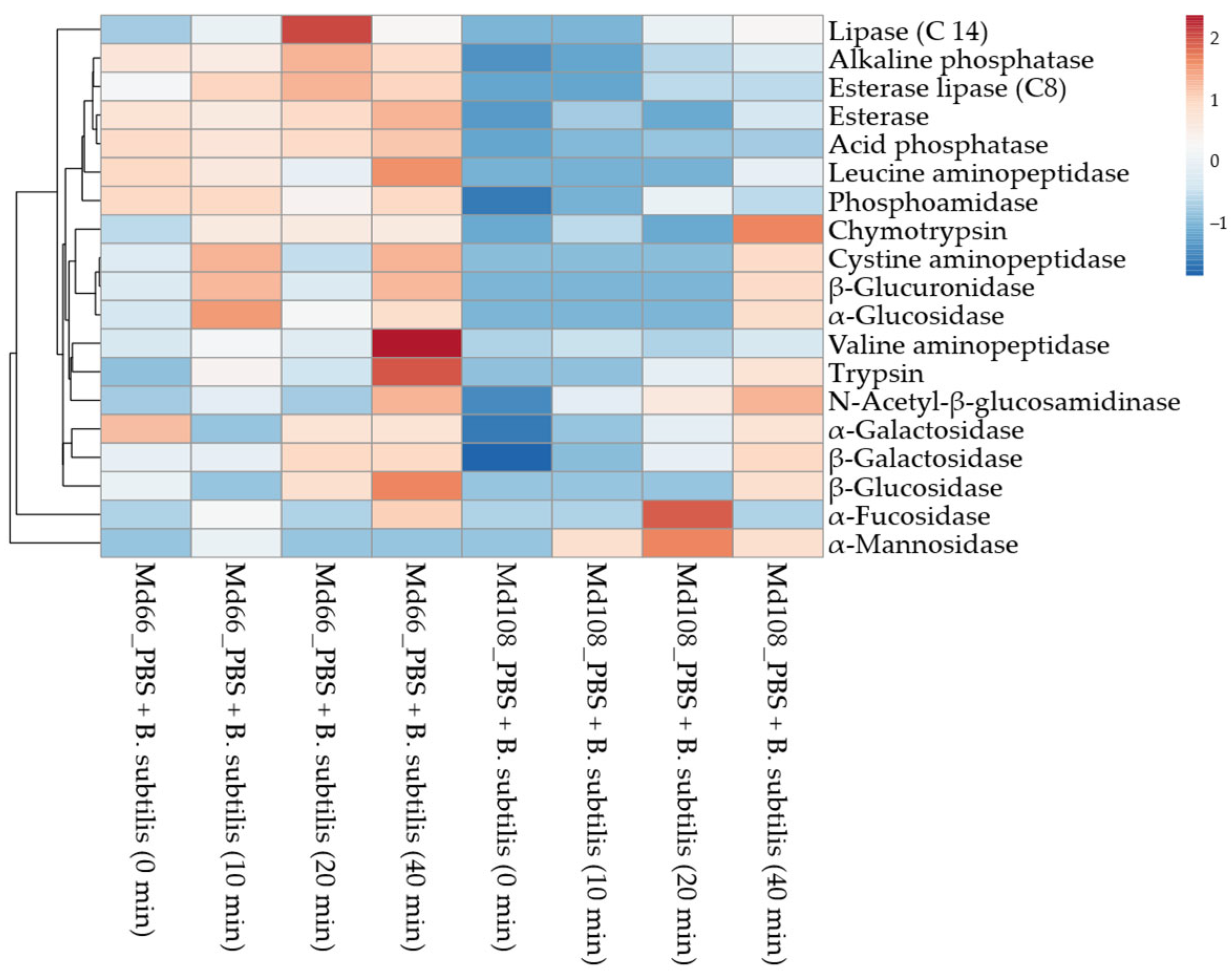
- Semi-quantitative approaches for hemocytic cell line enzymatic detection can yield valuable insights concerning the temporal dynamics governing enzyme release, thereby establishing a foundation for elucidating the kinetic parameters that drive cellular processes.
Abstract
1. Introduction
2. Materials and Methods
2.1. Hemocyte Cell Lines
2.2. Bacteria
2.3. Optimum Temperature for Hemocyte Growth
2.4. Discharge of Enzymes from Hemocyte Cell Lines in Culture Medium
2.5. Hemocyte Morphological Characterization During Growth
2.6. Discharge of Enzymes from Hemocytes Reacting to Foreign Matter in Phosphate-Buffered Saline (PBS)
2.7. Statistics
3. Results
3.1. Optimum Temperature for Cell Growth
3.2. Characterization of Cell Lines in Terms of Blebbing
3.3. Cell Types
3.4. Cell Frequencies
3.5. Discharge of Enzymes from Malacosoma Disstria Cell Lines in Culture Medium
3.6. Comparative Analysis of Cell Line Enzyme Release in Culture Medium
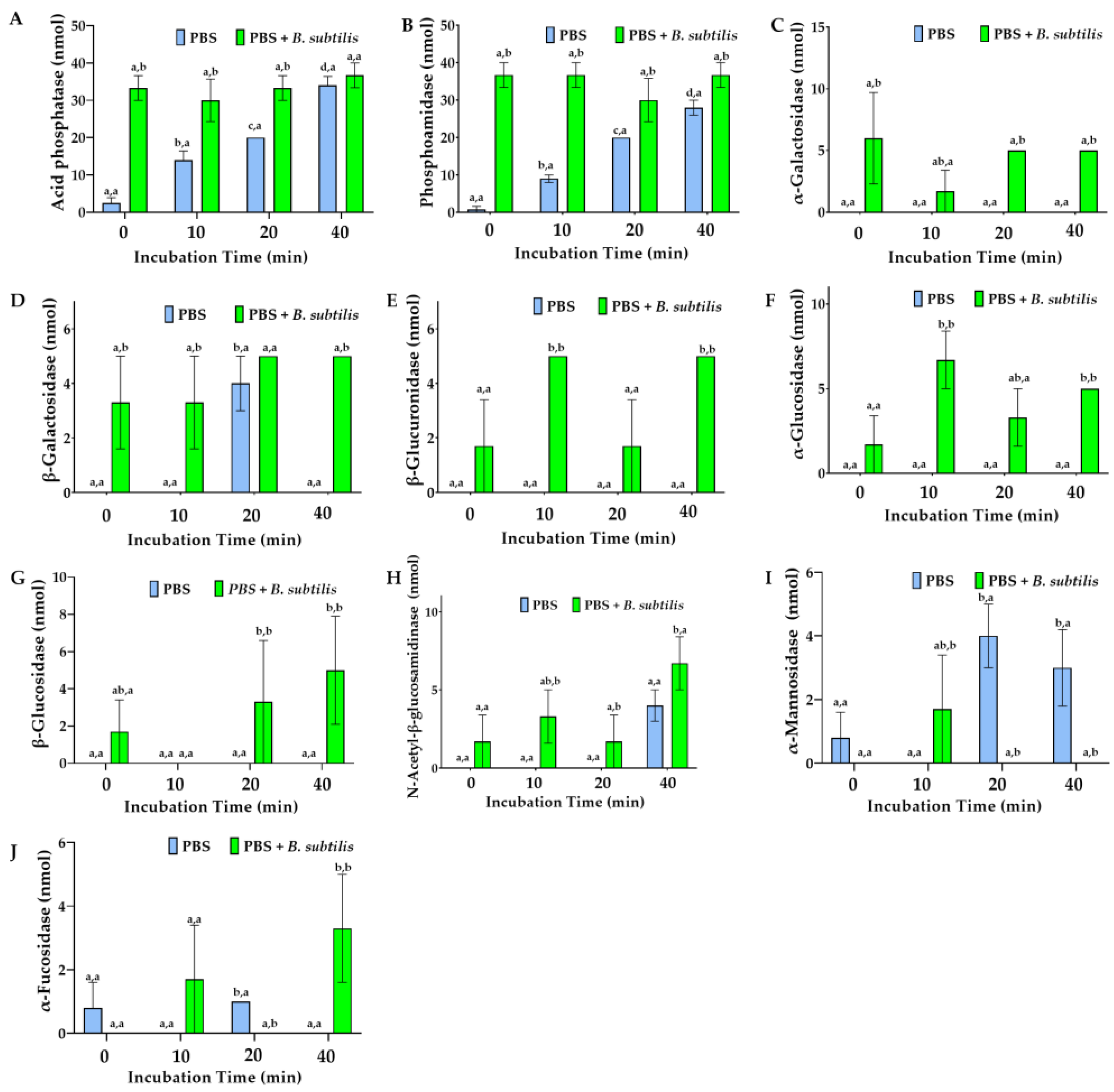
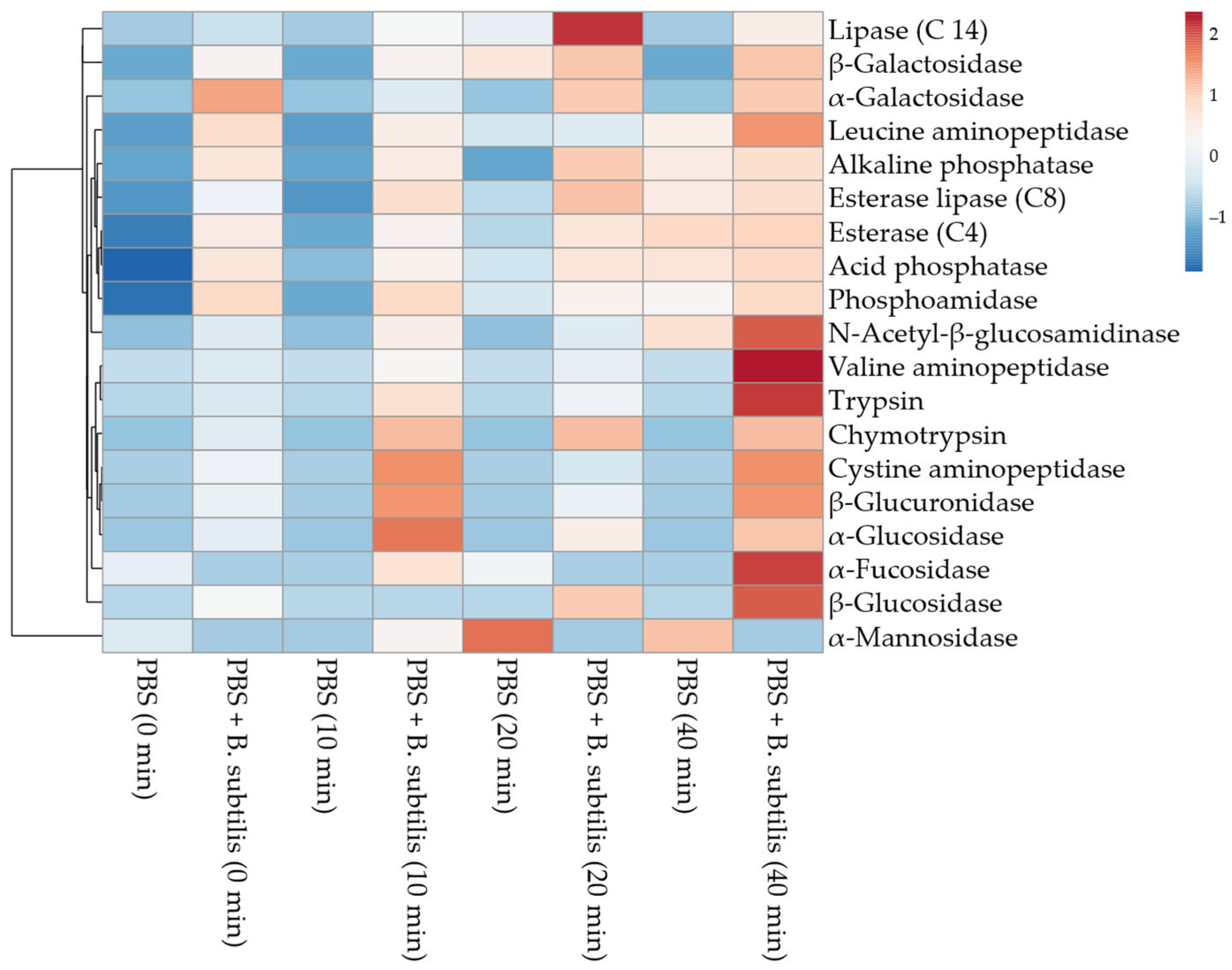
3.7. Discharge of Enzymes from Floating Md66 Hemocytic Cell Line in Response to Foreign Matter
Significance of Enzyme Discharge for Md66 Cell Line Challenged with B. Subtilis
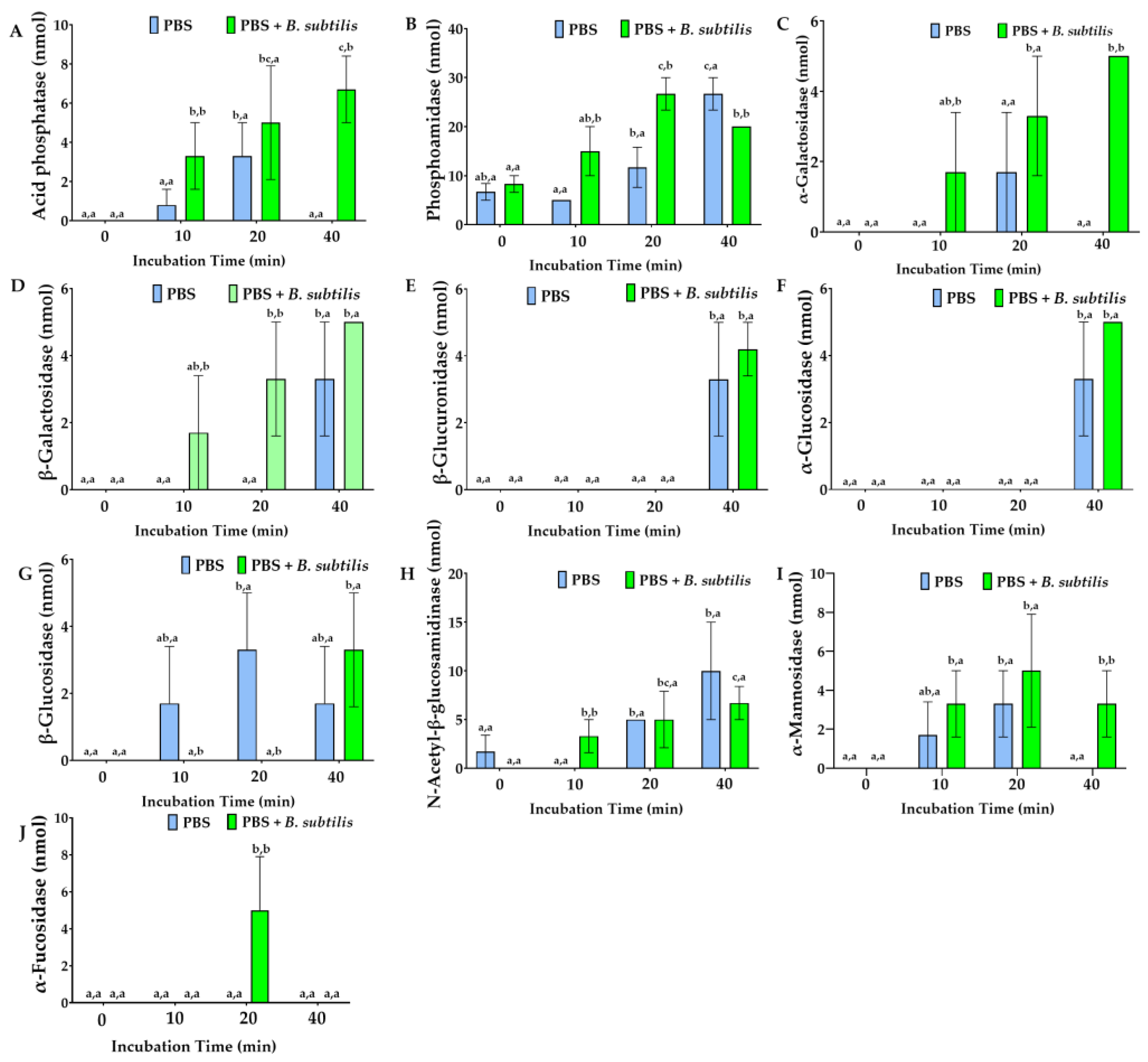
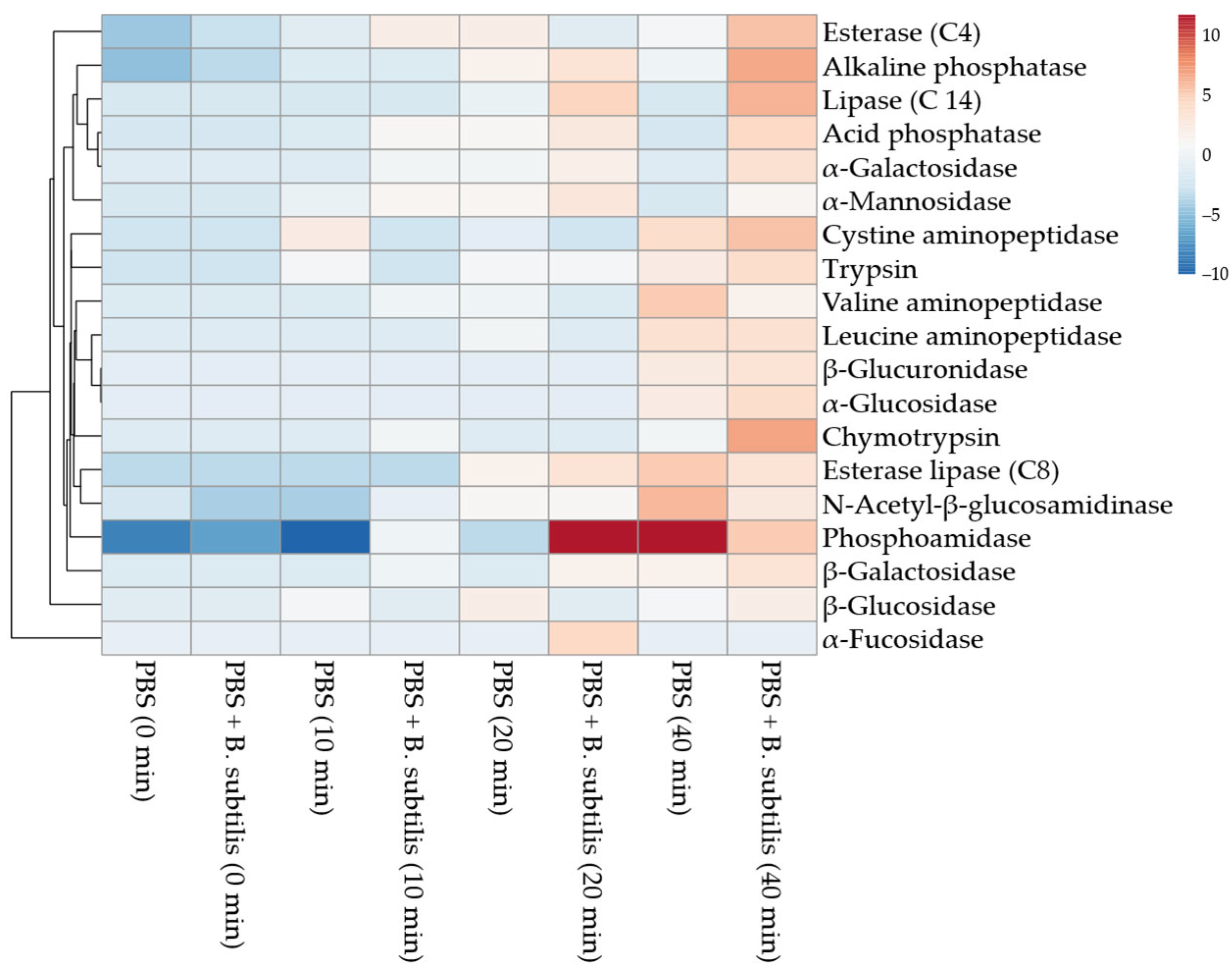
3.8. Discharge of Enzymes from Adherent Md108 Hemocytic Cell Line in Response to Foreign Matter
Significance of Enzyme Discharge for Md108 Cell Line Challenged with B. Subtilis
3.9. Comparison of Md66 and Md108 Cell Lines Enzyme Discharge in Presence of B. subtilis
4. Discussion
5. Conclusions
Author Contributions
Funding
Institutional Review Board Statement
Informed Consent Statement
Data Availability Statement
Acknowledgments
Conflicts of Interest
References
- Strand, M.R. Recent Insights in the Development and Functions of Insect Hemocytes. Curr. Opin. Insect Sci. 2026, 73, 101434. [Google Scholar] [CrossRef] [PubMed]
- Foukas, L.C.; Katsoulas, H.L.; Paraskevopoulou, N.; Metheniti, A.; Lambropoulou, M.; Marmaras, V.J. Phagocytosis of Escherichia coli by Insect Hemocytes Requires Both Activation of the Ras/Mitogen-Activated Protein Kinase Signal Transduction Pathway for Attachment and β3 Integrin for Internalization. J. Biol. Chem. 1998, 273, 14813–14818. [Google Scholar] [CrossRef] [PubMed]
- Lamprou, I.; Mamali, I.; Dallas, K.; Fertakis, V.; Lampropoulou, M.; Marmaras, V.J. Distinct Signalling Pathways Promote Phagocytosis of Bacteria, Latex Beads and Lipopolysaccharide in Medfly Haemocytes. Immunology 2007, 121, 314–327. [Google Scholar] [CrossRef] [PubMed]
- Lavine, M.D.; Strand, M.R. Surface Characteristics of Foreign Targets That Elicit an Encapsulation Response by the Moth Pseudoplusia includens. J. Insect Physiol. 2001, 47, 965–974. [Google Scholar] [CrossRef]
- García-García, E. Diversity in Phagocytic Signaling. In Molecular Mechanisms of Phagocytosis; Medical Intelligence Unit; Springer: Boston, MA, USA, 2005; pp. 1–22. ISBN 978-0-387-25419-7. [Google Scholar]
- Ribeiro, C.; Brehélin, M. Insect Haemocytes: What Type of Cell Is That? J. Insect Physiol. 2006, 52, 417–429. [Google Scholar] [CrossRef]
- Gillespie, J.P.; Kanost, M.R.; Trenczek, T. Biological Mediators of Insect Immunity. Annu. Rev. Entomol. 1997, 42, 611–643. [Google Scholar] [CrossRef]
- Pearson, A.M.; Baksa, K.; Rämet, M.; Protas, M.; McKee, M.; Brown, D.; Ezekowitz, R.A.B. Identification of Cytoskeletal Regulatory Proteins Required for Efficient Phagocytosis in Drosophila. Microbes Infect. 2003, 5, 815–824. [Google Scholar] [CrossRef]
- Gandhe, A.S.; John, S.H.; Nagaraju, J. Noduler, A Novel Immune Up-Regulated Protein Mediates Nodulation Response in Insects. J. Immunol. 2007, 179, 6943–6951. [Google Scholar] [CrossRef]
- Beckage, N.E. Insect Immunology, 1st ed.; Academic Press: Amsterdam, The Netherlands; Boston, MA, USA, 2008; ISBN 978-0-12-373976-6. [Google Scholar]
- Ratcliffe, N.A. Cellular Defense Responses of Insects: Unresolved Problems. In Parasites and Pathogens of Insects; Elsevier: Amsterdam, The Netherlands, 1993; pp. 267–304. ISBN 978-0-08-091649-1. [Google Scholar]
- Da Silva, C.; Dunphy, G.B.; Rau, M.E. Interaction of Hemocytes and Prophenoloxidase System of Fifth Instar Nymphs of Acheta domesticus with Bacteria. Dev. Comp. Immunol. 2000, 24, 367–379. [Google Scholar] [CrossRef]
- Howard, R.W.; Miller, J.S.; Stanley, D.W. The Influence of Bacterial Species and Intensity of Infections on Nodule Formation in Insects. J. Insect Physiol. 1998, 44, 157–164. [Google Scholar] [CrossRef]
- Ratcliffe, N.A. Back to the Future: Forgotten Protocols for Optimizing the Isolation of Arthropod Haemocytes. Dev. Comp. Immunol. 2024, 159, 105223. [Google Scholar] [CrossRef]
- Lamprou, I.; Tsakas, S.; Theodorou, G.L.; Karakantza, M.; Lampropoulou, M.; Marmaras, V.J. Uptake of LPS/E. coli/Latex Beads via Distinct Signalling Pathways in Medfly Hemocytes: The Role of MAP Kinases Activation and Protein Secretion. Biochim. Biophys. Acta (BBA)—Mol. Cell Res. 2005, 1744, 1–10. [Google Scholar] [CrossRef] [PubMed]
- Tanada, Y.; Kaya, H.K. Insect Pathology; Academic Press: San Diego, CA, USA, 1993; 666p, ISBN 978-0-12-683255-6. [Google Scholar]
- Nardi, J.B.; Zhuang, S.; Pilas, B.; Mark Bee, C.; Kanost, M.R. Clustering of Adhesion Receptors Following Exposure of Insect Blood Cells to Foreign Surfaces. J. Insect Physiol. 2005, 51, 555–564. [Google Scholar] [CrossRef] [PubMed]
- Ratcliffe, N.A. Spherule Cell-Test Particle Interactions in Monolayer Cultures of Pieris brassicae Hemocytes. J. Invertebr. Pathol. 1975, 26, 217–223. [Google Scholar] [CrossRef] [PubMed]
- Ratcliffe, N.A.; Gagen, S.J. Cellular Defense Reactions of Insect Hemocytes In Vivo: Nodule Formation and Development in Galleria mellonella and Pieris brassicae Larvae. J. Invertebr. Pathol. 1976, 28, 373–382. [Google Scholar] [CrossRef]
- Nardi, J.B.; Gao, C.; Kanost, M.R. The Extracellular Matrix Protein Lacunin Is Expressed by a Subset of Hemocytes Involved in Basal Lamina Morphogenesis. J. Insect Physiol. 2001, 47, 997–1006. [Google Scholar] [CrossRef]
- Lavine, M.D.; Strand, M.R. Insect Hemocytes and Their Role in Immunity. Insect Biochem. Mol. Biol. 2002, 32, 1295–1309. [Google Scholar] [CrossRef]
- Asgari, S.; Schmidt, O. Is Cell Surface Calreticulin Involved in Phagocytosis by Insect Hemocytes? J. Insect Physiol. 2003, 49, 545–550. [Google Scholar] [CrossRef]
- Barat-Houari, M.; Hilliou, F.; Jousset, F.-X.; Sofer, L.; Deleury, E.; Rocher, J.; Ravallec, M.; Galibert, L.; Delobel, P.; Feyereisen, R.; et al. Gene Expression Profiling of Spodoptera frugiperda Hemocytes and Fat Body Using cDNA Microarray Reveals Polydnavirus-Associated Variations in Lepidopteran Host Genes Transcript Levels. BMC Genom. 2006, 7, 160. [Google Scholar] [CrossRef]
- Strand, M.R. Insect Hemocytes and Their Role in Immunity. In Insect Immunology; Elsevier: Amsterdam, The Netherlands, 2008; pp. 25–47. ISBN 978-0-12-373976-6. [Google Scholar]
- Pech, L.L.; Strand, M.R. Plasmatocytes from the Moth Pseudoplusia includens Induce Apoptosis of Granular Cells. J. Insect Physiol. 2000, 46, 1565–1573. [Google Scholar] [CrossRef]
- Daborn, P.J.; Waterfield, N.; Silva, C.P.; Au, C.P.Y.; Sharma, S.; Ffrench-Constant, R.H. A Single Photorhabdus Gene, Makes Caterpillars Floppy (Mcf), Allows Escherichia coli to Persist within and Kill Insects. Proc. Natl. Acad. Sci. USA 2002, 99, 10742–10747. [Google Scholar] [CrossRef] [PubMed]
- Amaya, K.E.; Asgari, S.; Jung, R.; Hongskula, M.; Beckage, N.E. Parasitization of Manduca sexta Larvae by the Parasitoid Wasp Cotesia congregata Induces an Impaired Host Immune Response. J. Insect Physiol. 2005, 51, 505–512. [Google Scholar] [CrossRef] [PubMed]
- Brooks, C.L.; Dunphy, G.B. Protein Kinase A Affects Galleria mellonella (Insecta: Lepidoptera) Larval Haemocyte Non-Self Responses. Immunol. Cell Biol. 2005, 83, 150–159. [Google Scholar] [CrossRef]
- Levin, D.M.; Breuer, L.N.; Zhuang, S.; Anderson, S.A.; Nardi, J.B.; Kanost, M.R. A Hemocyte-Specific Integrin Required for Hemocytic Encapsulation in the Tobacco Hornworm, Manduca sexta. Insect Biochem. Mol. Biol. 2005, 35, 369–380. [Google Scholar] [CrossRef] [PubMed]
- Altincicek, B.; Linder, M.; Linder, D.; Preissner, K.T.; Vilcinskas, A. Microbial Metalloproteinases Mediate Sensing of Invading Pathogens and Activate Innate Immune Responses in the Lepidopteran Model Host Galleria mellonella. Infect. Immun. 2007, 75, 175–183. [Google Scholar] [CrossRef]
- Ao, J.; Ling, E.; Yu, X.-Q. A Toll Receptor from Manduca sexta Is in Response to Escherichia coli Infection. Mol. Immunol. 2008, 45, 543–552. [Google Scholar] [CrossRef]
- Wang, Y.; Cheng, T.; Rayaprolu, S.; Zou, Z.; Xia, Q.; Xiang, Z.; Jiang, H. Proteolytic Activation of Pro-Spätzle Is Required for the Induced Transcription of Antimicrobial Peptide Genes in Lepidopteran Insects. Dev. Comp. Immunol. 2007, 31, 1002–1012. [Google Scholar] [CrossRef]
- Wang, L.; Ligoxygakis, P. Pathogen Recognition and Signalling in the Drosophila Innate Immune Response. Immunobiology 2006, 211, 251–261. [Google Scholar] [CrossRef]
- Gandhe, A.S.; Arunkumar, K.P.; John, S.H.; Nagaraju, J. Analysis of Bacteria-Challenged Wild Silkmoth, Antheraea mylitta (Lepidoptera) Transcriptome Reveals Potential Immune Genes. BMC Genom. 2006, 7, 184. [Google Scholar] [CrossRef]
- Ao, J.; Ling, E.; Rao, X.; Yu, X.-Q. A Novel ML Protein from Manduca sexta May Function as a Key Accessory Protein for Lipopolysaccharide Signaling. Mol. Immunol. 2008, 45, 2772–2781. [Google Scholar] [CrossRef]
- Dziarski, R.; Gupta, D. The Peptidoglycan Recognition Proteins (PGRPs). Genome Biol. 2006, 7, 232. [Google Scholar] [CrossRef]
- Dong, Y.; Taylor, H.E.; Dimopoulos, G. AgDscam, a Hypervariable Immunoglobulin Domain-Containing Receptor of the Anopheles gambiae Innate Immune System. PLoS Biol. 2006, 4, e229. [Google Scholar] [CrossRef] [PubMed]
- Imler, J.; Hoffmann, J.A. Signaling Mechanisms in the Antimicrobial Host Defense of Drosophila. Curr. Opin. Microbiol. 2000, 3, 16–22. [Google Scholar] [CrossRef] [PubMed]
- Giannoulis, P.; Brooks, C.L.; Gulii, V.; Dunphy, G.B. Haemocytes of Larval Malacosoma disstria (Lepidoptera: Lasiocampidae) and Factors Affecting Their Adhesion to Glass Slides. Physiol. Entomol. 2005, 30, 278–286. [Google Scholar] [CrossRef]
- Dunphy, G.B.; Niven, D.F.; Chadwick, J.S. Iron Contributes to the Antibacterial Functions of the Haemolymph of Galleria mellonella. J. Insect Physiol. 2002, 48, 903–914. [Google Scholar] [CrossRef]
- Willott, E.; Tran, H.Q. Zinc and Manduca sexta Hemocyte Functions. J. Insect Sci. 2002, 2, 6. [Google Scholar] [CrossRef]
- Williams, M.J.; Wiklund, M.-L.; Wikman, S.; Hultmark, D. Rac1 Signalling in the Drosophila Larval Cellular Immune Response. J. Cell Sci. 2006, 119, 2015–2024. [Google Scholar] [CrossRef]
- Castillo, J.C.; Robertson, A.E.; Strand, M.R. Characterization of Hemocytes from the Mosquitoes Anopheles gambiae and Aedes aegypti. Insect Biochem. Mol. Biol. 2006, 36, 891–903. [Google Scholar] [CrossRef]
- Richards, E.H.; Edwards, J.P. Parasitism of Lacanobia oleracea (Lepidoptera) by the Ectoparasitic Wasp, Eulophus pennicornis, Disrupts the Cytoskeleton of Host Haemocytes and Suppresses Encapsulation In Vivo. Arch. Insect Biochem. Physiol. 2002, 49, 108–124. [Google Scholar] [CrossRef]
- Wittwer, D.; Weise, C.; Götz, P.; Wiesner, A. LPS (Lipopolysaccharide)-Activated Immune Responses in a Hemocyte Cell Line from Estigmene acraea (Lepidoptera). Dev. Comp. Immunol. 1997, 21, 323–336. [Google Scholar] [CrossRef]
- Weiske, J.; Wiesner, A. Stimulation of NO Synthase Activity in the Immune-Competent Lepidopteran Estigmene acraea Hemocyte Line. Nitric Oxide 1999, 3, 123–131. [Google Scholar] [CrossRef]
- Wittwer, D.; Wiesner, A. Insect Cell Stimulation by LPS Requires the Activity of Cell-Released Proteases. Arch. Insect Biochem. Physiol. 1998, 39, 91–97. [Google Scholar] [CrossRef]
- Fitzgerald, T.D. The Tent Caterpillars. In The Cornell Series in Arthropod Biology; Comstock Publication Associates: Ithaca, NY, USA, 1995; ISBN 978-0-8014-2456-4. [Google Scholar]
- Furniss, R.L.; Carolin, V.M. Western Forest Insects; United States Department of Agriculture, Forest Service: Washington, DC, USA, 1977; no. 1339; 654 p. [Google Scholar]
- Chisa, Y.-A.; Imanishi, S.; Iiyama, K.; Kawarabata, T. Establishment of Phagocytic Cell Lines from Larval Hemocytes of the Beet Armyworm, Spodoptera exigua. In Vitro Cell. Dev. Biol. Anim. 2004, 40, 183–186. [Google Scholar] [CrossRef] [PubMed]
- Tanaka, K.; Tsuzuki, S.; Matsumoto, H.; Hayakawa, Y. Expression of Cotesia kariyai Polydnavirus Genes in Lepidopteran Hemocytes and Sf9 Cells. J. Insect Physiol. 2003, 49, 433–440. [Google Scholar] [CrossRef] [PubMed]
- Palli, S.R.; Sohi, S.S.; Cook, B.J.; Lambert, D.; Ladd, T.R.; Retnakaran, A. Analysis of Ecdysteroid Action in Malacosoma disstria Cells: Cloning Selected Regions of E75- and MHR3-like Genes. Insect Biochem. Mol. Biol. 1995, 25, 697–707. [Google Scholar] [CrossRef] [PubMed]
- Shuler, M.L.; Wood, A.H.; Granados, R.R.; Hammer, D.A. Baculovirus Expression Systems and Biopesticides; Wiley-Liss: New York, NY, USA, 1995; ISBN 978-0-471-06580-7. [Google Scholar]
- Ennis, T.J.; Sohi, S.S. Chromosomal Characterisation of Five Lepidopteran Cell Lines of Malacosoma disstria (Lasiocampidae) and Christoneura fumiferana (Tortricidae). Can. J. Genet. Cytol. 1976, 18, 471–477. [Google Scholar] [CrossRef]
- Erlandson, M.A.; Baldwin, D.; Haveroen, M.; Keddie, B.A. Isolation and characterization of plaque-purified strains of Malacosoma disstria Nucleopolyhedrovirus. Can. J. Microbiol. 2006, 52, 266–271. [Google Scholar] [CrossRef]
- Keddie, B.A.; Erlandson, M.A.; Hilchie, G.J. Establishment and Characterization of Three Malacosoma disstria Cell Lines. J. Invertebr. Pathol. 1995, 66, 136–142. [Google Scholar] [CrossRef]
- Giannoulis, P.; Brooks, C.L.; Dunphy, G.B.; Mandato, C.A.; Niven, D.F.; Zakarian, R.J. Interaction of the Bacteria Xenorhabdus nematophila (Enterobactericeae) and Bacillus subtilis (Bacillaceae) with the Hemocytes of Larval Malacosoma disstria (Insecta: Lepidoptera: Lasiocampidae). J. Invertebr. Pathol. 2007, 94, 20–30. [Google Scholar] [CrossRef]
- Raikhel, A.S.; Kokoza, V.A.; Zhu, J.; Martin, D.; Wang, S.-F.; Li, C.; Sun, G.; Ahmed, A.; Dittmer, N.; Attardo, G. Molecular Biology of Mosquito Vitellogenesis: From Basic Studies to Genetic Engineering of Antipathogen Immunity. Insect Biochem. Mol. Biol. 2002, 32, 1275–1286. [Google Scholar] [CrossRef]
- Sohi, S.S. Establishment of Cultures of Malacosoma disstria Hubner (Lepidoptera: Lasiocampidae) Hemocytes in a Hemolymph-Free Medium. In Proceedings of the 3rd International Colloquium on Invertebrate Tissue Culture; Rehacek, J., Blaskovic, D., Hink, W.F., Eds.; Publishing House of the Slovak Academy of Sciences: Bratislava, Slovakia, 1973; pp. 27–39. [Google Scholar]
- Wang, C.; St. Leger, R.J. A Collagenous Protective Coat Enables Metarhizium anisopliae to Evade Insect Immune Responses. Proc. Natl. Acad. Sci. USA 2006, 103, 6647–6652. [Google Scholar] [CrossRef] [PubMed]
- Takle, G.; Lackie, A.M. Surface Charge of Insect Haemocytes, Examined Using Cell Electrophoresis and Cationized Ferritin-Binding. J. Cell Sci. 1985, 75, 207–214. [Google Scholar] [CrossRef] [PubMed]
- Wittwer, D.; Wiesner, A. Peptide RGDS Inhibits the Fibronectin-Enhanced Phagocytosis of Yeast Cells by Galleria mellonella Hemocytes In Vitro. J. Invertebr. Pathol. 1996, 68, 199–200. [Google Scholar] [CrossRef] [PubMed]
- Okazaki, T.; Okudaira, N.; Iwabuchi, K.; Fugo, H.; Nagai, T. Apoptosis and Adhesion of Hemocytes During Molting Stage of Silkworm, Bombyx mori. Zool. Sci. 2006, 23, 299–304. [Google Scholar] [CrossRef][Green Version]
- Yasothornsrikul, S.; Davis, W.J.; Cramer, G.; Kimbrell, D.A.; Dearolf, C.R. Viking: Identification and Characterization of a Second Type IV Collagen in Drosophila. Gene 1997, 198, 17–25. [Google Scholar] [CrossRef]
- Watson, F.L.; Püttmann-Holgado, R.; Thomas, F.; Lamar, D.L.; Hughes, M.; Kondo, M.; Rebel, V.I.; Schmucker, D. Extensive Diversity of Ig-Superfamily Proteins in the Immune System of Insects. Science 2005, 309, 1874–1878. [Google Scholar] [CrossRef]
- Hynes, R.O. Integrins: Bidirectional, Allosteric Signaling Machines. Cell 2002, 110, 673–687. [Google Scholar] [CrossRef]
- Sharma, A.; Askari, J.A.; Humphries, M.J.; Jones, E.; Stuart, D.I. Crystal Structure of a Heparin-and Integrin-Binding Segment of Human Fibronectin. EMBO J. 1999, 18, 1468–1479. [Google Scholar] [CrossRef]
- Jones, G.E.; Gillett, R.; Partridge, T. Rapid Modification of the Morphology of Cell Contact Sites during the Aggregation of Limpet Haemocytes. J. Cell Sci. 1976, 22, 21–33. [Google Scholar] [CrossRef]
- Pierres, A.; Benoliel, A.; Bongrand, P. Cell Fitting to Adhesive Surfaces: A Prerequisite to Firm Attachment and Subsequent Events. Eur. Cells Mater. 2002, 3, 31–45. [Google Scholar] [CrossRef]
- Devenport, D.; Bunch, T.A.; Bloor, J.W.; Brower, D.L.; Brown, N.H. Mutations in the Drosophila αPS2 Integrin Subunit Uncover New Features of Adhesion Site Assembly. Dev. Biol. 2007, 308, 294–308. [Google Scholar] [CrossRef] [PubMed]
- Kennedy, C.A.; O’Gara, J.P. Contribution of Culture Media and Chemical Properties of Polystyrene Tissue Culture Plates to Biofilm Development by Staphylococcus aureus. J. Med. Microbiol. 2004, 53, 1171–1173. [Google Scholar] [CrossRef] [PubMed]
- Lackie, A.M. The Role of Substratum Surface-Charge in Adhesion and Encapsulation by Locust Hemocytes In Vivo. J. Invertebr. Pathol. 1986, 47, 377–378. [Google Scholar] [CrossRef]
- Lackie, A.M. Effect of Substratum Wettability and Charge on Adhesion In Vitro and Encapsulation In Vivo by Insect Haemocytes. J. Cell Sci. 1983, 63, 181–190. [Google Scholar] [CrossRef]
- Albright, L.F. Processes for Major Addition-Type Plastics and Their Monomers; McGraw-Hill: New York, NY, USA, 1974; ISBN 978-0-07-000965-3. [Google Scholar]
- Li, N.; Lu, J.; Guo, Y.; Xu, Q.; Wang, L. Synthesis of Polystyrene with Terminal Functional Groups via Atom Transfer Radical Polymerization Using an Immobilized Catalytic System. High Perform. Polym. 2007, 19, 311–322. [Google Scholar] [CrossRef]
- Chinn, J.A.; Horbett, T.A.; Ratner, B.D. Laboratory Preparation of Plasticware to Support Cell Culture: Surface Modification by Radio Frequency Glow Discharge Deposition of Organic Vapors. J. Tissue Cult. Methods 1994, 16, 155–159. [Google Scholar] [CrossRef]
- Curtis, A.S.; Forrester, J.V.; McInnes, C.; Lawrie, F. Adhesion of Cells to Polystyrene Surfaces. J. Cell Biol. 1983, 97, 1500–1506. [Google Scholar] [CrossRef]
- Sperling, C.; Maitz, M.F.; Talkenberger, S.; Gouzy, M.-F.; Groth, T.; Werner, C. In Vitro Blood Reactivity to Hydroxylated and Non-Hydroxylated Polymer Surfaces. Biomaterials 2007, 28, 3617–3625. [Google Scholar] [CrossRef]
- Sonenshein, A.L.; Hoch, J.A.; Losick, R. Bacillus subtilis and Its Closest Relatives: From Genes to Cells; ASM Press: Washington, DC, USA, 2001; ISBN 978-1-68367-236-4. [Google Scholar]
- Timm, M.; Hansen, E.W.; Moesby, L.; Christensen, J.D. Utilization of the Human Cell Line HL-60 for Chemiluminescence Based Detection of Microorganisms and Related Substances. Eur. J. Pharm. Sci. 2006, 27, 252–258. [Google Scholar] [CrossRef]
- Salinas, I.; Cuesta, A.; Esteban, M.Á.; Meseguer, J. Dietary Administration of Lactobacillus delbrüeckii and Bacillus subtilis, Single or Combined, on Gilthead Seabream Cellular Innate Immune Responses. Fish Shellfish Immunol. 2005, 19, 67–77. [Google Scholar] [CrossRef]
- Marin, D.; Dunphy, G.B.; Mandato, C.A. Cyclic AMP Affects the Haemocyte Responses of Larval Galleria mellonella to Selected Antigens. J. Insect Physiol. 2005, 51, 575–586. [Google Scholar] [CrossRef] [PubMed]
- Sagisaka, A.; Miyanoshita, A.; Ishibashi, J.; Yamakawa, M. Purification, Characterization and Gene Expression of a Glycine and Proline-rich Antibacterial Protein Family from Larvae of a Beetle, Allomyrina dichotoma. Insect Mol. Biol. 2001, 10, 293–302. [Google Scholar] [CrossRef] [PubMed]
- Dani, M.P.; Richards, E.H.; Isaac, R.E.; Edwards, J.P. Antibacterial and Proteolytic Activity in Venom from the Endoparasitic Wasp Pimpla hypochondriaca (Hymenoptera: Ichneumonidae). J. Insect Physiol. 2003, 49, 945–954. [Google Scholar] [CrossRef] [PubMed]
- Giannoulis, P.; Brooks, C.L.; Dunphy, G.B.; Niven, D.F.; Mandato, C.A. Surface Antigens of Xenorhabdus nematophila (F. Enterobacteriaceae) and Bacillus subtilis (F. Bacillaceae) React with Antibacterial Factors of Malacosoma disstria (C. Insecta: O. Lepidoptera) Hemolymph. J. Invertebr. Pathol. 2008, 97, 211–222. [Google Scholar] [CrossRef]
- Lapointe, J.F.; Dunphy, G.B.; Giannoulis, P.; Mandato, C.A.; Nardi, J.B.; Gharib, O.H.; Niven, D.F. Cell Lines, Md108 and Md66, from the Hemocytes of Malacosoma disstria (Lepidoptera) Display Aspects of Plasma-Free Innate Non-Self Activities. J. Invertebr. Pathol. 2011, 108, 180–193. [Google Scholar] [CrossRef]
- Kwiatkowska, J.; Stein, E.; Romanenko, A.; Plens-Gałąska, M.; Podsiadła-Białoskórska, M.; Szołajska, E.; Kühn, U.; Kamieniarz-Gdula, K. A Beginners Guide to Sf9 and Sf21 Insect Cell Line Culture and Troubleshooting. Sci. Rep. 2025, 15, 19907. [Google Scholar] [CrossRef]
- He, X.; Lu, L.; Huang, P.; Yu, B.; Peng, L.; Zou, L.; Ren, Y. Insect Cell-Based Models: Cell Line Establishment and Application in Insecticide Screening and Toxicology Research. Insects 2023, 14, 104. [Google Scholar] [CrossRef]
- Goodman, C.L.; Kang, D.S.; Stanley, D. Cell Line Platforms Support Research into Arthropod Immunity. Insects 2021, 12, 738. [Google Scholar] [CrossRef]
- Méndez-López, T.T.; Carrero, J.C.; Lanz-Mendoza, H.; Ochoa-Zarzosa, A.; Mukherjee, K.; Contreras-Garduño, J. Metabolism and Immune Memory in Invertebrates: Are They Dissociated? Front. Immunol. 2024, 15, 1379471. [Google Scholar] [CrossRef]
- Merkling, S.H.; Lambrechts, L. Taking Insect Immunity to the Single-Cell Level. Trends Immunol. 2020, 41, 190–199. [Google Scholar] [CrossRef]
- Sohi, S.S. In Vitro Cultivation of Hemocytes of Malacosoma disstria Hübner (Lepidoptera: Lasiocampidae). Can. J. Zool. 1971, 49, 1355–1358. [Google Scholar] [CrossRef] [PubMed]
- Rinaldini, L.M. An Improved Method for the Isolation and Quantitative Cultivation of Embryonic Cells. Exp. Cell Res. 1959, 16, 477–505. [Google Scholar] [CrossRef] [PubMed]
- Alavo, T.B.C.; Dunphy, G.B. Bacterial Formyl Peptides Affect the Innate Cellular Antimicrobial Responses of Larval Galleria mellonella (Insecta: Lepidoptera). Can. J. Microbiol. 2004, 50, 279–289. [Google Scholar] [CrossRef] [PubMed]
- Blais, J.R.; Prentice, R.M.; Sippell, W.L.; Wallace, D.R. Effects of Weather on the Forest Tent Caterpillar Malacosoma disstria Hbn., in Central Canada in the Spring of 1953. Can. Entomol. 1955, 87, 1–8. [Google Scholar] [CrossRef]
- Krauss, N. NYS DEC Forest Tent Caterpillar Defoliator Report 2005; New York State Department of Environmental Conservation, Division of Lands and Forests, Bureau of Private Land Services: Albany, NY, USA, 2006; pp. 1–7. [Google Scholar]
- Richards, E.H.; Parkinson, N.M. Venom from the Endoparasitic Wasp Pimpla hypochondriaca Adversely Affects the Morphology, Viability, and Immune Function of Hemocytes from Larvae of the Tomato Moth, Lacanobia oleracea. J. Invertebr. Pathol. 2000, 76, 33–42. [Google Scholar] [CrossRef]
- Charras, G.T. A Short History of Blebbing. J. Microsc. 2008, 231, 466–478. [Google Scholar] [CrossRef]
- Zheng, X.; Baker, H.; Hancock, W.S.; Fawaz, F.; McCaman, M.; Pungor, E. Proteomic Analysis for the Assessment of Different Lots of Fetal Bovine Serum as a Raw Material for Cell Culture. Part IV. Application of Proteomics to the Manufacture of Biological Drugs. Biotechnol. Prog. 2006, 22, 1294–1300. [Google Scholar] [CrossRef]
- Nakahara, Y.; Matsumoto, H.; Kanamori, Y.; Kataoka, H.; Mizoguchi, A.; Kiuchi, M.; Kamimura, M. Insulin Signaling Is Involved in Hematopoietic Regulation in an Insect Hematopoietic Organ. J. Insect Physiol. 2006, 52, 105–111. [Google Scholar] [CrossRef]
- Saito, T.; Iwabuchi, K. Effect of Bombyxin-II, an Insulin-Related Peptide of Insects, on Bombyx mori Hemocyte Division in Single-Cell Culture. Appl. Entomol. Zool. 2003, 38, 583–588. [Google Scholar] [CrossRef]
- Minnick, M.F.; Rupp, R.A.; Spence, K.D. A Bacterial-Induced Lectin Which Triggers Hemocyte Coagulation in Manduca sexta. Biochem. Biophys. Res. Commun. 1986, 137, 729–735. [Google Scholar] [CrossRef]
- Dunphy, G.B.; Chadwick, J.S. Effects of Selected Carbohydrates and the Contribution of the Prophenoloxidase Cascade System to the Adhesion of Strains of Pseudomonas aeruginosa and Proteus mirabilis to Hemocytes of Nonimmune Larval Galleria mellonella. Can. J. Microbiol. 1989, 35, 524–527. [Google Scholar] [CrossRef] [PubMed]
- Sokal, R.R.; Rohlf, F.J. Biometry; Freeman Press: New York, NY, USA, 1969; 523p. [Google Scholar]
- Metsalu, T.; Vilo, J. ClustVis: A Web Tool for Visualizing Clustering of Multivariate Data Using Principal Component Analysis and Heatmap. Nucleic Acids Res. 2015, 43, W566–W570. [Google Scholar] [CrossRef] [PubMed]
- Nappi, A.J.; Silvers, M. Cell Surface Changes Associated with Cellular Immune Reactions in Drosophila. Science 1984, 225, 1166–1168. [Google Scholar] [CrossRef] [PubMed]
- Mostafa, A.M.; Fields, P.G.; Holliday, N.J. Effect of Temperature and Relative Humidity on the Cellular Defense Response of Ephestia kuehniella Larvae Fed Bacillus thuringiensis. J. Invertebr. Pathol. 2005, 90, 79–84. [Google Scholar] [CrossRef]
- Brookman, J.L.; Ratcliffe, N.A.; Rowley, A.F. Optimization of a Monolayer Phagocytosis Assay and Its Application for Studying the Role of the Prophenoloxidase System in the Wax Moth, Galleria mellonella. J. Insect Physiol. 1988, 34, 337–345. [Google Scholar] [CrossRef]
- Levesque, K.R.; Fortin, M.; Mauffette, Y. Temperature and Food Quality Effects on Growth, Consumption and Post-Ingestive Utilization Ef.Ciencies of the Forest Tent Caterpillar Malacosoma disstria (Lepidoptera: Lasiocampidae). Bull. Entomol. Res. 2002, 92, 127–136. [Google Scholar] [CrossRef]
- Filotas, M.J.; Hajek, A.E. Influence of Temperature and Moisture on Infection of Forest Tent Caterpillars (Lepidoptera: Lasiocampidae) Exposed to Resting Spores of the Entomopathogenic Fungus Furia gastropachae (Zygomycetes: Entomophthorales). Environ. Entomol. 2004, 33, 1127–1136. [Google Scholar] [CrossRef]
- Filotas, M.J.; Vandenberg, J.D.; Hajek, A.E. Concentration-Response and Temperature-Related Susceptibility of the Forest Tent Caterpillar (Lepidoptera: Lasiocampidae) to the Entomopathogenic Fungus Furia gastropachae (Zygomycetes: Entomophthorales). Biol. Control 2006, 39, 218–224. [Google Scholar] [CrossRef]
- Herbeck, J.T. Evolution of the Mitochondrial Gene Cytochrome Oxidase I in Insects. Ph.D. Thesis, University of California, Berkeley, CA, USA, 2002. [Google Scholar]
- Clarke, A.R.; Armstrong, K.F.; Carmichael, A.E.; Milne, J.R.; Raghu, S.; Roderick, G.K.; Yeates, D.K. Invasive Phytophagous Pests Arising through a Recent Tropical Evolutionary Radiation: The Bactrocera dorsalis Complex of Fruit Flies. Annu. Rev. Entomol. 2005, 50, 293–319. [Google Scholar] [CrossRef]
- Wilson, G.G.; Sohi, S.S. Effect of Temperature on Healthy and Microsporidia-Infected Continuous Cultures of Malacosoma disstria Hemocytes. Can. J. Zool. 1977, 55, 713–717. [Google Scholar] [CrossRef]
- Zakarian, R.J.; Dunphy, G.B.; Quiot, J.-M. Growth of an Ovarian Cell Line of Galleria mellonella and Its Response to Immune-Inducing Factors. In Vitro Cell. Dev. Biol. Anim. 2002, 38, 572–581. [Google Scholar] [CrossRef] [PubMed]
- Eguchi, D.; Iwabuchi, K. A New Cell Line from the Wax Moth Galleria mellonella Linne (Lepidoptera: Pyralididae). In Vitro Cell. Dev. Biol. Anim. 2006, 42, 1–3. [Google Scholar] [CrossRef] [PubMed]
- Charpentier, G.; Tian, L.; Cossette, J.; Léry, X.; Belloncik, S. Characterization of Cell Lines Developed from the Colorado Potato Beetle, Leptinotarsa decemlineata Say (Coleoptera: Chrysomelidae). In Vitro Cell. Dev. Biol. Anim. 2002, 38, 73–78. [Google Scholar] [CrossRef] [PubMed]
- Kiger, A.; Baum, B.; Jones, S.; Jones, M.; Coulson, A.; Echeverri, C.; Perrimon, N. A Functional Genomic Analysis of Cell Morphology Using RNA Interference. J. Biol. 2003, 2, 27. [Google Scholar] [CrossRef]
- Krywienczyk, J.; Sohi, S.S. Serologic Characterization of a Malacosoma disstria Hübner (Lepidoptera: Lasiocampidae) Cell Line. In Vitro 1973, 8, 459–465. [Google Scholar] [CrossRef]
- Vernay, M.; Cornic, M.; Aubery, M.; Bourrillon, R. Relationship between Regeneration of Cell Surface Glycoproteins in Trypsin-Treated Chick Embryo Fibroblasts and Cell Adhesion to the Substratum. Experientia 1978, 34, 736–737. [Google Scholar] [CrossRef]
- Spence, M.W.; Byers, D.M.; Palmer, F.B.S.C.; Cook, H.W. A New Zn2+-Stimulated Sphingomyelinase in Fetal Bovine Serum. J. Biol. Chem. 1989, 264, 5358–5363. [Google Scholar] [CrossRef]
- Kletsas, D.; Sassi, D.; Franchini, A.; Ottaviani, E. PDGF and TGF-β Induce Cell Shape Changes in Invertebrate Immunocytes via Specific Cell Surface Receptors. Eur. J. Cell Biol. 1998, 75, 362–366. [Google Scholar] [CrossRef]
- Ottaviani, E.; Caselgrandi, E.; Kletsas, D. Effect of PDGF and TGF-β on the Release of Biogenic Amines from Invertebrate Immunocytes and Their Possible Role in the Stress Response. FEBS Lett. 1997, 403, 236–238. [Google Scholar] [CrossRef]
- Ottaviani, E.; Barbieri, D.; Franchini, A.; Kletsas, D. PDGF and TGF-β Partially Prevent 2-Deoxy-d-Ribose-Induced Apoptosis in the Fat Body Cell Line IPLB-LdFB from the Insect Lymantria dispar. J. Insect Physiol. 2000, 46, 81–87. [Google Scholar] [CrossRef]
- Ottaviani, E.; Barbieri, D.; Malagoli, D.; Kletsas, D. Involvement of PI 3-Kinase, PKA and PKC in PDGF- and TGF-Beta-Mediated Prevention of 2-Deoxy-D-Ribose-Induced Apoptosis in the Insect Cell Line, IPLB-LdFB. Cell Biol. Int. 2001, 25, 171–177. [Google Scholar] [CrossRef] [PubMed]
- Inoue, N.; Hanada, K.; Tsuji, N.; Igarashi, I.; Nagasawa, H.; Mikami, T.; Fujisaki, K. Characterization of Phagocytic Hemocytes in Ornithodoros moubata (Acari: Ixodidae). J. Med. Entomol. 2001, 38, 514–519. [Google Scholar] [CrossRef] [PubMed][Green Version]
- Gray, J.J. The Interaction of Proteins with Solid Surfaces. Curr. Opin. Struct. Biol. 2004, 14, 110–115. [Google Scholar] [CrossRef]
- Wang, X.; Ohlin, C.A.; Lu, Q.; Hu, J. Influence of Physicochemical Properties of Laser-modified Polystyrene on Bovine Serum Albumin Adsorption and Rat C6 Glioma Cell Behavior. J. Biomed. Mater. Res. A 2006, 78A, 746–754. [Google Scholar] [CrossRef] [PubMed]
- Doty, S.B.; Schofield, B.H. Electron Microscopic Localization of Hydrolytic Enzymes in Osteoclasts. Histochem. J. 1972, 4, 245–258. [Google Scholar] [CrossRef]
- Mitsuhashi, J.; Shozawa, A. Continuous Cell Lines from Larval Hemocytes of the Cabbage Armyworm, Mamestra brassiae: (Continuous Cell Line/Hemocytes/Mamestra brassicae). Dev. Growth Differ. 1985, 27, 599–606. [Google Scholar] [CrossRef]
- Simões, N.; Caldas, C.; Rosa, J.S.; Bonifassi, E.; Laumond, C. Pathogenicity Caused by High Virulent and Low Virulent Strains of Steinernema carpocapsae to Galleria mellonella. J. Invertebr. Pathol. 2000, 75, 47–54. [Google Scholar] [CrossRef]
- Meyer, J.; Weinmann, J.P. A Modification of Gomori’s Method for Demonstration of Phosphamidase in Tissue Sections. J. Histochem. Cytochem. 1955, 3, 134–140. [Google Scholar] [CrossRef]
- Stamopoulos, D.C.; Diamantidis, G.; Chloridis, A. Activités enzymatiques du tube digestif du prédateur Podisus maculiventris (Hem.: Pentatomidae). Entomophaga 1993, 38, 493–499. [Google Scholar] [CrossRef]
- Kerlin, R.L.; Hughes, S. Enzymes in Saliva from Four Parasitic Arthropods. Med. Vet. Entomol. 1992, 6, 121–126. [Google Scholar] [CrossRef]
- Dani, M.P.; Edwards, J.P.; Richards, E.H. Hydrolase Activity in the Venom of the Pupal Endoparasitic Wasp, Pimpla hypochondriaca. Comp. Biochem. Physiol. Part B Biochem. Mol. Biol. 2005, 141, 373–381. [Google Scholar] [CrossRef] [PubMed]
- Cheng, T.C. The Role of Lysosomes in Molluscan Inflammation. Am. Zool. 1983, 23, 129–144. [Google Scholar] [CrossRef]
- Chen, L.; Mao, S.J.; Larsen, W.J. Identification of a Factor in Fetal Bovine Serum That Stabilizes the Cumulus Extracellular Matrix. A Role for a Member of the Inter-Alpha-Trypsin Inhibitor Family. J. Biol. Chem. 1992, 267, 12380–12386. [Google Scholar] [CrossRef] [PubMed]
- Kanda, Y.; Hisayasu, S.; Abe, Y.; Katsura, K.; Mashimo, K. Growth-Active Peptides Are Produced from α-Lactalbumin and Lysozyme. Life Sci. 2007, 81, 449–457. [Google Scholar] [CrossRef]
- Cheng, T.C. Triggering of Immunologic Defense Mechanisms of Molluscan Shellfish by Biotic and Abiotic Challenge and Its Application. Mar. Technol. Soc. J. 1983, 17, 18–25. [Google Scholar]
- Rowley, A.F.; Ratcliffe, N.A. An Ultrastructural and Cytochemical Study of the Interaction between Latex Particles and the Haemocytes of the Wax Moth Galleria mellonella In Vitro. Cell Tissue Res. 1979, 199, 127–137. [Google Scholar] [CrossRef]
- Foley, D.A.; Cheng, T.C. Degranulation and Other Changes of Molluscan Granulocytes Associated with Phagocytosis. J. Invertebr. Pathol. 1977, 29, 321–325. [Google Scholar] [CrossRef]
- Monis, B. Isozymes of Arylamidase (Aminopeptidase): Source of Blood Aminoacyl Naphthylamidase in the Rat. Nature 1965, 208, 587–588. [Google Scholar] [CrossRef]
- Akada, T.; Yamazaki, T.; Miyashita, H.; Niizeki, O.; Abe, M.; Sato, A.; Satomi, S.; Sato, Y. Puromycin Insensitive Leucyl-specific Aminopeptidase (PILSAP) Is Involved in the Activation of Endothelial Integrins. J. Cell. Physiol. 2002, 193, 253–262. [Google Scholar] [CrossRef]
- Cowburn, A.S.; Sobolewski, A.; Reed, B.J.; Deighton, J.; Murray, J.; Cadwallader, K.A.; Bradley, J.R.; Chilvers, E.R. Aminopeptidase N (CD13) Regulates Tumor Necrosis Factor-α-Induced Apoptosis in Human Neutrophils. J. Biol. Chem. 2006, 281, 12458–12467. [Google Scholar] [CrossRef]
- Kazeto, H.; Nomura, S.; Ito, N.; Ito, T.; Watanabe, Y.; Kajiyama, H.; Shibata, K.; Ino, K.; Tamakoshi, K.; Hattori, A.; et al. Expression of Adipocyte-Derived Leucine Aminopeptidase in Endometrial Cancer. Tumor Biol. 2003, 24, 203–208. [Google Scholar] [CrossRef]
- Pulido-Cejudo, G.; Conway, B.; Proulx, P.; Brown, R.; Izaguirre, C.A. Bestatin-Mediated Inhibition of Leucine Aminopeptidase May Hinder HIV Infection. Antivir. Res. 1997, 36, 167–177. [Google Scholar] [CrossRef]
- Rani, M.R.S.; Shrock, J.; Appachi, S.; Rudick, R.A.; Williams, B.R.G.; Ransohoff, R.M. Novel Interferon-β-Induced Gene Expression in Peripheral Blood Cells. J. Leukoc. Biol. 2007, 82, 1353–1360. [Google Scholar] [CrossRef]
- Ochiai, M.; Ashida, M. A Pattern Recognition Protein for Peptidoglycan. J. Biol. Chem. 1999, 274, 11854–11858. [Google Scholar] [CrossRef] [PubMed]
- Costa, R.C.C.; da Cruz-Landim, C. Hydrolases in the Hypopharyngeal Glands of Workers of Scaptotrigona postica and Apis mellifera (Hymenoptera, Apinae). Genet. Mol. Res. 2005, 4, 616–623. [Google Scholar] [PubMed]
- Nagahata, H.; Higuchi, H.; Noda, H.; Tamoto, K.; Kuwabara, M. Adhesiveness for Extracellular Matrices and Lysosomal Enzyme Release from Normal and β2 Integrin-Deficient Bovine Neutrophils. Microbiol. Immunol. 1996, 40, 783–786. [Google Scholar] [CrossRef] [PubMed]
- Turunen, S. Efficient Use of Dietary Galactose in Pieris brassicae. J. Insect Physiol. 1992, 38, 503–509. [Google Scholar] [CrossRef]
- Xia, Y.; Clarkson, J.M.; Charnley, A.K. Trehalose-Hydrolysing Enzymes of Metarhizium anisopliae and Their Role in Pathogenesis of the Tobacco Hornworm, Manduca sexta. J. Invertebr. Pathol. 2002, 80, 139–147. [Google Scholar] [CrossRef]
- Ujita, M.; Katsuno, Y.; Kawachi, I.; Ueno, Y.; Banno, Y.; Fujii, H.; Hara, A. Glucan-Binding Activity of Silkworm 30-kDa Apolipoprotein and Its Involvement in Defense against Fungal Infection. Biosci. Biotechnol. Biochem. 2005, 69, 1178–1185. [Google Scholar] [CrossRef]
- Chen, Q.; Haddad, G.G. Role of Trehalose Phosphate Synthase and Trehalose during Hypoxia: From Flies to Mammals. J. Exp. Biol. 2004, 207, 3125–3129. [Google Scholar] [CrossRef]
- Best-Belpomme, M.; Courgeon, A.M.; Rambach, A. Beta-Galactosidase Is Induced by Hormone in Drosophila melanogaster Cell Cultures. Proc. Natl. Acad. Sci. USA 1978, 75, 6102–6106. [Google Scholar] [CrossRef]
- Flatt, T.; Heyland, A.; Rus, F.; Porpiglia, E.; Sherlock, C.; Yamamoto, R.; Garbuzov, A.; Palli, S.R.; Tatar, M.; Silverman, N. Hormonal Regulation of the Humoral Innate Immune Response in Drosophila melanogaster. J. Exp. Biol. 2008, 211, 2712–2724. [Google Scholar] [CrossRef] [PubMed]
- Zou, Z.; Wang, Y.; Jiang, H. Manduca sexta Prophenoloxidase Activating Proteinase-1 (PAP-1) Gene: Organization, Expression, and Regulation by Immune and Hormonal Signals. Insect Biochem. Mol. Biol. 2005, 35, 627–636. [Google Scholar] [CrossRef] [PubMed]
- Chain, B.M.; Anderson, R.S. Observations on the Cytochemistry of the Hemocytes of an Insect, Galleria mellonella. J. Histochem. Cytochem. 1983, 31, 601–607. [Google Scholar] [CrossRef] [PubMed]
- Zelck, U.E. Glycosidase Activities in Plasma of Naive and Schistosome-Infected Biomphalaria glabrata (Gastropoda). Parasitology 1999, 119, 563–568. [Google Scholar] [CrossRef]
- Zelck, U.E.; Trippensee, G.; Becker, W. Detection and Partial Characterization of Glycosidases in the Hemolymph of Biomphalaria glabrata (Gastropoda). Comp. Biochem. Physiol. Part B Biochem. Mol. Biol. 1996, 114, 281–286. [Google Scholar] [CrossRef]
- Skolek-Winnisch, R.; Sinowatz, F.; Lipp, W. Histotopik von Glykosidasen Im Eileiter Des Haushuhns (Gallus domesticus). Anat. Histol. Embryol. 1978, 7, 49–57. [Google Scholar] [CrossRef]
- Cattaneo, F.; Ogiso, M.; Hoshi, M.; Perotti, M.-E.; Pasini, M.E. Purification and Characterization of the Plasma Membrane Glycosidases of Drosophila melanogaster Spermatozoa. Insect Biochem. Mol. Biol. 2002, 32, 929–941. [Google Scholar] [CrossRef]
- Malm, D.; Halvorsen, D.S.; Tranebjærg, L.; Sjursen, H. Immunodeficiency in Alpha-Mannosidosis: A Matched Case-Control Study on Immunoglobulins, Complement Factors, Receptor Density, Phagocytosis and Intracellular Killing in Leucocytes. Eur. J. Pediatr. 2000, 159, 699–703. [Google Scholar] [CrossRef]
- Cheng, T.C. Selective Induction of Release of Hydrolases from Crassostrea Virginica Hemocytes by Certain Bacteria. J. Invertebr. Pathol. 1992, 59, 197–200. [Google Scholar] [CrossRef]
- Kawar, Z.; Herscovics, A.; Jarvis, D.L. Isolation and Characterization of an A1,2-Mannosidase cDNA from the Lepidopteran Insect Cell Line Sf9. Glycobiology 1997, 7, 433–443. [Google Scholar] [CrossRef]
- Kawar, Z.; Karaveg, K.; Moremen, K.W.; Jarvis, D.L. Insect Cells Encode a Class II α-Mannosidase with Unique Properties. J. Biol. Chem. 2001, 276, 16335–16340. [Google Scholar] [CrossRef]
- Mitsuhashi, J. Simplified Medium (MTCM-1601) for Insect Cell Lines. J. Tissue Cult. Methods 1989, 12, 21–22. [Google Scholar] [CrossRef]
- Mitsuhashi, J. Invertebrate Tissue Culture Methods; Springer: Tokyo, Japan, 2002; ISBN 978-4-431-70313-6. [Google Scholar]
- Hillyer, J.F.; Schmidt, S.L.; Christensen, B.M. Hemocyte-Mediated Phagocytosis and Melanization in the Mosquito Armigeres subalbatus Following Immune Challenge by Bacteria. Cell Tissue Res. 2003, 313, 117–127. [Google Scholar] [CrossRef]
- Hose, J.E.; Martin, G.G.; Gerard, A.S. A Decapod Hemocyte Classification Scheme Integrating Morphology, Cytochemistry, and Function. Biol. Bull. 1990, 178, 33–45. [Google Scholar] [CrossRef]
- Ittoop, G.; George, K.C.; Sanil, N.K.; George, R.M.; Sobhana, K.S.; Nisha, P.C. Characterization of Haemocytes of the Indian Edible Oyster, Crassostrea madrasensis (Preston). Aquac. Res. 2006, 37, 1636–1643. [Google Scholar] [CrossRef][Green Version]
- Csikós, G.; Sass, M. Changes of Acid Phosphatase Content and Activity in the Fat Body and the Hemolymph of the Flesh fly Neobellieria (Sarcophaga) bullata during Metamorphosis. Arch. Insect Biochem. Physiol. 1997, 34, 369–390. [Google Scholar] [CrossRef]



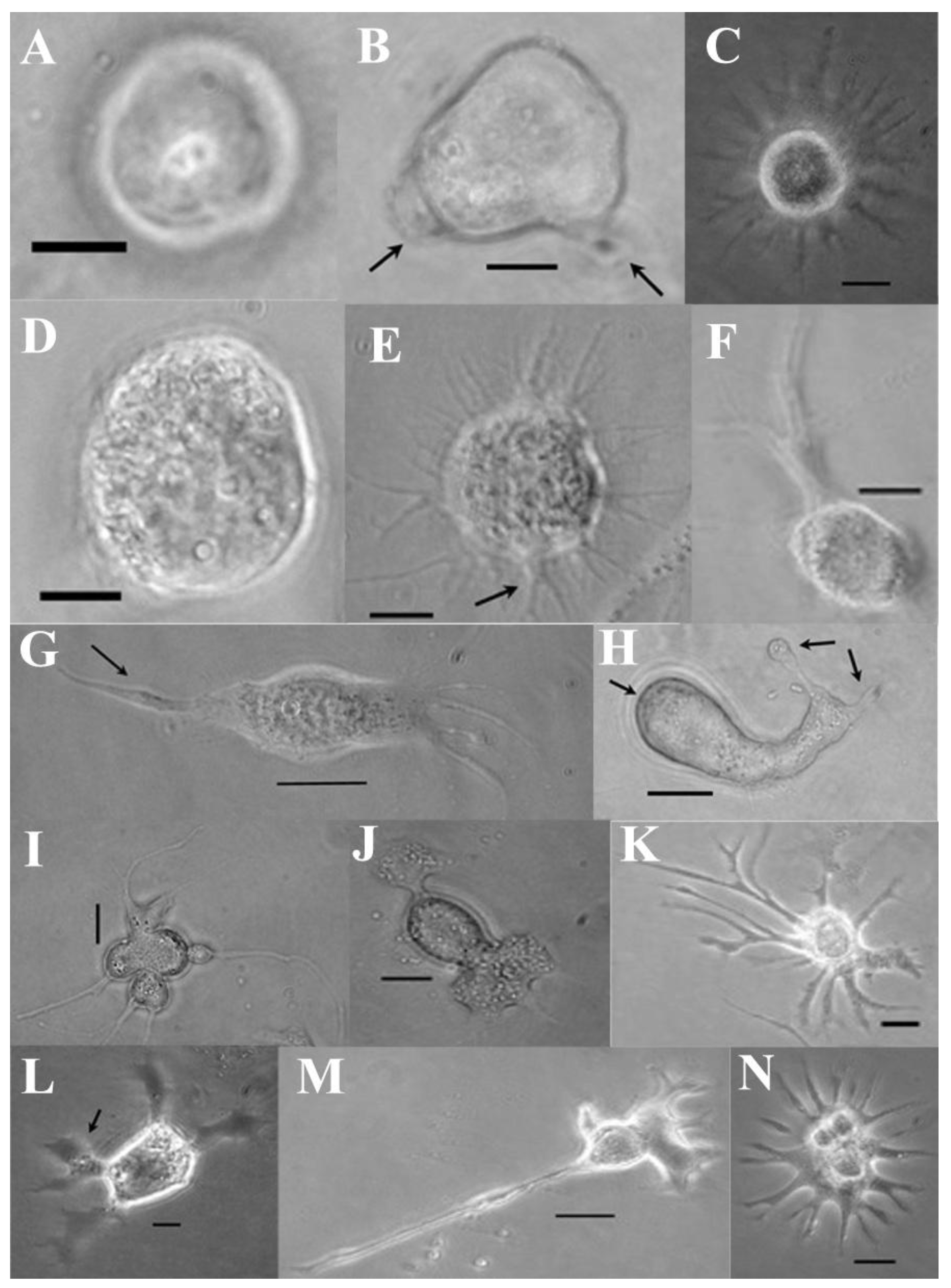
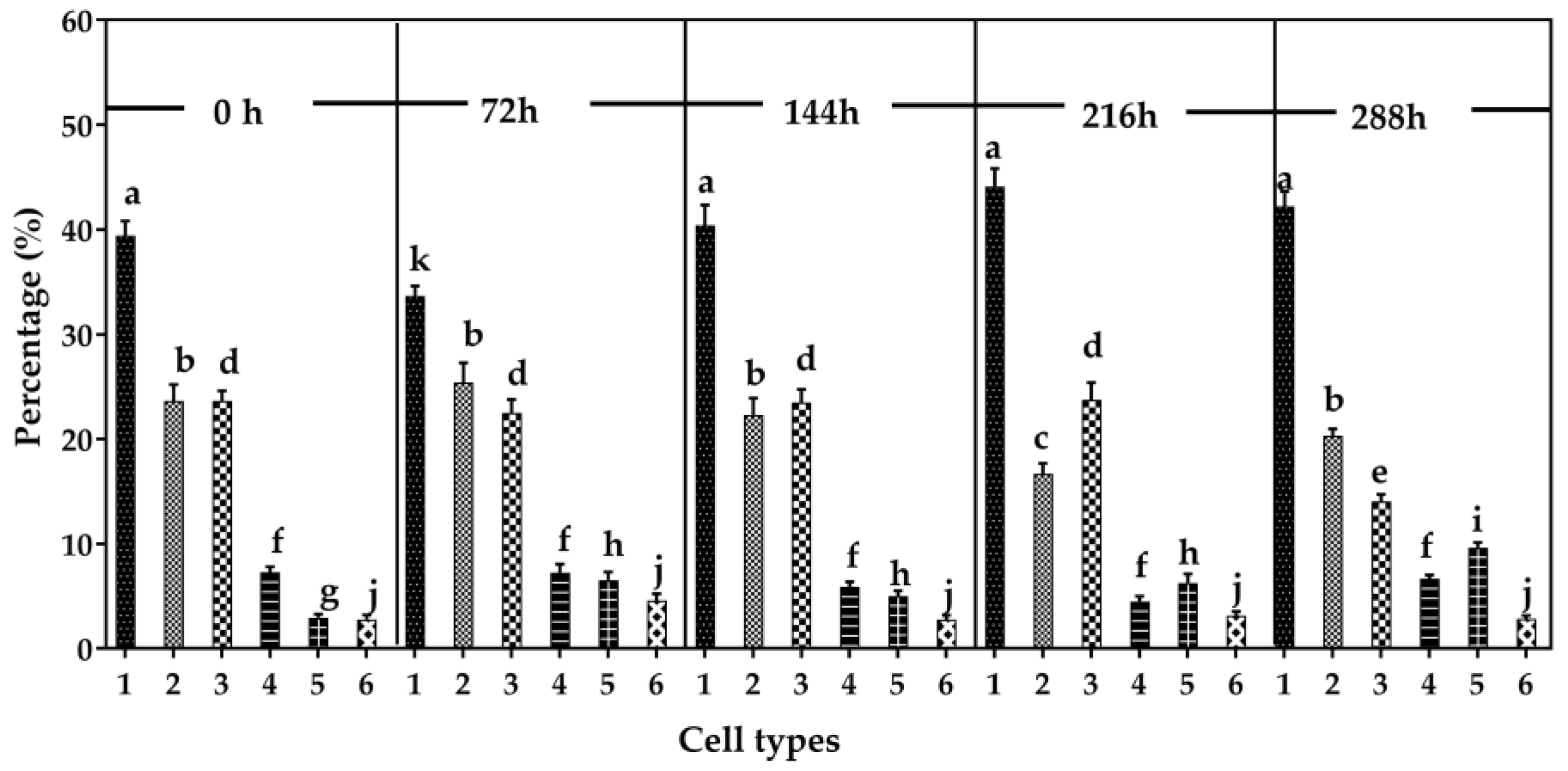

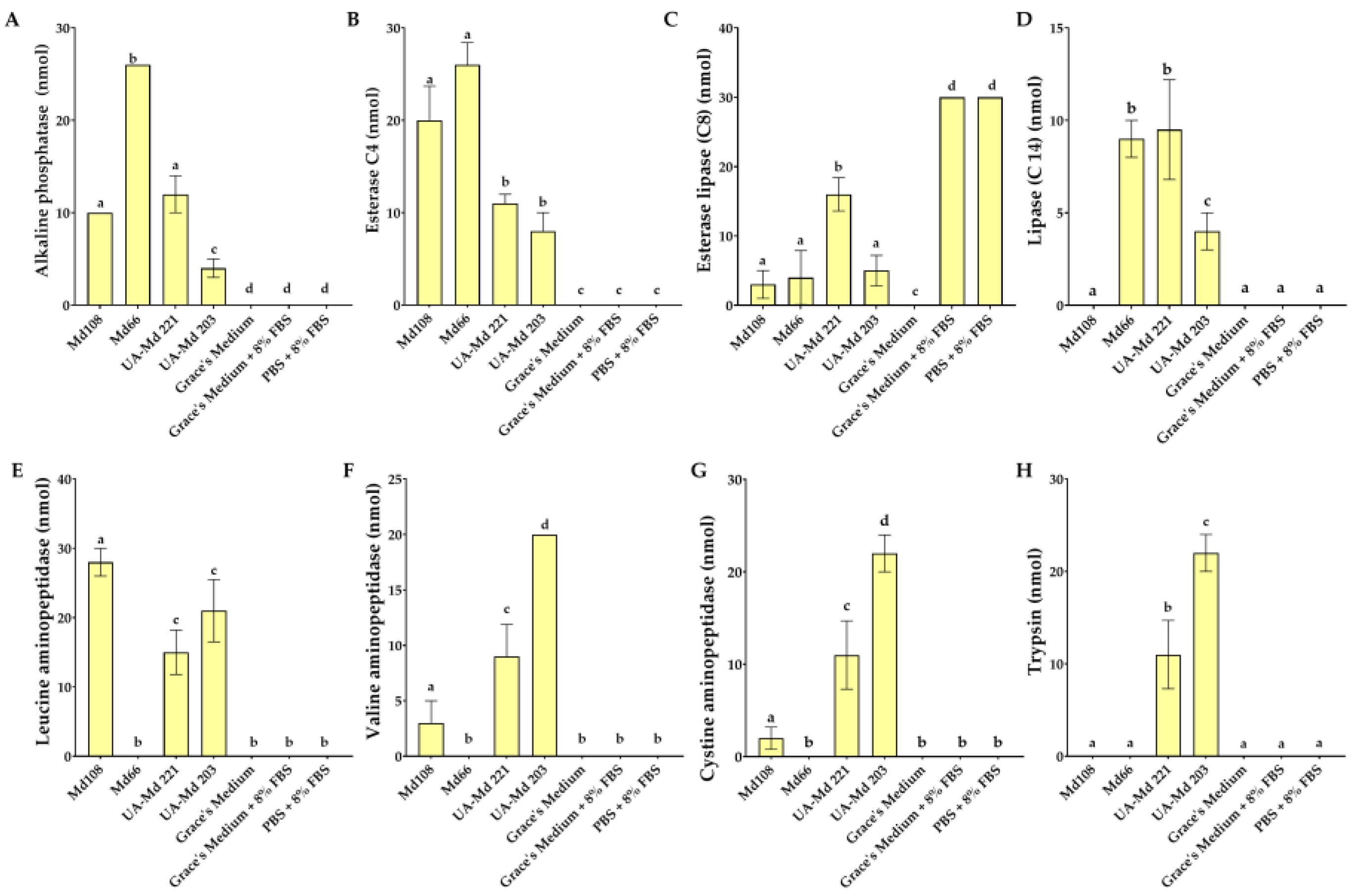
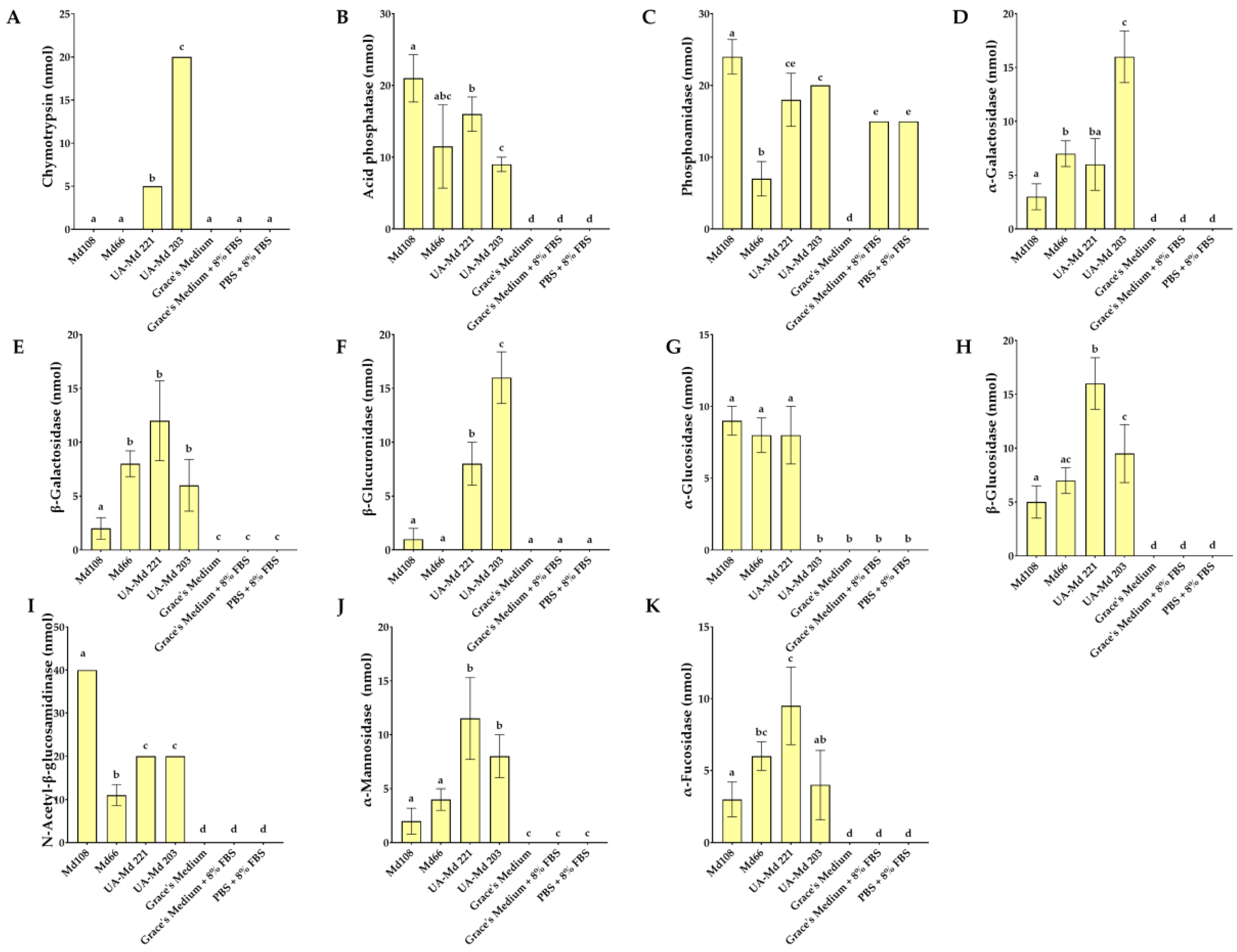





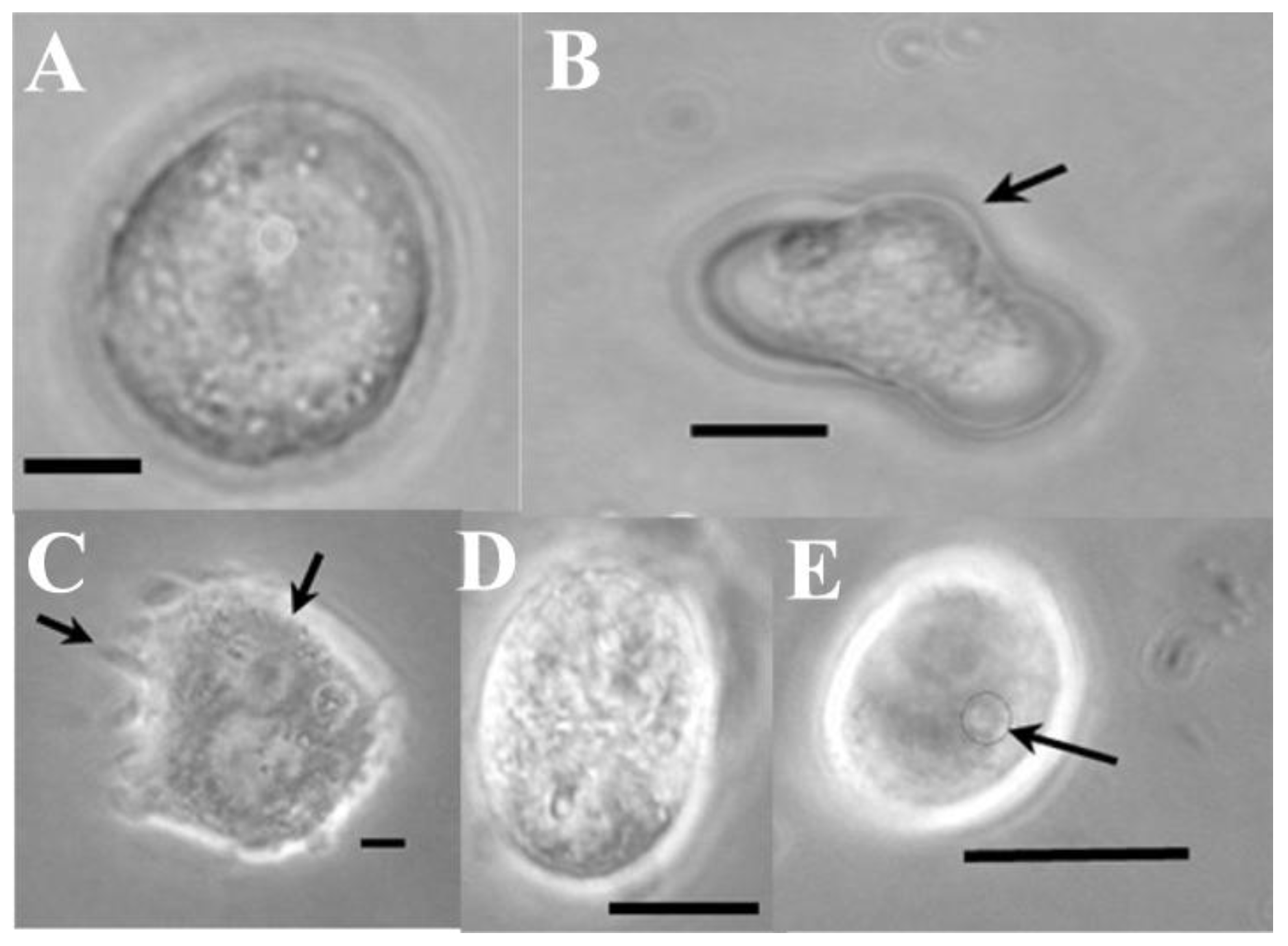
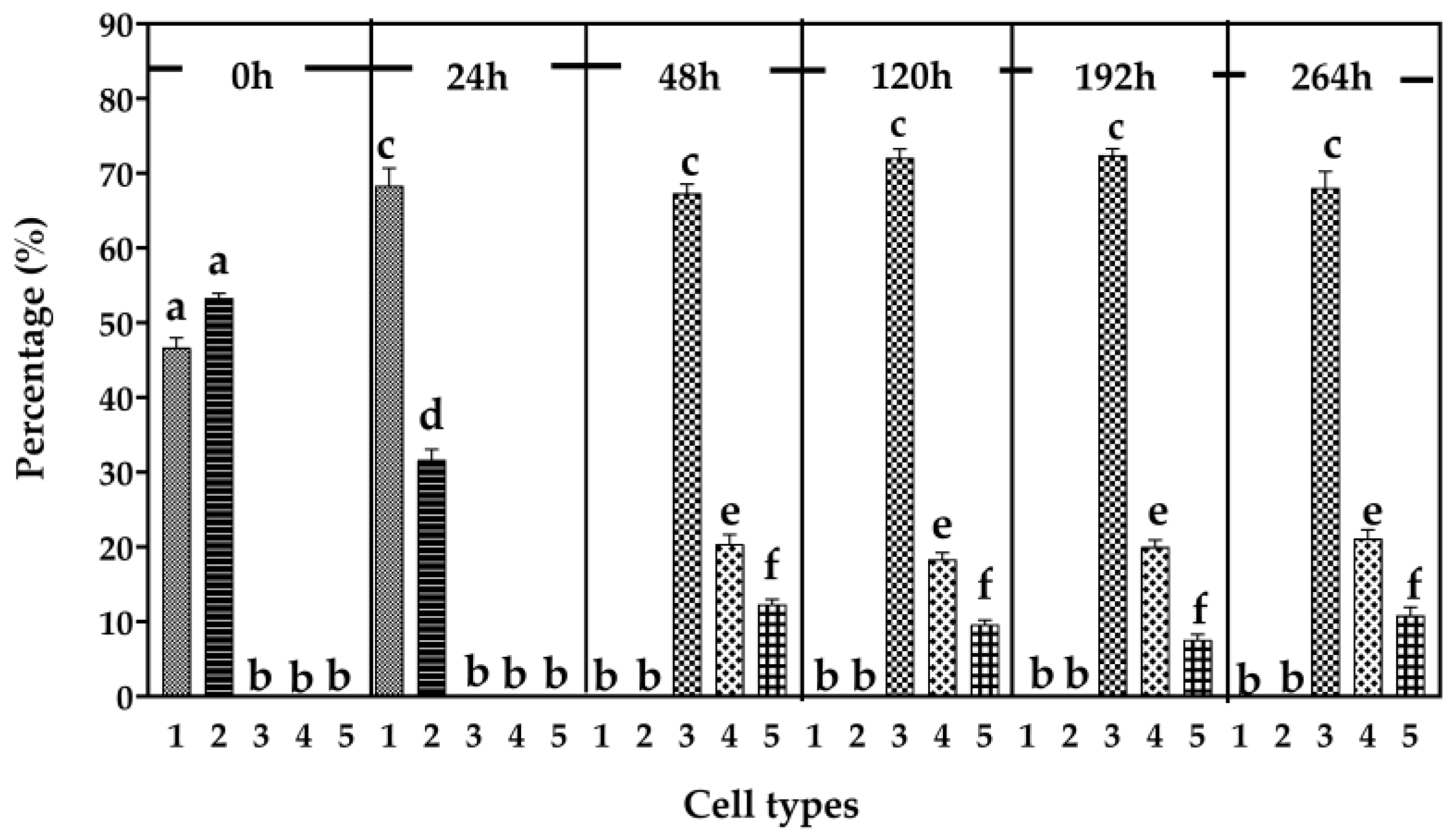
| Hemocyte Type | Description | Cell Size (μm) a |
|---|---|---|
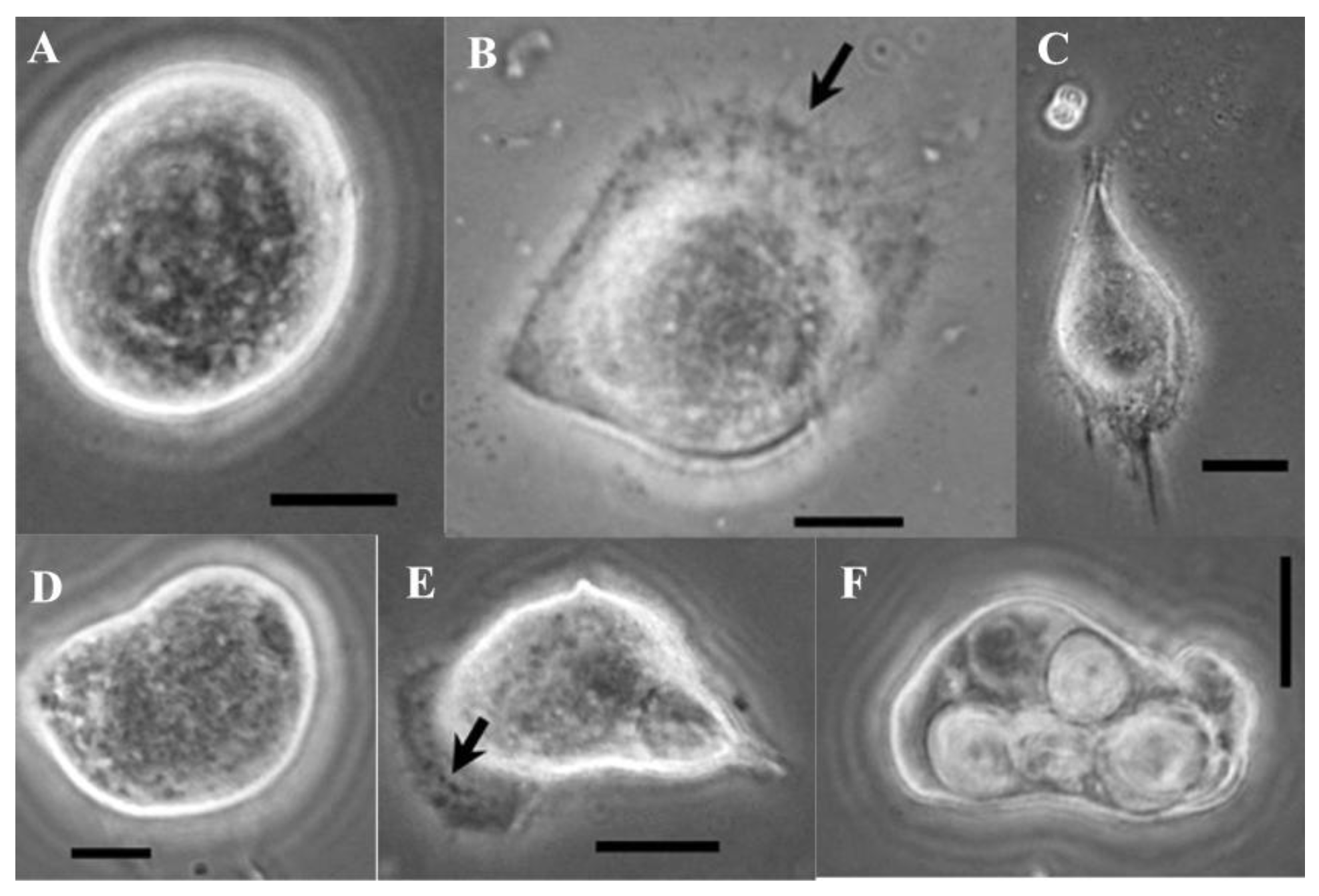
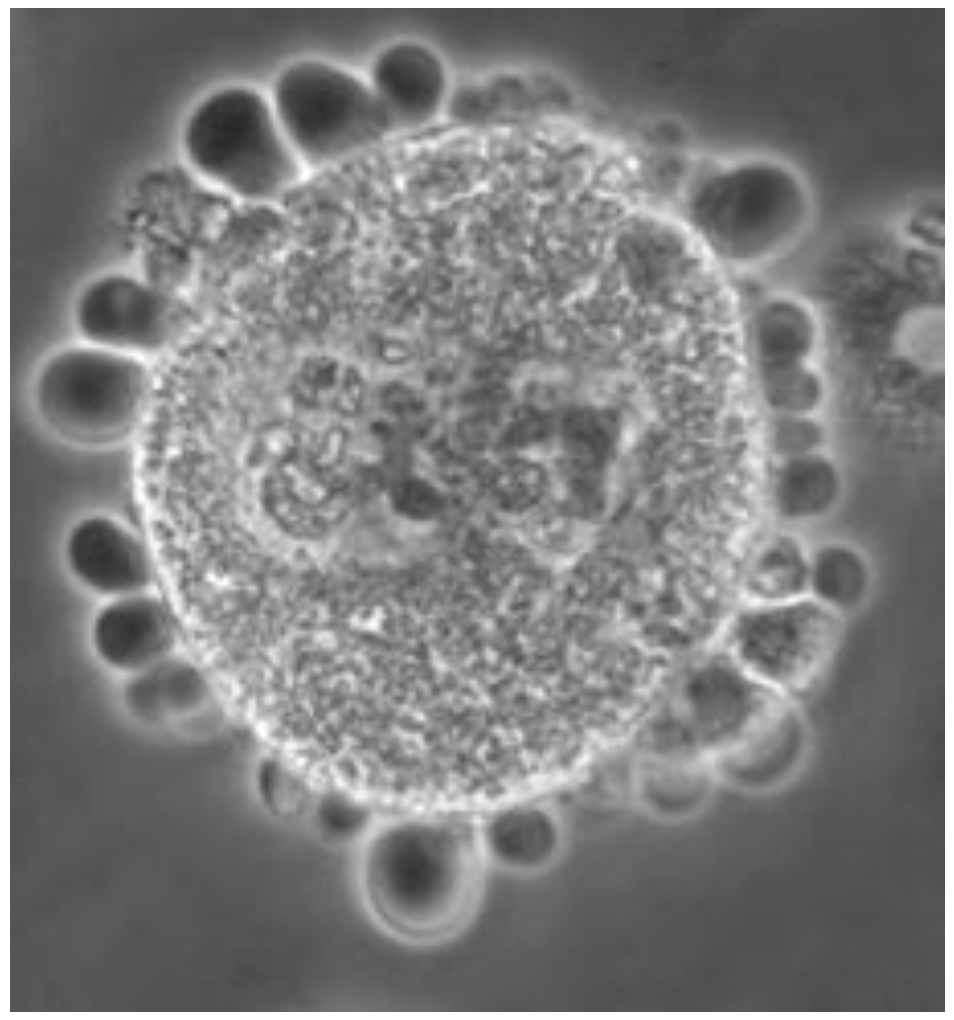
| 1 | Round cells, smooth edged with large central nucleus (~8 μm diameter) | 7–24 |
| 2 | Oval cells with large central nucleus (~8 μm diameter), chromatin not visible, filopodia with some membrane extension beyond the main cell mass and between the filopodia (arrow) | 8–13 |
| 3 | Elongated cells with one or more thick projections at one or both ends without or with an apical membrane marginalized with numerous filopodial structures; central nucleus with or without discernible chromatin | 9–17 |
| 4 | Oval cell with nucleus lacking discernible chromatin | 13–20 |
| 5 | Oval-trapezoid plasmatocyte-like cell with or without thick projections and with an occasional crenated membrane opposite the projections (arrow) | 8–10 |
| 6 | Elongated cell containing 5–6 spherical inclusions (~5–4 μm diameter) | 9–13 |
| Hemocyte Type | Description | Cell Size (μm) a |
|---|---|---|
| 1 | Spherical cell with a large central nucleus (~8 μm diameter) and phase bright granules in the cytoplasm | 4–12 |
| 2 | Oval-oblong hemocytes with more than one projection (arrow), no discernible nucleus; phase dark with few granules | 7–13 |
| 3 | Oval cell with filopodia extending beyond the plasmacytoid membrane, ≥2 nuclei (5–8 μm diameter) | 9–12 |
| 4 | Oval granulated hemocyte, no detectable nucleus | 5–7 |
| 5 | Spherical cels with small eccentric nucleus (1 μm diameter; arrow) | 4 |
| Hemocyte Type | Description | Cell Size (μm) a | |
|---|---|---|---|
| 1 | Spherical cell with a large central nucleus. | 7–12 | |
| 2 | Pear-shaped cells with more than one lobopodial projection (arrow), nucleus, cytoplasm phase dark with few granules | 10–14 | |
| 3 | Stellate plasmatocyte with clearly visible nucleus in the center | 17–22 | |
| 4 | Oval, granulated cell, no detectable nucleus. A similar but smaller cell type was observed in Md108 (Md108 cell type 4). | 13–20 | |
| 5 | Granular cell with filopodial projections (arrow) | 7–16 | |
| 6 | Round cell with monopolar projection, which ends with dendritic-type tips | 17–22 | |
| 7 | Elongated, polarized cell with one (or more) stylet-type projections (arrow) on one side and numerous projections on the other. Large nucleus (3–4 μm) is visible in the center. | (24–31) × (5–8) | |
| 8 | Polymorphic elongated cell with one side oval shaped and the other ending in globular projections (arrow) | 14–18 | |
| 9 | Multifilopodial cell with round central body and peripheral globular condensations | 16–24 | |
| 10 | Oval cell with flat projected cytoplasmic extensions at both tips | 19–26 | |
| 11 | Multi-branched cell with asymmetrical radiations | 22–34 | |
| 12 | Polygonal cell shaped main cell with enlarged lobopodia | 15–17 body 7–8 projection | |
| 13 | Dendritic hemocyte, with a linear axis | 8–12 main; 15–17 body axis | |
| 14 | “Triploid” stellate cell, bifurcated, with linear filopodia | 24–29 | |
Disclaimer/Publisher’s Note: The statements, opinions and data contained in all publications are solely those of the individual author(s) and contributor(s) and not of MDPI and/or the editor(s). MDPI and/or the editor(s) disclaim responsibility for any injury to people or property resulting from any ideas, methods, instructions or products referred to in the content. |
© 2026 by the authors. Licensee MDPI, Basel, Switzerland. This article is an open access article distributed under the terms and conditions of the Creative Commons Attribution (CC BY) license.
Share and Cite
Giannoulis, P.; Kalorizou, H. Temperature-Dependent and Semi-Quantitative Enzyme Profiles of Malacosoma disstria (Lepidoptera: Lasiocampidae) Hemocytic Cell Lines. Cells 2026, 15, 302. https://doi.org/10.3390/cells15030302
Giannoulis P, Kalorizou H. Temperature-Dependent and Semi-Quantitative Enzyme Profiles of Malacosoma disstria (Lepidoptera: Lasiocampidae) Hemocytic Cell Lines. Cells. 2026; 15(3):302. https://doi.org/10.3390/cells15030302
Chicago/Turabian StyleGiannoulis, Paschalis, and Helen Kalorizou. 2026. "Temperature-Dependent and Semi-Quantitative Enzyme Profiles of Malacosoma disstria (Lepidoptera: Lasiocampidae) Hemocytic Cell Lines" Cells 15, no. 3: 302. https://doi.org/10.3390/cells15030302
APA StyleGiannoulis, P., & Kalorizou, H. (2026). Temperature-Dependent and Semi-Quantitative Enzyme Profiles of Malacosoma disstria (Lepidoptera: Lasiocampidae) Hemocytic Cell Lines. Cells, 15(3), 302. https://doi.org/10.3390/cells15030302