Article

The Highly Selective 5-HT2B Receptor Antagonist MW073 Mitigates Aggressive Behavior in an Alzheimer’s Disease Mouse Model


by
Erica Acquarone
1,
Saktimayee M. Roy
2,
Agnieszka Staniszewski
1,
Daniel Martin Watterson
2 and
Ottavio Arancio
1,3,4,*
1
Taub Institute for Research on Alzheimer’s Disease and the Aging Brain, 630 West 168th Street, P&S 12-420D, New York, NY 10032, USA
2
Department of Pharmacology, Feinberg School of Medicine, Northwestern University, 320 E. Superior St., Chicago, IL 60611, USA
3
Department of Pathology and Cell Biology, Columbia University, New York, NY 10032, USA
4
Department of Medicine, Columbia University, New York, NY 10032, USA
*
Author to whom correspondence should be addressed.
Cells 2026, 15(3), 273; https://doi.org/10.3390/cells15030273
Submission received: 15 December 2025 / Revised: 15 January 2026 / Accepted: 28 January 2026 / Published: 1 February 2026
(This article belongs to the Special Issue Recent Advances in the Understanding of Neuropsychiatric Illnesses)

Highlights

What are the main findings?
  • MW073, a selective 5-HT2B receptor antagonist, significantly reduces both the number and duration of aggressive attacks in male Tg2576 mice.
  • Treatment with MW073 effectively ameliorates aggressive behavior in male Tg2576 mice.
What are the implications of the main findings?
  • 5-HT2B receptor antagonism may represent a targeted therapeutic strategy to reduce pathological aggression.
  • Targeting 5-HT2B receptors could provide a novel approach for managing aggression associated with Alzheimer’s disease–related pathology.

Abstract

Background: Alzheimer’s disease (AD) is a multifactorial neurodegenerative disorder and the leading cause of dementia worldwide. Progressive synaptic dysfunction underlies declines in cognition, daily functioning, and the development of neuropsychiatric syndromes. Neuropsychiatric syndromes that include agitation and aggression affect 40–60% of patients and represent a major source of caregiver burden. Serotonin 5-HT2B receptor levels are increased in the AD patient brain, and thus, treatment of AD animal models with the selective 5-HT2B receptor antagonist MW073 in prevention or disease stage paradigms attenuates Aβ- or tau-induced dysfunction. Methods: We investigated the effects of MW073 treatment on the aggressive behavior of Tg2576 mice in a resident–intruder assay. Results: MW073 treatment significantly reduced aggressive behavior in male Tg2576 mice. Conclusions: MW073 efficacy in treating aggression in Tg2576 mice implicates 5-HT2B receptor-mediated signaling in AD neuropsychiatric symptoms as well as cognitive and behavioral dysfunction.

1. Introduction

Dementia, with Alzheimer’s disease (AD) and related diseases (ADRD) as its predominant form, is an increasing global health challenge. Cognitive impairment and neuropsychiatric syndromes (NPSs) are the clinical hallmarks that generate a collective impact on patients, families, and caregivers, as well as causing major public health and economic effects. NPSs affect patients’ quality of life across their life spans and are a clinical concern due to their impacts on cognition, social interactions, and non-pharmacological interventions. NPSs such as anxiety and agitation are clinical presentations common to diverse neurodegenerative diseases, neurodevelopment complications, and brain injury sequelae [1,2]. Agitation associated with dementia is characterized by excessive motor activity and aggression [3,4]. However, there is a lack of safe, effective dual-action therapies for agitation and cognition. Due to the lack of approved therapies, a variety of drugs such as anticonvulsants, antipsychotics, selective serotonin reuptake inhibitors (SSRIs), atypical antidepressants, sedatives, anti-dementia drugs, dextromethorphan, and cannabinoids are used to manage neuropsychiatric symptoms such as agitation, despite lacking well-defined dosing, safety, and efficacy information [5]. Two approved drugs for agitation that are widely used, but which have safety risks that require close monitoring, are brexpiprazole and risperidone, multi-target drugs acting on the serotoninergic and dopaminergic neurotransmitter systems implicated in AD-associated agitation [6,7]. Consistent with the proposed monoamine neurotransmitter mechanism in AD-related NPS, there is a loss of serotoninergic (5-hydroxytryptamine; 5-HT) neurons in the raphe nucleus and the appearance of neurofibrillary tangles in a region rich in 5-HT neurons, the dorsal raphe nucleus [8,9,10,11]. Further, 5-HT2B receptor (5-HT2BR) levels are increased in AD patient brains [12], like they are in stroke and amyotrophic lateral sclerosis [13,14], and human HTR2B gene variants are implicated in psychiatric syndromes [15]. Clearly, there is a need to develop more selective, safer, and more effective candidates for at-risk dementia patient populations across multiple diseases, and the serotoninergic 5-HT2BR-regulated pathways are rational targets to explore.
We directly addressed this challenge with the development of MW073, a unique first-in-class selective inhibitor of serotonin 5-HT2B receptor (5-HT2BR) activation and arrestin recruitment [16]. MW073 is an orally bioavailable candidate with a promising safety profile and low drug–drug interaction risk that attenuates amyloid- and tau-induced synaptic and behavioral dysfunction when used in a preventive or disease stage treatment paradigm. MW073 avoids key off-target liabilities, particularly 5-HT2BR agonist activity, that have contributed to withdrawal or black-box warnings in some approved drugs. MW073 inhibits 5-HT2BR signaling via the Gq-PLCβ2 pathway and β-arrestin recruitment in both human and mouse receptor systems, a mechanism associated with downstream biomarkers in neurodegenerative and neuropsychiatric disorders. MW073 provides a novel precision pharmacological tool with future potential for treating AD and neuropsychiatric syndromes.
MW073’s selective modulation of serotonergic signaling preserves synaptic function and restores behavioral outcomes in multiple disease models. To probe the potential extension of MW073 to neuropsychiatric syndromes, we evaluated MW073 treatment of aggressivity in an established AD-relevant animal model, the Tg2576 mouse. Our objective was to test the hypothesis that MW073 regulation of aggressive behavior could be a potential therapeutic approach to managing AD-associated NPSs.

2. Materials and Methods

2.1. Animals and Housing Conditions

The study utilized Tg2576 mice and nTg littermates. Intruder animals were C57Bl/6. Tg2576 mice overexpress human mutant APP (isoform 695) containing the double mutation K670N, M671L (Swedish mutation) under the control of the hamster prion protein promoter. They are characterized by elevated levels of Aβ and ultimately amyloid plaques. They were obtained from a mouse colony that was established thanks to the generous gift of Karen Hsiao-Ashe. The animals were maintained on a 12 h light/12 h dark cycle, in a temperature- and humidity-controlled room. Food and water were available ad libitum. Mice were allocated to a specific treatment and paradigm by a randomization procedure. Investigators who performed the experiments were blind with respect to genotype and treatment.

2.2. Treatment Solution

The MW073 compound for treatment in behavioral testing was diluted in 10% Propylene Glycol (Sigma-Aldrich, St. Louis, MI, USA, P4347) MilliQ quality water, and 0.1% formic acid to prepare a stock solution. At the time of the experiment, the compound was diluted in sterile saline. MW073 was administered once daily by intraperitoneal injection (5 mg/kg) for 21 consecutive days prior to behavioral testing.

2.3. Experimental Design

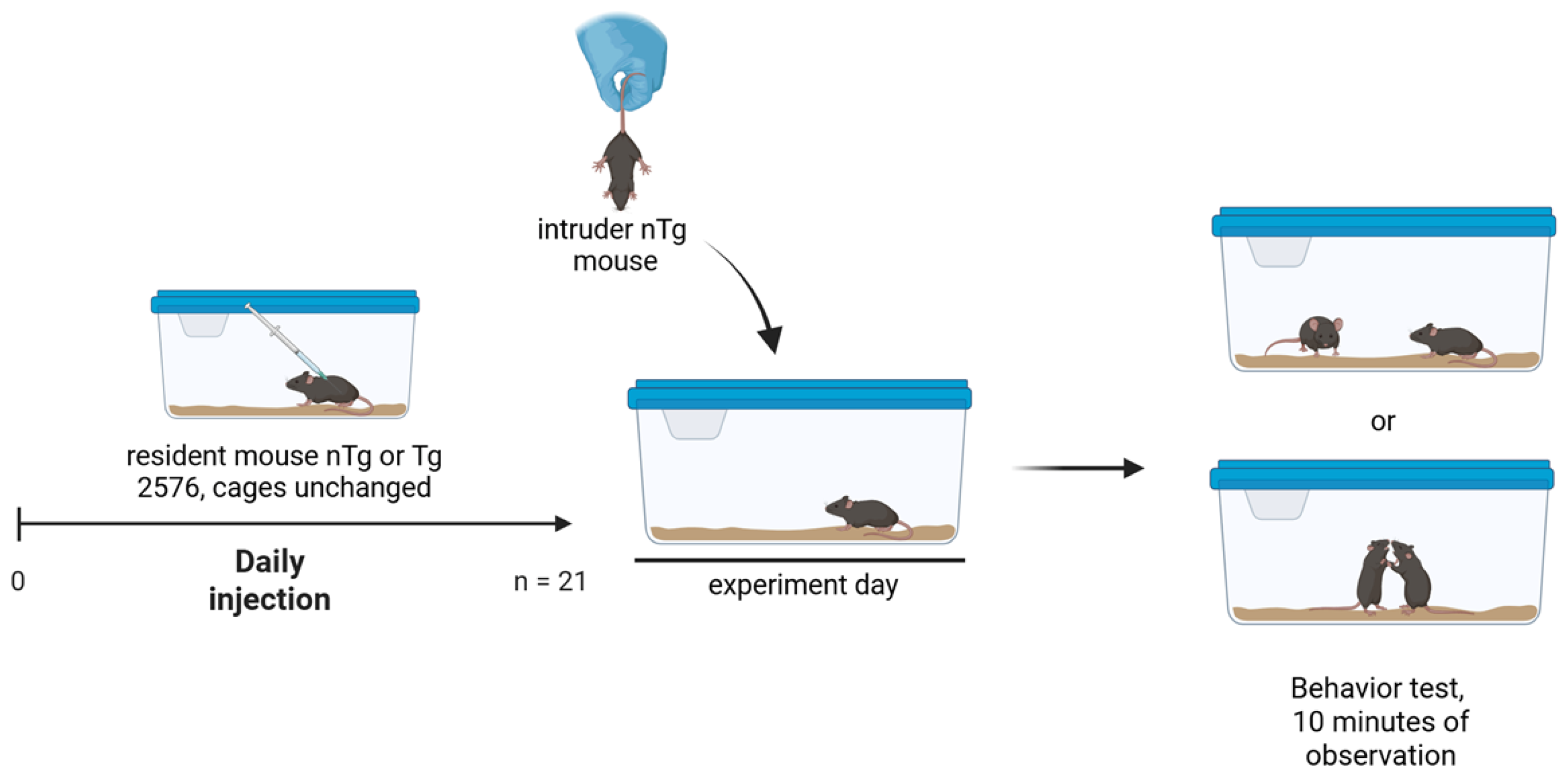
This study aimed to elucidate the effect of the 5HT2B receptor antagonist MW073 on mouse aggressivity. Mice’s aggressive behavior was assessed by means of a combined isolation-induced and resident–intruder paradigm. For this purpose, mice were isolated for 3 weeks. The mice were single-housed in their standard cages and left undisturbed during the entire isolation period. Meanwhile, no fresh bedding material was provided to ensure that the area would become their own territory and to evoke aggressive behavior upon intrusion by another mouse of the same sex. After 3 weeks of isolation, mice were allowed to adapt to the observation room in their home cage for at least 1 h prior to testing. A group-housed male C57Bl/6 mouse was introduced into the resident’s home cage. Only the behavior of resident mice was analyzed. The second mouse was classified as an intruder. To distinguish the intruder from the resident mouse, the intruder was marked with a black sign on the tail. The behavior was recorded for 10 min (Figure 1).

2.4. Observation of Social Behavior

During a 10 min observation period, the observer, who was blind to the mouse’s genotype, evaluated animal aggressivity. As an index of social behavior and aggressivity, we used mainly pouncing/chasing behaviors (chasing, attacking, and escalated fighting) from the resident mice, discriminating against approaches by the intruder, as well as facial/body sniffing, and ano-genital sniffing from resident mice. The observer recognized defensive behavior such as avoiding, fleeing, and defensive upright posture [17]. The number/severity of physical encounters were closely monitored, and the mice were separated if any encounter was severe enough to potentially cause injury. We quantified the number of attacks, the total duration of aggressive episodes, the duration of the first attack, and the latency to the first attack, defined as the time elapsed from the introduction of the intruder mouse into the resident’s cage to the occurrence of the first aggressive attack. The number of encounters and latency encounters were scored using a stopwatch, and every test was recorded (Noldus Information Technology, Wageningen, The Netherlands). Also, during analysis, the observer was blind to the mice’s genotype treatment.

2.5. Open Field Control Experiment

Spontaneous locomotor activity and anxiety-like behavior were assessed using the Open Field test. Mice were individually placed in the center of a square arena (40 cm × 40 cm, walls 40 cm high) made of white Plexiglas. The test was conducted in a quiet room to minimize external stressors. The animals were allowed to freely explore the arena for 10 min. Behavioral activity was recorded using a top-mounted video camera and analyzed with Activity Motor by MedAssociates Inc. (St. Albans, VT, USA, SOF-812 DOC.101 Rev. 1.3). The arena was virtually divided into two zones: a central zone (20 × 20 cm2) and a peripheral zone. The parameters analyzed included total distance traveled (cm), mean velocity (cm/s), time spent in the center (s), number of entries into the center, rearing behavior, and immobility time. The arena was thoroughly cleaned with 70% ethanol between sessions to eliminate olfactory cues. To assess habituation, mice were exposed to the same arena for two consecutive days under identical conditions. Changes in locomotor activity and center-related parameters between Day 1 and Day 2 were used as indicators of habituation and exploratory memory. Animals were acclimated to the testing room for at least 30 min prior to the session. Behavioral scoring was conducted blind to treatment conditions.

2.6. Statistical Analysis

Investigators who performed the experiments were blinded with respect to treatment and genotype. The data were scored as the total duration of each behavior performed during the 10 min observation period. The comparisons between Tg males and females, Tg and nTg mice, as well as Tg mice treated with vehicle and Tg treated with MW073 as a single variable, were carried out using Student’s t-test (2-tailed) and one-way ANOVA by GraphPad Prism10.

3. Results

3.1. Tg2576 Males Are More Aggressive than Tg Females

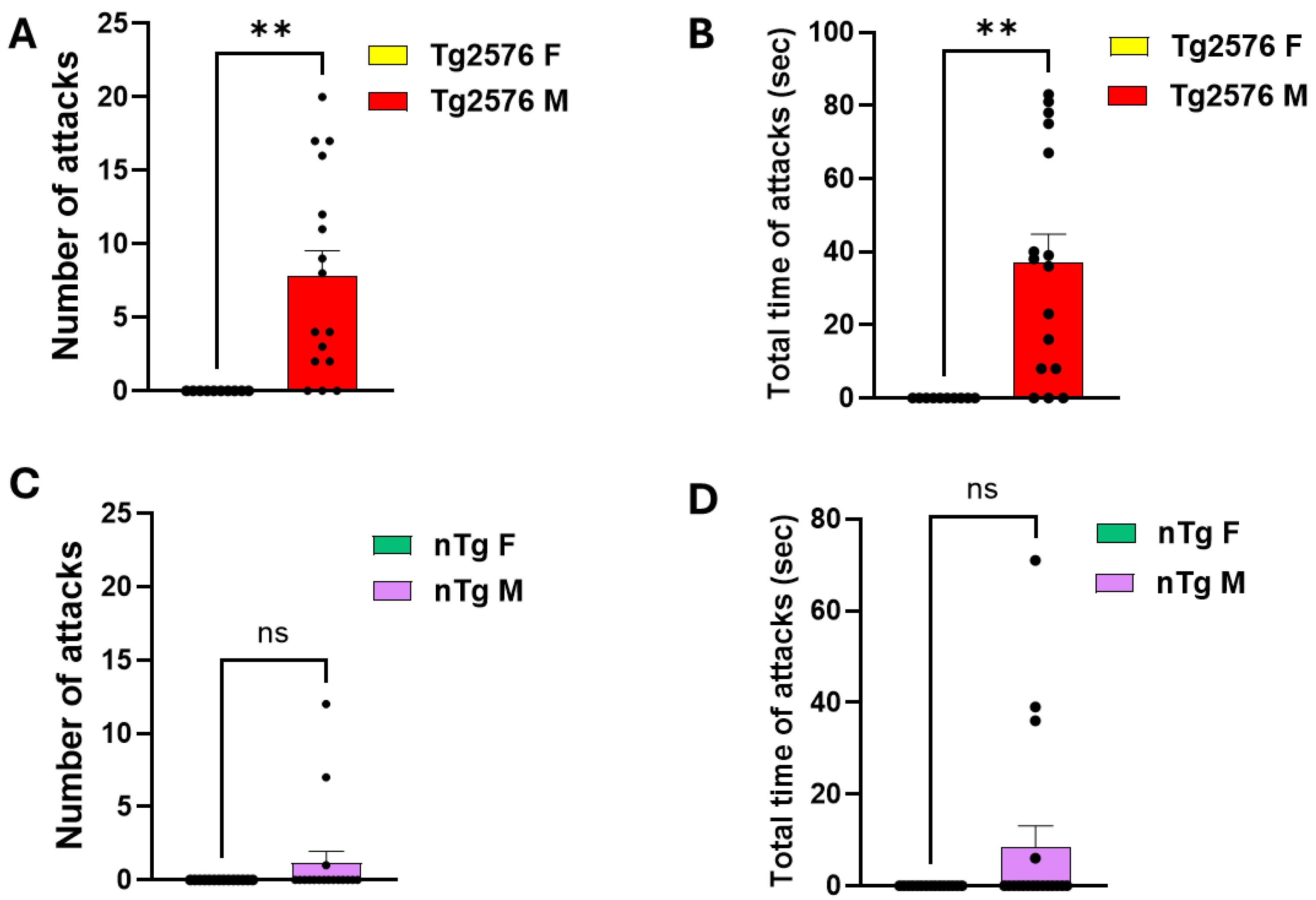
Our first objective was to evaluate potential sex differences in aggressive behavior in Tg2576 mice. In the resident–intruder paradigm, no Tg2576 resident females (0/16) initiated attacks against intruder females during the 10 min testing period. In contrast, 13 out of 16 Tg2576 resident males exhibited overt aggression toward intruder males (Figure 2A,B). Quantitative analysis revealed that both the frequency of attacks and the cumulative attack duration were significantly higher in Tg2576 males compared to females (p < 0.001; Figure 2A,B). Similarly, non-transgenic (nTg) females showed no attacks compared to nTg males (Figure 2C,D). Given the pronounced male-specific aggressive phenotype, all subsequent pharmacological experiments with MW073 were conducted in Tg2576 male residents.

3.2. Aggressive Behavior Test in Tg2576 and Non-Transgenic (nTg) Male Littermates

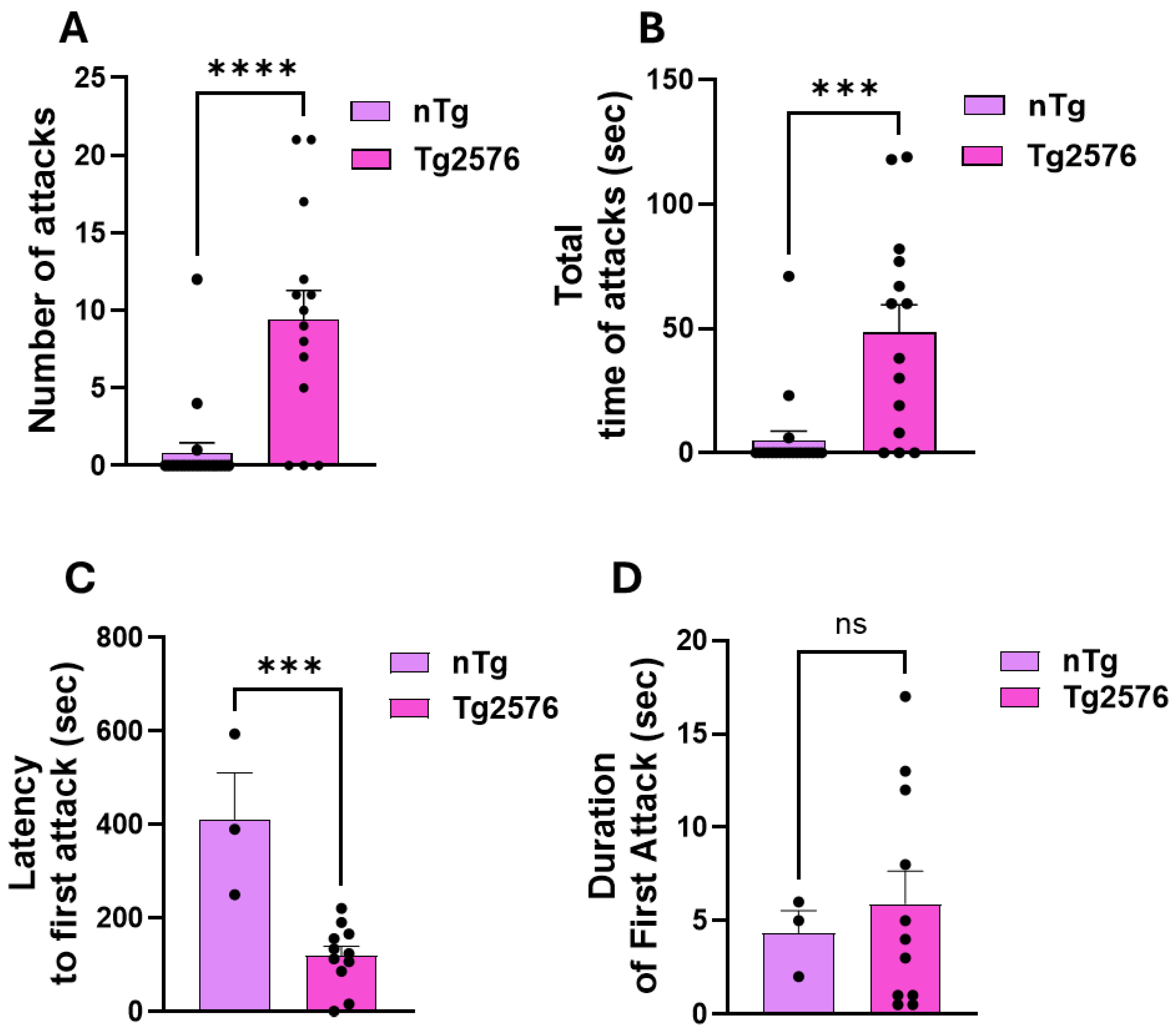
Our next goal was to compare aggressiveness in Tg2576 mice compared to nTg males. We found that only 3 out of 20 nTg resident males exhibited aggression toward intruder males during the 10 min resident–intruder test, whereas 11 out of 14 Tg2576 residents initiated attacks (Figure 3A–D). Both the average number of attacks and attack duration were higher in Tg2576 residents than nTg littermates (p < 0.001; Figure 3A,B). For parameters related to attack initiation, including latency to the first attack and duration of the first attack, analyses were restricted to animals that displayed an aggressive attack during the testing period. Among the animals that exhibited an attack, the latency to the first attack was markedly reduced in Tg2576 mice, which began aggression at approximately 2 min following intruder introduction, compared to ~7 min in nTg controls (p < 0.01; Figure 3C). In the same animals, the duration of the initial attack was slightly longer in Tg2576 mice relative to nTg, but this difference did not reach statistical significance (Figure 3D).

3.3. Aggressive Behavior Is Reduced in Male Tg2576 Mice Treated with MW073 Compared to Tg2576 Mice Treated with Vehicle

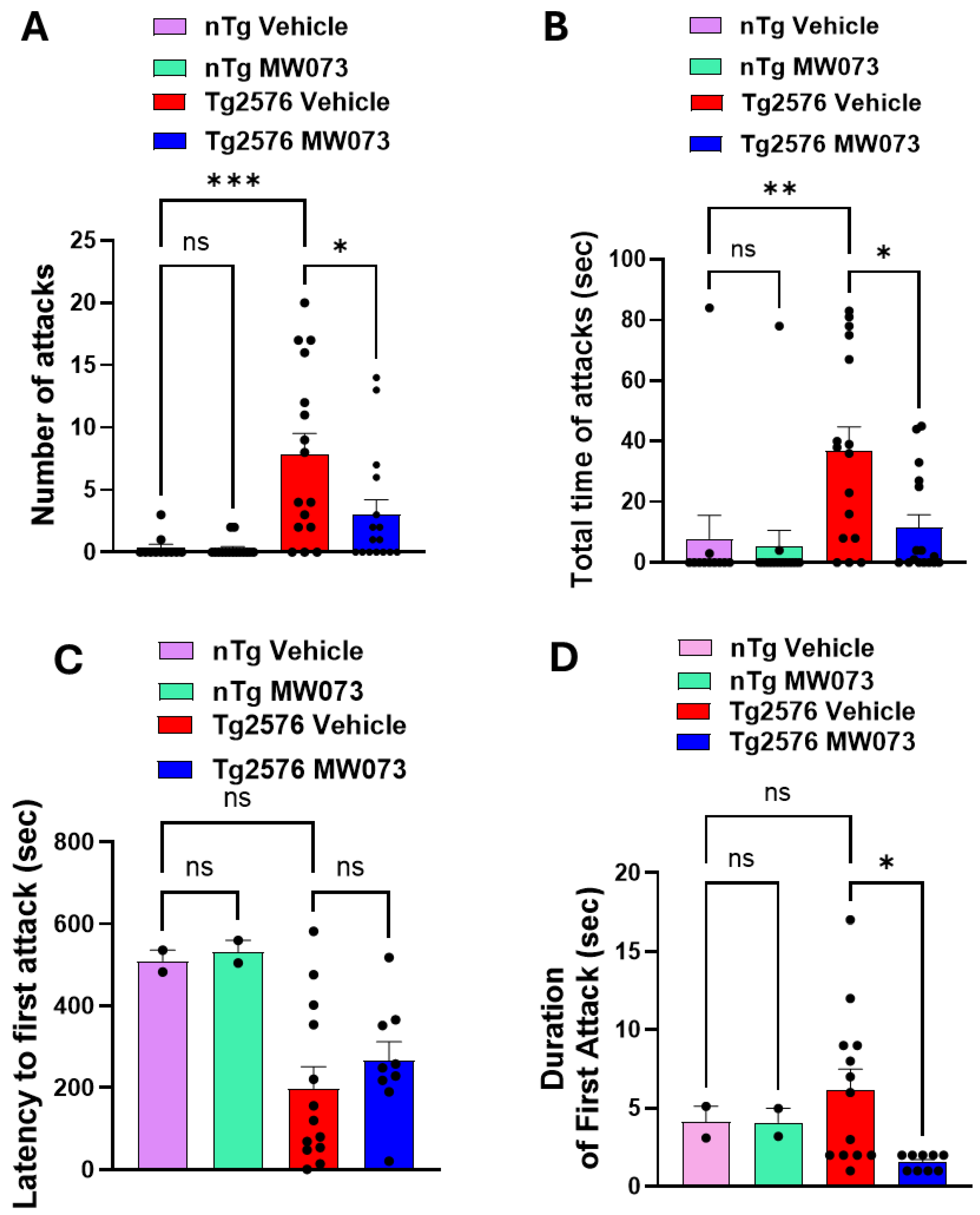
Next, we determined whether the 5HT2B receptor antagonist MW073 was capable of reducing the aggressive behavior of Tg2576 male mice. Animals were treated with the antagonist for 3 weeks (daily, i.p., 5 mg/kg) prior to performing the aggressivity test. Our data revealed that Tg2576 resident males treated with the serotonin antagonist (n = 16) showed less aggressivity than Tg2576 mice treated with vehicle (n = 16) during the 10 min resident–intruder test sessions (Figure 4A–D). Specifically, the number of attacks and the duration of total attacks decreased in Tg2576 treated with MW073 compared to Tg mice treated with vehicle (Figure 4A,B). Moreover, among the animals that exhibited an attack, resident Tg2576 mice treated with vehicle started the first attack after ~3 min when the intruder was inserted into the cage. By contrast, resident Tg2576 mice treated with MW073 started the first attack after ~4.45 min (Figure 4C). Most importantly, the duration of the first attack in Tg mice treated with MW073 was reduced (Figure 4D).

3.4. No Significant Differences Were Observed in the Open Field Test Among Male nTg Mice Treated with Vehicle or MW073 and Male Tg Mice Treated with Vehicle or MW073

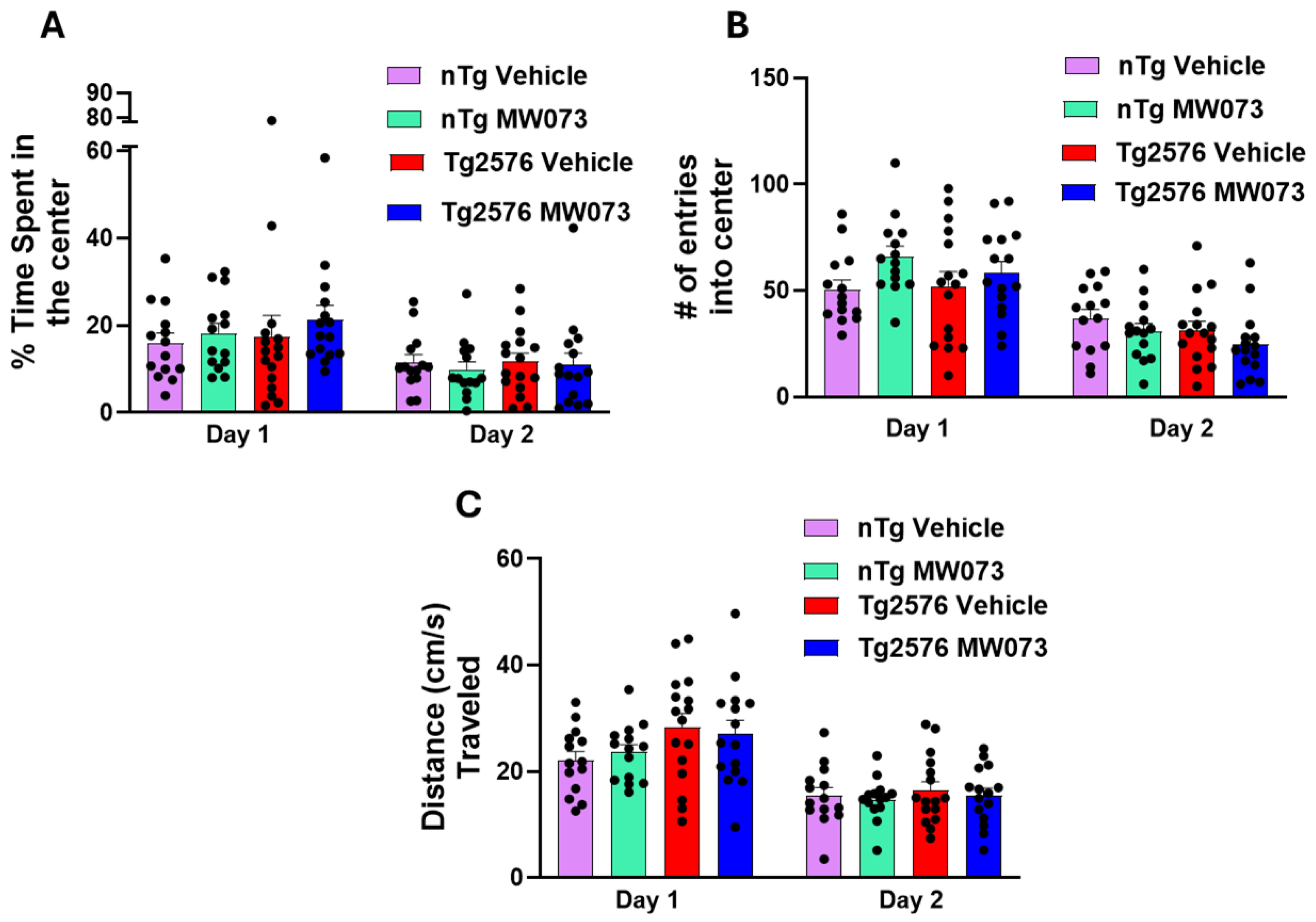
Changes in locomotor activity, exploratory behavior, or anxiety represent potential non-specific confounds that could affect the aggressive phenotype. To exclude the possibility that the beneficial effects of MW073 in Tg2576 mice were secondary to changes in locomotor activity, anxiety-like behavior, or exploratory drive, we assessed animals in the open field test after 3 weeks of daily treatment with the 5-HT2B receptor antagonist (5 mg/kg, i.p.). Analysis of time spent in the center versus the periphery of the arena revealed no significant differences between MW073- and vehicle-treated groups, either in nTg males (n = 14/group) or Tg2576 males (MW073, n = 15; vehicle, n = 16) during the 10 min sessions on days 1 and 2 (Figure 5A). As expected, all groups spent less time in the center on day 2 relative to day 1, reflecting reduced anxiety and successful memory-based habituation.
Similarly, the number of center entries, another measure of anxiety-like behavior, did not differ between MW073- and vehicle-treated animals in either genotype (Figure 5B). Again, all groups exhibited reduced center entries on day 2, consistent with reduced anxiety and enhanced exploration drive.
Finally, total distance traveled, a measure of general locomotor activity, was comparable across treatment groups in both nTg and Tg2576 males (Figure 5C). All groups showed decreased activity on day 2 relative to day 1, consistent with habituation to the test environment. Taken together, these data indicate that MW073 does not alter locomotor function, anxiety-like behavior, or exploration activity, supporting the conclusion that its effects on aggression in Tg2576 mice are not confounded by changes in these parameters.

4. Discussion

There are two key aspects of this report. First, we demonstrate that male Tg2576 mice exhibit a pronounced aggressive phenotype compared to both female Tg2576 mice and male nTg littermates. Using the resident–intruder paradigm, Tg2576 males showed a markedly higher frequency and duration of attacks and a shorter latency to initiate aggression, highlighting a sex- and genotype-specific increase in aggressive behavior. Second, we demonstrated that MW073 treatment significantly reduced the number and duration of attacks in Tg2576 males without affecting latency to the first attack. These effects were not attributable to changes in locomotor activity, anxiety-like behavior, or exploratory drive, as assessed in the open field test, and are consistent with our cognitive findings, in which MW073 improved behavioral outcomes without producing nonspecific performance effects. Collectively, these findings identify Tg2576 males as a robust preclinical screening model for aggression associated with AD-related pathology and extend the efficacy of MW073 in preventing or attenuating amyloid- and tau-induced synaptic and cognitive dysfunction to AD [16]-associated agitation, a key neuropsychiatric symptom common to several chronic diseases, as well as morbidities associated with acute brain injuries.
MW073 is a uniquely selective, mechanistically validated, and safety-derisked therapeutic candidate targeting 5-HT2BR that is a potential future precision medicine approach to treating NPSs with cognitive dysfunction [16]. MW073 represents a different therapeutic category. MW073: (1) targets a receptor upregulated in AD [12], amyotrophic lateral sclerosis (ALS) [13], and stroke-related NPS [14]; (2) directly reverses synaptic dysfunction caused by Aβ and tau oligomers [16]; (3) offers non-sedating, non-neuroleptic anti-aggression potential; (4) avoids metabolic, neurological, and cardiovascular liabilities of current agents; (5) provides a mechanistically rational intervention in diseases where 5-HT2B elevation is pathophysiologically meaningful [16]. Taken in its entirety, MW073 offers a novel potential treatment of agitation, irritability, anxiety, or aggression in neurodegenerative disease populations.
Neuropsychiatric symptoms such as agitation, aggression, irritability, anxiety, and behavioral dysfunction are highly prevalent in AD, ALS, post-stroke conditions, traumatic brain injury, and other neurodegenerative disorders. They are associated with patient distress, caregiver burden, increased institutionalization rates, and elevated healthcare utilization. Despite their clinical importance, no FDA-approved therapies directly target the mechanistic drivers of these neuropsychiatric presentations in neurodegenerative diseases. Current management relies on diverse multi-target drugs that offer modest and inconsistent benefit and carry substantial safety risks, especially in older or severe neuropsychiatric populations. They include atypical antipsychotics, SSRIs, mood stabilizers, benzodiazepines, and beta-blockers. Atypical antipsychotics, such as risperidone, are frequently used for aggression or agitation. Their inhibitory targets include dopamine D2, 5-HT2A, H1, and α1 receptors. Key liabilities include extrapyramidal symptoms, sedation, metabolic syndrome, QT prolongation, and orthostatic hypotension. There are black box warnings for increased mortality in elderly dementia patients. SSRIs and serotonin and norepinephrine reuptake inhibitors (SNRIs) increase serotonin globally, affecting all 5-HT receptor subtypes with modest, slow-onset benefits for agitation and exhibit undesired side effects, including gastrointestinal problems, sexual dysfunction, and hyponatremia. Mood stabilizers such as valproate and carbamazepine generate broad CNS dampening through GABA enhancement and ion channel modulation with risks of hepatotoxicity, teratogenicity, sedation, and tremor. Overall, existing approved drugs manage symptoms vs. underlying synaptic or systems-level dysfunctions. In contrast to existing agents, MW073 provides targeted modulation of a receptor upregulated in AD, ALS, and post-stroke conditions.
Several serotonin receptor subtypes are expressed in distinct brain regions and contribute to the fine-tuning of complex emotional and social behaviors, including aggression. Consistent with our findings, a growing body of evidence indicates that the serotonergic system plays a central role in modulating aggression across various behavioral paradigms. Notably, different serotonin receptor subtypes have been associated with distinct aspects of aggressive behavior. For instance, 5-HT1A and 5-HT1B receptors located in the prefrontal cortex (PFC) modulate reactive aggression in the resident–intruder test [18,19,20]. Local microinjection of WAY-100635 (a 5-HT1A receptor antagonist and dopamine D4 agonist) and SB-224289 (a mixed serotonin receptor antagonist with selectivity for 5-HT1b) into the PFC significantly alters both the frequency and intensity of aggressive episodes, underscoring receptor- and region-specific serotonergic control of impulsive aggression. Similarly, members of the 5-HT2 receptor family (5-HT2A and 5-HTC) have been implicated in aggression regulation, although their effects appear context-dependent: while 5-HT2C receptor activation typically suppresses aggression, 5-HT2A receptor activation may enhance it [21]. Unlike other 5-HT2 family members, the role of 5-HT2B receptors in aggression has been minimally studied. Our findings now establish 5-HT2B as an important and previously unappreciated regulator of aggressive behavior in AD.
Together, these results position 5-HT2B receptor antagonism as a compelling mechanistic strategy for mitigating neuropsychiatric symptoms in AD. By demonstrating that MW073 selectively reduces pathological aggression in Tg2576 males, without inducing sedation, dampening locomotion, or altering anxiety-like behavior, our study provides clear evidence that targeted serotonergic modulation can decouple aggression control from the broad CNS suppression typical of current antipsychotic regimens. These findings extend prior work showing that 5-HT2B receptor upregulation is a feature of AD pathology and that its inhibition restores synaptic and circuit-level function disrupted by amyloid and tau oligomers.
Aggressive behavior emerges from the coordinated activity of multiple neurotransmitter systems, neuromodulators, intracellular signaling pathways, and hormones acting within distributed neural circuits that include the amygdala, hypothalamus, prefrontal cortex, and periaqueductal gray. Among these systems, serotonin has been consistently implicated as a key modulator of aggression, particularly in aggression control. Reduced serotonergic tone in cortical and limbic regions is strongly associated with increased impulsivity and escalated aggression [22]. The molecular bases of the initiation of aggressive attacks remain to be explored. In this framework, serotoninergic modulation might not be relevant to the latency to the first attack. The dissociation observed in our study—where MW073 reduced both the number and duration of attacks without affecting attack latency—supports the notion that the initiation of aggression and its subsequent escalation or maintenance rely on partially distinct neurobiological mechanisms. Specifically, inhibition of 5-HT2bR appears to preferentially modulate the expression and intensity of aggressive behavior once it has been initiated. This interpretation is consistent with a role for serotonergic signaling, and 5-HT2BRs in particular, in regulating aggression severity, persistence, and impulse control, while leaving the initial triggering of aggression largely intact. Together, these findings suggest that MW073 attenuates the escalation of aggressive behavior without interfering with the fundamental motivational or perceptual processes that govern attack initiation. This could be of potential clinical significance in future planned clinical development, as it suggests that the first signs of episodic aggressivity would be justification for initiation of daily oral administration.
In this study, we did not detect aggressive attacks in female mice. Aggression-related behaviors in females may be less pronounced, delayed, or expressed in alternative social domains, and may also be influenced by hormonal status and experimental conditions. Thus, while aggressive attacks do not appear to be a feature in female Tg2576 mice under our testing conditions, more subtle or context-dependent alterations in social behavior cannot be excluded. Given the absence of a detectable aggressive phenotype in female Tg2576 mice under our experimental conditions, and to ensure sensitivity and robustness in the assessment of aggression-related outcomes, we therefore focused subsequent behavioral analyses on male animals, in which such behaviors are reliably observed.
Importantly, the present data reveal that 5-HT2B signaling contributes not only to cognitive disturbances but also to aggression-like behaviors that model the agitation and irritability common in AD patients. This convergence across behavioral domains underscores the broader relevance of the 5-HT2B pathway as a nodal regulator of stress-vulnerable neural circuits. As such, MW073 emerges as a precision-medicine candidate with a distinct safety and mechanistic profile from existing therapies, and Tg2576 males provide a reliable platform for screening interventions targeting AD-associated agitation.

5. Conclusions

This study demonstrates that intervention MW073 reduces emerging AD-NPS aggressive behavior without inducing sedation or motor impairment. Taken in the context of our previous reports [12,16] and an accumulating body of knowledge about 5-HT2BR biology, 5-HT2BR-mediated signaling is implicated in the homeostasis and pathophysiology of a variety of chronic and acute neurological and neuropsychiatric disorders.

6. Patents

Saktimayee M. Roy, Erica Acquarone, Ottavio Arancio, and D. Martin Watterson are authors on patent applications filed by Northwestern and Columbia Universities that cover potential commercial use but not research use of MW073. The other authors have no relevant disclosures.

Author Contributions

O.A.: funding acquisition, conceptualization, writing, review, and editing, D.M.W.: funding acquisition, conceptualization, writing, review, E.A.: data curation, investigation, experiment design, writing—original draft, S.M.R.: design, synthesis, and supervision of pharmacological validation of MW073, A.S.: formal analysis and animal treatment, colony maintenance. All authors have read and agreed to the published version of the manuscript.

Funding

Erica Acquarone, Saktimayee M. Roy, Agnieszka Staniszewski, Ottavio Arancio, and D. Martin Watterson are investigators on an NIH peer-reviewed NIH award (Project # 1U01AG066722, Application # 9942787, PIs: D. Martin Watterson and Ottavio Arancio) to Northwestern and Columbia Universities that supported the research reported.

Institutional Review Board Statement

The animal study protocol was approved by the Institutional Review Board and Ethics Committee of Columbia University Institutional Animal Care And Use Committee (AICUC) (protocol code AC-AABW7660 and date of approval: 23 June 2023) for studies involving animals.

Informed Consent Statement

Not applicable.

Data Availability Statement

The original contributions presented in this study are included in the article. Further inquiries can be directed to the corresponding authors.

Acknowledgments

The authors gratefully acknowledge the contributions of the following individuals: Cecelia Marie Fatta (for assisting with the behavioral experiments), David Kenneth Stack (for assisting with the behavioral experiments), and Steve Bryan Garcia-Gutierrez (for assisting with the mouse colony maintenance).

Conflicts of Interest

The authors declare no conflicts of interest.

Abbreviations

The following abbreviations are used in this manuscript:
ADAlzheimer’s disease
ADRDAD-related disease
NPSNeuropsychiatric syndromes
5-HT5-hydroxytryptamine
5-HT2BR5-HT2B receptor
ALSAmyotrophic lateral sclerosis
SNRIsNorepinephrine reuptake inhibitors
PCFPrefrontal cortex

References

  1. Cummings, J. Disease Modification Is Not All—We Need Symptomatic Therapies for Alzheimer Disease. Nat. Rev. Neurol. 2022, 18, 3–4. [Google Scholar] [CrossRef] [PubMed]
  2. Sachdev, P.S. The Neuropathological Underpinnings of Neuropsychiatric Symptoms in Dementia. Am. J. Geriatr. Psychiatry 2024, 32, 765–767. [Google Scholar] [CrossRef] [PubMed]
  3. Halpern, R.; Seare, J.; Tong, J.; Hartry, A.; Olaoye, A.; Aigbogun, M.S. Using Electronic Health Records to Estimate the Prevalence of Agitation in Alzheimer Disease/Dementia. Int. J. Geriatr. Psychiatry 2019, 34, 420–431. [Google Scholar] [CrossRef] [PubMed]
  4. Fillit, H.; Aigbogun, M.S.; Gagnon-Sanschagrin, P.; Cloutier, M.; Davidson, M.; Serra, E.; Guérin, A.; Baker, R.A.; Houle, C.R.; Grossberg, G. Impact of Agitation in Long-term Care Residents with Dementia in the United States. Int. J. Geriatr. Psychiatry 2021, 36, 1959–1969. [Google Scholar] [CrossRef]
  5. Aigbogun, M.S.; Cloutier, M.; Gauthier-Loiselle, M.; Guerin, A.; Ladouceur, M.; Baker, R.A.; Grundman, M.; Duffy, R.A.; Hartry, A.; Gwin, K.; et al. Real-World Treatment Patterns and Characteristics Among Patients with Agitation and Dementia in the United States: Findings from a Large, Observational, Retrospective Chart Review. J. Alzheimer’s Dis. JAD 2020, 77, 1181–1194. [Google Scholar] [CrossRef]
  6. Smoller, C.; Schiller, E.; Yamashita, K.; Silverglate, B.D.; Grossberg, G.T. Current and Emerging Pharmacological Approaches to Agitation in Alzheimer’s Disease: A Narrative Review of New and Repurposed Therapies. Drugs 2025, 85, 1391–1411. [Google Scholar] [CrossRef]
  7. da Silva, A.M.P.; Falcão, L.; Ribeiro Gonçalves, O.; Virgilio Ribeiro, F.; Machado Magalhães, P.L.; Lee Han, M.; Łajczak, P.; Letícia de Bastos Maximiano, M.; Cal, H.; de Souza Franco, E.; et al. Brexpiprazole for the Treatment of Agitation in Older Adults with Alzheimer’s Disease: A Systematic Review, Bayesian Meta-Analysis, and Meta-Regression. CNS Drugs 2025, 39, 1071–1082. [Google Scholar] [CrossRef]
  8. Grinberg, L.T.; Rüb, U.; Ferretti, R.E.L.; Nitrini, R.; Farfel, J.M.; Polichiso, L.; Gierga, K.; Jacob-Filho, W.; Heinsen, H. Brazilian Brain Bank Study Group. The Dorsal Raphe Nucleus Shows Phospho-Tau Neurofibrillary Changes before the Transentorhinal Region in Alzheimer’s Disease. A Precocious Onset? Neuropathol. Appl. Neurobiol. 2009, 35, 406–416. [Google Scholar] [CrossRef]
  9. Smith, G.S.; Barrett, F.S.; Joo, J.H.; Nassery, N.; Savonenko, A.; Sodums, D.J.; Marano, C.M.; Munro, C.A.; Brandt, J.; Kraut, M.A.; et al. Molecular Imaging of Serotonin Degeneration in Mild Cognitive Impairment. Neurobiol. Dis. 2017, 105, 33–41. [Google Scholar] [CrossRef]
  10. Rüb, U.; Del Tredici, K.; Schultz, C.; Thal, D.R.; Braak, E.; Braak, H. The Evolution of Alzheimer’s Disease-related Cytoskeletal Pathology in the Human Raphe Nuclei. Neuropathol. Appl. Neurobiol. 2000, 26, 553–567. [Google Scholar] [CrossRef]
  11. Braak, H.; Thal, D.R.; Ghebremedhin, E.; Del Tredici, K. Stages of the Pathologic Process in Alzheimer Disease: Age Categories from 1 to 100 Years. J. Neuropathol. Exp. Neurol. 2011, 70, 960–969. [Google Scholar] [CrossRef] [PubMed]
  12. Acquarone, E.; Argyrousi, E.K.; Arancio, O.; Watterson, D.M.; Roy, S.M. The 5HT2b Receptor in Alzheimer’s Disease: Increased Levels in Patient Brains and Antagonist Attenuation of Amyloid and Tau Induced Dysfunction. J. Alzheimer’s Dis. JAD 2024, 98, 1349–1360. [Google Scholar] [CrossRef] [PubMed]
  13. Arnoux, A.; Ayme-Dietrich, E.; Dieterle, S.; Goy, M.-A.; Schann, S.; Frauli, M.; Monassier, L.; Dupuis, L. Evaluation of a 5-HT2B Receptor Agonist in a Murine Model of Amyotrophic Lateral Sclerosis. Sci. Rep. 2021, 11, 23582. [Google Scholar] [CrossRef] [PubMed]
  14. Buga, A.-M.; Ciobanu, O.; Bădescu, G.M.; Bogdan, C.; Weston, R.; Slevin, M.; Di Napoli, M.; Popa-Wagner, A. Up-Regulation of Serotonin Receptor 2B mRNA and Protein in the Peri-Infarcted Area of Aged Rats and Stroke Patients. Oncotarget 2016, 7, 17415–17430. [Google Scholar] [CrossRef]
  15. Bevilacqua, L.; Doly, S.; Kaprio, J.; Yuan, Q.; Tikkanen, R.; Paunio, T.; Zhou, Z.; Wedenoja, J.; Maroteaux, L.; Diaz, S.; et al. A Population-Specific HTR2B Stop Codon Predisposes to Severe Impulsivity. Nature 2010, 468, 1061–1066, Erratum in Nature 2011, 470, 424. [Google Scholar] [CrossRef]
  16. Roy, S.M.; Acquarone, E.; Argyrousi, E.K.; Zhang, H.; Staniszewski, A.; Inoue, A.; Ziarek, J.J.; Arancio, O.; Watterson, D.M. Optimized 5-HT2b Inhibitors for Neuropsychiatric Syndromes with Cognitive Dysfunction. Alzheimer’s Dement. 2025, 11, e70073. [Google Scholar] [CrossRef]
  17. Kästner, N.; Richter, S.H.; Urbanik, S.; Kunert, J.; Waider, J.; Lesch, K.-P.; Kaiser, S.; Sachser, N. Brain Serotonin Deficiency Affects Female Aggression. Sci. Rep. 2019, 9, 1366. [Google Scholar] [CrossRef]
  18. Takahashi, A.; Quadros, I.M.; de Almeida, R.M.M.; Miczek, K.A. Behavioral and Pharmacogenetics of Aggressive Behavior. Curr. Top. Behav. Neurosci. 2012, 12, 73–138. [Google Scholar] [CrossRef]
  19. Takahashi, A.; Schilit, A.N.; Kim, J.; Debold, J.F.; Koide, T.; Miczek, K.A. Behavioral Characterization of Escalated Aggression Induced by GABA(B) Receptor Activation in the Dorsal Raphe Nucleus. Psychopharmacology 2012, 224, 155–166. [Google Scholar] [CrossRef]
  20. Takahashi, A.; Miczek, K.A. Neurogenetics of Aggressive Behavior: Studies in Rodents. Curr. Top. Behav. Neurosci. 2014, 17, 3–44. [Google Scholar] [CrossRef]
  21. Olivier, B. Serotonin and Aggression. Ann. N. Y. Acad. Sci. 2004, 1036, 382–392. [Google Scholar] [CrossRef]
  22. Miczek, K.A.; Fish, E.W.; De Bold, J.F.; De Almeida, R.M.M. Social and Neural Determinants of Aggressive Behavior: Pharmacotherapeutic Targets at Serotonin, Dopamine and Gamma-Aminobutyric Acid Systems. Psychopharmacology 2002, 163, 434–458. [Google Scholar] [CrossRef]
Figure 1. Experimental design. Resident mice (nTg or Tg) were in isolated cages during the 21 days of injections. On the test day, an intruder nTg mouse was added to the resident cage, and the social behavior of the animals was observed and recorded for 10 min directly after the introduction of the intruder mice. (Created in Biorender. Erica Acquarone (https://BioRender.com under Columbia license (2025)).
Cells 15 00273 g001
Figure 2. Tg2576 males are more aggressive than Tg2576 females. (A,B) Male Tg2576 mice displayed a markedly greater number of attacks (A) and total attack duration (B) compared to female Tg2576 mice. Specifically, Tg2576 females showed no attacks (0), whereas Tg2576 males averaged 7.81 ± 1.73 attacks (p = 0.0016); and total attack time was 0 sec in females versus 37 ± 7.77 s in males (p = 0.0010). These experiments were performed on 10 Tg2576 female mice and 16 Tg2576 male mice. The average age of females was 262.3 ± 29.21 days, whereas the average age of males was 294.56 ± 34.55 days (p = 0.3482). (C,D) Male nTg mice displayed an increased number of attacks (C) and longer total attack duration (D) compared with nTg females; however, these differences did not reach statistical significance. Specifically, nTg females showed no attacks (0), whereas nTg males averaged 1.42 ± 1.07 attacks (p = 0.1892); and total attack time was 0 sec in females versus 8.28 ± 6.28 s in males (p = 0.1082). These experiments were performed on 14 nTg females and 17 nTg males. The average age of females was 241.08 ± 50.51 days, whereas the average age of males was 246.17 ± 45.83 days (p = 0.9421). Standard errors and results from individual experiments are shown within the column bars in this and the following figures. (** p < 0.01, ns = not significant).
Cells 15 00273 g002
Figure 3. Tg2576 resident males are more aggressive than nTg resident males. (A,B) Both the mean number of attacks (A) and the mean total attack duration (B) were dramatically higher in Tg2576 animals compared to non-transgenic (nTg) mice (number of attacks: nTg = 0.85 ± 0.62, Tg = 9.43 ± 1.86, p < 0.0001; total attack time: nTg = 5.00 ± 9.46 s, Tg = 48.43 ± 11.08 s, p = 0.0002). (C) nTg resident males exhibiting an attack displayed longer latency to the first attack compared to Tg2576 mice (nTg = 411.33 ± 99.87 s, Tg = 119.54 ± 20.27 s, t-test p = 0.0004). (D) nTg residents exhibiting an attack showed slightly shorter, though not statistically significantly, first-attack duration compared to Tg2576 residents (nTg = 4.33 ± 1.20 s, Tg = 5.91 ± 1.74 s, p = 0.6590). These experiments were performed on 20 nTg mice and 14 Tg2576 male mice. Analyses of attack initiation parameters (latency and first-attack duration) for this figure and the following one were limited to animals that exhibited at least one aggressive attack. The average age of nTg mice was 224.2 ± 40.22, whereas the average age of the Tg2576 was 181 ± 13.28 (p = 0.3897). (*** p < 0.001, **** p < 0.0001, ns = not significant).
Cells 15 00273 g003
Figure 4. Tg2576 mice treated with MW073 showed amelioration of aggressive behavior. (A,B) The number of attacks (A) and the total attack time (B) of Tg2576 resident males treated with MW073 were reduced compared to Tg2576 treated with vehicle (number of attacks: MW073 = 3.06 ± 1.15, vehicle = 7.81 ± 1.72; p = 0.029; total attack time: MW073 = 11.56 ± 4.23, vehicle = 37.00 ± 7.77; p = 0.0074). In interleaved experiments, nTg males treated with MW073 exhibited the same number of attacks as vehicle-treated nTg males. The total attack time was similar between the two groups on nTgs (number of attacks: MW073 = 0.28 ± 0.18, vehicle = 0.36 ± 0.28; p = 0.815; total attack time: MW073 = 5.86 ± 5.37, vehicle = 7.90 ± 7.61; p = 0.825). Number of attacks: 1-way ANOVA followed by Bonferroni’s comparisons F(3,54) = 9.559 p < 0.0001; Tg2576 vehicle vs. Tg2576 MW073 p = 0.011; nTg vehicle vs. nTg MW073 p > 0.999; Tg2576 Vehicle vs. nTg vehicle p = 0.0002). Total attack time: 1-way ANOVA followed by Bonferroni’s comparisons F(3,54) = 5.689 p = 0.0018; Tg2576 vehicle vs. Tg2576 MW073 p = 0.012; nTg vehicle vs. nTg MW073 p > 0.999; Tg2576 vehicle vs. nTg vehicle p = 0.009) (C) Tg2576 resident males treated with MW073 displayed longer latency tendency to the first attack compared to Tg2576 treated with vehicle (MW073 = 266.8 ± 34.32 s, vehicle = 198.2 ± 48.17 s; p = 0.3708). nTg males treated with MW073 displayed comparable latency to the first attack as vehicle-treated nTg males (MW073 = 532.50 ± 10.04 s, vehicle = 509.50 ± 11.30 s; p = 0.608. One-way ANOVA followed by Bonferroni’s comparisons F(3,54) = 0.8137 p = 0.4919; Tg2576 vehicle vs. Tg2576 MW073 p > 0.999; nTg vehicle vs. nTg MW073 p > 0.999 Tg2576 vehicle vs. nTg vehicle p > 0.999). (D) Tg2576 resident males treated with MW073 showed shorter duration of the first attack compared to Tg2576 treated with vehicle (MW073 = 1.556 ± 0.17, vehicle = 6.154 ± 1.33 s; p = 0.01). nTg males treated with MW073 displayed a comparable duration of the first attack to vehicle-treated nTg males (MW073 = 4.10 ± 0.32 s, vehicle = 4.16 ± 0.43 s; p = 0.992). These experiments were performed on 16 Tg2576 mice, either treated with vehicle or MW073, 11 nTgs treated with vehicle, and 15 nTgs treated with MW073. One-way ANOVA followed by Bonferroni’s comparisons F(3,54) = 8.655 p < 0.0001; Tg2576 vehicle vs. Tg2576 MW073 p = 0.001; nTg vehicle vs. nTg MW073 p > 0.999, Tg2576 vehicle vs. nTg vehicle p = 0.001) The average age of Tg2576 mice treated with vehicle was 294.56 ± 34.550, whereas the average age of Tg mice treated with MW073 was 280.81 ± 32.954. The average age of nTg mice treated with vehicles was 261.10 ± 32.19, whereas the average age of nTg mice treated with MW073 was 253.00 ± 34.33. One-way ANOVA followed by Bonferroni’s comparisons F(3,54) = 0.2933 p = 0.8296; Tg2576 vehicle vs. Tg2576 MW073 p > 0.999; nTg vehicle vs. nTg MW073 p > 0.999, Tg2576 vehicle vs. nTg vehicle p > 0.999). (* p < 0.05, ** p < 0.01, *** p < 0.001, ns = not significant).
Cells 15 00273 g004
Figure 5. Tg2576 and nTg mice treated with MW073 or vehicle did not show any difference in the open field test. (A) Tg2576 and nTg males treated with MW073 showed no differences compared to Tg2576 and nTg treated with vehicle during the test (day 1: nTg vehicle = 16.34 ± 2.37 s; nTg MW073 = 18.2 ± 2.27 s, Tg2576 vehicle = 17.48 ± 4.75 s; Tg2576 MW073 = 21.41 ± 3.15 s; p = 0.7149. Day 2: nTg vehicle = 11.52 ± 1.74 s; nTg MW073 = 9.83 ± 1.80 s, Tg2576 vehicle = 11.71 ± 1.92 s; Tg2576 MW073 = 10.96 ± 2.69 s; p = 0.7149). (B) Tg2576 and nTg males treated with MW073 showed no differences compared to Tg2576 and nTg treated with vehicle during the test (day 1: nTg vehicle = 51.62 ± 4.52; nTg MW073 = 66.07 ± 4.84, Tg2576 vehicle = 52.12 ± 6.80; Tg2576 MW073 = 58.34 ± 5.35; p = 0.2093. Day 2: nTg vehicle = 36.92 ± 4.21; nTg MW073 = 30.78 ± 3.72, Tg2576 vehicle = 31.37 ± 4.15; Tg2576 MW073 = 24.67 ± 4.02; p = 0.2217) (C) Tg2576 and nTg males treated with MW073 showed no differences compared to Tg2576 and nTg treated with vehicle during the test (day 1: nTg vehicle = 22.07 ± 1.66 cm/s; nTg MW073 = 23.63 ± 1.45 cm/s, Tg2576 vehicle = 28.97 ± 2.92 cm/s; Tg2576 MW073 = 27.72 ± 2.63 cm/s; p = 0.1970. Day 2: nTg vehicle = 15.48 ± 1.51 cm/s; nTg MW073 = 14.78 ± 1.07 cm/s, Tg2576 vehicle = 17.41 ± 1.68 cm/s; Tg2576 MW073 = 15.38 ± 1.51 cm/s; p = 0.8698.) These experiments were performed on 14 nTg mice either treated with vehicle or MW073, 15 Tg2576 treated with vehicle, and 16 Tg2576. (# = number of center entries).
Cells 15 00273 g005
Disclaimer/Publisher’s Note: The statements, opinions and data contained in all publications are solely those of the individual author(s) and contributor(s) and not of MDPI and/or the editor(s). MDPI and/or the editor(s) disclaim responsibility for any injury to people or property resulting from any ideas, methods, instructions or products referred to in the content.