Endocrine Disorders of Calcium Signaling in Children: Neuroendocrine Crosstalk and Clinical Implications

 , , ,
, , ,  ,
,
Abstract
1. Introduction
Review Methodology and Scope
2. Physiology of Calcium Signaling in Endocrine and Nervous Systems
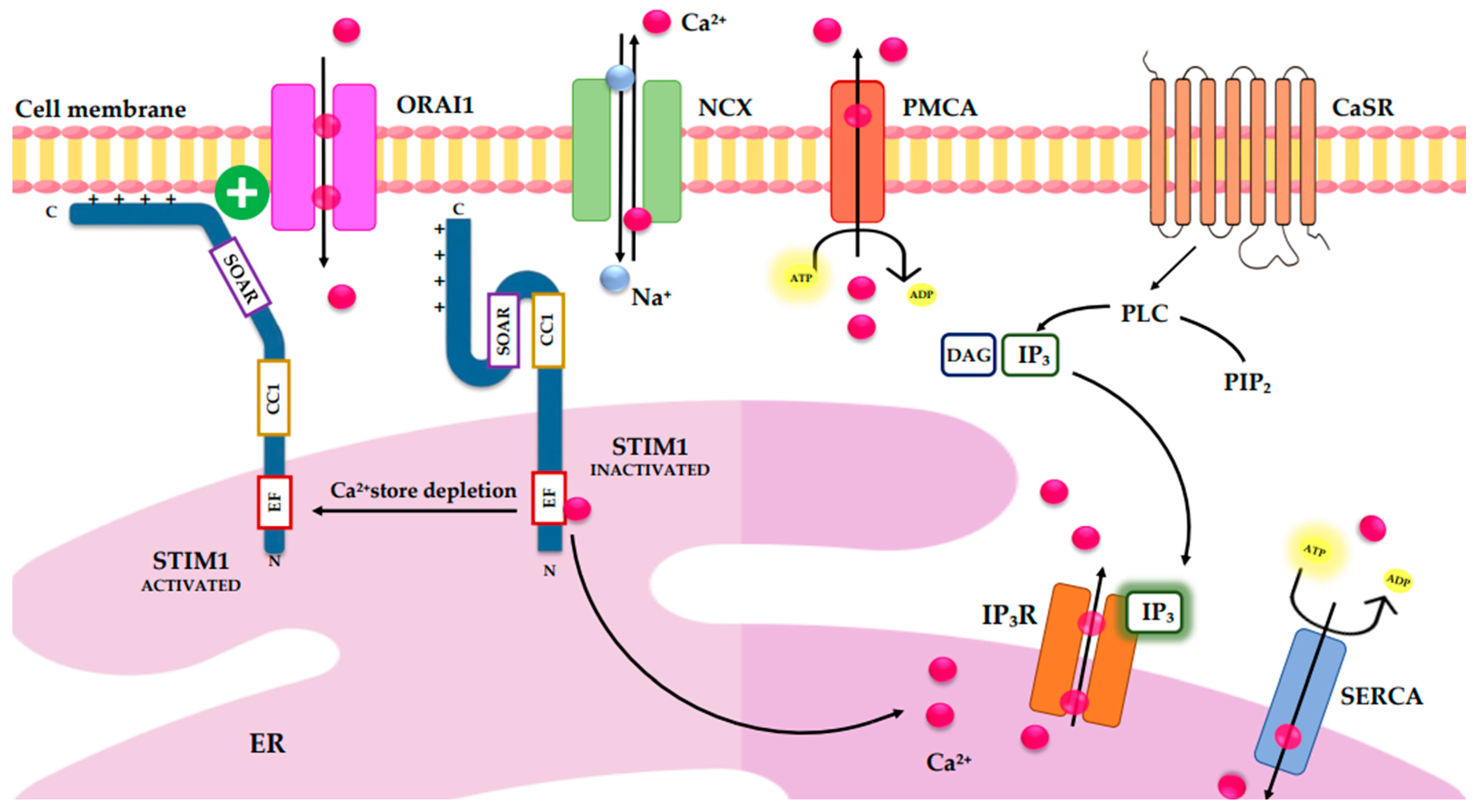
2.1. Cellular Mechanisms of Calcium Signaling
2.2. Calcium-Sensing and Receptor Systems
2.3. Neuroendocrine Integration
3. Genetic Disorders of Calcium Sensing and Signaling
3.1. CASR-Related Disorders
3.2. STIM1 and ORAI1 Defects
3.3. TRPV6-Related Diseases
4. Metabolic and Acquired Disorders with Calcium Signaling Dysfunction
4.1. Primary and Secondary Hypoparathyroidism
4.2. Pseudohypoparathyroidism and GNAS-Related Disorders
4.3. Vitamin D-Related Disorders
4.4. Acquired Causes
5. Diagnostic Challenges in Pediatric Calcium Signaling Disorders
5.1. Biochemical and Hormonal Assays
5.2. Genetic Testing and Molecular Diagnostics

| Gene/Factor | Gene Function/Role | Type of Mutation/Alteration | Associated Disorder |
|---|---|---|---|
| CASR | Calcium-sensing receptor; regulates PTH secretion | Loss-of-function | Familial hypocalciuric hypercalcemia 1, neonatal severe hyperparathyroidism [72,76] |
| Gain-of-function | Autosomal dominant hypocalcemia type 1—autosomal dominant familial hypoparathyroidism [72] | ||
| GNA11 | Gα11 subunit of G protein; transduces the CaSR signal | Loss-of-function | Familial hypocalciuric hypercalcemia 2 [79] |
| Gain-of-function | Autosomal dominant hypocalcemia type 2—autosomal dominant familial hypoparathyroidism type 2 [81] | ||
| AP2S1 | σ subunit of adaptor protein 2 (involved in CaSR trafficking) | Loss-of-function | Familial hypocalciuric hypercalcemia 3—familial hypercalcemia with reduced renal calcium excretion [79] |
| STIM1 | Endoplasmic reticulum calcium sensor; activates calcium release-activated calcium channel | Loss-of-function | Severe combined immunodeficiency-like immunodeficiency, muscle hypotonia, ectodermal dysplasia [69,86] |
| Gain-of-function | Stormorken syndrome, tubular aggregate myopathy [69] | ||
| ORAI1 | Calcium-selective ion channel in the plasma membrane | Loss-of-function | Severe combined immunodeficiency-like immunodeficiency, muscle hypotonia, ectodermal dysplasia [69,86] |
| Gain-of-function | Stormorken syndrome, tubular aggregate myopathy [69] | ||
| TRPV6 | Highly calcium-selective epithelial channel; intestine, placenta, kidney | Biallelic loss-of-function | Transient neonatal hyperparathyroidism, skeletal demineralization [52] |
| CACNA1A, CACNA1C | Voltage-gated calcium channels | Different mutation types | Epilepsy, familial hemiplegic migraine, Timothy syndrome, autism [70,71] |
| GNAS | Gsα (stimulatory G protein subunit); mediates the PTH signal | Maternal loss-of-function | Pseudohypoparathyroidism type 1A—PTH resistance + AHO [96,97,98,99,100,101,103,104] |
| Paternal loss-of-function | Pseudopseudohypoparathyroidism—skeletal AHO phenotype without hormonal resistance [96,97,98,99,100,101,103,104] | ||
| Epigenetic defects (loss of methylation) | Pseudohypoparathyroidism type 1B—isolated PTH resistance, ±mild AHO features [96,98,99,101,105,106] | ||
| Paternal loss-of-function | Progressive heterotopic ossification [100,101,104] | ||
| AIRE | Regulates immune tolerance; prevents autoimmunity | Loss-of-function | Autoimmune polyendocrinopathy type 1—autoimmune hypoparathyroidism [151] |
| GATA3 | Transcription factor; parathyroid and auditory system development | Loss-of-function | HDR syndrome (hypoparathyroidism, deafness, renal dysplasia) [152] |
| CYP27B1 (1α-hydroxylase) | Converts 25(OH)D (25-hydroxyvitamin D) into active 1,25(OH)2D (calcitriol) | Loss-of-function | Vitamin D-dependent rickets type 1A—rickets, hypocalcemia [114] |
| CYP2R1 (25-hydroxylase) | Vitamin D hydroxylation in the liver | Loss-of-function | Vitamin D-dependent rickets type 1B—rickets, hypocalcemia [114] |
| VDR (vitamin D receptor) | Mediates vitamin D effects on bone and calcium | Loss-of-function | Vitamin D-dependent rickets type 2A—rickets, hypocalcemia, alopecia [114] |
5.3. Neuroimaging and Functional Studies
5.4. Diagnostic Pitfalls and Overlapping Phenotypes
6. Therapeutic Strategies and Emerging Approaches
6.1. Conventional Treatments
6.2. Precision Targeting Calcium Signaling: Calcilytics and Calcimimetics
6.3. Experimental Gene-Based Precision Strategies
6.4. Neuroprotective and Multidisciplinary Approaches
7. Clinical and Translational Implications
7.1. Neurological Manifestations of Calcium Signaling Disorders: Central and Peripheral Patterns
7.2. Neurodevelopmental Outcomes and Biomarkers
8. Conclusions and Future Perspectives
Author Contributions
Funding
Institutional Review Board Statement
Informed Consent Statement
Data Availability Statement
Acknowledgments
Conflicts of Interest
Abbreviations
| ADHD | Attention-deficit hyperactivity disorder |
| ADH1 | Autosomal dominant hypocalcemia type 1 |
| AHO | Albright hereditary osteodystrophy |
| AP2σ | Adaptor-related protein complex 2 sigma |
| APS-1 | Autoimmune polyendocrinopathy type 1 |
| Ca2+ | Calcium ion |
| CaSR/CASR | Calcium-sensing receptor |
| cAMP | Cyclic adenosine monophosphate |
| CRAC | Calcium release-activated calcium |
| DAG | Diacylglycerol |
| DBP | Vitamin D binding protein |
| ER | Endoplasmic reticulum |
| FGF-23 | Fibroblast growth factor-23 |
| FHH | Familial hypocalciuric hypercalcemia |
| iCa | Ionized calcium |
| IP3 | Inositol trisphosphate |
| IP3Rs | Inositol 1,4,5-trisphosphate receptors |
| NCXs | Na+/Ca2+ exchangers |
| NSHPT | Neonatal severe hyperparathyroidism |
| PHP | Pseudohypoparathyroidism |
| PHP1A | Pseudohypoparathyroidism type 1A |
| PHP1B | Pseudohypoparathyroidism type 1B |
| PIP2 | Phosphatidylinositol 4,5-bisphosphate |
| PMCAs | Plasma membrane Ca2+-ATPases |
| PPHP | Pseudopseudohypoparathyroidism |
| PTH | Parathyroid hormone |
| RyRs | Ryanodine receptors |
| SERCA | Sarco/endoplasmic reticulum Ca2+-ATPase |
| SOCE | Store-operated calcium entry |
| STIM1 | Stromal interaction molecule 1 |
| tCa | Total calcium |
| TRPV6 | Transient receptor potential vanilloid 6 |
| VDDR | Vitamin D-dependent rickets |
| VGCCs | Voltage-gated calcium channels |
| 25(OH)D | Total 25-hydroxyvitamin D |
References
- Pikor, D.; Hurła, M.; Słowikowski, B.; Szymanowicz, O.; Poszwa, J.; Banaszek, N.; Drelichowska, A.; Jagodziński, P.P.; Kozubski, W.; Dorszewska, J. Calcium Ions in the Physiology and Pathology of the Central Nervous System. Int. J. Mol. Sci. 2024, 25, 13133. [Google Scholar] [CrossRef] [Scilit] [PubMed]
- Klocke, B.; Krone, K.; Tornes, J.; Moore, C.; Ott, H.; Pitychoutis, P.M. Insights into the Role of Intracellular Calcium Signaling in the Neurobiology of Neurodevelopmental Disorders. Front. Neurosci. 2023, 17, 1093099. [Google Scholar] [CrossRef] [Scilit] [PubMed]
- Brini, M.; Calì, T.; Ottolini, D.; Carafoli, E. Neuronal Calcium Signaling: Function and Dysfunction. Cell Mol. Life Sci. 2014, 71, 2787–2814. [Google Scholar] [CrossRef] [Scilit] [PubMed]
- Toescu, E.C.; Dayanithi, G. Neuroendocrine Signalling: Natural Variations on a Ca2+ Theme. Cell Calcium 2012, 51, 207–211. [Google Scholar] [CrossRef] [Scilit]
- Stojilkovic, S.S.; Tabak, J.; Bertram, R. Ion Channels and Signaling in the Pituitary Gland. Endocr. Rev. 2010, 31, 845–915. [Google Scholar] [CrossRef] [Scilit]
- Álvarez, J. Calcium Dynamics in the Secretory Granules of Neuroendocrine Cells. Cell Calcium 2012, 51, 331–337. [Google Scholar] [CrossRef] [Scilit]
- Hodson, D.J.; Romanò, N.; Schaeffer, M.; Fontanaud, P.; Lafont, C.; Fiordelisio, T.; Mollard, P. Coordination of Calcium Signals by Pituitary Endocrine Cells in Situ. Cell Calcium 2012, 51, 222–230. [Google Scholar] [CrossRef] [Scilit]
- Stojilkovic, S.S. Molecular Mechanisms of Pituitary Endocrine Cell Calcium Handling. Cell Calcium 2012, 51, 212–221. [Google Scholar] [CrossRef] [Scilit]
- Idevall-Hagren, O.; Tengholm, A. Metabolic Regulation of Calcium Signaling in Beta Cells. Semin. Cell Dev. Biol. 2020, 103, 20–30. [Google Scholar] [CrossRef] [Scilit]
- Szeliga, A.; Grymowicz, M.; Kostrzak, A.; Smolarczyk, R.; Bala, G.; Smolarczyk, K.; Meczekalski, B.; Suchta, K. Bone: A Neglected Endocrine Organ? J. Clin. Med. 2024, 13, 3889. [Google Scholar] [CrossRef] [Scilit]
- Confavreux, C.B. Bone: From a Reservoir of Minerals to a Regulator of Energy Metabolism. Kidney Int. 2011, 79, S14–S19. [Google Scholar] [CrossRef] [Scilit] [PubMed]
- Zofkova, I. Involvement of Bone in Systemic Endocrine Regulation. Physiol. Res. 2018, 67, 669–677. [Google Scholar] [CrossRef] [Scilit] [PubMed]
- Takashi, Y.; Kawanami, D. The Role of Bone-Derived Hormones in Glucose Metabolism, Diabetic Kidney Disease, and Cardiovascular Disorders. Int. J. Mol. Sci. 2022, 23, 2376. [Google Scholar] [CrossRef] [Scilit] [PubMed]
- Zofkova, I. Bone Tissue as a Systemic Endocrine Regulator. Physiol. Res. 2015, 64, 439–445. [Google Scholar] [CrossRef] [Scilit]
- Zaidi, M.; Kim, S.-M.; Mathew, M.; Korkmaz, F.; Sultana, F.; Miyashita, S.; Gumerova, A.A.; Frolinger, T.; Moldavski, O.; Barak, O.; et al. Bone Circuitry and Interorgan Skeletal Crosstalk. eLife 2023, 12, e83142. [Google Scholar] [CrossRef] [Scilit]
- Zhang, Q.; Riddle, R.C.; Clemens, T.L. Bone and the Regulation of Global Energy Balance. J. Intern. Med. 2015, 277, 681–689. [Google Scholar] [CrossRef] [Scilit]
- West, G.B. The Importance of Quantitative Systemic Thinking in Medicine. Lancet 2012, 379, 1551–1559. [Google Scholar] [CrossRef] [Scilit]
- Stokes, V.J.; Nielsen, M.F.; Hannan, F.M.; Thakker, R.V. Hypercalcemic Disorders in Children. J. Bone Miner. Res. 2017, 32, 2157–2170. [Google Scholar] [CrossRef] [Scilit]
- Root, A.W.; Levine, M.A. One Half-Century of Advances in the Evaluation and Management of Disorders of Bone and Mineral Metabolism in Children and Adolescents. J. Pediatr. Endocrinol. Metab. 2023, 36, 105–118. [Google Scholar] [CrossRef] [Scilit]
- Hoorn, E.J.; Zietse, R. Disorders of Calcium and Magnesium Balance: A Physiology-Based Approach. Pediatr. Nephrol. 2013, 28, 1195–1206. [Google Scholar] [CrossRef] [Scilit]
- Carmeliet, G.; Cromphaut, S.V.; Daci, E.; Maes, C.; Bouillon, R. Disorders of Calcium Homeostasis. Best Pract. Res. Clin. Endocrinol. Metab. 2003, 17, 529–546. [Google Scholar] [CrossRef] [Scilit] [PubMed]
- Tőke, J.; Czirják, G.; Enyedi, P.; Tóth, M. Rare Diseases Caused by Abnormal Calcium Sensing and Signalling. Endocrine 2021, 71, 611–617. [Google Scholar] [CrossRef] [Scilit] [PubMed]
- Dharmaraj, P.; Gorvin, C.M.; Soni, A.; Nelhans, N.D.; Olesen, M.K.; Boon, H.; Cranston, T.; Thakker, R.V.; Hannan, F.M. Neonatal Hypocalcemic Seizures in Offspring of a Mother with Familial Hypocalciuric Hypercalcemia Type 1 (FHH1). J. Clin. Endocrinol. Metab. 2020, 105, 1393–1400. [Google Scholar] [CrossRef] [Scilit] [PubMed]
- Ramasamy, I. Inherited Disorders of Calcium Homeostasis. Clin. Chim. Acta 2008, 394, 22–41. [Google Scholar] [CrossRef] [Scilit]
- Scheuerle, A.E.; Geleske, T.A.; Merchant, N.; Goldenberg, P.C.; Council on Genetics; Vergano, S.; Holm, I.A.; Jones, K.; Kalish, J.; Monteil, D.C.; et al. Health Supervision for Children With 22q11.2 Deletion Syndrome: Clinical Report. Pediatrics 2025, 156, e2025072717. [Google Scholar] [CrossRef] [Scilit]
- Newey, P.J.; Hannan, F.M.; Wilson, A.; Thakker, R.V. Genetics of Monogenic Disorders of Calcium and Bone Metabolism. Clin. Endocrinol. 2022, 97, 483–501. [Google Scholar] [CrossRef] [Scilit]
- Papadopoulou, A.; Bountouvi, E.; Karachaliou, F.-E. The Molecular Basis of Calcium and Phosphorus Inherited Metabolic Disorders. Genes 2021, 12, 734. [Google Scholar] [CrossRef] [Scilit]
- McKay, C.P.; Portale, A. Emerging Topics in Pediatric Bone and Mineral Disorders 2008. Semin. Nephrol. 2009, 29, 370–378. [Google Scholar] [CrossRef] [Scilit]
- Taylor, C.W.; Dale, P. Intracellular Ca2+ Channels–A Growing Community. Mol. Cell. Endocrinol. 2012, 353, 21–28. [Google Scholar] [CrossRef] [Scilit]
- Iino, M. Dynamic Regulation of Intracellular Calcium Signals through Calcium Release Channels. Mol. Cell Biochem. 1999, 190, 185–190. [Google Scholar]
- Lunde, P.K.; Sejersted, O.M. Intracellular Calcium Signalling in Striated Muscle Cells. Scand. J. Clin. Lab. Investig. 1997, 57, 559–568. [Google Scholar] [CrossRef] [Scilit] [PubMed]
- Brini, M.; Carafoli, E. Calcium Signalling: A Historical Account, Recent Developments and Future Perspectives. CMLS Cell. Mol. Life Sci. 2000, 57, 354–370. [Google Scholar] [CrossRef] [Scilit]
- Carafoli, E.; Santella, L.; Branca, D.; Brini, M. Generation, Control, and Processing of Cellular Calcium Signals. Crit. Rev. Biochem. Mol. Biol. 2001, 36, 107–260. [Google Scholar] [CrossRef] [Scilit] [PubMed]
- Kodakandla, G.; Akimzhanov, A.M.; Boehning, D. Regulatory Mechanisms Controlling Store-Operated Calcium Entry. Front. Physiol. 2023, 14, 1330259. [Google Scholar] [CrossRef] [Scilit]
- Deng, X.; Wang, Y.; Zhou, Y.; Soboloff, J.; Gill, D.L. STIM and Orai: Dynamic Intermembrane Coupling to Control Cellular Calcium Signals. J. Biol. Chem. 2009, 284, 22501–22505. [Google Scholar] [CrossRef] [Scilit]
- Lin, Y.-P.; Scappini, E.; Mirams, G.R.; Tucker, C.J.; Parekh, A.B. CRAC Channel Activity Pulsates during Cytosolic Ca2+ Oscillations. J. Biol. Chem. 2025, 301, 108519. [Google Scholar] [CrossRef] [Scilit]
- Enomoto, M.; Nishikawa, T.; Siddiqui, N.; Chung, S.; Ikura, M.; Stathopulos, P.B. From Stores to Sinks: Structural Mechanisms of Cytosolic Calcium Regulation. In Membrane Dynamics and Calcium Signaling; Krebs, J., Ed.; Advances in Experimental Medicine and Biology; Springer International Publishing: Cham, Switzerland, 2017; Volume 981, pp. 215–251. ISBN 978-3-319-55857-8. [Google Scholar]
- Parekh, A.B. The Wellcome Prize Lecture: Store-operated Ca2+ Entry: Dynamic Interplay between Endoplasmic Reticulum, Mitochondria and Plasma Membrane. J. Physiol. 2003, 547, 333–348. [Google Scholar] [CrossRef] [Scilit]
- Paparella, R.; Panvino, F.; Tarani, F.; D’Agostino, B.; Leonardi, L.; Ferraguti, G.; Venditti, S.; Colloridi, F.; Pucarelli, I.; Tarani, L.; et al. An Overview of Oxidative Stress in Sex Chromosome Aneuploidies in Pediatric Populations. Antioxidants 2025, 14, 531. [Google Scholar] [CrossRef] [Scilit]
- Tarani, L.; Ceci, F.M.; Carito, V.; Ferraguti, G.; Petrella, C.; Greco, A.; Ralli, M.; Minni, A.; Spaziani, M.; Isidori, A.M.; et al. Neuroimmune Dysregulation in Prepubertal and Adolescent Individuals Affected by Klinefelter Syndrome. Endocr. Metab. Immune Disord.-Drug Targets 2022, 22, 105–114. [Google Scholar] [CrossRef] [Scilit]
- Ferraguti, G.; Terracina, S.; Micangeli, G.; Lucarelli, M.; Tarani, L.; Ceccanti, M.; Spaziani, M.; D’Orazi, V.; Petrella, C.; Fiore, M. NGF and BDNF in Pediatrics Syndromes. Neurosci. Biobehav. Rev. 2023, 145, 105015. [Google Scholar] [CrossRef] [Scilit]
- Micangeli, G.; Menghi, M.; Profeta, G.; Tarani, F.; Mariani, A.; Petrella, C.; Barbato, C.; Ferraguti, G.; Ceccanti, M.; Tarani, L.; et al. The Impact of Oxidative Stress on Pediatrics Syndromes. Antioxidants 2022, 11, 1983. [Google Scholar] [CrossRef] [Scilit] [PubMed]
- Pocotte, S.L.; Ehrenstein, G.; Fitzpatrick, L.A. Regulation of Parathyroid Hormone Secretion. Endocr. Rev. 1991, 12, 291–301. [Google Scholar] [CrossRef] [Scilit] [PubMed]
- Gu, H.-O.; Noh, S.W.; Kim, O.-H.; Oh, B.-C. Crucial Roles of Calcium ATPases and Phosphoinositides: Insights into Pathophysiology and Therapeutic Strategies. Mol. Cells 2025, 48, 100254. [Google Scholar] [CrossRef] [Scilit] [PubMed]
- Aganna, E.; Burrin, J.M.; Hitman, G.A.; Turner, M.D. Involvement of Calpain and Synaptotagmin Ca2+ Sensors in Hormone Secretion from Excitable Endocrine Cells. J. Endocrinol. 2006, 190, R1–R7. [Google Scholar] [CrossRef] [Scilit]
- Chen, C.; Vincent, J.-D.; Clarke, I.J. Ion Channels and the Signal Transduction Pathways in the Regulation of Growth Hormone Secretion. Trends Endocrinol. Metab. 1994, 5, 227–233. [Google Scholar] [CrossRef] [Scilit]
- Yang, S.-K.; Steyn, F.; Chen, C. Influence of Membrane Ion Channel in Pituitary Somatotrophs by Hypothalamic Regulators. Cell Calcium 2012, 51, 231–239. [Google Scholar] [CrossRef] [Scilit]
- Leach, K.; Hannan, F.M.; Josephs, T.M.; Keller, A.N.; Møller, T.C.; Ward, D.T.; Kallay, E.; Mason, R.S.; Thakker, R.V.; Riccardi, D.; et al. International Union of Basic and Clinical Pharmacology. CVIII. Calcium-Sensing Receptor Nomenclature, Pharmacology, and Function. Pharmacol. Rev. 2020, 72, 558–604. [Google Scholar] [CrossRef] [Scilit]
- Hofer, A.M. Interactions between Calcium and cAMP Signaling. Curr. Med. Chem. 2012, 19, 5768–5773. [Google Scholar] [CrossRef] [Scilit]
- Bruce, J.I.E.; Straub, S.V.; Yule, D.I. Crosstalk between cAMP and Ca2+ Signaling in Non-Excitable Cells. Cell Calcium 2003, 34, 431–444. [Google Scholar] [CrossRef] [Scilit]
- Khattar, V.; Wang, L.; Peng, J.-B. Calcium Selective Channel TRPV6: Structure, Function, and Implications in Health and Disease. Gene 2022, 817, 146192. [Google Scholar] [CrossRef] [Scilit]
- Yelshanskaya, M.V.; Nadezhdin, K.D.; Kurnikova, M.G.; Sobolevsky, A.I. Structure and Function of the Calcium-Selective TRP Channel TRPV6. J. Physiol. 2021, 599, 2673–2697. [Google Scholar] [CrossRef] [Scilit]
- Vangeel, L.; Voets, T. Transient Receptor Potential Channels and Calcium Signaling. Cold Spring Harb. Perspect. Biol. 2019, 11, a035048. [Google Scholar] [CrossRef] [Scilit] [PubMed]
- Tiffner, A.; Derler, I. Isoform-Specific Properties of Orai Homologues in Activation, Downstream Signaling, Physiology and Pathophysiology. Int. J. Mol. Sci. 2021, 22, 8020. [Google Scholar] [CrossRef] [Scilit] [PubMed]
- Nguyen, N.T.; Han, W.; Cao, W.; Wang, Y.; Wen, S.; Huang, Y.; Li, M.; Du, L.; Zhou, Y. Store-Operated Calcium Entry Mediated by ORAI and STIM. In Comprehensive Physiology; Prakash, Y.S., Ed.; Wiley: Hoboken, NJ, USA, 2018; pp. 981–1002. [Google Scholar]
- Várnai, P.; Hunyady, L.; Balla, T. STIM and Orai: The Long-Awaited Constituents of Store-Operated Calcium Entry. Trends Pharmacol. Sci. 2009, 30, 118–128. [Google Scholar] [CrossRef] [Scilit] [PubMed]
- Harraz, O.F.; Altier, C. STIM1-Mediated Bidirectional Regulation of Ca2+ Entry through Voltage-Gated Calcium Channels (VGCC) and Calcium-Release Activated Channels (CRAC). Front. Cell. Neurosci. 2014, 8, 43. [Google Scholar] [CrossRef] [Scilit]
- Wang, Y.; Deng, X.; Mancarella, S.; Hendron, E.; Eguchi, S.; Soboloff, J.; Tang, X.D.; Gill, D.L. The Calcium Store Sensor, STIM1, Reciprocally Controls Orai and CaV 1.2 Channels. Science 2010, 330, 105–109. [Google Scholar] [CrossRef] [Scilit]
- Zamponi, G.W.; Striessnig, J.; Koschak, A.; Dolphin, A.C. The Physiology, Pathology, and Pharmacology of Voltage-Gated Calcium Channels and Their Future Therapeutic Potential. Pharmacol. Rev. 2015, 67, 821–870. [Google Scholar] [CrossRef] [Scilit]
- Simms, B.A.; Zamponi, G.W. Neuronal Voltage-Gated Calcium Channels: Structure, Function, and Dysfunction. Neuron 2014, 82, 24–45. [Google Scholar] [CrossRef] [Scilit]
- Catterall, W.A. Voltage-Gated Calcium Channels. Cold Spring Harb. Perspect. Biol. 2011, 3, a003947. [Google Scholar] [CrossRef] [Scilit]
- Arige, V.; Yule, D.I. Spatial and Temporal Crosstalk between the cAMP and Ca2+ Signaling Systems. Biochim. Biophys. Acta (BBA)-Mol. Cell Res. 2022, 1869, 119293. [Google Scholar] [CrossRef] [Scilit]
- Ahuja, M.; Chung, W.Y.; Lin, W.-Y.; McNally, B.A.; Muallem, S. Ca2+ Signaling in Exocrine Cells. Cold Spring Harb. Perspect. Biol. 2020, 12, a035279. [Google Scholar] [CrossRef] [Scilit] [PubMed]
- Yang, L.; Fomina, A.F. Ca2+ Influx and Clearance at Hyperpolarized Membrane Potentials Modulate Spontaneous and Stimulated Exocytosis in Neuroendocrine Cells. Cell Calcium 2020, 87, 102184. [Google Scholar] [CrossRef] [Scilit]
- Mansvelder, H.D.; Kits, K.S. Calcium Channels and the Release of Large Dense Core Vesicles from Neuroendocrine Cells: Spatial Organization and Functional Coupling. Prog. Neurobiol. 2000, 62, 427–441. [Google Scholar] [CrossRef] [Scilit] [PubMed]
- Hatton, G.I.; Li, Z. Intrinsic Controls of Intracellular Calcium and Intercellular Communication in the Regulation of Neuroendocrine Cell Activity. Cell Mol. Neurobiol. 1998, 18, 13–28. [Google Scholar] [CrossRef] [Scilit] [PubMed]
- Dolenšek, J.; Skelin, M.; Rupnik, M.S. Calcium Dependencies of Regulated Exocytosis in Different Endocrine Cells. Physiol. Res. 2011, 60, S29–S38. [Google Scholar] [CrossRef] [Scilit]
- Hannan, F.M.; Babinsky, V.N.; Thakker, R.V. Disorders of the Calcium-Sensing Receptor and Partner Proteins: Insights into the Molecular Basis of Calcium Homeostasis. J. Mol. Endocrinol. 2016, 57, R127–R142. [Google Scholar] [CrossRef] [Scilit]
- Lacruz, R.S.; Feske, S. Diseases Caused by Mutations in ORAI1 and STIM1. Ann. N. Y. Acad. Sci. 2015, 1356, 45–79. [Google Scholar] [CrossRef] [Scilit]
- Gargus, J.J. Genetic Calcium Signaling Abnormalities in the Central Nervous System: Seizures, Migraine, and Autism. Ann. N. Y. Acad. Sci. 2009, 1151, 133–156. [Google Scholar] [CrossRef] [Scilit]
- Rizzuto, R.; Pozzan, T. When Calcium Goes Wrong: Genetic Alterations of a Ubiquitous Signaling Route. Nat. Genet. 2003, 34, 135–141. [Google Scholar] [CrossRef] [Scilit]
- Gorvin, C.M. Molecular and Clinical Insights from Studies of Calcium-Sensing Receptor Mutations. J. Mol. Endocrinol. 2019, 63, R1–R16. [Google Scholar] [CrossRef] [Scilit]
- Marx, S.J.; Sinaii, N. Neonatal Severe Hyperparathyroidism: Novel Insights from Calcium, PTH, and the CASR Gene. J. Clin. Endocrinol. Metab. 2019, 105, 1061–1078. [Google Scholar] [CrossRef] [Scilit]
- Al-Khalaf, F.A.; Ismail, A.; Soliman, A.T.; Cole, D.E.C.; Ben-Omran, T. Neonatal Severe Hyperparathyroidism: Further Clinical and Molecular Delineation. Eur. J. Pediatr. 2011, 170, 625–631. [Google Scholar] [CrossRef] [Scilit]
- Alagaratnam, S.; Brain, C.; Spoudeas, H.; Dattani, M.T.; Hindmarsh, P.; Allgrove, J.; Hoff, W.V.; Kurzawinski, T.R. Surgical Treatment of Children with Hyperparathyroidism: Single Centre Experience. J. Pediatr. Surg. 2014, 49, 1539–1543. [Google Scholar] [CrossRef] [Scilit] [PubMed]
- Lee, J.Y.; Shoback, D.M. Familial Hypocalciuric Hypercalcemia and Related Disorders. Best Pract. Res. Clin. Endocrinol. Metab. 2018, 32, 609–619. [Google Scholar] [CrossRef] [Scilit] [PubMed]
- Nesbit, M.A.; Hannan, F.M.; Howles, S.A.; Babinsky, V.N.; Head, R.A.; Cranston, T.; Rust, N.; Hobbs, M.R.; Heath, H.; Thakker, R.V. Mutations Affecting G-Protein Subunit A11 in Hypercalcemia and Hypocalcemia. N. Engl. J. Med. 2013, 368, 2476–2486. [Google Scholar] [CrossRef] [Scilit] [PubMed]
- Boisen, I.M.; Mos, I.; Lerche-Black, E.M.; Juul, A.; Bräuner-Osborne, H.; Blomberg Jensen, M. Heterozygous Mutation (Q459R) in the Calcium-Sensing Receptor Gene Causes Familial Hypocalciuric Hypercalcemia 1 (FHH1). J. Clin. Endocrinol. Metab. 2020, 105, e1322–e1330. [Google Scholar] [CrossRef] [Scilit]
- Hannan, F.M.; Kallay, E.; Chang, W.; Brandi, M.L.; Thakker, R.V. Calcium-Sensing Receptor in Physiology and in Calcitropic and Non-Calcitropic Diseases. Nat. Rev. Endocrinol. 2018, 15, 33–51. [Google Scholar] [CrossRef] [Scilit]
- Goldsweig, B.; Turk Yilmaz, R.S.; Ravindranath Waikar, A.; Brownstein, C.; Carpenter, T.O. Familial Hypocalciuric Hypercalcemia in an Infant: Diagnosis and Management Quandaries. J. Bone Min. Res. 2024, 39, 1406–1411. [Google Scholar] [CrossRef] [Scilit]
- Roszko, K.L.; Bi, R.D.; Mannstadt, M. Autosomal Dominant Hypocalcemia (Hypoparathyroidism) Types 1 and 2. Front. Physiol. 2016, 7, 458. [Google Scholar] [CrossRef] [Scilit]
- Roszko, K.L.; Stapleton Smith, L.M.; Sridhar, A.V.; Roberts, M.S.; Hartley, I.R.; Gafni, R.I.; Collins, M.T.; Fox, J.C.; Nemeth, E.F. Autosomal Dominant Hypocalcemia Type 1: A Systematic Review. J. Bone Min. Res. 2022, 37, 1926–1935. [Google Scholar] [CrossRef] [Scilit]
- Obermannova, B.; Sumnik, Z.; Dusatkova, P.; Cinek, O.; Grant, M.; Lebl, J.; Hendy, G.N. Novel Calcium-Sensing Receptor Cytoplasmic Tail Deletion Mutation Causing Autosomal Dominant Hypocalcemia: Molecular and Clinical Study. Eur. J. Endocrinol. 2016, 174, K1–K11. [Google Scholar] [CrossRef] [Scilit] [PubMed]
- Sallinger, M.; Grabmayr, H.; Humer, C.; Bonhenry, D.; Romanin, C.; Schindl, R.; Derler, I. Activation Mechanisms and Structural Dynamics of STIM Proteins. J. Physiol. 2024, 602, 1475–1507. [Google Scholar] [CrossRef] [Scilit] [PubMed]
- Berna-Erro, A.; Woodard, G.E.; Rosado, J.A. Orais and STIMs: Physiological Mechanisms and Disease. J. Cell Mol. Med. 2012, 16, 407–424. [Google Scholar] [CrossRef] [Scilit] [PubMed]
- Salvi, A.; Skrypnyk, C.; Da Silva, N.; Urtizberea, J.A.; Bakhiet, M.; Robert, C.; Lévy, N.; Megarbané, A.; Delague, V.; Bartoli, M. A Novel Bi-Allelic Loss-of-Function Mutation in STIM1 Expands the Phenotype of STIM1-Related Diseases. Clin. Genet. 2021, 100, 84–89. [Google Scholar] [CrossRef] [Scilit]
- Masamune, A.; Kotani, H.; Sörgel, F.L.; Chen, J.-M.; Hamada, S.; Sakaguchi, R.; Masson, E.; Nakano, E.; Kakuta, Y.; Niihori, T.; et al. Variants That Affect Function of Calcium Channel TRPV6 Are Associated with Early-Onset Chronic Pancreatitis. Gastroenterology 2020, 158, 1626–1641.e8. [Google Scholar] [CrossRef] [Scilit]
- Xiao, Y.; Xin, Y.; Shen, K.; Yang, M.; Wu, H. The Roles of Transient Receptor Potential Vanilloid in Autoimmune Diseases. Autoimmun. Rev. 2025, 24, 103872. [Google Scholar] [CrossRef] [Scilit]
- Hannan, F.M.; Thakker, R.V. Calcium-Sensing Receptor (CaSR) Mutations and Disorders of Calcium, Electrolyte and Water Metabolism. Best Pract. Res. Clin. Endocrinol. Metab. 2013, 27, 359–371. [Google Scholar] [CrossRef] [Scilit]
- Vahe, C.; Benomar, K.; Espiard, S.; Coppin, L.; Jannin, A.; Odou, M.F.; Vantyghem, M.C. Diseases Associated with Calcium-Sensing Receptor. Orphanet J. Rare Dis. 2017, 12, 19. [Google Scholar] [CrossRef] [Scilit]
- Berridge, M.J. The Inositol Trisphosphate/Calcium Signaling Pathway in Health and Disease. Physiol. Rev. 2016, 96, 1261–1296. [Google Scholar] [CrossRef] [Scilit]
- Berridge, M.J. Calcium Signalling Remodelling and Disease. Biochem. Soc. Trans. 2012, 40, 297–309. [Google Scholar] [CrossRef] [Scilit]
- Gafni, R.I.; Collins, M.T. Hypoparathyroidism. N. Engl. J. Med. 2019, 380, 1738–1747. [Google Scholar] [CrossRef] [Scilit] [PubMed]
- Marcucci, G.; Cianferotti, L.; Brandi, M.L. Clinical Presentation and Management of Hypoparathyroidism. Best Pract. Res. Clin. Endocrinol. Metab. 2018, 32, 927–939. [Google Scholar] [CrossRef] [Scilit]
- Shoback, D.M.; Bilezikian, J.P.; Costa, A.G.; Dempster, D.; Dralle, H.; Khan, A.A.; Peacock, M.; Raffaelli, M.; Silva, B.C.; Thakker, R.V.; et al. Presentation of Hypoparathyroidism: Etiologies and Clinical Features. J. Clin. Endocrinol. Metab. 2016, 101, 2300–2312. [Google Scholar] [CrossRef] [Scilit] [PubMed]
- Jüppner, H. Molecular Definition of Pseudohypoparathyroidism Variants. J. Clin. Endocrinol. Metab. 2021, 106, 1541–1552. [Google Scholar] [CrossRef] [Scilit] [PubMed]
- Iwasaki, Y.; Bastepe, M. Imprinting and Skeletal Disorders: Lessons from Pseudohypoparathyroidism and Related Disorders. J. Bone Miner. Res. 2025, 40, 1207–1217. [Google Scholar] [CrossRef] [Scilit]
- Jüppner, H. Pseudohypoparathyroidism: Complex Disease Variants with Unfortunate Names. J. Mol. Endocrinol. 2023, 72, e230104. [Google Scholar] [CrossRef] [Scilit]
- Tafaj, O.; Jüppner, H. Pseudohypoparathyroidism: One Gene, Several Syndromes. J. Endocrinol. Investig. 2017, 40, 347–356. [Google Scholar] [CrossRef] [Scilit]
- Lemos, M.C.; Thakker, R.V. GNAS Mutations in Pseudohypoparathyroidism Type 1a and Related Disorders. Hum. Mutat. 2015, 36, 11–19. [Google Scholar] [CrossRef] [Scilit]
- Haldeman-Englert, C.R.; Hurst, A.C.; Levine, M.A. Disorders of GNAS Inactivation. In GeneReviews®; Adam, M.P., Bick, S., Mirzaa, G.M., Pagon, R.A., Wallace, S.E., Amemiya, A., Eds.; University of Washington, Seattle: Seattle, WA, USA, 1993. [Google Scholar]
- Mantovani, G.; Spada, A.; Elli, F.M. Pseudohypoparathyroidism and Gsα–cAMP-Linked Disorders: Current View and Open Issues. Nat. Rev. Endocrinol. 2016, 12, 347–356. [Google Scholar] [CrossRef] [Scilit]
- Elli, F.M.; deSanctis, L.; Ceoloni, B.; Barbieri, A.M.; Bordogna, P.; Beck-Peccoz, P.; Spada, A.; Mantovani, G. Pseudohypoparathyroidism Type Ia and Pseudo-Pseudohypoparathyroidism: The Growing Spectrum of GNAS Inactivating Mutations. Hum. Mutat. 2013, 34, 411–416. [Google Scholar] [CrossRef] [Scilit]
- Bastepe, M. GNAS Mutations and Heterotopic Ossification. Bone 2018, 109, 80–85. [Google Scholar] [CrossRef] [Scilit]
- Iwasaki, Y.; Aksu, C.; Reyes, M.; Ay, B.; He, Q.; Bastepe, M. The Long-Range Interaction between Two GNAS Imprinting Control Regions Delineates Pseudohypoparathyroidism Type 1B Pathogenesis. J. Clin. Investig. 2023, 133, e167953. [Google Scholar] [CrossRef] [Scilit]
- Bastepe, M.; Jüppner, H. GNAS Locus and Pseudohypoparathyroidism. Horm. Res. Paediatr. 2005, 63, 65–74. [Google Scholar] [CrossRef] [Scilit] [PubMed]
- Sardella, A.; Bellone, F.; Morabito, N.; Minisola, S.; Basile, G.; Corica, F.; Catalano, A. The Association between Hypoparathyroidism and Cognitive Impairment: A Systematic Review. J. Endocrinol. Investig. 2021, 44, 905–919. [Google Scholar] [CrossRef] [Scilit]
- Saponaro, F.; Alfi, G.; Cetani, F.; Matrone, A.; Mazoni, L.; Apicella, M.; Pardi, E.; Borsari, S.; Laurino, M.; Lai, E.; et al. Serum Calcium Levels Are Associated with Cognitive Function in Hypoparathyroidism: A Neuropsychological and Biochemical Study in an Italian Cohort of Patients with Chronic Post-Surgical Hypoparathyroidism. J. Endocrinol. Investig. 2022, 45, 1909–1918. [Google Scholar] [CrossRef] [Scilit] [PubMed]
- Aggarwal, S.; Kailash, S.; Sagar, R.; Tripathi, M.; Sreenivas, V.; Sharma, R.; Gupta, N.; Goswami, R. Neuropsychological Dysfunction in Idiopathic Hypoparathyroidism and Its Relationship with Intracranial Calcification and Serum Total Calcium. Eur. J. Endocrinol. 2013, 168, 895–903. [Google Scholar] [CrossRef] [Scilit]
- Cipriani, C.; Pepe, J.; Colangelo, L.; Cilli, M.; Nieddu, L.; Minisola, S. Presentation of Hypoparathyroidism in Italy: A Nationwide Register-Based Study. J. Endocrinol. Investig. 2024, 47, 2021–2027. [Google Scholar] [CrossRef] [Scilit]
- Mouallem, M.; Shaharabany, M.; Weintrob, N.; Shalitin, S.; Nagelberg, N.; Shapira, H.; Zadik, Z.; Farfel, Z. Cognitive Impairment Is Prevalent in Pseudohypoparathyroidism Type Ia, but Not in Pseudopseudohypoparathyroidism: Possible Cerebral Imprinting of Gsα. Clin. Endocrinol. 2008, 68, 233–239. [Google Scholar] [CrossRef] [Scilit]
- Perez, K.M.; Lee, E.B.; Kahanda, S.; Duis, J.; Reyes, M.; Jüppner, H.; Shoemaker, A.H. Cognitive and Behavioral Phenotype of Children with Pseudohypoparathyroidism Type 1A. Am. J. Med. Genet. Part A 2018, 176, 283–289. [Google Scholar] [CrossRef] [Scilit]
- Del Sindaco, G.; Berkenou, J.; Pagnano, A.; Rothenbuhler, A.; Arosio, M.; Mantovani, G.; Linglart, A. Neonatal and Early Infancy Features of Patients with Inactivating PTH/PTHrP Signaling Disorders/Pseudohypoparathyroidism. J. Clin. Endocrinol. Metab. 2023, 108, 2961–2969. [Google Scholar] [CrossRef] [Scilit]
- Sarathi, V.; Dhananjaya, M.S.; Karlekar, M.; Lila, A.R. Vitamin D Deficiency or Resistance and Hypophosphatemia. Best Pract. Res. Clin. Endocrinol. Metab. 2024, 38, 101876. [Google Scholar] [CrossRef] [Scilit] [PubMed]
- Reid, I.R. What Diseases Are Causally Linked to Vitamin D Deficiency? Arch. Dis. Child. 2016, 101, 185–189. [Google Scholar] [CrossRef] [Scilit] [PubMed]
- Thacher, T.D.; Clarke, B.L. Vitamin D Insufficiency. Mayo Clin. Proc. 2011, 86, 50–60. [Google Scholar] [CrossRef] [Scilit] [PubMed]
- Demay, M.B.; Pittas, A.G.; Bikle, D.D.; Diab, D.L.; Kiely, M.E.; Lazaretti-Castro, M.; Lips, P.; Mitchell, D.M.; Murad, M.H.; Powers, S.; et al. Vitamin D for the Prevention of Disease: An Endocrine Society Clinical Practice Guideline. J. Clin. Endocrinol. Metab. 2024, 109, 1907–1947. [Google Scholar] [CrossRef] [Scilit]
- Bouillon, R.; Marcocci, C.; Carmeliet, G.; Bikle, D.; White, J.H.; Dawson-Hughes, B.; Lips, P.; Munns, C.F.; Lazaretti-Castro, M.; Giustina, A.; et al. Skeletal and Extraskeletal Actions of Vitamin D: Current Evidence and Outstanding Questions. Endocr. Rev. 2019, 40, 1109–1151. [Google Scholar] [CrossRef] [Scilit]
- Rebelos, E.; Tentolouris, N.; Jude, E. The Role of Vitamin D in Health and Disease: A Narrative Review on the Mechanisms Linking Vitamin D with Disease and the Effects of Supplementation. Drugs 2023, 83, 665–685. [Google Scholar] [CrossRef] [Scilit]
- Rosen, C.J. Vitamin D Insufficiency. N. Engl. J. Med. 2011, 364, 248–254. [Google Scholar] [CrossRef] [Scilit]
- Fraser, D.R. Perspective: Vitamin D Deficiency Relationship to Initiation of Diseases. Nutrients 2025, 17, 2900. [Google Scholar] [CrossRef] [Scilit]
- Elder, C.J.; Bishop, N.J. Rickets. Lancet 2014, 383, 1665–1676. [Google Scholar] [CrossRef] [Scilit]
- Flot, C.; Porquet-Bordes, V.; Bacchetta, J.; Rothenbuhler, A.; Lienhardt-Roussie, A.; Giabicani, E.; Gueorguieva, I.; Storey, C.; Linglart, A.; Salles, J.-P.; et al. Demographic Characteristics, Risk Factors, and Presenting Features of Children with Symptomatic Nutritional Rickets: A French Series. Horm. Res. Paediatr. 2020, 93, 304–312. [Google Scholar] [CrossRef] [Scilit]
- Ogunmwonyi, I.; Adebajo, A.; Wilkinson, J.M. The Genetic and Epigenetic Contributions to the Development of Nutritional Rickets. Front. Endocrinol. 2022, 13, 1059034. [Google Scholar] [CrossRef] [Scilit] [PubMed]
- Bellazzini, M.A.; Howes, D.S. Pediatric Hypocalcemic Seizures: A Case of Rickets. J. Emerg. Med. 2005, 28, 161–164. [Google Scholar] [CrossRef] [Scilit] [PubMed]
- Schnadower, D.; Agarwal, C.; Oberfield, S.E.; Fennoy, I.; Pusic, M. Hypocalcemic Seizures and Secondary Bilateral Femoral Fractures in an Adolescent with Primary Vitamin D Deficiency. Pediatrics 2006, 118, 2226–2230. [Google Scholar] [CrossRef] [Scilit] [PubMed]
- Duplechin, R.Y.; Nadkarni, M.; Schwartz, R.P. Hypocalcemic Tetany in a Toddler with Undiagnosed Rickets. Ann. Emerg. Med. 1999, 34, 399–402. [Google Scholar] [CrossRef] [Scilit]
- Pieridou, C.; Uday, S. Nutritional Rickets Presenting with Developmental Regression: A Rare Presentation of Rickets. BMC Pediatr. 2023, 23, 330. [Google Scholar] [CrossRef] [Scilit]
- Chehade, H.; Girardin, E.; Rosato, L.; Cachat, F.; Cotting, J.; Perez, M.-H. Acute Life-Threatening Presentation of Vitamin D Deficiency Rickets. J. Clin. Endocrinol. Metab. 2011, 96, 2681–2683. [Google Scholar] [CrossRef] [Scilit]
- Prentice, A. Nutritional Rickets around the World. J. Steroid Biochem. Mol. Biol. 2013, 136, 201–206. [Google Scholar] [CrossRef] [Scilit]
- Schlingmann, K.P. Vitamin D–Dependent Hypercalcemia. Endocrinol. Metab. Clin. N. Am. 2021, 50, 729–742. [Google Scholar] [CrossRef] [Scilit]
- Shoback, D. Hypoparathyroidism. N. Engl. J. Med. 2008, 359, 391–403. [Google Scholar] [CrossRef] [Scilit]
- Bilezikian, J.P. Hypoparathyroidism. J. Clin. Endocrinol. Metab. 2020, 105, 1722–1736. [Google Scholar] [CrossRef] [Scilit]
- Khan, A.A.; Guyatt, G.; Ali, D.S.; Bilezikian, J.P.; Collins, M.T.; Dandurand, K.; Mannstadt, M.; Murphy, D.; M’Hiri, I.; Rubin, M.R.; et al. Management of Hypoparathyroidism. J. Bone Miner. Res. 2020, 37, 2663–2677. [Google Scholar] [CrossRef] [Scilit]
- Cianferotti, L.; Marcucci, G.; Brandi, M.L. Causes and Pathophysiology of Hypoparathyroidism. Best Pract. Res. Clin. Endocrinol. Metab. 2018, 32, 909–925. [Google Scholar] [CrossRef] [Scilit] [PubMed]
- Mannstadt, M.; Cianferotti, L.; Gafni, R.I.; Giusti, F.; Kemp, E.H.; Koch, C.A.; Roszko, K.L.; Yao, L.; Guyatt, G.H.; Thakker, R.V.; et al. Hypoparathyroidism: Genetics and Diagnosis. J. Bone Miner. Res. 2020, 37, 2615–2629. [Google Scholar] [CrossRef] [Scilit] [PubMed]
- Vissing Landgrebe, A.; Asp Vonsild Lund, M.; Lausten-Thomsen, U.; Frithioff-Bøjsøe, C.; Esmann Fonvig, C.; Lind Plesner, J.; Aas Holm, L.; Jespersen, T.; Hansen, T.; Christian Holm, J. Population-Based Pediatric Reference Values for Serum Parathyroid Hormone, Vitamin D, Calcium, and Phosphate in Danish/North-European White Children and Adolescents. Clin. Chim. Acta 2021, 523, 483–490. [Google Scholar] [CrossRef] [Scilit] [PubMed]
- Hansen, L.; Tjønneland, A.; Køster, B.; Brot, C.; Andersen, R.; Cohen, A.S.; Frederiksen, K.; Olsen, A.; Hansen, L.; Tjønneland, A.; et al. Vitamin D Status and Seasonal Variation among Danish Children and Adults: A Descriptive Study. Nutrients 2018, 10, 1801. [Google Scholar] [CrossRef] [Scilit]
- Walker, M.D.; Shane, E. Hypercalcemia: A Review. JAMA 2022, 328, 1624–1636. [Google Scholar] [CrossRef] [Scilit]
- Ong, G.S.Y.; Walsh, J.P.; Stuckey, B.G.A.; Brown, S.J.; Rossi, E.; Ng, J.L.; Nguyen, H.H.; Kent, G.N.; Lim, E.M. The Importance of Measuring Ionized Calcium in Characterizing Calcium Status and Diagnosing Primary Hyperparathyroidism. J. Clin. Endocrinol. Metab. 2012, 97, 3138–3145. [Google Scholar] [CrossRef] [Scilit]
- Omosule, C.L.; Holmes, V.; Jasek, C.; Roper, S.M. Pediatric Ionized Calcium Reference Intervals from Archived Radiometer Data. Clin. Biochem. 2022, 104, 13–18. [Google Scholar] [CrossRef] [Scilit]
- Alonso, M.A.; Mantecón, L.; Santos, F. Vitamin D Deficiency in Children: A Challenging Diagnosis! Pediatr. Res. 2019, 85, 596–601. [Google Scholar] [CrossRef] [Scilit]
- Weiler, H.A.; Fu, W.H.; Razaghi, M.; Gharibeh, N.; Vanstone, C.A. Parathyroid Hormone-Vitamin D Dynamics Vary According to the Definition of Vitamin D Deficiency in Newborn Infants. Bone 2023, 175, 116862. [Google Scholar] [CrossRef] [Scilit]
- Pott, V.; Tietze, H.; Kanzelmeyer, N.; von der Born, J.; Baumann, U.; Mindermann, C.; Suhlrie, A.; Drube, J.; Melk, A.; Das, A.M.; et al. LMS-Based Pediatric Reference Values for Parameters of Phosphate Homeostasis in the HARP Cohort. J. Clin. Endocrinol. Metab. 2024, 109, 668–679. [Google Scholar] [CrossRef] [Scilit]
- Notarbartolo, V.; Carta, M.; Badiane, B.A.; Puccio, G.; Corsello, G.; Giuffrè, M. “Calcium-Phosphorus-Magnesium Axis” and the Metabolic Issue of Newborns Undergoing Parenteral Nutrition: Is It Time to Change Our Perspectives? Nutrients 2025, 17, 775. [Google Scholar] [CrossRef] [Scilit]
- Mehta, Y.; Shitole, C.; Setia, M.S. Factors Associated with Changes in Magnesium Levels in Asymptomatic Neonates: A Longitudinal Analysis. Iran. J. Pediatr. 2016, 26, e2662. [Google Scholar] [CrossRef] [Scilit] [PubMed]
- García-Castaño, A.; Madariaga, L.; Gómez-Conde, S.; González, P.; Grau, G.; Rica, I.; de Nanclares, G.P.; De la Hoz, A.B.; Aguayo, A.; Martínez, R.; et al. Genetic Profile of a Large Spanish Cohort with Hypercalcemia. Front. Endocrinol. 2024, 15, 1297614. [Google Scholar] [CrossRef] [Scilit] [PubMed]
- Manjunath, G.K.; Verma, R.K.; Berua, A.; Mahalingam, S.; Dakal, T.C.; Kumar, A. From Sample to Clinical Insight: A Review of Exome Sequencing in Disease Diagnostics. Methods 2026, 246, 12–33. [Google Scholar] [CrossRef] [Scilit]
- Maron, J.L.; Kingsmore, S.; Gelb, B.D.; Vockley, J.; Wigby, K.; Bragg, J.; Stroustrup, A.; Poindexter, B.; Suhrie, K.; Kim, J.H.; et al. Rapid Whole-Genomic Sequencing and a Targeted Neonatal Gene Panel in Infants with a Suspected Genetic Disorder. JAMA 2023, 330, 161–169. [Google Scholar] [CrossRef] [Scilit]
- Rodan, L.H.; Stoler, J.; Chen, E.; Geleske, T.; Council on Genetics. Genetic Evaluation of the Child with Intellectual Disability or Global Developmental Delay: Clinical Report. Pediatrics 2025, 156, e2025072219. [Google Scholar] [CrossRef] [Scilit]
- Paparella, R.; Menghi, M.; Micangeli, G.; Leonardi, L.; Profeta, G.; Tarani, F.; Petrella, C.; Ferraguti, G.; Fiore, M.; Tarani, L. Autoimmune Polyendocrine Syndromes in the Pediatric Age. Children 2023, 10, 588. [Google Scholar] [CrossRef] [Scilit]
- Lemos, M.C.; Thakker, R.V. Hypoparathyroidism, Deafness, and Renal Dysplasia Syndrome: 20 Years after the Identification of the First GATA3 Mutations. Hum. Mutat. 2020, 41, 1341–1350. [Google Scholar] [CrossRef] [Scilit]
- Donzuso, G.; Mostile, G.; Nicoletti, A.; Zappia, M. Basal Ganglia Calcifications (Fahr’s Syndrome): Related Conditions and Clinical Features. Neurol. Sci. 2019, 40, 2251–2263. [Google Scholar] [CrossRef] [Scilit]
- Nicolas, G.; Pottier, C.; Charbonnier, C.; Guyant-Maréchal, L.; Le Ber, I.; Pariente, J.; Labauge, P.; Ayrignac, X.; Defebvre, L.; Maltête, D.; et al. Phenotypic Spectrum of Probable and Genetically-Confirmed Idiopathic Basal Ganglia Calcification. Brain 2013, 136, 3395–3407. [Google Scholar] [CrossRef] [Scilit] [PubMed]
- Saiki, M.; Saiki, S.; Sakai, K.; Matsunari, I.; Higashi, K.; Murata, K.-Y.; Hattori, N.; Hirose, G. Neurological Deficits Are Associated with Increased Brain Calcinosis, Hypoperfusion, and Hypometabolism in Idiopathic Basal Ganglia Calcification. Mov. Disord. 2007, 22, 1027–1030. [Google Scholar] [CrossRef] [Scilit] [PubMed]
- Hur, Y.J.; Koh, S.; Millichap, J.; Nangia, S.; Jennings, L.J.; Nordli, D.R. Clinical and Electroencephalographic Characteristics of Infantile-Onset Epilepsies Caused by Genetic Mutations. J. Pediatr. 2017, 184, 172–177.e1. [Google Scholar] [CrossRef] [Scilit]
- Kessi, M.; Chen, B.; Peng, J.; Yan, F.; Yang, L.; Yin, F. Calcium Channelopathies and Intellectual Disability: A Systematic Review. Orphanet J. Rare Dis. 2021, 16, 219. [Google Scholar] [CrossRef] [Scilit] [PubMed]
- Chinoy, A.; Nicholson, J.; Skae, M.; Hannan, F.M.; Thakker, R.V.; Mughal, M.Z.; Padidela, R. Neurodevelopmental Abnormalities in Patients with Familial Hypocalciuric Hypercalcemia Type 3. J. Pediatr. 2023, 257, 113367. [Google Scholar] [CrossRef] [Scilit]
- Panvino, F.; Paparella, R.; Tarani, F.; Lombardi, C.; Ferraguti, G.; Pisani, F.; Fiore, M.; Pancheva, R.; Ardizzone, I.; Tarani, L. Neurotrophins in Neurodevelopmental Disorders: A Narrative Review of the Literature. Int. J. Mol. Sci. 2025, 26, 8335. [Google Scholar] [CrossRef] [Scilit]
- Ali, D.S.; Marini, F.; Alsarraf, F.; Alalwani, H.; Alamri, A.; Khan, A.A.; Brandi, M.L. Case Report: Calcium Sensing Receptor Gene Gain of Function Mutations: A Case Series and Report of 2 Novel Mutations. Front. Endocrinol. 2023, 14, 1215036. [Google Scholar] [CrossRef] [Scilit]
- Jeong, K.H.; Zhu, J.; Park, S.; Kim, W.-J. Transient Receptor Potential Vanilloid 6 Modulates Aberrant Axonal Sprouting in a Mouse Model of Pilocarpine-Induced Epilepsy. Mol. Neurobiol. 2024, 61, 2839–2853. [Google Scholar] [CrossRef] [Scilit]
- Giudice, M.L.; Mihalik, B.; Dinnyés, A.; Kobolák, J. The Nervous System Relevance of the Calcium Sensing Receptor in Health and Disease. Molecules 2019, 24, 2546. [Google Scholar] [CrossRef] [Scilit]
- Li, L.; Yang, H.; Li, J.; Yu, Y.; Wang, F.; Zhu, X.; Liu, G. Misdiagnosis of Idiopathic Hypoparathyroidism: A Case Report and Literature Review. Medicine 2018, 97, e9884. [Google Scholar] [CrossRef] [Scilit]
- Dong, B.; Endo, I.; Ohnishi, Y.; Kondo, T.; Hasegawa, T.; Amizuka, N.; Kiyonari, H.; Shioi, G.; Abe, M.; Fukumoto, S.; et al. Calcilytic Ameliorates Abnormalities of Mutant Calcium-Sensing Receptor (CaSR) Knock-In Mice Mimicking Autosomal Dominant Hypocalcemia (ADH). J. Bone Miner. Res. 2015, 30, 1980–1993. [Google Scholar] [CrossRef] [Scilit] [PubMed]
- Mayr, B.; Schnabel, D.; Dörr, H.-G.; Schöfl, C. GENETICS IN ENDOCRINOLOGY: Gain and Loss of Function Mutations of the Calcium-Sensing Receptor and Associated Proteins: Current Treatment Concepts. Eur. J. Endocrinol. 2016, 174, R189–R208. [Google Scholar] [CrossRef] [Scilit] [PubMed]
- Hannan, F.M.; Olesen, M.K.; Thakker, R.V. Calcimimetic and Calcilytic Therapies for Inherited Disorders of the Calcium-Sensing Receptor Signalling Pathway. Br. J. Pharmacol. 2018, 175, 4083–4094. [Google Scholar] [CrossRef] [Scilit] [PubMed]
- Marx, S.J. Calcimimetic Use in Familial Hypocalciuric Hypercalcemia-A Perspective in Endocrinology. J. Clin. Endocrinol. Metab. 2017, 102, 3933–3936. [Google Scholar] [CrossRef] [Scilit]
- Hannan, F.M.; Kooblall, K.G.; Stevenson, M.; Elajnaf, T.; Liu, F.; Lines, K.E.; Meng, X.; Stewart, M.; Wells, S.; Nemeth, E.F.; et al. Characterization of Quinazolinone Calcilytic Therapy for Autosomal Dominant Hypocalcemia Type 1 (ADH1). J. Biol. Chem. 2025, 301, 108404. [Google Scholar] [CrossRef] [Scilit]
- Davies, D.M.; Sampson, J.R. Small-Molecule Signal-Transduction Inhibitors: Targeted Therapeutic Agents for Single-Gene Disorders. J. Med. Genet. 2010, 47, 145–149. [Google Scholar] [CrossRef] [Scilit]
- Berna-Erro, A.; Sanchez-Collado, J.; Nieto-Felipe, J.; Macias-Diaz, A.; Redondo, P.C.; Smani, T.; Lopez, J.J.; Jardin, I.; Rosado, J.A. The Ca2+ Sensor STIM in Human Diseases. Biomolecules 2023, 13, 1284. [Google Scholar] [CrossRef] [Scilit]
- Martin, P.; Reeder, T.; Sourbron, J.; de Witte, P.A.M.; Gammaitoni, A.R.; Galer, B.S. An Emerging Role for Sigma-1 Receptors in the Treatment of Developmental and Epileptic Encephalopathies. Int. J. Mol. Sci. 2021, 22, 8416. [Google Scholar] [CrossRef] [Scilit]
- Paparella, R.; Bei, A.; Bernabei, I.; Fiorentini, C.; Iafrate, N.; Lucibello, R.; Marchetti, L.; Pastore, F.; Maglione, V.; Niceta, M.; et al. Oxytocin Deficiency in Childhood and Adolescence: Clinical Features, Diagnostic Challenges and Therapeutic Perspectives. Curr. Issues Mol. Biol. 2025, 47, 982. [Google Scholar] [CrossRef] [Scilit]
- Bove-Fenderson, E.; Mannstadt, M. Hypocalcemic Disorders. Best Pract. Res. Clin. Endocrinol. Metab. 2018, 32, 639–656. [Google Scholar] [CrossRef] [Scilit]

| Signaling Node | Representative Genes/Pathways | Endocrine Consequences | Neurological/Neurodevelopmental Features | Translational Relevance |
|---|---|---|---|---|
| CaSR signaling | CASR, GNA11, AP2S1 | Hypo-/hypercalcemia, altered PTH secretion | Seizures, neuromuscular irritability, cognitive vulnerability | Targeted therapy (calcimimetics/calcilytics) |
| SOCE | STIM1, ORAI1 | Hypocalcemia, immune-endocrine dysregulation | Developmental delay, epilepsy, hypotonia | Emerging molecular targets |
| VGCC-mediated signaling | CACNA1A, CACNA1C | Hormone secretion defects | Epilepsy, autism spectrum disorder traits, migraine | Channel-modulating therapies |
| PTH–Gsα signaling | GNAS | PTH resistance, mineral imbalance | Cognitive impairment, behavioral phenotypes | Genotype-guided management |
| Vitamin D pathway | CYP27B1, CYP2R1, VDR | Hypocalcemia, rickets | Hypotonia, delayed milestones | Early biochemical correction |
| Clinical Red Flag | Typical Presentation | Suggested Biochemical Clue | Disorders to Consider |
|---|---|---|---|
| Early-onset seizures (neonatal/infantile) | Refractory or hypocalcemia-responsive | Low Ca2+, inappropriately low/normal PTH | Hypoparathyroidism, autosomal dominant hypocalcemia type 1, vitamin D-dependent rickets |
| Tetany, carpopedal spasm | Triggered by illness or stress | Hypocalcemia, hypomagnesemia | Acquired or genetic hypoparathyroidism |
| Developmental delay + hypocalcemia | Global delay, hypotonia | Chronic low Ca2+, elevated phosphate | Pseudohypoparathyroidism, GNAS-related disorders |
| Hypercalcemia with low urinary Ca2+ | Often asymptomatic | Elevated Ca2+, hypocalciuria | Familial hypocalciuric hypercalcemia (CASR, GNA11, AP2S1) |
| Neuropsychiatric features (attention deficit hyperactivity disorder-like, autism spectrum disorder traits) | Executive dysfunction, impulsivity | Chronic Ca2+/PTH dysregulation | Pseudohypoparathyroidism type 1A, chronic hypocalcemia |
| Nephrocalcinosis in treated hypocalcemia | Detected on ultrasound | Hypercalciuria | Autosomal dominant hypocalcemia type 1 overtreatment |
Disclaimer/Publisher’s Note: The statements, opinions and data contained in all publications are solely those of the individual author(s) and contributor(s) and not of MDPI and/or the editor(s). MDPI and/or the editor(s) disclaim responsibility for any injury to people or property resulting from any ideas, methods, instructions or products referred to in the content. |
© 2026 by the authors. Licensee MDPI, Basel, Switzerland. This article is an open access article distributed under the terms and conditions of the Creative Commons Attribution (CC BY) license.
Share and Cite
Paparella, R.; Pastore, F.; Marchetti, L.; Bei, A.; Bernabei, I.; Iafrate, N.; Maglione, V.; Niceta, M.; Zambrano, A.; Celli, M.; et al. Endocrine Disorders of Calcium Signaling in Children: Neuroendocrine Crosstalk and Clinical Implications. Cells 2026, 15, 140. https://doi.org/10.3390/cells15020140
Paparella R, Pastore F, Marchetti L, Bei A, Bernabei I, Iafrate N, Maglione V, Niceta M, Zambrano A, Celli M, et al. Endocrine Disorders of Calcium Signaling in Children: Neuroendocrine Crosstalk and Clinical Implications. Cells. 2026; 15(2):140. https://doi.org/10.3390/cells15020140
Chicago/Turabian StylePaparella, Roberto, Francesca Pastore, Lavinia Marchetti, Arianna Bei, Irene Bernabei, Norma Iafrate, Vittorio Maglione, Marcello Niceta, Anna Zambrano, Mauro Celli, and et al. 2026. "Endocrine Disorders of Calcium Signaling in Children: Neuroendocrine Crosstalk and Clinical Implications" Cells 15, no. 2: 140. https://doi.org/10.3390/cells15020140
APA StylePaparella, R., Pastore, F., Marchetti, L., Bei, A., Bernabei, I., Iafrate, N., Maglione, V., Niceta, M., Zambrano, A., Celli, M., Fiore, M., Pucarelli, I., & Tarani, L. (2026). Endocrine Disorders of Calcium Signaling in Children: Neuroendocrine Crosstalk and Clinical Implications. Cells, 15(2), 140. https://doi.org/10.3390/cells15020140