Efficiency and Fidelity of Site-Directed Mutagenesis with Complementary Primer Pairs

 ,
,  , and
, and
Highlights
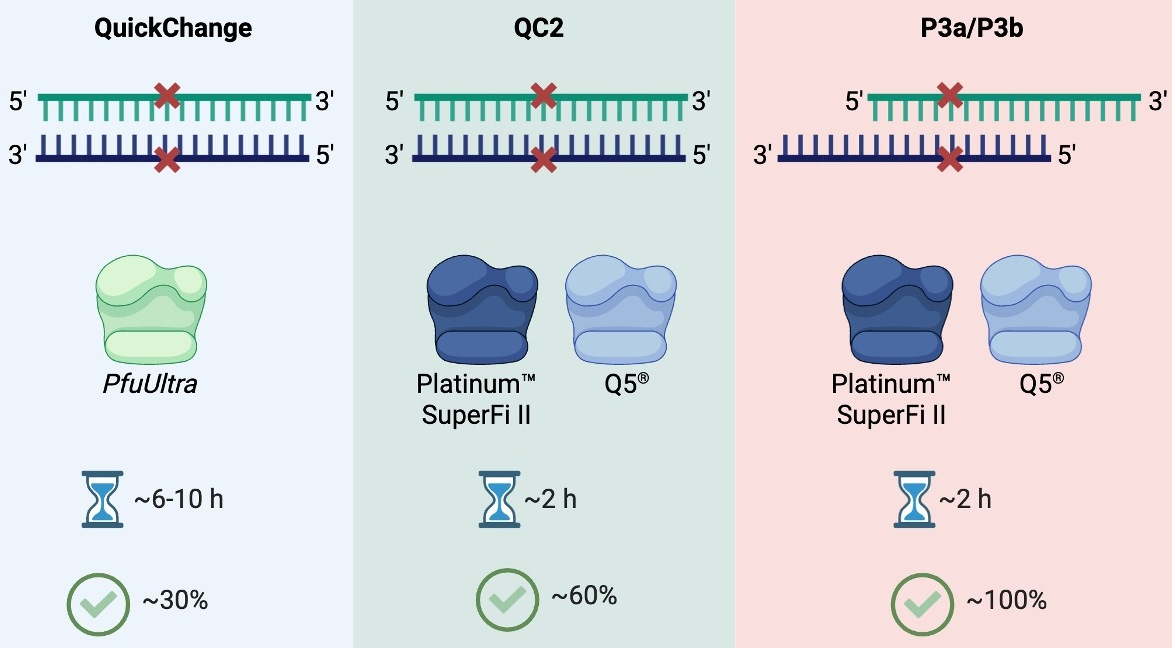
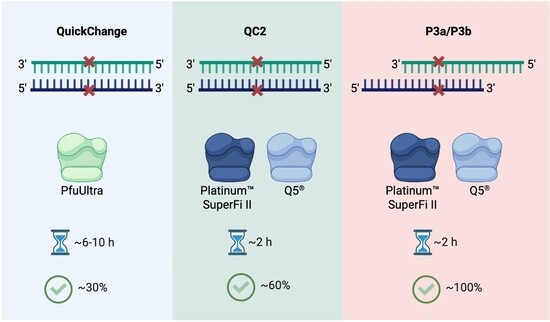
- This study improves the QuickChange site-specific mutagenesis method and makes it faster and more reliable by replacing Pfu with SuperFi II and Q5 DNA polymerases.
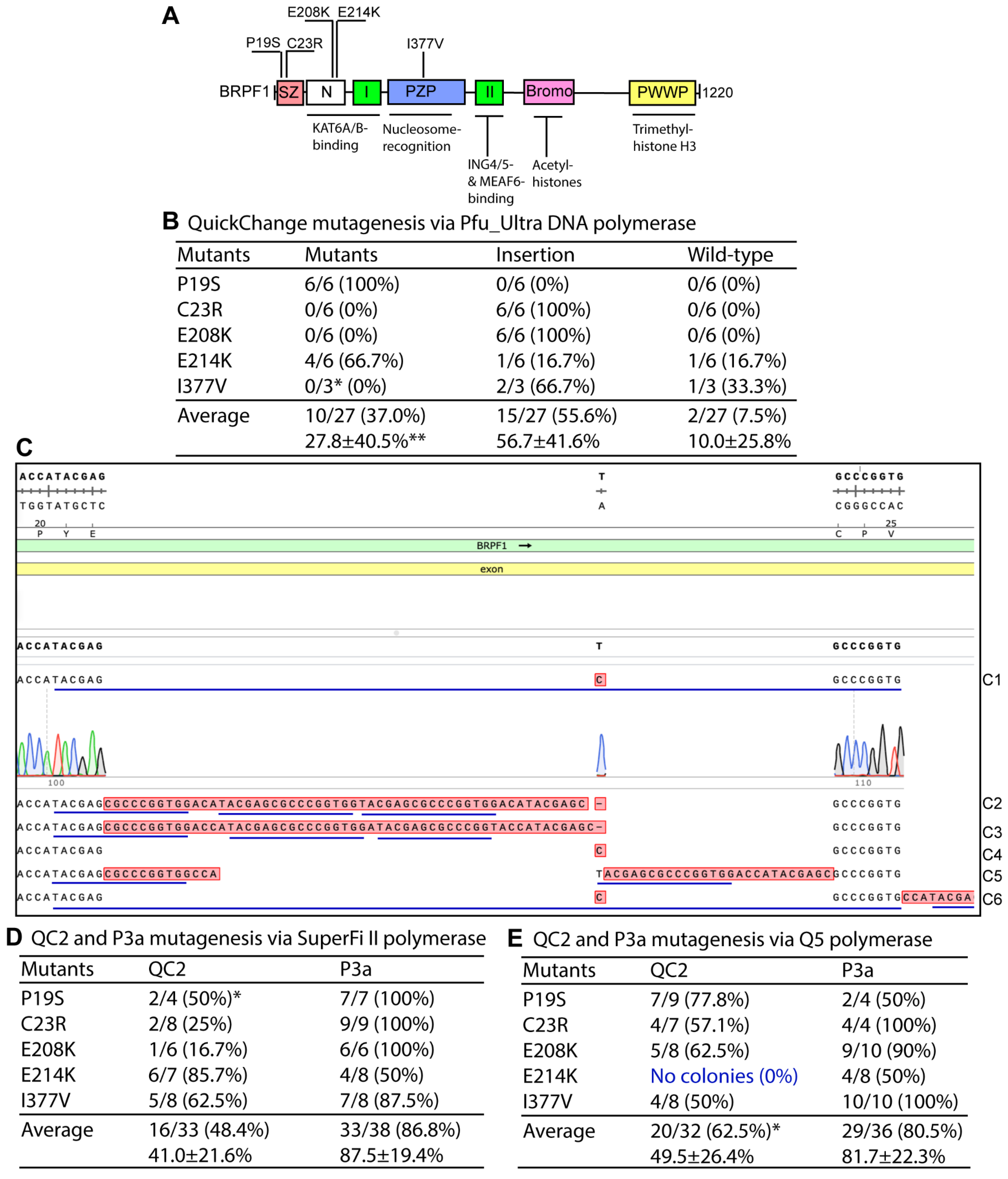
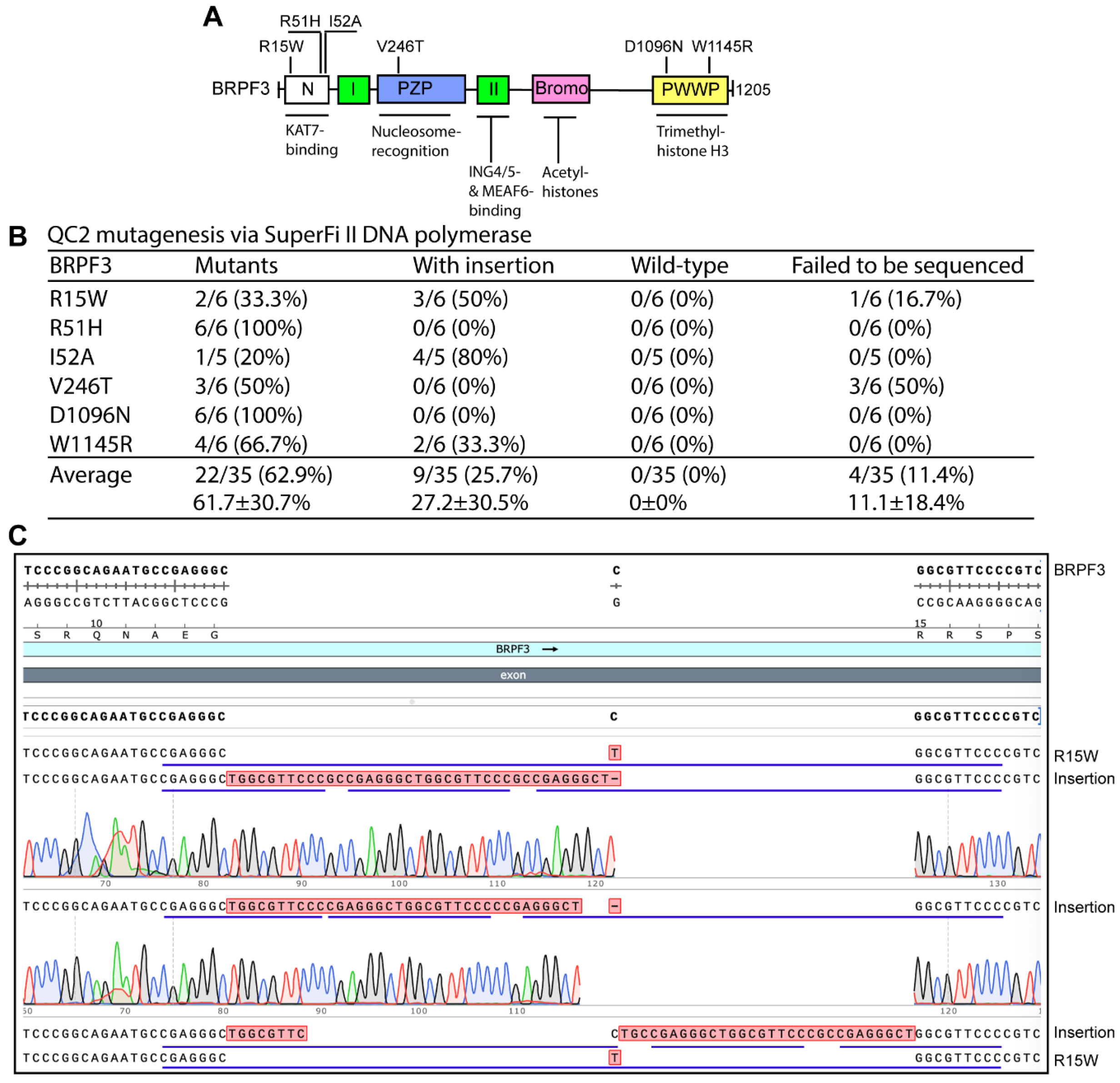
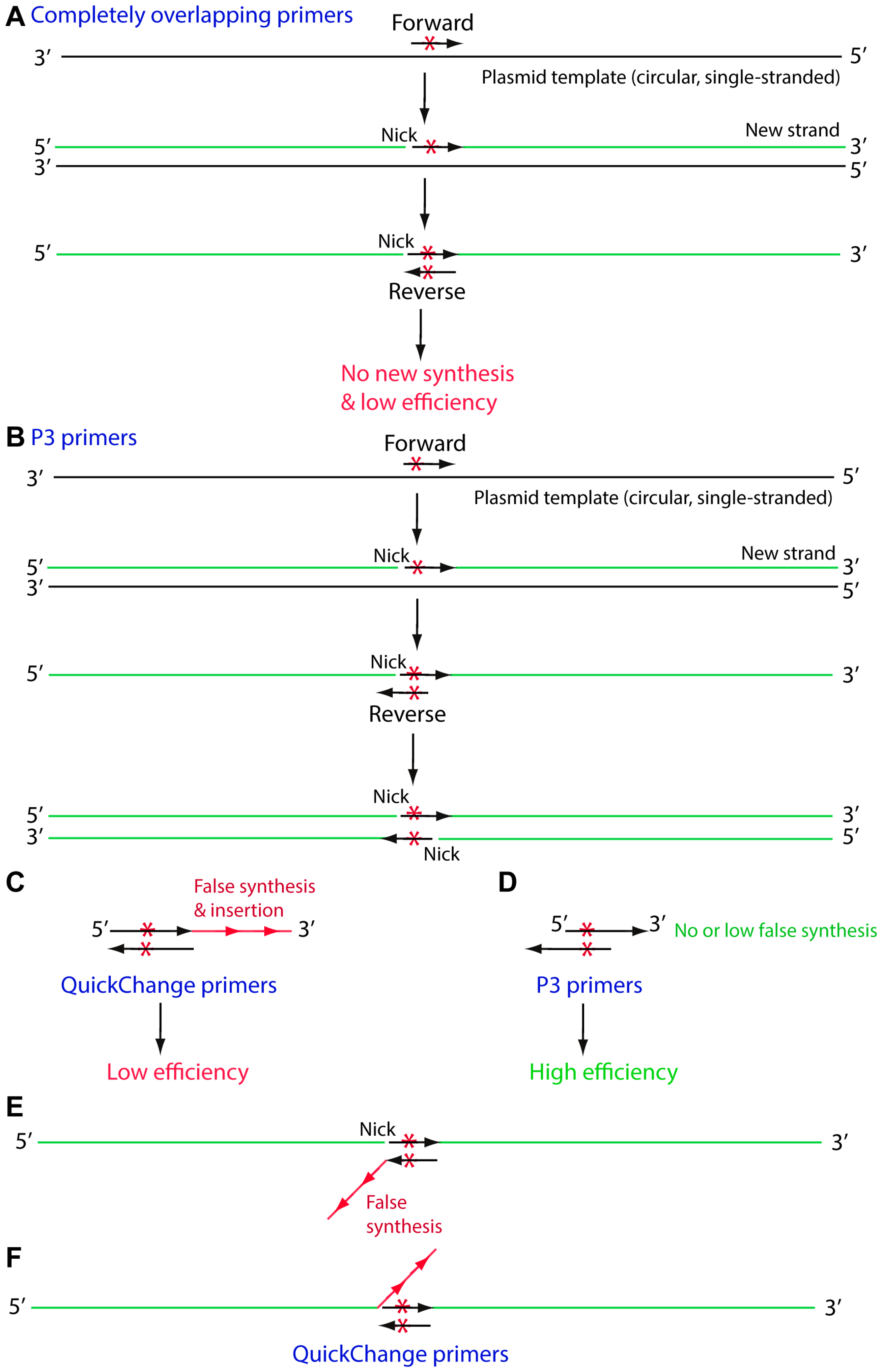
- Analysis of the failed plasmids uncovers frequent insertions of oligonucleotide repeats at the primer sites, thereby identifying a novel molecular mechanism by which partially overlapping primers with 3′-overhangs enhances mutagenesis efficiency to the ideal level of ~100%.
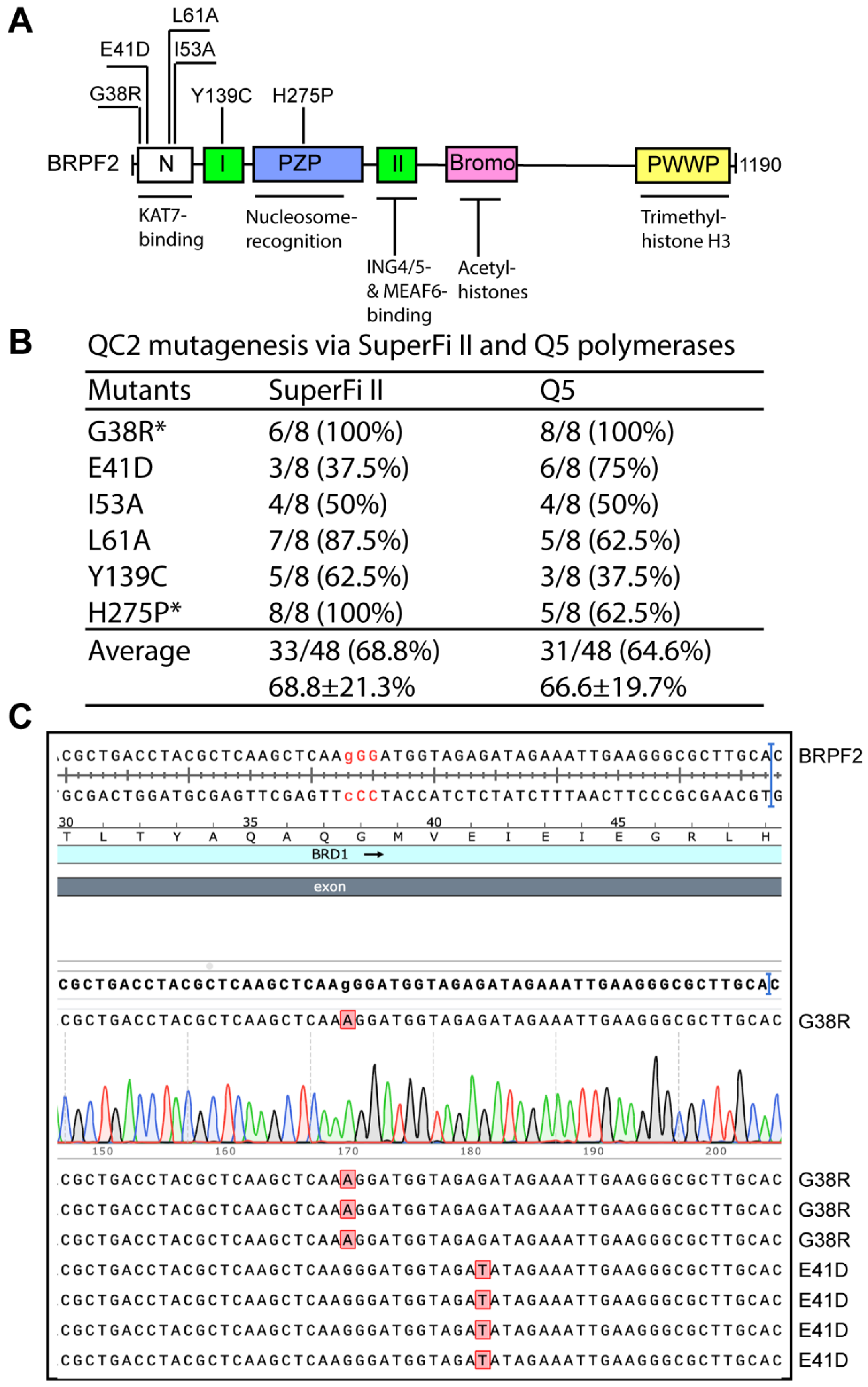
- While still less efficient than P3a and P3b mutagenesis, the improved method is very reliable for engineering point mutations and small insertions or deletions.
- The frequent insertion of short repeats at the primer sites during site-directed mutagenesis with completely overlapping primers not only points to a new direction on how to improve this and related methods and enhance the mutagenesis efficiency further but also sheds light on how insertional mutations occur in cancer and other diseases.
Abstract
1. Introduction
2. Materials and Methods
2.1. Plasmids
2.2. Site-Directed Mutagenesis
2.3. Statistics
3. Results
3.1. Developing QC2 Mutagenesis for Engineering Point Mutants of BRPF1
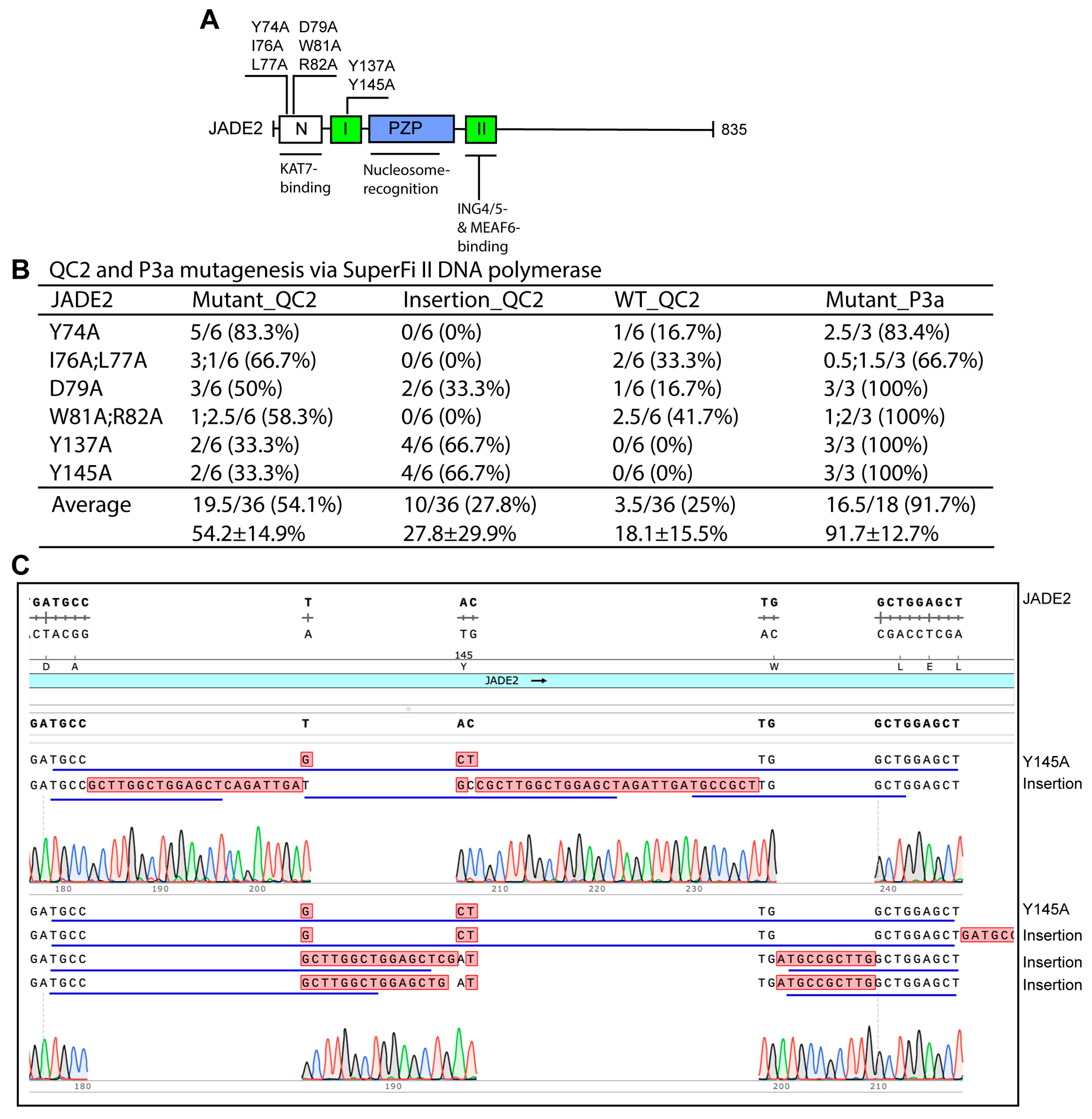
3.2. QC2 Mutagenesis for Engineering Mutants of Three BRPF1-Related Epigenetic Regulators
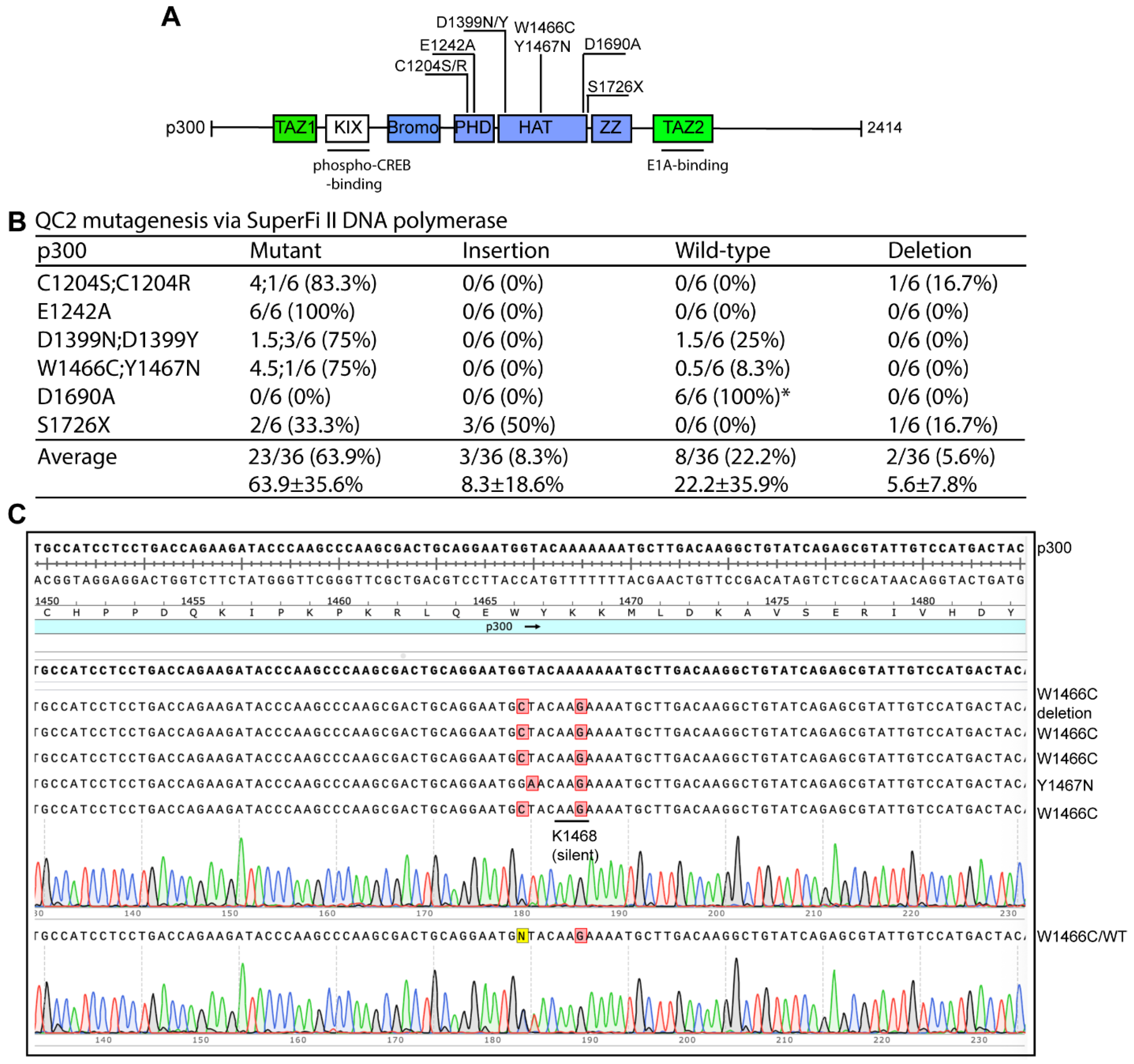
3.3. QC2 Mutagenesis for Generating p300 Mutants
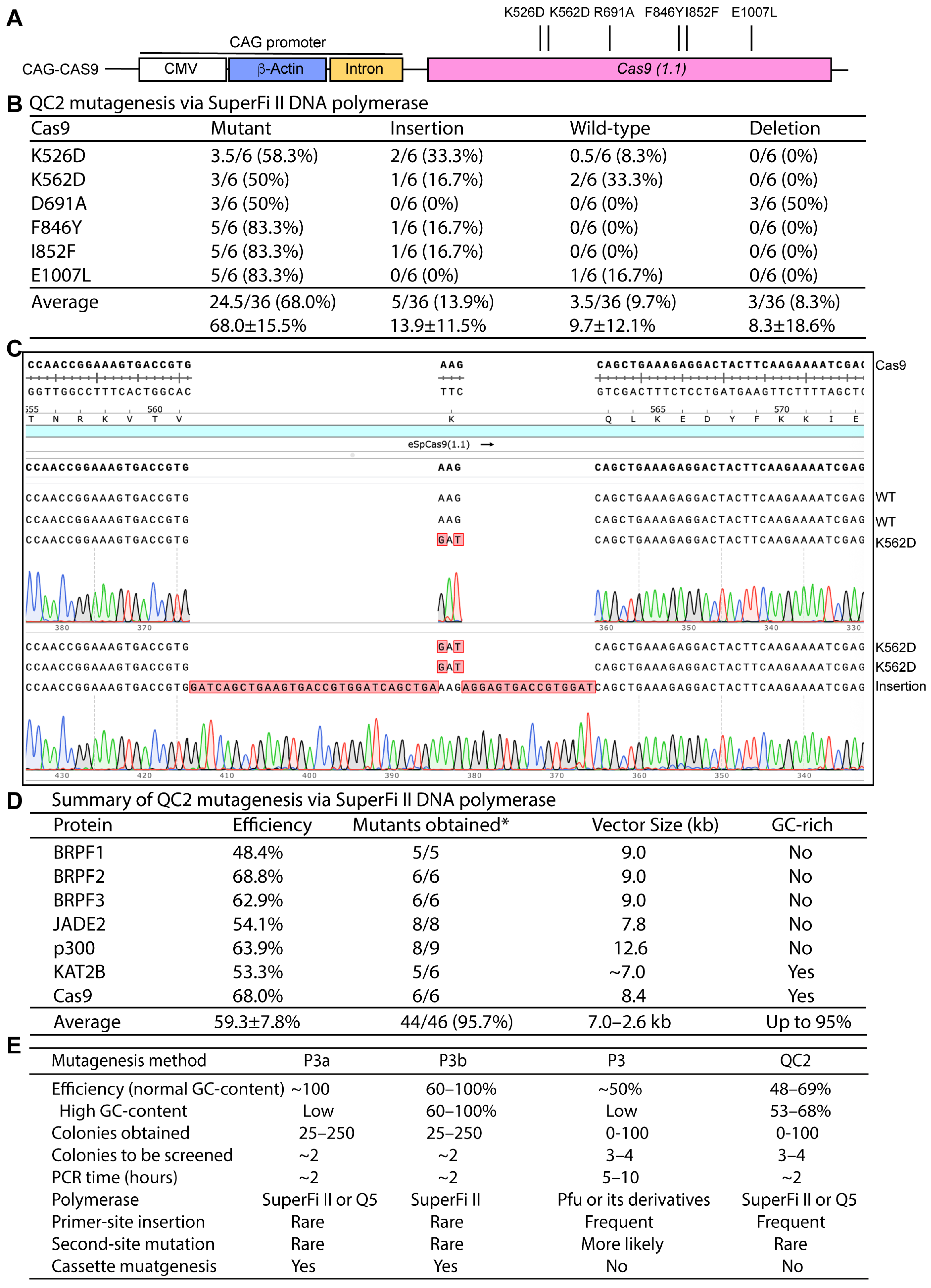
3.4. QC2 Mutagenesis of Two Expression Plasmids Possessing GC-Rich Sequences
4. Discussion
5. Conclusions
Supplementary Materials
Author Contributions
Funding
Institutional Review Board Statement
Informed Consent Statement
Data Availability Statement
Conflicts of Interest
Correction Statement
References
- Hutchison, C.A., 3rd; Phillips, S.; Edgell, M.H.; Gillam, S.; Jahnke, P.; Smith, M. Mutagenesis at a specific position in a DNA sequence. J. Biol. Chem. 1978, 253, 6551–6560. [Google Scholar] [CrossRef] [Scilit] [PubMed]
- Kresge, N.; Simoni, R.D.; Hill, R.L. The Development of Site-directed Mutagenesis by Michael Smith. J. Biol. Chem. 2006, 281, E31–E33. [Google Scholar] [CrossRef] [Scilit]
- Weiner, M.P.; Costa, G.L.; Schoettlin, W.; Cline, J.; Mathur, E.; Bauer, J.C. Site-directed mutagenesis of double-stranded DNA by the polymerase chain reaction. Gene 1994, 151, 119–123. [Google Scholar] [CrossRef] [Scilit]
- Fisher, C.L.; Pei, G.K. Modification of a PCR-based site-directed mutagenesis method. Biotechniques 1997, 23, 570–571, 574. [Google Scholar] [PubMed]
- Li, S.; Wilkinson, M.F. Site-directed mutagenesis: A two-step method using PCR and DpnI. Biotechniques 1997, 23, 588–590. [Google Scholar]
- Li, F.; Liu, S.L.; Mullins, J.I. Site-directed mutagenesis using uracil-containing double-stranded DNA templates and DpnI digestion. Biotechniques 1999, 27, 734–738. [Google Scholar] [PubMed]
- Hogrefe, H.H.; Cline, J.; Youngblood, G.L.; Allen, R.M. Creating randomized amino acid libraries with the QuikChange Multi Site-Directed Mutagenesis Kit. Biotechniques 2002, 33, 1158–1160, 1162, 1164–1165. [Google Scholar] [CrossRef] [Scilit]
- Zheng, L.; Baumann, U.; Reymond, J.L. An efficient one-step site-directed and site-saturation mutagenesis protocol. Nucleic Acids Res. 2004, 32, e115. [Google Scholar] [CrossRef] [Scilit]
- Liu, H.; Naismith, J.H. An efficient one-step site-directed deletion, insertion, single and multiple-site plasmid mutagenesis protocol. BMC Biotechnol. 2008, 8, 91. [Google Scholar] [CrossRef] [Scilit]
- Qi, D.; Scholthof, K.B. A one-step PCR-based method for rapid and efficient site-directed fragment deletion, insertion, and substitution mutagenesis. J. Virol. Methods 2008, 149, 85–90. [Google Scholar]
- Mousavi, N.; Zhou, E.; Razavi, A.; Ebrahimi, E.; Varela-Castillo, P.; Yang, X.J. P3 site-directed mutagenesis: An efficient method based on primer pairs with 3′-overhangs. J. Biol. Chem. 2025, 301, 108219. [Google Scholar] [CrossRef] [Scilit]
- Mousavi, N.; Zhou, E.; Razavi, A.; Ebrahimi, E.; Varela-Castillo, P.; Yang, X.J. Efficient site-directed mutagenesis mediated by primer pairs with 3′-overhangs. Curr. Protoc. 2025, 5, e70104. [Google Scholar]
- Yang, X.J. P3a site-specific or cassette mutagenesis for seamless protein, RNA and plasmid engineering. Genes Cancer 2025, 16, 34–60. [Google Scholar] [CrossRef] [Scilit]
- Yang, X.J. Seamless and highly efficient site-directed mutagenesis for protein, RNA and plasmid engineering. Curr. Protoc. 2026, 6, e70303. [Google Scholar] [CrossRef] [Scilit]
- Zhang, K.; Yin, X.; Shi, K.; Zhang, S.; Wang, J.; Zhao, S.; Deng, H.; Zhang, C.; Wu, Z.; Li, Y.; et al. A high-efficiency method for site-directed mutagenesis of large plasmids based on large DNA fragment amplification and recombinational ligation. Sci. Rep. 2021, 11, 10454. [Google Scholar] [CrossRef] [Scilit]
- Kirsch, R.D.; Joly, E. An improved PCR-mutagenesis strategy for two-site mutagenesis or sequence swapping between related genes. Nucleic Acids Res. 1998, 26, 1848–1850. [Google Scholar] [CrossRef] [Scilit] [PubMed]
- Burge, S.; Parkinson, G.N.; Hazel, P.; Todd, A.K.; Neidle, S. Quadruplex DNA: Sequence, topology and structure. Nucleic Acids Res. 2006, 34, 5402–5415. [Google Scholar] [CrossRef] [Scilit] [PubMed]
- Yadav, V.K.; Abraham, J.K.; Mani, P.; Kulshrestha, R.; Chowdhury, S. QuadBase: Genome-wide database of G4 DNA--occurrence and conservation in human, chimpanzee, mouse and rat promoters and 146 microbes. Nucleic Acids Res. 2008, 36, D381–D385. [Google Scholar] [CrossRef] [Scilit]
- Varshney, D.; Spiegel, J.; Zyner, K.; Tannahill, D.; Balasubramanian, S. The regulation and functions of DNA and RNA G-quadruplexes. Nat. Rev. Mol. Cell Biol. 2020, 21, 459–474. [Google Scholar] [CrossRef] [Scilit]
- Batra, S.; Allwein, B.; Kumar, C.; Devbhandari, S.; Bruning, J.G.; Bahng, S.; Lee, C.M.; Marians, K.J.; Hite, R.K.; Remus, D. G-quadruplex-stalled eukaryotic replisome structure reveals helical inchworm DNA translocation. Science 2025, 387, eadt1978. [Google Scholar] [CrossRef] [Scilit] [PubMed]
- Varela-Castillo, P.; Zhou, E.; Razavi, A.; Ebrahimi, E.; Yang, X.J. Highly efficient site-directed mutagenesis of plasmids with GC-rich sequences. Cells 2025, 14, 2016. [Google Scholar] [CrossRef] [Scilit]
- Beltran, A.; Jiang, X.; Shen, Y.; Lehner, B. Site-saturation mutagenesis of 500 human protein domains. Nature 2025, 637, 885–894. [Google Scholar] [CrossRef] [Scilit]
- Thean, D.G.L.; Chu, H.Y.; Fong, J.H.C.; Chan, B.K.C.; Zhou, P.; Kwok, C.C.S.; Chan, Y.M.; Mak, S.Y.L.; Choi, G.C.G.; Ho, J.W.K.; et al. Machine learning-coupled combinatorial mutagenesis enables resource-efficient engineering of CRISPR-Cas9 genome editor activities. Nat. Commun. 2022, 13, 2219. [Google Scholar] [CrossRef] [Scilit]
- Starr, T.N.; Czudnochowski, N.; Liu, Z.; Zatta, F.; Park, Y.J.; Addetia, A.; Pinto, D.; Beltramello, M.; Hernandez, P.; Greaney, A.J.; et al. SARS-CoV-2 RBD antibodies that maximize breadth and resistance to escape. Nature 2021, 597, 97–102. [Google Scholar] [CrossRef] [Scilit]
- Lisanza, S.L.; Gershon, J.M.; Tipps, S.W.K.; Sims, J.N.; Arnoldt, L.; Hendel, S.J.; Simma, M.K.; Liu, G.; Yase, M.; Wu, H.; et al. Multistate and functional protein design using RoseTTAFold sequence space diffusion. Nat. Biotechnol. 2025, 43, 1288–1298. [Google Scholar] [CrossRef] [Scilit]
- Kortemme, T. De novo protein design-From new structures to programmable functions. Cell 2024, 187, 526–544. [Google Scholar] [CrossRef] [Scilit]
- Wasdin, P.T.; Johnson, N.V.; Janke, A.K.; Held, S.; Marinov, T.M.; Jordaan, G.; Gillespie, R.A.; Vandenabeele, L.; Pantouli, F.; Powers, O.C.; et al. Generation of antigen-specific paired-chain antibodies using large language models. Cell 2025, 188, 7206–7221.e16. [Google Scholar] [CrossRef] [Scilit]
- Yan, K.; Rousseau, J.; Machol, K.; Cross, L.A.; Agre, K.E.; Gibson, C.F.; Goverde, A.; Engleman, K.L.; Verdin, H.; Baere, E.; et al. Deficient histone H3 propionylation by BRPF1-KAT6 complexes in neurodevelopmental disorders and cancer. Sci. Adv. 2020, 6, eaax0021. [Google Scholar] [CrossRef] [Scilit] [PubMed]
- Agudelo, D.; Duringer, A.; Bozoyan, L.; Huard, C.C.; Carter, S.; Loehr, J.; Synodinou, D.; Drouin, M.; Salsman, J.; Dellaire, G.; et al. Marker-free coselection for CRISPR-driven genome editing in human cells. Nat. Methods 2017, 14, 615–620. [Google Scholar] [CrossRef] [Scilit] [PubMed]
- Slaymaker, I.M.; Gao, L.; Zetsche, B.; Scott, D.A.; Yan, W.X.; Zhang, F. Rationally engineered Cas9 nucleases with improved specificity. Science 2016, 351, 84–88. [Google Scholar] [CrossRef] [Scilit] [PubMed]
- Yan, K.; Rousseau, J.; Littlejohn, R.O.; Kiss, C.; Lehman, A.; Rosenfeld, J.R.; Stumpel, C.T.R.; Stegmann, A.P.; Robak, L.; Scaglia, F.; et al. Mutations in the chromatin regulator gene BRPF1 causes syndromic intellectual disability and deficient histone acetylation. Am. J. Hum. Genet. 2017, 100, 91–104. [Google Scholar] [CrossRef] [Scilit] [PubMed]
- Mattioli, F.; Schaefer, E.; Magee, A.; Mark, P.; Mancini, G.M.; Dieterich, K.; Von Allmen, G.; Alders, M.; Coutton, C.; van Slegtenhorst, M.; et al. Mutations in Histone Acetylase Modifier BRPF1 Cause an Autosomal-Dominant Form of Intellectual Disability with Associated Ptosis. Am. J. Hum. Genet. 2017, 100, 105–116. [Google Scholar] [CrossRef] [PubMed]
- Demeulenaere, S.; Beysen, D.; De Veuster, I.; Reyniers, E.; Kooy, F.; Meuwissen, M. Novel BRPF1 mutation in a boy with intellectual disability, coloboma, facial nerve palsy and hypoplasia of the corpus callosum. Eur. J. Med. Genet. 2019, 62, 103691. [Google Scholar] [CrossRef] [Scilit]
- Kose, C.C.; Kaya, D.; Akcan, M.B.; Silan, F. Anemia and thrombocytopenia due to a novel BRPF1 variant in a family from Canakkale with intellectual disability and dysmorphic facies: Case report and review of the literature. Am. J. Med. Genet. A 2023, 191, 2209–2214. [Google Scholar] [CrossRef] [Scilit] [PubMed]
- Bayanbold, K.; Younger, G.; Darbro, B.; Sidhu, A. Mosaicism in BRPF1-Related Neurodevelopmental Disorder: Report of Two Sisters and Literature Review. Case Rep. Genet. 2023, 2023, 1692422. [Google Scholar] [CrossRef] [Scilit]
- Marziali, E.; Landini, S.; Fiorentini, E.; Rocca, C.; Tiberi, L.; Artuso, R.; Zaroili, L.; Dirupo, E.; Fortunato, P.; Bargiacchi, S.; et al. Broadening the ocular phenotypic spectrum of ultra-rare BRPF1 variants: Report of two cases. Ophthalmic Genet. 2024, 45, 390–394. [Google Scholar] [CrossRef] [Scilit]
- Colson, C.; Tessarech, M.; Boucher-Brischoux, E.; Boute-Benejean, O.; Vincent-Delorme, C.; Vanlerberghe, C.; Boussion, S.; Cunff, J.L.; Duban-Bedu, B.; Faivre, L.; et al. The Phenotypic and Genotypic Spectrum of BRPF1-Related Disorder: 29 New Patients and Literature Review. Clin. Genet. 2025, 107, 527–540. [Google Scholar] [CrossRef] [Scilit]
- Borrow, J.; Stanton, V.P., Jr.; Andresen, J.M.; Becher, R.; Behm, F.G.; Chaganti, R.S.; Civin, C.I.; Disteche, C.; Dube, I.; Frischauf, A.M.; et al. The translocation t(8;16)(p11;p13) of acute myeloid leukaemia fuses a putative acetyltransferase to the CREB-binding protein. Nat. Genet. 1996, 14, 33–41. [Google Scholar] [CrossRef] [Scilit]
- Doyon, Y.; Cayrou, C.; Ullah, M.; Landry, A.J.; Cote, V.; Selleck, W.; Lane, W.S.; Tan, S.; Yang, X.J.; Cote, J. ING tumor suppressors are critical regulators of chromatin acetylation required for genome expression and perpetuation. Mol. Cell 2006, 21, 51–64. [Google Scholar] [CrossRef] [Scilit]
- Ullah, M.; Pelletier, N.; Xiao, L.; Zhao, S.P.; Wang, K.; Degerny, C.; Tahmasebi, S.; Cayrou, C.; Doyon, Y.; Goh, S.L.; et al. Molecular architecture of quartet MOZ/MORF histone acetyltransferase complexes. Mol. Cell Biol. 2008, 28, 6828–6843. [Google Scholar] [CrossRef] [Scilit]
- Thompson, K.A.; Wang, B.; Argraves, W.S.; Giancotti, F.G.; Schranck, D.P.; Ruoslahti, E. BR140, a novel zinc-finger protein with homology to the TAF250 subunit of TFIID. Biochem. Biophys. Res. Commun. 1994, 198, 1143–1152. [Google Scholar] [CrossRef] [Scilit]
- Laue, K.; Daujat, S.; Crump, J.G.; Plaster, N.; Roehl, H.H.; Kimmel, C.B.; Schneider, R.; Hammerschmidt, M. The multidomain protein Brpf1 binds histones and is required for Hox gene expression and segmental identity. Development 2008, 135, 1935–1946. [Google Scholar] [CrossRef] [Scilit]
- Sengupta, R.N.; Brodsky, O.; Bingham, P.; Diehl, W.C.; Ferre, R.; Greasley, S.E.; Johnson, E.; Kraus, M.; Lieberman, W.; Meier, J.L.; et al. Modulation of the substrate preference of a MYST acetyltransferase by a scaffold protein. J. Biol. Chem. 2025, 301, 108262. [Google Scholar] [CrossRef] [Scilit]
- Mishima, Y.; Miyagi, S.; Saraya, A.; Negishi, M.; Endoh, M.; Endo, T.A.; Toyoda, T.; Shinga, J.; Katsumoto, T.; Chiba, T.; et al. The Hbo1-Brd1/Brpf2 complex is responsible for global acetylation of H3K14 and required for fetal liver erythropoiesis. Blood 2011, 118, 2443–2453. [Google Scholar]
- Tao, Y.; Zhong, C.; Zhu, J.; Xu, S.; Ding, J. Structural and mechanistic insights into regulation of HBO1 histone acetyltransferase activity by BRPF2. Nucleic Acids Res. 2017, 45, 5707–5719. [Google Scholar] [CrossRef] [Scilit] [PubMed]
- Yan, K.; You, L.; Degerny, C.; Ghorbani, M.; Liu, X.; Chen, L.; Li, L.; Miao, D.; Yang, X.J. The chromatin regulator BRPF3 preferentially activates the HBO1 acetyltransferase but is dispensable for mouse development and survival. J. Biol. Chem. 2016, 291, 2647–2663. [Google Scholar] [CrossRef] [Scilit] [PubMed]
- Foy, R.L.; Song, I.Y.; Chitalia, V.C.; Cohen, H.T.; Saksouk, N.; Cayrou, C.; Vaziri, C.; Cote, J.; Panchenko, M.V. Role of Jade-1 in the histone acetyltransferase (HAT) HBO1 complex. J. Biol. Chem. 2008, 283, 28817–28826. [Google Scholar] [CrossRef] [Scilit]
- Han, J.; Lachance, C.; Ricketts, M.D.; McCullough, C.E.; Gerace, M.; Black, B.E.; Cote, J.; Marmorstein, R. The scaffolding protein JADE1 physically links the acetyltransferase subunit HBO1 with its histone H3-H4 substrate. J. Biol. Chem. 2018, 293, 4498–4509. [Google Scholar]
- Gaurav, N.; Kanai, A.; Lachance, C.; Cox, K.L.; Liu, J.; Grzybowski, A.T.; Saksouk, N.; Klein, B.J.; Komata, Y.; Asada, S.; et al. Guiding the HBO1 complex function through the JADE subunit. Nat. Struct. Mol. Biol. 2024, 31, 1039–1049. [Google Scholar] [CrossRef] [Scilit] [PubMed]
- Arany, Z.; Sellers, W.R.; Livingston, D.M.; Eckner, R. E1A-associated p300 and CREB-associated CBP belong to a conserved family of coactivators. Cell 1994, 77, 799–800. [Google Scholar] [CrossRef] [Scilit]
- Skikama, N.; Lyon, J.; Thangue, N.B.L. The p300/CBP family: Integrating signals with transcription factors and chromatin. Trends Cell Biol. 1997, 7, 230–236. [Google Scholar] [CrossRef] [Scilit] [PubMed]
- Lundblad, J.R.; Kwok, R.P.; Laurance, M.E.; Harter, M.L.; Goodman, R.H. Adenoviral E1A-associated protein p300 as a functional homologue of the transcriptional co-activator CBP. Nature 1995, 374, 85–88. [Google Scholar]
- Goodman, R.H.; Smolik, S. CBP/p300 in cell growth, transformation, and development. Genes Dev. 2000, 14, 1553–1577. [Google Scholar] [CrossRef] [Scilit]
- Cerami, E.; Gao, J.; Dogrusoz, U.; Gross, B.E.; Sumer, S.O.; Aksoy, B.A.; Jacobsen, A.; Byrne, C.J.; Heuer, M.L.; Larsson, E.; et al. The cBio cancer genomics portal: An open platform for exploring multidimensional cancer genomics data. Cancer Discov. 2012, 2, 401–404. [Google Scholar]
- Tate, J.G.; Bamford, S.; Jubb, H.C.; Sondka, Z.; Beare, D.M.; Bindal, N.; Boutselakis, H.; Cole, C.G.; Creatore, C.; Dawson, E.; et al. COSMIC: The Catalogue of Somatic Mutations in Cancer. Nucleic Acids Res. 2019, 47, D941–D947. [Google Scholar]
- Delvecchio, M.; Gaucher, J.; Aguilar-Gurrieri, C.; Ortega, E.; Panne, D. Structure of the p300 catalytic core and implications for chromatin targeting and HAT regulation. Nat. Struct. Mol. Biol. 2013, 20, 1040–1046. [Google Scholar] [CrossRef] [Scilit]
- Zhang, Y.; Xue, Y.; Shi, J.; Ahn, J.; Mi, W.; Ali, M.; Wang, X.; Klein, B.J.; Wen, H.; Li, W.; et al. The ZZ domain of p300 mediates specificity of the adjacent HAT domain for histone H3. Nat. Struct. Mol. Biol. 2018, 25, 841–849. [Google Scholar] [CrossRef] [Scilit]
- Georgakopoulos, T.; Thireos, G. Two distinct yeast transcriptional activators require the function of the GCN5 protein to promote normal levels of transcription. EMBO J. 1992, 11, 4145–4152. [Google Scholar] [CrossRef] [Scilit] [PubMed]
- Brownell, J.E.; Zhou, J.; Ranalli, T.; Kobayashi, R.; Edmondson, D.G.; Roth, S.Y.; Allis, C.D. Tetrahymena histone acetyltransferase A: A homolog to yeast Gcn5p linking histone acetylation to gene activation. Cell 1996, 84, 843–851. [Google Scholar] [CrossRef] [Scilit] [PubMed]
- Dhalluin, C.; Carlson, J.E.; Zeng, L.; He, C.; Aggarwal, A.K.; Zhou, M.M. Structure and ligand of a histone acetyltransferase bromodomain. Nature 1999, 399, 491–496. [Google Scholar] [CrossRef] [Scilit]
- Toma-Fukai, S.; Hibi, R.; Naganuma, T.; Sakai, M.; Saijo, S.; Shimizu, N.; Matsumoto, M.; Shimizu, T. Crystal structure of GCN5 PCAF N-terminal domain reveals atypical ubiquitin ligase structure. J. Biol. Chem. 2020, 295, 14630–14639. [Google Scholar] [CrossRef] [Scilit] [PubMed]
- Albaugh, B.N.; Denu, J.M. Catalysis by protein acetyltransferase Gcn5. Biochim. Biophys. Acta Gene Regul. Mech. 2021, 1864, 194627. [Google Scholar] [CrossRef] [Scilit]
- Papai, G.; Frechard, A.; Kolesnikova, O.; Crucifix, C.; Schultz, P.; Ben-Shem, A. Structure of SAGA and mechanism of TBP deposition on gene promoters. Nature 2020, 577, 711–716. [Google Scholar] [CrossRef] [Scilit] [PubMed]
- Li, F.; Mullins, J.I. Site-directed mutagenesis facilitated by DpnI selection on hemimethylated DNA. Methods Mol. Biol. 2002, 182, 19–27. [Google Scholar] [PubMed]


Disclaimer/Publisher’s Note: The statements, opinions and data contained in all publications are solely those of the individual author(s) and contributor(s) and not of MDPI and/or the editor(s). MDPI and/or the editor(s) disclaim responsibility for any injury to people or property resulting from any ideas, methods, instructions or products referred to in the content. |
© 2026 by the authors. Licensee MDPI, Basel, Switzerland. This article is an open access article distributed under the terms and conditions of the Creative Commons Attribution (CC BY) license.
Share and Cite
Varela-Castillo, P.; Razavi, A.; Mousavi, N.; Robinson, N.; Yang, X.-J. Efficiency and Fidelity of Site-Directed Mutagenesis with Complementary Primer Pairs. Cells 2026, 15, 138. https://doi.org/10.3390/cells15020138
Varela-Castillo P, Razavi A, Mousavi N, Robinson N, Yang X-J. Efficiency and Fidelity of Site-Directed Mutagenesis with Complementary Primer Pairs. Cells. 2026; 15(2):138. https://doi.org/10.3390/cells15020138
Chicago/Turabian StyleVarela-Castillo, Paulina, Arezousadat Razavi, Negar Mousavi, Nicole Robinson, and Xiang-Jiao Yang. 2026. "Efficiency and Fidelity of Site-Directed Mutagenesis with Complementary Primer Pairs" Cells 15, no. 2: 138. https://doi.org/10.3390/cells15020138
APA StyleVarela-Castillo, P., Razavi, A., Mousavi, N., Robinson, N., & Yang, X.-J. (2026). Efficiency and Fidelity of Site-Directed Mutagenesis with Complementary Primer Pairs. Cells, 15(2), 138. https://doi.org/10.3390/cells15020138