Endogenous Bioelectrical Modulation by REAC Metabolic Optimization-IBZ Modulates SIRT1, PPAR-γ, and Metabolic Signaling Pathways in Human Fibroblasts

 ,
,  ,
,  ,
,  and
and
Highlights
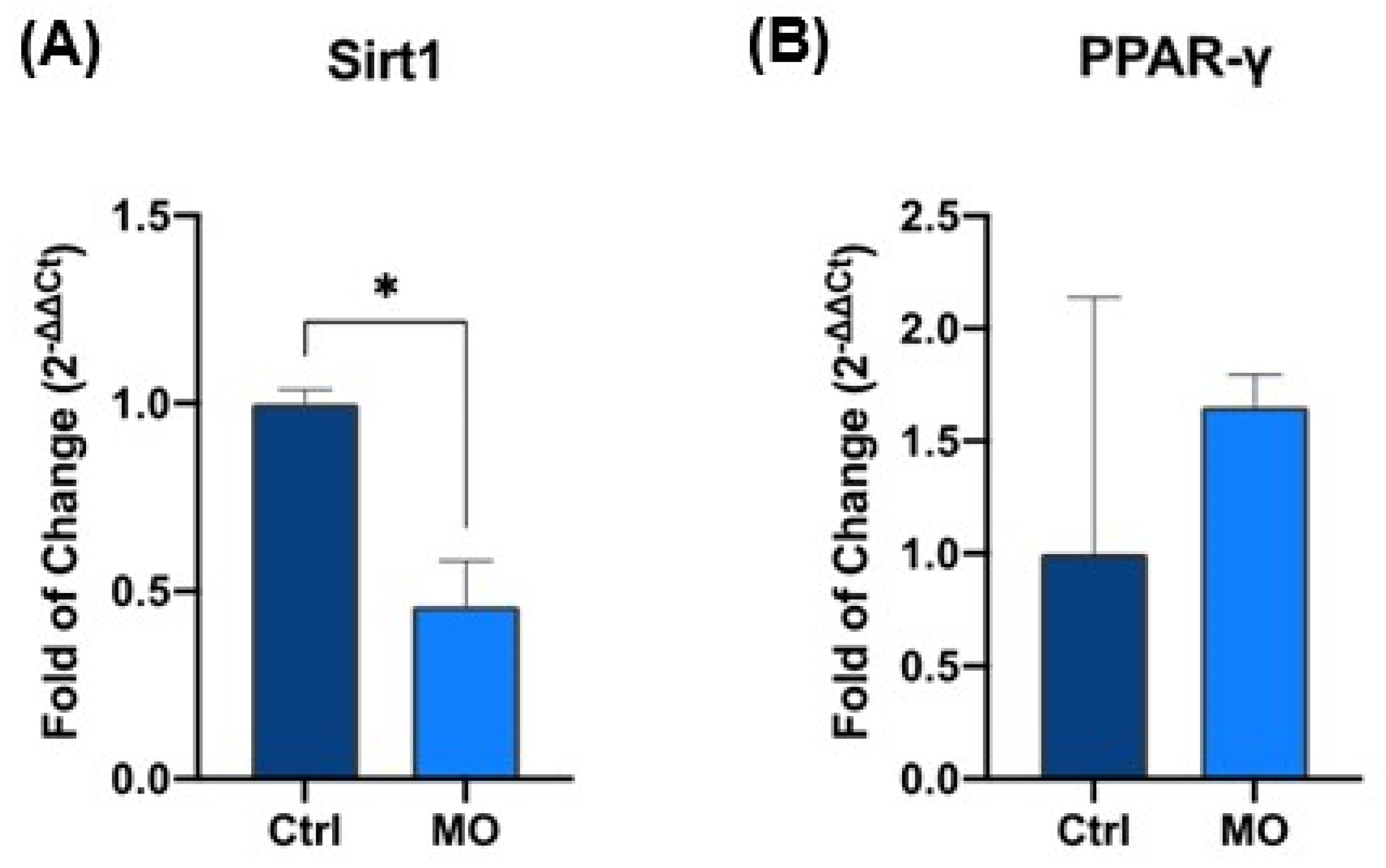
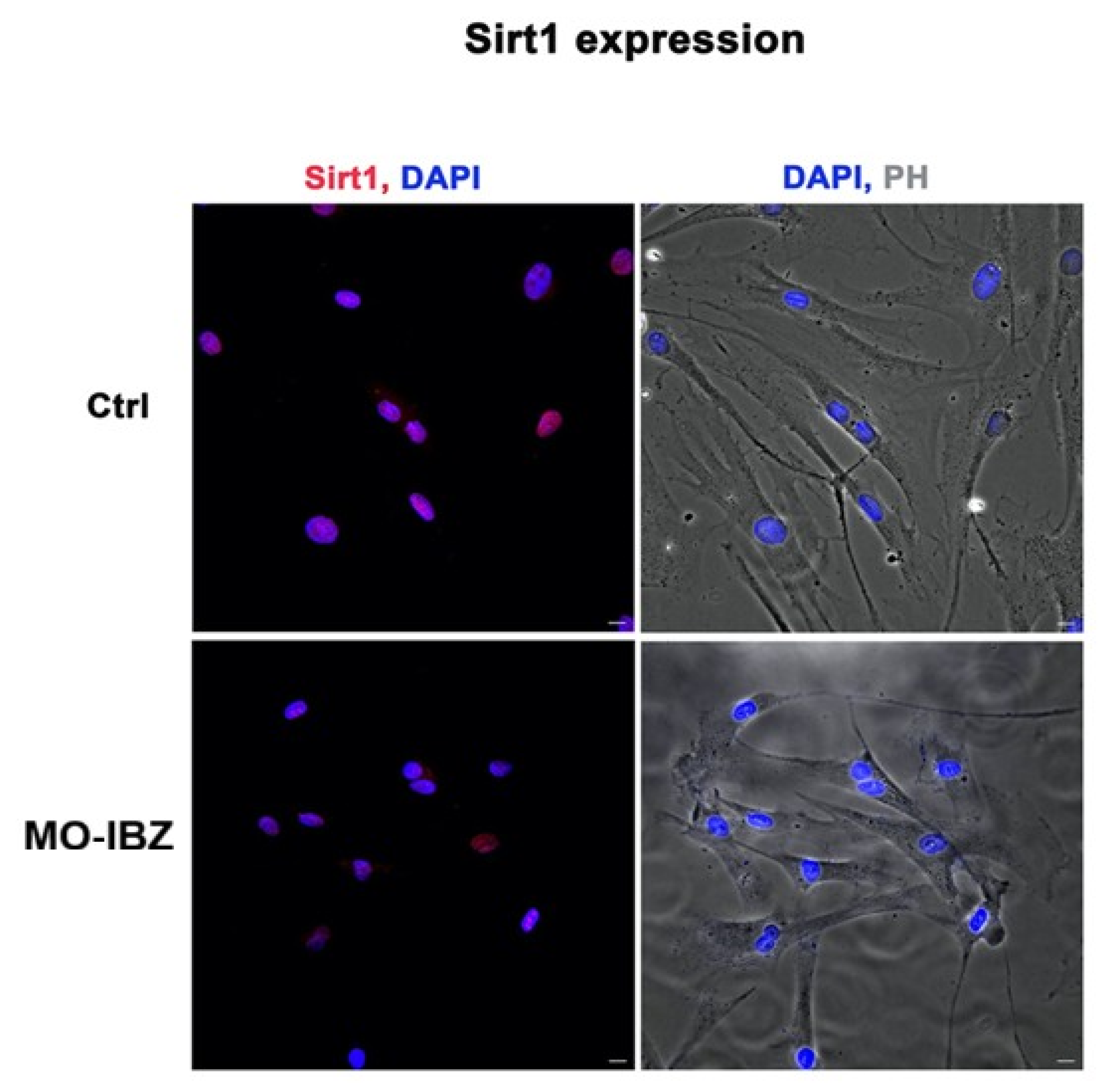
- REAC Metabolic Optimization-IBZ induces a coordinated downregulation of SIRT1 and upregulation of PPAR-γ in human fibroblasts, representing a molecular profile plausibly associated with changes in cellular metabolic regulation, although functional metabolic consequences were not directly evaluated in this study.
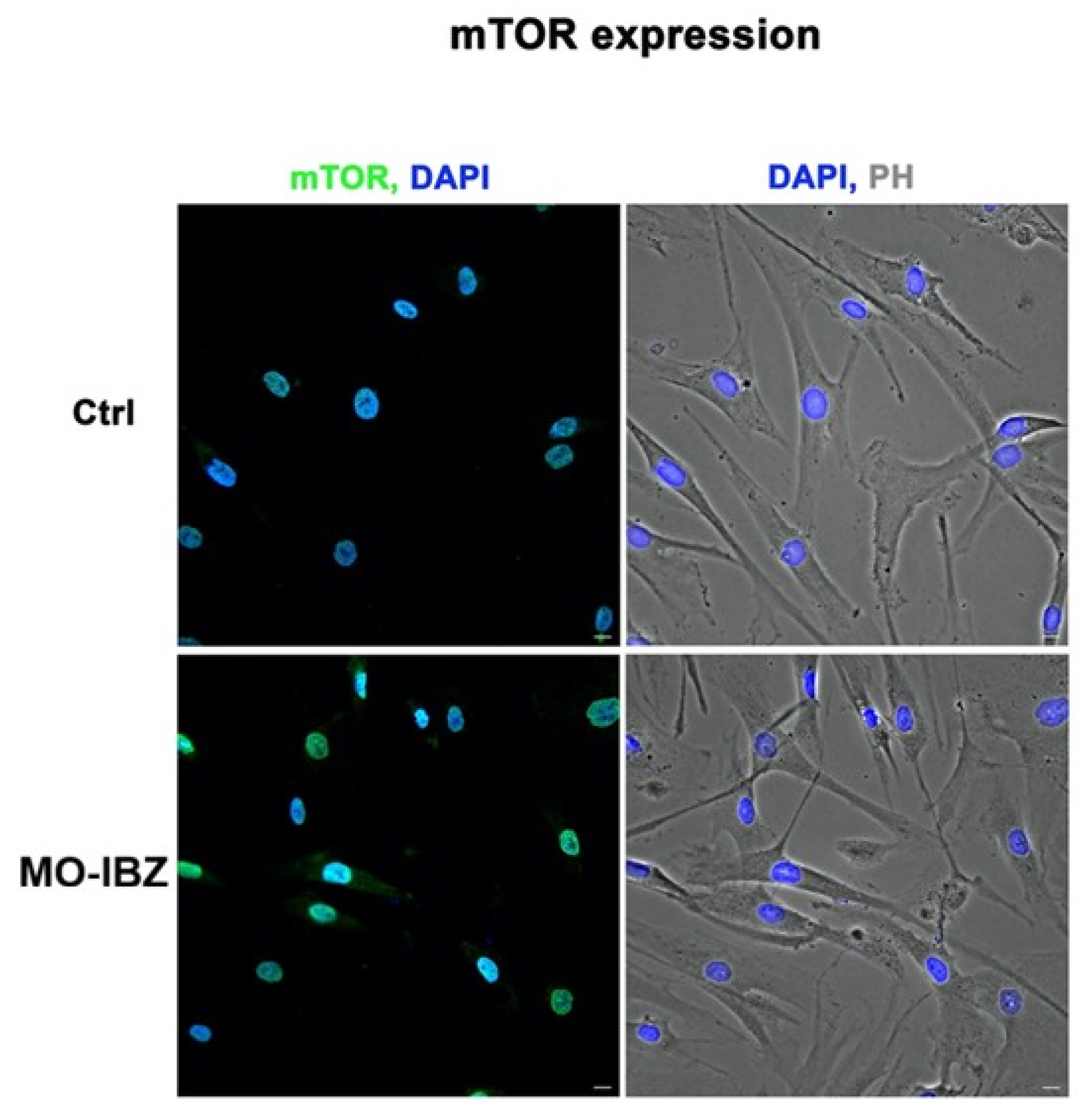
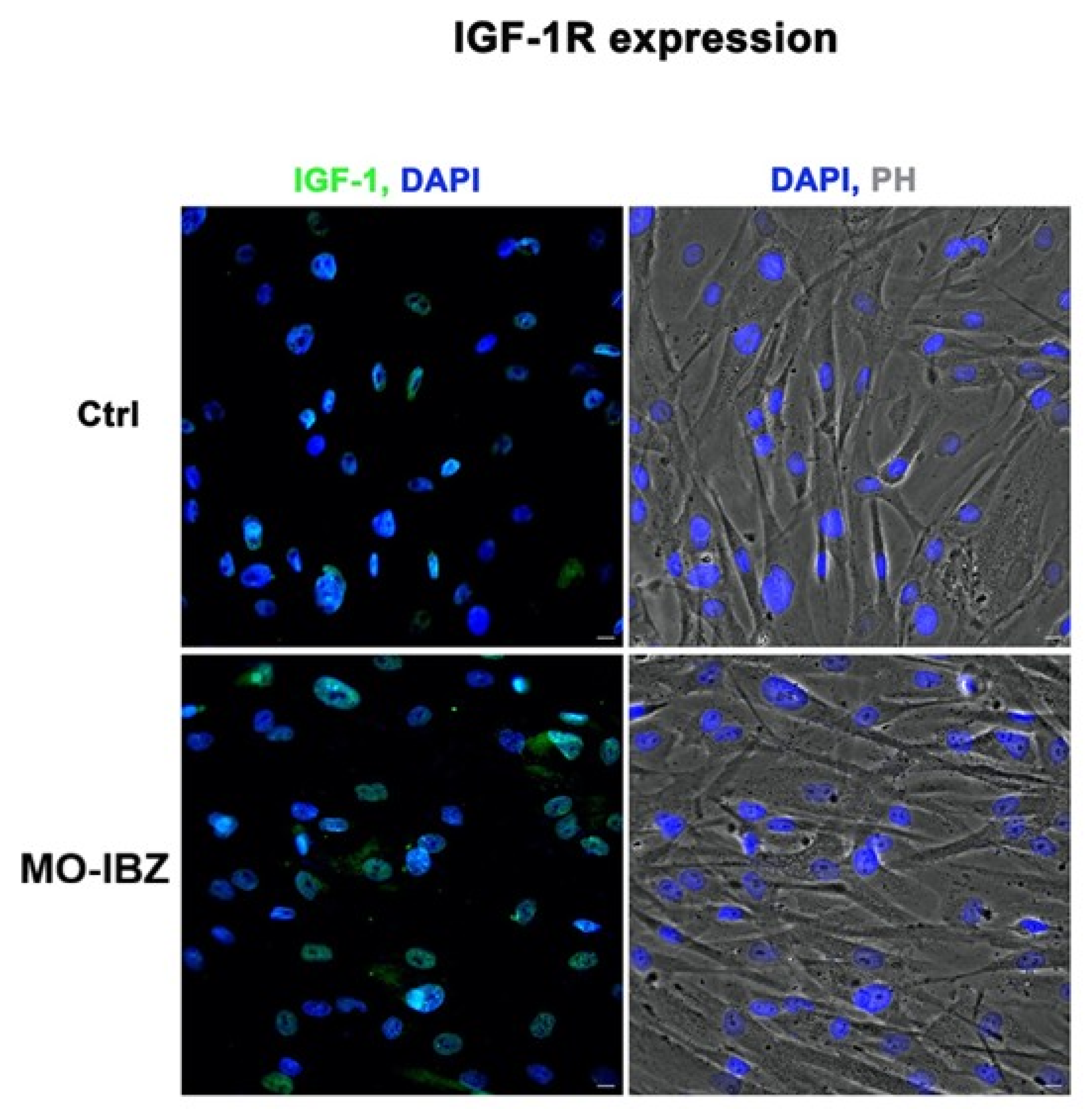
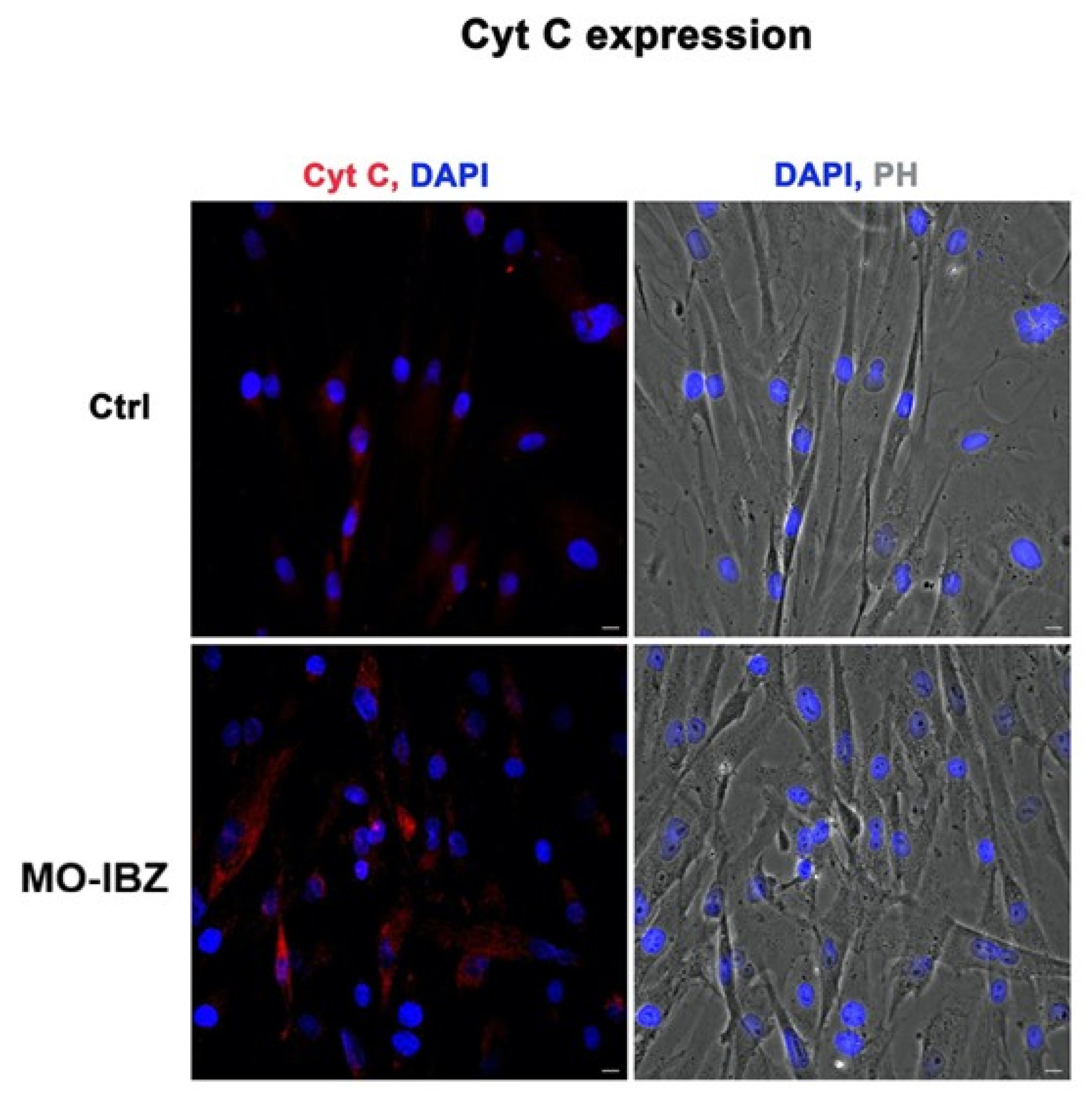
- REAC MO-IBZ is associated with directional increases in key metabolic and energetic pathway proteins in fibroblasts, including mTOR, IGF-1R, and cytochrome c, based on qualitative immunofluorescence evidence, supporting further investigation of REAC-based bioelectrical modulation and its impact on cellular bioenergetic regulation.
- The observed gene and protein expression profile suggests that REAC MO-IBZ may promote a biologically coherent modulation of regulatory pathways, potentially contributing to functional cellular reprogramming through endogenous bioelectrical and epigenetic mechanisms. However, these mechanisms were not directly investigated and should be interpreted as hypothesis-generating.
- These findings provide preliminary mechanistic indications supporting the use of REAC-based bioelectrical modulation as a non-invasive strategy in regenerative medicine and metabolic dysfunction-related conditions, while recognizing that additional functional and quantitative analyses are required to substantiate direct physiological effects.
Abstract
1. Introduction
2. Materials and Methods
2.1. Cell Culture and REAC MO-IBZ Treatment
2.2. Gene Expression Analysis
2.3. High-Resolution Fluorescence Microscopy with Computational Clearing
2.4. Statistical Analysis
3. Results
3.1. REAC-MO Treatment Resulted in Significant Transcriptional Modulation of Key Genes Associated with Cellular Stress and Metabolic Regulation
3.2. REAC MO-IBZ Treatment Is Associated with Qualitative Modulation of Metabolic Regulatory Proteins
4. Discussion
5. Conclusions
Author Contributions
Funding
Institutional Review Board Statement
Informed Consent Statement
Data Availability Statement
Conflicts of Interest
References
- Hotamisligil, G.S.; Davis, R.J. Cell Signaling and Stress Responses. Cold Spring Harb. Perspect. Biol. 2016, 8, a006072. [Google Scholar] [CrossRef] [Scilit] [PubMed]
- Sindhu, S.; Ahmad, R. Metabolic Inflammation and Cellular Immunity. Cells 2023, 12, 1615. [Google Scholar] [CrossRef] [Scilit]
- Yuan, Q.; Zeng, Z.L.; Yang, S.; Li, A.; Zu, X.; Liu, J. Mitochondrial Stress in Metabolic Inflammation: Modest Benefits and Full Losses. Oxid. Med. Cell Longev. 2022, 2022, 8803404. [Google Scholar] [CrossRef] [Scilit]
- Paré, J.-F.; Martyniuk, C.J.; Levin, M. Bioelectric regulation of innate immune system function in regenerating and intact Xenopus laevis. njp Regen. Med. 2017, 2, 15. [Google Scholar] [CrossRef] [Scilit]
- Sediqi, H.; Levin, M. Bioelectric characterization of senescing human keratinocytes. iScience 2025, 28, 113275. [Google Scholar] [CrossRef] [Scilit] [PubMed]
- Chen, D.; Long, M.; Xiao, B.; Xiong, Y.; Chen, H.; Chen, Y.; Kuang, Z.; Li, M.; Wu, Y.; Rock, D.L.; et al. Transcriptomic profiles of human foreskin fibroblast cells in response to orf virus. Oncotarget 2017, 8, 58668–58685. [Google Scholar] [CrossRef] [Scilit]
- Cialdai, F.; Risaliti, C.; Monici, M. Role of fibroblasts in wound healing and tissue remodeling on Earth and in space. Front. Bioeng. Biotechnol. 2022, 10, 958381. [Google Scholar] [CrossRef] [Scilit]
- Yang, X.; Wang, J.; Wang, H.; Li, X.; He, C.; Liu, L. Metabolomics study of fibroblasts damaged by UVB and BaP. Sci. Rep. 2021, 11, 11176. [Google Scholar] [CrossRef] [Scilit]
- Plikus, M.V.; Wang, X.; Sinha, S.; Forte, E.; Thompson, S.M.; Herzog, E.L.; Driskell, R.R.; Rosenthal, N.; Biernaskie, J.; Horsley, V. Fibroblasts: Origins, definitions, and functions in health and disease. Cell 2021, 184, 3852–3872. [Google Scholar] [CrossRef] [Scilit]
- Wu, Q.J.; Zhang, T.N.; Chen, H.H.; Yu, X.F.; Lv, J.L.; Liu, Y.Y.; Liu, Y.S.; Zheng, G.; Zhao, J.Q.; Wei, Y.F.; et al. The sirtuin family in health and disease. Signal Transduct. Target. Ther. 2022, 7, 402. [Google Scholar] [CrossRef] [Scilit] [PubMed]
- Sharma, V.; Patial, V. Peroxisome proliferator-activated receptor gamma and its natural agonists in the treatment of kidney diseases. Front. Pharmacol. 2022, 13, 991059. [Google Scholar] [CrossRef] [Scilit]
- Hao, K.; Wang, J.; Yu, H.; Chen, L.; Zeng, W.; Wang, Z.; Hu, G. Peroxisome Proliferator-Activated Receptor gamma Regulates Lipid Metabolism in Sheep Trophoblast Cells through mTOR Pathway-Mediated Autophagy. PPAR Res. 2023, 2023, 6422804. [Google Scholar] [CrossRef] [Scilit] [PubMed]
- Katafuchi, T.; Holland, W.L.; Kollipara, R.K.; Kittler, R.; Mangelsdorf, D.J.; Kliewer, S.A. PPARgamma-K107 SUMOylation regulates insulin sensitivity but not adiposity in mice. Proc. Natl. Acad. Sci. USA 2018, 115, 12102–12111. [Google Scholar] [CrossRef] [Scilit] [PubMed]
- Noori, M.; Azimirad, M.; Ghorbaninejad, M.; Meyfour, A.; Zali, M.R.; Yadegar, A. PPAR-γ agonist mitigates intestinal barrier dysfunction and inflammation induced by Clostridioides difficile SlpA in vitro. Sci. Rep. 2024, 14, 32087. [Google Scholar] [CrossRef] [Scilit] [PubMed]
- Briganti, S.; Mosca, S.; Di Nardo, A.; Flori, E.; Ottaviani, M. New Insights into the Role of PPARgamma in Skin Physiopathology. Biomolecules 2024, 14, 728. [Google Scholar] [CrossRef] [Scilit]
- Chen, B.; Lyssiotis, C.A.; Shah, Y.M. Mitochondria-organelle crosstalk in establishing compartmentalized metabolic homeostasis. Mol. Cell 2025, 85, 1487–1508. [Google Scholar] [CrossRef] [Scilit]
- Morse, P.T.; Arroum, T.; Wan, J.; Pham, L.; Vaishnav, A.; Bell, J.; Pavelich, L.; Malek, M.H.; Sanderson, T.H.; Edwards, B.F.P.; et al. Phosphorylations and Acetylations of Cytochrome c Control Mitochondrial Respiration, Mitochondrial Membrane Potential, Energy, ROS, and Apoptosis. Cells 2024, 13, 493. [Google Scholar] [CrossRef] [Scilit] [PubMed]
- Kiernan, K.; Alwarawrah, Y.; Nichols, A.G.; Danzaki, K.; MacIver, N.J. Insulin and IGF-1 have both overlapping and distinct effects on CD4+ T cell mitochondria, metabolism, and function. Sci. Rep. 2024, 14, 4331. [Google Scholar] [CrossRef] [Scilit]
- Bhowmick, T.; Biswas, S.; Mukherjee, A. Cellular response during cellular starvation: A battle for cellular survivability. Cell Biochem. Funct. 2024, 42, e4101. [Google Scholar] [CrossRef] [Scilit]
- Funk, R.H.W.; Scholkmann, F. The significance of bioelectricity on all levels of organization of an organism. Part 1: From the subcellular level to cells. Prog. Biophys. Mol. Biol. 2023, 177, 185–201. [Google Scholar] [CrossRef] [Scilit]
- Zhang, G.; Levin, M. Bioelectricity is a universal multifaced signaling cue in living organisms. Mol. Biol. Cell 2025, 36, pe2. [Google Scholar] [CrossRef] [Scilit]
- Levin, M. Reprogramming cells and tissue patterning via bioelectrical pathways: Molecular mechanisms and biomedical opportunities. Wiley Interdiscip. Rev. Syst. Biol. Med. 2013, 5, 657–676. [Google Scholar] [CrossRef] [Scilit]
- Levin, M. Molecular bioelectricity: How endogenous voltage potentials control cell behavior and instruct pattern regulation in vivo. Mol. Biol. Cell 2014, 25, 3835–3850. [Google Scholar] [CrossRef] [Scilit]
- Maioli, M.; Rinaldi, S.; Migheli, R.; Pigliaru, G.; Rocchitta, G.; Santaniello, S.; Basoli, V.; Castagna, A.; Fontani, V.; Ventura, C.; et al. Neurological morphofunctional differentiation induced by REAC technology in PC12. A neuro protective model for Parkinson’s disease. Sci. Rep. 2015, 5, 10439. [Google Scholar] [CrossRef] [Scilit]
- Rinaldi, A.; Benetti Mota, H.A.; Rinaldi, S.; Fontani, V. Targeted Endogenous Bioelectric Modulation in Autism Spectrum Disorder: Real-World Clinical Outcomes of the REAC BWO Neurodevelopment–Autism Protocol. J. Clin. Med. 2025, 14, 7500. [Google Scholar] [CrossRef] [Scilit]
- Latorre, J.; de Vera, N.; Santalucia, T.; Balada, R.; Marazuela-Duque, A.; Vaquero, A.; Planas, A.M.; Petegnief, V. Lack of the Histone Deacetylase SIRT1 Leads to Protection against Endoplasmic Reticulum Stress through the Upregulation of Heat Shock Proteins. Int. J. Mol. Sci. 2024, 25, 2856. [Google Scholar] [CrossRef] [Scilit] [PubMed]
- Li, X.; Li, Y.; Hao, Q.; Jin, J.; Wang, Y. Metabolic mechanisms orchestrated by Sirtuin family to modulate inflammatory responses. Front. Immunol. 2024, 15, 1448535. [Google Scholar] [CrossRef] [Scilit]
- Gupta, S.; Afzal, M.; Agrawal, N.; Almalki, W.H.; Rana, M.; Gangola, S.; Chinni, S.V.; Kumar, K.B.; Ali, H.; Singh, S.K.; et al. Harnessing the FOXO-SIRT1 axis: Insights into cellular stress, metabolism, and aging. Biogerontology 2025, 26, 65. [Google Scholar] [CrossRef] [Scilit]
- Kowalczyk, P. The role of sirtuins (SIRT1-SIRT7) in cellular metabolism and aging: A molecular overview. Int. J. Mol. Biol. Biochem. 2025, 7, 43–49. [Google Scholar] [CrossRef] [Scilit]
- Hernandez-Quiles, M.; Broekema, M.F.; Kalkhoven, E. PPARgamma in Metabolism, Immunity, and Cancer: Unified and Diverse Mechanisms of Action. Front. Endocrinol. 2021, 12, 624112. [Google Scholar] [CrossRef] [Scilit]
- Vetuschi, A.; Pompili, S.; Gaudio, E.; Latella, G.; Sferra, R. PPAR-γ with its anti-inflammatory and anti-fibrotic action could be an effective therapeutic target in IBD. Eur. Rev. Med. Pharmacol. Sci. 2018, 22, 8839–8848. [Google Scholar]
- Saxton, R.A.; Sabatini, D.M. mTOR Signaling in Growth, Metabolism, and Disease. Cell 2017, 168, 960–976. [Google Scholar] [CrossRef] [Scilit] [PubMed]
- Laplante, M.; Sabatini, D.M. mTOR signaling in growth control and disease. Cell 2012, 149, 274–293. [Google Scholar] [CrossRef] [Scilit]
- Huttemann, M.; Pecina, P.; Rainbolt, M.; Sanderson, T.H.; Kagan, V.E.; Samavati, L.; Doan, J.W.; Lee, I. The multiple functions of cytochrome c and their regulation in life and death decisions of the mammalian cell: From respiration to apoptosis. Mitochondrion 2011, 11, 369–381. [Google Scholar] [CrossRef] [Scilit] [PubMed]
- Ow, Y.P.; Green, D.R.; Hao, Z.; Mak, T.W. Cytochrome c: Functions beyond respiration. Nat. Rev. Mol. Cell Biol. 2008, 9, 532–542. [Google Scholar] [CrossRef] [Scilit] [PubMed]
- Cervera, J.; Levin, M.; Mafe, S. Top-down perspectives on cell membrane potential and protein transcription. Sci. Rep. 2025. [Google Scholar] [CrossRef] [Scilit]
- McLaughlin, K.A.; Levin, M. Bioelectric signaling in regeneration: Mechanisms of ionic controls of growth and form. Dev. Biol. 2018, 433, 177–189. [Google Scholar] [CrossRef] [Scilit]
- Ajutor, L.J.; Sani, F.B.; Kama, E.N.; Ugoagwu, K.U.; Christopher, A.A.; Oyedemi, D.T.; Adewoyin, P.B.; Agbetanmije, O.E.; Adekoya, A.M.; Onyeugbo, E.G. The Role of Bioelectric Signals in Cancer Genome Regulation and Potential Therapeutic Implication: An Overview. J. Cancer Tumor Int. 2025, 15, 24–37. [Google Scholar] [CrossRef] [Scilit]
- Houtkooper, R.H.; Pirinen, E.; Auwerx, J. Sirtuins as regulators of metabolism and healthspan. Nat. Rev. Mol. Cell Biol. 2012, 13, 225–238. [Google Scholar] [CrossRef] [Scilit]
- LeRoith, D.; Quon, M.J.; Zick, Y. Insulin and Insulin-Like Growth Factor-1 Receptors and Signaling Pathways: Similarities and Differences. In Hormone Signaling; Goffin, V., Kelly, P.A., Eds.; Springer: Boston, MA, USA, 2002; pp. 81–99. [Google Scholar]
- Canto, C.; Auwerx, J. PGC-1alpha, SIRT1 and AMPK, an energy sensing network that controls energy expenditure. Curr. Opin. Lipidol. 2009, 20, 98–105. [Google Scholar] [CrossRef] [Scilit]
- Hoseini, R.; Hoseini, Z.; Kamangar, A. The role of the SIRT1 and mTOR pathways in exercise-induced beta-cell senescence reduction in type 2 diabetes mellitus. Cell. Mol. Life Sci. 2025, 82, 374. [Google Scholar] [CrossRef] [Scilit] [PubMed]
- Houtkooper, R.H.; Canto, C.; Wanders, R.J.; Auwerx, J. The secret life of NAD+: An old metabolite controlling new metabolic signaling pathways. Endocr. Rev. 2010, 31, 194–223. [Google Scholar] [CrossRef] [Scilit] [PubMed]
- Rinaldi, S.; Meloni, M.A.; Galleri, G.; Maioli, M.; Pigliaru, G.; Cugia, G.; Santaniello, S.; Castagna, A.; Fontani, V. Radio Electric Asymmetric Conveyer (REAC) technology to obviate loss of T cell responsiveness under simulated microgravity. PLoS ONE 2018, 13, e0200128. [Google Scholar] [CrossRef] [Scilit] [PubMed]
- Fontani, V.; Cruciani, S.; Santaniello, S.; Rinaldi, S.; Maioli, M. Impact of REAC Regenerative Endogenous Bioelectrical Cell Reprogramming on MCF7 Breast Cancer Cells. J. Pers. Med. 2023, 13, 1019. [Google Scholar] [CrossRef] [Scilit]
- Maioli, M.; Rinaldi, S.; Cruciani, S.; Necas, A.; Fontani, V.; Corda, G.; Santaniello, S.; Rinaldi, A.; Barcessat, A.; Necasova, A.; et al. Antisenescence effect of REAC biomodulation to counteract the evolution of myelodysplastic syndrome. Physiol. Res. 2022, 71, 539–549. [Google Scholar] [CrossRef] [Scilit]
- Maioli, M.; Rinaldi, S.; Santaniello, S.; Castagna, A.; Pigliaru, G.; Delitala, A.; Lotti Margotti, M.; Bagella, L.; Fontani, V.; Ventura, C. Anti-senescence efficacy of radio-electric asymmetric conveyer technology. Age 2014, 36, 9–20. [Google Scholar] [CrossRef] [Scilit]


Disclaimer/Publisher’s Note: The statements, opinions and data contained in all publications are solely those of the individual author(s) and contributor(s) and not of MDPI and/or the editor(s). MDPI and/or the editor(s) disclaim responsibility for any injury to people or property resulting from any ideas, methods, instructions or products referred to in the content. |
© 2026 by the authors. Licensee MDPI, Basel, Switzerland. This article is an open access article distributed under the terms and conditions of the Creative Commons Attribution (CC BY) license.
Share and Cite
Cruciani, S.; Fontani, V.; Rinaldi, A.; Rinaldi, S.; Maioli, M. Endogenous Bioelectrical Modulation by REAC Metabolic Optimization-IBZ Modulates SIRT1, PPAR-γ, and Metabolic Signaling Pathways in Human Fibroblasts. Cells 2026, 15, 106. https://doi.org/10.3390/cells15020106
Cruciani S, Fontani V, Rinaldi A, Rinaldi S, Maioli M. Endogenous Bioelectrical Modulation by REAC Metabolic Optimization-IBZ Modulates SIRT1, PPAR-γ, and Metabolic Signaling Pathways in Human Fibroblasts. Cells. 2026; 15(2):106. https://doi.org/10.3390/cells15020106
Chicago/Turabian StyleCruciani, Sara, Vania Fontani, Arianna Rinaldi, Salvatore Rinaldi, and Margherita Maioli. 2026. "Endogenous Bioelectrical Modulation by REAC Metabolic Optimization-IBZ Modulates SIRT1, PPAR-γ, and Metabolic Signaling Pathways in Human Fibroblasts" Cells 15, no. 2: 106. https://doi.org/10.3390/cells15020106
APA StyleCruciani, S., Fontani, V., Rinaldi, A., Rinaldi, S., & Maioli, M. (2026). Endogenous Bioelectrical Modulation by REAC Metabolic Optimization-IBZ Modulates SIRT1, PPAR-γ, and Metabolic Signaling Pathways in Human Fibroblasts. Cells, 15(2), 106. https://doi.org/10.3390/cells15020106