


Liraglutide Potently Protects Against Streptozotocin-Induced Islet Injury Associated with Inhibition of HMGB1 Release

 , and
, and
Highlights
- Liraglutide potently reduces STZ-induced islet injury by inhibiting HMGB1 release via GLP-1 receptor activation.
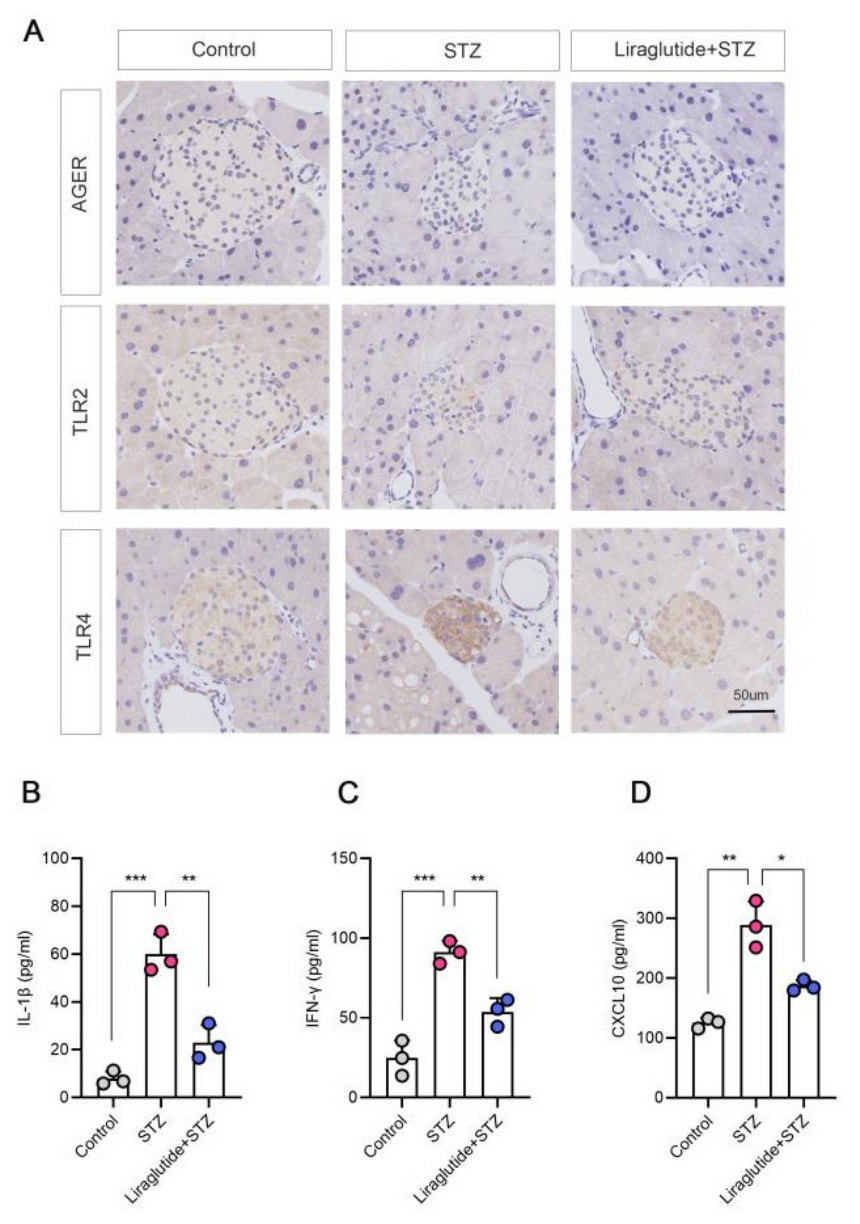
- Liraglutide suppresses pancreatic TLR4 expression and reduces pro-inflammatory cytokines (IFN-γ, IL-1β, CXCL10) in vivo.
- This study identifies HMGB1 as a key downstream target of GLP-1 receptor signaling in the protection against islet injury.
- Liraglutide may serve as a potential protective agent for preventing islet damage in conditions such as type 1 diabetes or islet transplantation.
Abstract
1. Introduction
2. Methods
2.1. Animals
2.2. Cell Culture
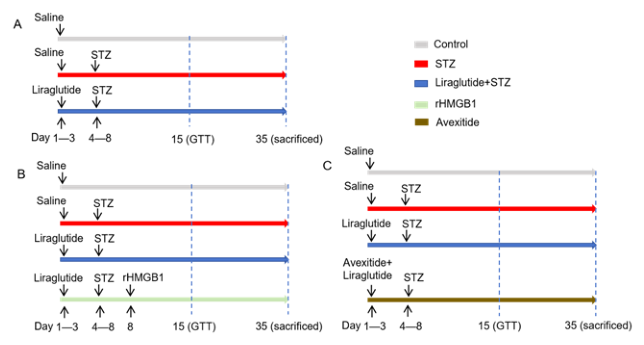
2.3. Drug Administration
2.4. Western Blot
2.5. Enzyme-Linked Immunosorbent Assay (ELISA)
2.6. Histopathologic and Immunohistochemistry (IHC) Staining
2.7. Immunofluorescence Staining
2.8. Glucose Tolerance Test (GTT)
2.9. Real-Time Quantitative Polymerase Chain Reaction
2.10. Statistical Analysis
3. Results
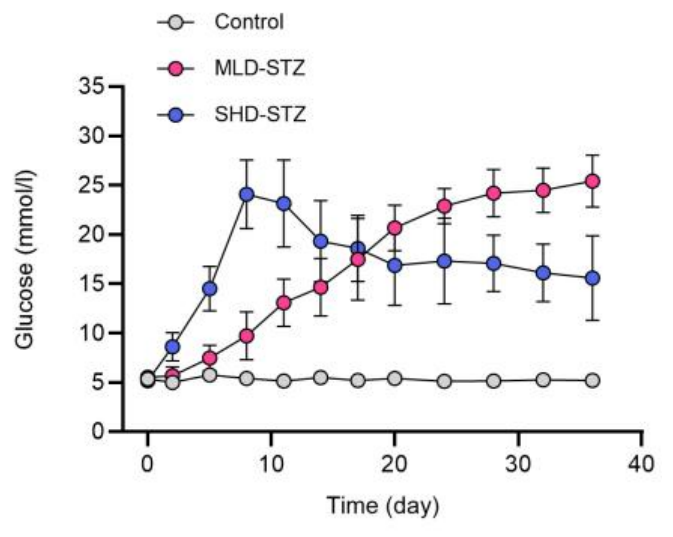
3.1. Characterization of STZ-Induced Islet Injury and Diabetes Model
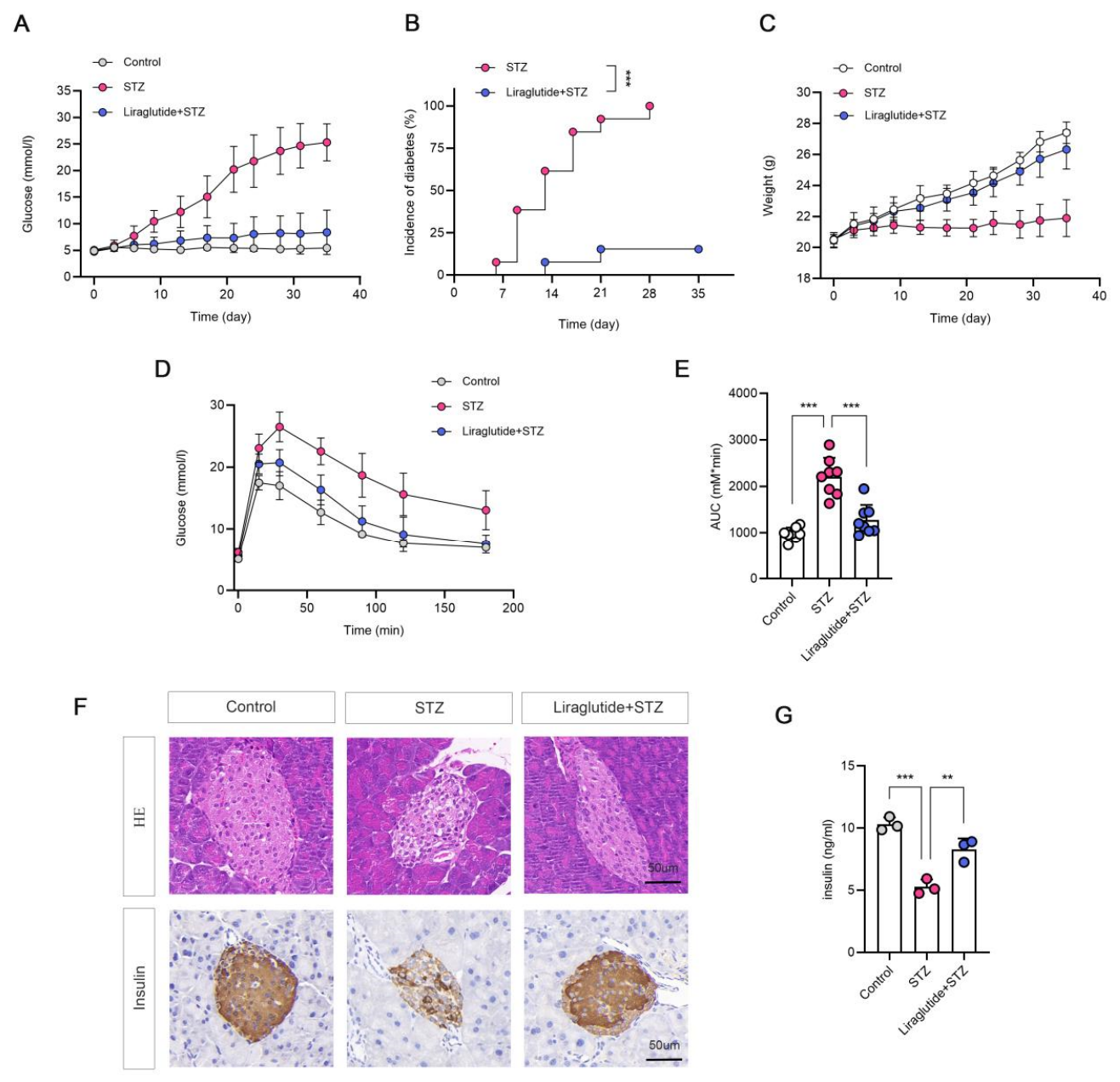
3.2. Liraglutide Potently Reduces STZ-Induced Pancreatic Islet Injury and Diabetes
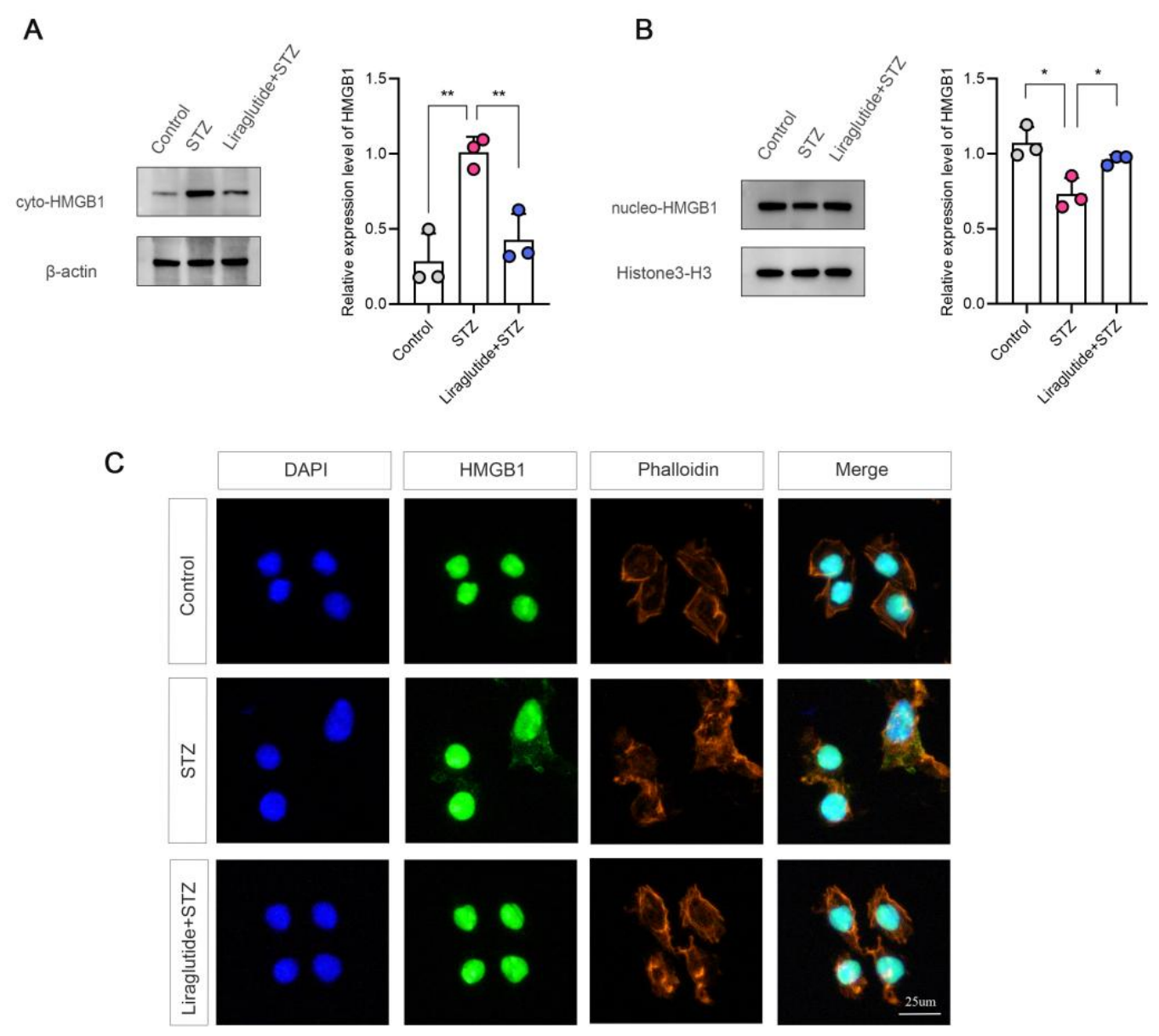
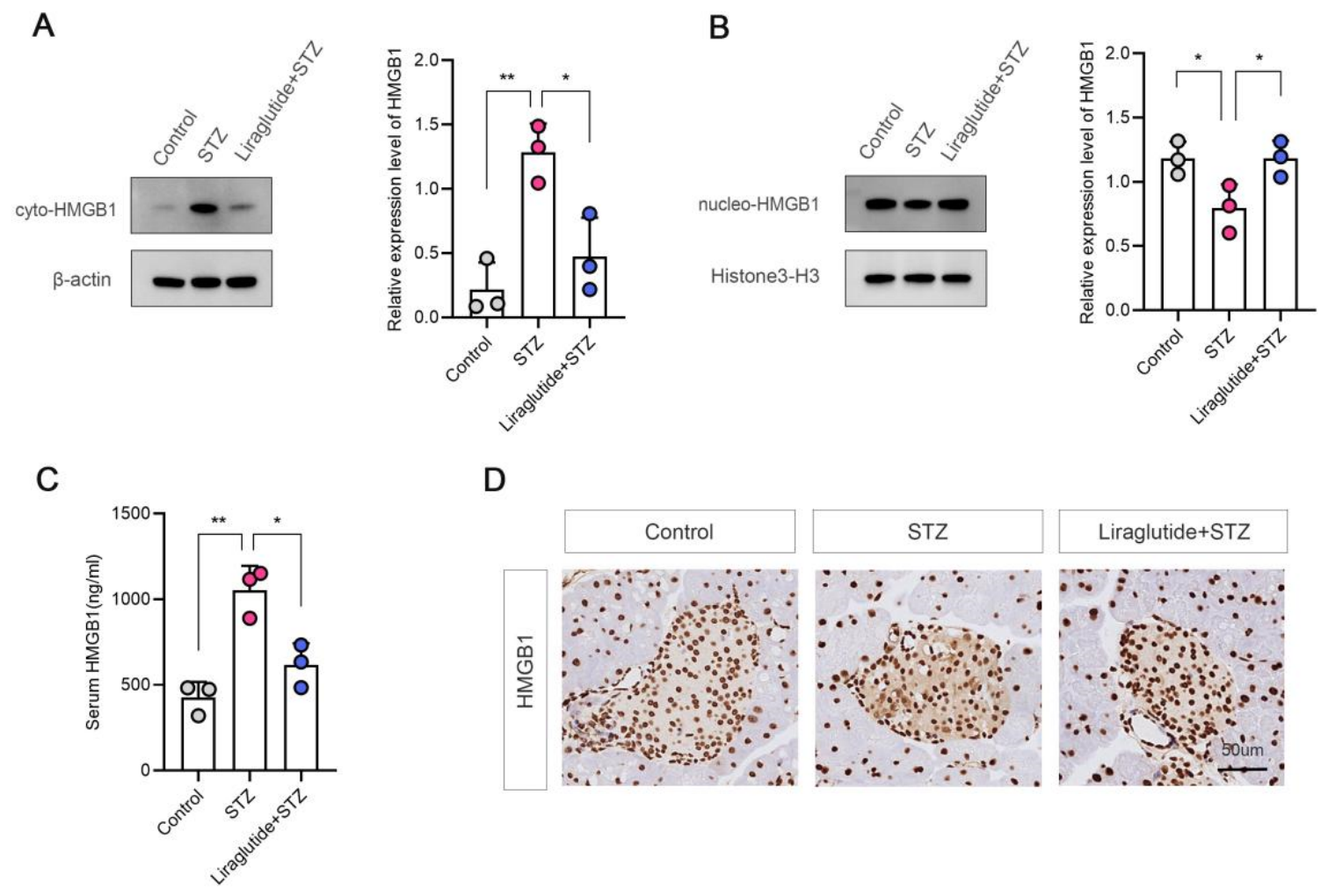
3.3. Liraglutide Inhibits STZ-Induced Pancreatic Islet HMGB1 Release in Mice
3.4. Liraglutide Inhibits STZ-Induced HMGB1 Release from NIT-1 Cells
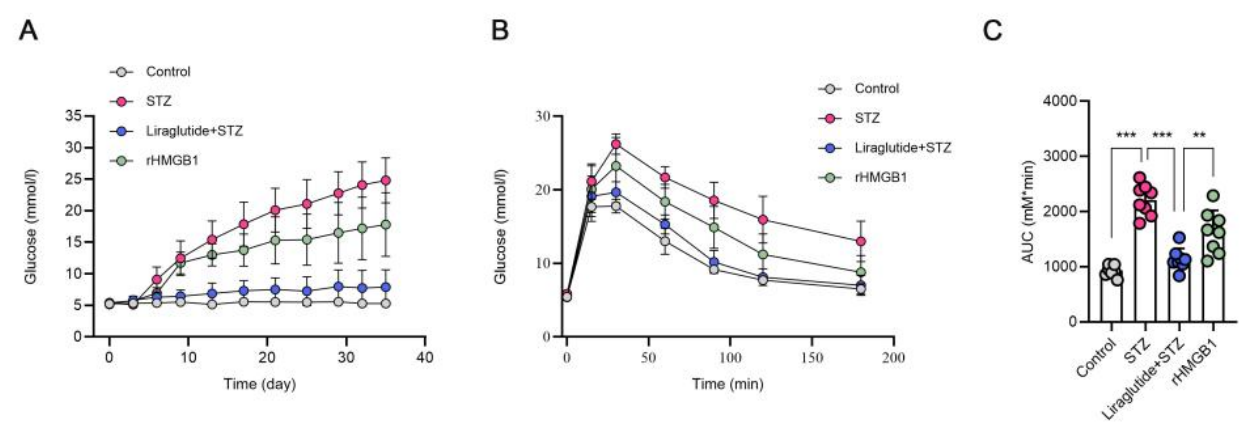
3.5. Liraglutide Alleviates STZ-Induced Islet Injury by Inhibiting HMGB1 Release
3.6. Liraglutide Affects Pancreatic TLR4 Expression and Reduces Inflammation In Vivo
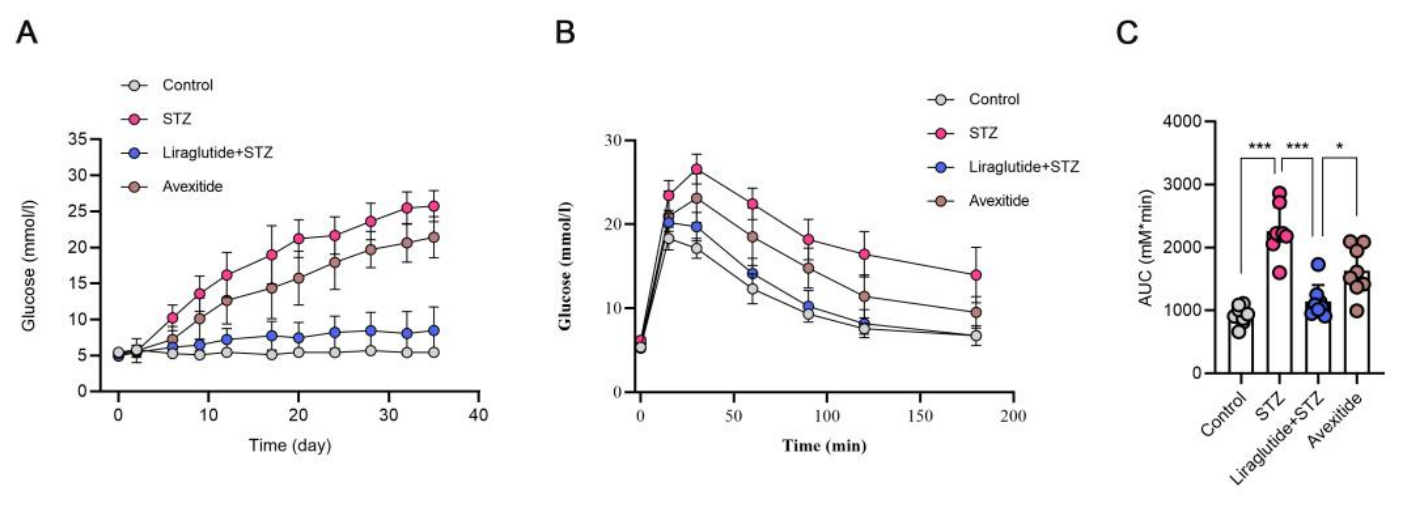
3.7. Avexitide Partially Eliminates Liraglutide’s Islet-Protective Effects


4. Discussion
5. Conclusions
Supplementary Materials
Author Contributions
Funding
Institutional Review Board Statement
Informed Consent Statement
Data Availability Statement
Acknowledgments
Conflicts of Interest
References
- Htike, Z.Z.; Zaccardi, F.; Papamargaritis, D.; Webb, D.R.; Khunti, K.; Davies, M.J. Efficacy and safety of glucagon-like peptide-1 receptor agonists in type 2 diabetes: A systematic review and mixed-treatment comparison analysis. Diabetes Obes. Metab. 2017, 19, 524–536. [Google Scholar] [CrossRef] [PubMed]
- Davis, E.M.; Sandoval, D.A. Glucagon-like peptide-1: Actions and influence on pancreatic hormone function. Compr. Physiol. 2020, 10, 577–595. [Google Scholar] [CrossRef] [PubMed]
- Gleizes, C.; Constantinescu, A.; Abbas, M.; Bouhadja, H.; Zobairi, F.; Kessler, L.; Toti, F. Liraglutide protects Rin-m5f β cells by reducing procoagulant tissue factor activity and apoptosis prompted by microparticles under conditions mimicking instant blood-mediated inflammatory reaction. Transpl. Int. 2014, 27, 733–740. [Google Scholar] [CrossRef] [PubMed]
- Chen, Z.F.; Li, Y.B.; Han, J.Y.; Yin, J.J.; Wang, Y.; Zhu, L.B.; Xie, G.Y. Liraglutide prevents high glucose level induced insulinoma cells apoptosis by targeting autophagy. Chin. Med. J. 2013, 126, 937–941. [Google Scholar] [CrossRef] [PubMed]
- Shao, S.; Nie, M.; Chen, C.; Chen, X.; Zhang, M.; Yuan, G.; Yu, X.; Yang, Y. Protective action of liraglutide in beta cells under lipotoxic stress via PI3K/Akt/FoxO1 pathway. J. Cell Biochem. 2014, 115, 1166–1175. [Google Scholar] [CrossRef] [PubMed]
- Drucker, D.J. Mechanisms of action and therapeutic application of glucagon-like peptide-1. Cell Metab. 2018, 27, 740–756. [Google Scholar] [CrossRef] [PubMed]
- Shimoda, M.; Kanda, Y.; Hamamoto, S.; Tawaramoto, K.; Hashiramoto, M.; Matsuki, M.; Kaku, K. The human glucagon-like peptide-1 analogue liraglutide preserves pancreatic beta cells via regulation of cell kinetics and suppression of oxidative and endoplasmic reticulum stress in a mouse model of diabetes. Diabetologia 2011, 54, 1098–1108. [Google Scholar] [CrossRef] [PubMed]
- Guo, N.; Sun, J.; Chen, H.; Zhang, H.; Zhang, Z.; Cai, D. Liraglutide prevents diabetes progression in prediabetic OLETF rats. Endocr. J. 2013, 60, 15–28. [Google Scholar] [CrossRef] [PubMed]
- Szkudelski, T. The mechanism of alloxan and streptozotocin action in B cells of the rat pancreas. Physiol. Res. 2001, 50, 537–546. [Google Scholar] [CrossRef] [PubMed]
- Zhu, B.T. Pathogenic mechanism of autoimmune diabetes mellitus in humans: Potential role of streptozotocin-induced selective autoimmunity against human islet β-cells. Cells 2022, 11, 492. [Google Scholar] [CrossRef] [PubMed]
- Wang, N.; Yi, W.J.; Tan, L.; Zhang, J.H.; Xu, J.; Chen, Y.; Qin, M.; Yu, S.; Guan, J.; Zhang, R. Apigenin attenuates streptozotocin-induced pancreatic β cell damage by its protective effects on cellular antioxidant defense. Vitr. Cell. Dev. Biol.-Anim. 2017, 53, 554–563. [Google Scholar] [CrossRef] [PubMed]
- Li, Y.; Xu, B.; Yang, J.; Wang, L.; Tan, X.; Hu, X.; Sun, L.; Chen, S.; Zhu, L.; Chen, X.; et al. Liraglutide protects against lethal renal ischemia-reperfusion injury by inhibiting high-mobility group box 1 nuclear-cytoplasmic translocation and release. Pharmacol. Res. 2021, 173, 105867. [Google Scholar] [CrossRef] [PubMed]
- Zou, Z.; Wang, Z. Liraglutide attenuates intestinal ischemia/reperfusion injury via NF-κB and PI3K/Akt pathways in mice. Life Sci. 2022, 309, 121045. [Google Scholar] [CrossRef] [PubMed]
- Musumeci, D.; Roviello, G.N.; Montesarchio, D. An overview on hmgb1 inhibitors as potential therapeutic agents in HMGB1-related pathologies. Pharmacol. Therapeut. 2014, 141, 347–357. [Google Scholar] [CrossRef] [PubMed]
- Zhang, S.; Zhong, J.; Yang, P.; Gong, F.; Wang, C.Y. HMGB1, an innate alarmin, in the pathogenesis of type 1 diabetes. Int. J. Clin. Exp. Patho. 2009, 3, 24–38. [Google Scholar]
- Wu, H.; Chen, Z.; Xie, J.; Kang, L.N.; Wang, L.; Xu, B. High mobility group box-1: A missing link between diabetes and its complications. Mediat. Inflamm. 2016, 2016, 3896147. [Google Scholar] [CrossRef] [PubMed]
- Mohammed, E.T.M.; Mohammed, E.T.M.; Anis, A.; Mohamed, E.R.; Borai, E.N. GLP-1 mediates the neuroprotective action of crocin against cigarette smoking-induced cognitive disorders via suppressing HMGB1-RAGE/TLR4-Nf-κB pathway. Int. Immunopharmacol. 2022, 110, 108995. [Google Scholar] [CrossRef] [PubMed]
- Cai, Y.; Hu, X.; Yi, B.; Zhang, T.; Wen, Z. Glucagon-like peptide-1 receptor agonist protects against hyperglycemia-induced cardiocytes injury by inhibiting high mobility group box 1 expression. Mol. Biol. Rep. 2012, 39, 10705–10711. [Google Scholar] [CrossRef] [PubMed]
- Ullah, A.; Shen, B. Immunomodulatory effects of anti-diabetic therapies: Cytokine and chemokine modulation by metformin, sodium-glucose cotransporter 2 inhibitors, and glucagon-like peptide-1 receptor agonists (2013–2025). Eur. J. Med. Chem. 2025, 299, 118065. [Google Scholar] [CrossRef] [PubMed]
- Liu, Y.T.; He, T.; Li, H.Q.; Jiang, P. Liraglutide improves pancreatic islet β cell apoptosis in rats with type 2 diabetes mellitus by inhibiting the IKKε/NF-κB pathway. Eur. Rev. Med. Pharmacol. 2021, 25, 4818–4828. [Google Scholar] [CrossRef] [PubMed]
- Ben, N.M.; Usuelli, V.; Dellepiane, S.; Seelam, A.J.; Fiorentino, T.V.; D’Addio, F.; Fiorina, E.; Xu, C.; Xie, Y.; Balasubramanian, H.B.; et al. Glucagon-like peptide 1 receptor is a T cell-negative costimulatory molecule. Cell Metab. 2024, 36, 1302–1319. [Google Scholar] [CrossRef] [PubMed]
- Chen, L.N.; Lyu, J.; Yang, X.F.; Ji, W.J.; Yuan, B.X.; Chen, M.X.; Ma, X.; Wang, B. Liraglutide ameliorates glycometabolism and insulin resistance through the upregulation of GLUT4 in diabetic KKAy mice. Int. J. Mol. Med. 2013, 32, 892–900. [Google Scholar] [CrossRef] [PubMed]
- Ji, W.; Chen, X.; Lv, J.; Wang, M.; Ren, S.; Yuan, B.; Wang, B.; Chen, L. Liraglutide exerts antidiabetic effect via PTP1B and PI3K/Akt2 signaling pathway in skeletal muscle of KKAy mice. Int. J. Endocrinol. 2014, 2014, 312452. [Google Scholar] [CrossRef] [PubMed]
- Dey, P.; Saha, M.R.; Chowdhuri, S.R.; Sen, A.; Sarkar, M.P.; Haldar, B.; Chaudhuri, T.K. Assessment of anti-diabetic activity of an ethnopharmacological plant Nerium oleander through alloxan induced diabetes in mice. J. Ethnopharmacol. 2015, 161, 128–137. [Google Scholar] [CrossRef] [PubMed]
- Xu, C.; Lu, C.; Wang, Z.; Hu, X.; Li, S.; Xie, Y.; Qiu, Y.; Cao, R.; Li, Y.; Yang, J. Liraglutide abrogates nephrotoxic effects of chemotherapies. Pharmacol. Res. 2023, 189, 106680. [Google Scholar] [CrossRef] [PubMed]
- Sun, L.; Pang, Y.; Wang, X.; Wu, Q.; Liu, H.; Liu, B.; Liu, G.; Ye, M.; Kong, W.; Jiang, C. Ablation of gut microbiota alleviates obesity-induced hepatic steatosis and glucose intolerance by modulating bile acid metabolism in hamsters. Acta Pharm. Sin. B 2019, 9, 702–710. [Google Scholar] [CrossRef] [PubMed]
- Dejgaard, T.F.; von Scholten, B.J.; Christiansen, E.; Kreiner, F.F.; Bardtrum, L.; von Herrath, M.; Mathieu, C.; Madsbad, S. Efficacy and safety of liraglutide in type 1 diabetes by baseline characteristics in the adjunct one and adjunct two randomized controlled trials. Diabetes Obes. Metab. 2021, 23, 2752–2762. [Google Scholar] [CrossRef] [PubMed]
- Dimitrios, P.; Michael, D.; Vasilios, K.; Konstantinos, S.; Konstantinos, I.; Ioanna, Z.; Konstantinos, P.; Spyridon, B.; Asterios, K. Liraglutide as adjunct to insulin treatment in patients with type 1 diabetes: A systematic review and meta-analysis. Curr. Diabetes Rev. 2020, 16, 313–326. [Google Scholar] [CrossRef] [PubMed]
- von Herrath, M.; Bain, S.C.; Bode, B.; Clausen, J.O.; Coppieters, K.; Gaysina, L.; Gumprecht, J.; Hansen, T.K.; Mathieu, C.; Morales, C.; et al. Anti-interleukin-21 antibody and liraglutide for the preservation of β-cell function in adults with recent-onset type 1 diabetes: A randomised, double-blind, placebo-controlled, phase 2 trial. Lancet Diabetes Endocrinol. 2021, 9, 212–224. [Google Scholar] [CrossRef] [PubMed]
- Ghanim, H.; Batra, M.; Green, K.; Abuaysheh, S.; Hejna, J.; Makdissi, A.; Borowski, R.; Kuhadiya, N.D.; Chaudhuri, A.; Dandona, P. Liraglutide treatment in overweight and obese patients with type 1 diabetes: A 26-week randomized controlled trial; Mechanisms of weight loss. Diabetes Obes. Metab. 2020, 22, 1742–1752. [Google Scholar] [CrossRef] [PubMed]
- Liu, L.; Shao, Z.; Xia, Y.; Qin, J.; Xiao, Y.; Zhou, Z.; Mei, Z. Incretin-based therapies for patients with type 1 diabetes: A meta-analysis. Endocr. Connect. 2019, 8, 277–288. [Google Scholar] [CrossRef] [PubMed]
- Hadjiyanni, I.; Baggio, L.L.; Poussier, P.; Drucker, D.J. Exendin-4 modulates diabetes onset in nonobese diabetic mice. Endocrinology 2008, 149, 1338–1349. [Google Scholar] [CrossRef] [PubMed]
- Zhang, J.; Tokui, Y.; Yamagata, K.; Kozawa, J.; Sayama, K.; Iwahashi, H.; Okita, K.; Miuchi, M.; Konya, H.; Hamaguchi, T.; et al. Continuous stimulation of human glucagon-like peptide-1 (7–36) amide in a mouse model (NOD) delays onset of autoimmune type 1 diabetes. Diabetologia 2007, 50, 1900–1909. [Google Scholar] [CrossRef] [PubMed][Green Version]
- Yan, X.X.; Lu, L.; Peng, W.H.; Wang, L.J.; Zhang, Q.; Zhang, R.Y.; Chen, Q.J.; Shen, W.F. Increased serum HMGB1 level is associated with coronary artery disease in nondiabetic and type 2 diabetic patients. Atherosclerosis 2009, 205, 544–548. [Google Scholar] [CrossRef] [PubMed]
- Liu, S.; Hu, R.; Du, J.; Li, Y.; Li, X. Glycyrrhizin ameliorates vascular endothelial cell senescence by inhibiting HMGB1 in HFD/STZ-induced diabetic rats and human umbilical vein endothelial cells. Eur. J. Pharmacol. 2022, 931, 175196. [Google Scholar] [CrossRef] [PubMed]
- Yang, W.S.; Kim, J.S.; Han, N.J.; Lee, M.J.; Park, S.K. Toll-like receptor 4/spleen tyrosine kinase complex in high glucose signal transduction of proximal tubular epithelial cells. Cell Physiol. Biochem. 2015, 35, 2309–2319. [Google Scholar] [CrossRef] [PubMed]
- Zhang, J.; Chen, L.; Wang, F.; Zou, Y.; Li, J.; Luo, J.; Khan, F.; Sun, F.; Li, Y.; Liu, J.; et al. Extracellular HMGB1 exacerbates autoimmune progression and recurrence of type 1 diabetes by impairing regulatory t cell stability. Diabetologia 2020, 63, 987–1001. [Google Scholar] [CrossRef] [PubMed]
- Ercin, M.; Gezginci-Oktayoglu, S.; Bolkent, S. Exendin-4 inhibits small intestinal glucose sensing and absorption through repression of T1R2/T1R3 sweet taste receptor signalling in streptozotocin diabetic mice. Transl. Res. 2022, 246, 87–101. [Google Scholar] [CrossRef] [PubMed]
- Tu, P.; Huang, B.; Li, M.; Zhang, Y.; Bao, S.; Tu, N.; Yang, Y.; Lu, J. Exendin-4 may improve type 2 diabetes by modulating the epigenetic modifications of pancreatic histone H3 in STZ-induced diabetic C57BL/6 J mice. J. Physiol. Biochem. 2022, 78, 51–59. [Google Scholar] [CrossRef] [PubMed]
- Xue, J.; Suarez, J.S.; Minaai, M.; Li, S.; Gaudino, G.; Pass, H.I.; Carbone, M.; Yang, H. HMGB1 as a therapeutic target in disease. J. Cell Physiol. 2021, 236, 3406–3419. [Google Scholar] [CrossRef] [PubMed]
- Wang, Z.; Ni, X.; Zhang, L.; Sun, L.; Zhu, X.; Zhou, Q.; Yang, Z.; Yuan, H. Toll-like receptor 4 and inflammatory micro-environment of pancreatic islets in type-2 diabetes mellitus: A therapeutic perspective. Diabet. Metab. Synd. Obes. 2020, 13, 4261–4272. [Google Scholar] [CrossRef] [PubMed]
- He, W.; Rebello, O.; Savino, R.; Terracciano, R.; Schuster-Klein, C.; Guardiola, B.; Maedler, K. Tlr4 triggered complex inflammation in human pancreatic islets. BBA-Mol. Basis Dis. 2019, 1865, 86–97. [Google Scholar] [CrossRef] [PubMed]
- Eizirik, D.L.; Colli, M.L.; Ortis, F. The role of inflammation in insulitis and beta-cell loss in type 1 diabetes. Nat. Rev. Endocrinol. 2009, 5, 219–226. [Google Scholar] [CrossRef] [PubMed]
- Yang, H.; Wang, H.; Andersson, U. Targeting inflammation driven by HMGB1. Front. Immunol. 2020, 11, 484. [Google Scholar] [CrossRef] [PubMed]
- Jin, Z.; Zhang, Q.; Liu, K.; Wang, S.; Yan, Y.; Zhang, B.; Zhao, L. The association between interleukin family and diabetes mellitus and its complications: An overview of systematic reviews and meta-analyses. Diabetes Res. Clin. Pract. 2024, 210, 111615. [Google Scholar] [CrossRef] [PubMed]
- Roep, B.O.; Kleijwegt, F.S.; van Halteren, A.G.; Bonato, V.; Boggi, U.; Vendrame, F.; Marchetti, P.; Dotta, F. Islet inflammation and CXCL10 in recent-onset type 1 diabetes. Clin. Exp. Immunol. 2010, 159, 338–343. [Google Scholar] [CrossRef] [PubMed]
- Rhode, A.; Pauza, M.E.; Barral, A.M.; Rodrigo, E.; Oldstone, M.B.; von Herrath, M.G.; Christen, U. Islet-specific expression of CXCL10 causes spontaneous islet infiltration and accelerates diabetes development. J. Immunol. 2005, 175, 3516–3524. [Google Scholar] [CrossRef] [PubMed]
- Frigerio, S.; Junt, T.; Lu, B.; Gerard, C.; Zumsteg, U.; Holländer, G.A.; Piali, L. Beta cells are responsible for CXCR3-mediated T-cell infiltration in insulitis. Nat. Med. 2002, 8, 1414–1420. [Google Scholar] [CrossRef] [PubMed]
- Degryse, B.; Bonaldi, T.; Scaffidi, P.; Müller, S.; Resnati, M.; Sanvito, F.; Arrigoni, G.; Bianchi, M.E. The high mobility group (HMG) boxes of the nuclear protein HMG1 induce chemotaxis and cytoskeleton reorganization in rat smooth muscle cells. J. Cell Biol. 2001, 152, 1197–1206. [Google Scholar] [CrossRef] [PubMed]
- Palumbo, R.; Sampaolesi, M.; De Marchis, F.; Tonlorenzi, R.; Colombetti, S.; Mondino, A.; Cossu, G.; Bianchi, M.E. Extracellular HMGB1, a signal of tissue damage, induces mesoangioblast migration and proliferation. J. Cell Biol. 2004, 164, 441–449. [Google Scholar] [CrossRef] [PubMed]
- Zhang, Q.; O’Hearn, S.; Kavalukas, S.L.; Barbul, A. Role of high mobility group box 1 (HMGB1) in wound healing. J. Surg. Res. 2012, 176, 343–347. [Google Scholar] [CrossRef] [PubMed]
- van Beijnum, J.R.; Buurman, W.A.; Griffioen, A.W. Convergence and amplification of toll-like receptor (TLR) and receptor for advanced glycation end products (RAGE) signaling pathways via high mobility group b1 (HMGB1). Angiogenesis 2008, 11, 91–99. [Google Scholar] [CrossRef] [PubMed]
- Yang, S.; Xu, L.; Yang, T.; Wang, F. High-mobility group box-1 and its role in angiogenesis. J. Leukoc. Biol. 2014, 95, 563–574. [Google Scholar] [CrossRef] [PubMed]



Disclaimer/Publisher’s Note: The statements, opinions and data contained in all publications are solely those of the individual author(s) and contributor(s) and not of MDPI and/or the editor(s). MDPI and/or the editor(s) disclaim responsibility for any injury to people or property resulting from any ideas, methods, instructions or products referred to in the content. |
© 2026 by the authors. Licensee MDPI, Basel, Switzerland. This article is an open access article distributed under the terms and conditions of the Creative Commons Attribution (CC BY) license.
Share and Cite
Shi, Y.; Yang, X.; Luo, X.; Yang, J.; Zhang, Y.; Chen, G.; Hou, L. Liraglutide Potently Protects Against Streptozotocin-Induced Islet Injury Associated with Inhibition of HMGB1 Release. Cells 2026, 15, 1203. https://doi.org/10.3390/cells15131203
Shi Y, Yang X, Luo X, Yang J, Zhang Y, Chen G, Hou L. Liraglutide Potently Protects Against Streptozotocin-Induced Islet Injury Associated with Inhibition of HMGB1 Release. Cells. 2026; 15(13):1203. https://doi.org/10.3390/cells15131203
Chicago/Turabian StyleShi, Yuzhen, Xi Yang, Xiaoping Luo, Jun Yang, Yong Zhang, Gang Chen, and Ling Hou. 2026. "Liraglutide Potently Protects Against Streptozotocin-Induced Islet Injury Associated with Inhibition of HMGB1 Release" Cells 15, no. 13: 1203. https://doi.org/10.3390/cells15131203
APA StyleShi, Y., Yang, X., Luo, X., Yang, J., Zhang, Y., Chen, G., & Hou, L. (2026). Liraglutide Potently Protects Against Streptozotocin-Induced Islet Injury Associated with Inhibition of HMGB1 Release. Cells, 15(13), 1203. https://doi.org/10.3390/cells15131203