Gene Silencing of ANGPTL3 Induces PCSK9: Exploring the Biological Significance in the Hepatoma Huh7 Cell Line

 , , , , , ,
  and
and 
Highlights
- RNA-seq analysis identifies differentially regulated genes after ANGPTL3 and/or PCSK9 silencing in Huh7 hepatoma cells.
- Gene silencing of ANGPTL3 is associated with reduced SERPINA1 and LMAN1 expression in Huh7 cells.
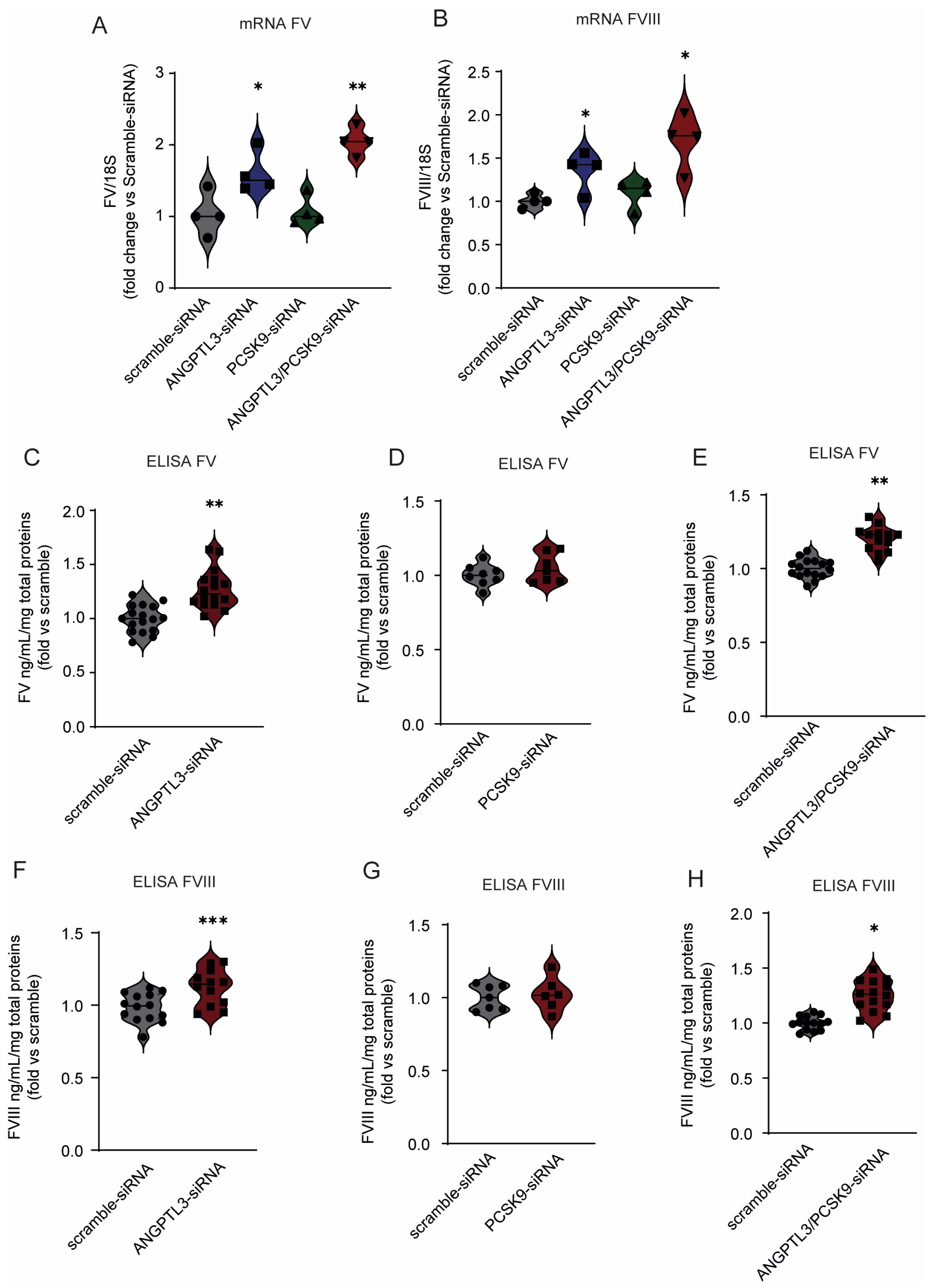
- ANGPTL3 silencing is associated with increased FV and FVIII mRNA expression and extracellular levels in Huh7 cells.
Abstract
1. Introduction
2. Materials and Methods
2.1. Cell Culture
2.2. ANGPTL3 and PCSK9 Silencing
2.3. Next-Generation Sequencing
2.3.1. Sample Preparation
2.3.2. RNA-seq Library Preparation and Sequencing
2.3.3. Bioinformatic Analysis on RNA-seq Data
2.4. Western Blotting
2.5. ELISA Assay for ApoB, FV and FVIII
2.6. Reverse Transcription and Quantitative PCR (RT-qPCR)
2.7. Statistical Analysis
3. Results
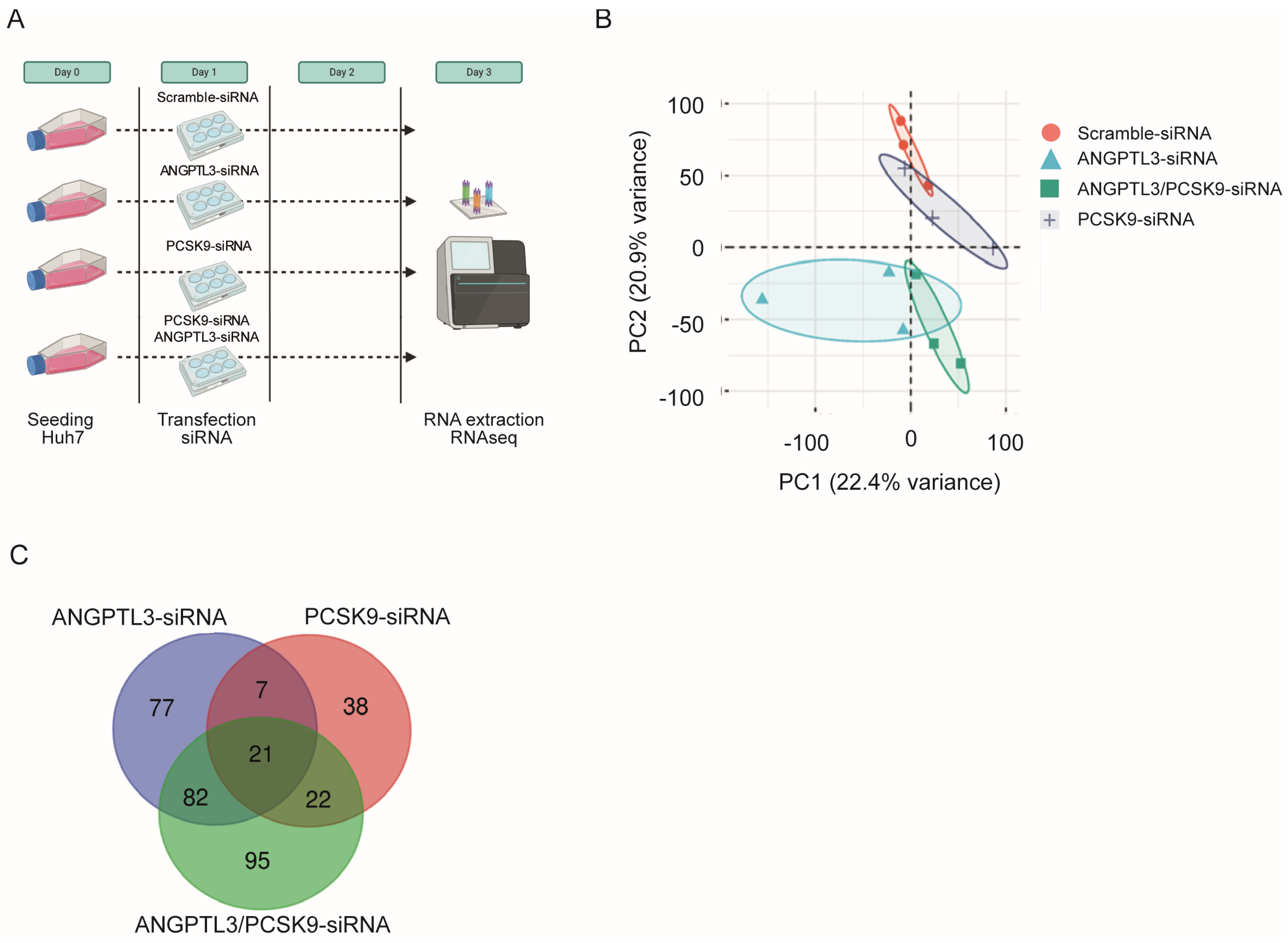
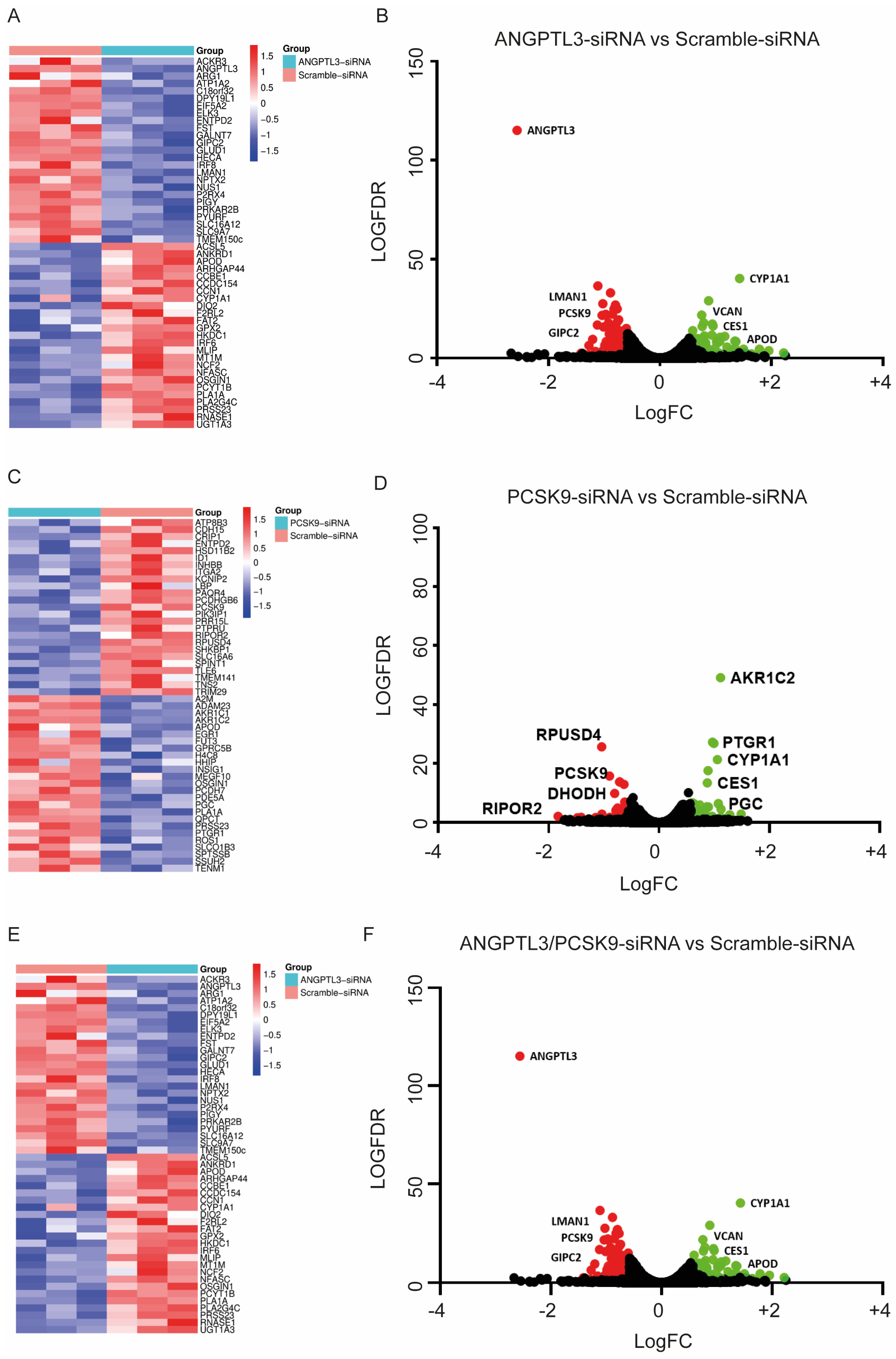
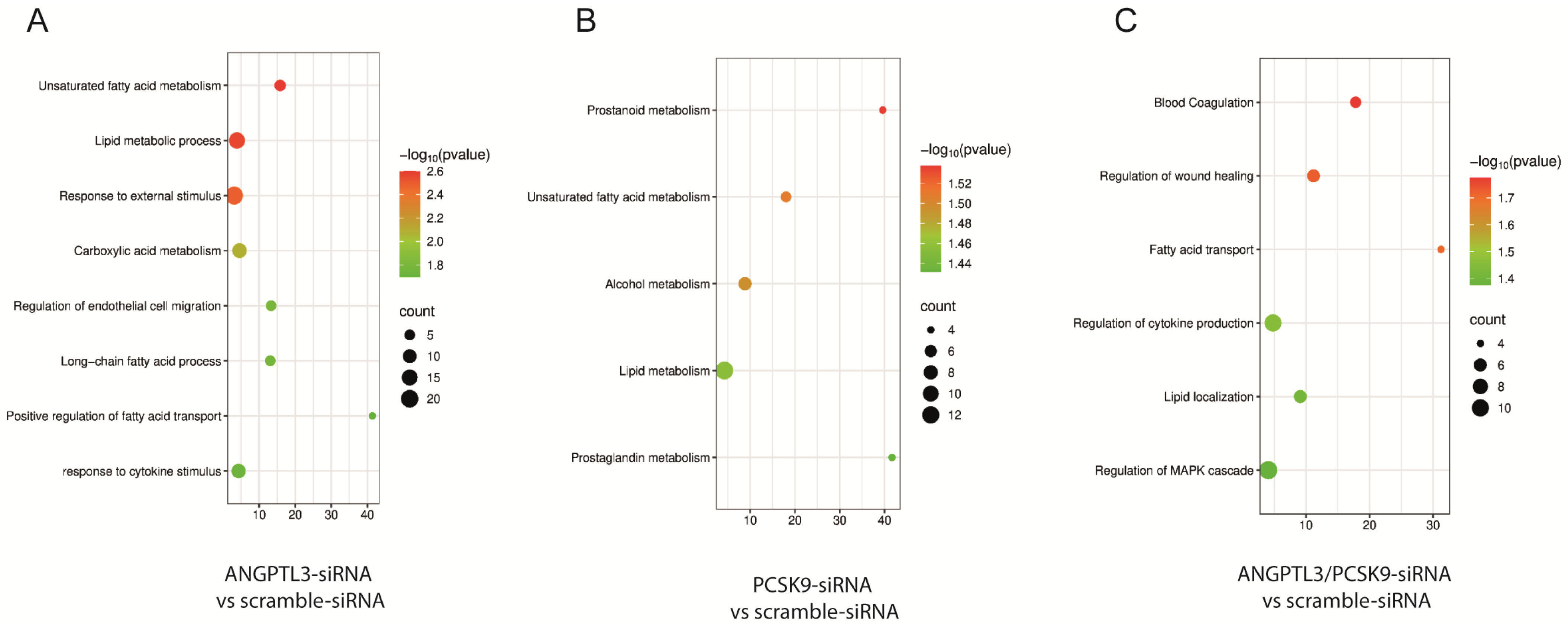
3.1. RNA-seq Analysis of Huh7 Cells Transfected with ANGPTL3-siRNA and PCSK9-siRNA

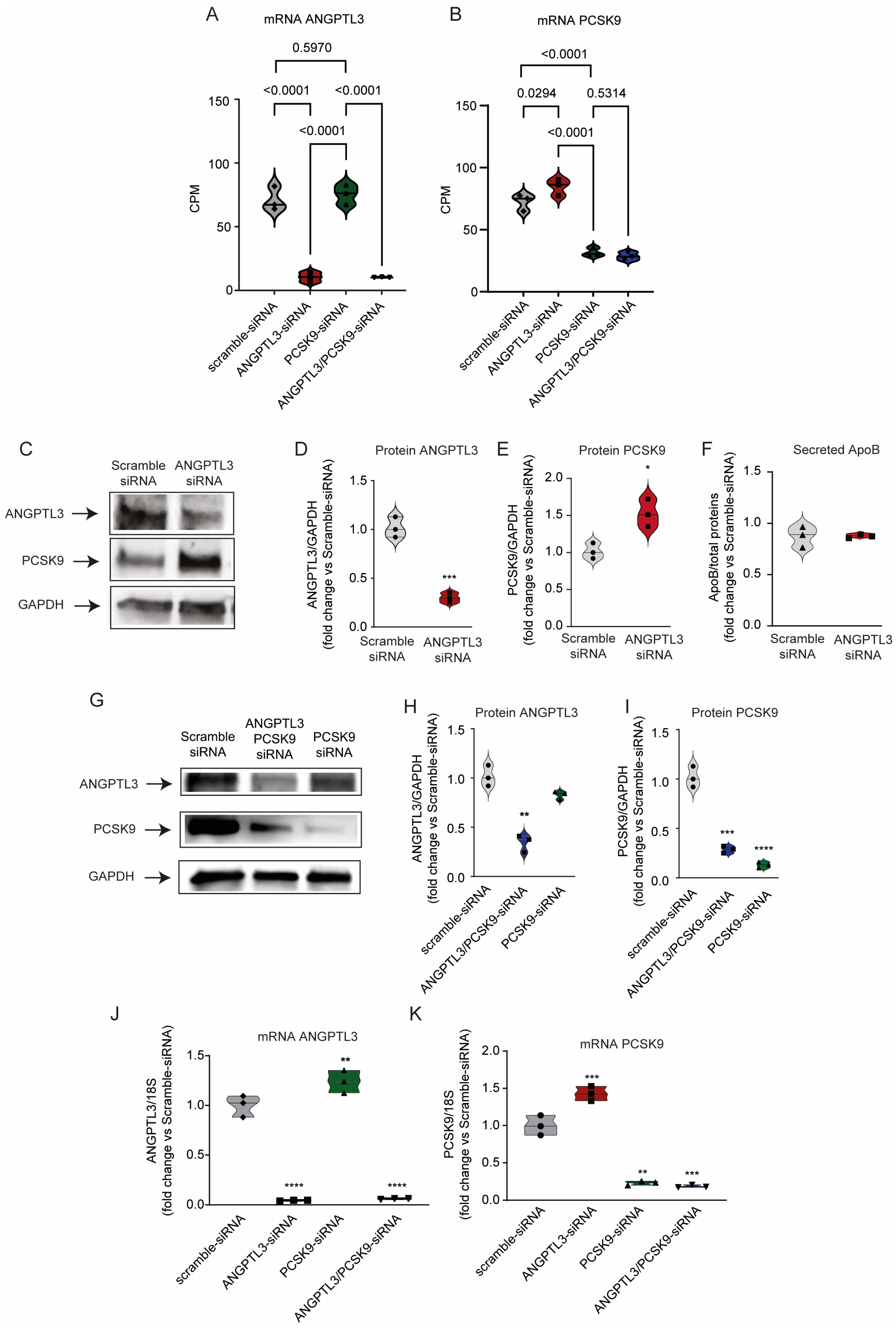
3.2. Gene-Silencing of ANGPTL3 Leads to PCSK9 Upregulation
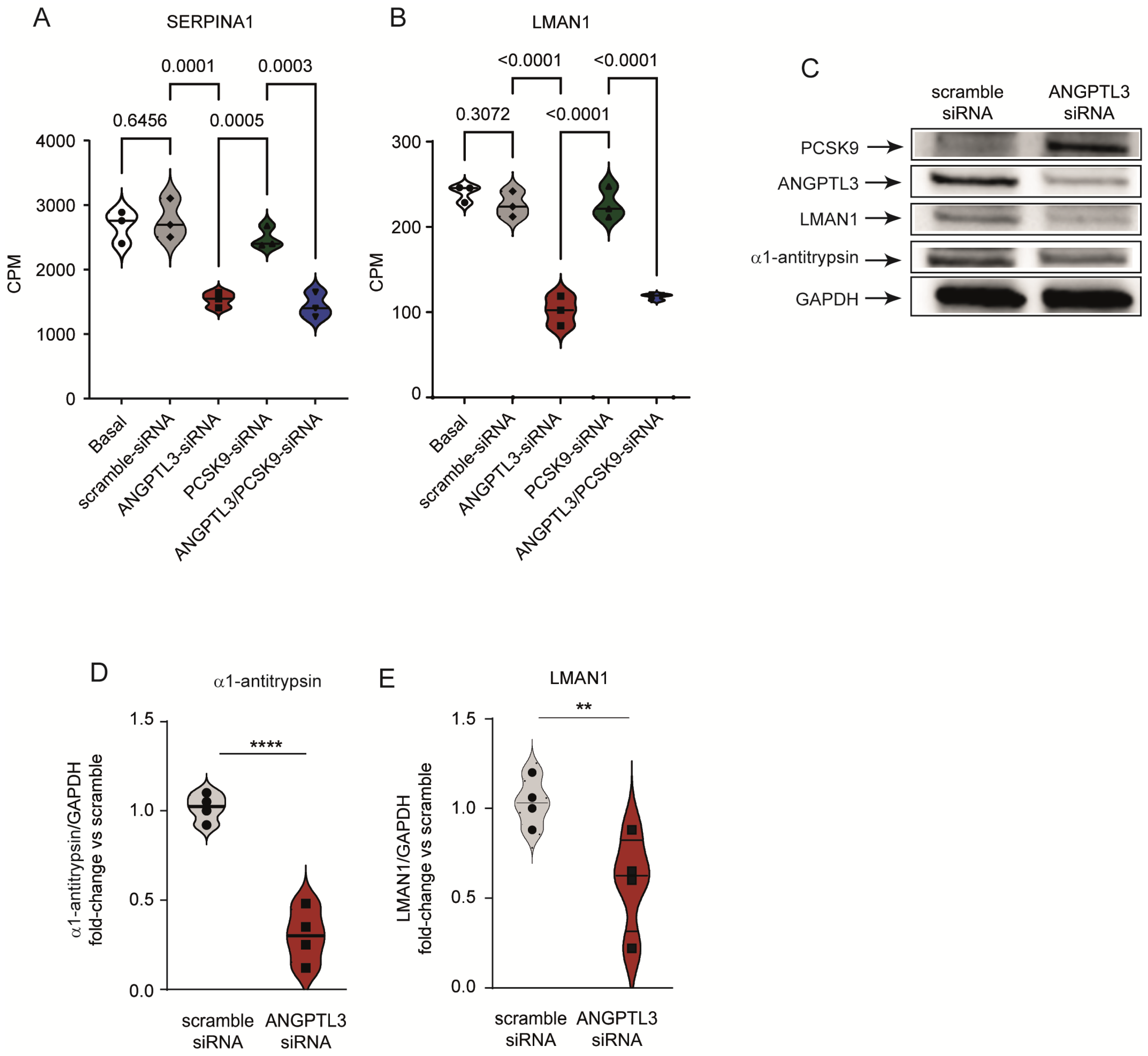
3.3. Gene Silencing of ANGPTL3 Leads to Downregulation of SERPINA1 and LMAN1
3.4. Gene Silencing of ANGPTL3 Is Associated with Increased Levels of Coagulation Factors V and VIII
4. Discussion
5. Conclusions
Supplementary Materials
Author Contributions
Funding
Institutional Review Board Statement
Informed Consent Statement
Data Availability Statement
Conflicts of Interest
Abbreviations
| ANGPTL3 | Angiopoietin-like 3 |
| ApoB | Apolipoprotein B |
| APOD | Apolipoprotein D |
| ASCVD | Atherosclerotic cardiovascular disease |
| cDNA | Complementary DNA |
| CES1 | Carboxylesterase 1 |
| EDGE | Empirical analysis of Differential Gene Expression |
| EL | Endothelial lipase |
| FDR | False discovery rate |
| FBS | Fetal Bovine Serum |
| FV | Factor V |
| FVIII | Factor VIII |
| GO-BP | Gene Ontology Biological Processes |
| HDL HMBS | High-density lipoprotein Hydroxymethylbilane synthase |
| HoFH | Homozygous familial hypercholesterolemia |
| HRP | Horseradish peroxidase |
| HSD11B2 | Hydroxysteroid 11-Beta Dehydrogenase 2 |
| LDL | Low-density lipoprotein |
| LDL-C | Low-density lipoprotein-cholesterol |
| LMAN1 | Lectin, mannose-binding 1 |
| LPL | Lipoprotein lipase |
| mAb | Monoclonal antibody |
| MCFD2 | Multiple Coagulation Factor Deficiency 2 |
| MEM | Modified Eagle’s Medium |
| NGS | Next-generation sequencing |
| PAQR4 | Progestin And AdipoQ Receptor Family Member 4 |
| PBS | Phosphate-buffered saline |
| PCA | Principal component analysis |
| PCSK9 | Proprotein convertase subtilisin/kexin type 9 |
| SAR1B | Secretion-associated Ras-related GTPase 1B |
| siRNA | Small interfering RNAs |
| SERPINA1 | Serpin family A member 1 |
| TGs | Triglycerides |
| TRLs | Triglyceride-rich lipoproteins |
| VLDL | Very-low-density lipoprotein |
References
- Lupo, M.G.; Ferri, N. Angiopoietin-Like 3 (ANGPTL3) and Atherosclerosis: Lipid and Non-Lipid Related Effects. J. Cardiovasc. Dev. Dis. 2018, 5, 39. [Google Scholar] [CrossRef] [Scilit] [PubMed]
- Haller, J.F.; Mintah, I.J.; Shihanian, L.M.; Stevis, P.; Buckler, D.; Alexa-Braun, C.A.; Kleiner, S.; Banfi, S.; Cohen, J.C.; Hobbs, H.H.; et al. ANGPTL8 requires ANGPTL3 to inhibit lipoprotein lipase and plasma triglyceride clearance. J. Lipid Res. 2017, 58, 1166–1173. [Google Scholar] [CrossRef] [Scilit] [PubMed]
- Shimizugawa, T.; Ono, M.; Shimamura, M.; Yoshida, K.; Ando, Y.; Koishi, R.; Ueda, K.; Inaba, T.; Minekura, H.; Kohama, T.; et al. ANGPTL3 decreases very low density lipoprotein triglyceride clearance by inhibition of lipoprotein lipase. J. Biol. Chem. 2002, 277, 33742–33748. [Google Scholar] [CrossRef] [Scilit] [PubMed]
- McCoy, M.G.; Sun, G.S.; Marchadier, D.; Maugeais, C.; Glick, J.M.; Rader, D.J. Characterization of the lipolytic activity of endothelial lipase. J. Lipid Res. 2002, 43, 921–929. [Google Scholar] [CrossRef] [Scilit] [PubMed]
- Shimamura, M.; Matsuda, M.; Yasumo, H.; Okazaki, M.; Fujimoto, K.; Kono, K.; Shimizugawa, T.; Ando, Y.; Koishi, R.; Kohama, T.; et al. Angiopoietin-like protein3 regulates plasma HDL cholesterol through suppression of endothelial lipase. Arterioscler. Thromb. Vasc. Biol. 2007, 27, 366–372. [Google Scholar] [CrossRef] [Scilit] [PubMed]
- Dewey, F.E.; Gusarova, V.; Dunbar, R.L.; O’Dushlaine, C.; Schurmann, C.; Gottesman, O.; McCarthy, S.; Van Hout, C.V.; Bruse, S.; Dansky, H.M.; et al. Genetic and Pharmacologic Inactivation of ANGPTL3 and Cardiovascular Disease. N. Engl. J. Med. 2017, 377, 211–221. [Google Scholar] [CrossRef] [Scilit] [PubMed]
- Arca, M.; D’Erasmo, L.; Minicocci, I. Familial combined hypolipidemia: Angiopoietin-like protein-3 deficiency. Curr. Opin. Lipidol. 2020, 31, 41–48. [Google Scholar] [CrossRef] [Scilit] [PubMed]
- Chan, D.C.; Watts, G.F. Inhibition of the ANGPTL3/8 Complex for the Prevention and Treatment of Atherosclerotic Cardiovascular Disease. Curr. Atheroscler. Rep. 2024, 27, 6. [Google Scholar] [CrossRef] [Scilit] [PubMed]
- Raal, F.J.; Rosenson, R.S.; Reeskamp, L.F.; Hovingh, G.K.; Kastelein, J.J.P.; Rubba, P.; Ali, S.; Banerjee, P.; Chan, K.C.; Gipe, D.A.; et al. Evinacumab for Homozygous Familial Hypercholesterolemia. N. Engl. J. Med. 2020, 383, 711–720. [Google Scholar] [CrossRef] [Scilit] [PubMed]
- Biolo, M.; Lupo, M.G.; Marodin, G.; Portinari, C.; Zambon, A.; Bertocco, S.; Previato, L.; Simioni, P.; Ferri, N.; Zambon, S. Optimizing treatment in homozygous familial hypercholesterolemia: Monocentric observational clinical study on efficacy and safety of evinacumab and lomitapide combination. J. Clin. Lipidol. 2026, 20, 1086–1096. [Google Scholar] [CrossRef] [Scilit]
- Bergmark, B.A.; Marston, N.A.; Bramson, C.R.; Curto, M.; Ramos, V.; Jevne, A.; Kuder, J.F.; Park, J.G.; Murphy, S.A.; Verma, S.; et al. Effect of Vupanorsen on Non-High-Density Lipoprotein Cholesterol Levels in Statin-Treated Patients With Elevated Cholesterol: TRANSLATE-TIMI 70. Circulation 2022, 145, 1377–1386. [Google Scholar] [CrossRef] [Scilit] [PubMed]
- Musunuru, K.; Pirruccello, J.P.; Do, R.; Peloso, G.M.; Guiducci, C.; Sougnez, C.; Garimella, K.V.; Fisher, S.; Abreu, J.; Barry, A.J.; et al. Exome sequencing, ANGPTL3 mutations, and familial combined hypolipidemia. N. Engl. J. Med. 2010, 363, 2220–2227. [Google Scholar] [CrossRef] [Scilit] [PubMed]
- D’Erasmo, L.; Di Martino, M.; Neufeld, T.; Fraum, T.J.; Kang, C.J.; Burks, K.H.; Di Costanzo, A.; Minicocci, I.; Bini, S.; Maranghi, M.; et al. ANGPTL3 Deficiency and Risk of Hepatic Steatosis. Circulation 2023, 148, 1479–1489. [Google Scholar] [CrossRef] [Scilit] [PubMed]
- Lakoski, S.G.; Lagace, T.A.; Cohen, J.C.; Horton, J.D.; Hobbs, H.H. Genetic and metabolic determinants of plasma PCSK9 levels. J. Clin. Endocrinol. Metab. 2009, 94, 2537–2543. [Google Scholar] [CrossRef] [Scilit] [PubMed]
- Browning, J.D.; Szczepaniak, L.S.; Dobbins, R.; Nuremberg, P.; Horton, J.D.; Cohen, J.C.; Grundy, S.M.; Hobbs, H.H. Prevalence of hepatic steatosis in an urban population in the United States: Impact of ethnicity. Hepatology 2004, 40, 1387–1395. [Google Scholar] [CrossRef] [Scilit] [PubMed]
- Ruscica, M.; Ferri, N.; Macchi, C.; Meroni, M.; Lanti, C.; Ricci, C.; Maggioni, M.; Fracanzani, A.L.; Badiali, S.; Fargion, S.; et al. Liver fat accumulation is associated with circulating PCSK9. Ann. Med. 2016, 48, 384–391. [Google Scholar] [CrossRef] [Scilit] [PubMed]
- Rossi, I.; Marodin, G.; Lupo, M.G.; Adorni, M.P.; Papotti, B.; Dall’Acqua, S.; Ferri, N. Gene Silencing of Angiopoietin-like 3 (ANGPTL3) Induced De Novo Lipogenesis and Lipid Accumulation in Huh7 Cell Line. Int. J. Mol. Sci. 2024, 25, 3708. [Google Scholar] [CrossRef] [Scilit] [PubMed]
- Fazio, S.; Minnier, J.; Shapiro, M.D.; Tsimikas, S.; Tarugi, P.; Averna, M.R.; Arca, M.; Tavori, H. Threshold Effects of Circulating Angiopoietin-Like 3 Levels on Plasma Lipoproteins. J. Clin. Endocrinol. Metab. 2017, 102, 3340–3348. [Google Scholar] [CrossRef] [Scilit] [PubMed]
- Sut, S.; Ferrarese, I.; Lupo, M.G.; De Zordi, N.; Tripicchio, E.; Ferri, N.; Dall’ Acqua, S. The Modulation of PCSK9 and LDLR by Supercritical CO2 Extracts of Mentha longifolia and Isolated Piperitone Oxide, an In Vitro Study. Molecules 2021, 26, 3886. [Google Scholar] [CrossRef] [Scilit] [PubMed]
- Zhang, B.; Cunningham, M.A.; Nichols, W.C.; Bernat, J.A.; Seligsohn, U.; Pipe, S.W.; McVey, J.H.; Schulte-Overberg, U.; de Bosch, N.B.; Ruiz-Saez, A.; et al. Bleeding due to disruption of a cargo-specific ER-to-Golgi transport complex. Nat. Genet. 2003, 34, 220–225. [Google Scholar] [CrossRef] [Scilit] [PubMed]
- Zhang, B.; Kaufman, R.J.; Ginsburg, D. LMAN1 and MCFD2 form a cargo receptor complex and interact with coagulation factor VIII in the early secretory pathway. J. Biol. Chem. 2005, 280, 25881–25886. [Google Scholar] [CrossRef] [Scilit] [PubMed]
- Nyfeler, B.; Reiterer, V.; Wendeler, M.W.; Stefan, E.; Zhang, B.; Michnick, S.W.; Hauri, H.P. Identification of ERGIC-53 as an intracellular transport receptor of alpha1-antitrypsin. J. Cell Biol. 2008, 180, 705–712. [Google Scholar] [CrossRef] [Scilit] [PubMed]
- Schindler, R.; Itin, C.; Zerial, M.; Lottspeich, F.; Hauri, H.P. ERGIC-53, a membrane protein of the ER-Golgi intermediate compartment, carries an ER retention motif. Eur. J. Cell Biol. 1993, 61, 1–9. [Google Scholar] [PubMed]
- Zhang, B.; Zheng, C.; Zhu, M.; Tao, J.; Vasievich, M.P.; Baines, A.; Kim, J.; Schekman, R.; Kaufman, R.J.; Ginsburg, D. Mice deficient in LMAN1 exhibit FV and FVIII deficiencies and liver accumulation of alpha1-antitrypsin. Blood 2011, 118, 3384–3391. [Google Scholar] [CrossRef] [Scilit] [PubMed]
- Li, M.X.; Hu, S.; Lei, H.H.; Yuan, M.; Li, X.; Hou, W.K.; Huang, X.J.; Xiao, B.W.; Yu, T.X.; Zhang, X.H.; et al. Tumor-derived miR-9-5p-loaded EVs regulate cholesterol homeostasis to promote breast cancer liver metastasis in mice. Nat. Commun. 2024, 15, 10539. [Google Scholar] [CrossRef] [Scilit] [PubMed]
- Fahndrich, S.; Biertz, F.; Karch, A.; Kleibrink, B.; Koch, A.; Teschler, H.; Welte, T.; Kauczor, H.U.; Janciauskiene, S.; Jorres, R.A.; et al. Cardiovascular risk in patients with alpha-1-antitrypsin deficiency. Respir. Res. 2017, 18, 171. [Google Scholar] [CrossRef] [Scilit] [PubMed]
- Winther, S.V.; Ahmed, D.; Al-Shuweli, S.; Landt, E.M.; Nordestgaard, B.G.; Seersholm, N.; Dahl, M. Severe alpha(1)-antitrypsin deficiency associated with lower blood pressure and reduced risk of ischemic heart disease: A cohort study of 91,540 individuals and a meta-analysis. Respir. Res. 2022, 23, 55. [Google Scholar] [CrossRef] [Scilit] [PubMed]
- Bristow, C.L. Lipoproteins in Negative Feedback with Alpha-1 Antitrypsin. Methods Mol. Biol. 2024, 2750, 167–174. [Google Scholar] [CrossRef] [Scilit] [PubMed]
- Curjuric, I.; Imboden, M.; Bettschart, R.; Caviezel, S.; Dratva, J.; Pons, M.; Rothe, T.; Schmidt-Trucksass, A.; Stolz, D.; Thun, G.A.; et al. Alpha-1 antitrypsin deficiency: From the lung to the heart? Atherosclerosis 2018, 270, 166–172. [Google Scholar] [CrossRef] [Scilit] [PubMed]
- Frenzel, E.; Wrenger, S.; Immenschuh, S.; Koczulla, R.; Mahadeva, R.; Deeg, H.J.; Dinarello, C.A.; Welte, T.; Marcondes, A.M.; Janciauskiene, S. Acute-phase protein alpha1-antitrypsin--a novel regulator of angiopoietin-like protein 4 transcription and secretion. J. Immunol. 2014, 192, 5354–5362. [Google Scholar] [CrossRef] [Scilit] [PubMed]
- Frenzel, E.; Wrenger, S.; Brugger, B.; Salipalli, S.; Immenschuh, S.; Aggarwal, N.; Lichtinghagen, R.; Mahadeva, R.; Marcondes, A.M.; Dinarello, C.A.; et al. alpha1-Antitrypsin Combines with Plasma Fatty Acids and Induces Angiopoietin-like Protein 4 Expression. J. Immunol. 2015, 195, 3605–3616. [Google Scholar] [CrossRef] [Scilit] [PubMed]
- Meghadri, S.H.; Martinez-Delgado, B.; Ostermann, L.; Gomez-Mariano, G.; Perez-Luz, S.; Tumpara, S.; Wrenger, S.; DeLuca, D.S.; Maus, U.A.; Welte, T.; et al. Loss of Serpina1 in Mice Leads to Altered Gene Expression in Inflammatory and Metabolic Pathways. Int. J. Mol. Sci. 2022, 23, 10425. [Google Scholar] [CrossRef] [Scilit] [PubMed]



Disclaimer/Publisher’s Note: The statements, opinions and data contained in all publications are solely those of the individual author(s) and contributor(s) and not of MDPI and/or the editor(s). MDPI and/or the editor(s) disclaim responsibility for any injury to people or property resulting from any ideas, methods, instructions or products referred to in the content. |
© 2026 by the authors. Licensee MDPI, Basel, Switzerland. This article is an open access article distributed under the terms and conditions of the Creative Commons Attribution (CC BY) license.
Share and Cite
Rossi, I.; Chen, R.; Hazizaj, E.; Lupo, M.G.; Marodin, G.; Cos, S.; Giannella, A.; Ceolotto, G.; Ferri, N. Gene Silencing of ANGPTL3 Induces PCSK9: Exploring the Biological Significance in the Hepatoma Huh7 Cell Line. Cells 2026, 15, 1195. https://doi.org/10.3390/cells15131195
Rossi I, Chen R, Hazizaj E, Lupo MG, Marodin G, Cos S, Giannella A, Ceolotto G, Ferri N. Gene Silencing of ANGPTL3 Induces PCSK9: Exploring the Biological Significance in the Hepatoma Huh7 Cell Line. Cells. 2026; 15(13):1195. https://doi.org/10.3390/cells15131195
Chicago/Turabian StyleRossi, Ilaria, Ruolan Chen, Enidia Hazizaj, Maria Giovanna Lupo, Giorgia Marodin, Stijn Cos, Alessandra Giannella, Giulio Ceolotto, and Nicola Ferri. 2026. "Gene Silencing of ANGPTL3 Induces PCSK9: Exploring the Biological Significance in the Hepatoma Huh7 Cell Line" Cells 15, no. 13: 1195. https://doi.org/10.3390/cells15131195
APA StyleRossi, I., Chen, R., Hazizaj, E., Lupo, M. G., Marodin, G., Cos, S., Giannella, A., Ceolotto, G., & Ferri, N. (2026). Gene Silencing of ANGPTL3 Induces PCSK9: Exploring the Biological Significance in the Hepatoma Huh7 Cell Line. Cells, 15(13), 1195. https://doi.org/10.3390/cells15131195