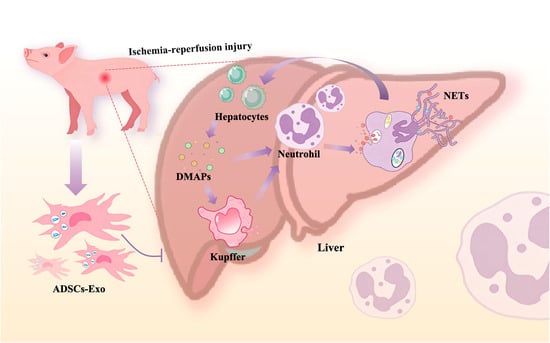
ADSCs-Exo Attenuate NET Formation via the NADPH/MAPK Pathway and Mitigate NETs-Mediated Exacerbation of Hepatocyte Ferroptosis in a Miniature Pig Model of LIRI

Highlights
- NETs exacerbate hepatocyte ferroptosis in LIRI, with MPO identified as a key mediator of NET-induced hepatocellular injury.
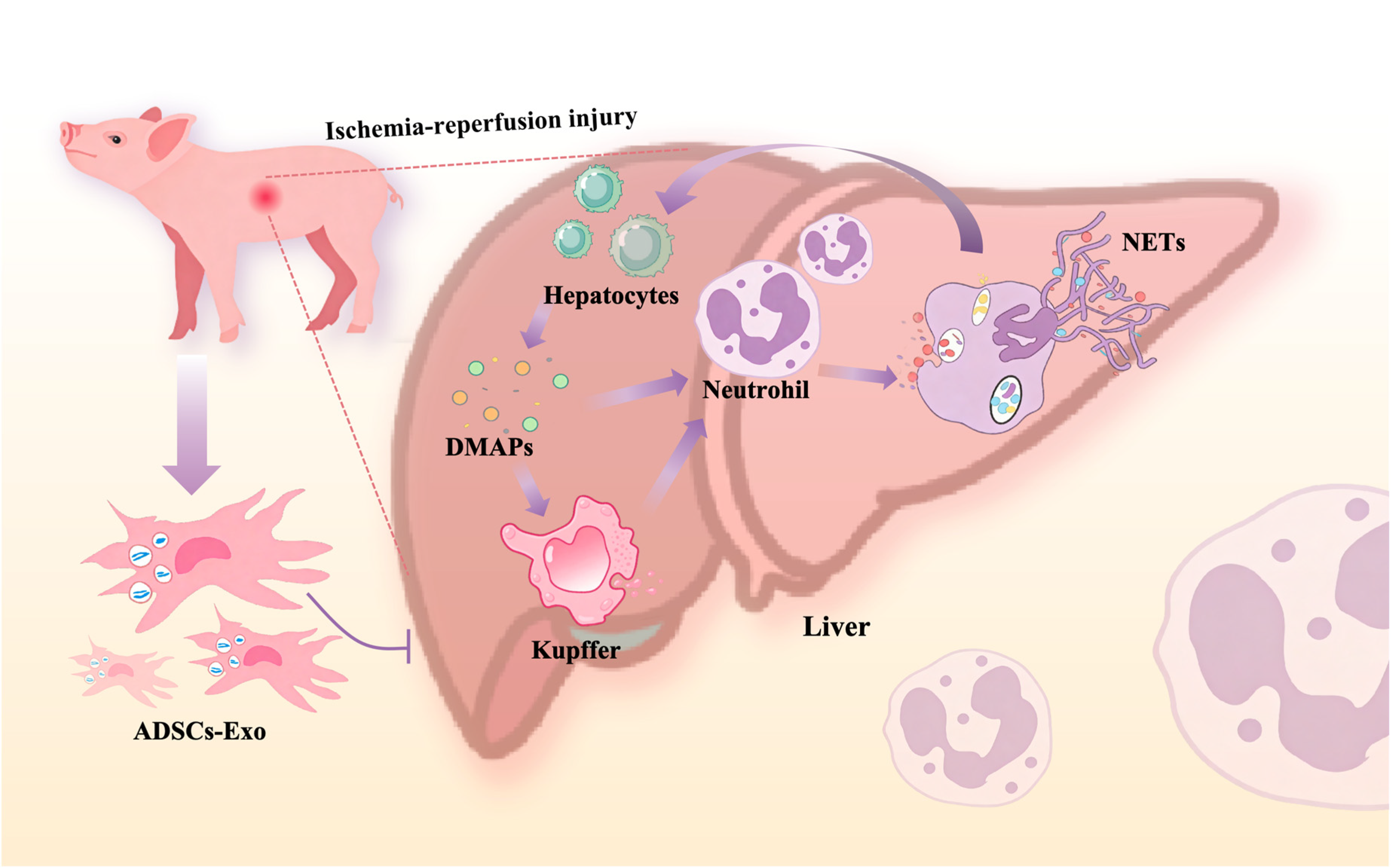
- ADSCs-Exo suppress NET formation by inhibiting the NADPH/MAPK pathway, thereby alleviating hepatocyte ferroptosis and liver injury in a miniature pig model.
- ADSCs-Exo represent a promising cell-free therapeutic strategy for reducing liver ischemia–reperfusion injury during liver transplantation and hepatectomy.
- The miniature pig LIRI model provides a clinically relevant large-animal platform for improving the translational value of liver injury research.
Abstract
1. Introduction
2. Materials and Methods
2.1. Animals
2.2. Preparation of ADSCs-Exo
2.3. Isolation, Culture and Identification of Hepatocytes
2.4. Isolation, Cultivation and Identification of PMNs
2.5. Hepatocyte Uptake of ADSCs-Exo
2.6. Hepatocyte OGD/R Model
2.7. OGD/R Culture Medium Induces NETs
2.8. Miniature Pig LIRI Model
2.9. Cell Viability and Cytotoxicity
2.10. Liver Function Analysis
2.11. Measurement of Oxidative Stress
2.12. DCFH-DA Analysis
2.13. Fe2+ Content Detection
2.14. ELISA Analysis
2.15. MPO Immunofluorescence Staining
2.16. RT-qPCR
2.17. Western Blotting
2.18. Statistical Analysis
3. Results
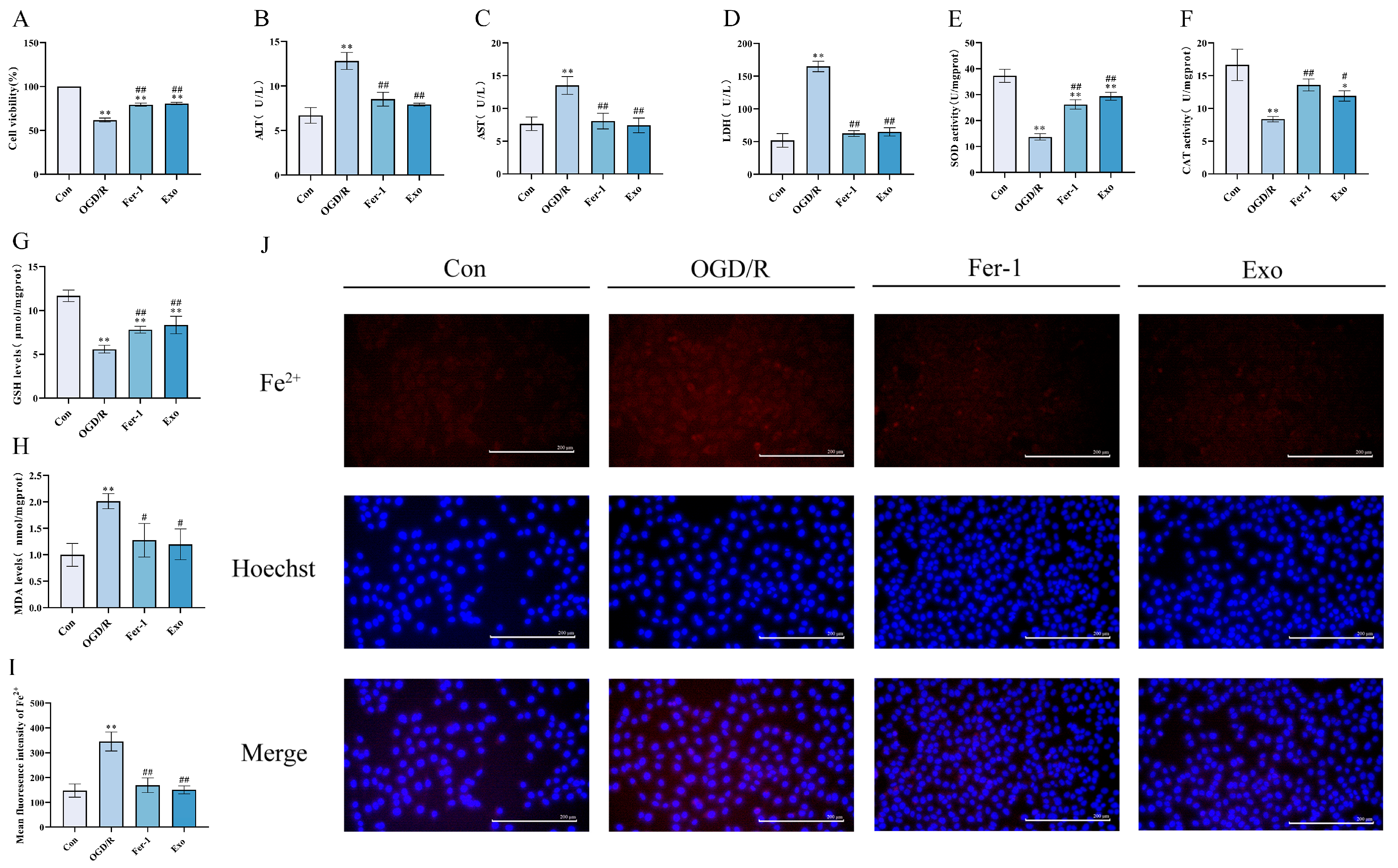
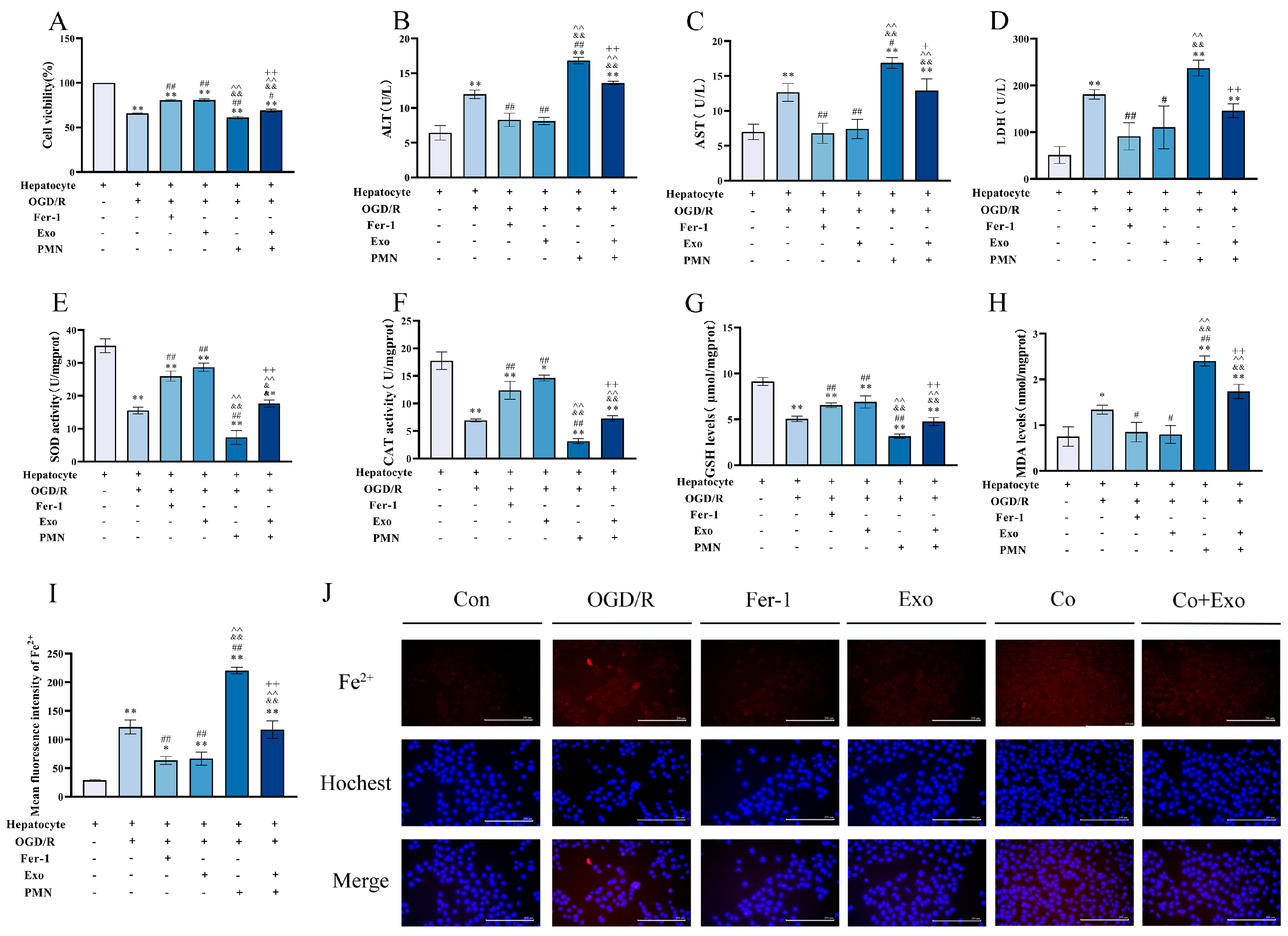
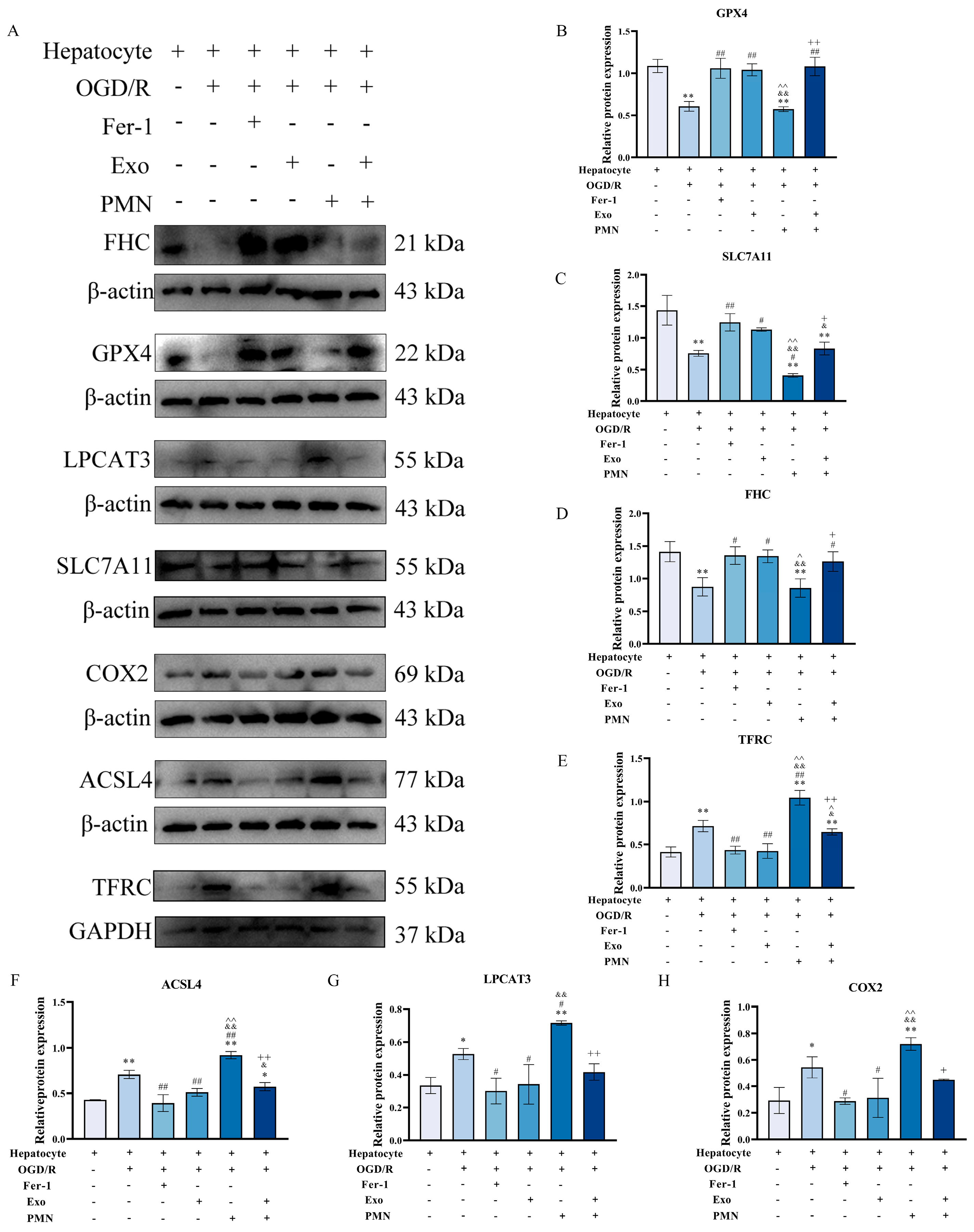
3.1. ADSCs-Exo Alleviates Ferroptosis Exacerbation in Hepatocytes Induced by PMNs Co-Culture After OGD/R
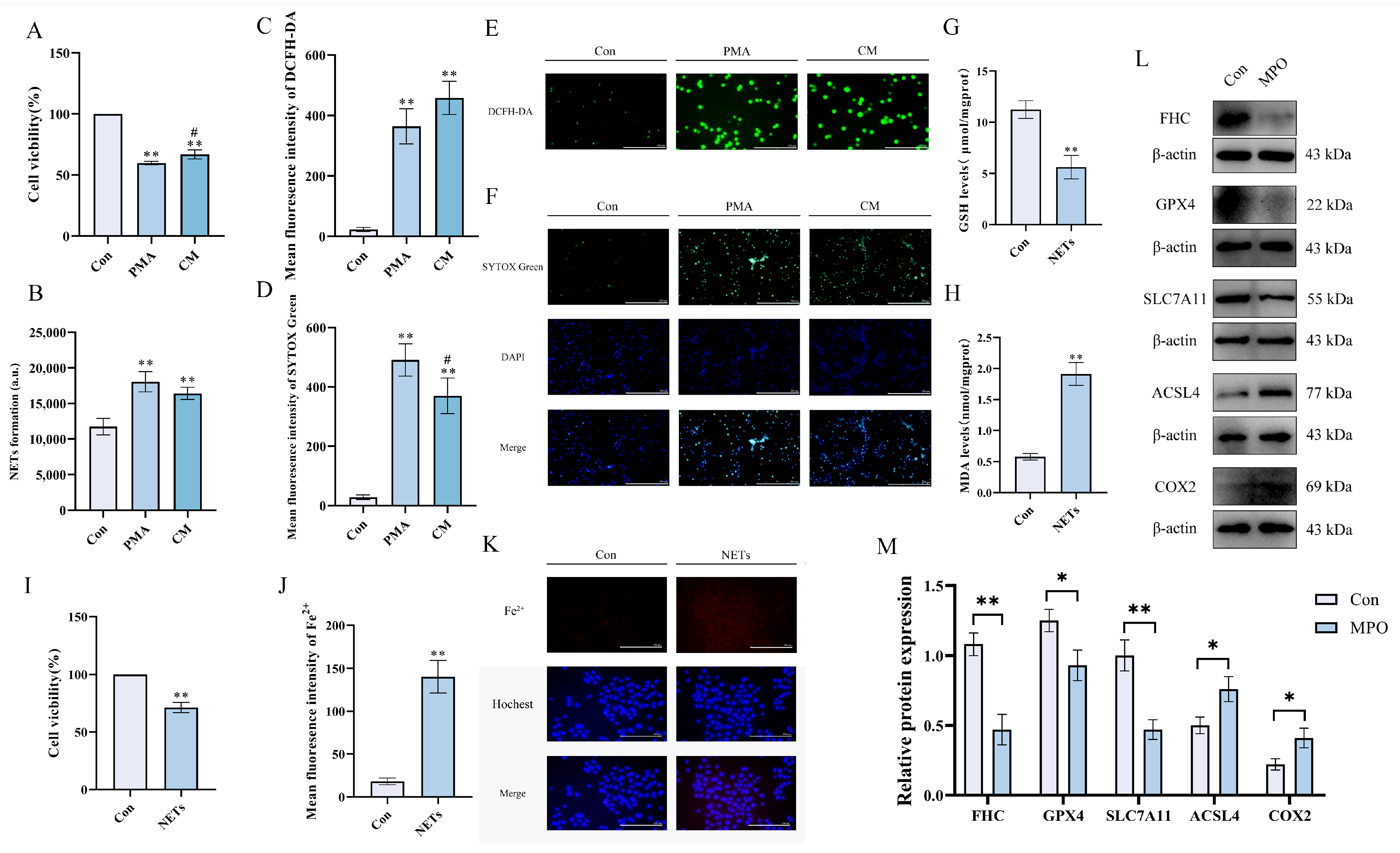
3.2. NETs Induce Hepatocyte Ferroptosis
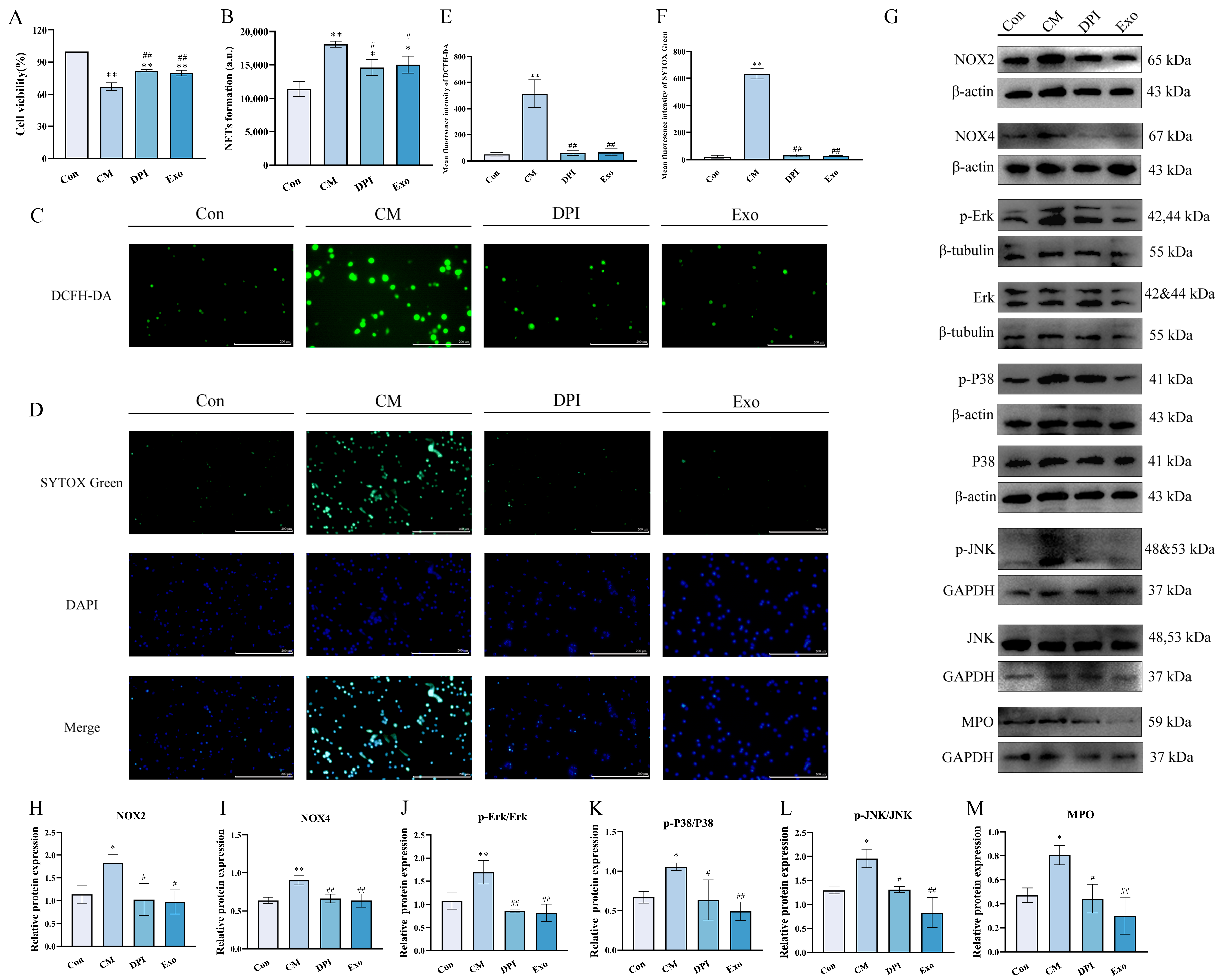
3.3. ADSCs-Exo Inhibits NET Formation Induced by OGD/R-CM Through the NADPH/MAPK Pathways
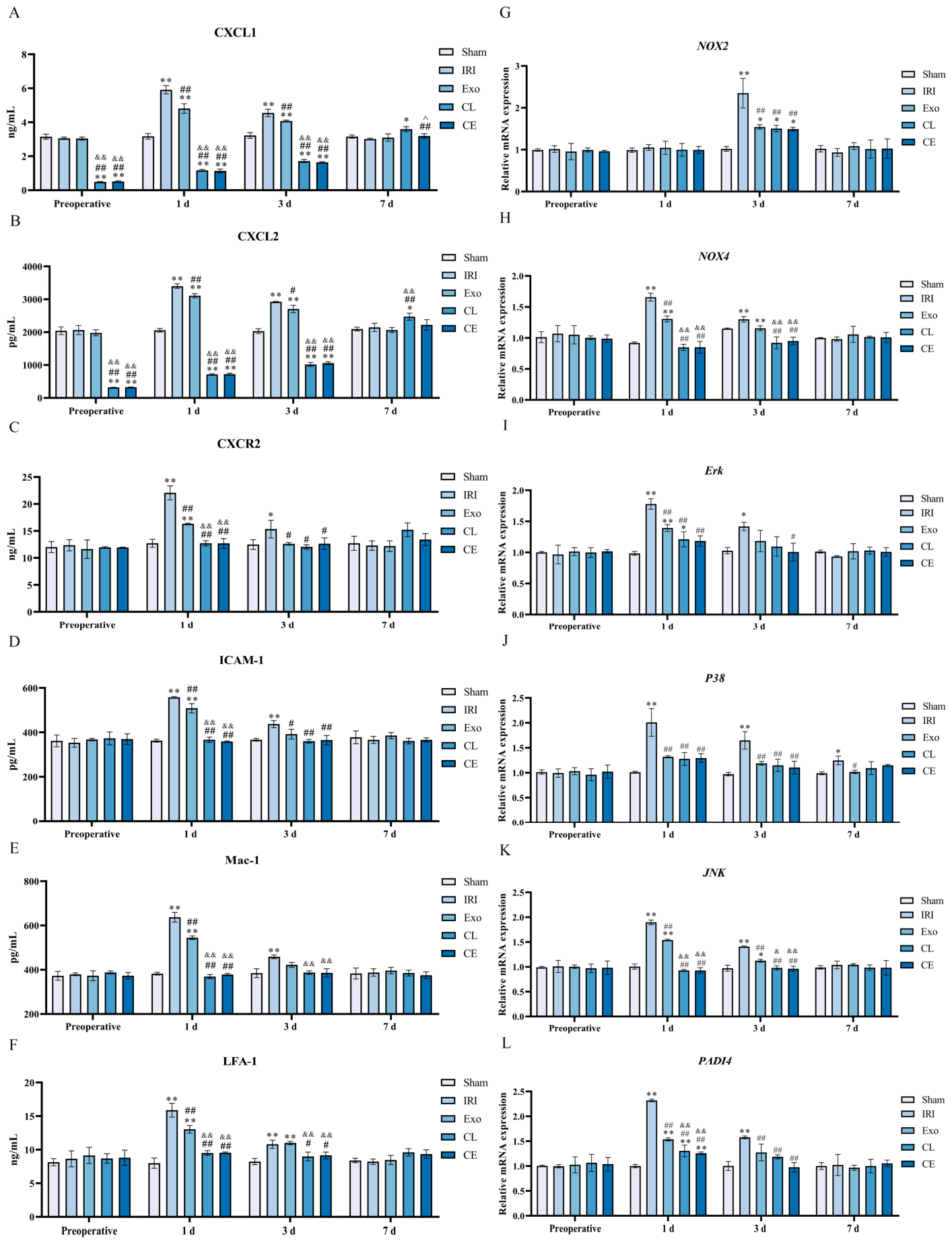
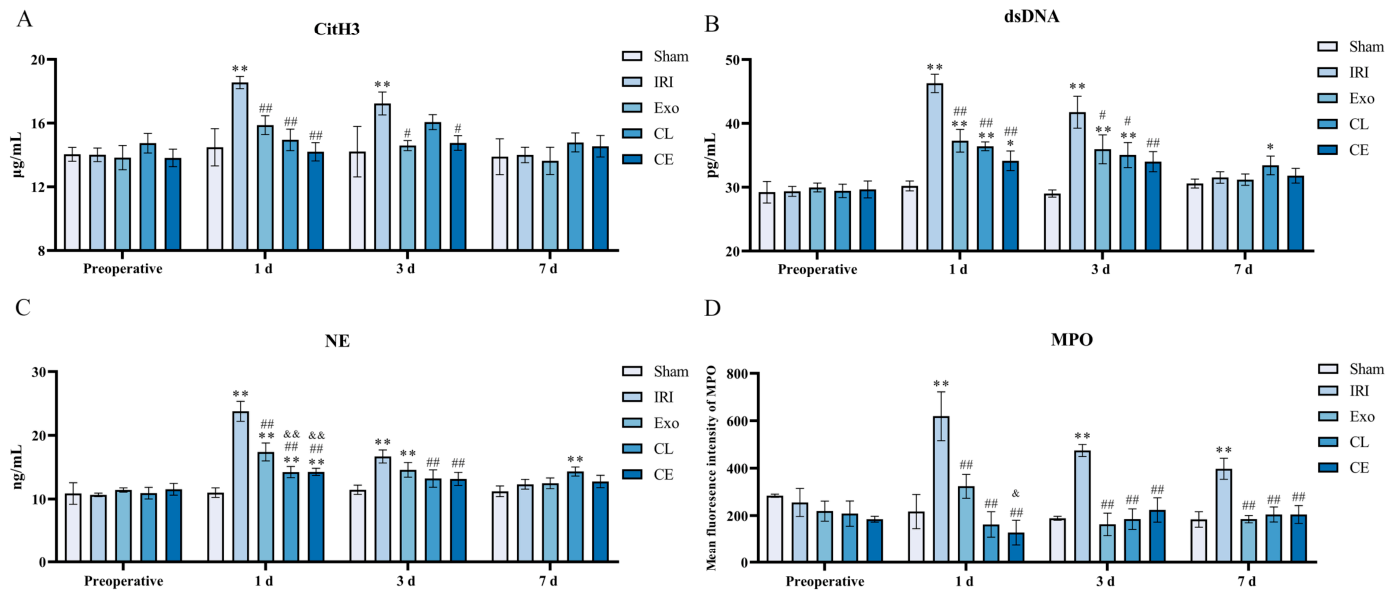
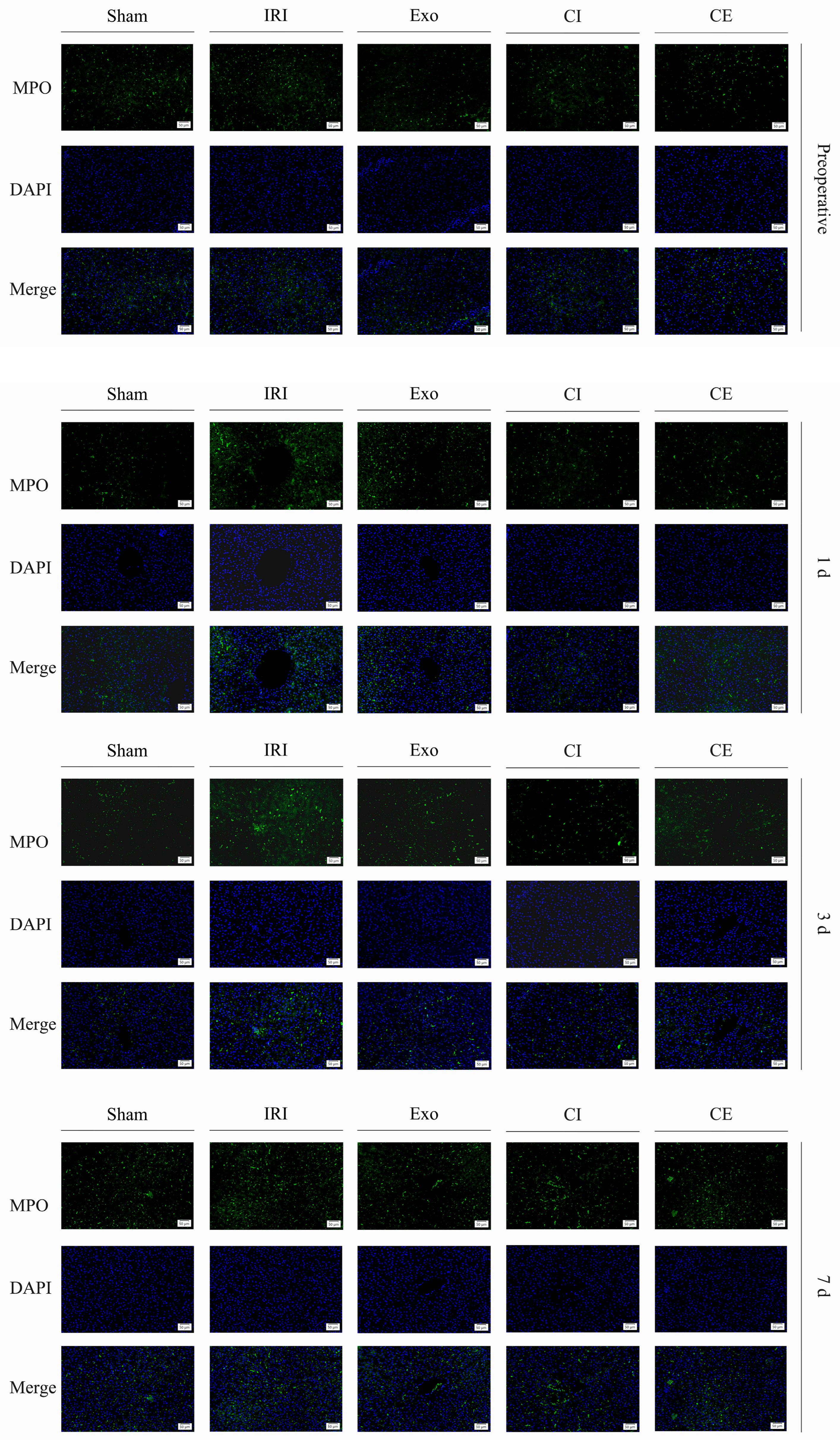
3.4. ADSCs-Exo Attenuates NET Formation After LIRI
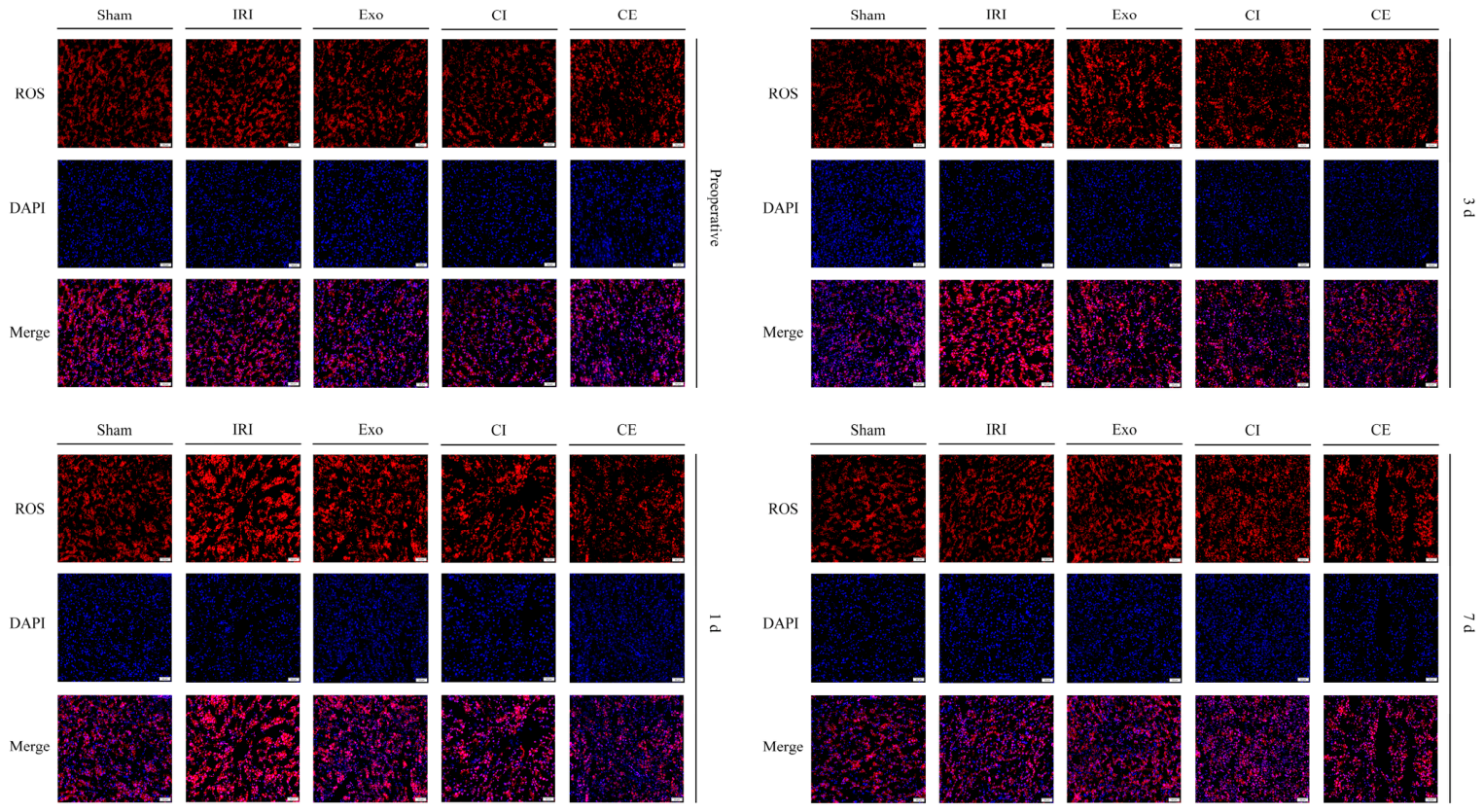
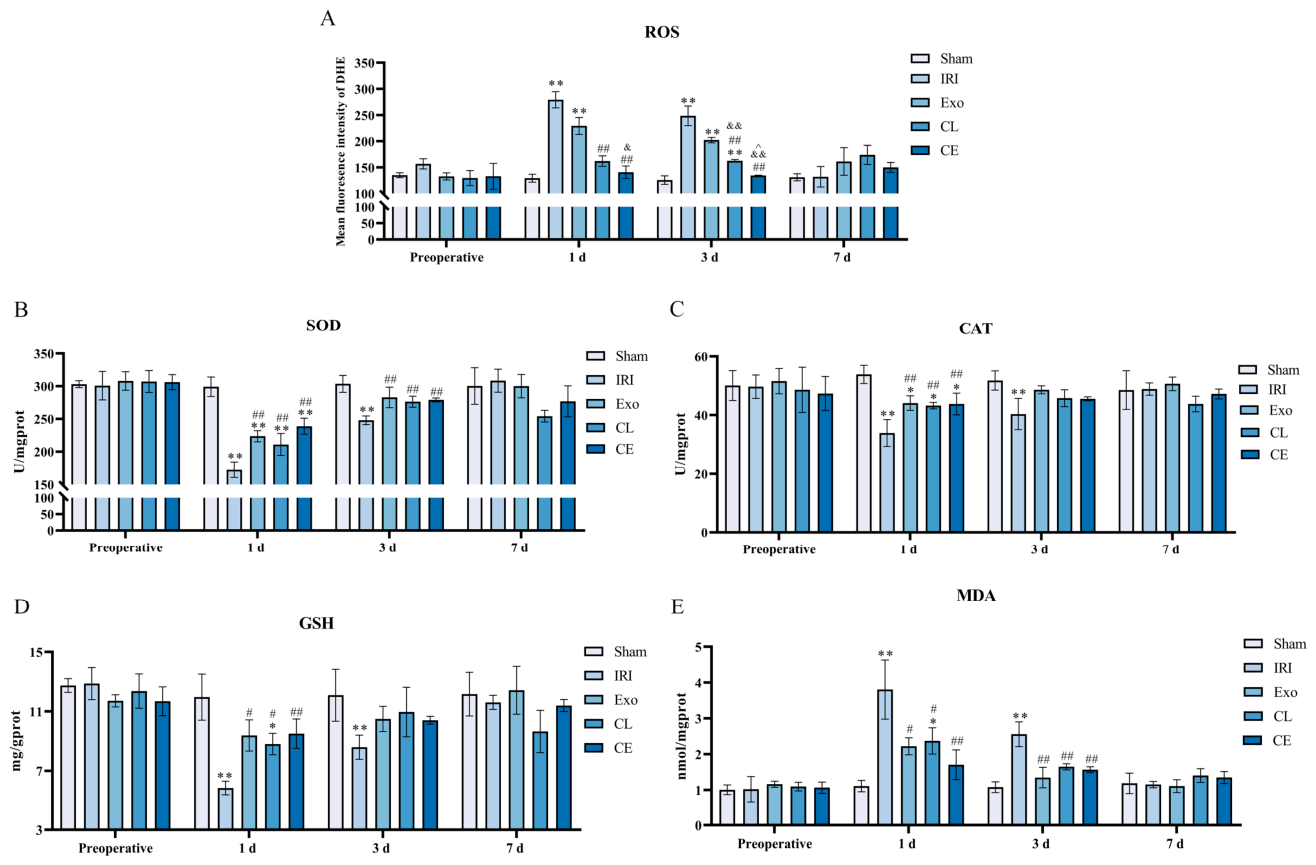
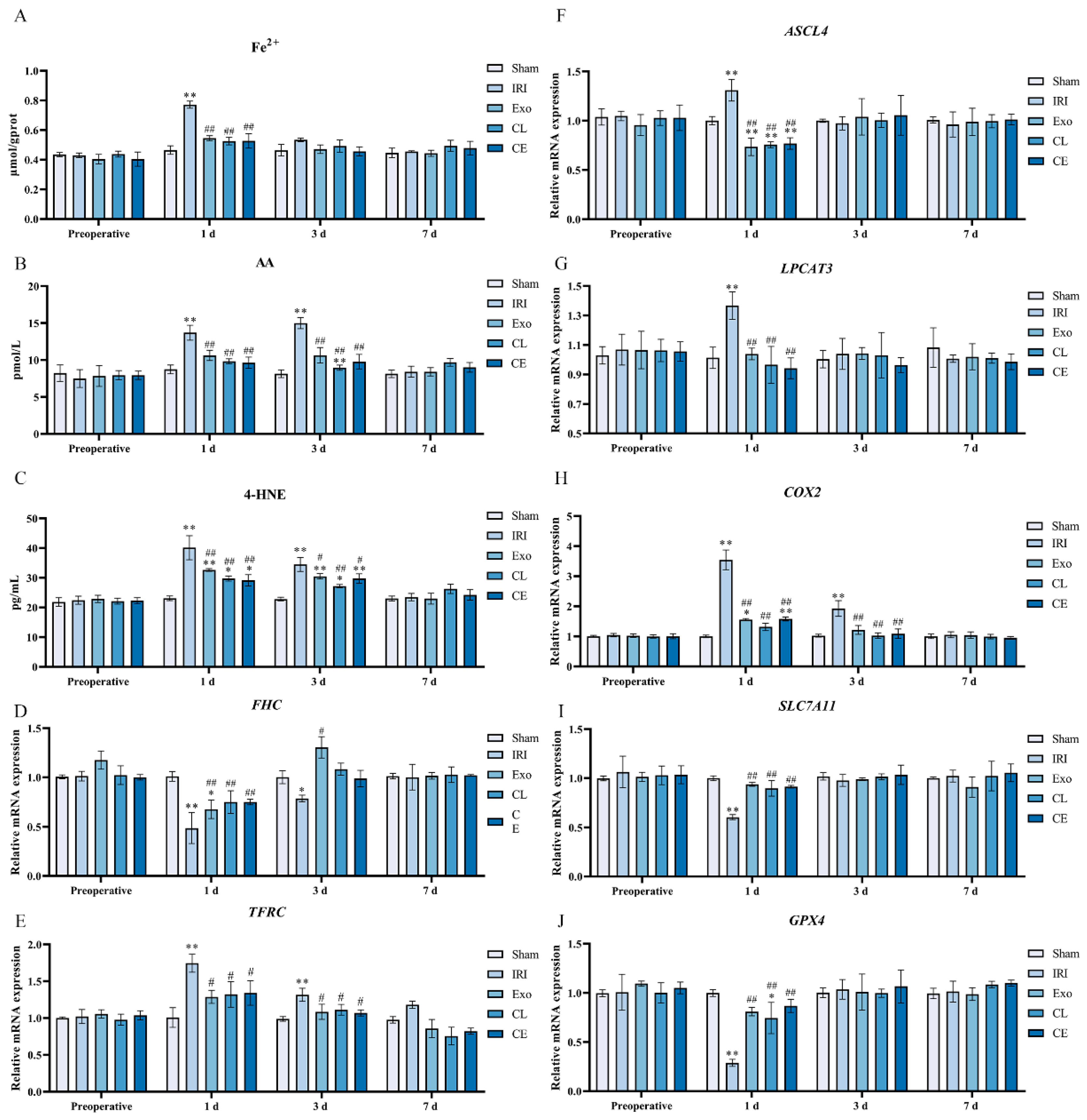
3.5. ADSCs-Exo Alleviates Ferroptosis After LIRI
4. Discussion
5. Conclusions
Supplementary Materials
Author Contributions
Funding
Institutional Review Board Statement
Informed Consent Statement
Data Availability Statement
Acknowledgments
Conflicts of Interest
Abbreviations
References
- Konishi, T.; Lentsch, A.B. Hepatic Ischemia/Reperfusion: Mechanisms of Tissue Injury, Repair, and Regeneration. Gene Expr. 2017, 17, 277–287. [Google Scholar] [CrossRef]
- Li, Q.; Qin, X.; Wang, L.; Hu, D.; Liao, R.; Yu, H.; Wu, Z.; Liu, Y. Multi-time point transcriptomics and metabolomics reveal key transcription and metabolic features of hepatic ischemia-reperfusion injury in mice. Genes Dis. 2025, 12, 101465. [Google Scholar] [CrossRef] [PubMed]
- Galaris, D.; Barbouti, A.; Korantzopoulos, P. Oxidative stress in hepatic ischemia-reperfusion injury: The role of antioxidants and iron chelating compounds. Curr. Pharm. Des. 2006, 12, 2875–2890. [Google Scholar] [CrossRef] [PubMed]
- Abu-Amara, M.; Yang, S.Y.; Tapuria, N.; Fuller, B.; Davidson, B.; Seifalian, A. Liver ischemia/reperfusion injury: Processes in inflammatory networks—A review. Liver Transplant. 2010, 16, 1016–1032. [Google Scholar] [CrossRef]
- Hirao, H.; Nakamura, K.; Kupiec-Weglinski, J.W. Liver ischaemia-reperfusion injury: A new understanding of the role of innate immunity. Nat. Rev. Gastroenterol. Hepatol. 2022, 19, 239–256. [Google Scholar] [CrossRef]
- Jaeschke, H.; Farhood, A.; Smith, C.W. Neutrophils contribute to ischemia/reperfusion injury in rat liver in vivo. FASEB J. 1990, 4, 3355–3359. [Google Scholar] [CrossRef] [PubMed]
- Jorch, S.K.; Kubes, P. An emerging role for neutrophil extracellular traps in noninfectious disease. Nat. Med. 2017, 23, 279–287. [Google Scholar] [CrossRef]
- Cristinziano, L.; Modestino, L.; Antonelli, A.; Marone, G.; Simon, H.U.; Varricchi, G.; Galdiero, M.R. Neutrophil extracellular traps in cancer. Semin. Cancer Biol. 2022, 79, 91–104. [Google Scholar] [CrossRef]
- Burgener, S.S.; Schroder, K. Neutrophil Extracellular Traps in Host Defense. Cold Spring Harb. Perspect. Biol. 2020, 12, a037028. [Google Scholar] [CrossRef]
- Wilson, A.S.; Randall, K.L.; Pettitt, J.A.; Ellyard, J.I.; Blumenthal, A.; Enders, A.; Quah, B.J.; Bopp, T.; Parish, C.R.; Brüstle, A. Neutrophil extracellular traps and their histones promote Th17 cell differentiation directly via TLR2. Nat. Commun. 2022, 13, 528. [Google Scholar] [CrossRef]
- de Bont, C.M.; Boelens, W.C.; Pruijn, G.J.M. NETosis, complement, and coagulation: A triangular relationship. Cell. Mol. Immunol. 2019, 16, 19–27. [Google Scholar] [CrossRef] [PubMed]
- Zhang, Z.; Wang, Y.; Li, T.; Wang, H. NETosis in myocardial ischemia-reperfusion injury: From mechanisms to therapies (Review). Biomed. Rep. 2025, 23, 113. [Google Scholar] [CrossRef]
- Wu, X.; You, D.; Cui, J.; Yang, L.; Lin, L.; Chen, Y.; Xu, C.; Lian, G.; Wan, J. Reduced Neutrophil Extracellular Trap Formation During Ischemia Reperfusion Injury in C3 KO Mice: C3 Requirement for NETs Release. Front. Immunol. 2022, 13, 781273. [Google Scholar] [CrossRef]
- Luo, H.; Guo, H.; Zhou, Y.; Fang, R.; Zhang, W.; Mei, Z. Neutrophil Extracellular Traps in Cerebral Ischemia/Reperfusion Injury: Friend and Foe. Curr. Neuropharmacol. 2023, 21, 2079–2096. [Google Scholar] [CrossRef] [PubMed]
- Zhu, C.; Shi, S.; Jiang, P.; Huang, X.; Zhao, J.; Jin, Y.; Shen, Y.; Zhou, X.; Liu, H.; Cai, J. Curcumin Alleviates Hepatic Ischemia-Reperfusion Injury by Inhibiting Neutrophil Extracellular Traps Formation. J. Investig. Surg. 2023, 36, 2164813. [Google Scholar] [CrossRef]
- Dixon, S.J.; Lemberg, K.M.; Lamprecht, M.R.; Skouta, R.; Zaitsev, E.M.; Gleason, C.E.; Patel, D.N.; Bauer, A.J.; Cantley, A.M.; Yang, W.S.; et al. Ferroptosis: An iron-dependent form of nonapoptotic cell death. Cell 2012, 149, 1060–1072. [Google Scholar] [CrossRef] [PubMed]
- Golfeyz, S.; Lewis, S.; Weisberg, I.S. Hemochromatosis: Pathophysiology, evaluation, and management of hepatic iron overload with a focus on MRI. Expert Rev. Gastroenterol. Hepatol. 2018, 12, 767–778. [Google Scholar] [CrossRef]
- Hara, Y.; Yanatori, I.; Tanaka, A.; Kishi, F.; Lemasters, J.J.; Nishina, S.; Sasaki, K.; Hino, K. Iron loss triggers mitophagy through induction of mitochondrial ferritin. EMBO Rep. 2020, 21, e50202. [Google Scholar] [CrossRef]
- Zhou, L.; Han, S.; Guo, J.; Qiu, T.; Zhou, J.; Shen, L. Ferroptosis-A New Dawn in the Treatment of Organ Ischemia-Reperfusion Injury. Cells 2022, 11, 3653. [Google Scholar] [CrossRef]
- Si, J.; Wang, J.; Dai, H.; Lv, T.; Zhao, S.; Chen, W.; Li, L.; Ding, S.; He, Y. Mechanistic insights into adipose-derived stem cells and exosomes in ischemia-reperfusion injury repair: From shared pathways to organ-specific therapeutics. Front. Cell Dev. Biol. 2025, 13, 1621289. [Google Scholar] [CrossRef]
- Gong, Y.; Dai, H.; Liu, W.; Liao, R.; Chen, H.; Zhang, L.; Wang, X.; Chen, Z. Exosomes derived from human adipose-derived stem cells alleviate hepatic ischemia-reperfusion (I/R) injury through the miR-183/ALOX5 axis. FASEB J. 2023, 37, e22782. [Google Scholar] [CrossRef]
- Zhang, Q.; Piao, C.; Xu, J.; Wang, Y.; Liu, T.; Ma, H.; Wang, H. ADSCs-exo attenuates hepatic ischemia-reperfusion injury after hepatectomy by inhibiting endoplasmic reticulum stress and inflammation. J. Cell. Physiol. 2023, 238, 659–669. [Google Scholar] [CrossRef] [PubMed]
- Ma, Y.; Liu, T.; Li, P.; Cao, L.; Lu, X.; Wang, H. Exosomes derived from ALR-modified adipose mesenchymal stem cells mediate hepatoprotective effects on hepatic ischemia-reperfusion injury by promoting regeneration and protecting mitochondria. Stem Cell Res. Ther. 2025, 16, 361. [Google Scholar] [CrossRef] [PubMed]
- Peter, A.K.; Crocini, C.; Leinwand, L.A. Expanding our scientific horizons: Utilization of unique model organisms in biological research. EMBO J. 2017, 36, 2311–2314. [Google Scholar] [CrossRef]
- Abu-Toamih Atamni, H.J.; Iraqi, F.A. Efficient protocols and methods for high-throughput utilization of the Collaborative Cross mouse model for dissecting the genetic basis of complex traits. Anim. Models Exp. Med. 2019, 2, 137–149. [Google Scholar] [CrossRef]
- Dorandeu, F.; Mikler, J.R.; Thiermann, H.; Tenn, C.; Davidson, C.; Sawyer, T.W.; Lallement, G.; Worek, F. Swine models in the design of more effective medical countermeasures against organophosphorus poisoning. Toxicology 2007, 233, 128–144. [Google Scholar] [CrossRef]
- Arora, D.; Park, J.E.; Lim, D.; Cho, I.C.; Kang, K.S.; Kim, T.H.; Park, W. Multi-omics approaches for comprehensive analysis and understanding of the immune response in the miniature pig breed. PLoS ONE 2022, 17, e0263035. [Google Scholar] [CrossRef]
- Lu, X.; Wang, Y.; Piao, C.; Li, P.; Cao, L.; Liu, T.; Ma, Y.; Wang, H. Exosomes Derived from Adipose Mesenhymal Stem Cells Ameliorate Lipid Metabolism Disturbances Following Liver Ischemia-Reperfusion Injury in Miniature Swine. Int. J. Mol. Sci. 2024, 25, 13069. [Google Scholar] [CrossRef]
- Risha, Y.; Minic, Z.; Ghobadloo, S.M.; Berezovski, M.V. The proteomic analysis of breast cell line exosomes reveals disease patterns and potential biomarkers. Sci. Rep. 2020, 10, 13572. [Google Scholar] [CrossRef] [PubMed]
- Altıntaş, Ö.; Saylan, Y. Exploring the Versatility of Exosomes: A Review on Isolation, Characterization, Detection Methods, and Diverse Applications. Anal. Chem. 2023, 95, 16029–16048. [Google Scholar] [CrossRef]
- Dave, S.; Mathur, M.; Bhatnagar, V. Hepatocyte isolation and transplantation in syngenic rats. Trop. Gastroenterol. Off. J. Dig. Dis. Found. 2000, 21, 194–196. [Google Scholar]
- Zhang, Q.; Ge, Y.; Li, H.; Bai, G.; Jiao, Z.; Kong, X.; Meng, W.; Wang, H. Effect of hydrogen-rich saline on apoptosis induced by hepatic ischemia reperfusion upon laparoscopic hepatectomy in miniature pigs. Res. Vet. Sci. 2018, 119, 285–291. [Google Scholar] [CrossRef]
- Hashimoto, S.; Honda, M.; Takeichi, T.; Sakisaka, M.; Narita, Y.; Yoshii, D.; Uto, K.; Sakamoto, S.; Inomata, Y. Intravital imaging of neutrophil recruitment in intestinal ischemia-reperfusion injury. Biochem. Biophys. Res. Commun. 2018, 495, 2296–2302. [Google Scholar] [CrossRef]
- Sakai, N.; Van Sweringen, H.L.; Schuster, R.; Blanchard, J.; Burns, J.M.; Tevar, A.D.; Edwards, M.J.; Lentsch, A.B. Receptor activator of nuclear factor-κB ligand (RANKL) protects against hepatic ischemia/reperfusion injury in mice. Hepatology 2012, 55, 888–897. [Google Scholar] [CrossRef]
- de Oliveira, T.H.C.; Gonçalves, G.K.N. Liver ischemia reperfusion injury: Mechanisms, cellular pathways, and therapeutic approaches. Int. Immunopharmacol. 2025, 150, 114299. [Google Scholar] [CrossRef]
- Chen, Y.X.; Sato, M.; Kawachi, K.; Abe, Y. Neutrophil-mediated liver injury during hepatic ischemia-reperfusion in rats. Hepatobiliary Pancreat. Dis. Int. HBPD INT 2006, 5, 436–442. [Google Scholar]
- Xia, H.; Yan, J.C. Research progress on the association between neutrophil extracellular traps and myocardial ischemia reperfusion. Zhonghua Xin Xue Guan Bing Za Zhi 2021, 49, 188–192. [Google Scholar] [PubMed]
- Peng, J.; Huang, Y.; He, T.; Zhan, Y.; Liu, J. NLRX1 mediated impaired microglial phagocytosis of NETs in cerebral ischemia and reperfusion injury. Cell Death Differ. 2025, 32, 2160–2174. [Google Scholar] [CrossRef] [PubMed]
- Yang, Q.; Shen, X.; Luo, Y.; Li, R.; Meng, X.; Xu, P.; Liu, X.; Bian, D.; Wang, J.; Shi, J.; et al. ELANE enhances KEAP1 protein stability and reduces NRF2-mediated ferroptosis inhibition in metabolic dysfunction-associated fatty liver disease. Cell Death Dis. 2025, 16, 266. [Google Scholar] [CrossRef] [PubMed]
- Boonpraman, N.; Yoon, S.; Kim, C.Y.; Moon, J.S.; Yi, S.S. NOX4 as a critical effector mediating neuroinflammatory cytokines, myeloperoxidase and osteopontin, specifically in astrocytes in the hippocampus in Parkinson’s disease. Redox Biol. 2023, 62, 102698. [Google Scholar] [CrossRef]
- Zhao, H.; Liu, Y. Neutrophil extracellular traps induce fibroblast ferroptosis via IRE1α/XBP1-mediated ER stress to impair diabetic wound healing. Free Radic. Biol. Med. 2025, 236, 17–27. [Google Scholar] [CrossRef]
- Lu, T.; Zhang, J.; Cai, J.; Xiao, J.; Sui, X.; Yuan, X.; Li, R.; Li, Y.; Yao, J.; Lv, G.; et al. Extracellular vesicles derived from mesenchymal stromal cells as nanotherapeutics for liver ischaemia-reperfusion injury by transferring mitochondria to modulate the formation of neutrophil extracellular traps. Biomaterials 2022, 284, 121486. [Google Scholar] [CrossRef] [PubMed]
- Feng, Y.; Bao, X.; Zhao, J.; Kang, L.; Sun, X.; Xu, B. MSC-Derived Exosomes Mitigate Myocardial Ischemia/Reperfusion Injury by Reducing Neutrophil Infiltration and the Formation of Neutrophil Extracellular Traps. Int. J. Nanomed. 2024, 19, 2071–2090. [Google Scholar] [CrossRef]
- Zheng, X.L.; Gu, W.J.; Zhang, F.; Zhao, F.Z.; Li, L.Z.; Huang, H.Y.; Li, L.J.; Yi, Y.H.; Yin, H.Y.; Xu, J. Exosomal miR-127-5p from BMSCs alleviated sepsis-related acute lung injury by inhibiting neutrophil extracellular trap formation. Int. Immunopharmacol. 2023, 123, 110759. [Google Scholar] [CrossRef]
- Zou, T.; Lu, J.; Zhu, Y.; Xu, Y.; Sun, Y. Mesenchymal stem cell-derived exosomes improved septic lung injury by reducing excessive NETs formation and alleviating inflammatory response. Allergol. Immunopathol. 2025, 53, 63–68. [Google Scholar] [CrossRef]
- Arumugam, S.; Girish Subbiah, K.; Kemparaju, K.; Thirunavukkarasu, C. Neutrophil extracellular traps in acrolein promoted hepatic ischemia reperfusion injury: Therapeutic potential of NOX2 and p38MAPK inhibitors. J. Cell. Physiol. 2018, 233, 3244–3261. [Google Scholar] [CrossRef]
- Gong, Y.; You, Q.; Yuan, X.; Zeng, F.; Zhang, F.; Xiao, J.; Chen, H.; Liu, Y.; Wang, T.; Yan, X.; et al. Mesenchymal stem cell-derived extracellular vesicles attenuate ferroptosis in aged hepatic ischemia/reperfusion injury by transferring miR-1275. Redox Biol. 2025, 81, 103556. [Google Scholar] [CrossRef]
- Miao, L.; Yu, C.; Guan, G.; Luan, X.; Jin, X.; Pan, M.; Yang, Y.; Yan, J.; Chen, P.; Di, G. Extracellular vesicles containing GAS6 protect the liver from ischemia-reperfusion injury by enhancing macrophage efferocytosis via MerTK-ERK-COX2 signaling. Cell Death Discov. 2024, 10, 401. [Google Scholar] [CrossRef] [PubMed]
- Chen, L.; Liu, Y.; Wang, Z.; Zhang, L.; Xu, Y.; Li, Y.; Zhang, L.; Wang, G.; Yang, S.; Xue, G. Mesenchymal stem cell-derived extracellular vesicles protect against abdominal aortic aneurysm formation by inhibiting NET-induced ferroptosis. Exp. Mol. Med. 2023, 55, 939–951. [Google Scholar] [CrossRef] [PubMed]
- Kusuma, R.J.; Manca, S.; Friemel, T.; Sukreet, S.; Nguyen, C.; Zempleni, J. Human vascular endothelial cells transport foreign exosomes from cow’s milk by endocytosis. Am. J. Physiol. Cell Physiol. 2016, 310, C800–C807. [Google Scholar] [CrossRef]
- Wang, Y.; Liu, T.; Jiao, G.; Lv, Y.; Piao, C.; Lu, X.; Ma, H.; Wang, H. Exosomes from adipose-derived mesenchymal stem cells can attenuate liver injury caused by minimally invasive hemihepatectomy combined with ischemia-reperfusion in minipigs by modulating the endoplasmic reticulum stress response. Life Sci. 2023, 321, 121618. [Google Scholar] [CrossRef]
- Wang, Y.; Piao, C.; Liu, T.; Lu, X.; Ma, Y.; Zhang, J.; Liu, G.; Wang, H. Effects of the exosomes of adipose-derived mesenchymal stem cells on apoptosis and pyroptosis of injured liver in miniature pigs. Biomed. Pharmacother. 2023, 169, 115873. [Google Scholar] [CrossRef]
- Wang, Y.; Piao, C.; Liu, T.; Lu, X.; Ma, Y.; Zhang, J.; Ma, H.; Wang, H. Exosomes Derived from Adipose Mesenchymal Stem Cells Promote Regeneration of Injured Liver in Minipigs. Int. J. Mol. Sci. 2024, 25, 6604. [Google Scholar] [CrossRef]
- Liu, S.X.; Du, Y.C.; Zeng, T. A mini-review of the rodent models for alcoholic liver disease: Shortcomings, application, and future prospects. Toxicol. Res. 2021, 10, 523–530. [Google Scholar] [CrossRef]
- Xu, Z.; Kang, Q.; Yu, Z.; Tian, L.; Zhang, J.; Wang, T. Research on the Species Difference of the Hepatotoxicity of Medicine Based on Transcriptome. Front. Pharmacol. 2021, 12, 647084. [Google Scholar] [CrossRef]
- Hidalgo, A.; Chilvers, E.R.; Summers, C.; Koenderman, L. The Neutrophil Life Cycle. Trends Immunol. 2019, 40, 584–597. [Google Scholar] [CrossRef]
- Swindle, M.M.; Makin, A.; Herron, A.J.; Clubb, F.J., Jr.; Frazier, K.S. Swine as models in biomedical research and toxicology testing. Vet. Pathol. 2012, 49, 344–356. [Google Scholar] [CrossRef]



| Name | Manufacturer | Catalog Number | Dilution |
|---|---|---|---|
| CD29 | Abcam, Cambridge, UK | ab21845 | 1:100 |
| CD44 | Abcam, Cambridge, UK | ab95138 | 1:100 |
| CD90 | Abcam, Cambridge, UK | ab124527 | 1:100 |
| CD11b | Biolegend, San Diego, CA, USA | 301329 | 1:100 |
| CD63 | Abcam, Cambridge, UK | ab231975 | 1:1000 |
| CD81 | Absin, Shanghai, China | abs126599 | 1:1000 |
| TSG101 | LSBio, Seattle, WA, USA | LS-C408134 | 1:2000 |
| Gene | Forward Primer Sequence (5’ → 3’) | Reverse Primer Sequence (5’ → 3’) |
|---|---|---|
| β-actin | TCTGGCACCACACCTTCT | TGATCTGGGTCATCTTCTCAC |
| GPX4 | TACGGATTCTGGCCTTCCCT | AGTTCCATTTGATAGCATTTCCCAG |
| ACSL4 | CCTCTGATTGAAAGCACGAACA | GTGGCATATAAAGTCACAAGAGGA |
| COX2 | AATTGCTGGCAGGGTTGCT | GGCGAGGCTTTTCTACCAGA |
| FHC | TACCTGCGCCACAGTCTTC | CGCGCTCCGGTTTCTTGAT |
| TFRC | ACCTCGCTTATTTTGGGCAGA | CTTTGAGCATTTGCCACCTTCT |
| LPCAT3 | CTATGGGGCCTTCTTGGTGG | GCAGGTATGGTGCTGTTTGG |
| SLC7A11 | CTGGCATTTGGACGCTACA | CAACAGTTCCTCGGCACTAA |
| NOX2 | CCACGATTCACACCATTGCC | ACGTACAATTCGCTCGGCT |
| NOX4 | GCTAGGACGCCAAAGGCTATT | TTAGGCACAATCCCCCAGCA |
| Erk | GCTGAACCACATTCTGGGTATTC | GCTCAAAGGAGTCAAGGTGGA |
| p38 | CCCCAGCTCAAGGCAGTTTCTA | CCTCCTGGCTTCAGAATGGTGG |
| JNK | GGGCAGCGTCTCTGTTACTCA | CTGCTACCTGGAGATTATACTGGC |
| PADI4 | GTGGTCTTCGACTCACCGAG | CAGTCACCCTCCCTGTTTGG |
| Name | Manufacturer | Catalog Number | Dilution | Reactivity |
|---|---|---|---|---|
| β-actin | Proteintech, Wuhan, China | 81115-1-RR | 1:10000 | Rabbit |
| β-tubulin | HUABIO, Hangzhou, China | ST1602-4 | 1:20000 | Rabbit |
| GAPDH | Proteintech | 60004-1-Ig | 1:50000 | Mouse |
| GPX4 | HUABIO | ET1706-45 | 1:10000 | Rabbit |
| COX2 | Abmart, Shanghai, China | TA7003 | 1:1000 | Rabbit |
| FHC | Abclonal, Wuhan, China | A19544 | 1:1000 | Rabbit |
| TFRC | HUABIO | ET1702-06 | 1:1000 | Rabbit |
| ACSL4 | Proteintech | 2240-1-AP | 1:1000 | Rabbit |
| SLC7A11 | BYabscience, Nanjing, China | Byab-17924 | 1:1000 | Rabbit |
| LPCAT3 | Abmart | OK53132 | 1:1000 | Rabbit |
| NOX2 | HUABIO | ET1611-44 | 1:2000 | Rabbit |
| NOX4 | HUABIO | ET1607-4 | 1:2000 | Rabbit |
| Erk | Proteintech | 11257-1-AP | 1:2000 | Rabbit |
| p-Erk | Proteintech | 28733-1-AO | 1:1000 | Rabbit |
| P38 | Proteintech | 66234-1-AP | 1:2000 | Rabbit |
| p-P38 | Proteintech | 28796-1-AP | 1:1000 | Rabbit |
| JNK | CST | 9252T | 1:1000 | Rabbit |
| p-JNK | BYabscience | BYab-17797 | 1:1000 | Rabbit |
| MPO | Proteintech | 22225-1-AP | 1:1000 | Rabbit |
Disclaimer/Publisher’s Note: The statements, opinions and data contained in all publications are solely those of the individual author(s) and contributor(s) and not of MDPI and/or the editor(s). MDPI and/or the editor(s) disclaim responsibility for any injury to people or property resulting from any ideas, methods, instructions or products referred to in the content. |
© 2026 by the authors. Licensee MDPI, Basel, Switzerland. This article is an open access article distributed under the terms and conditions of the Creative Commons Attribution (CC BY) license.
Share and Cite
Lu, X.; Li, P.; Cao, L.; Liu, T.; Ma, Y.; Wang, Y.; Piao, C.; Wang, H. ADSCs-Exo Attenuate NET Formation via the NADPH/MAPK Pathway and Mitigate NETs-Mediated Exacerbation of Hepatocyte Ferroptosis in a Miniature Pig Model of LIRI. Cells 2026, 15, 1040. https://doi.org/10.3390/cells15111040
Lu X, Li P, Cao L, Liu T, Ma Y, Wang Y, Piao C, Wang H. ADSCs-Exo Attenuate NET Formation via the NADPH/MAPK Pathway and Mitigate NETs-Mediated Exacerbation of Hepatocyte Ferroptosis in a Miniature Pig Model of LIRI. Cells. 2026; 15(11):1040. https://doi.org/10.3390/cells15111040
Chicago/Turabian StyleLu, Xiangyu, Pujun Li, Lei Cao, Tao Liu, Yajun Ma, Yue Wang, Chenxi Piao, and Hongbin Wang. 2026. "ADSCs-Exo Attenuate NET Formation via the NADPH/MAPK Pathway and Mitigate NETs-Mediated Exacerbation of Hepatocyte Ferroptosis in a Miniature Pig Model of LIRI" Cells 15, no. 11: 1040. https://doi.org/10.3390/cells15111040
APA StyleLu, X., Li, P., Cao, L., Liu, T., Ma, Y., Wang, Y., Piao, C., & Wang, H. (2026). ADSCs-Exo Attenuate NET Formation via the NADPH/MAPK Pathway and Mitigate NETs-Mediated Exacerbation of Hepatocyte Ferroptosis in a Miniature Pig Model of LIRI. Cells, 15(11), 1040. https://doi.org/10.3390/cells15111040