Functional Characterization of a Novel Homozygous DNAH5 Single-Nucleotide Intronic Deletion in a Consanguineous Portuguese Family with Primary Ciliary Dyskinesia

 , , , ,
  , and
, and
Highlights
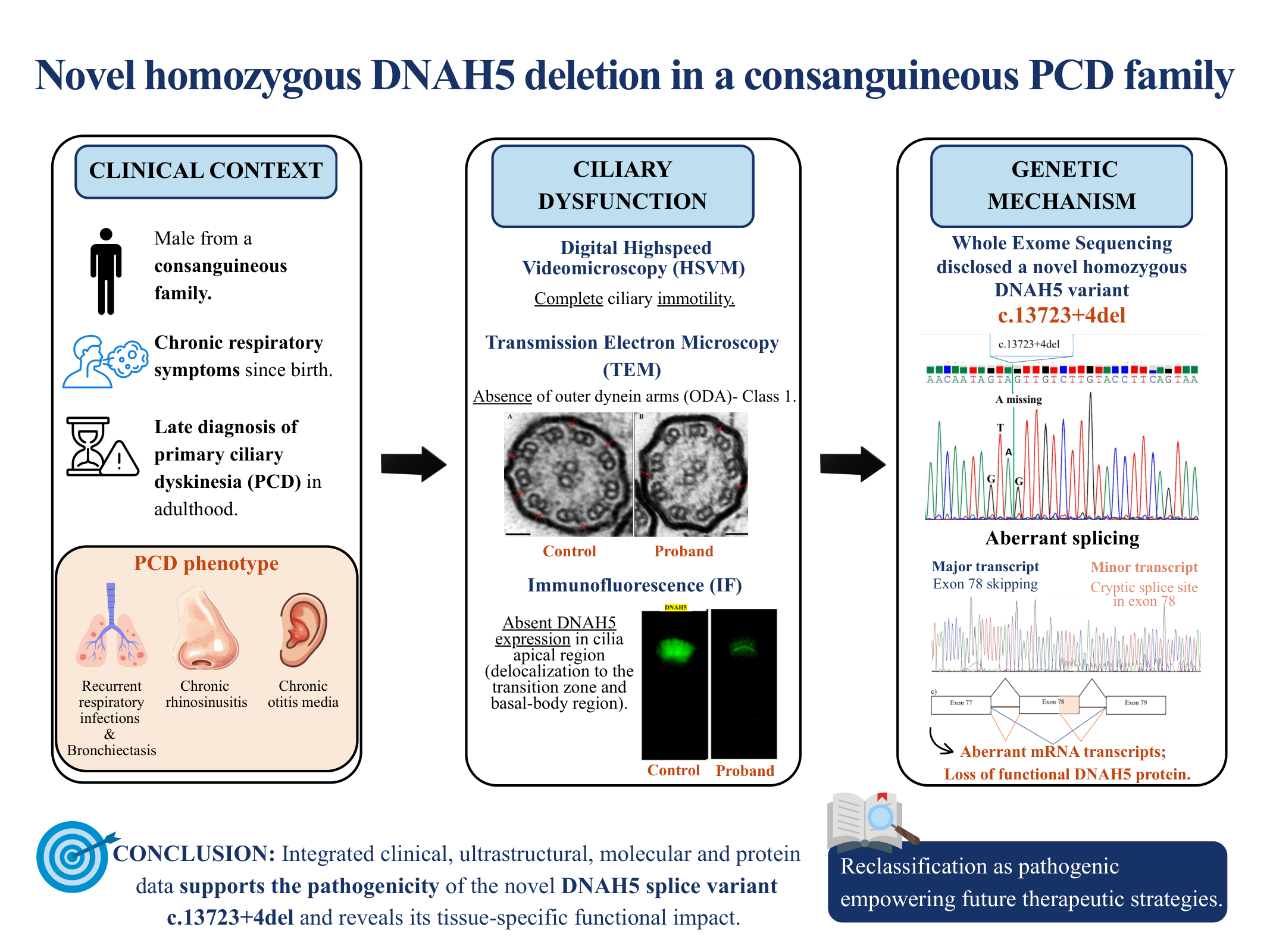
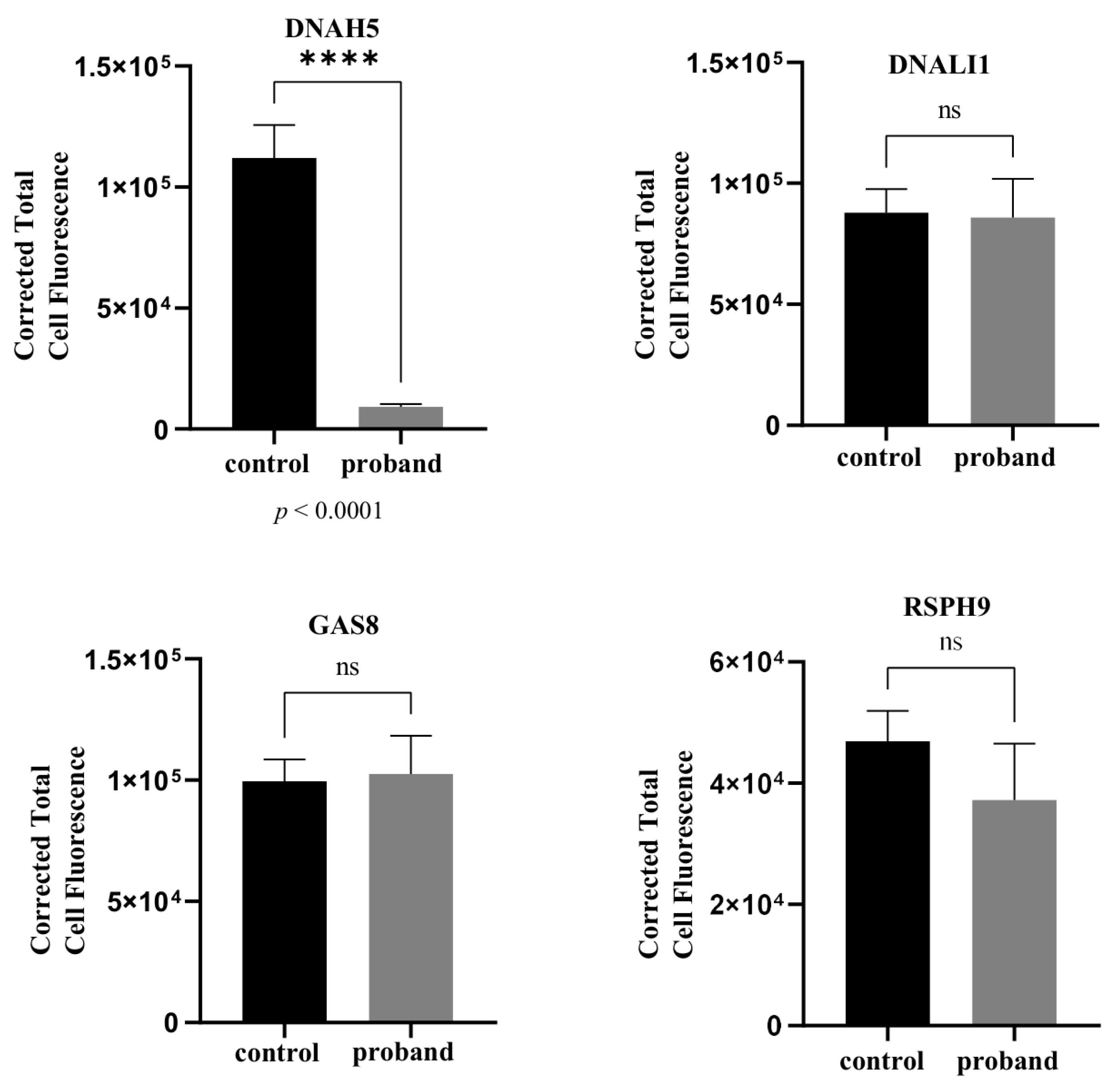
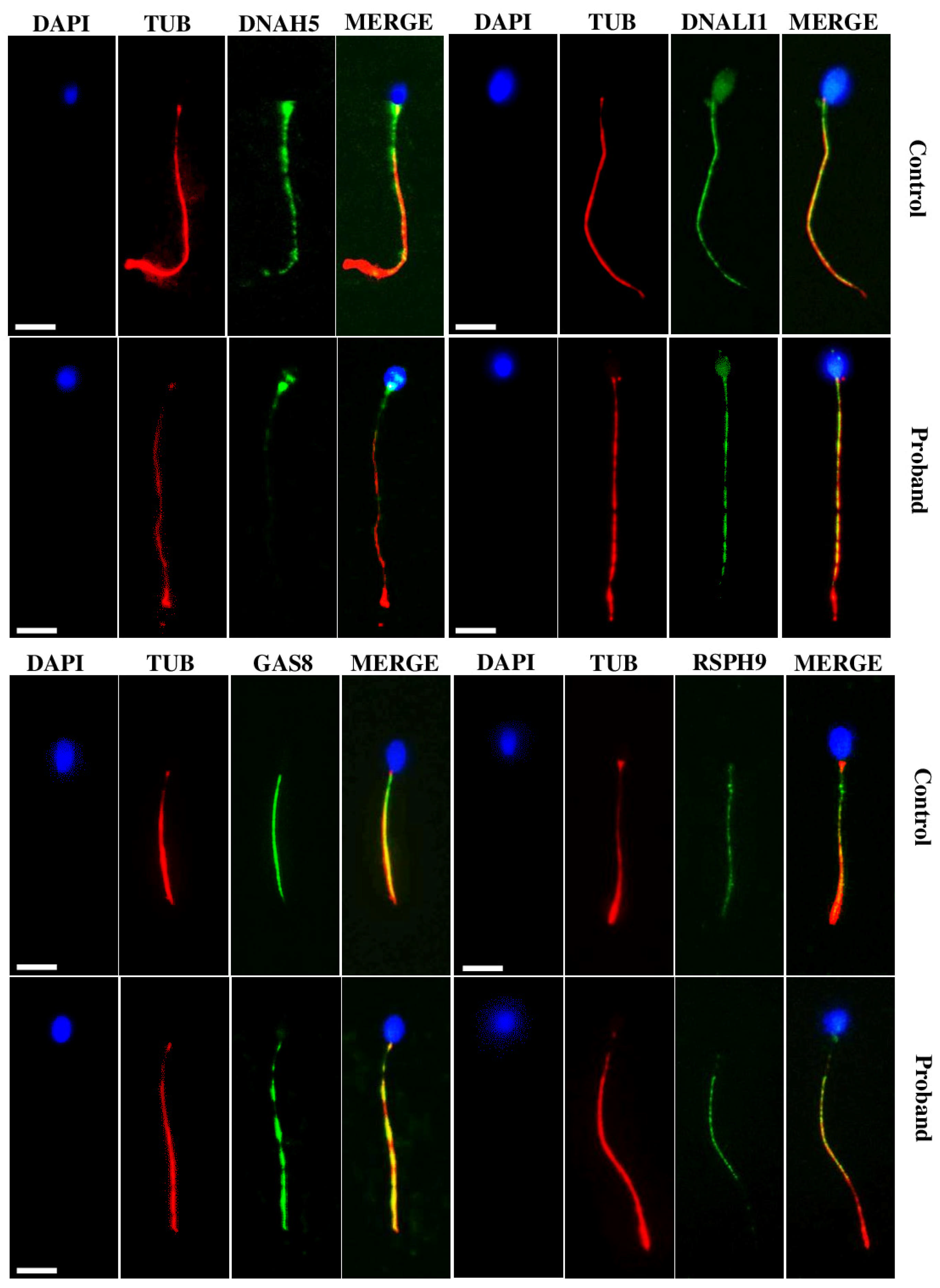
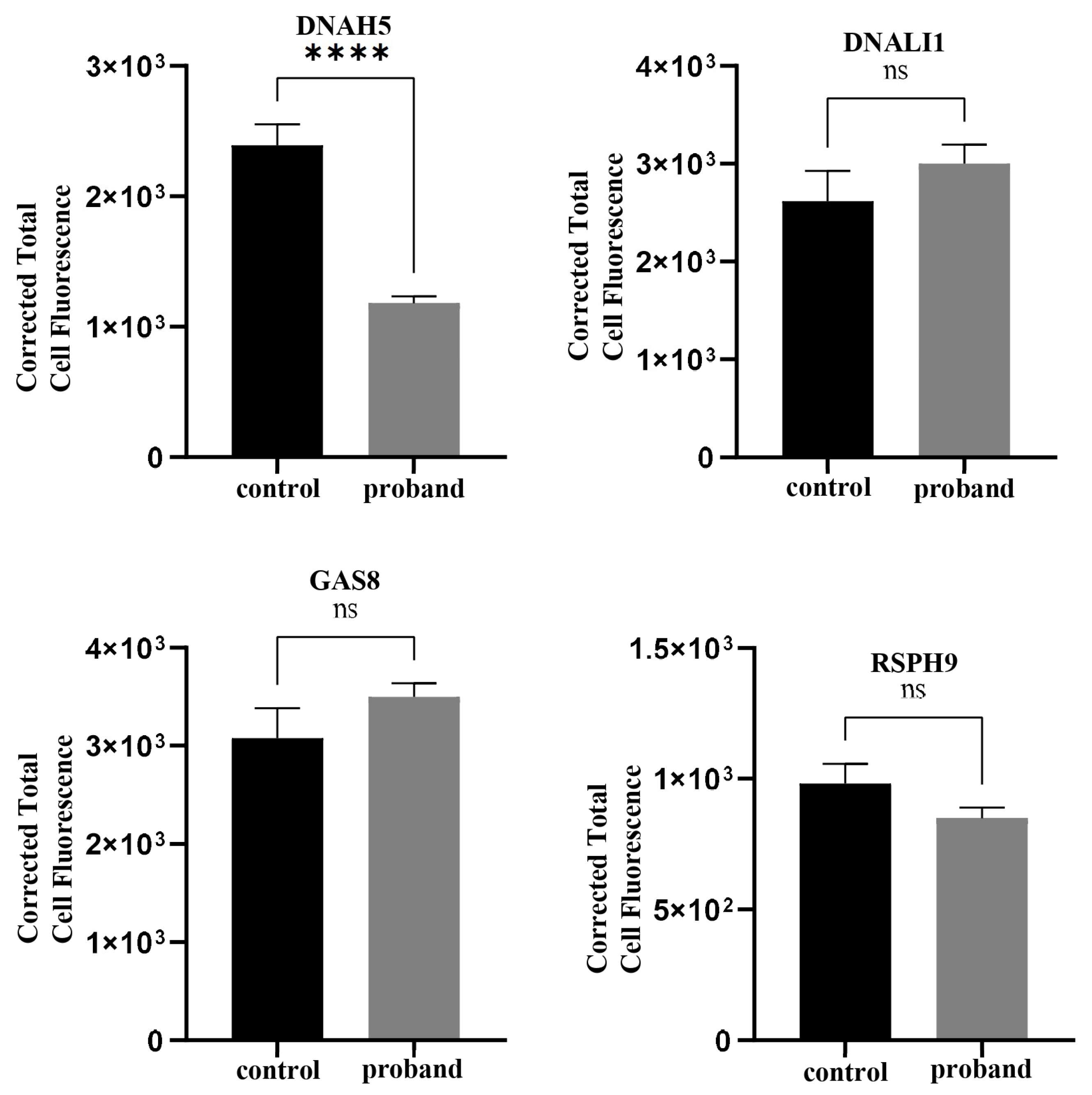
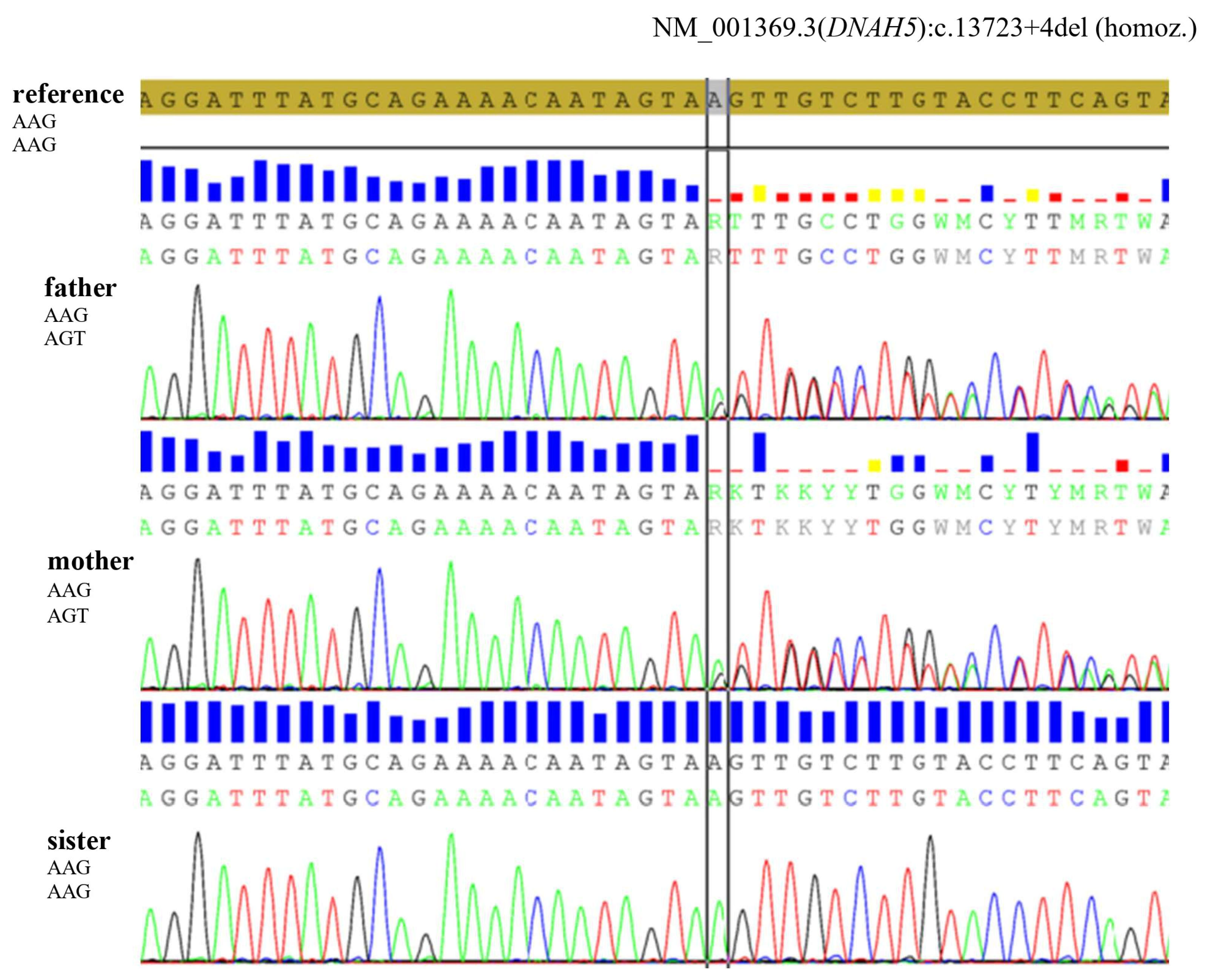
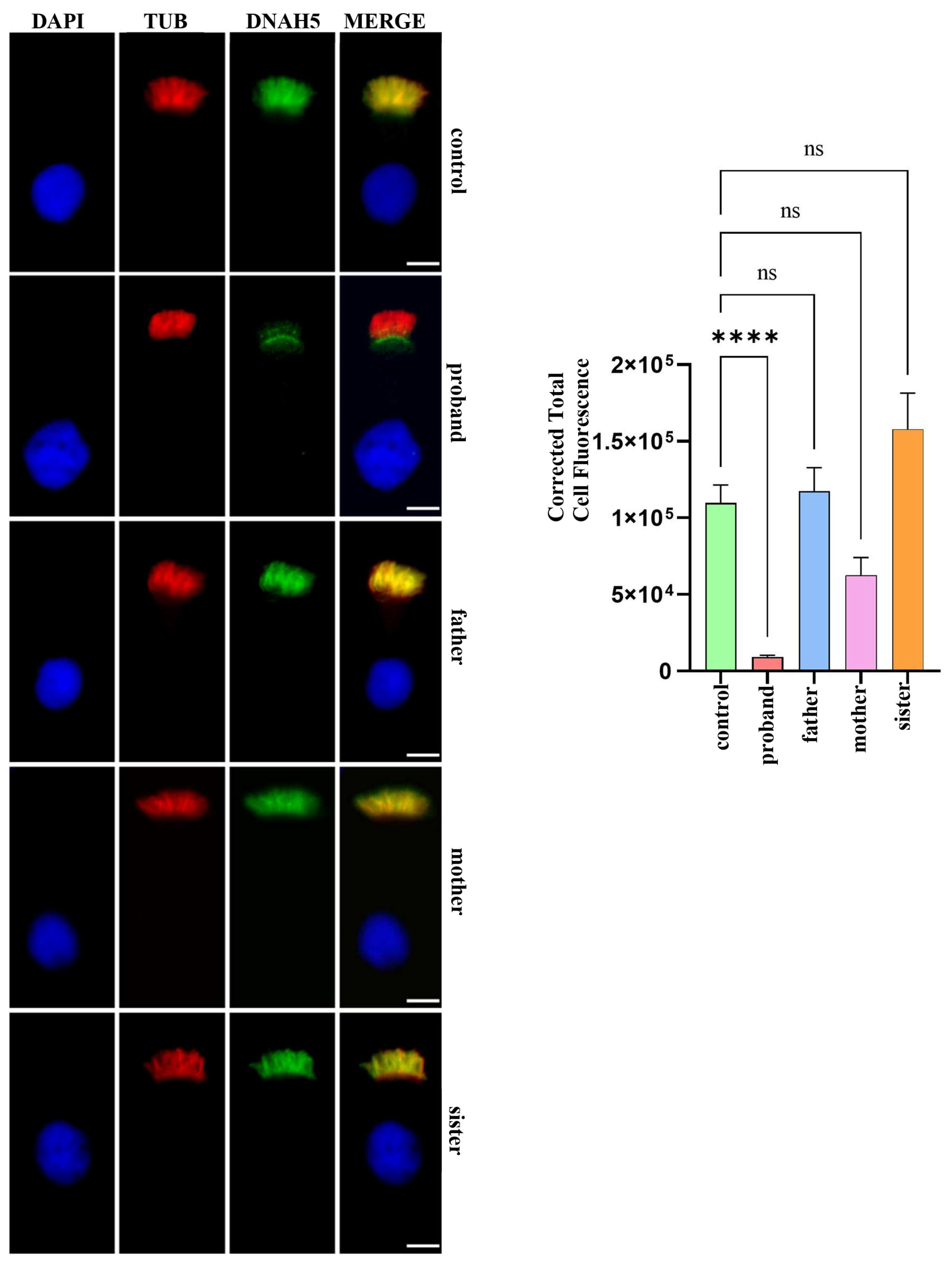
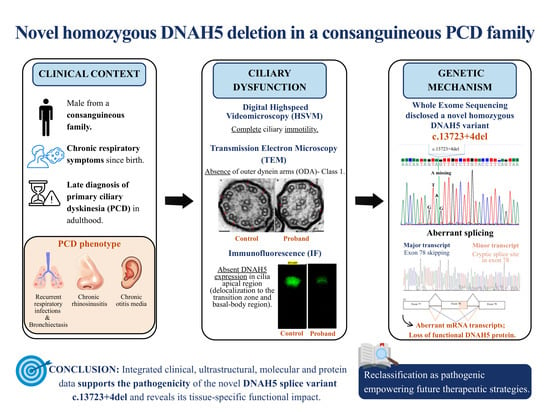
- A male with respiratory dysfunction of the primary ciliary dyskinesia type presented a novel homozygotic DNAH5 variant, total cilia immotility, predominant absence of outer dynein arms, and concomitant markedly absent protein level. Family confirmed homozygosity and co-segregation with the phenotype.
- Results enabled us to reclassify the variant as pathogenic, enabling its clinical actionability. As the patient also presented with oligoteratozoospermia, with markedly absent protein level but unaffected motility, results further support that this variant impacts differently in the respiratory and reproductive cells.
Abstract
1. Introduction
2. Materials and Methods
2.1. Ethical Considerations
2.2. Patient
2.3. Nasal Sample Collection
2.4. Ciliary Beat Frequency and Beat Patterns by Digital Highspeed Videomicroscopy
2.5. Transmission Electron Microscopy
2.6. Ultrastructural Determination of Morphological Classes
2.7. Ultrastructural Determination of Ciliary Beat Axis
2.8. Quantitative TEM Determination of the Inflammation Degree
2.9. Nucleic Acid Extraction
2.10. Whole-Exome Sequencing
2.11. Sanger Sequencing
2.12. mRNA Sequencing
2.13. Quantitative Immunofluorescence
2.14. Structural Protein Analyses
3. Results
3.1. Patient and Family Characteristics
3.2. Initial Diagnostic Tests
3.3. Targeted Diagnostic Workup
3.3.1. High-Speed Video Microscopy
3.3.2. Transmission Electron Microscopy
3.3.3. Genetic Testing by Whole-Exome Sequencing
3.3.4. mRNA Sequencing
3.3.5. Immunofluorescence Analysis of Ciliated Cells and Spermatozoa
3.4. Family Studies
4. Discussion
5. Conclusions
Supplementary Materials
Author Contributions
Funding
Institutional Review Board Statement
Informed Consent Statement
Data Availability Statement
Acknowledgments
Conflicts of Interest
References
- Orphanet Database. Primary Ciliary Dyskinesia. 2026. Available online: https://www.orpha.net/en/disease/detail/244 (accessed on 5 February 2026).
- Knowles, M.R.; Daniels, L.A.; Davis, S.D.; Zariwala, M.A.; Leigh, M.W. Primary ciliary dyskinesia. Recent advances in diagnostics, genetics, and characterization of clinical disease. Am. J. Respir. Crit. Care Med. 2013, 188, 913–922. [Google Scholar] [CrossRef]
- Rubbo, B.; Lucas, J.S. Clinical care for Primary ciliary dyskinesia: Current challenges and future directions. Eur. Respir. Rev. 2017, 26, 170023. [Google Scholar] [CrossRef]
- Hannah, W.B.; Seifert, B.A.; Truty, R.; Zariwala, M.A.; Ameel, K.; Zhao, Y.; Nykamp, K.; Gaston, B. The global prevalence and ethnic heterogeneity of primary ciliary dyskinesia gene variants: A genetic database analysis. Lancet Respir. Med. 2022, 10, 459–468. [Google Scholar] [CrossRef]
- Despotes, K.A.; Zariwala, M.A.; Davis, S.D.; Ferkol, T.W. Primary ciliary dyskinesia: A clinical review. Cells 2024, 13, 974. [Google Scholar] [CrossRef] [PubMed]
- Wallmeier, J.; Frank, D.; Shoemark, A.; Nöthe-Menchen, T.; Cindric, S.; Olbrich, H.; Loges, N.T.; Aprea, I.; Dougherty, G.W.; Pennekamp, P.; et al. De novo mutations in FOXJ1 result in a motile ciliopathy with hydrocephalus and randomization of Left/Right Body Asymmetry. Am. J. Hum. Genet. 2019, 105, 1030–1039. [Google Scholar] [CrossRef]
- Shapiro, A.J.; Kaspy, K.; Daniels, M.L.A.; Stonebraker, J.R.; Nguyen, V.H.; Joyal, L.; Knowles, M.R.; Zariwala, M.A. Autosomal dominant variants in FOXJ1 causing Primary ciliary dyskinesia in two patients with obstructive hydrocephalus. Mol. Genet. Genom. Med. 2021, 9, e1726. [Google Scholar] [CrossRef]
- Paff, T.; Loges, N.T.; Aprea, I.; Wu, K.; Bakey, Z.; Haarman, E.G.; Daniels, J.M.A.; Sistermans, E.A.; Bogunovic, N.; Dougherty, G.W.; et al. Mutations in PIH1D3 cause X-linked primary ciliary dyskinesia with outer and inner dynein arm defects. Am. J. Hum. Genet. 2017, 100, 160–168. [Google Scholar] [CrossRef]
- Hannah, W.B.; DeBrosse, S.; Kinghorn, B.; Strausbaugh, S.; Aitken, M.L.; Rosenfeld, M.; Wolf, W.E.; Knowles, M.R.; Zariwala, M.A. The expanding phenotype of OFD1-related disorders: Hemizygous loss-of-function variants in three patients with Primary ciliary dyskinesia. Mol. Genet. Genom. Med. 2019, 7, e911. [Google Scholar] [CrossRef]
- Raidt, J.; Loges, N.T.; Olbrich, H.; Wallmeier, J.; Pennekamp, P.; Omran, H. Primary ciliary dyskinesia. Presse Méd. 2023, 52, 104171. [Google Scholar] [CrossRef] [PubMed]
- Wee, W.B.; Kinghorn, B.; Davis, S.D.; Ferkol, T.W.; Shapiro, A.J. Primary ciliary dyskinesia. Pediatrics 2024, 153, e2023063064. [Google Scholar] [CrossRef] [PubMed]
- Mirvis, M.; Stearns, T.; Nelson, W.J. Cilium structure, assembly, and disassembly regulated by the cytoskeleton. Biochem. J. 2018, 475, 2329–2353. [Google Scholar] [CrossRef]
- Fliegauf, M.; Benzing, T.; Omran, H. When cilia go bad: Cilia defects and ciliopathies. Nat. Rev. Mol. Cell Biol. 2007, 8, 880–893, Erratum in Nat. Rev. Mol. Cell Biol. 2008, 9, 88.. [Google Scholar] [CrossRef]
- Cătană, A.; Apostu, A.P. The determination factors of left-right asymmetry disorders—A short review. Med. Pharm. Rep. 2017, 90, 139–146. [Google Scholar] [CrossRef]
- Lucas, J.S.; Barbato, A.; Collins, S.A.; Goutaki, M.; Behan, L.; Caudri, D.; Dell, S.; Eber, E.; Escudier, E.; Hirst, R.A.; et al. European Respiratory Society Guidelines for the diagnosis of Primary ciliary dyskinesia. Eur. Respir. J. 2017, 49, 1601090. [Google Scholar] [CrossRef]
- Shapiro, A.J.; Davis, S.D.; Polineni, D.; Manion, M.; Rosenfeld, M.; Dell, S.D.; Chilvers, M.A.; Ferkol, T.W.; Zariwala, M.A.; Sagel, S.D.; et al. Diagnosis of Primary ciliary dyskinesia. An official American Thoracic Society Clinical Practice Guideline. Am. J. Respir. Crit. Care Med. 2018, 197, E24–E39. [Google Scholar] [CrossRef]
- Newman, L.; Chopra, J.; Dossett, C.; Shepherd, E.; Bercusson, A.; Carroll, M.; Walker, W.; Lucas, J.S.; Cheong, Y. The impact of Primary ciliary dyskinesia on female and male fertility: A narrative review. Hum. Reprod. Update 2023, 29, 347–367. [Google Scholar] [CrossRef] [PubMed]
- Pereira, R.; Sousa, M. Morphological and molecular bases of male infertility: A closer look at sperm flagellum. Genes 2023, 14, 383. [Google Scholar] [CrossRef] [PubMed]
- Schreck, L.D.; Pedersen, E.S.L.; Dexter, K.; Manion, M.; Living with PCD Study Advisory Group; Massin, N.; Maitre, B.; Goutaki, M.; Kuehni, C.E. Infertility and pregnancy outcomes among adults with Primary ciliary dyskinesia. Hum. Reprod. Open 2024, 2024, hoae039. [Google Scholar] [CrossRef]
- McComb, P.; Langley, L.; Villalon, M.; Verdugo, P. The oviductal cilia and Kartagener’s syndrome. Fertil. Steril. 1986, 46, 412–416. [Google Scholar] [CrossRef]
- He, L.; Xu, H.; Liu, M.; Tan, Y.; Huang, S.; Yin, X.; Luo, X.; Chung, H.Y.; Gao, M.; Li, Y.; et al. The ignored structure in female fertility: Cilia in the Fallopian tubes. Reprod. Biomed. Online 2025, 50, 104346. [Google Scholar] [CrossRef] [PubMed]
- Pearson-Farr, J.E.; Doherty, R.; Chatelet, D.S.; Goggin, P.; Ng, K.Y.B.; Lucas, J.S.; Cleal, J.K.; Cheong, Y.C.; Lewis, R.M. Ultrastructural cilia defects in multi-ciliated uterine glandular epithelial cells from women with reproductive failure. Reproduction 2024, 167, e230173. [Google Scholar] [CrossRef]
- Faubel, R.; Westendorf, C.; Bodenschatz, E.; Eichele, G. Cilia-based flow network in the brain ventricles. Science 2016, 353, 176–178. [Google Scholar] [CrossRef]
- Shoemark, A.; Dell, S.; Shapiro, A.; Lucas, J.S. ERS and ATS diagnostic guidelines for Primary ciliary dyskinesia: Similarities and differences in approach to diagnosis. Eur. Respir. J. 2019, 54, 1901066. [Google Scholar] [CrossRef] [PubMed]
- Shoemark, A.; Goutaki, M.; Kinghorn, B.; Ardura-Garcia, C.; Baz-Redón, N.; Chilvers, M.; Davis, S.D.; De Brandt, J.; Dell, S.; Dhar, R.; et al. European Respiratory Society and American Thoracic Society guidelines for the diagnosis of Primary ciliary dyskinesia. Eur. Respir. J. 2025, 66, 2500745. [Google Scholar] [CrossRef] [PubMed]
- Leigh, M.W.; Hazucha, M.J.; Chawla, K.K.; Baker, B.R.; Shapiro, A.J.; Brown, D.E.; Lavange, L.M.; Horton, B.J.; Qaqish, B.; Carson, J.L.; et al. Standardizing nasal nitric oxide measurement as a test for primary ciliary dyskinesia. Ann. Am. Thorac. Soc. 2013, 10, 574–581. [Google Scholar] [CrossRef] [PubMed]
- Shapiro, A.J.; Dell, S.D.; Gaston, B.; O’Connor, M.; Marozkina, N.; Manion, M.; Hazucha, M.J.; Leigh, M.W. Nasal nitric oxide measurement in Primary ciliary dyskinesia. a technical paper on standardized testing protocols. Ann. Am. Thorac. Soc. 2020, 17, e1–e12. [Google Scholar] [CrossRef]
- Beydon, N.; Ferkol, T.; Harris, A.L.; Colas, M.; Davis, S.D.; Haarman, E.; Hogg, C.; Kilbride, E.; Kouis, P.; Kuehni, C.E.; et al. An international survey on nasal nitric oxide measurement practices for the diagnosis of primary ciliary dyskinesia. ERJ Open Res. 2022, 8, 708–2021. [Google Scholar] [CrossRef]
- Chilvers, M.A.; O’Callaghan, C. Analysis of ciliary beat pattern and beat frequency using digital high speed imaging: Comparison with the photomultiplier and photodiode methods. Thorax 2000, 55, 314–317. [Google Scholar] [CrossRef]
- Shoemark, A.; Boon, M.; Brochhausen, C.; Bukowy-Bieryllo, Z.; De Santi, M.M.; Goggin, P.; Griffin, P.; Hegele, R.G.; Hirst, R.A.; Leigh, M.W.; et al. International Consensus Guideline for reporting transmission electron microscopy results in the diagnosis of Primary ciliary dyskinesia (BEAT PCD TEM Criteria). Eur. Respir. J. 2020, 55, 1900725. [Google Scholar] [CrossRef]
- Kim, R.H.; Hall, D.A.; Cutz, E.; Knowles, M.R.; Nelligan, K.A.; Nykamp, K.; Zariwala, M.A.; Dell, S.D. The role of molecular genetic analysis in the diagnosis of Primary ciliary dyskinesia. Ann. Am. Thorac. Soc. 2014, 11, 351–359. [Google Scholar] [CrossRef]
- Lucas, J.S.; Davis, S.D.; Omran, H.; Shoemark, A. Primary ciliary dyskinesia in the genomics age. Lancet Respir. Med. 2020, 8, 202–216. [Google Scholar] [CrossRef]
- Omran, H.; Loges, N.T. Immunofluorescence staining of ciliated respiratory epithelial cells. Methods Cell Biol. 2009, 91, 123–133. [Google Scholar] [CrossRef]
- Shoemark, A.; Frost, E.; Dixon, M.; Ollosson, S.; Kilpin, K.; Patel, M.; Scully, J.; Rogers, A.V.; Mitchison, H.M.; Bush, A.; et al. Accuracy of immunofluorescence in the diagnosis of Primary ciliary dyskinesia. Am. J. Respir. Crit. Care Med. 2017, 196, 94–101. [Google Scholar] [CrossRef]
- Rutland, J.; Dewar, A.; Cox, T.; Cole, P. Nasal brushing for the study of ciliary ultrastructure. J. Clin. Pathol. 1982, 35, 357–359. [Google Scholar] [CrossRef]
- Pereira, R.; Oliveira, M.E.; Santos, R.; Oliveira, E.; Barbosa, T.; Santos, T.; Gonçalves, P.; Ferraz, L.; Pinto, S.; Barros, A.; et al. Characterization of CCDC103 expression profiles: Further insights in Primary ciliary dyskinesia and in human reproduction. J. Assist. Reprod. Genet. 2019, 36, 1683–1700. [Google Scholar] [CrossRef]
- Sampaio, P.; Da Silva, M.F.; Vale, I.; Roxo-Rosa, M.; Pinto, A.; Constant, C.; Pereira, L.; Quintão, C.M.; Lopes, S.S. CiliarMove: New software for evaluating ciliary beat frequency helps find novel mutations by a Portuguese multidisciplinary team on Primary ciliary dyskinesia. ERJ Open Res. 2021, 7, 00792–02020. [Google Scholar] [CrossRef]
- Schneider, C.A.; Rasband, W.S.; Eliceiri, K.W. NIH Image to ImageJ: 25 years of image analysis. Nat. Methods 2012, 9, 671–675. [Google Scholar] [CrossRef]
- Chilvers, M. Ciliary beat pattern is associated with specific ultrastructural defects in Primary ciliary dyskinesia. J. Allergy Clin. Immunol. 2003, 112, 518–524. [Google Scholar] [CrossRef]
- Kempeneers, C.; Seaton, C.; Chilvers, M.A. Variation of ciliary beat pattern in three different beating planes in healthy subjects. Chest 2017, 151, 993–1001. [Google Scholar] [CrossRef]
- Afzelius, B.A. The immotile-cilia syndrome: A microtubule-associated defect. CRC Crit. Rev. Biochem. 1985, 19, 63–87. [Google Scholar] [CrossRef]
- De Iongh, R.; Rutland, J. Orientation of respiratory tract cilia in patients with Primary ciliary dyskinesia, bronchiectasis, and in normal subjects. J. Clin. Pathol. 1989, 42, 613–619. [Google Scholar] [CrossRef][Green Version]
- Boon, M.; Jorissen, M.; Proesmans, M.; De Boeck, K. Primary ciliary dyskinesia, an orphan disease. Eur. J. Pediatr. 2013, 172, 151–162. [Google Scholar] [CrossRef]
- Dixon, M.; Shoemark, A. Secondary defects detected by transmission electron microscopy in Primary ciliary dyskinesia diagnostics. Ultrastruct. Pathol. 2017, 41, 390–398. [Google Scholar] [CrossRef]
- Baz-Redón, N.; Rovira-Amigo, S.; Fernández-Cancio, M.; Castillo-Corullón, S.; Cols, M.; Caballero-Rabasco, M.A.; Asensio, Ó.; Martín de Vicente, C.; Martínez-Colls, M.D.M.; Torrent-Vernetta, A.; et al. Immunofluorescence analysis as a diagnostic tool in a Spanish cohort of patients with suspected Primary ciliary dyskinesia. J. Clin. Med. 2020, 9, 3603. [Google Scholar] [CrossRef]
- WHO. WHO Laboratory Manual for the Examination and Processing of Human Semen, 6th ed.; World Health Organization: Geneva, Switzerland, 2021; Available online: https://www.who.int/publications/i/item/9789240030787 (accessed on 5 February 2026).
- Behan, L.; Dimitrov, B.D.; Kuehni, C.E.; Hogg, C.; Carroll, M.; Evans, H.J.; Goutaki, M.; Harris, A.; Packham, S.; Walker, W.T.; et al. PICADAR: A diagnostic predictive tool for Primary ciliary dyskinesia. Eur. Respir. J. 2016, 47, 1103–1112. [Google Scholar] [CrossRef]
- Leigh, M.W.; Pittman, J.E.; Carson, J.L.; Ferkol, T.W.; Dell, S.D.; Davis, S.D.; Knowles, M.R.; Zariwala, M.A. Clinical and genetic aspects of primary ciliary dyskinesia/Kartagener syndrome. Genet. Med. 2009, 11, 473–487. [Google Scholar] [CrossRef]
- Shapiro, A.J.; Zariwala, M.A.; Ferkol, T.; Davis, S.D.; Sagel, S.D.; Dell, S.D.; Rosenfeld, M.; Olivier, K.N.; Milla, C.; Daniel, S.J.; et al. Genetic disorders of Mucociliary Clearance Consortium. Diagnosis, monitoring, and treatment of Primary ciliary dyskinesia: PCD foundation consensus recommendations based on state-of-the-art review. Pediatr. Pulmonol. 2016, 51, 115–132. [Google Scholar] [CrossRef]
- Takeuchi, K.; Abo, M.; Date, H.; Gotoh, S.; Kamijo, A.; Kaneko, T.; Keicho, N.; Kodama, S.; Koinuma, G.; Kondo, M.; et al. Practical guide for the diagnosis and management of primary ciliary dyskinesia. Auris Nasus Larynx 2024, 51, 553–568. [Google Scholar] [CrossRef]
- Zariwala, M.A.; Despotes, K.A.; Davis, S.D. Primary Ciliary Dyskinesia; Adam, M.P., Bick, S., Mirzaa, G.M., Pagon, R.A., Wallace, S.E., Amemiya, A., Eds.; GeneReviews® [Internet]; University of Washington: Seattle, WA, USA, 2007. Available online: https://www.ncbi.nlm.nih.gov/books/NBK1122/ (accessed on 5 February 2026).
- Whitfield, M.; Thomas, L.; Bequignon, E.; Schmitt, A.; Stouvenel, L.; Montantin, G.; Tissier, S.; Duquesnoy, P.; Copin, B.; Chantot, S.; et al. Mutations in DNAH17, encoding a sperm-specific axonemal outer dynein arm heavy chain, cause isolated male infertility due to asthenozoospermia. Am. J. Hum. Genet. 2019, 105, 198–212. [Google Scholar] [CrossRef]
- Sironen, A.; Shoemark, A.; Patel, M.; Loebinger, M.R.; Mitchison, H.M. Sperm defects in primary ciliary dyskinesia and related causes of male infertility. Cell. Mol. Life Sci. 2020, 77, 2029–2048. [Google Scholar] [CrossRef]
- Aprea, I.; Nöthe-Menchen, T.; Dougherty, G.W.; Raidt, J.; Loges, N.T.; Kaiser, T.; Wallmeier, J.; Olbrich, H.; Strünker, T.; Kliesch, S.; et al. Motility of efferent duct cilia aids passage of sperm cells through the male reproductive system. Mol. Hum. Reprod. 2021, 27, gaab009. [Google Scholar] [CrossRef]
- Fliegauf, M.; Olbrich, H.; Horvath, J.; Wildhaber, J.H.; Zariwala, M.A.; Kennedy, M.; Knowles, M.R.; Omran, H. Mislocalization of DNAH5 and DNAH9 in respiratory cells from patients with Primary ciliary dyskinesia. Am. J. Respir. Crit. Care Med. 2005, 17, 1343–1349. [Google Scholar] [CrossRef]
- Dougherty, G.W.; Loges, N.T.; Klinkenbusch, J.A.; Olbrich, H.; Pennekamp, P.; Menchen, T.; Raidt, J.; Wallmeier, J.; Werner, C.; Westermann, C.; et al. DNAH11 localization in the proximal region of respiratory cilia defines distinct outer dynein arm complexes. Am. J. Respir. Cell Mol. Biol. 2016, 55, 213–224. [Google Scholar] [CrossRef]
- Fassad, M.R.; Shoemark, A.; Legendre, M.; Hirst, R.A.; Koll, F.; le Borgne, P.; Louis, B.; Daudvohra, F.; Patel, M.P.; Thomas, L.; et al. Mutations in outer dynein arm heavy chain DNAH9 Cause motile cilia defects and situs inversus. Am. J. Hum. Genet. 2018, 103, 984–994. [Google Scholar] [CrossRef]
- Loges, N.T.; Antony, D.; Maver, A.; Deardorff, M.A.; Güleç, E.Y.; Gezdirici, A.; Nöthe-Menchen, T.; Höben, I.M.; Jelten, L.; Frank, D.; et al. Recessive DNAH9 loss-of-function mutations cause laterality defects and subtle respiratory ciliary-beating defects. Am. J. Hum. Genet. 2018, 103, 995–1008. [Google Scholar] [CrossRef]
- Antony, D.; Brunner, H.G.; Schmidts, M. Ciliary dyneins and dynein related ciliopathies. Cells 2021, 10, 1885. [Google Scholar] [CrossRef]
- Olbrich, H.; Häffner, K.; Kispert, A.; Völkel, A.; Volz, A.; Sasmaz, G.; Reinhardt, R.; Hennig, S.; Lehrach, H.; Konietzko, N.; et al. Mutations in DNAH5 cause Primary ciliary dyskinesia and randomization of left-right asymmetry. Nat. Genet. 2002, 30, 143–144. [Google Scholar] [CrossRef]
- Kubo, S.; Yang, S.K.; Black, C.S.; Dai, D.; Valente-Paterno, M.; Gaertig, J.; Ichikawa, M.; Bui, K.H. Remodelling and activation mechanisms of outer arm dynein’s revealed by cryo-EM. EMBO Rep. 2021, 22, e52911. [Google Scholar] [CrossRef]
- van Capelle, C.C.; Luo, L.; Leitner, A.; Tschanz, S.A.; Latzin, P.; Ott, S.; Herren, T.; Müller, L.; Ishikawa, T. Proteomic and structural comparison between cilia from primary ciliary dyskinesia patients with a DNAH5 defect. Front. Mol. Biosci. 2025, 12, 1593810. [Google Scholar] [CrossRef]
- Omran, H.; Häffner, K.; Völkel, A.; Kuehr, J.; Ketelsen, U.P.; Ross, U.H.; Konietzko, N.; Wienker, T.; Brandis, M.; Hildebrandt, F. Homozygosity mapping of a gene locus for primary ciliary dyskinesia on chromosome 5p and identification of the heavy dynein chain DNAH5 as a candidate gene. Am. J. Respir. Cell Mol. Biol. 2000, 23, 696–702. [Google Scholar] [CrossRef]
- Hornef, N.; Olbrich, H.; Horvath, J.; Zariwala, M.A.; Fliegauf, M.; Loges, N.T.; Wildhaber, J.; Noone, P.G.; Kennedy, M.; Antonarakis, S.E.; et al. DNAH5 mutations are a common cause of Primary ciliary dyskinesia with outer dynein arm defects. Am. J. Respir. Crit. Care Med. 2006, 174, 120–126. [Google Scholar] [CrossRef]
- Rao, L.; Gennerich, A. Structure and function of dynein’s non-catalytic subunits. Cells 2024, 13, 330. [Google Scholar] [CrossRef]
- Sakato, M.; King, S.M. Design and regulation of the AAA+ microtubule motor dynein. J. Struct. Biol. 2004, 146, 58–71. [Google Scholar] [CrossRef]
- Carter, A.P.; Cho, C.; Jin, L.; Vale, R.D. Crystal structure of the dynein motor domain. Science 2011, 331, 1159–1165. [Google Scholar] [CrossRef]
- King, S.M. Axonemal Dynein Arms. Cold Spring Harb. Perspect. Biol. 2016, 8, a028100. [Google Scholar] [CrossRef]
- Schmidt, H.; Carter, A.P. Review: Structure and mechanism of the dynein motor ATPase. Biopolymers 2016, 105, 557–567. [Google Scholar] [CrossRef]
- Ishikawa, T. Axoneme structure from motile cilia. Cold Spring Harb. Perspect. Biol. 2017, 9, a028076. [Google Scholar] [CrossRef]
- Dutta, M.; Jana, B. Role of AAA3 domain in allosteric communication of dynein motor proteins. ACS Omega 2019, 4, 21921–21930. [Google Scholar] [CrossRef]
- Ishibashi, K.; Sakakibara, H.; Oiwa, K. Force-generating mechanism of axonemal dynein in Solo and Ensemble. Int. J. Mol. Sci. 2020, 21, 2843. [Google Scholar] [CrossRef]
- Erdem, İ.L.; Kaya, Z.B.; Atilla, P.; Emiralioğlu, N.; Eylem, C.C.; Nemutlu, E.; Özçelik, U.; Büyükşahin, H.N.; Daniş, A.; Karakoç, E. Molecular insights into outer dynein arm defects in Primary ciliary dyskinesia: Involvement of ZMYND10 and GRP78. Cells 2025, 14, 916. [Google Scholar] [CrossRef]
- Canty, J.T.; Tan, R.; Kusakci, E.; Fernandes, J.; Yildiz, A. Structure and mechanics of dynein motors. Annu. Rev. Biophys. 2021, 50, 549–574. [Google Scholar] [CrossRef]
- Dean, S.; Moreira-Leite, F.; Varga, V.; Gull, K. Cilium transition zone proteome reveals compartmentalization and differential dynamics of ciliopathy complexes. Proc. Natl. Acad. Sci. USA 2016, 113, E5135–E5143. [Google Scholar] [CrossRef]
- Gonçalves, J.; Pelletier, L. The ciliary transition zone: Finding the pieces and assembling the gate. Mol. Cells 2017, 40, 243–253. [Google Scholar] [CrossRef]
- Ishikawa, H.; Marshall, W.F. Intraflagellar transport and ciliary dynamics. Cold Spring Harb. Perspect. Biol. 2017, 9, a021998. [Google Scholar] [CrossRef]
- Jordan, M.A.; Pigino, G. The structural basis of intraflagellar transport at a glance. J. Cell Sci. 2021, 134, jcs247163. [Google Scholar] [CrossRef]
- Walton, T.; Gui, M.; Velkova, S.; Fassad, M.R.; Hirst, R.A.; Haarman, E.; O’Callaghan, C.; Bottier, M.; Burgoyne, T.; Mitchison, H.M.; et al. Axonemal structures reveal mechanoregulatory and disease mechanisms. Nature 2023, 618, 625–633. [Google Scholar] [CrossRef]
- Sehnal, D.; Bittrich, S.; Deshpande, M.; Svobodová, R.; Berka, K.; Bazgier, V.; Velankar, S.; Burley, S.K.; Koča, J.; Rose, A.S. Mol* Viewer: Modern web app for 3D visualization and analysis of large biomolecular structures. Nucleic Acids Res. 2021, 49, W431–W437. [Google Scholar] [CrossRef]
- Schrödinger, L. The PyMOL Molecular Graphics System, version 3.1; Schrödinger: New York, NY, USA, 2026. Available online: https://www.pymol.org/ (accessed on 4 May 2026).
- Ta-Shma, A.; Hjeij, R.; Perles, Z.; Dougherty, G.W.; Abu Zahira, I.; Letteboer, S.J.F.; Antony, D.; Darwish, A.; Mans, D.A.; Spittler, S.; et al. Homozygous loss-of-function mutations in MNS1 cause laterality defects and likely male infertility. PLoS Genet. 2018, 14, e1007602. [Google Scholar] [CrossRef]
- Dong, M.; Shi, X.; Zhou, Y.; Duan, J.; He, L.; Song, X.; Huang, Z.; Chen, R.; Li, J.; Jia, N. Genetic spectrum and genotype-phenotype correlations in DNAH5-mutated Primary ciliary dyskinesia: A systematic review. Orphanet J. Rare Dis. 2025, 20, 97. [Google Scholar] [CrossRef]


Disclaimer/Publisher’s Note: The statements, opinions and data contained in all publications are solely those of the individual author(s) and contributor(s) and not of MDPI and/or the editor(s). MDPI and/or the editor(s) disclaim responsibility for any injury to people or property resulting from any ideas, methods, instructions or products referred to in the content. |
© 2026 by the authors. Licensee MDPI, Basel, Switzerland. This article is an open access article distributed under the terms and conditions of the Creative Commons Attribution (CC BY) license.
Share and Cite
Hilário, C.; Raimundo, S.; Dias, C.; Saramago, J.; Oliveira, T.; Pereira, R.; Quental, S.; Freixo, J.P.; Gales, L.; Oliveira, J.; et al. Functional Characterization of a Novel Homozygous DNAH5 Single-Nucleotide Intronic Deletion in a Consanguineous Portuguese Family with Primary Ciliary Dyskinesia. Cells 2026, 15, 1022. https://doi.org/10.3390/cells15111022
Hilário C, Raimundo S, Dias C, Saramago J, Oliveira T, Pereira R, Quental S, Freixo JP, Gales L, Oliveira J, et al. Functional Characterization of a Novel Homozygous DNAH5 Single-Nucleotide Intronic Deletion in a Consanguineous Portuguese Family with Primary Ciliary Dyskinesia. Cells. 2026; 15(11):1022. https://doi.org/10.3390/cells15111022
Chicago/Turabian StyleHilário, Catarina, Sara Raimundo, Catarina Dias, Joana Saramago, Telma Oliveira, Rute Pereira, Sofia Quental, João Parente Freixo, Luís Gales, Jorge Oliveira, and et al. 2026. "Functional Characterization of a Novel Homozygous DNAH5 Single-Nucleotide Intronic Deletion in a Consanguineous Portuguese Family with Primary Ciliary Dyskinesia" Cells 15, no. 11: 1022. https://doi.org/10.3390/cells15111022
APA StyleHilário, C., Raimundo, S., Dias, C., Saramago, J., Oliveira, T., Pereira, R., Quental, S., Freixo, J. P., Gales, L., Oliveira, J., Sá, R., & Sousa, M. (2026). Functional Characterization of a Novel Homozygous DNAH5 Single-Nucleotide Intronic Deletion in a Consanguineous Portuguese Family with Primary Ciliary Dyskinesia. Cells, 15(11), 1022. https://doi.org/10.3390/cells15111022