New Insights into Parthanatos as Programmed Cell Death During Murine Cytomegalovirus or Herpes Simplex Virus Type 1 Productive Replication in Diverse Cell Types


Abstract
1. Introduction
2. Materials and Methods
2.1. Cell Lines
2.2. Viruses
2.3. Subcellular Fractionation
2.4. Western Blot Assay
3. Results
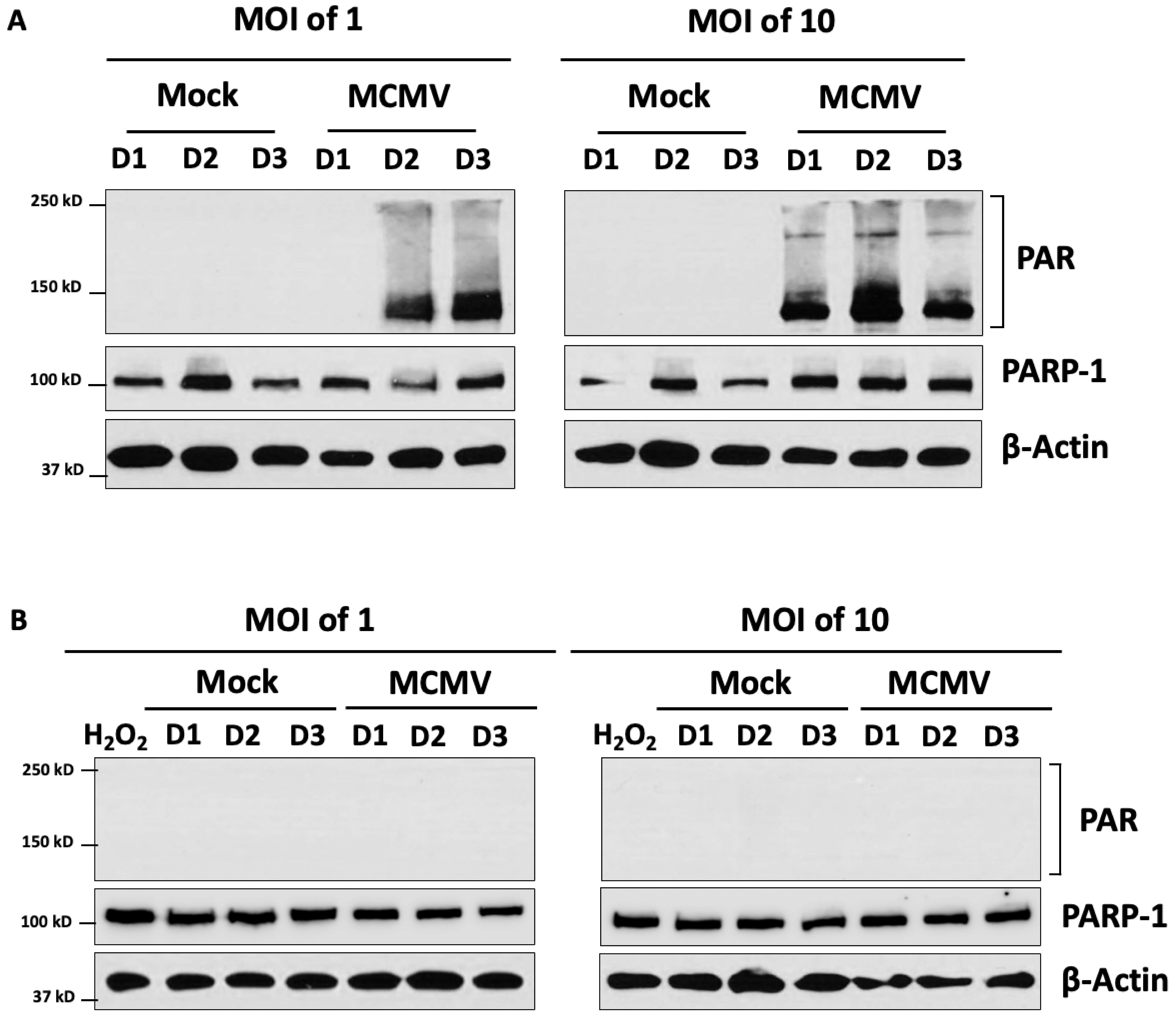
3.1. PAR Protein Is Stimulated Within MCMV-Infected MEF Cells and MCMV-Infected MLg Cells in a Cell Type-Dependent Manner
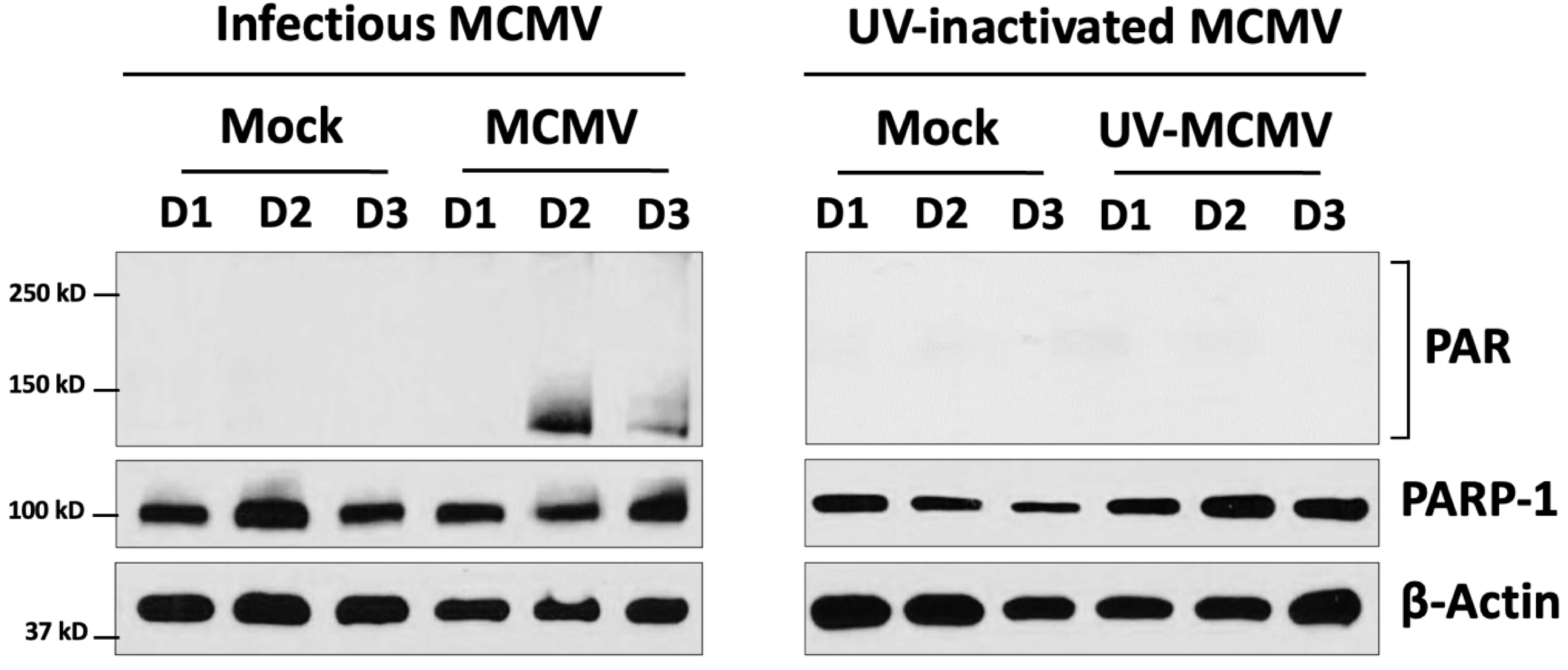
3.2. PAR Protein Is Not Stimulated in MEF Cells Following Inoculation with UV-Inactivated MCMV
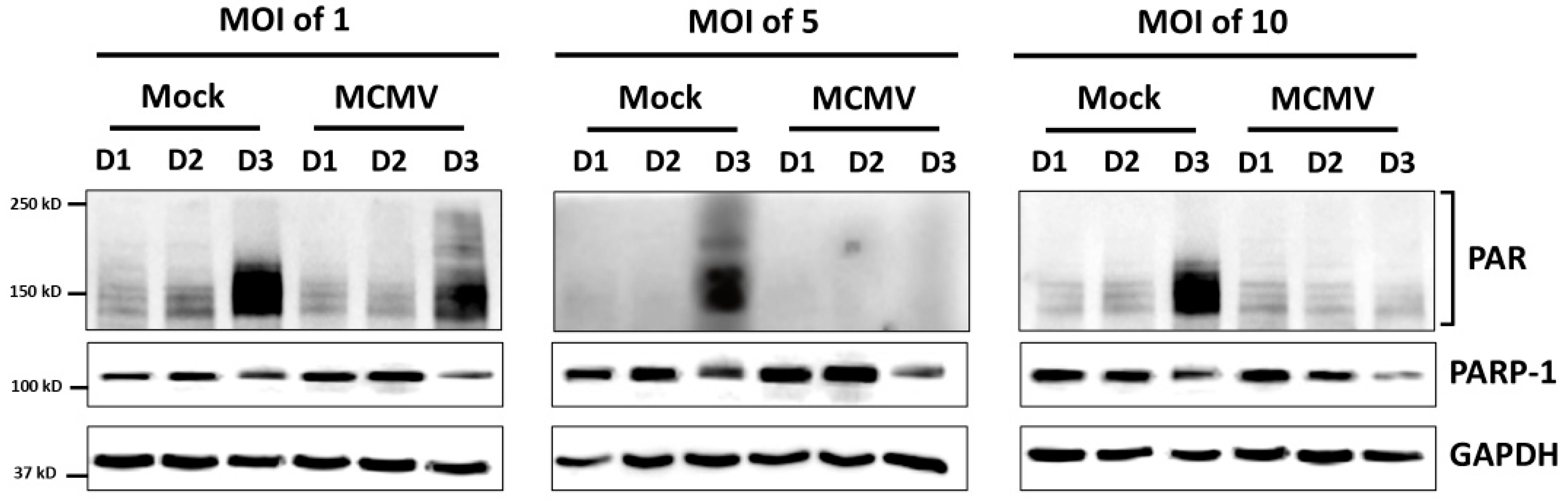
3.3. PAR Protein Is Stimulated Within MCMV-Infected BV-2 Microglial Cells but in a Virus Dose-Dependent Manner
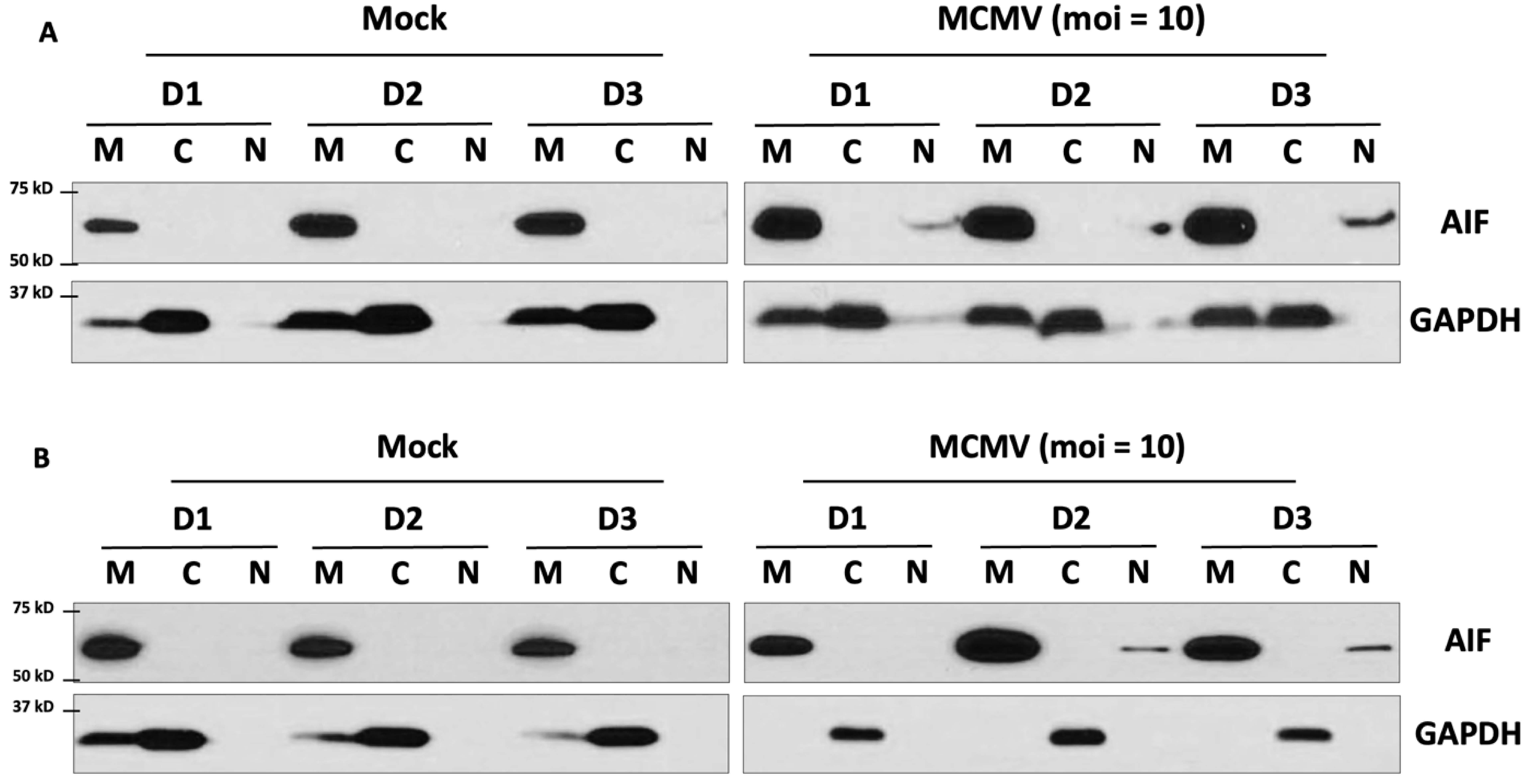
3.4. Nuclear Translocation of AIF Is Stimulated in Both MEF Cells and MLg Cells During MCMV Replication
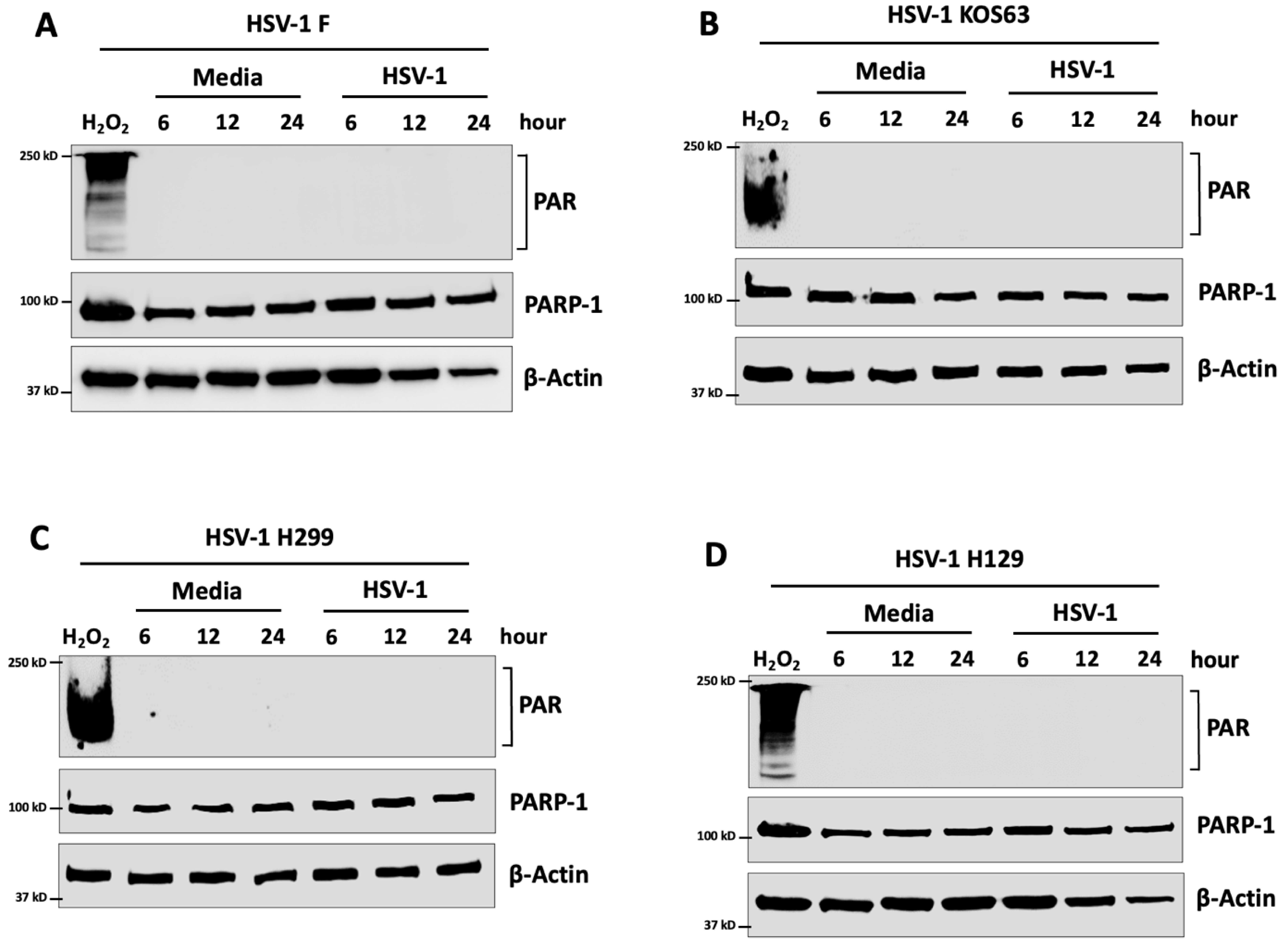
3.5. PAR Protein Is Not Stimulated in ARPE-19 Cells Infected with Any of Four Different Strains of HSV1
4. Discussion
5. Conclusions
Author Contributions
Funding
Institutional Review Board Statement
Informed Consent Statement
Data Availability Statement
Acknowledgments
Conflicts of Interest
References
- Kerr, J.F.; Wiyllie, A.H.; Currie, A.R. Apoptosis: A basic biological phenomenon with wideranging implications in tissue kinetics. Br. J. Cancer 1972, 26, 239–257. [Google Scholar] [CrossRef]
- Park, W.; Wei, S.; Kim, B.-S.; Kim, B.; Bae, S.-J.; Chae, Y.D.; Ryu, D.; Ha, K.-T. Diversity and complexity of cell death: A historical review. Exp. Mol. Med. 2023, 55, 1573–1594, Erratum in Exp. Mol. Med. 2023, 55, 2083. https://doi.org/10.1038/s12276-023-01107-9. [Google Scholar] [CrossRef]
- Cookson, B.T.; Brennan, M.A. Pro-inflammatory programmed cell death. Trends Microbiol. 2001, 9, 113–114. [Google Scholar] [CrossRef] [PubMed]
- Mocarski, E.S.; Guo, H.; Kaiser, W.J. Necroptosis: The Trojan Horse in cell autonomous antiviral host defense. Virology 2015, 160, 479–489. [Google Scholar] [CrossRef]
- Yu, T.; Robotham, J.L.; Yoon, Y. Increased production of reactive oxygen species in hyperglycemic conditions requires dynamic change in mitochondrial morphology. Proc. Natl. Acad. Sci. USA 2006, 103, 2653–2658. [Google Scholar] [CrossRef] [PubMed]
- David, K.K.; Andrabi, S.A.; Dawson, T.M.; Dawson, V.L. Parthanatos, a messenger of death. Front. Biosci. 2009, 14, 1116–1128. [Google Scholar] [CrossRef]
- Fatokun, A.A.; Dawson, V.L.; Dawson, T.M. Parthanatos: Mitochondrial-linked mechanisms and therapeutic opportunities. Br. J. Pharm. 2014, 171, 2000–2016. [Google Scholar] [CrossRef]
- Mashimo, M.; Oniski, M.; Uno, A.; Tanimichi, A.; Nobeyama, A.; Mori, M.; Yamada, S.; Negi, S.; Bu, X.; Kato, J.; et al. The 89-kDa PARP-1 cleavage fragment serves as a cytoplasmic PAR carrier to induce AIF-mediated apoptosis. J. Biol. Chem. 2021, 296, 100046. [Google Scholar] [CrossRef] [PubMed]
- Ko, H.L.; Ren, E.C. Functional aspects of PARP1 in DNA repair and transcription. Biomolecules 2012, 2, 524–548. [Google Scholar] [CrossRef]
- Andrabi, S.A.; Dawson, T.M.; Dawson, V.L. Mitochondrial and nuclear cross talk in cell death: Parthanatos. Ann. N. Y. Acad. Sci. 2008, 1147, 233–241. [Google Scholar] [CrossRef]
- Wang, Y.; Dawson, V.L.; Dawson, T.M. Poly(ADP-ribose signals to mitochondrial AIF: A key event in parthanotos. Exp. Neurol. 2009, 218, 193–202. [Google Scholar] [CrossRef]
- Wang, Y.; An, R.; Umanah, G.K.; Park, H.; Nambiar, K.; Eacker, S.M.; Kim, B.; Bao, L.; Harraz, M.M.; Chang, C.; et al. A nuclease that mediates cell death induced by DNA damage and poly(ADP-ribose) polymerase-1. Science 2016, 354, aad6872. [Google Scholar] [CrossRef] [PubMed]
- Liu, L.; Li, J.; Ke, Y.; Zeng, X.; Gao, J.; Ba, X.; Wang, R. The key players of parthanatos; opportunities for targeting multipole levels in the therapy of parthanatos-based pathogenesis. Cell. Mol. Life Sci. 2022, 79, 60. [Google Scholar] [CrossRef]
- Koehler, R.C.; Dawson, V.L.; Dawson, T.M. Targeting parthanatos in ischemic stroke. Front. Neurol. 2021, 12, 662034. [Google Scholar] [CrossRef] [PubMed]
- Wang, H.; Yu, S.-W.; Koh, D.W.; Lew, J.; Coombs, C.; Bowers, W.; Federoff, H.J.; Poirier, G.G.; Dawson, T.M.; Dawson, V.L. Apoptosis-inducing factor substitutes for caspase executioners in NMDA-triggered excitotoxic neuronal death. J. Neurosci. 2004, 24, 10963–10973. [Google Scholar] [CrossRef]
- Dekkers, M.P.; Nikoletopoulou, V.; Barde, Y.A. Cell biology in neuroscience: Death of developing neurons: New insights and implications for connectivity. J. Cell Biol. 2013, 203, 385–393. [Google Scholar] [CrossRef]
- Yuan, J.; Ofengeim, D. A guide to cell death pathways. Nat. Rev. Mol. Cell Biol. 2024, 25, 379–395. [Google Scholar] [CrossRef]
- Mocarski, E.S. Cytomegalovirus biology viewed through a cell death suppression lens. Viruses 2024, 16, 1820. [Google Scholar] [CrossRef]
- Guo, H.; Koehler, H.S.; Dix, R.D.; Mocarski, E.S. Programmed cell death-dependent host defense in ocular herpes simplex virus infection. Front. Microbiol. 2022, 13, 869064. [Google Scholar] [CrossRef]
- Ho, M. Nonhuman Cytomegaloviruses. In Cytomegalovirus, Biology and Infection, 2nd ed.; Plenum Medical Book Compary: New York, NY, USA; London, UK, 1991; pp. 319–326. [Google Scholar]
- Ghena, N.; Lopez, N.N.; Roberts, J.M.; Bosco, A.; Vetter, M.L. Innate immune pathways regulating retinal cell development and regeneration. Annu. Rev. Vis. Sci. 2025, 11, 99–123. [Google Scholar] [CrossRef] [PubMed]
- Dunn, K.C.; Aotaki-Keen, A.E.; Putkey, F.R.; Hjelmeland, L.M. ARPE-19, a human retinal pigment epithelial cell line with differentiated properties. Exp. Eye Res. 1996, 62, 155–169. [Google Scholar] [CrossRef]
- Oh, J.J.; Carter, J.J.; Nemeno, J.G.E.; Dix, R.D. Parthanatos-associated proteins are stimulated intraocularly during development of experimental murine cytomegalovirus retinitis in mice with retrovirus-induced immunosuppression. J. Med. Virol. 2019, 92, 394–398. [Google Scholar] [CrossRef]
- Dix, R.D.; Cousins, S.W. AIDS-related cytomegalovirus retinitis: Lessons from the laboratory. Curr. Eye Res. 2004, 29, 91–101. [Google Scholar] [CrossRef]
- Carter, J.J.; Alston, C.I.; Oh, J.J.; Duncan, L.-A.M.; Nemeno, J.G.E.; Byfield, S.N.; Dix, R.D. Mechanisms of AIDS-related cytomegalovirus retinitis. Future Virol. 2019, 14, 545–560. [Google Scholar] [CrossRef]
- Oh, J.J.; Carter, J.J.; Dix, R.D. A mouse model that mimics AIDS-related cytomegalovirus retinitis: Insights into pathogenesis. Pathogens 2021, 10, 850. [Google Scholar] [CrossRef]
- Grady, S.L.; Hwang, J.; Vastag, L.; Rabinowitz, J.D.; Shenk, T. Herpes simplex virus type 1 infection activates poly(ADP-ribose) polymerase and triggers the degradation of poly(ADP-ribose) glycohydrolase. J. Virol. 2012, 86, 8259–8268. [Google Scholar] [CrossRef]
- Carter, J.J.; Schneider, D.H.; Hisamuddin, A.M.; Dix, R.D. Murine cytomegalovirus and human cytomegalovirus differ in pyroptosis induction in different cell types during productive replication. Viruses 2025, 17, 1106. [Google Scholar] [CrossRef] [PubMed]
- Dix, R.D.; McKendall, R.R.; Baringer, J.R. Comparative neurovirulence of herpes simplex virus type 1 strains after peripheral or intracerebral inoculation of BALB/c mice. Infect. Immun. 1983, 40, 103–112. [Google Scholar] [CrossRef]
- Lewis, M.L.; Culbertson, W.W.; Post, M.J.D.; Miller, D.; Kokame, G.; Dix, R.D. Herpes simplex virus type 1: A cause of the acute retinal necrosis syndrome. Ophthalmology 1989, 96, 875–878. [Google Scholar] [CrossRef] [PubMed]
- Guo, H.; Koehler, H.S.; Mocarski, E.S.; Dix, R.D. RIPK3 and caspase 8 collaborate to limit herpes simplex encephalitis. PLoS Pathog. 2022, 18, e1010857. [Google Scholar] [CrossRef] [PubMed]
- Udi, U.; Zhang, W.; Stein, M.E.; Ricardo-Lax, I.; Pasolli, H.A.; Chait, B.T.; Rout, M.P. A general method for quantitative fractionation of mammalian cells. J. Cell Biol. 2023, 222, e202209062. [Google Scholar] [CrossRef]
- Kim, J.H.; Kim, J.; Roh, J.; Park, C.-S.; Seoh, J.-Y.; Hwang, E.-S. Reactive oxygen species-induced parthanatos of immunocytes by human cytomegalovirus-associated substance. Microbiol. Immunol. 2018, 62, 229–242. [Google Scholar] [CrossRef]
- Loh, L.; Hudson, J.B. Immunosuppressive effect of murine cytomegalovirus. Infect. Immun. 1980, 27, 54–60. [Google Scholar] [CrossRef]
- Laukoter, S.; Rauschka, H.; Troscher, A.R.; Kock, U.; Saji, E.; Jellinger, K.; Lassman, H.; Bauer, J. Differences in T cell cytotoxicity and cell death mechanisms between progressive multifocal leukoencephalopathy, herpes simplex virus encephalitis, and cytomegalovirus encephalitis. Acta Neuropathol. 2017, 133, 613–627. [Google Scholar] [CrossRef]
- Huang, P.; Chen, G.; Jin, W.; Mao, K.; Wan, H.; He, Y. Molecular mechanisms of parthanatos and its role in diverse diseases. Int. J. Mol. Sci. 2022, 23, 7292. [Google Scholar] [CrossRef]
- Guo, D.; Liu, Z.; Zhou, J.; Ke, C.; Li, D. Significance of programmed cell death pathways in neurodegenerative diseases. Int. J. Mol. Sci. 2024, 25, 9947. [Google Scholar] [CrossRef] [PubMed]
- Mace, J.W.; Gadani, S.P.; Smith, M.D.; Galleguillos, D.; Kang, B.G.; Roy, M.; Liu, M.; Summers, B.; Garton, T.; Gharagozloo, M.; et al. Autoimmune neuroinflammation leads to neuronal death via MIF nuclease-mediated parthanatos. Nat. Neurosci. 2026, 29, 796–809, Erratum in Nat. Neurosci. 2026, 29, 1021. https://doi.org/10.1038/s41593-026-02246-8. [Google Scholar] [CrossRef] [PubMed]
- Greenwald, S.H.; Pierce, E. Parthanatos as a cell death pathway underlying retinal disease. Adv. Exp. Med. Biol. 2019, 1185, 323–327. [Google Scholar] [PubMed]
- Liu, H.; Hua, N.; Zhao, T.; Yu, Y. Hydrogen-rich saline reduces cell death through inhibition of DNA oxidative stress and overactivation of poly (ADP-ribose) polymerase-1 in retinal ischemia-reperfusion injury. Mol. Med. Rep. 2015, 12, 2495–2502. [Google Scholar] [CrossRef]
- Jang, K.H.; Do, Y.J.; Son, D.; Son, E.; Choi, J.S.; Kim, E. AIF-independent parthanatos in the pathogenesis of dry age-related macular degeneration. Cell Death Dis. 2017, 8, e2526. [Google Scholar] [CrossRef]
- Foo, J.; Bellot, G.; Pervaiz, S.; Alsonso, S. Mitochondrial-mediated oxidative stress during viral infection. Trends Microbiol. 2022, 30, 679–692. [Google Scholar] [CrossRef]
- Tilton, C.; Clippinger, A.J.; Maguire, T.; Alwine, J.C. Human cytomegalovirus induces multiple means to combat reactive oxygen species. J. Virol. 2011, 85, 12585–12593. [Google Scholar] [CrossRef]
- Speir, E.; Shibutani, T.; Yu, Z.X.; Ferrans, V.; Epstein, S.E. Role of reactive oxygen intermediates in cytomegalovirus gene expression and in the response of human smooth muscle cells in viral infection. Circ. Res. 1996, 79, 1143–1152. [Google Scholar] [CrossRef]
- Kalejta, R.F. Tegument proteins of human cytomegaloviruses. Microbiol. Mol. Biol. 2008, 72, 249–265. [Google Scholar] [CrossRef]
- Goodrum, R.; Britt, W.; Mocarski, E.S. Cytomegaloviruses. In Fields Virology, 7th ed.; Howley, P.M., Knipe, D.M., Eds.; Lippincott-Wolters Kluwer: Philadelphia, PA, USA, 2022; pp. 389–444. [Google Scholar]
- Calandra, T.; Roger, T. Macrophage migration inhibitor factor: A regulator of innate immunity. Nat. Rev. Immunol. 2003, 3, 791–800. [Google Scholar] [CrossRef]
- Fan, J.; Dawson, T.M.; Dawson, V.L. Cell death mechanisms of neurodegeneration. Adv. Neurobiol. 2017, 15, 403–425. [Google Scholar]
- Kavouras, J.H.; Prandovszky, E.; Valyi-Nagy, K.; Kovaces, S.K.; Tiwari, V.; Kovacs, M.; Shukla, D.; Valyi-Nagy, T. Herpes simplex virus type 1 infection induces oxidative stress and the release of bioactive lipid peroxidation by-products in mouse P19N neural cell cultures. J. Neurovirol. 2007, 13, 416–425. [Google Scholar] [CrossRef]
- Hu, S.; Sheng, W.S.; Schachtele, S.J.; Lokensgard, J.R. Reactive oxygen species drive herpes simplex virus (HSV)-1-induced proinflammatory cytokine production by murine microglia. J. Neuroinflamm. 2011, 8, 123. [Google Scholar] [CrossRef] [PubMed]
- Cymerys, J.; Chodkowski, M.; Stonska, A.; Krzyzowska, M.; Banbura, M.W. Disturbances of mitochondrial dynamics in cultured neurons infected with human herpesvirus type 1 and type 2. J. Neuroviol. 2019, 25, 765–782. [Google Scholar] [CrossRef] [PubMed]
- Chien, H.; Dix, R.D. Evidence for multiple cell death pathways during development of experimental cytomegalovirus retinitis in mice with retrovirus-induced immunosuppression: Apoptosis, necroptosis, and pyroptosis. J. Virol. 2012, 86, 10961–10978. [Google Scholar] [CrossRef] [PubMed]
- Carter, J.J.; Gardner, J.M.; Poling, B.P.; Welch, M.M.; Nemeno, J.G.E.; Houghton, J.E.; Dix, R.D. Transcriptional analysis of immune response genes during pathogenesis of cytomegalovirus retinitis in mice with murine acquired immunodeficiency syndrome. PLoS Pathog. 2020, 16, e1009032. [Google Scholar] [CrossRef]
- Carter, J.J.; Nemeno, J.G.E.; Oh, J.J.; Houghton, J.E.; Dix, R.D. Atypical cytomegalovirus retinal disease in pyroptosis-deficient mice with murine acquired immunodeficiency syndrome. Exp. Eye Res. 2021, 209, 108651. [Google Scholar] [CrossRef]
- Dix, R.D.; Carter, J.J.; Koehler, H.; Guo, H. New insights into the pathogenesis of experimental cytomegalovirius retinal necrosis with an emphasis on inflammasomes and pyroptosis. Pathogens 2025, 14, 879. [Google Scholar] [CrossRef]
- Bleen, C.; Althaus, F.R.; Malanga, M. Poly(ADP-ribose) glycohydrolase silencing protects against H2O2-induced cell death. Biochem. J. 2006, 396, 419–429. [Google Scholar] [CrossRef]
- Davidovic, L.; Vodenicharov, M.; Affar, E.B.; Poirier, G.G. Importance of poly(ADP-ribose) glycohydrolase in the control of poly(ADP-ribose) metabolism. Exp. Cell Res. 2001, 268, 7–13. [Google Scholar] [CrossRef]
- Andrabi, S.A.; Kang, H.C.; Haince, J.-F.; Lee, Y.-I.; Zhang, J.; Chi, Z.; West, A.B.; Koehler, R.C.; Poirier, G.G.; Dawson, T.M.; et al. Iduna protects the brain from glutamate excitotoxicity and stroke by interfering with parthanatos. Nat. Med. 2011, 17, 692–699. [Google Scholar] [CrossRef]
- Kunze, F.A.; Hottiger, M.O. Regulating immunity via ADP-ribosylation: Therapeutic implications and beyond. Trends Immunol. 2019, 40, 159–173. [Google Scholar] [CrossRef] [PubMed]
- Zhou, Y.; Liu, L.; Tao, S.; Yao, Y.; Wang, Y.; Wei, Q.; Shao, A.; Deng, Y. Parthanatos and its associated components: Promising therapeutic targets for cancer. Pharmacol. Res. 2021, 163, 105299. [Google Scholar] [CrossRef] [PubMed]
- Matulonis, U.A. Update on PARP inhibitors for the treatment of ovarian cancer. Clin. Adv. Hematol. Oncol. 2025, 23, 100–110. [Google Scholar]
- Matulonis, U.A.; Harter, P.; Gourley, C.; Friedlander, M.; Vergote, I.; Rustin, G.; Scott, C.; Meier, W.; Shapira-Frommer, R.; Safra, T.; et al. Olaparib maintenance therapy in patients with platinum-sensitive, relapsed serious ovarian cancer and a BRCA mutation: Overall survival adjusted for postprogression poly(adenosine diphosphate ribose) polymerase inhibitor therapy. Cancer 2016, 122, 1844–1852. [Google Scholar] [CrossRef]
- González-Martin, A.; Potjuri, B.; Vergote, I.; DePont, C.R.; Graybill, W.; Mirza, M.R.; McCormick, C.; Lorusso, D.; Hoskins, P.; Freyer, G.; et al. Niraparib in patients with newly diagnosed advanced ovarian cancer. N. Eng. J. Med. 2019, 381, 2391–2402. [Google Scholar] [CrossRef] [PubMed]
- Swisher, E.M.; Kristeleit, R.S.; Oza, A.M.; Tinker, A.V.; Ray-Conquard, I.; Oaknin, A.; Coleman, R.L.; Burris, H.A.; Aghajanian, C.; O’Malley, D.M.; et al. Characterization of patients with long-term responses to rucaparib treatment in recurrent ovarian cancer. Gynecol. Oncol. 2021, 163, 490–497.69. [Google Scholar] [CrossRef] [PubMed]
- Litton, J.K.; Rugo, H.S.; Etti, J.; Hurvitz, S.A.; Goncalves, A.; Lee, K.-H.; Fehrenbacher, L.; Yerushalmi, R.; Mina, L.A.; Martin, J.; et al. Talazoparib in patients with advanced breast cancer and a germline BRCA mutation. N. Engl. J. Med. 2018, 379, 753–763. [Google Scholar] [CrossRef] [PubMed]





| Signaling Pathway | Proinflammatory? | |
|---|---|---|
| Apoptosis a | TNF | No |
| TNFR1 | ||
| Caspase-8 | ||
| Caspase-3 | ||
| Pyroptosis b | Inflammasomes | Yes |
| Caspase-1 | ||
| Gasdermin D | ||
| Necroptosis | RIPK1 | Yes |
| RIPK3 | ||
| MLKL | ||
| Parthanatos | PARP-1 | No |
| PAR | ||
| AIF |
Disclaimer/Publisher’s Note: The statements, opinions and data contained in all publications are solely those of the individual author(s) and contributor(s) and not of MDPI and/or the editor(s). MDPI and/or the editor(s) disclaim responsibility for any injury to people or property resulting from any ideas, methods, instructions or products referred to in the content. |
© 2026 by the authors. Licensee MDPI, Basel, Switzerland. This article is an open access article distributed under the terms and conditions of the Creative Commons Attribution (CC BY) license.
Share and Cite
Oh, J.J.; Xie, X.; Dix, R.D. New Insights into Parthanatos as Programmed Cell Death During Murine Cytomegalovirus or Herpes Simplex Virus Type 1 Productive Replication in Diverse Cell Types. Cells 2026, 15, 1009. https://doi.org/10.3390/cells15111009
Oh JJ, Xie X, Dix RD. New Insights into Parthanatos as Programmed Cell Death During Murine Cytomegalovirus or Herpes Simplex Virus Type 1 Productive Replication in Diverse Cell Types. Cells. 2026; 15(11):1009. https://doi.org/10.3390/cells15111009
Chicago/Turabian StyleOh, Jay J., Xinge Xie, and Richard D. Dix. 2026. "New Insights into Parthanatos as Programmed Cell Death During Murine Cytomegalovirus or Herpes Simplex Virus Type 1 Productive Replication in Diverse Cell Types" Cells 15, no. 11: 1009. https://doi.org/10.3390/cells15111009
APA StyleOh, J. J., Xie, X., & Dix, R. D. (2026). New Insights into Parthanatos as Programmed Cell Death During Murine Cytomegalovirus or Herpes Simplex Virus Type 1 Productive Replication in Diverse Cell Types. Cells, 15(11), 1009. https://doi.org/10.3390/cells15111009