Targeting Mitochondrial Dysfunction in Alzheimer’s Disease Neurons: Lithium Boosts Oxidative Phosphorylation


Abstract
1. Introduction
2. Materials and Methods
2.1. Animals
2.2. Primary Cultures of Neurons
2.3. Mitochondrial Respiration Rates Assessment
2.4. Cellular Adenosine Triphosphate Measurement
2.5. Cytochrome C Oxidase Enzymatic Activity Measurement
2.6. Protein Extraction and Western Blot Analysis
2.7. Statistical Analysis
3. Results
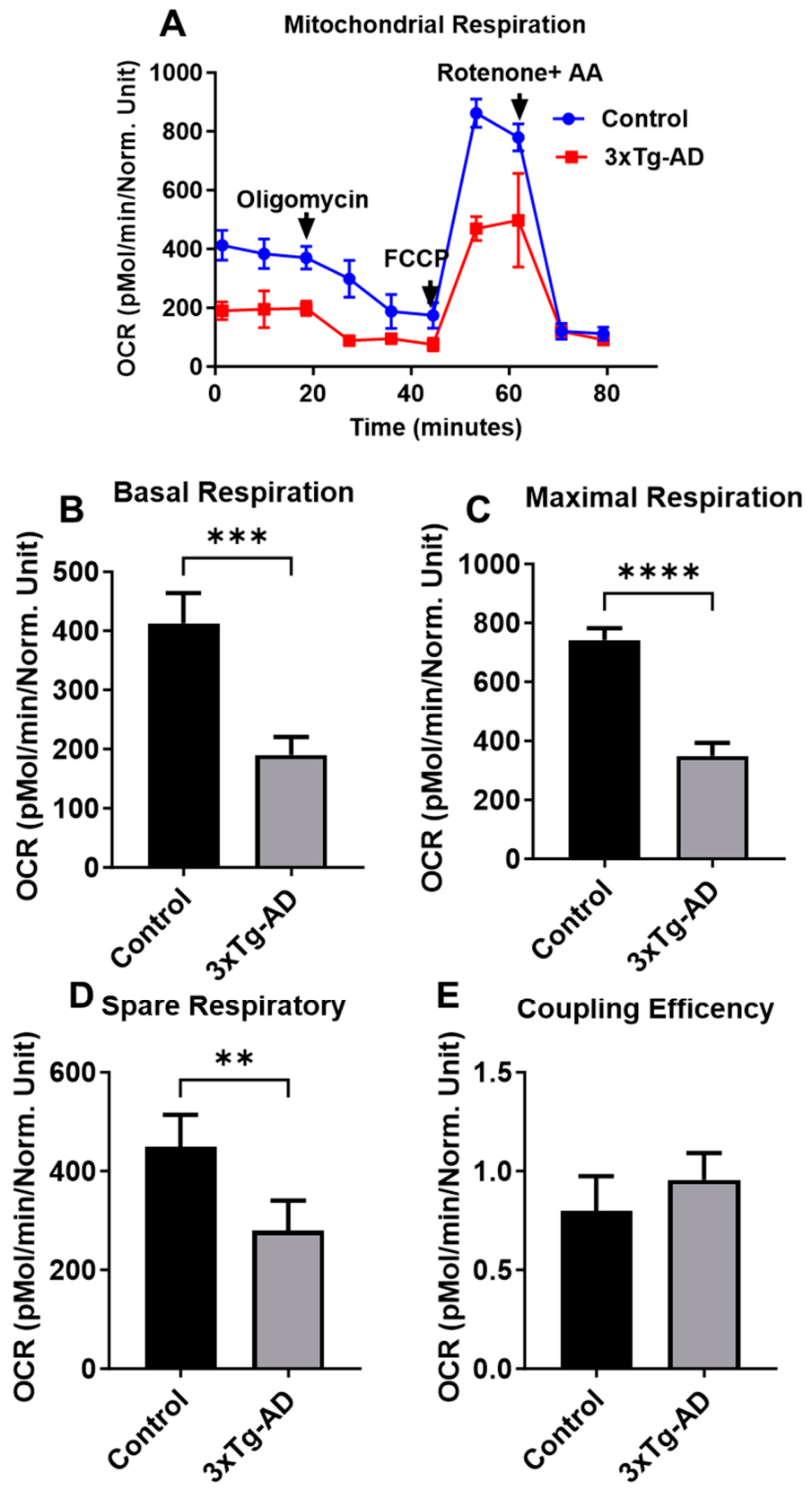
3.1. Comparison of Cellular Bioenergetic Profiles in Neurons from C57BL/6 and 3xTg-AD Mice
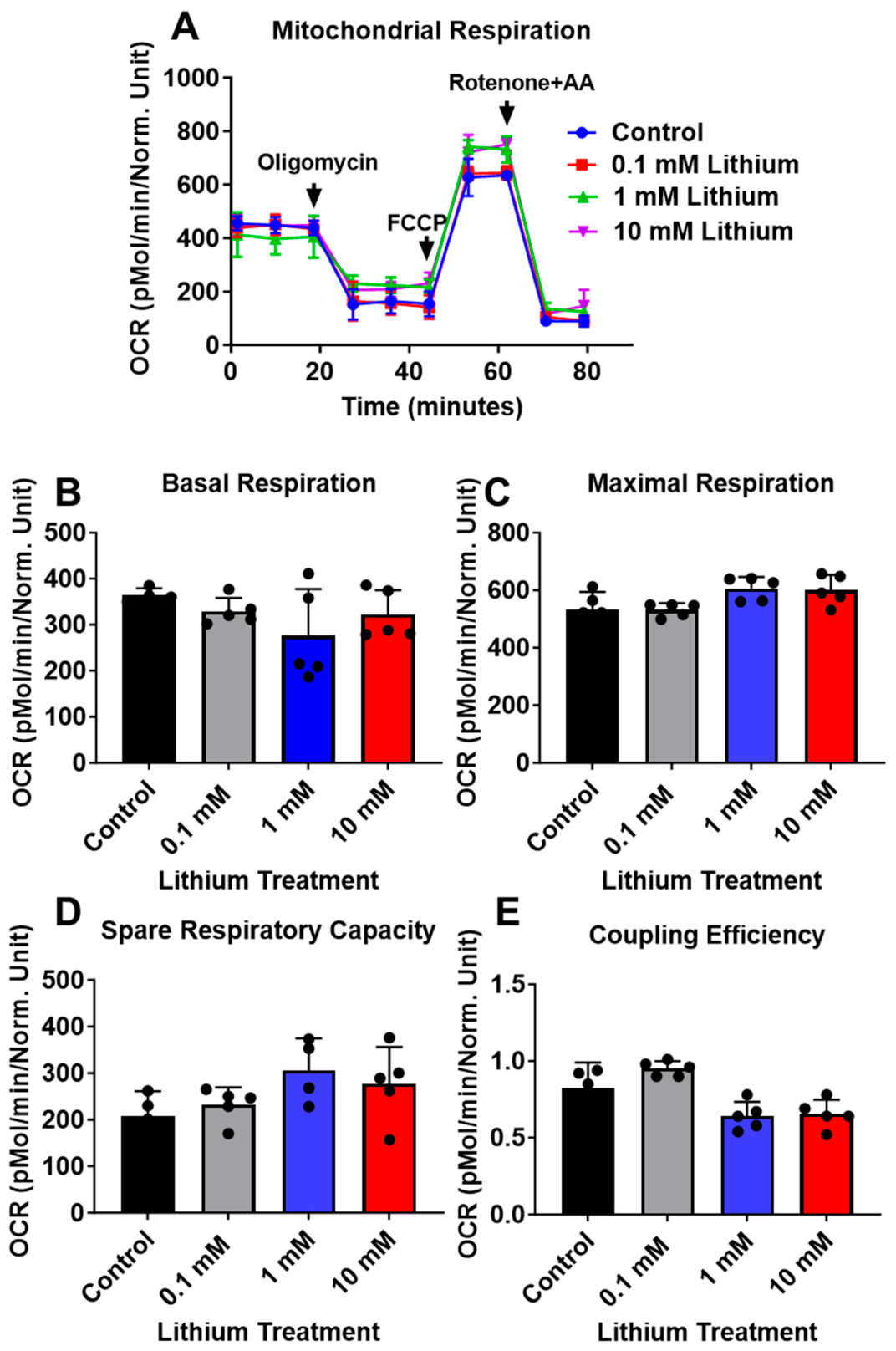
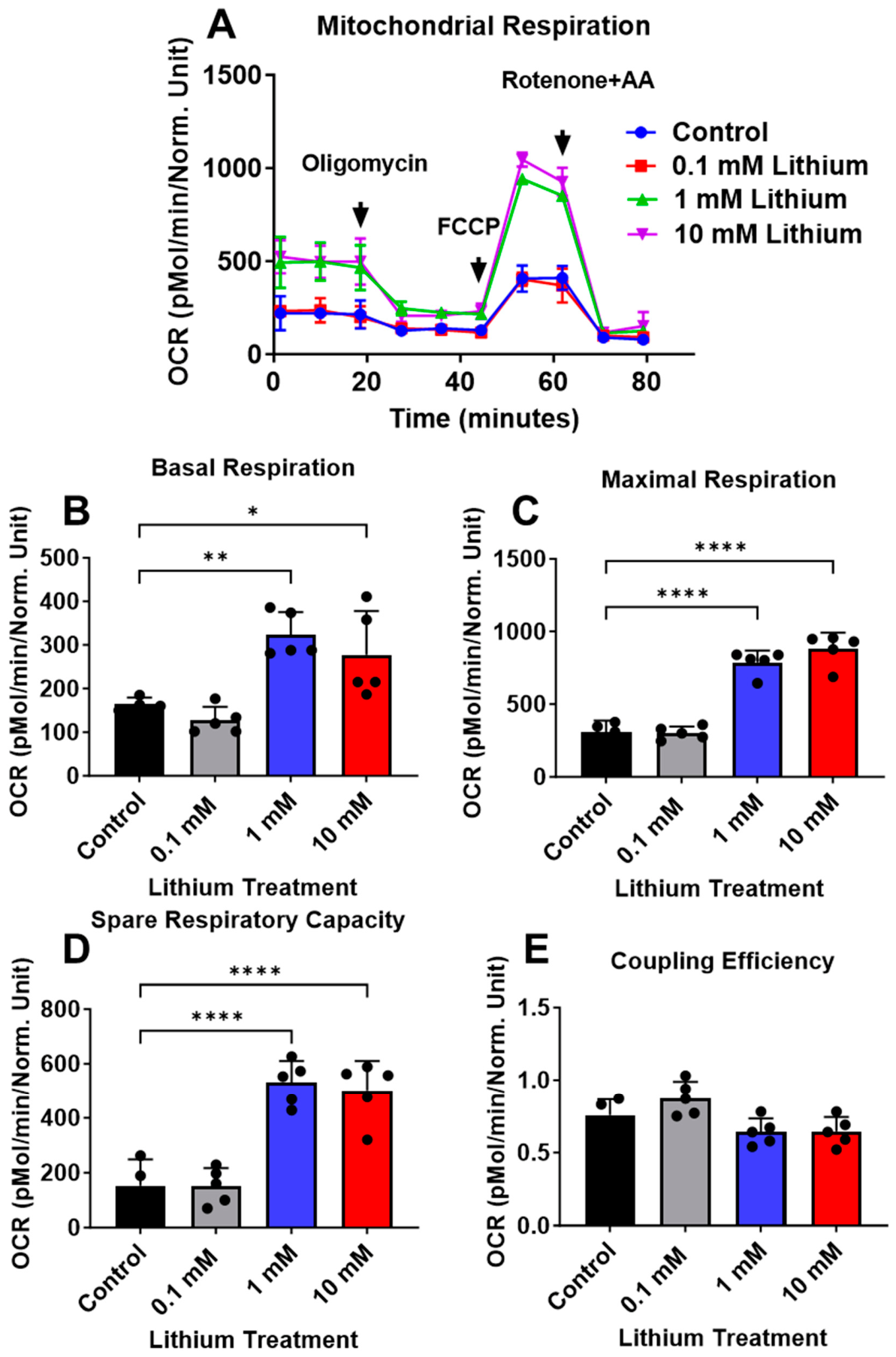
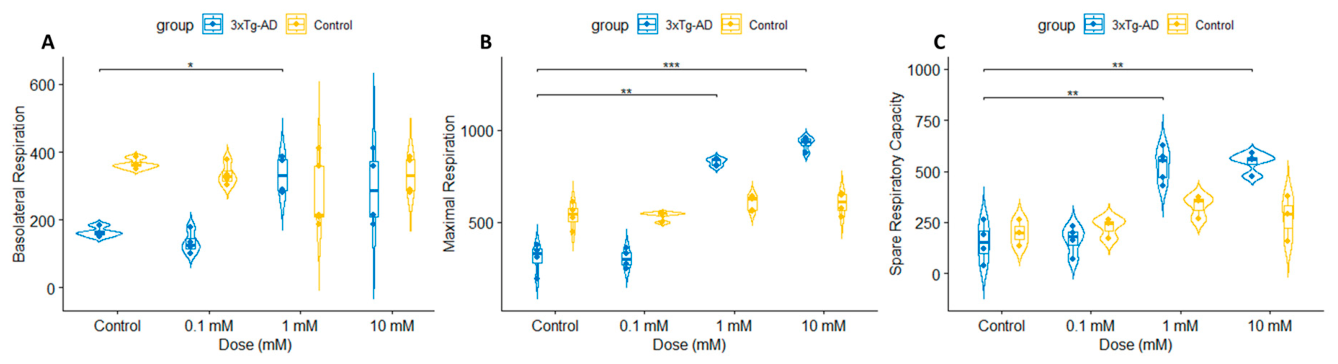
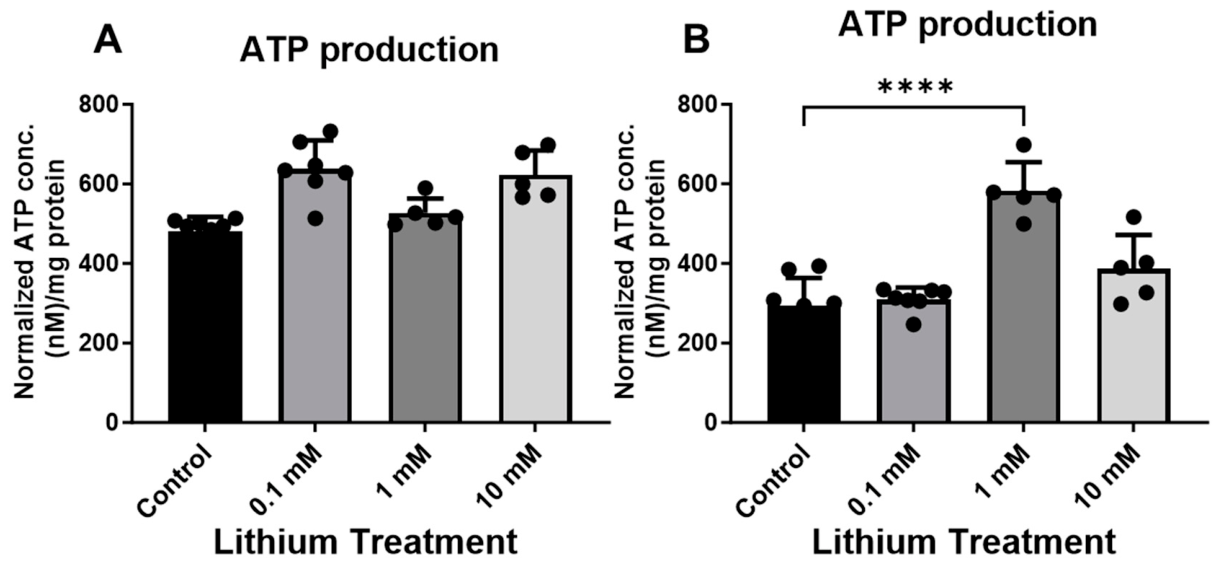
3.2. Effects of Lithium on Mitochondrial Bioenergetics and Total ATP Level in C57BL/6 and 3xTg-AD Neurons
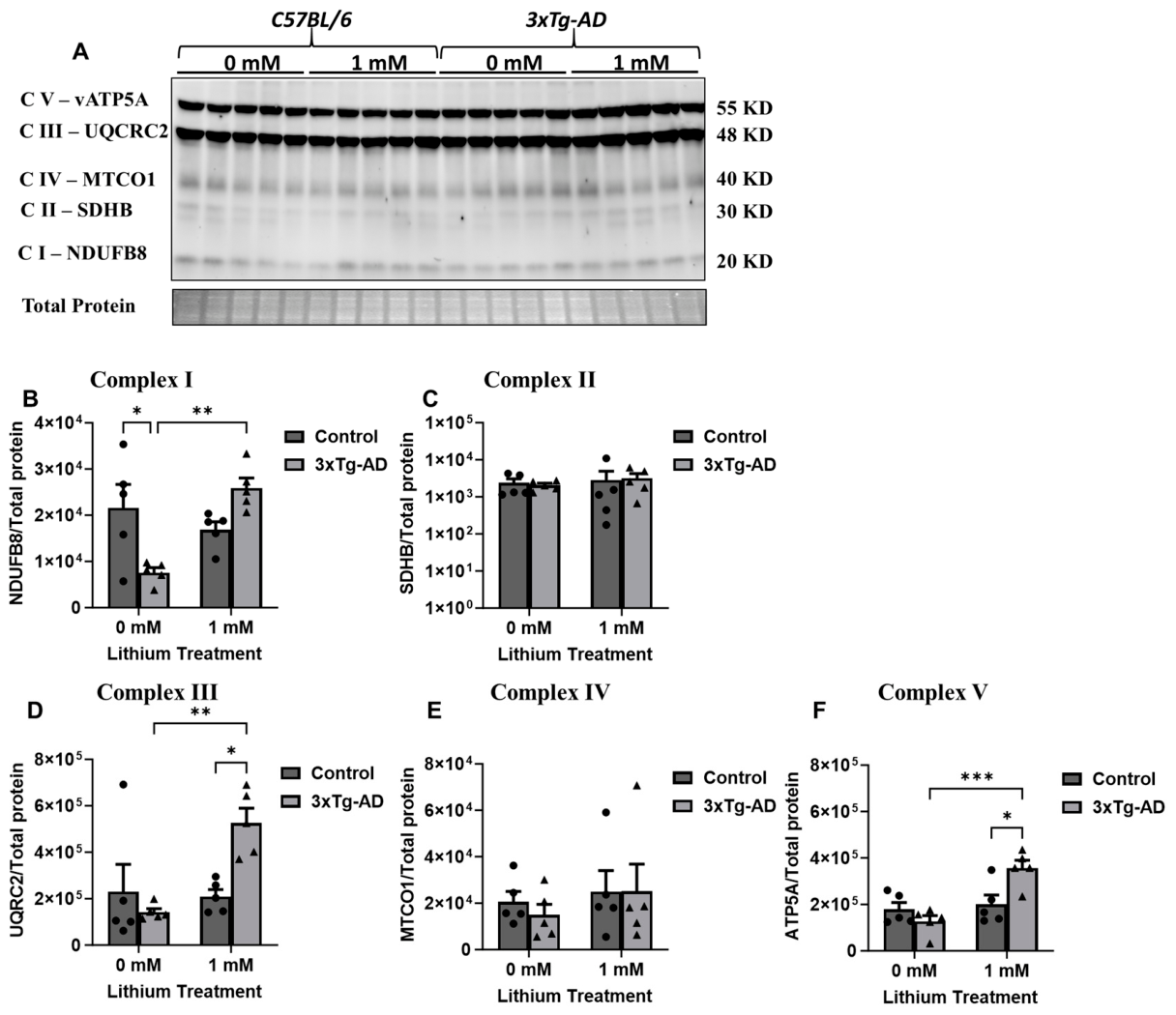
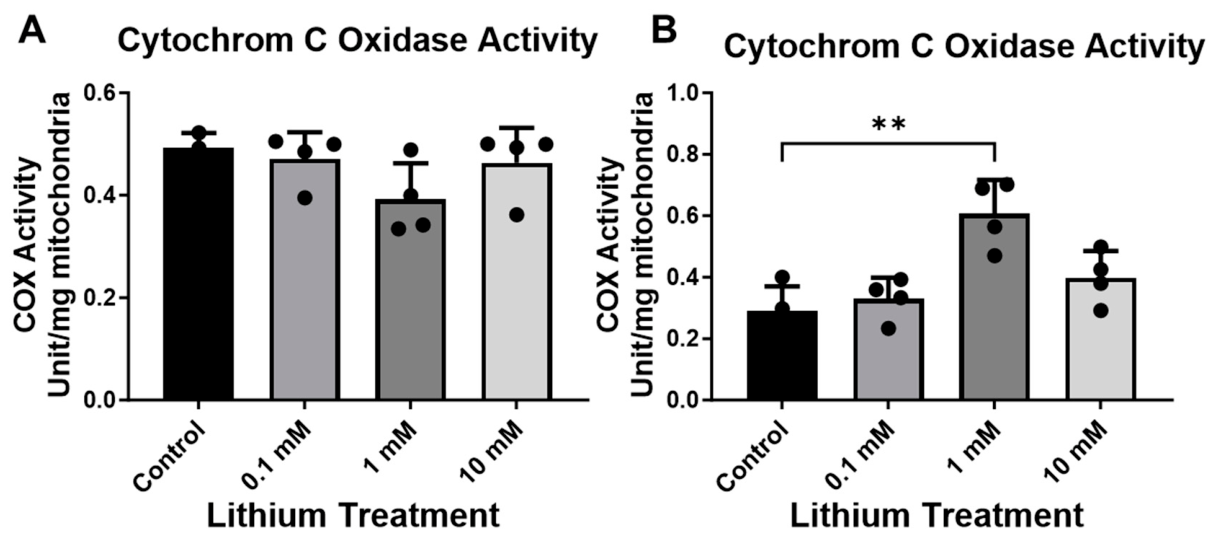
3.3. Effects of Lithium on Mitochondrial-Associated Proteins (OXPHOS) and Cytochrome C Oxidase (COX) in C57BL/6 and 3xTg-AD Neurons
4. Discussion
Author Contributions
Funding
Institutional Review Board Statement
Informed Consent Statement
Data Availability Statement
Acknowledgments
Conflicts of Interest
References
- Bloom, G.S. Amyloid-beta and tau: The trigger and bullet in Alzheimer disease pathogenesis. JAMA Neurol. 2014, 71, 505–508. [Google Scholar] [CrossRef] [PubMed]
- Zhang, Y.; Chen, H.; Li, R.; Sterling, K.; Song, W. Amyloid beta-based therapy for Alzheimer’s disease: Challenges, successes and future. Signal Transduct. Target. Ther. 2023, 8, 248. [Google Scholar] [CrossRef]
- Xing, H.; Yue, S.; Qin, R.; Du, X.; Wu, Y.; Zhangsun, D.; Luo, S. Recent Advances in Drug Development for Alzheimer’s Disease: A Comprehensive Review. Int. J. Mol. Sci. 2025, 26, 3905. [Google Scholar] [CrossRef] [PubMed]
- Rumpf, S.; Sanal, N.; Marzano, M. Energy metabolic pathways in neuronal development and function. Oxf. Open Neurosci. 2023, 2, kvad004. [Google Scholar] [CrossRef] [PubMed]
- Adlimoghaddam, A.; Benson, T.; Albensi, B.C. Mitochondrial Transfusion Improves Mitochondrial Function Through Up-regulation of Mitochondrial Complex II Protein Subunit SDHB in the Hippocampus of Aged Mice. Mol. Neurobiol. 2022, 59, 6009–6017. [Google Scholar] [CrossRef]
- Adlimoghaddam, A.; Fontaine, K.M.; Albensi, B.C. Age- and sex-associated alterations in hypothalamic mitochondrial bioenergetics and inflammatory-associated signaling in the 3xTg mouse model of Alzheimer’s disease. Biol. Sex. Differ. 2024, 15, 95. [Google Scholar] [CrossRef]
- Adlimoghaddam, A.; Snow, W.M.; Stortz, G.; Perez, C.; Djordjevic, J.; Goertzen, A.L.; Ko, J.H.; Albensi, B.C. Regional hypometabolism in the 3xTg mouse model of Alzheimer’s disease. Neurobiol. Dis. 2019, 127, 264–277. [Google Scholar] [CrossRef]
- Yuan, R.; Adlimoghaddam, A.; Zhu, Y.; Han, X.; Bartke, A. Early Life Interventions: Impact on Aging and Longevity. Aging Dis. 2024, 16, 2659–2673. [Google Scholar] [CrossRef]
- Adlimoghaddam, A.; Odero, G.G.; Glazner, G.; Turner, R.S.; Albensi, B.C. Nilotinib Improves Bioenergetic Profiling in Brain Astroglia in the 3xTg Mouse Model of Alzheimer’s Disease. Aging Dis. 2021, 12, 441–465. [Google Scholar] [CrossRef]
- Gherardelli, C.; Cisternas, P.; Inestrosa, N.C. Lithium Enhances Hippocampal Glucose Metabolism in an In Vitro Mice Model of Alzheimer’s Disease. Int. J. Mol. Sci. 2022, 23, 8733. [Google Scholar] [CrossRef]
- Corbett, A.; Sultana, J.; Stych, K.; Mills, R.; Cummings, J.L.; Williams, G.; Ismail, Z.; Soto-Martin, M.; Mintzer, J.; Gauthier, S.; et al. Drug repurposing for Alzheimer’s disease: A Delphi consensus and stakeholder consultation. Alzheimer’s Res. Ther. 2025, 17, 237. [Google Scholar] [CrossRef]
- Cummings, J.L.; Zhou, Y.; Van Stone, A.; Cammann, D.; Tonegawa-Kuji, R.; Fonseca, J.; Cheng, F. Drug repurposing for Alzheimer’s disease and other neurodegenerative disorders. Nat. Commun. 2025, 16, 1755. [Google Scholar] [CrossRef]
- Cervantes, D.; Adlimoghaddam, A. Repurposed Drugs: Expanding the Therapeutic Resource. In Small Molecules in Neurodegeneration; Dar, N.J., Bhat, S.A., Eds.; CRC Press: Boca Raton, FL, USA, 2025; pp. 137–150. [Google Scholar]
- Radanovic, M.; Singulani, M.P.; Paula, V.d.J.R.D.; Talib, L.L.; Forlenza, O.V. An Overview of the Effects of Lithium on Alzheimer’s Disease: A Historical Perspective. Pharmaceuticals 2025, 18, 532. [Google Scholar] [CrossRef] [PubMed]
- Aron, L.; Ngian, Z.K.; Qiu, C.; Choi, J.; Liang, M.; Drake, D.M.; Hamplova, S.E.; Lacey, E.K.; Roche, P.; Yuan, M.; et al. Lithium deficiency and the onset of Alzheimer’s disease. Nature 2025, 645, 712–721. [Google Scholar] [CrossRef] [PubMed]
- Goodwin, F.K. Rationale for long-term treatment of bipolar disorder and evidence for long-term lithium treatment. J. Clin. Psychiatry 2002, 63, 5–12. [Google Scholar]
- Shen, Y.; Zhao, M.; Zhao, P.; Meng, L.; Zhang, Y.; Zhang, G.; Taishi, Y.; Sun, L. Molecular mechanisms and therapeutic potential of lithium in Alzheimer’s disease: Repurposing an old class of drugs. Front. Pharmacol. 2024, 15, 1408462. [Google Scholar] [CrossRef]
- Damri, O.; Shemesh, N.; Agam, G. Is There Justification to Treat Neurodegenerative Disorders by Repurposing Drugs? The Case of Alzheimer’s Disease, Lithium, and Autophagy. Int. J. Mol. Sci. 2020, 22, 189. [Google Scholar] [CrossRef]
- Adlimoghaddam, A.; Cervantes, D.; Wheeler, C.J. APOE, Inflammation, and T Cells in Translational Disease Models and Clinical Medicine. In Apolipoprotein E: From Biochemistry and Biology to Translational Medicine; Springer Nature: Cham, Switzerland, 2026; pp. 1–21. [Google Scholar]
- Fang, E.F.; Hou, Y.; Palikaras, K.; Adriaanse, B.A.; Kerr, J.S.; Yang, B.; Lautrup, S.; Hasan-Olive, M.M.; Caponio, D.; Dan, X.; et al. Mitophagy inhibits amyloid-beta and tau pathology and reverses cognitive deficits in models of Alzheimer’s disease. Nat. Neurosci. 2019, 22, 401–412. [Google Scholar] [CrossRef]
- Young, W. Review of lithium effects on brain and blood. Cell Transplant. 2009, 18, 951–975. [Google Scholar] [CrossRef] [PubMed]
- Senatorov, V.V.; Ren, M.; Kanai, H.; Wei, H.; Chuang, D.-M. Short-term lithium treatment promotes neuronal survival and proliferation in rat striatum infused with quinolinic acid, an excitotoxic model of Huntington’s disease. Mol. Psychiatry 2004, 9, 371–385. [Google Scholar] [CrossRef]
- Wang, Q.; Xu, X.; Li, J.; Liu, J.; Gu, H.; Zhang, R.; Chen, J.; Kuang, Y.; Fei, J.; Jiang, C.; et al. Lithium, an anti-psychotic drug, greatly enhances the generation of induced pluripotent stem cells. Cell Res. 2011, 21, 1424–1435. [Google Scholar] [CrossRef] [PubMed]
- Sarkar, S.; Floto, R.A.; Berger, Z.; Imarisio, S.; Cordenier, A.; Pasco, M.; Cook, L.J.; Rubinsztein, D.C. Lithium induces autophagy by inhibiting inositol monophosphatase. J. Cell Biol. 2005, 170, 1101–1111. [Google Scholar] [CrossRef]
- Forlenza, O.V.; De-Paula, V.J.; Diniz, B.S. Neuroprotective effects of lithium: Implications for the treatment of Alzheimer’s disease and related neurodegenerative disorders. ACS Chem. Neurosci. 2014, 5, 443–450. [Google Scholar] [CrossRef] [PubMed]
- De-Paula, V.J.R.; Radanovic, M.; Forlenza, O.V. Lithium and neuroprotection: A review of molecular targets and biological effects at subtherapeutic concentrations in preclinical models of Alzheimer’s disease. Int. J. Bipolar Disord. 2025, 13, 16. [Google Scholar] [CrossRef]
- Haussmann, R.; Noppes, F.; Brandt, M.D.; Bauer, M.; Donix, M. Lithium: A therapeutic option in Alzheimer’s disease and its prodromal stages? Neurosci. Lett. 2021, 760, 136044. [Google Scholar] [CrossRef]
- Forlenza, O.V.; Radanovic, M.; Talib, L.L.; Gattaz, W.F. Clinical and biological effects of long-term lithium treatment in older adults with amnestic mild cognitive impairment: Randomised clinical trial. Br. J. Psychiatry 2019, 215, 668–674. [Google Scholar] [CrossRef]
- Terao, I.; Kodama, W. Comparative efficacy, tolerability and acceptability of donanemab, lecanemab, aducanumab and lithium on cognitive function in mild cognitive impairment and Alzheimer’s disease: A systematic review and network meta-analysis. Ageing Res. Rev. 2024, 94, 102203. [Google Scholar] [CrossRef]
- Singulani, M.P.; Ferreira, A.F.F.; Figueroa, P.S.; Cuyul-Vásquez, I.; Talib, L.L.; Britto, L.R.; Forlenza, O.V. Lithium and disease modification: A systematic review and meta-analysis in Alzheimer’s and Parkinson’s disease. Ageing Res. Rev. 2024, 95, 102231. [Google Scholar] [CrossRef]
- Lesuisse, C.; Martin, L.J. Long-term culture of mouse cortical neurons as a model for neuronal development, aging, and death. J. Neurobiol. 2002, 51, 9–23. [Google Scholar] [CrossRef]
- Poirazi, P.; Mel, B.W. Impact of active dendrites and structural plasticity on the memory capacity of neural tissue. Neuron 2001, 29, 779–796. [Google Scholar] [CrossRef] [PubMed]
- Adlimoghaddam, A.; Albensi, B.C. The nuclear factor kappa B (NF-kappaB) signaling pathway is involved in ammonia-induced mitochondrial dysfunction. Mitochondrion 2021, 57, 63–75. [Google Scholar] [CrossRef] [PubMed]
- Snow, W.M.; Cadonic, C.; Cortes-Perez, C.; Adlimoghaddam, A.; Chowdhury, S.K.R.; Thomson, E.; Anozie, A.; Bernstein, M.J.; Gough, K.; Fernyhough, P.; et al. Sex-Specific Effects of Chronic Creatine Supplementation on Hippocampal-Mediated Spatial Cognition in the 3xTg Mouse Model of Alzheimer’s Disease. Nutrients 2020, 12, 3589. [Google Scholar] [CrossRef]
- R Core Team. R: A Language and Environment for Statistical Computing. R Foundation for Statistical Computing, Vienna, Austria. 2026. Available online: https://www.R-project.org (accessed on 12 May 2026).
- Makowski, D.; Ben-Shachar, M.S.; Lüdecke, D. bayestestR: Describing Effects and their Uncertainty, Existence and Significance within the Bayesian Framework. J. Open Source Softw. 2019, 4, 1541. [Google Scholar] [CrossRef]
- Cabezas-Opazo, F.A.; Vergara-Pulgar, K.; Pérez, M.J.; Jara, C.; Osorio-Fuentealba, C.; Quintanilla, R.A. Mitochondrial Dysfunction Contributes to the Pathogenesis of Alzheimer’s Disease. Oxidative Med. Cell Longev. 2015, 2015, 509654. [Google Scholar] [CrossRef]
- Bubber, P.; Haroutunian, V.; Fisch, G.; Blass, J.P.; Gibson, G.E. Mitochondrial abnormalities in Alzheimer brain: Mechanistic implications. Ann. Neurol. 2005, 57, 695–703. [Google Scholar] [CrossRef]
- Srivastava, S. The Mitochondrial Basis of Aging and Age-Related Disorders. Genes 2017, 8, 398. [Google Scholar] [CrossRef]
- Adlimoghaddam, A. Mitochondrial Dysfunction in Aging and Age-related Disorders. Aging Dis. 2025, 16, 2495–2497. [Google Scholar]
- Fecher, C.; Trovò, L.; Müller, S.A.; Snaidero, N.; Wettmarshausen, J.; Heink, S.; Ortiz, O.; Wagner, I.; Kühn, R.; Hartmann, J.; et al. Cell-type-specific profiling of brain mitochondria reveals functional and molecular diversity. Nat. Neurosci. 2019, 22, 1731–1742. [Google Scholar] [CrossRef]
- Son, G.; Han, J. Roles of mitochondria in neuronal development. BMB Rep. 2018, 51, 549–556. [Google Scholar] [CrossRef]
- Davey, G.P.; Peuchen, S.; Clark, J.B. Energy thresholds in brain mitochondria. Potential involvement in neurodegeneration. J. Biol. Chem. 1998, 273, 12753–12757. [Google Scholar] [CrossRef] [PubMed]
- Maurer, I.C.; Schippel, P.; Volz, H.P. Lithium-induced enhancement of mitochondrial oxidative phosphorylation in human brain tissue. Bipolar Disord. 2009, 11, 515–522. [Google Scholar] [CrossRef]
- Osete, J.R.; Akkouh, I.A.; de Assis, D.R.; Szabo, A.; Frei, E.; Hughes, T.; Smeland, O.B.; Steen, N.E.; Andreassen, O.A.; Djurovic, S. Lithium increases mitochondrial respiration in iPSC-derived neural precursor cells from lithium responders. Mol. Psychiatry 2021, 26, 6789–6805. [Google Scholar] [CrossRef] [PubMed]
- Al Masseri, Z.; Guilder, L.; Inbar-Feigenberg, M.; Cameron, J.; Venkatachalam, S.; Chitayat, D. Mitochondrial Complex V Deficiency Caused by a Homozygous Splice Variant in ATP5PO. Am. J. Med. Genet. A 2026, 200, 235–243. [Google Scholar] [CrossRef]
- Meloni, A.; Paribello, P.; Pinna, M.; Contu, M.; Ardau, R.; Chillotti, C.; Congiu, D.; Gennarelli, M.; Minelli, A.; Buson, L.; et al. Mitochondrial DNA copy number is significantly increased in bipolar disorder patients and is correlated with long-term lithium treatment. Eur. Neuropsychopharmacol. 2025, 91, 37–44. [Google Scholar] [CrossRef]
- Washizuka, S.; Ikeda, A.; Kato, N.; Kato, T. Possible relationship between mitochondrial DNA polymorphisms and lithium response in bipolar disorder. Int. J. Neuropsychopharmacol. 2003, 6, 421–424. [Google Scholar] [CrossRef]
- Singulani, M.P.; De Paula, V.J.R.; Forlenza, O.V. Mitochondrial dysfunction in Alzheimer’s disease: Therapeutic implications of lithium. Neurosci. Lett. 2021, 760, 136078. [Google Scholar] [CrossRef]
- Andersen, J.K. Implications of cellular senescence in Parkinson’s disease: Recent developments and future directions. Curr. Opin. Neurobiol. 2026, 98, 103173. [Google Scholar] [CrossRef] [PubMed]
- Kim, Y.H.; Rane, A.; Lussier, S.; Andersen, J.K. Lithium protects against oxidative stress-mediated cell death in alpha-synuclein-overexpressing in vitro and in vivo models of Parkinson’s disease. J. Neurosci. Res. 2011, 89, 1666–1675. [Google Scholar] [CrossRef] [PubMed]
- Motoi, Y.; Shimada, K.; Ishiguro, K.; Hattori, N. Lithium and autophagy. ACS Chem. Neurosci. 2014, 5, 434–442. [Google Scholar] [CrossRef]
- Hollander, E.; Buchsbaum, M.S.; Haznedar, M.M.; Berenguer, J.; Berlin, H.A.; Chaplin, W.; Goodman, C.R.; LiCalzi, E.M.; Newmark, R.; Pallanti, S. FDG-PET study in pathological gamblers. 1. Lithium increases orbitofrontal, dorsolateral and cingulate metabolism. Neuropsychobiology 2008, 58, 37–47. [Google Scholar] [CrossRef]
- Salimi, A.; Gholamifar, E.; Naserzadeh, P.; Hosseini, M.; Pourahmad, J. Toxicity of lithium on isolated heart mitochondria and cardiomyocyte: A justification for its cardiotoxic adverse effect. J. Biochem. Mol. Toxicol. 2017, 31, e21836. [Google Scholar] [CrossRef] [PubMed]
- Rizak, J.; Tan, H.; Zhu, H.; Wang, J.-F. Chronic treatment with the mood-stabilizing drug lithium up-regulates nuclear factor E2-related factor 2 in rat pheochromocytoma PC12 cells in vitro. Neuroscience 2014, 256, 223–229. [Google Scholar] [CrossRef] [PubMed]
- Struewing, I.T.; Barnett, C.D.; Tang, T.; Mao, C.D. Lithium increases PGC-1alpha expression and mitochondrial biogenesis in primary bovine aortic endothelial cells. FEBS J. 2007, 274, 2749–2765. [Google Scholar] [CrossRef] [PubMed]
- Briggs, K.T.; Giulian, G.G.; Li, G.; Kao, J.P.; Marino, J.P. A Molecular Model for Lithium’s Bioactive Form. Biophys. J. 2016, 111, 294–300. [Google Scholar] [CrossRef]


Disclaimer/Publisher’s Note: The statements, opinions and data contained in all publications are solely those of the individual author(s) and contributor(s) and not of MDPI and/or the editor(s). MDPI and/or the editor(s) disclaim responsibility for any injury to people or property resulting from any ideas, methods, instructions or products referred to in the content. |
© 2026 by the authors. Licensee MDPI, Basel, Switzerland. This article is an open access article distributed under the terms and conditions of the Creative Commons Attribution (CC BY) license.
Share and Cite
Albensi, B.C.; Adlimoghaddam, A. Targeting Mitochondrial Dysfunction in Alzheimer’s Disease Neurons: Lithium Boosts Oxidative Phosphorylation. Cells 2026, 15, 896. https://doi.org/10.3390/cells15100896
Albensi BC, Adlimoghaddam A. Targeting Mitochondrial Dysfunction in Alzheimer’s Disease Neurons: Lithium Boosts Oxidative Phosphorylation. Cells. 2026; 15(10):896. https://doi.org/10.3390/cells15100896
Chicago/Turabian StyleAlbensi, Benedict C., and Aida Adlimoghaddam. 2026. "Targeting Mitochondrial Dysfunction in Alzheimer’s Disease Neurons: Lithium Boosts Oxidative Phosphorylation" Cells 15, no. 10: 896. https://doi.org/10.3390/cells15100896
APA StyleAlbensi, B. C., & Adlimoghaddam, A. (2026). Targeting Mitochondrial Dysfunction in Alzheimer’s Disease Neurons: Lithium Boosts Oxidative Phosphorylation. Cells, 15(10), 896. https://doi.org/10.3390/cells15100896