1. Introduction
Juvenile Polyposis Syndrome (JPS) is an autosomal dominant disorder characterized by multiple juvenile polyps in the gastrointestinal tract and a heightened risk of gastrointestinal cancers [
1,
2]. Mutations in tumor suppressor genes such as
Smad4 and
BMPR1A are central to its pathogenesis, with
Smad4 being the most commonly affected [
3]. Occasionally,
PTEN mutations have also been implicated, underscoring the genetic complexity of JPS [
4].
Clinically, JPS presents variable, even among individuals carrying the same mutation. Diagnostic criteria include five or more juvenile polyps throughout the gastrointestinal tract or any number of juvenile polyps with a family history of the syndrome [
5]. While most polyps are benign, they carry a significant risk of malignant transformation if untreated [
6]. This variation in disease severity—despite shared mutations—suggests the involvement of genetic modifiers [
7].
Colorectal cancer (CRC), the second leading cause of cancer-related deaths globally, shares many genetic and epigenetic underpinnings with JPS [
8,
9]. Key signaling pathways such as Wnt, TGF-β, Hedgehog, and Notch play vital roles in both JPS and CRC progression [
10,
11,
12,
13].
Mouse models have been instrumental in elucidating the molecular mechanisms underlying JPS and its associated pathways. Genetically engineered mice with mutations in
Smad4,
BMPR1A, or
PTEN exhibit polyp formation and have been used to study the role of genetic modifiers [
14,
15,
16,
17]. Such modifiers may alter disease severity or onset and are often challenging to detect in human GWAS due to sample size constraints [
18]. In contrast, mouse models allow controlled breeding and targeted mutation, making them ideal for modifier discovery [
18].
A powerful resource for such research is the Collaborative Cross (CC) mouse panel—derived from eight diverse founder strains, including classical laboratory and wild-derived lines [
19]. The CC population captures a wide spectrum of genetic diversity comparable to human populations [
20], and CC-derived offspring have been shown to uncover novel modifiers in polyposis and cancer models [
18,
21,
22]. While previous CC-based studies have primarily focused on
Apc-driven models of intestinal tumorigenesis, the genetic modifiers of polyp development in a
Smad4-deficient context remain less well characterized.
Smad4-deficient mice (C57BL/6J-
Smad4tm1Mak) recapitulate several features of human JPS, including the formation of intestinal polyps [
23]. However, variation in polyp burden even among littermates implies the action of background modifiers. Understanding these modifiers could clarify why clinical severity varies among JPS patients sharing the same germline mutations and may lead to new therapeutic targets or risk-stratification tools.
In this study, we aimed to uncover genetic modifiers influencing polyp development in a Smad4-deficient background by crossing CC mice with Smad4 knockout mice. We performed quantitative trait locus (QTL) mapping across 260 F1 progeny from 14 CC lines to identify novel loci affecting polyp number, size, and distribution across intestinal segments. Our working hypothesis was that the genetic heterogeneity introduced by the CC lines would reveal novel modifier loci modulating the phenotypic expression of Smad4 loss.
2. Materials and Methods
2.1. Ethics and Animal Welfare Considerations
This research adhered to the national guidelines for the ethical treatment of laboratory animals. The study’s protocol received approval from the Institutional Animal Care and Use Committee (IACUC) of Tel Aviv University, under the authorization number (01-19-044). Daily health monitoring of the mice was conducted, with specific criteria set for humane euthanasia based on weight loss or observed distress, in consultation with the facility’s Veterinary staff.
2.2. CC Lines Crossbreeding to Generate F1 Offspring
The detailed process of developing these Collaborative Cross (CC) lines has been previously described [
20,
21]. The study cohort included 260 mice (129 males and 131 females) derived from 14 distinct CC lines. The mice, aged 18–20 weeks, were supplied by the Small Animal Facility at the Sackler Faculty of Medicine, Tel Aviv University (TAU). They were housed in open-top cages with hardwood chip bedding, under a 12:12-h light cycle, and maintained at a temperature of 21–23 °C. The mice had ad libitum access to tap water and a standard rodent chow diet, which provided 18% of total calories from fat, 24% from protein, and 58% from carbohydrates (TD.2018SC; Teklad Global, Harlan, Madison, WI, USA), starting from weaning at 3 weeks of age until they reached 20 weeks. CC lines’ high molecular genomic DNA was genotyped using MDA, MUGA, and MegaMuga SNP arrays. The genotype database is publicly available [
https://www.jax.org] (accessed on 15 December 2025). The C57BL/6 J-
Smad4tm1Mak strain was sourced from the Jackson Laboratory (Bar Harbor, ME, USA). Crosses between female mice from available CC strains and C57BL/6 J-
Smad4tm1Mak males resulted in F1 offspring. Genotypic screening for the Smad4 gene among these produced F1 mice across lines for inclusion in subsequent experiments, as detailed in [
17].
2.3. Genomic DNA Extraction and Genotyping of F1 Mice
For genomic DNA extraction, we utilized the NaOH method as described in [
17,
24]. Tail samples measuring 3–4 mm were placed in Eppendorf tubes, and 75 µL of 25 mM NaOH and 0.2 mM EDTA was added. The samples were heated at 98 °C for 1 h on a heating block and then cooled on ice. After heating, the samples were neutralized with 75 µL of 40 mM Tris-HCl (pH 5.5). The mixture was centrifuged at 4000 rpm for 3 min to clarify the samples, which were subsequently ready for PCR analysis. The PCR genotyping protocol utilized specific primer sets for the
Smad4 gene. Reaction A amplified a 200 bp segment from the wild-type
Smad4 gene, while Reaction B generated a 300 bp product indicative of the knockout
Smad4 genotype. Genotyping involved 30 cycles of denaturation, annealing, and extension. Genotyping of F1 mice was described earlier [
25].
2.4. Tissue Collection
At 80 weeks, mice were terminated using CO
2. Small intestine and colon samples were collected and washed with Phosphate-Buffered Saline. Intestines were categorized into segments (SB1: proximal; SB2: middle; and SB3: distal) and analyzed for polyp counts [
17].
2.5. Intestine Whole Mounts and Polyp Assessment
Intestines were fixed in 10% Neutral Buffered Formalin for 24 h and then stained with methylene blue as described earlier [
18]. Polyps were counted and categorized based on their diameter into three groups: A polyps (more than 3 mm), B polyps (1–3 mm), and C polyps (less than 1 mm).
2.6. Data Analysis
Initial statistical analyses were performed using SPSS (version 19.0, IBM Corp., Armonk, NY, USA). ANOVA was used to assess variation in total polyp counts among different CC-B/6-Min crosses, as described previously [
17].
2.7. Reconstruction of CC Ancestral Genome Mosaics
SNPs were mapped onto the mouse genome, and CC ancestral genome mosaics were reconstructed using R-QTL. Locus-specific fractions of CC lines carrying each founder were estimated.
2.8. QTL Analysis
QTL mapping was performed using R/qtl2 (version 0.3) within the R statistical environment (version 4.2.x). Genotype probabilities were calculated using a hidden Markov model, and genome scans were conducted using a linear mixed model framework to account for population structure.
Significance thresholds for QTL detection were determined using permutation testing (10,000 permutations), and genome-wide significance levels were defined based on empirical LOD thresholds. Confidence intervals were estimated using 95% Bayesian credible intervals, as described earlier [
26].
QTL mapping was conducted separately for the whole F1 population, as well as for male-only (n = 129) and female-only (n = 131) subgroups, to identify both shared and sex-specific loci. The same statistical framework, permutation testing, and Bayesian credible interval settings were applied across all analyses.
2.9. Estimation of QTL Confidence Intervals and Founder Effects
Confidence intervals were estimated through simulation, considering local patterns of linkage disequilibrium. Founder strain effects at each QTL were compared to WSB/EiJ using merge analysis. Variants were classified based on genome annotation.
2.10. List of Suggested Candidate Genes
The SNP tools package and MGI database identified candidate genes within QTL intervals. Protein-coding genes and non-coding RNA genes were considered.
2.11. Pathway Enrichment Analysis
Genes identified within significant QTL intervals were analyzed for pathway enrichment to elucidate potential functional mechanisms. The QTL regions spanned chromosomes 2, 12, and 14 in mice and were identified using significance thresholds of
p < 0.05 and
p < 0.1, based on association statistics. For each region, genes were extracted based on their Ensemble gene IDs and chromosomal coordinates. These gene sets were then subjected to functional enrichment analysis using the
g:Profiler (accessed: August 2025) and
Enrichr (accessed: August 2025) platforms, default parameters were used unless otherwise specified. [
27,
28]. The enrichment focused on three major pathway databases: WikiPathways [
29], CORUM [
30], and Reactome [
31]. Statistical significance was assessed using hypergeometric testing and adjusted for multiple comparisons using the Benjamini–Hochberg false discovery rate (FDR). Pathways with an FDR-adjusted
p-value < 0.1 were considered biologically relevant. Enrichment statistics such as overlap count, odds ratio, and combined score were used to rank pathways of interest.
2.12. Gene Functional Analysis
To provide a deeper biological context for the genes identified in QTL intervals, we performed manual gene function annotation and literature-based validation. Each gene identified through pathway enrichment was cross-referenced with multiple publicly available databases, including UniProt, GeneCards, Mouse Genome Informatics (MGI), and NCBI Gene. These resources were used to gather information on molecular function, biological processes, tissue specificity, and phenotypic associations in murine models.
Genes that appeared in multiple pathways or complexes (e.g., PSMD6, STAM2, NAMPT) were further prioritized for literature review. Manual curation involved searching PubMed using combinations of gene names and keywords related to the observed trait categories (e.g., “PSMD6 + proteasome + mouse,” “STAM2 + endocytosis + signaling,” “CACNB4 + neurodevelopment + epilepsy”). Preference was given to studies in mouse models or those directly linking the gene to phenotypes analogous to the QTL traits.
In addition, for genes involved in critical pathways such as ubiquitin-mediated degradation, neurophysiology, or immune signaling, supporting publications were cited directly to reinforce biological plausibility. This integrative approach allowed us to link statistical enrichment results with known gene function, providing a biologically informed interpretation of the QTL landscape.
2.13. Network and Visualization Analysis
To explore gene–pathway associations and identify potential regulatory hubs, we constructed bipartite networks linking QTL-associated genes to enriched pathways. Analyses were conducted separately for WikiPathways (2024, Mouse), Gene Ontology (Biological Process, 2025), and in a combined context.
Hub genes were defined as those present in two or more enriched pathways among the top 30 pathways ranked by enrichment p-value were selected to balance biological interpretability and network complexity. This threshold was not based on a fixed statistical cutoff but was chosen to focus on the most relevant signals while maintaining clarity of visualization. Genes and pathway terms were used to generate bipartite networks using the NetworkX Python package (version 2.8.4) in Python (version 3.8.10). Pathway nodes were visualized as gray squares and gene nodes as blue circles, with edges indicating gene membership in each pathway. Node layouts were computed using a force-directed spring algorithm with default parameters to optimize clarity and separation. Pathways not connected to any gene were excluded from the final graphs to enhance interpretability.
2.14. Gene × Pathway Heatmap
To complement network visualizations, we constructed a binary heatmap of gene–pathway membership using the top-enriched WikiPathways (Mouse). Genes were listed in rows, and pathways in columns. Cells were shaded blue if the gene was annotated in the corresponding pathway (1 = present). Only pathways with at least two gene annotations were retained. Heatmaps were generated in Python using the Seaborn library.
2.15. Transcription Factor Enrichment
In addition to pathway and ontology analyses, we tested whether QTL candidate genes were enriched for transcription factor (TF) regulatory networks. Enrichment was performed using ChEA 2022 (ChIP-X Enrichment Analysis) and Rummagene Transcription Factor Co-regulation libraries within Enrichr. Significance was assessed using hypergeometric testing with Benjamini–Hochberg FDR correction; TFs with adj. p < 0.05 were considered significant, and those with adj. p < 0.1 were retained as suggestive.
3. Results
3.1. Polyp Development in CC-F1 Mice
Previous studies have demonstrated variation in susceptibility to intestinal polyp development across classical inbred mouse strains, leading to the categorization of polyp-resistant and polyp-susceptible strains [
22]. Collaborative Cross (CC) mice, which contain unique combinations of homozygous chromosome segments from eight founder strains (A/J, B6J, 129S1/SvImJ, NOD/ShiLtJ, NZO/HILtJ, CAST/EiJ, PWK/PhJ, and WSB/EiJ), offer an opportunity to explore more extreme phenotypes than those observed in the founder strains [
18].
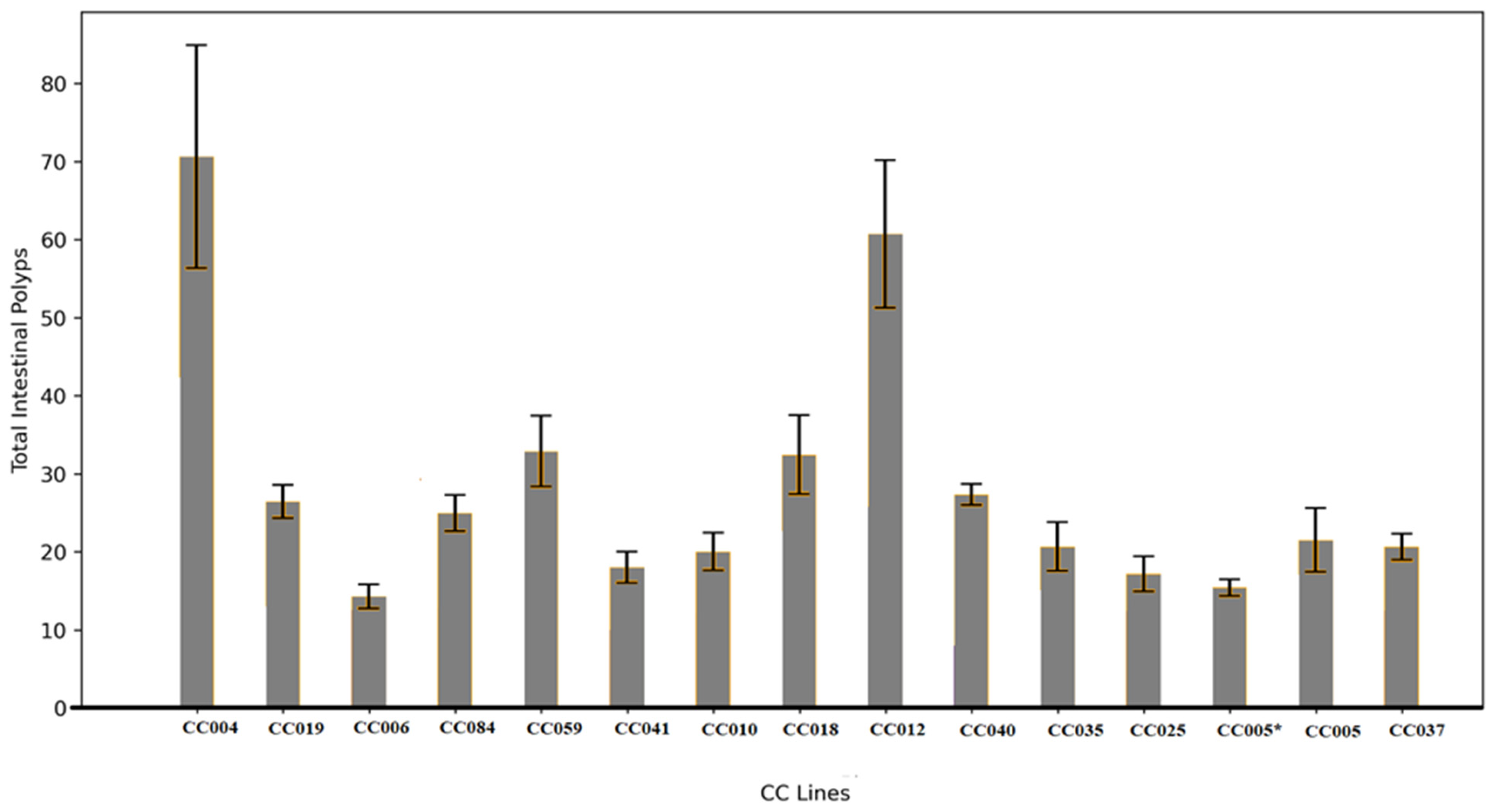
In this study, we evaluated intestinal polyp development across 14 F1-CC strains. There was significant variation in polyp counts, with certain strains exhibiting markedly higher susceptibility to polyp formation compared to more resistant strains. This variability extended beyond the traditionally classified resistant and susceptible strains. Using a cohort of 260 mice from 14 CC-C57BL/6 J-
Smad4tm1Mak F1 lines, we mapped quantitative trait locus (QTL) modifiers of Smad4 based on polyp counts in both the small intestine and colon [
17].
A one-way ANOVA revealed significant variation in total polyp counts among the different CC-
Smad4tm1Mak F1 lines. Polyp counts were approximately normally distributed, suggesting that both genetic and environmental factors contribute to this trait. To investigate whether different segments of the intestine exhibited distinct patterns of polyp distribution, we subdivided the small intestine into three sections: proximal (SB1), middle (SB2), and distal (SB3), along with the colon. Polyps in each segment were categorized based on size and analyzed independently. Analysis revealed significant inter-line differences in polyp burden across the SB1 region of the small intestine (
Figure 1), with polyp counts presented as mean ± standard error (SE), supporting the presence of underlying genetic modifiers in the Collaborative Cross background.
3.2. QTL Analysis
To identify genetic loci associated with susceptibility to intestinal polyp development, we conducted genome-wide QTL mapping using the R/qtl2 framework. Polyp counts were measured across different regions of the gastrointestinal tract, including the proximal (SB1), middle (SB2), and distal (SB3) segments of the small intestine, as well as the colon. Analyses were performed on the full F1 cohort as well as stratified by sex, and QTL were categorized based on permutation-derived genome-wide significance thresholds, including significant, suggestive, and exploratory loci as defined by the empirical LOD distributions.
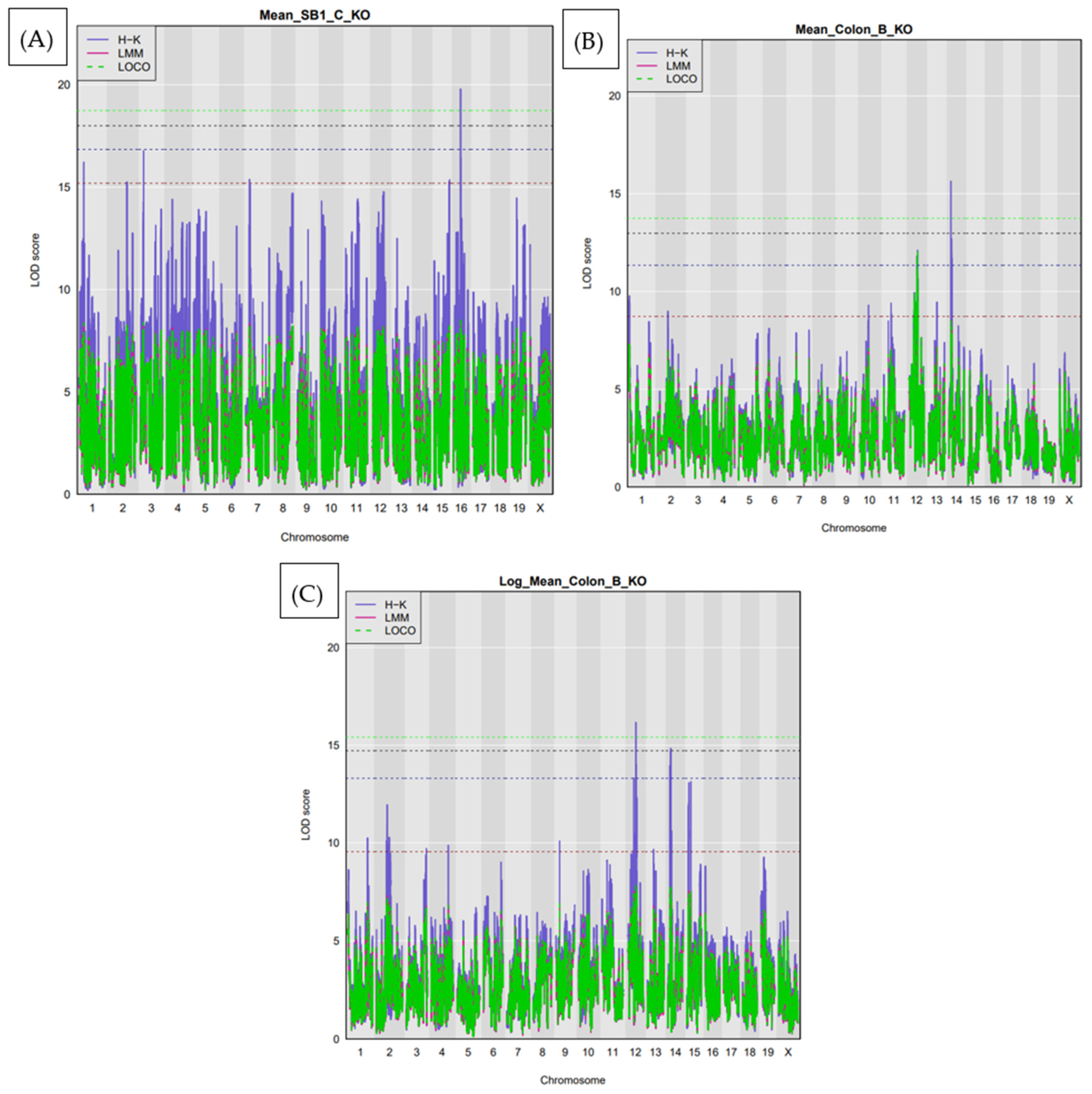
At the genome-wide significance threshold determined by permutation testing, ten significant QTL were detected, as detailed in
Table 1. These QTL were designated Ipsl1 to Ipsl10 for Intestinal Polyposis Susceptibility locus (Ipsl). In the full cohort, three loci reached this threshold. A QTL on chromosome 16, designated IPSL1, was associated with polyp counts in the SB1 region and mapped to a narrow interval spanning 26.05–26.06 Mb. In the colon, two additional QTL were identified: IPSL2 on chromosome 14, peaking at 8.2 Mb with a confidence interval of 8.16–8.22 Mb, and IPSL3 on chromosome 12, linked to log-transformed polyp counts, spanning 32.93–33.17 Mb. These findings suggest that multiple genomic regions modulate polyp burden across different intestinal compartments. (
Figure 2A–C).
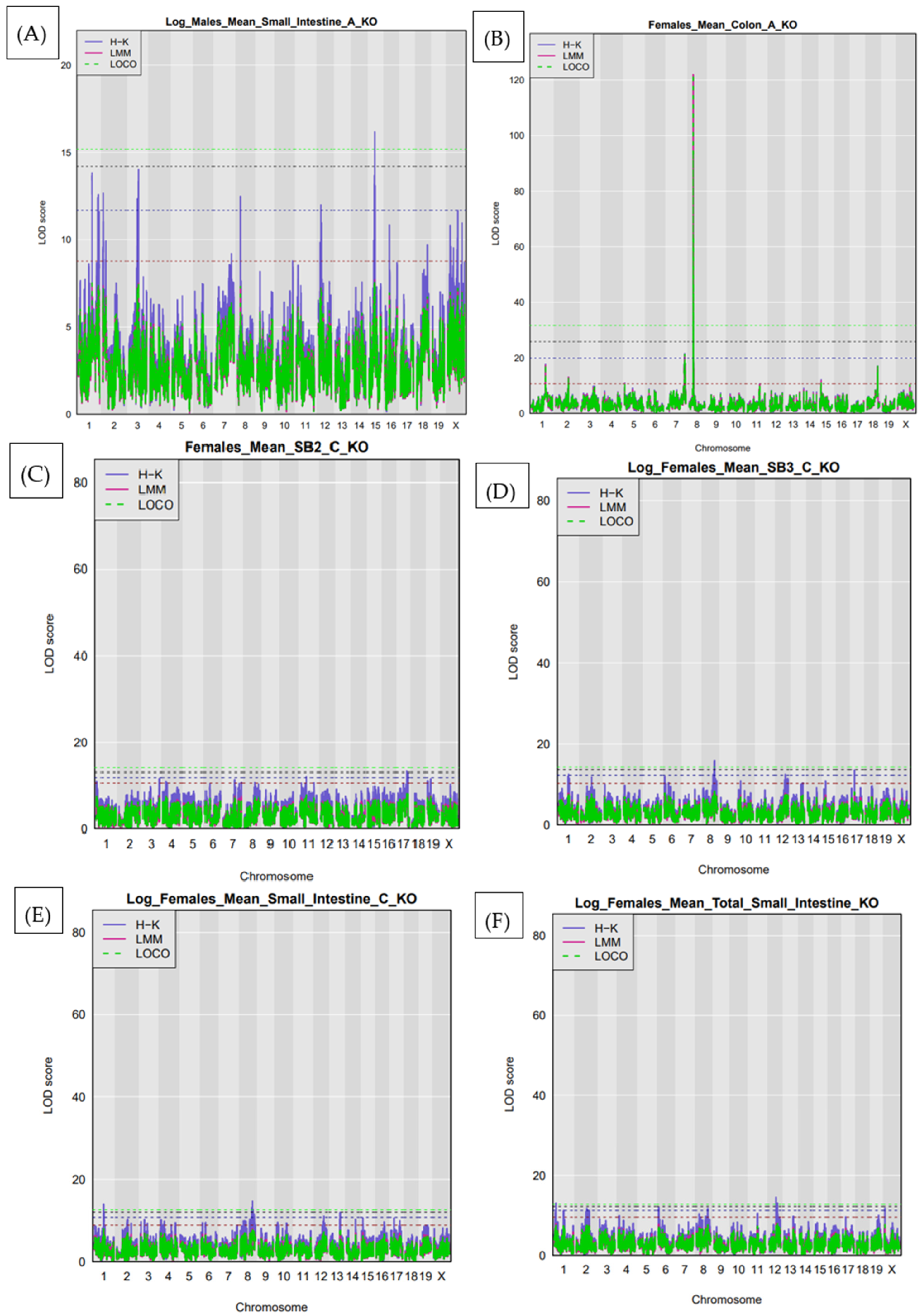
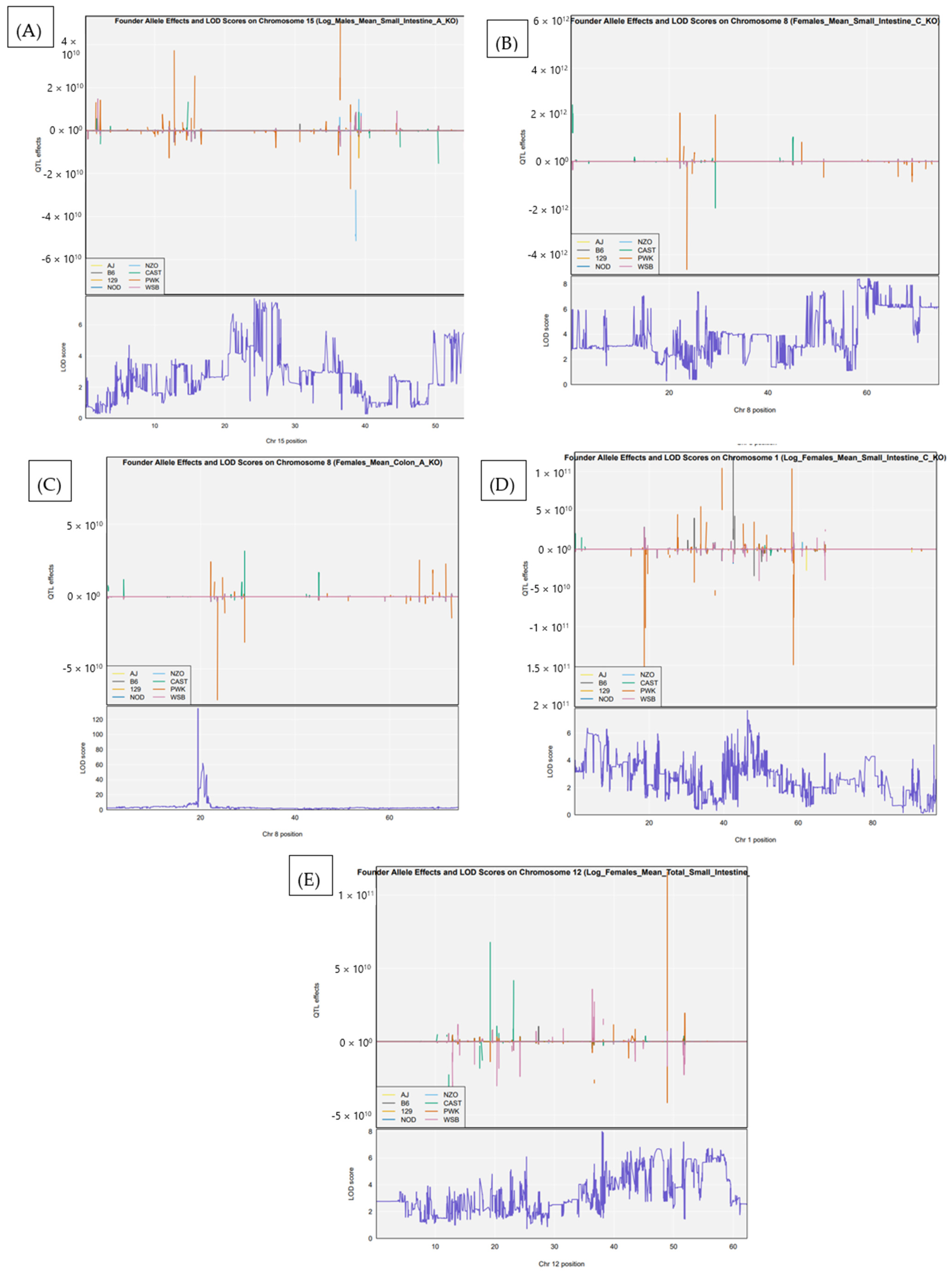
In the male-only analysis, one significant QTL was identified. This locus,
Ipsl4, mapped to chromosome 15 at 25.83 Mb and was associated with polyp counts in the SB2 region. The confidence interval for this locus was 25.71–25.93 Mb, indicating a highly localized effect (
Figure 3A). In contrast, the female-only analysis revealed six significant QTL. Three of these were found on chromosome 8, including
Ipsl5 (60.26 Mb),
Ipsl6 (19.45 Mb), and
Ipsl7 (58.75 Mb), all associated with either SB3 or colon polyp traits. Additional loci included IPSL8 on chromosome 1 at 46.65 Mb,
Ipsl9 also on chromosome 8 at 60.16 Mb, and
Ipsl10 on chromosome 12 at 37.78 Mb, which were associated with total small intestine polyp counts. These results highlight both common and sex-specific genetic influences on intestinal tumorigenesis, as shown in
Figure 3B–F.
At the suggestive threshold defined by permutation analysis, ten additional QTL were identified (
Table 2). In the full cohort, one QTL—
Ipsl11—was detected on chromosome 14 at 12.25 Mb, associated with log-transformed colon polyp counts and spanning a 4.09 Mb interval. In males, four loci emerged:
Ipsl12, a broad QTL on chromosome 1 covering over 76 Mb;
Ipsl13 on chromosome 3 at 38.78 Mb with no span;
Ipsl14 on chromosome 1 at 7.56 Mb; and
Ipsl15 on chromosome 15 at 21.39 Mb. The relatively wide confidence intervals for some of these loci suggest the possibility of complex or polygenic influences in male mice.
In females, five QTL were detected at the suggestive threshold defined by permutation analysis. Ipsl16, located on chromosome 17 at 46.37 Mb, was associated with SB2 polyp burden and exhibited a broad interval extending to 52.97 Mb. Ipsl17 and Ipsl18 were also located on chromosome 17, with overlapping positions and smaller confidence intervals. Ipsl19 was a point-wise QTL on the same chromosome at 17.37 Mb, and Ipsl20, on chromosome 1 at 8.79 Mb, spanned a narrow interval of 8.75–8.86 Mb. These female-specific loci may point to regulatory regions affecting intestinal phenotypes in a sex-dependent manner.
At a more permissive exploratory threshold below the suggestive level, numerous exploration QTL were detected across all groups and intestinal regions. These loci, presented in
Supplementary Tables S1–S3, encompass a broader genetic architecture and may reflect the cumulative contributions of moderate-effect variants. While these loci fall below conventional significance thresholds, they serve as hypothesis-generating candidates for future studies, including fine-mapping, eQTL analysis, and functional validation.
3.3. Founder Strain Effects at Significant QTL
To assess the genetic contributions of individual CC founder strains to polyp susceptibility, we examined allele-specific effects at the peak loci of the most significant QTL (
Ipsl1–
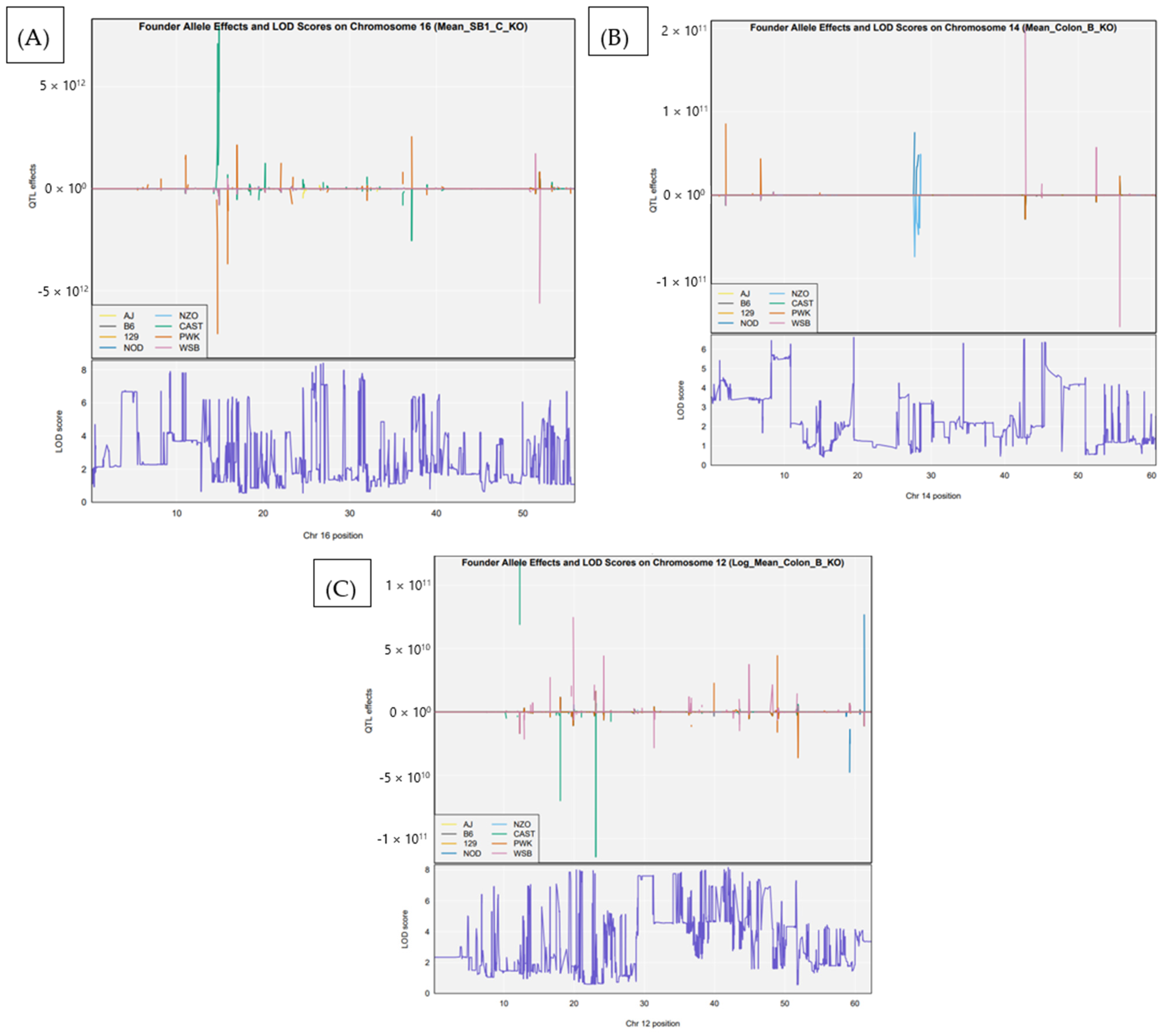
Ipsl3). Founder effect plots revealed distinct strain-specific contributions across loci (
Figure 4A–C). At
Ipsl1 (chromosome 16), associated with SB1 polyp counts, the PWK and CAST alleles displayed the largest effects, suggesting a major influence on proximal small intestine susceptibility. At
Ipsl2 (chromosome 14), which was linked to colon polyp burden, prominent effects were observed from the NZO and WSB founder alleles. For
Ipsl3 (chromosome 12), associated with log-transformed colon polyp counts, the CAST, PWK, and WSB strains again showed strong deviation from the baseline, indicating consistent contributions to polyp modulation across multiple intestinal regions. These findings underscore the heterogeneous genetic architecture underlying polyp susceptibility and highlight specific founders with pleiotropic or region-specific effects. Founder strain effect plots for the three major QTL (
Ipsl1–
Ipsl3) revealed distinct allele-specific contributions, particularly from PWK, CAST, and WSB founders, supporting their role in modulating intestinal polyp susceptibility (
Figure 4).
To identify sex-specific genetic effects on intestinal polyp development, we performed separate QTL mapping analyses in male and female cohorts. This analysis revealed six additional significant loci that reached the genome-wide significance threshold in either sex. In males, one QTL (
Ipsl4) on chromosome 15 (
Figure 5A) was significantly associated with polyp counts in the small intestine (SB2 region), with CAST and NOD alleles contributing the strongest effects at the peak. In females, five distinct QTL were detected across multiple intestinal compartments. A locus on chromosome 8 (IPSL5) was associated with polyp counts in the small intestine (
Figure 5B), while a second signal on the same chromosome (IPSL6) was linked to polyp burden in the colon (
Figure 5C). Additional female-specific QTL included IPSL7 on chromosome 1 for SB3 counts (
Figure 5D), IPSL8 on chromosome 12 for total small intestinal polyps (
Figure 5E), and IPSL9 on chromosome 15, overlapping but distinct from the male-specific locus. These findings underscore the sexually dimorphic architecture of polyp susceptibility, with chromosome 8 emerging as a shared regulatory locus for both small intestine and colon phenotypes in females. Founder strain effect plots for loci reaching the suggestive threshold defined by permutation analysis are provided in
Supplementary Materials.
3.4. Pathway Enrichment Analysis
Pathway enrichment results revealed several biologically plausible candidates, though most enrichments fell below strict statistical thresholds. In WikiPathways, the IL-2 and IL-7 signaling pathways were enriched via NMI and STAM2, implicating immune regulatory roles [
32]. The proteasome degradation pathway included PSMD6, aligning with known functions in protein turnover and ubiquitin signaling [
33]. Interestingly, CACNB4 appeared in the Dravet syndrome pathway (WP5298), consistent with its role in calcium channel regulation in neuronal contexts [
34], while RPRM contributed to p53 signaling, associated with DNA damage response [
35].
Analysis using CORUM identified several high-confidence protein complexes, including the IFP35–NMI and Emerin–Actin–NMI complexes, suggesting involvement of NMI in chromatin architecture and transcriptional control [
36]. STAM2 appeared in multiple complexes related to endosomal sorting and EGFR trafficking, supporting its role in signal transduction and vesicular trafficking [
37].
Reactome pathway enrichment reinforced several of these findings. The Ub-specific processing protease pathway included PSMD6, STAM2, and ATXN7, implicating protein degradation machinery. The nicotinamide salvaging pathway, represented by NAMPT, aligns with its regulatory role in NAD biosynthesis and SIRT1 activity [
38]. Enrichment of the Rho GTPase cycle, involving RND3 and FMNL2, pointed to cytoskeletal dynamics and signaling functions [
39]. While many Reactome enrichments had adjusted
p-values > 0.1, their biological coherence strengthens the relevance of these genes in the QTL phenotypes examined.
Collectively, these results suggest that genes located within QTL may converge on pathways involved in transcriptional regulation, immune signaling, protein degradation, and neuronal excitability. Although direct expression data from intestinal tissues were not available in this study, the existing literature supports the involvement of several candidate genes in epithelial biology and tumorigenesis [
40,
41].
3.5. Gene Functional Analysis
Functional characterization of genes within the identified QTL regions was performed to provide additional context for the observed phenotype. Several genes were found to participate in enriched pathways and protein complexes, suggesting potential roles in relevant biological processes. However, most pathway enrichments were suggestive and did not reach conventional statistical significance thresholds (FDR < 0.05).
To summarize these associations,
Table 3 presents each gene alongside its most relevant enriched pathway or protein complex, including the source database and adjusted
p-values. These results provide a framework for interpreting the potential biological functions of candidate genes identified within the QTL regions.
One of the most prominent candidates, PSMD6, was consistently enriched across Reactome and CORUM, indicating its integral role in the ubiquitin–proteasome system. This gene encodes a non-ATPase subunit of the 26S proteasome, essential for protein degradation and turnover [
33]. Its recurrence in pathways such as “Ub-specific processing proteases” and “proteasome-mediated degradation” implies a mechanistic link between proteostasis and the trait captured by the QTL.
Another recurrent gene, STAM2, was found in multiple protein complexes involved in endosomal sorting and receptor signaling, including the RIN1–STAM2–EGFR complex and the ESCRT machinery [
37]. These complexes are critical for trafficking membrane-bound receptors, including EGFR, and thereby influence signal transduction pathways. STAM2 also featured in immune-related pathways, including IL-2 and IL-7 signaling, highlighting a potential interface between vesicle trafficking and cytokine signaling.
NAMPT was enriched in the nicotinamide salvaging pathway, underscoring its role in NAD+ biosynthesis and cellular metabolism [
38]. Its involvement in metabolic regulation may reflect a broader metabolic component underlying the QTL phenotype. Similarly, NMI (N-myc and STAT interactor) was identified in multiple CORUM complexes and has known functions in transcriptional regulation, particularly in cytokine and interferon response pathways [
36].
CACNB4, a beta subunit of voltage-dependent calcium channels, appeared in both the Dravet Syndrome pathway and neuronal system signaling cascades. This is consistent with its role in neuronal excitability and synaptic transmission and suggests that the QTL may capture variation in neurophysiological processes [
34].
Genes like RND3 and FMNL2, involved in Rho GTPase signaling, were linked to pathways regulating cytoskeletal reorganization and cell migration. RND3 negatively regulates RhoA activity and modulates neurite outgrowth [
39], while FMNL2 is a formin family member involved in Actin polymerization and Golgi organization [
39]. These findings highlight the possible influence of cytoskeletal remodeling in the phenotype associated with QTL.
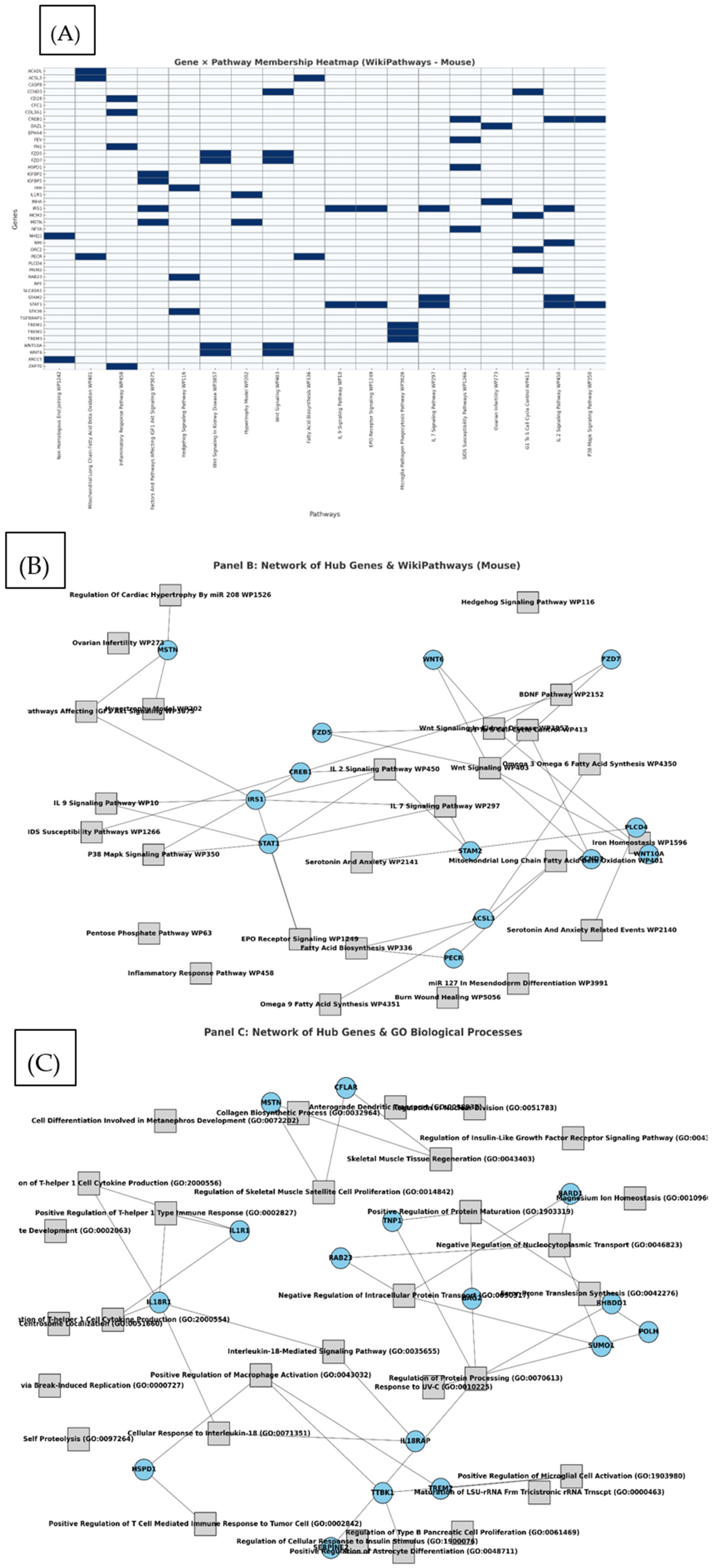
A network visualization of the QTL-associated genes and their enriched functional pathways is presented in
Figure 6, highlighting key regulators such as
STAM2,
PSMD6, and
NAMPT, which contribute to multiple biological processes.
Together, the convergence of these genes across signaling, metabolism, protein degradation, and neuronal pathways supports a multifaceted genetic architecture underlying the identified QTL. The functional diversity of these genes emphasizes the importance of integrating pathway and complex-level annotations to decode complex trait loci.
3.6. Gene–Pathway Networks and Hub Gene Architecture
To better understand the functional convergence of QTL-associated genes, we constructed gene–pathway networks based on the top 30 enriched pathways from WikiPathways (2024, Mouse) and GO Biological Processes (2025). In both datasets, several genes appeared in multiple pathways, forming a set of hub genes likely to play pleiotropic roles across biological processes.
In the WikiPathways-derived network, hub genes such as
STAM2,
PSMD6, and
NAMPT connected to pathways related to immune signaling, protein degradation, and NAD+ metabolism, respectively (
Figure 6B). The GO network revealed similar patterns, with shared genes linking vesicle trafficking, ubiquitin signaling, and developmental processes (
Figure 6C). These results support the hypothesis that QTL intervals contain regulators with broad biological influence.
To validate and contextualize these findings, we also generated a binary gene–pathway heatmap of the enriched WikiPathways. This revealed subsets of genes that cluster in distinct biological modules (
Figure 6A), reinforcing the functional overlap observed in the network analysis.
3.7. Transcription Factor Associations
Additionally, transcription factor enrichment yielded several significant results. Using ChEA 2022 and the Rummagene transcription factor co-regulation library, we identified multiple transcription factors significantly enriched at FDR < 0.05, with additional regulators emerging at FDR < 0.1. These findings indicate that genes mapping to the identified QTL may be under coordinated transcriptional control. A complete list of enriched transcription factors and their adjusted
p-values is provided in
Supplementary Table S4.
4. Discussion
This study leverages the genetic diversity of Collaborative Cross (CC) mice to investigate modifier loci influencing polyp development in
Smad4-deficient mice, a model for Juvenile Polyposis Syndrome (JPS). The substantial phenotypic variation observed across F1 offspring reflects the complex, multigenic nature of JPS, consistent with previous findings that patient outcomes vary despite identical germline mutations [
42,
43].
The identification of significant QTL on chromosomes 2, 12, 14, and 16 suggests the existence of multiple genetic loci that modulate intestinal polyp susceptibility. The loci detected, particularly
IPSL1 on chromosome 16 and
Ipsl2/Ipsl3 on chromosomes 14 and 12, corroborate earlier studies that have emphasized the importance of background genetics in tumor susceptibility [
18,
26]. The strong effect observed from the PWK/PhJ founder haplotype highlights how wild-derived alleles may contribute disproportionately to phenotype variability, a trend also noted in CC-based studies of Apc
Min tumor models [
22].
Several candidate genes were identified within the QTL regions, including
PSMD6,
STAM2, and
NAMPT, which have been implicated in cancer-related processes, supporting their potential translational relevance. For example,
PSMD6, a component of the 26S proteasome, has been reported to be upregulated in colon cancer and is associated with tumor progression, highlighting a role for proteasomal activity in maintaining oncogenic signaling [
44]. Similarly,
NAMPT, a key enzyme in NAD+ biosynthesis, has been extensively linked to colorectal cancer, where it promotes tumor growth, metabolic reprogramming, and cancer stem cell maintenance [
41,
45]. In addition,
NAMPT has been shown to regulate key pathways such as SIRT1 signaling and cellular metabolism, both of which are critical for tumor progression and therapy resistance [
40]. Although
STAM2 has been less directly studied in colorectal cancer, its role in endosomal trafficking and receptor signaling suggests potential involvement in pathways such as EGFR signaling, which are central to intestinal epithelial biology [
46]. These findings support the biological plausibility of the identified loci and highlight potential mechanisms through which genetic background may influence polyp susceptibility in Smad4-deficient mice. However, direct validation in human JPS cohorts will be required to confirm their role as genetic modifiers.
Pathway enrichment of genes within these QTL pointed to biological systems already implicated in colorectal cancer and JPS pathogenesis, including TGF-β and Wnt signaling, proteasomal degradation, and cytokine-mediated immune regulation [
10,
47,
48]. For example,
PSMD6, identified in both Reactome and CORUM pathways, participates in proteasomal degradation and may influence tumor suppressor protein turnover, consistent with its proposed role in cancer biology [
49].
Other recurrent genes, such as
STAM2 and
NMI were involved in immune signaling (e.g., IL-2, IL-7) and transcriptional regulation, respectively, linking inflammation and immune surveillance to polyp burden—an increasingly recognized axis in tumorigenesis [
32,
36]. Additionally, genes such as
CACNB4 and
RND3, more commonly associated with neuronal or cytoskeletal function, may reflect the broader cellular architecture and signaling dynamics that influence epithelial organization and tumor progression [
34,
50].
These findings align with the observed phenotypic variability in JPS. They suggest that differential expression or mutation of these genes may contribute to variability even among individuals carrying identical Smad4 mutations [
4]. By elucidating candidate modifier loci and pathways, this study adds to the growing understanding that JPS is influenced by more than just a single causative mutation.
Importantly, the loci identified in this study differ from those reported in ApcMin-based models, suggesting that modifier effects are influenced by the underlying tumorigenic pathway and highlighting a context-specific genetic architecture.
A limitation of this work is the absence of detailed histopathological and protein-level validation of the identified phenotypes. While the primary aim was genetic mapping, future studies incorporating immunohistochemistry and molecular profiling will be important to further assess the functional impact of candidate modifier genes. In addition, the interpretation of sex-stratified QTL analyses requires some caution. Although the cohort included a relatively balanced number of males (n = 129) and females (n = 131), stratification reduces the effective sample size compared to the combined analysis. Consequently, some of the observed sex-specific differences may reflect reduced power to detect modest-effect loci rather than true biological dimorphism.
Together, these findings provide a framework for understanding how genetic background influences polyp susceptibility in Smad4-deficient models and highlight candidate pathways for future functional and translational studies.
5. Conclusions
This study identified novel genetic loci that modulate polyp development in a Smad4-deficient mouse model of Juvenile Polyposis Syndrome using the genetically diverse Collaborative Cross population. QTL mapping revealed multiple loci across several chromosomes, implicating genes involved in proteasome function, immune signaling, and cytoskeletal organization.
These findings provide insight into the polygenic nature of JPS and suggest that individuals with the same Smad4 mutation may experience differing clinical outcomes due to the influence of background genetic modifiers. The identification of genes such as PSMD6, STAM2, NAMPT, and CACNB4 supports further exploration of pathways like protein degradation and cytokine signaling in JPS pathophysiology.
By integrating genetic mapping with pathway and gene function analysis, our work lays the foundation for future translational studies aimed at improving risk stratification and informing surveillance strategies based on individual genetic backgrounds [
17]. Validating these loci in human cohorts will be a crucial next step toward understanding the molecular underpinnings of phenotypic heterogeneity in hereditary gastrointestinal cancer syndromes.




 ,
,