Abstract
Investigating the mechanisms that maintain different types of neural stem cells is essential for brain development. While factors maintaining distinct Drosophila melanogaster neuroblasts (NBs) have been identified, additional factors remain unidentified. In this paper, we find knockdown of split ends (spen) increases in nuclear Notch intracellular domain (NICD) level, which in turn activates Notch signaling in type II NBs. This activation causes the intermediate neural progenitors (imINPs) to dedifferentiate into type II NBs, thereby increasing the number of type II NBs specifically. Additionally, we find that knockdown of both spen and a co-repressor of the Notch signaling pathway, Hairless, in type II NBs exacerbates the increase in type II NBs number, compared to spen knockdown alone. Furthermore, we observe that loss of Spen results in more severe phenotypes than loss of Hairless in type II NBs and their lineages. We reveal that Spen may indeed function as a functional homolog of its mammalian homolog, SHARP, acting as a novel Notch signaling co-repressor in type II NBs specifically. This highlights the potential for multiple co-repressors to collaboratively regulate the same signaling pathway within the type II NBs lineage. The distinct regulatory mechanism of type I and II NBs offers new insights into the study of neural stem cell homeostasis.
1. Introduction
Different regulatory mechanisms are crucial for the maintenance of distinct NBs and are also important for the overall homeostasis of brain development. Neural stem cells are a type of cell that generate neurons or glial cells, which compose the central nervous system (CNS) [1,2]. Excessive proliferation of neural stem cells may induce the onset of malignancies, whereas insufficient division of neural stem cells can lead to neurodevelopmental defects [3,4]. Mammalian neural stem cells exhibit various division modes, and the division modes of type I and type II neural stem cells (neuroblasts, NBs) [5] in Drosophila melanogaster are analogous to two of these modes in mammals [1,6]. Therefore, Drosophila NBs serve as an excellent model for studying neural stem cells. The Drosophila central brain NBs are primarily categorized into two types: type I and type II NBs [7]. Drosophila NBs originate during embryogenesis, and by the third instar larval stage, there are eight type II NBs per hemisphere, a number that is significantly smaller than the approximately 90 type I NBs [8,9]. In addition, the progeny cells produced by the two types of NBs differ. Type II NBs generate another NB and an intermediate neural progenitor (INP), which undergoes a limited number of division cycles before differentiating into a ganglion mother cell (GMC), while type I NBs give rise to another NB and a ganglion mother cell (GMC), which subsequently produces neurons or glial cells [1,7]. Different types of neural stem cells produce varying numbers of progeny and contribute to distinct brain structures [10,11,12,13]. For example, type II NBs can generate numerous progeny cells that contribute to the formation of the central complex of the Drosophila central brain, or to the optic lobe by producing glial cells which differentiate into lobular giant glial cells [1,8,9,10,12]. In addition to the aforementioned differences, type I and type II NBs also express distinct molecular markers. Asense (Ase) is specifically expressed in type I NBs, but not in type II NBs, whereas Pntp1 (Pnt) is exclusively expressed in type II NBs [14,15]. Many studies have reported the different maintenance mechanisms of type I and type II NBs. For example, Six4 can specifically inhibit the premature differentiation of INPs [16]. However, it remains unclear whether there are other unknown specific regulatory factors that affect different types of NBs. The process by which type II NBs generate INPs is analogous to that of higher mammalian NSCs, making type II NBs an excellent model for studying the maintenance of neural stem cells [17,18]. Therefore, it is crucial to explore the mechanisms involved in maintaining Drosophila type II NBs specifically.
It has been reported that ectopic activation of Notch signaling leads to over-proliferation and an increase in ectopic NBs, which appears to be more pronounced in type II NBs [19,20,21,22]. The mechanism by which the Notch signaling pathway exerts its effects through cleavage is conserved. Upon binding of the Notch receptor to ligands secreted by adjacent cells, a series of cleavage events occurs, resulting in the generation of the active form, NotchNICD (Notch intracellular domain, NICD). NotchNICD subsequently translocates from the cytoplasm to the nucleus, where it activates the expression of downstream Notch target genes such as E(spl)mγ [23,24]. During the activation of the Notch signaling pathway, numerous factors regulate this process. For example, the mammalian SHARP functions as a co-repressor recruited by RBP-J. In the absence of NotchNICD, SHARP and RBP-J bind to DNA, thereby repressing the expression of downstream target genes [24,25,26]. This process is mediated by Hairless (H) in Drosophila; however, no homologous protein of Hairless has been identified in mammals [24,27]. Although many regulatory factors have been reported, it remains unclear whether there are other regulatory factors of the Notch signaling pathway and whether multiple co-repressors exist to coordinately regulate the Notch signaling pathway in Drosophila type II NBs. Therefore, investigating new regulatory factors of the Notch signaling pathway is crucial for the maintenance of type II NBs.
Split ends (Spen) (also called MINT in mice and SHARP in humans [28,29]) play an important role in regulating gene expression and tissue development. SHARP, as a transcriptional co-repressor, can combine with chromatin-remolding complexes or physically associate with the nuclear receptor components [30,31,32,33,34]. The biological functions of Spen include promoting cilia formation, maintaining middle glial cell fate, and regulating various other processes [35,36,37]. In addition, Spen is involved in multiple signaling pathways that collectively regulate tissue growth and development [38,39,40,41]. For example, during Drosophila eye development, the absence of Spen results in ectopic activation of Notch signaling, and this aberrant activation subsequently diminishes the activity of the epidermal growth factor receptor (EGFR) signaling pathway, ultimately leading to the disruption of adult eye morphology [41]. However, the role of Spen in Drosophila NBs is currently unclear, and the relationship between the Notch signaling pathway in Drosophila type II NBs remains to be elucidated. Furthermore, it remains unclear whether multiple signaling pathways collaborate to exert their effects in Drosophila NBs and whether Spen plays a critical regulatory role in NBs.
In this study, we find that Spen can prevent the generation of supernumerary type II NBs but does not affect the number of type I NBs. Moreover, we identify that the specific role of Spen in type II NBs is mediated by the inhibition of the Notch signaling pathway, which prevents the dedifferentiation of intermediate neural progenitors (imINPs). In addition, we also find that knockdown of both spen and Hairless can enhance the phenotype resulting from knockdown of spen alone in type II NBs. Furthermore, in imINPs, Hairless and Spen appear to play distinct roles. The reduction in the EGFR signaling pathway can partially rescue the increase in type II NBs caused by spen knockdown. Therefore, our experiments highlight that Spen functions as a novel regulatory factor of Notch signaling in Drosophila to prevent the generation of supernumerary type II NBs specifically. This regulatory role suggests that Spen, like Hairless, may function as an ortholog of mammalian SHARP.
2. Materials and Methods
2.1. Drosophila Stocks and Genetics
Flies were raised at 25 °C and mated at 29 °C. The GAL4 strains involved in this paper included: UAS-Dicer2; wor-GAL4, ase-GAL80, UAS-mCD8-GFP; + (II NB-GAL4), w; ase-GAL4; UAS-Dicer2, w; UAS-Dicer2; PntP1-GAL4, UAS-mCD8-GFP (Pnt NB-GAL4), w; UAS-mCD8-GFP; UAS-Dicer2, 9D11-GAL4 (9D11 mINP-GAL4), w; UAS-LacZ, 9D10-GAL4 (9D10 mINP-GAL4); sb/Tm6B, Repo-GAL4/Tm6B, Elav-GAL4, Spen-GAL4, Hairless-GAL4. The other strains involved in this paper included: UAS-spen RNAi (Tsing Hua Fly Center, Beijng, China, THU0750), UAS-spen RNAi (Vienna Drosophila Resource Center (VDRC), Vienna, Austria, 108828, P{KK100153}VIE-260B), UAS-spen RNAi (v48846, gift from Li Hua Jin), UAS-spen (Bloomington Drosophila Stock Center (BDSC), Bloomington, Indiana, USA, 20756,y1 w67c23; P{EPgy2}spenEY12567), Pnt-lacZ (gift from Zhouhua Li), UAS-luciferase (BDSC35788, P{UAS-LUC.VALIUM10}attP2), UAS-LacZ RNAi (V51446), UAS-Notch RNAi (THU0549), UAS-Notch RNAi (BDSC33611, P{TRiP.HMS00001}attP2), w; +; E(spl)mγ-GFP (gift from Yan Song), UAS-Egfr RNAi (THU1863, THU1864), UAS-Egfr CA (BDSC9533, BDSC9534), UAS-Hairless RNAi (THU3690), UAS-Hairless RNAi (v24466), UAS-Arm RNAi (THU1631), UAS-Ctbp RNAi (THU1078), UAS-Ctbp RNAi (THU1919), UAS-brat (BDSC13860).
2.2. Immunohistochemistry
Third larval brains were dissected, and then they were incubated in 4% paraformaldehyde for 20 min. Samples were washed with 0.3% PBST for 4 times and subsequently blocked by 2% BSA for 1 h. Samples were incubated at 4 °C overnight with primary antibodies. The samples were washed with 0.3% PBST for 4 times, then the secondary antibody was incubated for 2 h, and the secondary antibody was finally washed off. Paraformaldehyde (Sigma, Merck Ltd., Shanghai, China). PBST is prepared by adding TritonX-100 to PBS (Phosphate-Buffered Saline). TritonX-100 (Shanghai Shenggong Biotechnology Engineering Co., Ltd., Shanghai, China). PBS (Shanghai Shenggong Biotechnology Engineering Co., Ltd., Shanghai, China). Finally, the tissues were observed with Zeiss LSM700 (Carl Zeiss Microscopy GmbH 700, version 3.6, Zeiss, Germany, Jena) and Zeiss LSM900 (Carl Zeiss Microscopy GmbH 900, version 3.8, Zeiss, Germany, Jena) confocal microscopes. The following primary antibodies were used in this paper: Chicken polyclonal anti-GFP (1:1000, Cat# A10262, Thermo Fisher Scientific, Shanghai, China), Rat monoclonal anti-Miranda (1:1000, Cat#ab197788, Abcam, Shanghai, China), Rat monoclonal anti-Dpn (1:1000, Cat# ab195173; Abcam), Rabbit polyclonal anti-PH3 (1:100, Cat# 9701, Cell Signaling Technology, Shanghai, China), Rat anti-Elav (1:50, Cat# 9F8A9, DSHB (Developmental Studies Hybridoma Bank), Shanghai, China), Rabbit anti-Ase (Serum antibodies constructed by the laboratory), Mouse anti-PKC ζ (1:50, Cat#177781, Santa Cruz, Shanghai, China), Chicken anti-lacZ (1:20, Cat#ab9361, Abcam), Mouse anti-NICD (1:50, cat#C17.9C6, DSHB). Mouse anti-NECD (1:50, cat#C458.2H, DSHB), Rabbit anti-mcherry (1:10, Cat#ab213511, Abcam).
2.3. The NICD Level Analysis
During the microscope scanning, continuous observation and scanning along the Z-axis are performed, and the layers with the maximum cross-section on the two-dimensional plane of the entire cell for imaging are selected. Then the single-layered nucleus identified in the 2D images is the region of interest for further analysis of NICD levels. Fold changes in mean fluorescence intensities of NICD are represented in the quantitative fluorescence figures.
2.4. Statistical Analysis
For quantification of NSCs, Dpn/Mira and GFP-positive NSCs at the indicated stage were counted. Fluorescence intensity analysis was performed on samples under consistent background conditions using ImageJ software (version Fiji Is Just ImageJ 2.9.0/1.53t). Fluorescence intensity and other statistical data were analyzed using GraphPad Prism 6 (GraphPad Software). For comparisons between two groups, the t-test or the non-parametric Mann–Whitney Test was employed to assess statistical significance. The total number of animals, analytical methods, p-values, and significance levels were indicated in the Figure legends. p-values of less than 0.05 were considered statistically significant. Asterisks indicate critical levels of significance (*: p < 0.05; **: p < 0.01; ***: p < 0.001; ****: p < 0.0001). Table S1 shows the exact p-values of this article.
3. Results
3.1. Spen Knockdown Leads to an Increased Number of Type II NBs Specifically
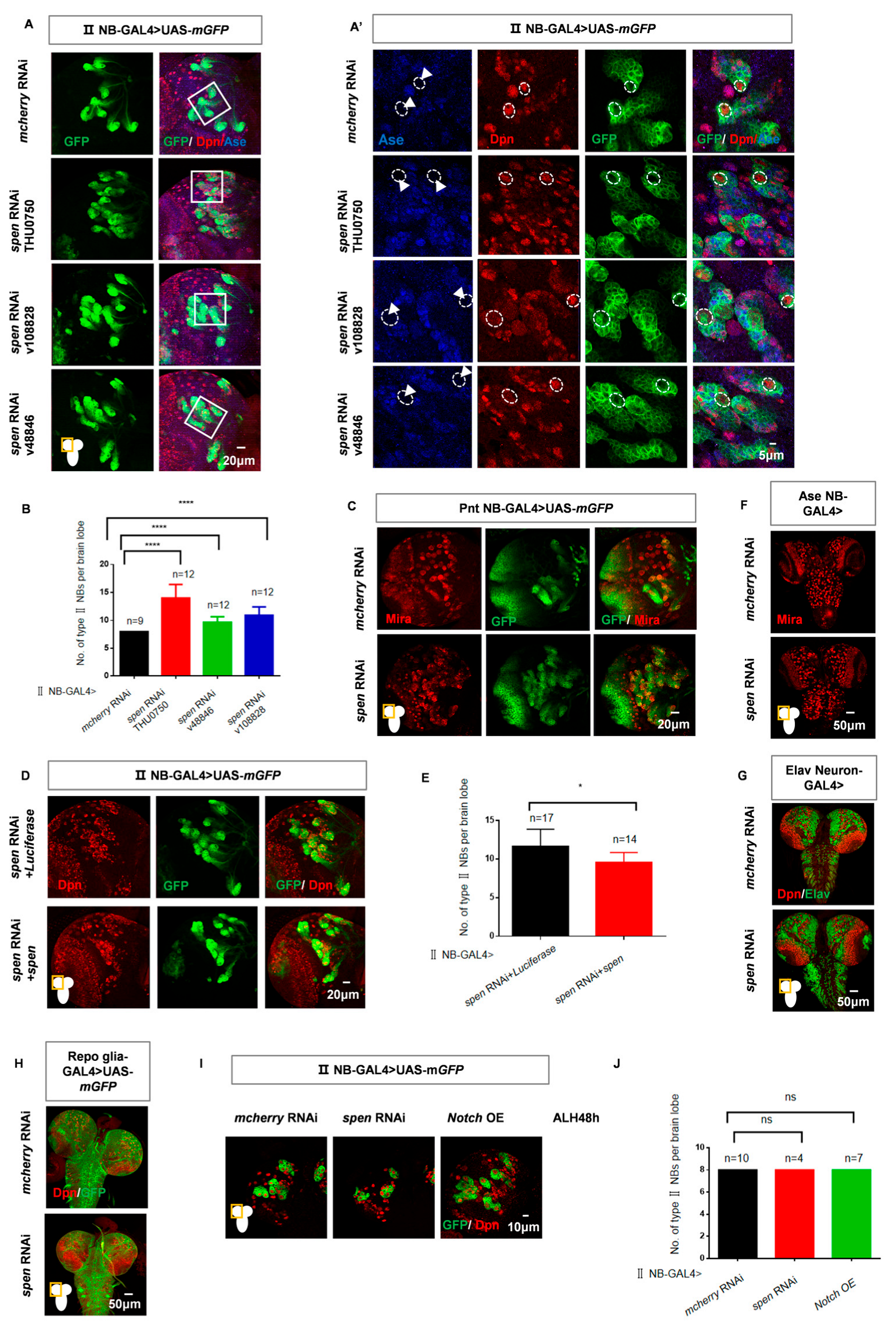
In order to identify genes that specifically influence the development of type II NBs, we conducted knockdown experiments using a GAL4 driver that was specific to type II NBs (UAS-Dicer2; wor-GAL4, ase-GAL80, UASmCD8-GFP, referred to as II NB-GAL4 hereafter). Then, we quantified the number of type II NBs in each brain hemisphere (in wildtype, type II NBs can be labeled with Dpn and GFP, but not with Ase) at the third instar larval stage. We found that spen knockdown resulted in a greater number of type II NBs compared to control (Figure 1A,B). Increased numbers of type II NBs were also observed in additional spen RNAi lines (Figure 1A,B). Among these strains, the THU0750 strain was selected for the subsequent experiments. Simultaneously, we employed a different type II NB-GAL4 (UAS-Dicer2; Pnt-GAL4, UAS-mCD8-GFP, hereafter referred to as Pnt-GAL4) for spen knockdown and also found an increase in the number of type II NBs (Figure 1C). To rule out the possibility of off-target effects of RNAi, we performed a rescue experiment by overexpressing spen in a background where spen was knocked down. We found that knockdown of spen followed by overexpression of spen can reduce the increased number of type II NBs induced by spen knockdown (9.6 NBs compared to 11.6 NBs) (Figure 1D,E). These results demonstrate that the phenotype of type II NBs number increase is indeed caused by spen knockdown.
Figure 1.
split ends(spen) knockdown leads to an increased number of type II neuroblasts(NBs) specifically. (A) Utilizing type II NB-GAL4 to knock down different spen RNAi lines consistently resulted in an increase in type II NBs. The area outlined by the white solid line represents the region that was magnified for scanning. (A’) showed type II NB lineages, e labeled with GFP, Dpn, but not Ase (white arrowhead) in (A). The white dashed circles represent type II NBs. (B) Quantification of type II NBs number in per brain lobe about (A). **** p < 0.0001, Mann–Whitney Test for analysis. (C) Knockdown of spen by Pnt-GAL4 also induced an increased number of type II NBs. (D,E) Overexpression of spen in a background where spen was knocked down can partially rescue the number of ectopic type II NBs, and (E) shows quantification of the number of type II NBs in each brain lobe. * p < 0.05, Mann–Whitney Test for analysis. (F–H) Knockdown of spen in type I NBs by Ase-GAL4 (F) and in neurons by Elav-GAL4 (G) and in pan-glial cells by Repo-GAL4 (H) resulted in no obvious effect on the whole brain size and NBs. (I,J) At ALH48h, the number of type II NBs had no obvious change in spen knockdown and Notch overexpressing flies. (J) Quantification of type II NBs number in per brain lobe from genotypes in (I), Mean ± SEM, ns, non-significant, t-test for analysis. Mira or Dpn represented NBs in all results. Elav showed neuronal cells in (G), and GFP showed the structure of glial cells in (H). All brains were obtained from third-instar larvae. Type II NB lineages are labeled by GFP and Dpn.
To investigate whether this phenotype was specific to type II NBs, we utilized additional GAL4 drivers to knock down spen in other tissues. There is no obvious alteration in the number of type I NBs when spen was knocked down by Ase-GAL4 (Figure 1F). Furthermore, knockdown of spen in neurons by Elav-GAL4 or glial cells by Repo-GAL4 (Repo-GAL4; UAS mCD8-GFP, referred to as Repo-GAL4) did not cause any obvious phenotype (Figure 1G,H). These results suggest that knockdown of spen increases the number of type II NBs specifically.
Finally, we investigated the time period during which Spen exerts its effects. By quantifying the number of type II NBs at 48 h after larval hatching (ALH), we found that there is no difference in the number of type II NBs when spen knockdown at ALH48h compared to control (Figure 1I,J). It demonstrates that Spen plays a role at the late second instar larval stage and thereafter. These experimental results reveal that knockdown of spen specifically increases the number of type II NBs at the late stage of second instar larva and thereafter.
3.2. Spen Prevents Type II NBs Number Increase Excessively by Inhibiting the Dedifferentiation of ImINPs
To explore the causes of the increase in the number of type II NBs, we first detected the asymmetric divisions. Disruption of asymmetric division can impact the self-renewal capacity of type II NBs, thereby altering their overall numbers [42]. Proper orientation of cell fate determinants is essential during asymmetric division. The Par complex, which includes components such as aPKC, localizes to the apical cortex of NBs and is ultimately distributed to the larger daughter cell, forming a new NB. Conversely, factors like Miranda (Mira) localize to the basal cortex and are allocated to smaller progeny cells [1,43,44]. So, we detected the location of Mira and aPKC in the metaphase with spen knockdown. We observed that aPKC was retained apically within the NBs, while Mira is localized at the basal cortex of the NBs, adjacent to the newly generated INPs (Figure S1A,B). Consequently, these results suggest that spen knockdown does not result in asymmetric division defects.
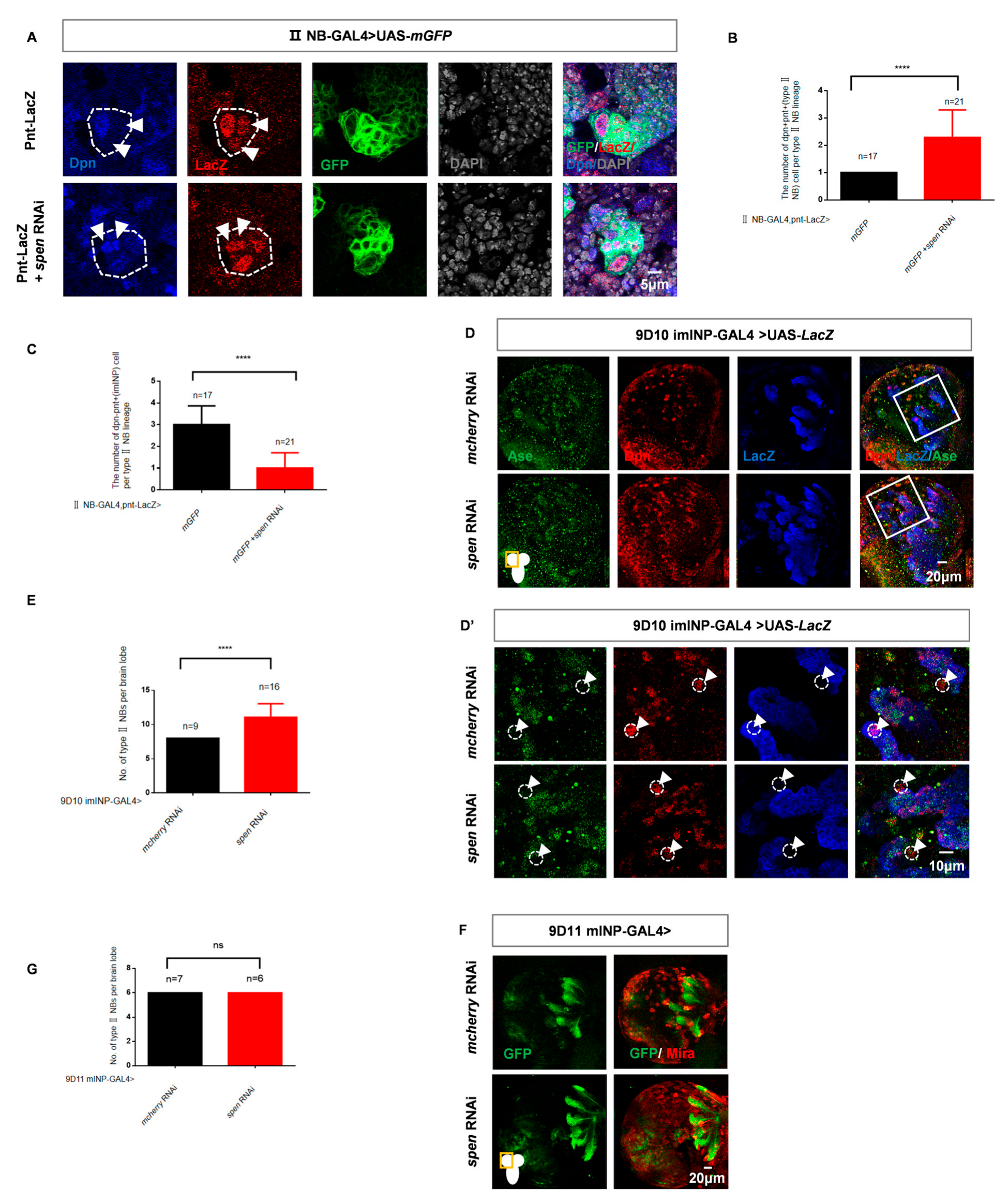
The newly generated INPs are initially immature and must prevent dedifferentiation into NBs to undergo correct differentiation into mature INPs, thereby ensuring proper brain development [16,45]. Thus, dedifferentiation of imINPs may contribute to the overproduction of type II NBs. Both imINPs and type II NBs express Pntp1(Pnt), while Dpn is only expressed in type II NBs [45,46]. We found an increase in Dpn+ pntp1+ type II NBs, while the number of imINPs (Dpn−, Pntp1+) is reduced (Figure 2A–C) with spen knockdown. These results indicate that the knockdown of spen leads to a decrease in imINPs and an increase in type II NBs. To further confirm that the spen knockdown leads to the dedifferentiation of imINPs into NBs, we knocked down spen in imINPs using the imINP-specific GAL4 (9D10) driver, and we observed that knockdown of spen in imINPs results in an increase in type II NBs (Dpn+ Ase−) numbers (Figure 2D,E). Furthermore, to confirm the specific role of Spen in imINPs, we knocked down spen using the 9D11-GAL4 (mature INPs, mINPs) driver, and found no difference in the number of type II NBs (Figure 2F,G). We conclude that Spen maintains the normal cell fate of imINPs, preventing them from dedifferentiating into type II NBs.
Figure 2.
spen knockdown induces intermediate neural progenitors (imINPs) dedifferentiate into type II NBs. (A–C) spen knockdown induced the Dpn+ Pnt+ (NB) cells number increase (white arrowhead), and Dpn- Pnt+ (imINP) cells decrease. (B) Quantification of Dpn+ Pnt+ (NB) cells number per II NB lineage from genotypes in (A). **** p < 0.0001, Mann–Whitney Test for analysis. (C) Quantification of Dpn- Pnt+ (imINP) cells number per II NB lineage from genotypes in (A). Mean ± SEM, **** p < 0.0001, t-test for analysis. (D,E) spen Knockdown by 9D10 GAL4 induced the type II NBs number increase. The area outlined by the white solid line represents the region that was magnified for scanning. (D’) showed imINP lineages. The type II NBs were labeled with Dpn, but not with LacZ and Ase (white arrowhead) in (D). The white dashed circles represent type II NBs. (E) Quantification of type II NBs number (Ase-Dpn+ cells, white arrowhead) per brain lobe was shown in figure (D). **** p < 0.0001, Mann–Whitney Test for analysis. (F,G) Spen defect in mature INPs (mINPs) had no effect on the number of NBs. (G) Quantification of NBs number in each brain lobe from genotypes in (F), Mean ± SEM, ns, non-significant, t-test for analysis. GFP-marked type II NBs and their lineages in (A). LacZ-marked imINPs and their lineages in (D).
3.3. Spen Represses Notch Signaling Pathway to Prevent Overproduction of Type II NBs
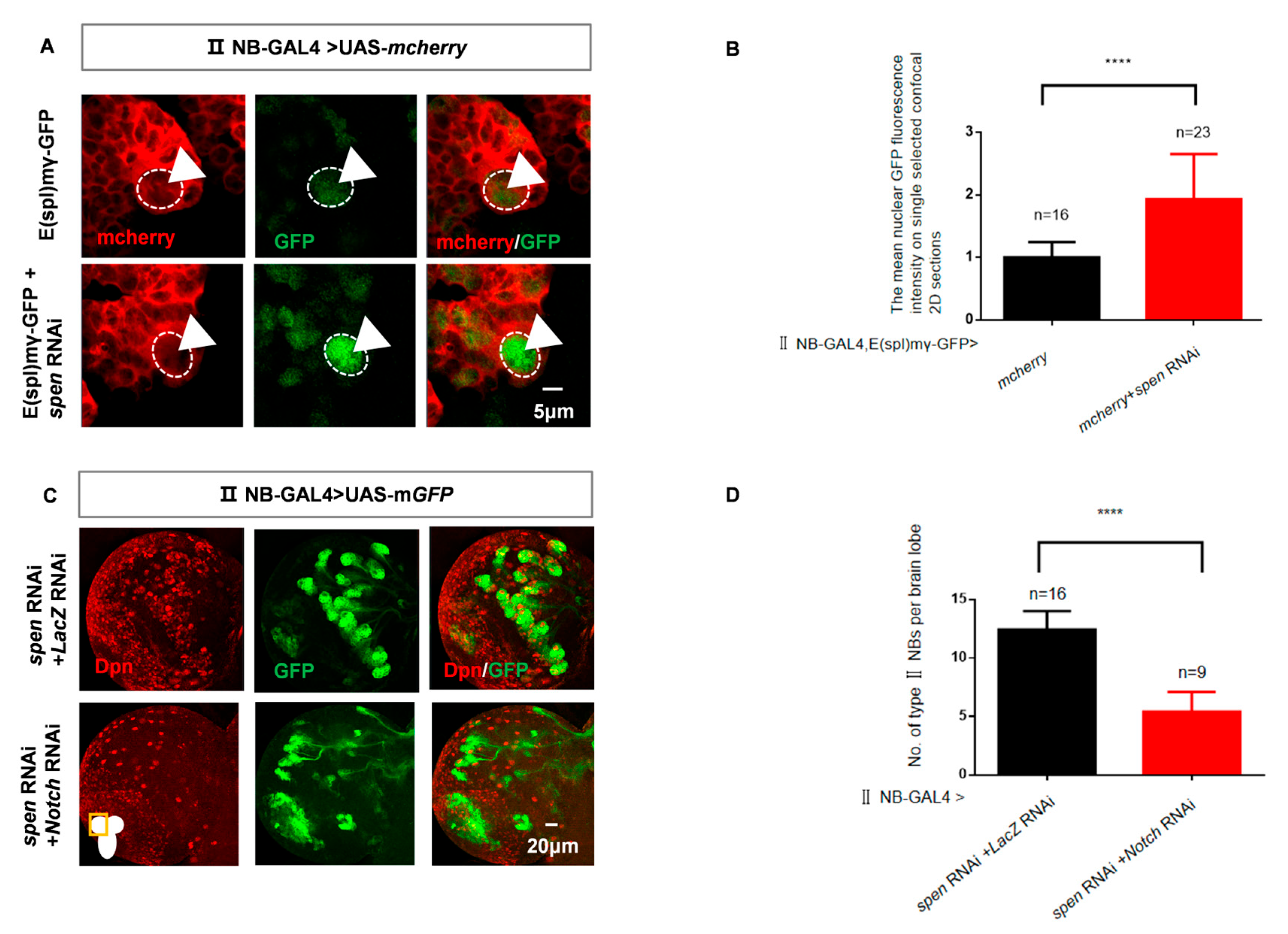
Type II NBs are more sensitive to the Notch pathway [6], and activation of the Notch signaling pathway leads to an excessive number of type II NBs [19,20,21,22]. In addition, we found that the time point at which Notch activation exerted its effects was nearly identical to the time point at which spen knockdown exerted its effects (Figure 1I,J). Therefore, we wanted to know whether the maintenance of type II NBs by Spen was associated with Notch signaling. Firstly, we measured the expression level of downstream genes -Notch activity reporter E(spl)mγ-GFP [47] after spen knockdown. We found an increase in E(spl)mγ-GFP content in a single type II NB (Figure 3A,B). Next, we performed a double knockdown of spen and Notch in type II NBs. This resulted in a rescue of the type II NBs number compared to spen knockdown alone (Figure 3C,D). The above experimental results indicate that Spen affects the development of type II NBs through repressing the Notch signaling pathway.
Figure 3.
spen knockdown can activate the Notch signaling pathway. (A,B) The content of E(spl)mγ-GFP in spen-defect brains increased (white arrowhead). The white dashed circle represents type II NBs. (B) The mean GFP fluorescence intensity that was normalized against the background fluorescence was measured in selected regions of interest on a single selected confocal 2D section in each brain lobe from genotypes in (A). **** p < 0.0001, Mann–Whitney Test for analysis. (C,D) Double knockdown of spen and notch (B33611) rescued the increasing type II NBs number compared to knockdown of spen and lacZ. (D) Quantification of the number of type II NBs per brain lobe from genotypes in (C). Mean ± SEM, **** p < 0.0001, t-test for analysis. GFP-marked type II NBs and their lineages in (C); mcherry-marked type II NBs in (A).
Previous studies have indicated that loss of Pnt results in an increase in the number of type II NBs and the elimination of INPs. And the overexpression of related Notch suppressors, such as brat can inhibit the reversion of immature INPs to NBs [22,45,48]. To further investigate the mechanism of Spen-mediated dedifferentiation of imINPs, we first evaluated the levels of Pnt by Pnt-LacZ under spen knockdown. Following spen knockdown, the LacZ level detected in each type II NB shows no significant difference (Figure S1C,D), suggesting that spen deficiency did not alter pnt expression in individual type II NBs. Ectopic expression of erm, which is a downstream gene regulated by the Notch signaling pathway, can lead to the conversion of type II NBs into type I-like NBs and can also promote the termination of self-renewal in type II NBs [48]. So, we overexpressed erm to assess whether they could counteract the increased number of type II NBs following spen knockdown. We found that after overexpressing erm in the context of spen knockdown, the number of type II NBs remains approximately 13 (Figure S1E,F). Conversely, when we overexpressed brat with spen knockdown, the number of type II NBs decreased significantly (Figure S1G,H). Together, these results indicate that the dedifferentiation of imINP caused by the knockdown of spen can be inhibited by the Notch signaling pathway and brat.
3.4. Spen Inhibits Notch Signaling by Suppressing the Nuclear Level of NICD
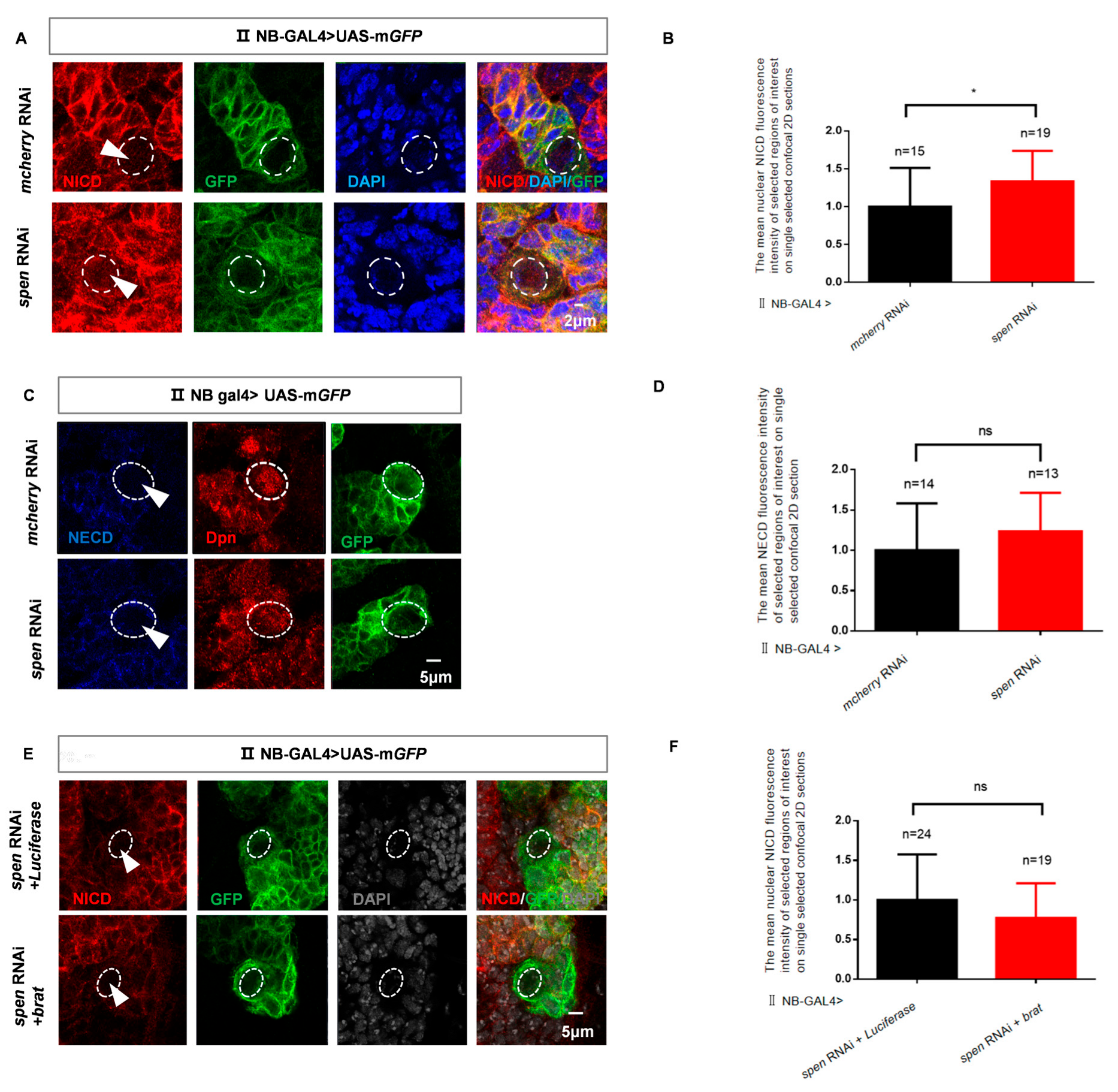
We aimed to investigate the mechanism by which Spen represses the Notch signaling pathway, so we measured the level of Notch. Upon spen knockdown, we observed a moderate increase in nuclear NICD level in type II NBs (Figure 4A,B). However, the level of Notch extracellular domain (NECD) remains unchanged in type II NBs after knockdown of spen (Figure 4C,D). These results suggest that the content of total Notch level remains unchanged, while NICD level increases.
Figure 4.
spen knockdown promotes nuclear nuclear Notch intracellular domain (NICD) level in Drosophila. (A) The mean fluorescence of NICD increased in spen knockdown brains. (B) The mean nuclear NICD fluorescence intensity that was normalized against background fluorescence was measured in selected regions of interest on a single selected confocal 2D section in each brain lobe from genotypes in (A). Mean ± SEM, * p < 0.05 T test for analysis. (C,D) The mean fluorescence of Notch extracellular domain (NECD) had no difference in spen knockdown brains. (D) The mean NECD fluorescence intensity that was normalized against background fluorescence was measured in selected regions of interest on a single selected confocal 2D section in each brain lobe from genotypes in (C). Mean ± SEM, ns, non-significant, t-test for analysis. (E,F) Brat overexpression in the background of spen knockdown could not downregulate the NICD level compared to control. (F) The mean nuclear NICD fluorescence intensity that was normalized against background fluorescence was measured in selected regions of interest on a single selected confocal 2D section in each brain lobe from genotypes in (E). Mean ± SEM, ns, non-significant, t-test for analysis. GFP-marked type II NBs and their lineages in (A,C,E). DAPI shows nuclei in (A,E). The white dashed circle represents type II NBs in (A,C,E).
It had been reported that Brat could also suppress the nuclear translocation of NICD [49]. Here, our previous experimental results indicated that the overexpression of brat can rescue the increase in type II NBs caused by the knockdown of spen (Figure S1G,H). To further confirm whether the elevated nuclear NICD levels are solely due to the Spen or the result of the combined action of Spen and Brat, we overexpressed brat in the context of spen knockdown and measured the nuclear NICD level in an individual type II NB. No significant difference in nuclear NICD level is observed (Figure 4E,F). Therefore, under the condition of spen knockdown, Brat does not affect the increased nuclear level of NICD. The Notch inhibitor Brat can enter into imINPs from type II NBs through asymmetric division, where it suppresses the expression of downstream genes of the Notch signaling pathway, thereby preventing the dedifferentiation of imINPs [17,45]. So, these results show that in the context of imINPs, dedifferentiation is regulated by Spen. Brat may also exert its effects by downregulating the expression of Notch-related genes, rather than inhibiting the increased level of nuclear NICD induced by spen knockdown.
3.5. Hairless Promotes the Phenotype Caused by Spen in Type II NBs
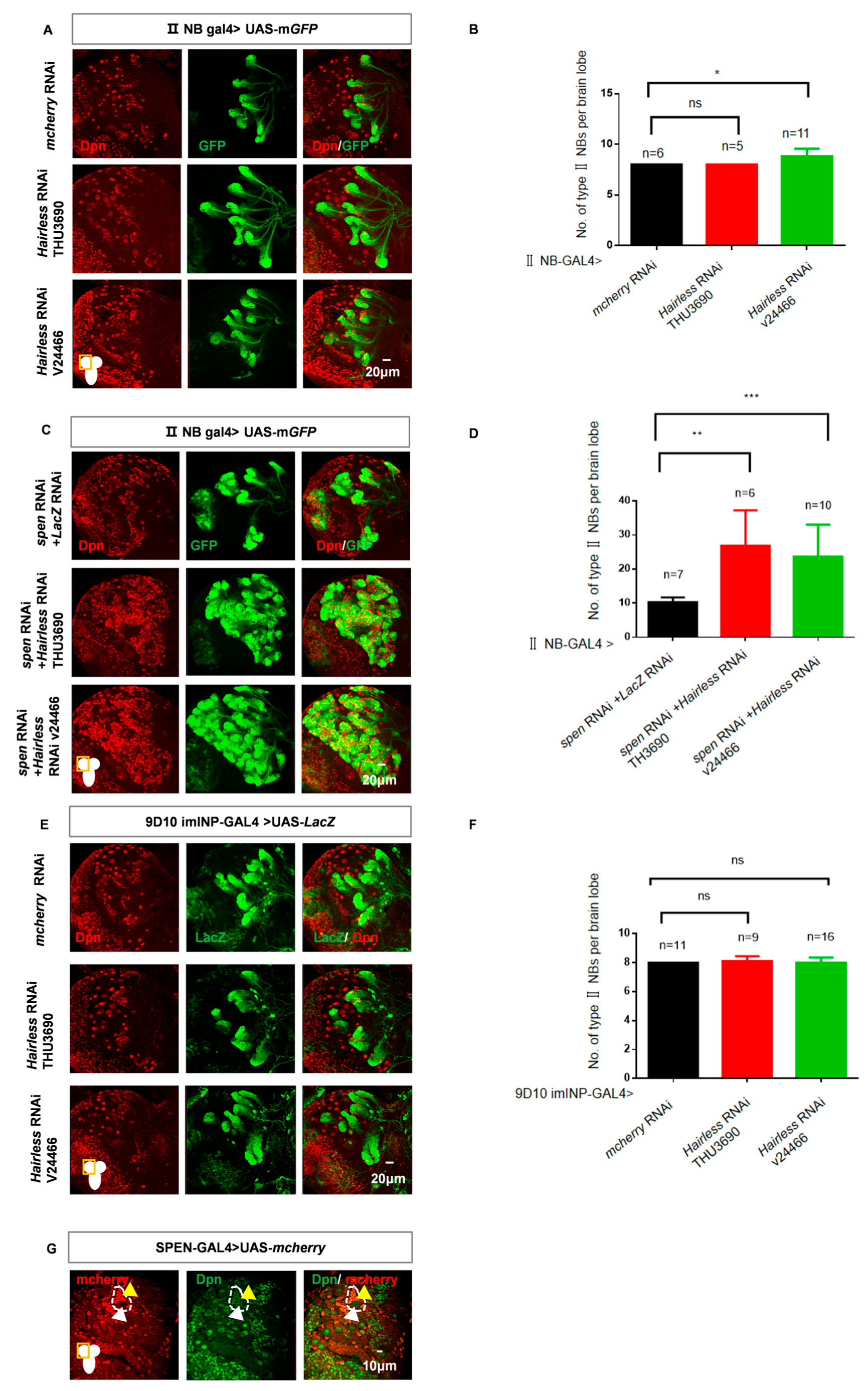
Hairless is a classic gene that functions as a transcriptional inhibitor within the Notch signaling pathway in Drosophila [50,51]. It interacts with the CSL protein-su(H) to inhibit the Notch signaling pathway, similar to the function of SHARP in mammals [26,27]. Yet, it has been reported that Spen may not be a functional homolog of mammalian SHARP [52]. However, our experimental results suggest that Spen may serve a similar role as SHARP in type II NBs to inhibit the Notch signaling pathway. Therefore, to further investigate the function of Spen, we knocked the SHARP functional homolog gene, Hairless, down alone or together with spen. We observed a modest increase in the number of type II NBs upon knockdown of Hairless alone (Figure 5A,B). The effects of Hairless knockdown varied across different strains, which was consistent with the fact that Hairless functions in a dose-dependent manner [27]. However, a more pronounced emergence of ectopic type II NBs is noted when both spen and Hairless were simultaneously knocked down (Figure 5C,D). This indicates that both Spen and Hairless can prevent the excessive type II NBs collectively. Furthermore, since more type II NBs were observed following the knockdown of spen compared to the knockdown of Hairless alone, it appears that Spen plays a more critical role in this maintenance function than Hairless.
Figure 5.
The double knockdown of spen and Hairless leads to an excessive increase in the number of type II NBs. (A,B) The number of type II NBs had a modest effect in Hairless knockdown brains. (B) Quantification of type II NBs number in per brain lobe about (A) * p < 0.05, ns, non-significant, Mann–Whitney Test for analysis. (C,D) Knockdown of spen and Hairless led to more ectopic type II NBs compared to knockdown spen alone. (D) Quantification of the number of type II NBs per brain lobe (C). ** p < 0.01, *** p < 0.001, Mann–Whitney Test for analysis. (E,F) Hairless knockdown in imINPs remained normal type II NBs number. (F) Quantification of type II NBs in each brain lobe from genotypes in (E), Mean ± SEM, ns, non-significant, t-test for analysis. (G) Spen-GAL4 derived mcherry-NLS expression. GFP-marked type II NBs and their lineages in (A,C). LacZ-marked imINPs and their lineages in (E). White arrowheads mark type II NBs, and yellow arrowheads mark type II NBs’ progeny.
To further confirm that Spen and Hairless exert similar functions in the collective maintenance of type II NBs, we knocked Ctbp down in type II NBs alone and conducted a double knockdown experiment of Ctbp and spen simultaneously. Ctbp had been reported as another global repressor of Notch signaling pathway and recruited by Hairless in Drosophila or by SHARP in mammals [24,27]. We found that knockdown of Ctbp alone did not affect the number of type II NBs, and the double knockdown of spen and Ctbp did not exacerbate the phenotype induced by the knockdown of spen alone (Figure S2A–D). It suggests that in the Drosophila type II NBs lineage, Spen may play a similar role to Hairless, not to Ctbp.
Currently, although several co-repressors are known, the relationships between different co-repressors remain unclear; is there a tissue-specific differential involvement in their function? Our experimental results suggest that Spen may serve as an alternative co-repressor of the Notch signaling pathway in type II NBs. However, we sought to further understand the differences between Spen and Hairless as co-repressors; we knocked Hairless down in imINP and found that knockdown of Hairless in imINP does not affect the number of type II NBs, as spen (Figure 5E,F and Figure 2D,E). Next, we found that Spen was expressed in both type II NBs and their progeny, although its level in type II NBs appeared to be lower than in the progenitor cells (Figure 5G). Based on the above results, we concluded that Spen may play roles both in type II NBs and imINPs, whereas Hairless only exerts functions in type II NBs.
3.6. The EGFR Signaling Pathway Participates in the Spen-Mediated Maintenance of Type II NBs
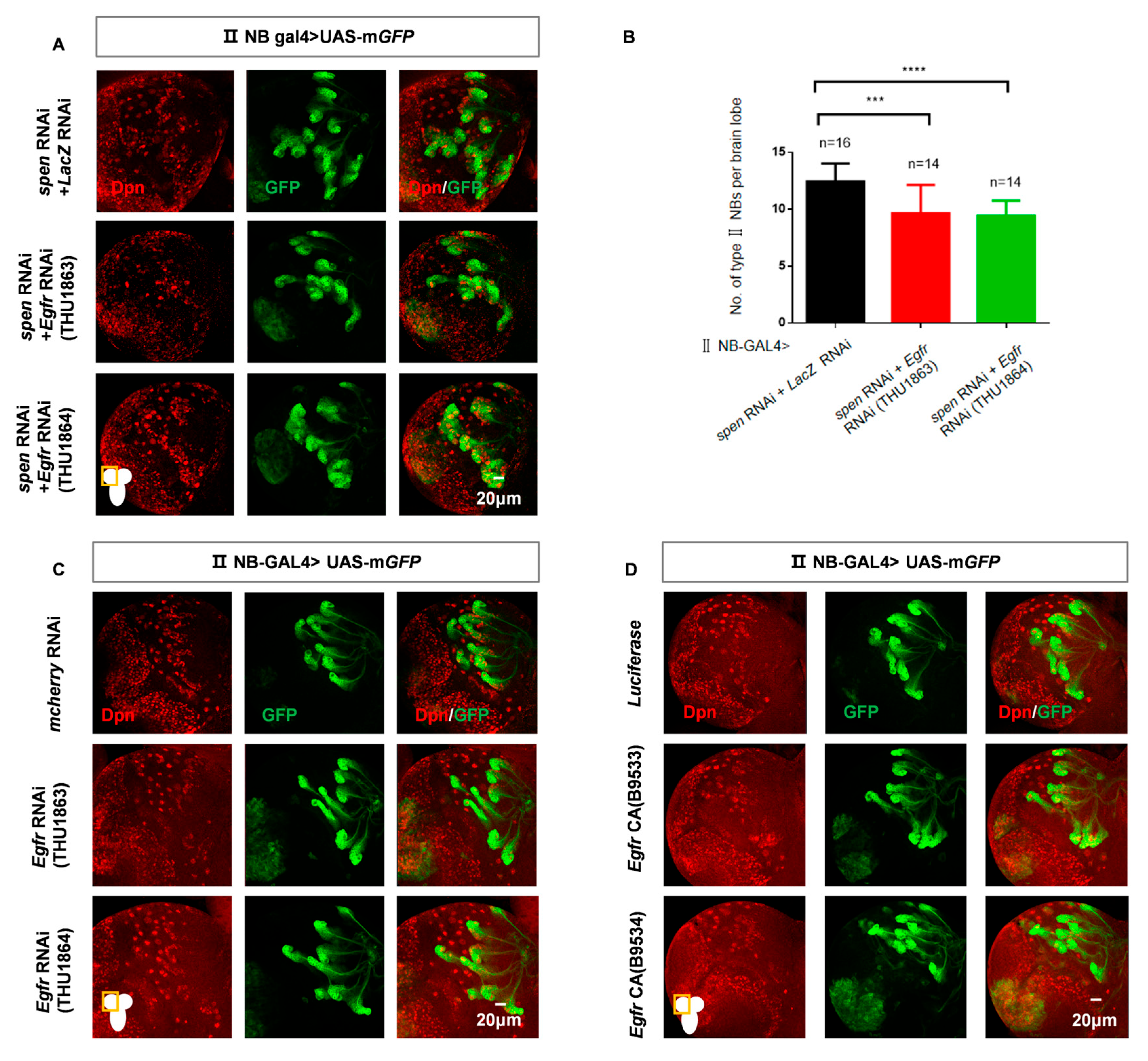
Previous research suggests that the Wnt signaling pathway (Wnt) and the EGFR signaling pathway may influence tissue development through the involvement of Spen [37,53,54,55], so we wondered whether other pathways play roles in Spen-mediated maintenance of type II NBs. We found that the knockdown of Arm, a core component of the Drosophila Wnt signaling pathway and homolog of β-catenin, failed to change the effects in spen knockdown background (Figure S2E). Reducing the activity of the EGFR pathway could partially decrease the type II NBs in the spen knockdown background (Figure 6A,B). However, direct knockdown of Egfr in type II NBs or expression of a constitutive active form of Egfr does not affect the type II NBs (Figure 6C,D). The above results demonstrate that the EGFR signaling pathway is involved in the Spen-mediated maintenance of type II NBs, rather than independently regulating type II NBs during the third larval stage.
Figure 6.
The EGFR signaling pathway is involved in Spen-mediated maintenance of type II NBs. (A) Double knockdown of spen and Egfr could partially rescue the increasing type II NBs number compared to knockdown of spen and lacZ. (B) Quantification of type II NBs number in per brain lobe from genotypes in (A). Mean ± SEM, *** p < 0.001, **** p < 0.0001, t test for analysis. (C,D) Overexpression of a constitutively active form of Egfr or knockdown of Egfr does not affect the number of type II NBs. GFP-marked type II NBs and their lineages in (A,C,D).
4. Discussion
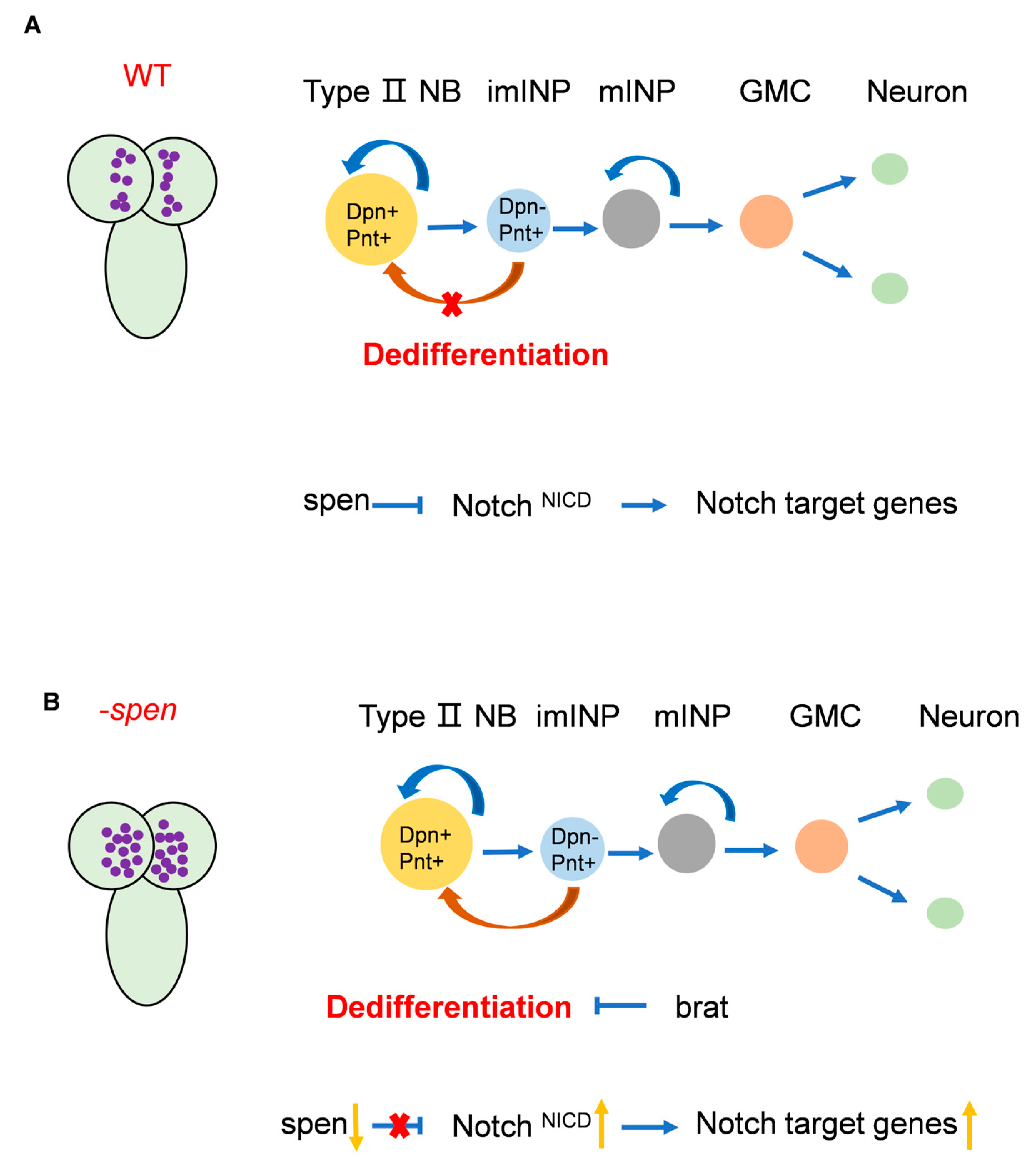
Different neural stem cells produce varying numbers of progeny cells to maintain normal brain development, making it crucial to investigate the factors that regulate the development of distinct neural stem cell populations. Given that the progeny production pattern of Drosophila type II NBs is similar to that of higher mammals, investigating new factors involved in maintaining Drosophila type II NBs could provide insights for future studies on the maintenance of neural stem cells in higher mammals. Although factors regulating different NBs in Drosophila have been reported, it remains unclear whether there are additional and important factors yet to be discovered. In this article, we found that spen knockdown leads to an increase in the number of type II NBs by inhibiting the NotchNICD level to prevent the dedifferentiation of imINPs (Figure 7). This phenotype specifically occurs in type II NBs and is not present in type I NBs, neurons, or glial cells. A recent study by Li et al., published on bioRxiv, similarly showed that the loss of Spen results in elevated expression of E(spl)m γ in stem cells, which in turn induces dedifferentiation in their descendant cells. These findings collectively support our own experimental conclusions. Additionally, we aim to investigate whether Spen functions as a co-repressor regulating nuclear NICD to control the expression of downstream genes such as E(spl)m γ. However, Li et al. found that Spen inhibits the translation of E(spl)m γ in stem cells by directly interacting with conserved motifs to keep E(spl)m γ expression at a low level. These findings indicate that Spen may regulate the Notch signaling pathway in type II NBs through multiple mechanisms, further highlighting the crucial role of Spen in Drosophila neural stem cell development [56]. Although Spen has been investigated in various Drosophila tissues, including the eyes, intestinal stem cells, and glial cells [32,37,41], its specific function in Drosophila NBs has remained unclear. Our findings, together with those of Li et al., provide additional insight into the role of Spen in the maintenance of type II NBs.
Figure 7.
Pattern diagram of the role of Spen in type II NBs. (A) In wildtype, Spen may act as a co-repressor to regulate nuclear NICD levels, thereby repressing the expression of genes downstream of the Notch signaling pathway. So that the number of type II NBs can be maintained at normal levels. (B) In the absence of Spen, the level of nuclear NICD is elevated, resulting in increased expression of Notch signaling pathway genes. Then imINPs dedifferentiate into type II NBs to increase the number of type II NBs. Brat can inhibit this dedifferentiation.
In Drosophila, Hairless is known as a co-repressor of the Notch signaling pathway, recruiting factors such as CtBP to collectively inhibit Notch signaling [27,57]. However, in mammals, there is no homolog of Hairless, and thus this process is carried out by the Drosophila Spen homolog, SHARP [24,52]. Some studies have suggested that Drosophila Spen may not functionally correspond to mammalian SHARP [52]. Our experimental results indicate that the concomitant knockdown of spen and Hairless results in a greater increase in type II NBs compared to the individual knockdown of either spen or Hairless. Furthermore, the phenotype resulting from the knockdown of spen is noticeably more pronounced than that from the knockdown of Hairless, suggesting that Spen may play a more critical role than Hairless. Based on our findings regarding the mechanism by which Spen inhibits Notch signaling, we propose that Spen and Hairless may function together as co-repressors. While the binding of mammalian SHARP to RBP-J has been reported, the interaction of Spen as a co-repressor with the Drosophila RBP-J homolog su(H) also requires investigation. This will be the focus of our future work, as we aim to provide more definitive evidence for the existence of two distinct co-repressors in Drosophila type II NBs. The presence of these two different co-repressors within the same lineage raises questions about their functional roles—possibly exerting different effects in distinct cell types? Our research indicates that the knockdown of spen in type II NBs or imINPs leads to a specific increase in type II NBs, while Hairless appears to function solely within type II NBs. This phenotype may be due to the fact that Spen and Hairless regulate distinct Notch downstream target genes, which is another avenue for our future exploration. In addition, it will be an intriguing area of future research to investigate when Hairless begins to disappear in various species and how its function is gradually replaced by SHARP.
Spen has been reported to influence diseases by modulating signaling pathways. For instance, Spen can regulate nasopharyngeal carcinoma (NPC) by maintaining the levels of PI3K/AKT and c-JUN [40]. And in Drosophila tissues, different signaling pathways often work together to regulate development. Our study shows that during the third instar larval stage, not only is the Notch signaling pathway crucial for the development of type II NBs, but the Egfr signaling pathway also plays a role in maintaining the number of NBs. This effect is mediated exclusively by Spen. Studying the regulation of type II NBs development by different signaling pathways is crucial for maintaining the number of type II NBs. However, the mechanisms by which these two signaling pathways collaboratively regulate each other remain unclear. In the future, we will pursue this as our research objective, aiming to target in order to specifically modulate the interactions between different signaling pathways, with the goal of addressing related diseases.
Supplementary Materials
The following supporting information can be downloaded at: https://www.mdpi.com/article/10.3390/cells14231926/s1, Figure S1. (A) Mira retains at the basal cortex of the NBs (indicated by the white arrowheads in the first and second rows) and aPKC located at apical cortex of NBs (Indicated by the white arrowheads in the third and fourth rows) when spen knockdown. (B) Quantification of aPKC and Mira localization during metaphase from genotypes in (A). (C,D) Knockdown of spen had no impact of the level of Pnt protein in an individual type II NB. (D) The mean LacZ fluorescence intensity that was normalized against background fluorescence was measured in selected regions of interest on single selected confocal 2D sections in per brain lobe from genotypes in (C). Mean SEM, ns, non significant, T test for analysis. (E,F) The overexpression of erm in the background of spen knockdown preserved the phenotype of increased type II NB numbers. (E) Quantification of type II NBs number in per brain lobe from genotypes in (D), Mean SEM, ns, non significant, T test for analysis. (G,H) Overexpression of brat decreased the number of type II NBs. Type II NB lineages were labeled by GFP, Dpn, and Ase (white arrowheads). (H) Quantification of type II NBs number in per brain lobe from genotypes in (G). **** p < 0.0001, Mann Whitney Test for analysis. GFP marked type II NBs and their lineages in A, C, E and G; Figure S2. (A,B) Knockdown of Ctbp could not led to the change of type II NBs number. (B) Quantification of type II NBs number in per brain lobe from genotypes in (A). Mean ± SEM, ns, non significant, T test for analysis. (C,D) knockdown of spen and Ctbp did not affect the number of type II NBs compared to spen knockdown alone. (D) Quantification of type II NBs number in per brain lobe from genotypes in (C). Mean ± SEM, ns, non significant, T test for analysis. (E) Downregulation of the Wingless signaling pathway did not affect the increase in the number of type II NBs caused by spen knockdown. GFP marked type II NBs and their lineages in A, C and E; Table S1. The exact p values in the article.
Author Contributions
Conceptualization, Q.Z., F.Z., M.R., and S.W.; methodology, Q.Z., F.Z., S.G., S.Z., W.G., M.R., and S.W.; formal analysis, Q.Z., F.Z., and S.W.; writing—original draft preparation, Q.Z.; writing—review and editing, Q.Z., M.R., and S.W.; performing experiments: Q.Z. and F.Z.; funding acquisition, M.R. and S.W. All authors have read and agreed to the published version of the manuscript.
Funding
The National Natural Science Foundation of China (52033002).
Institutional Review Board Statement
Not applicable.
Informed Consent Statement
Not applicable.
Data Availability Statement
The original contributions presented in this study are included in the article/Supplementary Material. Further inquiries can be directed to the corresponding author.
Acknowledgments
We would like to thank Tsing Hua Fly Center, Vienna Drosophila Resource Center (VDRC), Bloomington Drosophila Stock Center (BDSC), and Lihua Jin, Zhouhua Li, and Yan Song for the provision of essential Drosophila strains.
Conflicts of Interest
The authors declare no conflicts of interest.
References
- Homem, C.C.F.; Knoblich, J.A. Drosophila neuroblasts: A model for stem cell biology. Development 2012, 139, 4297–4310. [Google Scholar] [CrossRef]
- El-Danaf, R.N.; Rajesh, R.; Desplan, C. Temporal regulation of neural diversity in Drosophila and vertebrates. Semin. Cell Dev. Biol. 2022, 142, 13–22. [Google Scholar] [CrossRef]
- Ma, H.; Su, L.; Xia, W.; Wang, W.; Tan, G.; Jiao, J. MacroH2A1.2 deficiency leads to neural stem cell differentiation defects and autism-like behaviors. Embo Rep. 2021, 22, e52150. [Google Scholar] [CrossRef]
- Hakes, A.E.; Brand, A.H. Neural stem cell dynamics: The development of brain tumours. Curr. Opin. Cell Biol. 2019, 60, 131–138. [Google Scholar] [CrossRef]
- Lacin, H.; Truman, J.W. Lineage mapping identifies molecular and architectural similarities between the larval and adult Drosophila central nervous system. eLife 2016, 5, e13399. [Google Scholar] [CrossRef]
- Homem, C.C.F.; Repic, M.; Knoblich, J.A. Proliferation control in neural stem and progenitor cells. Nat. Rev. Neurosci. 2015, 16, 647–659. [Google Scholar] [CrossRef]
- Dubal, D.; Moghe, P.; Verma, R.K.; Uttekar, B.; Rikhy, R. Mitochondrial fusion regulates proliferation and differentiation in the type II neuroblast lineage in Drosophila. PLoS Genet. 2022, 18, e1010055. [Google Scholar] [CrossRef]
- Walsh, K.T.; Doe, C.Q. Drosophila embryonic type II neuroblasts: Origin, temporal patterning, and contribution to the adult central complex. Development 2017, 144, 4552–4562. [Google Scholar] [CrossRef]
- Álvarez, J.-A.; Díaz-Benjumea, F.J. Origin and specification of type II neuroblasts in the Drosophila embryo. Development 2018, 145, dev158394. [Google Scholar] [CrossRef]
- Kang, K.H.; Reichert, H. Control of neural stem cell self-renewal and differentiation in Drosophila. Cell Tissue Res. 2014, 359, 33–45. [Google Scholar] [CrossRef]
- Rethemeier, S.; Fritzsche, S.; Mühlen, D.; Bucher, G.; Hunnekuhl, V.S. Differences in size and number of embryonic type II neuroblast lineages correlate with divergent timing of central complex development between beetle and fly. eLife 2025, 13, RP99717. [Google Scholar] [CrossRef]
- Viktorin, G.; Riebli, N.; Popkova, A.; Giangrande, A.; Reichert, H. Multipotent neural stem cells generate glial cells of the central complex through transit amplifying intermediate progenitors in Drosophila brain development. Dev. Biol. 2011, 356, 553–565. [Google Scholar] [CrossRef]
- Izergina, N.; Balmer, J.; Bello, B.; Reichert, H. Postembryonic development of transit amplifying neuroblast lineages in the Drosophila brain. Neural Dev. 2009, 4, 44. [Google Scholar] [CrossRef]
- Zhu, S.; Barshow, S.; Wildonger, J.; Jan, L.Y.; Jan, Y.-N. Ets transcription factor Pointed promotes the generation of intermediate neural progenitors in Drosophila larval brains. Proc. Natl. Acad. Sci. USA 2011, 108, 20615–20620. [Google Scholar] [CrossRef]
- Chen, R.; Deng, X.; Zhu, S. The Ets protein Pointed P1 represses Asense expression in type II neuroblasts by activating Tailless. PLoS Genet. 2022, 18, e1009928. [Google Scholar] [CrossRef]
- Chen, R.; Hou, Y.; Connell, M.; Zhu, S. Homeodomain protein Six4 prevents the generation of supernumerary Drosophila type II neuroblasts and premature differentiation of intermediate neural progenitors. PLoS Genet. 2021, 17, e1009371. [Google Scholar] [CrossRef]
- Komori, H.; Golden, K.L.; Kobayashi, T.; Kageyama, R.; Lee, C.-Y. Multilayered gene control drives timely exit from the stem cell state in uncommitted progenitors during Drosophila asymmetric neural stem cell division. Genes Dev. 2018, 32, 1550–1561. [Google Scholar] [CrossRef]
- Zhu, S.; Wildonger, J.; Barshow, S.; Younger, S.; Huang, Y.; Lee, T. The bHLH Repressor Deadpan Regulates the Self-renewal and Specification of Drosophila Larval Neural Stem Cells Independently of Notch. PLoS ONE 2012, 7, e46724. [Google Scholar] [CrossRef]
- Wang, H.; Somers, G.W.; Bashirullah, A.; Heberlein, U.; Yu, F.; Chia, W. Aurora-A acts as a tumor suppressor and regulates self-renewal of Drosophila neuroblasts. Genes Dev. 2006, 20, 3453–3463. [Google Scholar] [CrossRef]
- Zhang, H.; Rui, M.; Ma, Z.; Gong, S.; Zhang, S.; Zhou, Q.; Gan, C.; Gong, W.; Wang, S. Golgi-to-ER retrograde transport prevents premature differentiation of Drosophila type II neuroblasts via Notch-signal-sending daughter cells. iScience 2023, 27, 108545. [Google Scholar] [CrossRef]
- San-Juán, B.P.; Baonza, A. The bHLH factor deadpan is a direct target of Notch signaling and regulates neuroblast self-renewal in Drosophila. Dev. Biol. 2011, 352, 70–82. [Google Scholar] [CrossRef]
- Bowman, S.K.; Rolland, V.; Betschinger, J.; Kinsey, K.A.; Emery, G.; Knoblich, J.A. The Tumor Suppressors Brat and Numb Regulate Transit-Amplifying Neuroblast Lineages in Drosophila. Dev. Cell 2008, 14, 535–546. [Google Scholar] [CrossRef]
- Shen, W.; Huang, J.; Wang, Y. Biological Significance of NOTCH Signaling Strength. Front. Cell Dev. Biol. 2021, 9, 652273. [Google Scholar] [CrossRef] [PubMed]
- Bray, S.J. Notch signalling: A simple pathway becomes complex. Nat. Rev. Mol. Cell Biol. 2006, 7, 678–689. [Google Scholar] [CrossRef] [PubMed]
- Oswald, F.; Rodriguez, P.; Giaimo, B.D.; Antonello, Z.A.; Mira, L.; Mittler, G.; Thiel, V.N.; Collins, K.J.; Tabaja, N.; Cizelsky, W.; et al. A phospho-dependent mechanism involving NCoR and KMT2D controls a permissive chromatin state at Notch target genes. Nucleic Acids Res. 2016, 44, 4703–4720. [Google Scholar] [CrossRef]
- Oswald, F.; Kostezka, U.; Astrahantseff, K.; Bourteele, S.; Dillinger, K.; Zechner, U.; Ludwig, L.; Wilda, M.; Hameister, H.; Knöchel, W.; et al. SHARP is a novel component of the Notch/RBP-Jkappa signalling pathway. EMBO J. 2002, 21, 5417–5426. [Google Scholar] [CrossRef]
- Borggrefe, T.; Oswald, F. Setting the Stage for Notch: The Drosophila Su(H)-Hairless Repressor Complex. PLoS Biol. 2016, 14, e1002524. [Google Scholar] [CrossRef] [PubMed]
- Shi, Y.; Downes, M.; Xie, W.; Kao, H.-Y.; Ordentlich, P.; Tsai, C.-C.; Hon, M.; Evans, R.M. SHARP, an inducible cofactor that integrates nuclear receptor repression and activation. Genes Dev. 2001, 15, 1140–1151. [Google Scholar] [CrossRef]
- Newberry, E.P.; Latifi, T.; Towler, D.A. The RRM Domain of MINT, a Novel Msx2 Binding Protein, Recognizes and Regulates the Rat Osteocalcin Promoter. Biochemistry 1999, 38, 10678–10690. [Google Scholar] [CrossRef] [PubMed]
- Ariyoshi, M.; Schwabe, J.W. A conserved structural motif reveals the essential transcriptional repression function of Spen proteins and their role in developmental signaling. Genes Dev. 2003, 17, 1909–1920. [Google Scholar] [CrossRef]
- Sierra, O.L.; Cheng, S.-L.; Loewy, A.P.; Charlton-Kachigian, N.; Towler, D.A. MINT, the Msx2 Interacting Nuclear Matrix Target, Enhances Runx2-dependent Activation of the Osteocalcin Fibroblast Growth Factor Response Element. J. Biol. Chem. 2004, 279, 32913–32923. [Google Scholar] [CrossRef]
- Andriatsilavo, M.; Stefanutti, M.; Siudeja, K.; Perdigoto, C.N.; Boumard, B.; Gervais, L.; Gillet-Markowska, A.; Al Zouabi, L.; Schweisguth, F.; Bardin, A.J. Spen limits intestinal stem cell self-renewal. PLoS Genet. 2018, 14, e1007773. [Google Scholar] [CrossRef] [PubMed]
- Carter, A.C.; Xu, J.; Nakamoto, M.Y.; Wei, Y.; Zarnegar, B.J.; Shi, Q.; Broughton, J.P.; Ransom, R.C.; Salhotra, A.; Nagaraja, S.D.; et al. Spen links RNA-mediated endogenous retrovirus silencing and X chromosome inactivation. eLife 2020, 9, e54508. [Google Scholar] [CrossRef]
- McHugh, C.A.; Chen, C.-K.; Chow, A.; Surka, C.F.; Tran, C.; McDonel, P.; Pandya-Jones, A.; Blanco, M.; Burghard, C.; Moradian, A.; et al. The Xist lncRNA interacts directly with SHARP to silence transcription through HDAC3. Nature 2015, 521, 232–236. [Google Scholar] [CrossRef] [PubMed]
- Querenet, M.; Goubard, V.; Chatelain, G.; Davoust, N.; Mollereau, B. Spen is required for pigment cell survival during pupal development in Drosophila. Dev. Biol. 2015, 402, 208–215. [Google Scholar] [CrossRef] [PubMed]
- Légaré, S.; Chabot, C.; Basik, M. SPEN, a new player in primary cilia formation and cell migration in breast cancer. Breast Cancer Res. 2017, 19, 104. [Google Scholar] [CrossRef]
- Chen, F.; Rebay, I. Split ends, a new component of the Drosophila EGF receptor pathway, regulates development of midline glial cells. Curr. Biol. 2000, 10, 943–946. [Google Scholar] [CrossRef]
- Hazegh, K.E.; Nemkov, T.; D’aLessandro, A.; Diller, J.D.; Monks, J.; McManaman, J.L.; Jones, K.L.; Hansen, K.C.; Reis, T. An autonomous metabolic role for Spen. PLoS Genet. 2017, 13, e1006859. [Google Scholar] [CrossRef]
- Jemc, J.; Rebay, I. Characterization of the split ends-Like Gene spenito Reveals Functional Antagonism Between SPOC Family Members During Drosophila Eye Development. Genetics 2006, 173, 279–286. [Google Scholar] [CrossRef][Green Version]
- Li, Y.; Lv, Y.; Cheng, C.; Huang, Y.; Yang, L.; He, J.; Tao, X.; Hu, Y.; Ma, Y.; Su, Y.; et al. SPEN induces miR-4652-3p to target HIPK2 in nasopharyngeal carcinoma. Cell Death Dis. 2020, 11, 509. [Google Scholar] [CrossRef]
- Doroquez, D.B.; Orr-Weaver, T.L.; Rebay, I. Split ends antagonizes the Notch and potentiates the EGFR signaling pathways during Drosophila eye development. Mech. Dev. 2007, 124, 792–806. [Google Scholar] [CrossRef]
- Lee, C.-Y.; Robinson, K.J.; Doe, C.Q. Lgl, Pins and aPKC regulate neuroblast self-renewal versus differentiation. Nature 2005, 439, 594–598. [Google Scholar] [CrossRef]
- Atwood, S.X.; Prehoda, K.E. aPKC Phosphorylates Miranda to Polarize Fate Determinants during Neuroblast Asymmetric Cell Division. Curr. Biol. 2009, 19, 723–729. [Google Scholar] [CrossRef]
- Li, S.; Wang, H.; Groth, C. Drosophila neuroblasts as a new model for the study of stem cell self-renewal and tumour formation. Biosci. Rep. 2014, 34, 401–414. [Google Scholar] [CrossRef]
- Xie, Y.; Li, X.; Deng, X.; Hou, Y.; O’HAra, K.; Urso, A.; Peng, Y.; Chen, L.; Zhu, S. The Ets protein pointed prevents both premature differentiation and dedifferentiation of Drosophila intermediate neural progenitors. Development 2016, 143, 3109–3118. [Google Scholar] [CrossRef]
- Zhang, Y.; Koe, C.T.; Tan, Y.S.; Ho, J.; Tan, P.; Yu, F.; Sung, W.-K.; Wang, H. The Integrator Complex Prevents Dedifferentiation of Intermediate Neural Progenitors back into Neural Stem Cells. Cell Rep. 2019, 27, 987–996.e3. [Google Scholar] [CrossRef] [PubMed]
- Sood, C.; Justis, V.T.; Doyle, S.E.; Siegrist, S.E. Notch signaling regulates neural stem cell quiescence entry and exit in Drosophila. Development 2022, 149, dev200275. [Google Scholar] [CrossRef] [PubMed]
- Li, X.; Chen, R.; Zhu, S. bHLH-O proteins balance the self-renewal and differentiation of Drosophila neural stem cells by regulating Earmuff expression. Dev. Biol. 2017, 431, 239–251. [Google Scholar] [CrossRef] [PubMed]
- Mukherjee, S.; Tucker-Burden, C.; Zhang, C.; Moberg, K.; Read, R.; Hadjipanayis, C.; Brat, D.J. Drosophila Brat and Human Ortholog TRIM3 Maintain Stem Cell Equilibrium and Suppress Brain Tumorigenesis by Attenuating Notch Nuclear Transport. Cancer Res. 2016, 76, 2443–2452. [Google Scholar] [CrossRef]
- Artavanis-Tsakonas, S.; Rand, M.D.; Lake, R.J. Notch Signaling: Cell Fate Control and Signal Integration in Development. Science 1999, 284, 770–776. [Google Scholar] [CrossRef]
- Anderson, D.A.; Walz, M.E.; Weil, E.; Tonellato, P.; Smith, M.C. RNA-Seq of the Caribbean reef-building coral Orbicella faveolate (Scleractinia-Merulinidae) under bleaching and disease stress expands models of coral innate immunity. PeerJ 2016, 4, e1616. [Google Scholar] [CrossRef]
- Oswald, F.; Winkler, M.; Cao, Y.; Astrahantseff, K.; Bourteele, S.; Knöchel, W.; Borggrefe, T. RBP-Jkappa/SHARP recruits CtIP/CtBP corepressors to silence Notch target genes. Mol. Cell Biol. 2005, 25, 10379–10390. [Google Scholar] [CrossRef]
- Feng, Y.; Bommer, G.T.; Zhai, Y.; Akyol, A.; Hinoi, T.; Winer, I.; Lin, H.V.; Cadigan, K.M.; Cho, K.R.; Fearon, E.R. Drosophila split ends Homologue SHARP Functions as a Positive Regulator of Wnt/β-Catenin/T-Cell Factor Signaling in Neoplastic Transformation. Cancer Res. 2007, 67, 482–491. [Google Scholar] [CrossRef] [PubMed]
- Kuang, B.; Wu, S.C.; Shin, Y.; Luo, L.; Kolodziej, P. Split ends encodes large nuclear proteins that regulate neuronal cell fate and axon extension in the Drosophila embryo. Development 2000, 127, 1517–1529. [Google Scholar] [CrossRef] [PubMed]
- Lin, H.V.; Doroquez, D.B.; Cho, S.; Chen, F.; Rebay, I.; Cadigan, K.M. Splits ends is a tissue/promoter specific regulator of Wingless signaling. Development 2003, 130, 3125–3135. [Google Scholar] [CrossRef] [PubMed]
- Li, X.; Lu, W.; Connell, M.; Deng, X.; Zhu, S. Spen and Nito prevent dedifferentiation of progenitors by translationally repressing E(Spl)mγ. bioRxiv 2025. [Google Scholar] [CrossRef]
- Morel, V.; Lecourtois, M.; Massiani, O.; Maier, D.; Preiss, A.; Schweisguth, F. Transcriptional repression by Suppressor of Hairless involves the binding of a Hairless-dCtBP complex in Drosophila. Curr. Biol. 2001, 11, 789–792. [Google Scholar] [CrossRef]
Disclaimer/Publisher’s Note: The statements, opinions and data contained in all publications are solely those of the individual author(s) and contributor(s) and not of MDPI and/or the editor(s). MDPI and/or the editor(s) disclaim responsibility for any injury to people or property resulting from any ideas, methods, instructions or products referred to in the content. |
© 2025 by the authors. Licensee MDPI, Basel, Switzerland. This article is an open access article distributed under the terms and conditions of the Creative Commons Attribution (CC BY) license (https://creativecommons.org/licenses/by/4.0/).