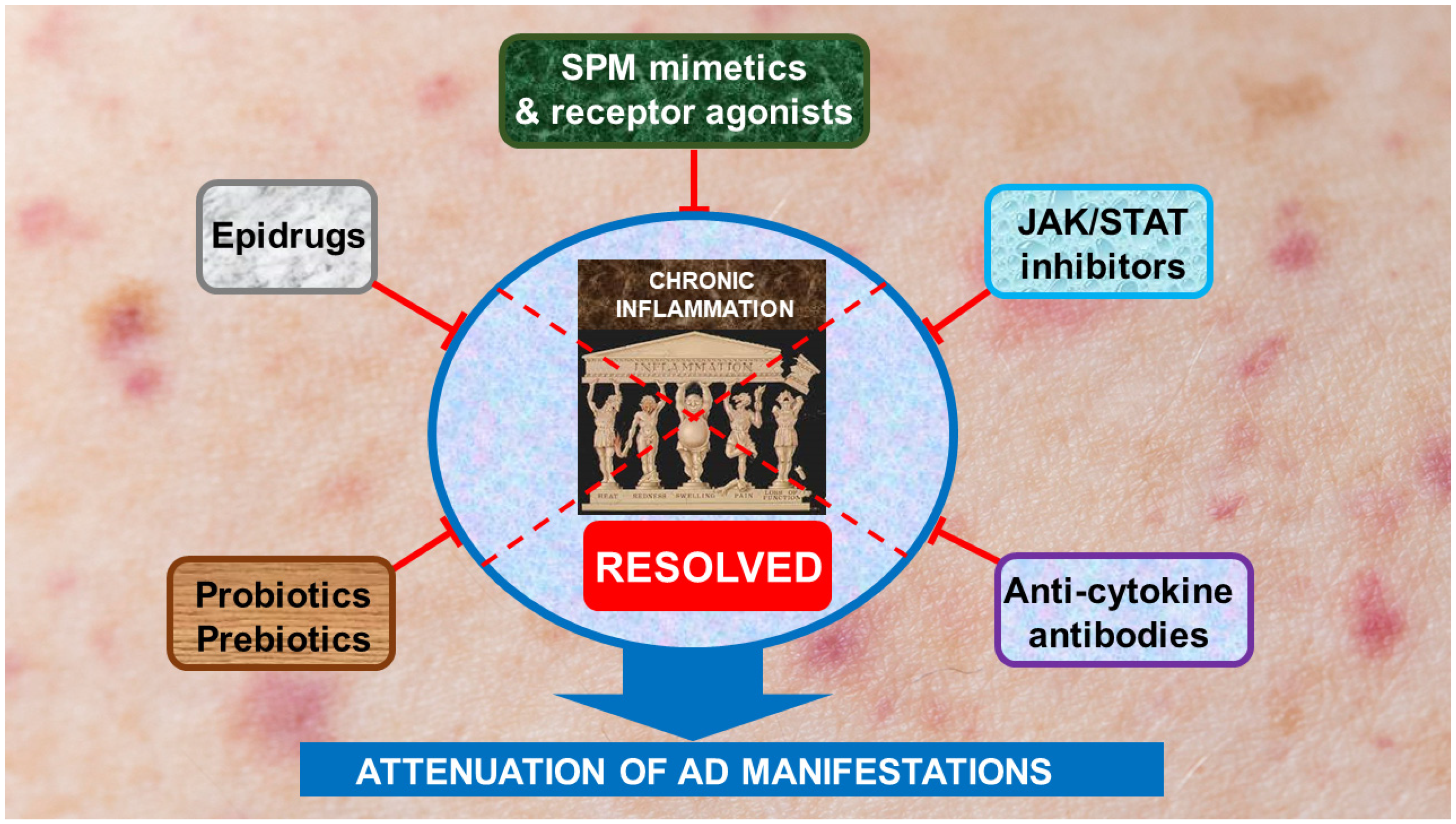
Resolution of Chronic Inflammation, Restoration of Epigenetic Disturbances and Correction of Dysbiosis as an Adjunctive Approach to the Treatment of Atopic Dermatitis



Abstract
Share and Cite
Livshits, G.; Kalinkovich, A. Resolution of Chronic Inflammation, Restoration of Epigenetic Disturbances and Correction of Dysbiosis as an Adjunctive Approach to the Treatment of Atopic Dermatitis. Cells 2024, 13, 1899. https://doi.org/10.3390/cells13221899
Livshits G, Kalinkovich A. Resolution of Chronic Inflammation, Restoration of Epigenetic Disturbances and Correction of Dysbiosis as an Adjunctive Approach to the Treatment of Atopic Dermatitis. Cells. 2024; 13(22):1899. https://doi.org/10.3390/cells13221899
Chicago/Turabian StyleLivshits, Gregory, and Alexander Kalinkovich. 2024. "Resolution of Chronic Inflammation, Restoration of Epigenetic Disturbances and Correction of Dysbiosis as an Adjunctive Approach to the Treatment of Atopic Dermatitis" Cells 13, no. 22: 1899. https://doi.org/10.3390/cells13221899
APA StyleLivshits, G., & Kalinkovich, A. (2024). Resolution of Chronic Inflammation, Restoration of Epigenetic Disturbances and Correction of Dysbiosis as an Adjunctive Approach to the Treatment of Atopic Dermatitis. Cells, 13(22), 1899. https://doi.org/10.3390/cells13221899