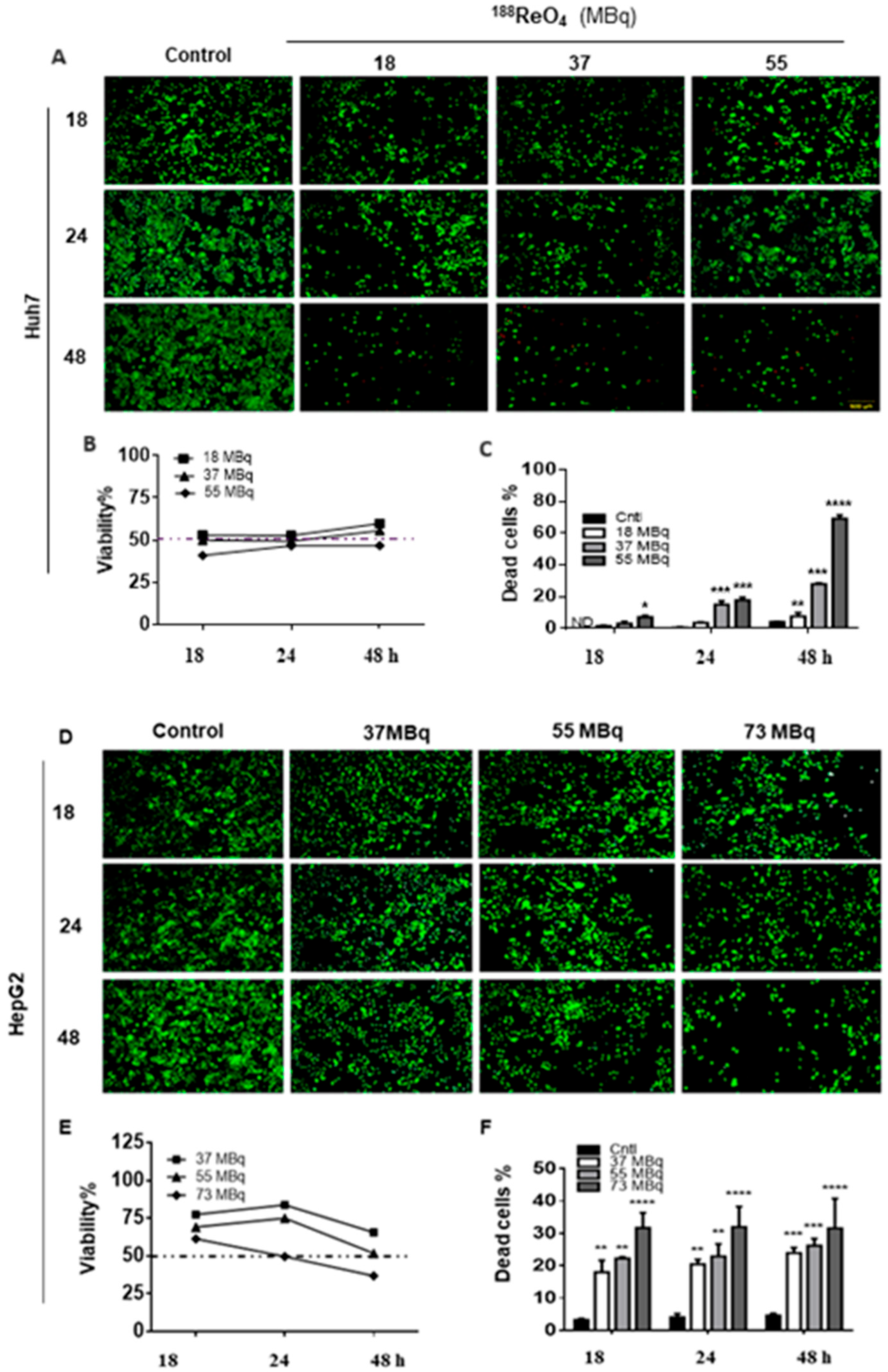
Correction: Asadian et al. Rhenium Perrhenate (188ReO4) Induced Apoptosis and Reduced Cancerous Phenotype in Liver Cancer Cells. Cells 2022, 11, 305

 , , , , , ,
  and
and 
Reference
- Asadian, S.; Piryaei, A.; Gheibi, N.; Aziz Kalantari, B.; Reza Davarpanah, M.; Azad, M.; Kapustina, V.; Alikhani, M.; Moghbeli Nejad, S.; Keshavarz Alikhani, H.; et al. Rhenium Perrhenate (188ReO4) Induced Apoptosis and Reduced Cancerous Phenotype in Liver Cancer Cells. Cells 2022, 11, 305. [Google Scholar] [CrossRef] [PubMed]

Disclaimer/Publisher’s Note: The statements, opinions and data contained in all publications are solely those of the individual author(s) and contributor(s) and not of MDPI and/or the editor(s). MDPI and/or the editor(s) disclaim responsibility for any injury to people or property resulting from any ideas, methods, instructions or products referred to in the content. |
© 2024 by the authors. Licensee MDPI, Basel, Switzerland. This article is an open access article distributed under the terms and conditions of the Creative Commons Attribution (CC BY) license (https://creativecommons.org/licenses/by/4.0/).
Share and Cite
Asadian, S.; Piryaei, A.; Gheibi, N.; Aziz Kalantari, B.; Reza Davarpanah, M.; Azad, M.; Kapustina, V.; Alikhani, M.; Moghbeli Nejad, S.; Keshavarz Alikhani, H.; et al. Correction: Asadian et al. Rhenium Perrhenate (188ReO4) Induced Apoptosis and Reduced Cancerous Phenotype in Liver Cancer Cells. Cells 2022, 11, 305. Cells 2024, 13, 1456. https://doi.org/10.3390/cells13171456
Asadian S, Piryaei A, Gheibi N, Aziz Kalantari B, Reza Davarpanah M, Azad M, Kapustina V, Alikhani M, Moghbeli Nejad S, Keshavarz Alikhani H, et al. Correction: Asadian et al. Rhenium Perrhenate (188ReO4) Induced Apoptosis and Reduced Cancerous Phenotype in Liver Cancer Cells. Cells 2022, 11, 305. Cells. 2024; 13(17):1456. https://doi.org/10.3390/cells13171456
Chicago/Turabian StyleAsadian, Samieh, Abbas Piryaei, Nematollah Gheibi, Bagher Aziz Kalantari, Mohamad Reza Davarpanah, Mehdi Azad, Valentina Kapustina, Mehdi Alikhani, Sahar Moghbeli Nejad, Hani Keshavarz Alikhani, and et al. 2024. "Correction: Asadian et al. Rhenium Perrhenate (188ReO4) Induced Apoptosis and Reduced Cancerous Phenotype in Liver Cancer Cells. Cells 2022, 11, 305" Cells 13, no. 17: 1456. https://doi.org/10.3390/cells13171456
APA StyleAsadian, S., Piryaei, A., Gheibi, N., Aziz Kalantari, B., Reza Davarpanah, M., Azad, M., Kapustina, V., Alikhani, M., Moghbeli Nejad, S., Keshavarz Alikhani, H., Mohamadi, M., Shpichka, A., Timashev, P., Hassan, M., & Vosough, M. (2024). Correction: Asadian et al. Rhenium Perrhenate (188ReO4) Induced Apoptosis and Reduced Cancerous Phenotype in Liver Cancer Cells. Cells 2022, 11, 305. Cells, 13(17), 1456. https://doi.org/10.3390/cells13171456