Article

Expression Profiles of GILZ and Annexin A1 in Human Oral Candidiasis and Lichen Planus
by
Mahmood S. Mozaffari
* and
Rafik Abdelsayed
Department of Oral Biology and Diagnostic Sciences, The Dental College of Georgia, Augusta University, Augusta, GA 30912, USA
*
Author to whom correspondence should be addressed.
Cells 2022, 11(9), 1470; https://doi.org/10.3390/cells11091470
Submission received: 4 March 2022 / Revised: 14 April 2022 / Accepted: 21 April 2022 / Published: 27 April 2022

Abstract

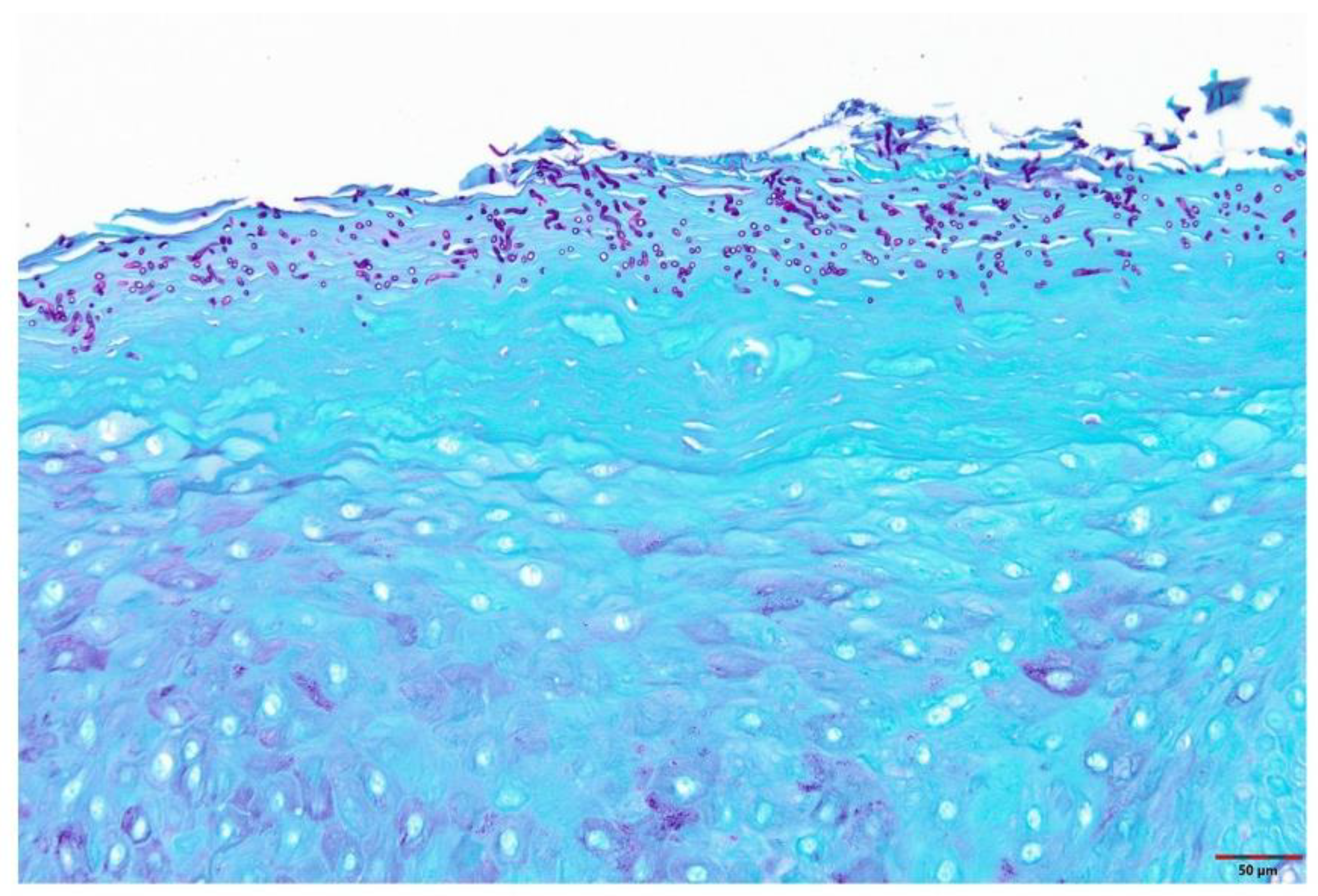
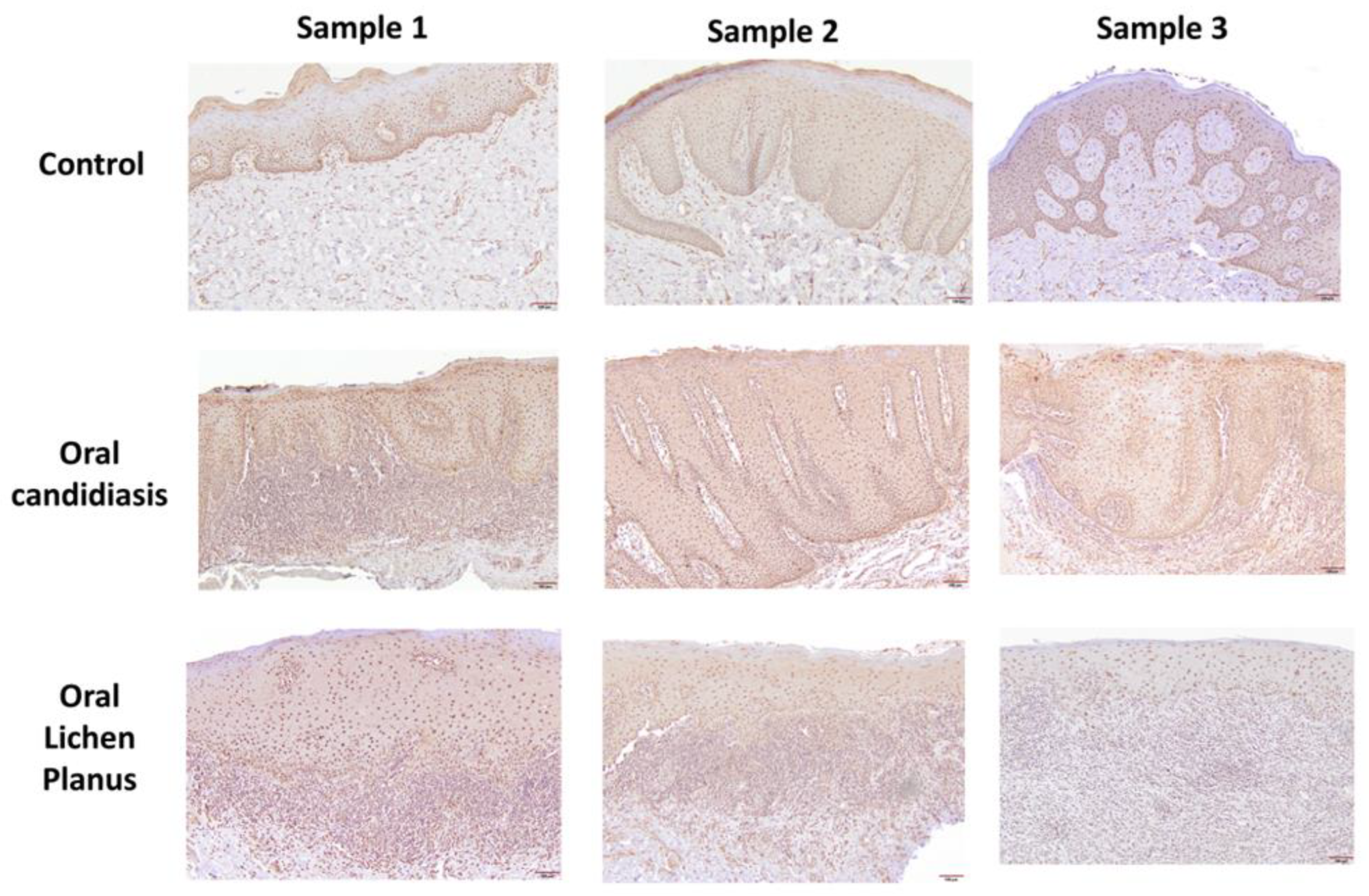
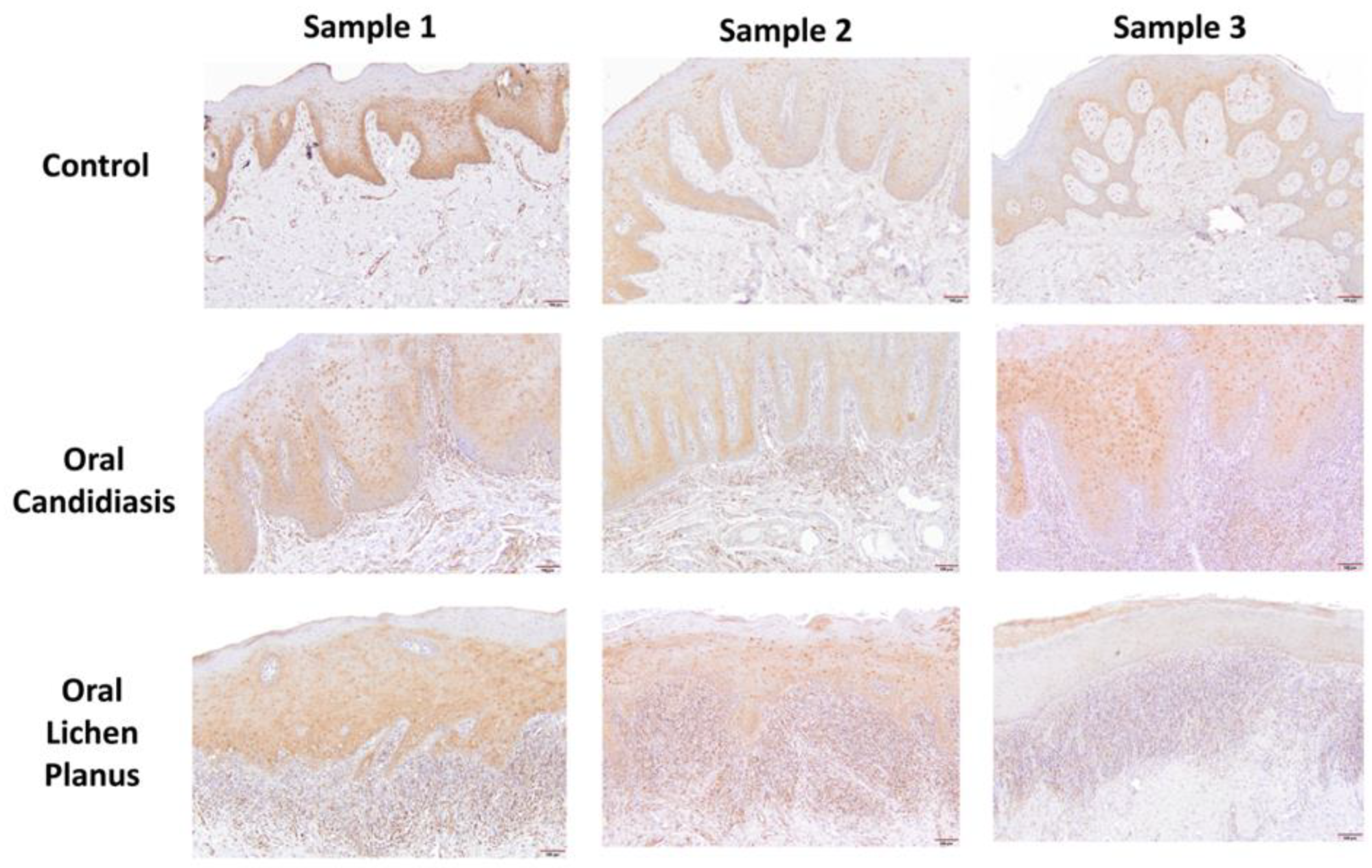
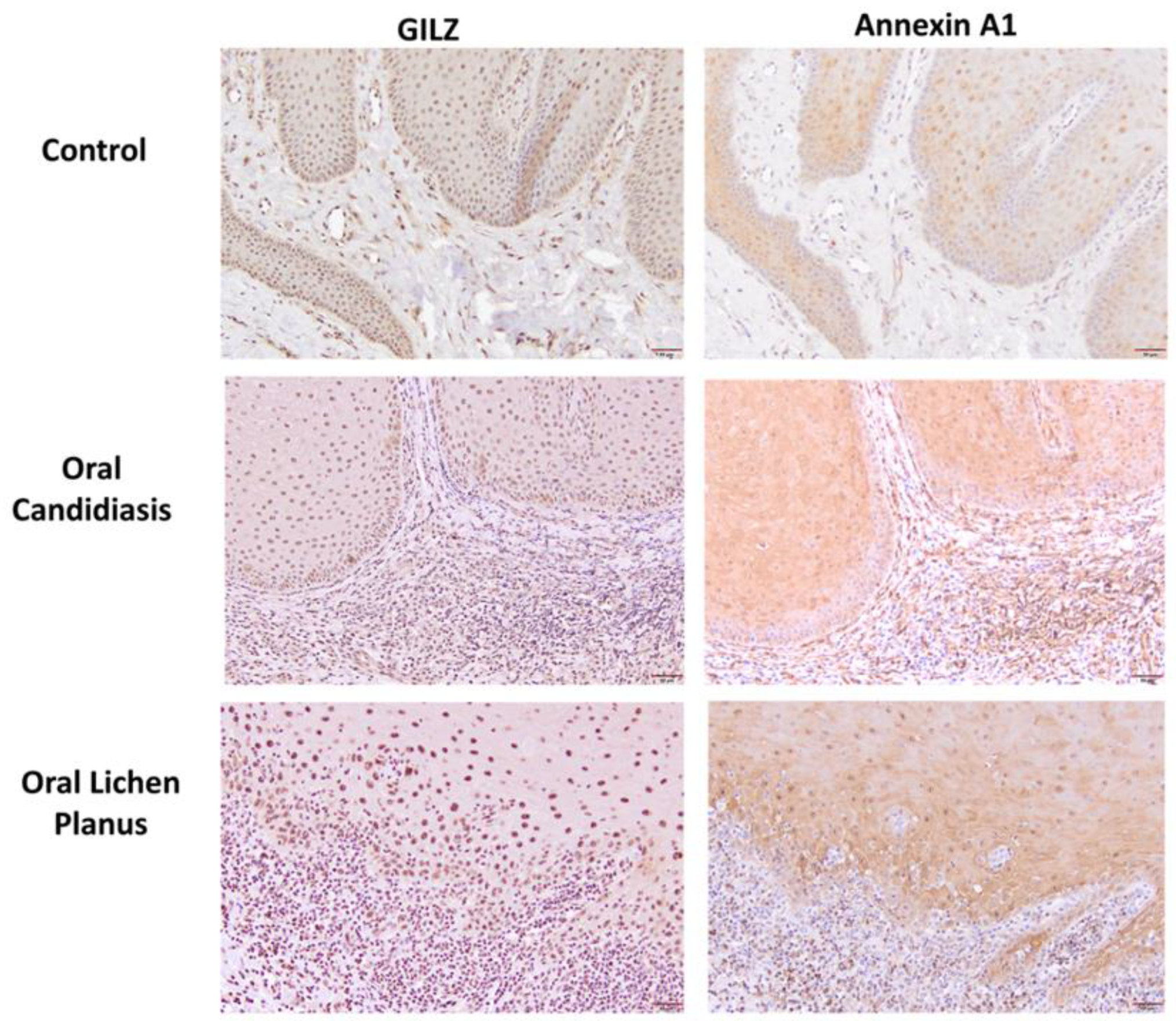
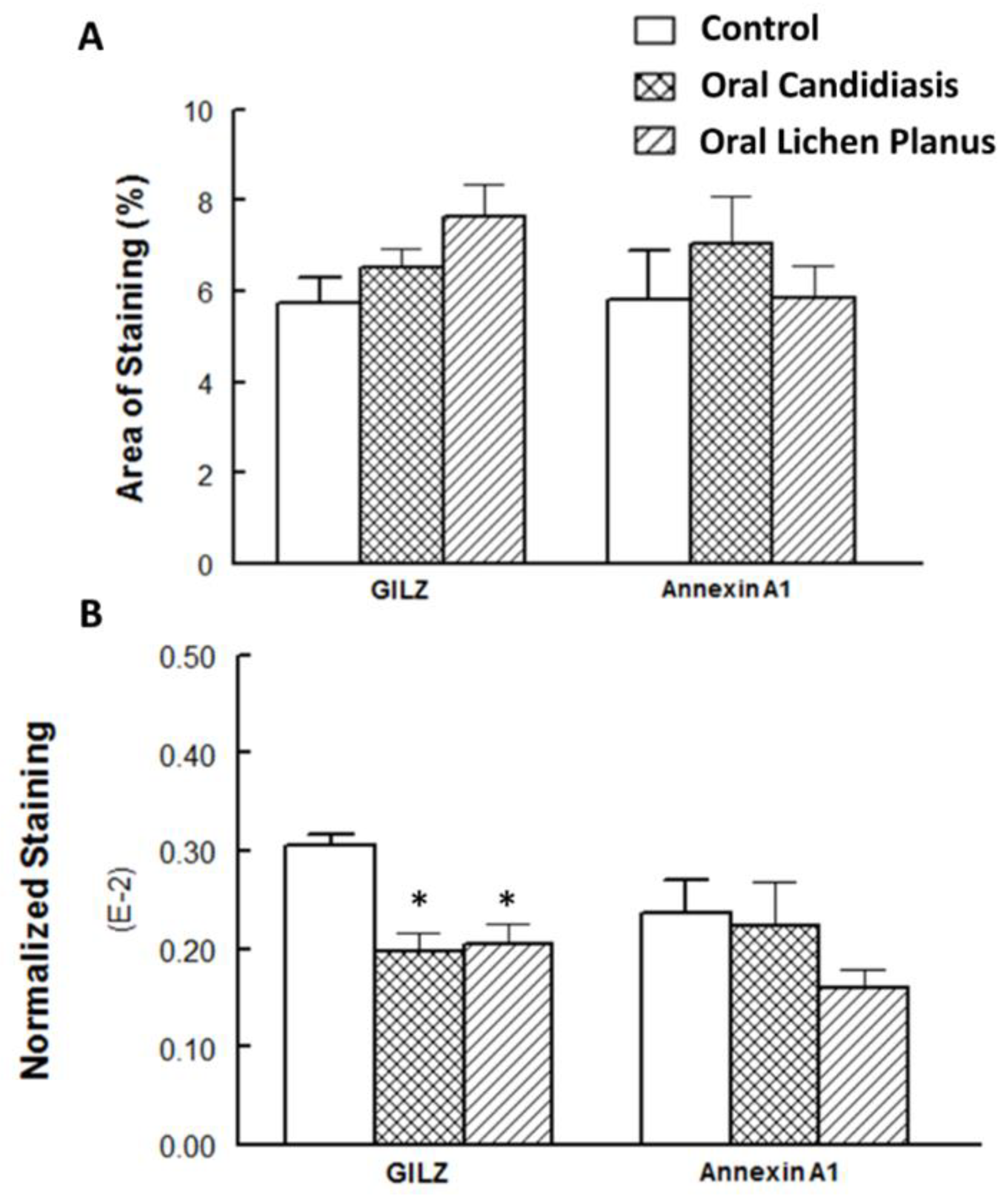
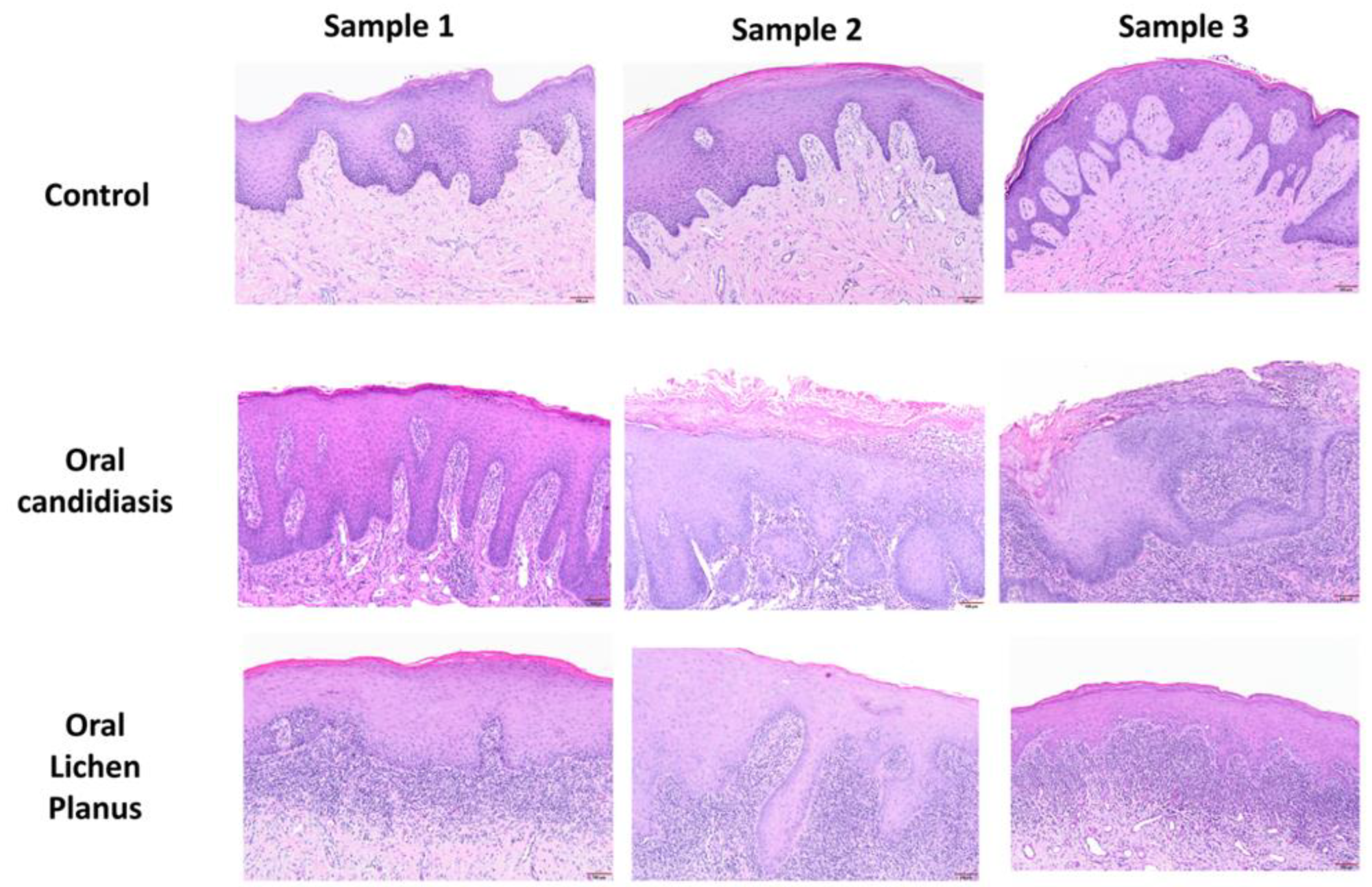
Adrenal glands are the major source of glucocorticoids, but recent studies indicate tissue-specific production of cortisol, including that in the oral mucosa. Both endogenous and exogenous glucocorticoids regulate the production of several proteins, including the glucocorticoid-induced leucine zipper (GILZ) and Annexin A1, which play important roles in the regulation of immune and inflammatory responses. Common inflammation-associated oral conditions include lichen planus and candidiasis, but the status of GILZ and Annexin A1 in these human conditions remains to be established. Accordingly, archived paraffin-embedded biopsy samples were subjected to immunohistochemistry to establish tissue localization and profile of GILZ and Annexin A1 coupled with the use of hematoxylin–eosin stain for histopathological assessment; for comparison, fibroma specimens served as controls. Histopathological examination confirmed the presence of spores and pseudohyphae for oral candidiasis (OC) specimens and marked inflammatory cell infiltrates for both OC and oral lichen planus (OLP) specimens compared to control specimens. All specimens displayed consistent and prominent nuclear staining for GILZ throughout the full thickness of the epithelium and, to varying extent, for inflammatory infiltrates and stromal cells. On the other hand, a heterogeneous pattern of nuclear, cytoplasmic, and cell membrane staining was observed for Annexin A1 for all specimens in the suprabasal layers of epithelium and, to varying extent, for inflammatory and stromal cells. Semi-quantitative analyses indicated generally similar fractional areas of staining for both GILZ and Annexin A1 among the groups, but normalized staining for GILZ, but not Annexin A1, was reduced for OC and OLP compared to the control specimens. Thus, while the cellular expression pattern of GILZ and Annexin A1 does not differentiate among these conditions, differential cellular profiles for GILZ vs. Annexin A1 are suggestive of their distinct physiological functions in the oral mucosa.
Keywords: human; GILZ; Annexin A1; immunohistochemistry; oral lichen planus; oral candidiasis human; GILZ; Annexin A1; immunohistochemistry; oral lichen planus; oral candidiasis