Article

N-Glycomic Analysis of the Cell Shows Specific Effects of Glycosyl Transferase Inhibitors
1
Department of Chemistry, University of California, Davis, CA 95616, USA
2
Department of Biochemistry, University of California, Davis, CA 95616, USA
*
Author to whom correspondence should be addressed.
Cells 2021, 10(9), 2318; https://doi.org/10.3390/cells10092318
Submission received: 21 July 2021 / Revised: 31 August 2021 / Accepted: 2 September 2021 / Published: 4 September 2021

Abstract

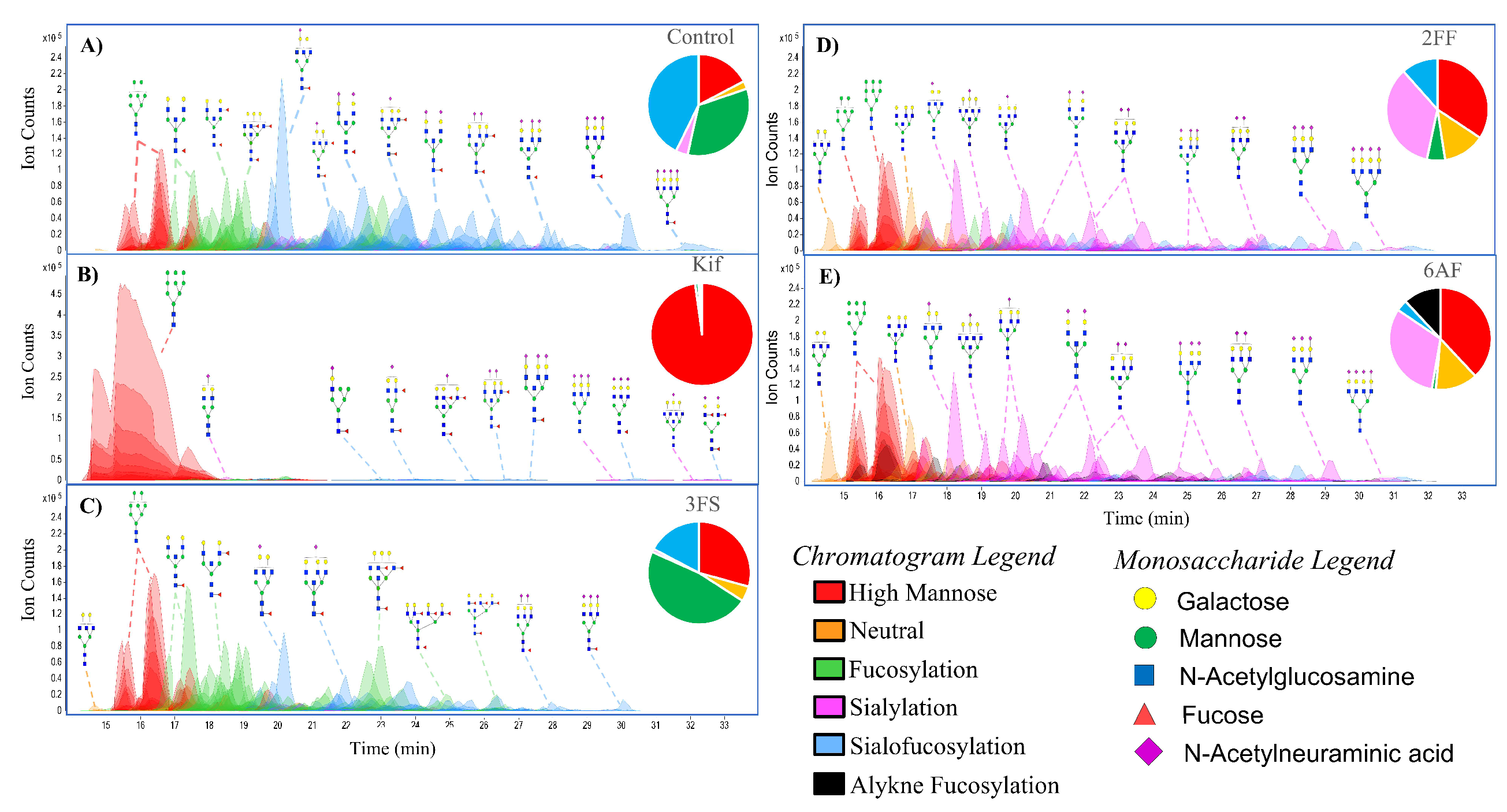
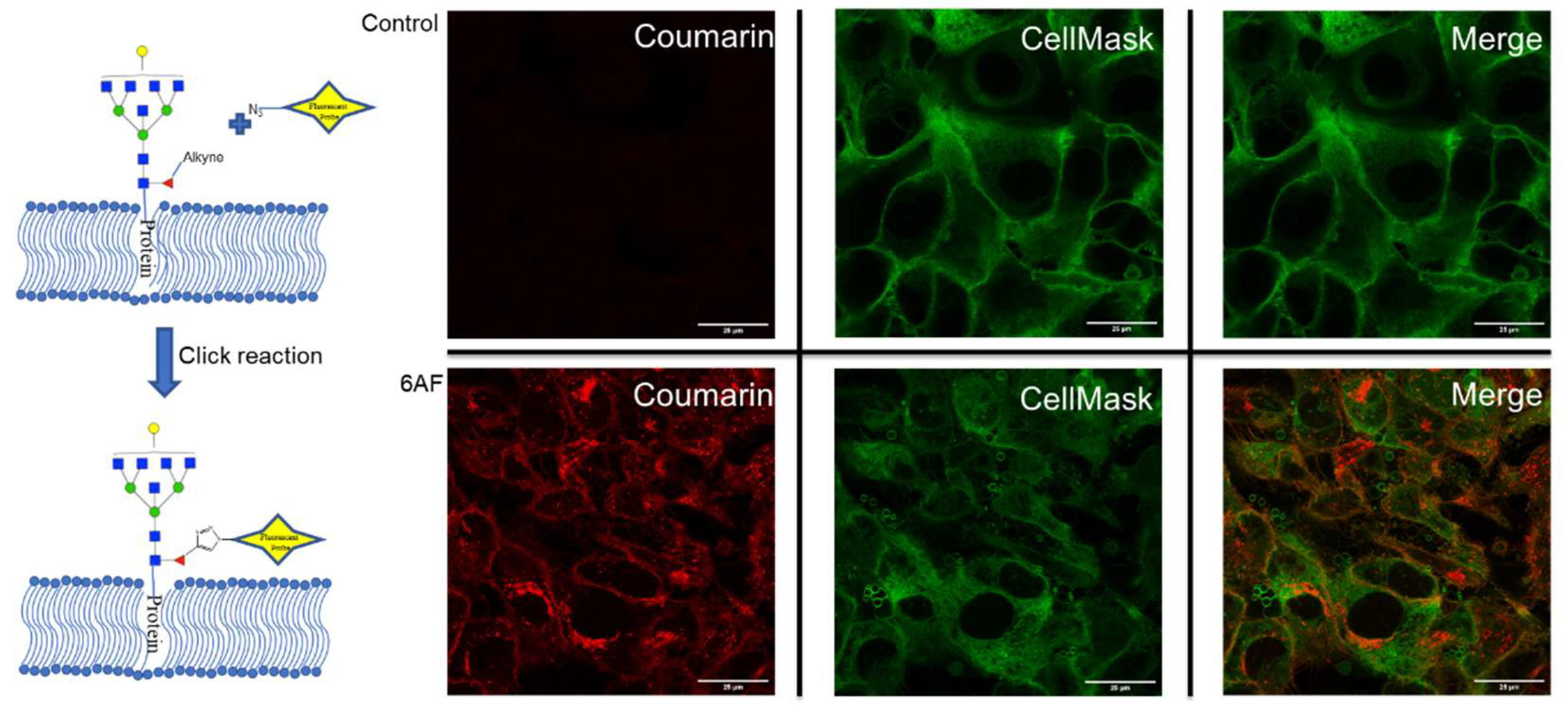
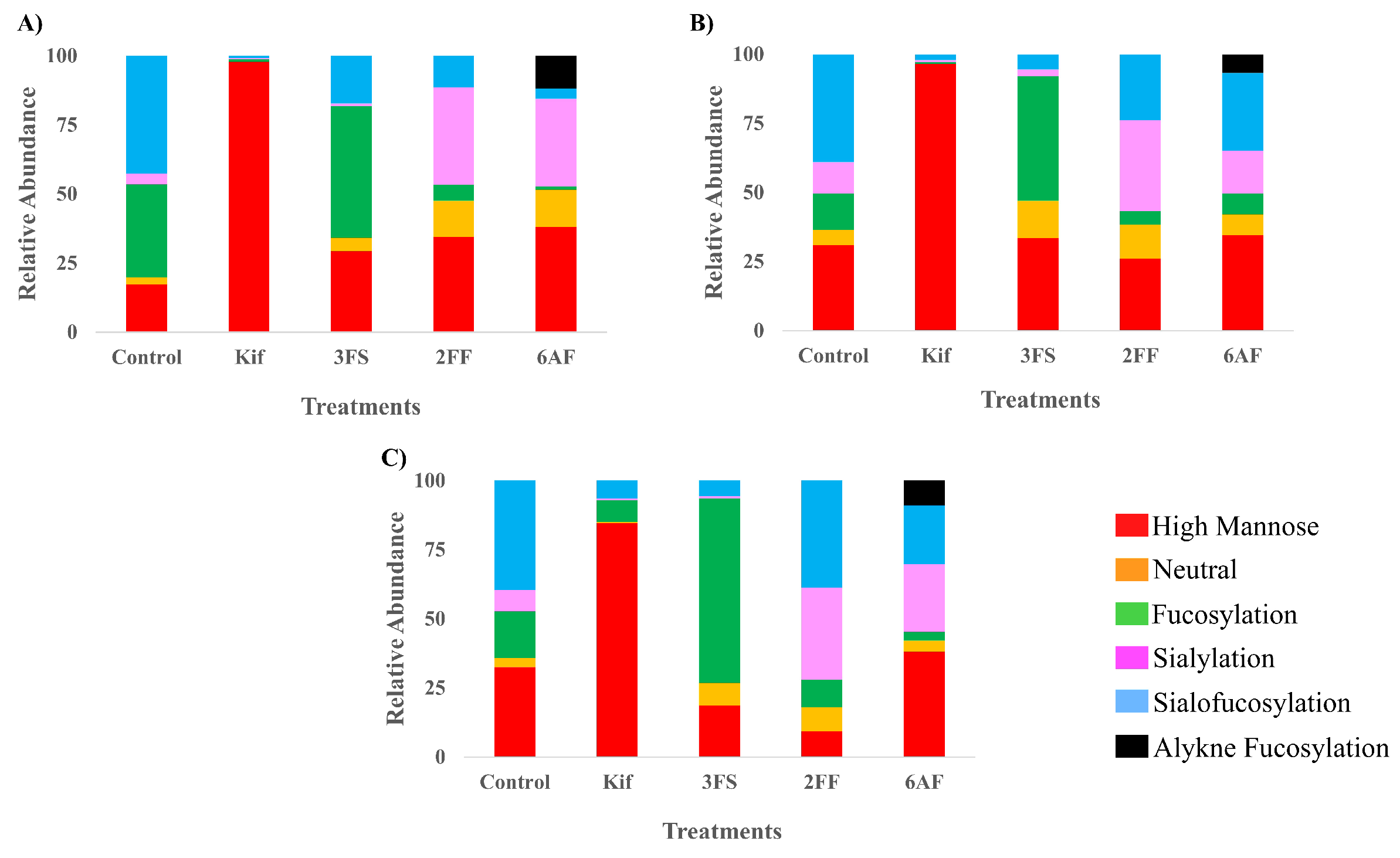
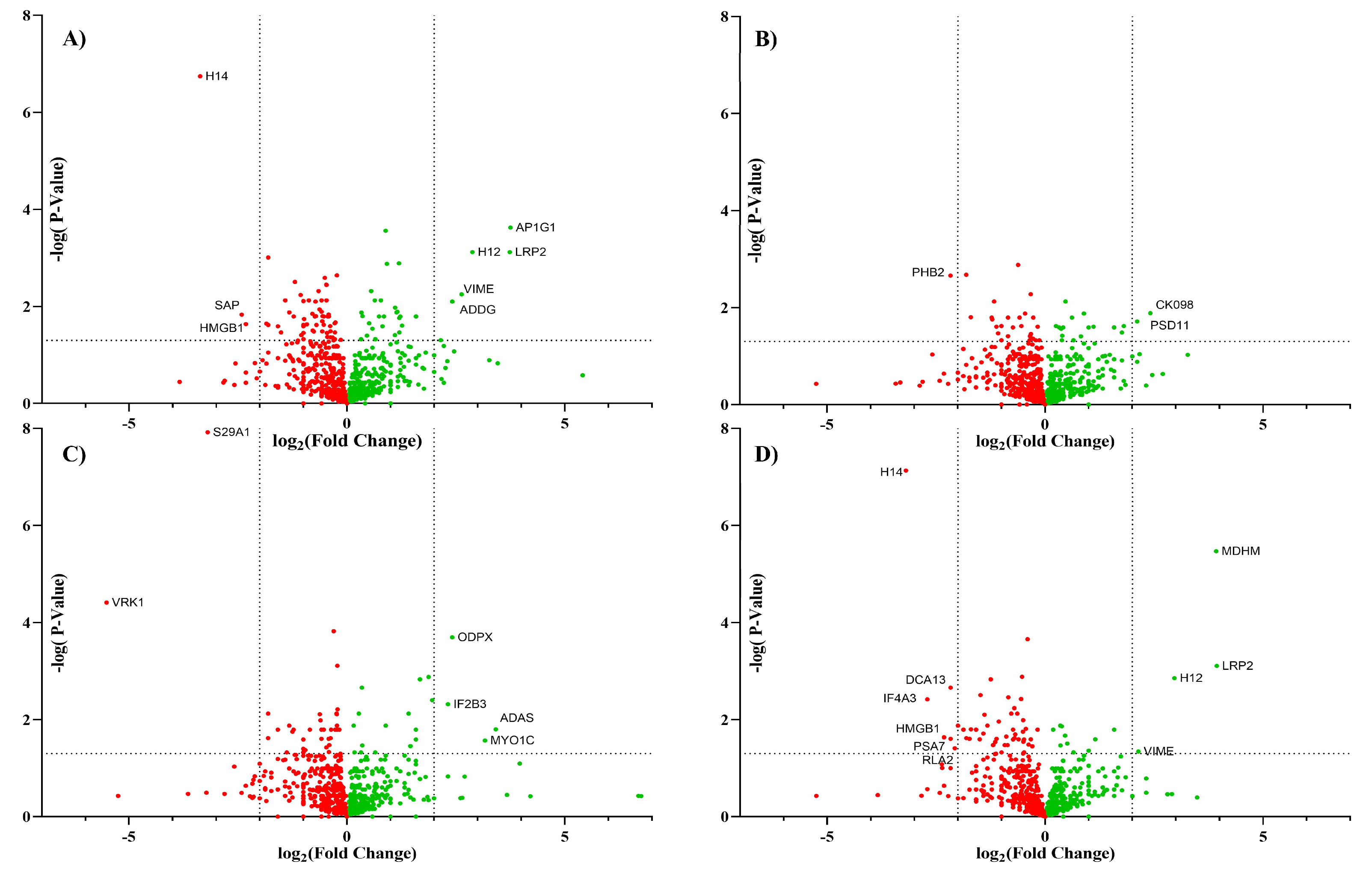
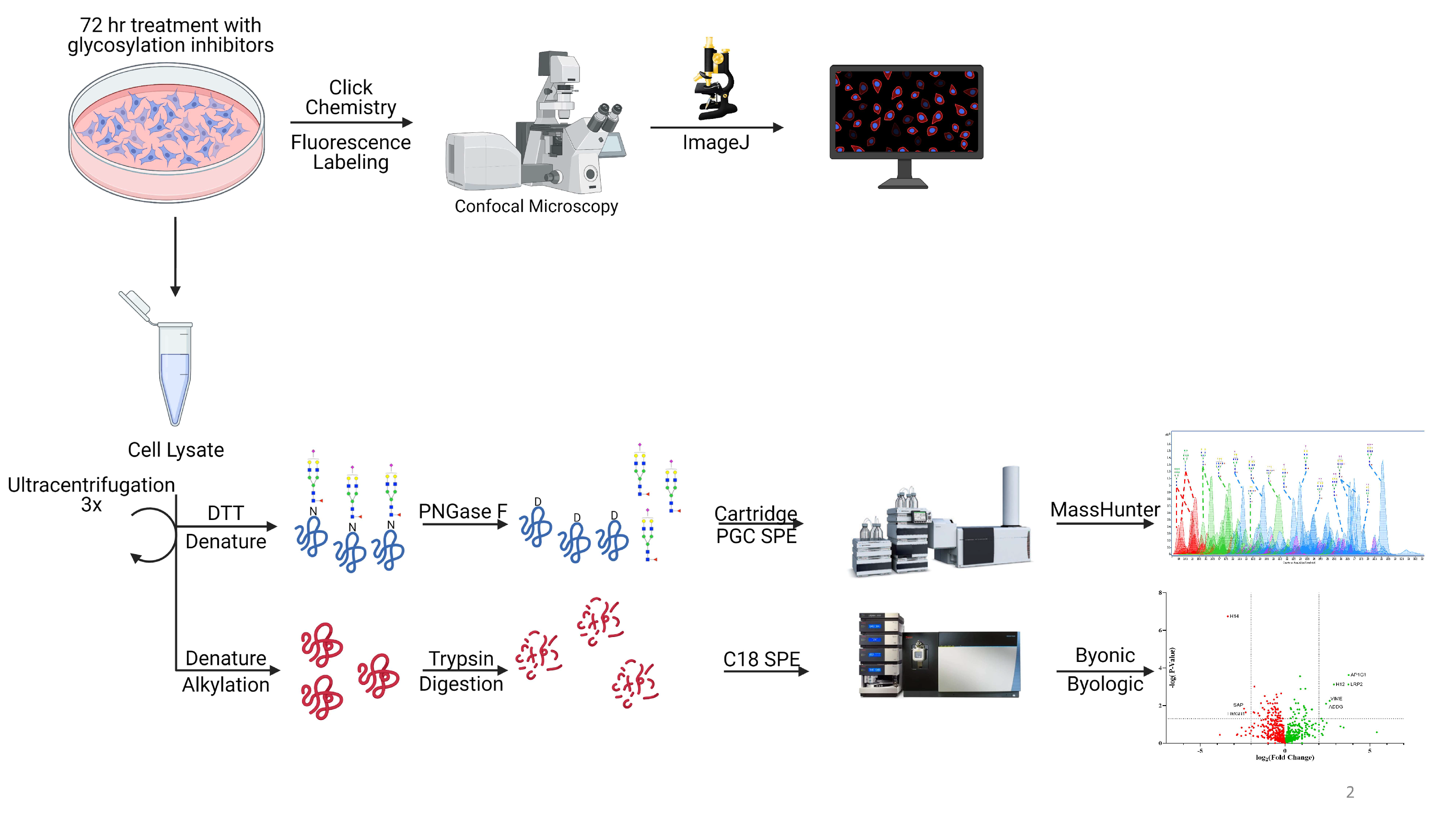
Glycomic profiling methods were used to determine the effect of metabolic inhibitors on glycan production. These inhibitors are commonly used to alter the cell surface glycosylation. However, structural analysis of the released glycans has been limited. In this research, the cell membranes were enriched and the glycans were released to obtain the N-glycans of the glycocalyx. Glycomic analysis using liquid chromatography–mass spectrometry (LC–MS) with a PGC chip column was used to profile the structures in the cell membrane. Glycans of untreated cells were compared to glycans of cells treated with inhibitors, including kifunensine, which inhibits the formation of complex- and hybrid-type structures, 2,4,7,8,9-Penta-O-acetyl-N-acetyl-3-fluoro-b-d-neuraminic acid methyl ester for sialylated glycans, 2-deoxy-2-fluorofucose, and 6-alkynyl fucose for fucosylated glycans. Kifunensine was the most effective, converting nearly 95% of glycans to high mannose types. The compound 6-alkynyl fucose inhibited some fucosylation but also incorporated into the glycan structure. Proteomic analysis of the enriched membrane for the four inhibitors showed only small changes in the proteome accompanied by large changes in the N-glycome for Caco-2. Future works may use these inhibitors to study the cellular behavior associated with the alteration of glycosylation in various biological systems, e.g., viral and bacterial infection, drug binding, and cell–cell interactions.
Keywords: mass spectrometry; N-glycan; glycosyltransferase mass spectrometry; N-glycan; glycosyltransferase