Article

Preharvest GA3 Treatment Enhances Postharvest Storability of ‘Brightwell’ Blueberry by Bolstering Antioxidant Defenses and Modulating Glycerolipid Metabolism


Institute of Botany, Jiangsu Province and Chinese Academy of Sciences Nanjing Botanical Garden Mem. Sun Yat-Sen, Jiangsu Key Laboratory for Conservation and Utilization of Plant Resources, Nanjing 210014, China
*
Author to whom correspondence should be addressed.
Agronomy 2026, 16(7), 686; https://doi.org/10.3390/agronomy16070686 (registering DOI)
Submission received: 14 February 2026 / Revised: 11 March 2026 / Accepted: 16 March 2026 / Published: 25 March 2026
(This article belongs to the Section Horticultural and Floricultural Crops)

Abstract

This study evaluated the effects of the preharvest application of 0.2 g/L gibberellin A3 (GA3) or 0.02 g/L forchlorfenuron (CPPU) at full bloom on postharvest storability and defense responses in ‘Brightwell’ blueberry. After ripening, berries were inoculated in vitro with a defined mixture of postharvest fungal pathogens. Fruit quality attributes and physio-logical indices were monitored during storage, and LC-MS metabolomics was performed to characterize treatment-associated metabolic alterations.GA3-treated fruit exhibited higher antioxidant capacity and a lower decay incidence than CPPU-treated and control fruit. Metabolomic profiling showed that GA3 was associated with the accumulation of specific polyphenols, coinciding with enhanced resistance to postharvest pathogens. In parallel, GA3 treatment modulated glycerolipid metabolism and mitigated membrane lipid peroxidation, as indicated by reduced malondialdehyde levels, while enhancing enzymatic (superoxide dismutase and ascorbate peroxidase) and non-enzymatic (poly-phenol) antioxidant defenses. Overall, these results suggest that preharvest GA3 application can improve blueberry storability by coordinating redox homeostasis and lipid-related metabolic remodeling.

1. Introduction

Blueberry (Vaccinium spp.), belonging to the genus Vaccinium in the Ericaceae family, is native to North America and has been introduced to many regions worldwide [1]. Blueberry fruits are blue to violet in color with a sweet–tart flavor and are valued for their high nutritional quality. They contain sugars, amino acids, vitamins, minerals, and abundant phenolic compounds that are beneficial to human health [2] and are widely recognized as a nutrient-dense fruit rich in health-promoting phytochemicals [3,4]. With the continuing expansion of blueberry cultivation, market demand for fruit quality has increased. Producing large berries with high nutritional value and good storability has become a key goal in blueberry production. However, blueberries are highly perishable, and postharvest decay and quality loss during distribution remain major constraints on marketability and shelf life [5]. Accordingly, regulating flowering and fruit ripening to advance or delay market supply is of considerable economic importance to the blueberry industry [6,7].
Gibberellin A3 (GA3) is an important plant growth regulator that plays a pivotal role in fruit-tree growth and development and is widely used in commercial production. GA3 has been reported to break seed dormancy [8], increase fruit set [9,10], induce parthenocarpy, stimulate cell elongation in stems and leaves [11,12,13], promote early ripening, and adjust the growth cycle [14]. In some fruit crops, GA3 application has also been associated with delayed senescence or improved storage-related traits under specific regimes and storage conditions [15].
Forchlorfenuron (CPPU) is a synthetic cytokinin (CK) of the phenylurea class. Previous studies have shown that CPPU can promote cell division, increase fruit set, and delay ripening, thereby improving fruit quality [16]. In blueberries, CPPU has been reported to increase fruit size and soluble sugar content [17,18]. Notably, the responses to GA3 or CPPU are often cultivar- and dose-dependent, and their postharvest consequences may vary with application regimes and storage conditions [19].
In China, the agricultural use of GA3 and CPPU is governed by pesticide registration label requirements, including permitted crops, application rate, pre-harvest interval (PHI), and maximum number of applications. The application regime adopted in this study was designed to comply with the relevant national standard and label instructions.
The combined application of GA3 and CPPU has been extensively explored in several fruit crops and is often associated with improved yield and quality. For instance, in ‘Shine Muscat’ grapes, combined GA3 and CPPU treatment increased berry weight, berry dimensions, firmness, and soluble solids while decreasing titratable acidity [20]. However, whether these treatments influence postharvest storability remains unclear, and their effects on blueberry storability have not been established. Importantly, existing blueberry studies on GA3 and CPPU have largely emphasized fruit set and berry enlargement, whereas evidence regarding postharvest decay resistance and associated metabolic adjustments—especially under pathogen pressure—remains limited [21]. Therefore, clarifying how preharvest GA3 and CPPU management relates to postharvest performance is both scientifically and practically important, particularly for cultivars with strong inherent storability.
Gray mold caused by Botrytis cinerea Pers. is a major postharvest disease limiting blueberry storability. The pathogen can persist in soil and infected residues and spread via air currents, rain splash, and insects [22,23]. Disease development is strongly influenced by humidity and handling/storage conditions, and infection and colonization during storage can accelerate decay and quality deterioration, ultimately shortening shelf life [24,25,26]. Current strategies to improve blueberry storability have mainly focused on pre- or postharvest treatments with chemical elicitors such as melatonin (MT) and methyl jasmonate (MeJA) [22,26], postharvest coating technologies [25,27], and optimization of storage conditions [28].
In contrast, plant growth regulators (PGRs) such as gibberellic acid (GA3) and forchlorfenuron (CPPU) have been widely studied for their roles in regulating fruit development (e.g., berry size and yield) in blueberries and other fruit crops, whereas their potential impacts on postharvest storability and defense responses remain less consistently documented and are highly dependent on cultivar, application regime, and storage context. Therefore, the effects of CPPU on blueberry storability, particularly when evaluated together with GA3, have received relatively limited attention. To our knowledge, integrative studies linking preharvest PGR application with postharvest pathogen challenge and metabolome-wide responses in blueberry fruit are still scarce [29].
To address this gap, the present study combined preharvest GA3 and CPPU treatments with in vitro inoculation of Botrytis cinerea and LC–MS-based metabolomics during storage to characterize postharvest storability and associated metabolic responses in blueberry fruit. This work highlights cultivar-specific postharvest responses to preharvest PGR management and identifies candidate pathways and metabolites associated with quality retention and decay suppression. This integrative framework enables a more comprehensive evaluation of how preharvest PGR management may relate to postharvest performance and provides evidence to support the rational use of growth regulators to improve blueberry quality and storability through agronomic practices.

2. Materials and Methods

2.1. Experimental Materials

The experiment was conducted using 4-year-old ‘Brightwell’ rabbiteye blueberry (Vaccinium virgatum Aiton) plants grown in an open field at Nanjing Botanical Garden Mem. Sun Yat-Sen (118°49′46″ E, 32°03′29″ N). Three biological replicates (n = 3) were established per treatment, each with three plants per replicate, to ensure reliable results and biological variability. GA3 (200 mg/L) was sprayed onto the fruit clusters at 5 and 10 days post-anthesis. CPPU (20 mg/L) was applied by spraying at 15 days post-anthesis. Four treatments were established: CK0 (distilled water), T1 (GA3 applied twice), T2 (CPPU applied once), and T3 (GA3 applied twice plus CPPU applied once), with three replicate plants per treatment. Blueberries were harvested at maturity (uniformly blue over 100% of the surface, including the stem-end, with no red/pink coloration), then visually screened for freshness, uniform appearance, and absence of pests and diseases, and were immediately transported to the laboratory for subsequent storage experiments.

2.2. Reagents and Instruments

AFS-830 Atomic Fluorescence Spectrometer (Haiguang Instruments, Chinese mainland); VISTA-MPX Inductively Coupled Plasma Emission Spectrometer (Varian, USA); Q ExactiveTM HF-X mass spectrometer (Thermo Fisher, USA); Vanquish UHPLC chromatograph (Thermo Fisher, USA); D3024R low-temperature centrifuge (Scilogex, USA).

2.3. Experimental Methods

Botrytis cinerea was isolated from the surface of naturally infected (moldy) blueberry fruit following the method described by Wang [26]. The isolate was authenticated as B. cinerea based on colony morphology and microscopic characteristics. Conidia were harvested and suspended in sterile water, and the conidial concentration was adjusted to 1.0 × 10⁶ conidia/mL for inoculation. Fresh fruits were rinsed with tap water to remove surface dust and then stored in preservation boxes for subsequent use.
Inoculation method: A 0.3 cm deep hole was created using a 1 mL sterile pipette tip, followed by inoculation with 10 μL of spore suspension via a pipette. Each treatment included 10 fruits per replicate, with 3 biological replicates. Fruit were divided into non-inoculated groups (CK0, T1, T2, and T3) and in vitro inoculated groups (CKB, T1B, T2B, and T3B). All fruits were packaged in 0.03 mm polyethylene bags to prevent moisture loss and stored at 25 °C with a relative humidity of 90%. Although typical commercial blueberry storage occurs at 0–4 °C to maintain freshness and prevent decay, we selected 25 °C in this experiment to accelerate the observation of the treatment effects on postharvest storability. Storage characteristics and fruit quality parameters were evaluated on 0 d, 2 d, and 4 d of storage.

2.3.1. Determination of Blueberry Fruit Quality Parameters

  • Rot rate: Rot incidence was determined by visual counting. At each sampling time point, 20 fruits were randomly selected from each treatment group, and the number of rotten fruits was recorded. A fruit was classified as rotten when it showed visible mold growth, bacterial lesions, or at least one rotted spot on the surface. Rot rate (%) was calculated as: Rot rate (%) = (number of rotten fruits/total number of fruits assessed) × 100%.
  • Phenotypic index determination (longitudinal diameter, transverse diameter, firmness, color): fruit were randomly selected to measure fresh weight, transverse diameter, longitudinal diameter, and firmness. Fresh weight was measured via an electronic analytical balance (METTLER TOLEDO, MS104TS/02, Germany). The transverse and longitudinal diameters were measured via a Vernier caliper (DL91150), and the fruit shape index was calculated as the ratio of the longitudinal diameter to the transverse diameter. Fruit firmness at the maximum diameter was measured via a Takeura Cat No. 9300 (KM-5 Japan) fruit hardness tester with a 1 mm diameter conical probe and a 5 mm downward pressure distance; the maximum breaking force was recorded in N. Ten fruits were measured per index, and the results are expressed as the means ± standard deviations.
  • Determination of sugar and acid contents: The soluble sugar content was determined via the anthrone colorimetric method. The titratable acid content was measured according to GB/T 12456-2008 [30] “Determination of Total Acid in Food”. Briefly, 3 g of fruit homogenate was transferred to a 50 mL centrifuge tube, mixed with 30 mL of deionized water, ultrasonicated at 35 °C and 60 Hz for 20 min, and centrifuged at 5000× g for 5 min. The supernatant was used for soluble sugar determination: after appropriate dilution, anthrone and concentrated sulfuric acid were added, and the mixture was incubated in a boiling water bath for 10 min; the absorbance was measured at 620 nm. For titratable acid determination, 15 mL of the supernatant was transferred to a 30 mL beaker, and the initial pH was measured. The solution was titrated with 0.1 mol/L NaOH standard solution to pH 8.0, and the volume of NaOH consumed was recorded. The titratable acid content was calculated as follows:
    Titratable acid content = [V × c × (V1 − V0) × f]/(Vs × m) × 100%
    where V = the total volume of sample extract (mL), Vs = the volume of supernatant used for titration (mL), c = the concentration of NaOH (mol/L), V1 = the volume of NaOH consumed for sample titration (mL), V0 = the volume of NaOH consumed for distilled water titration (mL), m = the sample mass (g), and f = the conversion coefficient (kg/mol).
  • Determination of antioxidant indices:
① Total anthocyanin content: Total anthocyanin content was measured via the pH differential method. Fifty grams of blueberry fruit was pulped, and 3 g of pulp was mixed with 30 mL of 50% ethanol, ultrasonicated at 35 °C and 60 Hz for 20 min, and centrifuged at 5000× g for 5 min. A 0.3 mL aliquot of the supernatant was mixed with 2.7 mL of pH 1.0 HCl-KCl buffer and incubated in the dark at 25 °C for 20 min, after which the absorbance was measured at 510 nm. The anthocyanin content was calculated via the following standard curve equation: y = 0.0455x − 0.0881 (R2 = 0.9996), where y = absorbance at 510 nm and x = anthocyanin content.
② Total polyphenol content: Determined via the Folin–Ciocalteu method. Three grams of pulp were mixed with 30 mL of 50% ethanol, ultrasonicated at 35 °C and 60 Hz for 20 min, and centrifuged at 5000× g for 5 min. A 200 μL aliquot of the supernatant was diluted with 300 μL of 50% ethanol, mixed with 2.5 mL of 0.1 mol/L Folin–Ciocalteu reagent, followed by the addition of 2 mL of a 7.5% saturated Na2CO3 solution, and incubated in the dark for 1 h. The absorbance was measured at 750 nm, and the polyphenol content was calculated via the standard curve equation y = 0.0634x − 0.00179 (R2 = 0.9992), where y = the absorbance at 750 nm and x = the polyphenol content.
③ Total protein (TP) content: Total protein (TP) content was determined via a commercial kit (Nanjing Jiancheng Institute of Bioengineering, Chinese mainland) based on the Coomassie Brilliant Blue method. A 0.1 g aliquot of pulp was homogenized with 0.9 mL of 0.1 mol/L phosphate-buffered saline (PBS, pH 7.0–7.4) on ice to prepare a 10% tissue homogenate, which was subsequently centrifuged at 2500× g for 10 min. The supernatant was diluted appropriately and mixed with Coomassie Brilliant Blue chromogenic solution, and the absorbance was measured at 595 nm using distilled water as a blank and protein standard solution for calibration.
④ Determination of superoxide dismutase (SOD), nitric oxide (NO), ascorbic acid peroxidase (APX), malondialdehyde (MDA), chitin, and hydrogen peroxide (H2O2): Contents were determined via commercial kits (Nanjing Jiancheng Institute of Bioengineering). A 0.2 g aliquot of pulp was homogenized with 1.8 mL of pH 7.4 PBS on ice to prepare a 10% tissue homogenate, which was subsequently centrifuged at 3500× g for 10 min. The supernatant was used for analyses: reagents were added according to the kit instructions, and the absorbance was measured at 536 nm (SOD), 550 nm (NO), 290 nm (APX), 530 nm (MDA), 585 nm (chitin), and 405 nm (H2O2). For APX, the absorbance was measured at 10 s and 130 s after mixing.

2.3.2. LC–MS Metabolomic Analysis Conditions

Analyses were performed via an ACQUITY UPLC I-Class plus (USA)/Thermo QE liquid chromatography–mass spectrometry (LC–MS) system (USA) with a Hyperil Gold C18 column (USA). The column temperature was 40 °C, and the flow rate was 3.33 × 10⁻³ mL/s. Mobile phase A consisted of 0.1% formic acid (positive mode) or 5 mM ammonium acetate (pH 9.0, negative mode); mobile phase B was methanol. The elution gradient was as follows: 0–2 min, 2% B (isocratic); 1.5–3 min, linear gradient from 2% B to 85% B; 3–10 min, linear gradient to 100% B; 10.0–10.1 min, linear gradient back to 2% B; and equilibration for 14 min. The mass spectrometry conditions were as follows: spray voltage = 3.5 kV; sheath gas flow rate = 35 psi; auxiliary gas flow rate = 166.67 mL/s; capillary temperature = 320 °C; auxiliary gas heater temperature = 350 °C; polarity = positive and negative modes; and MS/MS secondary scanning = data-dependent scans.

2.4. Data Analysis

Duncan’s multiple range test was used for significance analysis (p < 0.05). One-way analysis of variance (ANOVA) was performed via the “agricolae” package in R (version 4.0.1, New Zealand). Principal component analysis (PCA) and partial least squares discriminant analysis (PLS-DA) were conducted via SIMCA 14.1 software (MKS Data Analytics Solutions, formerly Umetrics Company, Sweden). Bar plots were generated via the “ggplot2” package, and heatmaps were created via the “ComplexHeatmap” package in R (version 4.0.1, New Zealand).

3. Results

3.1. Comparison of Fruit Phenotypic Indicators Before Storage

As shown in Table 1, fruit treated with T1 exhibited significant improvements in size, weight, and hardness, with an 8.58% increase in longitudinal diameter and a 7.81% increase in hardness. Compared to the CK0 treatment, the T2 treatment showed more pronounced effects, with a 44.5% increase in single-fruit weight, the largest increase among all four treatments; however, the fruit’s hardness was slightly lower. In the T3 treatment, compared to CK0, the transverse diameter, longitudinal diameter, and single-fruit weight increased, along with a 16% improvement in fruit hardness. Additionally, the L* values of the three growth regulator-treated groups (T1, T2, and T3) significantly increased, reflecting a notable change in fruit color. The hardness and color of blueberries are closely related to their surface waxy substances and anthocyanins [31]. GA3 and CPPU, as growth regulators, may influence the synthesis of waxy substances and anthocyanins in blueberry fruit.

3.2. Storage Indicators: Contamination Rate, Total Acid Content, and Soluble Sugars

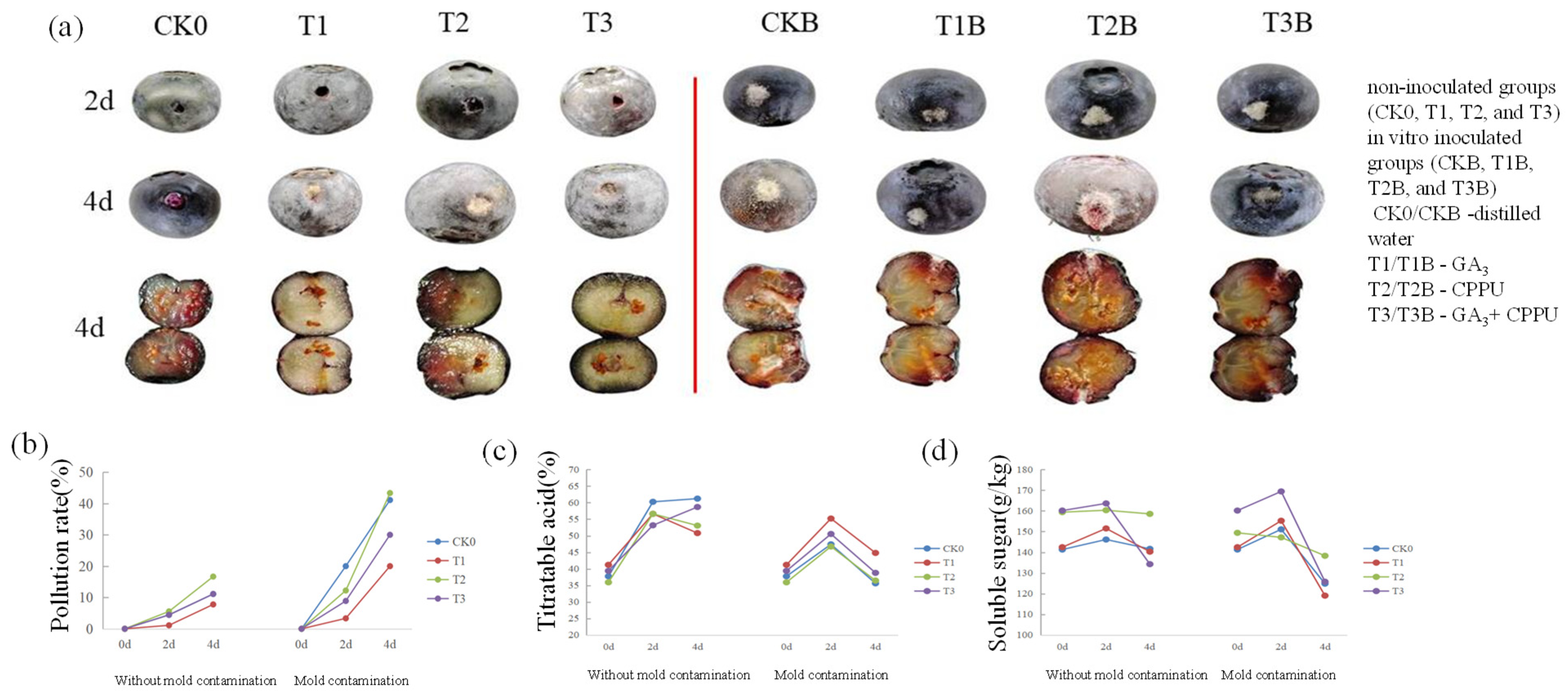
Results presented in Figure 1 reveal a higher mold contamination rate in the in vitro mold-inoculated group versus the non-inoculated control. Marked differences were also evident in the inhibitory efficacy of the tested growth regulators against contamination. Among them, the T1 treatment had the lowest contamination rate among all the treatment groups and for all the periods. Compared with that of the control group (CK0), the contamination rate of the group exposed to mold for 4 d decreased by 51.34% under the same treatment during the same period, demonstrating the strongest anti-mold contamination ability. The T2 treatment with CPPU alone had a relatively high contamination rate. When there was mold contamination for 4 d, the contamination rates both with and without mold contamination were higher than those of the control group under the same treatment during the same period, indicating that the inhibitory effect of CPPU alone on mold contamination was relatively weak. The T3 treatment with the combination of GA3 and CPPU had a synergistic regulatory effect. When the samples were exposed to mold for 4 d, the contamination rate was 30.72% lower than that of T2 under the same treatment during the same period, making it the treatment group with the second lowest contamination rate. In terms of the other storage indicators, the overall changes in the total acid and soluble sugar contents of each treatment group were not significant. However, in general, the soluble sugar content tended to decrease during storage; under mold infection, the total acid content tended to first increase but then decrease.

3.3. Antioxidant Indicators

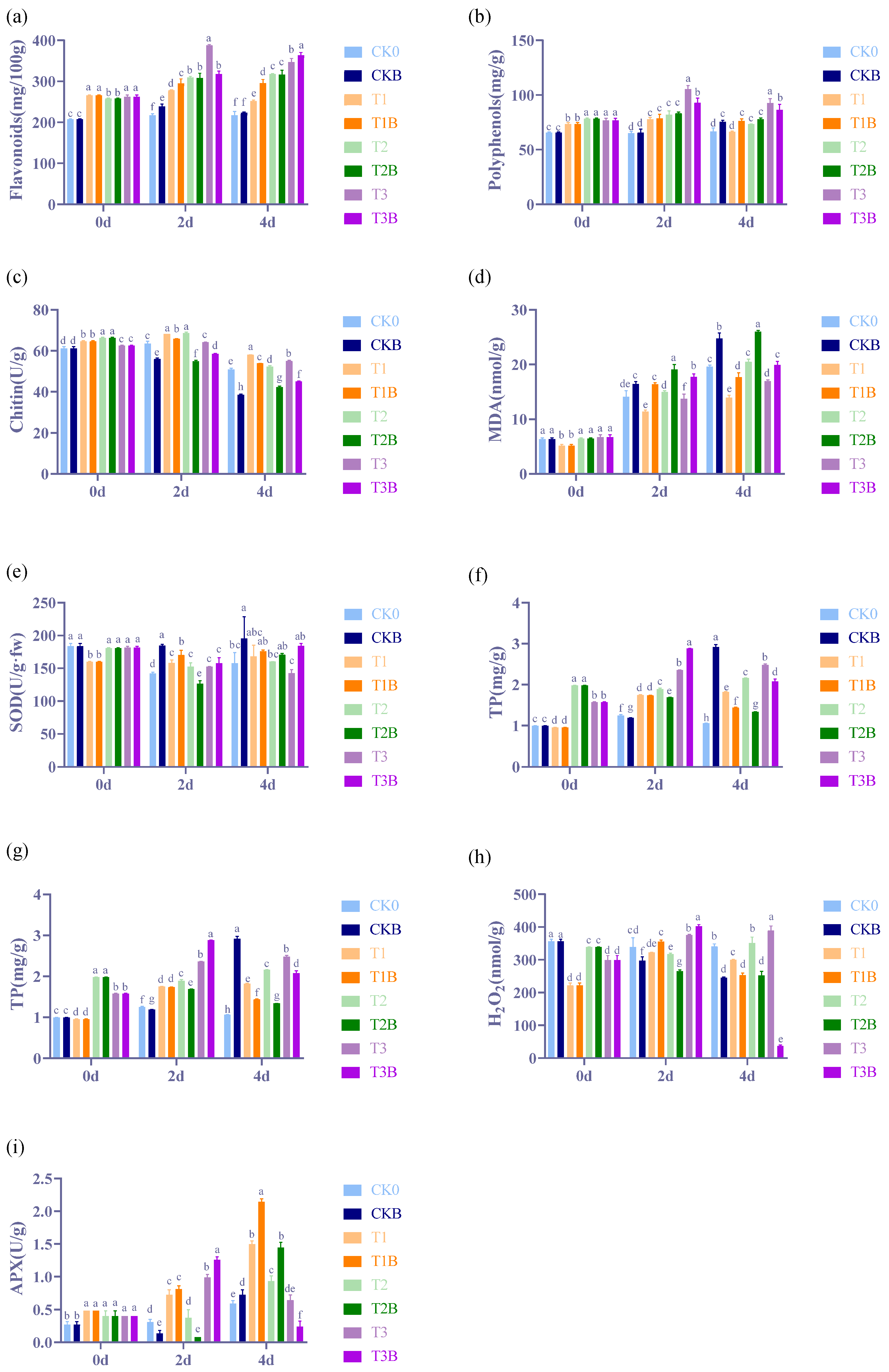
Figure 2 illustrates that different growth regulator treatments (T1, T2, and T3) significantly affected the physiological metabolism and antioxidant indicators of blueberries during postharvest storage. Among these treatments, the T1 treatment showed the best storage adaptability. Specifically, the anthocyanin content in the T1, T2, and T3 treatment groups was higher than in the control group (CK0), with the T3B group, which was exposed to mold for 4 days, showing the most significant increase (62.79% compared to CKB). The polyphenol content peaked in the middle of storage. In the T3 treatment at day 2, the polyphenol content reached 105.29 mg/g, a 61.84% increase compared to the CK0 treatment during the same period. The chitin content generally decreased, and in vitro mold infection accelerated its reduction. Among all treatments, the T1B group exhibited the smallest decrease in activity (only 16.60%), making it the most stable under infection conditions.
Indicators related to oxidative damage showed distinct differences: malondialdehyde (MDA) content increased with storage time, but the MDA content in the T1 treatment was consistently the lowest, indicating that oxidative damage to the cell membrane was the mildest. Similarly, the content of superoxide dismutase (SOD) remained stable, with no significant trends observed.
The protein and nitric oxide (NO) contents showed phased changes: protein content increased over time, except in the T2 treatment during the middle stage of storage, and fluctuated in the later stages. While the overall trend of NO content was not clear, the NO levels in the T1, T2, and T3 groups that were not infected at the end of storage were higher than those in the infected groups during the same period. The NO content in the T1 group was 39.56% higher than in the T1B group at 4 days.
Regarding other antioxidant substances, hydrogen peroxide (H2O2) content in the T1 treatment was lower than in the other treatments. On day 0, it was only 62.17% of that in the CK0 group at the same time. This was directly related to the increase in ascorbic acid peroxidase (APX) content as storage progressed. The efficient expression of APX enhanced the H2O2 scavenging ability. Overall, the T1 treatment resulted in the lowest contamination rate and the best postharvest storage performance by optimizing the antioxidant system (low H2O2, high APX, and low MDA), maintaining chitin stability, and regulating NO metabolism.

3.4. Differentially Abundant Metabolites

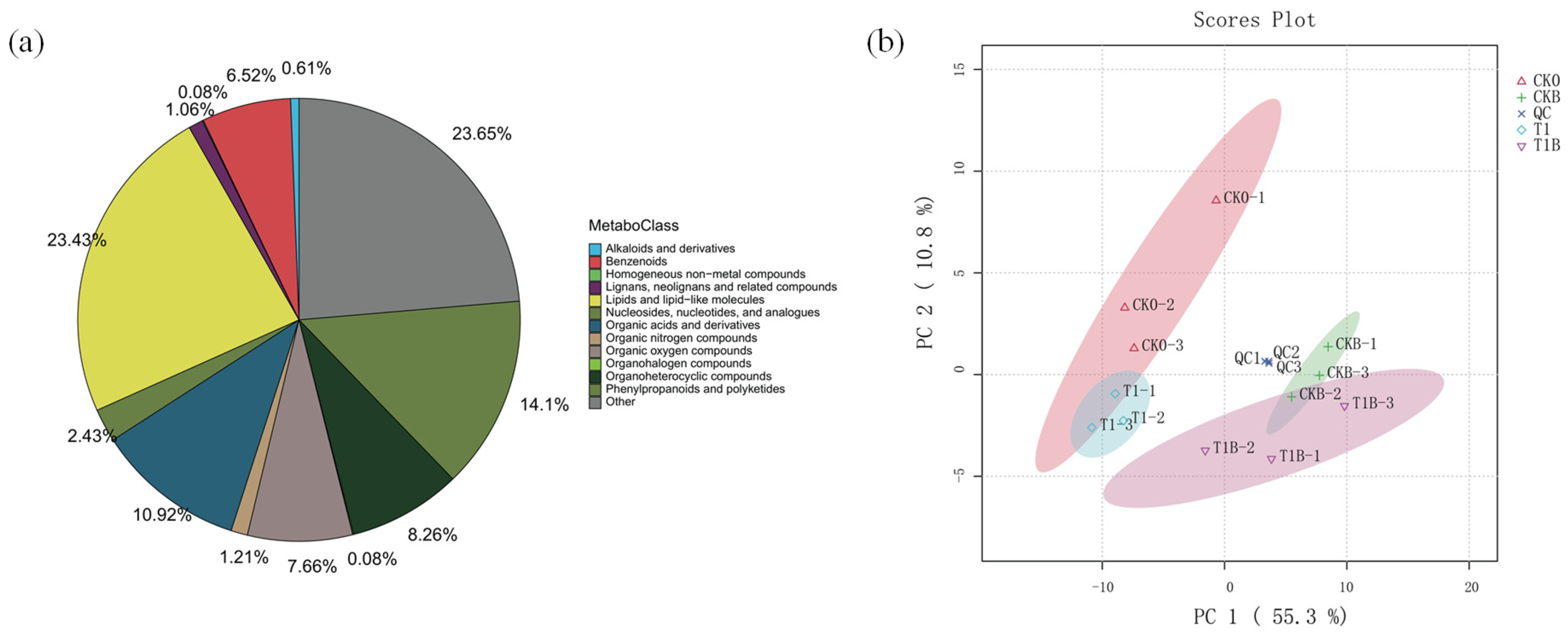
The proportions of various substances detected through metabolomics, based on the ClassyFire classification, are shown in Figure 3a. Lipids and lipid analogs were the predominant metabolite category, accounting for 23.43% of the metabolites. This was followed by phenylpropanoids and polyketides (14.10%), organic acids and their derivatives (10.92%), organic heterocyclic compounds (8.26%), and organic oxides (7.66%). Principal component analysis (PCA) revealed that, in positive ion mode, PC1 (55.30%) and PC2 (10.80%) together explained 65.80% of the total variation. Notably, the metabolic differences induced by mold contamination were significant, whereas the differences between samples treated with GA3 during the same period were relatively minor.
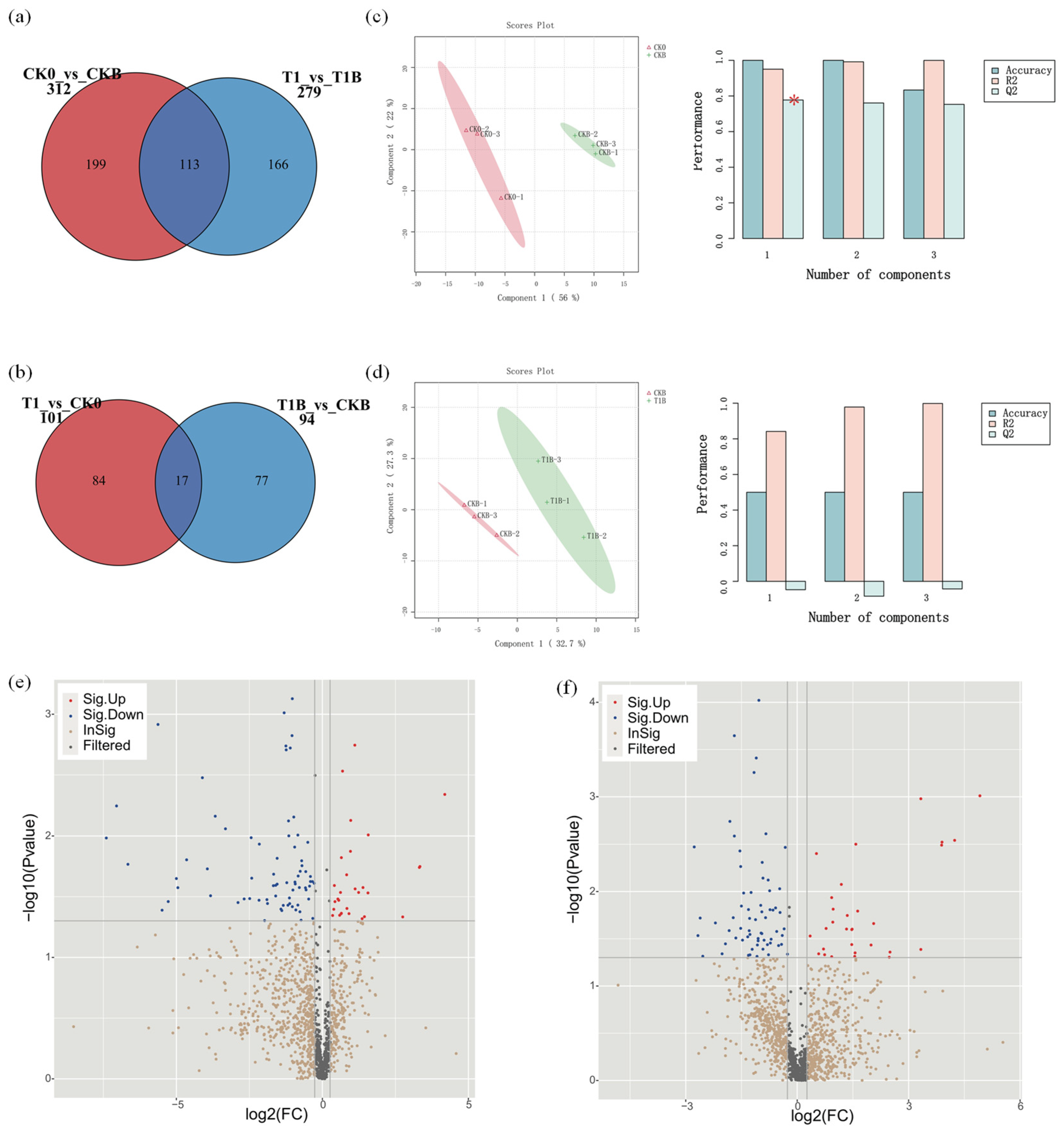
The Venn diagram analysis in Figure 4a,b revealed that there were 312 differentially abundant metabolites between CK0 and CKB, and 279 between T1 and T1B, with 113 overlapping differentially abundant metabolites between the two comparisons. Additionally, there were 101 differentially abundant metabolites between T1 and CK0, 94 between T1B and CKB, and 17 overlapping differentially abundant metabolites between these two comparisons. The results of partial least squares discriminant analysis (PLS-DA) further confirmed that significant differences in metabolite composition existed between CK0 and CKB, as well as between CKB and T1B.
Figure 4c presents the volcano plot of differentially abundant metabolites, visually displaying the distribution of metabolite differences among each group: red indicates significant upregulation, blue indicates significant downregulation, gray indicates metabolites that did not reach the fold change threshold, and yellowish-brown indicates metabolites that met the fold change threshold but not the p-value threshold. Among the 94 differentially abundant metabolites between T1B and CKB, 30 were upregulated and 64 were downregulated. Among the 77 differentially abundant metabolites between T1 and CK0, 29 were upregulated and 72 were downregulated.

3.5. Correlation Analysis of Differentially Abundant Metabolites

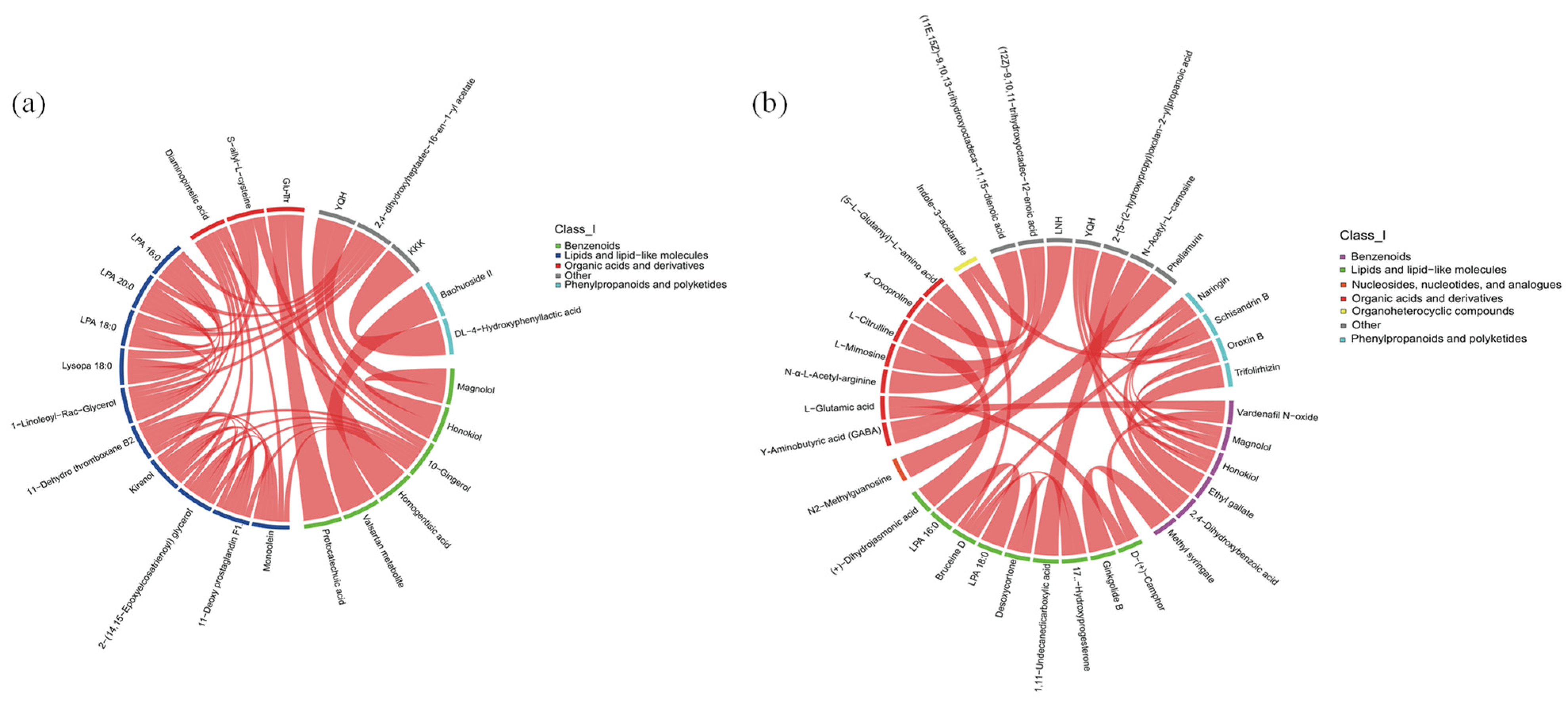
The chord diagram of differentially abundant metabolites in Figure 5 visually presents the classification and attribution of differentially abundant metabolites as well as the correlation between their content changes. In this diagram, each point on the outermost circle represents a distinct metabolite, and the color of the point corresponds to the classification of the metabolite to which it belongs. The lines connecting the points indicate a high correlation among metabolites (with the absolute value of the correlation coefficient being ≥0.99), among which red lines represent a positive correlation, blue lines represent a negative correlation, and the thickness of the lines is positively correlated with the degree of correlation. Specifically, the differentially abundant metabolites between T1 and CK0 were classified into five main categories: benzoic acids, lipids and lipid molecules, organic acids and derivatives, phenylpropanoids and polyketides, and others. The classification of differentially abundant metabolites between T1B and CKB was more diverse. On the basis of the above five categories, two new categories, namely, nucleosides and nucleotides, and organic heterocyclic compounds, have been added, reflecting greater diversity in the classification of differentially abundant metabolites in vitro mold infection conditions (Group B).

3.6. Enrichment Analysis of Metabolic Pathways for Differentially Abundant Metabolites

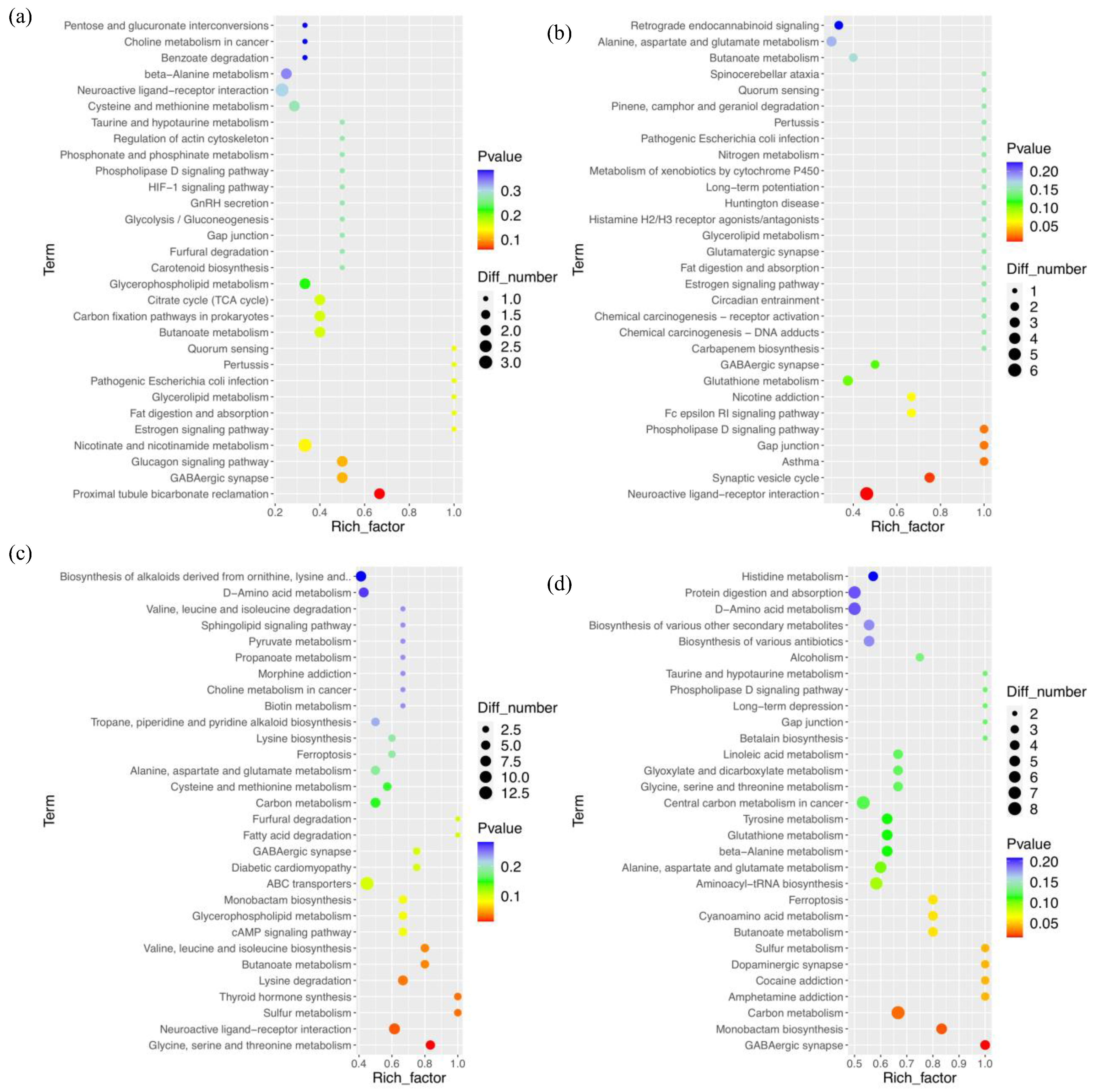
As shown in Figure 6, the differentially abundant metabolites between CK0 and CKB were enriched in 30 metabolic pathways, with the most significantly altered pathways being neuroactive ligand-receptor interaction, niacin and nicotinamide metabolism, β-alanine metabolism, and proximal tubular bicarbonate reclamation. Compared to the differentially abundant metabolite pathways in T1B, the number of significant pathway differences under infection conditions was notably lower. The newly enriched metabolic pathways included alanine, aspartate, and glutamate metabolism; glutathione metabolism; and the synaptic vesicle cycle. Among these, nicotinamide in the niacin and nicotinamide metabolism pathway is an amide compound of vitamin B3 and a precursor of NAD+ and NADP+ in multiple metabolic pathways. These two coenzymes play crucial roles in energy metabolism, redox reactions, and DNA repair [32]. Therefore, changes in this pathway may suggest that exogenous GA3 influences the accumulation of vitamins in blueberry fruit as well as redox balance.
Additionally, most of the significant metabolic pathways are involved in amino acid metabolism, which plays a central role in protein synthesis, energy metabolism, and nitrogen balance [33]. These metabolic changes may reflect the redistribution and utilization of nitrogen sources by blueberries in response to infection. Furthermore, the newly identified differential metabolic pathway of glutathione metabolism between T1 and T1B indicates that glutathione, an important antioxidant in plants, may have increased in response to oxidative stress, such as that caused by mold infection [34]. Neuroactive ligand-receptor interactions, proximal tubular bicarbonate reclamation, and the newly identified differential metabolic pathway of the synaptic vesicle cycle between T1 and T1B may also contribute to regulating signal transduction and response mechanisms in plants [35].

3.7. Thermal Map Analysis of Differentially Abundant Metabolites

Through the analysis of the clustering heatmap in Figure S1, the evolutionary trends of metabolites during storage can be identified. As shown in the figures, the content of lipids and lipid molecules (such as LPA) in the differentially abundant metabolites of T1 and T1B was lower than in CK0 and CKB. After in vitro infection by gray mold, the contents of polyphenols (such as lichenic acid and chlorogenic acid) in these groups were higher than in the CK0 and CKB groups. Amino acid derivatives, such as citrulline, aspartic acid-glutamic acid (asp-glu), glutamine, and lysine, were present in relatively high amounts in CK0 and CKB.
Lipids and lipid molecules accounted for the greatest proportion of differentially abundant metabolites. The content of differentially abundant metabolites (such as LPA) in the T1 and T1B groups was lower than in CK0 and CKB. GA3 treatment predominantly reduced the accumulation of fatty acids and phospholipids. LPA may be rapidly utilized as a precursor in the synthesis of other functional lipids (such as membrane phospholipids), thereby enhancing cell membrane stability and improving the stress resistance of the fruit [36].
When blueberry fruits were infected by Botrytis cinerea, the accumulation of polyphenols (such as lichenic acid and chlorogenic acid) in the differentially abundant metabolites of the T1 group increased. Polyphenols are important secondary metabolites in plants, possessing various biological activities, including antioxidant, antibacterial, and anti-inflammatory properties [37]. Studies have shown that both lichenic acid and chlorogenic acid exhibit antibacterial activity: lichenic acid has potential as an antibacterial functional food additive, and chlorogenic acid can effectively prevent and control gray mold in peach fruit [37,38]. Under in vitro gray mold infection, the GA3-induced increase in polyphenols in blueberries (T1 group) may represent a plant defense mechanism, aiding the plant in resisting pathogens or environmental stress.
The contents of amino acids and their derivatives (such as γ-aminobutyric acid (GABA), citrulline, aspartic acid-glutamic acid, glutamine, and lysine derivatives) in the T1 group were lower than in the CK0 group. This may be linked to the redistribution of nitrogen metabolism in plants, which is consistent with the observation that most of the significant metabolic pathways among the enriched pathways are involved in amino acid metabolism.

3.8. Metabolic KEGG Analysis

Analysis of differentially abundant metabolites (DAMs) and enriched pathways (Figure 6 and Figure S1) identified key conserved metabolic alterations during storage, including shared pathways such as triglyceride metabolism, GABAergic synapse, and alanine/aspartate/glutamate metabolism, as well as core DAMs like lysophosphatidic acid (LPA) and GABA.
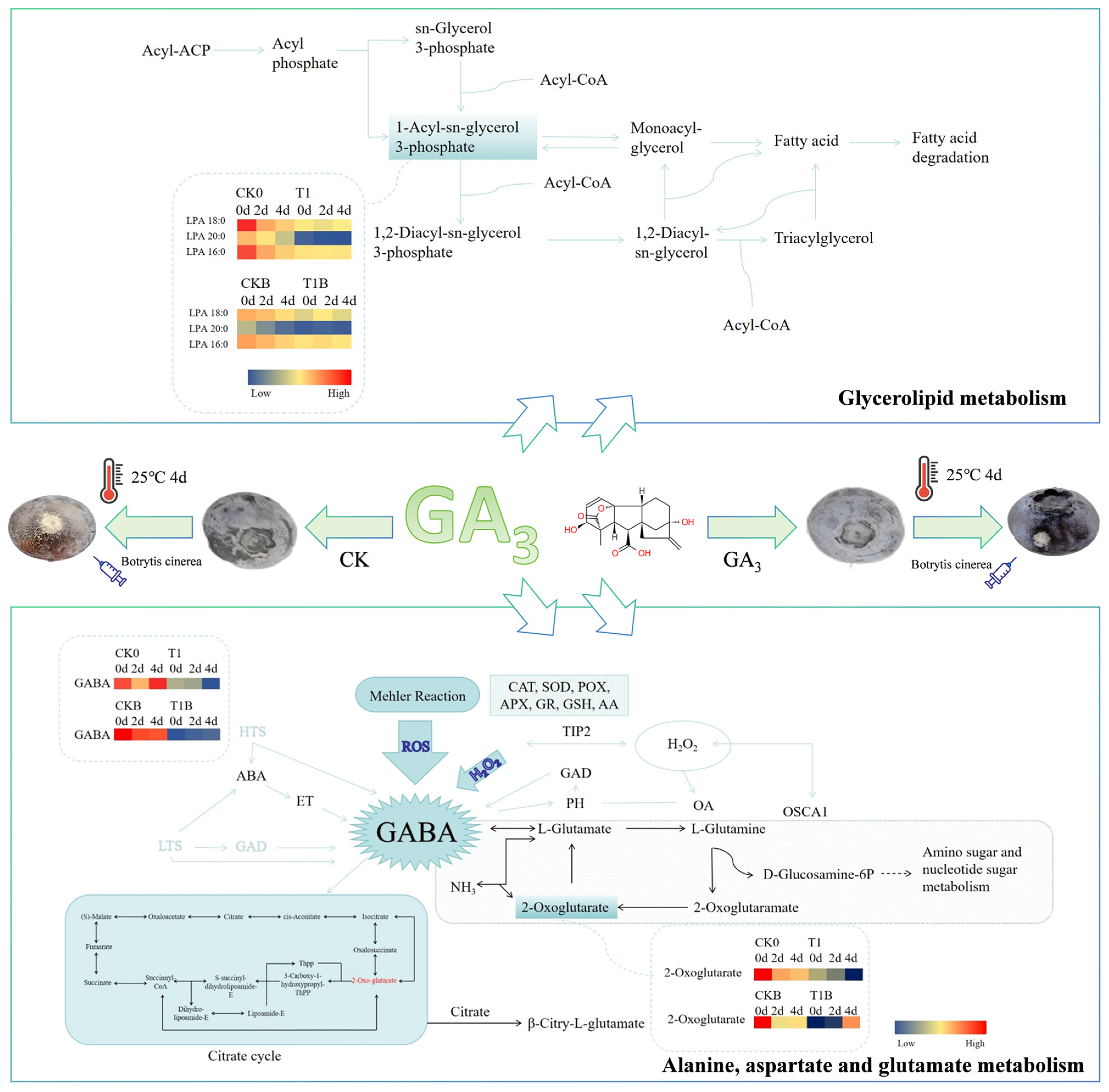
LPA, traditionally considered an intermediate in glycerol metabolism, is now recognized as an important bioactive lipid mediator with multiple biological activities. It can trigger various cellular responses, including both mitotic [39,40] and antimitotic [41] effects on the cell cycle, as well as intracellular calcium mobilization [42]. LPA’s ability to influence cell mitosis suggests that during postharvest storage of blueberry fruit, changes in LPA metabolism may delay fruit senescence by regulating the cell cycle. Inhibiting unnecessary cell division helps maintain fruit integrity and extends its shelf life. Additionally, lipid accumulation and cellular peroxidation are linked to aging [43]. A combination of metabolomics data and KEGG metabolic diagrams (Figure 7) revealed that LPA content in T1 and T1B was decreased, indicating that the T1 treatment slowed the increase in LPA, thereby inhibiting cellular peroxidation and delaying cellular aging. Moreover, under certain conditions, LPA and glycerides can be interconverted, further participating in the regulation of adipocyte decomposition. Glycerides, which are involved in the synthesis and decomposition of fatty acids, are closely linked to lipid metabolism, helping maintain the energy balance and material metabolism of cells.
GABA, an important plant signaling molecule [44], regulates plant growth, development, and metabolism [45], and plays a critical role in plant tolerance to abiotic stress [46,47,48]. When plants are exposed to environmental stresses, reactive oxygen species (ROS), including superoxide radicals (O2−) and hydrogen peroxide (H2O2), accumulate [49]. These ROS are primarily produced through oxygen reduction, known as the Mehler reaction. The accumulation of ROS can cause lipid peroxidation, leading to the production of malondialdehyde (MDA), which damages cell structure and function [50]. To counteract the adverse effects of ROS, plants activate enzymatic and non-enzymatic antioxidant systems. As shown in Figure 1, T1 treatment reduced MDA and H2O2 levels in the fruit, lowering ROS levels, weakening cellular peroxidation stress signals, and inhibiting the activation of glutamate decarboxylase (GAD). This resulted in a reduction in GABA synthesis [51].
As an anaplerotic route connecting glutamate metabolism to the tricarboxylic acid (TCA) cycle, the GABA shunt can influence the replenishment of TCA intermediates by channeling carbon toward succinate formation and thereby affecting overall energy metabolism [52]. In our data, metabolites at the glutamate/GABA node showed a decreasing trend under T1-related treatments, accompanied by a reduction in α-ketoglutarate, whereas upstream organic acids (e.g., citrate and malate) and titratable acidity remained higher in T1B than in the control (CKB). These coordinated changes are consistent with a weakened contribution from the glutamate–GABA branch and a compensatory accumulation of upstream organic acids that may help sustain TCA-cycle intermediate pools and maintain metabolic homeostasis [53].

4. Discussion

The application of GA3 and CPPU promoted berry enlargement, reduced the incidence of contamination during storage, improved postharvest storability, and extended shelf life. Although soluble sugar and titratable acidity did not differ significantly among treatments, GA3-treated fruit exhibited higher anthocyanin and total polyphenol contents. This response is consistent with previous reports showing that exogenous plant growth regulators, particularly gibberellins, can promote the accumulation of phenolic compounds and improve quality-related attributes in blueberries [54] and other horticultural crops, e.g., litchi [55], grapefruit [56], sweet cherry [57].
Moreover, MDA, a product of lipid peroxidation, reflects the extent of cellular damage [58]. SOD is a key antioxidant enzyme involved in scavenging reactive oxygen species (ROS) and is commonly used as an indicator of antioxidant capacity. Therefore, the combined assessment of MDA and SOD is useful for evaluating oxidative damage and antioxidant status in postharvest fruit tissues. During storage, the gradual increase in MDA content suggests that lipid peroxidation and oxidative damage intensified over time, whereas the absence of a clear trend in SOD suggests that antioxidant capacity remained relatively stable under these conditions. In contrast, the T1 treatment showed an increasing tendency in SOD content over the storage period, suggesting that GA3 treatment was associated with enhanced antioxidant-related status, which may be related to the lower contamination incidence observed during storage. Previous studies have shown that exogenous plant growth regulators can influence antioxidant indices (e.g., SOD, APX, CAT, and POD) [59,60] and lipid-peroxidation markers (e.g., MDA) [61,62] during postharvest storage, although the magnitude and direction of these effects often depend on cultivar, application regime, and storage environment. Collectively, our findings support the interpretation that GA3 treatment is associated with improved oxidative-stress-related performance during storage, consistent with reports in other horticultural crops [63].
Nitric oxide (NO), an important signaling molecule in plant defense responses, has been reported to enhance resistance against pathogens by triggering hypersensitive-like responses and inducing the expression of defense-related genes [64,65,66]. NO can also interact with ROS during stress responses, modulating superoxide-related processes and limiting lipid peroxidation, thereby reducing oxidative damage [67].The increase in NO content in the T1 treatment group under storage conditions suggests a potential role of GA3 in modulating defense mechanisms, which may enhance the resistance of blueberry fruit to gray mold infection [26].
Furthermore, APX content increased over storage time. APX (ascorbate peroxidase) is a key enzyme involved in H2O2 detoxification in plant cells by using ascorbate as an electron donor. H2O2 is a reactive oxygen species generated in multiple cellular compartments during metabolism and stress responses [68]. In this study, H2O2 content in T1 was lower than that in the other treatments, and the concurrent increase in APX content over storage time may contribute to H2O2 scavenging [69]. Together with the SOD results, these findings indicate that GA3 treatment (T1) was associated with enhanced antioxidant-related indices during storage, which may contribute to improved storability and reduced contamination incidence [70].
Metabolomics, a core discipline within systems biology, enables comprehensive analysis of metabolic dynamics through qualitative and quantitative profiling of metabolites, typically using chromatography-mass spectrometry techniques [71]. In this study, among the differentially abundant metabolites identified, lipids and lipid analogs represented the largest proportion, followed by phenylpropanoids and polyketides, organic acids and derivatives, organic heterocyclic compounds, and organic oxides. The increase in lipids and lipid analogs in the T1 treatment group suggests a response to lipid peroxidation caused by environmental stress and fungal infection, supporting the idea that GA3 treatment mitigates stress-induced lipid damage [70,72]. The lipids and lipid molecules with the highest proportions were primarily fatty acids and phospholipids, which respond to lipid peroxidation caused by environmental stress. The T1 treatment effectively reduced lipid peroxidation. This is consistent with findings from other studies on the role of phospholipids in mitigating oxidative damage in postharvest fruits [73].
Under Botrytis cinerea infection conditions, polyphenols in the T1 treatment group increased. Polyphenols act as effective antibacterial agents, helping plants resist pathogens or environmental stress. This suggests that GA3 treatment may not only affect fruit development but also modulate the fruit’s metabolic pathways, enhancing its ability to combat pathogens during storage [63]. Furthermore, the enriched pathways revealed that most of the significant metabolic pathways were associated with amino acid metabolism, which plays a core role in protein synthesis, energy metabolism, and nitrogen balance. Amino acid metabolism plays a key role in regulating stress responses, and the redistribution of nitrogen sources could be a metabolic adaptation to stress [62,74]. These metabolic changes likely reflect the redistribution and utilization of nitrogen sources by blueberries in response to gray mold infection, consistent with the fact that amino acids are prominent in the metabolite difference heatmap.
Additionally, LPA and GABA, both differentially abundant metabolites, help delay fruit senescence, increase stress resistance, and regulate organic acid content in fruit. They achieve this by regulating the cell cycle, inhibiting lipid peroxidation, and maintaining TCA cycle homeostasis during postharvest storage, thus improving fruit quality. While the role of GABA in postharvest storage has been hypothesized, the exact mechanistic pathways through which it regulates senescence and stress resistance remain to be fully elucidated and should be treated as a speculative discussion [75,76,77]. The nontargeted metabolomics analysis method used in this study cannot precisely calculate the absolute content of each compound. However, it provides valuable theoretical insights into the metabolic changes during ‘Brightwell’ blueberry storage and offers a reference for future research on storage and quality control of blueberries treated with GA3.

5. Conclusions

In conclusion, the application of GA3 and CPPU treatments significantly improved the postharvest storability of ‘Brightwell’ blueberry fruits by enhancing their resistance to oxidative stress and reducing the contamination rate during storage. The results suggest that GA3 treatment, in particular, increased the contents of anthocyanins, polyphenols, and key antioxidant enzymes, including SOD and APX, which are essential for combating reactive oxygen species (ROS) and lipid peroxidation. Furthermore, metabolomics analysis revealed that GA3 treatment modulated several metabolic pathways, particularly those involved in GABA metabolism and polyphenol biosynthesis, which may contribute to enhanced stress resistance and improved fruit quality during storage. Although the findings highlight the potential of GA3 and CPPU to improve blueberry quality and storability, further research is needed to confirm the precise mechanistic pathways and explore the effects under cold chain storage conditions.

Supplementary Materials

The following supporting information can be downloaded at: https://www.mdpi.com/article/10.3390/agronomy16070686/s1, Figure S1: Clustered Abundance Patterns of DAMs.

Author Contributions

X.P. and X.W. (Xiaoming Wang) designed and performed the experiments. X.P., X.W. (Xingru Wei) and X.W. (Xiaoming Wang) analyzed the data. X.P. wrote the first manuscript version. X.W. (Xiaoming Wang), Q.Z., Y.W. and W.W. reviewed the manuscript, and all the authors accepted the final version of the manuscript. Conceptualization, X.P. and X.W. (Xiaoming Wang); methodology, X.P.; software, X.P.; validation, X.P., X.W. (Xingru Wei), H.L. and X.W. (Xiaoming Wang); formal analysis, X.P.; investigation, X.P.; resources, X.P.; data curation, X.P.; writing—original draft preparation, X.P.; writing—review and editing, X.W. (Xiaoming Wang), Q.Z., Y.W. and W.W.; project administration, X.P.; funding acquisition, X.W. (Xiaoming Wang). All authors have read and agreed to the published version of the manuscript.

Funding

This research was supported by the Key Project of Modern Agriculture of Science and Technology Department of Jiangsu Province, grant number BE2022372.

Data Availability Statement

The original contributions presented in this study are included in the article/Supplementary Materials. Further inquiries can be directed to the corresponding author.

Acknowledgments

The authors would like to express their sincere gratitude to the Institute of Botany, Jiangsu Province, and the Chinese Academy of Sciences for their invaluable support and resources during the course of this study. Their administrative and technical assistance has been instrumental in the successful completion of this research.

Conflicts of Interest

The authors declare no conflicts of interest.

References

  1. Edger, P.P.; Iorizzo, M.; Bassil, N.V.; Benevenuto, J.; Ferrão, L.F.V.; Giongo, L.; Hummer, K.; Lawas, L.M.F.; Leisner, C.P.; Li, C.; et al. There and Back Again; Historical Perspective and Future Directions for Vaccinium Breeding and Research Studies. Hortic. Res. 2022, 9, uhac083. [Google Scholar] [CrossRef] [PubMed]
  2. Li, X.; Li, C.; Sun, J.; Jackson, A. Dynamic Changes of Enzymes Involved in Sugar and Organic Acid Level Modification during Blueberry Fruit Maturation. Food Chem. 2020, 309, 125617. [Google Scholar] [CrossRef]
  3. Bujor, O.-C.; Ginies, C.; Popa, V.I.; Dufour, C. Phenolic Compounds and Antioxidant Activity of Lingonberry (Vaccinium vitis-idaea L.) Leaf, Stem and Fruit at Different Harvest Periods. Food Chem. 2018, 252, 356–365. [Google Scholar] [CrossRef]
  4. Wu, Y.; Han, T.; Yang, H.; Lyu, L.; Li, W.; Wu, W. Known and Potential Health Benefits and Mechanisms of Blueberry Anthocyanins: A Review. Food Biosci. 2023, 55, 103050. [Google Scholar] [CrossRef]
  5. Paniagua, A.C.; East, A.R.; Hindmarsh, J.P.; Heyes, J.A. Moisture Loss Is the Major Cause of Firmness Change during Postharvest Storage of Blueberry. Postharvest Biol. Technol. 2013, 79, 13–19. [Google Scholar] [CrossRef]
  6. Zhang, S.; Dai, J.; Ge, Q. Responses of Autumn Phenology to Climate Change and the Correlations of Plant Hormone Regulation. Sci. Rep. 2020, 10, 9039. [Google Scholar] [CrossRef]
  7. Wang, Y.; Ma, B.; Li, Y.; Wu, D.; Du, B.; Wang, H.; Yang, P.; Ren, D.; Wang, X.; Huang, J. The Plant Growth Regulator 14-OH BR Can Minimize the Application Content of CPPU in Kiwifruit (Actinidia chinensis) ‘Donghong’ and Increase Postharvest Time without Sacrificing the Yield. Processes 2022, 10, 2345. [Google Scholar] [CrossRef]
  8. Wen, H.; Yang, S.; Shang, Z.; Yang, S.; Li, X.; Yu, S.; Zhang, H.; Guo, P. Transcriptome and Metabolite Conjoint Analysis Reveals the Seed Dormancy Release Process of Perilla. Sci. Rep. 2025, 15, 7763. [Google Scholar] [CrossRef] [PubMed]
  9. Silva, J.L.; Marroquin, E.; Matta, F.B.; Garner, J.O.; Stojanovic, J. Physicochemical, Carbohydrate and Sensory Characteristics of Highbush and Rabbiteye Blueberry Cultivars. J. Sci. Food Agric. 2005, 85, 1815–1821. [Google Scholar] [CrossRef]
  10. Sabir, I.A.; Liu, X.; Jiu, S.; Whiting, M.; Zhang, C. Plant Growth Regulators Modify Fruit Set, Fruit Quality, and Return Bloom in Sweet Cherry. HortScience 2021, 56, 922–931. [Google Scholar] [CrossRef]
  11. Achard, P.; Gusti, A.; Cheminant, S.; Alioua, M.; Dhondt, S.; Coppens, F.; Beemster, G.T.S.; Genschik, P. Gibberellin Signaling Controls Cell Proliferation Rate in Arabidopsis. Curr. Biol. 2009, 19, 1188–1193. [Google Scholar] [CrossRef]
  12. Ritonga, F.N.; Zhou, D.; Zhang, Y.; Song, R.; Li, C.; Li, J.; Gao, J. The Roles of Gibberellins in Regulating Leaf Development. Plants 2023, 12, 1243. [Google Scholar] [CrossRef]
  13. Du, G.; Zhao, Y.; Xiao, C.; Ren, D.; Ding, Y.; Xu, J.; Jin, H.; Jiao, H. Mechanism Analysis of Calcium Nitrate Application to Induce Gibberellin Biosynthesis and Signal Transduction Promoting Stem Elongation of Dendrobium officinale. Ind. Crop. Prod. 2023, 195, 116495. [Google Scholar] [CrossRef]
  14. Zilkah, S.; Lurie, S.; Lapsker, Z.; Zuthi, Y.; David, I.; Yesselson, Y.; Antman, S.; Ben Arie, R. The Ripening and Storage Quality of Nectarine Fruits in Response to Preharvest Application of Gibberellic Acid. J. Hortic. Sci. 1997, 72, 355–362. [Google Scholar] [CrossRef]
  15. Waadt, R.; Seller, C.A.; Hsu, P.-K.; Takahashi, Y.; Munemasa, S.; Schroeder, J.I. Plant Hormone Regulation of Abiotic Stress Responses. Nat. Rev. Mol. Cell Biol. 2022, 23, 680–694. [Google Scholar] [CrossRef] [PubMed]
  16. Aizat, W.M.; Goh, H.-H.; Baharum, S.N. (Eds.) Omics Applications for Systems Biology. In Advances in Experimental Medicine and Biology; Springer International Publishing: Cham, Switzerland, 2018; Volume 1102. [Google Scholar] [CrossRef]
  17. Bi, Y.; Qiao, C.; Han, L.; Xie, H.; Xu, Y.; Wu, D.; Zhuang, M.; Lv, X.; Cao, M. Key Metabolites and Mechanistic Insights in Forchlorfenuron Controlling Kiwifruit Development. Food Res. Int. 2023, 164, 112412. [Google Scholar] [CrossRef] [PubMed]
  18. Chen, H.; Cheng, J.; Huang, Y.; Kong, Q.; Bie, Z. Comparative Analysis of Sugar, Acid, and Volatile Compounds in CPPU-Treated and Honeybee-Pollinated Melon Fruits during Different Developmental Stages. Food Chem. 2023, 401, 134072. [Google Scholar] [CrossRef]
  19. Williamson, J.G.; NeSmith, D.S. Effects of CPPU Applications on Southern Highbush Blueberries. HortScience 2007, 42, 1612–1615. [Google Scholar] [CrossRef]
  20. Shi, W.T. The Effects of GA3 and CPPU on the Denuclearization and Quality of ‘Shine Muscat’ Grape Fruit. Master’s Thesis, Ningxia University, Yinchuan, China, 2017. [Google Scholar]
  21. Khemnar, A.S.; Pujari, K.H.; Relekar, P.P.; Bhattacharya, T. Effect of CPPU (Forchlorofenuron) with GA3 (Gibberellic Acid) on Fruit Set and Post-Harvest Quality of ‘Bhagwa’ Pomegranate (Punica granatum). Acta Hortic. 2019, 1254, 179–184. [Google Scholar] [CrossRef]
  22. Li, J.; Cao, Y.; Bian, S.; Hong, S.-B.; Xu, K.; Zang, Y.; Zheng, W. Melatonin Improves the Storage Quality of Rabbiteye Blueberry (Vaccinium ashei) by Affecting Cuticular Wax Profile. Food Chem. X 2024, 21, 101106. [Google Scholar] [CrossRef]
  23. Abbey, J.A.; Alzohairy, S.A.; Neugebauer, K.A.; Hatlen, R.J.; Miles, T.D. Fungicide Resistance in Botrytis Cinerea and Identification of Botrytis Species Associated with Blueberry in Michigan. Front. Microbiol. 2024, 15, 1425392. [Google Scholar] [CrossRef]
  24. Zhang, X.; Li, G.; Zhang, Z.; Tian, S. 3-Octanol Controls Gray Mold on Postharvest Fruit by Inducing Autophagy of Botrytis cinerea. Postharvest Biol. Technol. 2023, 205, 112525. [Google Scholar] [CrossRef]
  25. Medina-Jaramillo, C.; Quintero-Pimiento, C.; Díaz-Díaz, D.; Goyanes, S.; López-Córdoba, A. Improvement of Andean Blueberries Postharvest Preservation Using Carvacrol/Alginate-Edible Coatings. Polymers 2020, 12, 2352. [Google Scholar] [CrossRef]
  26. Wang, H.; Kou, X.; Wu, C.; Fan, G.; Li, T. Methyl Jasmonate Induces the Resistance of Postharvest Blueberry to Gray Mold Caused by Botrytis cinerea. J. Sci. Food Agric. 2020, 100, 4272–4281. [Google Scholar] [CrossRef] [PubMed]
  27. Shi, D.; Zhao, B.; Zhang, P.; Li, P.; Wei, X.; Song, K. Edible Composite Films: Enhancing the Postharvest Preservation of Blueberry. Hortic. Environ. Biotechnol. 2024, 65, 355–373. [Google Scholar] [CrossRef]
  28. Wang, J.; Shi, C.; Fang, D.; Che, J.; Wu, W.; Lyu, L.; Li, W. The Impact of Storage Temperature on the Development of Microbial Communities on the Surface of Blueberry Fruit. Foods 2023, 12, 1611. [Google Scholar] [CrossRef]
  29. Yan, Z.; Wang, H.; Kou, X.; Wu, C.; Fan, G.; Li, T.; Zhou, D. Metabolomics Analysis Reveals That MeJA Treatment Induces Postharvest Blueberry Resistance to Botrytis cinerea. Postharvest Biol. Technol. 2022, 194, 112075. [Google Scholar] [CrossRef]
  30. GB/T 12456-2008; Determination of Total Ccid in Foods. General Administration of Quality Supervision, Inspection and Quarantine of the People’s Republic of China. Standardization Administration of the People’s Republic of China: Beijing, China, 2008.
  31. Yan, Y.; Dossett, M.; Castellarin, S.D. Cuticular Waxes Affect Fruit Surface Color in Blueberries. Plants People Planet. 2023, 5, 736–751. [Google Scholar] [CrossRef]
  32. Covarrubias, A.J.; Perrone, R.; Grozio, A.; Verdin, E. NAD+ Metabolism and Its Roles in Cellular Processes during Ageing. Nat. Rev. Mol. Cell Biol. 2021, 22, 119–141. [Google Scholar] [CrossRef]
  33. Ji, Y.; Yue, L.; Cao, X.; Chen, F.; Li, J.; Zhang, J.; Wang, C.; Wang, Z.; Xing, B. Carbon Dots Promoted Soybean Photosynthesis and Amino Acid Biosynthesis under Drought Stress: Reactive Oxygen Species Scavenging and Nitrogen Metabolism. Sci. Total Environ. 2023, 856, 159125. [Google Scholar] [CrossRef]
  34. Dorion, S.; Ouellet, J.C.; Rivoal, J. Glutathione Metabolism in Plants under Stress: Beyond Reactive Oxygen Species Detoxification. Metabolites 2021, 11, 641. [Google Scholar] [CrossRef]
  35. Xu, C.; Qian, H.; Luo, P.; Yu, M.; Xing, J.; Zhang, L.; Zhang, X.; Cui, Y.; Lin, J. Advances in vesicle trafficking of membrane proteins and their regulatory mechanisms. Chin. Sci. Bull. 2023, 68, 762–778. [Google Scholar] [CrossRef]
  36. Batsale, M.; Bahammou, D.; Fouillen, L.; Mongrand, S.; Joubès, J.; Domergue, F. Biosynthesis and Functions of Very-Long-Chain Fatty Acids in the Responses of Plants to Abiotic and Biotic Stresses. Cells 2021, 10, 1284. [Google Scholar] [CrossRef]
  37. Baczewska, I.; Hawrylak-Nowak, B.; Ozimek, E.; Sęczyk, Ł.; Dresler, S. Enhanced Accumulation of Biologically Active Compounds in Lichens with Potential Functional Food Applications. Food Chem. 2024, 458, 140286. [Google Scholar] [CrossRef]
  38. Dai, B.; Wang, Y.; Zhou, H.; Wang, L.; Zhou, L.; Mao, J.; Zhang, S.; Shen, S.; Zheng, X.; Huan, C. Control Efficiency and Potential Mechanisms of Chlorogenic Acid against Postharvest Gray Mold Caused by Botrytis Cinerea on Peach Fruit. Postharvest Biol. Technol. 2024, 218, 113134. [Google Scholar] [CrossRef]
  39. Van Corven, E.J.; Groenink, A.; Jalink, K.; Eichholtz, T.; Moolenaar, W.H. Lysophosphatidate-Induced Cell Proliferation: Identification and Dissection of Signaling Pathways Mediated by G Proteins. Cell 1989, 59, 45–54. [Google Scholar] [CrossRef]
  40. Van Corven, E.J.; Van Rijswijk, A.; Jalink, K.; Van Der Bend, R.L.; Van Blitterswijk, W.J.; Moolenaar, W.H. Mitogenic Action of Lysophosphatidic Acid and Phosphatidic Acid on Fibroblasts. Dependence on Acyl-Chain Length and Inhibition by Suramin. Biochem. J. 1992, 281, 163–169. [Google Scholar] [CrossRef] [PubMed]
  41. Tigyi, G.; Dyer, D.L.; Miledi, R. Lysophosphatidic Acid Possesses Dual Action in Cellproliferation. Proc. Natl. Acad. Sci. USA 1994, 91, 1908–1912. [Google Scholar] [CrossRef]
  42. Yamamoto, M.; Takai, M.; Yashiro, N.; Taniguchi, A.; Tamura, M.; Kusumoto, Y.; Nagano, S.; Tsujiuchi, T. The Role of LPA Receptor Signaling in Modulating Cellular Responses of Colon Cancer Cells Co-Cultured with Lymphoid Endothelial Cells under Hypoxic Stress. Tissue Cell 2024, 91, 102528. [Google Scholar] [CrossRef] [PubMed]
  43. Mutlu, A.S.; Duffy, J.; Wang, M.C. Lipid Metabolism and Lipid Signals in Aging and Longevity. Dev. Cell 2021, 56, 1394–1407. [Google Scholar] [CrossRef]
  44. Ramesh, S.A.; Tyerman, S.D.; Gilliham, M.; Xu, B. γ-Aminobutyric Acid (GABA) Signalling in Plants. Cell. Mol. Life Sci. 2017, 74, 1577–1603. [Google Scholar] [CrossRef] [PubMed]
  45. Sharma, S.S.; Dietz, K.-J. The Significance of Amino Acids and Amino Acid-Derived Molecules in Plant Responses and Adaptation to Heavy Metal Stress. J. Exp. Bot. 2006, 57, 711–726. [Google Scholar] [CrossRef]
  46. Seifikalhor, M.; Aliniaeifard, S.; Hassani, B.; Niknam, V.; Lastochkina, O. Diverse Role of γ-Aminobutyric Acid in Dynamic Plant Cell Responses. Plant Cell Rep. 2019, 38, 847–867. [Google Scholar] [CrossRef] [PubMed]
  47. Dabravolski, S.A.; Isayenkov, S.V. The Role of the γ-Aminobutyric Acid (GABA) in Plant Salt Stress Tolerance. Horticulturae 2023, 9, 230. [Google Scholar] [CrossRef]
  48. Kumari, S.; Nazir, F.; Singh, A.; Haroon, H.; Khan, N.R.; Sahoo, R.N.; Albaqami, M.; Siddique, K.H.M.; Khan, M.I.R. γ-Aminobutyric Acid (GABA) Strengthened Nutrient Accumulation, Defense Metabolism, Growth and Yield Traits against Salt and Endoplasmic Reticulum Stress Conditions in Wheat Plants. Plant Soil. 2024, 498, 409–429. [Google Scholar] [CrossRef]
  49. Ahmad, S.; Fariduddin, Q. Deciphering the Enigmatic Role of Gamma-Aminobutyric Acid (GABA) in Plants: Synthesis, Transport, Regulation, Signaling, and Biological Roles in Interaction with Growth Regulators and Abiotic Stresses. Plant Physiol. Biochem. 2024, 208, 108502. [Google Scholar] [CrossRef]
  50. Lennicke, C.; Cochemé, H.M. Redox Metabolism: ROS as Specific Molecular Regulators of Cell Signaling and Function. Mol. Cell 2021, 81, 3691–3707. [Google Scholar] [CrossRef]
  51. Liu, X.; Ma, H.; Liu, J.; Liu, D.; Wang, C. The γ-Aminobutyric Acid (GABA) Synthesis Gene Regulates the Resistance to Water Core-Induced Hypoxia Stress for Pear Fruits. Agronomy 2023, 13, 1062. [Google Scholar] [CrossRef]
  52. Renault, H.; Roussel, V.; El Amrani, A.; Arzel, M.; Renault, D.; Bouchereau, A.; Deleu, C. The Arabidopsis Pop2-1mutant Reveals the Involvement of GABA Transaminase in Salt Stress Tolerance. BMC Plant Biol. 2010, 10, 20. [Google Scholar] [CrossRef]
  53. Wang, Y.; Cao, H.; Wang, S.; Guo, J.; Dou, H.; Qiao, J.; Yang, Q.; Shao, R.; Wang, H. Exogenous γ-Aminobutyric Acid (GABA) Improves Salt-Inhibited Nitrogen Metabolism and the Anaplerotic Reaction of the Tricarboxylic Acid Cycle by Regulating GABA-Shunt Metabolism in Maize Seedlings. Ecotoxicol. Environ. Saf. 2023, 254, 114756. [Google Scholar] [CrossRef]
  54. Acharya, T.P.; Nambeesan, S.U. Ethylene-Releasing Plant Growth Regulators Promote Ripening Initiation by Stimulating Sugar, Acid and Anthocyanin Metabolism in Blueberry (Vaccinium ashei). BMC Plant Biol. 2025, 25, 766. [Google Scholar] [CrossRef]
  55. Qu, S.; Wang, G.; Li, M.; Yu, W.; Zhu, S. LcNAC90 Transcription Factor Regulates Biosynthesis of Anthocyanin in Harvested Litchi in Response to ABA and GA3. Postharvest Biol. Technol. 2022, 194, 112109. [Google Scholar] [CrossRef]
  56. Nisar, S.; Samad, N.; Mukhtar, S.; Qazi, I.; Ali, Q.S.; Zahir, A.; Zeb, N.; Shah, H.; Khattak, M.S.; Khan, S.G. The Influence of Gibberellic Acid (GA3) Application and Partial Coating on Pre and Postharvest Performance of Grapefruit. Indus J. Biosci. Res. 2025, 3, 417–424. [Google Scholar] [CrossRef]
  57. Ozturk, B.; Aglar, E.; Saracoglu, O.; Karakaya, O.; Gun, S. Effects of GA3, CACl2 and Modified Atmosphere Packaging (MAP) Applications on Fruit Quality of Sweet Cherry at Cold Storage. Int. J. Fruit Sci. 2022, 22, 696–710. [Google Scholar] [CrossRef]
  58. Liu, J.; He, C.; Shen, F.; Zhang, K.; Zhu, S. The Crown Plays an Important Role in Maintaining Quality of Harvested Pineapple. Postharvest Biol. Technol. 2017, 124, 18–24. [Google Scholar] [CrossRef]
  59. Wan, H.; Kong, X.; Liu, Y.; Jin, F.; Han, L.; Xu, M.; Li, X.; Li, L.; Yang, J.; Lai, D.; et al. Residue Analysis and Effect of Preharvest Forchlorfenuron (CPPU) Application on Quality Formation of Kiwifruit. Postharvest Biol. Technol. 2023, 195, 112144. [Google Scholar] [CrossRef]
  60. Li, X.; Zhang, L.-P.; Zhang, L.; Yan, P.; Ahammed, G.J.; Han, W.-Y. Methyl Salicylate Enhances Flavonoid Biosynthesis in Tea Leaves by Stimulating the Phenylpropanoid Pathway. Molecules 2019, 24, 362. [Google Scholar] [CrossRef]
  61. Nasr, F.; Razavi, F.; Rabiei, V.; Gohari, G.; Ali, S.; Hano, C. Attenuation of Chilling Injury and Improving Antioxidant Capacity of Persimmon Fruit by Arginine Application. Foods 2022, 11, 2419. [Google Scholar] [CrossRef] [PubMed]
  62. Zhai, L.; Wang, L.; Shah, G.A.; Jing, T.; Bakhat, H.F.; Zhao, Y.; He, Y. Exogenous Gibberellic Acid (GA3) Enhances Mango Fruit Quality by Regulating Resource-Related Metabolic Pathways. Plants 2026, 15, 482. [Google Scholar] [CrossRef]
  63. Ullah, A.; Hazrat, A.; Khan, B.A.; Saqib, S.; Ullah, F. Mitigating Lead Stress in Barley Using Gibberellic Acid (GA3): Effects on Morpho-Physiological and Biochemical Parameters. J. Plant Growth Regul. 2025, 44, 3853–3864. [Google Scholar] [CrossRef]
  64. Kawakita, K. Studies on NO Functions in Plant Defense Responses. J. Gen. Plant Pathol. 2014, 80, 510–513. [Google Scholar] [CrossRef]
  65. Zhong, Y.; Wu, X.; Zhang, L.; Zhang, Y.; Wei, L.; Liu, Y. The Roles of Nitric Oxide in Improving Postharvest Fruits Quality: Crosstalk with Phytohormones. Food Chem. 2024, 455, 139977. [Google Scholar] [CrossRef]
  66. Thalineau, E.; Truong, H.-N.; Berger, A.; Fournier, C.; Boscari, A.; Wendehenne, D.; Jeandroz, S. Cross-Regulation between N Metabolism and Nitric Oxide (NO) Signaling during Plant Immunity. Front. Plant Sci. 2016, 7, 472. [Google Scholar] [CrossRef]
  67. Yun, B.-W.; Skelly, M.J.; Yin, M.; Yu, M.; Mun, B.-G.; Lee, S.-U.; Hussain, A.; Spoel, S.H.; Loake, G.J. Nitric Oxide and S-Nitrosoglutathione Function Additively during Plant Immunity. New Phytol. 2016, 211, 516–526. [Google Scholar] [CrossRef] [PubMed]
  68. Corpas, F.J.; González-Gordo, S.; Palma, J.M. Ascorbate Peroxidase in Fruits and Modulation of Its Activity by Reactive Species. J. Exp. Bot. 2024, 75, 2716–2732. [Google Scholar] [CrossRef] [PubMed]
  69. Luo, T.; Long, L.; Lai, T.; Lin, X.; Ning, C.; Lai, Z.; Du, X.; Shuai, L.; Han, D.; Wu, Z. Preharvest GA3 Treatment at Optimized Time Points Enhanced the Storability of ‘Shixia’ Longan Fruit. Postharvest Biol. Technol. 2024, 214, 113005. [Google Scholar] [CrossRef]
  70. Ellouzi, H.; Zorrig, W.; Amraoui, S.; Oueslati, S.; Abdelly, C.; Rabhi, M.; Siddique, K.H.M.; Hessini, K. Seed Priming with Salicylic Acid Alleviates Salt Stress Toxicity in Barley by Suppressing ROS Accumulation and Improving Antioxidant Defense Systems, Compared to Halo- and Gibberellin Priming. Antioxidants 2023, 12, 1779. [Google Scholar] [CrossRef]
  71. Song, J.; Amyotte, B.; Yu, C.H.J.; Campbell-Palmer, L.; Vinqvist-Tymchuk, M.; Vasantha Rupasinghe, H.P. Untargeted Metabolomics Analysis Reveals the Biochemical Variations of Polyphenols in a Diverse Apple Population. Fruit Res. 2023, 3, 29. [Google Scholar] [CrossRef]
  72. Nagar, S.; Singh, V.P.; Arora, A.; Dhakar, R.; Singh, N.; Singh, G.P.; Meena, S.; Kumar, S.; Shiv Ramakrishnan, R. Understanding the Role of Gibberellic Acid and Paclobutrazol in Terminal Heat Stress Tolerance in Wheat. Front. Plant Sci. 2021, 12, 692252. [Google Scholar] [CrossRef]
  73. Sharma, S.; Pareek, S.; Sagar, N.A.; Valero, D.; Serrano, M. Modulatory Effects of Exogenously Applied Polyamines on Postharvest Physiology, Antioxidant System and Shelf Life of Fruits: A Review. Int. J. Mol. Sci. 2017, 18, 1789. [Google Scholar] [CrossRef] [PubMed]
  74. Murcia, G.; Fontana, A.; Pontin, M.; Baraldi, R.; Bertazza, G.; Piccoli, P.N. ABA and GA3 Regulate the Synthesis of Primary and Secondary Metabolites Related to Alleviation from Biotic and Abiotic Stresses in Grapevine. Phytochemistry 2017, 135, 34–52. [Google Scholar] [CrossRef] [PubMed]
  75. Carrión-Antolí, A.; Badiche-El Hilali, F.; Lorente-Mento, J.M.; Díaz-Mula, H.M.; Serrano, M.; Valero, D. Antioxidant Systems and Quality in Sweet Cherries Are Improved by Preharvest GABA Treatments Leading to Delay Postharvest Senescence. Int. J. Mol. Sci. 2024, 25, 260. [Google Scholar] [CrossRef]
  76. Wang, B.; Zhou, F.; Yu, K.; He, X.; Cai, M.; Yang, S.; Zhao, Z. The MdWRKY50-MdHD14 Module Regulates Fruit Senescence by Affecting γ-Aminobutyric Acid Synthesis. Plant Cell Environ. 2025, 48, 7965–7978. [Google Scholar] [CrossRef] [PubMed]
  77. Mohammadi, M.; Aelaei, M.; Saidi, M. Pre-Harvest Spray of GABA and Spermine Delays Postharvest Senescence and Alleviates Chilling Injury of Gerbera Cut Flowers during Cold Storage. Sci. Rep. 2021, 11, 14166. [Google Scholar] [CrossRef] [PubMed]
Figure 1. Postharvest Quality Dynamics of ‘Brightwell’ Blueberry (a), visual quality progression (2–4 d); (b), contamination incidence (%); (c), titratable acidity (%); and (d), soluble solids content (g/kg).
Agronomy 16 00686 g001
Figure 2. Antioxidant Dynamics in ‘Brightwell’ Blueberry during Storage (a), Flavonoids; (b), Polyphenols; (c), Chitin; (d), MDA (Malondialdehyde); (e), SOD (Superoxide Dismutase); (f), TP (Total protein); (g), NO; (h), H2O2; and (i), APX (Ascorbate Peroxidase). Note: 1. Different lowercase letters indicate significant differences (p < 0.05) among treatments at each time point by Duncan’s test. 2. Error bars = SD.
Agronomy 16 00686 g002
Figure 3. Comparative Metabolite Profiles (a), DAM distribution: Proportional overlap in T1 vs. CK0 and T1B vs. CKB; (b), PCA score plot: Group separation (T1/CK0 vs. T1B/CKB).
Agronomy 16 00686 g003
Figure 4. Differential Metabolite Analysis (a), Venn diagram: Shared DAMs in CK0 vs. CKB and T1 vs. T1B; (b), Venn diagram: Shared DAMs in T1 vs. CK0 and T1B vs. CKB; (c), PLS-DA score plot: CK0 vs. CKB separation; (d), PLS-DA score plot: CKB vs. T1B separation; (e), Volcano plot: DAMs in T1 vs. CK0; and (f), Volcano plot: DAMs in T1B vs. CKB. Note: * Indicates significant difference in (c).
Agronomy 16 00686 g004
Figure 5. Metabolic Pathway Associations of DAMs (a), Chord diagram: Enriched pathways in T1 vs. CK0 and (b), Chord diagram: Enriched pathways in T1B vs. CKB.
Agronomy 16 00686 g005
Figure 6. Metabolic Pathway Enrichment Analysis (a), T1 vs. CK0; (b), T1B vs. CKB; (c), CK0 vs. CKB; (d), T1 vs. T1B. Note: Enrichment factor (x-axis) = (DAMs in pathway)/(annotated metabolites in pathway). Circle size ∝ DAM count per pathway. Color gradient: blue (p > 0.05) → red (p < 0.001).
Agronomy 16 00686 g006
Figure 7. Schematic Diagram of Two Major Metabolic Pathways Involved in Blueberry Storage.
Agronomy 16 00686 g007
Table 1. Pre-storage phenotypic indicators of ‘Brightwell’ fruit.
IndicatorsCK0T1T2T3
Fruit diameter (mm)15.87 ± 0.72 c16.28 ± 1.11 bc18.35 ± 0.63 a16.77 ± 0.79 b
Fruit longitudinal diameter (mm)13.76 ± 0.68 b14.94 ± 1.43 a14.86 ± 0.67 a14.13 ± 0.59 ab
Fruit weight (g)2.00 ± 0.23 c2.28 ± 0.45 bc2.89 ± 0.28 a2.32 ± 0.19 b
Fruit firmness (N)3.84 ± 0.47 ab4.14 ± 0.36 a3.66 ± 0.21 c4.02 ± 0.38 a
Fruit color L*28.69 ± 3.61 b37.39 ± 7.6 a34.81 ± 5.73 a34.54 ± 6.73 a
Fruit photoAgronomy 16 00686 i001Agronomy 16 00686 i002Agronomy 16 00686 i003Agronomy 16 00686 i004
Note: 1. Each row of different letters indicates significant differences (p < 0.05) between each variety for each metric according to Duncan’s test. 2. L* value is the lightness parameter in the CIE L*a*b* color space, ranging from 0 to 100; a higher value indicates a lighter color, while a lower value indicates a darker color.
Disclaimer/Publisher’s Note: The statements, opinions and data contained in all publications are solely those of the individual author(s) and contributor(s) and not of MDPI and/or the editor(s). MDPI and/or the editor(s) disclaim responsibility for any injury to people or property resulting from any ideas, methods, instructions or products referred to in the content.