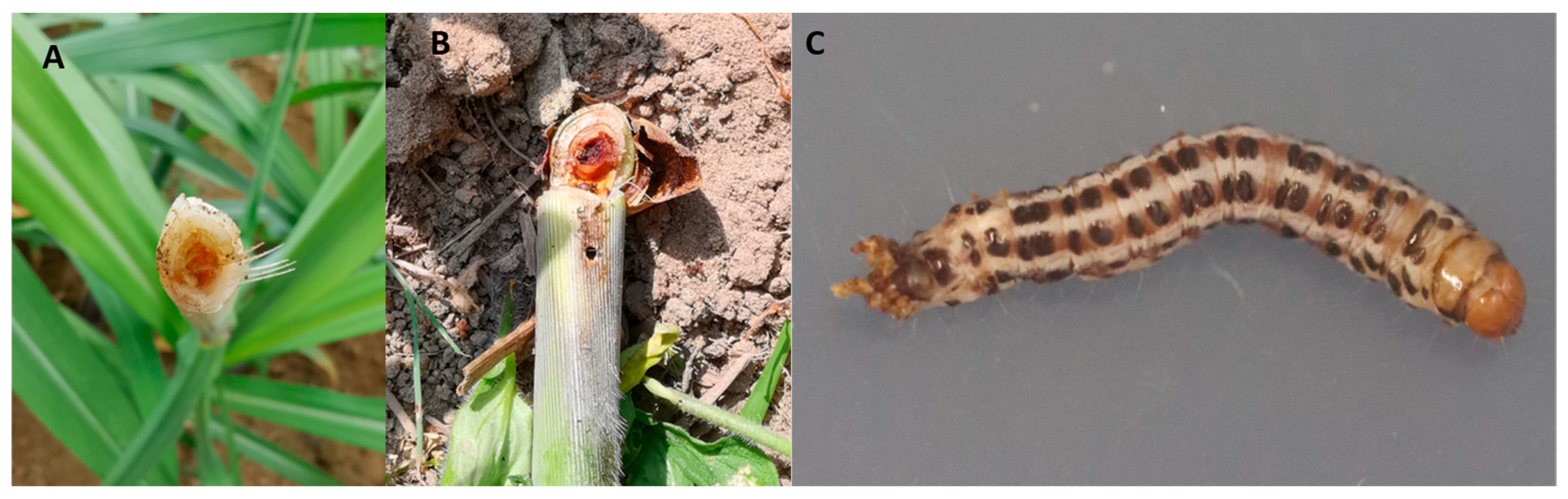
The Effects of Sugarcane Leaf Consumption by Chilo sacchariphagus (Lepidoptera, Crambidae) on Plant Defense Mechanisms: Transcriptomic and Metabolomic Analysis

 , , , ,
Abstract
1. Introduction
2. Materials and Methods
2.1. Plant Materials and Experimental Design
2.2. Transcriptome Profiling
2.2.1. RNA Isolation, cDNA Library Preparation and Sequencing
2.2.2. Sequencing Data Processing, Quality Control, and Genome Alignment
2.2.3. Data Analysis
2.3. Metabolome Profiling
2.3.1. Sample Preparation
2.3.2. UPLC Conditions
2.3.3. MS Conditions
2.3.4. Metabolome Data Analysis
3. Results
3.1. Transcriptome Analysis
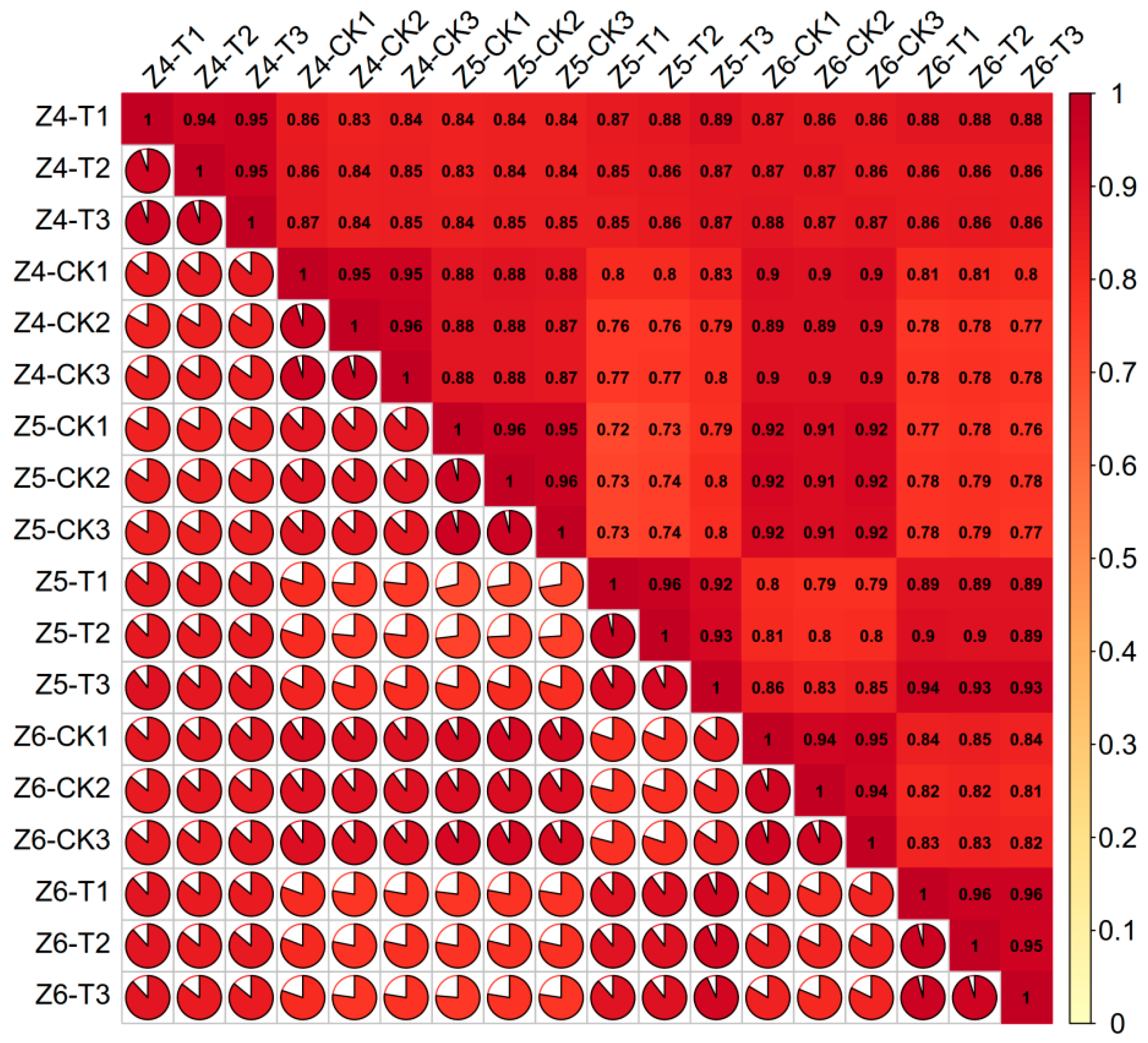
3.1.1. Transcriptome Sequencing Data Quality Control
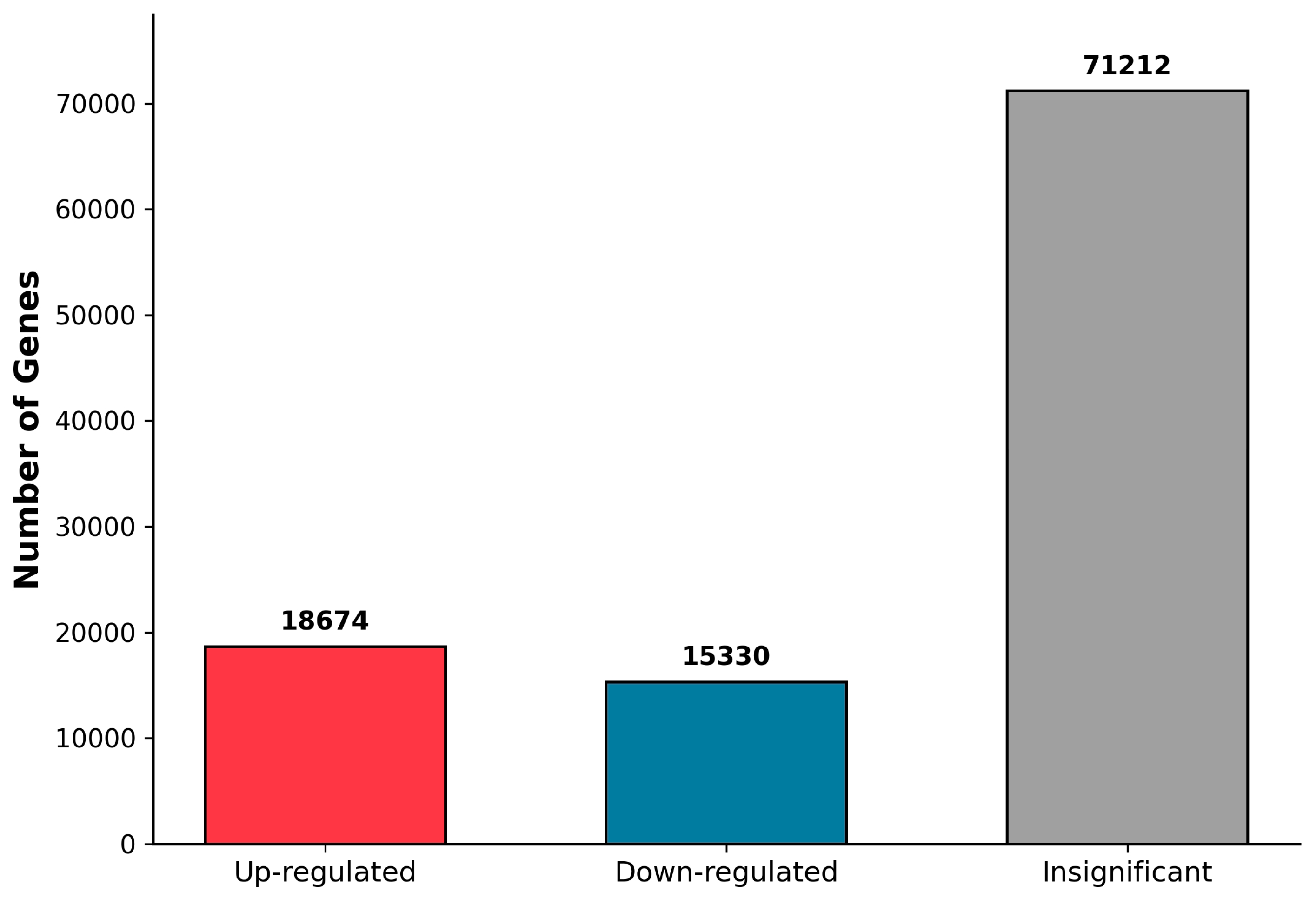
3.1.2. Identification of Differentially Expressed Genes (DEGs)
3.1.3. Transcriptional Profiling of Three Sugarcane Cultivars Revealed by Gene Expression Clustering Analysis
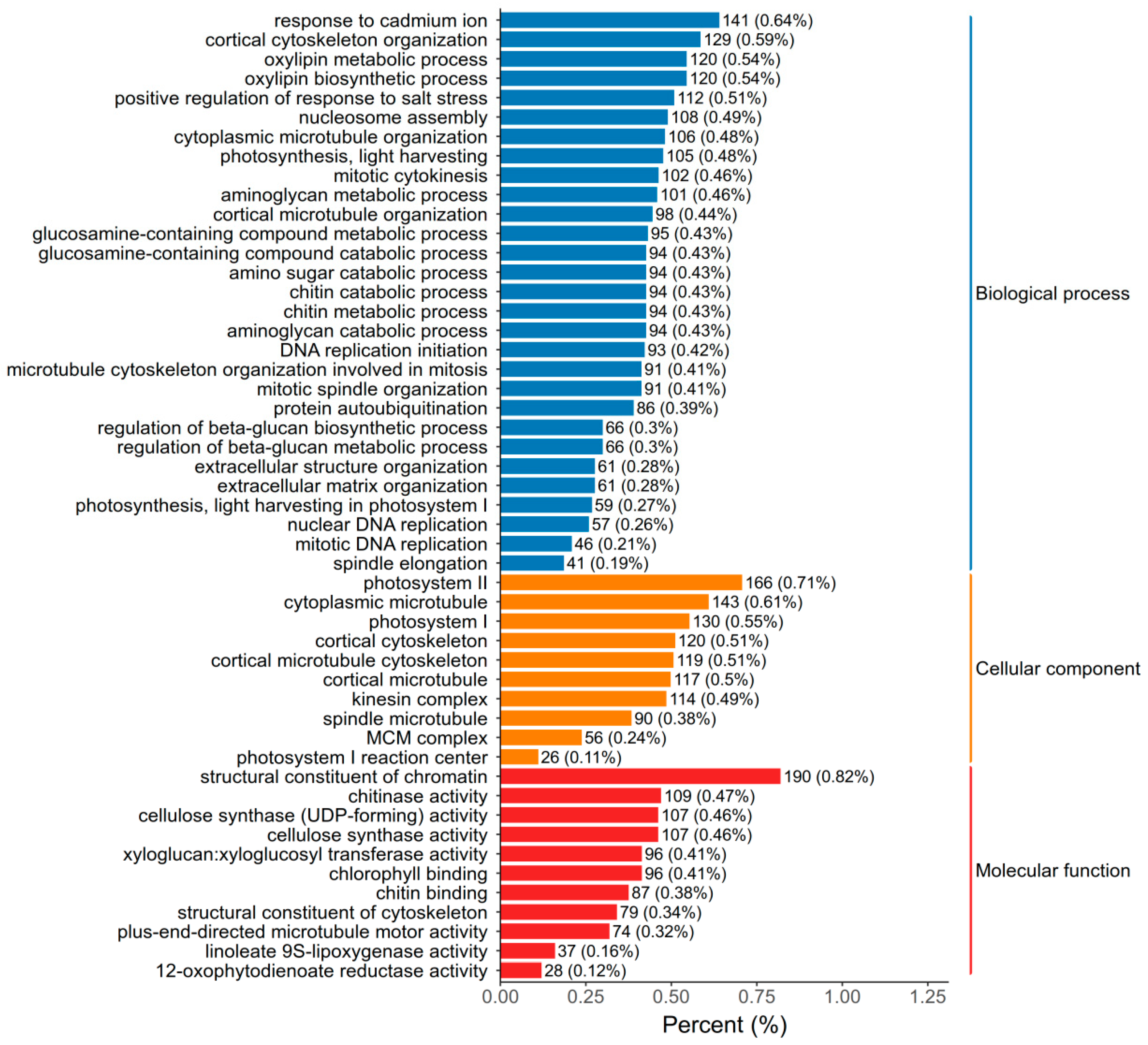
3.1.4. Differentially Expressed Genes GO Analysis
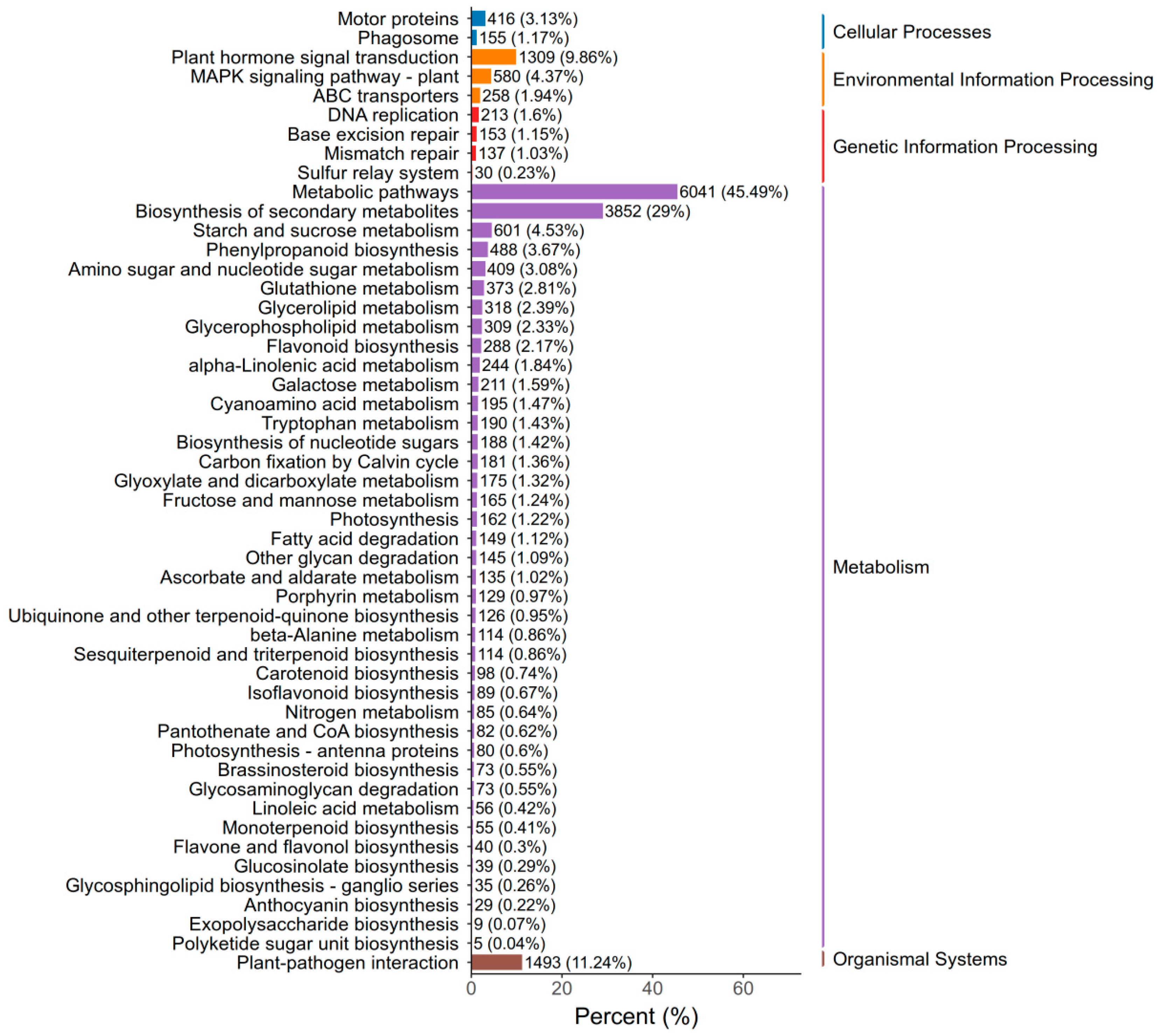
3.1.5. KEGG Analysis of Differentially Expressed Genes
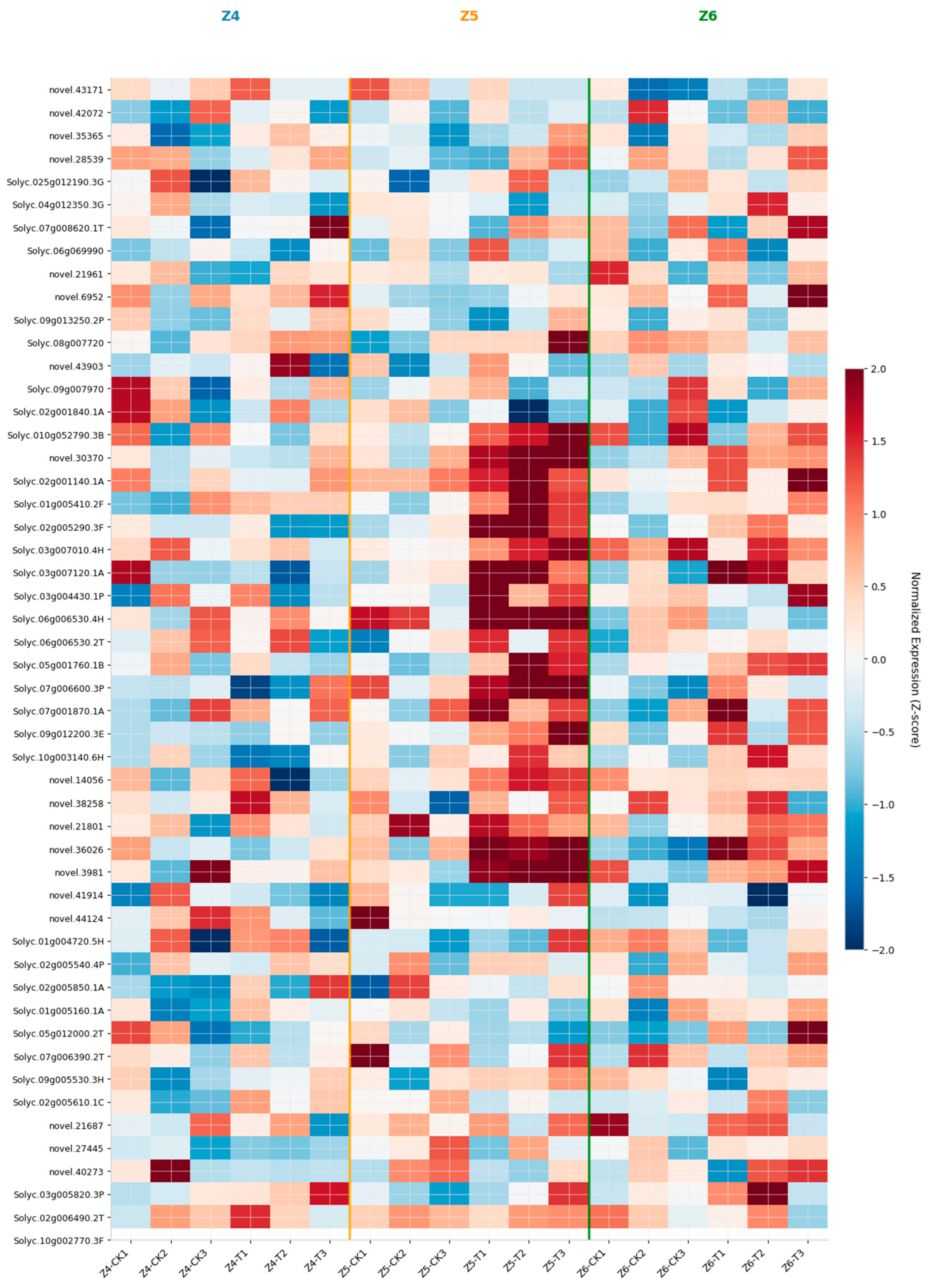
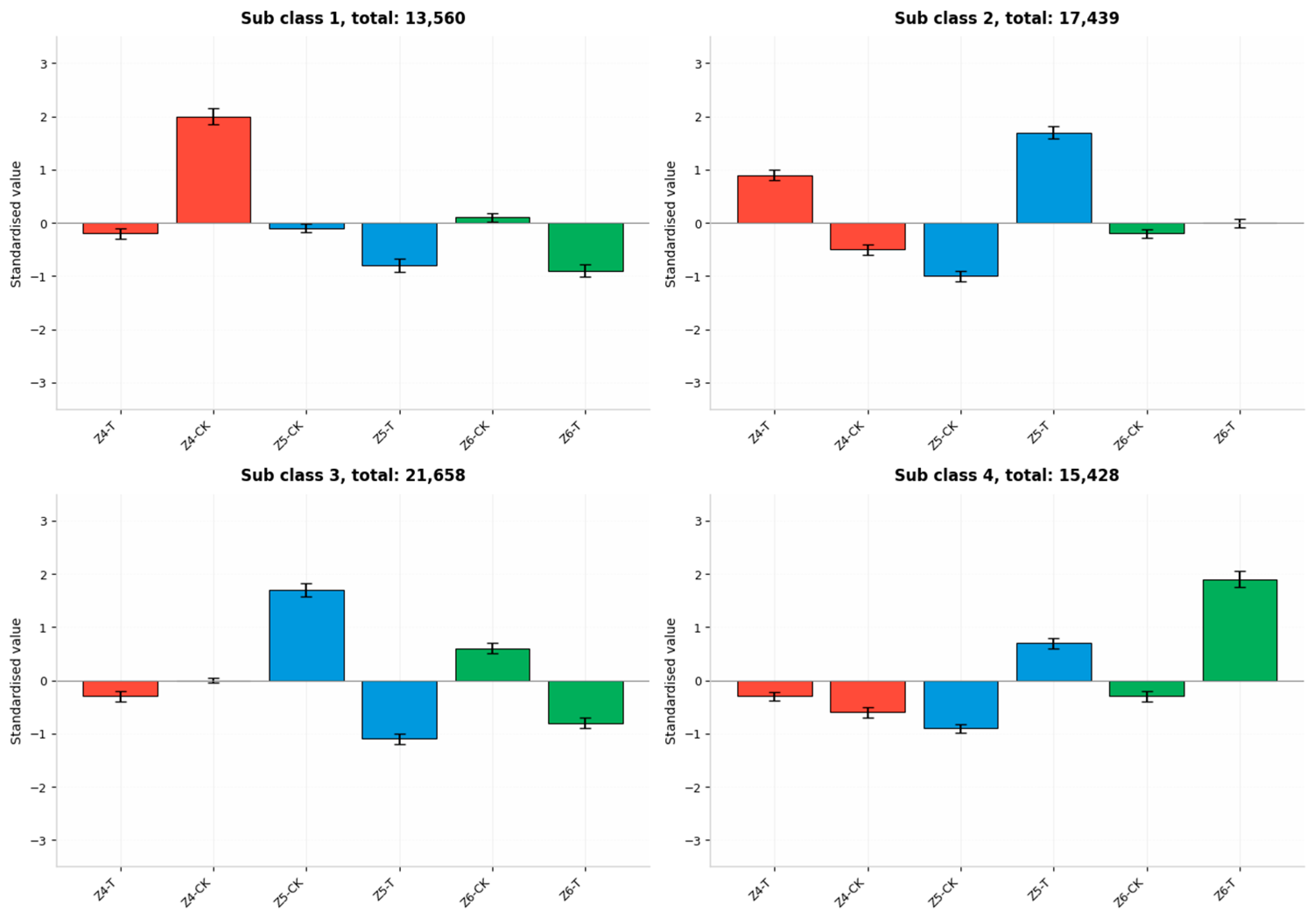
3.1.6. K-Means Co-Expression Clustering of Differentially Expressed Genes
3.2. Metabolome Composition Analyses
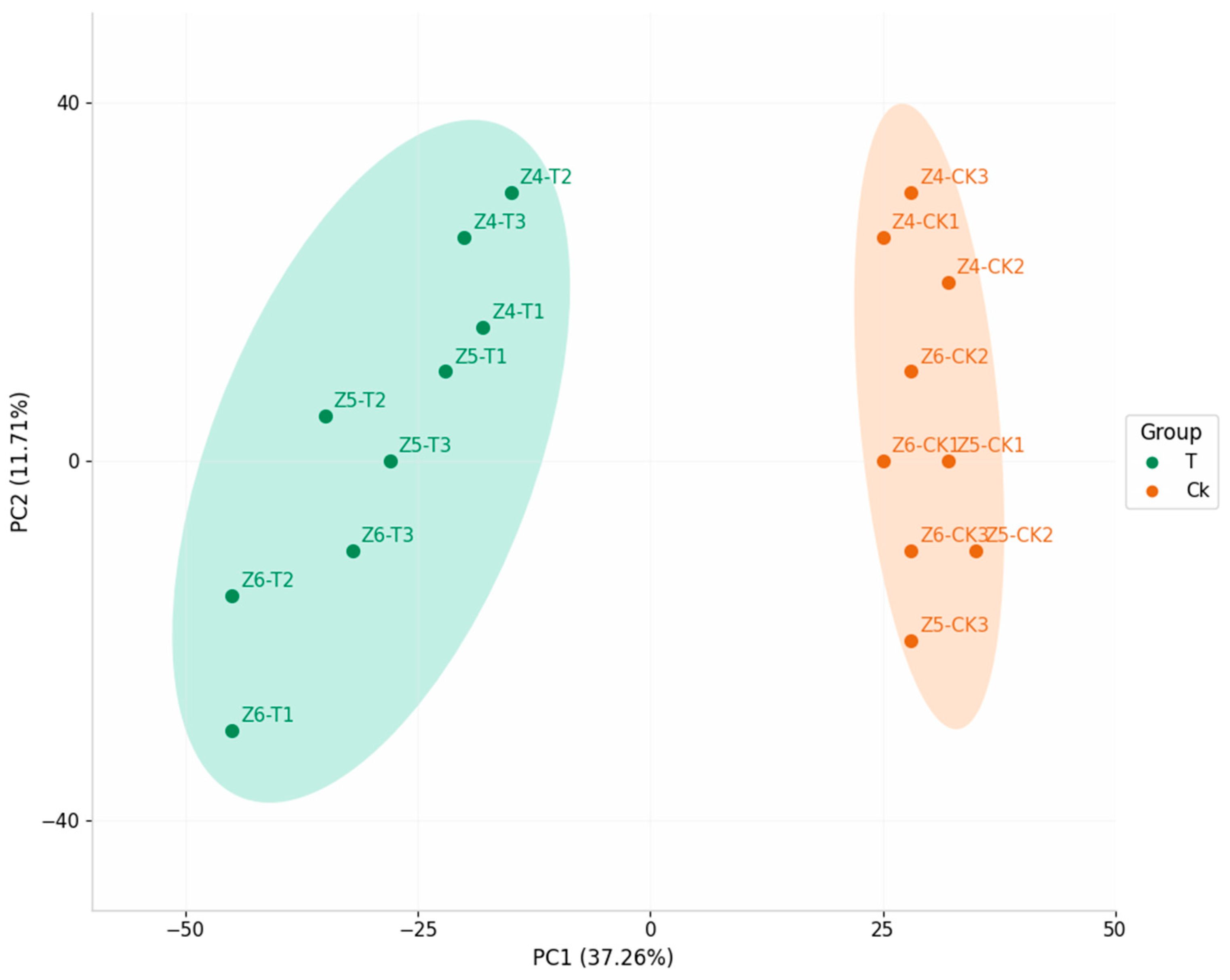
3.2.1. Principal Component Analysis (PCA)
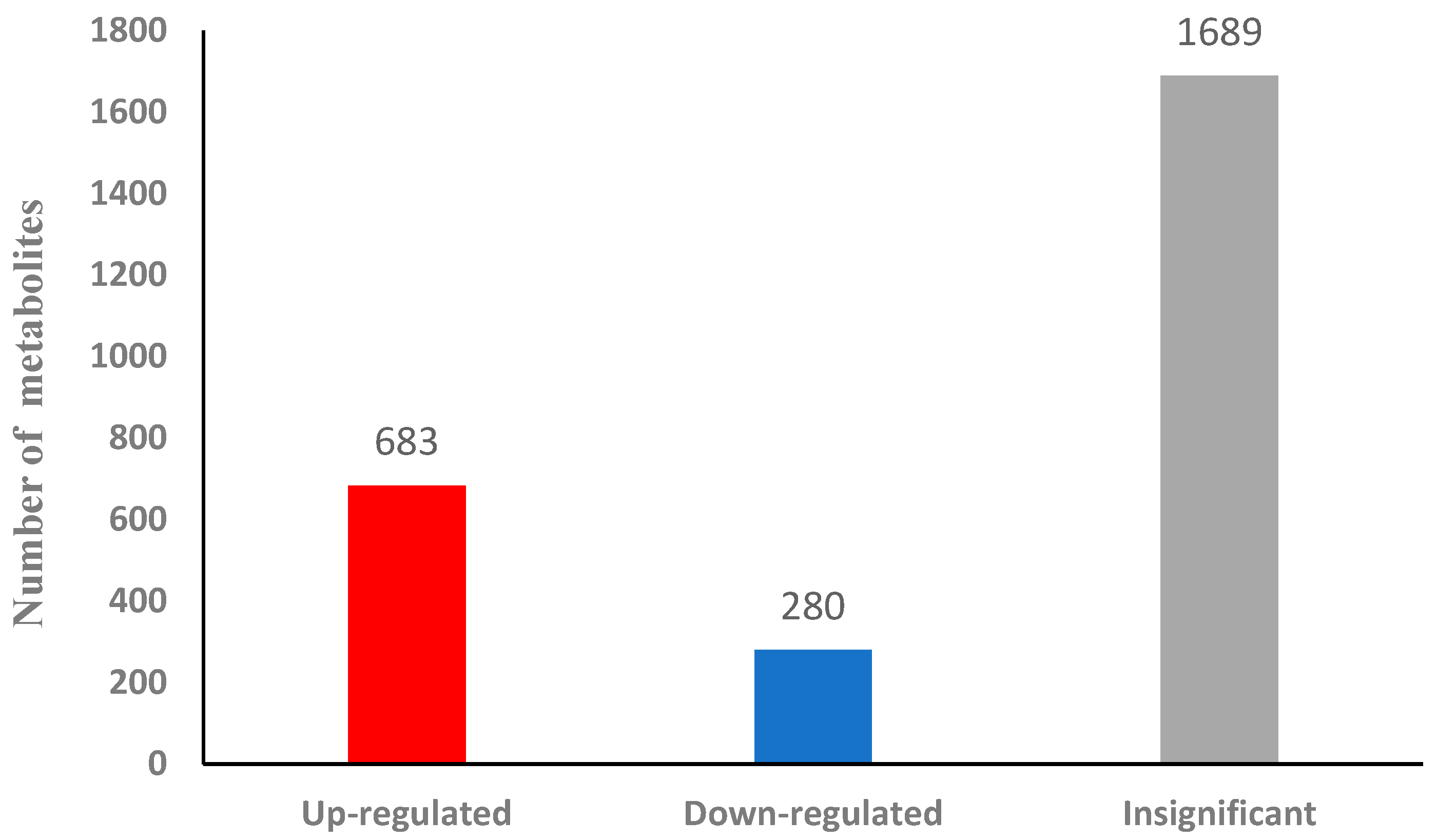
3.2.2. Differential Metabolite Screening
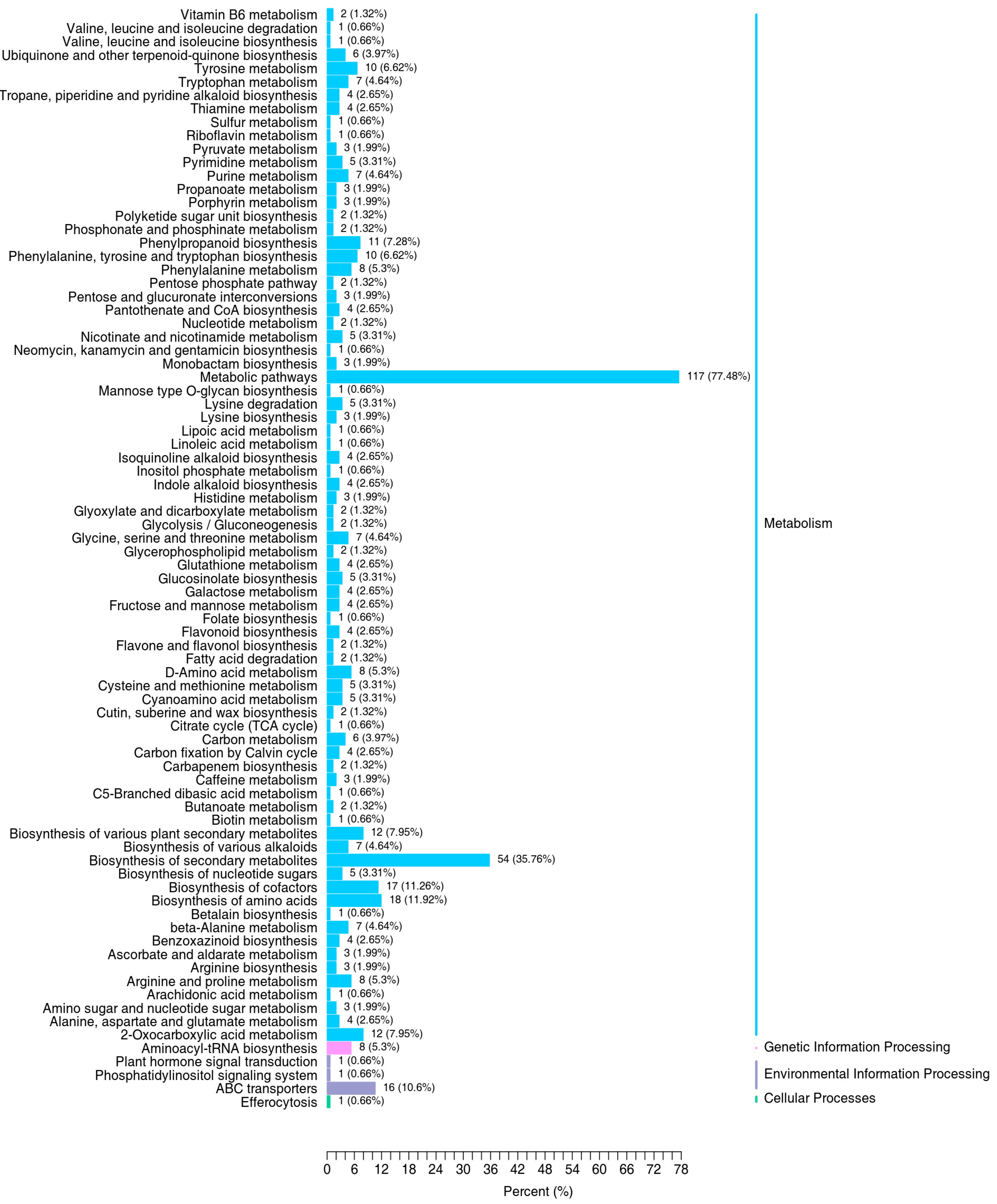
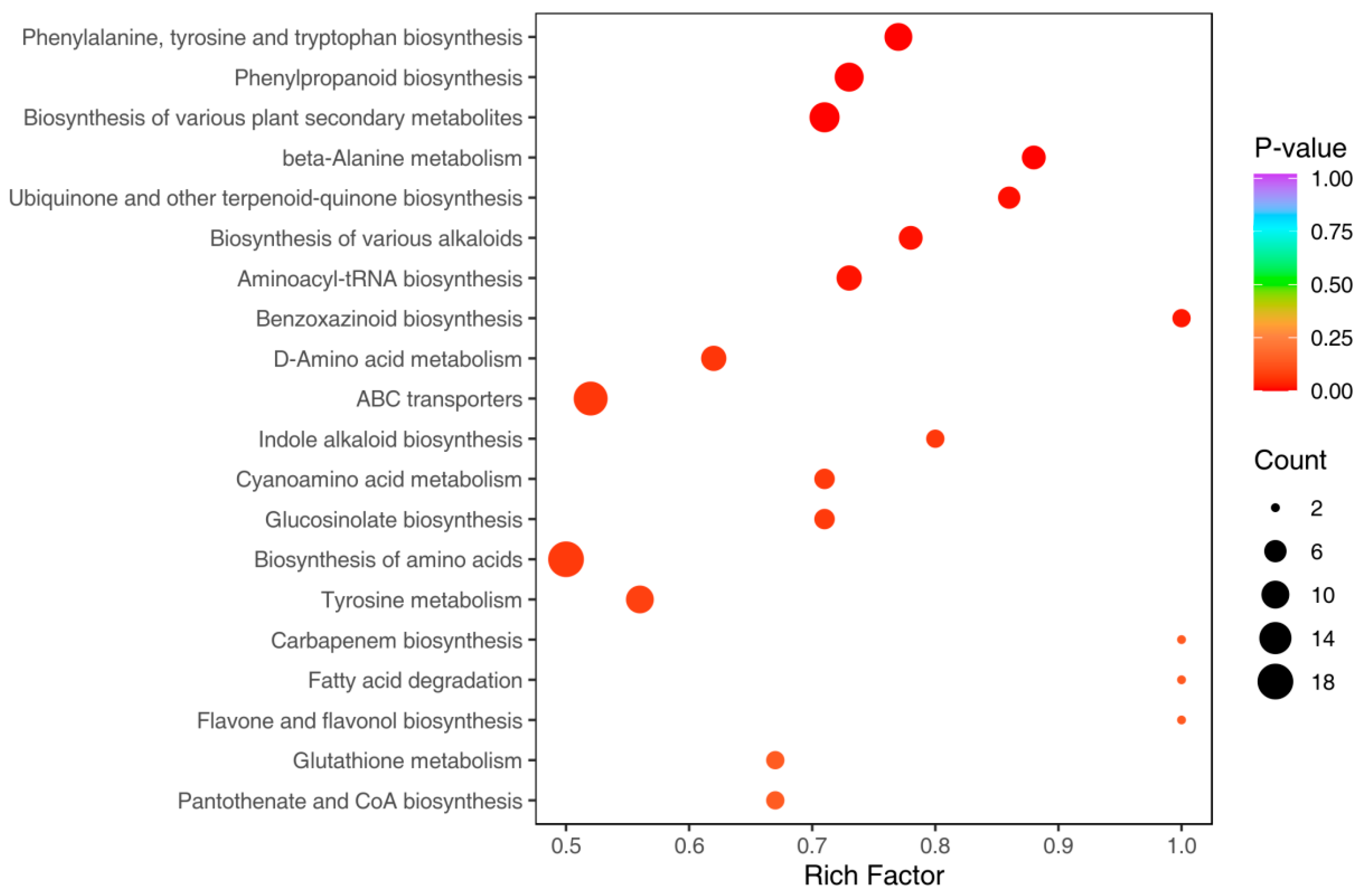
3.2.3. KEGG Pathway Enrichment Analysis of Differential Metabolites
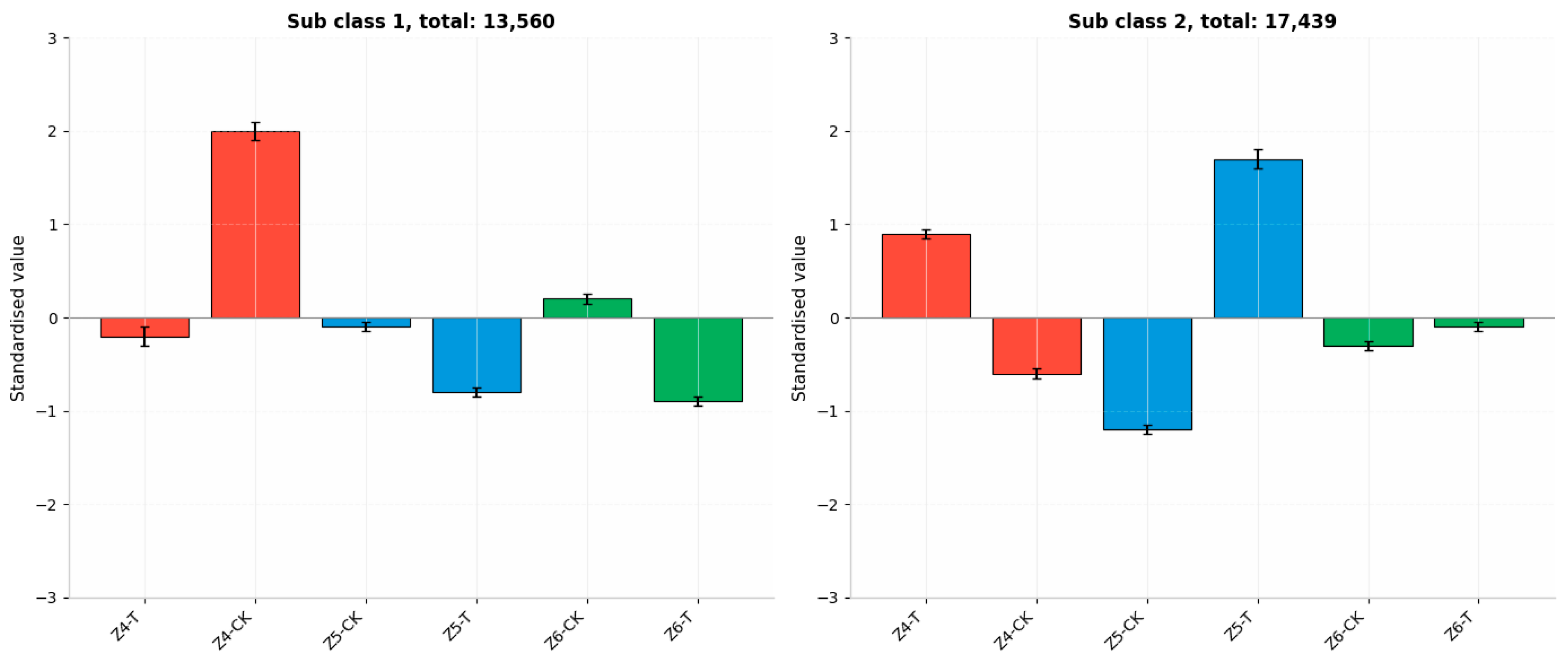
3.2.4. K-Means Clustering of Metabolomic Profiles Reveals Distinct Response Patterns to Insect Infestation
3.3. Integrated Analysis of Transcriptome and Metabolome
3.3.1. Expression Correlation Analysis
3.3.2. The KEGG Analysis
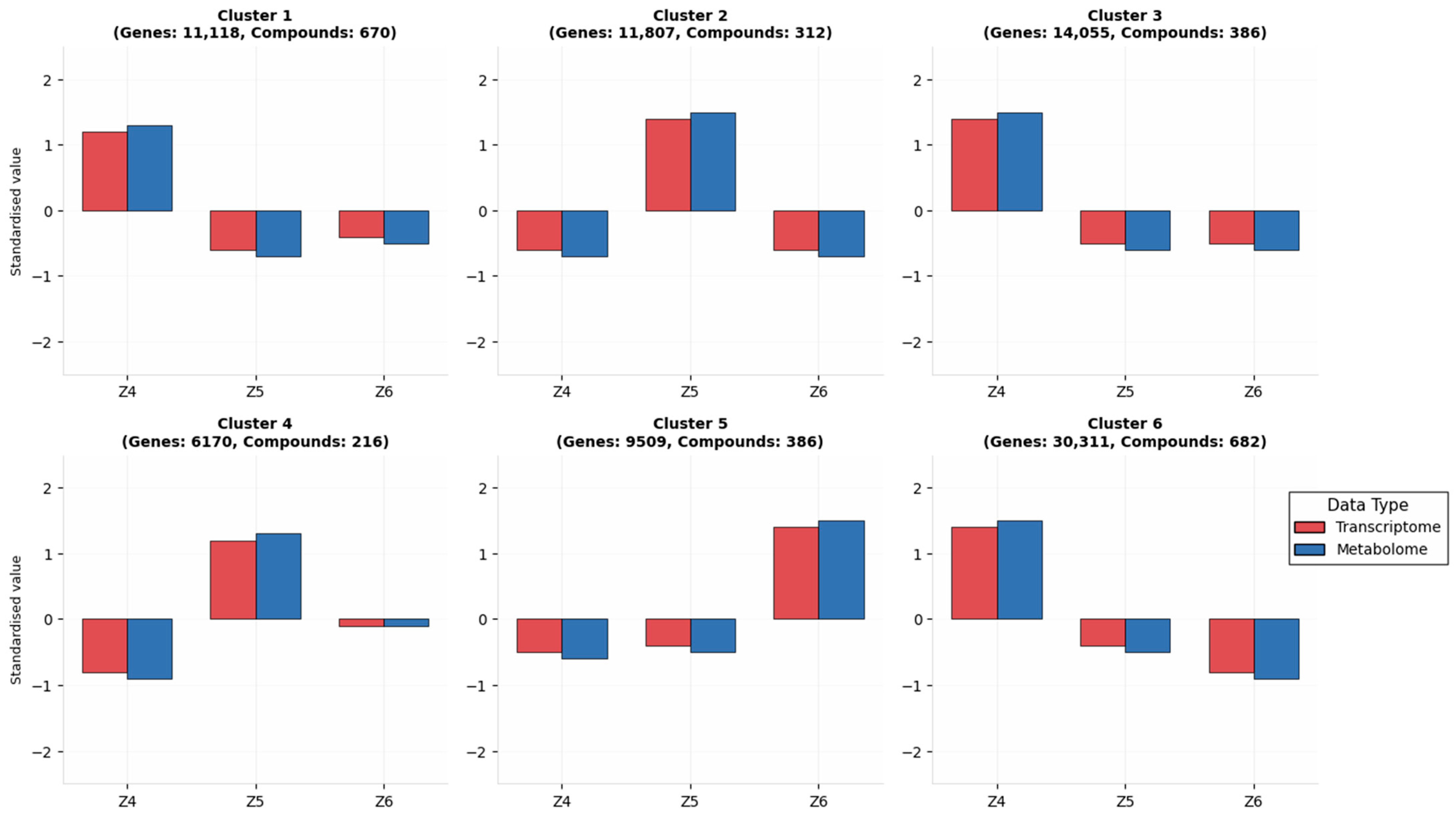
3.3.3. Co-Expression Clustering Analysis
4. Discussion
4.1. Global Transcriptional Reprogramming: The Foundation of Systemic Defense
4.2. The Metabolic Arsenal for Direct Defense: Specific Activation of Core Pathways
4.3. Metabolic Preparation and Energetic Support for Indirect Defense
4.4. Oxidative Stress Management: A Nexus from Passive Response to Active Defense
5. Conclusions
Supplementary Materials
Author Contributions
Funding
Data Availability Statement
Conflicts of Interest
References
- Ali, A.; Khan, M.; Sharif, R.; Mujtaba, M.; Gao, S.J. Sugarcane Omics: An Update on the Current Status of Research and Crop Improvement. Plants 2019, 8, 344. [Google Scholar] [CrossRef] [PubMed]
- Zhang, Q.; Qi, Y.; Pan, H.; Tang, H.; Wang, G.; Hua, X.; Wang, Y.; Lin, L.; Li, Z.; Li, Y.; et al. Genomic insights into the recent chromosome reduction of autopolyploid sugarcane Saccharum spontaneum. Nat. Genet. 2022, 54, 885–896. [Google Scholar] [CrossRef] [PubMed]
- Li, X.; Chen, X.; Fang, J.; Feng, X.; Zhang, X.; Lin, H.; Chen, W.; Zhang, N.; He, H.; Huang, Z.; et al. Whole-genome sequencing of a worldwide collection of sugarcane cultivars (Saccharum spp.) reveals the genetic basis of cultivar improvement. Plant J. 2024, 119, 2151–2167. [Google Scholar] [CrossRef] [PubMed]
- Healey, A.; Garsmeur, O.; Lovell, J.T.; Shengquiang, S.; Sreedasyam, A.; Jenkins, J.; Plott, C.; Piperidis, N.; Pompidor, N.; Llaca, V.; et al. The complex polyploid genome architecture of sugarcane. Nature 2024, 628, 804–810. [Google Scholar] [CrossRef]
- Xiong, Y.; Wang, H.; Wang, J.; Wang, L.; Zhou, X.; Wang, J.; Wu, S. The Effect of Borer Damage at Seedling Stage of Sugarcane on Its Growth and Yield. Sugarcane Canesugar 2022, 51, 26–31. [Google Scholar] [CrossRef]
- Mahesh, P.; Srikanth, J.; Singaravelu, B.; Mahendran, B.; Iswarya, B. A method to screen sugarcane hybrids against Chilo sacchariphagus indicus using artificial diet. Int. J. Trop. Insect Sci. 2025, 18, 45–52. [Google Scholar] [CrossRef]
- Bhatt, R.; Kumar, R.; Kashyap, L.; Alataway, A.; Dewidar, A.Z.; Mattar, M.A. Growth, Yield, Quality and Insect-Pests in Sugarcane (Saccharum officinarum) as Affected by Differential Regimes of Irrigation and Potash under Stressed Conditions. Agronomy 2022, 12, 1942. [Google Scholar] [CrossRef]
- Hoang, N.V.; Furtado, A.; Botha, F.C.; Simmons, B.A.; Henry, R.J. Potential for Genetic Improvement of Sugarcane as a Source of Biomass for Biofuels. Front. Bioeng. Biotech. 2015, 3, 182. [Google Scholar] [CrossRef]
- Chen, G.-L.; Zheng, F.-J.; Lin, B.; Lao, S.-B.; He, J.; Huang, Z.; Zeng, Y.; Sun, J.; Verma, K.K. Phenolic and volatile compounds in the production of sugarcane vinegar. ACS Omega 2020, 5, 30587. [Google Scholar] [CrossRef]
- Iqbal, A.; Khan, R.S.; Khan, M.A.; Gul, K.; Jalil, F.; Shah, D.A.; Rahman, H.; Ahmed, T. Genetic Engineering Approaches for Enhanced Insect Pest Resistance in Sugarcane. Mol. Biotechnol. 2021, 63, 557–568. [Google Scholar] [CrossRef]
- Li, W.; Yin, J.; Huang, Y.; Wang, X.; Luo, Z.M.; Zhang, R.Y.; Shan, H.L. Investigation of sugarcane losses caused by sugarcane borers. Plant Prot. 2016, 42, 205–210. [Google Scholar] [CrossRef]
- Huang, C.; Shang, X.; Wei, J.; Pan, X. Investigation on the species of sugarcane borers in sugarcane planting areas of Guangxi. Plant Prot. 2021, 47, 186–190+196. [Google Scholar] [CrossRef]
- Li, Y.J.; Li, D.W.; Luo, Y.W.; Qin, Z.Q.; Liang, J.J.; Huang, H.W. Field Efficacy Trials of Tank-Mixed Insecticides for Controlling Sugarcane Borers. Hubei Plant Prot. 2025, 2, 27–29. [Google Scholar] [CrossRef]
- Huang, Y.K.; Li, W.F.; Shen, K.; Yin, J.; Luo, Z.M.; Wang, X.Y.; Shan, H.L. Occurrence, Damage and Control Strategies of Sugarcane Borers in Yunnan. Sugar Crops China 2014, 2, 68–70. [Google Scholar] [CrossRef]
- Li, D.; Luo, Y.; Huang, H.; Li, T.; Liang, J.; Song, X.; Qin, Z. Comprehensive evaluation and screening of sugarcane germplasm materials for field resistance to borers. J. South. Agric. 2024, 55, 1561–1572. [Google Scholar] [CrossRef]
- Pan, X.H.; Huang, C.H.; Xin, D.Y. Major dominant natural enemies of sugarcane borers and their significance in biological control. Guangxi Agric. Sci. 2009, 40, 49–52. [Google Scholar] [CrossRef]
- Srikanth, J.; Subramonian, N.; Premachandran, M.N. Advances in transgenic research for insect resistance in sugarcane. Trop. Plant Biol. 2011, 4, 52–61. [Google Scholar] [CrossRef]
- Mitchell, C.; Brennan, R.M.; Graham, J.; Karley, A.J. Plant Defense against Herbivorous Pests: Exploiting Resistance and Tolerance Traits for Sustainable Crop Protection. Front. Plant Sci. 2016, 7, 1132. [Google Scholar] [CrossRef] [PubMed]
- Guo, J.; Qi, J.; He, K.; Wu, J.; Bai, S.; Zhang, T.; Zhao, J.; Wang, Z. The Asian corn borer Ostrinia furnacalis feeding increases the direct and indirect defence of mid-whorl stage commercial maize in the field. Plant Biotechnol. J. 2019, 17, 88–102. [Google Scholar] [CrossRef]
- Beran, F.; Petschenka, G. Sequestration of Plant Defense Compounds by Insects: From Mechanisms to Insect-Plant Coevolution. Annu. Rev. Entomol. 2022, 67, 163–180. [Google Scholar] [CrossRef]
- Howe, G.A.; Jander, G. Plant immunity to insect herbivores. Annu. Rev. Plant Biol. 2007, 59, 41–66. [Google Scholar] [CrossRef]
- War, A.R.; Paulraj, M.G.; Ahmad, T.; Buhroo, A.A.; Hussain, B.; Ignacimuthu, S.; Sharma, H.C. Mechanisms of plant defense against insect herbivores. Plant Signal. Behav. 2012, 7, 1306–1320. [Google Scholar] [CrossRef]
- Aartsma, Y.; Bianchi, F.J.J.A.; Van der Werf, W.; Poelman, E.H.; Dicke, M. Herbivore-induced plant volatiles and tritrophic interactions across spatial scales. New Phytol. 2017, 216, 1054–1063. [Google Scholar] [CrossRef] [PubMed]
- Mertens, D.; Fernández de Bobadilla, M.; Rusman, Q.; Bloem, J.; Douma, J.C.; Poelman, E.H. Plant defence to sequential attack is adapted to prevalent herbivores. Nat. Plants 2021, 7, 1347–1353. [Google Scholar] [CrossRef] [PubMed]
- Onosato, H.; Fujimoto, G.; Higami, T.; Sakamoto, T.; Yamada, A.; Suzuki, T.; Ozawa, R.; Matsunaga, S.; Seki, M.; Ueda, M.; et al. Sustained defense response via volatile signaling and its epigenetic transcriptional regulation. Plant Physiol. 2022, 189, 922–933. [Google Scholar] [CrossRef]
- Negin, B.; Jander, G. Convergent and divergent evolution of plant chemical defenses. Curr. Opin. Plant Biol. 2023, 73, 102368. [Google Scholar] [CrossRef]
- Huang, X.; Chen, J.; Xiao, H.; Xiao, Y.; Wu, J.; Wu, J.; Zhou, J.; Zhang, Y.; Guo, Y. Dynamic transcriptome analysis and volatile profiling of Gossypium hirsutum in response to the cotton bollworm Helicoverpa armigera. Sci. Rep. 2015, 5, 11867. [Google Scholar] [CrossRef]
- Lü, J.; Li, J.C.; Ju, H.P.; Liu, X.L.; Erb, M.; Wang, X.; Lou, Y.G. Contrasting effects of ethylene biosynthesis on induced plant resistance against a chewing and a piercing-sucking herbivore in rice. Mol. Plant 2014, 7, 1670–1682. [Google Scholar] [CrossRef] [PubMed]
- Ntambo, M.S.; Meng, J.-Y.; Rott, P.; Henry, R.J.; Zhang, H.L.; Gao, S.-J. Comparative Transcriptome Profiling of Resistant and Susceptible Sugarcane Cultivars in Response to Infection by Xanthomonas albilineans. Int. J. Mol. Sci. 2019, 20, 6138. [Google Scholar] [CrossRef]
- Maag, D.; Erb, M.; Glauser, G. Metabolomics in plant–herbivore interactions: Challenges and applications. Entomol. Exp. Appl. 2015, 157, 18–29. [Google Scholar] [CrossRef]
- Li, A.M.; He, W.Z.; Wei, J.L.; Chen, Z.L.; Liao, F.; Qin, C.X.; Pan, Y.Q.; Shang, X.K.; Lakshmanan, P.; Wang, M.; et al. Transcriptome Profiling Reveals Genes Related to Sex Determination and Differentiation in Sugarcane Borer (Chilo sacchariphagus Bojer). Insects 2022, 13, 500. [Google Scholar] [CrossRef] [PubMed]
- Wang, Z.; Gerstein, M.; Snyder, M. RNA-Seq: A revolutionary tool for transcriptomics. Nat. Rev. Genet. 2008, 10, 57–63. [Google Scholar] [CrossRef]
- Jia, Q.; Wu, M.; Liang, K.; Sun, X.; Lin, W. Advances in applications of genomics in stress resistance studies of crops. Chin. J. Eco. Agric. 2014, 22, 375–385. [Google Scholar] [CrossRef]
- Liu, Q.; Wang, X.; Tzin, V.; Romeis, J.; Peng, Y.; Li, Y. Combined transcriptome and metabolome analyses to understand the dynamic responses of rice plants to attack by the rice stem borer Chilo suppressalis (Lepidoptera: Crambidae). BMC Plant Biol. 2016, 16, 259. [Google Scholar] [CrossRef] [PubMed]
- Haider, M.S.; Zhang, C.; Kurjogi, M.M.; Pervaiz, T.; Zheng, T.; Zhang, C.B.; Lide, C.; Shangguan, L.F.; Fang, J.G. Insights into grapevine defense response against drought as revealed by biochemical, physiological and RNA-Seq analysis. Sci. Rep. 2017, 7, 13134. [Google Scholar] [CrossRef]
- Fiehn, O.; Kopka, J.; Dörmann, P.; Altmann, T.; Trethewey, R.N.; Willmitzer, L. Metabolite profiling for plant functional genomics. Nat. Biotechnol. 2000, 18, 1157–1161. [Google Scholar] [CrossRef]
- Lee, J.; Kim, S.; Namgung, H.; Jo, Y.H.; Bao, C.; Choi, H.K.; Auh, J.H.; Lee, H.J. Ellagic acid identified through metabolomic analysis is an active metabolite in strawberry (‘Seol-hyang’) regulating lipopolysaccharide-induced inflammation. J. Agric. Food Chem. 2014, 62, 3954–3962. [Google Scholar] [CrossRef]
- Guijas, C.; Montenegro-Burke, R.; Warth, B.; Spilker, M.E.; Siuzdak, G. Metabolomics activity screening for identifying metabolites that modulate phenotype. Nat. Biotech. 2018, 36, 316–320. [Google Scholar] [CrossRef]
- Horn, P.J.; Chapman, K.D. Imaging plant metabolism in situ. J. Exp. Bot. 2024, 75, 1654–1670. [Google Scholar] [CrossRef] [PubMed]
- Li-Beisson, Y.; Hirai, M.Y.; Nakamura, Y. Plant metabolomics. J. Exp. Bot. 2024, 75, 1651–1653. [Google Scholar] [CrossRef]
- Xiong, Q.; Wei, X.; Shi, X.; Fang, J.; Chen, X.; He, H. Progress in Research on Multi-omics in Plant Stress and Breeding. Acta Agric. Univ. Jiangxiensis 2018, 40, 1197–1206. [Google Scholar] [CrossRef]
- Song, Y.J.; Feng, J.C.; Liu, D.M.; Long, C.L. Different phenylalanine pathway responses to cold stress based on metabolomics and transcriptomics in tartary buckwheat landraces. J. Agric. Food Chem. 2022, 70, 687–698. [Google Scholar] [CrossRef]
- Li, D.; Gaquerel, E. Next-Generation Mass Spectrometry Metabolomics Revives the Functional Analysis of Plant Metabolic Diversity. Ann. Rev. Plant Biol. 2021, 72, 867–891. [Google Scholar] [CrossRef]
- Shen, S.; Zhan, C.; Yang, C.; Fernie, A.R.; Luo, J. Metabolomics-centered mining of plant metabolic diversity and function: Past decade and future perspectives. Mol. Plant 2022, 16, 43–63. [Google Scholar] [CrossRef] [PubMed]
- Mitchell, N.; McAssey, E.V.; Hodel, R.G.J. Emerging methods in botanical DNA/RNA extraction. Appl. Plant Sci. 2023, 11, e11530. [Google Scholar] [CrossRef]
- Chen, S. Ultrafast one-pass FASTQ data preprocessing, quality control, and deduplication using fastp. iMeta 2023, 2, e107. [Google Scholar] [CrossRef]
- Kim, D.; Langmead, B.; Salzberg, S.L. HISAT: A fast spliced aligner with low memory requirements. Nat. Methods 2015, 12, 357–360. [Google Scholar] [CrossRef] [PubMed]
- Pertea, M.; Pertea, G.; Antonescu, C.; Chang, T.-C.; Mendell, J.T.; Salzberg, S.L. StringTie enables improved reconstruction of a transcriptome from RNA-seq reads. Nat. Biotechnol. 2015, 33, 290–295. [Google Scholar] [CrossRef]
- Love, M.I.; Huber, W.; Anders, S. Moderated estimation of fold change and dispersion for RNA-seq data with DESeq2. Genome Biol. 2014, 15, 550. [Google Scholar] [CrossRef]
- Kanehisa, M.; Furumichi, M.; Sato, Y.; Kawashima, M.; Ishiguro-Watanabe, M. KEGG for taxonomy-based analysis of pathways and genomes. Nucleic Acids Res. 2022, 51, D587–D592. [Google Scholar] [CrossRef]
- Ashburner, M.; Ball, C.A.; Blake, J.A.; Botstein, D.; Butler, H.; Cherry, J.M.; Davis, A.P.; Dolinski, K.; Dwight, S.S.; Eppig, J.T.; et al. Gene ontology: Tool for the unification of biology. The Gene Ontology Consortium. Nat. Genet. 2000, 25, 25–29. [Google Scholar] [CrossRef]
- Floková, K.; Tarkowská, D.; Miersch, O.; Strnad, M.; Wasternack, C.; Novák, O. UHPLC-MS/MS based target profiling of stress-induced phytohormones. Phytochemistry 2014, 105, 147–157. [Google Scholar] [CrossRef]
- Knowles, J.; Halsall, A.; Haselden, J.N.; Nicholls, A.W.; Wilson, I.D.; Kell, D.B.; Goodacre, R. Procedures for large-scale metabolic profiling of serum and plasma using gas chromatography and liquid chromatography coupled to mass spectrometry. Nat. Protoc. 2011, 6, 1060–1083. [Google Scholar] [CrossRef]
- Want, E.J.; Wilson, I.D.; Gika, H.; Theodoridis, G.; Plumb, R.S.; Shockcor, J.P.; Holmes, E.; Nicholson, J.K. Global metabolic profiling procedures for urine using UPLC-MS. Nat. Protoc. 2010, 5, 1005–1018. [Google Scholar] [CrossRef]
- Yao, M.; Xing, S.; Yao, G.-H.; Yong, W.; Ling, Y.; Chu, B.-B. Simultaneous quantification of 14 glucosinolates in rapeseeds by ultra high performance liquid chromatography-Tandem mass spectrometry. Food Chem. 2024, 467, 142302. [Google Scholar] [CrossRef]
- Zhao, X.; Guo, J.; Nie, F.; Chen, L.; Li, Z.; Zhang, H. Joint Principal Component and Discriminant Analysis for Dimensionality Reduction. IEEE Trans. Neural Netw. Learn. Syst. 2019, 31, 433–444. [Google Scholar] [CrossRef] [PubMed]
- Boccard, J.; Rutledge, D.N. A consensus orthogonal partial least squares discriminant analysis (OPLS-DA) strategy for multiblock Omics data fusion. Anal. Chim. Acta 2013, 769, 30–39. [Google Scholar] [CrossRef] [PubMed]
- Pang, Z.; Chong, J.; Li, S.; Xia, K.J. MetaboAnalystR 3.0: Toward an Optimized Workflow for Global Metabolomics. Metabolites 2020, 10, 186. [Google Scholar] [CrossRef]
- Mithöfer, A.; Boland, W. Plant Defense Against Herbivores: Chemical Aspects. Annu. Rev. Plant Biol. 2012, 63, 431–450. [Google Scholar] [CrossRef]
- Stam, J.M.; Kroes, A.; Li, Y.; Gols, R.; Loon, J.J.A.V.; Poelman, E.H.; Dicke, M. Plant interactions with multiple insect herbivores: From community to genes. Annu. Rev. Plant Biol. 2013, 65, 689–713. [Google Scholar] [CrossRef] [PubMed]
- Turlings, T.C.J.; Erb, M. Tritrophic Interactions Mediated by Herbivore-Induced Plant Volatiles: Mechanisms, Ecological Relevance, and Application Potential. Annu. Rev. Entomol. 2018, 63, 433–452. [Google Scholar] [CrossRef]
- Hu, L.; Zhang, K.; Wu, Z.; Xu, J.; Erb, M. Plant volatiles as regulators of plant defense and herbivore immunity: Molecular mechanisms and unanswered questions. Curr. Opin. Insect Sci. 2021, 44, 82–88. [Google Scholar] [CrossRef]
- Pirttilä, A.M.; Brusila, V.; Koskimäki, J.J.; Wäli, P.R.; Ruotsalainen, A.L.; Mutanen, M.; Markkola, A.M. Exchange of Microbiomes in Plant-Insect Herbivore Interactions. mBio 2023, 14, e03210-22. [Google Scholar] [CrossRef] [PubMed]
- Bobadilla, M.F.D.; Vitiello, A.; Erb, M.; Poelman, E.H. Plant defense strategies against attack by multiple herbivores. Trends Plant Sci. 2022, 27, 528–535. [Google Scholar] [CrossRef] [PubMed]
- Shen, W.; Zhang, X.; Liu, J.; Tao, K.; Li, C.; Xiao, S.; Zhang, W.; Li, J. Plant elicitor peptide signalling confers rice resistance to piercing-sucking insect herbivores and pathogens. Plant Biotechnol. J. 2022, 20, 991–1005. [Google Scholar] [CrossRef]
- Agarrwal, R.; Padmakumari, A.P.; Bentur, J.S.; Nair, S. Metabolic and transcriptomic changes induced in host during hypersensitive response mediated resistance in rice against the Asian rice gall midge. Rice 2016, 9, 5. [Google Scholar] [CrossRef]
- Nguyen, D.; Rieu, I.; Mariani, C.; Dam, N.M.V. How plants handle multiple stresses: Hormonal interactions underlying responses to abiotic stress and insect herbivory. Plant Mol. Biol. 2016, 91, 727–740. [Google Scholar] [CrossRef] [PubMed]
- Liu, H.; Xu, M.; Guo, Y.; Dan, Z.; Liu, X.; Zhang, J.; Li, C.; Jia, S.; Jia, L.; Yu, A.; et al. Combined Transcriptome and Metabolome Analysis of Alfalfa Responses to Aphid Infestation. Agriculture 2024, 14, 1545. [Google Scholar] [CrossRef]
- Zhang, Z.; Chen, Q.; Tan, Y.; Shuang, S.; Dai, R.; Jiang, X.; Temuer, B. Combined Transcriptome and Metabolome Analysis of Alfalfa Response to Thrips Infection. Genes 2021, 12, 1967. [Google Scholar] [CrossRef]
- Niu, L.; Pan, L.; Zeng, W.; Lu, Z.; Cui, G.; Fan, M.; Xu, Q.; Wang, Z.; Li, G. Dynamic transcriptomes of resistant and susceptible peach lines after infestation by green peach aphids (Myzus persicae Sülzer) reveal defence responses controlled by the Rm3 locus. BMC Genom. 2018, 19, 846. [Google Scholar] [CrossRef]
- Murakami, S.; Nakata, R.; Aboshi, T.; Yoshinaga, N.; Teraishi, M.; Okumoto, Y.; Ishihara, A.; Morisaka, H.; Huffaker, A.; Schmelz, E.A.; et al. Insect-induced daidzein, formononetin and their conjugates in soybean leaves. Metabolites 2014, 4, 532–546. [Google Scholar] [CrossRef]
- Luo, Q.; Duan, F.; Song, W. Transcriptomics integrated with metabolomics reveals the defense response of insect-resistant Zea mays infested with Spodoptera exigua. Heliyon 2025, 11, e42565. [Google Scholar] [CrossRef]
- He, J.; Bouwmeester, H.J.; Dicke, M.; Kappers, I.F. Transcriptional and metabolite analysis reveal a shift in direct and indirect defences in response to spider-mite infestation in cucumber (Cucumis sativus). Plant Mol. Biol. 2020, 103, 489–505. [Google Scholar] [CrossRef]
- Su, L.; Hu, C.; Wang, C.; Chen, B.; Zhao, Y. Sugarcane leaf-derived metabolites play important role in Saccharum officinarum—Spodoptera frugiperda interactions. J. Plant Interact. 2025, 20, 104–112. [Google Scholar] [CrossRef]
- Fu, W.; Jin, G.; Jiménez-Alemán, G.H.; Wang, X.; Song, J.; Li, S.; Lou, Y.; Li, R. The jasmonic acid-amino acid conjugates JA-Val and JA-Leu are involved in rice resistance to herbivores. Plant Cell Environ. 2021, 45, 262–272. [Google Scholar] [CrossRef] [PubMed]
- Wang, Y.; Zhang, Y.; Wang, R.; Hou, Y.; Fu, H.; Xie, Y.; Gao, S.; Wang, J. Unveiling sugarcane defense response to Mythimna separata herbivory by a combination of transcriptome and metabolic analyses. Pest Manag. Sci. 2021, 77, 4799–4809. [Google Scholar] [CrossRef] [PubMed]
- Hartmann, H.; Trumbore, S. Understanding the roles of nonstructural carbohydrates in forest trees—From what we can measure to what we want to know. N. Phytol. 2016, 211, 386–403. [Google Scholar] [CrossRef]
- Liu, J.; Li, L.; Liu, Y.; Kong, Z.; Zhang, P.; Wang, Q.; Cheng, S.; Qin, P. Combined transcriptome and metabolome analysis of the resistance mechanism of quinoa seedlings to Spodoptera exigua. Front. Plant Sci. 2022, 13, 931145. [Google Scholar] [CrossRef]



| Sample | Raw Reads | Raw Base (G) | Clean Reads | Clean Base (G) | Error Rate (%) | Q20 (%) | Q30 (%) | GC Content (%) | Alignment Rate (%) |
|---|---|---|---|---|---|---|---|---|---|
| Z4-CK1 | 59,292,670 | 8.89 | 57,686,678 | 8.65 | 0.02 | 98.76 | 96.14 | 52.27 | 93.78% |
| Z4-CK2 | 46,421,646 | 6.96 | 44,864,886 | 6.73 | 0.02 | 98.84 | 96.38 | 51.78 | 93.99% |
| Z4-CK3 | 42,163,176 | 6.32 | 40,712,060 | 6.11 | 0.02 | 98.73 | 96.06 | 53.17 | 93.97% |
| Z4-T1 | 59,171,604 | 8.88 | 56,772,098 | 8.52 | 0.02 | 98.82 | 96.29 | 51.69 | 73.21% |
| Z4-T2 | 47,688,920 | 7.15 | 44,390,364 | 6.66 | 0.02 | 98.77 | 96.20 | 54.19 | 89.59% |
| Z4-T3 | 69,472,648 | 10.42 | 67,362,928 | 10.1 | 0.02 | 98.66 | 95.82 | 51.95 | 89.36% |
| Z5-CK1 | 52,318,658 | 7.85 | 50,985,106 | 7.65 | 0.02 | 98.92 | 96.65 | 51.92 | 94.22% |
| Z5-CK2 | 54,530,248 | 8.18 | 53,174,580 | 7.98 | 0.02 | 98.84 | 96.38 | 51.96 | 94.37% |
| Z5-CK3 | 45,430,408 | 6.81 | 44,062,066 | 6.61 | 0.02 | 98.77 | 96.15 | 52.12 | 94.35% |
| Z5-T1 | 56,961,986 | 8.54 | 54,841,094 | 8.23 | 0.02 | 98.93 | 96.69 | 53.10 | 92.11% |
| Z5-T2 | 59,144,626 | 8.87 | 56,992,188 | 8.55 | 0.02 | 98.97 | 96.80 | 53.13 | 92.16% |
| Z5-T3 | 49,602,910 | 7.44 | 48,382,216 | 7.26 | 0.02 | 98.74 | 95.98 | 52.21 | 92.95% |
| Z6-CK1 | 47,542,408 | 7.13 | 46,020,560 | 6.9 | 0.02 | 98.79 | 96.25 | 52.32 | 93.97% |
| Z6-CK2 | 45,365,036 | 6.8 | 41,203,824 | 6.18 | 0.02 | 98.63 | 95.89 | 55.65 | 93.80% |
| Z6-CK3 | 46,060,858 | 6.91 | 44,613,568 | 6.69 | 0.02 | 98.68 | 95.86 | 51.95 | 94.14% |
| Z6-T1 | 79,734,882 | 11.96 | 76,227,130 | 11.43 | 0.02 | 98.98 | 96.82 | 52.51 | 92.73% |
| Z6-T2 | 42,232,708 | 6.33 | 40,956,706 | 6.14 | 0.02 | 98.91 | 96.61 | 52.21 | 92.64% |
| Z6-T3 | 44,278,114 | 6.64 | 42,913,660 | 6.44 | 0.02 | 98.65 | 95.82 | 52.21 | 92.70% |
| Gene ID | Control Group Expression (CK) | Treatment Group Expression (T) | Fold Change | Log2Fold Change | Adjusted p-Value (padj) | Type |
|---|---|---|---|---|---|---|
| Soffic.07G0006920-5P | 0.23 | 629.85 | 2695.04× | 11.17 | 3.79 × 10−39 | up |
| novel.31571 | 0.12 | 496.59 | 4114.17× | 11.15 | 1.07 × 10−42 | up |
| Soffic.07G0006920-4P | 0.00 | 345.65 | 34,564.53× | 10.94 | 1.32 × 10⁻¹² | up |
| Soffic.06G0018990-4P | 0.36 | 497.37 | 1392.54× | 10.51 | 1.43 × 10−43 | up |
| novel.31575 | 0.21 | 318.58 | 1511.68× | 10.18 | 2.45 × 10−36 | up |
| novel.34925 | 0.00 | 182.17 | 18,216.78× | 10.02 | 1.04 × 10⁻²⁶ | up |
| Soffic.08G0015240-2T | 0.00 | 181.86 | 18,186.21× | 10.02 | 2.04 × 10−36 | up |
| Soffic.08G0015220-5P | 0.09 | 201.24 | 2270.63× | 9.84 | 6.94 × 10−36 | up |
| Soffic.01G0022660-1D | 0.00 | 161.13 | 16,113.49× | 9.84 | 1.18 × 10⁻³² | up |
| novel.15140 | 1.23 | 1056.33 | 856.32× | 9.72 | 2.87 × 10−50 | up |
| Soffic.08G0004860-3G | 318.10 | 0.55 | 0.0017× | −9.21 | 3.56 × 10⁻³⁴ | down |
| Soffic.04G0027170-2C | 123.60 | 0.22 | 0.0018× | −8.77 | 2.76 × 10⁻²⁸ | down |
| Soffic.10G0008190-2D | 71.64 | 0.11 | 0.0015× | −8.30 | 1.27 × 10⁻²¹ | down |
| novel.43204 | 617.45 | 1.92 | 0.0031× | −8.16 | 5.11 × 10−57 | down |
| Soffic.03G0009410-1B | 76.21 | 0.22 | 0.0029× | −8.07 | 5.23 × 10−06 | down |
| Soffic.05G0014220-5F | 244.34 | 1.25 | 0.0051× | −7.58 | 1.38 × 10−38 | down |
| Soffic.06G0004770-1B | 86.47 | 0.50 | 0.0057× | −7.55 | 4.03 × 10−08 | down |
| Soffic.10G0009880-2B | 33.82 | 0.00 | 0.0000× | −7.53 | 5.24 × 10⁻²¹ | down |
| Soffic.07G0026870-5E | 61.28 | 0.25 | 0.0041× | −7.44 | 5.26 × 10⁻¹⁸ | down |
| Soffic.03G0025860-1A | 185.25 | 1.18 | 0.0064× | −7.41 | 1.43 × 10−43 | down |
| Index | Compounds | Class I | Fold_Change | Log2FC | Type |
|---|---|---|---|---|---|
| MW0114941 | N-Acetyl-9-O-lactoylneuraminic acid | Organic acids | 283.45 | 8.15 | up |
| MW0156832 | Ser-Leu-Val | Amino acids and derivatives | 146.15 | 7.19 | up |
| MW0159267 | Val-His | Amino acids and derivatives | 141.03 | 7.14 | up |
| MEDN1096 | N-Benzoyl-L-tyrosine ethyl ester | Amino acids and derivatives | 124.41 | 6.96 | up |
| MW0003810 | 2-Amino-4-phenylphenol | Benzene and substituted derivatives | 108.23 | 6.76 | up |
| MW0010784 | (+)-Isomenthone | Others | 84.74 | 6.41 | up |
| MW0108000 | Lys-Glu-Lys | Amino acids and derivatives | 83.61 | 6.39 | up |
| MW0105857 | Asp-Gly-Lys | Amino acids and derivatives | 80.10 | 6.32 | up |
| MW0156921 | Ser-Thr-Asp | Amino acids and derivatives | 78.69 | 6.30 | up |
| MW0117404 | Cyclopentanecarboxylic acid, 1-phenyl-, 2-piperidinoethyl ester | Others | 69.33 | 6.12 | up |
| MW0118886 | 2-Quinolinecarboxaldehyde | Heterocyclic compounds | 0.04 | −4.64 | down |
| MEDP0060 | Methionine sulfoxide | Amino acids and derivatives | 0.04 | −4.50 | down |
| MW0168059 | (E,2Z)-2-[amino(carboxy)methylidene]-5-oxopent-3-enoate | Others | 0.05 | −4.22 | down |
| MW0151218 | HoPhe-Met-OH | Others | 0.05 | −4.21 | down |
| MW0007593 | Mescaline | Benzene and substituted derivatives | 0.07 | −3.85 | down |
| MW0156675 | Ser-Asp-Arg-Asp | Amino acids and derivatives | 0.07 | −3.79 | down |
| MADN0532 | L-Aspartyl-L-phenylalanine | Amino acids and derivatives | 0.07 | −3.77 | down |
| MW0169166 | Licoisoflavone A | Flavonoids | 0.07 | −3.77 | down |
| MW0145563 | Arg-Val-His | Amino acids and derivatives | 0.08 | −3.66 | down |
| MW0124747 | Mangiferin | Flavonoids | 0.08 | −3.59 | down |
| No. | Gene ID | KO | Metabolites | Class | r | p-Value |
|---|---|---|---|---|---|---|
| 1 | Soffic.06G0009030-1P | -- | 17-keto-DPA/17-Oxo-DPA | Fatty acids and derivatives | 0.9931 | 2.53 × 10⁻¹⁶ |
| 2 | Soffic.10G0019290-2D | K01246 | 3,4-Dihydroxy-6H-benzo[c]chromen-6-one | Benzene derivatives | 0.9926 | 4.36 × 10⁻¹⁶ |
| 3 | Soffic.07G0012580-1P | K01904 | 4-Isopropylbenzyl alcohol | Alcohol and amines | 0.9922 | 6.89 × 10⁻¹⁶ |
| 4 | Soffic.02G0013930-1P | K13415 | 10-Gingerol | Phenolic acids | 0.9915 | 1.28 × 10⁻¹⁵ |
| 5 | Soffic.09G0016310-3C | K20729 | D-Xylulose 5-phosphate | Others | 0.9902 | 4.06 × 10⁻¹⁵ |
| 6 | Soffic.09G0005010-6H | K15803 | 4-Isopropylbenzyl alcohol | Alcohol and amines | 0.9902 | 4.08 × 10⁻¹⁵ |
| 7 | Soffic.05G0013050-2G | K08081 | N-α-Acetyllysine | Amino acids derivatives | 0.9902 | 4.28 × 10⁻¹⁵ |
| 8 | Soffic.01G0040950-6G | K12811 | Avocadyne | Others | 0.9899 | 5.11 × 10⁻¹⁵ |
| 9 | Soffic.01G0040520-1T | K16296 | N,N-Dimethyl-L-valine | Amino acids derivatives | 0.9894 | 7.78 × 10⁻¹⁵ |
| 10 | Soffic.01G0023340-1P | -- | 4,7-Dimethyl-1-tetralone | Benzene derivatives | 0.9893 | 8.29 × 10⁻¹⁵ |
| 11 | novel.19736 | K07466 | N-α-Acetyllysine | Amino acids derivatives | −0.9894 | 7.65 × 10⁻¹⁵ |
| 12 | novel.19736 | K07466 | Allyl methyl sulfoxide | Others | −0.9853 | 1.02 × 10⁻¹³ |
| 13 | novel.19736 | K07466 | Vasicinol | Alcohol and amines | −0.983 | 3.29 × 10⁻¹³ |
| 14 | novel.19736 | K07466 | L-2-Amino-3-(1-pyrazolyl)propanoic acid | Organic acids | −0.9822 | 4.74 × 10⁻¹³ |
| 15 | Soffic.01G0030010-1A | K19995 | Tolbutamide | Benzene derivatives | −0.9805 | 9.90 × 10⁻¹³ |
| 16 | novel.19736 | K07466 | Vanillylamine | Alkaloids | −0.9804 | 1.01 × 10⁻¹² |
| 17 | novel.24609 | K00850 | α-Amylcinnamaldehyde | Others | −0.9801 | 1.18 × 10⁻¹² |
| 18 | Soffic.01G0030010-1A | K19995 | D-Xylulose 5-phosphate | Others | −0.9796 | 1.41 × 10⁻¹² |
| 19 | novel.22655 | K00521 | α-Amylcinnamaldehyde | Others | −0.9794 | 1.55 × 10⁻¹² |
| 20 | novel.22655 | K00521 | 3,5-Dihydroxy-1,4-naphthoquinone | Benzene derivatives | −0.9792 | 1.67 × 10⁻¹² |
Disclaimer/Publisher’s Note: The statements, opinions and data contained in all publications are solely those of the individual author(s) and contributor(s) and not of MDPI and/or the editor(s). MDPI and/or the editor(s) disclaim responsibility for any injury to people or property resulting from any ideas, methods, instructions or products referred to in the content. |
© 2026 by the authors. Licensee MDPI, Basel, Switzerland. This article is an open access article distributed under the terms and conditions of the Creative Commons Attribution (CC BY) license.
Share and Cite
Liang, Y.; Yan, C.; Han, J.; Tan, S.; Lu, Y.; Wang, B.; Chen, H.; He, C.; Hu, X.; Wu, W.; et al. The Effects of Sugarcane Leaf Consumption by Chilo sacchariphagus (Lepidoptera, Crambidae) on Plant Defense Mechanisms: Transcriptomic and Metabolomic Analysis. Agronomy 2026, 16, 570. https://doi.org/10.3390/agronomy16050570
Liang Y, Yan C, Han J, Tan S, Lu Y, Wang B, Chen H, He C, Hu X, Wu W, et al. The Effects of Sugarcane Leaf Consumption by Chilo sacchariphagus (Lepidoptera, Crambidae) on Plant Defense Mechanisms: Transcriptomic and Metabolomic Analysis. Agronomy. 2026; 16(5):570. https://doi.org/10.3390/agronomy16050570
Chicago/Turabian StyleLiang, Yanqiong, Chao Yan, Jiayu Han, Shibei Tan, Ying Lu, Bo Wang, Helong Chen, Chunping He, Xiaoli Hu, Weihuai Wu, and et al. 2026. "The Effects of Sugarcane Leaf Consumption by Chilo sacchariphagus (Lepidoptera, Crambidae) on Plant Defense Mechanisms: Transcriptomic and Metabolomic Analysis" Agronomy 16, no. 5: 570. https://doi.org/10.3390/agronomy16050570
APA StyleLiang, Y., Yan, C., Han, J., Tan, S., Lu, Y., Wang, B., Chen, H., He, C., Hu, X., Wu, W., & Yi, K. (2026). The Effects of Sugarcane Leaf Consumption by Chilo sacchariphagus (Lepidoptera, Crambidae) on Plant Defense Mechanisms: Transcriptomic and Metabolomic Analysis. Agronomy, 16(5), 570. https://doi.org/10.3390/agronomy16050570