Article

Physiological and Yield Productivity Responses of Hazelnut (Corylus avellana L.) to Exogenous Cytokinin and Girdling Treatments
by
Khristopher Ogass
1,
Cesar Acevedo-Opazo
1 and
Yerko Moreno-Simunovic
2,*
1
Facultad de Ciencias Agrarias, Universidad de Talca, Talca P.O. Box 747, Chile
2
Centro Tecnológico de la Vid y el Vino, Facultad de Ciencias Agrarias, Universidad de Talca, Center for Advancing Agri-Food System Transformation, Talca P.O. Box 747, Chile
*
Author to whom correspondence should be addressed.
Agronomy 2026, 16(4), 467; https://doi.org/10.3390/agronomy16040467
Submission received: 24 December 2025 / Revised: 9 February 2026 / Accepted: 10 February 2026 / Published: 17 February 2026

Abstract

Hazelnut (Corylus avellana L.) productivity may be constrained by source–sink imbalances. However, field-based evidence under commercial orchard conditions on the use of branch girdling and cytokinin sprays in hazelnut remains limited. This two-season study conducted in a commercial orchard evaluated the effects of branch girdling (30 mm in October; 3 mm in November) and foliar 6-benzyladenine (6-BA; 30 or 60 mg L−1) applications on the physiology, yield, and nut quality of ‘Tonda di Giffoni’ under Mediterranean conditions. Treatments were evaluated in a randomized complete block design (eight trees per treatment) using linear mixed models. Neither girdling nor 6-BA significantly improved fruit set or estimated yield (p > 0.18) and branch productivity was primarily determined by the initial floral load. However, intense October girdling markedly reduced return bloom (p < 0.001) and impaired gas exchange. In contrast, late-season or split 6-BA applications (T7–T9) consistently increased kernel yield (%), although sometimes at the expense of fruit size and weight. These findings suggest that while the total yield remained unchanged, specific treatments modulated physiological and quality traits, with late 6-BA enhancing kernel fill and early girdling posing risks to subsequent reproductive performance.

1. Introduction

In fruit trees, flower and fruit abscission is widespread and often adaptive. However, excessive abscission can markedly reduce yield and compromise orchard profitability. Many species display auto-regulatory mechanisms that trigger the shedding of flowers and fruits [1]. Moderate abscission can be beneficial by thinning an excessive reproductive load and improving the size or quality of the remaining fruits. By contrast, excessive abscission leads to substantial yield losses [2]. Abscission occurs at a specialized tissue, the abscission zone (AZ), and typically follows three main phases. The first takes place shortly after flowering and is commonly associated with pistil abortion in abnormal or unfertilized flowers. The second occurs after fertilization failure. The third is linked to the so-called “June drop,” when developing fruits compete for assimilates with vegetative growth [3]. Fruit set is governed by metabolic and signaling pathways involving hormones, peptides, carbohydrates, and polyamines [4]. According to the hormonal model, basipetal auxin flow from the flower across the AZ suppresses abscission by decreasing AZ sensitivity to ethylene [5]. In parallel, carbohydrate shortages caused by source–sink competition can initiate abscission signaling [6]. Abiotic stresses that impair photosynthesis or disrupt source–sink balance may exacerbate organ abscission [3]. Consistently, adequate carbohydrate availability is closely associated with reduced fruit abscission [7].
In hazelnut (Corylus avellana L.), fertilization occurs approximately four months after pollination. This prolonged reproductive window makes developing fruits particularly vulnerable to developmental constraints and environmental disturbances. A major challenge in hazelnut cultivation is the high rate of floral and early fruit drop. Germain (1994) [8] proposed that this phenomenon is primarily driven by simultaneous demands of vegetative and reproductive development. In the Turkish cultivars Palaz and Tombul, Beyhan and Marangoz (2007) [9] reported flower abortion rates of 35–50%. They described a progressive seasonal pattern (Northern Hemisphere), with most losses occurring early: 35% in April–May, 30% in May–June, 20% in June–July, and 15% in July–August. Early abortion was mainly attributed to insufficient pollination [8], whereas later fruit drop has been associated with increasing competition for resources [10]. Nutritional limitations may also contribute to this phenomenon. Beyhan and Marangoz (2007) [9] linked June abscission to nutrient deficiencies and July–August drop to water stress. Milošević and Milošević (2012) [11] further highlighted the role of nutrient status (e.g., Mg, N, Fe, Cu, B) in fruit retention. Likewise, Bignami et al. (2008) [12] and Akçin and Bostan (2023) [13] identified inadequate soil moisture as a key driver of late-season fruit drop.
Despite several advances, the physiological mechanisms governing fruit set in hazelnut remain poorly understood. Liu et al. (2014) [14] showed that ovary abortion in Corylus heterophylla × C. avellana hybrids was closely associated with limited carbohydrate availability. Seasonal carbohydrate dynamics in the Northern Hemisphere orchards typically show increased starch accumulation in mid–late summer, followed by depletion from flowering to fruit set [15]. During fruit set, young fruits can exhibit high respiratory demand relative to vegetative organs [16], emphasizing the potential for carbon limitation during early development. Tombesi et al. (2022) [17] emphasized the need for both viable pollen and sufficient carbohydrate reserves to ensure successful fruit set. Pasqualotto et al. (2019) [18], using girdling and defoliation experiments, found that fruiting branches are not entirely carbon-autonomous during kernel development. Instead, they rely on carbon supply from non-fruiting organs to optimize nut growth. Together, these findings underscore the importance of managing source–sink relationships during reproduction.
Given the intense competition for assimilates during early fruit development [8], strategies that enhance carbohydrate availability to reproductive organs or increase sink strength are of agronomic interest. Girdling is a widely used horticultural practice that alters source–sink dynamics by temporarily disrupting phloem transport through a circumferential incision on branches or trunks [19]. This can increase assimilate supply to distal organs and may improve fruit retention, yield, and quality [20,21]. However, its effects in hazelnut remain poorly documented. Plant hormones also regulate source–sink balance and abscission. Cytokinins (CKs) promote cell division, delay senescence, and enhance nutrient mobilization [22,23]. They have shown positive effects on fruit set and development in several crops [24]. Exogenous CKs may strengthen reproductive sinks [25] or counteract abscission-promoting signals [26]. Therefore, exploring combined carbohydrate manipulation (girdling) and hormonal modulation (CK application) may offer strategies to improve hazelnut yield and quality.
We hypothesize that targeted agronomic interventions—branch girdling to enhance carbohydrate availability and exogenous cytokinin (6-BA) application to boost sink strength or, can enhance fruit set and productivity when applied individually or in combination at key phenological stages. To test this hypothesis, we measured physiological responses (net photosynthesis and stomatal conductance), yield components (fruit set, glomerule drop, and yield), and fruit quality (fruit size, weight, and kernel percentage) in ‘Tonda di Giffoni’ under differing girdling intensities and 6-BA timings in a commercial orchard.

2. Materials and Methods

2.1. Experimental Site and Plant Material

The study was conducted over two consecutive seasons (2022–2023 and 2023–2024) in a commercial hazelnut (Corylus avellana L.) orchard, cv. ‘Tonda di Giffoni’, located in San Clemente, Maule Region, Chile (35.460930° S, 71.370465° W). The site is characterized by a Mediterranean-type climate with annual precipitation ranging from 700 to 800 mm, concentrated during the austral winter (June–August), and a prolonged dry season extending from November to March. Average maximum and minimum temperatures are 29.6 °C in January and 3.8 °C in July, respectively. Weather data were obtained from a nearby automatic station (agromet.inia.cl), showing cumulative rainfall between June and December of 260 mm (2022) and 942 mm (2023). Minimum average temperatures in July were 3.5 °C (2022) and 5.0 °C (2023), while maximum averages in January were 30.8 °C (2023) and 31.8 °C (2024). The soil is classified as part of the San Clemente series (Alfisols), with a clay loam texture, an effective rooting depth of 80 cm, flat topography, and imperfect drainage.
The orchard was established in 2016, using a 5 × 3 m planting framework (667 trees ha−1), trained under a multi-stem open vase system with north-south oriented rows. Pollinizer cultivars represented 30% of the trees, arranged in full-row blocks to ensure cross-pollination through asynchronous blooming. Irrigation was provided through a dual-line drip system (emitters spaced at 0.5 m and delivering 2.0 L h−1). Irrigation was applied weekly from November to March to replenish 100% of crop evapotranspiration. Fertilization was delivered via fertigation on a weekly basis during both seasons, from BBCH stage 13 (October) to BBCH 93 (March) [27], supplying 70–60 kg N, 30–40 kg P, 120–140 kg K, 30–50 kg Ca, and 15–20 kg Mg per hectare. Nutrient applications were adjusted based on periodic foliar diagnostics. Pest, disease, pruning, and sucker control followed regional commercial standards.

2.2. Experimental Design and Treatments

A randomized complete block design (RCBD) was used. Four adjacent orchard rows were assigned as blocks (replicates). Within each block, nine treatment combinations (Table 1) were randomly allocated to pairs of trees, resulting in eight trees per treatment (4 blocks × 2 trees/block). On each experimental tree, two fruit-bearing branches were selected for physiological and productivity measurements. Branch selection was based on similar basal diameter (40 mm), opposite orientation (East/West), and comparable light exposure (intercepting 60% of incident PAR at solar noon under clear skies).
Girdling treatments (T2, T3, T4) were applied at the base of both selected branches on each corresponding tree. A complete strip of bark and phloem was removed using a hand girdling cutter. The width of the girdle varied depending on the timing: October girdling (T2 and T4; applied on October 15th, austral spring, BBCH 70—ovary development) involved a 30 mm wide incision intended to block phloem transport during the critical phase of fruit growth. November girdling (T3; applied on November 15th, austral spring, BBCH 71—fruit set stage, fruit diameter 7–10 mm) involved a 3 mm wide incision, designed to allow more rapid phloem reconnection. To prevent fungal infections, girdled areas were coated with a pyraclostrobin based paste (Podexal®, BASF, Santiago, Chile).
Exogenous cytokinin (6-BA) applications were conducted using a commercial formulation of 6-Benzyladenine (Cylex®, Valent BioSciences, Libertyville, IL, USA), diluted in water with 0.05% (v/v) non-ionic surfactant (Induce®, Helena Agri-Enterprises, Collierville, TN, USA). Treatments T4 to T9 received foliar sprays of 6-BA at the concentrations and timings indicated in Table 1 (15 October and/or 15 November, corresponding to BBCH 70–71). Trees not assigned to receive 6-BA at a given timing (T1, T2, T3 at both dates; T5, T6 in November; T7, T8 in October) received a control spray of water plus surfactant (0.05% v/v Induce) at the same time, ensuring consistent spray coverage. All sprays were applied to the full canopy of the designated trees using a motorized backpack blower sprayer SR 450 15 L (Andreas Stihl Power Tools, Qingdao, Shandong, China) until runoff. Total spray volume was estimated at 1500 L ha−1, calculated based on canopy volume using the formula 4πab2 (where a = ½ canopy height; b = ½ canopy width). Treatment T1, control received no girdling and was sprayed only with water + surfactant at both application dates.
Treatments were selected to represent agronomically relevant scenarios rather than a fully balanced factorial design. Accordingly, results are interpreted primarily as treatment-wise comparisons of practical combinations, and not as independent estimates of main effects and interactions among girdling and 6-BA factors. The two girdling widths were intentionally chosen to generate contrasting phloem reconnection dynamics (severe early vs. moderate late), and thus timing and width are coupled by design.

2.3. Gas Exchange Measurements

Net photosynthetic rate (Pn, µmol CO2 m−2 s−1) and stomatal conductance (gs, mol H2O m−2 s−1) were measured on eight leaves per treatment. Fully expanded, healthy leaves on non-fruiting shoots, fully exposed to sunlight were selected to standardize conditions and assess whole-tree physiological responses. Fruiting shoots were excluded, as fruit presence significantly alters gas exchange in adjacent leaves in many species [28,29,30], and shoot type differentiation was not a study objective. This sampling unit is consistent with the leaf position commonly used for commercial nutritional diagnostics. Measurements were conducted between 11:00 and 14:00 h using a portable photosynthesis system (LI-6800; LI-COR Biogeosciences, Lincoln, NE, USA). Chamber conditions were maintained as follows: CO2 at 390 µmol mol−1, saturating light at 1800 µmol m−2 s−1 (using the instrument’s light source), airflow at 500 µmol s−1, and relative humidity near 50% at ambient temperature. Gas exchange was first measured seven days after treatment (6-BA or girdling in October and November, respectively) and repeated approximately every 30 days until February in both seasons.
To ensure water availability was not limiting during the study, midday stem water potential (Ψstem) was periodically assessed in representative trees using a pressure chamber (Model 600, PMS Instrument Co., Corvallis, OR, USA) following standard protocols. Ψstem values consistently ranged between −0.45 and −0.67 MPa, indicative of non-stress conditions for hazelnut under local climatic conditions [31].

2.4. Productivity and Quality Performance Measurements

To estimate fruit set and glomerule drop, the initial number of flowers per branch was calculated by multiplying the number of glomerules counted in August (BBCH 67; late female blooming) by the season-specific average number of flowers per glomerule. This average was determined by dissecting 36 glomerules per treatment (from non-observation branches) in July (BBCH 65; full female blooming) under a stereomicroscope (Zeiss Stemi 305), where individual flowers were identified based on the presence of two bright red stigmas [8]. The resulting seasonal averages were 8.3 ± 0.78 (2022–2023) and 9.4 ± 0.89 (2023–2024). Productivity related variables were measured on 16 observation branches per treatment (two branches × eight trees). At harvest (BBCH 89; February, full nut maturation), the total number of fruits per branch was counted. Final fruit set (%) was calculated relative to the estimated initial flower number per branch as: Fruit Set (%) = (N° fruits per branch/N° flowers per branch) × 100. The percentage of glomerule drop was determined by comparing the initial number of glomerules counted per observational branch in August with the number of clusters set remaining on that same branch at harvest. Glomerule drop (%) was calculated using the formula: %Glomerule Drop = [(N° glomerules per branch − N° clusters per branch)/glomerules per branch] × 100. Yield per branch (kg branch−1) was estimated using the number of harvested nuts per branch and the average in-shell nut dry weight determined from representative samples: Estimated Yield = N° fruits per branch × fruit weight.
At harvest (BBCH 89), a randomized sample of 300 nuts per treatment was obtained by pooling approximately equal numbers of nuts from each of the eight replicate trees for that treatment. These samples were oven-dried (T° 35 °C for 4 days) to 6% kernel moisture content, and the average in-shell dry weight per nut was calculated for each treatment and year. The quality performance was evaluated using the same 300-nut sample per treatment. The pooled sample was divided into three technical subsamples (n = 3) used to estimate mean values for nut and kernel traits. Quality parameters were determined using this dried sample and included average fruit weight (in-shell dry weight per nut, g, measured using a digital balance with 0.01 g precision), average fruit size (determined as the equatorial diameter measured with a digital caliper with 0.01 mm precision), kernel yield (%) calculated as [(kernel dry weight/in-shell dry weight) × 100], and percentage of defects (blanks, moldy nuts, poorly filled nuts, shriveled kernels, and doubles kernels). Because nuts were pooled across replicate trees, these quality values represent technical variability only and are interpreted descriptively (no inferential testing among treatments).

2.5. Statistical Analysis

Data were analyzed using linear mixed models (LMM) with treatment as a fixed effect and block (row) as a random effect. For productivity variables, the initial number of glomerules per branch was included as a covariate for yield-related traits to account for initial reproductive potential [32] but was excluded for fruit set and glomerule drop percentages where it is part of the calculation. Gas exchange variables were analyzed by measurement date to allow treatment responses to vary over phenological time and to avoid imposing a single repeated-measures covariance structure under field conditions. Treatment effects were tested using Type III ANOVA. When significant differences were detected (p < 0.05), means were separated using Tukey’s HSD test. Nut quality variables derived from pooled samples per treatment were summarized descriptively (means of technical subsamples) and were not subjected to inferential testing among treatments. Analyses were conducted in RStudio (version 2024.09.1+394).

3. Results

3.1. Productivity Performance

During the first experimental season (2022–2023), the applied treatments did not induce statistically significant differences in any of the evaluated productivity parameters (Table 2). The initial number of glomerules per branch was comparable among all treatments (p = 0.217). Consequently, no significant effects were found for the number of clusters set per branch (p = 0.900), number of fruits per cluster (p = 0.175), final number of fruits per branch (p = 0.187), percentage of glomerule drop (p = 0.934), final fruit set percentage (p = 0.204), or the estimated yield per branch (p = 0.293). However, the initial number of glomerules per branch acted as a significant positive covariate (p < 0.001) for both the final number of fruits per branch and the estimated yield per branch (Table 2).
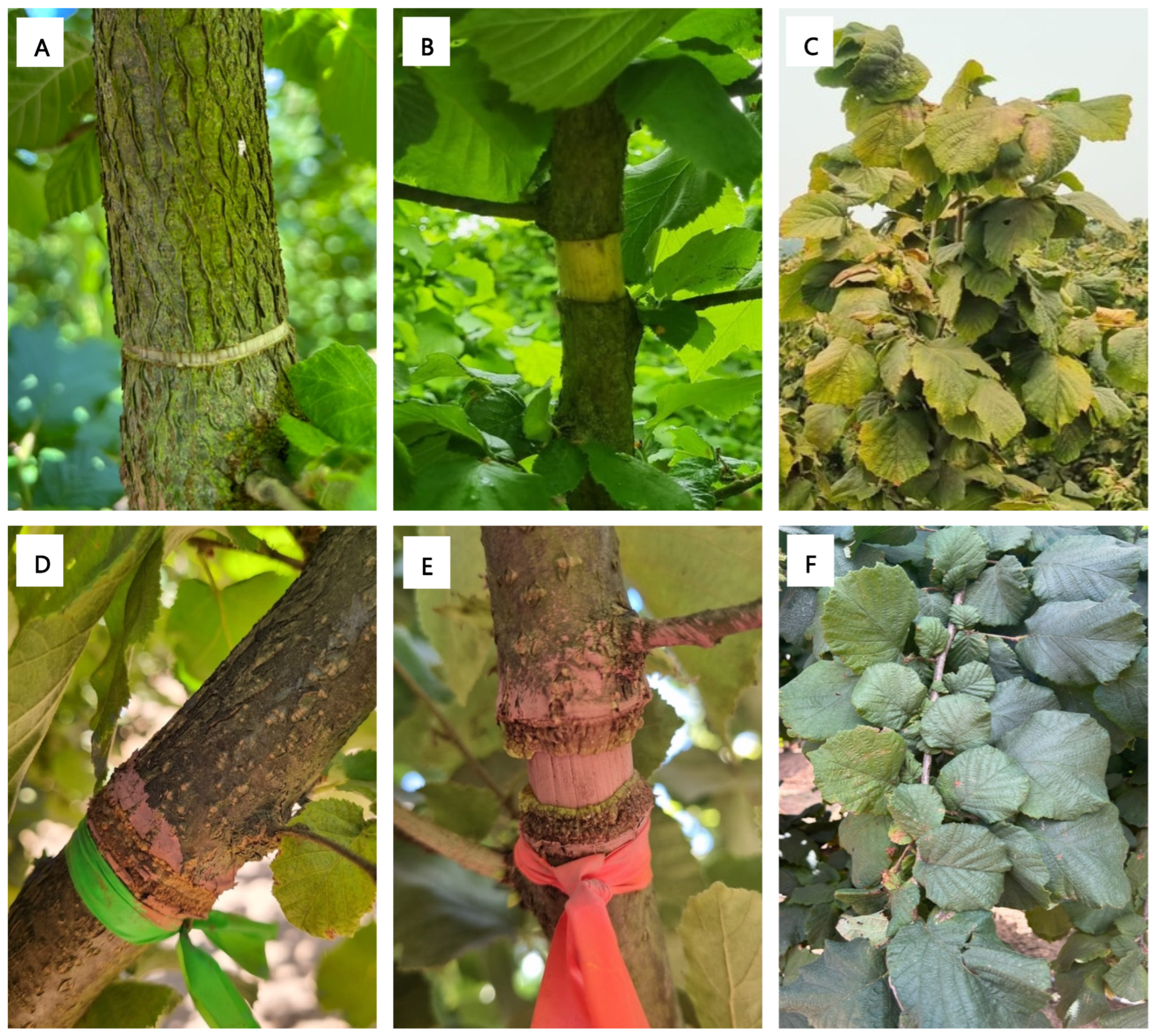
In the subsequent season (2023–2024), a significant effect of treatments on the initial number of glomerules per branch was observed (p < 0.001; Table 3). Specifically, treatments involving intense girdling in the previous October (T2: Girdling-Oct; T4: Girdling-Oct + 6-BA Nov) resulted in a significantly lower number of glomerules compared to the untreated control (T1) and other treatments. Conversely, the application of 60 mg L−1 6-BA in October (T6) significantly increased the number of glomerules compared to the control. As noted in the methodology, branches subjected to treatments T2 and T4 exhibited severe damage and reduced growth attributed to the season intense girdling (Figure 1C), without complete phloem restoration (Figure 1E) leading to their exclusion from subsequent productivity assessments in 2023–2024, while moderate girdling treatments successfully restored phloem connectivity (Figure 1D). Among the remaining seven treatments (T1, T3, T5–T9), no significant differences were detected for cluster set per branch (p = 0.828), fruit per cluster (p = 0.163), fruit number per branch (p = 0.733), fruit set percentage (p = 0.734), glomerule drop percentage (p = 0.806), or estimated yield per branch (p = 0.295) (Table 3). Like the first season, the initial number of glomerules per branch remained a significant positive covariate (p < 0.001) for the final number of fruits per branch and estimated yield this season (Table 3).

3.2. Fruit Quality Performance

Fruit quality was assessed descriptively due to pooled sampling. In 2022–2023 (Table 4), fruit quality showed relatively narrow variation in fruit size and fruit weight among treatments, whereas kernel-related attributes and defects displayed clearer descriptive contrasts. The severe early girdling treatment (T2; Oct 30 mm) exhibited a less favorable quality profile, characterized by lower good-kernel percentage and kernel yield, together with higher incidence of defects such as mold, poorly filled nuts, blanks, and shriveled kernels compared with the control (T1). In contrast, 6-BA applied in November at 30 mg L−1 (T7) and the split application (T9; 30 mg L−1 in Oct + 30 mg L−1 in Nov) presented the most favorable descriptive profiles, combining high kernel yield and high good-kernel percentage with low frequencies of poorly filled nuts and shriveled kernels. The late mild girdling treatment (T3; Nov 3 mm) maintained a relatively high kernel yield and low mold incidence, although it showed a higher proportion of blanks relative to the control.
In 2023–2024 (Table 5), the most notable pattern was a marked increase in blank nuts across treatments, including the control (T1), indicating a strong year effect on kernel filling and defect expression. Among treatments, mild late girdling (T3; Nov 3 mm) displayed the least favorable descriptive outcome, with the lowest good-kernel percentage and the highest blanks. For 6-BA treatments, November applications tended to maintain better kernel commercial quality: 60 mg L−1 in November (T8) showed comparatively high good-kernel percentage with relatively low blanks, whereas 30 mg L−1 in November (T7) achieved the highest kernel yield but with higher percentages of poorly filled nuts. The split application (T9; Oct + Nov) maintained high good-kernel percentage, although blanks remained moderate in this season. Overall, these outcomes should be interpreted as descriptive trends due to pooled sampling.

3.3. Effects on Net Photosynthesis Rate (Pn) and Stomatal Conductance (gs)

Treatment effects on net photosynthetic rate (Pn) and stomatal conductance (gs) varied depending on the specific treatment, measurement date, and season (Table 6 and Table 7). In the 2022–2023 season (Table 6), significant treatment effects (p < 0.01) were observed for both Pn and gs on nearly all measurement dates (October to February, except for gs in January). The intense October girdling (30 mm width), applied alone (T2) or in combination (T4), consistently caused a significant reduction in both Pn and gs compared to the untreated control (T1) throughout the measurement period. In contrast, the less intense November girdling (T3) generally resulted in Pn and gs values comparable to or numerically higher than the control. Cytokinin applications (T5–T9) typically maintained Pn and gs levels similar to the control.
During the 2023–2024 season (Table 7), where intense girdling treatments T2 and T4 were excluded, significant treatment effects on Pn and gs were detected only early in the season (November and December; p < 0.05). Specifically, November girdling (T3) significantly reduced both Pn and gs in November and December compared to the untreated control (T1) and most cytokinin treatments (T5–T9). Later in the season (January and February), no significant differences in Pn or gs were observed among the evaluated treatments (T1, T3, T5–T9).

4. Discussion

4.1. Productivity and Quality Performance

A key finding of this study was the lack of statistically significant effects from either girdling or exogenous cytokinin treatments on final fruit set percentage or estimated branch yield in ‘Tonda di Giffoni’ hazelnut over the two consecutive evaluated seasons (Table 2 and Table 3). While T3 (November girdling) and T7 (November 6-BA) showed numerical trends toward higher fruit set or estimated yield, these differences were not statistically significant (p > 0.18). This contrasts with reports in other fruit crops where girdling can increase fruit set or yield by enhancing carbohydrate availability above the incision [21], and where cytokinin applications have been associated with improved fruit retention [24]. Several factors may explain the lack of a yield response under our conditions. The extended period between pollination and fertilization in hazelnut, coupled with intense vegetative–reproductive competition during early spring [8,9], might impose limitations that were not sufficiently overcome by the treatments as applied. It is possible that strong physiological compensatory mechanisms at the canopy level negated potential localized benefits observed at the branch level [33,34]. Such compensation may reflect the strong buffering capacity of hazelnut, which can rely substantially on stored non-structural carbohydrate reserves (e.g., starch) [14], that may exceed the current-season photoassimilates supply during reproductive development [18].
Importantly, the lack of treatment effects on fruit set may reflect intrinsic physiological constraints. Similar cultivar-dependent responses have been documented in other species. For example, in sweet cherry (Prunus avium), girdling significantly increased fruit set in the high-cropping cultivar ‘Sylvia’, but had no effect in ‘Kordia’, which exhibits low fruit retention. The authors proposed that the low assimilate demand of ‘Kordia’ fruits limited responsiveness to carbohydrate increases above the girdling [35]. This suggests that sink capacity and not merely source availability may determine the treatment efficacy. In our trial, despite manipulating source strength (girdling) and sink stimulation (6-BA), treatments failed to overcome the dominant influence of initial floral load and internal sink competition. Moreover, the first season represented a high crop load year (“On”), while the second exhibited significantly lower fruit load (“Off”), which may have further influenced treatment responsiveness and highlighted the effects of alternate bearing dynamics. These findings support the view that hazelnut reproductive performance is primarily governed by internal allocation patterns and meristematic fate, rather than by single-season interventions targeting source–sink relations.
Although T3 (moderate November girdling) showed a numerical yield increase, it did not reach statistical significance, likely reflecting suboptimal timing or insufficient intensity to alter source–sink dynamics effectively. Conversely, intense October girdling (T2, T4) severely impaired vegetative recovery and floral initiation, reinforcing concerns about excessive phloem disruption like observations in other species [36,37]. The observed reduction in glomerule number in T2 and T4 likely reflects impaired floral induction, driven by depleted carbohydrate reserves essential for floral meristem development [38], or possibly by stress-related hormonal imbalances [39,40]. Alternatively, it has been proposed that such inhibition may stem from the integration of activating and suppressive signals originating from leaves and fruits, rather than carbohydrate status alone [41].
The effects of girdling are highly dependent on timing and wound severity, and successful wound healing is critical to restore phloem transport and avoid long-term damage [21]. In our trial, November girdling with a 3 mm incision permitted phloem recovery by December, allowing floral return similar to untreated controls and 6-BA treatments. In contrast, October girdling with a 30 mm incision inhibited phloem reconnection throughout the 2022–2023 season. Partial callus bridging was observed, but was insufficient to restore full function, ultimately reducing return bloom in the subsequent season. However, these treatments (T2, T4) maintained branch productivity due to increased fruit size and weight. Additionally, the consistent, strong positive effect of the initial number of glomerules as a covariate on final fruit number and yield across both seasons (Table 2 and Table 3) underscores that the inherent reproductive potential of the branch remains a primary driver of productivity in hazelnut [17], which was not significantly modulated towards higher efficiency (fruit set % or cluster set) by the treatments in this study. Despite the lack of effect on final yield, treatments applied in October demonstrated a significant carry-over effect on floral initiation for the following season (Table 3). The significant increase in glomerule number after applying 60 mg L−1 6-BA in October (T6) aligns with the known roles of cytokinins in promoting meristematic activity [22,23] and potentially influencing floral induction pathways [42,43].
While overall yield was unaffected, treatments showed descriptive differences in nut quality attributes (Table 4 and Table 5). Most notably, late-season (November) or split (Oct + Nov) cytokinin applications (T7, T8, T9) consistently resulted in higher kernel yield percentages across both seasons compared to early-season treatments (girdling or CK) and often the control. This suggests that exogenous CK applied during fruit set period enhances assimilate partitioning towards the kernel, possibly by increasing sink strength or nutrient mobilization [23]. Interestingly, this improvement in kernel fill (%) often coincided (especially in 2022–2023, Table 4) with smaller or lighter nuts compared to early-season treatments (T3–T6), suggesting a trade-off between maximizing overall nut size/weight and kernel development. Also, early-season treatments like moderate November girdling (T3) or October CK (T5, T6), which produced the largest/heaviest nuts in the first season, may have promoted early fruit growth phases, potentially favoring pericarp development [20,24]. Regarding other defects (Table 4 and Table 5), the increase in poorly filled nuts (with T6) or blanks (with T3 in season 2) could reflect minor stress responses associated with those specific treatments interfering with optimal development. Research on Corylus heterophylla, indicates that girdling improves fruit weight, kernel/yield and lower fruit blanks compared to the control [44].

4.2. Net Photosynthesis Rate (Pn) and Stomatal Conductance (gs)

Physiological measurements provide further insight into treatment responses, particularly regarding girdling effects. Intense October girdling (T2, T4) consistently reduced both net photosynthesis (Pn) and stomatal conductance (gs) throughout the 2022–2023 season. This response is consistent with strong disruption of phloem transport and with physiological constraints above the girdle. Under severe girdling, carbohydrate accumulation above the incision and concomitant changes in leaf nitrogen status may contribute to downregulation of photosynthesis [29,45]. In addition, the 30 mm girdling was deliberately severe to hinder phloem reconnection, and this intensity may have contributed to sustained impairment of leaf function, potentially via oxidative stress [46]. This persistence of reduced Pn and gs aligns with the marked negative impact observed on branch condition and the reduced floral load in the subsequent season for these treatments. By contrast, moderate November girdling (T3; 3 mm), had more nuanced effects. During the first season, Pn and gs were broadly comparable to the control, suggesting that disruption of transport was limited or rapidly restored. In the second season, a transient decline was detected shortly after girdling (November–December; Table 7), but values recovered by January were consistent with rapid vascular reconnection and a short-lived stress response. The rapid reestablishment of vascular continuity in T3 likely mitigated longer-term physiological disruption, as supported by the absence of negative effects on return bloom. Overall, these findings emphasize that the intensity and timing of girdling strongly influence physiological responses. Severe girdling compromises photosynthetic function and reproductive potential, while moderate girdling may offer transient source–sink modulation without compromising tree vitality. This highlights the importance of precise treatment calibration when applying source–sink management strategies in hazelnut and other perennial crops.
Exogenous cytokinin (6-BA) applications (T5–T9), showed less pronounced and less consistent effects on Pn and gs than girdling across most dates (Table 6 and Table 7). Although cytokinins regulate source-sink relations, nutrient mobilization, and may delay senescence [22,23], their effects on steady-state gas exchange in mature leaves of non-fruiting shoots can be subtle under field conditions. It is therefore possible that the primary influence of 6-BA in this study occurred at the sink level (e.g., fruit development and partitioning) through sustained stimulation of leaf photosynthetic capacity. In addition, any effects on Pn/gs could have been transient and thus not captured monthly. Overall, the absence of a significant yield response in this study, despite treatment effects on floral potential (e.g., T6 relative to severe-girdling treatments), descriptive differences in kernel-related traits, and transient physiological changes supports a complex regulation of productivity in ‘Tonda di Giffoni’ under these conditions. Factors beyond leaf-level net carbon assimilation at discrete time points, such as assimilate partitioning efficiency during critical windows [16,17], sinks competition [8,9,10], and seasonal/environmental conditions, likely played a dominant role in determining final fruit set and yield per branch.

4.3. Study Limitations and Future Research

While the study provides field-based evidence on the effects of girdling and 6-BA applications under commercial conditions, some aspects should be considered when interpreting the findings and planning for future work. First, the treatment set was designed as agronomically realistic scenarios rather than a fully factorial structure, resulting in incomplete symmetry among girdling × 6-BA combinations; therefore, the results are best interpreted as treatment-wise contrasts and thus the ability to isolate the independent effect of a single factor (timing, dose, or girdling intensity) is limited. In addition, girdling timing and girdle width were intentionally combined to create contrasting phloem reconnection scenarios, which further constrain separation of their individual effects. Nut quality was evaluated from pooled samples per treatment; hence, quality outcomes are presented descriptively and would benefit from confirmation using tree-level replication. The study was conducted in a single cultivar (‘Tonda di Giffoni’) and at a single site; extrapolation to other cultivars and environments requires multi-cultivar and multi-site validation. Finally, integrating non-structural carbohydrate and hormonal measurements would help strengthen mechanistic interpretation in future studies.

5. Conclusions

Under the Mediterranean conditions of Central Chile, neither branch girdling nor foliar 6-benzyladenine (6-BA) applications, as implemented in this study, clearly improved fruit set or estimated yield per branch in ‘Tonda di Giffoni’ hazelnut. Instead, initial floral load emerged as the primary determinant of final productivity. Nonetheless, specific treatments had notable physiological and reproductive effects. Intense girdling performed in October consistently reduced net photosynthesis and caused a significant decline in return bloom during the following season, revealing a strong carry-over effect. In contrast, late-season or split 6-BA applications (T7, T8, T9) were associated with higher kernel yield percentage across seasons (descriptive trends from pooled samples), although sometimes at the expense of fruit size or weight. These findings suggest that while source–sink manipulation did not overcome overall yield limitations, targeted use of late 6-BA applications may offer a promising strategy for improving nut quality. Early aggressive girdling, however, poses substantial risks for future reproductive capacity. From an applied perspective, the consistent increase in kernel yield percentage observed with late or split 6-BA applications may improve kernel recovery and processing value where payment is linked to kernel output; however, potential trade-offs with nut size and in-shell weight should be considered depending on market requirements.

Author Contributions

Conceptualization, K.O. and Y.M.-S.; methodology, K.O.; validation, K.O., Y.M.-S. and C.A.-O.; formal analysis, K.O. and Y.M.-S.; investigation, K.O.; data curation, K.O.; writing—original draft preparation, K.O.; writing—review and editing, K.O., Y.M.-S. and C.A.-O.; supervision, Y.M.-S. and C.A.-O. All authors have read and agreed to the published version of the manuscript.

Funding

This research was supported by the National Agency for Research and Development (ANID) through the National Doctoral Scholarship for the 2021 Academic Year (Folio 21211245) and the Doctoral Thesis in the Productive Sector Program entitled “Factors associated with alternate bearing in European hazelnut (Corylus avellana L.) in Chile” (ANID TDP220013).

Data Availability Statement

The original contributions presented in this study are included in the article. For further information, please contact the corresponding author.

Acknowledgments

During the preparation of this work, the authors used ChatGPT (GPT-5.2, OpenAI) to assist with proofreading, including detecting potential writing errors and identifying minor punctuation/consistency issues in tables. After using this tool/service, the authors reviewed and edited the content as needed and take full responsibility for the content of the publication.

Conflicts of Interest

The authors declare no conflicts of interest.

References

  1. Tranbarger, T.J.; Tadeo, F.R. Diversity and functional dynamics of fleshy fruit abscission zones. Annu. Plant Rev. Online 2020, 3, 1–64. [Google Scholar] [CrossRef]
  2. Ackerman, M.; Samach, A. Doubts regarding carbohydrate shortage as a trigger toward abscission of specific Apple (Malus domestica) fruitlets. New Negat. Plant Sci. 2015, 1, 46–52. [Google Scholar] [CrossRef]
  3. Sawicki, M.; Aït Barka, E.; Clément, C.; Vaillant-Gaveau, N.; Jacquard, C. Cross-talk between environmental stresses and plant metabolism during reproductive organ abscission. J. Exp. Bot. 2015, 66, 1707–1719. [Google Scholar] [CrossRef] [PubMed]
  4. Shi, Y.; Song, B.; Liang, Q.; Su, D.; Lu, W.; Liu, Y.; Li, Z. Molecular regulatory events of flower and fruit abscission in horticultural plants. Hortic. Plant J. 2023, 9, 867–883. [Google Scholar] [CrossRef]
  5. Meir, S.; Philosoph-Hadas, S.; Sundaresan, S.; Selvaraj, K.V.; Burd, S.; Ophir, R.; Lers, A. Microarray analysis of the abscission-related transcriptome in the tomato flower abscission zone in response to auxin depletion. Plant Physiol. 2010, 154, 1929–1956. [Google Scholar] [CrossRef]
  6. Botton, A.; Eccher, G.; Forcato, C.; Ferrarini, A.; Begheldo, M.; Zermiani, M.; Ramina, A. Signaling pathways mediating the induction of apple fruitlet abscission. Plant Physiol. 2011, 155, 185–208. [Google Scholar] [CrossRef]
  7. Robinson, T.L.; Lakso, A.N. Predicting chemical thinner response with a carbohydrate model. In Proceedings of the IX International Symposium on Integrating Canopy, Rootstock and Environmental Physiology in Orchard Systems, Geneva, NY, USA, 4–8 August 2008; International Society for Horticultural Science: Leuven, Belgium, 2008; Volume 903, pp. 743–750. [Google Scholar] [CrossRef]
  8. Germain, E. The reproduction of hazelnut (Corylus avellana L.): A review. In Proceedings of the III International Congress on Hazelnut, Alba, Italy, 14–18 September 1992; International Society for Horticultural Science: Leuven, Belgium, 1994; Volume 351, pp. 195–210. [Google Scholar] [CrossRef]
  9. Beyhan, N.; Marangoz, D. An investigation of the relationship between reproductive growth and yield loss in hazelnut. Sci. Hortic. 2007, 113, 208–215. [Google Scholar] [CrossRef]
  10. Dimoulas, J. Etude de divers aspects de la reproduction sexuée chez le Noisetier, (Corylus avellana L.). Ph.D. Thesis, Université de Bordeaux II, Bordeaux, France, 1979; 162p. [Google Scholar]
  11. Milošević, T.; Milošević, N. Cluster drop phenomenon in hazelnut (Corylus avellana L.). Impact on productivity, nut traits and leaf nutrients content. Sci. Hortic. 2012, 148, 131–137. [Google Scholar] [CrossRef]
  12. Bignami, C.; Cristofori, V.; Ghini, P.; Rugini, E. Effects of irrigation on growth and yield components of hazelnut (Corylus avellana L.) in Central Italy. In Proceedings of the VII International Congress on Hazelnut, Viterbo, Italy, 23–27 June 2008; International Society for Horticultural Science: Leuven, Belgium, 2008; Volume 845, pp. 309–314. [Google Scholar] [CrossRef]
  13. Akçin, Y.; Bostan, S.Z. Supplementary irrigation during the last cluster drop period for higher yield and quality in conventional rain-fed hazelnut farming. Erwerbs-Obstbau 2023, 65, 115–120. [Google Scholar] [CrossRef]
  14. Liu, J.; Zhang, H.; Cheng, Y.; Wang, J.; Zhao, Y.; Geng, W. Comparison of ultrastructure, pollen tube growth pattern and starch content in developing and abortive ovaries during the progamic phase in hazel. Front. Plant Sci. 2014, 5, 528. [Google Scholar] [CrossRef]
  15. Zwieniecki, M.; Guzmán-Delgado, P.; Andrews, H.; Transue, K.; Wiman, N.G. A first look at non-structural carbohydrate dynamics in hazelnuts. In Proceedings of the X International Congress on Hazelnut, Corvallis, OR, USA, 5–9 September 2022; International Society for Horticultural Science: Leuven, Belgium, 2022; pp. 265–270. [Google Scholar] [CrossRef]
  16. Grisafi, F.; Lorusso, R.; Rocchetta, L.; Tombesi, S. Dark respiration in leaves, stems, and fruits of Corylus avellana L. Sci. Hortic. 2024, 327, 112794. [Google Scholar] [CrossRef]
  17. Tombesi, S.; Rechichi, R.; Lorusso, R.; Grisafi, F. Relationship between shoot leaf area and nut set in hazelnut. In Proceedings of the X International Congress on Hazelnut, Corvallis, OR, USA, 5–9 September 2022; International Society for Horticultural Science: Leuven, Belgium, 2022; Volume 1379, pp. 297–302. [Google Scholar] [CrossRef]
  18. Pasqualotto, G.; Carraro, V.; De Gregorio, T.; Huerta, E.S.; Anfodillo, T. Girdling of fruit-bearing branches of Corylus avellana reduces seed mass while defoliation does not. Sci. Hortic. 2019, 255, 37–43. [Google Scholar] [CrossRef]
  19. Gawankar, M.S.; Haldankar, P.M.; Salvi, B.R.; Parulekar, Y.R.; Dalvi, N.V.; Kulkarni, M.M.; Nalage, N.A. Effect of girdling on induction of flowering and quality of fruits in horticultural crops-a review. Adv. Agric. Res. Technol. J. 2019, 3, 201–215. [Google Scholar]
  20. Goren, R.; Huberman, M.; Goldschmidt, E.E. Girdling: Physiological and horticultural aspects. Hortic Rev. 2004, 30, 1–36. [Google Scholar] [CrossRef]
  21. Sharma, A.; Singh, N.P.; Patial, U.R.; Singh, S. Girdling for Enhancing Morphogenetic Potential of Temperate Fruits: A Review. J. Plant Growth Regul. 2024, 43, 1642–1656. [Google Scholar] [CrossRef]
  22. Rademacher, W. Plant growth regulators: Backgrounds and uses in plant production. J. Plant Growth Regul. 2015, 34, 845–872. [Google Scholar] [CrossRef]
  23. Roitsch, T.; Ehneß, R. Regulation of source/sink relations by cytokinins. Plant Growth Regul. 2000, 32, 359–367. [Google Scholar] [CrossRef]
  24. Aremu, A.O.; Fawole, O.A.; Makunga, N.P.; Masondo, N.A.; Moyo, M.; Buthelezi, N.M.; Doležal, K. Applications of cytokinins in horticultural fruit crops: Trends and prospects. Biomolecules 2020, 10, 1222. [Google Scholar] [CrossRef]
  25. Bubán, T. The use of benzyladenine in orchard fruit growing: A mini review. Plant Growth Regul. 2000, 32, 381–390. [Google Scholar] [CrossRef]
  26. Trueman, S.J. Benzyladenine delays immature fruit abscission but does not affect final fruit set or kernel size of Macadamia. Afr. J. Agric. Res. 2010, 5, 1523–1530. [Google Scholar]
  27. Taghavi, T.; Rahemi, A.; Suarez, E. Development of a uniform phenology scale (BBCH) in hazelnuts. Sci. Hortic. 2022, 296, 110837. [Google Scholar] [CrossRef]
  28. Wood Bruce, W. Fruiting affects photosynthesis and senescence of pecan leaves. J. Am. Soc. Hortic. Sci. 1988, 113, 432–436. [Google Scholar] [CrossRef]
  29. Urban, L.; Léchaudel, M.; Lu, P. Effect of fruit load and girdling on leaf photosynthesis in Mangifera indica L. J. Exp. Bot. 2004, 55, 2075–2085. [Google Scholar] [CrossRef]
  30. Fischer, G.; Almanza-Merchán, P.J.; Ramírez, F. Source-sink relationships in fruit species: A review. Rev. Colomb. Cienc. Hortícolas 2012, 6, 238–253. [Google Scholar] [CrossRef]
  31. Ortega-Farias, S.; Villalobos-Soublett, E.; Riveros-Burgos, C.; Zúñiga, M.; Ahumada-Orellana, L.E. Effect of irrigation cut-off strategies on yield, water productivity and gas exchange in a drip-irrigated hazelnut (Corylus avellana L. cv. Tonda di Giffoni) orchard under semiarid conditions. Agric. Water Manag. 2020, 238, 106173. [Google Scholar] [CrossRef]
  32. Tombesi, S.; Farinelli, D. Modelling of pruning technique effects on branch architecture and subsequent year shoot flowering in hazelnut. In Proceedings of the X International Symposium on Modelling in Fruit Research and Orchard Management, Montpellier, France, 2–5 June 2015; International Society for Horticultural Science: Leuven, Belgium, 2015; Volume 1160, pp. 141–144. [Google Scholar] [CrossRef]
  33. Sprugel, D.G.; Hinckley, T.M.; Schaap, W. The theory and practice of branch autonomy. Annu. Rev. Ecol. Syst. 1991, 22, 309–334. [Google Scholar] [CrossRef]
  34. Grams, T.E.; Andersen, C.P. Competition for resources in trees: Physiological versus morphological plasticity. In Progress in Botany; Springer: Berlin/Heidelberg, Germany, 2007; pp. 356–381. [Google Scholar]
  35. Quentin, A.G.; Close, D.C.; Hennen, L.M.H.P.; Pinkard, E.A. Down-regulation of photosynthesis following girdling, but contrasting effects on fruit set and retention, in two sweet cherry cultivars. Plant Physiol. Biochem. 2013, 73, 359–367. [Google Scholar] [CrossRef]
  36. Matsushita, M.; Nishikawa, H.; Tamura, A. Effects of girdling intensity, pruning season and thinning on tree growth, crown vigor and wound recovery in Japanese larch. Forests 2022, 13, 449. [Google Scholar] [CrossRef]
  37. Ran, J.; Guo, W.; Hu, C.; Wang, X.; Li, P. Adverse effects of long-term continuous girdling of jujube tree on the quality of jujube fruit and tree health. Agriculture 2022, 12, 922. [Google Scholar] [CrossRef]
  38. Imada, S.; Tako, Y. Seasonal accumulation of photoassimilated carbon relates to growth rate and use for new aboveground organs of young apple trees in following spring. Tree Physiol. 2022, 42, 2294–2305. [Google Scholar] [CrossRef]
  39. Sanyal, D.; Bangerth, F. Stress induced ethylene evolution and its possible relationship to auxin-transport, cytokinin levels, and flower bud induction in shoots of apple seedlings and bearing apple trees. Plant Growth Regul. 1998, 24, 127–134. [Google Scholar] [CrossRef]
  40. Bangerth, F. Flower induction in perennial fruit trees: Still an enigma? In Proceedings of the X International Symposium on Plant Bioregulators in Fruit Production, Saltillo, Mexico, 26–30 June 2005; International Society for Horticultural Science: Leuven, Belgium, 2005; Volume 727, pp. 177–196. [Google Scholar] [CrossRef]
  41. Belhassine, F.; Martinez, S.; Bluy, S.; Fumey, D.; Kelner, J.J.; Costes, E.; Pallas, B. Impact of within-tree organ distances on floral induction and fruit growth in apple tree: Implication of carbohydrate and gibberellin organ contents. Front. Plant Sci. 2019, 10, 1233. [Google Scholar] [CrossRef]
  42. Villar, L.; Lienqueo, I.; Llanes, A.; Rojas, P.; Perez, J.; Correa, F.; Almada, R. Comparative transcriptomic analysis reveals novel roles of transcription factors and hormones during the flowering induction and floral bud differentiation in sweet cherry trees (Prunus avium L. cv. Bing). PLoS ONE 2020, 15, e0230110. [Google Scholar] [CrossRef] [PubMed]
  43. Li, Y.; Zhang, D.; Zhang, L.; Zuo, X.; Fan, S.; Zhang, X.; Han, M. Identification, and expression analysis of cytokinin response-regulator genes during floral induction in apple (Malus domestica Borkh). Plant Growth Regul. 2017, 83, 455–464. [Google Scholar] [CrossRef]
  44. Liu, J.F.; Cheng, Y.Q.; Yan, K.; Liu, Q. An investigation on mechanisms of blanked nut formation of hazelnut (Corylus heterophylla Fisch). Afr. J. Biotechnol. 2012, 11, 7670–7675. [Google Scholar] [CrossRef]
  45. Vemmos, S.N.; Papagiannopoulou, A.; Coward, S. Effects of shoot girdling on photosynthetic capacity, leaf carbohydrate, and bud abscission in pistachio (Pistacia vera L.). Photosynthetica 2012, 50, 35–48. [Google Scholar] [CrossRef]
  46. Rivas, F.; Fornes, F.; Agustí, M. Girdling induces oxidative damage and triggers enzymatic and non-enzymatic antioxidative defences in Citrus leaves. Environ. Exp. Bot. 2008, 64, 256–263. [Google Scholar] [CrossRef]
Figure 1. Visual representation of girdling intensity and its effects on ‘Tonda di Giffoni’ hazelnut branches and leaves. (A) Moderate girdling (3 mm wide bark removal). (B) Severe girdling (30 mm wide bark removal. (C) Leaves above girdled branches showing yellowing symptoms. (D) Wound appearance during healing after moderate girdling with successful phloem reconnection and cicatrization. (E) Wound appearance during healing after severe girdling, showing incomplete healing and wood exposure. (F) Leaves from non-girdled control branches.
Agronomy 16 00467 g001
Table 1. Experimental treatments combining girdling and 6-BA applied to mature Tonda di Giffoni hazelnut trees over two seasons in the Maule Region, Chile.
TreatmentGirdling (Timing; Width)6-BA (Dose; Timing)
T1. Control (water + surfactant)
T2.Oct (30 mm)
T3.Nov (3 mm)
T4.Oct (30 mm)30 mg L−1 (Nov)
T5.30 mg L−1 (Oct)
T6.60 mg L−1 (Oct)
T7.30 mg L−1 (Nov)
T8.60 mg L−1 (Nov)
T9.30 mg L−1 (Oct) + 30 mg L−1 (Nov)
Table 2. Effect of exogenous cytokinin (6-BA) applications and girdling on yield-related parameters of hazelnut cv. Tonda di Giffoni in the Maule Region, Chile, during the 2022–2023 season. Values are estimated marginal means ± standard error (SE) from LMM and including block/row as a random effect. The number of glomerules per branch was used as covariate where appropriate. Significance codes for covariate effect: NS (not significant, p > 0.05); *** p < 0.001).
Treatment 2022–2023Glomerules
(N° per Branch)
Cluster Set
(N° per Branch)
Fruit per Cluster
(N°)
Fruit per Branch
(N°)
Glomerules Drop
(%)
Fruit Set
(%)
Yield per Branch
(kg)
T1. Control62.1 ± 4.6647.5 ± 3.261.81 ± 0.08386.0 ± 6.2334.7 ± 4.5214.6 ± 1.180.256 ± 0.018
T2. Girdling-Oct78.9 ± 4.6644.5 ± 3.261.96 ± 0.08386.6 ± 6.2336.1 ± 4.5215.6 ± 1.180.261 ± 0.018
T3. Girdling-Nov76.5 ± 5.0046.4 ± 3.442.03 ± 0.08894.6 ± 6.5834.5 ± 4.8416.6 ± 1.260.290 ± 0.019
T4. Girdling-Oct + 6-BA 30 mg L−1-Nov68.5 ± 4.6646.5 ± 3.181.80 ± 0.08182.4 ± 6.0935.1 ± 4.5214.2 ± 1.180.254 ± 0.017
T5. 6-BA 30 mg L−1-Oct67.9 ± 4.6647.3 ± 3.181.90 ± 0.08190.7 ± 6.1033.9 ± 4.5215.6 ± 1.180.281 ± 0.018
T6. 6-BA 60 mg L−1-Oct65.6 ± 4.6648.8 ± 3.201.84 ± 0.08290.5 ± 6.1431.8 ± 4.5215.8 ± 1.180.254 ± 0.018
T7. 6-BA 30 mg L−1-Nov73.7 ± 4.6649.4 ± 3.192.03 ± 0.08197.8 ± 6.1030.8 ± 4.5217.5 ± 1.180.270 ± 0.017
T8. 6-BA 60 mg L−1-Nov67.9 ± 5.0043.3 ± 3.181.90 ± 0.08181.4 ± 6.1039.3 ± 4.5214.1 ± 1.180.236 ± 0.017
T9. 6-BA 30 mg L−1-Oct + 6-BA 30 mg L−1-Nov75.1 ± 5.0044.3 ± 3.431.72 ± 0.08878.5 ± 6.5536.9 ± 4.8413.9 ± 1.260.225 ± 0.019
Treatment effect (p-value)0.2170.9000.1750.3810.9540.3940.265
Covariate effect: Glomerules-***NS***--***
Table 3. Effect of exogenous cytokinin (6-BA) applications and girdling on yield-related parameters of hazelnut cv. Tonda di Giffoni in the Maule Region, Chile, during the 2023–2024 season. Values are estimated marginal means ± standard error (SE) from LMM and including block/row as a random effect. The number of glomerules per branch was used as covariate where appropriate. Significance codes for covariate effect: NS (not significant, p > 0.05); *** p < 0.001). Dashes indicate treatments not evaluated due to severe branch damage after girdling in the previous season.
Treatment 2023–2024Glomerules
(N° per Branch)
Cluster Set
(N° per Branch)
Fruit per Cluster
(N°)
Fruit per Branch
(N°)
Glomerules Drop
(%)
Fruit Set
(%)
Yield per Branch
(kg)
T1. Control88.6 ± 9.37 b31.1 ± 3.021.41 ± 0.05545.6 ± 4.3063.9 ± 3.466.91 ± 0.600.133 ± 0.012
T2. Girdling-Oct29.9 ± 9.72 a------
T3. Girdling-Nov86.5 ± 10.7 b34.7 ± 3.241.59 ± 0.05954.0 ± 4.6159.4 ± 3.727.59 ± 0.660.166 ± 0.013
T4. Girdling-Oct + 6-BA 30 mg L−1-Nov30.3 ± 9.05 a------
T5. 6-BA 30 mg L−1-Oct94.4 ± 9.37 b31.7 ± 3.011.44 ± 0.05445.6 ± 4.2963.5 ± 3.466.67 ± 0.600.130 ± 0.012
T6. 6-BA 60 mg L−1-Oct107.4 ± 10.6 b36.1 ± 3.091.39 ± 0.05649.6 ± 4.4060.9 ± 3.466.89 ± 0.690.142 ± 0.013
T7. 6-BA 30 mg L−1-Nov84.1 ± 9.40 b33.9 ± 3.041.53 ± 0.05551.4 ± 4.3360.6 ± 3.467.24 ± 0.600.149 ± 0.012
T8. 6-BA 60 mg L−1-Nov82.0 ± 9.37 b32.9 ± 3.021.44 ± 0.05547.2 ± 4.3162.3 ± 3.466.77 ± 0.580.141 ± 0.012
T9. 6-BA 30 mg L−1-Oct + 6-BA 30 mg L−1-Nov94.0 ± 9.72 b37.3 ± 3.511.40 ± 0.06452.7 ± 5.0056.2 ± 4.038.01 ± 0.660.154 ± 0.015
Treatment effect (p-value)<0.0010.8090.1630.7330.8060.7340.265
Covariate effect: Glomerules-***NS***--***
Note: Means followed by the same letter(s) within a column are not significantly different (p > 0.001), Tukey’s HSD test).
Table 4. Effect of exogenous cytokinin (6-BA) applications and girdling on hazelnut fruit size, fruit weight, kernel yield, proportion of good fruits, and incidence of fruit and kernel defects of hazelnut cv. Tonda di Giffoni in the Maule Region, Chile, during the 2022–2023 season. Values represent technical subsamples (n = 3). Therefore, results are descriptive (mean ± SD) and no inferential statistics among treatments are reported.
TreatmentFruit Size (mm)Kernel Yield (%)Fruit Weight (g)Good Kernel (%)Mold (%)Doubles Kernel (%)Poorly Filled Nuts (%)Blanks (%)Shriveled Kernels (%)
T119.96 ± 0.0444.00 ± 1.002.98 ± 0.0290.00 ± 0.001.67 ± 1.150.67 ± 1.151.00 ± 1.003.67 ± 1.153.00 ± 1.00
T220.31 ± 0.2241.67 ± 2.523.01 ± 0.0783.33 ± 5.514.67 ± 0.580.33 ± 0.582.33 ± 1.535.33 ± 1.534.00 ± 2.00
T320.33 ± 0.1145.00 ± 1.003.05 ± 0.0589.33 ± 2.891.67 ± 0.580.33 ± 0.580.67 ± 0.586.67 ± 2.521.33 ± 1.15
T420.86 ± 0.2241.67 ± 1.153.10 ± 0.0585.67 ± 0.586.67 ± 2.520.00 ± 0.001.33 ± 0.584.00 ± 1.002.33 ± 2.52
T520.07 ± 0.1741.67 ± 1.153.10 ± 0.0585.33 ± 1.535.00 ± 1.000.33 ± 0.584.33 ± 0.583.00 ± 0.002.00 ± 0.00
T619.42 ± 0.1043.33 ± 2.522.79 ± 0.0286.00 ± 6.245.33 ± 2.080.00 ± 0.000.33 ± 0.585.67 ± 2.522.67 ± 1.53
T719.13 ± 0.2046.00 ± 1.002.75 ± 0.0892.67 ± 2.524.33 ± 1.530.00 ± 0.001.00 ± 1.002.00 ± 2.000.00 ± 0.00
T819.87 ± 0.2043.67 ± 0.582.89 ± 0.0990.67 ± 3.214.00 ± 0.000.33 ± 0.580.67 ± 0.584.33 ± 4.040.00 ± 0.00
T919.82 ± 0.3145.33 ± 1.152.85 ± 0.2292.67 ± 0.584.00 ± 1.730.33 ± 0.580.00 ± 0.002.33 ± 1.150.67 ± 0.58
Table 5. Effect of exogenous cytokinin (6-BA) applications and girdling on hazelnut fruit size, fruit weight, kernel yield, proportion of good fruits, and incidence of fruit and kernel defects of hazelnut cv. Tonda di Giffoni in the Maule Region, Chile, during the 2023–2024 season. Values represent technical subsamples (n = 3). Therefore, results are descriptive (mean ± SD) and no inferential statistics among treatments are reported.
TreatmentFruit Size (mm)Kernel Yield (%)Fruit Weight (g)Good Kernel (%)Mold (%)Doubles Kernel (%)Poorly Filled Nuts (%)Blanks (%)Shriveled Kernels (%)
T120.17 ± 0.3944.00 ± 1.002.92 ± 0.0385.33 ± 1.532.00 ± 1.730.00 ± 0.001.33 ± 1.1511.00 ± 1.730.33 ± 0.58
T320.69 ± 0.2141.33 ± 2.523.07 ± 0.1277.00 ± 5.293.33 ± 1.150.33 ± 0.581.33 ± 1.1517.00 ± 7.211.00 ± 1.00
T520.32 ± 0.2443.00 ± 0.002.86 ± 0.0579.67 ± 5.132.00 ± 1.000.00 ± 0.003.00 ± 3.0014.67 ± 1.530.67 ± 0.58
T619.71 ± 0.1245.00 ± 1.002.87 ± 0.0883.33 ± 6.513.00 ± 3.610.00 ± 0.004.33 ± 1.538.00 ± 3.611.33 ± 1.53
T719.97 ± 0.0246.67 ± 0.582.89 ± 0.0285.33 ± 2.082.33 ± 0.580.67 ± 0.584.67 ± 0.586.67 ± 1.530.33 ± 0.58
T820.34 ± 0.0944.67 ± 1.532.98 ± 0.0387.67 ± 3.063.00 ± 1.730.00 ± 0.001.33 ± 1.156.00 ± 1.002.00 ± 1.00
T920.59 ± 0.0944.33 ± 1.152.92 ± 0.1387.33 ± 3.211.33 ± 1.150.00 ± 0.000.67 ± 1.1510.33 ± 3.510.33 ± 0.58
Table 6. Effect of exogenous cytokinin (6-BA) applications and girdling on net photosynthesis rate (Pn, μmol CO2 m−2 s−1) and stomatal conductance (gs, mol H2O m−2 s−1) of leaves in hazelnut cultivar TDG planted in Maule Region Chile, during the 2022–2023 season. Values represent the mean (n = 8) ± SE. Different letters indicate statistically significant differences among treatments (p ≤ 0.05). ANOVA results are shown, NS (not significant, p > 0.05); ** p < 0.01; *** p < 0.001). Dashes indicate months in which measurements were not performed for a given treatment.
OctoberNovemberDecemberJanuaryFebruary
TreatmentPngsPngsPngsPngsPngs
T1. Control8.62 ± 0.94 b0.095 ± 0.017 b8.37 ± 0.77 bc0.132 ± 0.013 d11.7 ± 0.75 ab0.216 ± 0.022 bc8.12 ± 1.37 ab0.178 ± 0.0446.07 ± 0.80 abc0.119 ± 0.027 ab
T2. Girdling-Oct3.33 ± 0.37 a0.033 ± 0.007 a4.15 ± 1.05 a0.061 ± 0.015 ab8.67 ± 0.93 ab0.108 ± 0.022 a5.22 ± 1.39 ab0.093 ± 0.0333.64 ± 0.80 ab0.050 ± 0.017 a
T3. Girdling-Nov--5.01 ± 1.15 ab0.075 ± 0.014 abc8.16 ± 1.03 ab0.117 ± 0.027 ab9.64 ± 1.41 b0.201 ± 0.0497.35 ± 0.72 bc0.131 ± 0.010 b
T4. Girdling-Oct + 6-BA 30 mg L−1-Nov3.23 ± 0.46 a0.019 ± 0.004 a3.37 ± 0.43 a0.054 ± 0.003 a7.76 ± 0.65 a0.110 ± 0.012 a4.14 ± 0.66 a0.069 ± 0.0173.52 ± 0.89 a0.054 ± 0.013 a
T5. 6-BA 30 mg L−1-Oct9.12 ± 0.58 b0.090 ± 0.011 b10.2 ± 0.51 c0.167 ± 0.012 d12.0 ± 0.94 b0.212 ± 0.029 abc6.82 ± 1.15 ab0.132 ± 0.0265.52 ± 0.62 abc0.113 ± 0.017 ab
T6. 6-BA 60 mg L−1-Oct8.63 ± 0.74 b0.091 ± 0.017 b8.50 ± 0.55 c0.142 ± 0.015 d11.9 ± 0.96 b0.205 ± 0.021 abc7.86 ± 0.48 ab0.161 ± 0.0278.06 ± 0.76 c0.134 ± 0.021 ab
T7. 6-BA 30 mg L−1-Nov--8.82 ± 0.78 c0.121 ± 0.011 cd11.9 ± 0.85 b0.227 ± 0.022 c10.1 ± 1.57 b0.182 ± 0.0375.85 ± 0.63 abc0.115 ± 0.012 ab
T8. 6-BA 60 mg L−1-Nov--9.32 ± 0.56 c0.160 ± 00.015 d10.4 ± 0.94 ab0.162 ± 0.027 abc7.19 ± 0.30 ab0.128 ± 0.0085.68 ± 1.11 abc0.113 ± 0.028 ab
T9. 6-BA 30 mg L−1-Oct + 6-BA 30 mg L−1-Nov7.23 ± 0.42 b0.066 ± 0.005 ab7.77 ± 0.60 bc0.118 ± 0.012 bcd10.4 ± 0.82 ab0.181 ± 0.021 abc9.77 ± 0.91 b0.192 ± 0.0107.36 ± 0.85 bc0.142 ± 0.017 b
Significance*******************NS****
Note: Means followed by the same letter(s) within a column are not significantly different (p > 0.001), Tukey’s HSD test).
Table 7. Effect of exogenous cytokinin (6-BA) applications and girdling on net photosynthesis rate (Pn, μmol CO2 m−2 s−1) and stomatal conductance (gs, mol H2O m−2 s−1) of leaves in hazelnut cultivar TDG planted in Maule Region Chile, during the 2023–2024 season. Values represent the mean (n = 8) ± SE. Different letters indicate statistically significant differences among treatments (p ≤ 0.05). ANOVA results are shown, NS (not significant, p > 0.05); * p < 0.05; ** p < 0.01; *** p < 0.001).
NovemberDecemberJanuaryFebruary
TreatmentPngsPngsPngsPngs
T1. Control9.26 ± 0.79 b0.127 ± 0.018 b11.5 ± 0.66 b0.270 ± 0.029 b12.6 ± 1.020.350 ± 0.0268.73 ± 0.560.238 ± 0.022
T3. Girdling-Nov3.07 ± 0.67 a0.032 ± 0.009 a8.01 ± 1.27 a0.166 ± 0.032 a11.3 ± 0.670.289 ± 0.0329.18 ± 1.320.234 ± 0.037
T5. 6-BA 30 mg L−1-Oct9.92 ± 0.44 b0.147 ± 0.014 b11.6 ± 0.45 b0.282 ± 0.024 b12.3 ± 0.480.333 ± 0.0208.89 ± 0.820.236 ± 0.034
T6. 6-BA 60 mg L−1-Oct10.3 ± 0.78 b0.141 ± 0.029 b12.2 ± 0.46 b0.254 ± 0.018 ab11.4 ± 0.660.275 ± 0.0219.29 ± 0.750.247 ± 0.028
T7. 6-BA 30 mg L−1-Nov9.17 ± 0.52 b0.133 ± 0.021 b11.1 ± 0.84 ab0.260 ± 0.019 ab12.8 ± 0.640.330 ± 0.0279.51 ± 0.750.235 ± 0.024
T8. 6-BA 60 mg L−1-Nov9.12 ± 1.03 b0.138 ± 0.026 b10.4 ± 0.68 ab0.232 ± 0.009 ab12.8 ± 0.680.302 ± 0.02610.1 ± 0.530.239 ± 0.026
T9. 6-BA 30 mg L−1-Oct + 6-BA 30 mg L−1-Nov9.43 ± 0.56 b0.139 ± 0.028 b12.5 ± 0.61 b0.262 ± 0.021 ab11.7 ± 0.720.260 ± 0.01010.5 ± 1.110.250 ± 0.032
Significance********NSNSNSNS
Note: Means followed by the same letter(s) within a column are not significantly different (p > 0.001), Tukey’s HSD test).
Disclaimer/Publisher’s Note: The statements, opinions and data contained in all publications are solely those of the individual author(s) and contributor(s) and not of MDPI and/or the editor(s). MDPI and/or the editor(s) disclaim responsibility for any injury to people or property resulting from any ideas, methods, instructions or products referred to in the content.