Article

Genetic Diversity and Morpho-Agronomic Characterization of Vigna unguiculata (L.) Walp Genotypes Under Heat Stress


by
Weslley Oliveira da Silva
1,
Tiago Lima do Nascimento
2,
Wislayne Pereira Neto
3,
Jadson Lima da Silva
3,
Camila Barbosa dos Santos
3,
Tailane Amorim Luz
3,
Layana Alves do Nascimento
1,
Maurisrael de Moura Rocha
4,
Natoniel Franklin de Melo
5 and
Francislene Angelotti
5,*
1
Postgraduate Program in Plant Genetic Resources, State University of Feira de Santana, Feira de Santana 44036-900, Brazil
2
Foundation for the Support of Science and Technology of the State of Pernambuco, Recife 50720-001, Brazil
3
Department of Biological Sciences, University of Pernambuco, Petrolina 56328-900, Brazil
4
Embrapa Meio Norte, Teresina 64008-780, Brazil
5
Embrapa Semi-Arid, Petrolina 56302-970, Brazil
*
Author to whom correspondence should be addressed.
Agronomy 2026, 16(3), 312; https://doi.org/10.3390/agronomy16030312
Submission received: 24 November 2025 / Revised: 8 January 2026 / Accepted: 23 January 2026 / Published: 26 January 2026
(This article belongs to the Section Crop Breeding and Genetics)

Abstract

Global warming poses a threat to food security, particularly for essential crops like cowpea, which exhibits sensitivity to heat stress. This study aimed to evaluate the morpho-agronomic diversity of cowpea genotypes under different daily temperature regimes. The experiment was conducted in growth chambers, and biometric and productive traits were measured to quantify genetic divergence using Mahalanobis distance and UPGMA clustering. Temperature increases markedly altered trait expression. Under the 20–26–33 °C regime, 100-grain weight, leaf dry weight, pod weight, and stem dry weight accounted for 54.44% of the total variation. Under the higher temperature regime (24.8–30.8–37.8 °C), number of pods, plant height, stem fresh weight, and leaf dry weight explained 67.27% of the diversity, evidencing the impact of heat stress on vegetative and productive traits. Cluster analysis identified five distinct groups, confirming genetic variability and temperature-dependent dissimilarity patterns. Genotypes Bico de Ouro 17-53, Bico de Ouro 17-33 and BRS Tumucumaque maintained higher grain number and grain weight under elevated temperatures, whereas others showed yield reductions of up to 65%. These findings demonstrate exploitable genetic variability for heat tolerance in cowpea and support the use of morpho-agronomic traits as effective criteria for selecting genotypes adapted to warmer environments.

1. Introduction

Modern agriculture faces the challenge of reconciling increasing food demand with the impacts of climate change on agricultural production systems. Among the elements associated with global warming, the rise in average temperature stands out as a critical factor [1], influencing plant adaptive processes and exerting direct effects on the development, productivity, and stability of agricultural systems [2].
It is estimated that the average global temperature has already risen by approximately 1.1 °C since the pre-industrial period and could exceed 2 °C in the coming decades if current greenhouse gas emission trends persist [1]. This progressive increase disrupts the thermal balance of major agricultural crops, as temperatures above the physiological optimum reduce carbon assimilation, accelerate phenological development, and compromise grain formation and filling, resulting in productivity losses [3].
In semi-arid regions, characterized by high temperatures and low water availability, further increases in temperature can exacerbate existing limitations to agricultural production. Under these conditions, food crops essential to local food security become even more vulnerable, as heat stress can compromise plant growth, reproductive development, and overall yield, thereby increasing the instability of agricultural systems [4,5,6,7,8,9]. Cowpea (Vigna unguiculata (L.) Walp.), widely cultivated in the Brazilian Northeast, constitutes a vital source of protein, carbohydrates, vitamins, and minerals for populations in tropical and subtropical regions and is recognized for its hardiness and its central role in regional diets [10,11,12,13,14,15,16]. In addition to human consumption, cowpea is also used for animal feed and as a strategic component in smallholder farming systems, playing a significant role in income generation and the sustainability of agroecosystems [17,18,19].
However, cowpea exhibits marked sensitivity when subjected to thermal stress, especially during the flowering stage, characterized by reduced pollen grain viability, increased floral abortion, and impaired grain filling, which result in lower yields [20,21,22]. Beyond the negative effects on reproductive development, heat stress can compromise vegetative growth, leaf expansion, biomass accumulation, and the balance between shoot and root systems. Elevated temperatures are also associated with reduced photosynthetic efficiency, alterations in nitrogen metabolism, and a diminished capacity for assimilate allocation to reproductive organs, ultimately leading to yield reduction. These effects depend on the intensity and duration of the stress, as well as the specific genotype, highlighting the existence of genetic variability in heat tolerance within the species [23,24,25,26].
In this scenario, studies based on biometric and yield parameters enable the identification of promising genotypes by integrating data on vegetative growth and reproductive responses to thermal stress [27]. In Brazil, such research began with performance evaluations of commercial cultivars under controlled conditions [20] and was subsequently expanded to evaluate 20 genotypes from the genetic improvement program under increased air temperatures [28]. This previous study represented an important advance in the pre-selection of heat-tolerant materials, as it evaluated a specific set of genotypes under controlled conditions of increased air temperature. Nevertheless, the approach was predominantly focused on identifying genotypes based on physiological responses and productive stability, relying on univariate analyses and direct comparisons between treatments. Therefore, further advances are required to evaluate new genotypes, including materials with different genetic backgrounds, and incorporate analyses that allow for a broader understanding of the variability among the materials used.
Analyzing the morphophysiological diversity among genotypes is essential for understanding the breadth of variability within a species and identifying differentiated response patterns to environmental conditions [29,30]. This approach allows for the recognition of groups of genotypes with similar morphophysiological behaviors, identifying characteristics associated with tolerance or sensitivity to heat. When applied to different sets of genotypes, diversity analyses expand the interpretation of phenotypic responses and reveal new adaptive patterns that may not be evident when a limited group of materials is evaluated. In addition, diversity analyses provide information on how traits interact and respond jointly to stress conditions, which is fundamental for distinguishing stable from sensitive genotypes.
Knowledge about diversity is also the basis for the efficient use of available genetic resources, favoring the selection of superior materials and directing breeding strategies aimed at adapting the crop to scenarios of increasing temperatures [21,22,27,28]. While previous studies have contributed by identifying genotypes with stable physiological and productive responses, they were restricted to specific genetic materials and did not explore in detail the structure of phenotypic variability or the patterns of genetic divergence among genotypes based on morpho-agronomic descriptors.
Therefore, the selection and characterization of genetic materials capable of maintaining the stability of biometric parameters and productive efficiency under high temperature conditions become essential for the advancement of breeding programs, assisting in the adoption of agricultural adaptation strategies through the development of cultivars adapted to future climatic conditions [28,31]. In this context, morpho-agronomic analyses play a key role by enabling the identification of traits that most contribute to variability and by supporting the differentiation of genotypes according to their adaptive responses to thermal stress, especially when applied to genetically distinct materials.
Thus, this study aimed to evaluate the morpho-agronomic diversity of cowpea genotypes subjected to different daily temperature regimes, expanding previous research by analyzing a distinct set of genotypes and emphasizing multivariate approaches to characterize genetic divergence, trait contribution, and temperature-dependent grouping patterns. This approach seeks to deepen the understanding of phenotypic variability under heat stress and to support genetic improvement aimed at selecting materials more resilient to climate change.

2. Materials and Methods

2.1. Plant Material

The genetic material consisted of 15 cowpea (Vigna unguiculata (L.) Walp.) genotypes, including nine superior lines and six commercial cultivars (Table 1), provided by the Embrapa Meio-Norte breeding program. The genotypes were selected to represent traditional commercial cultivars from the Brazilian semi-arid region, widely used in cowpea breeding programs in Brazil, as well as advanced breeding lines with desirable agronomic traits and high potential for use in genetic improvement programs.

2.2. Experimental Site, Growth Conditions and Experimental Design

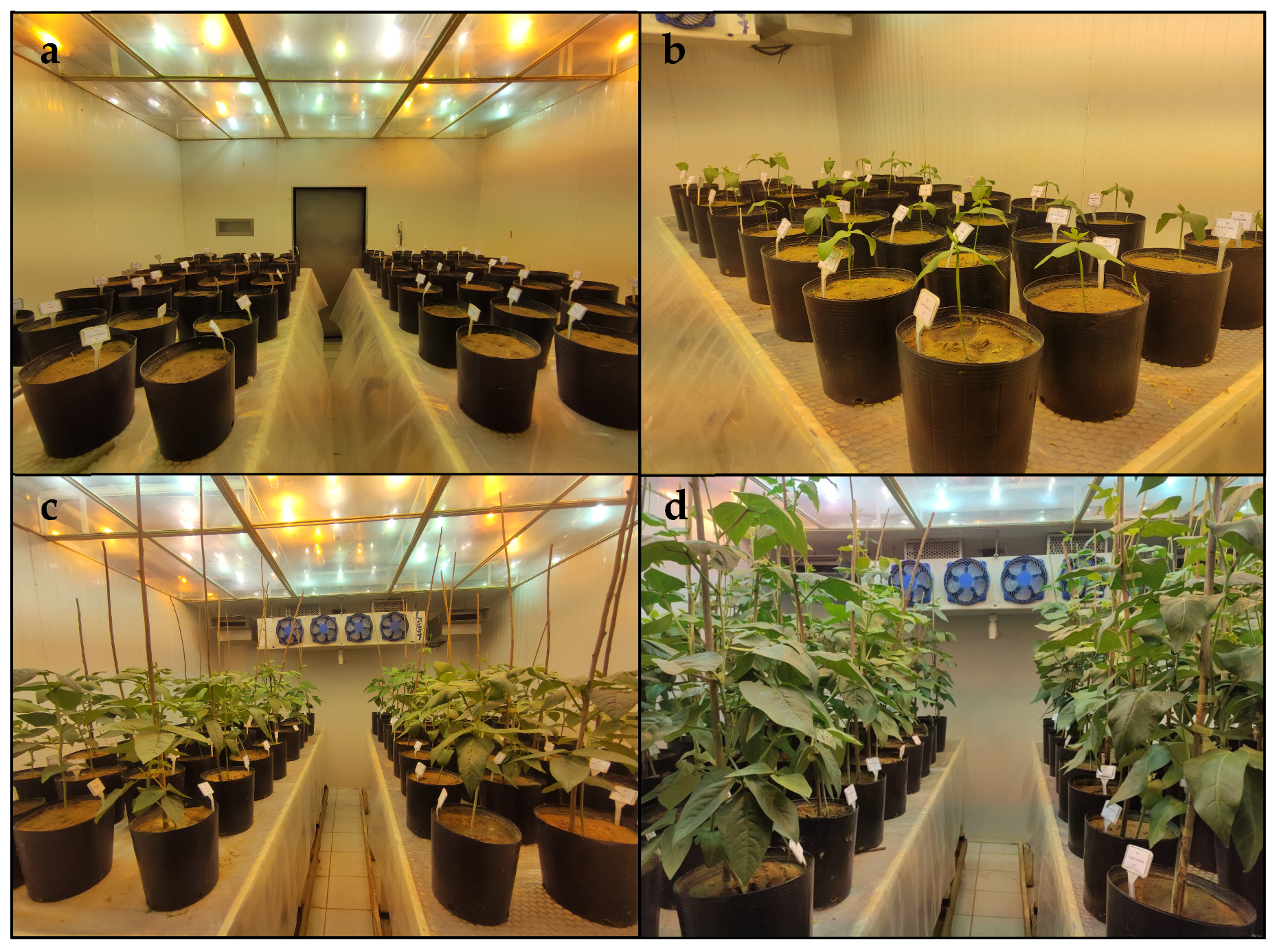
The experiment was conducted at Embrapa Semiárido, located in the city of Petrolina, Pernambuco, Brazil. The evaluations were carried out in the Climate Change Laboratory, in growth chambers, type Fitotron (Figure 1), with control of photoperiod, temperature (varying throughout the day, simulating the environment) and relative humidity.
The experimental design was completely randomized, in a 15 × 2 factorial scheme, with 15 cowpea genotypes and two daily temperature regimes, with four replications.
The daily temperature range of 20–26–33 °C corresponds to the average minimum, average, and maximum temperatures in the Brazilian Semi-Arid region, which vary from 18–22, 25–27, and 32–34 °C, respectively. The temperature regime of 24.8–30.8–34.8 °C considered the average temperatures of the region plus a value of 4.8 °C, based on the IPCC’s temperature increase scenario [1]. The variation in temperature throughout the day can be seen in Table 2.

2.3. Cultivation, Evaluations and Harvest

Cowpea seeds were planted in 5.5 L pots and kept in growth chambers (total area of 12 m2) until harvest. Harvesting was carried out when all the pods had a yellowish color and a dry texture, indicating complete physiological maturity. The following were evaluated: stem diameter (mm), plant height (cm), fresh and dry mass of leaves and stem (g), and root dry biomass (g). To determine the dry matter mass, the plant parts were placed in a forced-air oven at 60 °C to dry until they reached a constant weight and were subsequently weighed.
After cutting the aerial part, the roots were separated from the soil by washing in running water, using sieves with 0.5 and 1.0 mm meshes to retain the root material. Next, they were placed in a forced-air oven at 60 °C until they reached a constant weight, and then weighed to determine the dry matter mass in all treatments.
In addition, the length and diameter of the pod, average pod weight, number of pods per plant, number of grains per pod, number of grains per plant, grain weight per plant, and weight of 100 grains were evaluated.

2.4. Statistical and Multivariate Analyses

Average data from morpho-agronomic descriptors used to quantify genetic divergence between and within species were used to obtain the distance matrix, using Mahalanobis generalized distance [32]. After obtaining the matrix, the genotypes were grouped using the unweighted group average (UPGMA) to create the dendrogram.
For comparison of averages, the data obtained were subjected to analysis of variance (ANOVA) using the Sisvar program (version 5.6), using the F-test. Student’s t-test was used to compare the temperature regimes, and the Scott-Knott test was used to compare the genotypes.

3. Results

The morpho-agronomic descriptors were able to differentiate cowpea genotypes subjected to daily temperature regimes and to group those with greater genetic similarity (Table 3 and Figure 2). Genetic diversity among the genotypes was mainly evidenced by the following descriptors: 100-grain weight, leaf dry weight, pod weight, stem dry weight, plant height, and stem diameter.
The relative contribution of the variables to genetic diversity showed that, under the daily temperature regime of 20–26–33 °C, the variables with the greatest contribution were 100-grain weight (15.75%), leaf dry weight (13.48%), pod weight (12.88%), and stem dry weight (12.33%), totaling 54.44% of the observed variation (Table 3). Under the daily temperature regime of 24.8–30.8–37.8 °C, the number of pods per plant (21.90%), plant height (19.79%), stem fresh weight (13.46%), and leaf dry weight (12.12%) stood out, together contributing 67.27% of the total diversity, highlighting the effect of increased temperature on the expression of productive and vegetative traits.
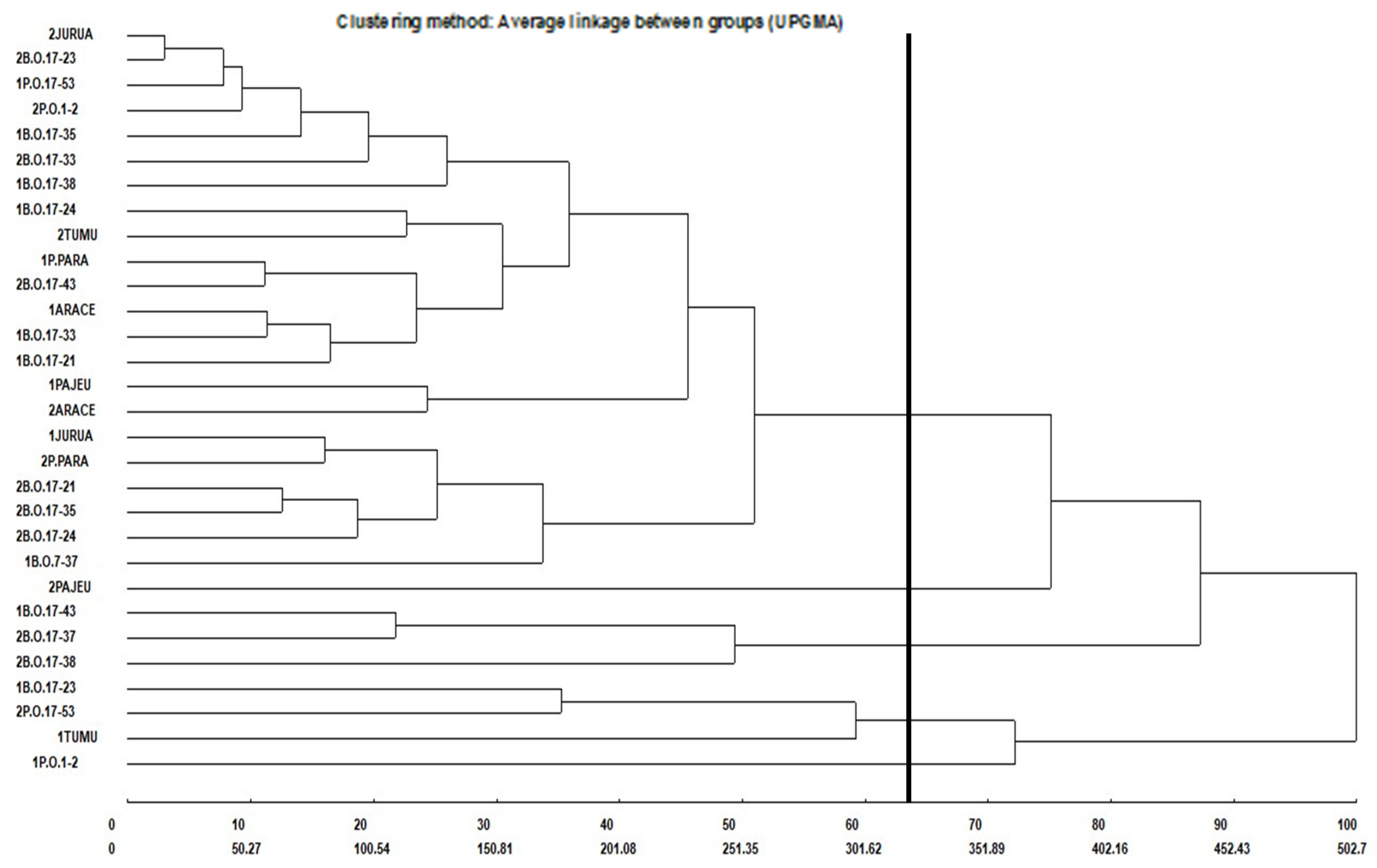
Genetic diversity among cowpea genotypes was also influenced by daily temperature (Figure 2). The dendrogram obtained by the UPGMA method, using the Mahalanobis generalized distance, showed a cophenetic correlation coefficient (CCC) of 79%, indicating good representativeness of the dissimilarity matrix. Five distinct groups were formed, confirming the existence of wide genetic variability among the evaluated genotypes, in which R1 represents the temperature regime of 20–26–33 °C and R2 corresponds to the temperature regime of 24.8–30.8–37.8 °C.
Group 1 comprised genotypes with greater genetic similarity, consisting of 22 components, suggesting more stable behavior in response to temperature variation. Group 2 consisted exclusively of the genotype R2.BRS Pajeú. Group 3 was formed by the genotypes R1.Bico de Ouro 17-43, R2.Bico de Ouro 17-37, and R2.Bico de Ouro 17-38. Group 4 included the genotypes R1.Bico de Ouro 17-23, R2.Bico de Ouro 17-53, and R1.BRS Tumucumaque, while Group 5 consisted of the genotype R1.Pingo de Ouro 1-2. This clustering pattern reinforces the influence of temperature on genetic dissimilarity and highlights the presence of genotypes with differentiated adaptive potential.
The range of dissimilarity values observed confirms the genetic heterogeneity among the genotypes (Table 4), allowing the identification of both highly similar genotype pairs and more genetically distant genotypes, demonstrating the significant phenotypic variability within the studied group.
Genetic dissimilarity analysis highlighted the genotype pairs R2.Bico de Ouro 17-33 (850.30) and R2.Bico de Ouro 17-43 × R1.BRS Pajeú (844.61) as the most divergent, while R2.Bico de Ouro 17-23 and R2.BRS Juruá were identified as the most similar (15.01) (Table 4), where R1 represents the temperature regime of 20–26–33 °C and R2 corresponds to the temperature regime of 24.8–30.8–37.8 °C.
The evaluated genotypes showed a significant genotype × daily temperature regime interaction (p < 0.05) for all biometric parameters, demonstrating that temperature increase affected vegetative plant development (Table 5).
The interaction between cowpea genotypes and temperature regimes resulted in significant variation across all evaluated biometric traits, with genotypes differing significantly for all variables (Table 6).
For plant height, the highest values were observed under the temperature regime of 24.8–30.8–37.8 °C, with the genotypes BRS Juruá (237.7 cm) and BRS Aracê (233.3 cm) standing out, along with Bico de Ouro 17-53. These genotypes showed increases of 28%, 44%, and 43%, respectively, in plant height when grown under higher temperature conditions (Table 6).
Under the temperature regime of 20–26–33 °C, the BRS Pajeú genotype (198.0 cm) exhibited the greatest height, surpassing the other genotypes within the same regime. However, when subjected to increased temperature, this genotype showed a 16% reduction in height. The genotypes Bico de Ouro 17-35 and Pingo de Ouro 1-2 also showed sensitivity to increased temperature, with reductions of 21% and 29%, respectively, in plant height under the higher temperature regime (Table 6).
The largest stem diameter values were observed in plants grown under the temperature regime of 24.8–30.8–37.8 °C, particularly among genotypes of the Bico de Ouro 17 group (17-23, 17-35, 17-37, and 17-38), with values exceeding 8 mm.
Leaf and stem fresh weights were influenced by increased air temperature, with most genotypes showing a significant increase in green biomass production. The genotypes Bico de Ouro 17-43 (160.8 g) and Bico de Ouro 17-35 (109 g) stood out, presenting the highest leaf fresh weight and stem fresh weight, respectively (Table 6).
Similarly, dry biomass (leaf and stem dry weight) was favored by the 4.8 °C temperature increase. The genotypes Pretinho do Pará and Bico de Ouro 17-43 were superior under the 24.8–30.8–37.8 °C regime, presenting leaf dry weights of 20.1 and 19.9 g, corresponding to increases of 75% and 40%, respectively, compared to the 20–26–33 °C regime (Table 6).
For stem dry weight, the genotype Bico de Ouro 17-35 remained superior under higher temperature conditions, with 28.3 g of stem dry biomass, representing a 104% increase (Table 6).
Increased temperature favored root biomass accumulation in all evaluated genotypes, with increases ranging from 36% to 329% in root dry weight under the 24.8–30.8–37.8 °C regime. The Pretinho do Pará genotype showed the highest root dry weight (16.7 g), outperforming the other genotypes (Table 6).
A significant genotype × daily temperature regime interaction (p < 0.05) was also observed for all productive parameters evaluated (Table 7), indicating distinct genotype responses across temperature regimes (Table 8).
The genotypes showed varied responses to the productive parameters in environments with different temperature regimes (Table 8).
Under the temperature regime of 20–26–33 °C, the genotypes BRS Pajeú, BRS Tumucumaque, Bico de Ouro 17-21, and Bico de Ouro 17-43 showed the greatest pod length, with values of 20.3, 18.5, 18.9, and 19.3 cm, respectively, and did not differ statistically from each other. Among these, Bico de Ouro 17-43 also showed the highest pod width and pod weight, with averages of 10.9 mm and 4.4 g, respectively (Table 8).
Under the temperature regime of 24.8–30.8–37.8 °C, the Bico de Ouro 17-21 genotype stood out for pod length, width, and weight, with averages of 20.4 cm, 11.3 mm, and 4.1 g, respectively (Table 8).
For the number of grains per pod (NGPD), variation was observed among genotypes and temperature regimes. Cultivation under 20–26–33 °C favored grain production per pod for most genotypes, particularly BRS Pajeú, Bico de Ouro 17-21, and Bico de Ouro 17-53, which presented 14, 15, and 14 grains per pod, respectively (Table 8).
Genotypes showed distinct responses for the number and total weight of grains per plant across temperature regimes (Table 8). Under the 20–26–33 °C regime, the genotypes BRS Aracê and Bico de Ouro 17-38 were superior for the number of grains per plant (122 and 116 grains, respectively) and did not differ statistically.
Under the 24.8–30.8–37.8 °C regime, the genotypes BRS Tumucumaque and Bico de Ouro 17-33, 17-28, and 17-53 stood out for both the number and total weight of grains per plant. The genotype Bico de Ouro 17-53 presented the highest number of grains (149), while BRS Tumucumaque showed the highest total grain weight (32.4 g) (Table 8). In contrast, the genotypes Bico de Ouro 17-23 and 17-43 showed greater sensitivity to temperature increase, with total grain weights of 4.8 and 5.6 g, corresponding to reductions of 65% and 52%, respectively, compared to the 20–26–33 °C regime (Table 8).
In the environment with temperatures of 20–26–33 °C, the genotypes BRS Aracê, BRS Pajeú, and those of the Bico de Ouro group 17-35, 17-38 and 17-53 stood out among the other genotypes for the total weight of grains per plant, presenting weights of 16.5, 18.8, 19.8, 20.6 and 20 g, respectively, and not differing statistically from each other (Table 8).
The weight of 100 grains (W100) showed little variation between temperature regimes, with only the Bico de ouro 17-24 and 17-43 genotypes showing a significant reduction in values when subjected to the temperature of 24.8–30.8–37.8 °C, both with a decrease of 23%, compared to cultivation in the 20–26–33 °C regime.
In the environment with temperatures of 20–26–33 °C, the Bico de Ouro 17-43 genotype showed the highest weight (P100) among the genotypes, with 29.9 g. On the other hand, the BRS Aracê genotype showed the lowest yield in 100-grain weight compared to the others, with only 13.6 g (Table 8). In the temperature regime of 24.8–30.8–37.8 °C, the Bico de ouro 17-21 genotype stood out, being statistically superior to the others (with 30.7 g), and the Bico de ouro 17-24 genotype (with 14 g) presented the lowest value among all genotypes in the regime with higher temperatures (Table 8).

4. Discussion

Genotype selection is a crucial step in identifying phenotypic variations of agronomic interest, contributing to the development of cultivars with stable performance adapted to heat stress conditions. Thus, it is essential to prioritize genotypes that maintain adequate vegetative growth and reproductive efficiency even under high temperatures [27].
The multivariate analyses used in this study proved fundamental for understanding the phenotypic variation among the genotypes evaluated under different daily temperature regimes. The quantitative assessment of genetic divergence, based on morpho-agronomic descriptors, made it possible to identify the traits that contributed most to the dissimilarity among genotypes. This approach is essential in cowpea breeding, as it allows the selection of genetically divergent materials with greater complementarity potential [30,33], favoring crosses that combine heat tolerance and high yield potential.
The analysis of the relative contribution of the descriptors showed that variables such as the weight of 100 grains, plant height, and the number of pods per plant had a greater impact on genetic differentiation among genotypes, varying according to the thermal regime. This indicates that these characteristics are sensitive to temperature conditions and therefore efficient in discriminating genotypes with greater adaptive capacity. Furthermore, the clustering results revealed broad genetic diversity, reflected in the formation of distinct groups, indicating the existence of sufficient variability for exploitation in hybridization programs, as reported by Belwal et al. [33], Singh et al. [34], Gupta et al. [35], and Chaudhary et al. [36]. This separation among genotypes further suggests that part of the observed variability is associated with thermal response, allowing the identification of promising materials for high-temperature environments.
The evaluated parameters contribute in a complementary manner to this process. Vegetative characteristics (height, stem diameter, fresh and dry biomass) reflect the plant’s ability to sustain growth and acquire resources, while productive components (number and weight of grains per plant, weight of 100 grains, and pod characteristics) demonstrate efficiency in converting this growth into yield. These phenotypic responses are underpinned by cellular mechanisms, in which the maintenance of vegetative growth under thermal stress is intrinsically linked to the synthesis of heat shock proteins (HSPs), which act as molecular chaperones to prevent the denaturation and aggregation of essential proteins [24]. In addition, biomass accumulation depends on the preservation of thylakoid membrane fluidity and integrity, processes frequently disrupted by high temperatures but mitigated in genotypes with more efficient antioxidant systems capable of neutralizing reactive oxygen species (ROS) [37]. Thus, the biometric superiority observed in certain genotypes suggests greater internal biochemical stability against thermal damage.
The weight of 100 grains under the 20–26–33 °C regime and the number of pods per plant under the 24.8–30.8–37.8 °C regime were the variables that contributed most to genotype divergence (Table 3), indicating that the ability to maintain production under high temperatures is a key factor in genetic differentiation among materials. The balance between photoassimilate production and its partitioning to reproductive organs determines the amount of carbon available for grain filling under heat stress. In legumes, more tolerant cultivars often maintain a higher relative allocation of assimilates to reproductive structures even under stress, preserving yield and reducing seed weight loss [38,39]. Among the evaluated materials, some stood out for maintaining a balance between growth and production under high temperatures, such as the Bico de Ouro 17-53, 17-33, 17-38, and BRS Tumucumaque genotypes, which showed consistent performance across more than one parameter. These genotypes combine promising traits for direct selection or use as parents in breeding programs. In contrast, the Bico de Ouro 17-43 genotype exhibited good vegetative growth without a corresponding increase in yield under heat stress, indicating a limitation in maintaining the relationship between biomass production and grain filling. Genotypes such as BRS Pajeú and Pingo de Ouro 1-2 showed greater sensitivity to heat stress, making them less suitable for high-temperature environments and useful as references of susceptibility.
The factors underlying these patterns are associated with mechanisms already recognized as determinants of heat adaptation, including phenological adjustment (synchronization of flowering and grain filling) [21,27,40], the balance between photoassimilate production and partitioning [38,39], biomass allocation between shoot and root systems, maintenance of water transport and structural support, as well as fertility stability and pod set under high temperatures [21,41]. These mechanisms are strongly influenced by genotype × environment interactions, reinforcing the importance of evaluating lines under contrasting conditions to ensure productive stability [42].

5. Conclusions

The results demonstrated wide morpho-agronomic diversity among the cowpea genotypes evaluated under different daily temperature regimes, showing distinct responses to increasing temperature. In the scenario of increased temperature (24.8–30.8–37.8 °C), the number of pods per plant, plant height, stem fresh weight, and leaf dry weight were the traits that contributed most to the dissimilarity between genotypes. These results indicate that heat stress directly influences components of growth and production, but also reveal the existence of genotypes with greater adaptive capacity. Among them, Bico de Ouro 17-53, 17-33 and BRS Tumucumaque stand out, having shown better productive performance under high temperatures, and being potential sources for genetic improvement focused on heat tolerance and the selection of materials more resilient to climate change. Although the results play an important role in identifying phenotypic responses to heat stress, the analyses were based on morpho-agronomic traits. Therefore, future studies incorporating physiological, biochemical, and genetic approaches may contribute to a more comprehensive understanding of the mechanisms underlying heat stress adaptation in cowpea.

Author Contributions

Methodology, formal analysis, validation, investigation, data curation, writing—original draft preparation, W.O.d.S.; Methodology, formal analysis, writing—review and editing, T.L.d.N., Methodology, investigation and formal analysis, W.P.N., J.L.d.S., T.A.L., C.B.d.S. and L.A.d.N.; Supervision, project administration, financing acquisition, writing—review and editing, M.d.M.R. and N.F.d.M.; Conceptualization, supervision, project administration, investigation, financing acquisition, methodology, writing—review and editing, F.A. All authors have read and agreed to the published version of the manuscript.

Funding

The authors would like to thank the Fundação de Amparo à Pesquisa do Estado da Bahia (Bahia Research Support Foundation—FAPESB)—Brazil, for granting the scholarship Nº BOL0210/2023, and FACEPE/CNPq (Fundação de Amparo à Ciência e Tecnologia de Pernambuco/Conselho Nacional de Desenvolvimento Científico e Tecnológico), grant numbers DCR-0009-5.01/21 and APQ-0204-5.01/19.

Data Availability Statement

The raw data supporting the conclusions of this article will be made available by the authors on request.

Conflicts of Interest

The authors declare no conflicts of interest.

References

  1. IPCC. Climate Change 2021: The Physical Science Basis; International Panel on Climate Change: Geneva, Switzerland, 2021. [Google Scholar]
  2. Chopra, P.; Sapia, N.; Karami, O.; Kumar, P.; Honys, D.; Colombo, L.; Mendes, M.; Benhamed, M.; Fotopoulos, V.; Lieberman-Lazarovich, M.; et al. Priming thermotolerance: Unlocking heat resilience for climate-smart crops. Philos. Trans. R. Soc. B 2025, 380, 20240234. [Google Scholar] [CrossRef]
  3. Muslu, A.S.; Ünel, N.M.; Saglam, A.; Baloglu, M.C.; Kadioglu, A. Perspectives on deciphering thermotolerance mechanisms in Heliotropium thermophilum: Integrating biochemical responses and gene expression patterns. Funct. Plant Biol. 2025, 52, FP24288. [Google Scholar] [CrossRef]
  4. Jiménez-Aguirre, M.T.; Sofia, G.; Carmen, G.; Soriano, B.; Esteve-Bengoechea, P.; Blanco-Gutiérrez, I.; Lizaso, J.; Hernández Díaz-Ambrona, C.G.; Pérez-López, D.; Ballesteros-Olza, M.; et al. Evaluating climate change impacts on cereal yields, water balance, and irrigation strategies in the La Balisa sub-catchment. In Proceedings of the EGUsphere 2025, Vienna, Austria, 27 April–2 May 2025; p. egu25-9096. [Google Scholar] [CrossRef]
  5. Mohamed, M.A. Economic vulnerability of cereal production in northern Algeria under climate change: Cost benefit analysis of adaptation strategies using DSSAT SWOT. Res. World Agric. Econ. 2025, 6, 348–361. [Google Scholar] [CrossRef]
  6. Mugisho, G.M.; Ngalo, L.M.; Lukeba, F.N. Vulnerability and adaptation of maize smallholder farmers to climate change: A Sub-Saharan African context. Discov. Agric. 2024, 2, 10. [Google Scholar] [CrossRef]
  7. Dwivedi, S.L.; Scheuring, C.; Feldbrugge, M.S.; Aranishi, F.; Ortiz, R. Using biotechnology-led approaches to uplift cereal and food legume yields in dryland environments. Front. Plant Sci. 2018, 9, 1249. [Google Scholar] [CrossRef] [PubMed]
  8. Sita, K.; Sehgal, A.; HanumanthaRao, B.; Nair, R.M.; Prasad, P.V.V.; Kumar, S.; Gaur, P.M.; Farooq, M.; Siddique, K.H.M.; Varshney, R.K.; et al. Food legumes and rising temperatures: Effects, adaptive functional mechanisms specific to reproductive growth stage and strategies to improve heat tolerance. Front. Plant Sci. 2017, 8, 1658. [Google Scholar] [CrossRef]
  9. Kaushal, N.; Bhandari, K.; Siddique, K.H.M.; Nayyar, H. Food crops face rising temperatures: An overview of responses, adaptive mechanisms, and approaches to improve heat tolerance. Cogent Food Agric. 2016, 2, 1134380. [Google Scholar] [CrossRef]
  10. Freire Filho, F.R.; Ribeiro, V.Q. (Eds.) Feijão-Caupi na Embrapa Meio-Norte: Melhoramento, Cultivares Lançadas, Genealogias e Base Genética; Embrapa: Brasília, Brazil, 2023; 1039p. [Google Scholar]
  11. Silva, F.A.; Silva, P.V.B.; de Meireles, D.A.; da Costa, C.R.G.; de Oliveira, M.R.T.; Fraga, V.d.S.; Dias, B.d.O.; Silva, J.B.; Araújo, W.d.O.; Campos, M.C.C. Avaliação de caracteres agronômicos de cultivares de feijão-caupi (Vigna unguiculata L. walp.) cultivados em Esperança-PB. Front. J. Soc. Technol. Environ. Sci. 2024, 13, 203–209. [Google Scholar] [CrossRef]
  12. Araújo, M.S.; dos Santos, S.P.; de Aragão, W.F.L.; Damasceno-Silva, K.J.; Rocha, M.M. Selection of superior cowpea lines for multi-traits and adaptabilities to the Piauí semi-arid using genotype by yield* trait biplot analysis. Ciênc. Agrotec. 2021, 45, e011921. [Google Scholar] [CrossRef]
  13. Carvalho, M.; Lino-Neto, T.; Rosa, E.; Carnide, V. Cowpea: A legume crop for a challenging environment. J. Sci. Food Agric. 2017, 97, 4273–4284. [Google Scholar] [CrossRef]
  14. Muchero, W.; Diop, N.N.; Bhat, P.R.; Fenton, R.D.; Wanamaker, S.; Pottorff, M.; Hearne, S.; Cisse, N.; Fatokun, C.; Ehlers, J.D.; et al. A consensus genetic map of cowpea [Vigna unguiculata (L.) Walp.] and synteny based on EST-derived SNPs. Proc. Natl. Acad. Sci. USA 2009, 106, 18159–18164. [Google Scholar] [CrossRef]
  15. Badiane, F.A.; Gowda, B.S.; Cissé, N.; Diouf, D.; Sadio, O.; Timko, M.P. Genetic relationship of cowpea (Vigna unguiculata) varieties from Senegal based on SSR markers. Genet. Mol. Res. 2012, 11, 292–304. [Google Scholar] [CrossRef]
  16. Cruz, F.J.R.; De Almeida, H.J.; Dos Santos, D.M.M. Growth, nutritional status and nitrogen metabolism in ‘Vigna unguiculata’ (L.) Walp is affected by aluminum. Aust. J. Crop Sci. 2014, 8, 1132–1139. [Google Scholar]
  17. Boukar, O.; Belko, N.; Chamarthi, S.; Togola, A.; Batieno, J.; Owusu, E.; Fatokun, C. Cowpea (Vigna unguiculata): Genetics, genomics and breeding. Plant Breed. 2019, 138, 415–424. [Google Scholar] [CrossRef]
  18. Kamara, A.Y.; Omoigui, L.O.; Kamai, N.; Ewansiha, S.U.; Ajeigbe, H.A. Improving cultivation of cowpea in West Africa. In Achieving Sustainable Cultivation of Grain Legumes; Burleigh Dodds Science Publishing: Cambridge, UK, 2018; pp. 235–252. [Google Scholar] [CrossRef]
  19. Baloch, F.S.; Altaf, M.T.; Bedir, M.; Kim, J.S.; Chung, G.; Sun, M.S. iPBS-retrotransposons variations: DNA fingerprinting and the evaluation of genetic diversity and population structure in international cowpea germplasm. Genet. Resour. Crop Evol. 2023, 70, 1867–1877. [Google Scholar] [CrossRef]
  20. Goa, Y.; Gebre, E.; Mekonnen, H.; Mohammed, S.; Worku, M. Genotype by environment interaction and yield stability of cowpea (Vigna unguiculata (L.) Walp.) genotypes in moisture limited areas of Southern Ethiopia. Heliyon 2022, 8, e09013. [Google Scholar] [CrossRef] [PubMed]
  21. Barros, J.R.A.; Guimarães, M.J.M.; Simões, W.L.; Melo, N.F.; Angelotti, F. Water restriction in different phenological stages and increased temperature affect cowpea production. Cienc. Agrotecnol. 2021, 45, e022120. [Google Scholar] [CrossRef]
  22. Barros, J.R.A.; dos Santos, T.C.; Silva, E.G.F.; da Silva, W.O.; Guimarães, M.J.M.; Angelotti, F. Pollen Viability, and the Photosynthetic and Enzymatic Responses of Cowpea (Vigna unguiculata (L.) Walp., Fabaceae) in the Face of Rising Air Temperature: A Problem for Food Safety. Agronomy 2024, 14, 463. [Google Scholar] [CrossRef]
  23. Ahmed, F.E.; Hall, A.E.; DeMason, D.A. Heat injury during floral development in cowpea (Vigna unguiculata, Fabaceae). Am. J. Bot. 2012, 79, 784–791. [Google Scholar] [CrossRef]
  24. Wahid, A.; Gelani, S.; Ashraf, M.; Foolad, M.R. Heat tolerance in plants: An overview. Environ. Exp. Bot. 2007, 61, 199–223. [Google Scholar] [CrossRef]
  25. Hamidou, F.; Halilou, O.; Vadez, V. Assessment of groundnut under combined heat and drought stress. J. Agron. Crop Sci. 2013, 199, 1–11. [Google Scholar] [CrossRef]
  26. Bita, C.E.; Gerats, T. Plant tolerance to high temperature in a changing environment: Scientific fundamentals and production of heat stress-tolerant crops. Front. Plant Sci. 2013, 4, 273. [Google Scholar] [CrossRef]
  27. Barros, J.R.A.; Guimarães, M.J.M.; Simões, W.L.; Angelotti, F. Temperature: A major climatic determinant of cowpea production. Acta Sci. Agron. 2023, 45, e56812. [Google Scholar] [CrossRef]
  28. Silva, J.A.; Barros, J.R.A.; Silva, E.G.F.; Rocha, M.M.; Angelotti, F. Cowpea: Prospecting for heat-tolerant genotypes. Agronomy 2024, 14, 1969. [Google Scholar] [CrossRef]
  29. Brilhante, M.; Richter, F.; Romeiras, M.M.; Catarino, S.; Monteiro, F. Evaluation of Phaseolus and Vigna species in the Mediterranean climate: A morphological and chemical analysis. Genet. Resour. Crop Evol. 2025, 72, 9635–9656. [Google Scholar] [CrossRef]
  30. Dairo, O.U. Genetic diversity in cowpea (Vigna unguiculata (L.) Walp) under two growing conditions. Adv. Biosci. Biotechnol. 2024, 15, 310–324. [Google Scholar] [CrossRef]
  31. Jumrani, K.; Bhatia, V.S.; Kataria, S.; Landi, M. Screening soybean genotypes for high-temperature tolerance by maximin-minimax method based on yield potential and loss. Agronomy 2022, 12, 2854. [Google Scholar] [CrossRef]
  32. Mahalanobis, P.C. On the generalized distance in statistics. Proc. Natl. Inst. Sci. India 1936, 2, 9–55. [Google Scholar]
  33. Belwal, A.; Negi, A.; Bhatt, R.; Sharma, A.; Arya, D.; Chauhan, J.S. Studies on genetic divergence among Indian and exotic cowpea germplasm based on morphological and agronomical traits. J. Exp. Agric. Int. 2024, 46, 832–838. [Google Scholar] [CrossRef]
  34. Singh, O.V.; Yadav, R.K.; Kumar, S.; Meena, R.K.; Singh, A.K. Genetic divergence studies in cowpea [Vigna unguiculata (L.) Walp.] germplasm using Mahalanobis D2 analysis. Int. J. Curr. Microbiol. Appl. Sci. 2018, 7, 2616–2624. [Google Scholar] [CrossRef]
  35. Gupta, R.K.; Arya, M.; Kumar, A.; Kumari, P. Study on genetic variability in cowpea (Vigna unguiculata L.) Walp. Curr. J. Appl. Sci. Technol. 2019, 33, 1–8. [Google Scholar] [CrossRef]
  36. Chaudhary, A.R.; Solanki, S.D.; Rahevar, P.M. Comparative diversity analysis of cowpea genotypes using multivariate approaches. Electron. J. Plant Breed. 2021, 12, 1142–1147. [Google Scholar] [CrossRef]
  37. Hasanuzzaman, M.; Bhuyan, M.B.; Zulfiqar, F.; Raza, A.; Mohsin, S.M.; Mahmud, J.A.; Fujita, M.; Fotopoulos, V. Reactive oxygen species and antioxidant defense in plants under abiotic stress: Revisiting the crucial role of a universal defense regulator. Antioxidants 2020, 9, 681. [Google Scholar] [CrossRef]
  38. Mohammed, S.B.; Ongom, P.O.; Togola, A.; Boukar, O. Enhancing cowpea tolerance to elevated temperature: Achievements, challenges and future directions. Agronomy 2024, 14, 513. [Google Scholar] [CrossRef]
  39. Omae, H.; Kumar, A.; Shono, M. Adaptation to high temperature and water deficit in the common bean (Phaseolus vulgaris L.) during the reproductive period. J. Bot. 2012, 2012, 244–249. [Google Scholar] [CrossRef]
  40. Wijayaraja, I.; Piyarathne, M.; Alahakoon, T.; Devasinghe, U.; Weerasinghe, L.K.; Kumarathunge, D.; Dissanayake, D.; Egodawatta, C.; Geekiyanage, N. Acclimation of ecophysiological and agronomic traits to increasing growth temperature in three cowpea genotypes grown in Anuradhapura, Sri Lanka. Int. J. Agron. 2022, 2022, 3596075. [Google Scholar] [CrossRef]
  41. Basu, P.; Singh, U.; Meena, S.K.; Gurumurthy, S.; Kumar, V.; Tewari, K.; Das, K.; Sharma, K.; Chaturvedi, S. Implication of climate change on the productivity of legumes. In Climate Change and Legumes; CRC Press: Boca Raton, FL, USA, 2023; pp. 207–250. [Google Scholar]
  42. de Sousa Lopes, A.F.; de Aragão, W.F.L.; Damasceno-Silva, K.J.; Rocha, M.M. Selection of superior cowpea lines derived from local cultivars for the Brazilian semiarid region. Pesq. Agropecu. Bras. 2023, 58, e03391. [Google Scholar] [CrossRef]
Figure 1. Cowpea genotypes grown in a Fitotron-type growth chamber with controlled photoperiod, temperature, and relative humidity: one day after planting (a); 9 days after planting (b); 20 days after planting (c); and 33 days after planting (d).
Agronomy 16 00312 g001
Figure 2. Dendrogram representing the genetic dissimilarity between and within cowpea genotypes subjected to temperature regimes of 20–26–33 °C and 24.8–30.8–37.8 °C, obtained by the UPGMA method, using Mahalanobis generalized distance. The horizontal line indicates the cutoff level adopted for cluster delimitation, corresponding to a cophenetic correlation coefficient (CCC) of 79%.
Agronomy 16 00312 g002
Table 1. Number, name/code, and commercial subclass of the cowpea (Vigna unguiculata) genotypes evaluated.
NumberName/CodeCommercial Subclass
1Pretinho do ParáBlack
2Pingo de Ouro 1-2Canapu
3BRS AracêGreen
4BRS JuruáGreen
5BRS PajeúBrown
6BRS TumucumaqueWhite
7Bico de Ouro—17-21Always green
8Bico de Ouro—17-23Always green
9Bico de Ouro—17-24Always green
10Bico de Ouro—17-33Always green
11Bico de Ouro—17-35Always green
12Bico de Ouro—17-37Always green
13Bico de Ouro—17-38Always green
14Bico de Ouro—17-43Always green
15Bico de Ouro—17-53Always green
Table 2. Temperature regimes and variations throughout the day.
Temperature Regimes °CTime/Temperature (°C)
8:00 PM to 6:00 AM6:00 AM to 10:00 AM10:00 AM to 3:00 PM3:00 PM to 8:00 PM
20–26–3318243024
24.8–30.8–34.822283428
Table 3. Relative contribution of 15 morpho-agronomic descriptors used to evaluate the genetic dissimilarity of cowpea genotypes subjected to daily temperature regimes of 20–26–33 °C and 24.8–30.8–37.8 °C.
20–26–33 °C24.8–30.8–37.8 °C
VariableValue (%)VariableValue (%)
Weight of 100 grains (g)15.75Number of pods per plant21.90
Leaf dry weight (g)13.48Plant height (cm)19.79
Weight of the pod (g)12.88Stem fresh weight (g)13.46
Stem dry weight (g)12.33Leaf dry weight (g)12.12
Plant height (cm)10.72Root dry weight (g)8.07
Leaf fresh weight (g)8.96Weight of the pod (g)7.92
Number of grains per pod7.99Stem diameter (mm)4.79
Root dry weight (g)4.09Number of grains per pod3.81
Stem diameter (mm)4.03Leaf fresh weight (g)3.20
Total weight of grains per plant (g)3.52Pod length (cm)2.88
Pod length (cm)2.27Pod width (mm)2.05
Number of grains per plant1.75Total weight of grains/plant (g)0.00
Stem fresh weight (g)1.58Number of grains per plant0.00
Pod width (mm)0.41Weight of 100 grains (g)0.00
Number of pods per plant0.24Stem dry weight (g)0.00
Total100 100
Table 4. Measures of genetic dissimilarity between cowpea genotypes subjected to the daily temperature regimes—R1 (20–26–33 °C) and R2 (24.8–30.8–37.8 °C), considering 15 characteristics, based on Mahalanobis generalized distance.
GenotypeMaximum DistanceMinimum Distance
R1.Pretinho do ParáR2.BRS Pajeú (444.02)R2.Bico de Ouro—17-43 (55.86)
R1.Pingo de Ouro 1-2R2.Bico de Ouro—17-33 (850.30)R1.Bico de Ouro—17-33 (249.77)
R1.BRS AracêR2.BRS Pajeú (411.76)R1.Bico de Ouro—17-33 (56.74)
R1.BRS JuruáR1.Bico de Ouro—17-23 (618.58)R2.Pretinho do Pará (80.43)
R1.BRS PajeúR1.Bico de Ouro—17-43 (844.61)R2.BRS Aracê (122.42)
R1.BRS TumucumaqueR1.Bico de Ouro—17-43 (696.47)R1.Bico de Ouro—17-24 (238.05)
R1.Bico de Ouro—17-21R1.Bico de Ouro—17-43 (438.06)R1. BRS Aracê (67.20)
R1.Bico de Ouro—17-23R1.BRS Pajeú (766.11)R2.Bico de Ouro—17-53 (177.33)
R1.Bico de Ouro—17-24R2.BRS Pajeú (656.58)R1. BRS Aracê (89.08)
R1.Bico de Ouro—17-33R1.Bico de Ouro—17-23 (340.21)R1. BRS Aracê (56.74)
R1.Bico de Ouro—17-35R1. Pingo de Ouro 1-2 (653.71)R2.BRS Juruá (65.00)
R1.Bico de Ouro—17-37R1.Bico de Ouro—17-23 (590.29)R2.Bico de Ouro—17-35 (86.25)
R1.Bico de Ouro—17-38R1.Bico de Ouro—17-23 (754.88)R2.Bico de Ouro—17-23 (96.49)
R1.Bico de Ouro—17-43R1.BRS Pajeú (844.61)R2.Bico de Ouro—17-37 (109.51)
R1.Bico de Ouro—17-53R1.Pingo de Ouro 1-2 (639.78)R2.BRS Juruá (38.21)
R2.Pretinho do ParáR1.Bico de Ouro—17-23 (570.33)R1.BRS Juruá (80.43)
R2.Pingo de Ouro 1-2R1.Pingo de Ouro 1-2 (745.81)R2.Bico de Ouro—17-23 (43.70)
R2.BRS AracêR2.Bico de Ouro—17-37 (551.43)R1.Bico de Ouro—17-53 (90.54)
R2.BRS JuruáR1.Pingo de Ouro 1-2 (713.05)R2.Bico de Ouro—17-23 (15.01)
R2.BRS PajeúR1.Pingo de Ouro 1-2 (773.28)R2.Bico de Ouro—17-35 (182.47)
R2.BRS TumucumaqueR1.Pingo de Ouro 1-2 (667.97)R1. Pretinho do Pará (110.29)
R2.Bico de Ouro—17-21R1.BRS Tumucumaque (565.73)R2.Bico de Ouro—17-35 (62.92)
R2.Bico de Ouro—17-23R1.Pingo de Ouro 1-2 (769.64)R2.BRS Juruá (15.01)
R2.Bico de Ouro—17-24R1.BRS Tumucumaque (493.49)R2.Bico de Ouro—17-21 (64.18)
R2.Bico de Ouro—17-33R1.Pingo de Ouro 1-2 (850.30)R2.BRS Juruá (54.15)
R2.Bico de Ouro—17-35R1.Pingo de Ouro 1-2 (570.91)R2.Bico de Ouro—17-21 (62.92)
R2.Bico de Ouro—17-37R2.BRS Pajeú (698.30)R1.Bico de Ouro—17-43 (109.51)
R2.Bico de Ouro—17-38R1.BRS Pajeú (823.75)R1.Bico de Ouro—17-43 (152.94)
R2.Bico de Ouro—17-43R1.Bico de Ouro—17-23 (526.04)R1. Pretinho do Pará (55.86)
R2.Bico de Ouro—17-53R2.Bico de Ouro—17-37 (658.12)R1.Bico de Ouro—17-23 (177.33)
Table 5. Summary of the analysis of variance (ANOVA), using the mean square method, for the biometric values: plant height (PLH), stem diameter (STD), leaf fresh weight (LFW), stem fresh weight (SFW), leaf dry weight (LDW), stem dry weight (SDW), and root dry weight (RDW), of different cowpea genotypes, subjected to two environments with different temperatures.
Source of VariationDFMedium Square
PLHSTDLFWSFWLDWSDWRDW
Genotype (G)145049.3 **2.7 **2968.4 **714.8 **82.4 **57.5 **52.6 **
Temperature regime (T)1138.6 ns7.4 **62181.2 **22685.5 **749.2 **1623.6 **668.9 **
GxT142561.9 **1.2 **548.2 **609.8 **12.7 **52.1 **10.4 **
Residue8740.40.040.124.90.89.00.6
CV % 4.04.17.47.08.418.411.3
DF: Degree of freedom; CV: Coefficient of variation; ns: not significant; ** Significant at 5% of probability according to Scott-Knott test.
Table 6. Mean values for plant height (PLH), stem diameter (STD), leaf fresh weight (LFW), stem fresh weight (SFW), leaf dry weight (LDW), stem dry weight (SDW), and root dry weight (RDW) of different cowpea genotypes subjected to different temperature regimes.
RegimeGenotypePLH
(cm)
STD (mm)LFW
(g)
SFW
(g)
LDW
(g)
SDW
(g)
RDW
(g)
>20–26–33 °CPretinho do Pará167.7 bC6.72 aB85.5 bB65.3 bB11.5 bB12.9 bB7.1 bA
Pingo de Ouro 1-2167.0 aC6.67 bB79.1 bC72.7 bA10.6 bC18.1 aA7.7 bA
BRS Aracê162.0 bC6.24 aC30.1 bH64.5 aB3.9 bE15.2 aA3.5 bC
BRS Juruá185.0 bB5.93 aD59.3 bE73.8 aA11.9 bB16.7 aA5.7 bB
BRS Pajeú198.0 aA6.37 aC64.3 bE57.1 bC8.3 bD12.1 bB6.7 bB
BRS Tumucumaque146.3 aE6.41 bC64.5 bE51.3 bC9.4 bC10.3 bC2.6 bD
Bico de Ouro 17-21136.0 aF6.22 aC54.5 bF45.1 bD7.0 bD8.5 bC3.2 bC
Bico de Ouro 17-23130.0 bF6.88 bB63.2 bE55.7 bC7.2 bD15.5 bA3.7 bC
Bico de Ouro 17-24143.0 aE5.49 bE42.0 bG45.5 bD5.4 bE9.5 bC1.9 bD
Bico de Ouro 17-33145.3 aE7.15 aB53.2 bF56.9 bC7.4 bD11.3 bB2.5 bD
Bico de Ouro 17-35189.3 aB6.91 bB69.8 bD53.1 bC11.4 bB13.9 bA2.6 bD
Bico de Ouro 17-37133.3 aF6.70 bB49.6 bF56.9 bC6.8 bD12.5 bB1.7 bD
Bico de Ouro 17-38136.0 aF7.77 aA42.5 bG40.0 bD4.9 bE7.4 bC3.4 bC
Bico de Ouro 17-43155.0 aD6.65 aB95.0 bA63.7 bB14.2 bA13.1 bB8.3 bA
Bico de Ouro 17-53133.0 bF7.05 aB80.5 bC51.5 bC10.4 bC12.0 bB7.3 bA
24.8–30.8–37.8 °CPretinho do Pará185.5 aB6.22 bD141.2 aB97.9aB20.1 aA21.4 aB16.7 aA
Pingo de Ouro 1-2131.8 bE7.56 aB105.3 aD97.1 aB12.1 aD20.8 aB12.3 aB
BRS Aracê233.3 aA5.81 bD78.4 aG52.1 bG8.0 aF11.2 bD12.6 aB
BRS Juruá237.7 aA6.27 aD125.1 aC79.9 aD18.5 aB16.8 aC9.4 aD
BRS Pajeú167.0 bC6.61 aC95.8 aE86.1 aC12.5 aD20.1 aB9.8 aD
BRS Tumucumaque138.3 aD7.26 aB88.7 aF74.7 aE11.0 aE19.7 aB7.7 aE
Bico de Ouro 17-21130.0 aE6.57 aC127.1 aC65.2 aF15.6 aC12.8 aD9.6 aD
Bico de Ouro 17-23140.3 aD8.40 aA122.3 aC98.0 aB13.1 aD24.0 aB8.7 aE
Bico de Ouro 17-24145.3 aD7.20 aB77.3 aG82.2 aD8.4 aF21.2 aB6.2 aF
Bico de Ouro 17-33123.8 bE7.21 aB83.3 aF69.3 aE9.0 aF16.9 aC5.1 aG
Bico de Ouro 17-35134.0 bE8.28 aA104.8 aD109 aA15.0 aC28.3 aA6.6 aF
Bico de Ouro 17-37133.0 aE8.20 aA102.5 aD88.2 aC15.4 aC21.6 aB7.3 aF
Bico de Ouro 17-38138.3 aD8.02 aA96.9 aE93.5 aC11.7 aE22.8 aB4.6 aG
Bico de Ouro 17-43130.8 bE6.84 aC160.8 aA98.3 aB19.9 aA22.9 aB11.2 aC
Bico de Ouro 17-53190.3 aB6.17 bD106.6 aD74.1 aE15.0 aC18.8 aB11.1 aC
standard deviation (SD)6.280.296.344.990.953.010.78
The same lowercase letter in the column between regimes and uppercase letter between genotypes in the same regime do not differ from each other by the Scott-Knott test at 5% probability.
Table 7. Summary of the analysis of variance (ANOVA), by mean squares, for the values of average pod length (APL), pod width (PWD), pod weight (PW), number of pods (NOP), number of grains per pod (NGPD), number of grains per plant (NGP), grain weight per plant (GWP) and weight of 100 grains (W100G), of different cowpea genotypes, subjected to daily temperature regimes (20–26–33 °C and 24.8–30.8–37.8 °C).
Source of VariationDFMedium Square
APLPWDPWNOPNGPDNGPGWPW100G
Genotype (G)1426.5 **5.1 **1.9 **61.2 **15.9 **5653.0 **217.3 **59.3 **
Temperature regime (T)1108.8 **0.2 ns9.4 **108.5 **176.1 **80.0 ns108.2 ns99.4 **
GxT146.9 **1.9 **1.0 **33.1 **7.1 **2818.6 **121.0 **49.2 **
Residue870.80.30.00.91.2211.710.02.1
CV % 5.86.76.912.410.919.115.56.9
DF: Degree of freedom; CV: Coefficient of variation; ns: not significant; ** Significant at 5% of probability according to Scott-Knott test.
Table 8. Mean values for average pod length (APL), pod width (PWD), pod weight (PW), number of pods per plant (NOP), number of grains per pod (NGPD), number of grains per plant (NGP), grain weight per plant (GWP), and weight of 100 grains (W100G) of different cowpea genotypes subjected to different temperature regimes.
RegimeGenotypeAPL
(cm)
PWD
(mm)
PW
(g)
NOPNGPDNGPGWP
(g)
W100G
(g)
20–26–33 °CPretinho do Pará17 aB7.6 aC2.8 aD5 aD12 aB61 aC11.5 aB18.9 aC
Pingo de Ouro 1-216 aC9.7 aB3.1 aC6 aD10 aB56 aC12.3 aB22.1 bB
BRS Aracê17 aB8.7 aC2.6 aE10 aA12 aB122 aA16.5 aA13.6 bE
BRS Juruá15.6 aC9.4 aB2.4 aF7 bC10 aD66 aC14 aB21.3 aB
BRS Pajeú20.3 aA9.9 aB3.9 aB6 bC14 aA89 aB18.8 aA21.2 aB
BRS Tumucumaque18.5 aA8.9 aC2.3 aF8 bB8 bD67 bC15.2 bB22.6 bB
Bico de Ouro 17-2118.9 bA8.7 bC2.7 bE3 bE15 aA52 aC8.5 bB16.3 bD
Bico de Ouro 17-2316 aC8.5 aC2.6 aE8 aB10 aD78 aC13.7 aB17.4 bD
Bico de Ouro 17-2415.7 aC8.1 aC2.3 aF7 bC10 aD67 bC12.2 aB18.2 aD
Bico de Ouro 17-3315.8 aC8.4 aC2.4 aF7 bC10 aD65 bC12.5 bB19.2 aC
Bico de Ouro 17-3516 aC8.7 aC3 aC8 aB11 aC96 aB19.8 aA20.6 aC
Bico de Ouro 17-3716.5 aB8.2 aC2.6 aE5 aD11 aC58 aC11.9 aB20.5 aC
Bico de Ouro 17-3814.5 aC8.3 aC2.7 aE10 aA11 aC116 aA20.6 bA17.7 bD
Bico de Ouro 17-4319.3 aA10.9 aA4.4 aA3 aE12 aB39 aC11.7 aB29.9 aA
Bico de Ouro 17-5316.9 aB9 aC3.1 aC7 bC14 aA98 bB20 bA20.4 aC
24.8–30.8–37.8 °CPretinho do Pará16.9 aC8.1 aD2.4 bC5 aE12 aA62 aD10.9 aD17.6 aD
Pingo de Ouro 1-215.8 aD10.1 aB2.6 bC6 aE9 aB53 aE13.4 aC25.3 aB
BRS Aracê13.7 bE7.7 bD2.1 bD9 aD8 bC70 bD14.1 aC20.2 aC
BRS Juruá11 bF9.3 aC1.8 bE10 aC7 bC72 aD15.6 aC21.7 aC
BRS Pajeú16.6 bC10.1 aB2.7 bB8 aD10 bB85 aC18.8 aC22 aC
BRS Tumucumaque18.2 aB7.7 bD2.1 aD13 aB10 aB130 aB32.4 aA24.9 aB
Bico de Ouro 17-2120.4 aA11.3 aA4.1 aA5 aE10 bB56 aE17 aC30.7 aA
Bico de Ouro 17-2314 bE9.1 aC2.1 bD3 bF7 bC21 bF4.8 bE22.5 aC
Bico de Ouro 17-2415.5 aD8.8 aC2.2 aD10 aC9 aC89 aC12.8 aC14 bE
Bico de Ouro 17-3312.3 bF8.4 aC1.8 bE17 aA8 bC130 aB27.1 aB21 aC
Bico de Ouro 17-3513.5 bE8.6 aC1.8 bE6 bE8 bC48 bE10.1 bD21 aC
Bico de Ouro 17-3715.5 aD8.9 aC2.5 aC5 aE10 aB47 aE10.6 aD22.5 aC
Bico de Ouro 17-3813.7 aE8.7 aC1.8 bE11 aC11 aB118 aB26.4 aB22.4 aC
Bico de Ouro 17-4315.5 bD10 bB2.9 bB3 aF8 bC25 aF5.6 bE22.8 bC
Bico de Ouro 17-5313 bE7.7 bD1.7 bE16 aA9 bB149 aA28 aB18.8 aD
standard deviation (SD)0.930.600.180.951.1214.552.411.45
The same lowercase letter in the column between regimes and uppercase letter between genotypes in the same regime do not differ from each other by the Scott-Knott test at 5% probability.
Disclaimer/Publisher’s Note: The statements, opinions and data contained in all publications are solely those of the individual author(s) and contributor(s) and not of MDPI and/or the editor(s). MDPI and/or the editor(s) disclaim responsibility for any injury to people or property resulting from any ideas, methods, instructions or products referred to in the content.