Next Article in Journal
Exploring the Effects of Diluted Plasma-Activated Water (PAW) on Various Sprout Crops and Its Role in Autophagy Regulation
Previous Article in Journal
A Biomass-Driven 3D Structural Model for Banana (Musa spp.) Fruit Fingers Across Genotypes
 
 
Due to scheduled maintenance work on our servers, there may be short service disruptions on this website between 11:00 and 12:00 CEST on March 28th.
Article

Allele-Specific Effects of RNRS1 on Chloroplast Biogenesis and Albino Stripe Phenotypes in Rice
Key Laboratory of Rice Biology & Genetic Breeding in Northeast China, Ministry of Agriculture and Rural Areas, Rice Research Institute, Shenyang Agricultural University, Shenyang 110866, China
*
Author to whom correspondence should be addressed.
Agronomy 2026, 16(2), 206; https://doi.org/10.3390/agronomy16020206
Submission received: 5 December 2025 / Revised: 12 January 2026 / Accepted: 13 January 2026 / Published: 14 January 2026
(This article belongs to the Section Crop Breeding and Genetics)

Abstract

Leaves are the primary photosynthetic organs, and alterations in leaf color can affect photosynthesis and plant biomass. In an EMS-mutagenized SN9816 population, we identified two white-striped mutants, ws21-1 and ws21-2. Both mutants showed severely reduced pigment content, defective chloroplasts, and elevated reactive oxygen species. The ws21-2 allele caused a near-complete albino phenotype, while ws21-1 resulted in milder striping. Genetic mapping and cloning identified causal mutations in OsRNRS1, encoding the small subunit of ribonucleotide reductase. The G583R (ws21-1) and Y365F (ws21-2) mutations likely impair enzyme activity, disrupting the dNTP pool for plastid genome replication and causing aberrant chloroplast development. Correspondingly, the expression of genes for chlorophyll synthesis, photosynthesis, and ROS metabolism was altered. Our findings directly link nuclear-encoded nucleotide metabolism to chloroplast biogenesis and demonstrate that dNTP homeostasis is critical for maintaining photosynthetic capacity and redox balance in plants.

1. Introduction

Rice (Oryza sativa L.) is a primary staple crop that supports more than half of the global population, and enhancing its photosynthetic efficiency has become an important avenue to meet future food security demands. The chloroplast is the central organelle responsible for photosynthesis, pigment biosynthesis, and redox homeostasis. Therefore, defects in chloroplast biogenesis often lead to visible changes in leaf coloration, such as albino, variegated, or chlorotic phenotypes [1,2]. These leaf-color mutants serve as powerful genetic resources for dissecting the molecular mechanisms underlying chloroplast development and photosynthetic regulation in higher plants.
Chloroplast biogenesis is a complex and highly coordinated process essential for plant growth, involving coordinated gene expression, protein transport, membrane formation, and photosynthetic assembly between the nucleus and chloroplast [3,4]. This process depends on synergistic expression from both genomes: most chloroplast proteins are nuclear-encoded and imported from the cytoplasm, while the chloroplast genome itself encodes critical functional proteins [5]. Light is an indispensable environmental signal that drives this process. Photoreceptors such as phytochromes activate nuclear signaling pathways to transcriptionally regulate chloroplast-related genes, initiating and advancing biogenesis [6]. During chloroplast formation, chlorophyll biosynthesis is tightly metabolically regulated. Light triggers and continuously modulates the transcription of biosynthesis genes to ensure stable chlorophyll supply and proper stoichiometry, vital for photosynthetic apparatus establishment and plant development [7,8]. Concurrently, carotenoid metabolism participates in plastid development regulation. Metabolites like apocarotenoids serve as key signaling molecules, regulating gene expression networks, coordinating pigment ratios, and managing photoprotection to collectively ensure normal chloroplast differentiation and functional maturation [9]. Numerous genes associated with chlorophyll biosynthesis, carotenoid metabolism, plastid ribosome assembly, and photosystem I/II formation have been identified through classical rice leaf-color mutants [10,11,12]. However, many aspects of early chloroplast differentiation, especially the transition from juvenile pale leaves to mature green tissues, remain poorly understood.
Reactive oxygen species (ROS) are now recognized as both damaging byproducts of photosynthesis and essential signaling molecules in chloroplast development. Excessive ROS accumulation can trigger photoinhibition, pigment degradation, and thylakoid disorganization, ultimately resulting in leaf discoloration [13,14]. Antioxidant enzymes, such as SOD, CAT, APX, and POD, play critical roles in maintaining cellular redox balance; perturbations of these systems are frequently observed in leaf-color mutants with defective chloroplast structures [15]. Despite their importance, the interplay between ROS homeostasis, antioxidant defenses, and chloroplast biogenesis remains largely unresolved.
In addition, an adequate supply of deoxyribonucleoside triphosphates (dNTPs) is required for plastid DNA replication and genome stability during early chloroplast differentiation. Ribonucleotide reductase (RNR), the rate-limiting enzyme for de novo dNTP synthesis, is essential for plant growth and organelle development [16,17]. Impaired dNTP metabolism disrupts plastid DNA replication, plastid-nucleus communication, and thylakoid formation, ultimately causing defective photosynthetic capacity [18,19,20]. Although RNR genes have been studied in Arabidopsis, tobacco, and a few crops, their specific roles in rice chloroplast development and leaf-color formation remain insufficiently characterized.
In this study, we characterized two allelic, white-striped leaf mutants, ws21-1 and ws21-2, which harbor distinct point mutations in OsRNRS1. Through comprehensive phenotypic observations, physiological measurements, ROS profiling, gene expression analysis, and protein localization assays, we elucidate the functional role of OsRNRS1 in dNTP homeostasis, chloroplast differentiation, and redox regulation. Our findings provide new insights into how nucleotide metabolism interfaces with chloroplast development and ROS signaling, offering valuable resources for improving photosynthetic efficiency.

2. Materials and Methods

2.1. Plant Materials

In this study, a mutagenized population was generated by treating seeds of the japonica rice cultivar Shennong9816 with a 1.0% (v/v) ethyl methanesulfonate (EMS) (M0880, Sigma-Aldrich, St. Louis, MO, USA) solution. Self-pollinated seeds were harvested from individual M1 plants and bulk-sown to generate an M2 screening population. Homozygous and phenotypically stable mutant lines, designated ws21-1 and ws21-2, were isolated under field conditions through six consecutive generations of self-pollination.
For genetic mapping, ws21-1 was crossed with the indica cultivar IR36, and ws21-2 was crossed with 618B, generating corresponding F2 segregating populations for each cross. All plant materials were grown in the experimental fields of the Rice Research Institute, Shenyang Agricultural University (Liaoning, China; 41° N, 123° E) and managed following standard agronomic practices during the rice growing season.

2.2. Measurement of Photosynthetic and Chlorophyll Fluorescence Parameters

At the full heading stage (15 days after flag leaf emergence), measurements were conducted on clear mornings between 08:00 and 11:00 a.m. using flag leaves from the main stems with uniform growth (n = 15). Gas exchange parameters were measured with a CIRAS-3 photosynthesis system (PP Systems, Amesbury, MA, USA) under red–blue actinic light of 1200 µmol·m−2·s−1 and CO2 concentration of 390 µmol·mol−1. Recorded variables included net photosynthetic rate (Pn), stomatal conductance (Gs), intercellular CO2 concentration (Ci), and transpiration rate (Tr), with 15 biological replicates per genotype. Chlorophyll fluorescence was determined using an FMS-2 fluorometer (Hansatech Instruments, King‘s Lynn, Norfolk, UK) under an actinic light of 1200 µmol·m−2·s−1 and a saturating pulse of 5000 µmol·m−2·s−1. Parameters including effective quantum yield of PSII, photochemical quenching (qP), and non-photochemical quenching (NPQ) were calculated following standard protocols [21].

2.3. Genomic DNA, cDNA Synthesis and RT-qPCR Analysis

Genomic DNA of rice was extracted using the CTAB method following the protocol described by Doyle [22]. RT-qPCR analysis was conducted with cDNA and ChamQ SYBR qPCR premix (Vazyme, Q341-02, Nanjing, China) on the LightCycler 96 real-time fluorescent quantitative PCR system (Roche, Basel, Switzerland) to measure gene expression levels. Primer specificity and efficiency were confirmed by PCR amplification and sequencing. Relative expression levels were normalized using the cyclic threshold (Ct) method (2−ΔΔCt), which has been validated as the most stable reference gene relative to the expression of the OsUBQ gene [23,24]. All RT-qPCR experiments were conducted with three biological replicates (n = 3). The sequences of all RT-qPCR primers are listed in Supplemental Table S1.

2.4. Determination of Chlorophyll and Carotenoid Content

The chlorophyll and carotenoid contents were measured following the method described by Lichtenthaler with modifications [25]. Briefly, approximately 0.05 g of fresh leaf tissue from the middle portion of blades was homogenized and transferred to a 15 mL centrifuge tube containing 10 mL of 95% ethanol. The samples were kept in complete darkness for 48 h with intermittent shaking every 8 h until complete discoloration of leaf tissues was achieved. Each sample was prepared from three biological replicates (n = 3).
Absorbance measurements were performed at 470 nm, 646 nm, and 663 nm using a UV-Vis spectrophotometer (Thermo Fisher Scientific, Waltham, MA, USA), with 10 mL of 95% ethanol serving as the blank control. Chlorophyll a, chlorophyll b, and total carotenoid contents were calculated according to Lichtenthaler’s equations.

2.5. Measurement of ROS and Their Scavenging Systems

The levels of superoxide anion (O2), hydrogen peroxide (H2O2), and the activities of superoxide dismutase (SOD), peroxidase (POD), catalase (CAT), and ascorbate peroxidase (APX) were determined using corresponding Solarbio (Beijing, China) assay kits according to the manufacturer’s instructions: Superoxide Anion Assay Kit (BC1295), H2O2 Content Assay Kit (BC3595), SOD Activity Assay Kit (BC0175), POD Activity Assay Kit (BC0095), CAT Activity Assay Kit (BC0205), and APX Activity Assay Kit (BC0225). Each sample was prepared from three biological replicates (n = 3).

2.6. Measurement of dNTP Levels

The deoxyribonucleotide (dNTP) pool was quantified using a polymerase-based enzymatic assay following previously described protocols [26,27]. Briefly, leaf samples from the wild type and mutant plants were collected and ground into a fine powder in liquid nitrogen. Approximately 200 mg of powdered tissue was mixed vigorously with 60% ice-cold methanol, incubated at 95 °C for 5 min, and centrifuged at 17,000× g for 20 min. The resulting supernatant was dried using a SpeedVac concentrator (Thermo), re-dissolved in 0.1 mL of sterile distilled water, and stored at −20 °C until use. Each sample was prepared from three biological replicates (n = 3). Commercial dNTPs (Promega, Madison, WI, USA) were used to generate a standard calibration curve for quantification.

2.7. Subcellular Localization Analysis

The complete open reading frame (ORF) of OsRNRS1, lacking the stop codon, was cloned into the pRI101 vector harboring the GFP reporter gene. The constructs 35S::GFP and 35S::OsRNRS1::GFP were introduced into Agrobacterium tumefaciens strain EHA105. The sequences of primers are listed in Supplemental Table S1. Subsequently, these Agrobacterium suspensions were infiltrated into the leaves of 4-week-old Nicotiana benthamiana plants using the epidermal injection method. After 48 h of dark incubation, fluorescence signals were examined with a confocal laser scanning microscope (LSM780, Zeiss).

2.8. Map-Based Cloning

To isolate the WS21-1 and WS21-2 genes, F2 mapping populations were generated from the crosses between ws21-1 and the indica cultivar LuXiang618B, and between ws21-2 and the indica cultivar IR36. A total of 552 and 198 F2 individuals exhibiting the white-striped leaf phenotype were selected from the two mapping populations, respectively, for genetic mapping analysis. For the initial mapping, 228 pairs of SSR and Indel markers, evenly distributed across the 12 rice chromosomes (http://www.gramene.org), were employed.
For fine mapping, Indel markers were designed using Primer Premier 3.0 based on sequence comparisons between the japonica reference genome Nipponbare (Nip) and the indica cultivar 9311. Gene prediction within the 26.4-kb fine-mapped interval on chromosome 6 was performed using the Rice Genome Annotation Project database (http://rice.plantbiology.msu.edu/index.shtml, accessed on 15 January 2025). The sequences of primers used in the mapping and candidate gene analysis are listed in Supplemental Table S1.

3. Results

3.1. Phenotypic Characteristics of ws21-1 and ws21-2 Mutants

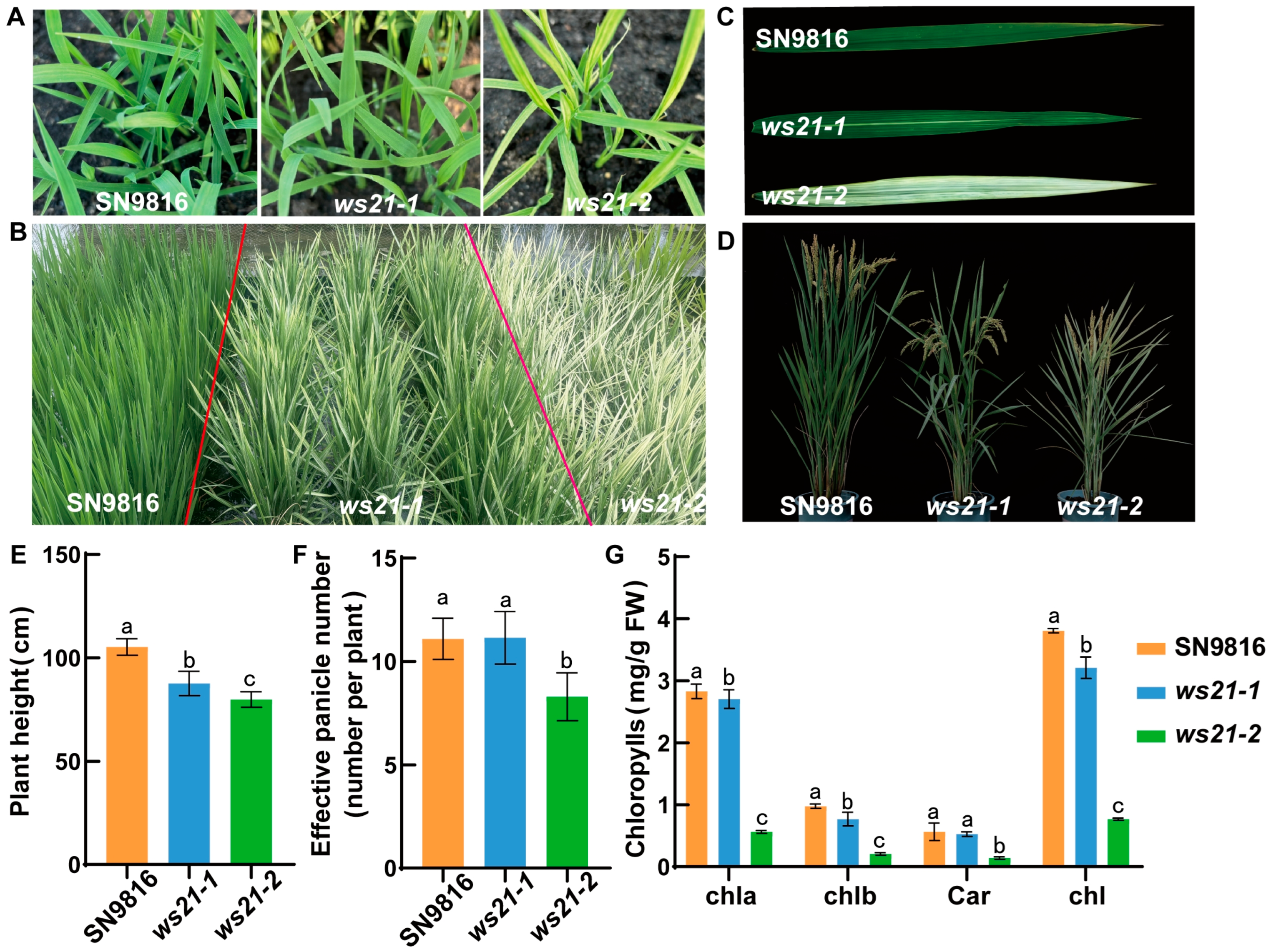
Under paddy field conditions, ws21-1 and ws21-2 plants exhibit normal green leaves similar to the wild-type before the L2 stage. After L2, ws21-2 begins to display a white-striped leaf phenotype that persists throughout the entire growth period, whereas ws21-1 shows a similar phenotype starting from the L4 stage. From the tillering to the maturity stage, the white striping in ws21-2 leaves is more pronounced than in ws21-1 (Figure 1A–D).
Compared with the wild-type SN9816, plant height was markedly lower in both ws21-1 and ws21-2, with ws21-2 displaying a stronger reduction (Figure 1E). The number of effective panicles in ws21-1 showed no significant difference from the wild-type, whereas ws21-2 exhibited a significant decrease (Figure 1F).
The contents of Chl a, Chl b, and total chlorophyll in ws21-1 were significantly reduced at the tillering stage, with ws21-2 showing an even more severe decrease. In addition, the carotenoid (Car) content was also significantly reduced, consistent with the observed phenotypic severity (Figure 1G). The stronger pigment deficiency in ws21-2 corresponds well with its more intense striping phenotype, indicating that pigment loss is a major physiological basis for the visible abnormalities. The severe impairment in pigment synthesis is the direct physiological cause underlying the more pronounced albino phenotype and the more severely compromised agronomic traits in the ws21-2 mutant.

3.2. Comparison of Chlorophyll Fluorescence Parameters

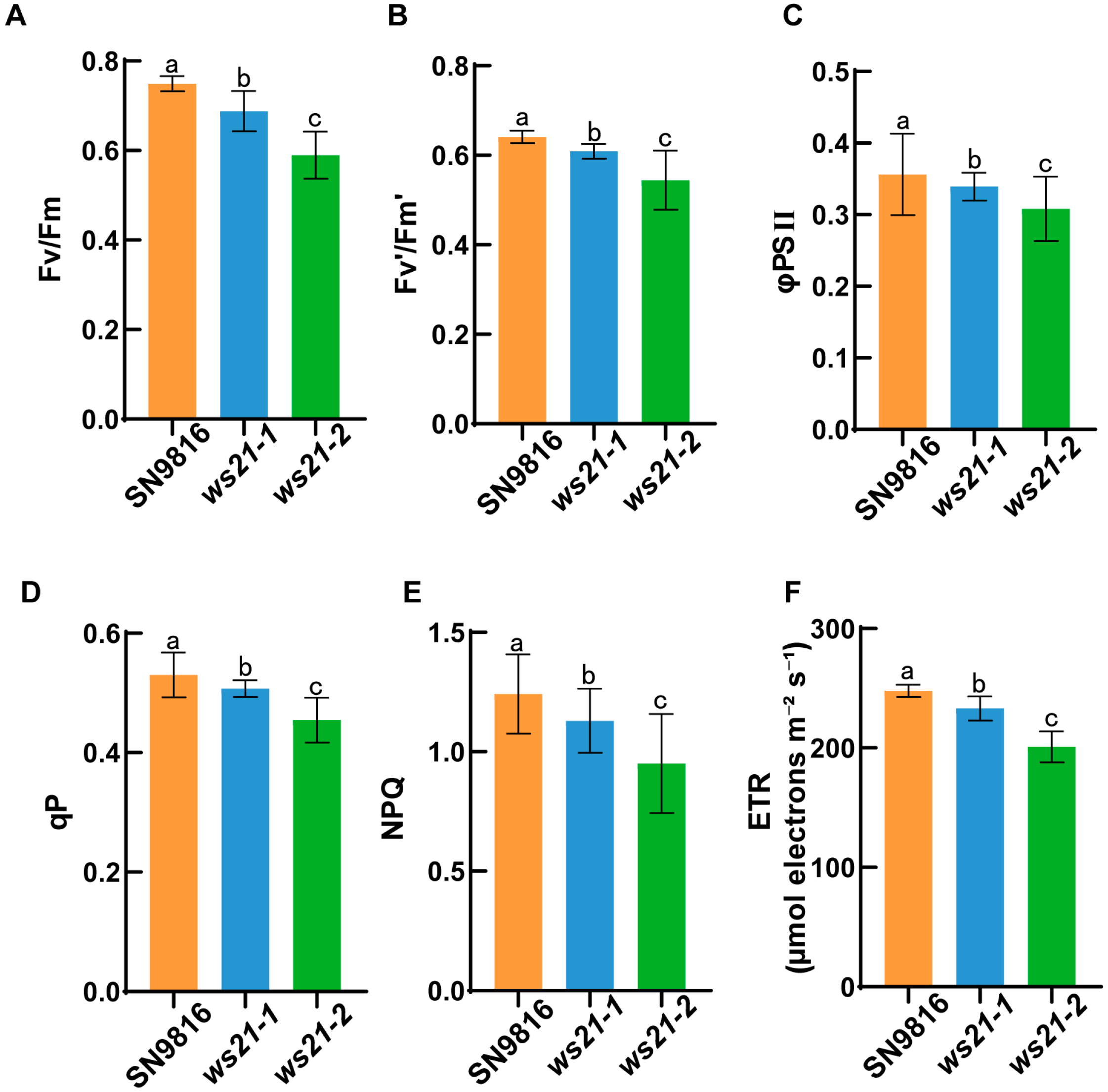
The figure presents chlorophyll fluorescence parameters of SN9816, ws21-1, and ws21-2 to evaluate PSII performance under both dark- and light-adapted conditions (Figure 2). The maximum quantum efficiency of PSII (Fv/Fm) was significantly reduced in ws21-1, while ws21-2 showed an even more pronounced decrease compared to SN9816 (Figure 2A). Similarly, under actinic light, the light-adapted maximum efficiency (Fv′/Fm′) was significantly lower in both mutants than in the wild type, with ws21-2 showing a greater reduction than ws21-1 (Figure 2B).
The effective quantum yield of PSII (ΦPSII) was decreased in both mutants, with ws21-2 exhibiting a more substantial reduction than ws21-1 (Figure 2C). Both the photochemical quenching coefficient (qP) and the electron transport rate (ETR) were significantly lower in the mutants, with ws21-2 showing a more pronounced decline, especially in ETR (Figure 2D,F). Additionally, non-photochemical quenching (NPQ) was significantly suppressed in both mutants, indicating impaired thermal dissipation capacity, with ws21-2 showing a greater reduction than ws21-1 (Figure 2E).
Overall, these results suggest that PSII photochemistry is significantly impaired in both ws21-1 and ws21-2, with ws21-2 showing more severe damage. The coordinated decreases in ΦPSII, qP, ETR, and NPQ indicate that ws21-2 has more substantial impairment in electron transport and photoprotective energy dissipation, making it more susceptible to photoinhibition and photooxidative damage. Photosystem II function is more severely impaired in ws21-2 than in ws21-1, resulting in significantly reduced photochemical efficiency and diminished photoprotective capacity.

3.3. Comparison of Photosynthetic Physiological Parameters

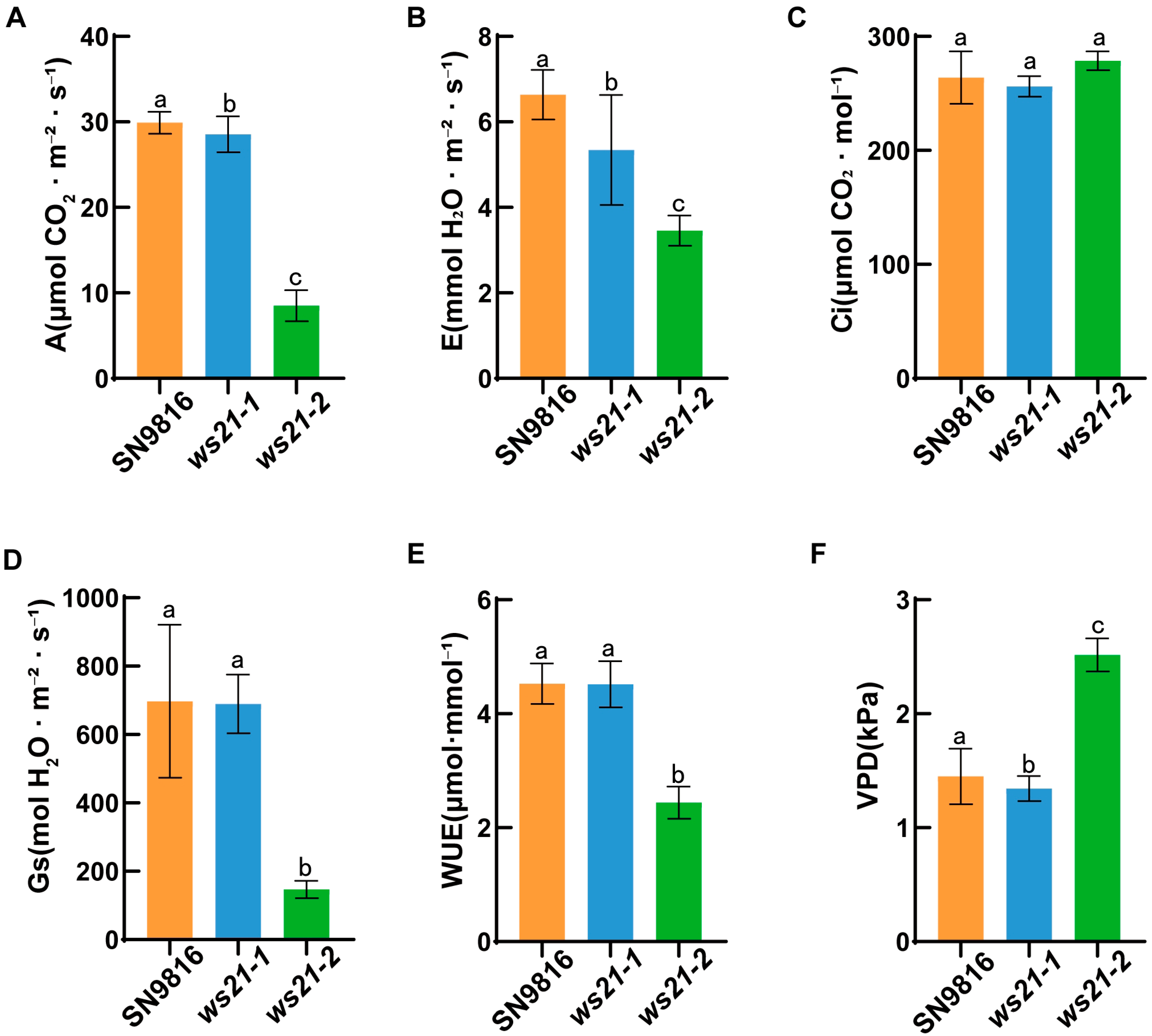
Measurement and comparison of photosynthetic parameters in SN9816, ws21-1, and ws21-2 photosynthetic parameters of SN9816, ws21-1, and ws21-2 were measured and compared. The net photosynthetic rate and transpiration rate of ws21-1 were significantly lower than those of the wild type, with ws21-2 showing an even more pronounced reduction (Figure 3A,B). No significant difference was observed in intercellular CO2 concentration among the three genotypes (Figure 3C). Stomatal conductance and water use efficiency in ws21-1 showed no significant difference compared with the wild type, whereas both parameters were significantly decreased in ws21-2 (Figure 3D,E). In contrast, the vapor pressure deficit was comparable between ws21-1 and the wild type but was significantly higher in ws21-2 (Figure 3F). Compared with ws21-1 and the wild type, ws21-2 exhibits more severe photosynthetic dysfunction.

3.4. Determination of Indicators Related to Reactive Oxygen Species

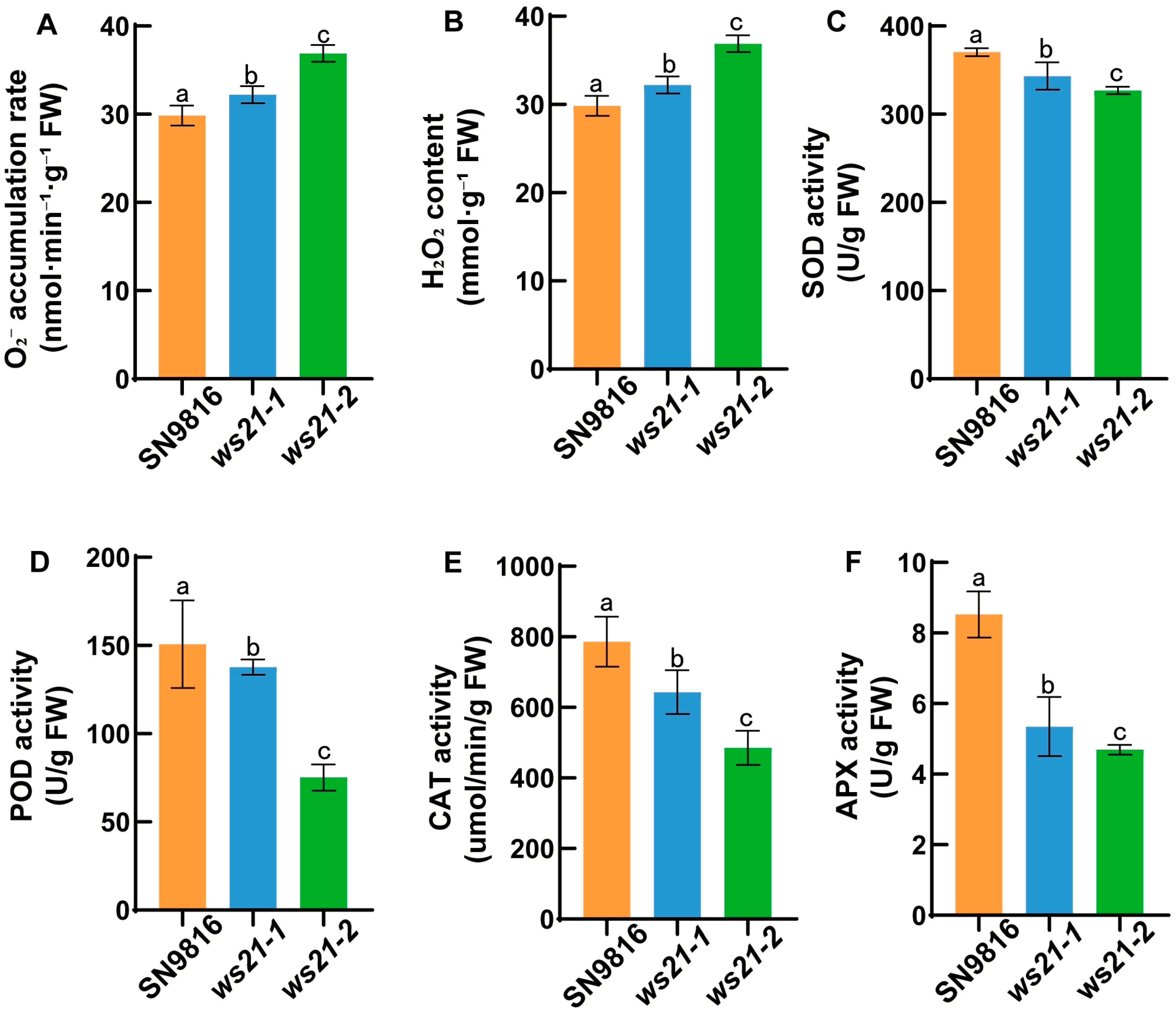
The leaves of ws21-1 and ws21-2 exhibited higher superoxide anion (O2) generation rates and hydrogen peroxide (H2O2) contents compared with the wild type (WT) (Figure 4A,B). However, the activities of antioxidant enzymes, including superoxide dismutase (SOD), catalase (CAT), peroxidase (POD), and ascorbate peroxidase (APX), were markedly lower in both mutants (Figure 4C–F). This indicates that enhanced oxidative stress, coupled with a weakened antioxidant system, leads to the accumulation of oxidative damage in the leaves of both mutants.

3.5. Determination of Relative Expression Level

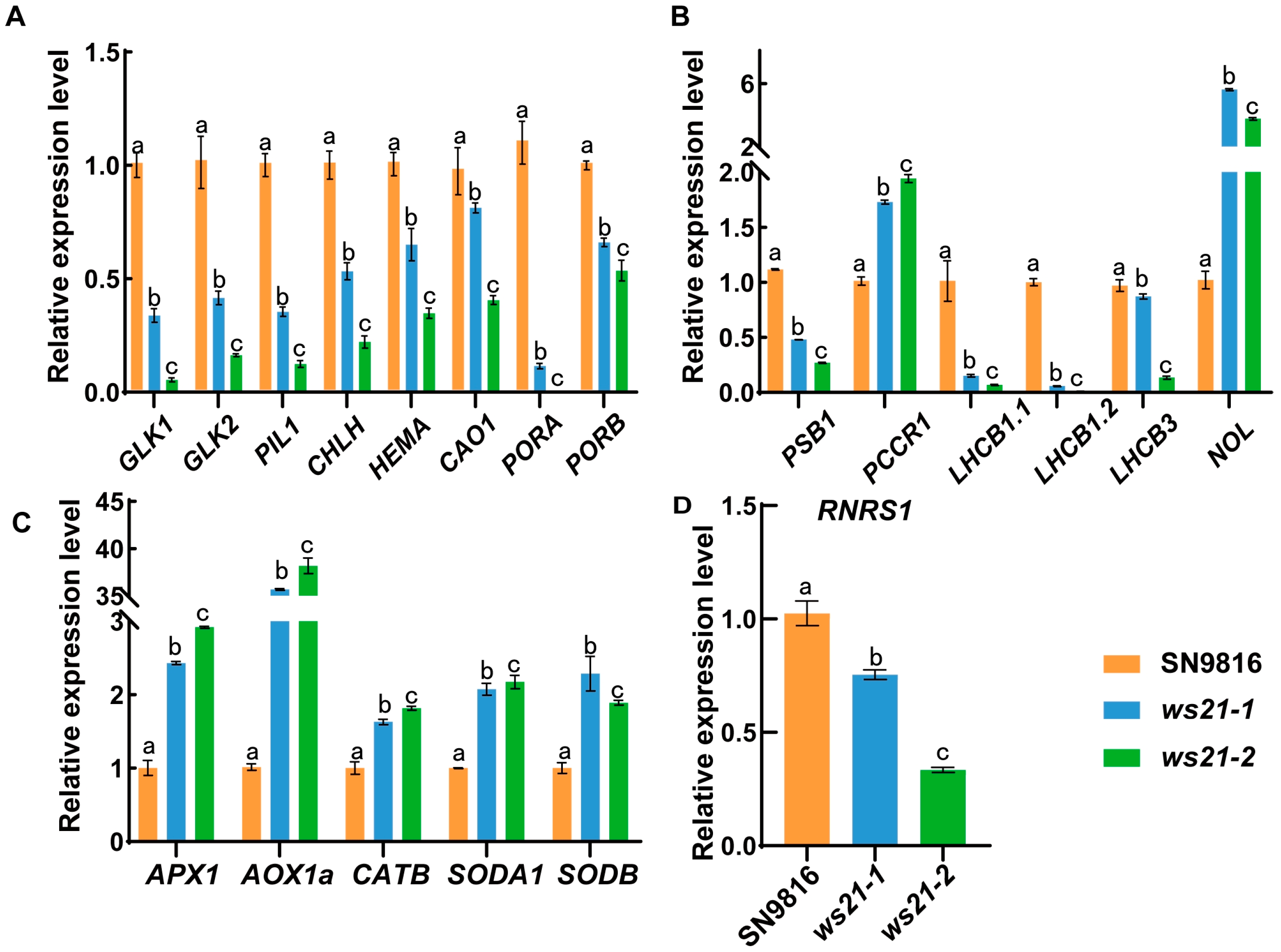
To further elucidate the molecular mechanisms underlying the ws21-1 and ws21-2 mutations, we performed qRT-PCR analysis of genes involved in chlorophyll metabolism, photosynthesis, and reactive oxygen species (ROS)-related pathways. Compared with the wild type (WT), the transcript levels of chlorophyll biosynthesis and degradation-associated genes, including GLK1, GLK2, PIL1, CHLH, HEMA, CAO1, PORA, and PORB, were significantly downregulated in leaves of both mutants (Figure 5A). Likewise, several photosynthesis-related genes, such as PSBS1, LHCB1.1, LHCB1.2, and LHCB3, were markedly reduced in the mutant leaves. In contrast, PCCR1 and NOL were significantly upregulated, likely reflecting a compensatory transcriptional response to the decline in photosynthetic capacity (Figure 5B). ROS-scavenging genes, including APX1, AOX1a, CATB, SODA1, and SODB, were strongly induced in both mutants (Figure 5C). Collectively, these transcriptional alterations are consistent with the reduced chlorophyll content and excessive ROS accumulation observed in ws21-1 and ws21-2, indicating that disruption of chloroplast-associated metabolic and redox pathways contributes to their mutant phenotypes. In summary, these results demonstrate that the ws21-1 and ws21-2 mutations disrupt chloroplast metabolism, photosynthesis, and redox homeostasis pathways, ultimately leading to the white-striped leaf phenotype.
We quantified the expression of OsRNRS1 relative to wild-type SN9816. Both ws21-1 and ws21-2 showed a significant reduction in RNRS1 transcript levels, with ws21-2 exhibiting a more pronounced decrease, consistent with the observed phenotypes (Figure 5D). Reduced expression of OsRNRS1 likely constitutes the key molecular basis for the suite of physiological and transcriptomic phenotypes observed in the ws21 mutants.

3.6. Map-Based Cloning and Protein Structure of WS21-1 and WS21-2

The harvested hybrid seeds were planted, and all F1 plants exhibited normal leaf color, preliminarily indicating that the white-striped leaf trait is controlled by a recessive gene. To confirm this, we examined the F2 population, where phenotypic segregation was observed. A χ2 test confirmed a 3:1 segregation ratio, demonstrating that the mutants ws21-1 and ws21-2 are each controlled by a single pair of recessive nuclear genes (Table S2).
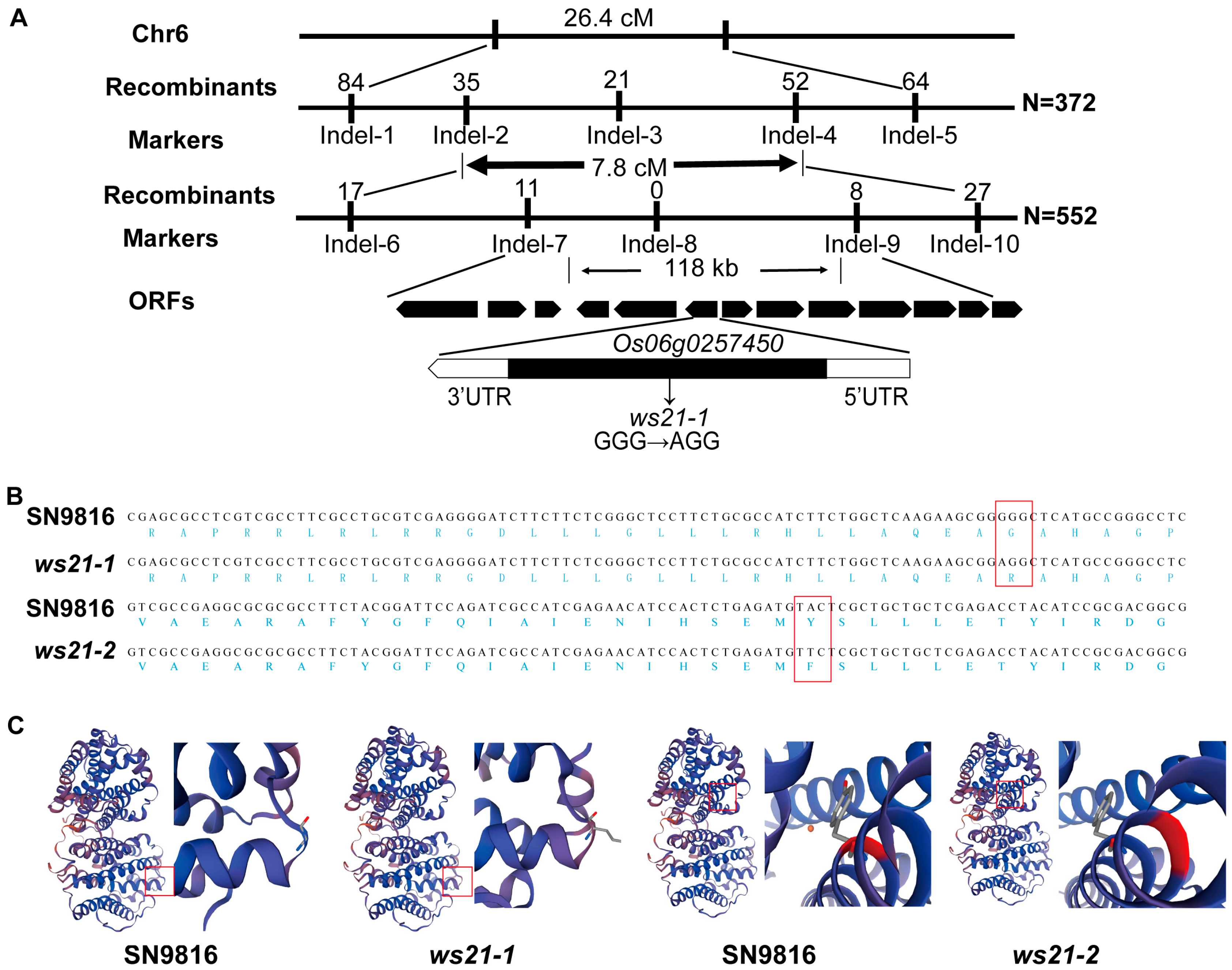
Initially, we performed polymorphism screening between the ws21-1 and wild-type parental lines using known molecular markers and constructed a preliminary genetic linkage map. The target region was initially mapped to an interval of approximately 26.4 cM between markers Indel-1 and Indel-5. To further narrow down the candidate interval, we developed new molecular markers within this region and screened recombinant individuals by expanding the population size. Ultimately, the target interval was finely mapped to a genomic region of about 118 kb between Indel-7 and Indel-9 (Figure 6A). Using the same markers and methodology, ws21-2 was also fine-mapped to the same interval (Figure S1). The region comprises thirteen open reading frames (ORFs) as annotated by the Rice Annotation Project (Table S3). Based on functional annotation, we focused on three genes—Os06g0257450, Os06g0258200, and Os06g0258500—which are potentially associated with chloroplast function and photosynthesis, and performed sequencing and comparative analysis of their DNA sequences.
Sequencing results of Os06g0257450 in ws21-1 and ws21-2. In ws21-1, a single nucleotide variation (SNV) from GGG to AGG was identified at nucleotide position 583 of Os06g0257450, resulting in an amino acid substitution from Gly (G) to Arg (R) at residue 195. In ws21-2, a TAC-to-TTC substitution was detected at position 365, leading to an amino acid change from Tyr (Y) to Phe (F) (Figure 6B).
The predicted three-dimensional structures of the proteins are shown in the figure. The amino acid substitutions caused by these SNVs also led to structural differences in the mutant proteins (Figure 6C). These results suggest that Os06g0257450 (RNRS1) is likely responsible for the white-striped leaf phenotype observed in ws21-1 and ws21-2 mutants. Collectively, mutations in Os06g0257450 are the genetic cause of the white-striped leaf phenotype in both ws21-1 and ws21-2.

3.7. Equivalence Testing of WS21-1 and WS21-2

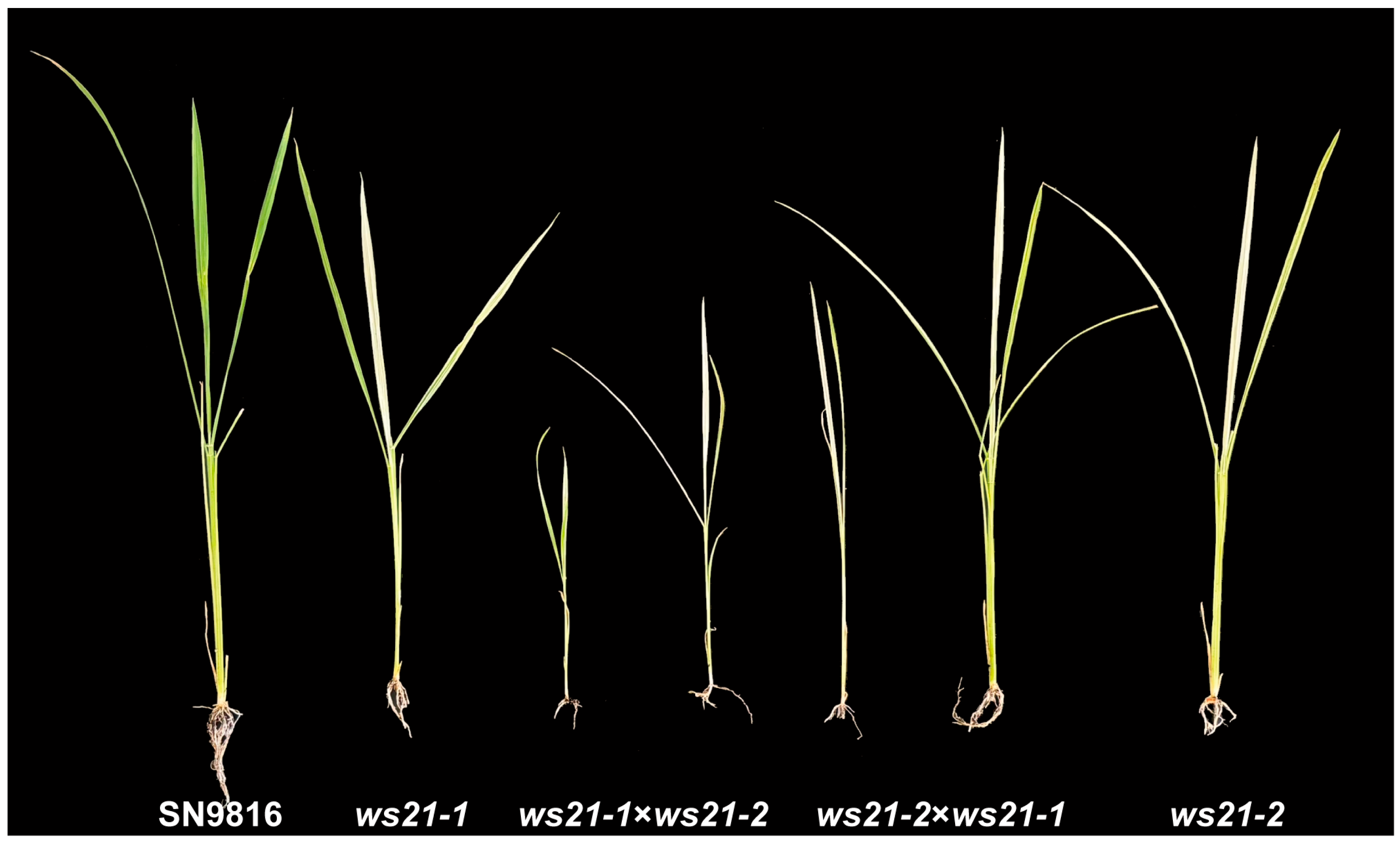
To determine the allelic relationship between ws21-1 and ws21-2, reciprocal crosses were performed using ws21-1 and ws21-2 as parental lines. All F1 progeny exhibited a white-striped leaf phenotype similar to that of the ws21-1 and ws21-2 mutants, indicating that WS21-1 and WS21-2 are allelic genes (Figure 7). The results confirm that WS21-1 and WS21-2 are allelic.

3.8. Measurement and Analysis of dNTP Levels

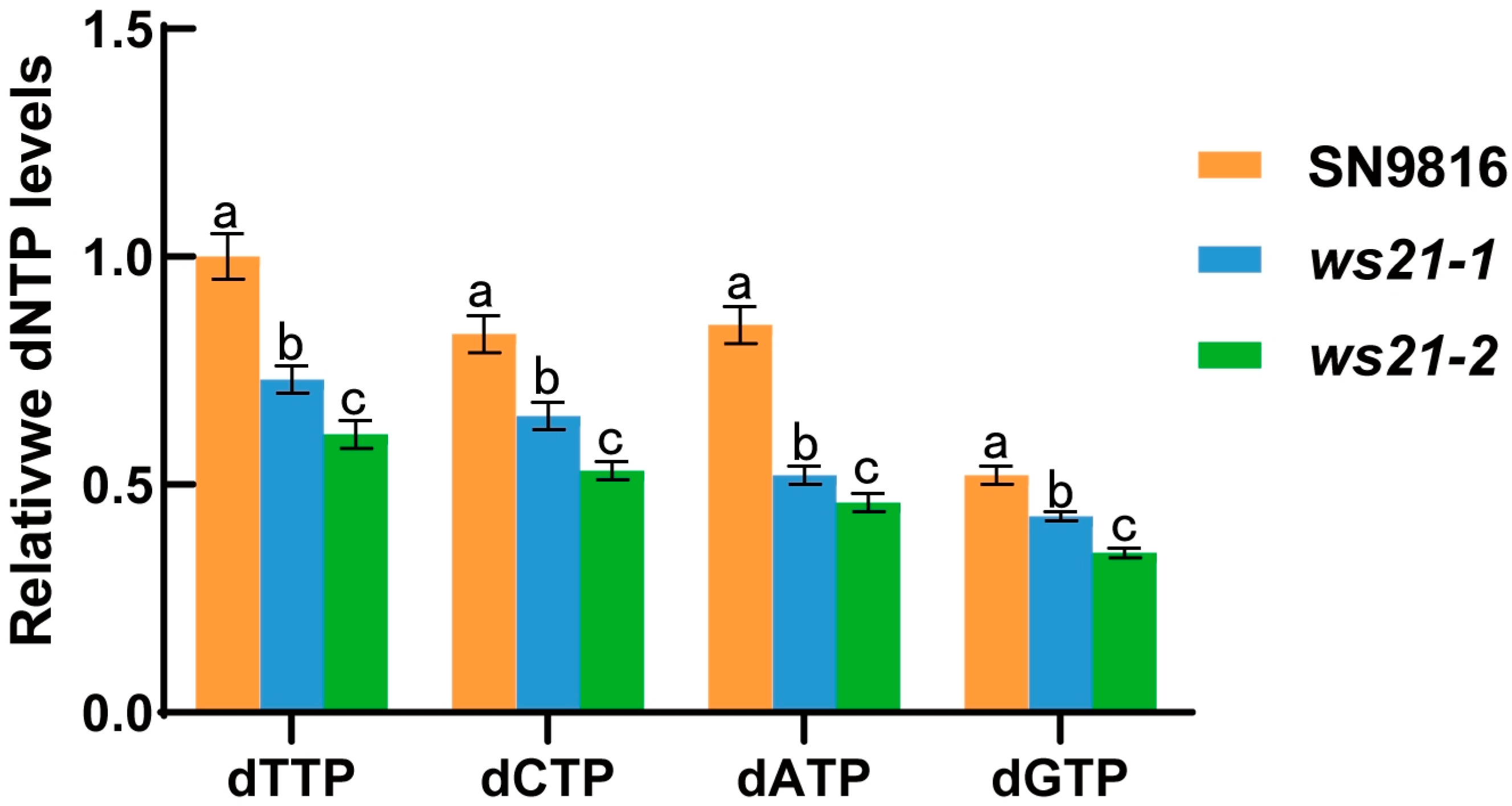
A sufficient supply of deoxyribonucleoside triphosphates (dNTPs) is essential for proper chloroplast development. To assess the impact of dNTP metabolism on this process, the dNTP contents were quantified in the wild-type SN9816 and in the mutants ws21-1 and ws21-2. Compared with SN9816, the levels of dTTP, dCTP, dATP, and dGTP were significantly reduced in ws21-1, and this reduction was even more pronounced in ws21-2 (Figure 8). These changes in dNTP abundance were consistent with the phenotypic differences observed between the wild type and the mutants. These findings indicate that reduced dNTP levels are a critical factor leading to defective chloroplast development in the mutants.

3.9. The OsRNRS1 Protein Is Localized in Nucleus and Cytoplasm

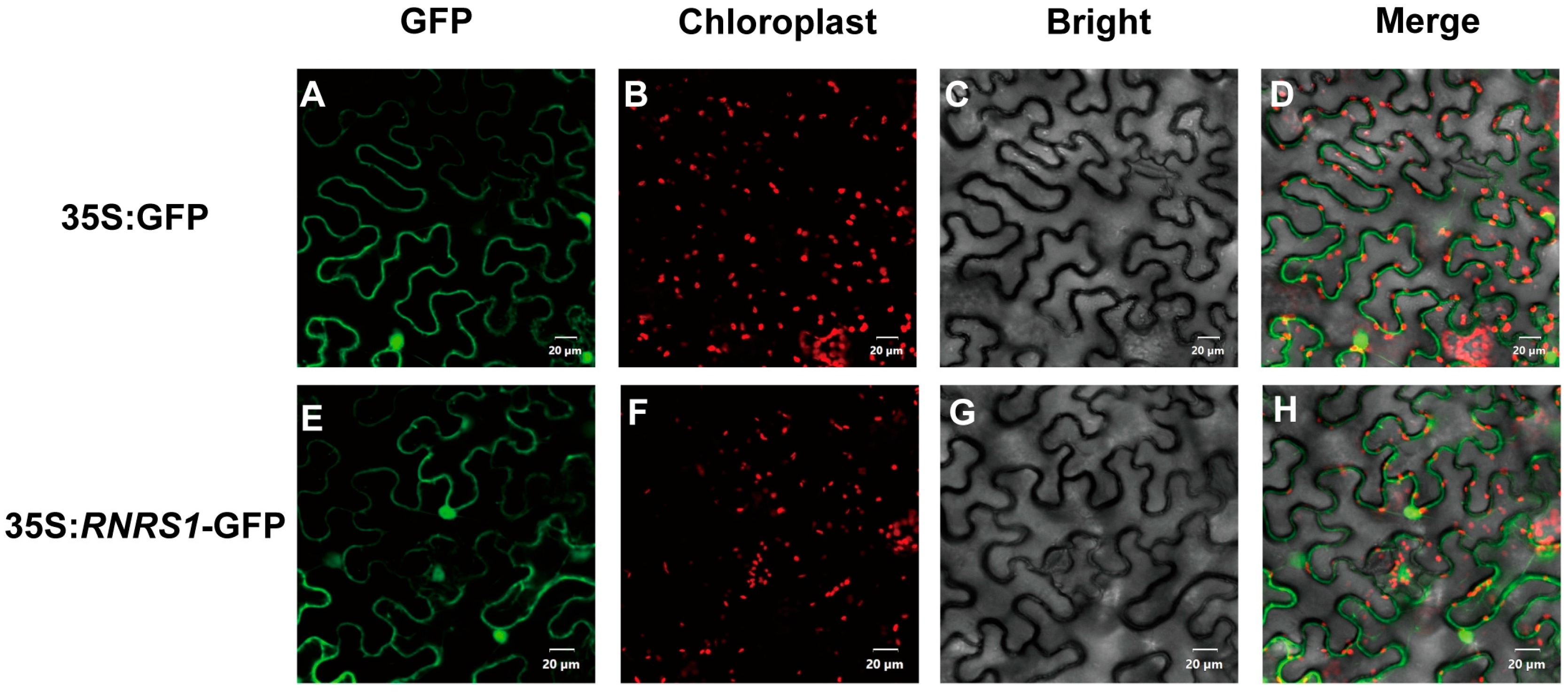
To determine the subcellular localization of the RNRS1 protein, RNRS1-GFP fusion constructs and a GFP control vector were transiently expressed in tobacco (Nicotiana benthamiana) leaves. In cells expressing GFP alone, green fluorescence was observed throughout the cell except in the vacuole. In contrast, green fluorescence corresponding to the RNRS1-GFP fusion protein was detected in both the nucleus and cytoplasm, while red autofluorescence from chloroplasts was also visible (Figure 9). The above results demonstrate that the RNRS1 protein localizes to both the nucleus and the cytoplasm.

4. Discussion

The findings of this study reveal that OsRNRS1 is essential for chloroplast development, photosynthetic efficiency, and oxidative balance in rice. The ws21-1 and ws21-2 mutants, featuring distinct mutations (G583R and Y365F) in OsRNRS1, displayed white-striped leaves, reduced chlorophyll content, and impaired photosynthetic performance. Both mutations reside in a conserved domain; they do not significantly alter the enzyme’s overall conformation but can lead to reduced activity through different mechanisms, resulting in phenotypic differences. The Y365F mutation, a conservative Tyr→Phe substitution, loses the crucial phenolic hydroxyl group, disrupting hydrogen bonds at the active site and partially diminishing catalytic efficiency, while retaining some activity [28]. Conversely, the G583R mutation entails a significant chemical shift (Gly→Arg), where glycine’s flexibility is replaced by a bulky, positively charged arginine side chain, causing substantial steric hindrance and electrostatic interference that obstruct substrate binding and product release, resulting in a near-total loss of enzyme function [29].
Photosynthetic efficiency parameters (Fv/Fm, ΦPSII, Fv’/Fm’ and qP) and electron transport rate (ETR), along with diminished non-photochemical quenching (NPQ). These results indicate co-occurring defects in light harvesting, energy conversion, and photoprotection. The decreased NPQ, combined with lower photochemical efficiency, creates a harmful cycle: inefficient photochemistry raises excess excitation energy, while weakened thermal dissipation fails to remove it, promoting photooxidative damage. This cycle likely drives the severe decline in the mutants’ photosynthetic capacity [30]. Gas exchange data confirmed a marked drop in net photosynthetic rate (Pn) in the mutants, while intercellular CO2 (Ci) was unchanged. This points to non-stomatal limitations—specifically, damage within the photosynthetic apparatus [31]. The more severe reductions in stomatal conductance (Gs) and water use efficiency (WUE) in ws21-2 indicate greater physiological disruption than in ws21-1.
The observed phenotype—coordinated declines in PSII function and NPQ—matches reports on other chloroplast-defective rice mutants, where such defects often arise from thylakoid structural abnormalities [32,33,34]. The consistently stronger impairment in ws21-2 suggests its mutation disrupts a more central or upstream factor in chloroplast development or photosynthetic regulation. In summary, the photosynthetic vulnerability of these mutants, particularly ws21-2, stems from dual failures in photochemistry and photoprotection, making them prone to photoinhibition and photooxidative stress and leading to a major loss in photosynthetic output.
Increased accumulation of superoxide anion (O2) and hydrogen peroxide (H2O2), together with decreased SOD, CAT, POD, and APX activities, reflects impaired ROS scavenging ability in ws21-1 and ws21-2. The upregulation of ROS-responsive genes, including APX1, CATB, and SODA1, may represent a compensatory response to oxidative stress. Such ROS imbalance has been reported as a hallmark of defective chloroplast development in rice and Arabidopsis [35,36,37]. Persistent ROS accumulation likely accelerates chlorophyll degradation and damages photosynthetic membranes, resulting in the characteristic white-striped leaf phenotype. Furthermore, genes including GLK1 were found to be downregulated in both ws21-1 and ws21-2 mutants, indicating that OsRNRS1 likely regulates chlorophyll biosynthesis and degradation in rice. These findings, along with the gene expression patterns shown in Figure 5, suggest that in the ws21-1 and ws21-2 backgrounds, the expression levels of photosynthesis-related genes PCCR1 and NOL are elevated compared to SN9816, whereas the expression of PSB1, LHCB1.1, LHCB1.2, and LHCB3 is reduced. This expression pattern suggests the presence of additional downstream genes regulated by OsRNRS1 that influence photosynthesis, as well as potential interactions among these genes. The mutations in ws21-1 and ws21-2 may directly or indirectly affect the assembly, function, or stability of photosystem II.
Importantly, both mutants displayed a significant decrease in the contents of all four dNTP species (dATP, dTTP, dCTP, and dGTP), suggesting that OsRNRS1 participates in deoxyribonucleotide metabolism. Adequate dNTP supply is essential for chloroplast DNA replication and repair, and its disruption leads to plastid genome instability, impaired gene expression, and abnormal organelle biogenesis [38,39,40]. The dual localization of OsRNRS1 in both the nucleus and cytoplasm indicates that it may coordinate nucleotide homeostasis between cellular compartments, a mechanism also reported for other ribonucleotide reductases in higher plants [41,42,43].
The promoter region of OsRNRS1 (2000 bp upstream) contains multiple light-responsive cis-regulatory elements, such as G-box and GATA-motif, which are frequently found in transcriptional regulatory regions of photosynthesis-related genes and participate in light-regulated gene expression [44,45]. In the light signaling network, the G-box serves as a key binding site for bZIP transcription factors (e.g., HY5), playing a central role in regulating genes involved in chlorophyll biosynthesis and photosynthesis [46]. GATA-family transcription factors have also been reported to contribute to light-responsive and metabolic regulation [47]. The co-occurrence of ABRE-type elements with G-box and GATA motifs suggests potential crosstalk between abiotic-stress signaling and photosynthetic regulation [48]. These findings provide a valuable direction for our subsequent studies (Figure S2 and Table S4).
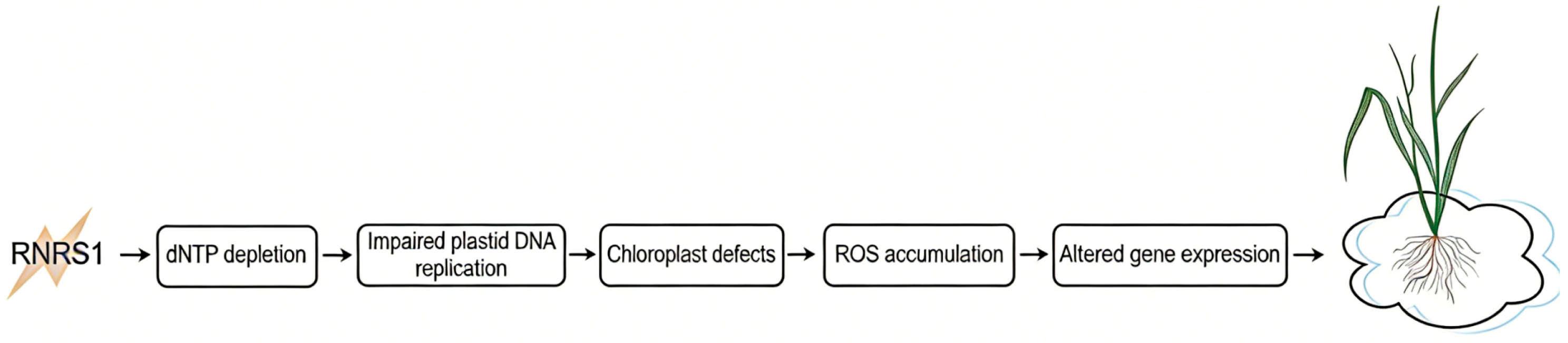
Taken together, the functional defects observed in WS21-1 and WS21-2 mutants highlight a close connection between nucleotide metabolism, chloroplast development, and redox regulation. OsRNRS1 may play a vital role in ensuring an adequate supply of dNTPs, which is essential for chloroplast DNA replication and the proper assembly of the photosynthetic machinery. Disruption of its function leads to nucleotide depletion, accumulation of reactive oxygen species, and impaired chloroplast biogenesis, ultimately affecting the expression of related genes and hindering overall plant growth and productivity (Figure 10). In the future, by integrating gene editing technologies with molecular marker-assisted selection, we can expedite the development of new rice varieties that exhibit both excellent stress resistance and high photosynthetic efficiency.

5. Conclusions

This study identifies OsRNRS1 as a crucial gene for chloroplast biogenesis and photosynthetic efficiency in rice. Mutations in OsRNRS1 disrupt deoxyribonucleotide metabolism, leading to impaired dNTP synthesis, defective chloroplast development, and compromised photosystem II function. The resulting accumulation of reactive oxygen species further accelerates chlorophyll degradation and oxidative damage. Our findings establish a mechanistic link between nucleotide metabolism and chloroplast function, demonstrating that maintaining dNTP homeostasis is fundamental for sustaining photosynthetic capacity and redox stability in higher plants. This study also reveals the first connection between OsRNRS1 mutations and the mottled leaf phenotype in rice, highlighting the allelic diversity in their effects on photosynthesis and ROS homeostasis. Consequently, future research should focus on identifying the interaction partners of OsRNRS1 and elucidating their roles in photosynthesis and ROS regulation.

Supplementary Materials

The following supporting information can be downloaded at https://www.mdpi.com/article/10.3390/agronomy16020206/s1, Table S1:Primers used in this study, Table S2: Genetic analysis of ws21-1 and ws21-2 mutant, Table S3: There are 13 candidate genes within the mapped interval, Table S4: The functional of OsRNRS1 promoter’s elements, Figure S1: Gene mapping of ws21-2, Figure S2: Promoter analysis of OsRNRS1.

Author Contributions

S.F., J.W. and M.F. designed the study. M.F. and Z.L. performed the experiments. S.F. and M.F. drafted the work. S.F., M.F., J.W. and Z.L. wrote and revised the manuscript. All authors contributed to project discussion and manuscript preparation. All authors have read and agreed to the published version of the manuscript.

Funding

This research was funded by Liaoning Provincial Science and Technology Program Joint Fund (grant number: 2023-MSLH-284) and Natural Science Foundation of Shenyang (grant number: 23-503-6-20).

Data Availability Statement

The original contributions presented in this study are included in the article/Supplementary Material. Further inquiries can be directed to the corresponding author.

Conflicts of Interest

The authors declare that there are no conflicts of interest.

References

  1. Zhang, H.; Li, J.; Yoo, J.H.; Yoo, S.C.; Cho, S.H.; Koh, H.J.; Seo, H.S.; Paek, N.C. Rice chlorina-1 and chlorina-9 encode chlD and chlI subunits of Mg-chelatase, a key enzyme for chlorophyll synthesis and chloroplast development. Plant Mol. Biol. 2006, 62, 325–337. [Google Scholar] [CrossRef]
  2. Pogson, B.J.; Albrecht, V. Genetic dissection of chloroplast biogenesis and development: An overview. Plant Physiol. 2011, 155, 1545–1551. [Google Scholar] [CrossRef]
  3. Barrero-Gil, J.; Bouza-Morcillo, L.; Espinosa-Cores, L.; Piñeiro, M.; Jarillo, J.A. H4 acetylation by the NuA4 complex is required for plastid transcription and chloroplast biogenesis. Nat. Plants 2022, 8, 1052–1063. [Google Scholar] [CrossRef]
  4. Liebers, M.; Cozzi, C.; Uecker, F.; Chambon, L.; Blanvillain, R.; Pfannschmidt, T. Biogenic signals from plastids and their role in chloroplast development. J. Exp. Bot. 2022, 73, 7105–7125. [Google Scholar] [CrossRef]
  5. Sun, Y.; Bakhtiari, S.; Valente-Paterno, M.; Wu, Y.; Nishimura, Y.; Shen, W.; Law, C.; Dhaliwal, J.; Dai, D.; Bui, K.H.; et al. Chloroplast biogenesis involves spatial coordination of nuclear and organellar gene expression in Chlamydomonas. Plant Physiol. 2024, 196, 112–123. [Google Scholar] [CrossRef] [PubMed]
  6. Liu, L.; Lin, N.; Liu, X.; Yang, S.; Wang, W.; Wan, X. From chloroplast biogenesis to chlorophyll accumulation: The interplay of light and hormones on gene expression in Camellia sinensis cv. Shuchazao leaves. Front. Plant Sci. 2020, 11, 256. [Google Scholar] [CrossRef]
  7. Hernández-Verdeja, T.; Vuorijoki, L.; Strand, Å. Emerging from the darkness: Interplay between light and plastid signaling during chloroplast biogenesis. Physiol. Plant. 2020, 169, 397–406. [Google Scholar] [CrossRef] [PubMed]
  8. Wang, Y.; Wang, Y.; Zhu, X.; Ren, Y.; Dong, H.; Duan, E.; Teng, X.; Zhao, H.; Chen, R.; Chen, X.; et al. Tetrapyrrole biosynthesis pathway regulates plastid-to-nucleus signaling by controlling plastid gene expression in plants. Plant Commun. 2023, 4, 100411. [Google Scholar] [CrossRef]
  9. Anwar, S.; Brenya, E.; Alagoz, Y.; Cazzonelli, C.I. Epigenetic control of carotenogenesis during plant development. Crit. Rev. Plant Sci. 2021, 40, 23–48. [Google Scholar] [CrossRef]
  10. Li, B.; Zhang, J.; Tian, P.; Gao, X.; Song, X.; Pan, X.; Wu, Y. Cytological, Physiological, and Transcriptomic Analyses of the Leaf Color Mutant Yellow Leaf 20 (yl20) in Eggplant (Solanum melongena L.). Plants 2024, 13, 855. [Google Scholar] [CrossRef]
  11. Du, H.; Wang, N.; Cui, F.; Li, X.; Xiao, J.; Xiong, L. Characterization of the β-Carotene Hydroxylase Gene DSM2 Conferring Drought and Oxidative Stress Resistance by Increasing Xanthophylls and Abscisic Acid Synthesis in Rice. Plant Physiol. 2010, 154, 1304–1318. [Google Scholar] [CrossRef]
  12. Li, J.; Chen, S.; Zhang, Y.; Zhao, W.; Yang, J.; Fan, Y. A novel PLS-DYW type PPR protein OsASL is essential for chloroplast development in rice. Plant Sci. 2024, 345, 112134. [Google Scholar] [CrossRef]
  13. Zhang, J. The Role of ROS in Chloroplast Retrograde Signaling: Mechanisms and Regulation. Innov. Sci. Technol. 2024, 3, 58–63. [Google Scholar] [CrossRef]
  14. Wu, H.; Dai, G.; Rao, Y.; Wu, K.; Wang, J.; Hu, P.; Wen, Y.; Wang, Y.; Zhu, L.; Chai, B.; et al. Disruption of LEAF LESION MIMIC 4 affects ABA synthesis and ROS accumulation in rice. Crop J. 2023, 11, 1341–1352. [Google Scholar] [CrossRef]
  15. Xia, Y.; Chen, T.; Qin, G.; Li, B.; Tian, S. Synergistic action of antioxidative systems contributes to the alleviation of senescence in kiwifruit. Postharvest Biol. Technol. 2016, 111, 15–24. [Google Scholar] [CrossRef]
  16. Gu, M.; Lu, Q.; Liu, Y.; Cui, M.; Si, Y.; Wu, H.; Chai, T.; Ling, H.-Q. Requirement and functional redundancy of two large ribonucleotide reductase subunit genes for cell cycle, chloroplast biogenesis and photosynthesis in tomato. Ann. Bot. 2022, 130, 173–187. [Google Scholar] [CrossRef]
  17. Pai, C.; Kearsey, S. A Critical Balance: dNTPs and the Maintenance of Genome Stability. Genes 2017, 8, 57. [Google Scholar] [CrossRef] [PubMed]
  18. Kendrick, R.; Chotewutmontri, P.; Belcher, S.; Barkan, A. Correlated retrograde and developmental regulons implicate multiple retrograde signals as coordinators of chloroplast development in maize. Plant Cell. 2022, 34, 4897–4919. [Google Scholar] [CrossRef]
  19. Schmidt, T.T.; Sharma, S.; Reyes, G.X.; Gries, K.; Gross, M.; Zhao, B.; Yuan, J.H.; Wade, R.; Chabes, A.; Hombauer, H. A genetic screen pinpoints ribonucleotide reductase residues that sustain dNTP homeostasis and specifies a highly mutagenic type of dNTP imbalance. Nucleic Acids Res. 2018, 47, 237–252. [Google Scholar] [CrossRef]
  20. Gläßer, C.; Haberer, G.; Finkemeier, I.; Pfannschmidt, T.; Kleine, T.; Leister, D.; Dietz, K.-J.; Häusler, R.E.; Grimm, B.; Mayer, K.F.X. Meta-Analysis of Retrograde Signaling in Arabidopsis thaliana Reveals a Core Module of Genes Embedded in Complex Cellular Signaling Networks. Mol. Plant. 2014, 7, 1167–1190. [Google Scholar] [CrossRef]
  21. Maxwell, K.; Johnson, G.N. Chlorophyll fluorescence—A practical guide. J. Exp. Bot. 2000, 51, 659–668. [Google Scholar] [CrossRef]
  22. Doyle, J.J.; Doyle, J.L. A rapid DNA isolation procedure for small quantities of fresh leaf tissue. Phytochem. Bull. 1987, 19, 11–15. [Google Scholar]
  23. Abbas, W.; Sun, Q.; Cui, Y.; Shalmani, A.; Xu, P.; Fan, Y.; Zhang, D.; Wu, M.; Li, X.; Li, Y. The quantitative trait locus GWY10 controls rice grain width and yield. Plant Physiol. 2024, 196, 2286–2290. [Google Scholar] [CrossRef]
  24. Pabuayon, I.M.; Yamamoto, N.; Trinidad, J.L.; Longkumer, T.; Raorane, M.L.; Kohli, A. Reference genes for accurate gene expression analyses across different tissues, developmental stages and genotypes in rice for drought tolerance. Rice 2016, 9, 32. [Google Scholar] [CrossRef]
  25. Lichtenthaler, H.K. Chlorophylls and carotenoids: Pigments of photosynthetic biomembranes. Methods Enzymol. 1987, 148, 350–382. [Google Scholar] [CrossRef]
  26. Roy, B.; Beuneu, C.; Roux, P.; Buc, H.; Lemaire, G. Simultaneous determination of pyrimidine or purine deoxyribonucleoside triphosphates using a polymerase assay. Anal. Biochem. 1999, 269, 403–409. [Google Scholar] [CrossRef]
  27. Wang, X.; Liu, X. Determination of intracellular dNTP levels by a DNA polymerase-based method. Nucleic Acids Res. 2006, 34, e21. [Google Scholar] [CrossRef]
  28. Zheng, Y.J.; Ornstein, R.L. Role of active site tyrosine in glutathione S-transferase: Insights from a theoretical study on model systems. J. Am. Chem. Soc. 1997, 119, 1523–1528. [Google Scholar] [CrossRef]
  29. Yan, B.X.; Sun, Y.Q. Glycine residues provide flexibility for enzyme active sites. J. Biol. Chem. 1997, 272, 3190–3194. [Google Scholar] [CrossRef] [PubMed]
  30. Beer, S.; Björk, M.; Beardall, J. Basic concepts and key parameters of chlorophyll fluorescence. In Research Methods of Environmental Physiology in Aquatic Sciences; Gao, K., Hutchins, D.A., Beardall, J., Eds.; Springer: Singapore, 2021; pp. 221–229. [Google Scholar] [CrossRef]
  31. Lang, Y.; Wang, M.; Xia, J.; Zhao, Q. Effects of soil drought stress on photosynthetic gas exchange traits and chlorophyll fluorescence in Forsythia suspensa. J. For. Res. 2017, 29, 45–53. [Google Scholar] [CrossRef]
  32. Dalal, V.K.; Tripathy, B.C. Water-stress induced downsizing of light-harvesting antenna complex protects developing rice seedlings from photo-oxidative damage. Sci. Rep. 2018, 8, 5955. [Google Scholar] [CrossRef]
  33. González, M.C.; Cejudo, F.J.; Sahrawy, M.; Serrato, A.J. Current knowledge on mechanisms preventing photosynthesis redox imbalance in plants. Antioxidants 2021, 10, 1789. [Google Scholar] [CrossRef] [PubMed]
  34. Li, M.; Mukhopadhyay, R.; Svoboda, V.; Oung, H.M.O.; Mullendore, D.L.; Kirchhoff, H. Measuring the dynamic response of the thylakoid architecture in plant leaves by electron microscopy. Plant Direct 2020, 4, e00280. [Google Scholar] [CrossRef]
  35. Shehzad, J.; Mustafa, G. Mechanism of reactive oxygen species regulation in plants. In Reactive Oxygen Species; Springer Nature: Singapore, 2023; pp. 17–41. [Google Scholar] [CrossRef]
  36. Zhao, Y.; Yu, H.; Zhou, J.-M.; Smith, S.M.; Li, J. Malate Circulation: Linking Chloroplast Metabolism to Mitochondrial ROS. Trends Plant Sci. 2020, 25, 446–454. [Google Scholar] [CrossRef]
  37. Zhang, X.; Han, Y.; Han, X.; Zhang, S.; Xiong, L.; Chen, T. Peptide chain release factor DIG8 regulates plant growth by affecting ROS-mediated sugar transportation in Arabidopsis thaliana. Front. Plant Sci. 2023, 14, 1172275. [Google Scholar] [CrossRef] [PubMed]
  38. Liu, C.; Feng, J.N.; Li, W.W.; Zhu, W.W.; Xue, Y.X.; Wang, D.; Zhao, X.L. Maintenance of dNTP pool homeostasis and genomic stability. Yi Chuan 2022, 44, 96–106. [Google Scholar] [CrossRef]
  39. Awoyomi, O.F.; Gorospe, C.M.; Das, B.; Mishra, P.; Sharma, S.; Diachenko, O.; Nilsson, A.K.; Tran, P.; Wanrooij, P.H.; Chabes, A. RRM2B deficiency causes dATP and dGTP depletion through enhanced degradation and slower synthesis. Proc. Natl. Acad. Sci. USA 2025, 122, e2503531122. [Google Scholar] [CrossRef]
  40. Wang, Z.H.; Li, J.; Liu, Q.; Qian, J.C.; Li, Q.Q.; Wang, Q.Y.; Zeng, L.T.; Li, S.J.; Gao, X.; Pan, J.X.; et al. A modified nucleoside O6-methyl-2′-deoxyguanosine-5′-triphosphate exhibits anti-glioblastoma activity in a caspase-independent manner. Pharmacol. Res. 2024, 199, 106990. [Google Scholar] [CrossRef]
  41. Ku, Y.S.; Cheng, S.S.; Cheung, M.Y.; Law, C.H.; Lam, H.M. The re-localization of proteins to or away from membranes as an effective strategy for regulating stress tolerance in plants. Membranes 2022, 12, 1261. [Google Scholar] [CrossRef] [PubMed]
  42. Wang, J.; Li, M.; Nan, N.; Ma, A.; Ao, M.; Yu, J.; Wang, X.; Han, K.; Yun, D.-J.; Liu, B.; et al. OsGADD45a1: A multifaceted regulator of rice architecture, grain yield, and blast resistance. Plant Cell Rep. 2024, 43, 94. [Google Scholar] [CrossRef]
  43. Lee, Y.D.; Wang, J.; Stubbe, J.; Elledge, S.J. Dif1 Is a DNA-Damage-Regulated Facilitator of Nuclear Import for Ribonucleotide Reductase. Mol. Cell. 2008, 32, 70–80. [Google Scholar] [CrossRef] [PubMed]
  44. Jiao, Y.; Lau, O.S.; Deng, X.W. Light-regulated transcriptional networks in higher plants. Nat. Rev. Genet. 2007, 8, 217–230. [Google Scholar] [CrossRef]
  45. Yuan, M.; Zhao, Y.Q.; Zhang, Z.W.; Chen, Y.E.; Ding, C.B.; Yuan, S. Light Regulates Transcription of Chlorophyll Biosynthetic Genes During Chloroplast Biogenesis. Crit. Rev. Plant. Sci. 2017, 36, 35–54. [Google Scholar] [CrossRef]
  46. Chattopadhyay, S.; Ang, L.H.; Puente, P.; Deng, X.W.; Wei, N. Arabidopsis bZIP Protein HY5 Directly Interacts with Light-Responsive Promoters in Mediating Light Control of Gene Expression. Plant Cell. 1998, 10, 673–683. [Google Scholar] [CrossRef]
  47. Gangappa, S.N.; Chattopadhyay, S. MYC2 differentially regulates GATA-box containing promoters during seedling development in Arabidopsis. Plant Signal. Behav. 2013, 8, e25679. [Google Scholar] [CrossRef] [PubMed]
  48. Chen, Y.; Shen, J.; Zhang, L.; Qi, H.; Yang, L.; Wang, H.; Wang, J.; Wang, Y.; Du, H.; Tao, Z.; et al. Nuclear translocation of OsMFT1 that is impeded by OsFTIP1 promotes drought tolerance in rice. Mol Plant. 2021, 14, 1297–1311. [Google Scholar] [CrossRef] [PubMed]
Figure 1. Comparison of characteristics among SN9816, ws21-1, and ws21-2. (A) Phenotypes of ws21-1, ws21-2, and wild-type (WT) plants at the seedling stage; (B) phenotypes at the tillering stage (the red line delineates the boundary between the two materials.); (C) flag leaf phenotypes at the heading stage; (D) overall plant phenotypes at the heading stage; (E) plant height at the maturity stage; (F) number of effective panicles; (G) chlorophyll content. Error bars indicate means ± SDs of 3 independent replicates. Different letters indicate significant differences based on Tukey’s multiple-comparison test.
Agronomy 16 00206 g001
Figure 2. Comparison of chlorophyll fluorescence parameters among SN9816, ws21-1, and ws21-2. (A) Maximum quantum efficiency of PSII photochemistry; (B) maximum efficiency of PSII photochemistry in the light-adapted state; (C) effective quantum yield of photosystem II photochemistry; (D) photochemical quenching coefficient; (E) non-photochemical quenching; (F) electron transport rate. Error bars indicate means ± SDs of 15 independent replicates. Different letters indicate significant differences based on Tukey’s multiple-comparison test.
Agronomy 16 00206 g002
Figure 3. Comparison of photosynthetic physiological parameters among SN9816, ws21-1, and ws21-2. (A) Net photosynthetic rate; (B) transpiration rate; (C) intercellular CO2 concentration; (D) stomatal conductance; (E) water use efficiency; (F) vapor pressure deficit. Error bars indicate means ± SDs of 15 independent replicates. Different letters indicate significant differences based on Tukey’s multiple-comparison test.
Agronomy 16 00206 g003
Figure 4. Analysis of ROS accumulation and antioxidant enzyme activities in SN9816, ws21-1, and ws21-2 plants. (A) Rate of O2 accumulation; (B) content of H2O2; (C) superoxide dismutase (SOD) activity; (D) catalase (CAT) activity; (E) peroxidase (POD) activity; (F) ascorbate peroxidase (APX) activity. Error bars indicate means ± SDs of 3 independent replicates. Different letters indicate significant differences based on Tukey’s multiple-comparison test.
Agronomy 16 00206 g004
Figure 5. Expression patterns of genes involved in chlorophyll biosynthesis, chlorophyll degradation, photosynthesis, ROS, and OsRNRS1 in SN9816, ws21-1, and ws21-2 plants. (A) Relative expression levels of genes involved in chlorophyll biosynthesis and degradation; (B) relative expression levels of photosynthesis-related genes; (C) relative expression levels of ROS-related genes; (D) relative expression levels of OsRNRS1. Error bars indicate means ± SDs of 3 independent replicates. Different letters indicate significant differences based on Tukey’s multiple-comparison test.
Agronomy 16 00206 g005
Figure 6. Map-based cloning and protein structure of WS21-1 and WS21-2. (A) Gene mapping of ws21-1; (B) sequence alignment; (C) three-dimensional (3D) protein structure. The red boxes highlight the mutation sites.
Agronomy 16 00206 g006
Figure 7. Leaf phenotypes of the wild type (SN9816), mutant lines (ws21-1 and ws21-2), and their F1 hybrid progeny.
Agronomy 16 00206 g007
Figure 8. Measurement of dNTP levels in SN9816, ws21-1, and ws21-2 plants. Error bars indicate means ± SDs of 3 independent replicates. Different letters indicate significant differences based on Tukey’s multiple-comparison test.
Agronomy 16 00206 g008
Figure 9. Subcellular localization of RNRS1 in rice. (A) Green fluorescence observed in cells expressing GFP alone; (B) autofluorescence of chlorophyll in GFP-expressing cells; (C) bright-field image of cells expressing GFP; (D) merged image showing the overlap of green and red fluorescence in GFP; (E) green fluorescence of the fusion protein RNRS1-GFP expressed from the empty vector; (F) autofluorescence of chlorophyll observed only in RNRS1-GFP; (G) bright-field image of cells expressing RNRS1-GFP; (H) merged image showing the overlap of green and red fluorescence in RNRS1-GFP.
Agronomy 16 00206 g009
Figure 10. Proposed model for RNRS1 regulate leaf variegation.
Agronomy 16 00206 g010
Disclaimer/Publisher’s Note: The statements, opinions and data contained in all publications are solely those of the individual author(s) and contributor(s) and not of MDPI and/or the editor(s). MDPI and/or the editor(s) disclaim responsibility for any injury to people or property resulting from any ideas, methods, instructions or products referred to in the content.