Next Article in Journal
Effects of Biochar–Fertilizer Combinations on Photosynthetic and Transpiration Functions of Paddy Rice Using Box–Cox Transformation
Previous Article in Journal
Advanced Preservation Strategies for Inoculants: A Lipid-Biophysical Approach to Bradyrhizobium japonicum Stability
error_outline You can access the new MDPI.com website here. Explore and share your feedback with us.
 
 
Article

Pseudomonas spp. Isolated from the Rhizosphere of Angelica sinsensis (Oliv.) Diels and the Complementarity of Their Plant Growth-Promoting Traits

1
School of Life Science and Engineering, Lanzhou University of Technology, Lanzhou 730050, China
2
Gansu Institute for Drug Control, Lanzhou 730070, China
3
Institute of Modern Physics, Chinese Academy of Sciences, Lanzhou 730000, China
*
Authors to whom correspondence should be addressed.
These authors contributed equally to this work.
Agronomy 2026, 16(2), 161; https://doi.org/10.3390/agronomy16020161
Submission received: 17 November 2025 / Revised: 31 December 2025 / Accepted: 6 January 2026 / Published: 8 January 2026

Abstract

Pseudomonas has been revealed as an important member of plant probiotics, with its rich species diversity implying complementary plant growth-promoting (PGP) traits. However, information on Pseudomonas species in the microecology of Angelica sinensis and medicinal plants in general remains to be further investigated. This study examined the microecological characteristics, PGP traits, and their underlying molecular mechanisms of Pseudomonas. Filling this gap will provide an important reference for microbial community design centered on dominant functional bacterial genera. In this study, we characterized the microecological traits, PGP properties, and their underlying molecular mechanisms of Pseudomonas strains. Microbiome analysis identified Pseudomonas as the dominant genus in the rhizosphere and a core endophytic genus, exerting significant influences on both (path coefficients = 0.971, 0.872). Comparative phenomics suggested potential functional complementarity among different strains. Our observations revealed significant differentiation in PGP traits: P. umsongensis X08 showed exceptional performance in IAA and siderophore production (IAA: 1.24 mg/mL, siderophore halo diameter: 2.04 cm); P. frederiksbergensis X06 exhibited advantages in ACC deaminase activity and potassium solubilization; and P. allii X32 demonstrated high organic phosphorus solubilization capability (3.98 mg/L). Finally, genomic data revealed that P. allii X32 possesses a rich repertoire of PGP-related genes and metabolic pathways, providing a basis for establishing molecular mechanistic hypotheses for these traits. In summary, Pseudomonas strains from different species, which exhibit complementary probiotic functions without antagonism in the A. sinensis microecosystem, provide valuable microbial resources for the ecological cultivation of A. sinensis.

1. Introduction

Medicinal plants, as vital components of traditional Chinese medicine, exhibit intricate linkages between their growth, quality, and the rhizosphere microecosystem, a relationship in which soil microorganisms play an indispensable role. Microbial communities not only drive the cycling and transformation of key nutrients such as carbon, nitrogen, and phosphorus in the rhizosphere but also actively contribute to shaping soil physicochemical properties and are instrumental in the formation of geo-herbalism [1,2]. Particularly in root-derived medicinal herbs, rhizospheric microorganisms participate in constructing a dynamic “medicinal plant-microorganisms” interactive ecosystem through multiple mechanisms, including growth promotion, biocontrol, induced systemic resistance, and facilitation of bioactive compound biosynthesis [3]. In turn, medicinal plants selectively enrich beneficial microorganisms via root exudates and specialized metabolites, thereby orchestrating a microecological structure that optimally supports host growth. This complex and tightly coupled bidirectional interaction positions medicinal plants not only as a repository of medicinal resources but also as a significant source for mining plant-beneficial microorganisms [4,5,6].
Angelica sinensis (Oliv.) Diels, a well-regarded root-derived medicinal plant, exhibits diverse medicinal properties, including nourishing blood, promoting circulation, regulating menstruation, alleviating pain, and moistening the intestines. Held in high regard in traditional formulations, it is often hailed as a “staple in nine out of ten prescriptions” [2,7]. Minxian County in Gansu Province, as the primary production base of A. sinsensis, harbors abundant plant growth-promoting (PGP) microbial resources in its soil, including diverse strains of Pseudomonas, Falsirhodobacter, and Bacillus [2,3,8]. These PGP microorganisms hold substantial application potential for enhancing plant stress resistance, improving soil structure, increasing the yield and quality of medicinal plants, and thereby promoting the ecological cultivation of medicinal plants and advancing agricultural sustainability [9].
Pseudomonas is widely acknowledged as a key taxon for rhizosphere growth promotion and biocontrol [10,11,12,13,14,15]. In recent years, the growth-promoting and biocontrol mechanisms of this bacterial genus have attracted considerable attention, with research primarily focusing on its diverse PGP traits [14,15,16]. It has been reported that Pseudomonas chlororaphis PCL 1606 can produce siderophores with biocontrol functions, such as achromobactin, pyochelin, and pyoverdine [17,18]. Additionally, the effector proteins secreted by this strain markedly enhance the host’s tolerance to both biotic and abiotic stresses. P. fluorescens exhibits strong antagonistic capabilities against pathogens through the synthesis of antibiotic compounds, lytic enzymes, lipopeptides, and siderophores, as well as the production of diverse volatile organic compounds [11,19,20,21]. Accordingly, Pseudomonas is widely recognized as a dominant taxon within the A. sinensis microecosystem and plays a pivotal role in driving microbial community succession [22,23]. The plant probiotic effects of single-strain bioinoculants containing Pseudomonas are frequently notable. Inoculation with P. fluorescens markedly increased the total fresh weight, total dry weight, and number of lateral roots of Houttuynia cordata seedlings by 174%, 172%, and 227%, respectively, relative to the control group, while also enhancing the content of volatile components [18]. In complex microbial bioinoculants, strains of Pseudomonas often act as core components. For instance, co-inoculation with strains of Pseudomonas and Bradyrhizobium more effectively enhanced soybean salt tolerance through reducing salt-induced ethylene production and improving nutrient uptake [24,25].
With the advancement of synthetic microbial community (SMC) technology, it has become feasible to rationally design microbial consortia based on functional complementarity [26,27]. Consequently, the refined design of complex microbial communities represents an inevitable trend in the field. Multi-species combinations at the genus level, owing to their high niche compatibility and strong functional complementarity, are more likely to form stable and efficient community structures. This approach facilitates the dominance of beneficial taxa within their ecological niches, thereby enhancing their microecological effects [28,29]. A study demonstrated that the combination of different strains from the same genus significantly promoted the growth of A. sinsensis, increased the content of its active compounds, and improved disease resistance [30]. In basic research, although strains within the same genus exhibit significant differences in ecological niches and metabolic phenotypes, their core genomic regions show high homology, and their accessory genetic elements often determine specific functional differentiation. The comparison of Pseudomonas sp. RO33, Pseudomonas poae RO37, Pseudomonas kairouanensis RO45, Peribacillus frigoritolerans 2RO30, and Pseudomonas sivasensis 2RO45 highlights the enriched ACC deaminase, IAA, and siderophore synthesis genes, as well as multiple secondary metabolic gene clusters in P. sivasensis 2RO45, providing the molecular basis for its multiple PGP abilities. Therefore, systematic studies on strains from different species within the same genus are of great significance for the construction of high-efficiency SMCs and the mining of high-quality genetic elements [31]. However, in A. sinensis, research on phenotype-genotype association analysis of PGP traits in Pseudomonas remains relatively scarce, limiting our understanding of its underlying molecular mechanisms [32,33,34]. On the other hand, the isolation and identification of novel and excellent strains can provide more options for the application of various PGP microbial agents, while continuously enriching the genomic diversity of this genus [35,36].
Studies have shown that Pseudomonas in the rhizosphere of Model Plant exhibit potential functional complementarity in terms of PGP traits, i.e., “functional partitioning and differences in functional intensity” [3,9,14,15]. Specifically, functional partitioning refers to the phenomenon where a certain function is only possessed by some strains but not others; differences in intensity refer to the scenario where a certain function is shared by multiple strains, but there are significant differences in their expression intensity, i.e., the existence of “strong performers” and “weak performers” for specific functions. However, these studies have largely focused on model plants or crop systems. Research on the functional complementarity of Pseudomonas, which plays a crucial role in the host’s growth, development, and stress tolerance, in the rhizosphere of medicinal plants, particularly A. sinensis, is relatively scarce. Furthermore, the patterns and variations in PGP traits among different Pseudomonas strains remain an important and unexplored research area [10,14,15].
Against this backdrop, this study focuses on the microecosystem of A. sinensis (Chinese angelica), and conducted three progressive research aspects: (1) For Pseudomonas, a typical PGP genus, investigate its microecological effects in the rhizospheric and endophytic niches of A. sinensis; (2) Targeted isolation of Pseudomonas strains to construct a large-scale strain library and reveal their species diversity; (3) Identify excellent PGP strains, conduct comparative phenomic studies among strains from different species targeting multiple PGP traits to indicate the potential complementarity of their PGP traits, and ultimately select strains with the optimal comprehensive PGP performance for genome sequencing and identifying of high-quality genetic elements. This study is the first to systematically reveal the species diversity of Pseudomonas in the rhizosphere of A. sinensis and evaluate their multiple PGP traits through physiological and biochemical indicators, suggesting functional complementarity, which may be beneficial for the host’s growth, development, and stress tolerance. The corresponding results are expected to provide strain resources and theoretical reference for Pseudomonas strains from different species with complementary probiotic functions but not antagonistic in promoting the stability of synthetic flora and ecological cultivation of A. sinensis.

2. Materials and Methods

2.1. Samples Collection and Processing

The samples were collected from five typical A. sinsensis planting bases in Minxian County, Dingxi City, Gansu Province, China. During the 10th day of planting and the 180th day of planting, we adopted the five-point sampling method and selected healthy A. sinensis plants using per gram of rhizosphere soil attached to plant roots and per gram of root tissue as the unit standard. Surface debris near the plants was first removed, and the plants were uprooted along with their root systems. After gently brushing off loosely adhering soil from the roots, the soil closely attached to the root surface was collected as rhizospheric soil samples [2,3]. The soil samples were then sieved through a 20-mesh sieve, homogenized under sterile conditions using sterile sand and grinding tools, transferred into sterile centrifuge tubes, and mixed with an equal volume (1:1) of 50% glycerol. Following cryopreservation with liquid nitrogen, the samples were stored at −80 °C for further use. The plant samples consisted of the collected A. sinsensis roots. These roots were first rinsed with sterile distilled water, followed by a 5 min wash with 75% ethanol, and then immersed in sodium hypochlorite for 3 min. After removal, the samples were rinsed three times with distilled water. A portion was taken for DNA extraction; The remaining samples were then mixed with an equal volume of 50% glycerol and stored at −80 °C for future use [3,6].

2.2. Metagenome Extraction, Amplicon Sequencing and Community Structure Succession Analysis

The samples stored at −80 °C were resuscitated in a 30 °C water bath. Specifically, upon removal from the −80 °C environment, the samples were immediately placed into a 30 °C water bath and gently agitated until completely thawed. Twenty grams of surface-sterilized A. sinsensis root segments were weighed, ground, and mixed with 180 mL of 0.9% sterile sodium chloride solution. After homogenization and settling, the supernatant was collected for microbial extraction. Metagenomic DNA was extracted using the Magnetic Soil and Stool DNA Kit (for rhizospheric bacteria) and the Minkagene Plant DNA Kit (for endophytic bacteria) (Tiangen Biotech, Beijing Co., Ltd., Beijing, China). The V3-V4 region of the bacterial 16S rRNA gene was amplified by PCR, and the products were purified by gel recovery. A second round of amplification was performed to add sample-specific barcodes. Paired-end sequencing was conducted on the Illumina NovaSeq 6000 platform (Illumina, San Diego, CA, USA). Raw sequencing reads were processed to obtain high-quality sequences through quality filtering, paired-end read merging, and chimera removal. Specifically, FASTP software (v0.23.4) was used for quality control and merging of raw data, removing non-specific amplifications, sequences with ambiguous bases, high single-base repeats, and chimeras generated during PCR [9,37]. USEARCH (https://www.drive5.com/usearch/ (accessed on 10 November 2025)) was employed to cluster non-redundant sequences into operational taxonomic units (OTUs) at 97% similarity, yielding representative sequences. Taxonomic annotation was performed based on the SILVA database (v.138). QIIME2 (v1.8.0) was used for species analysis and diversity assessment, while Mothur (https://mothur.org/) was applied to analyze sequencing-based microbial community data. Finally, R language tools were utilized for statistical analysis, model fitting, and visualization, including assessments of microbial biodiversity, functional content, and correlation network structures of communities.

2.3. Metabolic Component Detection and Microorganisms-Metabolites Association

A 0.1 g sample of A. sinsensis root was mixed with 1 mL of extraction solution (methanol: acetonitrile: water = 2:2:1) containing 2 mg/L L-2-chlorophenylalanine, vortexed, and centrifuged to collect the supernatant. After drying and reconstitution, the sample was analyzed using an Acquity I-Class PLUS (Waters, Taunton, MA, USA) ultra-performance liquid chromatography system coupled with a Xevo G2-XS QTOF) (Waters) high-resolution mass spectrometer [3,6,38]. The mobile phase consisted of 0.1% formic acid in water (A) and 0.1% formic acid in acetonitrile (B). Data acquisition was performed in MSe mode controlled by MassLynx V4.2 software (Waters), collecting both primary and secondary mass spectrometry data.
The raw data were processed using Progenesis QI software (v3.0) for peak extraction, alignment, and other preprocessing steps. The original peak bases of each metabolite were normalized, and the resulting values represented the expression intensity of the corresponding metabolites. The identified compounds were annotated and classified using the Kyoto Encyclopedia of Genes and Genomes (KEGG), Human Metabolome Database (HMDB), and Lipid Maps databases. Pearson correlation analysis between differential microorganisms (including rhizospheric bacteria and endophytes) and metabolites was performed using the cor.test function and the corrplot package in R (v4.5.1) (http://www.r-project.org/) (accessed on 10 November 2025) [39].
Subsequently, path analysis and data visualization were performed using the plspm and ggplot2 packages in R software (v4.5.1) based on partial least squares (PLS), and a PLS-PM model was constructed. Specifically, we used “rhizosphere microbial community”, “endophytic microbial community”, and “A. sinensis compounds” as basic data. Observed variables with factor loadings > 0.7 were retained to evaluate the overall hypothesized path relationships among the three latent variables. Path coefficients in the model and the width of lines were used to reflect the strength of influence between latent variables; the color of lines was used to distinguish positive and negative correlations; R2 was used to represent the variance of the dependent variable explained by the model; and asterisks (*) were used to indicate the significance of correlations, with * (p < 0.1), ** (p < 0.01), and *** (p < 0.001) [2,3].

2.4. Directional Isolation, Identification and Diversity Analysis of Pseudomonas Strains

After reviving the soil samples stored at −80 °C, gradient-diluted bacterial suspensions were prepared and plated on both general medium and Pseudomonas-selective medium (CFC), followed by incubation at 30 °C for 48 h. Distinct single colonies with varied morphologies were selected and purified through successive transfers until pure cultures were obtained. Species identification was then performed based on colony morphology, cellular characteristics, and 16S rRNA gene sequencing. A phylogenetic tree was constructed using the maximum likelihood method in MEGA11 (v11.0.13) software [40]. Finally, the vegan package in R (v4.5.1) was utilized to analyze the alpha diversity and beta diversity of the microbial communities.

2.5. Determination of Multiple PGP Traits of Rhizospheric Pseudomonas

Carbon source utilization was assessed using a plate point inoculation assay. A solid basal medium was used, containing (w/v): 0.5% beef extract, 1% peptone, 0.3% NaCl, 0.2% Na2HPO4·12H2O, 1.2% bromothymol blue, and 2% agar (pH 7.4). This basal medium was supplemented individually with 0.5% (w/v) filter-sterilized solutions of the following carbon sources: sucrose, glucose, lactose, soluble starch, fructose, and trehalose. The experimental strains were activated and cultured using Lysogeny Broth (LB) medium, which was composed of the following components (weight/volume percentage): 1% tryptone, 1% NaCl, and 0.5% yeast extract. Subsequently, 5 μL of each bacterial suspension was spotted onto the surface of the respective carbon source-amended agar plates. The plates were then incubated statically at 30 °C for 48 h. Observe whether the color of the culture medium has changed.
The secretion of IAA by Pseudomonas was quantified using the Salkowski colorimetric method. Specifically, the Pseudomonas strain was inoculated into LB liquid medium supplemented with L-tryptophan (10 mg/L) and cultured at 30 °C for 48 h. After measuring the optical density at 600 nm (OD600), 1 mL of the Pseudomonas suspension was centrifuged at 10,000 r/min for 10 min. Then, 400 µL of the supernatant was mixed with an equal volume of Salkowski colorimetric reagent and kept in the dark for 30 min. The development of color was observed as a qualitative indicator. Subsequently, the absorbance of the remaining suspension was measured at a wavelength of 530 nm after incubation in the dark for 7 days. A standard curve was prepared using IAA standard solutions at concentrations of 1, 2, 4, 6, 8, and 10 mg/L, which were treated identically. The concentration of IAA secreted by Pseudomonas was calculated based on this standard curve [41,42].
The chrome azurol S (CAS) assay was used for qualitative and quantitative determination of siderophore activity. Specifically, 5 μL of fresh Pseudomonas suspension was spotted onto CAS solid medium, and statically cultured at 30 °C for 3–5 days. Observe whether yellow iron-chelating halos are formed around the colonies of Pseudomonas on the CAS solid medium. The ratio of the diameter of the iron-chelating halo to the diameter of the colony reflects the siderophore-producing capacity of the Pseudomonas strain [40,42].
A 50 µL aliquot of Pseudomonas suspension was inoculated onto phosphate-solubilizing, potassium-solubilizing, and nitrogen-fixing solid media, respectively, and incubated upside down at 30 °C for 3–5 days. The formation of phosphate-solubilizing halos, potassium-solubilizing halos, or nitrogen-fixing halos around the colonies was observed. Composition of the Media: Organic Phosphorus Medium (g/L): Lecithin 0.2 g; yeast extract 0.4 g; NaCl 0.3 g; FeSO4 0.03 g; glucose 10.0 g; (NH4)2SO4 0.5 g; MnSO4 0.03 g; KCl 0.3 g; CaCO3 5.0 g; agar 20.0 g; pH 7.2. Inorganic Phosphorus Medium (g/L): Glucose 10.0 g; MgSO4 0.25 g; Ca3(PO4)2 5.0 g; KCl 0.2 g; (NH4)2SO4 0.1 g; MgCl2 5.0 g; agar 20.0 g; pH 7.2. Potassium-Solubilizing Medium (g/L): Na2HPO4 2.0 g; sucrose 5.0 g; MgSO4·7H2O 0.5 g; FeCl3 0.05 g; CaCO3 0.1 g; potassium feldspar powder 1.0 g; agar 20.0 g; pH 7.2. Nitrogen-Fixing Medium (g/L): KH2PO4 0.2 g; MgSO4·7H2O 0.2 g; NaCl 0.2 g; CaCO3 5.0 g; mannitol 10.0 g; CaSO4·2H2O 0.1 g; agar 20.0 g; pH 7.2 [40,41].
The phosphate-solubilizing capacity of Pseudomonas was determined using the molybdenum-antimony anti-colorimetric method. Specifically, after inoculating Pseudomonas into organic and inorganic phosphorus liquid media and incubating at 30 °C for 48 h, the culture was centrifuged at 10,000 r/min for 10 min. Then, 100 µL of the supernatant was mixed with 2 mL of 0.5 mol/L sodium bicarbonate solution and 5 mL of molybdenum-antimony-scandium chromogenic reagent, and the volume was adjusted to 10 mL. After reacting for 30 min, the absorbance at 700 nm (OD700) was measured. A standard curve was prepared using phosphorus standard solutions at concentrations of 10, 20, 40, 60, 80, and 100 mg/L, which were treated identically. The phosphate-solubilizing capacity of Pseudomonas was calculated based on this standard curve [41,42].
Biofilm formation was quantified using a crystal violet staining method. Briefly, Pseudomonas strains were inoculated in LB and cultured statically for 24 h at 30 °C. The optical density at 600 nm (OD600) of the cultures was measured to normalize for bacterial growth. The culture medium was then discarded, and the adhered cells were gently washed twice with deionized water to remove non-adherent bacteria. Subsequently, 150 μL of crystal violet solution (0.1%) was added to each well and incubated for 15 min for staining. After removing the stain, the bound crystal violet was solubilized with 95% ethanol for 15 min. The absorbance of the resulting solution was measured at 595 nm. The biofilm-forming capacity was assessed and compared by calculating the ratio of OD595 to OD600 [40].
When determining the ACC deaminase activity of Pseudomonas, a 0.5 mol/L ACC solution was first prepared and filter-sterilized. The DF salt medium was then prepared with the following main components (g/L): Na2HPO4 6.0 g; KH2PO4 4.0 g; MgSO4·7H2O 0.2 g; glucose 2.0 g; gluconic acid 2.0 g; citric acid 2.0 g; (NH4)2SO4 2.0 g; FeSO4·7H2O 1 mg; H3BO3 10 μg; MnSO4·H2O 11.19 μg; ZnSO4·7H2O 124.6 μg; CuSO4·5H2O 78.22 μg; MoO310 μg; agar 20 g; pH 7.2. After sterilization, the ACC solution was added when the medium cooled to 50–60 °C, achieving a final ACC concentration of 3 mmol/L. Pseudomonas strains were activated in LB liquid medium, and 5 μL of the culture was inoculated onto the ACC solid medium. After incubation at 30 °C for 3 days, the process was repeated for three consecutive transfers to observe whether the bacteria could grow on the ACC solid medium [40,41,42].
The plate confrontation method was used to assess the antagonistic activity against Trichothecium roseum. A 6 mm fungal disk was taken from the edge of a Trichothecium roseum colony using a sterile punch and placed in the center of a Potato Dextrose Agar (PDA) medium. Pseudomonas were inoculated at 1.5 cm away from the center, followed by static culture at 25 °C for 3–5 days. The diameter of the inhibition zone reflected the antagonistic ability of Pseudomonas against the pathogenic fungus [42].
Finally, the compatibility among Pseudomonas strains was determined by using the cross-streaking inoculation method on LB and CFC solid media.

2.6. Whole-Genome Sequencing and Bioinformatics Analysis

Ten milliliters of log-phase strains were collected by low-temperature centrifugation, and the total DNA of the strains was extracted using a centrifugal column bacterial genomic DNA extraction kit (Tiangen Biotech, Beijing Co., Ltd., Beijing, China). Nanodrop was used to detect the purity (OD260/280 and OD260/230), concentration, and normality of the nucleic acid absorption peak of genomic DNA. Qubit was employed for accurate quantification of genomic DNA concentration, and the Qubit concentration was compared with the Nanodrop concentration to assess sample purity. Electrophoresis was used to determine the integrity of genomic DNA. Third-generation sequencing of the bacterial genomic DNA was performed using PacBio. Upon completion of sequencing, the data were processed with SMRT LINK (v25.3) and aligned against the NT database. Subsequently, the third-generation HiFi reads were aligned to the assembled genome using minimap2 (v2.15-r905) software. Immediately thereafter, appropriate annotation tools were employed to annotate genes using basic databases, including NR, COG/KOG, GO, SwissProt, and KEGG. Finally, the protein sequences of the predicted genes were annotated to the corresponding databases to integrate specific functions.

2.7. Data Analysis and Availability

All experiments were conducted with three independent biological replicates. Data were processed using Excel 2017 and statistically analyzed by one-way ANOVA in SPSS Statistics 23, with a significance level set at p < 0.05. Significance levels were indicated by the following symbols: p < 0.05 (*), p < 0.01 (**), p < 0.001 (***) and p < 0.0001 (****).

3. Results

3.1. As the Dominant Microecological Genus of A. sinsensis, Pseudomonas Is an Important Node of the Community Network

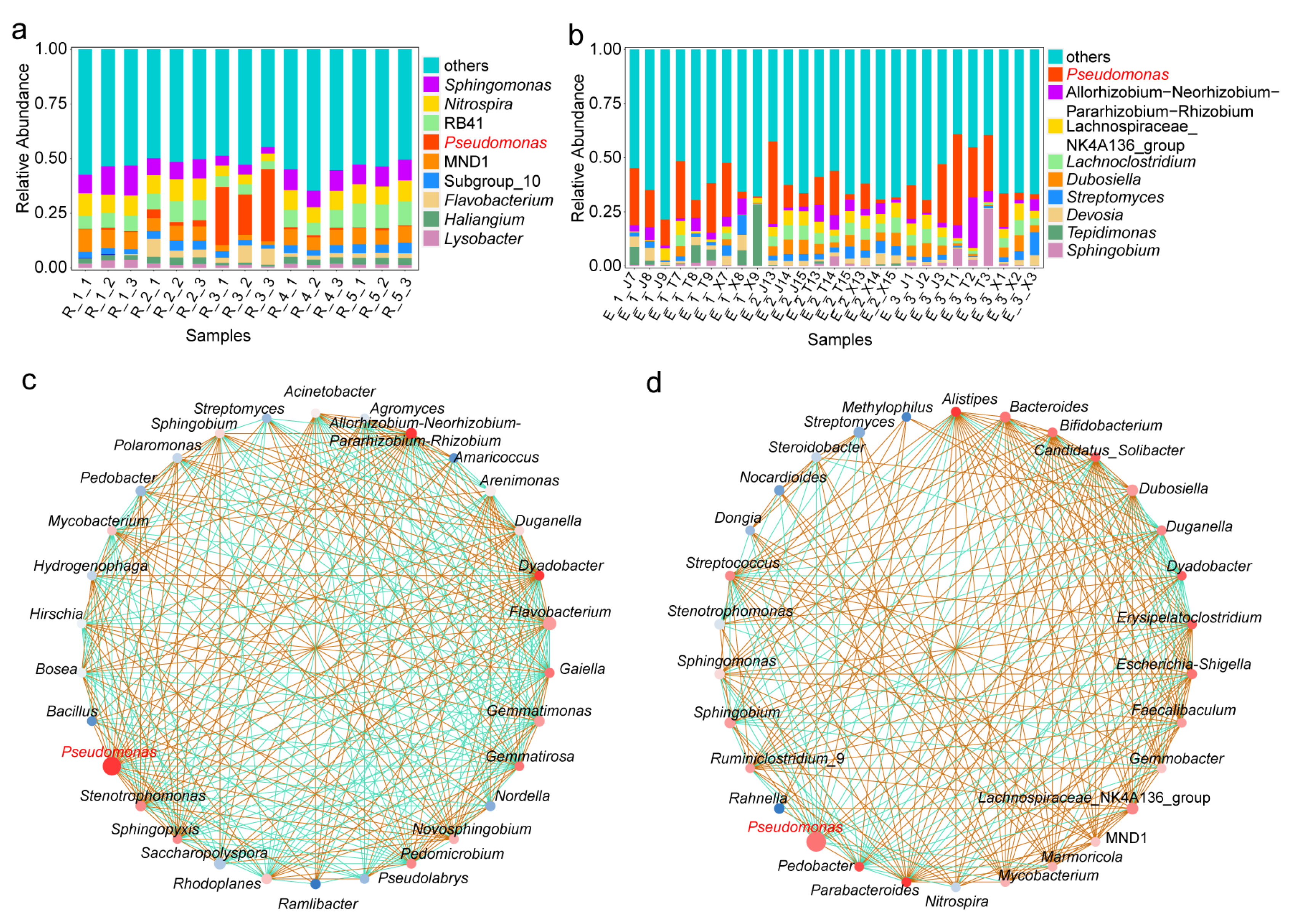
Minxian County and its surrounding areas, the authentic producing regions for A. sinensis, exhibit a stable microecology after 180 days of cultivation across five typical cultivation sites. Based on microbiome sequencing, this study compared the microbial community composition across these typical production sites and characterized the bacterial communities in the rhizosphere and endosphere of A. sinensis from different cultivation areas in Minxian County, Gansu Province (Figure 1a,b). The results showed that: For rhizosphere bacteria (Figure 1a), the genera with higher relative abundance included: Sphingomonas, Nitrospira, RB41, Pseudomonas, MND1, Subgroup_10, Flavobacterium, Haliangium, and Lysobacter. For endophytic bacteria (Figure 1b), the dominant genera included Pseudomonas, Allorhizobium–Neorhizobium–Pararhizobium–Rhizobium, Lachnospiraceae_NK4A136_group, Lachnoclostridium, Dubosiella, Streptomyces, Devosia, Tepidimonas, and Sphingobium. Furthermore, the abundance of Pseudomonas was generally higher in the root head and root body than in the root tail of A. sinensis. Overall, Pseudomonas was a dominant genus in the A. sinensis microecology, with average relative abundances of 6% and 14% in the rhizosphere and endophytic bacterial communities, respectively. Subsequently, to investigate the correlations among bacteria in the community networks under different habitats and the role of Pseudomonas therein, the more abundant genera from both rhizosphere and endophytic bacterial communities were selected for Pearson correlation analysis, and genus-level bacterial co-occurrence networks were constructed (Figure 1c,d). The correlation network connections among genera were relatively dense and predominantly positive. Notably, the Pseudomonas, as a key node, showed strong correlations with many beneficial genera such as Dyadobacter, Flavobacterium, Stenotrophomonas, Duganella, Sphingobium, and Novosphingobium. Therefore, Pseudomonas likely plays a crucial role in driving community assembly and maintaining community structural and functional stability.

3.2. Association of Pseudomonas with Key Bioactive Metabolites Across Different Planting Base Niches

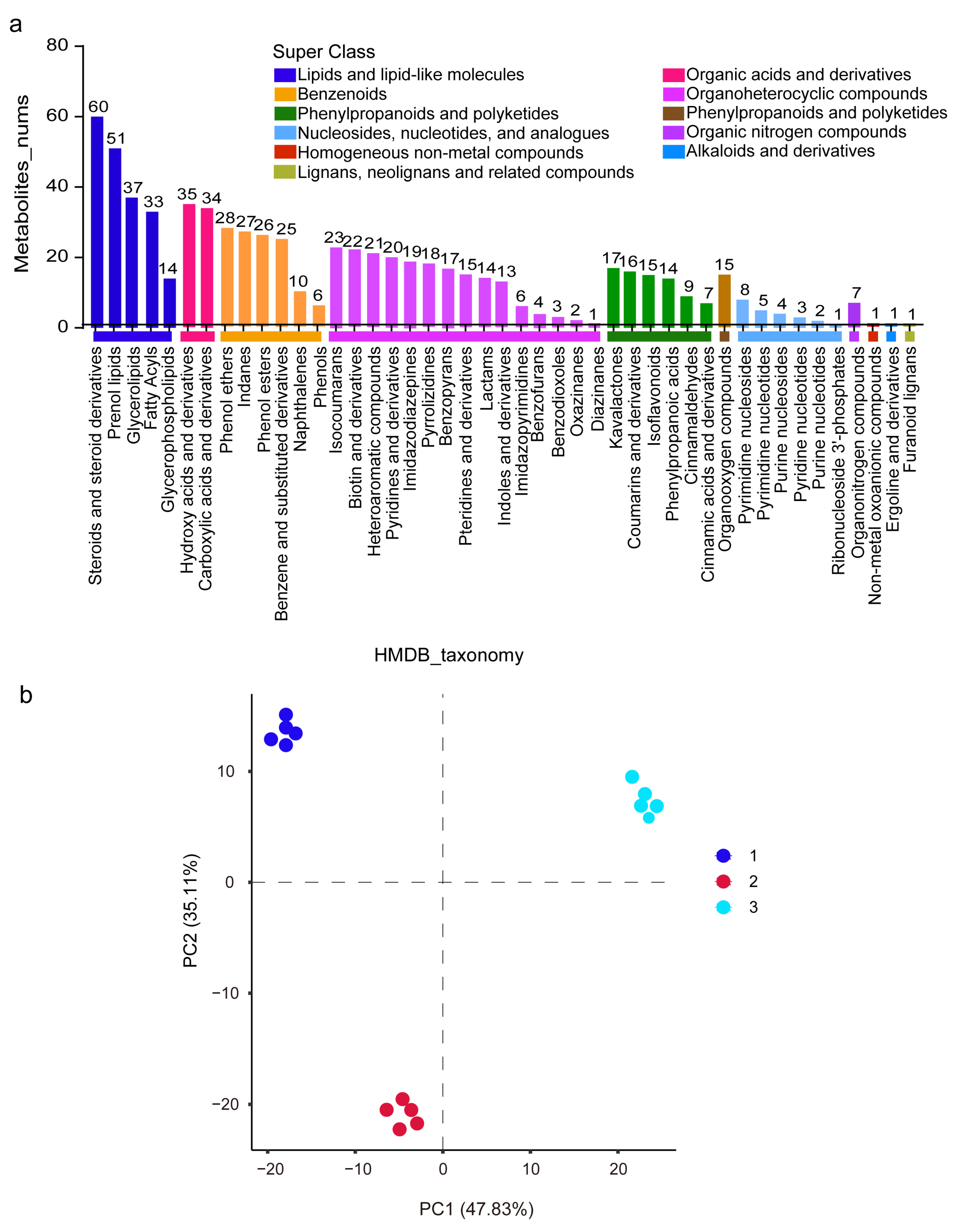
Non-targeted metabolomic analysis was performed on fresh A. sinsensis roots collected from different planting bases. In positive ion mode, a total of 10,618 peaks were detected, corresponding to 778 metabolites. Based on HMDB annotation, the identified metabolites were primarily classified into major categories including lipids and lipid-like molecules, organic acids and derivatives, benzenoids, organic heterocyclic compounds, phenylpropanoids, and polyketides (Figure 2a). Regarding the detected and annotated metabolites classified according to HMDB, this analysis indicates that the vast majority are potentially bioactive natural products, drug molecules, along with their respective precursors, intermediates, or derivatives, as well as key functional molecules at metabolic network nodes [3,9]. Principal component analysis (PCA) of metabolic profiles effectively distinguished samples from different cultivation bases. The cumulative contribution rates of PC1 and PC2 reached 82.94%, explaining over 80% of the total variance (Figure 2b). Samples from different groups were distributed in distinct regions of the two-dimensional space, while samples within the same group clustered closely together, indicating significant differences in metabolic patterns among Planting base.
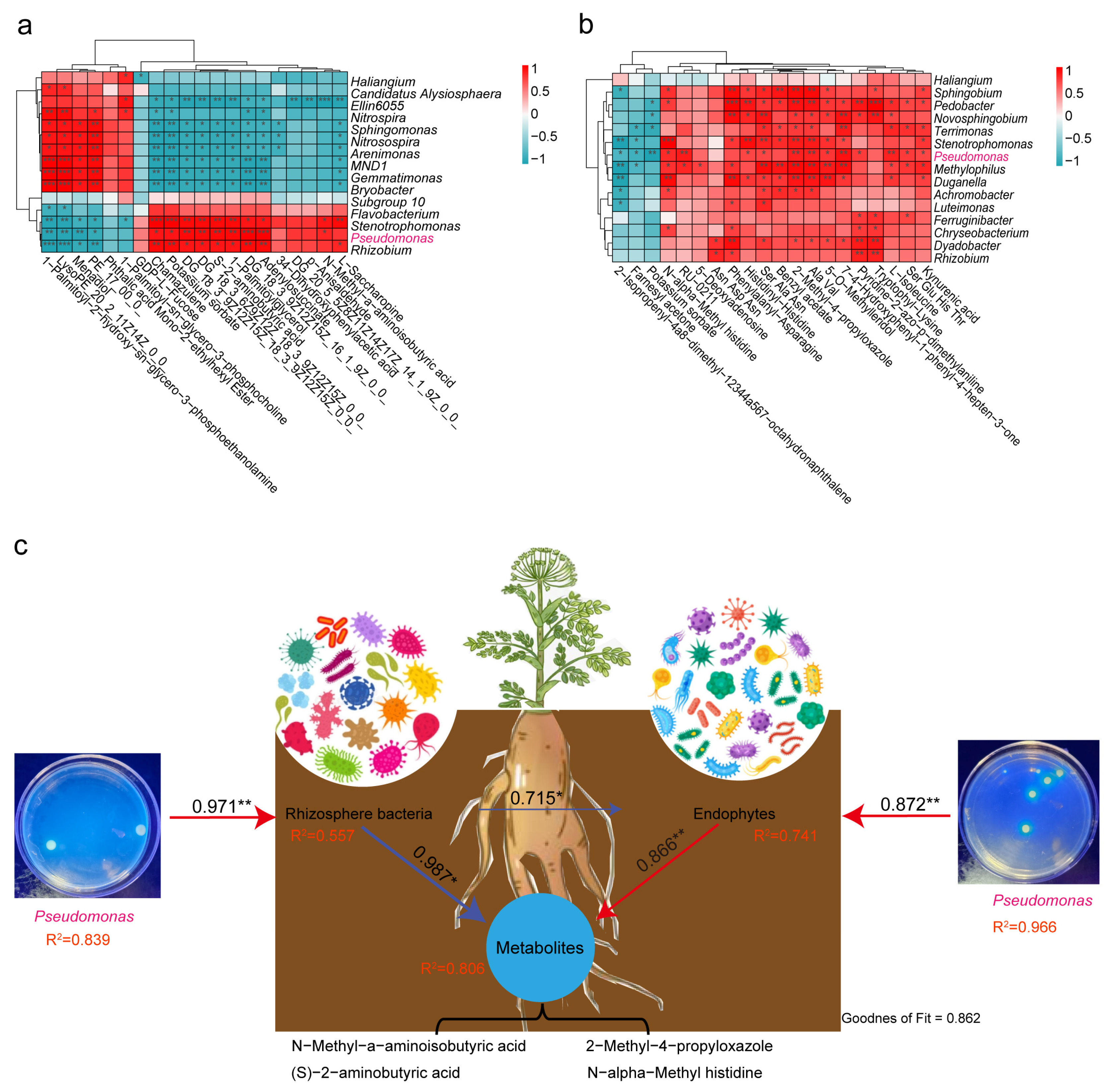
Subsequently, we performed correlation analysis between specific compounds of A. sinensis and microbial bacterial genera to initially evaluate the correlation between the microflora of A. sinensis and the accumulation of its specific compounds, so as to explore the role played by Pseudomonas therein (Figure 3). The results showed that for rhizospheric Pseudomonas, it exhibits a positive correlation with multiple compounds of A. sinensis, including adenylosuccinate, 1-palmitoylglycerol, S-2-aminobutyric acid, potassium sorbate, chamazulene, and N-Menthyl-α-aminoisobutyric acid. For endophytic Pseudomonas (Figure 3a,b), strong positive correlations were identified with amino acids and their derivatives such as L-isoleucine, histidinyl-histidine, and N-alpha-methyl histidine; peptides including Ala-Val, Ser-Ala-Asn, and Ser-Glu-His-Thr; and other compounds such as 7-4-(hydroxyphenyl)-1-phenyl-4-hepten-3-one, lubiprostone, and kynurenic acid. Therefore, we hypothesize that Pseudomonas plays a role in the accumulation of specific compounds in A. sinensis.
Thus, we employed the PLS-PM model to preliminarily elucidate the overall path relationships among rhizospheric bacteria, endophytic bacteria, and metabolites (Figure 3c). The model results quantitatively demonstrate that rhizospheric bacteria can not only directly affect the accumulation of specific compounds in A. sinensis but also exert an indirect influence via endophytic bacteria. The direct effect is relatively significant, with a path coefficient of 0.987, among which the contribution degree of rhizospheric Pseudomonas is 0.971. Endophytic bacteria directly affect the accumulation of specific compounds in A. sinensis and exhibit an extremely significant correlation, with a path coefficient of 0.866 and a contribution degree of 0.872 from endophytic Pseudomonas. Collectively, from the statistical perspective of community-level correlations, Pseudomonas exerts a potential shaping effect on the accumulation of specific compounds in A. sinensis.

3.3. Large-Scale Isolation, Purification, Identification, and Diversity of Rhizospheric Pseudomonas in A. sinsensis

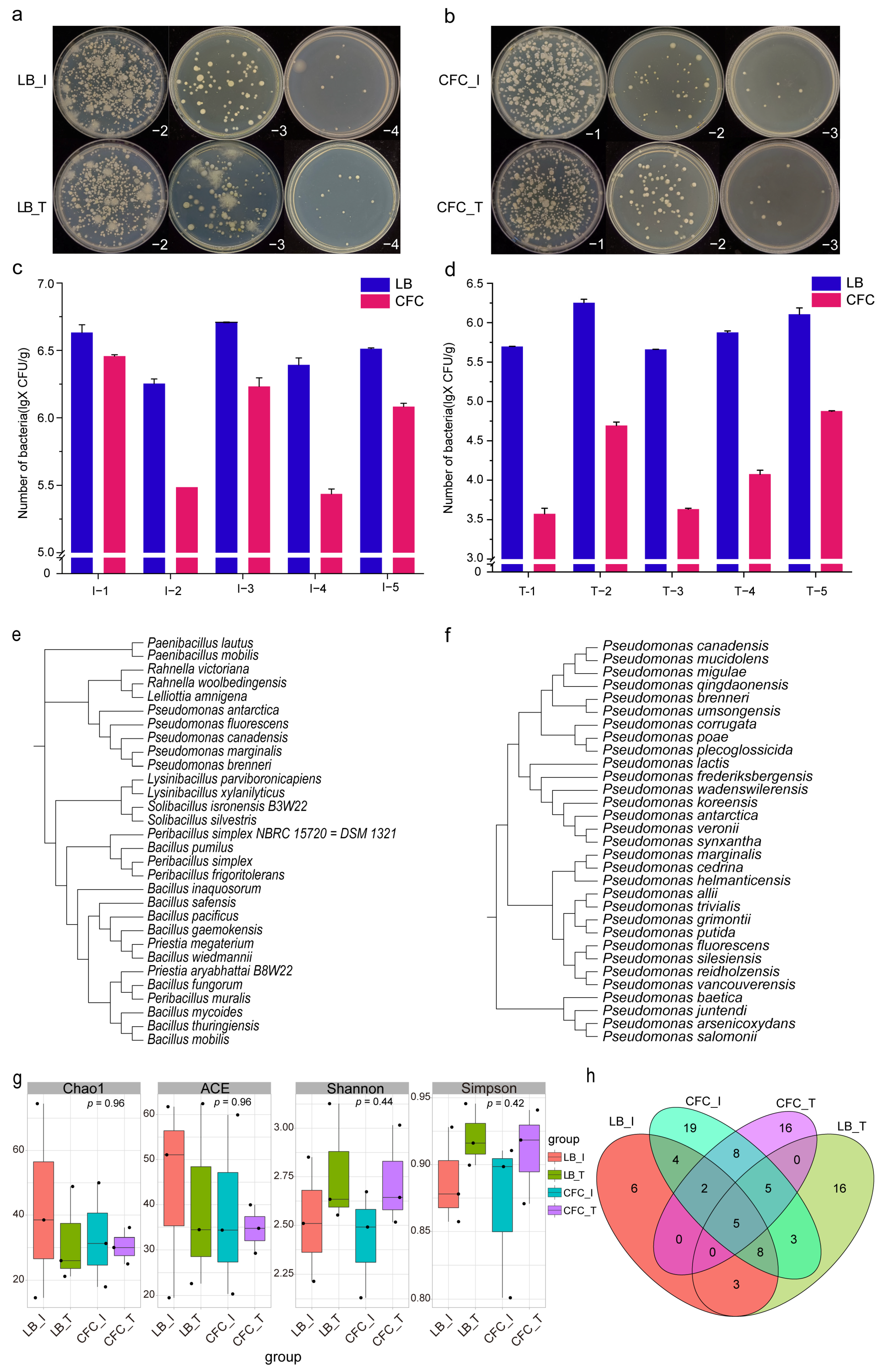
Using pure culture methods, we investigated the total number of culturable bacteria and the abundance of culturable Pseudomonas in the rhizospheric soil of A. sinensis from different cultivation bases at two key stages: 10 days and 180 days after planting. To this end, rhizospheric soil samples were subjected to dilution plating culture at these two time points. At the 10th day after planting (Figure 4a,c), the population of Pseudomonas accounted for approximately 1/10 to 1/2 of the total culturable bacteria (Figure 4c). By the 180th day of planting (Figure 4b,d), the total number of culturable bacteria was significantly lower than that on the 10th day of planting. Notably, in one cultivation base, the ratio of culturable bacterial counts on day 180 to those on day 10 was as low as approximately 1/10 (Figure 4c,d). Moreover, the proportion of Pseudomonas relative to the total culturable bacteria on the 180th day of planting fell below 1/10 across all sites (Figure 4d). Although the differences in temperature and humidity, key factors influencing microbial activity, exhibited minimal differences between the two time points, the reduction in culturable microbial counts may primarily be attributed to the microecological succession of the soil environment. Pseudomonas appeared to be more sensitive to these environmental shifts. Therefore, rhizospheric soil collected at 180 days after planting was subjected to dilution plating culture. Over 100 colonies were randomly picked from the LB medium and CFC-selective medium. Taxonomic affiliations of the isolates were inferred by aligning their 16S rDNA sequences with those of type strains, and a phylogenetic tree was constructed. From LB medium (Figure 4e), 30 species belonging to 9 genera were identified, with the top three dominant species being Bacillus mycoides, Peribacillus simplex, and P. fluorescens. From the CFC medium (Figure 4f), all colonies were identified as members of the genus Pseudomonas, representing 31 species in total. The dominant species included P. fluorescens, Pseudomonas poae, and Pseudomonas marginalis.
Community structure succession from 10 days to 180 days after planting was analyzed based on species distribution of strains identified through pure culture (Figure 4g). According to the Chao1 and ACE indices, the average species richness of total culturable bacteria was higher at 10 days after planting than at 180 days. In contrast, the average species richness of Pseudomonas showed little difference between the two stages. However, both the total culturable bacteria and Pseudomonas exhibited a significant increase in species evenness by the 180th day of planting, as indicated by substantial rises in the Shannon and Simpson indices compared to the 10th day of planting. Furthermore, under the sampling effort applied in this study, the composition of detected and identified species differed between the two time points (Figure 4h). Thus, the community structure reflected by pure-culture-based species clearly distinguished the two cultivation periods. For dominant species such as Bacillus mycoides and P. fluorescens, their detection frequency markedly decreased by 180 days after planting, which aligns with the higher species evenness observed during that period.

3.4. Multifunctional PGP Traits of Rhizospheric Pseudomonas

To investigate the PGP and biocontrol traits of Pseudomonas, this study initially analyzed the carbon source utilization profiles of these Pseudomonas (Table 1). Specifically, glucose, trehalose, soluble starch, and other substances were selected as carbon sources for testing. Results showed that Pseudomonas could utilize multiple carbohydrate-based carbon sources among those tested. Glucose and trehalose were common utilizable carbon sources for all test strains. As a carbon source with generally high utilization intensity, glucose was strongly utilized by 89% of the strains, among which 44% exhibited highly efficient utilization; in contrast, 78% of the strains showed a utilization intensity of “++” or higher for trehalose. Notably, the utilization of soluble starch, lactose, fructose, and sucrose by Pseudomonas varied significantly. Soluble starch exhibited the poorest utilization ability, with only 44% of the strains capable of weakly utilizing it, while the remaining strains could not utilize it at all. Lactose was utilizable by 56% of the strains, and sucrose by only 33%. In comparison, 67% of the strains could weakly utilize fructose, reflecting the universal advantage of monosaccharide metabolism.
From the perspective of individual strains, Pseudomonas putida X11 could utilize all six tested carbon sources completely, demonstrating the most robust carbon source utilization capability among all isolates. Specifically, it showed highly efficient utilization (+++) for glucose and trehalose, moderate utilization (++) for lactose, and weak utilization (+) for soluble starch, fructose, and sucrose (Table 1). Following this, Pseudomonas umsongensis X08 showed moderate utilization (++) only for glucose but displayed a relatively broad carbon source adaptation range. Pseudomonas frederiksbergensis X06 and Pseudomonas juntendi X71 exhibited identical carbon source utilization profiles, being unable to utilize sucrose (−) only. Pseudomonas wadenswilerensis X12 showed highly efficient utilization (+++) for glucose and trehalose, weak utilization (+) for lactose and fructose, and was unable to utilize soluble starch and sucrose (−). Pseudomonas koreensis X52 could not utilize soluble starch and lactose (−), exhibiting a “starch-lactose utilization deficiency.” In comparison, Pseudomonas baetica X21, Pseudomonas fluorescens X54, and Pseudomonas allii X32 could only utilize glucose (moderate utilization, ++) and trehalose (weak utilization, +), being unable to utilize the other four carbon sources: soluble starch, lactose, fructose, and sucrose (−). These strains appear to rely on a limited range of readily metabolizable carbon sources for growth, indicating the lowest carbon metabolic adaptability. All strains exhibited reproducible growth responses to the tested sugar carbon sources.
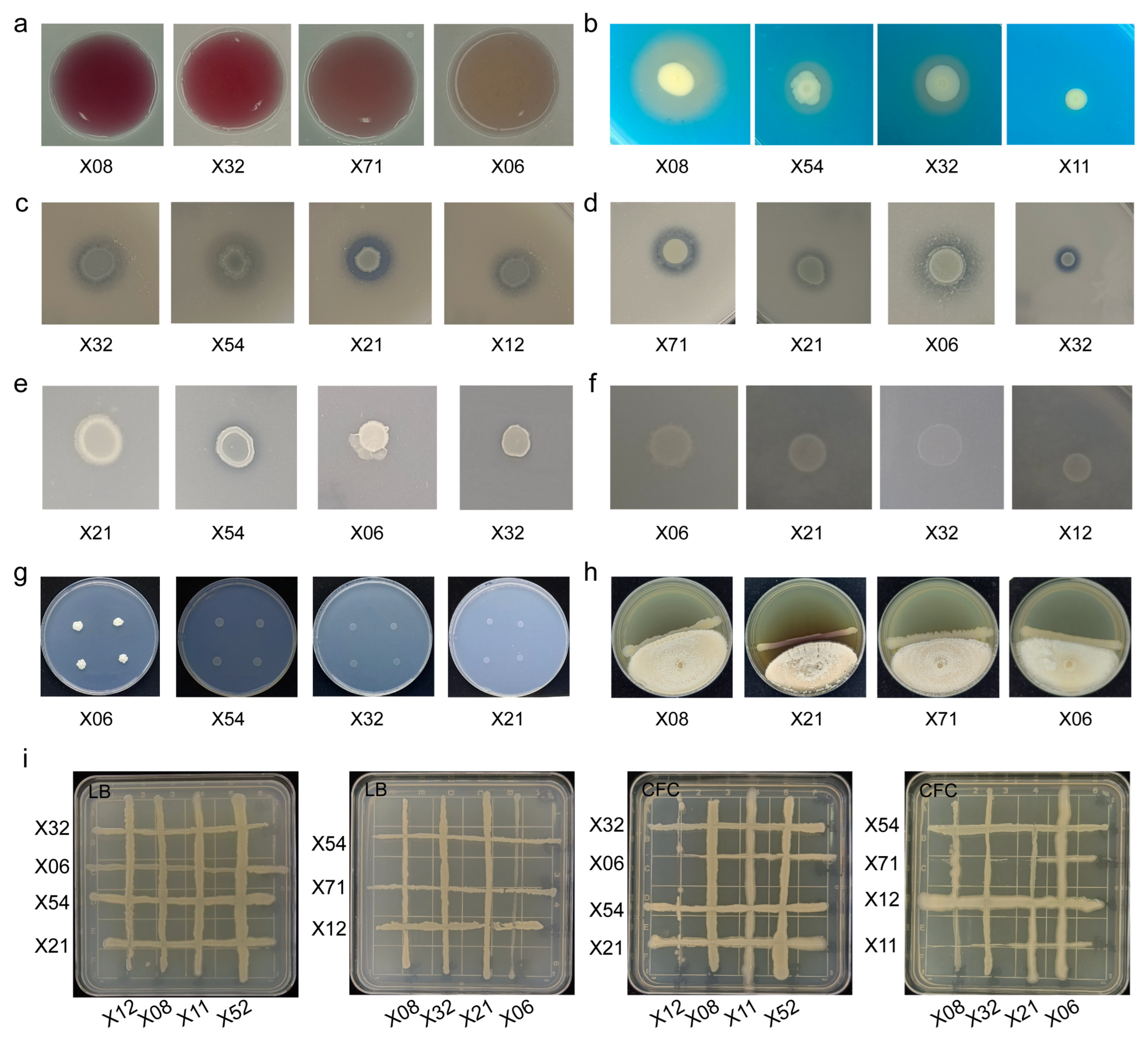
Subsequently, this study evaluated the PGP traits and pathogen antagonistic capabilities of the strains (Figure 5). Overall, the tested Pseudomonas strains generally exhibited multiple PGP traits and biocontrol traits, including phosphorus solubilization, potassium release, nitrogen fixation, siderophore production, synthesis of IAA and ACC deaminase, and antagonism against pathogens. P. allii X32 and Pseudomonas juntendi X71 exhibited combined capabilities in nutrient supply, direct growth promotion, and rhizosphere colonization (Figure 5a–c,e). P. frederiksbergensis X06, P. koreensis X52, and P. baetica X21 showed specialized functional tendencies: P. frederiksbergensis X06 emphasized stress resistance and nutrient acquisition; P. koreensis X52 exhibited strengths in mineral nutrition and biocontrol; and P. baetica X21 displayed comprehensive nutrient-related and biocontrol functions (Figure 5c,e–h). P. fluorescens X54 was characterized by a core functional profile focused on nitrogen fixation, stress tolerance, and iron supplementation (Figure 5b,c,g). P. umsongensis X08, P. wadenswilerensis X12, and P. putida X11 each assumed more specialized functional roles: P. umsongensis X08 was focused on root growth promotion and iron mobilization; P. wadenswilerensis X12 primarily contributed to phosphorus and potassium activation; and P. putida X11 was oriented toward stress resistance and iron supplementation (Figure 5b–d,f,g).
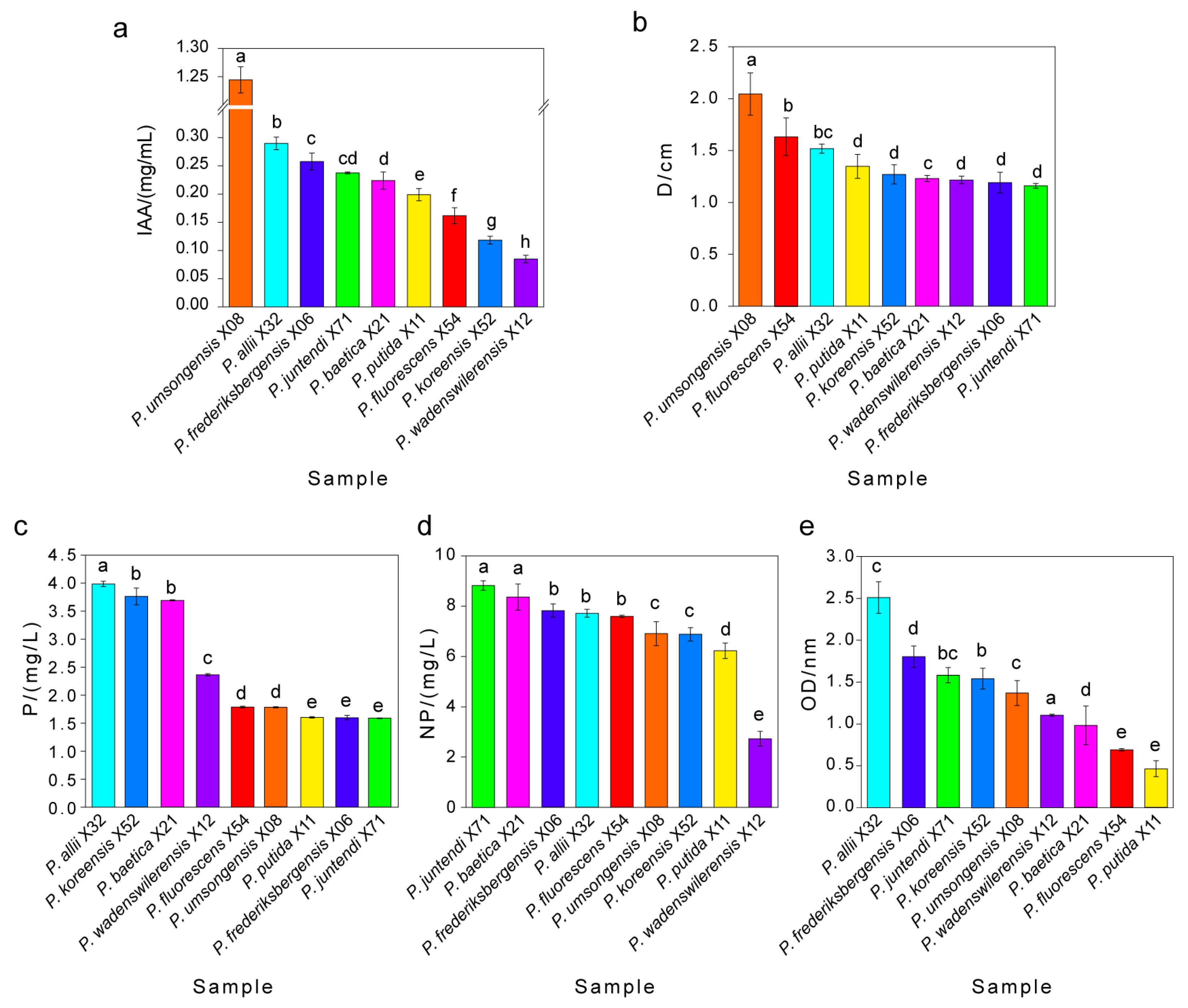
Specifically, significant variations in PGP traits and biocontrol traits were observed among the different strains. For IAA production, strains exhibited notable differences (p < 0.05), with P. umsongensis X08 showing the highest yield, followed by P. allii X32, while P. wadenswilerensis X12 displayed the weakest performance (Figure 5a and Figure 6a). In terms of siderophore production, colony diameters on specific full media also varied significantly. P. umsongensis X08 formed the largest colonies, outperforming all other strains, followed by P. fluorescens X54 and P. allii X32. In contrast, P. baetica X21, P. wadenswilerensis X12, P. frederiksbergensis X06, and P. juntendi X71 demonstrated relatively weaker siderophore synthesis (Figure 5b and Figure 6b). Furthermore, by co-culturing different combinations of Pseudomonas strains, we found that they exhibited high compatibility (Figure 5i).
All tested strains were capable of producing ACC deaminase and fixing nitrogen. Among them, P. frederiksbergensis X06 showed superior ACC deaminase activity (Figure 5g). With the exception of P. koreensis X52, which had limited nitrogen-fixing ability, the remaining strains exhibited strong nitrogen fixation. Regarding phosphorus solubilization, P. allii X32, P. baetica X21, and P. wadenswilerensis X12 performed better in dissolving organic phosphorus (Figure 5c and Figure 6c), whereas P. baetica X21, P. frederiksbergensis X06, P. fluorescens X54, and P. allii X32 were more effective in solubilizing inorganic phosphorus (Figure 5d and Figure 6d). In potassium-releasing capacity, P. frederiksbergensis X06 was the most effective, while P. fluorescens X54 showed the lowest activity (Figure 5f). All Pseudomonas strains exhibited antagonistic effects against Trichothecium roseum, with P. umsongensis X08 and P. baetica X21 demonstrating the strongest inhibition (Figure 5h). Biofilm formation ability, as indicated by OD measurements (Figure 6e), also varied significantly. P. allii X32 had the highest OD value, reflecting the strongest biofilm synthesis, followed by P. frederiksbergensis X06, P. juntendi X71, and P. koreensis X52. P. umsongensis X08, P. wadenswilerensis X12, and P. baetica X21 showed moderately lower OD values, while P. fluorescens X54 and P. putida X11 had the lowest values, indicating the weakest biofilm formation.

3.5. Genome Assembly and Mining of PGP Genes in the High-Performing P. allii X32

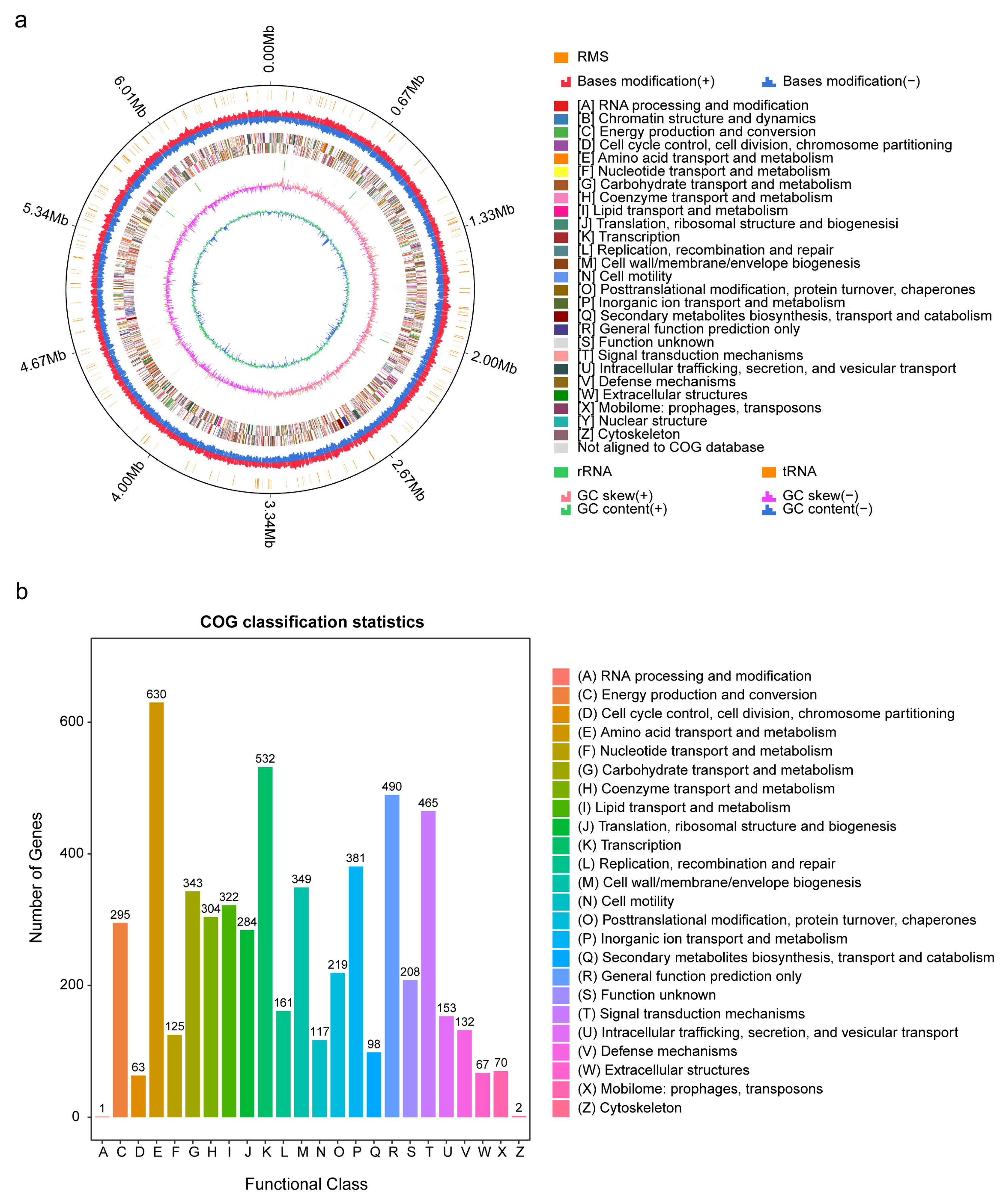
Preliminary PGP experiments showed that P. allii X32, as a representative Pseudomonas strain, possesses excellent PGP traits and biocontrol capabilities. Specifically, it demonstrated: the highest activity in solubilizing organic phosphorus; the second-highest capacity for IAA production; the third-highest levels of siderophore production, potassium solubilization, and ACC deaminase activity; the fourth-highest ability in solubilizing inorganic phosphorus and nitrogen fixation; and the fifth-highest antagonistic activity against fungi (Table 1 and Table S1, Figure 5 and Figure 6). Therefore, we annotated genetic elements associated with its phenotypic traits across the entire genome and conducted enrichment analysis of metabolic and signaling pathways (Figure 7a).
Furthermore, functional classification of 5823 annotated genes based on the Clusters of Orthologous Groups (COG) database revealed that these genes span 25 COG functional categories. Genes involved in primary metabolism were significantly enriched and formed well-defined functional modules, whereas those related to secondary metabolism were fewer in number but functionally specific. These two groups interact via regulatory networks, such as signal transduction and ion homeostasis, collectively supporting the organism’s basic survival and environmental adaptation processes (Figure 7b). Specifically, these genes can be categorized into three core modules: substance synthesis and turnover, energy conversion, and genetic information transmission. Within the “substance synthesis and turnover module”, amino acid transport and metabolism (Category E, 630 genes) constituted the largest COG category, indicating high efficiency in nitrogen utilization to meet the demands of extensive protein synthesis. Carbohydrate transport and metabolism (Category G, 343 genes) served as a key node linking carbon metabolism with the synthesis of other substances. Additionally, lipid transport and metabolism (Category I, 322 genes) supported de novo synthesis and turnover of membrane lipids; coenzyme transport and metabolism (Category H, 304 genes) ensured the supply of cofactors required for enzymatic reactions; and nucleotide transport and metabolism (Category F, 125 genes) provided nucleotide precursors for DNA replication and RNA transcription. Together, these formed an integrated substance turnover network. The energy conversion module was centered on energy production and conversion (Category C, 295 genes), suggesting the organism’s metabolic flexibility to switch energy generation modes in response to environmental oxygen levels. The genetic information transmission module included transcription (Category K, 532 genes, encompassing RNA polymerase and σ factors), translation and ribosome biogenesis (Category J, 284 genes), and replication, recombination, and repair (Category L, 161 genes). By regulating gene expression and protein synthesis, this module ensures the stable production of enzymatic proteins involved in primary metabolism, maintains genomic integrity, and supports the orderly operation of the metabolic network.
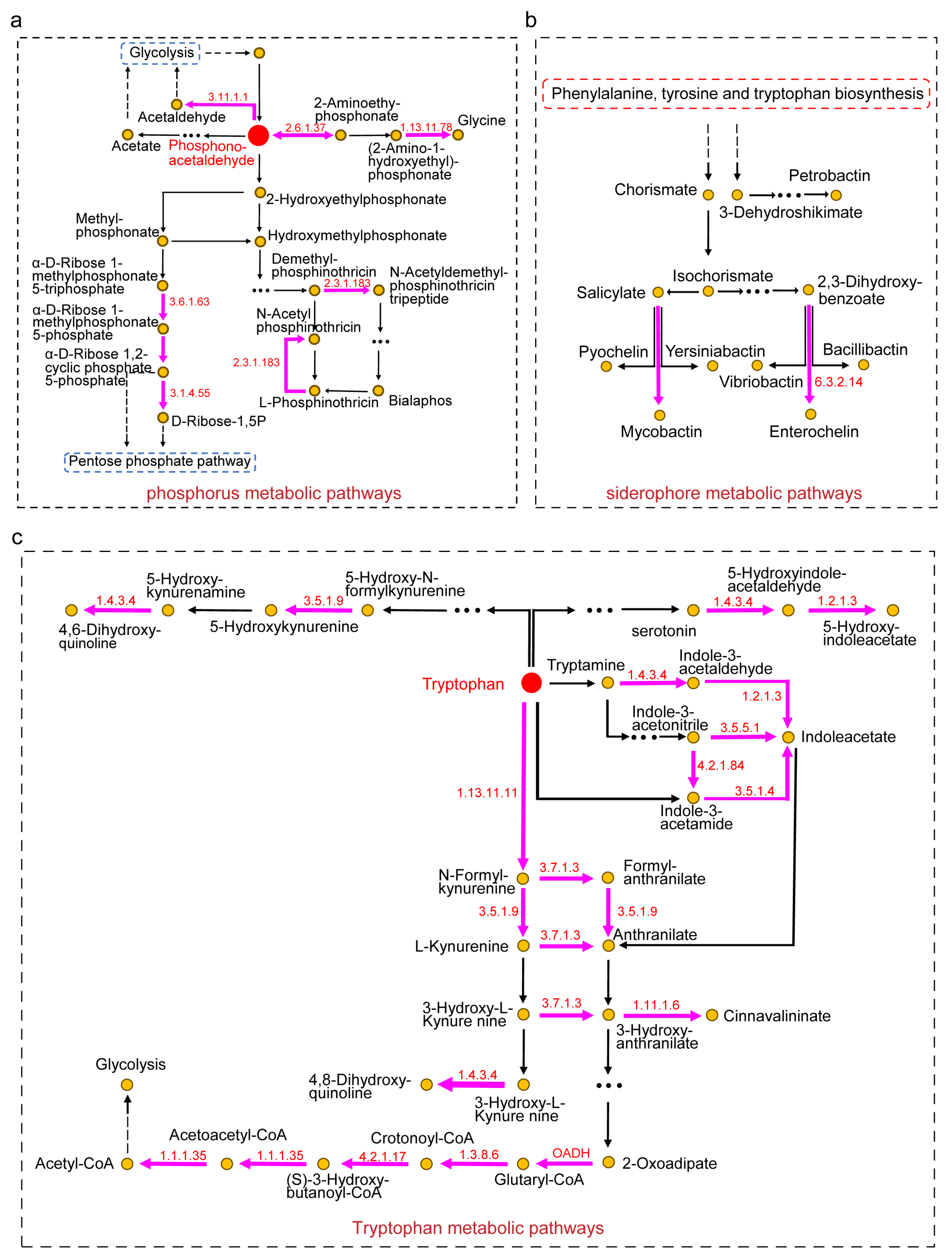
Furthermore, we enriched the catalytic enzymes related to phosphorus metabolism, siderophore secretion, and IAA synthesis in P. allii X32, and presented its key metabolic pathways and signaling molecules (Figure 8). The strain can convert insoluble phosphorus in the soil, which is difficult for plants to absorb, into soluble and available phosphorus through specific phosphorus metabolic pathways, thereby promoting plant growth. A total of 7 catalytic enzymes were identified in the phosphorus metabolic pathway (Figure 8a), providing a genetic basis for activating soil phosphorus. When analyzing genes related to siderophore synthesis, 1 associated catalytic enzyme was identified (Figure 8b). By secreting siderophores, it can compete with pathogens for iron sources, achieving biocontrol, while also helping plants acquire iron to promote growth. Among the different compounds involved in IAA biosynthesis, L-tryptophan (Trp) and indole (Ind) are promising candidates as precursors of IAA. The ability of plants to convert Trp into IAA has been well demonstrated in many plant species and soil microorganisms. In the tryptophan metabolic pathway, a total of 22 catalytic enzymes were annotated in the whole genome of strain X32, indicating its potential for IAA synthesis (Figure 8c).

4. Discussion

As a widely used medicinal and edible homologous traditional Chinese medicine, the quality of A. sinensis has consistently garnered significant attention. In this context, the microecological environment, serving as a key mediator that responds to soil physicochemical properties and regulates host metabolism, plays a crucial role [2,3,9,43,44,45]. This process primarily relies on probiotic microorganisms possessing PGP traits. Pseudomonas, a typical rhizosphere PGP bacterium, constitutes an indispensable component of this system (Figure 1, Figure 2 and Figure 3) [2,44,45]. However, research on the PGP traits of Pseudomonas has largely focused on model plants or crop systems. For medicinal plants, especially the rhizosphere of A. sinensis, there is a relatively lack of research on the functional complementarity of Pseudomonas, which plays an important role in the growth and development of the host and stress resistance. Therefore, this study selected several production bases with typical spatial span and representative scale within the geo-authentic region of Minxian County, Gansu Province, as research subjects. The investigation systematically revealed the species diversity of Pseudomonas in the rhizosphere soil of A. sinensis, and explored the potential functional complementarity underlying diverse PGP phenotypes and their potential association with the growth of A. sinensis. From the broad perspective of SMC construction, the research findings are conducive to shifting the focus from the combination of cross-genera species to different strains within the same genus, as well as the functional complementarity of strains derived from different species within dominant bacterial genera, thereby enhancing the robustness of SMCs.
Our preliminary findings on the microecology suggest that Pseudomonas is among the top 10 dominant genera in the rhizosphere and a core genus in the endophytic environment of A. sinensis, exhibiting strong correlations with other microorganisms (Figure 1). Furthermore, from a statistical perspective, the abundance of Pseudomonas is significantly correlated with the accumulation of specific compounds in A. sinensis (Figure 3a,b). Rhizosphere Pseudomonas is primarily associated with substances such as adenylosuccinate and DG (18:3 (9Z,12Z,15Z)/16:1 (9Z)/0:0). The former positively influences host metabolism [46], while the latter plays a significant role in enhancing plant stress resistance and promoting plant growth [3,39]. In contrast, endophytic Pseudomonas is associated with amino acids and short peptide-like compounds, as demonstrated in our previous studies, these substances are important bioactive components of A. sinensis, including L-isoleucine and L-tryptophan, which possess potential hematopoietic activity, and proline, which enhances plant defense against biotic stress [2,3,9,39]. Finally, quantitative data from structural equation modeling holistically assessed the rationality of the relationship network composed of rhizosphere bacteria, endophytic bacteria, and specific compounds (Figure 3c). Therefore, as an important component in the A. sinensis microecosystem, Pseudomonas plays a beneficial role therein. This finding highlights its key contribution to the geo-authenticity of A. sinensis and provides a reference for subsequent strain isolation.
Subsequently, through large-scale targeted cultivation of rhizosphere bacteria from A. sinensis at 10 and 180 days after planting, we constructed an extensive strain resource library of Pseudomonas, revealing its species diversity. Based on this, we conducted assays on the PGP traits of Pseudomonas (Figure 4). The results showed that Pseudomonas possesses diverse PGP traits, including the utilization of tested carbon sources, production of IAA, siderophore synthesis, phosphate solubilization, potassium solubilization, nitrogen fixation, biofilm formation, and antagonism against pathogenic fungi (Table 1 and Table S1, Figure 5 and Figure 6). Systematic comparative phenotyping further demonstrated significant trait differentiation among different strains in terms of PGP traits, biocontrol, and nutrient mobilization. Specifically, P. frederiksbergensis X06 exhibited outstanding carbon source utilization capacity, ACC deaminase activity, potassium-solubilizing capacity, biocontrol potential, and stress adaptability (Table 1 and Table S1, Figure 5 and Figure 6). Previous studies have indicated that the functional diversity of Pseudomonas is closely related to its rhizosphere colonization ability, and ACC deaminase alleviates plant stress responses by degrading the ethylene precursor ACC [9,13,14]. The comprehensiveness of its PGP traits may be supported by two key mechanisms: first, its excellent carbon source utilization capacity may promote efficient colonization in the rhizosphere, enabling it to utilize diverse root exudates, which in turn facilitates its potassium-solubilizing function [13,40,47]; second, its ACC deaminase activity synergizes with inherent stress adaptability to help sustain host growth under abiotic stress conditions [14,41]. P. allii X32 showed strong advantages in IAA synthesis and inorganic phosphate solubilization. The IAA production capability of P. allii X32 may aid its successful colonization and growth-promoting functions in dense rhizosphere niches through biological processes such as modifying host root architecture and participating in stress responses, while phosphate solubilization alleviates plant nutrient limitations by increasing soil available phosphorus [47,48]. Moreover, a positive correlation was observed between its IAA production and phosphate solubilization efficiency (Figure 6). Studies have shown that P. fluorescens can enhance phosphorus uptake by stimulating root growth through IAA synthesis, precisely demonstrating the synergistic effect between IAA production and phosphate solubilization in Pseudomonas [48]. P. umsongensis X08 exhibited strong siderophore production, whereas P. fluorescens X54 showed potent antagonistic activity against pathogenic fungi (Figure 5 and Figure 6 and Table S1). Siderophores, as iron-chelating molecules secreted by microorganisms, contribute to both plant growth promotion and biocontrol by improving iron availability to plants or inhibiting iron acquisition by pathogens [49,50]. Therefore, through systematic analysis of the diverse PGP traits of Pseudomonas species, this study infers the existence of functional complementarity among strains or traits (Figure 5 and Figure 6 and Table S1). This finding provides a reference for understanding the functional complementarity patterns within the A. sinensis-microbe interaction system [42,47].
The construction of SMCs is a key technology for achieving “precision microecological regulation” of medicinal plants. However, traditional synthetic communities often suffer from instability issues due to inter-strain antagonism, functional redundancy, and niche competition [51,52]. Based on this, the construction of SMCs using strains from the same genus that may exhibit functional complementarity offers significant advantages and broad prospects [52,53]. Wang et al. found that SMCs can promote plant growth through their own metabolism by participating in pollutant degradation, regulating plant hormone levels, enhancing nutrient uptake, and improving tolerance to abiotic stress [54]. Furthermore, SMCs are valuable for in-depth studies of microbial interaction patterns, the analysis of nutritional mutualism and functional complementarity relationships among strains, and the prediction of potential functional characteristics of microbial communities [55]. Since these strains are all plant growth-promoting rhizobacteria with close phylogenetic relationships and similar metabolic pathways, specific antagonistic interactions are minimal. Therefore, their rhizosphere colonization requirements and environmental adaptability may be more consistent, which is conducive to the formation of stable consortia that can co-occupy niches, ensuring niche compatibility and protecting plants from pathogen invasion [53,56,57]. It is noteworthy that SMCs can simulate the complexity of natural microbial populations through microbial communication and functional complementarity, exhibiting stronger environmental adaptability and functional diversity than single strains; they can also perform functional division of labor based on different metabolic pathways, optimize the metabolism of individual microorganisms, and thus improve the metabolic efficiency of the entire community [58]. Studies have reported that SMCs constructed using yeast can synthesize various low-density polyethylene (LDPE) degrading enzymes (e.g., manganese peroxidase, laccase, and lignin peroxidase), reducing the strength and weight of LDPE by 63.4% and 33.2%, respectively, within 45 days [59]. Interestingly, nutrient and niche competition are also important mechanisms by which SMCs exert their functions. For example, SMCs composed of Pseudomonas can maintain high density in the rhizosphere, increasing the niche breadth and resource competition ability of the SMCs, thereby significantly inhibiting the growth of bacterial wilt pathogens in the tomato rhizosphere and reducing disease incidence [58,60]. Based on this, we can precisely design an SMC to simultaneously achieve the comprehensive goals of growth promotion, stress alleviation, and nutrient supply. For example, an SMC composed of P. umsongensis X08, P. frederiksbergensis X06, and P. allii X32 (Figure 5 and Figure 6 and Table S1).
Furthermore, elucidating the associations between phenotypes and genotypes is a core prerequisite for analyzing specific PGP traits of strains and enabling the precise design of microbial communities. Therefore, we used whole-genome sequencing results to link PGP traits to their corresponding genetic elements and proposed molecular mechanistic hypotheses for these traits (Table S1, Figure 5, Figure 6 and Figure 7 and Figure S4) [56]. As a representative PGP Pseudomonas strain, P. allii X32 exhibits outstanding growth-promoting and biocontrol capabilities (Table S1 and Figure 5). The IAA synthesis in P. allii X32 relies on the indole-3-pyruvate pathway. Its genome harbors a complete ipdC-yucgene cluster, with phosphate transporter genes (PHT1) located upstream of the ipdC gene. Under phosphorus-deficient soil conditions, ipdC expression is activated, while alkaline phosphatase-related genes also show upregulated expression, forming a positive feedback loop of “phosphate solubilization-enhanced IAA synthesis.” (Figure 8 and Figure S4) This mechanism explains the synergistic advantage of “root promotion–phosphate solubilization” demonstrated by P. allii X32 in phosphorus-deficient soils [47,61,62,63].
Our current work, focusing on the in vitro isolation, phenotypic characterization, and genomic analysis of Pseudomonas strains, demonstrates rich functional diversity and potential functional complementarity patterns within the genus. However, these findings are primarily based on observations and assays conducted under pure culture conditions. A key methodological limitation is that the Pseudomonas strains were not reinoculated back onto their A. sinensis host plants, thus preventing the direct verification of their actual PGP effects under greenhouse or field conditions. Therefore, although the strains exhibit various PGP potentials in vitro, whether and how they exert these functions in actual plant-microbe interaction environments remains to be experimentally confirmed. Based on this, the core candidate strains selected in this study (including synthetic microbial communities which have the potential for functional complementarity) will be subjected to pot inoculation experiments with A. sinensis under controlled greenhouse conditions to systematically evaluate their actual effects on the growth, physiological indicators, and accumulation of key bioactive compounds of A. sinensis. This step is crucial for confirming the application value of the strains, optimizing strain combinations, and evaluating the stability of SMC. Ultimately, these efforts will provide reliable candidate strain resources and theoretical references for the rational design of efficient, stable SMCs suitable for the ecological cultivation of A. sinensis.

5. Conclusions

For the first time, this study systematically reveals the species diversity of the Pseudomonas genus in the rhizosphere of A. sinensis. Its PGP traits were assessed via phenotypic assays, and the molecular mechanisms were revealed by whole-genome sequencing. This study also infers potential functional complementarity among strains and its underlying relationship with A. sinensis growth. We can conservatively conclude that Pseudomonas is a dominant genus within the A. sinensis rhizomicrobiome, and its abundance is significantly correlated with the accumulation of specific compounds in A. sinensis. Furthermore, we constructed a Pseudomonas strain resource library through large-scale targeted cultivation, which preliminarily demonstrates significant strain-level differentiation in multiple PGP and biocontrol traits, suggests potential functional complementarity patterns, and explores the great potential of constructing synthetic microbial communities to achieve PGP trait complementarity and niche compatibility. Subsequently, whole-genome analysis of the representative strain P. allii X32 successfully linked its superior PGP phenotypes to specific genetic determinants, such as pathways involved in IAA synthesis and phosphorus metabolism, providing preliminary insights into the feasibility of phenotype-genotype association studies and laying the groundwork for in-depth mechanistic studies of its PGP traits and the identification of valuable genetic elements. In summary, we have established a valuable resource library for Pseudomonas in the A. sinensis rhizosphere, encompassing multi-dimensional phenotypic and genomic information; provided molecular mechanistic hypotheses for PGP traits through phenotype-genotype associations; and at the physiological and biochemical level, the potential functional complementarity of these Pseudomonas strains provides important data references for the future development of efficient SMCs based on host-microbe interaction systems.

Supplementary Materials

The following supporting information can be downloaded at: https://www.mdpi.com/article/10.3390/agronomy16020161/s1, Figure S1: Nucleic acid electrophoresis map of P. allii X32 genome; Figure S2: P. allii X32 genome coverage depth distribution; Figure S3: Results of collinearity analysis of P. allii X32 genome and top1 hit sequence. The gray circle on the right represents the query sequence, i.e., the assembled chromosome of P. allii X32. The green circle on the left indicates the target sequence aligned to the query. The inner semi-circle adjacent to the query sequence (gray) denotes the Identity value, ranging from 0 to 100, with colors varying from light red to dark red—deeper red indicates higher alignment consistency. The connecting lines between the gray and green sequences represent aligned regions, where thicker lines correspond to longer alignment lengths. Red lines indicate forward matches, while blue lines represent reverse-complement matches; Figure S4: Enrichment analysis of plant growth-promoting key genes in P. allii X32. Panels (a–c) represent the annotations of tryptophan, phosphorus, and siderophore metabolic pathways, respectively; Table S1: Plant growth-promoting characteristics of Pseudomonas, It shows the nitrogen fixing, potassium solubilizing, ACC deaminase activity and antagonism of pathogenic fungi Trichothecium roseum of Pseudomonas; Table S2: PacBio data statistics of P. allii X32; Table S3: Sequence statistics of genome assembly results of P. allii X32; Table S4: NT library alignment results of assembled genomes of P. allii X32.

Author Contributions

Conceptualization, S.Z., X.X. and X.G.; methodology, S.Z., R.G., Y.S. and D.L.; software, X.X.; validation, S.Z., X.X., D.L. and Y.W.; formal analysis, X.X., R.G. and Y.W.; data curation, Y.S. and X.G.; investigation, Y.S. and Y.W.; writing—original draft preparation, S.Z. and X.X.; writing—review and editing, X.G. and Y.S.; supervision, X.G.; visualization, S.Z.; project administration, X.G. and Y.S.; funding acquisition, X.G. All authors have read and agreed to the published version of the manuscript.

Funding

Funding was provided by the National Natural Science Foundation of China under Grant numbers 12205132, the 77th batch of general funding from China Postdoctoral Science Foundation (2025MD774059), and the Hongliu Excellent Youth Support Program in Lanzhou University of Technology (Fourth Batch).

Data Availability Statement

The original contributions presented in the study are included in the article; further inquiries can be directed to the corresponding author.

Acknowledgments

We would like to thank the staff at the Gansu Minxian Danggui Research Institute and the Gansu Institute of Drug Control for their assistance in collecting samples of fresh Angelica sinensis (Oliv.) Diels roots.

Conflicts of Interest

The authors declare no conflict of interest.

References

  1. Liao, J.; Xia, P. Continuous cropping obstacles of medicinal plants: Focus on the plant-soil-microbe interaction system in the rhizosphere. Sci. Hortic. 2024, 328, 112927. [Google Scholar] [CrossRef]
  2. Guo, X.; Zhang, S.; Yin, R.; Zhu, S.; Ji, B.; Peng, Y.; Zhang, S.; Xiao, X.; Peng, C.; Wang, Y. Soil nutrients, rhizosphere bacteria, and endophytes interact to influence the accumulation of amino acid-short peptide components in Angelica sinensis roots, each playing distinct roles. Rhizosphere 2025, 33, 101027. [Google Scholar] [CrossRef]
  3. Sun, Y.; Guo, R.; Geng, Y.; Shang, H.; Guo, X.; Wu, Y.; Wang, Y.; Li, L.; Li, X.; Zhang, S.; et al. Longitudinal distribution map of the active components and endophytic fungi in Angelica sinensis (Oliv.) Diels root and their potential correlations. Metabolites 2024, 14, 48. [Google Scholar] [CrossRef]
  4. Zhou, N.; Mei, C.; Zhu, X.; Zhao, J.; Ma, M.; Li, W. Research progress of rhizosphere microorganisms in Fritillaria L. medicinal plants. Front. Bioeng. Biotechnol. 2022, 10, 1054757. [Google Scholar] [CrossRef] [PubMed]
  5. Liu, C.; Luo, J.; Yang, D.; Liu, X.; Zhou, S.; Zhou, Y. A comprehensive analysis of Ardisia crenata Sims from endophytes and rhizosphere soil microorganisms. Front. Microbiol. 2025, 16, 1570230. [Google Scholar] [CrossRef]
  6. Hu, L.; Robert, C.A.M.; Cadot, S.; Zhang, X.; Ye, M.; Li, B.; Manzo, D.; Chervet, N.; Steinger, T.; van der Heijden, M.G.A.; et al. Root exudate metabolites drive plant-soil feedbacks on growth and defense by shaping the rhizosphere microbiota. Nat. Commun. 2018, 9, 2738. [Google Scholar] [CrossRef] [PubMed]
  7. Wang, K.; Liu, X.; Cai, G.; Gong, J.; Guo, Y.; Gao, W. Chemical composition analysis of Angelica sinensis (Oliv.) Diels and its four processed products by ultra-high-performance liquid chromatography coupled with quadrupole-orbitrap mass spectrometry combining with nontargeted metabolomics. J. Sep. Sci. 2023, 46, 15. [Google Scholar] [CrossRef]
  8. Liu, J.; Wang, W.; Yang, Y.; Yan, Y.; Wang, W.; Wu, H.; Ren, Z. A rapid discrimination of authentic and unauthentic radix Angelicae sinensis growth regions by electronic nose coupled with multivariate statistical analyses. Sensors 2014, 14, 20134–20148. [Google Scholar] [CrossRef] [PubMed]
  9. Guo, X.; Li, X.; Zhang, S.; Zhu, S.; Guo, R.; Gao, Y.; Wang, Y.; Liu, X.; Liu, Y.; Shi, H. A joint analysis of metabolomics, network pharmacology, and molecular docking reveals the efficacy patterns in various medicinal segments of Angelica sinensis (Oliv.) Diels root. J. Food Biochem. 2024, 2024, 7377627. [Google Scholar] [CrossRef]
  10. Das Nishu, S.; No, J.H.; Lee, T.K. Transcriptional response and plant growth promoting activity of Pseudomonas fluorescens DR397 under drought stress conditions. Microbiol. Spectr. 2022, 10, 13. [Google Scholar] [CrossRef]
  11. Sharma, H.; Haq, M.A.; Koshariya, A.K.; Kumar, A.; Rout, S.; Kaliyaperumal, K. “Pseudomonas fluorescens” as an antagonist to control okra root rotting fungi disease in plants. J. Food Qual. 2022, 2022, 5608543. [Google Scholar] [CrossRef]
  12. Dimkic, I.; Janakiev, T.; Petrovic, M.; Degrassi, G.; Fira, D. Plant-associated bacillus and Pseudomonas antimicrobial activities in plant disease suppression via biological control mechanisms—A review. Physiol. Mol. Plant Pathol. 2021, 117, 101754. [Google Scholar] [CrossRef]
  13. Tshikhudo, P.; Ntushelo, K.; Mudau, F. Sustainable applications of endophytic bacteria and their physiological/biochemical roles on medicinal and herbal plants: Review. Microorganisms 2023, 11, 453. [Google Scholar] [CrossRef] [PubMed]
  14. Khan, A.; Singh, A.V.; Gautam, S.S.; Agarwal, A.; Punetha, A.; Upadhayay, V.K.; Kukreti, B.; Bundela, V.; Jugran, A.K.; Goel, R. Microbial bioformulation: A microbial assisted biostimulating fertilization technique for sustainable agriculture. Front. Plant Sci. 2023, 14, 1270039. [Google Scholar] [CrossRef]
  15. Etesami, H.; Glick, B.R. Bacterial indole-3-acetic acid: A key regulator for plant growth, plant-microbe interactions, and agricultural adaptive resilience. Microbiol. Res. 2024, 281, 127602. [Google Scholar] [CrossRef]
  16. Mankoti, M.; Pandit, N.K.; Meena, S.S.; Mohanty, A. Investigating the genomic and metabolic abilities of PGPR Pseudomonas fluorescens in promoting plant growth and fire blight management. Mol. Genet. Genomics 2024, 299, 110. [Google Scholar] [CrossRef] [PubMed]
  17. Arrebola, E.; Tienda, S.; Vida, C.; de Vicente, A.; Cazorla, F.M. Fitness features involved in the biocontrol interaction of Pseudomonas chlororaphis with host plants: The case study of PcPCL1606. Front. Microbiol. 2019, 10, 719. [Google Scholar] [CrossRef]
  18. Wang, K.F.; Yang, Z.N.; Luo, S.Q.; Quan, W.X. Endophytic Pseudomonas fluorescens promotes changes in the phenotype and secondary metabolite profile of Houttuynia cordata Thunb. Sci. Rep. 2024, 14, 1710. [Google Scholar] [CrossRef]
  19. Kong, P.; Hong, C. Evaluation of 1021Bp, a close relative of Pseudomonas eucalypticola, for potential of plant growth promotion, fungal pathogen suppression and boxwood blight control. BMC Microbiol. 2024, 24, 346. [Google Scholar] [CrossRef]
  20. Trapet, P.; Avoscan, L.; Klinguer, A.; Pateyron, S.; Citerne, S.; Chervin, C.; Mazurier, S.; Lemanceau, P.; Wendehenne, D.; Besson-Bard, A. The Pseudomonas fluorescens siderophore pyoverdine weakens Arabidopsis thaliana defense in favor of growth in iron-deficient conditions. Plant Physiol. 2016, 171, 675–693. [Google Scholar] [CrossRef]
  21. Hernández-León, R.; Rojas-Solís, D.; Contreras-Pérez, M.; Orozco-Mosqueda, M.D.; Macías-Rodríguez, L.I.; Reyes-de la Cruz, H.; Valencia-Cantero, E.; Santoyo, G. Characterization of the antifungal and plant growth-promoting effects of diffusible and volatile organic compounds produced by Pseudomonas fluorescens strains. Biol. Control 2015, 81, 83–92. [Google Scholar] [CrossRef]
  22. Sanow, S.; Kuang, W.; Schaaf, G.; Huesgen, P.; Schurr, U.; Roessner, U.; Watt, M.; Arsova, B. Molecular mechanisms of Pseudomonas-assisted plant nitrogen uptake: Opportunities for modern agriculture. Mol. Plant-Microbe Interact. 2023, 39, 536–548. [Google Scholar] [CrossRef] [PubMed]
  23. Zboralski, A.; Biessy, A.; Filion, M. Genome exploration and ecological competence are key to developing effective Pseudomonas-based biocontrol inoculants. Can. J. Plant Pathol. 2023, 45, 330–339. [Google Scholar] [CrossRef]
  24. Rehman, M.; Shahid, M.; Mahmood, S.; Ali, Q.; Azeem, M. Modulation of Growth and Antioxidative Defense Mechanism in Wheat (Triticum aestivum L.) Mediated by Plant-Beneficial Strain Pseudomonas veronii MR-15 under Drought Conditions. Appl. Sci. 2024, 14, 128. [Google Scholar] [CrossRef]
  25. Win, K.; Wasai-Hara, S.; Tanaka, F.; Oo, A.Z.; Minamisawa, K.; Shimoda, Y.; Imaizumi-Anraku, H. Synergistic N2-fixation and salt stress mitigation in soybean through dual inoculation of ACC deaminase-producing Pseudomonas and Bradyrhizobium. Sci. Rep. 2023, 13, 17050. [Google Scholar] [CrossRef] [PubMed]
  26. You, C.; Qin, D.; Wang, Y.; Lan, W.; Li, Y.; Yu, B.; Peng, Y.; Xu, J.; Dong, J. Plant triterpenoids regulate endophyte community to promote medicinal plant Schisandra sphenanthera growth and metabolites accumulation. J. Fungi 2021, 7, 788. [Google Scholar] [CrossRef]
  27. Jiang, Y.; Zhang, Y.; Liu, Y.; Zhang, J.; Jiang, M.; Nong, C.; Chen, J.; Hou, K.; Chen, Y.; Wu, W. Plant growth-promoting rhizobacteria are key to promoting the growth and furanocoumarin synthesis of Angelica dahurica var. formosana under low-nitrogen conditions. J. Agric. Food Chem. 2024, 72, 6964–6978. [Google Scholar] [CrossRef]
  28. Li, Y.; Ding, Z.; Xu, T.; Wang, Y.; Wu, Q.; Song, T.; Wei, X.; Dong, J.; Lin, Y. Synthetic consortia of four strains promote Schisandra chinensis growth by regulating soil microbial community and improving soil fertility. Planta 2024, 259, 135. [Google Scholar] [CrossRef]
  29. Tian, J.; Zhang, M.; Huang, Y.; Luo, X.; Shao, F.; Lei, W.; Xing, W.; Chen, L.; Huang, L.; Tan, C.; et al. Biocontrol potential of an artificial synthetic bacterial consortium against peony root rot disease. Biol. Control 2024, 195, 105563. [Google Scholar] [CrossRef]
  30. Yao, Y.; Yang, T.; Wang, Y.; Peng, T.; Wang, Z.; Yang, H. Effect of two kinds of compound rhizosphere growth-promoting bacteria on growth, physiological characteristics and pharmacodynamic components of Angelicae sinensis radix. Chin. J. Exp. Tradit. Med. Formulae 2022, 28, 131–138. [Google Scholar] [CrossRef]
  31. Swiatczak, J.; Kalwasinska, A.; Brzezinska, M.S. Plant growth-promoting rhizobacteria: Peribacillus frigoritolerans 2RO30 and Pseudomonas sivasensis 2RO45 for their effect on canola growth under controlled as well as natural conditions. Front. Plant Sci. 2024, 14, 1233237. [Google Scholar] [CrossRef]
  32. Zhu, N.; Meng, T.; Li, S.; Yu, C.; Tang, D.; Wang, Y.; Leng, F.; Ma, J. Improved growth and metabolite accumulation in codonopsis pilosula (Franch.) Nannf. by inoculation with the endophytic Geobacillu sp. RHBA19 and Pseudomonas fluorescens RHBA17. J. Plant Physiol. 2022, 274, 153718. [Google Scholar] [CrossRef] [PubMed]
  33. Peng, T.; Meng, L.; Wang, Y.; Jin, L.; Jin, H.; Yang, T.; Yao, Y. Alterations of the rhizosphere soil microbial community composition and metabolite profiles of Angelica sinensis seedlings by co-application of Nitrogen fixing bacteria and amino acids. Plant Soil 2023, 493, 535–554. [Google Scholar] [CrossRef]
  34. Mavrodi, O.V.; McWilliams, J.R.; Peter, J.O.; Berim, A.; Hassan, K.A.; Elbourne, L.D.H.; LeTourneau, M.K.; Gang, D.R.; Paulsen, I.T.; Weller, D.M.; et al. Root exudates alter the expression of diverse metabolic, transport, regulatory, and stress response genes in rhizosphere Pseudomonas. Front. Microbiol. 2021, 12, 651282. [Google Scholar] [CrossRef]
  35. Wang, P.; Yang, L.; Sun, J.; Yang, Y.; Qu, Y.; Wang, C.; Liu, D.; Huang, L.; Cui, X.; Liu, Y. Structure and function of rhizosphere soil and root endophytic microbial communities associated with root rot of Panax notoginseng. Front. Plant Sci. 2021, 12, 752683. [Google Scholar] [CrossRef] [PubMed]
  36. Lv, J.; Yang, S.; Zhou, W.; Liu, Z.; Tan, J.; Wei, M. Microbial regulation of plant secondary metabolites: Impact, mechanisms and prospects. Microbiol. Res. 2024, 283, 127688. [Google Scholar] [CrossRef]
  37. Ling, L.; Ma, W.; Li, Z.; Jiao, Z.; Xu, X.; Lu, L.; Zhang, X.; Feng, J.; Zhang, J. Comparative study of the endophytic and rhizospheric bacterial diversity of Angelica sinensis in three main producing areas in Gansu, China. S. Afr. J. Bot. 2020, 134, 36–42. [Google Scholar] [CrossRef]
  38. Yuan, M.; Lu, T.; Zhang, H.; Wang, J.; Cui, M.; Zhao, W.; Wu, Y.; Ren, X.; Yao, P.; Zhang, X. Verification of the esters-producing properties of Thermoascus aurantiacus QH-1 derived from low-temperature Daqu by multiomics. Food Microbiol. 2026, 134, 104946. [Google Scholar] [CrossRef]
  39. Guo, X.; Li, X.; Guo, R.; Zhang, S.; Sun, Y.; Ji, B.; Peng, Y.; Shang, H.; Wu, Y. Integrated analysis of the microbiome, culturable strains, and substrate microenvironment reveals significant shifts in bacterial community of Angelica sinensis from fresh roots to medicinal slices. Biologia 2025, 80, 1037–1057. [Google Scholar] [CrossRef]
  40. Luo, X.; Zou, L.; Wu, Q.; Zhang, Y.; Wu, R.; Wang, Q.; Xiong, W.; Dai, W.; Ye, K.; Huang, J. Genetic diversity, stress resistance, and effect on rice seedling growth of indoleacetic acid-producing endophytic bacteria isolated from Aconitum carmichaelii Debeaux. Acta Microbiologica Sinica 2022, 62, 1485–1500. [Google Scholar] [CrossRef]
  41. Campelo, A.P.D.; Baldani, J.I.; Paggi, G.M.; Vitorino, L.C.; Bessa, L.A.; Brasil, M.D. Wild rice species from Pantanal are hotspots for associations with plant growth-promoting rhizobacteria. J. Plant Interact. 2025, 20, 2486129. [Google Scholar] [CrossRef]
  42. Agaras, B.C.; Scandiani, M.; Luque, A.; Fernández, L.; Farina, F.; Carmona, M.; Gally, M.; Romero, A.; Wall, L.; Valverde, C. Quantification of the potential biocontrol and direct plant growth promotion abilities based on multiple biological traits distinguish different groups of Pseudomonas spp. isolates. Biol. Control. 2015, 90, 173–186. [Google Scholar] [CrossRef]
  43. Asif, M.; Hu, R.; Xie, T.; Fan, R.; Long, Y.; Wang, Y.; Wu, S.; Zhao, Z.; Huang, L. Novel insights into the genetic basis and transcriptomic elucidation of virulence attenuation in Pseudomonas syringae pv. actinidiae variants. Virulence 2025, 16, 2543983. [Google Scholar] [CrossRef]
  44. Singh, P.; Singh, R.K.; Zhou, Y.; Wang, J.; Jiang, Y.; Shen, N.K.; Wang, Y.; Yang, L.; Jiang, M. Unlocking the strength of plant growth promoting Pseudomonas in improving crop productivity in normal and challenging environments: A review. J. Plant Interact. 2022, 17, 220–238. [Google Scholar] [CrossRef]
  45. Zhang, Y.; Guo, J.; Zhang, N.; Yuan, W.; Lin, Z.; Huang, W. Characterization and analysis of a novel diguanylate cyclase PA0847 from Pseudomonas aeruginosa PAO1. Infect. Drug Resist. 2019, 12, 655–665. [Google Scholar] [CrossRef]
  46. Zeng, D.; Luo, J.; Tao, Y.; Pei, L.; Yin, X. Expression of adenylosuccinate lyase in gastric cancer and its clinical significance. Chin. J. General. Surgery. 2023, 32, 1433–1438. [Google Scholar]
  47. San-Francisco, S.; Houdusse, F.; Zamarreño, A.M.; Garnica, M.; Casanova, E.; García-Mina, J.M.J.S.H. Effects of IAA and IAA precursors on the development, mineral nutrition, IAA content and free polyamine content of pepper plants cultivated in hydroponic conditions. Sci. Hortic. 2005, 106, 38–52. [Google Scholar] [CrossRef]
  48. Yang, X.; Liang, J.; Yu, W.; Wu, X.; Li, Y.; Xiao, Y.; Peng, F. Effect of Pseudomonas fluorescens on rhizospheric soil quality and growth of peach (Prunus persica L. Batsch). J. Plant Nutr. Fert. 2022, 28, 1494–1508. [Google Scholar] [CrossRef]
  49. Wasim, A.; Bian, X.; Huang, F.; Zhi, X.; Cao, Y.; Gun, S.; Zhang, Y.; Ma, N. Unveiling root growth dynamics and rhizosphere microbial responses to waterlogging stress in rapeseed seedlings. Plant Physiol. Biochem. 2025, 228, 110269. [Google Scholar] [CrossRef] [PubMed]
  50. Skicková, S.; Kratou, M.; Svobodová, K.; Maitre, A.; Abuin-Denis, L.; Wu-Chuang, A.; Obregon, D.; Said, M.B.; Majlathova, V.; Krejci, A.; et al. Functional redundancy and niche specialization in honeybee and Varroa microbiomes. Int. Microbiol. 2025, 28, 795–810. [Google Scholar] [CrossRef]
  51. Elhady, A.; Alghanmi, L.; Sheikh, A.H.; Saad, M.M.; Hirt, H. Coexistence ecology of pathogen-inhibiting microbes in the phytobiome. Trends Plant Sci. 2025, 30, 1164–1176. [Google Scholar] [CrossRef]
  52. Pakar, N.P.; Rehman, F.U.; Chaudhary, H.J. Holistic phytoanalysis of salt-stressed Solanum lycopersicum L. enhanced by synergistic hexagonal crystalline ZnO nanoparticles and diazotrophic PGP rhizobacterial consortium. Sci. Hortic. 2025, 354, 114275. [Google Scholar] [CrossRef]
  53. Meng, Z.; Ma, D.; He, N.; Lu, Y.; Cao, M. Expanding the frontiers of microbial biosynthesis with synthetic microbial communities. Curr. Opin. Biotechnol. 2025, 96, 103351. [Google Scholar] [CrossRef]
  54. Wang, N.; Wang, X.; Chen, L.; Liu, H.; Wu, Y.; Huang, M.; Fang, L. Biological roles of soil microbial consortium on promoting safe crop production in heavy metal(loid) contaminated soil: A systematic review. Sci. Total Environ. 2024, 912, 168994. [Google Scholar] [CrossRef]
  55. Liu, Y.; Qin, Y.; Bai, Y. Reductionist synthetic community approaches in root microbiome research. Curr. Opin. Microbiol. 2019, 49, 97–102. [Google Scholar] [CrossRef]
  56. Zhang, Y.; Chen, Y.; Jiao, R.; Gao, S.; Li, B.; Li, Y.; Han, H.; Chen, Z. Beneficial microbial consortia effectively alleviated plant stress caused by the synergistic toxicity of microplastics and cadmium. Ind. Crop. Prod. 2025, 225, 120479. [Google Scholar] [CrossRef]
  57. Yin, X.; Ding, G.; Zhao, C.; Li, Y. YUCCA gene expression modulates Cercospora leaf spot (CLS) resistance, Leaf regeneration: A comparative analysis of sugar content and root yield in different Sugar beet (Beta vulgaris L.). Physiol. Mol. Plant Pathol. 2025, 140, 102902. [Google Scholar] [CrossRef]
  58. Fang, L.; Hu, Z.; Cui, Q.; Yang, Y.; Liang, Y.; Cai, P.; Qu, C.; Gao, C.; Jiao, S.; Liu, Y.; et al. Construction and application of synthetic communities: A new strategy to improve soil health. Acta Pedologica Sinica 2025, 62, 1233–1245. [Google Scholar] [CrossRef]
  59. Elsamahy, T.; Sun, J.; Elsilk, S.E.; Ali, S.S. Biodegradation of low-density polyethylene plastic waste by a constructed tri-culture yeast consortium from wood-feeding termite: Degradation mechanism and pathway. J. Haz. Mat. 2023, 448, 130944. [Google Scholar] [CrossRef]
  60. Hu, J.; Wei, Z.; Friman, V.P.; Gu, S.; Wang, X.; Eisenhauer, N.; Yang, T.; Ma, J.; Shen, Q.; Xu, Y.; et al. Probiotic diversity enhances rhizosphere microbiome function and plant disease suppression. MBIO 2016, 7, e01790. [Google Scholar] [CrossRef]
  61. Sorty, A.M.; Zervas, A.; Kisielius, V.; Pandey, C.; Hennessy, R.C.; Nielsen, T.K.; Carvalho, P.N.; Roitsch, T.G.; Stougaard, P. Physiological and metabolic effects of a transposon-mediated mutation in the glutamate synthase gene, gltB, of plant-beneficial, cytokinin-producing Pseudomonas hormoni G20-18T. Rhizosphere 2025, 35, 101129. [Google Scholar] [CrossRef]
  62. Luo, P.; Di, D. Precise Regulation of the TAA1/TAR-YUCCA Auxin Biosynthesis Pathway in Plants. Int. J. Mol. Sci. 2023, 24, 8514. [Google Scholar] [CrossRef] [PubMed]
  63. Zhou, Z.; Zhang, C.; Wu, L.; Zhang, C.; Chai, J.; Wang, M.; Jha, A.; Jia, P.; Cui, S.; Yang, M.; et al. Functional characterization of the CKRC1/TAA1 gene and dissection of hormonal actions in the Arabidopsis root. Plant J. 2011, 66, 516–527. [Google Scholar] [CrossRef] [PubMed]
Figure 1. The position of Pseudomonas in the microbial community structure of A. sinsensis from different producing bases. Panel (a) shows the distribution of dominant rhizospheric bacterial genera in the rhizosphere of A. sinensis from different production bases. Panel (b) shows the distribution of dominant endophytic bacterial genera in different tissues of A. sinensis. These results reveal that Pseudomonas is a dominant and core genus in both the rhizospheric and endophytic microecosystems of A. sinensis. Panels (c,d) present the results of correlation network analysis of rhizospheric and endophytic habitats of A. sinsensis, indicating that Pseudomonas occupies an important position in the rhizospheric and endophytic microecological regulatory networks. Red lines indicate a positive correlation; blue lines indicate a negative correlation. The closer the color of the nodes is to red, the stronger the correlation, and vice versa. The larger the nodes are, the stronger the correlation, and vice versa.
Agronomy 16 00161 g001
Figure 2. Differences in metabolic patterns of A. sinsensis from different planting bases. Panel (a) shows the classification results of metabolites annotated by the HMDB. Panel (b) presents the differences in main metabolic components of A. sinsensis among different planting bases.
Agronomy 16 00161 g002
Figure 3. The Association of Pseudomonas Involvement in the Microecosystem of A. sinensis with Specific Compounds. Panels (a,b) display the correlation analysis between rhizospheric and endophytic bacterial genera and differences in metabolic patterns, where red represents positive correlation, and blue represents negative correlation. Panel (c) shows the PLS-PM model, which analyzes the relationships among rhizospheric bacterial genera, endophytic bacterial genera, and metabolites, highlighting the significant contribution of Pseudomonas. Path coefficients in the model and the width of lines were used to reflect the strength of influence between latent variables; the color of lines was used to distinguish positive and negative correlations; R2 was used to represent the variance of the dependent variable explained by the model; and asterisks (*) were used to indicate the significance of correlations, with * (p < 0.1), ** (p < 0.01), and *** (p < 0.001).
Agronomy 16 00161 g003
Figure 4. Results of isolation, strain identification and diversity analysis of rhizospheric bacteria of A. sinsensis at different planting stages. Panels (a,b) show the dilution spread plates on LB and CFC medium. Panels (c,d) present the colony count results of bacteria on LB and CFC at the 10th day of planting and the 180th day of planting, respectively. Panels (e,f) display the bacterial identification results on LB and CFC, respectively. Panels (g,h) illustrate the differences in α-diversity and intersection points of the microbial community of A. sinsensis between the 10th day of planting and the 180th day of planting. I represents the initial stage of A. sinensis planting, i.e., 10th day of planting; T represents the terminal stage of A. planting, i.e., 180th day of planting. In Panel (g), dots denote outliers, i.e., abnormal data falling outside the maximum or minimum observed values.
Agronomy 16 00161 g004
Figure 5. Qualitative detection results of PGP traits of rhizospheric Pseudomonas. Panels (ah), respectively, reveal the IAA production, siderophore secretion, organic phosphorus solubilization, inorganic phosphorus solubilization, nitrogen fixation, potassium solubilization, ACC deaminase activity, and antagonistic ability against Trichothecium roseum of Pseudomonas. Panel (i) shows the compatibility of Pseudomonas on LB and CFC solid media.
Agronomy 16 00161 g005
Figure 6. Quantitative detection results of basic PGP traits of rhizospheric Pseudomonas. Panels (ae), respectively, reveal the IAA production, siderophore secretion, organic phosphorus solubilization, inorganic phosphorus solubilization, and biofilm formation ability of Pseudomonas. Different colors in the figure represent different strains, and different letters indicate significant differences among them.
Agronomy 16 00161 g006
Figure 7. Visualization results and functional annotation of the P. allii X32 Whole Genome. Panel (a) shows the circular map of the P. allii X32 whole genome; specifically, from the outermost circle to the innermost circle, they are: genomic position coordinates, restriction-modification enzymes, base modification sites on the positive and negative strands, coding genes on the positive and negative strands, distribution of rRNAs and tRNAs, genomic GC skew, and genomic GC content. Panel (b) presents the functional annotation and comparative analysis enriched based on the COG database.
Agronomy 16 00161 g007
Figure 8. Enrichment analysis of PGP key genes in P. allii X32. Panels (ac) represent the annotations of phosphorus, siderophore and tryptophan metabolic pathways, respectively. Arrows indicate the direction of chemical reactions; dots represent multiple omitted general reactions; colors denote the importance of reactions (black for generally important, magenta for reactions involving key enzymes); dashed boxes indicate explanations of the metabolic pathway or node substances.
Agronomy 16 00161 g008
Table 1. The ability of Pseudomonas to utilize carbon sources.
NameGlucoseTrehaloseSoluble StarchLactoseFructoseSucrose
Pseudomonas
baetica X21
+++
Pseudomonas
fluorescens X54
+++
Pseudomonas
frederiksbergensis X06
++++++++
Pseudomonas
allii X32
+++
Pseudomonas
juntendi X71
++++++++
Pseudomonas
koreensis X52
+++++++
Pseudomonas
putida X11
+++++++++++
Pseudomonas
umsongensis X08
++++++++
Pseudomonas
wadenswilerensis X12
++++++++
“+” indicates that the carbon source can be used, “−” indicates that it cannot be used.
Disclaimer/Publisher’s Note: The statements, opinions and data contained in all publications are solely those of the individual author(s) and contributor(s) and not of MDPI and/or the editor(s). MDPI and/or the editor(s) disclaim responsibility for any injury to people or property resulting from any ideas, methods, instructions or products referred to in the content.