Article

Evaluation of Drought Resistance of Apple (Malus domestica Borkh.) Rootstocks Based on Leaf Anatomical and Physiological Characteristics in Arid and Semi-Arid Regions


1
School of Biological Science and Engineering, North Minzu University, Yinchuan 750021, China
2
Institute of Horticulture, Ningxia Academy of Agricultural and Forestry Sciences, Yinchuan 750002, China
*
Authors to whom correspondence should be addressed.
Agronomy 2026, 16(18), 1850; https://doi.org/10.3390/agronomy16181850 (registering DOI)
Submission received: 20 August 2026 / Revised: 15 September 2026 / Accepted: 16 September 2026 / Published: 19 September 2026

Abstract

Water deficit is a major constraint on apple production in arid and semi-arid regions, and the selection of drought-adapted rootstocks is an effective strategy for improving orchard sustainability. This study evaluated the drought resistance of ten apple rootstocks and identified promising germplasm for apple production in the arid region of the Loess Plateau in Ningxia, China. A field experiment was conducted in Yanchi County, where annual precipitation is approximately 200 mm. Twelve leaf anatomical traits, nine stomatal traits, and ten physiological and biochemical parameters were measured and integrated for multivariate analysis. Significant differences were observed among rootstocks in epidermal, mesophyll, and stomatal traits. Qingzhen No. 1 exhibited the greatest upper and lower epidermal thicknesses, Qingzhen No. 2 had the greatest leaf thickness, and Pajam had the greatest mesophyll thickness. Stomatal traits also differed substantially among rootstocks, with SH40 showing the highest stomatal density, whereas Qingzhen No. 1 showed the largest stomatal size and opening characteristics. Pajam also exhibited relatively high proline content and POD activity, indicating coordinated osmotic and antioxidant responses under severe aridity. Principal Component Analysis (PCA) of 21 leaf anatomical and stomatal traits extracted five principal components explaining 91.888% of the total variance, while PCA of the 10 physiological and biochemical indicators extracted four principal components explaining 87.394% of the total variance. Membership function and Technique for Order Preference by Similarity to Ideal Solution (TOPSIS) analyses consistently ranked Pajam highest, followed by M26 and B9. The rootstocks were classified into high (Pajam and M26), moderate (B9, Qingzhen No. 1, SH40, JM7, T337, and Qingzhen No. 2), and low (M7 and Nic29) drought-resistance categories. These findings support environment-specific rootstock selection for apple production under water-limited conditions.

1. Introduction

Water scarcity is a major constraint on sustainable apple production in arid and semi-arid regions, particularly in northwestern China, where low and uneven precipitation, high evaporative demand, and frequent seasonal drought can restrict plant growth and productivity. Under limited water availability, the selection of drought-adapted rootstocks is an important strategy for improving orchard water-use efficiency and maintaining stable tree performance. Apple (Malus domestica Borkh.) is one of the world’s most widely cultivated perennial fruit crops, and commercial production predominantly relies on grafting [1]. Rootstocks influence scion vigor, root development, water and nutrient acquisition, and physiological responses to environmental stresses. Consequently, differences among rootstocks in root-system characteristics, hydraulic regulation, and shoot physiological adjustment can substantially affect the ability of grafted trees to maintain function under water-limited conditions.
Previous studies indicate that drought adaptation in apple is a complex and genotype-dependent process involving leaf structure, stomatal regulation, water relations, osmotic adjustment, and antioxidant defense. Leaf anatomical characteristics, including leaf thickness, mesophyll development, epidermal traits, and vascular structure, can influence photosynthetic tissue protection, internal CO2 diffusion, and water transport, whereas stomatal characteristics determine the balance between carbon acquisition and transpirational water loss [2,3]. Physiological and biochemical responses provide additional levels of protection through osmotic adjustment and the regulation of oxidative stress. Compatible solutes such as proline and soluble sugars can contribute to cellular water balance, while antioxidant enzymes such as superoxide dismutase (SOD), peroxidase (POD), and catalase (CAT) participate in the control of drought-induced reactive oxygen species (ROS) [4]. Importantly, the available evidence does not indicate that a single rootstock group or individual trait consistently confers superior drought adaptation. Studies involving commonly used M-series and B-series dwarfing rootstocks have demonstrated substantial genotypic differences in leaf morphology, anatomy, photosynthetic performance, and physiological responses to water deficit [5]. However, the relative performance of individual rootstocks can vary depending on the trait considered and the environmental conditions under which drought is imposed. For example, greater leaf thickness, stronger mesophyll development, or particular stomatal characteristics may be associated with improved structural protection or water conservation in some genotypes, but these traits do not necessarily translate into superior overall drought resistance. Similarly, physiological studies have reported differences among rootstocks in osmotic adjustment and antioxidant activity, but contrasting responses among genotypes indicate that drought adaptation may depend on the coordination of several protective mechanisms rather than on uniformly increased activity of a single pathway [6]. Other rootstock and interstock materials further illustrate this complexity. SH40 has recently been evaluated in relation to drought responses of grafted apple scions, demonstrating that the drought response of grafted trees can differ according to the scion–interstock combination [7]. Studies of multiple apple rootstocks under drought have likewise reported differences in morphology, yield, fruit quality, stomatal regulation, and physiological responses, emphasizing that rootstock effects are multidimensional and may depend on the drought conditions and plant material evaluated [8]. In contrast, the Qingzhen series has received comparatively less attention in comparative drought-resistance studies than the more extensively investigated M- and B-series materials. Thus, although previous research has established substantial genotypic variation in apple drought responses, comparisons across these different rootstock groups under the same severe field environment remain limited. A further limitation of previous research is methodological. Many drought-resistance studies have focused on a relatively small number of physiological, biochemical, morphological, or photosynthetic indicators, while others have evaluated plants under short-term or artificially imposed drought conditions [2,3,7,8,9]. Such approaches are valuable for identifying specific response mechanisms, but they may not adequately capture the simultaneous effects of soil-water limitation, high atmospheric evaporative demand, temperature, and radiation that occur under natural arid-field conditions. Moreover, because drought resistance is a quantitative and multifaceted trait, variation in one indicator may not correspond directly to the overall drought performance of a genotype. This creates a need for field-based assessments that integrate complementary structural, stomatal, physiological, and biochemical characteristics rather than relying on individual indicators.
Yanchi County in Ningxia was selected in the present study specifically as an experimental environment representing severe water limitation. The region has an arid continental climate characterized by approximately 200 mm of annual precipitation, high evaporative demand, intense solar radiation, and pronounced seasonal temperature variation [10]. These conditions are substantially more water-limited than those of conventional apple-growing environments. Therefore, the Yanchi site was not intended to represent a typical high-rainfall apple production environment; rather, it provides a stringent field environment for evaluating whether different rootstocks can maintain favorable leaf structure and physiological function under naturally occurring, severe aridity. This environmental context also makes the results particularly relevant to the selection of rootstocks for water-limited apple-production areas.
Against this background, the present study evaluated ten apple rootstocks representing diverse genetic backgrounds, including the SH, M, B, and Qingzhen series, under the same field conditions in Yanchi County. Rather than examining a single drought-response mechanism, we integrated leaf anatomical characteristics, stomatal traits, and physiological and biochemical indicators to characterize multiple dimensions of drought adaptation. Specifically, the study aimed to (i) characterize variation in structural, stomatal, physiological, and biochemical responses among the ten rootstocks; (ii) identify representative traits associated with their differential drought responses; and (iii) comprehensively evaluate and classify the drought resistance of the tested rootstocks using multivariate approaches. By integrating complementary trait categories through principal component analysis, membership function analysis, and TOPSIS, this study seeks to provide a more biologically meaningful assessment of rootstock performance under severe arid field conditions and to clarify whether differences among diverse rootstock groups can be better distinguished through multidimensional trait integration.

2. Materials and Methods

2.1. Study Site and Plant Materials

The field experiment was conducted in Yanchi County, Ningxia Hui Autonomous Region, China (37.90° N, 107.41° E), at an altitude of approximately 1550 m above sea level. The study site is located in an arid region of the Loess Plateau and is characterized by a temperate continental climate with low precipitation, high evaporative demand, intense solar radiation, and pronounced seasonal temperature fluctuations. The mean annual temperature is approximately 7.8 °C, with mean monthly temperatures of −10.4 °C in January and 22.8 °C in July. The difference between the mean temperatures in winter and summer is approximately 28 °C. Annual precipitation is approximately 200 mm, whereas annual evaporation substantially exceeds precipitation. The average daily sunshine duration is approximately 6.0 h, and the accumulated temperature above 10 °C ranges from 4480 to 4590 °C [10].
Ten apple rootstocks representing diverse genetic backgrounds were selected for the field experiment: SH40, Nic29, T337, B9, Pajam, JM7, Qingzhen No. 1, Qingzhen No. 2, M7, and M26. All rootstocks were planted in 2020 and were approximately three years old during the 2023 sampling season. The rootstocks were maintained under the same field management conditions, including planting density, fertilization, irrigation, pruning, and other routine agronomic practices, to minimize variation arising from cultivation management. Approximately 100 plants were established for each rootstock for the broader rootstock resource experiment. For the present study, three independent plants were randomly selected for each rootstock and used as biological replicates (n = 3). From each selected plant, three fully expanded and healthy mature leaves were collected from comparable canopy positions, resulting in nine sampled leaves per rootstock. The subsequent sampling procedures for anatomical, stomatal, physiological, and biochemical measurements are described separately below.
In mid-June 2023, fully expanded and healthy mature leaves were collected from comparable canopy positions of each rootstock. Leaves showing visible mechanical damage, disease symptoms, or other abnormalities were excluded. Immediately after collection, leaf samples were placed in sealed plastic bags and transported to the laboratory in insulated containers. The samples were sequentially rinsed with tap water and distilled water, and excess surface water was gently removed with absorbent paper before subsequent analyses.

2.2. Measurement of Leaf Anatomical Traits

Leaf anatomical characteristics were determined using a conventional paraffin-sectioning technique following previously established procedures [11]. Three independent plants were used as biological replicates for each rootstock (n = 3). From each plant, three fully expanded and healthy mature leaves were selected from comparable canopy positions. Approximately 1 cm2 tissue segments were excised from the central region of each selected leaf and immediately fixed in 50% FAA (formalin–acetic acid–alcohol) solution. For each leaf, three sections were prepared, and ten randomly selected microscopic fields of view were examined for each section. Thus, nine leaves were examined for each rootstock, with three leaves collected from each of the three biological replicate plants. Measurements obtained from the technical observations were averaged within each individual plant before statistical analysis, and the three individual plants constituted the biological replicates.
Digital micrographs were captured under consistent microscopic conditions using a Moticam Pro microscopy imaging system (Motic, Shanghai, China). The measurements obtained from the sections and microscopic fields were used to characterize the leaf anatomical traits of each rootstock.
Nine leaf anatomical traits were directly measured: main vein diameter (VD), upper epidermis thickness (TU), lower epidermis thickness (TL), palisade tissue thickness (TP), spongy tissue thickness (TS), leaf thickness (LT), mesophyll thickness (MT), upper cuticle thickness (CU), and lower cuticle thickness (CL). All directly measured anatomical traits were expressed in μm.
Three structural indices were additionally calculated:
P/S = TP/TS, CTR = TP/LT, and SR = TS/LT.
where P/S represents the palisade-to-spongy tissue ratio, CTR represents leaf structural compactness, and SR represents leaf structural porosity. Thus, 12 leaf anatomical variables (nine measured traits and three derived indices) were available for subsequent analyses.
The coefficient of variation (CV) was calculated as follows:
CV = (Standard Deviation/Mean) × 100%.
Variation in leaf anatomical traits may reflect structural plasticity associated with differences in water availability and may contribute to the maintenance of leaf function under drought conditions [12].

2.3. Measurement of Stomatal Traits

Stomatal characteristics were determined using the transparent nail-polish imprint method, which is widely used for assessing stomatal density and morphology in leaves [13]. The abaxial epidermal surface of each leaf was evenly coated with transparent nail polish. After the polish had completely dried, the epidermal imprint was carefully peeled from the leaf surface using transparent adhesive tape and mounted on microscope slides.
Stomatal imprints were observed using a Motic optical microscope equipped with a digital imaging system. Digital images were captured under consistent magnification and imaging conditions. Stomatal traits were measured using Motic Images Plus 3.0 software.
For each rootstock, three independent plants were used as biological replicates (n = 3), and three fully expanded and healthy mature leaves were collected from each plant from comparable canopy positions. Stomatal observations were performed on the selected leaves using epidermal imprints. Technical measurements obtained from the leaves of each plant were averaged to generate one plant-level value, and the three plant-level values were used as the three biological replicates for statistical analysis.
Nine stomatal traits were measured: stomatal density (SD, number of stomata mm−2), stomatal length (SL, μm), stomatal width (SW, μm), stomatal area (SA, μm2), stomatal perimeter (SP, μm), stomatal opening length (LSO, μm), stomatal opening width (WSO, μm), stomatal opening area (ASO, μm2), and stomatal opening circumference (CSO, μm).

2.4. Determination of Physiological and Biochemical Parameters

Physiological and biochemical parameters associated with drought responses were measured to characterize the physiological status and potential adaptive mechanisms of the ten apple rootstocks under field conditions.
The contents of soluble sugars, proline (Pro), and lignin were determined using commercial assay kits. The activities of peroxidase (POD), catalase (CAT), chitinase, β-1,3-glucanase (β-1,3-GA), phenylalanine ammonia-lyase (PAL), polyphenol oxidase (PPO), and superoxide dismutase (SOD) were also determined using commercial assay kits. The catalogue numbers used were: soluble sugar, BC0030; proline, BC0290; lignin, BC4200; POD, BC0090; CAT, BC0200; chitinase, BC0820; β-1,3-GA, BC0360; PAL, BC0210; PPO, BC0190; and SOD, BC0170 (Solarbio, Beijing, China).
All assay kits were purchased from Shanghai Solarbio Bioscience Co., Ltd. (Shanghai, China), and the assays were conducted strictly according to the manufacturer’s instructions. For each rootstock, three independent plants were used as biological replicates (n = 3). From each plant, three fully expanded and healthy mature leaves were collected from comparable canopy positions for physiological and biochemical analyses. Samples from each plant were processed independently, and technical measurements were averaged within each plant. Therefore, the three individual plants, rather than the individual leaves or technical measurements, constituted the three biological replicates used for statistical analysis.

2.5. Statistical Analysis and Comprehensive Evaluation of Drought Resistance

All experimental data were initially organized and processed using Microsoft Excel. Statistical analyses, including analysis of variance (ANOVA), correlation analysis, and principal component analysis (PCA), were performed using IBM SPSS Statistics version 26.0 (IBM Corp., Armonk, NY, USA). The coefficients of variation (CVs) were calculated to characterize the relative variability of the measured traits among the ten rootstocks.
Differences among rootstocks were evaluated by one-way ANOVA. When the ANOVA indicated a significant effect, Duncan’s multiple range test was used for post hoc pairwise comparisons. Statistical significance was assessed at p < 0.05, with p < 0.01 considered highly significant. Correlation analysis was conducted to assess relationships among the measured leaf anatomical, stomatal, and physiological and biochemical traits.
PCA was performed to reduce the dimensionality of the multivariate dataset and identify the principal sources of variation among the rootstocks. Principal components with eigenvalues >1 were retained according to the Kaiser criterion. The contribution rate and cumulative contribution rate of each retained principal component were calculated, and retained components were interpreted according to their factor loadings. For the comprehensive drought-resistance evaluation, representative indicators were selected from the PCA results according to their contributions to the principal components. The membership function method integrates multiple drought-related traits into a common dimensionless scale and has been widely used for the comprehensive evaluation of drought resistance in plant germplasm resources [14,15,16].
The nine representative indicators were further evaluated using the Technique for Order Preference by Similarity to Ideal Solution (TOPSIS) method. In TOPSIS analysis, each rootstock was evaluated according to its relative distance from the positive ideal solution and the negative ideal solution. The relative closeness coefficient was calculated to determine the comprehensive ranking of drought resistance, with a larger coefficient indicating greater similarity to the ideal drought-resistant genotype.
The PCA, membership-function, and TOPSIS analyses were integrated to establish a transparent comprehensive evaluation framework for drought resistance among the ten apple rootstocks. The final drought-resistance classification was determined according to the comprehensive evaluation results.

3. Results

3.1. Leaf Anatomical Characteristics of Apple Rootstocks

3.1.1. Epidermal Anatomical Characteristics of Leaves

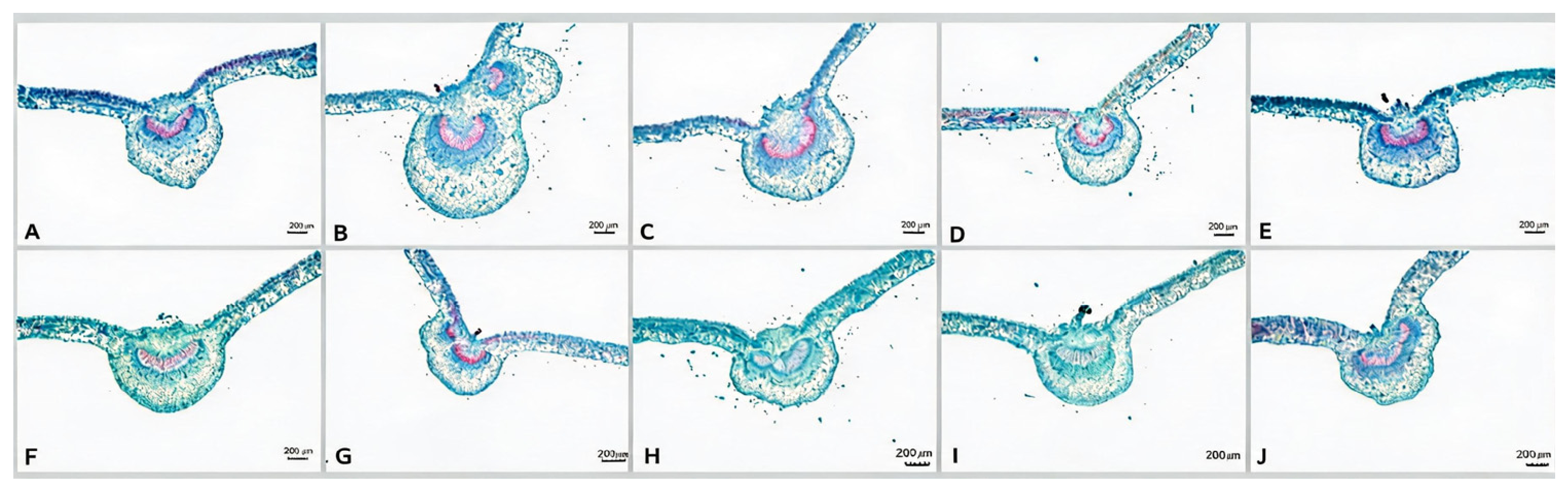
Cross-sectional observations revealed that the leaves of all ten apple rootstocks exhibited typical bifacial anatomy, consisting of an upper epidermis, palisade tissue, spongy tissue, a lower epidermis, and vascular bundles (Figure 1). Both the upper and lower epidermal layers consisted of a single layer of closely arranged rectangular or polygonal cells, with a distinct cuticle layer on the outer surface.
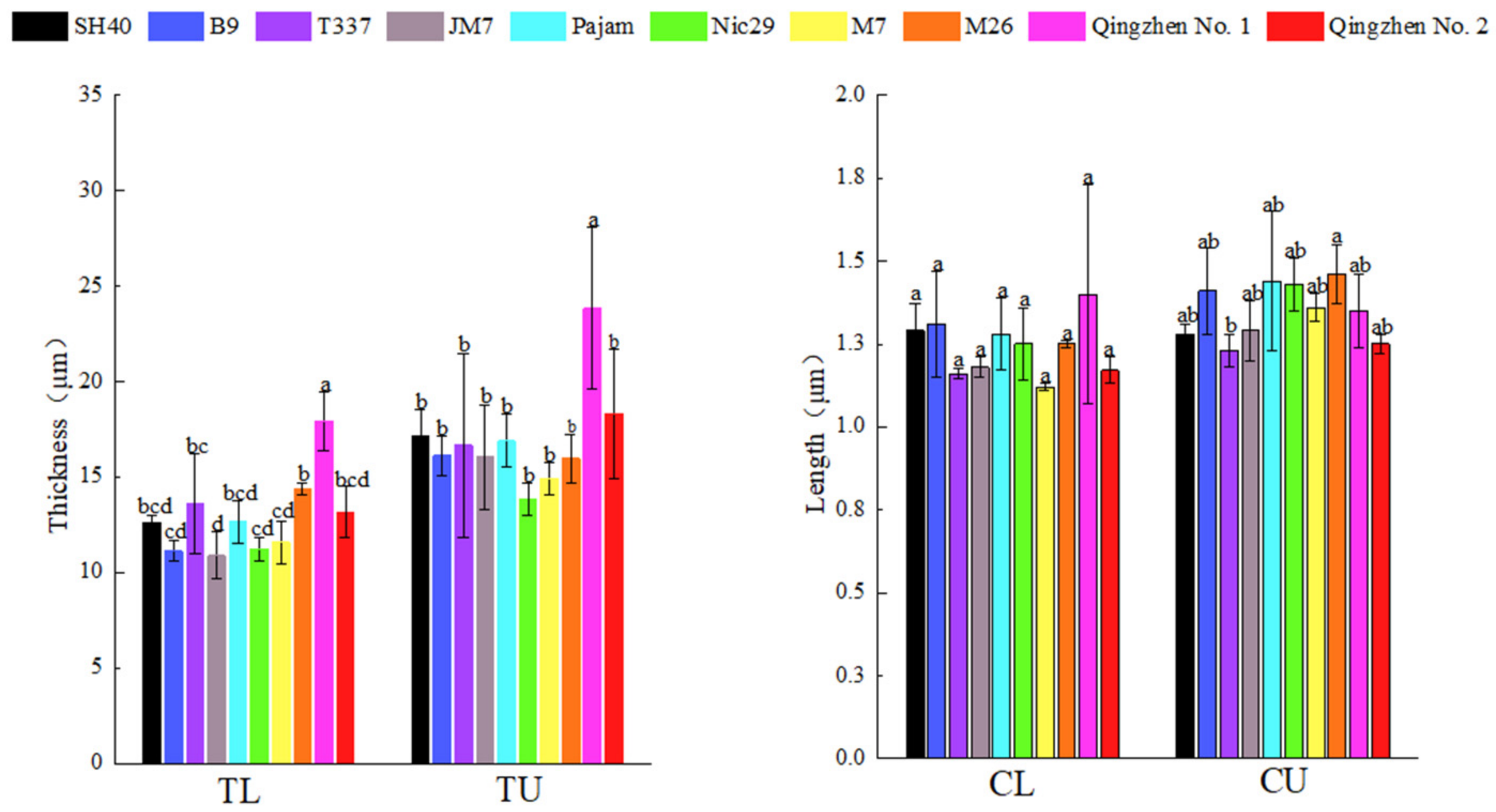
Significant differences were observed among the ten rootstocks in epidermal thickness, whereas cuticular thickness showed relatively limited variation (Table 1). Upper epidermal thickness differed significantly among rootstocks (p < 0.05), with Qingzhen No. 1 exhibiting the greatest value, which was 72.2% higher than that of Nic29. Similarly, Qingzhen No. 1 had the greatest lower epidermal thickness, which was 64.7% higher than that of JM7 (p < 0.05). The coefficients of variation for upper and lower epidermal thickness were 19.94% and 17.61%, respectively.
The upper cuticle of M26 was significantly thicker than that of T337 (p < 0.05), whereas no significant difference was detected in lower cuticle thickness among the rootstocks (p > 0.05). Across all ten rootstocks, upper epidermal thickness was consistently greater than lower epidermal thickness (Figure 2).

3.1.2. Mesophyll Anatomical Characteristics of Leaves

All ten apple rootstocks showed clear differentiation between palisade and spongy tissues. Palisade cells were elongated and densely arranged, whereas spongy tissue cells were irregularly shaped and contained relatively large intercellular spaces.
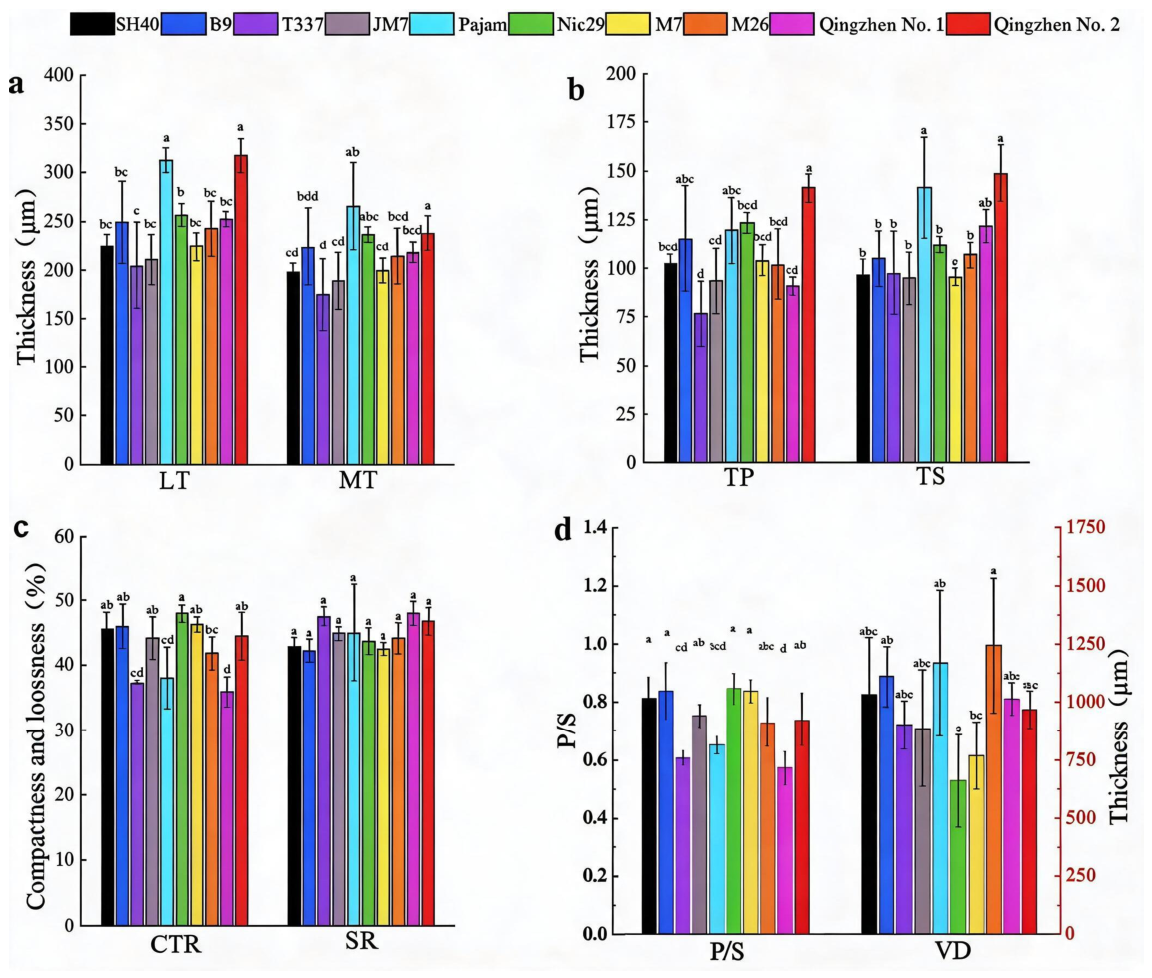
Significant differences were observed among the rootstocks in leaf thickness and mesophyll-related traits (Table 2). Leaf thickness and mesophyll thickness showed similar patterns of variation among genotypes. T337 exhibited the lowest leaf thickness, whereas Qingzhen No. 2 exhibited the highest value (317.70 ± 16.99 μm; p < 0.05). Pajam had the greatest mesophyll thickness (265.73 ± 44.19 μm), with significant differences detected among the rootstocks (p < 0.05).
Palisade and spongy tissue thickness generally followed the variation pattern of total leaf thickness. Qingzhen No. 2 exhibited the greatest palisade tissue thickness (141.41 ± 7.16 μm) and spongy tissue thickness (148.86 ± 14.25 μm), whereas T337 and JM7 showed the lowest values for these traits, respectively (p < 0.05).
The P/S ratio and leaf structural compactness (CTR) exhibited similar ranking patterns among the rootstocks. Both indices were highest in Nic29 and lowest in Qingzhen No. 1 (p < 0.05). In contrast, leaf structural porosity (SR) did not differ significantly among the rootstocks (p > 0.05) (Figure 3).

3.1.3. Characteristics of Leaf Vein Anatomy

Considerable variation was observed in the main vein anatomical characteristics of the ten apple rootstocks. All rootstocks exhibited well-developed vascular bundles within the main veins. Accessory veins adjacent to the main veins were observed in Pajam, M7, M26, and Qingzhen No. 2.
Pajam exhibited the most prominent accessory vein development. Main vein diameter also varied substantially among the rootstocks. M26 exhibited the greatest main vein diameter (1242.78 ± 291.91 μm), whereas Nic29 showed the smallest value (661.56 ± 198.57 μm), representing a difference of approximately 87.8% (Figure 3).
The coefficient of variation for main vein diameter was 24.57%, indicating relatively high variation among the tested rootstocks.

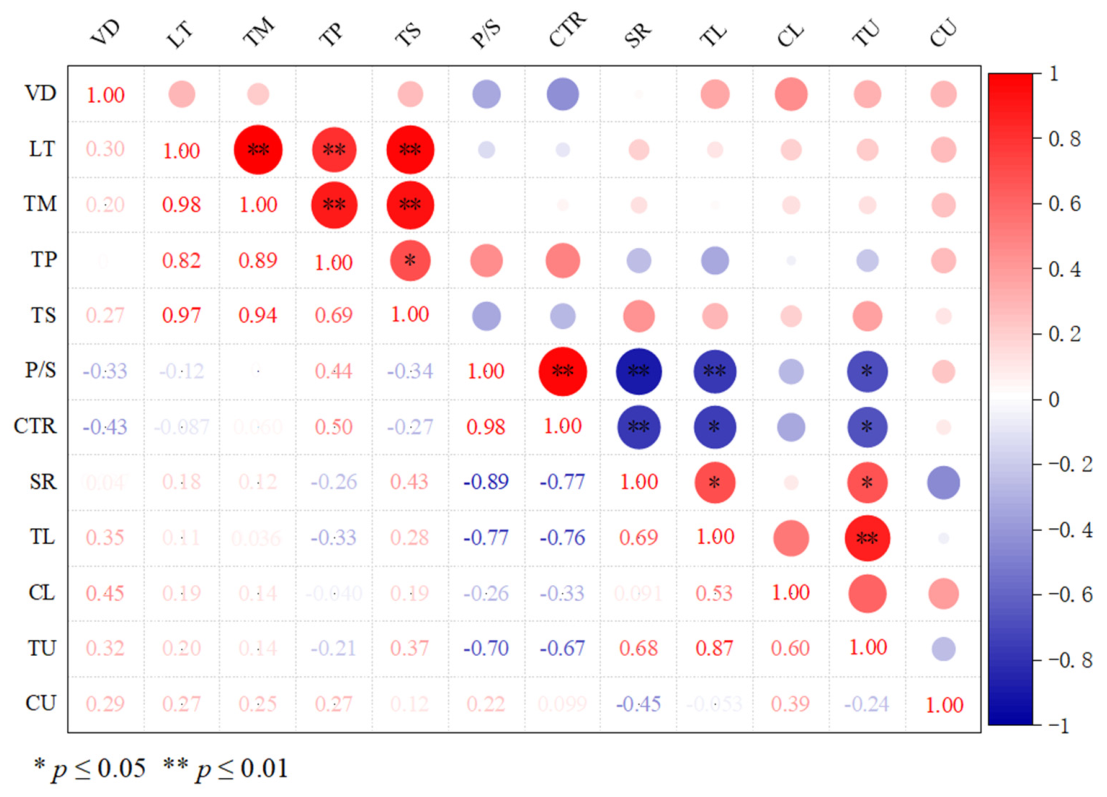
3.1.4. Correlation Analysis Among Leaf Anatomical Traits

Correlation analysis revealed significant associations among several leaf anatomical traits (Figure 4). Leaf thickness, mesophyll thickness, palisade tissue thickness, and spongy tissue thickness were strongly and positively correlated with one another. The strongest correlation was observed between leaf thickness and mesophyll thickness (r ≈ 0.98).
Main vein diameter was not significantly correlated with the mesophyll-related traits examined (p > 0.05). The P/S ratio showed a strong positive correlation with CTR (r ≈ 0.98) and a strong negative correlation with SR (r ≈ −0.89). Epidermal thickness was negatively correlated with the P/S ratio and CTR. Upper and lower epidermal thickness were strongly and positively correlated (r ≈ 0.87).

3.2. Stomatal Characteristics of Apple Rootstock Leaves

3.2.1. Variation in Stomatal Characteristics Among Apple Rootstocks

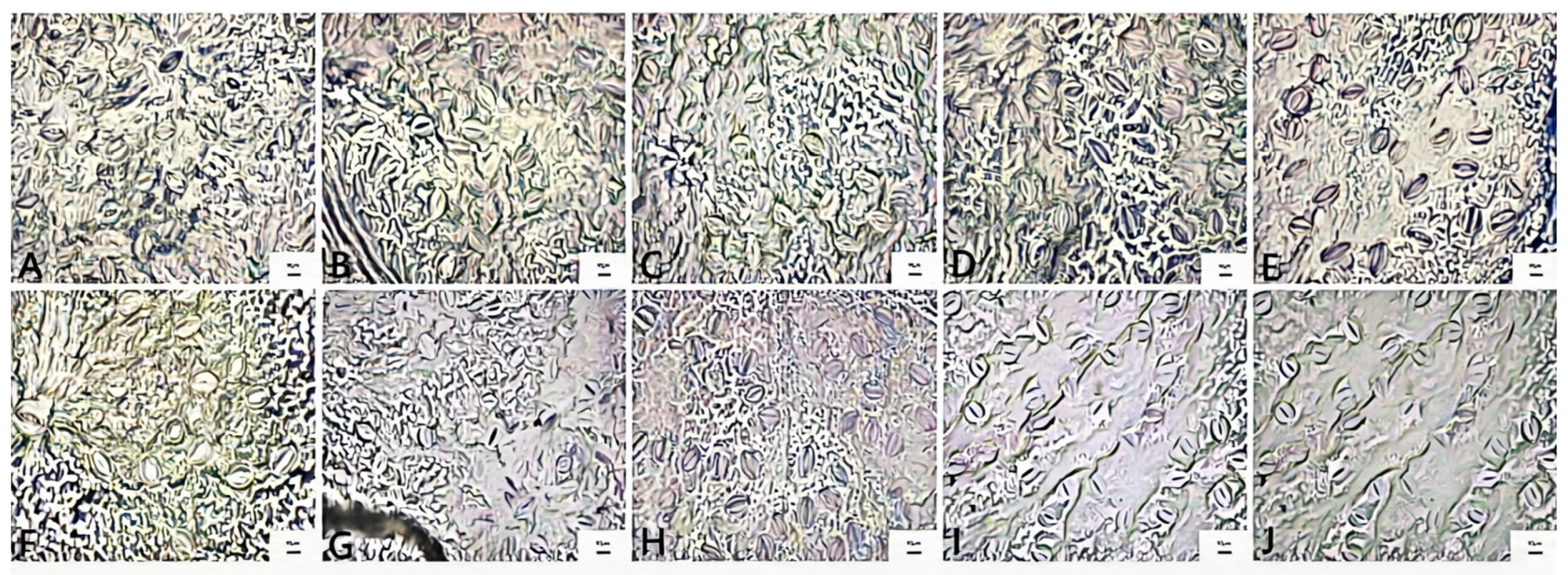
Stomata were predominantly distributed on the abaxial epidermis of leaves in all ten apple rootstocks. The stomatal apparatus was predominantly anomocytic, and individual stomata were generally elliptical to subcircular, with a pair of kidney-shaped guard cells surrounding each stomatal pore [17].
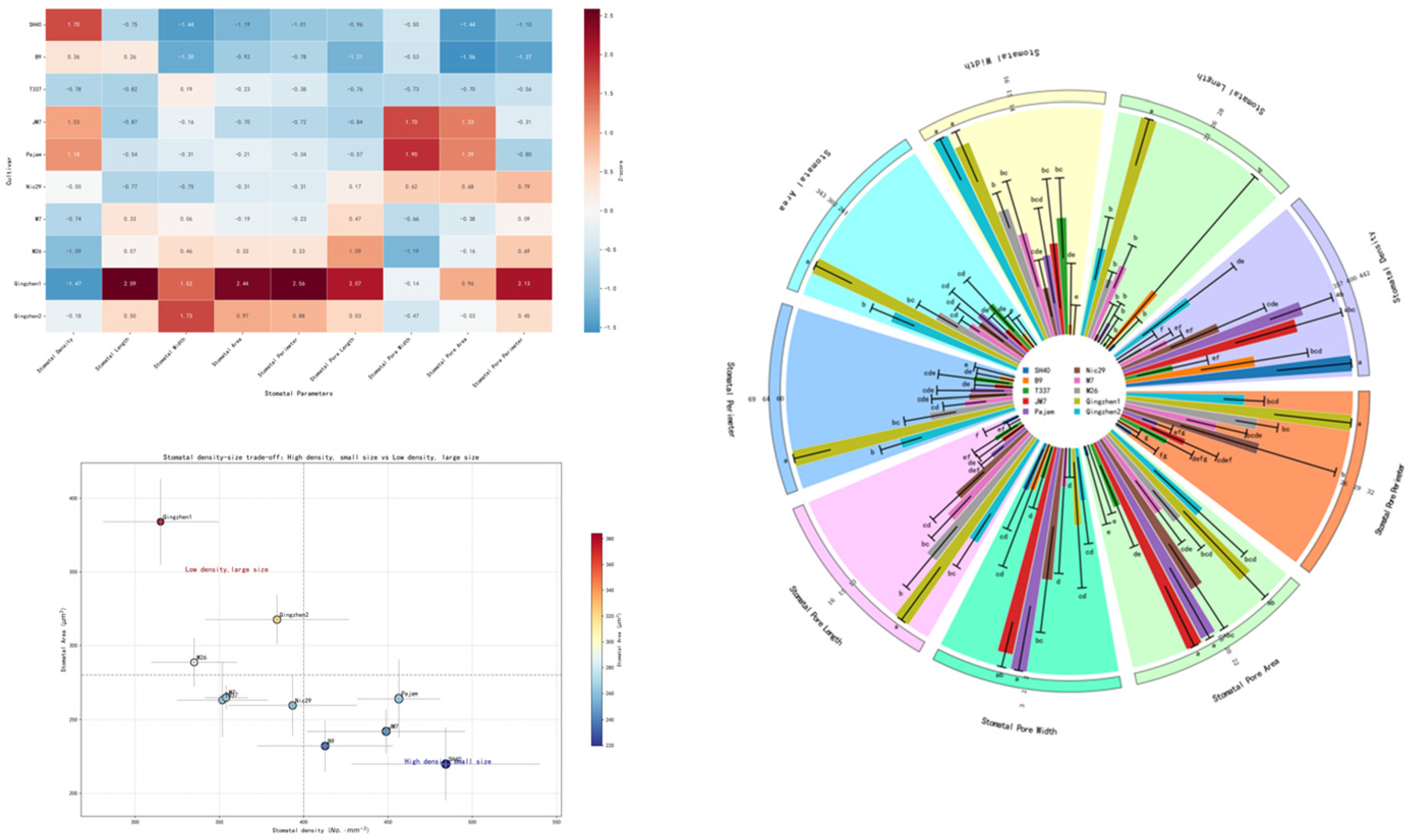
Significant differences were observed among the rootstocks in stomatal density, size, and opening characteristics (Figure 5 and Figure 6). Stomatal density differed significantly among the rootstocks (p < 0.05). SH40 exhibited the highest stomatal density (484.28 ± 55.64 stomata mm−2), whereas Qingzhen No. 1 exhibited the lowest value (315.14 ± 34.15 stomata mm−2). The stomatal density of SH40 was approximately 1.54-fold higher than that of Qingzhen No. 1.
Stomatal size-related traits generally showed an inverse pattern relative to stomatal density. SH40 exhibited the smallest stomatal length, width, area, and perimeter, whereas Qingzhen No. 1 exhibited the largest values for all four traits. The relative differences among rootstocks in these stomatal size parameters ranged from 29.0% to 74.8%.
For stomatal opening characteristics, Qingzhen No. 1 exhibited the greatest stomatal opening length and perimeter, whereas B9 exhibited the smallest values for both parameters. Stomatal opening area was greatest in JM7 and smallest in B9. Pajam exhibited the greatest stomatal opening width, whereas M26 exhibited the smallest value (p < 0.05).

3.2.2. Correlation Analysis Among Stomatal Traits

Correlation analysis revealed significant associations among several stomatal traits.
Stomatal density was negatively correlated with most stomatal size-related parameters. The strongest negative correlation was observed between stomatal density and stomatal opening length (r ≈ −0.74, p < 0.05). In contrast, the correlations of stomatal density with stomatal width, area, perimeter, and opening area were not significant (p > 0.05).
Stomatal perimeter was positively correlated with several stomatal size and opening parameters. The strongest correlation was observed between stomatal perimeter and stomatal area (r ≈ 0.99, p < 0.01). Stomatal opening area was significantly and positively correlated with stomatal opening width (r ≈ 0.75, p < 0.05).
Most stomatal size-related traits, including stomatal length, width, area, perimeter, opening length, and opening perimeter, were significantly and positively correlated with one another (p < 0.05 or p < 0.01).

3.3. Physiological and Biochemical Characteristics of Apple Rootstocks

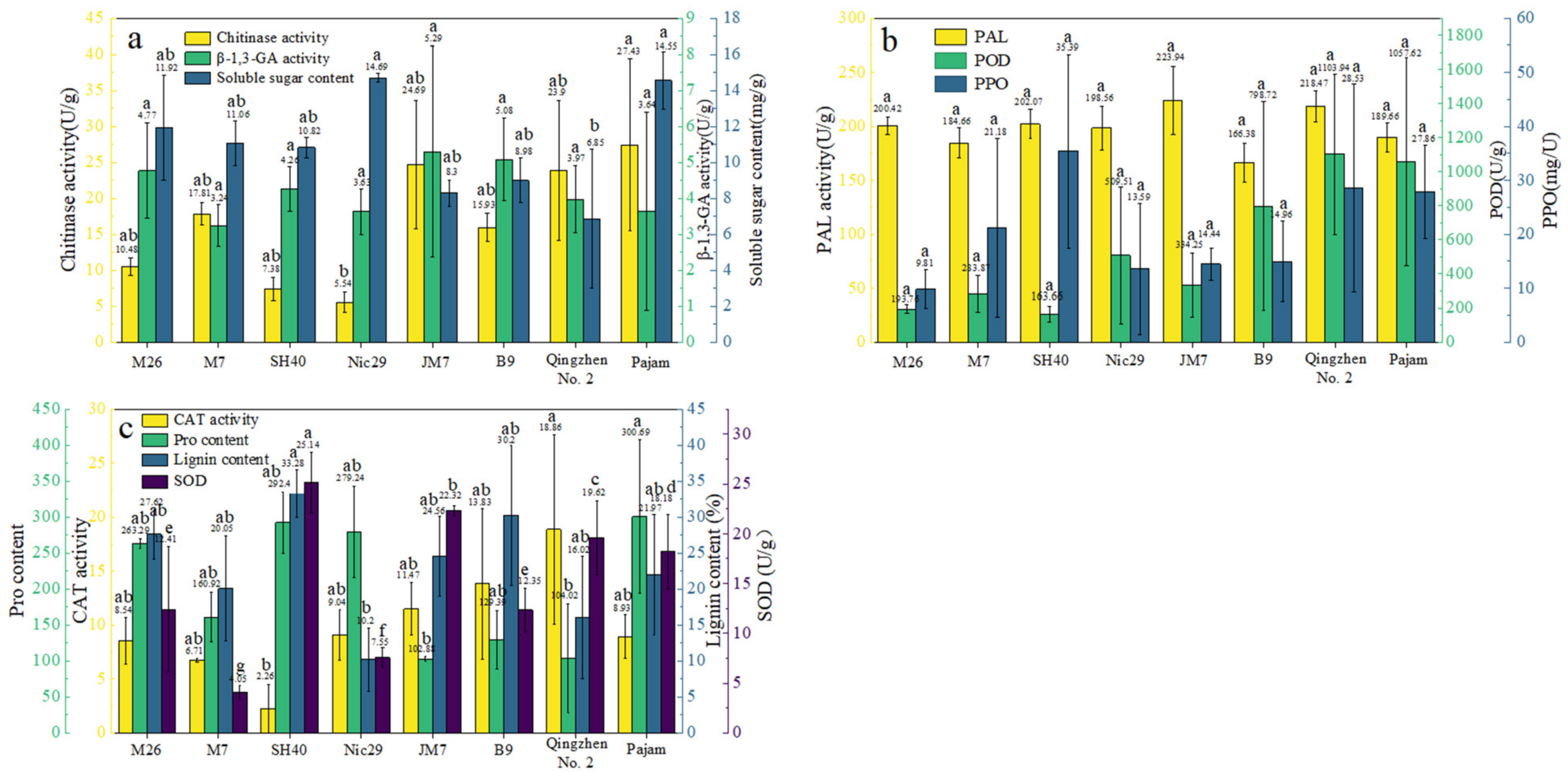
Substantial variation was observed among the ten apple rootstocks in physiological and biochemical indicators associated with drought responses (Figure 7).
Among the cell-wall-related defense traits, chitinase activity varied considerably among rootstocks. Pajam and JM7 exhibited the highest chitinase activities (27.43 ± 12.01 U g−1 and 24.69 ± 8.96 U g−1, respectively), whereas Nic29 exhibited the lowest activity (5.54 ± 1.37 U g−1). The activities in Pajam and JM7 were approximately fivefold higher than that in Nic29.
Lignin content was highest in SH40 and B9 (33.28 ± 3.30% and 30.20 ± 9.71%, respectively) and lowest in Nic29 (10.20 ± 4.41%). β-1,3-glucanase activity showed comparatively limited variation, ranging from 3.24 ± 0.58 U g−1 to 5.29 ± 2.93 U g−1.
Among the osmotic adjustment-related compounds, soluble sugar content was highest in Nic29 and Pajam (14.69 ± 0.24 mg g−1 and 14.55 ± 1.58 mg g−1, respectively). Proline content was highest in Pajam and SH40 (300.69 ± 106.53 μg g−1 and 292.40 ± 42.90 μg g−1, respectively).
Antioxidant enzyme activities also differed among the rootstocks. POD activity was highest in Qingzhen No. 2 and Pajam (1103.94 ± 470.43 U g−1 and 1057.62 ± 609.21 U g−1, respectively) and lowest in SH40 (163.66 ± 47.47 U g−1). CAT activity was highest in Qingzhen No. 2 and B9 (18.86 ± 8.77 U g−1 and 13.83 ± 6.99 U g−1, respectively), whereas SH40 exhibited the lowest CAT activity (2.26 ± 2.26 U g−1).
SOD activity was relatively high in SH40 and JM7 (25.14 ± 3.03 U g−1 and 22.32 ± 0.53 U g−1, respectively) and lowest in M7 (4.05 ± 0.68 U g−1). PPO activity was relatively high in SH40 and Qingzhen No. 2 (35.39 ± 17.93 mg U−1 and 28.53 ± 19.29 mg U−1, respectively).
Overall, the ten rootstocks exhibited distinct profiles across the measured physiological and biochemical indicators.

3.4. Principal Component Analysis and Comprehensive Evaluation of Drought Resistance

3.4.1. Principal Component Analysis of Leaf Anatomical and Stomatal Traits

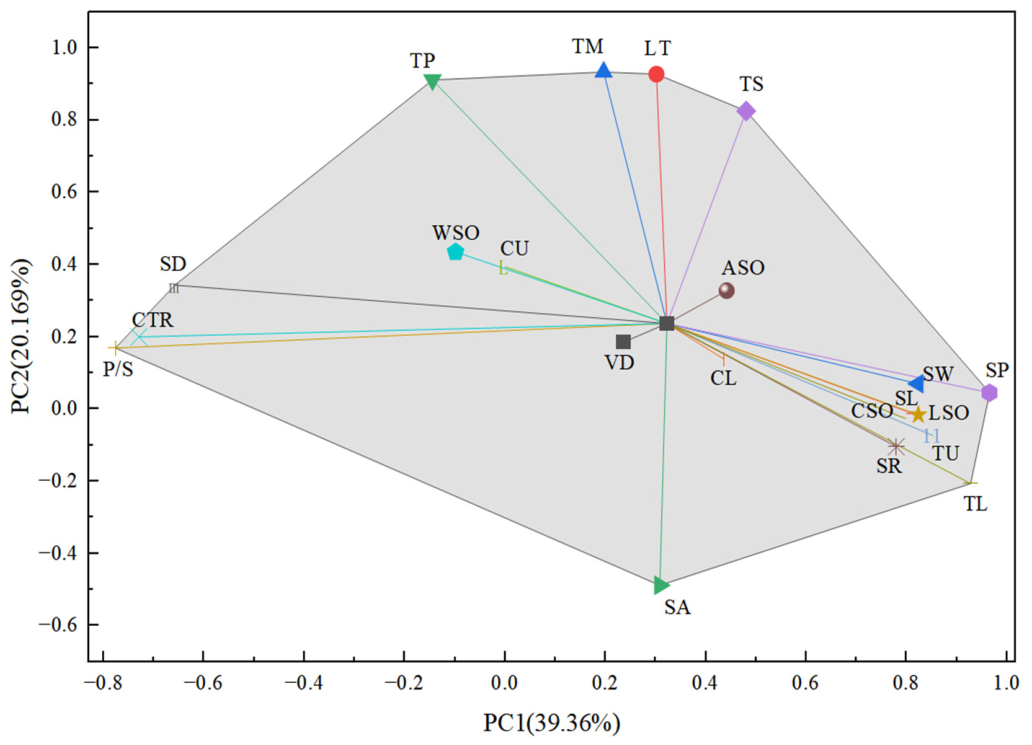
Principal component analysis (PCA) was conducted using the rootstock-level means of 21 leaf anatomical and stomatal traits, including 12 anatomical variables and nine stomatal variables. The data matrix consisted of 10 observations (the ten rootstocks) × 21 variables. Three biological replicates obtained for each rootstock were first averaged for each trait, and the resulting rootstock-level means were used for PCA. Five principal components with eigenvalues greater than 1 were extracted, collectively explaining 91.888% of the total variance. The first four principal components accounted for 82.549% of the cumulative variance.
PC1 explained the largest proportion of the total variance (39.36%), followed by PC2, PC3, and PC4, which explained 20.169%, 11.805%, and 11.214%, respectively.
The loading matrix showed distinct contributions of the measured traits to the principal components (Figure 8). PC1 showed high positive loadings for epidermal thickness, stomatal size-related traits, and SR, whereas the P/S ratio and CTR showed negative loadings. PC2 was mainly associated with mesophyll-related traits, including leaf thickness, mesophyll thickness, palisade tissue thickness, and spongy tissue thickness.

3.4.2. Principal Component Analysis of Physiological and Biochemical Indicators

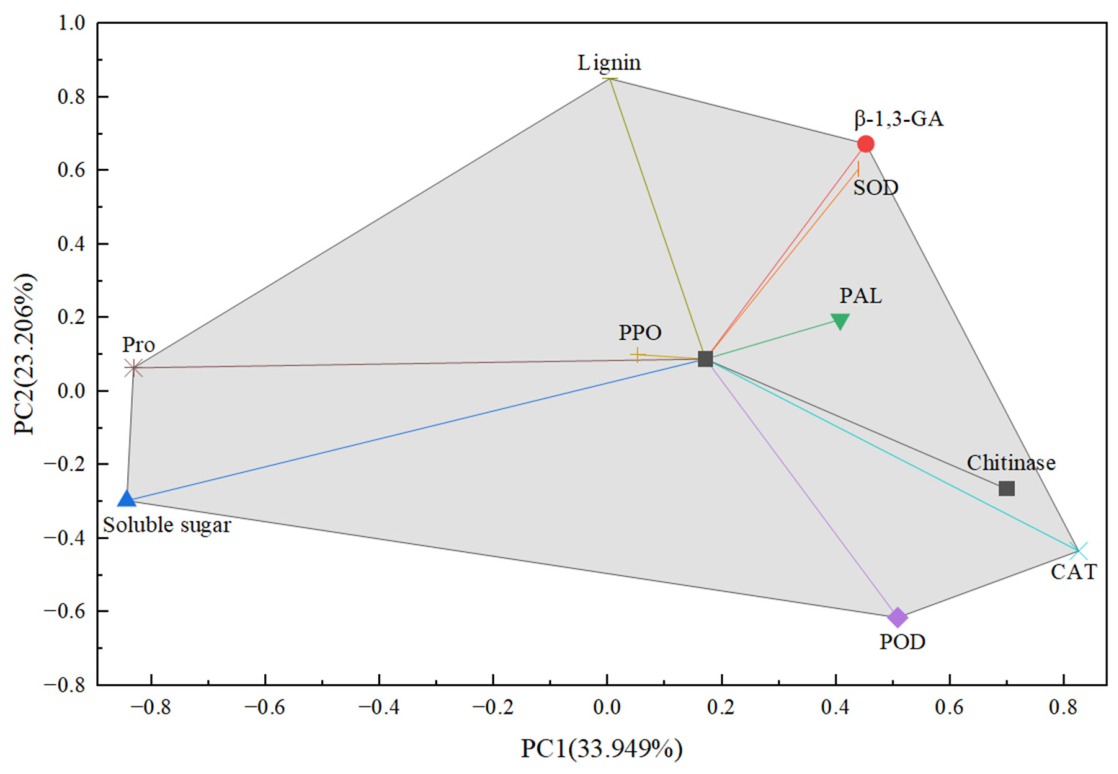
A second PCA was conducted using the rootstock-level means of the 10 physiological and biochemical indicators retained for multivariate analysis. The data matrix consisted of 10 observations (the ten rootstocks) × 10 variables. Three biological replicates obtained for each rootstock were first averaged for each indicator, and the resulting rootstock-level means were used for PCA. The two PCAs were retained as separate analyses because the anatomical/stomatal traits and physiological/biochemical indicators represent biologically distinct response domains and were intended to identify domain-specific patterns and representative indicators. Combining all variables into a single PCA was not used because the objective was not to define a single latent structure across all measurements, but to reduce dimensionality within each domain before the subsequent integrated membership-function and TOPSIS evaluation. Four principal components with eigenvalues greater than 1 were extracted, collectively explaining 87.394% of the total variance.
PC1 accounted for the largest proportion of the total variance (33.949%), followed by PC2 (23.206%), PC3 (18.637%), and PC4 (11.602%).
The loading matrix showed that PC1 was characterized by high loadings for CAT and chitinase activities, whereas soluble sugar and proline exhibited opposite loading patterns. PC2 showed high positive loadings for lignin, β-1,3-glucanase, and SOD, whereas POD and CAT exhibited negative loadings (Figure 9).

3.4.3. Comprehensive Evaluation Using Membership Function and TOPSIS

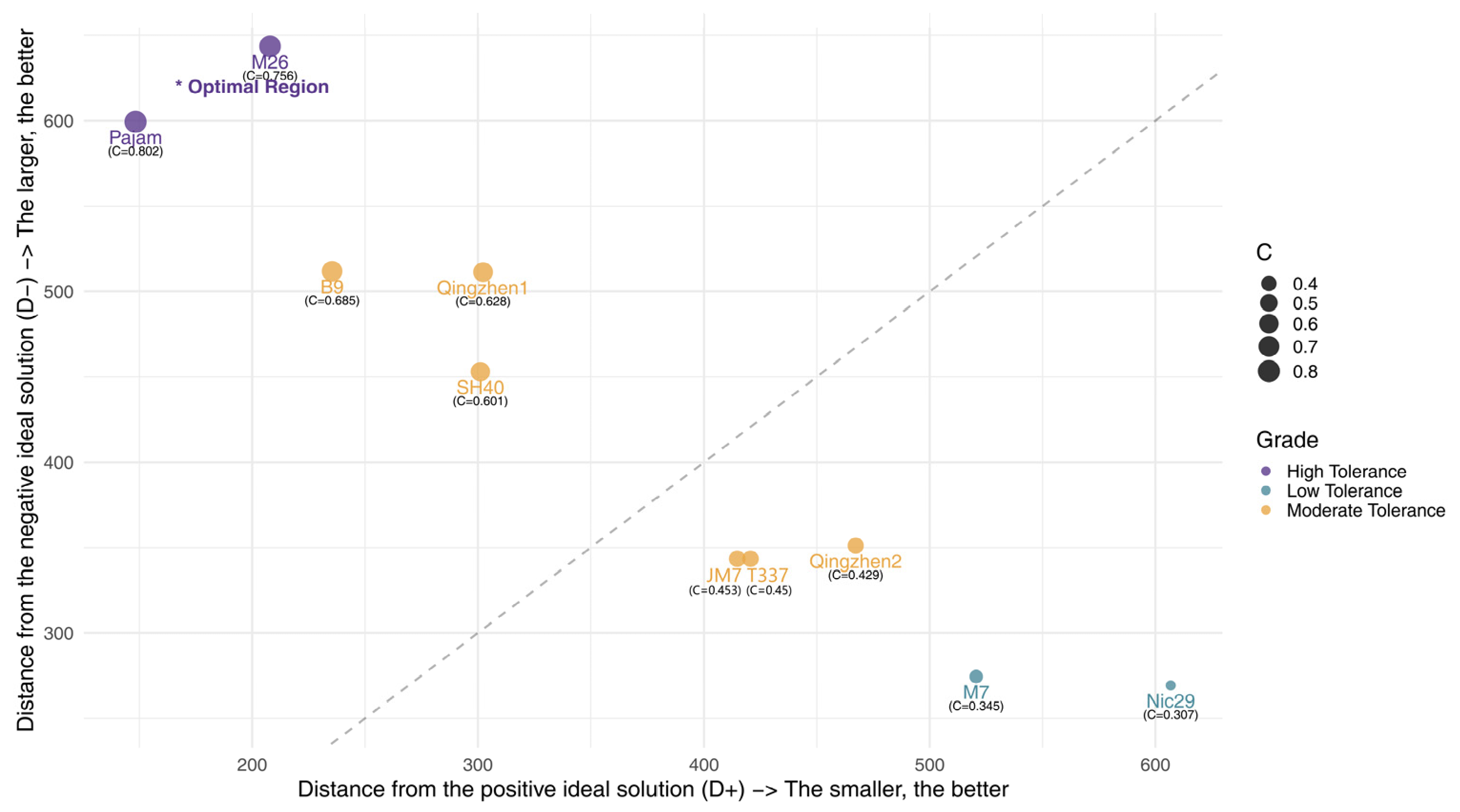
Based on nine representative indicators selected from the PCA results, membership function values were calculated and subsequently integrated using the TOPSIS method.
The rankings obtained from the two evaluation approaches were highly consistent. Pajam exhibited the highest comprehensive drought-resistance score, followed by M26 and B9, whereas Nic29 and M7 exhibited relatively low scores.
The TOPSIS relative closeness coefficients (C) ranged from 0.307 to 0.802. Based on the relative closeness coefficients, the ten rootstocks were classified into three drought-resistance categories: high drought resistance, moderate drought resistance, and low drought resistance (Figure 10).
Pajam exhibited the shortest distance to the positive ideal solution (148.289) and the greatest distance to the negative ideal solution (599.326), corresponding to the highest comprehensive drought-resistance score. In contrast, Nic29 exhibited the greatest distance to the positive ideal solution (606.842) and the shortest distance to the negative ideal solution (269.251).
Overall, Pajam and M26 were classified as having high drought resistance; B9, Qingzhen No. 1, SH40, JM7, T337, and Qingzhen No. 2 were classified as having moderate drought resistance; and M7 and Nic29 were classified as having low drought resistance. The results indicate that drought-resistance performance differed substantially among the ten rootstocks and was associated with coordinated variation across anatomical, stomatal, physiological, and biochemical characteristics.

4. Discussion

4.1. Integrated Drought-Resistance Strategies of Apple Rootstocks Under Extremely Arid Conditions

Drought resistance is a complex quantitative trait that results from the coordinated regulation of structural, stomatal, osmotic, and antioxidant processes rather than from a single physiological characteristic [5,18]. In the present study, substantial variation was observed among the ten apple rootstocks in leaf anatomical traits, stomatal characteristics, and physiological and biochemical responses under the extremely arid conditions of Yanchi County. The integration of these multidimensional traits through principal component analysis (PCA), membership function analysis, and TOPSIS effectively differentiated the tested rootstocks into distinct drought-resistance categories. Pajam and M26 exhibited the highest comprehensive drought-resistance performance, followed by B9, Qingzhen No. 1, SH40, JM7, T337, and Qingzhen No. 2, whereas M7 and Nic29 showed relatively low comprehensive drought resistance.
The superior performance of Pajam is unlikely to be attributable to a single dominant trait. Rather, its high comprehensive score appears to reflect the coordinated contribution of several structural and physiological characteristics. Pajam exhibited relatively thick mesophyll, a relatively large stomatal opening width, high proline accumulation, and high POD activity. These traits represent different components of plant adaptation to water deficit. Greater mesophyll development may help preserve the structural integrity of photosynthetically active tissues under dehydration, whereas stomatal regulation determines the balance between CO2 acquisition and transpirational water loss. Proline accumulation may contribute to osmotic adjustment, while enhanced antioxidant enzyme activity may be associated with the maintenance of cellular redox homeostasis under drought-induced oxidative stress. The simultaneous occurrence of these characteristics supports the concept that drought resistance in apple rootstocks is a multidimensional trait generated by the coordination of structural and physiological responses [19].
Importantly, the present study extends previous evaluations of apple rootstock drought responses by examining these traits under an extremely arid field environment rather than under short-term, artificially imposed drought conditions alone. Previous studies have demonstrated that apple rootstocks differ in stomatal regulation, leaf water relations, root-associated microbial interactions, and the timing and magnitude of stomatal closure in response to soil drying [20,21]. These findings suggest that rootstock drought resistance depends strongly on the interaction between genotype and environmental conditions. Therefore, the high performance of Pajam observed here should be interpreted as evidence of its favorable trait combination under the specific environmental conditions of Yanchi County, rather than as evidence of universally superior drought resistance across all environments.
The multidimensional nature of the responses observed in this study also has practical implications for rootstock evaluation. Under extremely arid conditions, plants are simultaneously exposed to soil-water limitation and high atmospheric evaporative demand. A rootstock that conserves water through strong stomatal restriction may reduce water loss but may also limit carbon assimilation, whereas a rootstock maintaining greater stomatal opening may sustain carbon uptake at the cost of increased water loss. Consequently, effective drought adaptation is likely to depend on maintaining a functional balance between water conservation, carbon acquisition, cellular protection, and structural integrity. The present ranking of rootstocks therefore provides evidence that comprehensive evaluation based on multiple complementary traits may better capture drought performance than selection based on any individual indicator.

4.2. Contribution of Leaf Anatomical Traits and Stomatal Characteristics to Drought Adaptation

Leaf anatomical characteristics provide an important structural foundation for maintaining photosynthetic function and regulating water use under drought. Mesophyll and palisade tissue development can influence light interception, internal CO2 diffusion, and the preservation of photosynthetically active tissues during water limitation [22]. Previous studies have reported substantial differences among apple rootstocks in leaf thickness, palisade tissue thickness, and spongy tissue thickness under drought conditions [2,3], supporting the importance of leaf structural plasticity in drought adaptation.
In the present study, Pajam exhibited relatively thick mesophyll, which may contribute to maintaining the structural integrity of photosynthetically active tissues during water deficit. However, the comprehensive drought-resistance ranking also demonstrates that no single anatomical characteristic was sufficient to explain overall drought performance. For example, M26 exhibited the greatest main vein diameter, yet its comprehensive drought-resistance score remained lower than that of Pajam. This discrepancy indicates that greater vascular development alone does not necessarily result in superior drought resistance. Instead, the functional significance of vascular traits may depend on their coordination with mesophyll development, stomatal regulation, and physiological protection mechanisms [23,24]. Thus, anatomical traits should be interpreted as components of an integrated hydraulic and photosynthetic system rather than as independent determinants of drought resistance.
Stomatal characteristics provide another important component of this integrated response because stomata simultaneously regulate CO2 uptake and transpirational water loss [25]. Differences in stomatal density, size, and aperture among apple rootstocks may therefore reflect contrasting strategies for balancing carbon gain and water conservation. Previous studies have demonstrated considerable variation in stomatal characteristics among apple rootstocks, indicating that different genotypes may employ distinct strategies to cope with water limitation [26,27].
Pajam had the largest stomatal opening width, although its stomatal opening area and perimeter were not the largest among the tested rootstocks. This result is important because it demonstrates that stomatal responses cannot be adequately characterized by a single geometric parameter. Similarly, B9 exhibited the smallest stomatal opening area and perimeter, which may indicate a relatively conservative strategy for limiting transpirational water loss. Nevertheless, strong stomatal restriction may also reduce CO2 diffusion and photosynthetic carbon assimilation. Therefore, the present findings support the interpretation that successful drought adaptation is not necessarily associated with the smallest stomatal aperture, but rather with an appropriate balance between water conservation and carbon acquisition [28].
Taken together, the anatomical and stomatal results suggest that drought adaptation in the tested apple rootstocks involves different combinations of structural and regulatory characteristics. The relatively high performance of Pajam despite its comparatively large stomatal opening width further indicates that drought resistance cannot be inferred simply from the degree of stomatal closure. Instead, stomatal behavior should be considered together with leaf structural traits and physiological mechanisms that may compensate for potential increases in transpirational water loss. This integrated perspective may explain why multivariate evaluation produced a more informative ranking than interpretation of individual leaf traits.

4.3. Physiological and Biochemical Responses Associated with Drought Resistance

Water deficit can disrupt cellular water balance and promote excessive accumulation of reactive oxygen species (ROS), making osmotic adjustment and antioxidant defense important components of plant drought responses. Compatible solutes such as proline and soluble sugars can contribute to osmotic adjustment and cellular water balance, whereas antioxidant enzymes including SOD, POD, and CAT participate in the regulation of ROS [29]. Previous studies of apple rootstocks have also demonstrated substantial genotypic variation in antioxidant responses under water deficit [30,31], suggesting that differences in osmotic and oxidative-stress regulation may contribute to variation in drought performance.
The present study revealed clear differences among rootstocks in physiological and biochemical traits associated with osmotic adjustment and antioxidant defense. Qingzhen No. 2 and B9 exhibited relatively high POD and CAT activities, whereas SH40 showed relatively high SOD and PPO activities. These contrasting response patterns indicate that different rootstocks may rely on different combinations of antioxidant components under drought. In other words, drought adaptation may involve not simply an overall increase in antioxidant enzyme activity but also genotype-specific coordination among different antioxidant systems. Such variation may help explain why individual biochemical indicators did not necessarily correspond directly to the final comprehensive drought-resistance ranking.
Pajam exhibited relatively high proline accumulation together with comparatively high antioxidant enzyme activity. The simultaneous occurrence of these responses is consistent with coordinated regulation of osmotic and oxidative stress. Proline accumulation may contribute to cellular osmotic adjustment, whereas increased POD activity may be associated with enhanced capacity for controlling ROS-related oxidative damage [32,33]. However, these interpretations should remain cautious because ROS concentrations, leaf water potential, stomatal conductance, photosynthetic rate, and gas-exchange parameters were not directly measured in the present study. Therefore, the observed enzyme activities should be regarded as physiological indicators associated with drought responses rather than direct measurements of ROS-scavenging efficiency or cellular water status.
The physiological results nevertheless provide an important complement to the anatomical and stomatal observations. A rootstock with favorable leaf structure and stomatal characteristics may still experience cellular oxidative stress if water deficit exceeds its protective capacity. Conversely, strong antioxidant and osmotic responses may help maintain cellular function even when structural traits alone do not appear exceptional. The relatively high comprehensive performance of Pajam may therefore reflect the simultaneous contribution of structural protection, stomatal regulation, osmotic adjustment, and antioxidant defense. This interpretation is broadly consistent with recent studies showing that drought-resistant apple rootstocks may maintain stronger osmoregulatory and antioxidant capacities than drought-sensitive materials [34,35].
However, the present results do not establish a direct causal relationship between these physiological responses and drought resistance. Future research integrating ROS measurements, leaf water potential, gas exchange, chlorophyll fluorescence, and molecular analyses will be necessary to determine whether the physiological traits identified here directly contribute to the superior drought performance of Pajam and other highly ranked rootstocks [36].
The drought-related responses observed in the present study are broadly consistent with previous studies of apple and Malus materials, although substantial genotype- and environment-dependent variation was also evident. Previous investigations have demonstrated that drought stress can induce changes in leaf anatomical structure, stomatal characteristics, osmotic adjustment, and antioxidant defense in apple rootstocks and related Malus genotypes. In the present study, considerable differences were observed in leaf thickness and mesophyll-related traits among the ten rootstocks, supporting previous evidence that leaf structural characteristics vary among apple genotypes and may contribute to drought adaptation. Similarly, the substantial variation in stomatal density and stomatal dimensions observed among the rootstocks is consistent with previous reports that apple rootstock genotype can influence stomatal architecture and potentially affect the regulation of transpirational water loss.
The physiological and biochemical responses observed in the present study also agree with the general patterns reported previously. Increased accumulation of compatible solutes, particularly proline and soluble sugars, has been associated with osmotic adjustment under water deficit in apple and other Malus materials. Likewise, changes in antioxidant enzymes, including SOD, POD, and CAT, have frequently been reported as important components of drought-response mechanisms. In the present study, the rootstocks differed markedly in proline accumulation and antioxidant enzyme activities, but the responses were not uniform across all enzymes. This finding suggests that different rootstocks may employ distinct combinations of osmotic-adjustment and antioxidant strategies rather than relying on a single physiological mechanism. The relatively strong comprehensive performance of Pajam was associated with the combined expression of several favorable anatomical, stomatal, osmotic, and antioxidant traits, which is consistent with the multidimensional nature of drought adaptation reported in previous apple studies.
Some differences between the present results and previous reports were also observed. Such differences are not unexpected because drought responses are strongly influenced by genotype, environmental conditions, drought severity and duration, plant developmental stage, scion–rootstock combination, and experimental methodology. In particular, the present study was conducted under extremely arid field conditions, whereas many previous studies were performed under controlled pot experiments or short-term water-deficit treatments. Therefore, the absolute values of individual traits should not be interpreted as universal thresholds for drought resistance. Instead, comparison with previous studies provides support for the biological relevance of the major response patterns identified here. The present study further extends previous work by evaluating anatomical, stomatal, physiological, and biochemical traits simultaneously and integrating these trait domains into a comprehensive screening framework for apple rootstocks under severe arid field conditions.

4.4. Integrated Evaluation of Drought Resistance and Implications for Rootstock Selection

Because drought resistance involves multiple interacting traits, the use of a single physiological or anatomical indicator is unlikely to provide a reliable estimate of overall drought adaptation. Previous studies have therefore combined morphological, anatomical, photosynthetic, and physiological characteristics to evaluate drought responses in apple rootstocks [7,8,15]. Building on this multidimensional concept, the present study integrated 21 leaf anatomical and stomatal traits with the 10 physiological and biochemical indicators actually measured in this experiment and subsequently applied PCA, membership function analysis, and TOPSIS for comprehensive evaluation.
The PCA results showed that the multidimensional leaf anatomical and stomatal dataset could be summarized by five principal components, indicating that the complex variation among the rootstocks could be effectively summarized by a smaller number of independent dimensions. Nine representative indicators were subsequently selected for comprehensive evaluation. The broadly consistent results obtained from membership function analysis and TOPSIS further support the robustness of the classification under the conditions examined in this study. This agreement is particularly important because it reduces the likelihood that the final drought-resistance ranking was driven by a single statistical method.
Pajam, M26, and B9 were ranked among the relatively drought-resistant materials, whereas M7 and Nic29 showed comparatively poor performance. This pattern is consistent with the broader understanding that apple rootstocks differ substantially in water-use strategies, stomatal regulation, water relations, and root-related responses to drought [20,21,37,38]. Nevertheless, the present study suggests that these differences should not be interpreted independently. The comprehensive performance of a rootstock is likely to emerge from interactions among leaf structure, stomatal regulation, osmotic adjustment, and antioxidant protection.
The implications of these findings extend beyond the ranking of individual rootstocks. In extremely arid and semi-arid apple-growing regions, rootstock selection is an important component of orchard water management because rootstock characteristics can influence plant water use, physiological stability, and the ability of trees to maintain growth under limited water availability. The identification of Pajam and M26 as high-performing materials and B9 as another promising candidate provides a basis for subsequent field validation and targeted rootstock selection in water-limited environments. At the same time, the results indicate that rootstock selection should be considered together with local soil conditions, irrigation availability, atmospheric demand, scion genotype, and orchard management practices.
Importantly, the present ranking should not be interpreted as a universal hierarchy of drought tolerance. Rootstock performance is inherently environment-dependent and may change with soil water availability, soil properties, vapor pressure deficit, root-system development, scion genotype, and the timing and duration of drought. Therefore, the primary value of the present study is not simply the identification of a single “best” rootstock, but the development of a multidimensional framework for screening rootstocks under extremely arid conditions. Such a framework can provide a useful bridge between physiological characterization and practical rootstock selection.

4.5. Limitations, Future Research, and Experimental Perspectives

This study has several limitations. First, the experiment was conducted at a single field site and during one sampling season, and therefore the stability of the observed rootstock ranking across different environments and years requires further validation. Second, the present evaluation focused mainly on leaf anatomical, stomatal, physiological, and biochemical characteristics and did not directly assess root-system architecture, whole-plant hydraulic conductance, leaf water potential, gas exchange, or ROS accumulation. Future studies combining root, stem, and leaf traits with hydraulic and gas-exchange measurements across multiple environments and growing seasons will help clarify the mechanisms underlying the drought responses identified in this study and improve the robustness of rootstock selection under water-limited conditions [39].

5. Conclusions

The ten apple rootstocks evaluated under the extremely arid conditions of Yanchi County exhibited substantial differences in leaf anatomical traits, stomatal characteristics, and physiological and biochemical responses, demonstrating pronounced phenotypic variation in drought-related traits among the tested materials. An integrated evaluation framework combining PCA, membership function analysis, and TOPSIS effectively summarized the multidimensional variation and enabled the differentiation of rootstocks according to their comprehensive drought-resistance performance.
Among the ten rootstocks, Pajam exhibited the highest comprehensive drought-resistance performance, followed by M26 and B9, whereas M7 and Nic29 showed relatively low performance. The superior ranking of Pajam was associated with a combination of favorable leaf anatomical, stomatal, osmotic-adjustment, and antioxidant characteristics, including relatively thick mesophyll, a relatively large stomatal opening width, high proline accumulation, and high POD activity. These characteristics should be regarded as associated phenotypic traits rather than individually validated causal determinants of drought resistance.
Overall, the present findings identify Pajam as a promising candidate rootstock for apple production under extremely arid conditions, with M26 and B9 representing additional candidate resources for further evaluation. The results provide a multidimensional phenotypic framework for screening apple rootstocks and may contribute to rootstock selection for water-limited environments in Ningxia and other arid-to-semiarid regions of the Loess Plateau. However, because the present study was conducted at a single field site and did not include molecular analyses or commercial rootstock–scion combinations, the observed rankings should be considered environment-specific screening results rather than universal estimates of drought tolerance. Multi-year and multi-location trials, together with rootstock–scion and deficit-irrigation experiments, are needed to validate the stability and practical value of these rankings for orchard-scale production.

Author Contributions

Conceptualization, J.Z. and X.Z.; methodology, L.W. and Y.L.; software, Z.W. and P.Z.; validation, W.X.; formal analysis, X.Z.; investigation, Y.R. and J.W.; resources, J.Z.; data curation, Z.W.; writing—original draft preparation, J.Z. and X.Z.; writing—review and editing, X.Z.; visualization, Z.B.; supervision, Z.B.; project administration, J.Z. and X.Z.; funding acquisition, X.Z. All authors have read and agreed to the published version of the manuscript.

Funding

This research was funded by the Ningxia Natural Science Foundation (Grant No. 2026AAC030362) and the Research Initiation Project of North Minzu University (grant number 2023QNPY25 and 2023QNPY26).

Data Availability Statement

The original contributions presented in this study are included in the article. Further inquiries can be directed to the corresponding authors.

Conflicts of Interest

The authors declare no conflicts of interest.

References

  1. Jiang, L.; Shen, W.; Liu, C.; Tahir, M.M.; Li, X.; Zhou, S.; Ma, F.; Guan, Q. Engineering drought-tolerant apple by knocking down six GH3 genes and potential application of transgenic apple as a rootstock. Hortic. Res. 2022, 9, uhac122. [Google Scholar] [CrossRef] [Scilit] [PubMed]
  2. Sun, P.; Tahir, M.M.; Lu, X.; Liu, Z.; Zhang, X.; Zuo, X.; Shao, Y.; Xiao, X.; An, N.; Wang, C.; et al. Comparison of leaf morphological, anatomical, and photosynthetic responses to drought stress among eight apple rootstocks. Fruit Res. 2022, 2, 20. [Google Scholar] [CrossRef] [Scilit]
  3. Wójcik, D.; Marat, M.; Marasek-Ciołakowska, A.; Klamkowski, K.; Buler, Z.; Podwyszyńska, M.; Tomczyk, P.P.; Wójcik, K.; Treder, W.; Filipczak, J. Apple Autotetraploids—Phenotypic Characterisation and Response to Drought Stress. Agronomy 2022, 12, 161. [Google Scholar] [CrossRef] [Scilit]
  4. Lee, B.-R.; Park, S.-H.; Muchlas, M.; Bae, D.-W.; Kim, T.-H. Biochar application alleviates drought-induced oxidative stress by activating the salicylic acid-mediated glutathione synthesis pathway in Brassica napus. BMC Plant Biol. 2025, 25, 1582. [Google Scholar] [CrossRef] [Scilit] [PubMed]
  5. Hnilicka, F.; Rýgl, T.; Suran, P.; Zelený, L.; Akgűn, N. Water Deficit and Rehydration Reveal Genotypic Differences in Apple Tree Physiological Performance. Plants 2026, 15, 1179. [Google Scholar] [CrossRef] [Scilit] [PubMed]
  6. Ji, X.; Tang, J.; Zheng, X.; Li, A.; Zhang, J. The regulating mechanism of salt tolerance of black walnut seedlings was revealed by the physiological and biochemical integration analysis. Plant Physiol. Biochem. 2024, 210, 108548. [Google Scholar] [CrossRef] [Scilit] [PubMed]
  7. Bai, J.; Wang, Y.; Zhang, Y.; Liu, X.; Xue, W.; Zhang, Y.; Si, B.; Huang, X.; Zhou, J.; Wang, J.; et al. Drought Resistance of Different Scion Varieties Grafted onto Apple SH40 Interstock. Agronomy 2025, 15, 2635. [Google Scholar] [CrossRef] [Scilit]
  8. Liu, X.; Zhang, M.; Hu, H.; Li, Z.; Xu, X.; Wang, Y.; Han, Z. Drought tolerance and impacts of four rootstock genotypes on the morphology, yield and fruit quality of Fuji scion apple under drought conditions. Hortic. Environ. Biotechnol. 2024, 65, 491–500. [Google Scholar] [CrossRef] [Scilit]
  9. Li, X.; Liu, Y.; Hu, W.; Yin, B.; Liang, B.; Li, Z.; Zhang, X.; Xu, J.; Zhou, S. Integrative physiological, metabolomic, and transcriptomic analysis reveals the drought responses of two apple rootstock cultivars. BMC Plant Biol. 2024, 24, 219. [Google Scholar] [CrossRef] [Scilit] [PubMed]
  10. Shi, C.; Xiong, C.; Cao, Z.; Zhang, H.; Wang, Y.; Sun, W.; Cui, Y.; Zhang, R.; Wei, S. Effect of Seasonal Grazing on Ground-Dwelling Insect Communities in the Desert Steppe of Ningxia. Insects 2025, 16, 939. [Google Scholar] [CrossRef] [Scilit] [PubMed]
  11. Rodig, S.J. Preparing paraffin tissue sections for staining. Cold Spring Harb. Protoc. 2021, 2021, pdb.prot099663. [Google Scholar] [CrossRef] [Scilit] [PubMed]
  12. Liu, S.; Zheng, J. Adaptive strategies based on shrub leaf-stem anatomy and their environmental interpretations in the eastern Qaidam Basin. BMC Plant Biol. 2024, 24, 323. [Google Scholar] [CrossRef] [Scilit] [PubMed]
  13. Meeus, S.; Van den Bulcke, J.; Wyffels, F. From leaf to label: A robust automated workflow for stomata detection. Ecol. Evol. 2020, 10, 9178–9191. [Google Scholar] [CrossRef] [Scilit] [PubMed]
  14. Liang, Z.; Pei, K.; Zhang, H.; Lai, X.; Meng, Y.; Jia, M.; Cao, D.; Zhang, C.; Song, Z.; Duan, J. A comprehensive evaluation of drought resistance in Hemerocallis fulva L. using membership function and principal component analysis. Sci. Rep. 2025, 15, 34812. [Google Scholar] [CrossRef] [Scilit] [PubMed]
  15. Wang, M.; Ahmad, I.; Qin, B.; Chen, L.; Bu, W.; Zhu, G.; Zhou, G. Identification and Comprehensive Evaluation of Drought Tolerance in Sorghum During Germination and Seedling Stages. Plants 2025, 14, 1793. [Google Scholar] [CrossRef] [Scilit] [PubMed]
  16. Wang, Y.; Huang, Q.; Liu, L.; Li, H.; Wang, X.; Si, A.; Yu, Y. Screening and Comprehensive Evaluation of Drought Resistance in Cotton Germplasm Resources at the Germination Stage. Plants 2025, 14, 2191. [Google Scholar] [CrossRef] [Scilit] [PubMed]
  17. Roth-Nebelsick, A.; Krause, M. The Plant Leaf: A Biomimetic Resource for Multifunctional and Economic Design. Biomimetics 2023, 8, 145. [Google Scholar] [CrossRef] [Scilit] [PubMed]
  18. Bonnin, M.; Diop, K.; Cavelier, G.; Crastes, M.; Groenewald, R.; Nguyen, H.T.; Morillon, R.; Pontvianne, F. Physiologic, Genetic and Epigenetic Determinants of Water Deficit Tolerance in Fruit Trees. Plants 2025, 14, 1769. [Google Scholar] [CrossRef] [Scilit] [PubMed]
  19. Han, X.; Wang, J.; Zhang, L. Coordination of hydraulic and leaf-level gas exchange traits during water-deficit acclimation in apple rootstocks. Physiol. Plant. 2023, 175, e14037. [Google Scholar] [CrossRef] [Scilit] [PubMed]
  20. Cao, Y.; Li, Z.; Du, P.; Ji, J.; Sun, W.; Xu, J.; Liang, B. Effects of different dwarfing interstocks on the rhizosphere, endophytic bacteria, and drought resistance of apple trees. Microbiol. Res. 2024, 283, 127690. [Google Scholar] [CrossRef] [Scilit] [PubMed]
  21. Wurms, K.V.; Reglinski, T.; Rikkerink, E.H.A.; Gould, N.; Günther, C.S.; Cooney, J.M.; Buissink, P.; Ah Chee, A.; Fehlmann, C.B.; Jensen, D.J.A.; et al. The Identification of Transcriptomic and Phytohormonal Biomarkers for Monitoring Drought and Evaluating the Potential of Acibenzolar-S-Methyl Root Application to Prime Two Apple Rootstock Genotypes for Drought Resistance. Int. J. Mol. Sci. 2025, 26, 6986. [Google Scholar] [CrossRef] [Scilit] [PubMed]
  22. Zou, J.; Hu, W.; Li, Y.; Zhu, H.; He, J.; Wang, Y.; Meng, Y.; Chen, B.; Zhao, W.; Wang, S.; et al. Leaf anatomical alterations reduce cotton’s mesophyll conductance under dynamic drought stress conditions. Plant J. 2022, 111, 391–405. [Google Scholar] [CrossRef] [Scilit] [PubMed]
  23. Jin, Z.; Li, P.; Huang, R.; Li, L.; Zhang, M.; Zhang, D.; Yuan, M.; Du, J.; Zhou, J.; Zhang, W.; et al. Natural variation in PtobZIP18 confers the trade-off between stem growth and drought tolerance in Populus. Plant Biotechnol. J. 2025, 23, 4633–4649. [Google Scholar] [CrossRef] [Scilit] [PubMed]
  24. Damiano, N.; Arena, C.; Bonfante, A.; Caputo, R.; Erbaggio, A.; Cirillo, C.; De Micco, V. How Leaf Vein and Stomata Traits Are Related with Photosynthetic Efficiency in Falanghina Grapevine in Different Pedoclimatic Conditions. Plants 2022, 11, 1507. [Google Scholar] [CrossRef] [Scilit] [PubMed]
  25. Yang, L.; Xia, L.; Zeng, Y.; Han, Q.; Zhang, S. Grafting enhances plants drought resistance: Current understanding, mechanisms, and future perspectives. Front. Plant Sci. 2022, 13, 1015317. [Google Scholar] [CrossRef] [Scilit] [PubMed]
  26. Bhusal, N.; Arpaia, M.L.; Park, I.H.; Choi, B.-H.; Han, S.-G.; Yoon, T.-M. Sensitivity of photosynthesis, plant hydraulic traits, and xylem vessel anatomy of two apple cultivars under long-term drought stress conditions. Physiol. Plant. 2025, 177, e70348. [Google Scholar] [CrossRef] [Scilit] [PubMed]
  27. Valverdi, N.A.; Kalcsits, L. Apple rootstock genotype affects scion responses to water limitations under field conditions. Acta Physiol. Plant. 2021, 43, 97. [Google Scholar] [CrossRef] [Scilit]
  28. Chen, Z.; Li, S.; Wan, X.; Liu, S. Strategies of tree species to adapt to drought from leaf stomatal regulation and stem embolism resistance to root properties. Front. Plant Sci. 2022, 13, 926535. [Google Scholar] [CrossRef] [Scilit] [PubMed]
  29. Abdurasulov, F.; Rajametov, S.; Botirov, A.; Abdurasulov, S.; Shavkiev, J. Complex analysis of physiological, biochemical and molecular mechanisms of drought adaptation in apple (Malus domestica Borkh.): A review. Agric. Rev. 2026, 47, 394–401. [Google Scholar] [CrossRef] [Scilit]
  30. Xu, S.; Qing, Y.; Cheng, Q.; Liu, M.; Xu, Z.; Jia, X.; Yang, C.; Jing, G.; Zhang, Z.; Yang, J.; et al. Evaluation of resistance resources and analysis of drought resistance mechanisms in apple rootstock hybrid progenies. Tree Physiol. 2025, 45, tpaf083. [Google Scholar] [CrossRef] [Scilit] [PubMed]
  31. Soleymani, S.; Piri, S.; Aazami, M.A.; Salehi, B. Cerium oxide nanoparticles alleviate drought stress in apple seedlings by regulating ion homeostasis, antioxidant defense, gene expression, and phytohormone balance. Sci. Rep. 2025, 15, 11805. [Google Scholar] [CrossRef] [Scilit] [PubMed]
  32. Ozturk, M.; Turkyilmaz Unal, B.; García-Caparrós, P.; Khursheed, A.; Gul, A.; Hasanuzzaman, M. Osmoregulation and its actions during the drought stress in plants. Physiol. Plant. 2021, 172, 1321–1335. [Google Scholar] [CrossRef] [Scilit] [PubMed]
  33. Huang, Q.; Yan, H.; You, M.; Duan, J.; Chen, M.; Xing, Y.; Hu, X.; Li, X. Enhancing Drought Tolerance and Fruit Characteristics in Tomato through Exogenous Melatonin Application. Horticulturae 2023, 9, 1083. [Google Scholar] [CrossRef] [Scilit]
  34. Działkowska, M.; Wójcik, D.; Klamkowski, K.; Marasek-Ciołakowska, A.; Podwyszyńska, M. Deciphering the Mechanisms Underlying Enhanced Drought Tolerance in Autotetraploid Apple ‘Redchief’: Physiological, Biochemical, Molecular, and Anatomical Insights. Agronomy 2026, 16, 139. [Google Scholar] [CrossRef] [Scilit]
  35. Xing, Y.; Wang, X. Precision Agriculture and Water Conservation Strategies for Sustainable Crop Production in Arid Regions. Plants 2024, 13, 3184. [Google Scholar] [CrossRef] [Scilit] [PubMed]
  36. Akgün, B.; Yazar, E.; Buğday, Ö.; Battaglia, M.; Babur, E. Contrasting Water-Use Strategies of Ailanthus altissima and Crataegus orientalis Under Drought Stress Reveal Restoration Potential in Mediterranean Drylands. Water 2026, 18, 1952. [Google Scholar] [CrossRef] [Scilit]
  37. Banda, L.; Dzikiti, S.; Lötze, E.; Midgley, S.J. A physiological investigation of rootstock effects on the water use of irrigated ‘Rosy Glow’ apple trees under water deficit conditions. Sci. Rep. 2026, 16, 59029. [Google Scholar] [CrossRef] [Scilit] [PubMed]
  38. Ali, U. Dwarf apple rootstock stress responses: A key to climate-resilient apple cultivation amidst abiotic and biotic challenges. Turk. J. Agric. Food Sci. Technol. 2025, 13, 2553–2560. [Google Scholar] [CrossRef]
  39. Marini, R.P. Experimental Designs and Statistical Analyses for Rootstock Trials. Agronomy 2024, 14, 2312. [Google Scholar] [CrossRef] [Scilit]
Figure 1. Cross-sectional anatomy of leaves from ten apple rootstocks. (A) B9; (B) Pajam; (C) JM7; (D) Nic29; (E) SH40; (F) T337; (G) M7; (H) M26; (I) Qingzhen No. 1; (J) Qingzhen No. 2.
Agronomy 16 01850 g001
Figure 2. Epidermal anatomical parameters of leaves from ten apple rootstocks. Different lowercase letters above the columns indicate significant differences among rootstocks (p < 0.05).
Agronomy 16 01850 g002
Figure 3. Mesophyll anatomical parameters of leaves from ten apple rootstocks. Different lowercase letters above the columns indicate statistically significant differences (p < 0.05). (a) LT and MT; (b) TP and TS; (c) CTR and SR; (d) P/S and VD.
Agronomy 16 01850 g003
Figure 4. Heatmap showing correlations and significance levels among leaf anatomical traits in ten apple rootstocks.
Agronomy 16 01850 g004
Figure 5. Microstructure of stomata on the leaf epidermis of ten apple rootstocks (40× magnification). (A) B9; (B) Pajam; (C) JM7; (D) Nic29; (E) SH40; (F) T337; (G) M7; (H) M26; (I) Qingzhen No. 1; (J) Qingzhen No. 2.
Agronomy 16 01850 g005
Figure 6. Stomatal characteristics of the abaxial epidermis of leaves from ten apple rootstocks. The figure summarizes stomatal density and stomatal morphological and opening characteristics, including stomatal length, width, area, perimeter, opening length, opening width, opening area, and opening circumference. Bars represent the mean ± SD of three biological replicates. Values are presented as mean ± SD (n = 3 biological replicates, with each biological replicate representing one independent plant). Technical measurements within each biological replicate were averaged before statistical analysis. Different lowercase letters, where shown, indicate significant differences among rootstocks according to ANOVA (p < 0.05). The figure is arranged in clearly separated panels with enlarged axis labels and trait-specific units to facilitate comparison among rootstocks.
Agronomy 16 01850 g006
Figure 7. Physiological and biochemical characteristics of apple rootstock leaves. The figure presents ten drought-related physiological and biochemical indicators, including soluble sugar, proline, lignin, peroxidase (POD), catalase (CAT), chitinase, β-1,3-glucanase (β-1,3-GA), phenylalanine ammonia-lyase (PAL), polyphenol oxidase (PPO), and superoxide dismutase (SOD). (a) chitinase, β-1,3-GA and soluble sugar; (b) PAL, POD and PPO; (c) Pro, lignin and SOD. Values are presented as mean ± SD of three biological replicates. Different lowercase letters, where shown, indicate significant differences among rootstocks according to ANOVA (p < 0.05). Individual parameters should be displayed in separate panels with enlarged labels and appropriate units to improve readability and facilitate identification of differences among rootstocks.
Agronomy 16 01850 g007
Figure 8. Principal component loading plot of leaf anatomical and stomatal traits.
Agronomy 16 01850 g008
Figure 9. Principal component loading matrix of physiological and biochemical indicators.
Agronomy 16 01850 g009
Figure 10. Comprehensive drought-resistance evaluation results based on TOPSIS analysis (* indicates statistical significance at p < 0.05).
Agronomy 16 01850 g010
Table 1. Analysis of variance of epidermal and cuticular thickness in leaves of ten apple rootstocks.
TraitLower Epidermis Thickness (μm)Lower Cuticle Thickness (μm)Upper Epidermis Thickness (μm)Upper Cuticle Thickness (μm)
F-value8.6551.2303.2392.158
p-value0.0000.3320.0140.073
CV (%)17.6110.6619.948.58
Table 2. Analysis of variance of mesophyll anatomical traits in leaves of ten apple rootstocks.
TraitMain Vein Diameter (μm)Leaf Thickness (μm)Mesophyll Thickness (μm)Palisade Tissue Thickness (μm)Spongy Tissue Thickness (μm)P/S RatioCTR (%)SR (%)
F-value2.3367.3125.0514.8935.8217.3086.7221.554
p-value0.0550.0000.0010.0020.0010.0000.0000.196
CV (%)24.5724.5718.2720.0319.5814.7910.9418.25
Disclaimer/Publisher’s Note: The statements, opinions and data contained in all publications are solely those of the individual author(s) and contributor(s) and not of MDPI and/or the editor(s). MDPI and/or the editor(s) disclaim responsibility for any injury to people or property resulting from any ideas, methods, instructions or products referred to in the content.