Advances in Biological and Physical Salt-Reduction Technologies for Reclaiming Saline–Alkali Land: A Comprehensive Review with an Emphasis on China

Abstract
1. Introduction
1.1. Background
1.2. Objectives and Scope
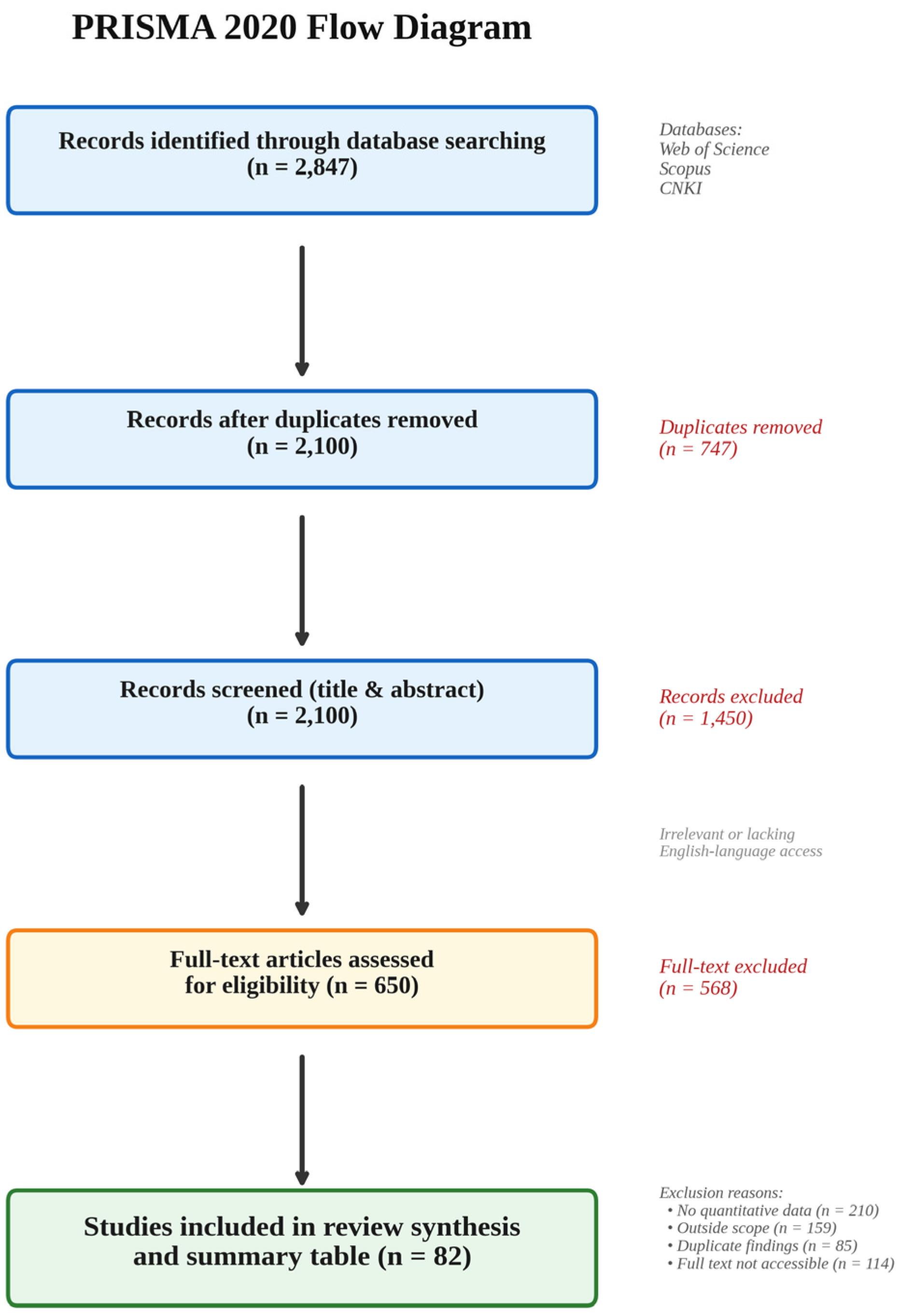
2. Systematic Review Methodology and Search Strategy
3. Biological Approaches to Saline–Alkali Land Remediation
3.1. Breeding Salt–Alkali-Tolerant Crop Varieties: Crop Adaptation to Saline Conditions
3.1.1. Genetic Engineering and Gene Editing
3.1.2. Marker-Assisted Selection
3.1.3. Specialty Salt-Tolerant Crops and Salt-Induced Quality Enhancement
3.2. Halophyte-Based Ecological Restoration
3.3. Microbial Remediation of Saline–Alkali Soils
3.3.1. Functional Microbial Resources and Mechanisms of Action
3.3.2. Multitrophic Microbial Strategies
3.4. The Case for Integrated Biological Strategies
4. Agronomic and Physical Salt-Reduction Technologies
4.1. Rotations, Intercropping, and Crop–Livestock Integration
4.1.1. Halophyte–Crop Rotations and Intercropping
4.1.2. Integrated Crop–Livestock Systems
4.2. Straw Mulching and Incorporation
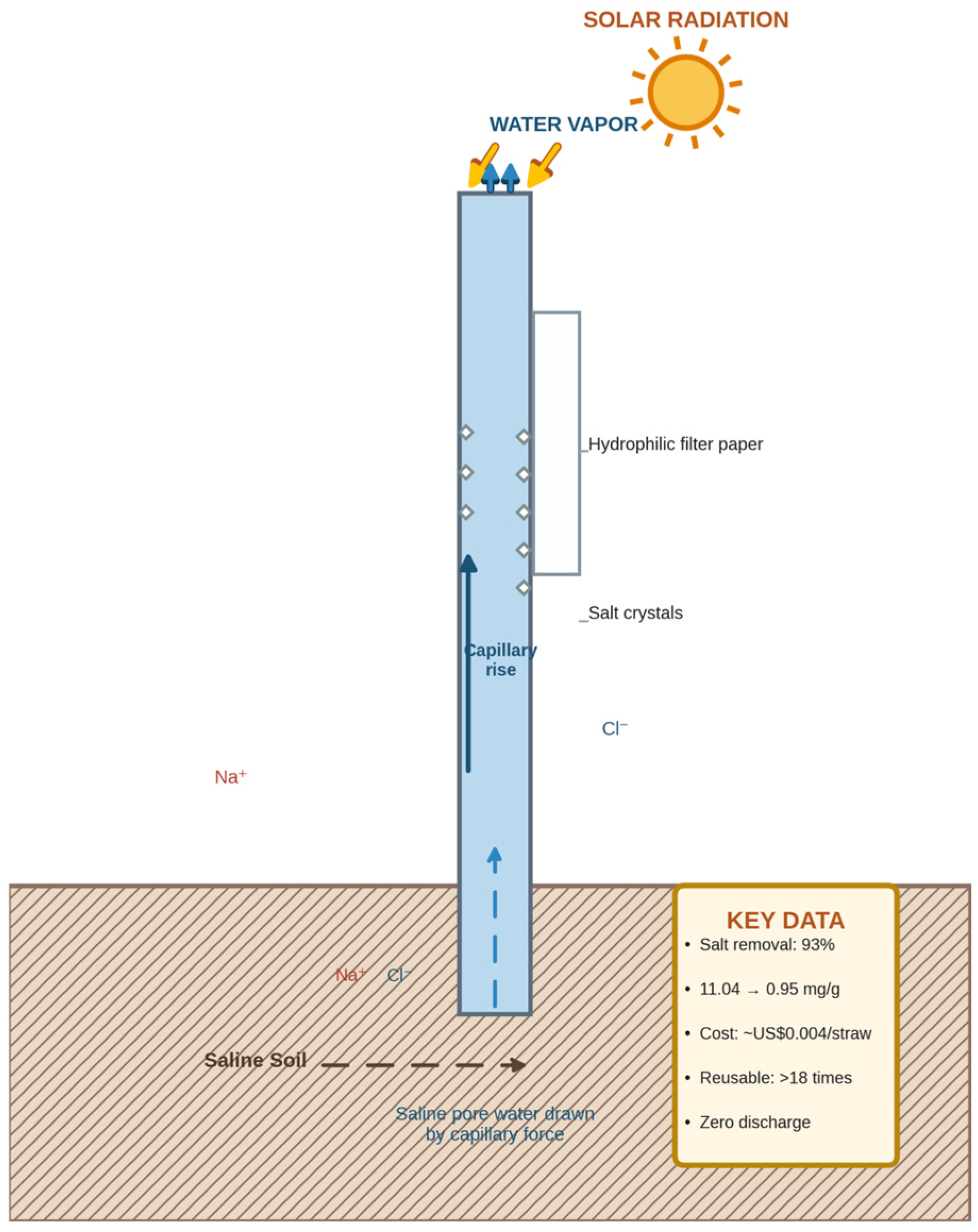
4.3. Solar-Driven Straw-Based Interfacial Evaporation Desalination
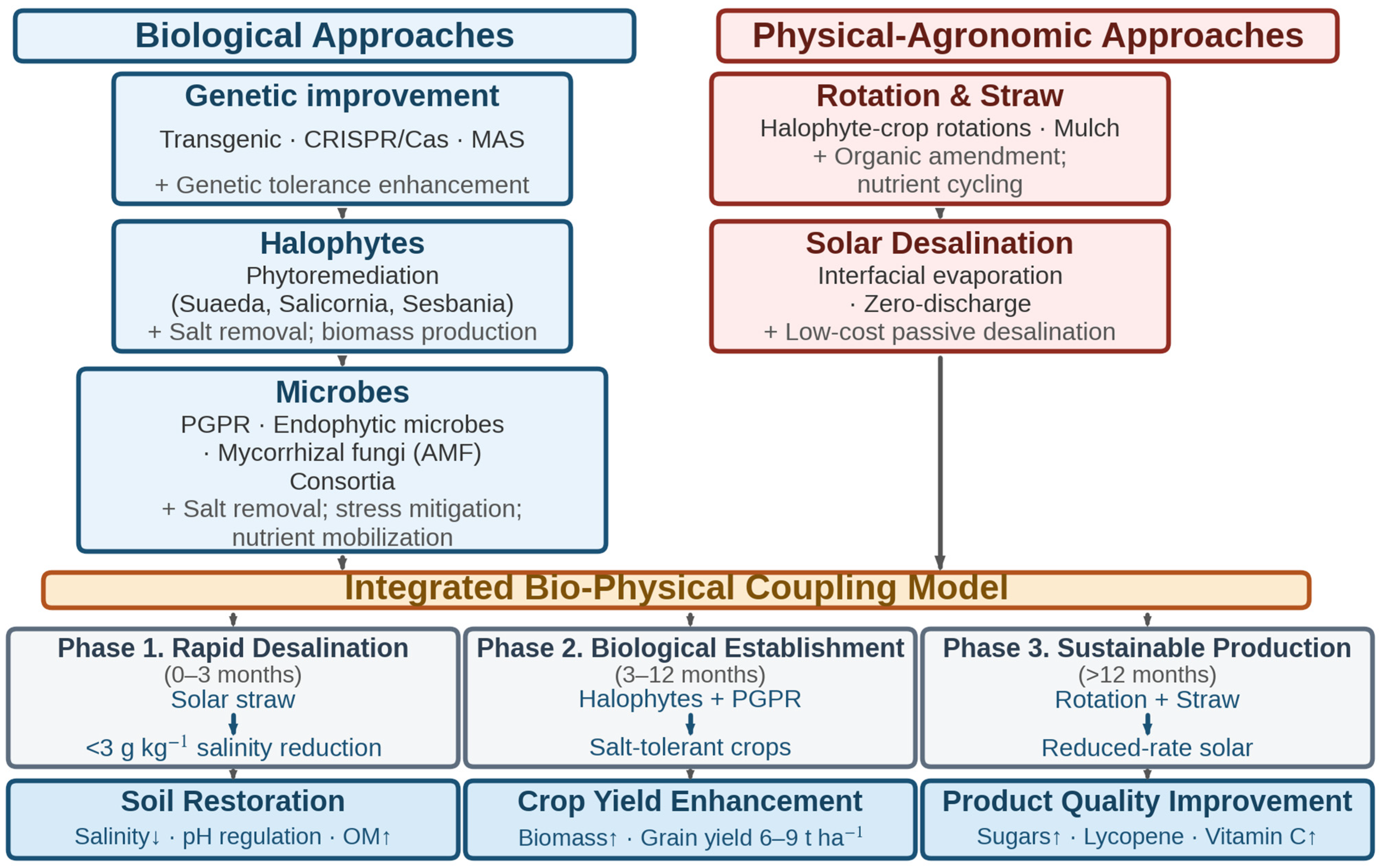
5. Toward Bio-Physical Synergy: A Conceptual Framework
6. Critical Analysis of Current Challenges and Limitations
7. Research Outlook and Proposed Roadmap
8. Conclusions
Supplementary Materials
Author Contributions
Funding
Data Availability Statement
Acknowledgments
Conflicts of Interest
References
- Qadir, M.; Oster, J.D. Crop and irrigation management strategies for saline-sodic soils and waters aimed at environmentally sustainable agriculture. Sci. Total Environ. 2004, 323, 1–19. [Google Scholar] [CrossRef] [Scilit] [PubMed]
- Qadir, M.; Quillérou, E.; Nangia, V.; Murtaza, G.; Singh, M.; Thomas, R.J.; Drechsel, P.; Noble, A.D. Economics of salt-induced land degradation and restoration. Nat. Resour. Forum 2014, 38, 282–295. [Google Scholar] [CrossRef] [Scilit]
- Ivushkin, K.; Bartholomeus, H.; Bregt, A.K.; Pulatov, A.; Kempen, B.; de Sousa, L. Global mapping of soil salinity change. Remote Sens. Environ. 2019, 231, 111260. [Google Scholar] [CrossRef] [Scilit]
- FAO. The State of the World’s Land and Water Resources for Food and Agriculture: Systems at Breaking Point; Food and Agriculture Organization of the United Nations: Rome, Italy, 2021. [Google Scholar]
- Yang, J.S.; Yao, R.J.; Wang, X.P.; Xie, W.P.; Zhang, X.; Zhu, W.; Zhang, L.; Sun, R.J. Research on salt-affected soils in China: History, status quo and prospect. Acta Pedol. Sin. 2022, 59, 10–27. (In Chinese) [Google Scholar] [CrossRef]
- Zhu, J.K. Abiotic stress signaling and responses in plants. Cell 2016, 167, 313–324. [Google Scholar] [CrossRef] [Scilit] [PubMed]
- Munns, R.; Tester, M. Mechanisms of salinity tolerance. Annu. Rev. Plant Biol. 2008, 59, 651–681. [Google Scholar] [CrossRef] [Scilit] [PubMed]
- Yu, G.X.; Li, Y.; Liu, H.Y.; Qi, G.X. Research progress of reclamation and utilization of saline-alkali land in China. Heilongjiang Agric. Sci. 2025, 96–103. (In Chinese) [Google Scholar] [CrossRef]
- Deinlein, U.; Stephan, A.B.; Horie, T.; Luo, W.; Xu, G.; Schroeder, J.I. Plant salt-tolerance mechanisms. Trends Plant Sci. 2014, 19, 371–379. [Google Scholar] [CrossRef] [Scilit] [PubMed]
- Jin, L.; Jin, N.; Wang, S.; Huang, S.C.; Yang, X.T.; Xu, Z.Q.; Jiang, S.Y.; Lyu, J.; Yu, J.H. Moderate salt stress aids in the enhancement of nutritional and flavor quality in tomato (Solanum lycopersicum L.) fruits. Food Chem. X 2025, 26, 102330. [Google Scholar] [CrossRef] [Scilit] [PubMed]
- Qadir, M.; Oster, J.D.; Schubert, S.; Noble, A.D.; Sahrawat, K.L. Phytoremediation of Sodic and Saline-Sodic Soils. Adv. Agron. 2007, 96, 197–247. [Google Scholar] [CrossRef] [Scilit]
- Singh, A. Soil salinization and waterlogging: A threat to environment and sustainable agriculture. Ecol. Indic. 2015, 106, 105459. [Google Scholar] [CrossRef] [Scilit]
- Ritzema, H.P.; Satyanarayana, T.V.; Raman, S.; Boonstra, J. Subsurface drainage to combat waterlogging and salinity in irrigated lands in India: A critical review. Agric. Water Manag. 2008, 95, 179–189. [Google Scholar] [CrossRef] [Scilit]
- Dong, X.Y.; Luo, X.Y.; Huang, Z.H.; Ye, S.; Chen, C.; Xu, J.T.; Wang, Z.; Meng, X.L.; Zhao, W.S.; Yang, R.G.; et al. A zero-wastewater-discharge noncontact solar desalter for saline–alkali soil remediation and grain yield increase using brackish water. Mater. Horiz. 2025, 12, 7358–7369. [Google Scholar] [CrossRef] [Scilit] [PubMed]
- Wu, J.M.; Zhang, B.Y.; Lin, M.L.; Bu, R.; Bai, X.L.; Zhang, X.L.; Liu, P.T.; Wang, B. The effects of different crop rotations on the quality of saline soils in the Yinbei Plain. Agronomy 2025, 15, 2131. [Google Scholar] [CrossRef] [Scilit]
- Page, M.J.; McKenzie, J.E.; Bossuyt, P.M.; Boutron, I.; Hoffmann, T.C.; Mulrow, C.D.; Shamseer, L.; Tetzlaff, J.M.; Akl, E.A.; Brennan, S.E.; et al. The PRISMA 2020 statement: An updated guideline for reporting systematic reviews. BMJ 2021, 372, n71. [Google Scholar] [CrossRef] [Scilit] [PubMed]
- Hao, L.Y.; Song, X.; Wu, N.; Cao, Y.P.; Yan, H.L.; Sun, Y.T. A Cultivation Technique Method for Intercropping Asparagus and Green Manure in Saline-Alkali Land. Chinese Patent No. CN202511096809.3, 2025. (In Chinese) [Google Scholar]
- Lugtenberg, B.; Kamilova, F. Plant-growth-promoting rhizobacteria. Annu. Rev. Microbiol. 2009, 63, 541–556. [Google Scholar] [CrossRef] [Scilit] [PubMed]
- Ashraf, M.; Foolad, M.R. Crop breeding for salt tolerance in the era of molecular markers and marker-assisted selection. Plant Breed. 2013, 132, 10–20. [Google Scholar] [CrossRef] [Scilit]
- Shelake, R.M.; Kadam, U.S.; Kumar, R.; Pramanik, D.; Singh, A.K.; Kim, J.-Y. Engineering drought and salinity tolerance traits in crops through CRISPR-mediated genome editing: Targets, tools, challenges, and perspectives. Plant Commun. 2022, 3, 100417. [Google Scholar] [CrossRef] [Scilit] [PubMed]
- Qin, H.; Li, Y.X.; Huang, R.F. Advances and challenges in the breeding of salt-tolerant rice. Int. J. Mol. Sci. 2020, 21, 8385. [Google Scholar] [CrossRef] [Scilit] [PubMed]
- Sackey, O.K.; Feng, N.; Mohammed, Y.Z.; Dzou, C.F.; Zheng, D.; Zhao, L.; Shen, X. A comprehensive review on rice responses and tolerance to salt stress. Front. Plant Sci. 2025, 16, 1561280. [Google Scholar] [CrossRef] [Scilit] [PubMed]
- Wang, Y.; Wang, J.; Zhao, X.; Yang, S.; Huang, L.; Du, F.; Li, Z.; Zhao, X.; Fu, B.; Wang, W. Overexpression of the transcription factor gene OsSTAP1 increases salt tolerance in rice. Rice 2020, 13, 50. [Google Scholar] [CrossRef] [Scilit] [PubMed]
- Zhang, Q.; Liu, Y.Q.; Jiang, Y.L.; Li, A.Q.; Cheng, B.J.; Wu, J.D. OsASR6 enhances salt stress tolerance in rice. Int. J. Mol. Sci. 2022, 23, 9340. [Google Scholar] [CrossRef] [Scilit] [PubMed]
- Chen, G.; Han, H.M.; Yang, X.L.; Du, R.Y.; Wang, X. Salt tolerance of rice is enhanced by the SS3 gene, which regulates ascorbic acid synthesis and ROS scavenging. Int. J. Mol. Sci. 2022, 23, 10338. [Google Scholar] [CrossRef] [Scilit] [PubMed]
- Horie, T.; Costa, A.; Kim, T.H.; Han, M.J.; Horie, R.; Leung, H.Y.; Miyao, A.; Hirochika, H.; An, G.; Schroeder, J.I. Rice OsHKT2;1 transporter mediates large Na+ influx component into K+-starved roots for growth. EMBO J. 2007, 26, 3003–3014. [Google Scholar] [CrossRef] [Scilit] [PubMed]
- Cheng, C.; Zhang, Y.; Chen, X.G.; Song, J.L.; Guo, Z.Q.; Li, K.P.; Zhang, K.W. Co-expression of AtNHX1 and TsVP improves the salt tolerance of transgenic cotton and increases seed cotton yield in a saline field. Mol. Breed. 2018, 38, 32. [Google Scholar] [CrossRef] [Scilit]
- Munns, R.; James, R.A.; Xu, B.; Athman, A.; Conn, S.J.; Jordans, C.; Byrt, C.S.; Hare, R.A.; Tyerman, S.D.; Tester, M.; et al. Wheat grain yield on saline soils is improved by an ancestral Na+ transporter gene. Nat. Biotechnol. 2012, 30, 360–364. [Google Scholar] [CrossRef] [Scilit] [PubMed]
- Zhang, H.; Yu, F.F.; Xie, P.; Sun, S.Y.; Qiao, X.H.; Tang, S.Y.; Chen, C.X.; Yang, S.; Mei, C.; Yang, D.K.; et al. A G protein γ subunit, AT1, functions in alkali tolerance in sorghum and rice. Science 2023, 379, eade8416. [Google Scholar] [CrossRef] [Scilit] [PubMed]
- Thomson, M.J.; Septiningsih, E.M.; McCouch, S.R.; Kumar, A.; Singh, R.K.; Gregorio, G.B.; Ismail, A.M. Characterizing the Saltol quantitative trait locus for salinity tolerance in rice. Rice 2010, 3, 148–160. [Google Scholar] [CrossRef] [Scilit]
- Babu, N.N.; Gautam, R.K.; Singh, S.K.; Singh, A.K.; Vinod, K.K.; Iquebal, M.A.; Sharma, D.R.; Prabhu, K.V. Marker aided incorporation of Saltol, a major QTL associated with seedling stage salt tolerance, into Oryza sativa ‘Pusa Basmati 1121’. Front. Plant Sci. 2017, 8, 41. [Google Scholar] [CrossRef] [Scilit] [PubMed]
- Haseeb, N.M.; Sallam, A.; Karam, M.A.; Gao, L.; Wang, R.R.C.; Moursi, Y.S. High-LD SNP markers exhibiting pleiotropic effects on salt tolerance at germination and seedlings stages in spring wheat. Plant Mol. Biol. Rep. 2022, 40, 585–603. [Google Scholar] [CrossRef] [Scilit] [PubMed]
- Anwar, Z.; Ijaz, A.; Ditta, A.; Wang, B.; Liu, F.; Khan, S.M.; Haidar, S.; Hassan, H.M.; Khan, M.K.R. Genomic dynamics and functional insights under salt stress in Gossypium hirsutum L. Genes 2023, 14, 1103. [Google Scholar] [CrossRef] [Scilit] [PubMed]
- Li, G.S.; Xu, R.G.; Miao, L.X.; Chao, L. Studies on barley salt tolerance during germination. Barley Sci. 2004, 28–30. (In Chinese) [Google Scholar] [CrossRef]
- Yang, J.S.; Yao, R.J.; Wang, X.P.; Xie, W.P. Research on ecological management and ecological industry development model of saline-alkali land in the Hetao Plain, China. Acta Ecol. Sin. 2016, 36, 7059–7063. (In Chinese) [Google Scholar] [CrossRef] [Scilit]
- Wang, J.J.; Yin, Z.J.; Wang, S.; Lu, X.K.; Chen, X.G.; Wang, D.L.; Guo, L.X.; Zhao, L.J.; Chen, C.; Ye, W.W. Research progress on the mechanism of cotton improvement role in saline alkali land. China Cotton 2025, 52, 20–26. (In Chinese) [Google Scholar] [CrossRef]
- Xu, J.H.; Zhang, Z.L.; Wei, J.W.; Zhu, Y.F.; Zhao, D.; Xia, T.C.; Liu, X.Q.; Wang, C.Q.; Gong, B. Salt-stress-induced tomato sweetening involves an SlSnRK2.6-SlZHD8 sugar accumulation cascade triggered by root-derived abscisic acid. EMBO J. 2026, 45, 2134–2156. [Google Scholar] [CrossRef] [Scilit] [PubMed]
- Zhang, Y.M. Study on Adaptability and Salt-Tolerant Germplasm Screening of Quinoa in Qinghai Plateau. Ph.D. Thesis, University of Chinese Academy of Sciences, Beijing, China, 2023. (In Chinese) [Google Scholar]
- Rozema, J.; Flowers, T. Crops for a salinized world. Science 2008, 322, 1478–1480. [Google Scholar] [CrossRef] [Scilit] [PubMed]
- Flowers, T.J.; Colmer, T.D. Salinity tolerance in halophytes. New Phytol. 2008, 179, 945–963. [Google Scholar] [CrossRef] [Scilit] [PubMed]
- Zhao, K.F.; Li, F.Z. Halophytes in China; Science Press: Beijing, China, 1999. (In Chinese) [Google Scholar]
- Wang, X.; Tian, C.Y.; Zhao, Z.Y.; Zhang, K.; Li, Y.H. Effects of different planting years of Suaeda salsa on soil ions distribution in saline-alkali soil under drip irrigation. Arid. Land Geogr. 2020, 43, 211–217. (In Chinese) [Google Scholar] [CrossRef]
- Glenn, E.P.; Brown, J.J.; O’Leary, J.W. Irrigating crops with seawater. Sci. Am. 1998, 279, 76–81. [Google Scholar] [CrossRef] [Scilit]
- Feng, L.F. Breaking “Alkali” Rebirth, Starting from a Seed. China Science Daily. 29 January 2026. Available online: http://www.cas.cn/cm/202601/t20260129_5098939.shtml (accessed on 1 July 2026). (In Chinese)
- Qin, P.; Zhong, C.X. Research on Application of Spartina; Ocean Press: North Melbourne, Australia, 1992. (In Chinese) [Google Scholar]
- Jiang, C.; Jia, J.H.; Yang, Y.; Sheng, R.; Ren, L.J.; Ji, H.H.; Ye, S.F. Forty years of Spartina alterniflora in China: Cognitive evolution and governance strategies. Acta Ecol. Sin. 2024, 44, 8944–8956. (In Chinese) [Google Scholar] [CrossRef]
- Zhang, W.B.; Wang, D.; Cao, D.D.; Chen, J.J.; Wei, X.Y. Exploring the potentials of Sesuvium portulacastrum L. for edibility and bioremediation of saline soils. Front. Plant Sci. 2024, 15, 1387102. [Google Scholar] [CrossRef] [Scilit] [PubMed]
- Ventura, Y.; Wuddineh, W.A.; Myrzabayeva, M.; Alikulov, Z.; Khozin-Goldberg, I.; Shpigel, M.; Samocha, T.M.; Sagi, M. Effect of seawater concentration on the productivity and nutritional value of annual Salicornia and perennial Sarcocornia halophytes as leafy vegetable crops. Sci. Hortic. 2011, 128, 189–196. [Google Scholar] [CrossRef] [Scilit]
- Badri, D.V.; Vivanco, J.M. Regulation and function of root exudates. Plant Cell Environ. 2009, 32, 666–681. [Google Scholar] [CrossRef] [Scilit]
- Yang, J.; Kloepper, J.W.; Ryu, C.M. Rhizosphere bacteria help plants tolerate abiotic stress. Trends Plant Sci. 2009, 14, 1–4. [Google Scholar] [CrossRef] [Scilit] [PubMed]
- Zhou, Y.; Ye, F.; Liu, L.J. Research progress of typical plant growth-promoting microorganism enhancing salt stress resistance in rice. Chin. J. Rice Sci. 2025, 39, 529–542. (In Chinese) [Google Scholar] [CrossRef]
- Jin, J.Y.; Fan, Z.L.; Guo, L.L.; Li, K.; Bi, S.J.; Wang, Y.J. Isolation, identification, and whole-genome analysis of Klebsiella pneumoniae NP36 with saline-alkali tolerance. Microbiol. China 2024, 52, 1447–1461. (In Chinese) [Google Scholar] [CrossRef]
- Gao, L.; Wang, S.; Ji, Q.; Bai, X.L.; Tian, H. Effects of arbuscular mycorrhizal fungi on maize physiology and growth under salt stress. Guihaia 2026, 46, 814–822. (In Chinese) [Google Scholar]
- Fan, Y.H.; Wang, J.; Shang, S.; Li, X.P.; Zhang, Y.M.; Wu, T. Salt-tolerant, phosphate-dissolving and growth-promoting effects of two rhizosphere fungi. Chin. J. Soil Sci. 2022, 53, 127–134. (In Chinese) [Google Scholar]
- Zhang, Y.; Yu, W.W.; Chen, B.Y.; Zhang, Y. Harnessing microbial resource Rhodopseudomonas palustris for saline-alkaline paddy soil amelioration: Key role of extracellular polymeric substances. Bioresour. Technol. 2026, 455, 134777. [Google Scholar] [CrossRef] [Scilit] [PubMed]
- Nannipieri, P.; Giagnoni, L.; Landi, L.; Renella, G. Role of phosphatase enzymes in soil. In Phosphorus in Action; Bünemann, E., Oberson, A., Frossard, E., Eds.; Springer: Berlin/Heidelberg, Germany, 2011; pp. 215–243. [Google Scholar]
- Thiengo, C.C.; Leonel, J.V.; Mendes, L.W.; Lavres, J. Separated for too long: Plant nutrition as the functional interface linking the plant-soil microbiome to plant performance. Sci. Agric. 2026, 83, e20260067. [Google Scholar] [CrossRef] [Scilit]
- Sharma, S.B.; Sayyed, R.Z.; Trivedi, M.H.; Gobi, T.A. Phosphate solubilizing microbes: Sustainable approach for managing phosphorus deficiency in agricultural soils. SpringerPlus 2013, 2, 587. [Google Scholar] [CrossRef] [Scilit] [PubMed]
- Guo, M.F.; Gao, J.Z.; Yang, M.; Liu, Y.W.; Fu, J.H.; Ma, R.; Xiong, F.; Zhang, T.Y.; Liu, X.S. Synergistic effects of PGPR and organic fertilizer on saline-alkali soil improvement. Appl. Soil Ecol. 2025, 208, 106327. [Google Scholar] [CrossRef] [Scilit]
- Liu, Y.X.; Li, X.; Li, H.; Zhu, J.W.; Wang, X.G.; Shen, B. Soil microbial diversity and metabolic gene expression respond to long-term fertilizations in simulated field experiments. Sci. Agric. 2026, 83, e20240280. [Google Scholar] [CrossRef] [Scilit]
- Liang, J.P.; Shi, W.J. Cotton/halophytes intercropping decreases salt accumulation and improves soil physicochemical properties in saline-alkali soils under mulched drip irrigation. Field Crops Res. 2021, 262, 108027. [Google Scholar] [CrossRef] [Scilit]
- Wang, S.; Wang, Q.J.; Zhou, B.B.; Wu, J.H.; Shi, W.J.; Luo, X.D. Effect of interplanting halophyte in cotton fields with drip irrigation under film to improve saline-alkali soil. Acta Prataculturae Sin. 2014, 23, 362–367. (In Chinese) [Google Scholar] [CrossRef]
- Wang, L.; Wang, X.; Jiang, L.; Zhang, K.; Tanveer, M.; Tian, C.Y.; Zhao, Z.Y. Reclamation of saline soil by planting annual euhalophyte Suaeda salsa with drip irrigation in arid northwestern China. Ecol. Eng. 2021, 159, 106090. [Google Scholar] [CrossRef] [Scilit]
- An, Z.; Zhang, M.K.; Qin, J.H.; Hu, H.Y.; Ning, T.Y. Effects of wheat-maize∥alfalfa intercropping mode on soil salinity and annual yield in saline-alkali field. Shandong Agric. Sci. 2019, 51, 69–74. (In Chinese) [Google Scholar]
- Li, Y.J.; Cao, X.C. Effects of returning straw mushroom residue to the field on the physical and chemical properties of soil. Edible Fungi 2020, 42, 60–62. (In Chinese) [Google Scholar]
- Wang, T.T.; Cao, L.W.; Liu, Z.Q.; Yang, Q.S.; Chen, L.; Chen, M.; Jing, H.C. Basic biology of forage grass for constructing coastal grass belt in Yellow River Delta. Chin. Bull. Bot. 2022, 57, 837–847. (In Chinese) [Google Scholar] [CrossRef]
- Lymbery, A.J.; Kay, G.D.; Doupé, R.G.; Partridge, G.J.; Norman, H.C. The potential of a salt-tolerant plant (Distichlis spicata) to treat effluent from inland saline aquaculture and provide livestock feed. Sci. Total Environ. 2013, 445, 192–201. [Google Scholar] [CrossRef] [Scilit] [PubMed]
- Rogers, M.E.; Craig, A.D.; Munns, R.E.; Colmer, T.D.; Nichols, P.G.H.; Malcolm, C.V.; Barrett-Lennard, E.G.; Brown, A.J.; Semple, W.S.; Evans, P.M.; et al. The potential for developing fodder plants for the salt-affected areas of southern and eastern Australia: An overview. Aust. J. Exp. Agric. 2005, 45, 301–329. [Google Scholar] [CrossRef] [Scilit]
- Norman, H.C.; Masters, D.G.; Barrett-Lennard, E.G. Halophytes as forages in saline landscapes: Interactions between plant genotype and environment change their feeding value to ruminants. Environ. Exp. Bot. 2013, 92, 96–109. [Google Scholar] [CrossRef] [Scilit]
- Bennett, S.J.; Barrett-Lennard, E.G.; Colmer, T.D. Salinity and waterlogging as constraints to saltland pasture production: A review. Agric. Ecosyst. Environ. 2009, 129, 349–360. [Google Scholar] [CrossRef] [Scilit]
- Masters, D.G.; Norman, H.C.; Barrett-Lennard, E.G. Agricultural systems for saline soil: The potential role of livestock. Asian-Australas. J. Anim. Sci. 2005, 18, 296–300. [Google Scholar] [CrossRef] [Scilit]
- Walia, S.S.; Dhaliwal, S.S.; Gill, R.S.; Kaur, T.; Kaur, K.; Randhawa, M.K.; Obročník, O.; Bárek, V.; Brestic, M.; Gaber, A.; et al. Improvement of soil health and nutrient transformations under balanced fertilization with integrated nutrient management in a rice-wheat system in Indo-Gangetic Plains—A 34-year Research outcomes. Heliyon 2024, 10, e25113. [Google Scholar] [CrossRef] [Scilit] [PubMed]
- Li, M.Z.; Wang, W.; Wang, X.F.; Yao, C.M.; Wang, Y.B.; Wang, Z.X.; Zhou, W.Z.; Chen, E.D.; Chen, W.F. Effect of straw mulching and deep burial mode on water and salt transport in saline soils. Water 2023, 15, 3227. [Google Scholar] [CrossRef] [Scilit]
- Chen, M.M.; Wang, G.L.; Jing, Y.P.; Zhou, J.; Song, J.S.; Chang, F.D.; Yu, R.; Wang, J.; Wang, W.N.; Sun, X.; et al. Straw interlayer improves sunflower root growth in saline-alkali soil. J. Integr. Agric. 2024, 23, 3870–3881. [Google Scholar] [CrossRef] [Scilit]
- Sun, J.X.; Kang, Y.H.; Wan, S.Q.; Hu, W.; Jiang, S.F.; Zhang, T.B. Soil salinity management with drip irrigation and its effects on soil hydraulic properties in North China coastal saline soils. Agric. Water Manag. 2012, 115, 10–19. [Google Scholar] [CrossRef] [Scilit]
- Wang, X.H. The Study of a New Tillage Technology with “Ditch-Buried Straw Return” on Soil Physicochemical Characteristics and Organic Carbon. Ph.D. Thesis, Nanjing Agricultural University, Nanjing, China, 2014. (In Chinese) [Google Scholar]
- Ayars, J.E.; Phene, C.J.; Hutmacher, R.B.; Davis, K.R.; Schoneman, R.A.; Vail, S.S.; Mead, R.M. Subsurface drip irrigation of row crops: A review of 15 years of research at the Water Management Research Laboratory. Agric. Water Manag. 1999, 42, 1–27. [Google Scholar] [CrossRef] [Scilit]
- Hanson, B.; May, D. Effect of subsurface drip irrigation on processing tomato yield, water table depth, soil salinity, and profitability. Agric. Water Manag. 2004, 68, 1–17. [Google Scholar] [CrossRef]
- Pinheiro, J.I.; Mendes Filho, P.F.; Garcia, K.G.V.; Moreira, J.V.; Silva, D.F.; Araújo, A.S.F.; Verma, J.P.; Melo, V.M.M.; Pereira, A.P.A. Bacterial community in biological soil crusts from a Brazilian semiarid region under desertification process. Sci. Agric. 2024, 81, e20230101. [Google Scholar] [CrossRef] [Scilit]
- Feng, K.Y.; Zhao, X.Y.; Li, Z.Y.; Qiu, J.M.; Cao, Y.B. Research advances in the molecular mechanisms of plant response to saline-alkali stress. Biotechnol. Bull. 2024, 40, 122–138. (In Chinese) [Google Scholar] [CrossRef]
- Lv, W.S. Incorporating coastal salt marsh vegetation restoration projects into voluntary carbon markets. Environ. Econ. 2025, 23, 64–67. (In Chinese) [Google Scholar]
- Feng, Q.; Yin, X.W.; Zhu, M.; Zhang, J.T.; Liu, W.; Xi, H.Y.; Yu, T.F.; Yang, L.S.; Liu, W.; Lu, Z.X. Overall promotion of integrated management and utilization of saline-alkali land in Northwest China: Conditions, challenges, and recommendations. Bull. Chin. Acad. Sci. 2024, 39, 2060–2073. (In Chinese) [Google Scholar] [CrossRef]



| Functional Category | Gene | Source Species | Target Crop | Effect on Salt Tolerance | Key Reference |
|---|---|---|---|---|---|
| Transcription factor | OsSTAP1 | Rice | Rice | Not quantified | [23] |
| Stress-associated protein | OsASR6 | Rice | Rice | Not quantified | [24] |
| Antioxidant/ascorbate | SS3 | Rice | Rice | Not quantified | [25] |
| Ion transporter (Na+/K+) | OsHKT2 (KO) | Rice | Rice | Not quantified | [26] |
| Ion transporter (Na+/K+) | HKT (CRISPR) | Wheat | Wheat | Not quantified | [28] |
| Vacuolar Na+/H+ antiporter | AtNHX1 | Arabidopsis | Cotton | 25% increase | [27] |
| Vacuolar H+-pyrophosphatase | TsVP | T. halophila | Cotton | Co-expressed with AtNHX1 | [27] |
| G protein γ subunit (alkali) | AT1 (KO) | Sorghum | Rice/sorghum | 20.1–27.8% yield gain | [29] |
| System Type | Pattern/Species | Salt Reduction | Yield Effect | Applicable Region | Source |
|---|---|---|---|---|---|
| Halophyte–crop rotation | Suaeda salsa → rice | 83–91% (3 yr) | Stable rice yield | Coastal saline soils | [15,42] |
| Halophyte–crop rotation | Sesbania → rice | pH ↓ 0.4, OM ↑ 30% | Rice yield ↑ 22–28% | Sodic soils, NE China | [44] |
| Intercropping | Cotton + Suaeda salsa | Salt & BD ↓ | Cotton yield maintained | Arid NW China | [61,63] |
| Intercropping | Wheat/maize + alfalfa | 0–40 cm salt ↓ | System yield ↑ | Huang-Huai-Hai | [64] |
| Mushroom–vegetable | Volvariella → tomato | Alkalinity ↓ | Tomato ↑ >10% | Shandong | [65] |
| Crop–livestock | Forage → sheep → manure | Salinity 11 → 2.6% | Meat production + | Yellow River Delta | [66] |
| Solar desalination | Straw evaporation | 91.4% (3 months) | Wheat +7.8 Mt·yr−1 | Universal (est.) | [14] |
| Technology | Salt Reduction/Yield Effect | Time Scale | Cost (USD ha−1) | Applicable Soil Type | Maturity | Application Stage | Key Limitations | Supporting Studies (n) | Evidence Quality | Field Validation Level |
|---|---|---|---|---|---|---|---|---|---|---|
| Gene-based breeding (CRISPR, MAS) | Yield gain 20–28% (sodic soils) | 2–5 years | High R&D input (>106 per trait) | Mild–moderate saline–alkali | Medium–high | Establishment → Production | Biosafety regulation; limited multi-stress data | 14 | Medium (mixed greenhouse/field, replicated) | Multiple field trials (rice, cotton, wheat) |
| Halophyte phytoremediation | Salt removal 83–91% (3 growing seasons) | 3–5 years | Low (<100) | All saline–alkali types | High | Establishment | 3–5 yr yield gap; biomass disposal needed | 7 | Medium–High (multi-site field trials) | Field-validated (regional trials, China) |
| Microbial inoculation | Salt tolerance↑ 15–35% | 1 growing season | 50–200 | Mild–moderate saline–alkali | Medium | Establishment → Production | Field inconsistency; soil-dependent | 6 | Low–Medium (high field variability, CV 30–60%) | Limited; inconsistent field performance |
| Straw amendment (mulch + burial) | Topsoil salinity ↓ 30–50% | 1–2 years | 20–50 | Arid/semi-arid regions | High | Establishment → Production | Slow decomposition in cold climates | 13 | Medium–High (incl. long-term trials) | Field-validated (incl. 34-yr trial, India) |
| Solar straw evaporation | 91.4% (3 months) | 3 months | ~40 (materials only) | All types (not yet validated) | Low (proof-of-concept) | Rapid desalination | Single-site trial; long-term effects unknown | 1 | Low (single-site proof-of-concept) | Proof-of-concept only (1 site, 3 plots) |
Disclaimer/Publisher’s Note: The statements, opinions and data contained in all publications are solely those of the individual author(s) and contributor(s) and not of MDPI and/or the editor(s). MDPI and/or the editor(s) disclaim responsibility for any injury to people or property resulting from any ideas, methods, instructions or products referred to in the content. |
© 2026 by the authors. Licensee MDPI, Basel, Switzerland. This article is an open access article distributed under the terms and conditions of the Creative Commons Attribution (CC BY) license.
Share and Cite
Zhang, S.; Li, K.; Wang, C.; Yang, S.; Liu, X.; Pan, K. Advances in Biological and Physical Salt-Reduction Technologies for Reclaiming Saline–Alkali Land: A Comprehensive Review with an Emphasis on China. Agronomy 2026, 16, 1645. https://doi.org/10.3390/agronomy16171645
Zhang S, Li K, Wang C, Yang S, Liu X, Pan K. Advances in Biological and Physical Salt-Reduction Technologies for Reclaiming Saline–Alkali Land: A Comprehensive Review with an Emphasis on China. Agronomy. 2026; 16(17):1645. https://doi.org/10.3390/agronomy16171645
Chicago/Turabian StyleZhang, Shaoli, Keyu Li, Cheng Wang, Shuting Yang, Xiao Liu, and Kai Pan. 2026. "Advances in Biological and Physical Salt-Reduction Technologies for Reclaiming Saline–Alkali Land: A Comprehensive Review with an Emphasis on China" Agronomy 16, no. 17: 1645. https://doi.org/10.3390/agronomy16171645
APA StyleZhang, S., Li, K., Wang, C., Yang, S., Liu, X., & Pan, K. (2026). Advances in Biological and Physical Salt-Reduction Technologies for Reclaiming Saline–Alkali Land: A Comprehensive Review with an Emphasis on China. Agronomy, 16(17), 1645. https://doi.org/10.3390/agronomy16171645