Next Article in Journal
Correction: Yu et al. Optimization and Experimental Study on No-Tillage Dense Planting Precision Seed-Fertilizer Co-Sowing System for Maize Oriented to High-Yield Agronomy. Agronomy 2026, 16, 860
Previous Article in Journal
Responses of Leaf Senescence, Shoot Biomass, and Grain Yield of Maize to Drought–Flood Abrupt Alternation
 
 
agronomy-logo
Article Menu

Article Menu

Review

Mutation Breeding as a Tool for Sustainable Crop Production and Climate Resilience: Experiences from the South-Eastern Europe (SEE) and Central Asia (CA)


by
Sandra Cvejić
1,
Aleksandra Radanović
1,
Dragana Trkulja
1,
Svetlana Glogovac
1,
Igor Vukelić
1,
Mirela Kajkut Zejković
2,
Marina Antić
2,
Sonja Umićević
2,
Jasmin Grahić
3,
Mirjana Jankulovska
4,
Nadica Sandeva Atanasova
4,
Biljana Kuzmanovska
4,
Boris Lazarević
5,
Eleni Abraham
6,
Eleni Tani
7,
Efi Sarri
7,
Dimitrios N. Vlachostergios
8,
Christos Petsoulas
8,
Anastasia Kargiotidou
8,
Chrysanthi Pankou
8,
Rustam Usmanov
9,
Bakytzhan Anapiyayev
10,
Konirsha Iskakova
10,
Nasya Tomlekova
11,
Emilia Nacheva
11,
Daniela Ganeva
11,
Sibel Aziz
11,
Ali Şenay
12,
Hayrettin Peşkircioğlu
12,
Emine Seçer
12,
Aslıhan Göktuğ
12,
Kadriye Yaprak Kantoğlu
12,
Jolanta Kwasniewska
13,
Siniša Jocić
1,
Ankica Kondić Špika
1 and
Dragana Miladinović
1,*
add Show full author list remove Hide full author list
1
Sunflower Department and Laboratory for Biotechnology, Institute of Field and Vegetable Crops, Maksima Gorkog 30, 21 000 Novi Sad, Serbia
2
Institute of Genetic Resources of University of Banja Luka, Bulevar Vojvode Petra Bojovića 1a, 78 000 Banja Luka, Bosnia and Herzegovina
3
Faculty of Agriculture and Food Sciences (UNSA-FAFS), University of Sarajevo, Zmaja od Bosne 8, 71 000 Sarajevo, Bosnia and Herzegovina
4
Faculty of Agricultural Sciences and Food, Ss. Cyril and Methodius University in Skopje, Blvd “16-ta Makedonska Brigada” No. 3, 1000 Skopje, North Macedonia
5
Faculty of Agriculture, University of Zagreb, Svetošimunska Cesta 25, 10000 Zagreb, Croatia
6
Faculty of Forestry and Natural Environment, School of Agriculture, Forestry and Natural Environment, Aristotle University of Thessaloniki, 54124 Thessaloniki, Greece
7
Laboratory of Plant Breeding and Biometry, Department of Crop Science, Agricultural University of Athens, Iera Odos 75, 11855 Athens, Greece
8
Institute of Industrial and Forage Crops, Hellenic Agricultural Organization—DEMETER, 41335 Larissa, Greece
9
Institute of Genetics and Experimental Biology of Plant, Academy of Sciences, Village Yukori-Yuz, Kibray 111214, Tashkent Region, Uzbekistan
10
Department of Chemical and Biochemical Engineering, Satbayev University, Satbayev Str., 22a, Almaty 050013, Kazakhstan
11
Department of Breeding, Maritsa Vegetable Crops Research Institute, Agricultural Academy, 4003 Plovdiv, Bulgaria
12
Turkish Energy Nuclear and Mineral Research Agency, Nuclear Energy Research Institute, Mustafa Kemal, Dumlupınar Blv. No. 192, Ankara 06510, Türkiye
13
Plant Cytogenetics and Molecular Biology Team, Faculty of Natural Sciences, Institute of Biology, Biotechnology and Environmental Protection, University of Silesia in Katowice, 40-032 Katowice, Poland
*
Author to whom correspondence should be addressed.
Agronomy 2026, 16(15), 1488; https://doi.org/10.3390/agronomy16151488
Submission received: 14 May 2026 / Revised: 13 July 2026 / Accepted: 22 July 2026 / Published: 3 August 2026
(This article belongs to the Section Crop Breeding and Genetics)

Abstract

The review summarizes practical experiences in using mutation breeding for crop improvement in South-Eastern Europe (SEE) and Central Asia (CA), demonstrating that mutation breeding can be a field-validated, effective approach for developing climate-resilient crops. Drawing on coordinated research conducted within national breeding programs and international initiatives supported by FAO/IAEA, applied methodologies, trait-evaluation strategies, and concrete breeding outputs in cereals, legumes, and industrial crops are presented. The use of gamma irradiation, fast neutrons, and chemical mutagens has successfully generated stable mutant lines stable mutant lines with enhanced traits, such as increased thousand-grain weight in wheat, altered oil quality in sunflower, and improved drought tolerance in common bean and sesame. The integration of classical pedigree selection with modern breeding tools such as high-throughput phenotyping, molecular and biochemical markers, and doubled-haploid technology has enabled earlier and more efficient identification of superior genotypes in mutation breeding programs. The review underscores the practical relevance of mutation breeding in contemporary pipelines to maintain yield stability and quality under adverse environmental conditions.

1. Introduction

Mutation breeding is a globally recognized approach for generating novel allelic variation in crops through chemical or physical mutagenesis, which increases mutation frequency far above the spontaneous background level (by 1000 to 1 million-fold), thereby enriching the genetic variation available for crop improvement [1]. By expanding the genetic base in ways conventional breeding cannot easily achieve, mutation breeding has become an important complementary strategy for crop improvement [2]. Since its practical application in the 1960s, mutation breeding has evolved alongside advances in molecular biology, progressively integrating tools such as marker-assisted selection (MAS) and transposon mutagenesis for achieving more targeted selection of desirable traits [1]. So far, worldwide, induced mutagenesis has made a substantial contribution to crop improvement, with more than 3460 released mutant varieties across cereals, oil crops, legumes, vegetables, and fruit species, as documented in the FAO/IAEA Mutant Variety Database [3]. These varieties have delivered significant gains in yield, quality, stress tolerance, and resistance to pests and diseases, highlighting the importance of mutation breeding as a complementary strategy to conventional and molecular breeding approaches [4,5,6].
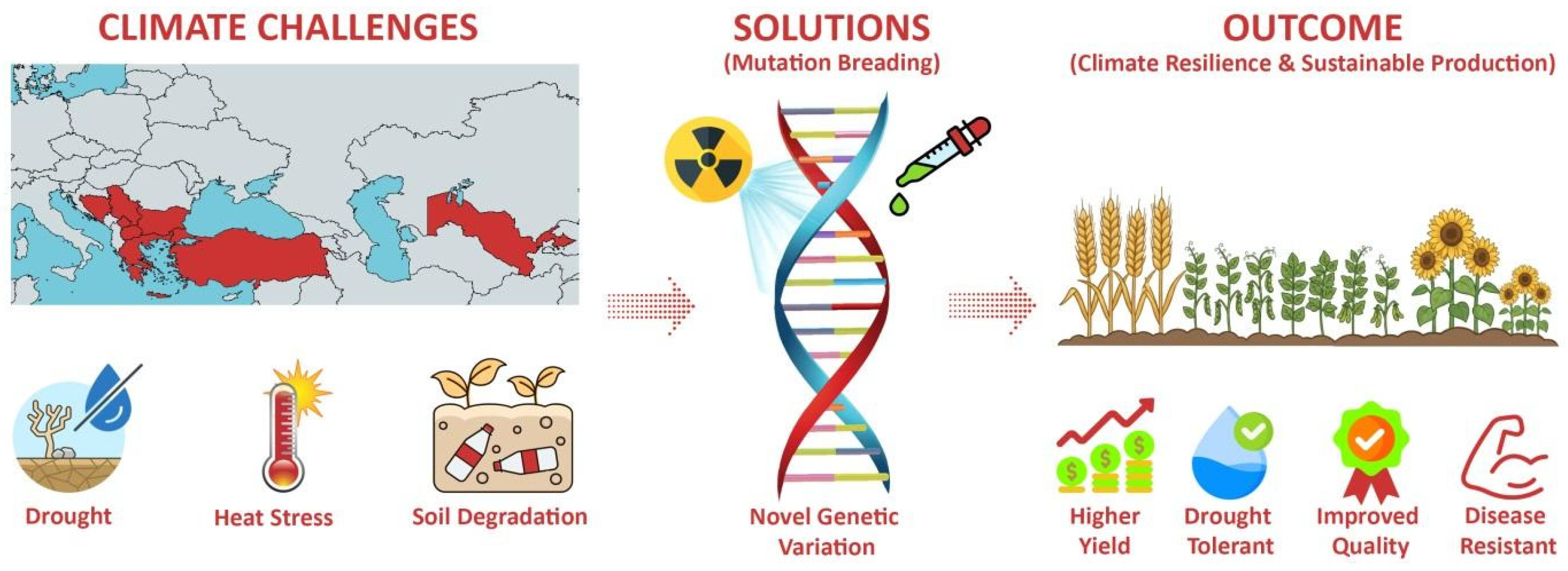
South-Eastern Europe (SEE) countries, together with parts of Central Asia (CA), are characterized by highly diverse, yet increasingly challenging climate conditions for agricultural production, encompassing continental, Mediterranean, and mountainous zones. These conditions strongly influence crop selection, yields, and risk management, and are characterized by diverse production systems, a strong reliance on major field crops such as wheat, maize, sunflower, and grain legumes, and a wide range of vegetable species [7]. Agriculture in these regions plays a critical role in food security, rural employment, and export-oriented production [8] (Burkitbayeva et al. 2021). However, crop productivity is increasingly affected by climate change, as evidenced by rising average temperatures, more frequent and intense droughts, irregular precipitation patterns, and progressive soil degradation [9]. Climate projections suggest that the continental climate of the Pannonian zone, covering Hungary, Croatia, Serbia, Bulgaria, and Romania, will experience the most severe negative impacts on agricultural production. In this region, more frequent heat waves and droughts will occur, with no effective means to shift crop cultivation to other seasons [10]. In southern Europe (North Macedonia, Greece and Türkiye), particularly large decreases in yield are expected for spring-sown crops (e.g., maize, sunflower and soybeans) due to long-lasting drought periods [11]. Similarly, climate change projections for CA indicate significant risks to agricultural production, with rising temperatures and altered precipitation expected to reduce crop yields and increase yield variability across the region [12].
Beyond environmental constraints, genetic limitations have also restricted breeding progress in several major crops cultivated in the SEE and CA regions. Domestication bottlenecks, genetic drift, and prolonged use of narrow breeding germplasm pools have reduced genetic diversity and adaptability, particularly for complex traits such as drought tolerance and stress resilience [13,14]. These constraints have limited the potential for further genetic gain from existing variation, especially under rapidly changing climatic conditions. In this context, mutation breeding provides an effective strategy to overcome genetic stagnation by inducing novel allelic variation and restoring adaptive potential within elite and locally adapted germplasm [15,16]. Unlike wide hybridization or conventional selection methods, induced mutagenesis allows the generation of new traits while preserving the favorable genetic background of well-adapted varieties, making it particularly relevant for regional breeding programs in SEE and CA. When integrated with modern tools such as MAS, high-throughput phenotyping, TILLING, and genomic technologies, mutation breeding can significantly accelerate the development of climate-resilient and high-yielding crop varieties [5,17].
Although mutation breeding has been widely reviewed at the global and crop-specific levels, the experience, achievements, and future prospects of mutation breeding in South-Eastern Europe and Central Asia have not previously been synthesized. This review addresses that gap by integrating evidence across countries, crops, breeding strategies, and emerging technologies to identify effective approaches and future research priorities for climate-resilient crop improvement. It also provides integrated analysis of mutation breeding programs across SEE and CA, linking mutagenesis protocols, high-throughput physiological phenotyping, and concrete mutant outputs to climate resilience breeding pipelines under regional stress scenarios. The review highlights the methodologies applied in national programs, breeding achievements across cereals, legumes, and industrial crops, and evaluates the role of physiological phenotyping and molecular tools in accelerating selection efficiency. Finally, it identifies future priorities for strengthening mutation breeding as a regional strategy for climateresilient crop improvement, situating the collective experience of SEE and CA within the broader global context of sustainable agriculture under climate change.

2. SEE and CA Mutation Breeding Material: Background

To address the urgent challenges posed by climate change, IAEA supported two regional projects (RER/5/024 and RER/5/030) and brought together researchers from breeding institutions in SEE and parts of CA. The breeding institutions involved have a long tradition in crop breeding, supported by national agricultural research institutes, universities, and public breeding programs focusing on cereals, legumes and industrial crops (Table 1). The landscape of mutation breeding across SEE and CA is characterized by significant heterogeneity in breeding systems and objectives, as well as maturity levels of mutation breeding programs. Regional leaders are Bulgaria and Türkiye with long-standing records of high-impact mutant variety releases, obtained by combining classical and modern breeding tools, particularly in cereals and vegetables [18,19]. Although there are no registered mutant varieties in Greece, North Macedonia, Poland and Serbia, the research teams developed “fixed” lines in M6 generation or higher using classical and multi-omics approaches for mutant population evaluations [20,21,22,23]. Other nations such as Bosnia and Herzegovina, Croatia and Uzbekistan are leveraging international technical cooperation to establish their systematic yield trials and genetic screening protocols [24,25,26]. This regional diversity is further defined by specialized breeding objectives, where Mediterranean nations like Greece prioritize legumes and some specific industrial crops, while programs in Uzbekistan (CA) focus on abiotic stress tolerance in cotton and wheat. Despite these varying points of departure, there is an increasing regional convergence toward climate-smart agriculture, facilitated by collaborative networks that synchronize traditional mutagenesis with modern genomic selection tools. Mutation breeding experiments were conducted across multiple countries using a range of crop species, including wheat (Triticum aestivum L.), barley (Hordeum vulgare L.), buckwheat (Fagopyrum sp.), pea (Pisum sativum L.), common bean (Phaseolus vulgaris L.), sunflower (Helianthus annuus L.), sesame (Sesamum indicum L.) and cotton (Gossypium hirsutum L.).

3. Mutation Breeding: Methodology and Trait Evaluation

3.1. Methodology

Optimizing mutagenic treatments is a critical step in mutation breeding, ensuring that sufficient genetic variability is induced without compromising population viability. Approaches such as LD50 (Lethal Dose 50%), GR50 (Growth Reduction 50%), and EMD50 (Effective Mutation Dose 50%) provide quantitative benchmarks for balancing mutagenic efficiency with plant survival and growth, and have been applied across diverse crops and countries in SEE and CA. Physical mutagenesis using gamma irradiation was the primary approach across all countries, while fast neutrons and chemical mutagens (Table 2) were also used in sunflower breeding programs in Serbia [44].
Gamma irradiation (γ-rays), using Co60 sources, was the predominant mutagenic treatment across SEE and CA, with dose selection guided by radiosensitivity assays and the estimation of LD50, GR50, or EMD50 values (Table 2). In addition to gamma irradiation, irradiation with fast neutrons (FN) were also applied in sunflower breeding programs in Serbia, with dose selection based on LD30 and LD50 values reported in previous studies. Prior to irradiation, seed moisture was equilibrated to ensure uniform treatment effects [40,44].
As for chemical mutagens such as ethyl-methane-sulphonate (EMS) and nitroso-methyl-urea (MNU), they required careful optimization of concentration, exposure time, and seed hydration status. In Bulgaria, EMS treatments were applied at concentrations ranging from 1.55 to 24.8 mM for six hours at ambient temperature with gentle shaking, using 1% methanol as a solvent [28]. In Serbia, sunflower seeds were treated with EMS at concentrations between 0.1 and 2.5%, alongside gamma rays and fast neutrons, with dose selection again guided by LD30 and LD50 values [40,44].
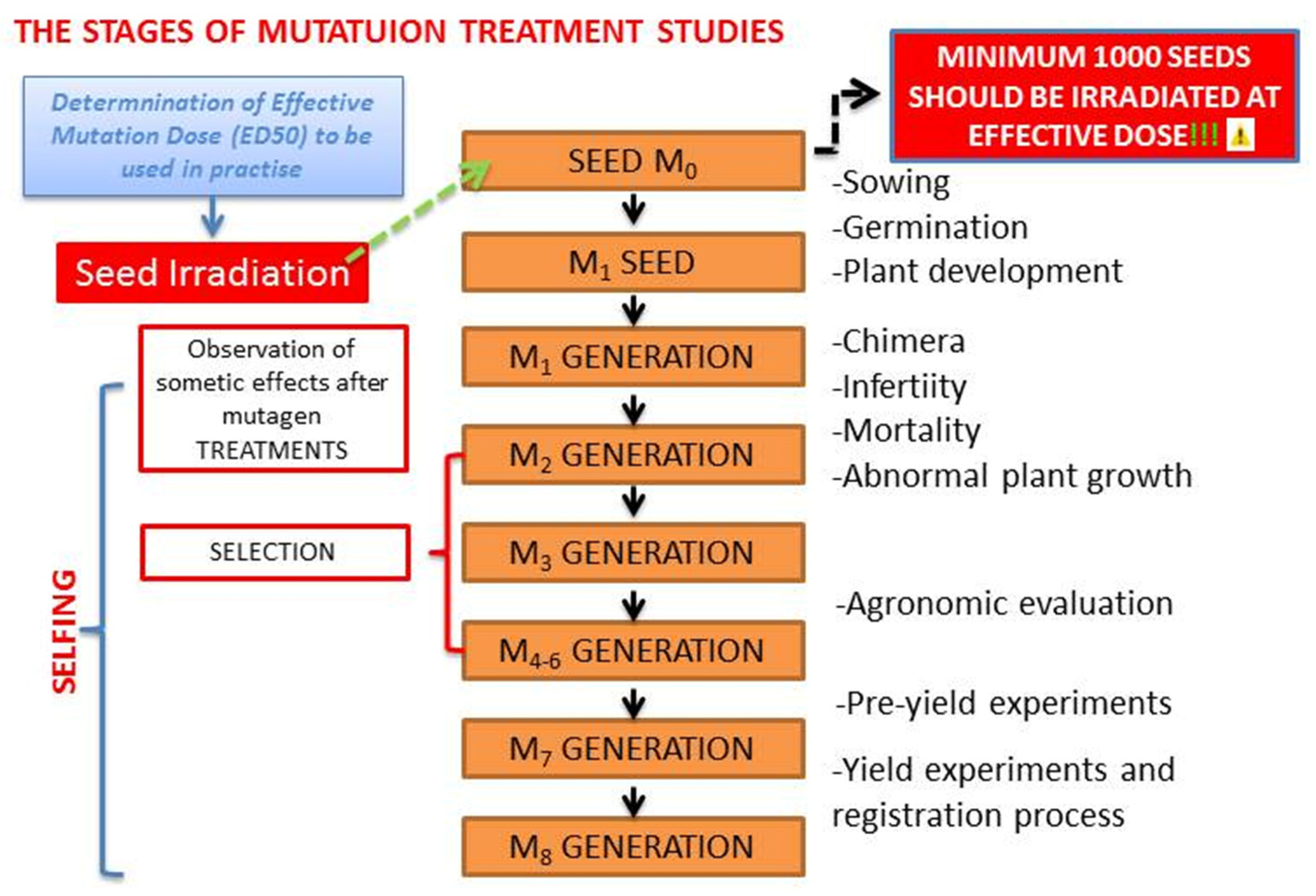
Mutagenic treatments were generally conducted at specialized irradiation facilities, including the Joint FAO/IAEA Laboratories in Seibersdorf (Austria), national nuclear research institutes, or authorized gamma facilities. Experimental designs, population sizes, selection strategies, and trait evaluations were harmonized across crops while accounting for species- and genotype-specific responses to mutagenic treatments (Table 2). In Bulgaria, mutation breeding programs have followed standardized protocols for induced mutagenesis and the selection of stabilized mutant lines [18]. In Türkiye, from the M3 stage onwards, the main lines were established from selected mutant individuals, showing superior traits compared to the control, and the classical breeding stages were followed by evaluation of the agricultural traits in the selected lines until the M7 stage [45] (Figure 1).

3.2. Trait Evaluation

3.2.1. Cereals

Wheat
Wheat mutation breeding programs were implemented in North Macedonia, Bosnia and Herzegovina, Serbia, Croatia, Türkiye, and Uzbekistan using irradiation for mutation induction (Table 2). Treated seeds were used to establish M1 populations, which varied from several hundred to over 30,000 plants depending on the experiment. M1 plants were generally grown without selection and self-pollinated, and seeds were harvested on a single-plant basis to generate M2 progenies. From the M2 generation onwards, selection was performed using classical pedigree methods, with selection intensity increasing in later generations [45]. In North Macedonia, selection extended to advanced generations (M6–M10) [20], while in Bosnia and Herzegovina, Serbia and Uzbekistan evaluations were conducted up to the M4 generation [27,41].
Trait evaluation focused on agronomic performance, yield and yield components, quality traits (protein content, sedimentation value, gluten strength, and HMW glutenin composition), phenology (heading, flowering, and maturity), plant height, lodging resistance, and resistance to major fungal diseases, including Septoria, yellow rust, leaf rust, Pyrenophora, powdery mildew, and Fusarium culmorum [37,41,46]. Abiotic stress tolerance, particularly drought tolerance, was evaluated under both field and controlled conditions [20,33,34,35]. Field evaluation was performed in Uzbekistan, where irradiated seeds of the winter wheat varieties ‘Alexievich’ and ‘Edgu’ were grown in optimal growing conditions and simulated drought stress. Early generations (M1–M2) showed reduced growth with increasing irradiation dose, but certain groups exhibited larger spikes, higher thousand-grain weight, increased pigment content, and relative tolerance to drought and yellow rust. Selection was carried out across three generations based on yield performance and stress tolerance. In Türkiye, drought response was assessed using polyethylene glycol (PEG 6000, BASF, Ludwigshafen, Germany)-induced osmotic stress [19,38]. Physiological traits such as chlorophyll content, anthocyanins, flavonols, normalized difference vegetation index (NDVI) and nitrogen balance index (NBI) were measured in some programs using non-destructive optical sensors [41].
Molecular and biochemical characterization complemented phenotypic selection. Protein markers, SSRs, SNP markers, and gliadin electrophoresis were used for quality assessment and mutant identification, while advanced programs incorporated doubled-haploid production via anther culture to accelerate the fixation of desirable mutations [19,24].
Barley
Barley mutant populations were developed through classical mutation breeding from M1 to M7 [45]. Agronomic, morphological, and yield-related traits were evaluated under field conditions, while drought tolerance and disease resistance were assessed using controlled laboratory and greenhouse assays. Selected mutant lines were further subjected to anther culture to produce genetically stable doubled haploid lines [37,47].
Buckwheat
Seeds of F. esculentum Moench var. ‘Panda’ and ‘Kora’, and F. tataricum (L.) Gaertn. were used as a source of material for mutagenesis. Gamma radiation for seeds was applied at the following doses: 0, 75, 150, 300, 450, and 600 Gy. Also, chemical mutagenesis was used with nitroso-methyl-urea (MNU; 1, 2, 3, 4 mM). Trait evaluation of M3 in controlled greenhouse conditions focused on morphological assessment, yield and carotenoid concentration [21].

3.2.2. Legumes

Pea
Mutation breeding in field pea was conducted in Greece using gamma irradiation to induce genetic variability in forage and vegetable pea varieties ‘Dodoni ’, ‘Early Onward’, ‘Ron-do ’. In M1 generation, gamma irradiation did not significantly affect plant height, number of shoots, or leaf number in ‘Dodoni’. In contrast, significant reductions in these traits were observed in the more sensitive varieties ‘Early Onward’ and ‘Rondo’. No statistically significant differences in pod and seed number per plant were detected across varieties [31].
Based on M1 performance, the M2 generation focused primarily on the variety ‘Dodoni’, with fewer families from ‘Early Onward’. M2 families were grown using an augmented incomplete block design, and selection was based on vegetative growth, flowering characteristics, pod traits, seed number, and biomass-related parameters. The ‘Dodoni’-derived mutant families showed superior performance and stability compared with the other varieties. Moreover, disease response was quantified using an ex-planta leaf bioassay with Didymella pinodes, in which lesion development was measured using ImageJ-based digital analysis on the 3rd and 5th days post-inoculation [32].
Common Bean
Mutation breeding in common bean was carried out in Bulgaria, North Macedonia and Bosnia and Herzegovina using gamma irradiation. Seeds of advanced breeding lines and reference varieties were exposed to two doses, 80 and 200 Gy [25]. Large M1 populations were established, with several thousand plants evaluated for survival and reproductive ability. Seeds from individual M1 plants were advanced to M2 populations, where selection focused on yield-related traits, disease resistance, and drought tolerance. Experimental trials were established to evaluate plant responses to selected abiotic stress conditions, with particular emphasis on physiological performance and stress-induced functional adjustments. Advanced phenotyping approaches were employed, including chlorophyll fluorescence imaging, multispectral analysis, and morphological assessments, enabling a comprehensive evaluation of plant status under controlled conditions. These efforts aimed to improve the understanding of stress tolerance mechanisms and support the development of more resilient cropping systems.
In Croatia, early-generation (M1, M2) physiological responses to gamma irradiation were assessed in three traditional common bean varieties (‘Trešnjevac’, ‘Biser’, and ‘Zelenčec’) grown under greenhouse conditions. Seeds were exposed to 100 and 150 Gy, after which chlorophyll fluorescence and multispectral imaging were applied to characterize photosynthetic performance. Clear genotype-specific responses were observed, indicating differential sensitivity to irradiation dose. Lower irradiation (100 Gy) generally enhanced several fluorescence parameters in ‘Biser’ and ‘Trešnjevac’, whereas ‘Zelenčec’ exhibited stronger responses at 150 Gy. The maximum quantum yield of PSII (Fv/Fm) displayed dose-dependent variation among genotypes, underscoring the complexity of physiological adjustments following mutagenic treatment. Among multispectral traits, saturation was the only parameter that responded consistently, increasing at the higher dose in two varieties [26].
In Bulgaria, seed from ‘Evros’ variety was used for the treatment with 6.2 mM ethyl-methane-sulfonate (EMS) [28] and five mutants marked as M4, M8, M11, M19 and M26 were developed [29].

3.2.3. Industrial Crops

Sunflower
Treated sunflower seeds using both physical and chemical mutagenesis were grown under greenhouse and field conditions together with untreated control seeds to assess radiosensitivity based on seedling height reduction. M1 plants were self-pollinated, and pedigree selection was applied from the M2 generation onwards. Selection criteria included plant height, flowering time, branching pattern, head diameter, seed yield, and oil content and quality. The stability of desirable traits was verified across multiple generations (M4–M7) through replicated field trials conducted in randomized block designs [23,42].
Sesame
Twenty-three elite sesame lines were used for mutagenic treatment in Greece in order to enhance drought tolerance in sesame [22]. Seeds were exposed to gamma-irradiation (150 to 350 Gy) producing a large M1 population. For each M1 plant, 2–5 capsules were harvested individually from the main stem circumference [48].
Cotton
Cotton mutation breeding in Uzbekistan has been revitalized to broaden the genetic base of cotton and improve fiber quality under challenging climatic conditions. Medium-fiber cotton varieties with diverse fiber colors, including light brown, dark brown, cream, golden, and green, were irradiated before sowing at doses ranging from 100 to 500 Gy using gamma rays [43]. The mutant populations displayed clear dose-dependent variability in boll number and fiber traits. At lower doses (100–150 Gy), a stimulatory effect was observed, with slight increases or stability in boll number, while higher doses (200–300 Gy) reduced boll formation [43]. These results highlight the sensitivity of cotton varieties to radiation and the potential of low-dose irradiation to induce beneficial hormetic effects.

4. Mutation Breeding Achievements in the SEE and CA: Overview

Mutation breeding in SEE and CA has evolved along diverse trajectories, reflecting the different traditions and starting points of national programs. In Bosnia and Herzegovina, crops such as wheat and common bean have already progressed to the M4 generation, while mutation breeding in countries such as Serbia, North Macedonia, Türkiye, Greece, and Uzbekistan is generally at more advanced stages, though progress varies by crop. For example, in Serbia wheat mutation breeding has reached the M4 generation, whereas sunflower programs have advanced to mutant varieties. This illustrates that across SEE and CA, national programs are at different stages depending on the crop, but most have moved beyond the initial phases and achieved stable mutant lines suitable for further breeding. Historical milestones include the initiation of mutation breeding programs in Greece and Serbia in the late 1960s, followed by the establishment of similar programs in Uzbekistan in the 1970s and in Türkiye in the early 1980s, with many released mutant varieties [49,50,51]. Together, these activities demonstrate the region’s growing capacity to integrate mutation breeding into crop improvement pipelines, despite infrastructural and funding limitations, and provide a strong basis for strengthening mutual cooperation. In recent years, in the framework of various initiatives, including the IAEA project RER/5/024, participating institutions have built on these foundations by combining mutation breeding with modern molecular tools to develop climate-resilient varieties of major food crops. This review presents the contemporary collective efforts and achievements in mutation breeding across SEE and CA, highlighting progress in crop improvement and resilience (Figure 2).

4.1. Cereals

Cereals represent a major focus of mutation breeding programs across SEE and CA, reflecting their central role in food security and climate resilience. Wheat and barley have been the primary targets, with mutagenesis generating substantial variability in morphological, physiological, and stress-related traits.
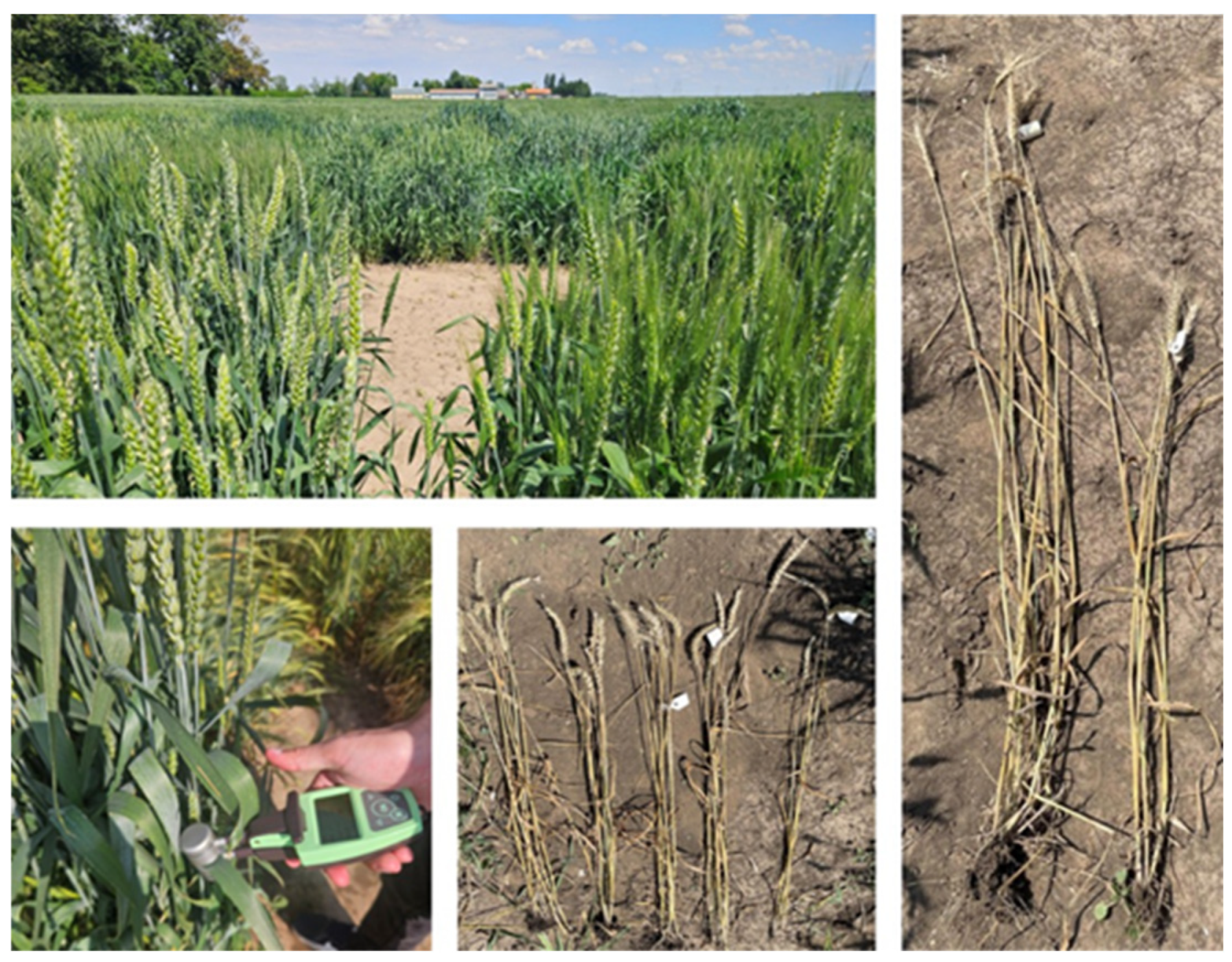
Mutation breeding has produced striking diversity in wheat spike morphology and pigmentation. From awnless reference varieties, mutant lines have emerged with awns, altered spike coloration (gold and pink), exceptionally dense and elongated spikes, and enhanced chlorophyll content. In Serbia, the first measurements were performed in the wheat M4 generation comprising 200 lines in the open field (Figure 3).
Analyzed traits included: plant height, spike and peduncle length, presence or absence of awns and phenological traits, such as heading and flowering time. Further investigations in the next generations will be important for confirming and assessing the stability of the observed differences. In 50 M4 wheat lines, differences in physiological parameters, such as chlorophyll, anthocyanins, and nitrogen balance index (NBI), were recorded [41]. In Bosnia and Herzegovina (Banja Luka), mutation breeding programs in wheat have demonstrated that gamma irradiation induces clear dose-dependent effects on mutant line survival and phenotypic variability in the M3 generation of winter wheat. Higher irradiation doses reduced survival rates but increased mutagenic effectiveness. Nevertheless, the highest dose (300 Gy) substantially increased phenotypic variability and enabled the identification of extremely high-yielding lines and genotypes that combine elevated spike number with high productivity. The moderate dose of 200 Gy provided a favorable balance between induced variability and population size, while 300 Gy produced the most promising elite mutants. These findings confirm the value of induced mutagenesis as an effective strategy for broadening genetic variability and selecting superior lines in early generations of wheat breeding [27].
In North Macedonia, wheat mutation breeding programs have focused on a broad range of agronomic and quality traits. Trait evaluation was conducted through detailed phenotypic characterization, with improvements monitored and maintained over successive generations using both positive and negative selection [20,33,35]. Protein quality was further analyzed using biochemical assays and SSR markers, providing molecular confirmation of variation within the mutant populations [34].
In Croatia, research was conducted on winter wheat to evaluate crop responses to abiotic stress conditions relevant to regional agroecological conditions. Experimental trials were conducted under field conditions. The objective of these activities was to strengthen the understanding of adaptive responses in winter wheat and contribute to the development of more resilient cereal production systems under increasing environmental variability.
Mutation breeding in Türkiye has been applied extensively to wheat and barley, two crops of major national importance. Seeds of the bread wheat varieties ‘Karahan-99’ and ‘Tosunbey’, as well as the barley variety ‘Tokak 157/37’, were irradiated with gamma rays from a Co60 gamma source to generate mutant populations. Trait evaluation in barley mutants revealed variation in plant height, spike length, spike type and density, anthocyanin accumulation, sterile spikelet development, and heading time. Yield-related traits such as grain yield, thousand-kernel weight, and hectoliter weight were also assessed, alongside kernel size distribution. 85 selected mutant barley lines were further subjected to anther culture, yielding doubled-haploid (DH) lines. These DH lines exhibited higher grain yield, reduced plant height, and improved lodging resistance compared with self-pollinated controls (Table 3) [37]. This demonstrates the efficiency of combining mutation breeding with DH technology to stabilize elite lines, which was also previously reported [47,52,53].
In wheat, disease resistance was evaluated against Fusarium culmorum using virulent isolates from Central Anatolia. Genotypes displayed a wide range of responses, from highly susceptible to moderately resistant. Moderately resistant lines, including ‘Altay 2000’, ‘BW5’, and ‘E-5/6’ mutants, showed lower disease severity and stable reaction profiles, making them valuable donors for breeding programs [54].
Furthermore, drought tolerance was assessed using polyethylene glycol (PEG 6000) to simulate osmotic stress at multiple levels [19,38]. PEG-induced osmotic stress significantly reduced seedling growth, biomass accumulation, and root development, with clear genotypic differences observed. Genotypes that maintain higher root length and biomass under stress conditions are considered more drought-tolerant. Strong positive correlations were observed among germination rate, root length, root number, seedling height, and leaf sheath length, while biomass traits showed negative correlations with elongation growth. Principal component analysis (PCA) identified divergent mutants such as ‘Köse 220/39’ and ‘TSB 256’, which exhibited distinct physiological responses under stress. Based on these analyses, three strategic three-way breeding combinations were proposed to maximize genetic diversity and enhance drought tolerance, integrating both traditional varieties and mutant lines [19]. These achievements underscore the potential of mutation breeding, particularly when combined with advanced techniques such as anther culture and multivariate analysis, to accelerate the development of climate-resilient and disease-resistant cereal varieties in Türkiye [55,56,57].
In Uzbekistan, from the total number of mutant forms of the two varieties, ‘Aliksyevich’ and ‘Yog’du’, M3 plants with different grain and ear weights and resistance to yellow rust were selected. Seventeen forms were selected from the optimal background and 18 from artificial drought. Fifteen forms were selected for their relative resistance to yellow rust. The mutant forms were evaluated for physiological and biochemical parameters, resistance, yield and stability of useful properties. Protein and gluten content analyses confirmed variability among irradiation treatments, with several mutant lines demonstrating improved nutritional parameters under drought conditions. These selected lines are suitable for propagation as new varieties or as donors in breeding programs. By the M4 generation, ten wheat genotypes from the two varieties were identified as promising, showing phenotypic uniformity and stability in yield and quality. Protein and gluten content analyses confirmed variability among irradiation treatments, with several mutant lines demonstrating improved nutritional parameters under drought conditions [24]. These selected lines are suitable for propagation as new varieties or as donors in breeding programs.
Mutation breeding of buckwheat resulted in increased seed yield and carotenoid content. Gamma irradiation resulted yield enhancement of 26% in M3 generation, while chemical treatment of 1 mM MNU resulted higher carotenoid content level in M3 generation.

4.2. Legumes

Mutation breeding offers a powerful tool to expand the genetic base of legumes, generating novel traits that strengthen their role in sustainable crop production and climate resilience. Recent initiatives in SEE and CA illustrate this potential, with mutation breeding applied to common bean and pea to improve yield components, disease resistance, and stress tolerance. These case studies highlight how legumes can serve as models for integrating mutation breeding into regional strategies for climate adaptation and food security.

4.2.1. Pea

In Greece, three varieties were used for mutagenesis [58] and subjected to gamma irradiation to evaluate seed yield, quality traits (protein and mineral content: Fe, Zn, Mn, Cu), and tolerance to Didymella pinodes, the causal agent of ascochyta blight. Several individual plants displayed superior reproductive performance, with pod and seed yields exceeding controls by more than twofold. Five families were identified as promising candidates for advancement to the M3 generation [31]. Biochemical analyses of selected families demonstrated increased protein content, higher Fe and Zn concentrations, and enhanced antioxidant activity, while protease activity remained stable. These findings indicate that gamma irradiation can generate pea mutants with improved nutritional and biofunctional properties (Sarri et al., personal communication). Disease tolerance assays using detached-leaf bioassays against Didymella pinodes identified families with reduced disease severity, particularly ‘DMIV21’, ‘DMIV36’, and ‘DMIV49’, which combined tolerance with improved yield traits [32]. Conversely, some families exhibited increased susceptibility, underscoring the complexity of mutagenic effects. This work represents one of the first comprehensive applications of gamma irradiation in pea breeding, integrating agronomic, biochemical, and disease resistance evaluations. The results highlight both opportunities and trade-offs, consistent with antagonistic pleiotropy, and emphasize the need for balanced selection strategies. The families identified in this study provide a functional framework for developing nutritionally enhanced, environmentally resilient pea varieties, contributing to sustainable agriculture and food security.

4.2.2. Common Bean

In Bosnia and Herzegovina (Banja Luka), seeds of a bush-type common bean reference variety were irradiated with two gamma doses. By the M4 generation, phenotypic evaluation revealed mutant lines with climbing growth habit, diverse flower coloration, seed coat colour changes [25]. Also, longer pods, higher seed number per pod and improved disease resistance were observed. These modifications expand the genetic base of common bean and provide valuable donor lines for breeding programs aimed at enhancing adaptation and resilience under changing climatic conditions.
In North Macedonia, evaluation through successive generations up to M4 revealed improvements in seed yield and yield-contributing traits, as well as enhanced disease resistance and abiotic stress tolerance. Detailed trait assessments included plant height, pod length and width, seed length and width, hundred-seed weight, seeds per pod, days to flowering, and seed yield per plant. Observations of disease tolerance and drought stress tolerance further confirmed the potential of these mutants as donors for breeding programs [36].
In Bulgaria, a total of 70 M8 mutant lines with diverse altered traits have been developed through induced mutagenesis of elite varieties. These advanced lines represent stabilized material suitable for detailed phenotypic, molecular, and agronomic evaluation.

4.3. Industrial Crops

4.3.1. Sunflower

Sunflower is one of the most important oilseed crops in SEE, widely cultivated for its high-quality edible oil and valuable by-products. Several distinct mutant types were identified in the mutation breeding program in Serbia. Early-flowering mutants such as line ‘Early-1’ (derived from fast neutron treatment of line ‘L3’) flowered approximately five days earlier than the original line without affecting plant height, demonstrating separation of traits typically correlated in sunflower. Short-stature mutants (‘Shorty-5’ and ‘Shorty-9’) were obtained with gamma irradiation (100–120 Gy). ‘Shorty-5’ was 15 cm shorter than its tall parent line ‘L2’ yet produced significantly higher seed yield per plant, while ‘Shorty-9’ (from restorer line ‘R1’) showed variability in flowering time and head size. Reduced plant height is considered advantageous for standability and yield stability, as confirmed in ‘Shorty-5’. Conversely, a high-stature mutant, ‘Tally-2’, was produced by gamma irradiation (200 Gy) of the dwarf line ‘R3’, resulting in plants 30 cm taller, with longer vegetation, larger heads, and higher seed yield, traits favorable for hybrid production [44].
Mutants with enhanced oil content were also identified. ‘Oily-3’ (fast neutrons, 3 Gy) and ‘Oily-7’ (gamma irradiation of line ‘R2’) exhibited increased and stable oil percentages compared to their parental lines. Oil content reached 49.7% in ‘Oily-3’ and 46.1% in ‘Oily-7’, compared to 44.6% and 36.0% in the respective controls. While mutation-induced changes in sunflower oil content are generally modest, these results demonstrate that targeted mutagenesis can generate lines with improved oil yield and stability [44].
Concerning oil quality, in the M2 generation, seeds were analyzed for fatty acid composition, and individual plants showed noticeable alterations. In the following generation, a putative mutant line (‘ML31-1’) was identified, exhibiting significantly reduced oleic acid content compared with the high-oleic line ‘L31’ grown in the same season [59]. Further molecular studies showed that mutant progeny with reduced oleic acid content still preserved the Ol mutation in at least one allele and valuable source for further breeding [60].

4.3.2. Sesame

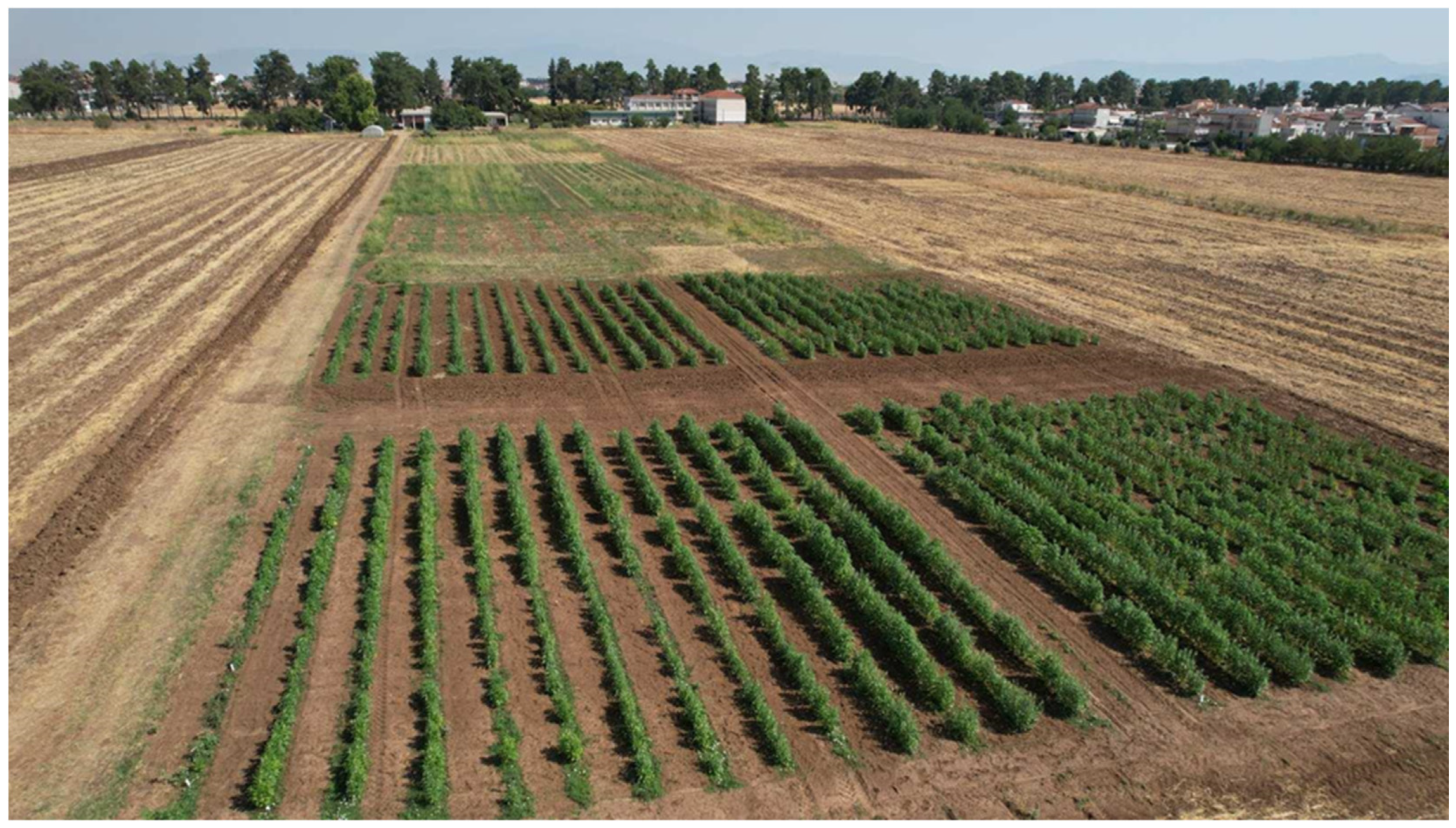
In Greece, a long-term breeding program aims to identify superior sesame genetic resources to support the expansion and modernization of sesame cultivation. Over six years of evaluating Greek sesame landraces, elite progeny lines were selected, but a narrow genetic base was identified, limiting further breeding progress—particularly for traits needed in modern, mechanized production systems [61] (Figure 4).
Figure 4. Sesame field experiment for drought tolerance. Approximately 600 M2 progeny rows established in two environments (full and 40% reduced irrigation). Plants exhibit contrasting canopy development and biomass accumulation under limited water availability. Plots maintaining greater green leaf area and canopy density indicate superior drought resilience through enhanced water acquisition, efficient water use, delayed senescence, and sustained photosynthetic activity. Such field phenotyping trials enable the identification of resilient germplasm for climate-adaptive crop improvement.
Agronomy 16 01488 g004
Developing climate-resilient mutant sesame is a strategic approach to overcome the narrow genetic base identified in existing germplasm and to enhance the crop’s adaptability to changing environmental conditions [48]. A rigorous composite index was developed to assess capsule shattering based on three components: the number of seeds retained in an upright mature capsule, seed retention after capsule inversion, and the percentage of capsule opening. This multi-criteria approach enabled reliable identification of stable, non-shattering mutant lines, leading to the selection of approximately 50 genotypes combining strong drought tolerance with traits suitable for mechanized cultivation [62]. These genotypes will form M3 families for further evaluation using an augmented incomplete block design, while the ongoing mutagenesis and selection program will be enhanced by modern genomic tools and high-throughput phenotyping to generate valuable pre-breeding material and support the development of high-yielding, climate-resilient sesame varieties.

4.3.3. Cotton

Morphological and technological traits expressed in the mutant populations revealed the degree of genetic responsiveness of the studied fiber-colored genotypes. Among them, green-, golden-, and cream-fiber mutants demonstrated high stability and yield potential, making them valuable donors for breeding programs [43]. Their incorporation into breeding pipelines is expected to diversify fiber quality, enhance resilience, and contribute to the development of cotton varieties adapted to the arid and semi-arid conditions of CA. Current work continues to evaluate these radio-mutants for yield stability and technological properties, with the long-term objective of releasing improved varieties and integrating them into national breeding strategies.

5. Discussion

Agricultural production in SEE and CA has been challenged by extreme environmental conditions. One of the solutions is induced mutagenesis, which is not only a source of theoretical variability, but a practical breeding tool for climate adaptation. In the particular regions, mutant-derived varieties could demonstrate improved yield and quality parameters, enhanced drought and heat tolerance, improved stress physiology, and greater disease resistance under field conditions [63]. Such traits could contribute to yield maintenance and stability across variable environments. Therefore, the development and deployment of mutant-derived varieties would represent a field-validated strategy to strengthen climate resilience, food security, and production sustainability in climate-vulnerable regions such as SEE and CA.

5.1. Physiological Phenotyping as a Catalyst for Accelerating Mutation Breeding

After induced mutagenesis it is very important to choose an adequate method for traits evaluation. A major bottleneck in mutation breeding and early-generation selection is that many adaptive traits (drought/heat/disease tolerance) are physiologically complex and often poorly captured by morphological scoring alone, while strong genotype × environment interactions can mask true genetic differences. Integrating high-throughput physiological phenotyping into mutation-breeding pipelines can therefore increase selection efficiency by providing rapid, non-destructive, and more objective proxies of stress response that are measurable on large populations and at relevant developmental stages. Across crops and stress types, canopy temperature has emerged as one of the most robust predictors of stress performance, reflecting water relations and stomatal regulation; it shows high utility in early-generation selection and can deliver measurable genetic gain under drought/heat when deployed in appropriately timed field screening [64,65,66]. Moreover, combining canopy-temperature–related phenotypes with genomic selection frameworks can substantially improve prediction accuracy compared with genomics alone, highlighting the complementary information content of physiological traits [65].
Chlorophyll fluorescence and spectral approaches add mechanistic resolution and are particularly valuable for detecting early functional shifts in photosynthetic performance that may precede visible symptoms, but their predictive value depends on stress type, intensity, and duration. For example, chlorophyll fluorescence has been shown to differentiate tolerant vs. susceptible responses under prolonged drought in some crops [67] and to provide informative predictors of heat/drought response in wheat when appropriate parameters and stress regimes are used [68]. In contrast, limited predictive power can occur in highly plastic species or under transient stress conditions, emphasizing the need for context-specific validation and measurement timing aligned with critical stress-sensitive windows [68,69]. For resource-limited programs typical of parts of SEE and CA, a tiered strategy is therefore pragmatic: use scalable traits such as canopy temperature and spectral indices for initial screening, then apply fluorescence imaging and targeted gas exchange on a reduced subset for deeper physiological characterization and decision support [64,65,70]. Such an approach aligns well with the goal of accelerating early enrichment of mutant populations before advanced multi-location testing and can strengthen the deployment of mutation breeding as a modern, physiology-informed tool for climate resilience.

5.2. Practical Use of New Cereal Mutant Varieties as Climate-Resilient Crops

Mutation breeding has significantly contributed to wheat improvement worldwide and played an important role during the Green Revolution by generating valuable genetic variability for yield and adaptation [71]. Several mutation-derived varieties have achieved large-scale adoption and delivered substantial economic benefits. Mutation-derived varieties such as ‘Jauhar-78’, ‘Soghat-90’, and ‘Kiran-95’ in Pakistan demonstrated high yield potential, improved grain quality, and disease tolerance, collectively contributing over US $87 million to farmer income during the 1990s [72]. The Indian variety ‘Sharbati Sonora’, a mutant of ‘Sonora 64’, also gained widespread acceptance due to improved grain quality during the early years of the Green Revolution.
Our findings from SEE and CA demonstrate that induced mutagenesis continues to generate useful variability for modern wheat breeding. Gamma-induced mutant genotypes developed in Serbia, Bosnia and Herzegovina, North Macedonia, Türkiye, and Uzbekistan showed increased spike number, higher thousand-grain weight, and enhanced variability in yield components, particularly at moderate-to-high irradiation doses in field conditions [27,39]. Importantly, several lines maintained stable protein and gluten content under drought conditions in field trials [24], which is essential in continental production regions where terminal drought and heat stress frequently reduce grain filling and grain quality. Physiological analyses revealed variation in chlorophyll content, anthocyanin accumulation, and nitrogen balance index among field-grown mutant lines [41], suggesting improved photosynthetic stability and stress-response mechanisms. Because canopy temperature regulation and sustained photosynthetic activity are strongly associated with drought adaptation [64,65], these mutants represent promising material for rainfed and marginal environments. In addition, the identification of varieties with moderate resistance to Fusarium culmorum in Türkiye highlights the potential for simultaneous tolerance to both abiotic and biotic stresses under climate change scenarios. The need for diversified genetic resistance sources is further emphasized by the threat of ‘Ug99‘, first detected in Uganda, which remains one of the most serious global risks to wheat production due to widespread variety susceptibility.
Mutation breeding has made major contributions to barley improvement, particularly through the development of semi-dwarf varieties that enhanced yield stability and lodging resistance. Two of the most influential examples are ‘Diamant’ and ‘Golden Promise’, which had a profound impact on European barley production and the malting and brewing industries. ‘Diamant’, released in 1965 in Czechoslovakia after gamma irradiation of the variety ‘Valticky’, was about 15 cm shorter and produced approximately 12% higher grain yield. Its genetic background was subsequently incorporated into more than 150 barley varieties grown across Europe, North America, and Asia, largely due to the beneficial semi-dwarf denso gene that improved lodging resistance and productivity [73]. Likewise, ‘Golden Promise’, developed through gamma irradiation of the variety ‘Maythorpe’, combined short stature, stiff straw, high yield, and excellent malting quality, making it widely used by breweries in the United Kingdom and Ireland and contributing substantially to the brewing and whisky industries [74].
Recent mutation breeding efforts continue to demonstrate the relevance of this approach for climate-resilient barley improvement. In Türkiye, gamma-induced mutant lines with reduced plant height and improved lodging resistance showed favorable agronomic performance under field conditions [37]. Reduced plant height is particularly advantageous under increasingly frequent extreme rainfall and storm events in continental climates. Early-heading mutants can also escape terminal heat and drought stress, a widely recognized adaptive strategy in cereals [65]. When combined with doubled-haploid technology to accelerate genetic stabilization [47], these mutants can rapidly contribute to the development of barley varieties adapted to variable and climate-stressed production environments.

5.3. Pea and Bean as Models for Integrating Resilience, Productivity, and Nutritional Quality

In legumes, pea provides a clear example of how induced mutagenesis can simultaneously contribute to productivity, disease tolerance, and improved crop architecture. Early achievements in mutation breeding demonstrated how specific architectural traits can improve agronomic performance. For instance, the gamma-ray-induced mutant variety ‘Wasata‘, released in Poland in 1979, carried the afila (tendrilled leaf) trait in which leaflets are converted into tendrils while stipules remain functional. This plant architecture improves canopy aeration, light penetration, and standing ability, facilitating mechanical harvesting and reducing lodging. The afila trait was subsequently incorporated into breeding programs, leading to semi-leafless pea varieties are now widely cultivated in many countries, demonstrating the long-term breeding value of induced architectural variation [4].
Recent studies further demonstrate how induced mutagenesis can address emerging climate-related challenges in pea production. Gamma-irradiated populations developed in Greece produced mutant families that maintained high yield while exhibiting reduced severity of Didymella pinodes infection [31,32]. This is particularly relevant as climate projections suggest that rising temperatures and fluctuating humidity levels are likely to increase fungal pathogen pressure in legumes [75]. Disease-tolerant mutants therefore contribute to stabilizing yield and reducing reliance on fungicides under increasingly unpredictable environmental conditions. In addition to stress tolerance, selected mutant pea lines also showed enhanced nutritional quality, including increased protein content and elevated Fe and Zn concentrations. This biofortification aspect is particularly important because elevated atmospheric CO2 levels have been shown to reduce mineral nutrient concentrations in many crops [76]. By combining disease tolerance with improved nutritional value, mutant pea lines contribute simultaneously to agronomic resilience and human nutrition security. Their ability to balance growth and defense processes further supports adaptation to unstable agro-ecosystems and multiple environmental stresses [77,78].
Common bean provides another clear example of how mutation breeding can improve crop adaptation through modifications in plant architecture, productivity, and stress tolerance. Early mutation breeding work demonstrated the importance of radiation-induced architectural traits for improving agronomic performance. In North America, irradiation of the variety ‘Michelite’ produced early bush-type mutants, including the white-seed coat mutant ‘NEP-2’, which were widely used as parental material in breeding programs. These mutants and their derivatives became foundational components in the pedigrees of many white-seeded bean varieties and even today approximately 40% of the areas of white beans grown in North America originate from these varieties [79]. The bush growth habit enabled earlier maturity, improved stand uniformity, and greater suitability for mechanized harvesting, demonstrating the long-term breeding value of mutation-induced architectural traits.
Recent mutation breeding efforts in SEE further illustrate how induced mutagenesis can address current climate-related production challenges. Programs in North Macedonia and Bosnia and Herzegovina generated mutant lines with increased seed number per pod, improved plant architecture, and enhanced tolerance to drought and disease [25,36]. These traits are particularly valuable in smallholder-dominated farming systems typical of mountainous and marginal areas in SEE, where yield stability is often more critical than maximum yield potential. Mutants with improved reproductive efficiency can partially compensate for stress-induced flower or pod abortion during drought episodes, thereby maintaining productivity under variable environmental conditions.

5.4. Improvement of Industrial Crops: Implications for Food Security and Sustainability

Sunflower mutation breeding provides well-documented examples of how induced genetic variation can improve crop architecture and oil quality, thereby supporting adaptation to changing climatic conditions. One of the most influential achievements in sunflower mutation breeding was the development of the high-oleic mutant variety ‘Pervenets’, obtained through chemical mutagenesis using dimethyl-sulphate (DMS) in Krasnodar, Russia [80,81]. Following its introduction into breeding programs in the United States and Europe after 1980, the ‘Pervenets’ germplasm became the primary genetic source for the development of high-oleic sunflower hybrids [82].
Recent mutation breeding research in Serbia further illustrates how induced variation can support climate adaptation in oilseed crops. Early-flowering mutants derived from fast-neutron treatments flowered several days earlier than their parental lines without compromising yield [44]. In regions where late-summer drought and heat waves reduce seed set and oil accumulation, earlier flowering allows partial escape from terminal stress. Short-stature mutants also demonstrated improved standability and, in some cases, increased seed yield [44], thereby reducing lodging losses during extreme weather events. Additionally, mutants with increased oil content, reaching nearly 50%, provided enhanced oil yield stability [59]. Considering that oilseed crops are economically strategic in SEE, maintaining stable oil productivity under increasing heat and drought stress is critical for regional agricultural sustainability [14].
Cotton mutation breeding provides notable examples of how induced genetic variation can support both agronomic performance and economic stability in major fiber crops. One of the most prominent examples is the gamma-ray-induced mutant variety ‘NIAB-78’, released in Pakistan in 1983. This variety combined high yield with several adaptive traits, including shorter plant stature, determinate growth habit, heat tolerance, and early maturity. Its early maturation allowed it to escape severe bollworm infestation and made it particularly suitable for cotton–wheat rotation systems. Within five years of release, ‘NIAB-78’ covered more than 70% of the cotton-growing area in Punjab and played a major role in stabilizing cotton production and sustaining Pakistan’s textile industry [4]. Subsequent mutation breeding efforts continued to build on these achievements. The mutant-derived variety ‘NIAB Karishma’, released in 1996, improved heat tolerance, and high yield potential. Its cultivation expanded to nearly half a million hectares and generated substantial economic benefits for farmers. Similarly, in China the gamma-induced variety ‘Lumian No. 1’, released in 1974, became one of the most widely grown cotton varieties, exceeding one million hectares of cultivation annually until the late 1980s [83].
More recent mutation breeding work in CA further highlights the relevance of induced variation for climate adaptation. In Uzbekistan, cotton mutants developed under low-to-moderate gamma irradiation doses exhibited stable or increased boll numbers together with favorable fiber characteristics [43]. Because cotton production in CA largely occurs under arid and semi-arid conditions, identifying mutants that maintain productivity under water-limited environments is increasingly important. Such genotypes are better suited to withstand rising temperatures and increased evaporation rates associated with climate change. Incorporating these mutants into breeding programs targeting drought tolerance and fiber-quality diversification can therefore strengthen the resilience of cotton production systems in arid regions.
These results confirm that mutation breeding continues to provide valuable genetic resources for improving yield stability, grain quality, and stress resilience. Newly developed wheat mutants from SEE and CA therefore represent promising candidates for cultivation in stress-prone environments and valuable donors for broadening adaptive breeding pools.
Despite the successes detailed above, several limitations in crop mutation breeding in the SEE and CA regions remain to be overcome. Primary challenge is genotype dependency; the optimal dose for one variety often causes excessive lethality in another, requiring costly preliminary radiosensitivity assays. Furthermore, while mutation breeding is excellent for broadening crop genetic base, it is inherently random compared to the precision of CRISPR/Cas9 gene editing. However, in many SEE and CA nations, the regulatory landscape and public perception of gene editing remain complex, making mutation breeding a more accessible “non-GMO” path to trait improvement. Furthermore, infrastructure gaps in some countries also hinder further progress. Many mutation breeding programs lack high-throughput molecular confirmation tools and platforms (e.g., TILLING) to identify specific nucleotide changes early, relying instead on multi-year field phenotyping. Strengthening regional cooperation through shared irradiation facilities and centralized genomic platforms is essential to move from random discovery to targeted crop design.

6. Conclusions

In conclusion, this review demonstrates that mutation breeding in SEE and CA can be an effective, regionally adapted but robust pillar for climate-smart agriculture. Significant progress has been achieved in key trait–crop combinations, including drought and heat tolerance in cereals, improved oil quality and stress resilience in sunflower, enhanced seed retention and drought adaptation in sesame, and increased disease resistance in legumes. Our analysis shows that moderate-dose gamma irradiation (200–300 Gy) is the most effective regional strategy for balancing induced variability with plant survival in most of the crops. However, many mutant populations remain in early breeding generations, while multi-location evaluation, long-term assessment of trait stability, and molecular validation of candidate mutations are still limited. Breeding capacity also varies considerably among countries because of differences in infrastructure, available technologies, and financial resources. Consequently, relatively few mutant lines have progressed to officially released cultivars despite the large amount of promising breeding material. Future progress will depend on integrating mutation breeding with genomic selection, TILLING platforms, genome-wide association studies, next-generation sequencing, and AI-assisted digital breeding to accelerate the identification and utilization of beneficial mutations. Equally important will be expanding field-based physiological phenotyping under realistic stress environments and developing mutant populations targeting complex traits, including combined drought and heat tolerance, resource-use efficiency, and durable resistance to emerging pests and diseases.

Author Contributions

Conceptualization, S.C., A.R. and D.M.; methodology, S.C., S.G., M.K.Z., M.J., E.A., E.T., E.S. (Efi Sarri), R.U., N.T., J.G., J.K. and K.Y.K.; resources, M.A., S.U., N.S.A., B.K., D.N.V., C.P. (Christos Petsoulas), A.K., C.P. (Chrysanthi Pankou), B.A., K.I., E.N., D.G., S.A., A.Ş., H.P., E.S. (Emine Seçer) and A.G.; writing—original draft preparation, S.C., A.R., S.G., M.K.Z., M.J., E.A., E.T., E.S. (Efi Sarri), R.U., N.T. and K.Y.K.; writing—review and editing, B.L., N.T., S.J., A.K.Š. and D.M.; visualization, D.T. and I.V.; supervision, D.M.; funding acquisition, N.T. and D.M. All authors have read and agreed to the published version of the manuscript.

Funding

This work has been supported by the International Atomic Energy Agency (IAEA), the Technical Cooperation Project RER/5/024, “Enhancing Productivity and Climate Resilience of Major Food Crops in Europe and Central Asia”.

Data Availability Statement

No new data were created or analyzed in this study. Data sharing is not applicable to this article.

Acknowledgments

This work has been supported by the International Atomic Energy Agency (IAEA), the Technical Cooperation Project RER/5/030 “Supporting Member States in Enhancing Agrifood Systems” and the BUL/5/020 “Increasing the Yield and Quality of Main Vegetable Crops through Nuclear Technology to Withstand the Impact of Climate Change”. This work was also supported by the Ministry of Science, Technological Development and Innovation of the Republic of Serbia, grant number: 451-03-33/2026-03/200032. The work was performed as part of the activities of the Centre of Excellence for Innovations in Breeding of Climate Resilient Crops—Climate Crops, Institute of Field and Vegetable Crops, National institute of the Republic of Serbia, Novi Sad, Serbia. This research has been supported by Turkish Energy Nuclear and Mineral Research Agency, grant number: A2.H1.P14. The work is also supported by project “Research and Development of Plant Genetic Resources for Sustainable Agriculture, Center of Excellence for Biodiversity and Molecular Plant Breeding (CoE CroP-Bio-Div), Zagreb, Croatia (PK.1.1.10.0008)”. This work has been supported by the Ministry of Scientific and Technological Development and Higher Education of Republic of Srpska, grant number: 19.032/961-48/23. This work was also supported by the Agricultural Academy, Bulgaria, 1 January 2026, “Integrated Approaches for Assessing Abiotic Stress in Vegetable Crops.

Conflicts of Interest

The authors declare no conflicts of interest.

References

  1. Ma, L.; Kong, F.; Sun, K.; Wang, T.; Guo, T. From classical radiation to modern radiation: Past, present, and future of radiation mutation breeding. Front. Public Health 2021, 9, 768071. [Google Scholar] [CrossRef] [Scilit] [PubMed]
  2. Bhuiyan, M.S.H.; Malek, M.A.; Emon, R.M.; Khatun, M.K.; Khandaker, M.M.; Alam, M.A. Increased yield performance of mutation-induced soybean genotypes at varied agro-ecological conditions. Braz. J. Biol. 2024, 84, e255235. [Google Scholar]
  3. FAO/IAEA. Mutant Variety Database (MDV). 2026. Available online: https://nucleus.iaea.org/sites/mvd (accessed on 15 March 2026).
  4. Ahloowalia, B.S.; Maluszynski, M.; Nichterlein, K. Global impact of mutation-derived varieties. Euphytica 2004, 135, 187–204. [Google Scholar] [CrossRef] [Scilit]
  5. Shu, Q.Y.; Forster, B.P.; Nakagawa, H. (Eds.) Plant Mutation Breeding and Biotechnology; CABI: Wallingford, UK, 2012. [Google Scholar]
  6. Bado, S.; Forster, B.P.; Nielen, S.; Ali, A.M.; Lagoda, P.J.; Till, B.J.; Laimer, M. Plant mutation breeding: Current progress and future assessment. Plant Breed. Rev. 2015, 39, 23–88. [Google Scholar] [CrossRef] [Scilit]
  7. FAO. FAOSTAT Statistical Database; FAO: Rome, Italy, 2024. [Google Scholar]
  8. Burkitbayeva, S.; Liefert, W.; Swinnen, J. Agricultural development and food security in Eastern Europe and Central Asia. In Agricultural Development: New Perspectives in a Changing World; International Food Policy Research Institute (IFPRI): Washington, DC, USA, 2021; pp. 233–276. [Google Scholar]
  9. IPCC. Sixth Assessment Report (AR6); IPCC: Geneva, Switzerland, 2021. [Google Scholar]
  10. Olesen, J.E.; Trnka, M.; Kersebaum, K.C.; Skjelvåg, A.O.; Seguin, B.; Peltonen-Sainio, P.; Micale, F. Climate change impacts on European agriculture. Eur. J. Agron. 2011, 34, 96–112. [Google Scholar] [CrossRef] [Scilit]
  11. Audsley, E.; Pearn, K.R.; Simota, C.; Cojocaru, G.; Koutsidou, E.; Rounsevell, M.D.A.; Trnka, M.; Alexandrov, V. What can scenario modelling tell us about future European scale agricultural land use, and what not? Environ. Sci. Policy 2006, 9, 148–168. [Google Scholar] [CrossRef] [Scilit]
  12. Thomas, T.S.; Akramov, K.T.; Robertson, R.D.; Nazareth, V.; Ilyasov, J. Climate Change, Agriculture, and Potential Crop Yields in Central Asia; International Food Policy Research Institute: Washington, WA, USA, 2021; p. 2081. [Google Scholar]
  13. Ceccarelli, S.; Grando, S.; Maatougui, M.; Michael, M.; Haghparast, R.; Nachit, M. Plant breeding and climate changes. J. Agric. Sci. 2010, 148, 627–637. [Google Scholar] [CrossRef] [Scilit]
  14. Miladinović, D.; Hladni, N.; Radanović, A.; Jocić, S.; Cvejić, S. Sunflower and climate change: Possibilities of adaptation through breeding and genomic selection. In Genomic Designing of Climate-Smart Oilseed Crops; Springer International Publishing: Cham, Switzerland, 2019; pp. 173–238. [Google Scholar]
  15. Van Harten, A.M. Mutation Breeding: Theory and Practical Applications; Cambridge University Press: Cambridge, UK, 1998. [Google Scholar]
  16. Forster, B.P.; Shu, Q.Y. Plant mutagenesis in crop improvement. In Plant Mutation Breeding and Biotechnology; CABI: Wallingford, UK, 2012; pp. 9–20. [Google Scholar]
  17. McCallum, C.M.; Comai, L.; Greene, E.A.; Henikoff, S. TILLING for plant functional genomics. Plant Physiol. 2000, 123, 439–442. [Google Scholar] [CrossRef] [Scilit] [PubMed]
  18. Tomlekova, N.B. Induced mutagenesis for crop improvement in Bulgaria. Plant Mutat. Rep. 2010, 2, 4–27. [Google Scholar]
  19. Kantoğlu, K.Y.; Peşkircioğlu, H.; Ellialtioğlu, Ş.Ş.; Kökpınar, Ş. Radiation-induced Mutation for Drought Tolerance in Vegetables. In Drought Stress; Chaudhry, U.K., Öztürk, Z.N., Gökçe, A.F., Eds.; Springer: Cham, Switzerland, 2025. [Google Scholar]
  20. Jankulovska, M.; Ivanovska, S.; Jankuloski, L.; Markoski, M.; Kuzmanovska, B.; Boshev, D. Evaluation of advanced wheat mutant lines for food and feed quality. In Mutation Breeding, Genetic Diversity and Crop Adaptation to Climate Change; Chapter 21 (P. 209); CABI: Wallingford, UK, 2021. [Google Scholar] [CrossRef] [Scilit]
  21. Sala-Cholewa, K.; Rojek-Jelonek, M.; Kwasniewska, J. Transgenerational genetic and epigenetic changes induced by gamma-ray in Fagopyrum species. BMC Plant Biol. 2025, 25, 998. [Google Scholar] [CrossRef] [Scilit] [PubMed]
  22. Petsoulas, C.; Evangelou, E.; Tsitouras, A.; Aschonitis, V.; Kargiotidou, A.; Khah, E.; Pavli, O.I.; Vlachostergios, D.N. Spectral reflectance indices as a high throughput selection tool in a sesame breeding scheme. Remote Sens. 2022, 14, 2629. [Google Scholar] [CrossRef] [Scilit]
  23. Cvejić, S.; Miladinović, D.; Jocić, S. Mutation breeding for changed oil quality in sunflower. In Mutagenesis: Exploring Genetic Diversity of Crops; Tomlekova, N.B., Kozgar, M.I., Wani, M.R., Eds.; Wageningen Academic Publishers: Wageningen, The Netherlands, 2014; pp. 77–96. [Google Scholar]
  24. Usmanov, R.M.; Buzurukov, S.; Ismoilova, G.; Kamalova, Z.; Baboeva, S. Production and characterization of some radiomutants of winter wheat. In Proceedings of the International Scientific and Practical Conference: Selection, Genetics and Agrotechnology of Cultivation of Agricultural Crops: Achievements and Developments Prospects, Almalybak, Uzbekistan, 19–20 June 2025; pp. 348–351. [Google Scholar]
  25. Kajkut Zeljković, M.; Umićević, S.; Ducanović, D.; Antić, M.; Ilić, P.; Krmpot, T.; Lolić, B.; Radulović, D.; Sandeva Atanasova, N.; Jankulovska, M. Induced mutagenesis for yield component variability in winter wheat: Evaluation of gamma irradiated doses in the M3 generation. J. Agric. Food Environ. Sci. 2025, 79, 10–19. [Google Scholar]
  26. Javornik, T.; Carović-Stanko, K.; Vidak, M.; Lazarević, B. Influence of gamma radiation on traditional common bean landraces. In Proceedings of the 59th Croatian & 19th International Symposium on Agriculture eProceedings, Dubrovnik, Croatia, 11–16 February 2024; 2024. [Google Scholar]
  27. Kajkut Zeljković, M.; Umićević, S.; Ducanović, D.; Antić, M.; Ilić, P.; Krmpot, T.; Bodružić, S.; Todorović, V.; Nikitović, J.; Đekić, N.; et al. Gamma-induced morphological variation and reproductive stability in common bean (Phaseolus vulgaris L.) under the agroecological condition of Bosnia and Herzegovina. J. Agric. Food Environ. Sci. 2025, 79, 19–25. [Google Scholar]
  28. Sofkova-Bobcheva, S.; Pantchev, I.; Kiryakov, I.; Chavdarov, P.; Muhovski, Y.; Sarsu, F.; Tomlekova, N. Induced mutgenesis for improvement of bean (Phaseolus vulgaris L.) production in Bulgaria. In Mutation Breeding, Genetic Diversity and Crop Adaptation to Climate Change; Sivasankar, S., Ellis, N., Jankuloski, L., Ingelbrecht, I., Eds.; International Atomic Energy Agency: Vienna, Austria, 2021; pp. 178–193. [Google Scholar]
  29. Tomlekova, N.B.; Idziak-Helmcke, D.; Franke, P.; Rojek-Jelonek, M.; Kwasniewska, J. Phaseolus vulgaris mutants reveal variation in the nuclear genome. Front. Plant Sci. 2023, 14, 1308830. [Google Scholar] [PubMed]
  30. Pandey, P.K.; Bhowmik, P.; Kagale, S. Methods for mutagenesis in field pea. Front. Plant Sci. 2022, 13, 995542. [Google Scholar] [CrossRef] [Scilit] [PubMed]
  31. Sarri, E.; Samolada, S.-M.; Katsileros, A.; Tomlekova, N.; Abraham, E.M.; Tani, E. Effect of γ-irradiation on growth and yield response. Agronomy 2024, 14, 1695. [Google Scholar] [CrossRef] [Scilit]
  32. Sarri, E.; Katsileros, A.; Migardou, S.; Viliotis, P.; Sidiropoulos, I.; Sifnaios, D.; Diamantis, P.; Sklavounos, N.; Abraham, E.M.; Bebeli, P.J.; et al. Evaluation of gamma-irradiated Pisum sativum germplasm for agronomic traits and tolerance to Didymella pinodes. Czech J. Genet. Plant Breed. 2026, 62, 1–13. [Google Scholar]
  33. Kuzmanovska, B.; Jankulovska, M.; Jankuloski, L.; Ivanovska, S.; Rusevski, R.; Boshev, D. Evaluation of field response to yellow rust and septoria leaf blotch of Macedonian bread wheat genotypes. Contrib. Sect. Nat. Math. Biotech. Sci. MASA 2019, 40, 191–196. [Google Scholar]
  34. Sandeva Atanasova, N.; Jankulovska, M.; Ivanovska, J.L.; Bosev, S. Molecular characterization of genes for quality traits in Macedonian wheat genotypes (Triticum aestivum L.). J. Agric. Food Environ. Sci. 2019, 73, 46–54. [Google Scholar] [CrossRef] [Scilit]
  35. Ivanovska, S.; Jankulovska, M.; Boshev, D.; Sandeva Atanasova, N. Pre-breeding assessment of Macedonian wheat germplasm diversity and yielding potential. Maced. J. Ecol. Environ. 2023, 25, 119–124. [Google Scholar] [CrossRef] [Scilit]
  36. Jankulovska, M.; Sandeva Atanasova, N.; Kuzmanovska, B.; Ivanovska, S.; Kajkut Zeljković, M. Development and early-generation evaluation of gamma-induced variability in dry bean (Phaseolus vulgaris L.). J. Agric. Food Environ. Sci. 2025, 79, 20–28. [Google Scholar]
  37. Peşkircioğlu, H.; Tutluer, İ.; Sağel, Z. Barley breeding using nuclear techniques. In Turkish Energy Nuclear and Mineral Research Agency Technical Report of The Project; Türkiye Enerji, Nükleer ve Maden Araştırma Kurumu (TENMAK): Ankara, Turkey, 2024; p. 108. (In Turkish) [Google Scholar]
  38. Naceur, M.B.; Ben Salem, M.; Rezgui, S. The most relevant drought-tolerant indices for selecting wheat genotypes under PEG-6000 stress. Not. Sci. Biol. 2024, 16, 12425. [Google Scholar]
  39. Glogovac, S.; Trkulja, D.; Kondić-Špika, A.; Mirosavljević, M.; Jocković, B.; Brbaklić, L.; Miladinović, D. Determination of optimal gamma irradiation doses. Ratar. Povrt. 2024, 61, 1–8. [Google Scholar] [CrossRef] [Scilit]
  40. Cvejić, S.; Jocić, S.; Jocković, M.; Imerovski, I.; Dimitrijević, A.; Miladinović, D.; Prodanović, S. New genetic variability in sunflower inbred lines created by mutagenesis. Rom. Agric. Res. 2015, 32, 27–34. [Google Scholar]
  41. Glogovac, S.; Trkulja, D.; Miladinović, D.; Vukelić, I.; Mirosavljević, M.; Kondić-Špika, A. Non-destructive assessment of the physiological status of wheat mutant lines in the open field. In Abstract Book, European Plant Phenomics Symposium; EPPS: Bonn, Germany, 2025; p. 86. [Google Scholar]
  42. Cvejić, S.; Jocić, S.; Prodanović, S.; Terzić, S.; Miladinović, D.; Balalić, I. Creating new genetic variability in sunflower using induced mutations. Helia 2011, 34, 47–54. [Google Scholar] [CrossRef] [Scilit]
  43. Azimov, A.; Shavkiev, J.; Nabiev, S.; Khamdullaev, S.; Pulatov, S.; Omonov, O.; Rajabov, Z. Cobalt-60-γ-radiation effect on morpho-yield and earliness traits in colored cotton (Gossypium hirsutum L.). SABRAO J. Breed. Genet. 2024, 56, 2248–2259. [Google Scholar]
  44. Cvejić, S.; Afza, R.; Jocić, S.; Prodanović, S.; Miklič, V.; Škorić, D.; Dragin, S. Radiosensitivity of sunflower inbred lines to mutagenesis. Helia 2011, 34, 99–105. [Google Scholar] [CrossRef] [Scilit]
  45. Kantoğlu, K.Y.; Kunter, B. Mutasyon Islahı. Ornamental Plant Breeding (Classical and Biotechnological Techniques); Mendi, N.Y., Kazaz, S., Eds.; Night Publishing: Ankara, Türkiye, 2021. (In Turkish) [Google Scholar]
  46. Erginbas Orakci, G.; Morgounov, G.E.A.; Dababat, A.A. Determination of resistance in winter wheat genotypes to the dryland root rots caused by Fusarium culmorum in Türkiye. Uluslar. Tarım VE Yaban Hayatı Bilim. Derg. (UTYHBD) 2018, 4, 193–202. [Google Scholar] [CrossRef] [Scilit]
  47. Broughton, S.; Angessa, T.T.; Zhang, X.Q.; Li, C. Anther culture protocols for barley and wheat. In Methods in Molecular Biology; Humana Press: New York, NY, USA, 2024. [Google Scholar]
  48. Jhar, A.; Sabbagh, S.; Alkhattab, E.; Abrak, S.; Hatipoğlu, H.; Brennan, A.C. Optimizing gamma irradiation seed treatment of sesame (Sesamum indicum L.) varieties for potential future application in mutation breeding. Crop Breed. Genet. Genom. 2024, 6, e240004. [Google Scholar]
  49. Borojević, K. Genetic changes induced by irradiation in the Triticum species. Zborn. Prir. Nauk. Matica Srp. Novi Sad 1964, 26. [Google Scholar]
  50. Borojević, K. Evaluating resistance to Puccinia recondita tritici in mutant lines selected in wheat after mutagenic treatments. Radiat. Bot. 1975, 15, 367–374. [Google Scholar] [CrossRef] [Scilit]
  51. Konzak, C.F. Mutations and mutation breeding. Wheat Wheat Improv. 1987, 13, 428–443. [Google Scholar] [CrossRef] [Scilit]
  52. Germanà, M.A. Anther culture for haploid and doubled haploid production. Plant Cell Tissue Organ Cult. (PCTOC) 2011, 104, 283–300. [Google Scholar]
  53. Orłowska, R.; Machczyńska, J.; Kwasniewska, J.; Przywara, L. Β-glucans, SAM and GSH fluctuations in barley anther tissue affect green plant regeneration efficiency. BMC Plant Biol. 2024, 24, 462. [Google Scholar] [CrossRef] [Scilit] [PubMed]
  54. Gebremariam, E.S.; Karakaya, A.; Erginbas-Orakci, G.; Dababat, A.A.; Paulitz, T.C. Assessment of the Seedling Resistance of Spring Wheat Lines to Fusarium Culmorum. J. Agric. Sci. 2020, 26, 87–93. [Google Scholar] [CrossRef] [Scilit]
  55. Ghosh, S.; Hasanuzzaman, M.; Miah, M.G. Polyethylene glycol induced osmotic stress affects germination indices of wheat genotypes. Plant Breed. Biotechnol. 2020, 8, 174–185. [Google Scholar] [CrossRef] [Scilit]
  56. Özkan, U.; Levent, R. The influence of PEG-induced drought stress on seed germination and seedling growth traits of tetraploid annual ryegrass cultivars. ISPEC J. Agric. Sci. 2025, 9, 177–189. [Google Scholar]
  57. Panhwar, N.A.; Ali, Z.; Memon, S. Evaluating the potential of normal watering and polyethylene glycol (PEG 6000) on morphological traits of winter wheat seedlings and F2 lines. Appl. Ecol. Environ. Res. 2025, 23, 141–155. [Google Scholar]
  58. Dalianis, K. Legumes for Grain and Hay; A. Stamoulis Publications: Athens, Greece, 1993. [Google Scholar]
  59. Cvejić, S.; Jocić, S.; Dimitrijević, A.; Imerovski, I.; Miladinović, D.; Jocković, M.; Miklič, V. An EMS mutation altering oil quality in sunflower inbred line. In Proceedings of the 19th International Sunflower Conference, Edirne, Türkiye, 29 May–3 June 2016; International Sunflower Association: Paris, France, 2016; pp. 414–421. [Google Scholar]
  60. Dimitrijević, A.; Imerovski, I.; Miladinović, D.; Jocković, M.; Cvejić, S.; Jocić, S.; Zeremski, T.; Sakač, Z. Screening of the presence of ol gene in NS sunflower collection. In Proceedings of the 19th International Sunflower Conference, Edirne, Türkiye, 29 May–3 June 2016; International Sunflower Association: Paris, France, 2016; pp. 660–666. [Google Scholar]
  61. Stavridou, E.; Lagiotis, G.; Kalaitzidou, P.; Grigoriadis, I.; Bosmali, I.; Tsaliki, E.; Tsiotsiou, S.; Kalivas, A.; Ganopoulos, I.; Madesis, P. Characterization of the genetic diversity present in a diverse sesame landrace collection based on phenotypic traits and EST-SSR markers coupled with an HRM analysis. Plants 2021, 10, 656. [Google Scholar] [CrossRef] [Scilit] [PubMed]
  62. Langham, D.R. Method for Making Non-Dehiscent Sesame. U.S. Patent No. US6100452A, 8 August 2020. [Google Scholar]
  63. Nabloussi, A.; Kouighat, M.; Channaoui, S.; Fechtali, M.E. Mutagenesis breeding for drought-tolerance and improvement of oil and seed quality in oilseed crops: Case of rapeseed and sesame. In Plant Mutagenesis: Sustainable Agriculture and Rural Landscapes; Springer Nature: Cham, Switzerland, 2024; pp. 27–41. [Google Scholar]
  64. Reynolds, M.; Manes, Y.; Izanloo, A.; Langridge, P. Phenotyping approaches for physiological breeding and gene discovery in wheat. Ann. Appl. Biol. 2009, 155, 309–320. [Google Scholar] [CrossRef] [Scilit]
  65. Fischer, R.A.; Rebetzke, G.J. Indirect selection for potential yield in early-generation, spaced plantings of wheat and other small-grain cereals: A review. Crop Pasture Sci. 2018, 69, 439–459. [Google Scholar] [CrossRef] [Scilit]
  66. Brito, G.; Moraes, I.L.; Moura, D.; Fagundes, P.R.R.; Campos, Â.D.; Andres, A.; Parfit, J.M.B.; Panozzo, L.E.; Deuner, S. Non-invasive physiological approaches for plant phenotyping: Rice responses to heat stress. J. Agric. Sci. 2019, 11, 205–218. [Google Scholar] [CrossRef] [Scilit]
  67. Silva, M.A.; Jifon, J.L.; Silva, J.A.G.; Sharma, V. Use of physiological parameters as fast tools to screen for drought tolerance in sugarcane. Braz. J. Plant Physiol. 2007, 19, 193–201. [Google Scholar] [CrossRef] [Scilit]
  68. Sherstneva, O.; Khlopkov, A.; Gromova, E.; Yudina, L.; Vetrova, Y.; Pecherina, A.; Kuznetsova, D.; Krutova, V.; Sukhov, V.; Vodeneev, V. Analysis of chlorophyll fluorescence parameters as predictors of biomass accumulation and tolerance to heat and drought stress in wheat (Triticum aestivum L.). Funct. Plant Biol. 2021, 48, 277–289. [Google Scholar]
  69. Simko, I.; Hayes, R.J.; Furbank, R.T. Non-destructive phenotyping of lettuce plants in early stages of development with optical sensors. Front. Plant Sci. 2016, 7, 1985. [Google Scholar] [CrossRef] [Scilit] [PubMed]
  70. Chen, S.; Guo, Y.; Sirault, X.; Stefanova, K.; Saradadevi, R.; Turner, N.; Nelson, M.; Furbank, R.; Siddique, K.H.M.; Cowling, W.A. Nondestructive phenomic tools for the prediction of heat and drought tolerance at anthesis in Brassica species. Plant Phenomics 2019, 2019, 3264872. [Google Scholar] [CrossRef] [Scilit] [PubMed]
  71. Sarsu, F.; Bimpong, I.K.; Jankuloski, L. Contribution of induced mutation in crops to global food security. ACI Av. En. Cienc. E Ing. 2020, 12, 2–11. [Google Scholar]
  72. Arain, M.A.; Ahmad, A.; Sodium, K.A. Utilization of induced mutations for genetic improvement of wheat. In Mutation Techniques and Molecular Genetics for Tropical and Subtropical Plant Improvement in Asia and the Pacific Region; IAEA-SR210/6; IAEA: Vienna, Austria, 2000; pp. 109–111. [Google Scholar]
  73. Bouma, J.; Ohnoutka, Z. Importance and application of the mutant ‘Diamant’ in spring barley breeding. In Plant Mutation Breeding for Crop Improvement; IAEA: Vienna, Austria, 1991; Volume 1, pp. 127–133. [Google Scholar]
  74. Forster, B.P. Mutation genetics of salt tolerance in barley: An assessment of Golden Promise and other semi-dwarf mutants. Euphytica 2001, 120, 317–328. [Google Scholar] [CrossRef] [Scilit]
  75. Rubiales, D.; Barilli, E.; Rispail, N. Breeding for biotic stress resistance in pea. Agriculture 2023, 13, 1825. [Google Scholar] [CrossRef] [Scilit]
  76. Myers, S.; Zanobetti, A.; Kloog, I.; Huybers, P.; Leakey, A.D.; Bloom, A.J.; Carlisle, E.; Dietterich, L.H.; Fitzgerald, G.; Hasegawa, T.; et al. Increasing CO2 threatens human nutrition. Nature 2014, 510, 139–142. [Google Scholar] [CrossRef] [Scilit] [PubMed]
  77. He, Z.; Webster, S.; He, S.Y. Growth–defense trade-offs in plants. Curr. Biol. 2022, 32, 634–639. [Google Scholar] [CrossRef] [Scilit]
  78. Boutet, G.; Lavaud, C.; Lesné, A.; Miteul, H.; Pilet-Nayel, M.-L.; Andrivon, D.; Lejeune-Hénaut, I.; Baranger, A. Five regions of the pea genome co-control partial resistance to D. pinodes, tolerance to frost, and some architectural or phenological traits. Genes 2023, 14, 1399. [Google Scholar] [CrossRef] [Scilit] [PubMed]
  79. Nichterlein, K. The role of induced mutations in the improvement of common beans (Phaseolus vulgaris L.). MBNL 1999, 44, 6–9. [Google Scholar]
  80. Soldatov, K.I. Chemical mutagenesis in sunflower breeding. In Proceedings of the VII International Sunflower Conference, Krasnodar, Russia, 27 June–3 July 1976; Volume 1, pp. 352–357. [Google Scholar]
  81. Miller, J.F.; Fick, G.N. The genetics of sunflower. In Sunflower Technology and Production; Schneiter, A.A., Ed.; American Society of Agronomy: Madison, WI, USA, 1997; pp. 441–495. [Google Scholar]
  82. Škorić, D. Sunflower breeding. Uljarstvo 1988, 25, 3–90. [Google Scholar]
  83. Maluszynski, M.; Ahloowalia, B.S.; Sigurbjörnsson, B. Application of in vivo and in vitro mutation techniques for crop improvement. Euphytica 1995, 85, 303–315. [Google Scholar] [CrossRef] [Scilit]
Figure 1. Mutation breeding scheme in seed-propagated crops (modified from Kantoğlu and Kunter, 2021 [45]).
Agronomy 16 01488 g001
Figure 2. Scheme of mutation breeding in SEE and CA regions.
Agronomy 16 01488 g002
Figure 3. Evaluation of phenotypic and physiological traits of wheat M4 generation in the experimental field at the Institute of Field and Vegetable Crops, Serbia. Analyzed traits included: plant height, spike and peduncle length, presence or absence of awns and phenological traits, such as heading and flowering time.
Agronomy 16 01488 g003
Table 1. Participating countries, leading institutes, and principal crops addressed in the study.
CountryInstitutionMajor Crops Used for MutagenesisReferences
Bosnia and HerzegovinaInstitute of Genetic Resources of University of Banja Luka;
Faculty of Agriculture and Food Sciences, University of Sarajevo
Wheat, common bean[25,27]
BulgariaAgricultural Academy, Maritsa Vegetable Crops Research Institute, PlovdivCommon bean[18,28,29]
CroatiaFaculty of Agriculture, University of ZagrebCommon bean, wheat[26]
GreeceDepartment of Crop Science, Agricultural University of Athens;
Aristotle University of Thessaloniki;
Institute of Industrial & Forage Plants, Hellenic Agricultural Organization “DIMITRA”, Larissa
Pea, Sesame[22,30,31,32]
North
Macedonia
Department of Genetics and Plant Breeding, Faculty of Agricultural Sciences and Food, SkopjeWheat, common bean[20,33,34,35,36]
TürkiyeTurkish Energy Nuclear and Mineral Research Agency;
Nuclear Energy Research Institute, Ankara
Wheat, barley[19,37,38]
PolandUniversity of Silesia, KatowiceBuckwheat[21]
SerbiaInstitute of Field and Vegetable Crops, Novi SadWheat, sunflower[23,39,40,41,42]
UzbekistanInstitute of Genetics of the Academy of Sciences;
Institute of Plant Genetic Resources of the Ministry of Agriculture
Wheat, cotton[24,43]
Table 2. Comparative overview of mutagen types and doses, over crops and countries.
CountryCrop/Species
(Varieties)
Mutagen TypeDose RangePredominant Mutation AimsReferences
TürkiyeWheat (‘Karahan-99’, ‘Tosunbey’), Barley (‘Tokak 157/37’)γ-rays (Co60)100–800 Gy (optimal ≈ 150–300 Gy) EMD50-basedChromosomal rearrangements affecting yield, drought and disease tolerance[19,37,38]
UzbekistanWinter wheat
(‘Alexievich’, ’Edgu’)
γ-rays (Co60)75–300 GyIncreased yield performance and drought tolerance[24]
UzbekistanCottonγ-rays (Co60)100 to 500 GyBeneficial hormetic effects[43]
SerbiaWheat
(‘NS40S’, ‘Rudnik’, ‘Simonida’)
γ-rays (Co60)75–600 Gy (GR50 ≈ 210–310 Gy)Broaden adaptive capacity to climatic conditions[39,41]
SerbiaSunflowerγ-rays (Co60)
FN
EMS
70–500 Gy
3–50 Gy
0.1–2.5% (3.5 h)
Altered morphological and phenological traits[23,40,42]
GreeceField pea (‘Dodoni’, ‘Early Onward’, ‘Rondo’)γ-rays (Co60)100 Gy (LD50)Increased yield, nutritional value and resilience[31,32]
GreeceSesameγ-rays (Co60)150 to 350 GyDrought tolerance[22]
Bosnia & HerzegovinaWinter wheat (‘Nova Bosanka’)γ-rays (Co60)150, 200 & 300 GyImproved key productivity and adaptability traits[25]
Bosnia & HerzegovinaCommon beanγ-rays (Co60)80 & 200 GyQuantitative and qualitative trait mutations[27]
North MacedoniaWheat (8 commercial varieties)γ-rays (Co60)200 & 300 GyImproved yield, quality, disease and drought resistance[20,33,34,35]
North MacedoniaCommon beanγ-rays (Co60)80, 120 & 160 GyImproved productivity and resilience[36]
CroatiaWinter wheat (‘Barba’)γ-rays (Co60)250 & 300 GyBetter understanding of adaptive responses-
CroatiaCommon bean (‘Biser’ ‘Trešnjevac’, ‘Zelenčec’)γ-rays (Co60)100 & 150 GyStudy of stress tolerance mechanisms Development of more resilient cropping systems[26]
BulgariaCommon beanEMS6.2 mMImproved yield-related traits and resistance/tolerance[18,28,29]
PolandBuckwheat (F. esculentum Moench var. ‘Panda’ and ‘Kora’, and F. tataricum (L.))γ-rays (Co60);
MNU
0, 75, 150, 300, 450, and 600 Gy;
1, 2, 3, 4 mM
Enhanced nutritional
properties
[21]
Table 3. Mean values of agronomic and quality traits of barley mutant lines and commercial varieties (Peşkircioğlu et al. 2024 [37]).
MutantPlant Height (cm)Spike Length (cm)Physical TraitsGrain Yield
(kg ha−1)
1000-Grain Weight (g)Hectoliter Weight (kg hL−1)Sieve > at 2.5 mm (%)
‘Tokak 157/37’
(Control)
1007–9Drought tolerant577–971497077
2 N1409–10Non logging518–3876506562
12 N80–909–10Earliness, dwarf520–3716507084
21 T14010–11Dwarf448–3022576976
Disclaimer/Publisher’s Note: The statements, opinions and data contained in all publications are solely those of the individual author(s) and contributor(s) and not of MDPI and/or the editor(s). MDPI and/or the editor(s) disclaim responsibility for any injury to people or property resulting from any ideas, methods, instructions or products referred to in the content.