Article

Thickness-Dependent Effects of Fully Biodegradable PBAT Mulch Films on Peanut Growth and Soil Properties

1
School of Resources and Environment, Qingdao Agricultural University, Qingdao 266109, China
2
Central Laboratory, Qingdao Agricultural University, Qingdao 266109, China
3
Weifang Agricultural Technology Extension Center, Weifang 261061, China
4
Institute of Plant Nutrition and Resources, Beijing Academy of Agriculture and Forestry Sciences, Beijing 100097, China
*
Authors to whom correspondence should be addressed.
These authors contributed equally to this work.
Agronomy 2026, 16(14), 1373; https://doi.org/10.3390/agronomy16141373
Submission received: 30 April 2026 / Revised: 10 July 2026 / Accepted: 12 July 2026 / Published: 20 July 2026

Abstract

This study investigated the effects of fully biodegradable poly(butylene adipate-co-terephthalate) (PBAT) mulch films with different thicknesses on soil hydrothermal conditions, soil fertility indicators, soil enzyme activities, and peanut growth and yield in a three-year field experiment. Three PBAT thicknesses (0.006, 0.008, and 0.010 mm) were compared with 0.010 mm polyethylene (PE) mulch and a bare soil control (CK). The effects of PBAT mulch films with different thicknesses on peanut yield, agronomic traits, photosynthetic characteristics, soil fertility indicators, and soil enzyme activities were systematically evaluated. PBAT008 showed the most favorable overall balance among the tested treatments. Compared with PE, PBAT008 significantly increased pod yield by 6.87–13.69% and 100-pod weight by 10.36–18.94%, whereas PE tended to reduce pod yield by 5.55–5.95% relative to CK. PBAT008 also promoted biomass accumulation and increased photosynthetic pigment content. Although PE showed the strongest water-retention capacity, PBAT008 maintained moderate soil moisture and suitable soil temperatures during pod formation. PBAT treatments improved soil organic matter, dissolved organic carbon, available phosphorus, and soil enzyme activities more effectively than PE. Path analysis identified available phosphorus, stem weight, and soil temperature as the strongest positive drivers of pod yield. Overall, PBAT008 enhanced peanut yield by achieving a coordinated improvement in soil hydrothermal conditions, soil fertility, and crop physiological performance, suggesting that an appropriate PBAT mulch thickness may provide an agronomically viable biodegradable alternative to PE mulch in peanut production.

1. Introduction

Plastic mulch film is widely used in agricultural production due to its excellent heat-retention and moisture-conservation properties. It enhances horizontal soil water movement, promotes nutrient transformation and uptake, shortens crop growth cycles [1], and, to some extent, suppresses weed growth, thereby effectively increasing crop yields [2,3]. Currently, plastic mulch film has become the fourth-largest agricultural input after seeds, chemical fertilizers, and pesticides [4]. Studies indicate that compared with bare-soil cultivation, plastic mulching can increase yields of various crops such as peanut, wheat, maize, and rice by 12–42% [5]. Among them, traditional polyethylene (PE) mulch films have been extensively promoted and applied in arid and semi-arid regions of northwestern China because of their superior physical properties [6]. However, as PE mulch film is non-biodegradable, its long-term persistence in field soils causes severe agricultural plastic residue pollution [4]. According to the Second National Pollutant Source Census, the total residual plastic mulch film in Chinese farmlands has reached 1.1848 million tons. Residual mulch not only disrupts soil structure and reduces soil fertility but also impedes water and nutrient transport, thereby inhibiting crop growth. Research indicates that when residual film levels reach 58.5 kg ha−1, maize, wheat, and soybean yields decrease by 11–23%, 9–16%, and 5.5–9%, respectively [7]. Furthermore, residual agricultural plastics may contribute to the generation of plastic debris and the emission of phthalic acid esters (PAEs) from agricultural films, raising concerns about their potential environmental and health impacts [8,9].
Therefore, developing eco-friendly mulch film materials to replace conventional PE films has become an urgent necessity for achieving sustainable agricultural development. As a sustainable alternative to conventional plastic films, fully biodegradable mulch films can be decomposed by soil microorganisms into carbon dioxide, water, and biomass under suitable environmental conditions, including adequate moisture, aeration, and microbial activity [10]. Common biodegradable mulch materials include polybutylene adipate-co-terephthalate (PBAT), polylactic acid (PLA), polycaprolactone (PCL), and polybutylene succinate (PBS) [11]. Among these, PBAT—an aliphatic–aromatic copolyester—exhibits excellent degradability, mechanical properties, and processability. Its degradation products are readily metabolized by microorganisms, making PBAT a promising candidate for large-scale agricultural applications [12]. Previous studies have shown that PBAT- and PLA/PBAT-based biodegradable mulch films can provide soil temperature regulation and moisture conservation effects comparable to conventional PE mulch under certain field conditions [13]. These films have also been reported to improve crop performance and yield in maize and cotton [14] and to increase peanut yield by affecting rhizosphere microbial communities [15]. Furthermore, PBAT films are compatible with existing plastic-processing equipment, facilitating large-scale agricultural adoption [12].
Film thickness significantly influences agronomic efficacy and environmental behavior. Studies indicate substantial differences in mechanical properties, mulching effectiveness, degradation rates, and residue levels among films of different thicknesses [16,17]. Commonly used agricultural films in China range from 0.005 to 0.010 mm thick [18]. Thicker films generally exhibit superior mechanical properties, including higher tensile, tear, and puncture resistance, which may improve their service durability and mechanical recovery performance; however, their greater durability may also slow field deterioration under certain conditions [19]. Previous studies have shown that film thickness significantly influences soil organic matter, total nitrogen, microbial community structure, and metabolic characteristics [20,21]. It also regulates crop yield and soil hydrothermal conditions [22]. Selecting an appropriate mulch thickness during critical growth stages with high water and nutrient demand is crucial for ensuring healthy plant growth.
Despite increasing research on biodegradable mulch films, systematic studies examining the effects of PBAT film thickness on crop growth and soil environmental conditions remain scarce. However, systematic field evaluations of how PBAT film thickness affects crop growth, soil hydrothermal conditions, and soil fertility indicators remain limited. Therefore, this study employed fully biodegradable PBAT mulch films with three thickness treatments (0.006, 0.008, and 0.010 mm), compared with conventional PE mulch and a bare soil control. A three-year field trial was conducted to: (1) evaluate the effects of different PBAT film thicknesses on peanut growth and yield; (2) examine their effects on soil hydrothermal conditions, soil fertility indicators, and soil enzyme activities; and (3) identify a suitable PBAT film thickness for improving agronomic performance in peanut production. The findings may provide a useful reference for the field application and thickness selection of fully biodegradable PBAT mulch films in peanut production.

2. Materials and Methods

2.1. Study Site

A three-year field experiment was conducted from 2022 to 2024 in Linyi County, Dezhou City, Shandong Province, China (37°51′36″ N, 116°11′24″ E). The study area is characterized by a temperate monsoon climate, with a frost-free period of approximately 200 days, an annual sunshine duration of about 2600 h, a mean annual temperature of 12.5 °C, and annual precipitation of 574.6 mm. Monthly meteorological conditions during the peanut growing seasons from 2022 to 2024 are presented in Table 1. According to the Chinese soil classification system, the soil at the experimental site was classified as Fluvo-aquic soil. The soil was generally characterized by a pH of 7.5–8.5, soil organic matter (SOM) of 10.0–15.0 g kg−1 in the topsoil, total nitrogen (TN) of 0.5–1.0 g kg−1, available phosphorus (AP) of 10–30 mg kg−1, available potassium (AK) of 80–150 mg kg−1, and cation exchange capacity (CEC) of 10–15 cmol(+) kg−1.

2.2. Experimental Design

The field experiment was arranged in a randomized complete block design with four replicates. The experiment included five treatments: conventional polyethylene (PE) mulch film with a thickness of 0.010 mm, PBAT mulch films [poly(butylene adipate-co-terephthalate)] with thicknesses of 0.006 mm (PBAT006), 0.008 mm (PBAT008), and 0.010 mm (PBAT010), and a non-mulched control (CK). Each treatment was replicated four times, resulting in a total of 20 plots. Each plot covered an area of 19.20 m2. The PBAT and PE mulch films used in this study were supplied by Qingdao Haiyi Plastic Co., Ltd. (Qingdao, Shandong, China), and their basic physical and mechanical properties, as provided by the manufacturer, are presented in Table 2. New mulch films were applied each year at peanut sowing. The mulch films used in the previous growing season were not reused, and visible film residues were removed after harvest before the next-year field preparation. Film degradation rate, degradation products, residue dynamics, and changes in tensile strength during the growing season were not directly measured in this study.
The ridge spacing was 0.80 m from center to center, and each ridge was 0.50 m wide. Peanuts were planted in two rows on each ridge, with an intra-ridge row spacing of 0.30 m and a hill spacing of 0.28 m. Mulch films were applied only to the planting ridges, while the inter-row spaces were left uncovered. To minimize border effects, guard rows with a width of 1.50–2.00 m were established around the experimental field, and buffer zones were maintained between adjacent plots. Soil samples were collected from the 0–20 cm soil layer of the mulched planting ridges using an S-shaped five-point composite sampling method. For the non-mulched control treatment (CK), soil samples were collected from the corresponding planting zone. Five subsamples were collected from each replicate plot and thoroughly mixed to form one composite sample for subsequent analyses.

2.3. Measurements and Methods

2.3.1. Measurement of Peanut Physiological Parameters and Yield Traits

During the peanut pod-filling stage, photosynthetic parameters were measured between 10:30 and 11:30 using an LI-6400 portable photosynthesis system (LI-COR, Inc., Lincoln, NE, USA) on the third or fourth fully expanded healthy leaf from the apex. Net photosynthetic rate (Pn), stomatal conductance (Gs), transpiration rate (Tr), and intercellular CO2 concentration (Ci) were recorded under a photosynthetic photon flux density of 1000 μmol m−2 s−1, a reference CO2 concentration of 380 μmol mol−1, and a relative humidity of 75%. Five plants were randomly selected from each replicate plot, resulting in 20 plants per treatment, and the mean value for each replicate plot was used for statistical analysis.
At harvest, pod weight per plant, pod yield, 100-pod weight, 100-kernel weight, pod filling rate, and kernel filling rate were determined. Pod weight per plant was measured as the pod mass of individual plants within each plot and expressed as g plant−1. Pod yield was calculated based on the total pod mass harvested from each plot and expressed as kg ha−1. The 100-pod weight was determined from 100 randomly selected mature, intact, and air-dried pods from each plot, while the 100-kernel weight was determined from 100 randomly selected full and air-dried kernels. Pod filling rate was defined as the proportion of well-filled mature pods in the total pod sample, and kernel filling rate was defined as the proportion of well-filled kernels in the total kernel sample; both were expressed as percentages (%).

2.3.2. Determination of Soil Hydrothermal Conditions, Soil Fertility Indicators, and Rhizosphere Soil Enzyme Activities

Soil temperature and moisture were measured at 10-day intervals after planting, with all measurements conducted between 15:00 and 17:00. A handheld soil temperature and moisture recorder (PR-3002-TRREC-NO.1; Shandong Renke Control Technology Co., Ltd., Jinan, China) was used to measure soil hydrothermal conditions under different treatments. Soil samples from the 0–20 cm soil layer were collected using an S-shaped five-point composite sampling method. Five subsamples were collected from each replicate plot and combined into one composite sample. Soil organic matter (SOM), dissolved organic carbon (DOC), available phosphorus (AP), and available potassium (AK) were determined using standard soil agrochemical analysis methods. Rhizosphere soil samples collected from peanut roots were used to determine soil enzyme activities, including urease (S-UE), sucrase (S-SC), alkaline phosphatase (S-AKP), and catalase (S-CAT), using commercial assay kits (Beijing Box Biotechnology Co., Ltd., Beijing, China).

2.4. Statistical Analysis

Analysis of variance (ANOVA) and path analysis were performed using IBM SPSS Statistics 27.0 (IBM Corp., Armonk, NY, USA). Duncan’s multiple range test (p < 0.05) was used to determine significant differences among treatments. Graphs were plotted using Origin 2021 (OriginLab Corporation, Northampton, MA, USA).

3. Results and Discussion

3.1. Peanut Yield and Yield Components

Results from the three-year trials indicated that different film thickness treatments significantly affected peanut yield (Table 3). From 2022 to 2024, PBAT008 consistently produced the highest pod yield among the treatments. PBAT008 produced a significantly higher pod yield than PBAT006 in 2022, PE in 2023, and all other treatments except CK in 2024. Compared with CK, PBAT008 increased pod yield by 0.93–4.78%, and compared with PE, it significantly increased pod yield by 6.87–13.69% (p < 0.05). Compared with CK, the PE treatment reduced peanut yield by 5.55–5.95% over the three years (p > 0.05). The PBAT006 treatment showed significant advantages in pod weight per plant over the three-year period, with increases of 17.66–23.19% compared with CK (p < 0.05) and 6.81–10.80% compared with PE (p > 0.05). From 2022 to 2024, pod weight per plant under PBAT008 was significantly higher than that under CK, with increases of 18.02–31.02% (p < 0.05), and was 0.30–7.25% higher than that under PE (p > 0.05). The PBAT008 treatment exhibited significantly higher 100-pod weight than other treatments over all three years (p < 0.05), with increases ranging from 14.60% to 24.31% compared with CK. Compared with PE, PBAT008 increased 100-pod weight by 10.36–18.94%, although the difference was not significant in 2023 (p > 0.05). In terms of 100-kernel weight, the PBAT008 treatment recorded the highest value. Relative to CK, PBAT008 showed significant increases of 6.38–12.30% for 2023 and 2024. Meanwhile, its 100-kernel weight was 3.70–8.53% higher than that of the PE treatment. Although pod filling rate and kernel filling rate showed no significant differences among treatments, PBAT008 maintained relatively high values, exceeding CK by 4.50–11.40% and 5.98–12.91%, respectively, and PE by 0.85–9.77% and 3.80–10.88%, respectively (p > 0.05).
Fully biodegradable PBAT mulch films of different thicknesses significantly influenced peanut yield and its components. Among these treatments, PBAT008 maintained a yield advantage across all years and showed significantly higher yields than the control in 2024 (p < 0.05), indicating strong stability and adaptability. This may be attributed to the suitable thickness of PBAT008, which helped maintain more favorable soil moisture and temperature conditions throughout critical growth stages. In contrast, the thinner PBAT006 film may have undergone earlier physical weakening during the growing season, which could have reduced its capacity to regulate soil temperature and retain moisture during the flowering and pod-setting stages. Conversely, the relatively lower yield of PBAT010 may indicate that increasing film thickness beyond a certain level does not further improve crop performance. Previous studies have shown that reduced soil aeration can impede root development and nutrient absorption in peanut plants [23,24], which may partly explain the relatively lower yield stability observed under PBAT010 in this study. Relevant studies have demonstrated that biodegradable mulch can improve soil water retention and may enhance soil organic matter accumulation by regulating soil hydrothermal conditions and nutrient cycling [25]. These improved soil conditions may provide a more favorable environment for peanut growth, thereby increasing yield. Previous studies have shown that biodegradable mulch can significantly improve water use efficiency (WUE) and promote photosynthetic performance [26]. Biodegradable films have been reported to enhance vegetative growth in eggplant under hot-arid conditions, including root collar diameter, leaf number, and the height of the first branch [27]. Therefore, the agronomic performance of biodegradable mulch films depends not only on material type and thickness-dependent field durability but also on their capacity to maintain favorable soil hydrothermal conditions and nutrient availability throughout the growing season. The superior performance of PBAT008 indicates that an appropriate film thickness can help maintain a suitable balance among soil water and temperature conditions, soil fertility, and crop physiological performance, thereby improving peanut yield formation.

3.2. Agronomic Traits of Peanut

Fully biodegradable PBAT mulch films of varying thicknesses significantly influenced key agronomic traits of peanut (Figure 1). Overall, the PBAT008 treatment showed superior performance across most years and indicators. Regarding biomass accumulation in vegetative organs, the PBAT008 treatment consistently demonstrated the best performance over the three years, with leaf weight increases ranging from 23.19% to 31.76% and stem weight increases from 29.12% to 44.49%; all differences were significant (p < 0.05), and increases of 7.97–16.80% were observed compared with PE (p > 0.05). Regarding plant height, PBAT006 and PBAT008 were significantly taller than the control group in both 2023 and 2024 (p < 0.05), with increases ranging from 18.31% to 26.45% and 18.34% to 20.97%, respectively. PBAT006 reached 59.75 cm in 2024, the highest value across all three years. Regarding lateral branch length, PBAT006 and PBAT008 demonstrated clear advantages throughout the three years. In 2022, they increased by 11.87% and 14.06%, respectively, compared with the control (p < 0.05). This advantage further expanded in 2023, with increases of 22.77% and 21.74% respectively, reaching a significant level (p < 0.05). By 2024, they still maintained significant increases, rising by 15.82% and 20.22%, respectively, compared to the control. In contrast, PBAT010 and PE showed moderate effects, while CK generally showed the lowest values. Regarding branch number, differences among treatments were generally non-significant (p > 0.05) overall, though PBAT008 exhibited a stable upward trend over the three years. By 2024, PBAT008 showed a significant 19.44% increase over the control (p < 0.05). These improvements may be related to the suitable thickness of PBAT008, which helped maintain favorable soil hydrothermal conditions during key growth stages, thereby supporting vegetative growth and canopy development.
The results showed that fully biodegradable PBAT films of varying thicknesses significantly promoted peanut agronomic traits, particularly lateral branch length and branch number, especially under PBAT006 and PBAT008 treatments. Previous studies have reported that biodegradable mulch films can maintain relatively high soil temperature and moisture during early growth stages, thereby contributing to seedling establishment and water conservation during critical crop developmental periods [28]. This promoted improvements in plant height, stem diameter, and leaf area. The higher lateral branch length and number observed in PBAT008 and PBAT006 treatments may be attributed to this effect. Previous research has shown that polyethylene and PBAT biodegradable mulch films significantly improved plant height, stem diameter, leaf area, and biomass accumulation compared with bare soil [14]. Finally, from the perspective of the intrinsic properties of PBAT film materials, a previous review [29] indicated that the mechanical performance, barrier properties, and biodegradability of PBAT-based materials are closely associated with their composition, structure, and processing characteristics. These material properties may further influence film strength, field durability, and mulching performance under agricultural conditions. In this study, the differences among PBAT006, PBAT008, and PBAT010 may therefore be associated with their thickness-dependent field durability and visible film deterioration during the growing season. The thinner PBAT006 film may have been more prone to earlier physical weakening, which could reduce its capacity to retain soil moisture during later growth stages. In contrast, the thicker PBAT010 film may have maintained stronger field persistence, but increasing film thickness beyond an appropriate level did not further improve peanut growth. Therefore, the superior and more stable plant growth performance under PBAT008 may be attributed to its suitable thickness, which balanced field durability with visible film deterioration and maintained favorable soil hydrothermal conditions throughout the three-year experimental period.

3.3. Photosynthetic Characteristics

3.3.1. Photosynthetic Pigments

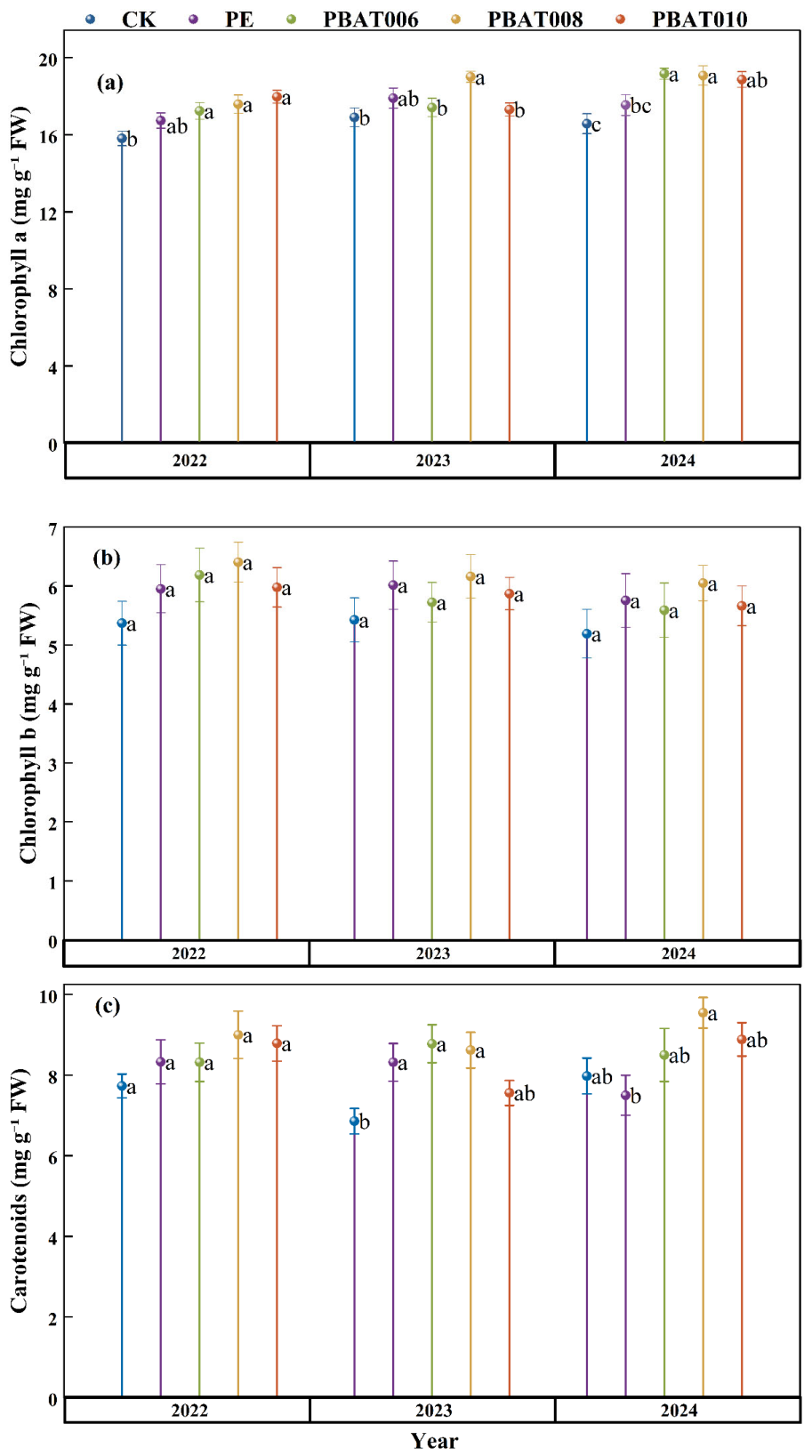
Different mulching treatments significantly affected the photosynthetic pigment contents of peanut leaves, and these effects varied among years (Figure 2). Chlorophyll a content was consistently higher under PBAT treatments across all years. In 2022, chlorophyll a content under PBAT006, PBAT008, and PBAT010 significantly increased by 9.04–13.66% compared with CK (p < 0.05). In 2023, PBAT008 showed the highest chlorophyll a content (19.01 mg g−1 FW), which was 12.45% higher than that of CK (p < 0.05) and significantly higher than that of PE. In 2024, this promoting effect was further enhanced, with chlorophyll a content under PBAT006 and PBAT008 increasing by 15.69% and 15.13%, respectively, relative to CK (p < 0.05). Chlorophyll b showed no significant differences among treatments in 2022; however, PBAT008 exhibited a stable advantage in subsequent years (p > 0.05). In 2023 and 2024, chlorophyll b content under PBAT008 increased by 13.59% and 16.57%, respectively, compared with CK (p > 0.05). Carotenoid content showed greater sensitivity and stronger interannual variability under different mulching treatments. In 2022, carotenoid content under PBAT008 was 16.43% higher than that under CK (p > 0.05). In 2023, carotenoid contents under PBAT006 and PBAT008 were significantly higher than those under CK, with increases of 27.99% and 25.66%, respectively (p < 0.05).
Previous studies have demonstrated that biodegradable film mulching can regulate soil temperature and moisture conditions during peanut growth and maintain higher leaf area index, chlorophyll content, and net photosynthetic rate, thereby improving photosynthetic performance and yield [30]. Therefore, the higher chlorophyll content observed under PBAT008 and PBAT006 may be associated with the more favorable soil hydrothermal environment created by suitable mulch thickness. Chlorophyll a, the core pigment in the photosynthetic reaction center, directly contributes to light energy absorption and conversion, whereas chlorophyll b mainly functions in capturing light energy and transferring it to chlorophyll a. The synergistic interaction between these pigments enhances overall photosynthetic efficiency. Film mulching improves soil hydrothermal conditions, thereby creating a suitable environment for chlorophyll synthesis and reducing chlorophyll degradation induced by drought stress. Carotenoids play critical roles in stabilizing light-harvesting complexes and dissipating excess light energy, thereby protecting the photosynthetic apparatus [31]. Previous research has shown that mulching significantly increases chlorophyll content in maize leaves during the early growth stage, whereas such differences tend to diminish at the maturity stage. This is mainly because, during the later growth stages, photosynthates are preferentially allocated to reproductive organs, resulting in reduced nutrient supply to leaves and accelerated chlorophyll degradation. Overall, the enhanced photosynthetic pigment content under PBAT008 may be associated with its suitable film thickness, which helped maintain favorable soil hydrothermal conditions and thereby supported chlorophyll accumulation and the stability of the photosynthetic apparatus.

3.3.2. Photosynthetic Parameters

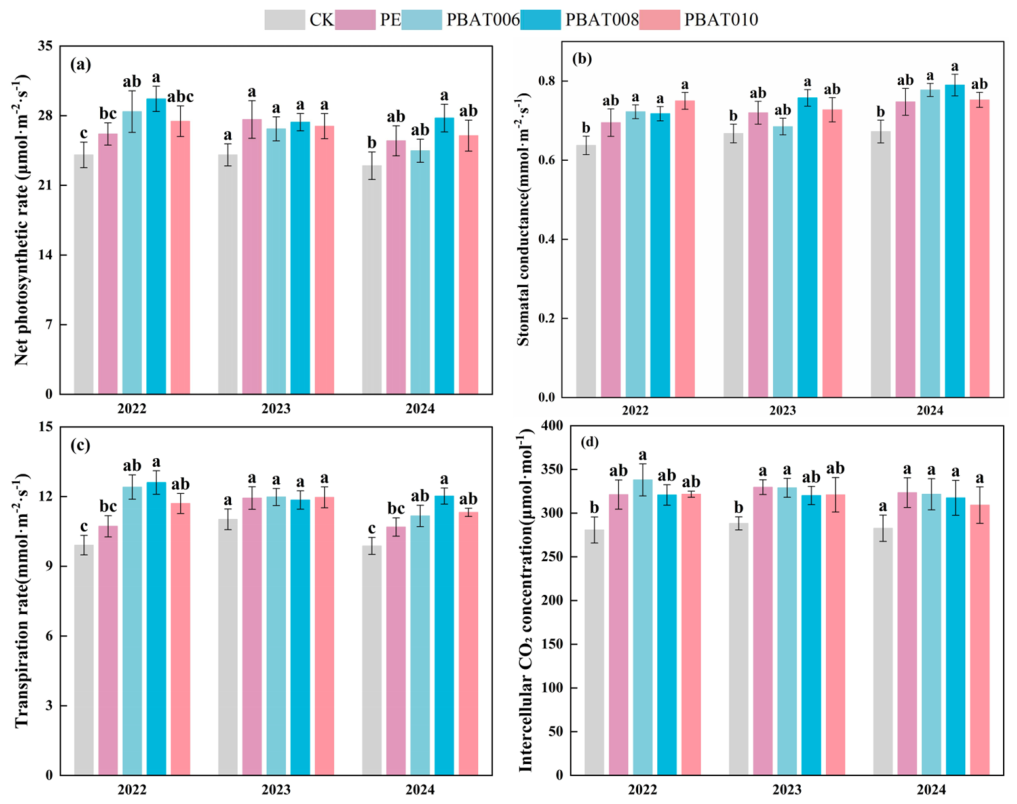
Different mulching treatments exerted distinct effects on peanut photosynthetic parameters, including net photosynthetic rate (Pn), stomatal conductance (Gs), transpiration rate (Tr), and intercellular CO2 concentration (Ci), across the three experimental years (Figure 3). Overall, PBAT008 consistently showed the greatest enhancement in photosynthetic performance, followed by PBAT006, with both treatments significantly outperforming CK. Specifically, in 2022 and 2024, Pn under PBAT008 was significantly higher than that under CK, with increases of 26.98% and 20.85%, respectively, and was 8.97–16.80% higher than that under PE (p > 0.05). Similarly, Gs under PBAT008 were significantly higher than those under CK across all years, with increases of 12.55–17.47%, but did not differ significantly from those under PE (p < 0.05) with no significant variation relative to PE (p > 0.05). In 2022, PBAT008 increased Tr by 27.19% compared with CK and maintained the highest level in 2024, while PBAT006 ranked second. In contrast, Ci was consistently higher under PBAT006 than under the other PBAT treatments across all three years, exceeding that under CK by 13.75% and 20.41% in specific years (p > 0.05), suggesting relatively greater internal CO2 availability. This may be partly associated with the lower thickness and earlier physical weakening of PBAT006 during the growing season, which could have affected soil hydrothermal and gas-exchange conditions. However, the lower Pn observed under PBAT006 than under PBAT008 indicated that increased CO2 availability did not necessarily translate into higher carbon assimilation efficiency. In summary, PBAT008 most effectively enhanced Pn, Gs, and Tr, reflecting improved photosynthetic capacity and gas-exchange efficiency, whereas PBAT006 primarily increased internal CO2 availability, as indicated by elevated Ci.
Fully biodegradable mulch films with appropriate thickness significantly enhanced peanut photosynthetic performance, and PBAT008 showed the most pronounced effect. In addition, previous studies have demonstrated that mulching can increase leaf area index (LAI) and enhance Pn and Gs compared with unmulched conditions [32]. Peanut is particularly sensitive to water deficit during the mid-to-late growth stages; under CK, the absence of mulching intensified soil evaporation, reduced root-zone water availability, and induced stomatal closure, thereby limiting CO2 diffusion and reducing Pn. PE mulch provided strong water retention and thermal regulation during early growth, but its low gas permeability and continuous surface coverage may restrict soil–atmosphere gas exchange in later stages, potentially reducing oxygen supply to the root zone and affecting root respiration [33]. In contrast, PBAT mulch may influence soil hydrothermal and gas-exchange conditions, thereby maintaining higher Gs and buffering soil temperature fluctuations; this is important because previous studies have shown that leaf temperatures above approximately 35–40 °C can inhibit Rubisco activation and photosynthetic CO2 assimilation, mainly due to the thermal sensitivity of Rubisco activation, ultimately reducing carbon assimilation efficiency [34]. The variation in Tr closely paralleled that of Gs, indicating coordinated regulation of gas exchange. Higher Ci under PBAT006 may be partly associated with differences in soil hydrothermal conditions and canopy gas exchange, but this did not necessarily improve carbon assimilation. However, increased CO2 supply alone does not necessarily enhance carbon assimilation, as photosynthesis is jointly regulated by Gs, CO2 diffusion, and biochemical processes such as Rubisco activity and electron transport. Overall, PBAT008 created a more favorable soil microenvironment by optimizing water, temperature, and gas-exchange conditions, thereby promoting photosynthetic carbon assimilation. This finding is consistent with previous conclusions that biodegradable mulch films can improve crop photosynthetic processes [35].

3.4. Soil Temperature and Moisture

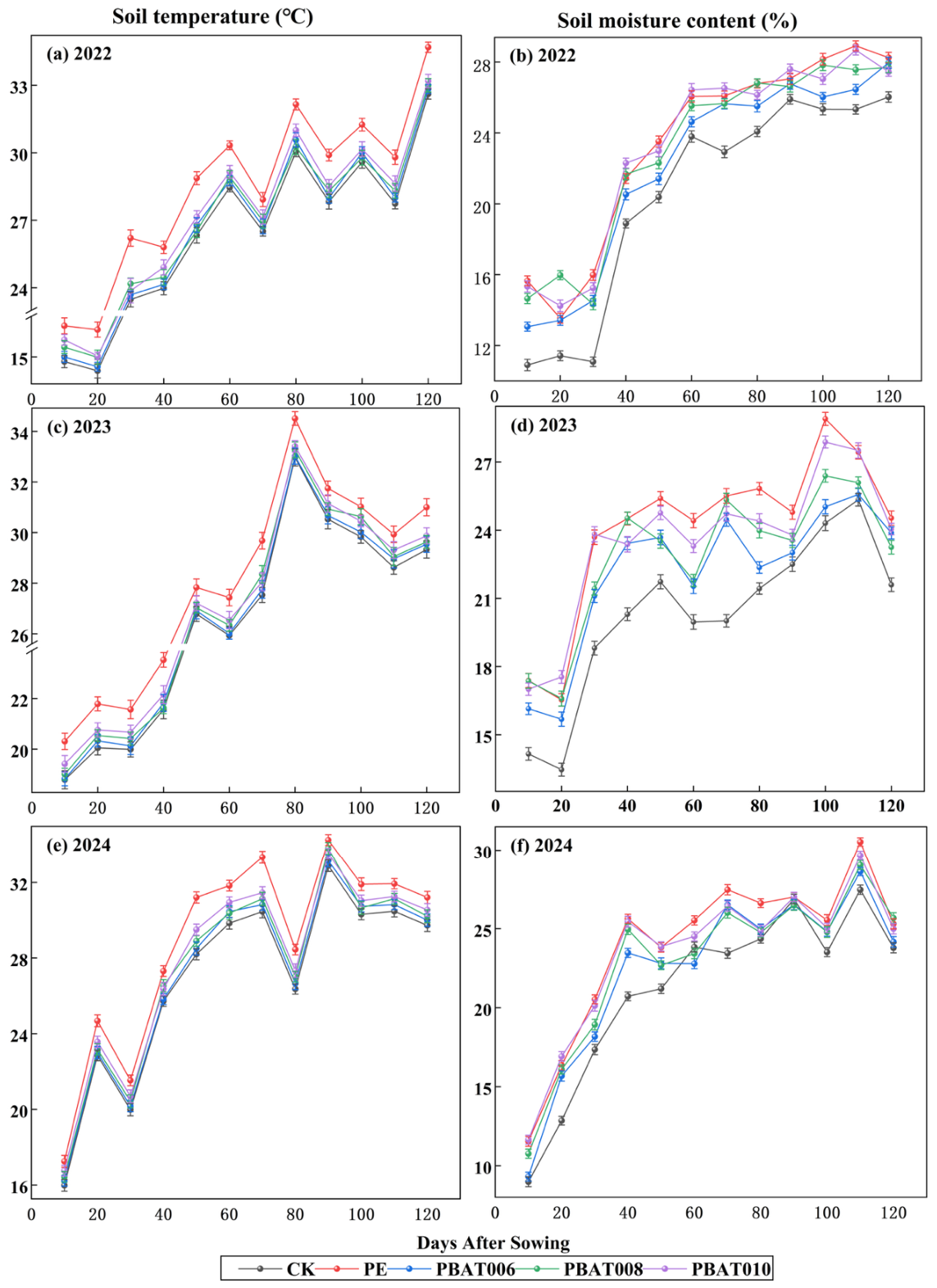
Soil temperature and moisture are key ecological factors regulating peanut growth, photosynthesis, and yield formation, and differences in soil hydrothermal conditions were observed among mulching treatments (Figure 4). Throughout the growing period, PE mulch exhibited the strongest warming effect, increasing soil temperature by 1.05–3.00 °C compared with CK, whereas PBAT films (PBAT006, PBAT008, and PBAT010) showed relatively moderate warming effects. This may be related to differences in material properties and field coverage performance between PE and PBAT films. Previous studies have shown that biodegradable mulch films generally produce a weaker soil-warming effect than polyethylene mulch, and this difference may be associated with mulch material type, field coverage, and durability during the growing season [36]. During the later growth stage under high-temperature and rainy conditions, PE maintained relatively high soil temperatures, whereas the warming effect of PBAT010 decreased despite having the same thickness as PE, indicating material-dependent differences in thermal regulation capacity. Soil moisture content did not differ significantly among PBAT treatments, but the magnitude of water retention differed among film materials and thicknesses (p > 0.05). Across the three years, PE showed the highest average soil moisture content, reaching 23.79%, which was 3.12% higher than CK. Among the PBAT treatments, PBAT010 exhibited the strongest water-retention capacity, with an average soil moisture content of 23.41%, followed by PBAT008 and PBAT006, with mean values of 22.89% and 22.21%, respectively. Relative to CK, PBAT010, PBAT008, and PBAT006 increased soil moisture content by 2.74, 2.22, and 1.55 percentage points, respectively, indicating that the water-retention capacity of PBAT films generally increased with film thickness. During the pod formation stage (50–70 days after planting), PE, PBAT006, PBAT008, and PBAT010 increased soil moisture content by 3.39, 1.80, 2.11, and 2.92 percentage points, respectively, compared with CK. Compared with PE, PBAT films showed a more moderate water-retention effect, which may help reduce soil water loss while avoiding excessive moisture accumulation under relatively humid or rainy conditions. The hydrothermal regulation effects of PBAT films varied slightly with thickness, suggesting that optimizing film thickness can further improve soil hydrothermal regulation. Previous studies have shown that peanut pod development is most favorable at soil temperatures of 31–33 °C and a volumetric water content of approximately 40%, whereas temperatures below 17 °C or above 37 °C inhibit pod development [37]. In this study, during the pod formation stage (50–70 days after planting), soil temperature under PBAT008 ranged from 26.33 to 31.13 °C and was accompanied by suitable moisture conditions. These suitable hydrothermal conditions were conducive to coordinated vegetative and reproductive growth. Furthermore, excessive soil temperature during later growth stages may negatively affect kernel quality and photosynthetic performance, as high soil temperatures imposed from podding onward have been reported to reduce pod yield and 100-seed weight in peanut [38]. Compared with PE, PBAT films may partially avoid short-term overheating caused by excessive heat accumulation, thereby providing a more stable soil microenvironment. Overall, PBAT films, particularly PBAT008, achieved a better balance between soil temperature and moisture regulation than PE mulch, and this coordinated hydrothermal optimization is likely a key factor contributing to improved photosynthetic performance and yield formation.

3.5. Soil Nutrients and Enzyme Activity

3.5.1. Soil Nutrients

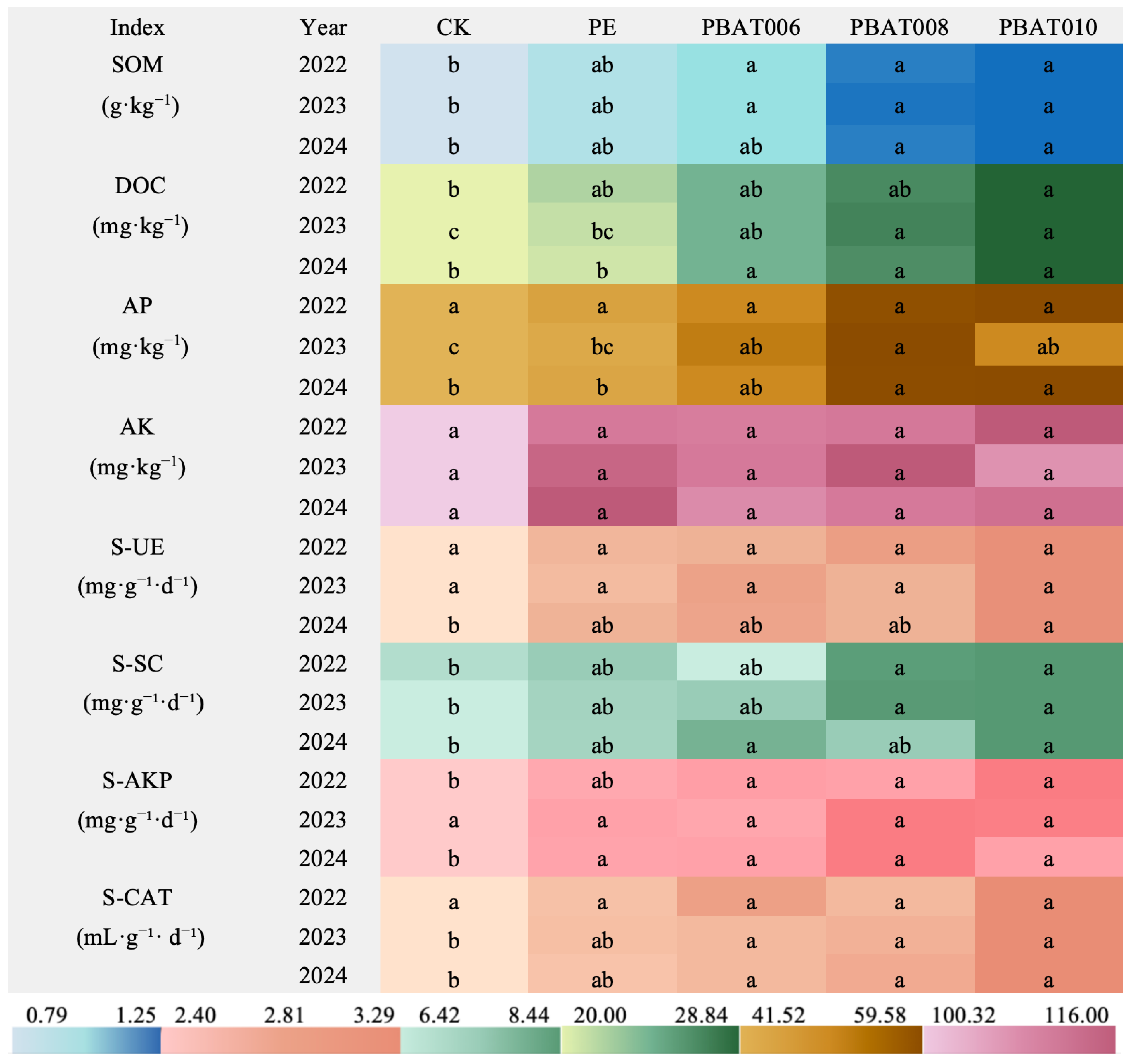
Soil physicochemical properties differed significantly among treatments (Figure 5), with PBAT mulching generally resulting in higher values than PE and CK. Over the three-year period (2022–2024), soil organic matter (SOM) was consistently higher under mulched treatments than under CK and was further enhanced under PBAT treatments compared with PE, following the order PBAT010 > PBAT008 > PBAT006 > PE > CK. In particular, the PBAT010 treatment increased SOM by 32.70–36.29% relative to CK (p < 0.05), showing a clear cumulative effect over time, while the PBAT008 treatment also maintained elevated SOM levels throughout the experiment. A similar trend was observed for dissolved organic carbon (DOC), with PBAT treatments showing higher values than PE and CK. The PBAT010 treatment exhibited the highest DOC content, with increases of 21.43–44.16% relative to CK (p < 0.05), whereas PE showed little effect on DOC accumulation. These results suggest that biodegradable mulching may promote soil carbon accumulation and transformation, likely by improving soil hydrothermal conditions. The AP content under PBAT treatments generally exceeded that under PE, with PBAT008 reaching the highest value in 2023 (59.11 mg kg−1), representing a 38.30% increase compared with CK (p < 0.05). In contrast, available potassium (AK) showed no significant differences among treatments and remained relatively stable (approximately 112–114 mg kg−1), indicating a limited response to mulching during the experimental period (p > 0.05). Overall, PBAT mulching, particularly PBAT010, enhanced soil carbon accumulation and nutrient availability, whereas PBAT008 exhibited a distinct advantage in increasing available phosphorus.
These findings highlight the importance of optimizing mulch thickness to improve soil fertility in biodegradable mulching systems. Compared with PE and CK, PBAT mulching significantly increased SOM and DOC contents, particularly under PBAT010. Zhang et al. [39] reported that six years of biodegradable film mulching increased soil total nitrogen, available phosphorus, and available potassium and enhanced microbial and enzymatic activities, thereby contributing to soil fertility improvement. Film mulching has also been shown to enhance soil microbial carbon metabolic activity and functional diversity [40] and increase soil enzyme activities associated with C, N, and P acquisition [41]. In addition, film mulching combined with organic fertilizer can improve soil quality by enhancing soil organic carbon fractions and modulating microbial community structure [42]. These biological and carbon-cycling processes may partly explain the increases in SOM, DOC, and AP observed in this study. In contrast, available potassium (AK) remained relatively stable among treatments throughout the experimental period, indicating that AK was less responsive to mulching practices than SOM, DOC, and AP. This limited response may be attributed to the strong buffering capacity of soil potassium pools. Unlike DOC and AP, which are closely associated with organic matter decomposition and enzyme-mediated nutrient transformation, AK is mainly controlled by adsorption–desorption equilibrium, non-exchangeable K release, and plant uptake [43]. Therefore, mulch-induced changes in soil hydrothermal conditions and biological activity may have had a weaker direct effect on AK availability than on carbon- and phosphorus-related indicators. Overall, PBAT biodegradable mulch films improved soil carbon accumulation and nutrient availability, which may be partly associated with enhanced soil biological activity, enzyme-mediated nutrient transformation, and carbon-cycling processes.

3.5.2. Soil Enzyme Activity

Mulching generally enhanced soil urease, sucrase, alkaline phosphatase, and catalase activities, although the magnitude of these responses varied among enzyme types, years, and mulch treatments. Among all treatments, PBAT010 showed the most pronounced stimulatory effect on soil enzyme activities. Compared with CK, PBAT010 increased urease activity by 22.33–25.16% and remained significantly higher than CK in 2024 (p < 0.05). Sucrase activity was also consistently higher under PBAT010 than under CK across the three years, with increases of 26.41%, 18.68%, and 20.53% in 2022, 2023, and 2024, respectively. For alkaline phosphatase activity, PBAT treatments showed significant increases compared with CK in 2022 and 2024 (p < 0.05). Notably, PBAT008 exhibited a continuous increasing trend over the three-year experimental period and was 19.29% higher than CK in 2024 (p < 0.05), suggesting an improved capacity for phosphorus transformation in the rhizosphere. Catalase activity was highest under PBAT010, which was significantly higher than CK in 2023 and 2024, with increases of 20.53% and 24.76%, respectively (p < 0.05). In 2024, PE significantly increased alkaline phosphatase activity by 17.54% compared with CK (p < 0.05), whereas no significant effects on the other soil enzymes were observed in the remaining years. The enhanced rhizosphere soil enzyme activities under PBAT treatments may be partly attributed to improved soil hydrothermal conditions and increased rhizosphere biological activity. Soil enzymes are directly involved in C, N, and P transformation, and previous studies have shown that film mulching can enhance enzyme activities associated with nutrient acquisition and cycling [41]. In addition, degradable film mulching has been reported to recruit beneficial microbiota and increase rhizosphere bacterial diversity [44], while multiyear biodegradable plastic mulch can alter soil microbial community structure, assembly processes, and ecological functions [45]. These microbial changes may increase substrate availability and rhizosphere biochemical activity, thereby stimulating enzyme-mediated nutrient transformation processes. Among the PBAT treatments, PBAT010 had stronger effects on urease, sucrase, and catalase activities, which may be related to its greater capacity to maintain soil moisture and support microbial-mediated biochemical reactions. In contrast, PBAT008 showed a more evident effect on alkaline phosphatase activity, indicating its potential role in promoting phosphorus cycling. Overall, these results suggest that PBAT mulch films, particularly PBAT010 and PBAT008, can improve rhizosphere enzyme activities and nutrient transformation under suitable soil hydrothermal conditions.

3.6. Path Analysis

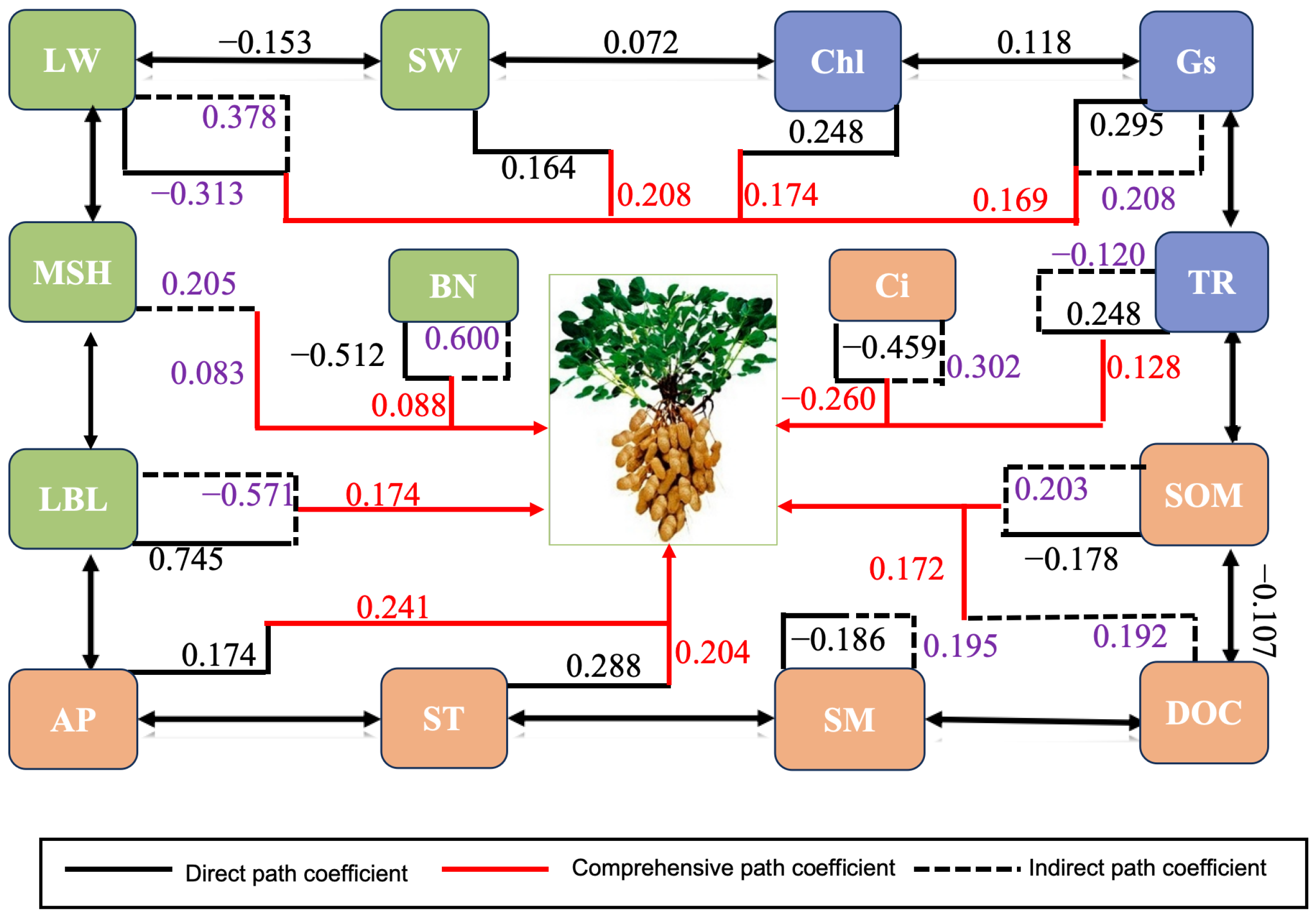
Path analysis was conducted to quantify the direct, indirect, and overall effects of agronomic, soil, and physiological traits on peanut pod yield (Figure 6). The results indicated that available phosphorus (0.241), stem weight (0.208), soil temperature (0.204), lateral branch length (0.174), and Gs (0.169) were the primary positive drivers of yield formation based on their total effects, with available phosphorus exerting the strongest overall effect. In terms of direct effects, lateral branch length showed a strong positive path coefficient (0.745), indicating its important role in peanut yield formation. Gs, soil temperature, chlorophyll content, and available phosphorus also contributed positively to yield, which may be associated with enhanced photosynthetic performance and improved nutrient availability. In contrast, branch number (−0.512), Ci (−0.459), and leaf weight (−0.313) showed negative direct effects, suggesting that excessive vegetative growth and elevated intercellular CO2 concentration may be negatively associated with pod development. The analysis of indirect effects showed that branch number, leaf weight, and Tr positively influenced yield through interactions with other traits. In addition, soil DOC, SOM, and soil moisture had weak direct effects but participated in yield regulation through indirect pathways. Overall, peanut yield formation was jointly regulated by morphological development (lateral branch length), nutrient supply (available phosphorus), and photosynthetic processes (Gs), with available phosphorus identified as the major overall driving factor.

4. Conclusions

Based on a three-year field experiment, fully biodegradable PBAT mulch films showed clear thickness-dependent effects on peanut growth, soil hydrothermal conditions, soil fertility indicators, photosynthetic performance, and yield formation. PBAT006 promoted plant height, lateral branch length, and internal CO2 availability, but its lower thickness may have limited moisture retention during the later growth stages. In contrast, PBAT010 showed stronger water-retention capacity and greater improvements in soil organic matter and enzyme activities, but these advantages did not translate into the highest yield performance. Overall, PBAT008 achieved the best balance among soil hydrothermal regulation, nutrient availability, crop physiological performance, and yield formation. Compared with conventional PE mulch, PBAT008 provided more coordinated regulation of soil temperature and moisture, improved soil fertility indicators and photosynthetic performance, and supported more favorable peanut yield formation under the tested field conditions. As a fully biodegradable PBAT-based mulch material, PBAT008 also offers the additional advantage of reducing dependence on non-degradable polyethylene mulch. Therefore, 0.008 mm PBAT mulch may serve as a promising biodegradable alternative to common PE mulch for peanut production, although its long-term degradation behavior, residue dynamics, and changes in mechanical properties require further field evaluation.

Author Contributions

Conceptualization, R.H.: Methodology, Validation, Writing—reviewing and editing, Writing—original draft. M.H.: Methodology, Validation, Formal analysis, Data Curation, writing—reviewing and editing. X.W. and H.Z.: Conceptualization, Investigation, Methodology, Validation, Resources. F.W.: Conceptualization, Methodology, Formal analysis, Data Curation. X.H. and J.G.: Methodology, Investigation, Formal analysis. A.J.: Conceptualization, Methodology, Formal analysis. J.L.: Formal analysis, Data Curation. N.S.: Conceptualization, Investigation, Methodology, Formal analysis, Writing—reviewing and editing, Visualization, Resources, Supervision. All authors have read and agreed to the published version of the manuscript.

Funding

This work was supported by the Subproject of the National Key R&D Program of China (2023YFD1701901); the Key R&D Program of Shandong Province, China (2024TZXD077); the Innovation Capacity Building Project of Beijing Academy of Agriculture and Forestry Sciences (KJCX20240312); the Technical System of Ecological Agriculture of Modern Agricultural Technology System in Shandong Province (SDAIT-30-02); and the Shandong Provincial Rural Revitalization Science and Technology Innovation Boosting Action Program (2025TZXD039).

Data Availability Statement

The original contributions presented in this study are included in the article. Further inquiries can be directed to the corresponding authors.

Conflicts of Interest

The authors declare no conflicts of interest.

References

  1. Zhao, Y.; Mao, X.; Li, S.; Huang, X.; Che, J.; Ma, C. A Review of Plastic Film Mulching on Water, Heat, Nitrogen Balance, and Crop Growth in Farmland in China. Agronomy 2023, 13, 2515. [Google Scholar] [CrossRef]
  2. Samphire, M.; Chadwick, D.R.; Jones, D.L. Biodegradable plastic mulch films increase yield and promote nitrogen use efficiency in organic horticulture. Front. Agron. 2023, 5, 1141608. [Google Scholar] [CrossRef]
  3. Song, N.; Wang, B.; Liu, J.; Wang, F.; Wang, X.; Zong, H. Is degradable plastic film alternative? Insights from crop productivity enhancement and soil environment improvement. Eur. J. Agron. 2023, 149, 126882. [Google Scholar] [CrossRef]
  4. Chen, Q.; Liu, X. Plastic film mulch use efficiency in agricultural production: A regional analysis in China. Environ. Dev. Sustain. 2025, 27, 27483–27504. [Google Scholar] [CrossRef]
  5. Huang, T.; Wu, Q.; Yuan, Y.; Zhang, X.; Sun, R.; Hao, R.; Yang, X.; Li, C.; Qin, X.; Song, F.; et al. Effects of plastic film mulching on yield, water use efficiency, and nitrogen use efficiency of different crops in China: A Meta-Analysis. Field Crops Res. 2024, 312, 109407. [Google Scholar] [CrossRef]
  6. Ma, D.; Chen, L.; Qu, H.; Wang, Y.; Jiang, R. Impacts of plastic film mulching on crop yields, soil water, nitrate, and organic carbon in Northwestern China: A meta-analysis. Agric. Water Manag. 2018, 202, 166–173. [Google Scholar] [CrossRef]
  7. Ao, L.; Qin, L.; Kang, H.; Zhou, Z.; Su, H. Preparation, properties and field application of biodegradable and phosphorus-release films based on fermentation residue. Int. Biodeterior. Biodegrad. 2013, 82, 134–140. [Google Scholar] [CrossRef]
  8. Robinson, L.; Miller, R. The impact of bisphenol A and phthalates on allergy, asthma, and immune function: A review of latest findings. Curr. Environ. Health Rep. 2015, 2, 379–387. [Google Scholar] [CrossRef]
  9. Zhang, Q.-Q.; Ma, Z.-R.; Cai, Y.-Y.; Li, H.-R.; Ying, G.-G. Agricultural plastic pollution in China: Generation of plastic debris and emission of phthalic acid esters from agricultural films. Environ. Sci. Technol. 2021, 55, 12459–12470. [Google Scholar] [CrossRef] [PubMed]
  10. Campanale, C.; Galafassi, S.; Di Pippo, F.; Pojar, I.; Massarelli, C.; Uricchio, V.F. A critical review of biodegradable plastic mulch films in agriculture: Definitions, scientific background and potential impacts. TrAC Trends Anal. Chem. 2024, 170, 117391. [Google Scholar] [CrossRef]
  11. Moshood, T.D.; Nawanir, G.; Mahmud, F.; Mohamad, F.; Ahmad, M.H.; AbdulGhani, A. Sustainability of biodegradable plastics: New problem or solution to solve the global plastic pollution? Curr. Res. Green Sustain. Chem. 2022, 5, 100273. [Google Scholar] [CrossRef]
  12. Jiao, J.; Zeng, X.; Huang, X. An overview on synthesis, properties and applications of poly (butylene adipate-co-terephthalate) (PBAT). Adv. Ind. Eng. Polym. Res. 2020, 3, 19–26. [Google Scholar] [CrossRef]
  13. Gao, X.; Xie, D.; Yang, C. Effects of a PLA/PBAT biodegradable film mulch as a replacement of polyethylene film and their residues on crop and soil environment. Agric. Water Manag. 2021, 255, 107053. [Google Scholar] [CrossRef]
  14. Deng, L.; Yu, Y.; Zhang, H.; Wang, Q.; Yu, R. The effects of biodegradable mulch film on the growth, yield, and water use efficiency of cotton and maize in an arid region. Sustainability 2019, 11, 7039. [Google Scholar] [CrossRef]
  15. Zhao, Z.; Wu, H.; Jin, T.; Liu, H.; Men, J.; Cai, G.; Cernava, T.; Duan, G.; Jin, D. Biodegradable mulch films significantly affected rhizosphere microbial communities and increased peanut yield. Sci. Total Environ. 2023, 871, 162034. [Google Scholar] [CrossRef]
  16. Xiong, X.-B.; Zhao, Z.-Y.; Wang, P.-Y.; Zhou, R.; Cao, J.; Wang, J.; Wesly, K.; Wang, W.-L.; Wang, N.; Hao, M.; et al. In situ degradation of low-density polyethylene film in irrigation maize field: Thickness-dependent effect. Sci. Total Environ. 2023, 858, 159999. [Google Scholar] [CrossRef] [PubMed]
  17. Uzamurera, A.G.; Zhao, Z.-Y.; Wang, P.-Y.; Wei, Y.-X.; Mo, F.; Zhou, R.; Wang, W.-L.; Ullah, F.; Khan, A.; Xiong, X.-B.; et al. Thickness effects of polyethylene and biodegradable film residuals on soil properties and dryland maize productivity. Chemosphere 2023, 329, 138602. [Google Scholar] [CrossRef] [PubMed]
  18. Sun, D.; Li, H.; Wang, E.; He, W.; Hao, W.; Yan, C.; Li, Y.; Mei, X.; Zhang, Y.; Sun, Z.; et al. An overview of the use of plastic-film mulching in China to increase crop yield and water-use efficiency. Nat. Sci. Rev. 2020, 7, 1523–1526. [Google Scholar] [CrossRef]
  19. Guo, K.; Cao, M.; Gu, F.; Wu, F.; Yang, H.; Xu, H.; Hu, Z. Mechanical properties of metallocene linear low-density polyethylene mulch films correlate with ultraviolet irradiation and film thickness. Sustainability 2023, 15, 6713. [Google Scholar] [CrossRef]
  20. Wang, S.; Li, Q.; Ye, C.; Ma, W.; Sun, Y.; Zhao, B.; Zeng, W.; Yue, Z.; Li, L.; Li, D.; et al. Effects of mulch films with different thicknesses on the microbial community of tobacco rhizosphere soil in Yunnan laterite. Front. Micro. 2024, 15, 1458470. [Google Scholar] [CrossRef]
  21. Yang, C.; Zhao, Y.; Long, B.; Wang, F.; Li, F.; Xie, D. Biodegradable mulch films improve yield of winter potatoes through effects on soil properties and nutrients. Ecotoxicol. Environ. 2023, 264, 115402. [Google Scholar] [CrossRef]
  22. Zhao, H.; Wang, X.; Jin, P.; Zhou, J.; Wang, Y.; Dong, W.; Ren, H.; Li, B.; Gong, W. Effects of Biodegradable Mulch Films with Different Thicknesses on the Quality of Watermelon Under Protected Cultivation. Agronomy 2025, 15, 2336. [Google Scholar] [CrossRef]
  23. Shen, P.; Wang, C.; Wu, Z.; Wang, C.; Zhao, H.; Shan, S.; Wu, M.; Sun, X.; Yu, T.; Zheng, Y.; et al. Peanut macronutrient absorptions characteristics in response to soil compaction stress in typical brown soils under various tillage systems. Soil Sci. Plant Nutr. 2019, 65, 148–158. [Google Scholar] [CrossRef]
  24. Liang, H.; Yang, L.; He, X.; Wu, Q.; Chen, D.; Liu, M.; Shen, P. Rhizosphere ventilation effects on root development and bacterial diversity of peanut in compacted soil. Plants 2024, 13, 790. [Google Scholar] [CrossRef]
  25. Liu, Z.; Zhao, C.; Zhang, N.; Wang, J.; Li, Z.; Uwiragiye, Y.; Fallah, N.; Crowther, T.W.; Huang, Y.; Huang, Y.; et al. Degradable film mulching increases soil carbon sequestration in major Chinese dryland agroecosystems. Nat. Commun. 2025, 16, 5029. [Google Scholar] [CrossRef] [PubMed]
  26. Zong, R.; Wang, Z.; Zhang, J.; Li, W. The response of photosynthetic capacity and yield of cotton to various mulching practices under drip irrigation in Northwest China. Agric. Water Manag. 2021, 249, 106814. [Google Scholar] [CrossRef]
  27. Iacuzzi, N.; Tortorici, N.; Di Mola, I.; Alaimo, F.; Cozzolino, E.; Sarno, M.; Mori, M.; Tuttolomondo, T. Biodegradable mulching films affect soil temperature and agronomic performance of open field eggplant in hot-arid environments. Ital. J. Agron. 2024, 19, 100025. [Google Scholar] [CrossRef]
  28. Shah, F.; Shi, Z.; Xiong, L.; Li, Z.; Tao, Y.; Wang, P.; Wu, W. Biodegradable plastic film mulching for water conservation and pesticide reduction in rice–based cropping systems. Crop Environ. 2026, 5, 100114. [Google Scholar] [CrossRef]
  29. Itabana, B.E.; Mohanty, A.K.; Dick, P.; Sain, M.; Bali, A.; Tiessen, M.; Lim, L.-T.; Misra, M. Poly(butylene adipate-co-terephthalate) (PBAT)-based biocomposites: A comprehensive review. Macromol. Mater. Eng. 2024, 309, 2400179. [Google Scholar] [CrossRef]
  30. Sun, T.; Li, G.; Ning, T.-Y.; Zhang, Z.-M.; Mi, Q.-H.; Lal, R. Suitability of mulching with biodegradable film to moderate soil temperature and moisture and to increase photosynthesis and yield in peanut. Agric. Water Manag. 2018, 208, 214–223. [Google Scholar] [CrossRef]
  31. Sun, T.; Rao, S.; Zhou, X.; Li, L. Plant carotenoids: Recent advances and future perspectives. Mol. Hortic. 2022, 2, 3. [Google Scholar] [CrossRef]
  32. Ye, S.; Li, J.; Kong, H.; Shen, J.; Wu, D. Effects of different mulch materials on the photosynthetic characteristics, yield, and soil water use efficiency of wheat in Loess tableland. Sci. Rep. 2023, 13, 18106. [Google Scholar] [CrossRef]
  33. Shahzad, K.; Bary, A.I.; Collins, D.P.; Chalker-Scott, L.; Abid, M.; Sintim, H.Y.; Flury, M. Carbon dioxide and oxygen exchange at the soil–atmosphere boundary as affected by various mulch materials. Soil Tillage Res. 2019, 194, 104335. [Google Scholar] [CrossRef]
  34. Scafaro, A.P.; Posch, B.C.; Evans, J.R.; Farquhar, G.D.; Atkin, O.K. Rubisco deactivation and chloroplast electron transport rates co-limit photosynthesis above optimal leaf temperature in terrestrial plants. Nat. Commu. 2023, 14, 2820. [Google Scholar] [CrossRef]
  35. Wang, F.; Wang, Z.; Zhang, J.; Li, W. Combined effect of different amounts of irrigation and mulch films on physiological indexes and yield of drip-irrigated maize (Zea mays L.). Water 2019, 11, 472. [Google Scholar] [CrossRef]
  36. Tofanelli, M.B.D.; Wortman, S.E. Benchmarking the agronomic performance of biodegradable mulches against polyethylene mulch film: A meta-analysis. Agronomy 2020, 10, 1618. [Google Scholar] [CrossRef]
  37. Ono, Y.; Nakayama, K.; Kubota, M. Effects of Soil Temperature and Soil Moisture in Podding Zone on Pod Development of Peanut Plants. Jpn. J. Crop Sci. 1974, 43, 247–251. [Google Scholar] [CrossRef]
  38. Vara Prasad, P.V.; Craufurd, P.Q.; Summerfield, R.J. Effect of high air and soil temperature on dry matter production, pod yield and yield components of groundnut. Plant Soil 2000, 222, 231–239. [Google Scholar] [CrossRef]
  39. Zhang, M.; Xue, Y.; Jin, T.; Zhang, K.; Li, Z.; Sun, C.; Mi, Q.; Li, Q. Effect of Long-Term Biodegradable Film Mulch on Soil Physicochemical and Microbial Properties. Toxics 2022, 10, 129. [Google Scholar] [CrossRef]
  40. Kong, M.; Huang, M.-J.; Zhang, Z.-X.; Long, J.; Siddique, K.H.M.; Zhang, D.-M. Effects of plastic film mulching on soil microbial carbon metabolic activity and functional diversity at different maize growth stages in cool, semi-arid regions. Front. Micro. 2024, 15, 1492149. [Google Scholar] [CrossRef]
  41. Liu, M.; Zhao, X.; Hossain, M.E.; Wang, S.; Dong, W.; Gopalakrishnan, S.; Liu, E. Effects of Plastic Film Mulching on Soil Enzyme Activities and Stoichiometry in Dryland Agroecosystems. Plants 2022, 11, 1748. [Google Scholar] [CrossRef]
  42. Sha, Y.; Bu, Y.; Zong, H.; Wang, F.; Liu, J.; Yu, L.; Yu, S.; Wang, X.; Guo, X.; Liu, X.; et al. Film mulching and organic fertilizer improve soil quality and maize yield in saline-alkali soils by enhancing soil organic carbon fractions and modulating microbial community structure. Soil Tillage Res. 2026, 264, 107320. [Google Scholar] [CrossRef]
  43. Awgchew, H.; Beyene, S.; Kifilu, A. Potassium adsorption capacity and desorption kinetics in soils of Qenberenaweti sub-watershed, central highlands of Ethiopia. Heliyon 2024, 10. [Google Scholar] [CrossRef]
  44. Meng, T.; Bu, H.; Zhang, X.; Chen, X.; Wang, W.; Zhao, M.; Liu, J.; Zhang, J.; Zhang, D.; Lu, Z.; et al. Degradable film mulching recruited beneficial microbiota and increased rhizosphere bacterial diversity in sunflower. Sci. Rep. 2025, 15, 18522. [Google Scholar] [CrossRef]
  45. Liu, X.; Wen, Z.; Zhou, W.; Dong, W.; Ren, H.; Liang, G.; Gong, W. Effect of multiyear biodegradable plastic mulch on soil microbial community, assembly, and functioning. Microorganisms 2025, 13, 259. [Google Scholar] [CrossRef] [PubMed]
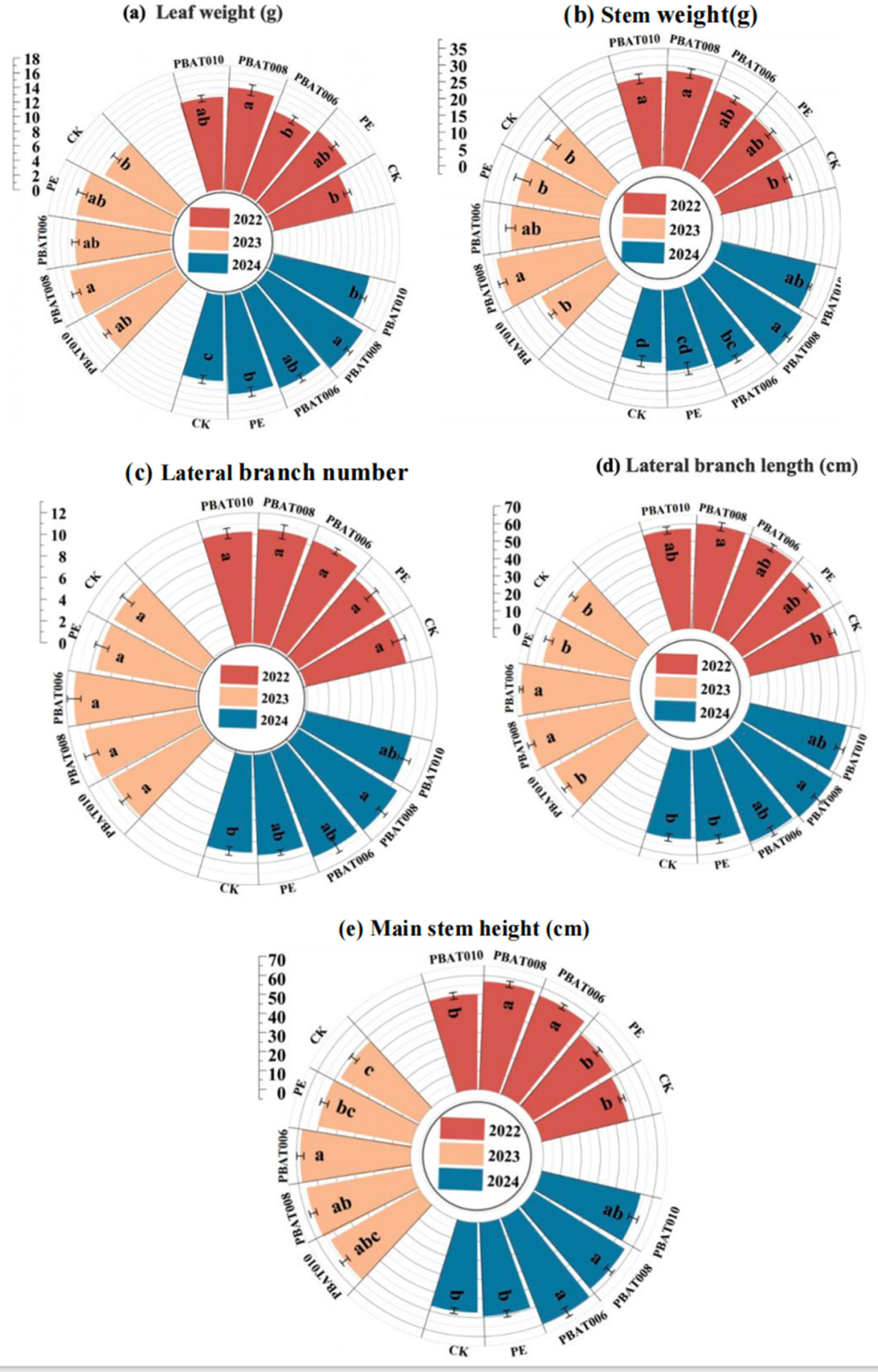
Figure 1. Effects of different mulch treatments on plant architectural traits of peanut in 2022–2024: (a) leaf weight; (b) stem weight; (c) lateral branch number; (d) lateral branch length; (e) main stem height. Different letters indicate significant differences among treatments within the same year (Duncan’s test, p < 0.05).
Agronomy 16 01373 g001
Figure 2. Effects of different mulch-film treatments on chlorophyll a, chlorophyll b, and carotenoid contents in peanut leaves in 2022, 2023, and 2024: (a) chlorophyll a content; (b) chlorophyll b content; (c) carotenoid content. Different letters indicate significant differences among treatments within the same year (Duncan’s multiple range test, p < 0.05).
Agronomy 16 01373 g002
Figure 3. Effects of different mulch-film treatments on photosynthetic parameters of peanut leaves in 2022, 2023, and 2024: (a) net photosynthetic rate; (b) stomatal conductance; (c) transpiration rate; and (d) intercellular CO2 concentration. The x-axis represents the year (2022, 2023, and 2024). Different letters indicate significant differences among treatments within the same year (Duncan’s multiple range test, p < 0.05).
Agronomy 16 01373 g003
Figure 4. Dynamic changes in soil temperature and soil moisture under different mulching treatments during the 2022–2024 growing seasons. Panels (a,c,e) show soil temperature, whereas panels (b,d,f) show soil moisture in 2022, 2023, and 2024, respectively. The x-axis represents days after sowing (DAS). Error bars represent the standard error of the mean (n = 4).
Agronomy 16 01373 g004
Figure 5. Effects of different mulching treatments on soil nutrient contents and enzyme activities in 2022, 2023, and 2024. Soil nutrient indicators included soil organic matter (SOM), dissolved organic carbon (DOC), available phosphorus (AP), and available potassium (AK). Soil enzyme activities included urease (S-UE), sucrose (S-SC), alkaline phosphatase (S-AKP), and catalase (S-CAT). Different letters indicate significant differences among treatments within the same year (Duncan’s multiple range test, p < 0.05).
Agronomy 16 01373 g005
Figure 6. Path analysis of the relationships between peanut pod yield and agronomic, physiological, and soil variables. LW, leaf weight; SW, stem weight; MSH, main stem height; LBL, lateral branch length; BN, branch number; SOM, soil organic matter; DOC, dissolved organic carbon; AP, available phosphorus; Chl, chlorophyll content; Gs, stomatal conductance; TR, transpiration rate; Ci, intercellular CO2 concentration; ST, soil temperature; SM, soil moisture. Arrowheads indicate the direction of the paths. The numerical values shown in black, red, and purple indicate direct, comprehensive, and indirect path coefficients, respectively.
Agronomy 16 01373 g006
Table 1. Monthly meteorological conditions during the peanut growing seasons from 2022 to 2024.
YearMonthExtreme Maximum Temperature (°C)Extreme Minimum Temperature (°C)Number of Rainy Days (d)
2022May3592
2022June40174
2022July35206
2022August *36162
2023May33107
2023June40136
2023July38209
2023August *34165
2024May35116
2024June41174
2024July371714
2024August *36198
Note: * indicates that August data were recorded only from 1 to 18 August.
Table 2. Physical properties of experimental mulch film.
TreatmentThickness
(mm)
ColorWidth
(cm)
Tensile Strength
(N, Vertical/Horizontal)
Nominal Strain at Break/%
(N, Vertical/Horizontal)
CK----/--/-
PE0100.010Black12024.56/23.43423.18/528.43
PBAT0060.006Black12022.60/17.79305.64/391.54
PBAT0080.008Black12024.04/14.83351.96/441.98
PBAT0100.010Black12022.27/20.01381.31/404.89
Table 3. Effects of PBAT mulch thickness on peanut yield.
YearTreatmentPod Weight
(g plant−1)
Yield
(kg hm−1)
100-Pod
Weight (g)
100-Kernel Weight (g) Full Pod
Rate (%)
Full Kernel
Rate (%)
2022CK11.47 ± 0.64 b3246.50 ± 74.86 ab199.50 ± 6.36 b92.56 ± 2.00 b72.92 ± 3.31 a66.28 ± 1.35 a
PE12.75 ± 0.75 ab3066.25 ± 86.25 ab207.75 ± 6.54 b94.45 ± 2.10 ab74.31 ± 3.14 a67.67 ± 1.55 a
PBAT00614.13 ± 0.76 a2968.75 ± 63.38 b205.75 ± 6.12 b93.81 ± 2.05 ab74.28 ± 3.95 a67.20 ± 1.19 a
PBAT00813.76 ± 0.69 a3276.75 ± 78.09 a238.50 ± 5.87 a97.95 ± 2.10 a75.70 ± 3.11 a70.24 ± 1.70 a
PBAT01012.96 ± 0.66 ab3221.50 ± 78.09 ab200.50 ± 4.27 b95.43 ± 1.80 b72.68 ± 2.74 a68.39 ± 1.45 b
2023CK11.94 ± 0.63 b3184.75 ± 65.51 ab205.75 ± 6.12 b92.74 ± 1.58 b71.00 ± 2.00 a66.41 ± 1.45 b
PE12.93 ± 0.51 ab2995.25 ± 75.22 b214.50 ± 6.59 ab94.65 ± 1.99 ab72.11 ± 2.11 a67.81 ± 1.35 ab
PBAT00614.66 ± 0.61 a3132.00 ± 74.83 ab212.00 ± 6.84 ab97.30 ± 1.95 ab73.97 ± 2.86 a68.66 ± 1.83 ab
PBAT00814.09 ± 0.51 ab3273.00 ± 74.73 a236.50 ± 6.06 a101.45 ± 1.87 a77.40 ± 2.68 a72.82 ± 1.38 a
PBAT01013.04 ± 0.59 ab3048.00 ± 86.18 ab216.00 ± 5.39 ab100.45 ± 2.00 a74.69 ± 2.81 a72.08 ± 1.47 a
2024CK11.74 ± 0.40 b3260.50 ± 52.96 ab195.25 ± 3.12 b90.72 ± 2.93 b74.85 ± 1.20 b64.92 ± 2.31 b
PE13.06 ± 0.47 ab3082.25 ± 45.83 c202.75 ± 3.20 b92.33 ± 2.48 ab76.53 ± 1.38 ab66.11 ± 2.42 ab
PBAT00613.95 ± 0.40 a3239.50 ± 70.36 bc206.75 ± 5.44 b93.81 ± 2.91 ab74.42 ± 1.12 b67.20 ± 2.10 ab
PBAT00814.01 ± 0.51 a3414.00 ± 73.75 a223.75 ± 5.59 a102.11 ± 2.98 a79.28 ± 1.37 a73.31 ± 2.56 a
PBAT01013.61 ± 0.43 a3155.25 ± 63.02 bc205.25 ± 5.09 b99.11 ± 2.81 ab75.96 ± 1.84 ab71.10 ± 1.17 ab
Different letters indicate significant differences among treatments within the same year according to Duncan’s multiple range test (p < 0.05).
Disclaimer/Publisher’s Note: The statements, opinions and data contained in all publications are solely those of the individual author(s) and contributor(s) and not of MDPI and/or the editor(s). MDPI and/or the editor(s) disclaim responsibility for any injury to people or property resulting from any ideas, methods, instructions or products referred to in the content.