Article

Effects of Partial Organic Fertilizer Substitution on Soil Physicochemical Properties, Enzyme Activities, Microbial Communities, and Maize Yield: A Two-Year Field Study

1
College of Biology and Food Engineering, Chaoyang Normal University, Chaoyang 122000, China
2
Key Laboratory of Biochar and Soil Improvement of Ministry of Agriculture and Rural Affairs, Agronomy College, Shenyang Agricultural University, Shenyang 110866, China
*
Authors to whom correspondence should be addressed.
Agronomy 2026, 16(13), 1296; https://doi.org/10.3390/agronomy16131296
Submission received: 1 June 2026 / Revised: 1 July 2026 / Accepted: 3 July 2026 / Published: 6 July 2026

Abstract

Partial substitution of chemical fertilizer with organic fertilizer is an important strategy for optimizing fertilization and mitigating soil degradation caused by excessive chemical fertilizer application. However, systematic studies comparing the effects of different substitution ratios on soil properties, enzyme activities, and microbial communities remain scarce. A two-year field experiment was conducted with five treatments: no fertilization (Control), chemical fertilizer alone (CF), 20% organic fertilizer substitution (M20), 40% substitution (M40), and 60% substitution (M60). High-throughput sequencing was used to analyze soil bacterial and fungal communities. The M40 treatment significantly increased soil organic matter (17.96% and 30.18%, respectively), available nitrogen (6.85% and 20.30%, respectively), and available phosphorus (30.74% and 52.65%, respectively) compared with CF in both years, with more pronounced improvements observed in 2025. Furthermore, the M40 treatment also enhanced urease and sucrase activities in both years but reduced alkaline phosphatase (ALP) activity in 2025. Microbial community analysis revealed that the M40 treatment enriched beneficial microorganisms, including Proteobacteria, Acidobacteriota, Basidiomycota, Vicinamibacteraceae, Botryotrichum, and Tausonia, while inhibiting the pathogenic fungus Fusarium. Compared with CF, the M40 treatment increased maize yield by 7.04% and 8.10% in 2024 and 2025, respectively, which was the highest among all treatments. Mantel tests indicated that yield was positively correlated with available phosphorus, available potassium, total nitrogen, total phosphorus, and urease activity, but negatively correlated with ALP activity in 2025. Our findings demonstrate that 40% organic fertilizer substitution synergistically improves soil fertility, optimizes microbial community structure, and promotes crop yield, providing empirical evidence for optimizing fertilization regimes in maize production.

1. Introduction

Maize (Zea mays L.) is one of the most widely planted and highest-yielding cereal crops globally, playing an irreplaceable strategic role in ensuring national food security and supporting the development of livestock production. China, as the world’s second-largest maize producer, has a huge demand for fertilizer [1]. However, the long-term excessive application of chemical fertilizers has led to a series of problems, including diminishing marginal returns on fertilizer efficiency and a decline in soil organic matter, posing a serious threat to the sustainability of farmland ecosystems [2,3]. Meanwhile, excessive fertilization has also caused environmental risks such as decreased nutrient use efficiency and intensified nitrogen and phosphorus losses [4]. Therefore, optimizing the fertilization regime for maize and exploring a fertilization model that maintains crop yield while improving soil quality are of great significance for ensuring food security, enhancing fertilizer use efficiency, and improving soil health.
Partial substitution of chemical fertilizers with organic fertilizer, as a fertilization strategy that balances crop yield increase with soil fertility improvement, has received widespread attention in recent years [5,6]. Organic fertilizer is rich in organic matter, humic acid, and various nutrients. Its application not only directly supplements soil nutrients but also indirectly enhances soil fertility by improving soil structure, increasing cation exchange capacity, and strengthening soil water and nutrient retention capacity [7,8,9]. Compared with the application of chemical fertilizers alone, organic fertilizer substitution can effectively alleviate soil acidification caused by long-term chemical fertilizer application, as organic materials release alkaline substances during decomposition, which neutralize H+ and Al3+ in the soil [10]. Furthermore, the organic acids and humic acids in organic fertilizer can chelate cations such as Ca2+ and Mg2+, promoting the formation of soil aggregates, thereby improving soil physical structure and enhancing nutrient retention capacity [11,12]. In crop yield, the combined application of organic and inorganic fertilizers can synergistically leverage the rapid availability of inorganic fertilizers and the long-lasting effects of organic fertilizer, achieving a continuous supply of nutrients throughout the crop growth period, thereby promoting crop growth and increasing yield [13,14]. However, a higher substitution ratio of organic fertilizer is not always better. Excessive organic fertilizer input may lead to a mismatch between nutrient release and crop demand, and may even pose risks of soil salt accumulation and heavy metal contamination [15,16]. Therefore, determining an appropriate substitution ratio of organic fertilizer is of great significance for achieving the goals of reducing chemical fertilizer use while enhancing its efficiency.
Soil microorganisms are the core drivers of soil nutrient cycling, playing a crucial role in key ecological processes such as organic matter decomposition, nitrogen transformation, and phosphorus activation [17,18]. Fertilization measures affect the composition, structure, and function of soil microbial communities through changes in soil nutrient availability and physicochemical properties [17,19]. Studies have shown that the application of organic fertilizer can provide abundant carbon and energy sources for soil microorganisms, promote microbial proliferation and metabolic activity, and thereby enhance the activities of soil enzymes related to carbon, nitrogen, and phosphorus cycling [20,21]. Compared with the application of chemical fertilizers alone, organic fertilizer substitution treatments generally increase the diversity and evenness of microbial communities, enriching copiotrophic bacterial groups such as Proteobacteria and Acidobacteriota, as well as saprophytic fungal groups including Basidiomycota. These microorganisms play important roles in organic matter degradation, nutrient release, and pathogen suppression [22,23,24,25]. Meanwhile, beneficial microorganisms and their metabolites in organic fertilizer can regulate the rhizosphere microecological environment, enhance crop nutrient uptake efficiency, and improve crop resistance to soil-borne diseases [25]. Thus, understanding the impacts of fertilization on microbial communities facilitates a more holistic evaluation of soil quality and the mechanisms driving crop yield formation.
Although numerous studies have investigated the effects of substituting chemical fertilizers with organic fertilizer on soil fertility and crop yield, systematic research that comprehensively considers the interrelationships among soil physicochemical properties, enzyme activities, microbial community structure, and crop yield under different substitution ratios remains scarce, particularly in maize production systems in the cinnamon soil region of Northeast China [26]. In this region, climate change has led to increasingly frequent seasonal droughts and heavy rainfall events, posing greater challenges to soil health and crop stability. Identifying adaptive fertilization strategies that enhance soil resilience under such variable climatic conditions is therefore urgently needed. Based on this, the present study conducted a two-year field experiment using maize as the test crop and established five treatments: no fertilization (Control), conventional chemical fertilizer (CF), 20% organic fertilizer substitution (M20), 40% organic fertilizer substitution (M40), and 60% organic fertilizer substitution (M60). Through the field positioning experiment, we systematically investigated the effects of different organic fertilizer substitution ratios on soil physicochemical properties, enzyme activities, bacterial and fungal community structures, as well as maize growth and yield. This study aims to identify the optimal substitution ratio by which substituting chemical fertilizers with organic fertilizer affects soil fertility and microbial communities under the changing climate of Northeast China, thereby providing a theoretical basis for optimizing maize fertilization management and achieving the goals of chemical fertilizer reduction and efficiency enhancement.

2. Materials and Methods

2.1. Experimental Site

This study was conducted at the experimental field of Chaoyang Normal University in Chaoyang City, Liaoning Province (41°30′ N, 120°25′ E). The climate of this region is characterized as a northern temperate continental monsoon climate, with an annual mean temperature of 7.6 °C and an average annual precipitation of 530 mm. This soil is classified as cinnamon soil according to the Chinese Soil Taxonomy [27]. Before the start of the experiment, topsoil (0–20 cm) samples were collected to determine the basic physicochemical properties. The background values were as follows: pH 7.85, organic matter content 16.73 g kg−1, alkali-hydro nitrogen 87.95 mg kg−1, available phosphorus 26.88 mg kg−1, and available potassium 104.66 mg kg−1. The daily mean air temperature and total precipitation during the experimental period (2024–2025) are presented in Figure 1.

2.2. Material Preparation

The experimental crop was maize (Zea mays L.) variety “A677”, which was obtained from Liaoning Jinhe Weiye Seed Co., Ltd. (Shanghai, China). The inorganic fertilizers used in the experiment were urea (46% N), calcium superphosphate (12% P2O5), and potassium sulfate (50% K2O), which were produced by Liaoning Fenglida Fertilizer Co., Ltd. (Jinzhou, China). The organic fertilizer was decomposed chicken manure developed by the research group (fresh chicken manure collected from a local large-scale chicken farm was subjected to high-temperature aerobic fermentation in a vertical fermentation tank to produce compost), with a total nitrogen content of 4.75%, total phosphorus content of 5.51%, total potassium content of 3.05%, organic matter content of 39.3%, moisture content 11.08%, and pH 8.01, meeting the reference standards of NY/T 525-2021 [28].

2.3. Experimental Design

The field experiment was conducted during the maize growing seasons (April to October) of 2024 and 2025. Five treatments were established: no fertilization (Control), conventional chemical fertilizer (CF), 20% organic fertilizer substitution (M20), 40% organic fertilizer substitution (M40), and 60% organic fertilizer substitution (M60). The organic fertilizer substitution was designed based on the equivalent nitrogen principle, meaning that the nitrogen provided by organic fertilizer replaced a corresponding proportion of nitrogen from chemical fertilizer, while the application rates of phosphorus and potassium fertilizers were kept the same across all fertilized treatments to ensure balanced nutrient supply. The fertilizer application rates for each treatment are shown in Table 1. A randomized block design was adopted, with three replicates per treatment, resulting in a total of 15 plots. Each plot had an area of 15 m2 (3 m × 5 m). A 1 m buffer zone was set between adjacent plots, and protective rows were arranged around the experimental area. All fertilizers were applied as basal fertilizers in a single application before sowing and were incorporated into the soil by plowing to a depth of approximately 15–20 cm. Except for fertilization, all other field management practices were kept consistent across treatments.

2.4. Sample Collection and Determination

Soil samples were collected at the maize maturity stage in October of 2024 and 2025, respectively. Using the five-point sampling method, soil samples at a depth of 5–20 cm were collected from the middle position between two plants within the inter-row spaces of each plot. Under sterile conditions, the soil samples from the same plot were mixed uniformly and divided into three portions: one portion of fresh soil was immediately aliquoted into sterile centrifuge tubes and stored at −80 °C for subsequent soil microbial diversity analysis; another portion was stored at 4 °C and used for soil enzyme activity determination within one week; and the remaining portion was air-dried in a cool, well-ventilated place, passed through a 2 mm sieve, and used for soil physicochemical properties analysis.
At the maize harvest stage, ten consecutive maize plants from two randomly selected rows in each plot were used to measure plant height, stem diameter, and yield.
Soil physicochemical properties were determined according to the standard methods described by Bao [28]. Soil pH and electrical conductivity (EC) were measured using a pH meter and a portable conductivity meter (DDBJ-350, Shanghai Lei-ci Instrument Factory, Shanghai, China), respectively, at a soil-to-deionized water ratio of 1:2.5 (m/v). Soil organic matter (SOM) was determined by the potassium dichromate volumetric method with external heating. Alkali-hydrolyzable nitrogen (AN) was determined by the alkali diffusion method. Available phosphorus (AP) was determined by the sodium bicarbonate extraction–molybdenum antimony colorimetric method. Available potassium (AK) was determined by the ammonium acetate extraction–flame photometry method. Total nitrogen (TN) content was determined using an elemental analyzer (Elemental Macro Cube, Frankfurt, Germany). Total phosphorus (TP) and total potassium (TK) contents were determined after H2SO4-H2O2 digestion; the digested solutions were appropriately diluted and then measured by the molybdenum blue colorimetric method and flame photometry method, respectively.
Soil alkaline phosphatase (ALP) activity was determined using the disodium phenyl phosphate colorimetric method [29]. Sucrase (SC) activity was determined using the 3,5-dinitrosalicylic acid colorimetric method [30], and urease (UE) activity was determined using the indophenol blue colorimetric method [31].

2.5. DNA Extraction, PCR and Miseq Sequencing

Soil microbial community analysis was performed using samples collected in 2025, following two consecutive years of treatment application. Total genomic DNA samples were extracted using the MagBeads FastDNA Kit for Soil (116564384) (MP Biomedicals, Santa Ana, CA, USA), following the manufacturer’s instructions, and stored at −20 °C prior to further analysis. The quantity and quality of extracted DNAs were measured using a NanoDrop NC2000 spectrophotometer (Thermo Fisher Scientific, Waltham, MA, USA) and agarose gel electrophoresis, respectively. PCR amplification of the nearly full-length bacterial 16S rRNA genes was performed using the forward primer 27F (5′-AGAGTTTGATCMTGGCTCAG-3′) and the reverse primer 1492R (5′-ACCTTGTTACGACTT-3′). The fungal ITS gene was amplified by PCR using primers ITS5-1737F (5′-GGAAGTAAAAGTCGTAACAAGG-3′) and ITS2-2043R (5′-GCTGCGTTCTTCATCGATGC-3′) targeting the ITS1-5F region. The total PCR amplicons were purified with Agencourt AMPure Beads (Beckman Coulter, Indianapolis, IN, USA) and quantified using the PicoGreen dsDNA Assay Kit (Invitrogen, Carlsbad, CA, USA). After the individual quantification step, amplicons were pooled in equal amounts, and Single-Molecule Real-Time (SMRT) sequencing was performed using the PacBio Sequel platform at Shanghai Personal Biotechnology Co., Ltd. (Shanghai, China).

2.6. Statistical Analysis

Two-way analysis of variance (ANOVA) with Duncan’s multiple range test was used to determine the effects of year, treatment, and their interaction on soil physicochemical properties, enzyme activities, maize growth parameters and yield. The analysis was performed using SPSS 26.0 (SPSS Inc., Chicago, IL, USA). Soil enzyme activities, maize growth parameters, and yield were visualized using Origin 2026b (OriginLab Corporation, Northampton, MA, USA).
For microbial community analysis, bioinformatics analysis was performed using the GenesCloud platform (https://www.genescloud.cn, accessed on 13 march 2026) with QIIME2 software. Alpha diversity indices (Chao1, Goods_coverage, Simpson, Shannon) and beta diversity (NMDS based on Bray–Curtis distances) were calculated using QIIME2. Venn diagrams were generated using the R v.4.3.3 package “VennDiagram”. Spearman correlation heatmaps and Mantel tests were conducted using the GenesCloud tool.

3. Results

3.1. Effects of Organic Fertilizer Substitution for Chemical Fertilizers on Soil Physicochemical Properties and Enzyme Activities

The effects of different fertilization treatments on soil physicochemical properties in 2024 and 2025 are shown in Table 2. In both years, M40 and M60 significantly increased soil organic matter (SOM), available nitrogen (AN), available phosphorus (AP), available potassium (AK), total phosphorus (TP), and total potassium (TK). Specifically, compared with CF, the M40 treatment increased SOM by 17.96% and 30.18%, AN by 6.85% and 20.30%, and AP by 30.74% and 52.65% in 2024 and 2025, respectively. Soil pH was significantly elevated under M40 and M60, while electrical conductivity (EC) was significantly reduced in M60 compared with CF in 2025. In addition, significant year × treatment interactions were observed for AN, AP, TP, and TK (p < 0.01 or p < 0.001).
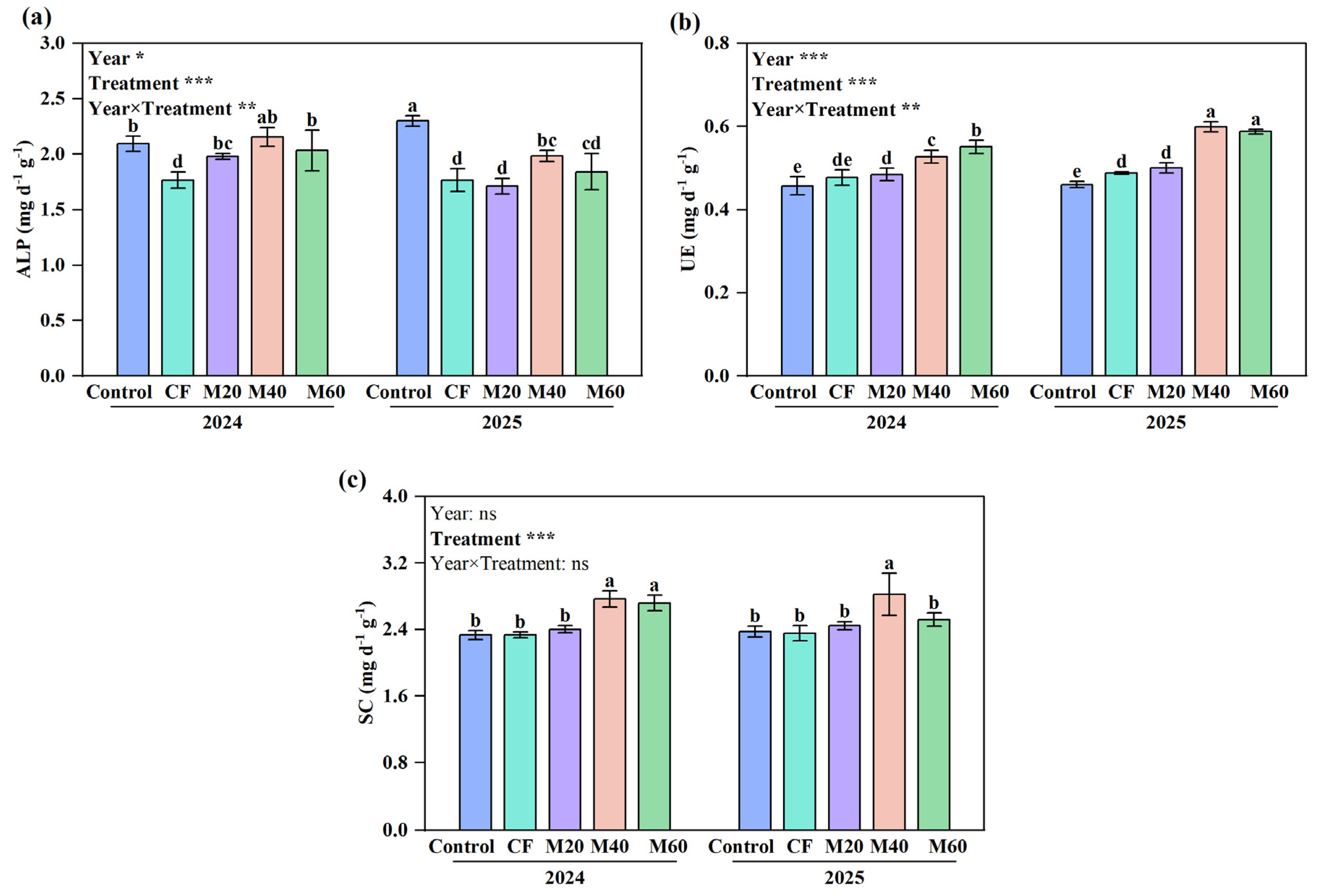
The effects of different fertilization treatments on soil enzyme activities are shown in Figure 2. The M40 and M60 treatments significantly increased soil urease (UE) activity compared with the CF treatments. Specifically, in 2025, UE activity in M40 and M60 increased by 22.44% and 20.41%, respectively, representing greater increases than those observed in 2024. The M40 treatment exhibited the highest sucrase (SC) activity, which increased by 20.00% compared with CF in 2025. In contrast, alkaline phosphatase (ALP) activity was significantly decreased by the M40 and M60 treatments compared with the CF treatment. Two-way ANOVA revealed significant year effects on ALP (p < 0.05) and UE (p < 0.001) activities, whereas no significant year effect was observed for SC activity. Significant year × treatment interactions were observed for UE and ALP (p < 0.01).

3.2. Effects of Organic Fertilizer Substitution for Chemical Fertilizers on Maize Growth and Yield

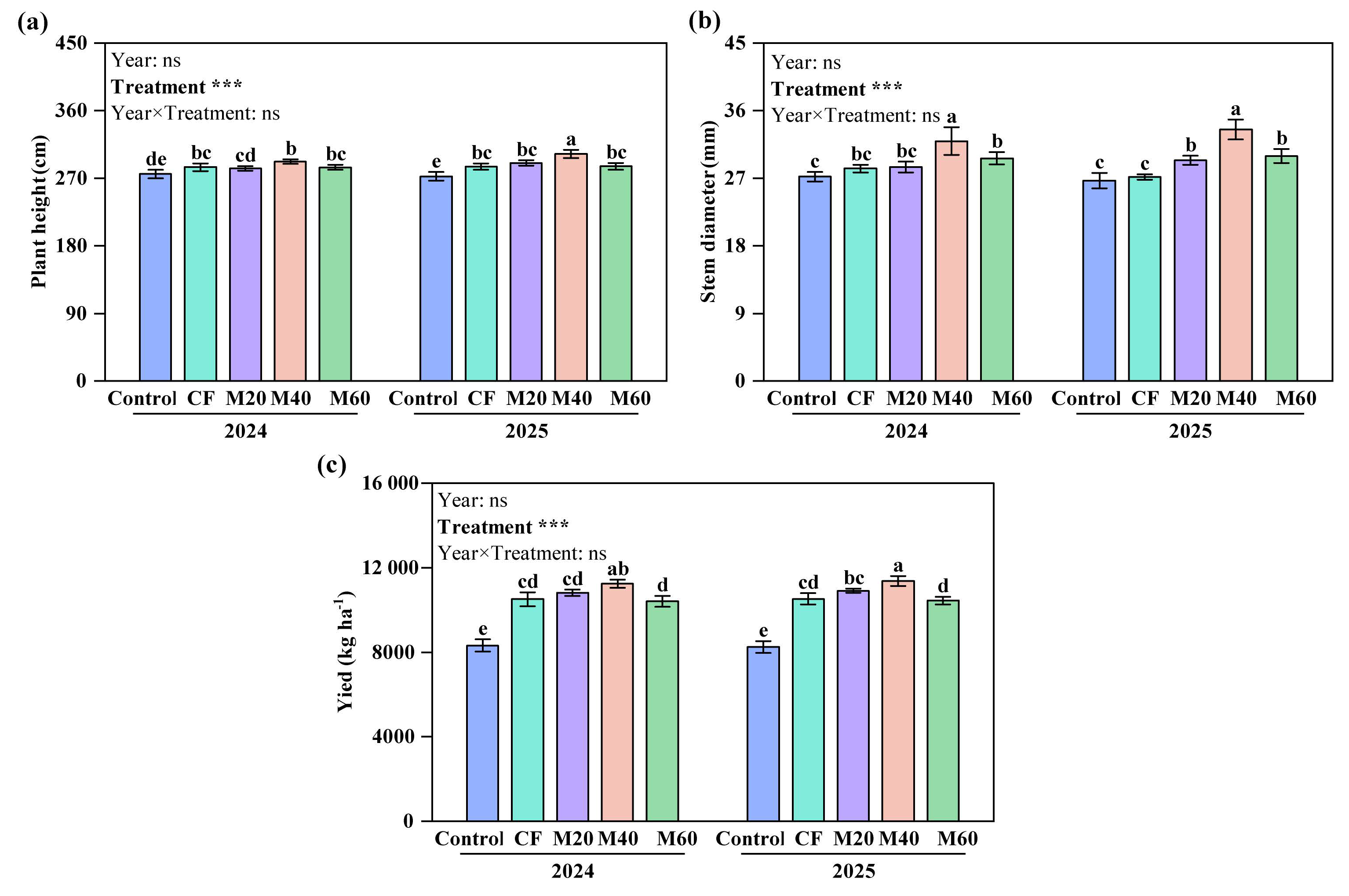
The effects of different fertilization treatments on maize plant height, stem diameter, and yield are shown in Figure 3. Fertilization treatments significantly promoted maize growth and increased yield (p < 0.05). Among all treatments, the M40 treatment exhibited the most pronounced growth-promoting effect. In 2024, compared with CF, M40 increased plant height by 2.66%, stem diameter by 12.86%, and yield by 7.04%. In 2025, compared with CF, M40 increased plant height by 5.95%, stem diameter by 23.30%, and yield by 8.10%, with greater improvements observed for all indicators than in 2024. Notably, M20 and M60 showed no significant differences compared with CF in both years, and M60 exhibited a declining trend in yield. Two-way ANOVA revealed no significant year effects on plant height, stem diameter, or yield, nor any significant year × treatment interactions.

3.3. Effects of Organic Fertilizer Substitution for Chemical Fertilizers on Soil Microbial Community Structure and Composition

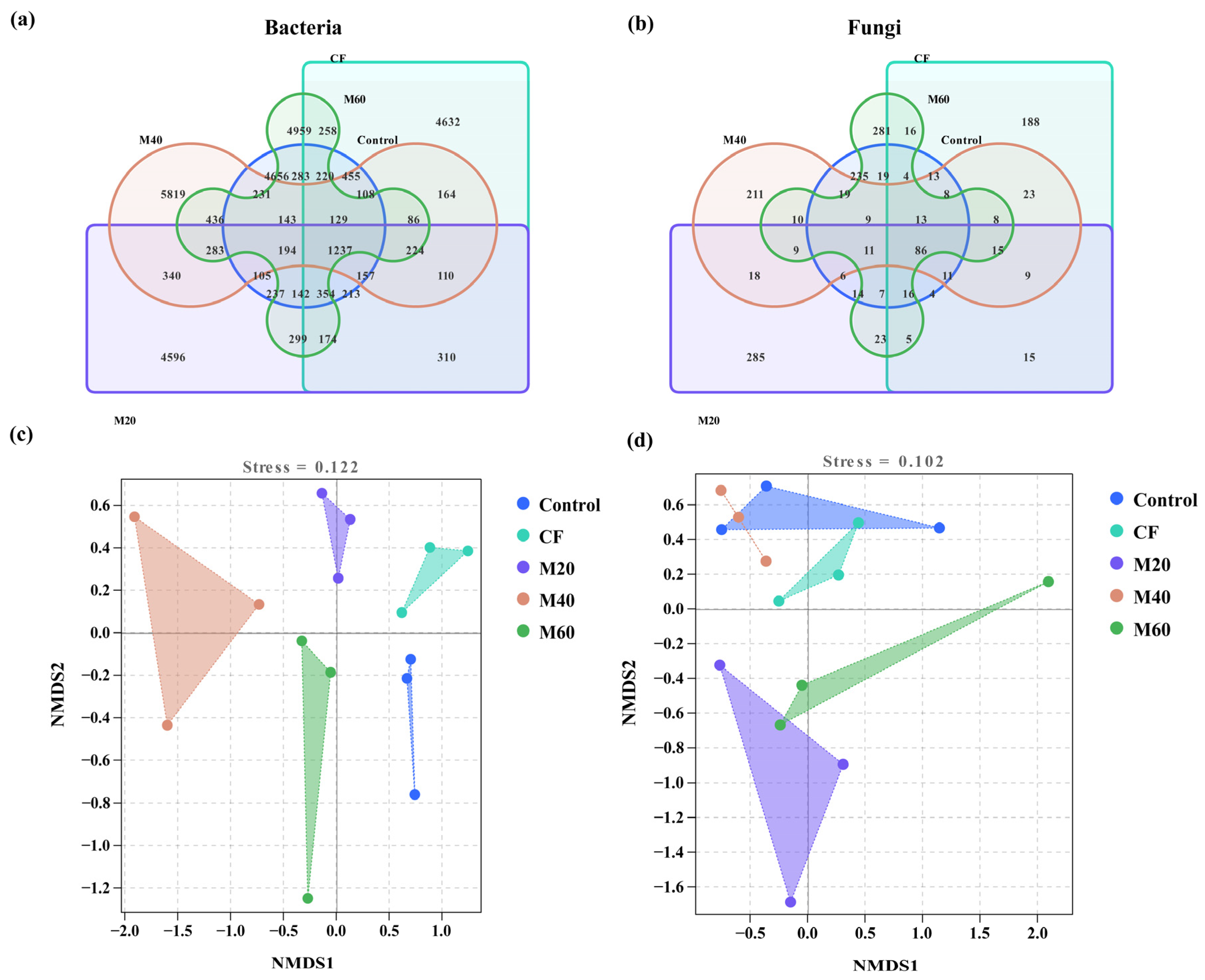
We investigated the structure and composition of bacterial and fungal communities through high-throughput sequencing of samples collected in 2025, following two consecutive years of treatment application. OTU Venn diagram analysis revealed significant differences in microbial community composition among different fertilization treatments (Figure 4a,b). For the bacterial community, a total of 30,653 OTUs were detected at a 97% similarity threshold, with the M40 and M60 treatments harboring more unique OTUs than the CF treatment. For the fungal community, a total of 1586 OTUs were detected, and the organic fertilizer substitution treatments generally exhibited higher numbers of unique OTUs than the CF treatment. Non-metric multidimensional scaling (NMDS) analysis revealed a clear separation in bacterial and fungal community structures among different fertilization treatments (Figure 4c,d). For the bacterial community, the sample points of the M40 and M60 treatments clustered together and were clearly distinguished from the CF and Control treatments. For the fungal community, the sample points of the M40 treatment were relatively close to those of the M60 treatment but were distinctly separated from the CF treatment.
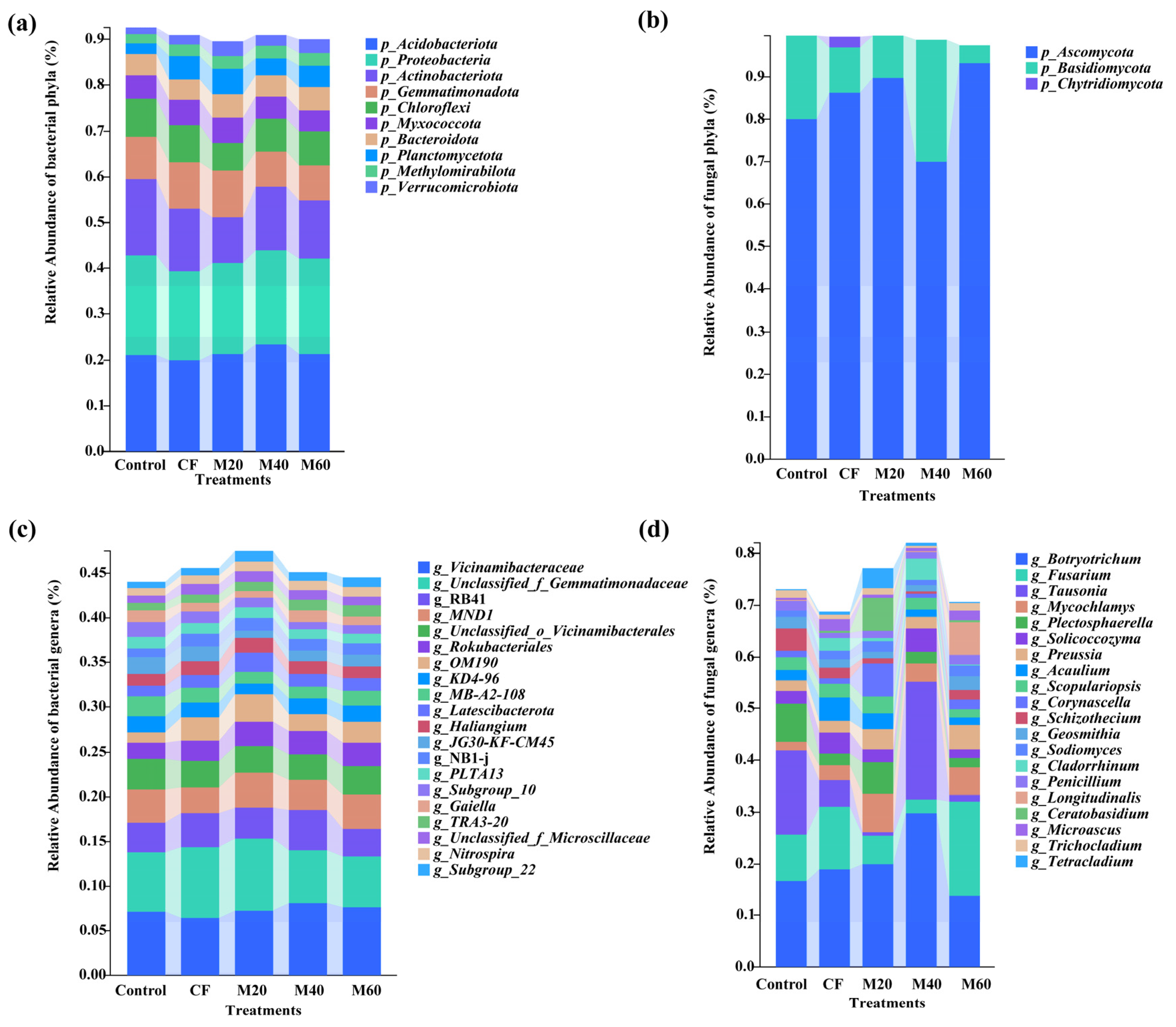
We evaluated the composition of bacterial and fungal communities in soil at the phylum and genus levels. At the bacterial phylum level (Figure 5a), Acidobacteriota, Proteobacteria, Actinobacteriota, and Gemmatimonadota were the dominant taxa. The M40 treatment increased the relative abundances of Acidobacteriota and Proteobacteria by 16.92% and 6.35%, respectively, compared with the CF treatment, while decreasing the relative abundance of Gemmatimonadota by 24.17% compared with CF. At the bacterial genus level (Figure 5c), the relative abundances of Vicinamibacteraceae, RB41, MND1, Rokubacteriales, and KD4-96 in the M40 treatment were higher than those in the CF treatment, whereas the relative abundances of Unclassified_f_Gemmatimonadaceae, Unclassified_o_Vicinamibacterales, and Haliangium were decreased. Compared with the CF treatment, the relative abundance of Vicinamibacteraceae in the M40 treatment increased by 24.65%. At the fungal phylum level (Figure 5b), Ascomycota and Basidiomycota were the dominant taxa. The M20 and M60 treatments increased the relative abundance of Ascomycota, while it decreased in the M40 treatment. The M40 treatment increased the relative abundance of Basidiomycota by 165.22% compared with the CF treatment. At the fungal genus level (Figure 5d), the M40 treatment increased the relative abundances of Botryotrichum, Tausonia, and Mycochlamys by 57.38%, 343.86%, and 23.69%, respectively, compared with the CF treatment, while decreasing the relative abundance of Fusarium.

3.4. Effects of Organic Fertilizer Substitution for Chemical Fertilizers on Soil Microbial Community Diversity

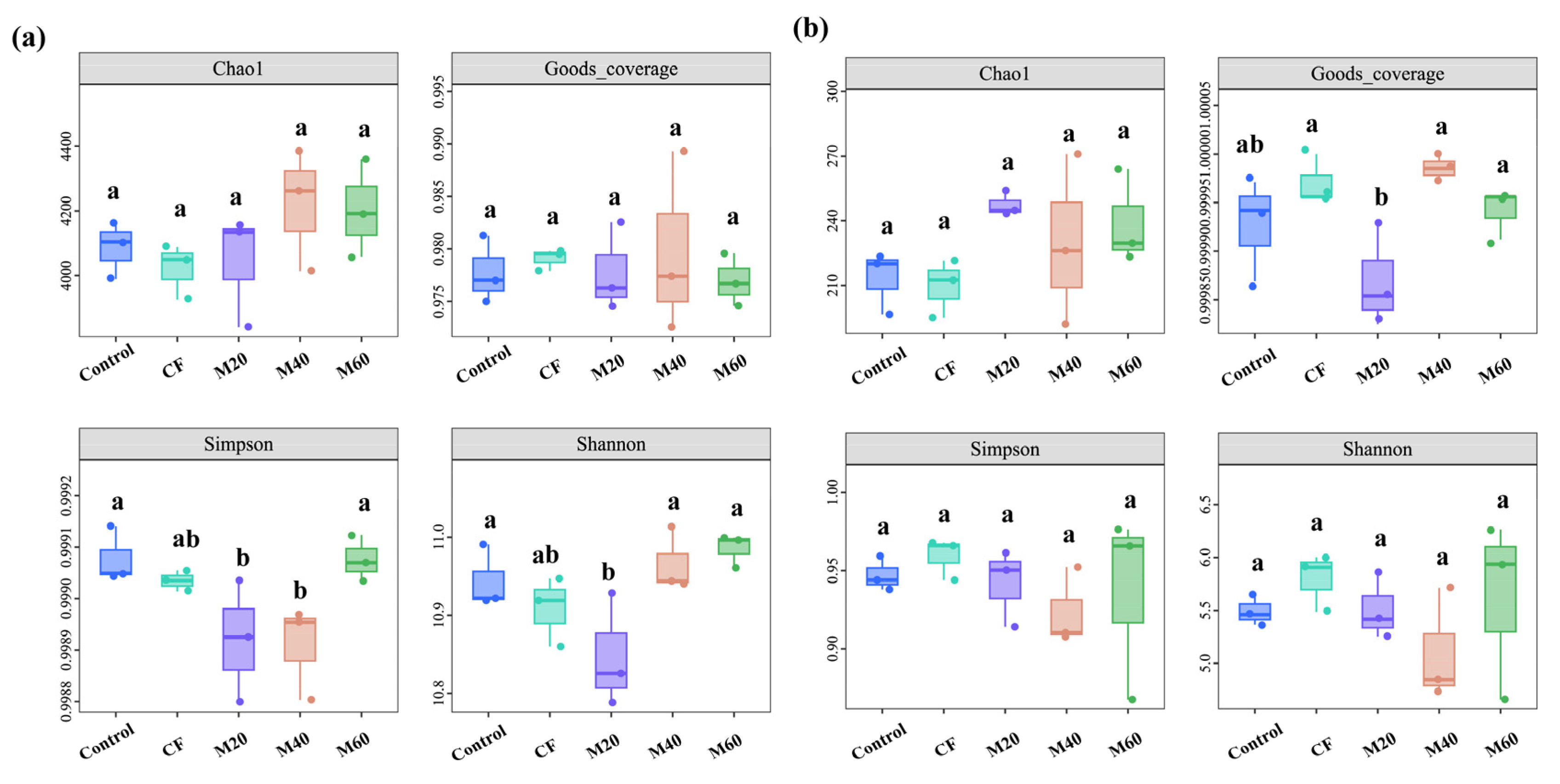
Alpha diversity analysis revealed that different fertilization treatments had differential effects on bacterial and fungal community diversity (Figure 6). For the bacterial community, no significant differences were observed in the Chao1 and Shannon indices among treatments (p > 0.05). However, the M20 and M40 treatments significantly decreased the Simpson index compared with the Control. Meanwhile, the M20 treatment significantly decreased the Shannon index relative to the Control treatment (p < 0.05). For the fungal community, none of the treatments had significant effects on the Chao1, Goods_coverage, Simpson, or Shannon indices compared with the Control (p > 0.05).

3.5. Correlation Analysis Between Soil Environmental Factors and Microbial Communities

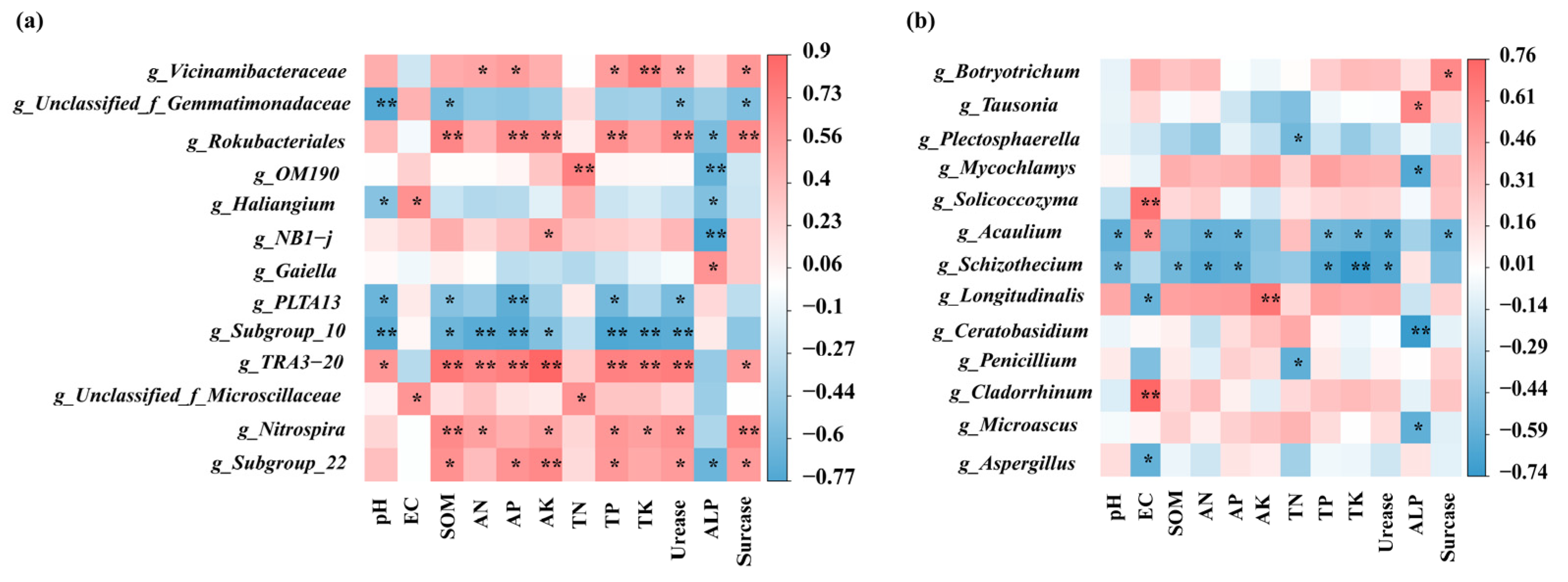
Spearman correlation heatmaps showed the associations between soil nutrients, enzyme activities, and dominant bacterial genera (Figure 7). For bacteria (Figure 7a), Rokubacteriales and TRA3-20 were significantly positively correlated with SOM, AP, AK, TP, urease, and sucrase (p < 0.05), while Rokubacteriales was significantly negatively correlated with ALP (p < 0.05). Vicinamibacteraceae was significantly positively correlated with AN, AP, AK, TP, TK, urease, and sucrase (p < 0.05). In the fungal community (Figure 7b), the relative abundance of Botryotrichum was significantly positively correlated with sucrase activity (p < 0.05), and the relative abundance of Tausonia was significantly positively correlated with ALP activity (p < 0.05). The relative abundances of Acaulium and Schizothecium were significantly negatively correlated with soil nutrients and enzyme activities (p < 0.05).

3.6. Relationships Between Maize Growth and Yield and Soil Physicochemical Properties and Enzyme Activities

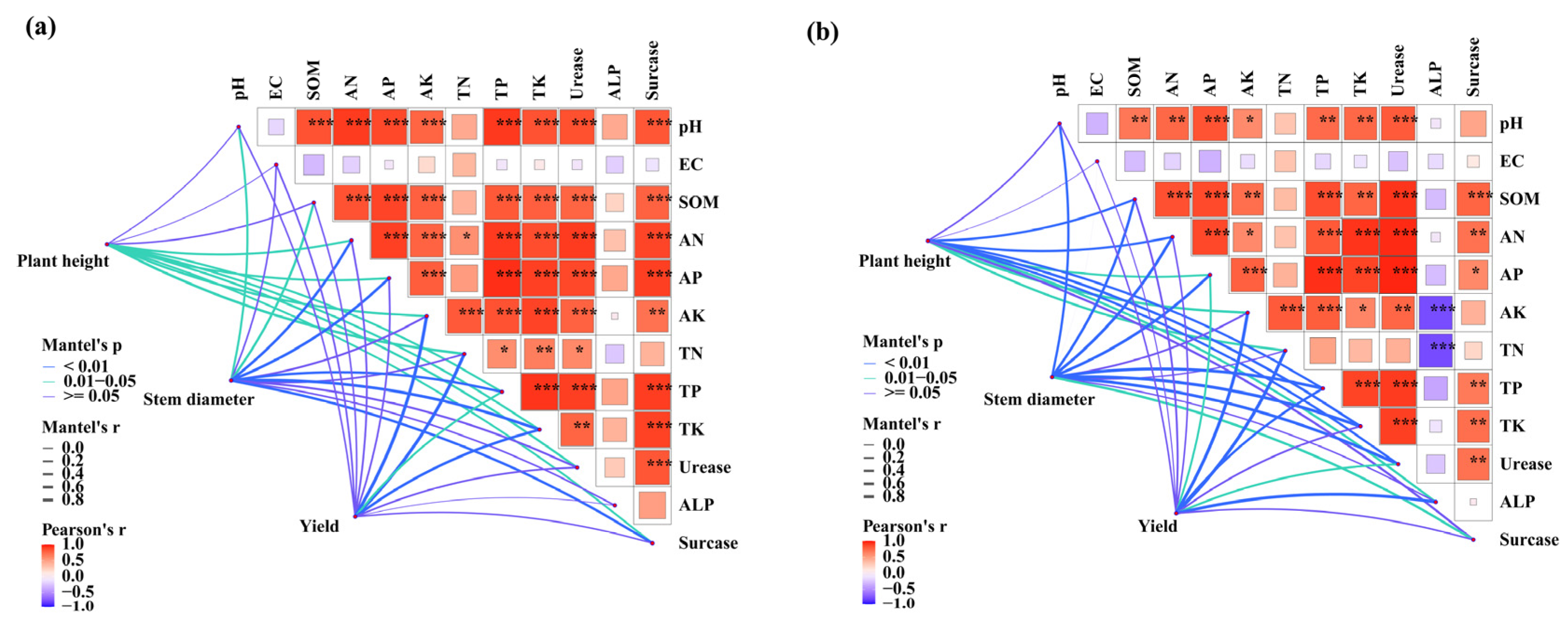
Mantel tests revealed the relationships between maize growth and yield and soil physicochemical properties and enzyme activities in 2024 and 2025 (Figure 8). In 2024, maize yield was significantly positively correlated with AK, TN, TP, and TK. Maize plant height and stem diameter were significantly positively correlated with AN, AP, AK, and urease activity. In 2025, similar patterns were observed. Maize yield remained significantly positively correlated with AK, TN, TP, and TK. Yield was also positively correlated with AP and urease activity, while showing a significant negative correlation with ALP activity. Plant height and stem diameter were positively correlated with SOM, AN, AP, pH, TP, TK, and urease activity.

4. Discussion

4.1. Effects of Organic Fertilizer Substitution for Chemical Fertilizers on Soil Physicochemical Properties and Enzyme Activities

Soil physicochemical properties are core indicators for assessing soil basic fertility, while soil enzyme activities directly reflect the intensity of soil biochemical processes [32]. Our two-year field experiment demonstrated that partial substitution of chemical fertilizers with organic fertilizer, particularly at the 40% substitution ratio (M40), consistently improved soil fertility and modulated enzyme activities, with markedly more pronounced effects observed in 2025 than in 2024. This temporal pattern reflects the combined influence of cumulative treatment effects, progressive soil biological enhancement, and inter-annual climatic modulation. Both are of great significance in the study of soil ecosystem functions.
Compared with CF, the M40 treatment increased SOM by 17.96% and 30.18%, AN by 6.85% and 20.30%, and AP by 30.74% and 52.65% in 2024 and 2025, respectively, indicating that the positive effects of organic fertilizer substitution became more pronounced over time. This may be attributed to the fact that the application of organic fertilizer directly inputs abundant organic matter and various nutrients into the soil, and the input of these exogenous organic materials can stimulate the decomposition of native soil organic matter, thereby further promoting the release of soil nutrients [33]. Meanwhile, the organic acids and humic acids in organic fertilizer can chelate cations such as Ca2+ and Mg2+, promoting the formation of soil aggregates, thereby improving soil structure and enhancing nutrient retention capacity [34,35]. In addition, repeated application of organic fertilizer for many years has led to the gradual accumulation of recalcitrant organic components, which are physically protected in soil aggregates and chemically stable through the combination with clay minerals [36]. This progressive build-up of the soil organic carbon pool explains why SOM accumulation was substantially greater in the second year than in the first. The more favorable precipitation distribution in 2025 may amplify these processes by maintaining optimal soil moisture for microbial decomposition and nutrient mineralization, as adequate water availability facilitates the diffusion of substrates and enzymes, thereby promoting the conversion of organic fertilizer nutrients into plant-available forms [35]. The decomposition process of organic fertilizer can release alkaline substances, effectively neutralizing soil acidification caused by long-term application of chemical fertilizers alone [16]. This is consistent with the significantly increased pH observed in the M60 and M40 treatments in this study. Notably, the M60 treatment significantly decreased soil electrical conductivity (EC) compared with the Control in 2025, which may be attributed to the adsorption and immobilization of soil salt ions by organic fertilizer, as well as the enhanced leaching capacity of salts resulting from the improvement of soil structure by organic fertilizer application [37].
Our study found that the M40 and M60 treatments significantly increased the activities of urease and sucrase in both years, with greater increases observed in 2025 than in 2024. This may be because organic fertilizers provide abundant carbon and energy, stimulate microbial proliferation and metabolic activities, and increase the synthesis and secretion of extracellular enzymes [38]. Another possible explanation is that the organic matter in fertilizer can adsorb and protect extracellular enzymes through the interaction with humus, forming enzyme humus complex, and prolonging the residence time and activity of enzymes in soil matrix [37]. Moreover, the more favorable precipitation regime in 2025 may contribute by maintaining optimal soil moisture for microbial metabolism and enzyme-mediated reactions, as soil water availability critically affects both substrate diffusion and enzyme conformational stability [39]. Furthermore, the Two-Way ANOVA also showed significant interannual effects on urease activity. However, ALP activity was significantly decreased after fertilization treatments in both years. This discrepancy may be related to organic fertilizer type, application ratio, and initial soil phosphorus status. The background available phosphorus level in the experimental soil was relatively high (26.88 mg/kg), and organic fertilizer application greatly elevated the AP content (reaching 36.45 mg kg−1 in the M40 treatment in 2024 and 42.30 mg kg−1 in 2025). These high phosphorus conditions may exert negative feedback on the microbial requirement for alkaline phosphatase secretion. This is consistent with the resource allocation theory, which posits that microorganisms decrease the production of extracellular enzymes to conserve energy under nutrient-rich conditions [40]. The study by Jain et al. [41] also found that a direct increase in soil available phosphorus content can reduce the catalytic role of Fe3+ in phosphatase reactions, thereby decreasing ACP and ALP activities.

4.2. Effects of Organic Fertilizer Substitution for Chemical Fertilizers on Soil Microbial Community Structure and Composition

Fertilization measures significantly influence the structural composition of microbial communities by altering soil nutrient status, leading to an increase in the relative abundance of certain dominant taxa while decreasing others, thereby resulting in community restructuring [42]. The study found that organic fertilizer substitution for chemical fertilizers did not significantly alter the alpha diversity of soil microbial communities but reshaped community composition, indicating that microbial community structure is more sensitive than diversity indices in response to fertilization measures. This phenomenon may be explained by the high functional redundancy of soil microbial communities, wherein compositional shifts occur to optimize ecological functions without necessarily altering overall diversity metrics [43,44].
The enrichment of copiotrophic bacterial phyla, including Proteobacteria and Acidobacteriota, under the M40 treatment is consistent with the elevated nutrient availability observed in this treatment. Proteobacteria are typically copiotrophic and rapidly proliferate in nutrient-rich environments due to their efficient substrate utilization and growth strategies [45,46]. Acidobacteriota encompass numerous taxa involved in the degradation of complex organic compounds, such as cellulose and hemicellulose, and their increased abundance may reflect the ample supply of organic carbon substrates provided by manure application [47]. Conversely, the relative abundance of Gemmatimonadota decreased under organic substitution. Members of this phylum are known to prefer oligotrophic and drier conditions; thus, the improved soil moisture and nutrient status following organic amendment may have suppressed their proliferation. Collectively, these shifts in bacterial community composition suggest a functional transition toward enhanced organic matter decomposition and nutrient mobilization under organic substitution [48,49]. At the genus level, the M40 treatment enriched several functionally important bacterial taxa, including Vicinamibacteraceae, RB41, Rokubacteriales, and KD4-96. Vicinamibacteraceae has been implicated in soil organic carbon decomposition and transformation [50], while RB41 is a core genus within Acidobacteriota that contributes to maintaining the stability of soil metabolic functions [51]. Rokubacteriales is closely associated with soil carbon and nitrogen cycling processes [52]. The enrichment of these taxa under M40 treatment further corroborates the functional shift toward enhanced nutrient turnover, which is supported by the concurrent increases in SOM, AN, and enzyme activities (Table 2; Figure 2). Regarding the fungal community, the M40 treatment significantly increased the relative abundance of Basidiomycota and enriched beneficial genera such as Botryotrichum, Tausonia, and Mycochlamys, while suppressing the pathogenic genus Fusarium. Basidiomycota are typical saprotrophic fungi possessing strong capabilities to decompose recalcitrant organic matter, including cellulose and lignin, and their proliferation is conducive to soil organic matter turnover and humus formation [53,54]. Botryotrichum and Tausonia have been reported to participate in organic matter degradation and nutrient release processes [55,56], while Mycochlamys possesses biocontrol potential against soilborne pathogens [57]. In contrast, Fusarium is a well-known pathogenic genus that causes root rot, ear rot, and stalk rot in maize, and its suppression under organic substitution is of particular agronomic significance for maintaining soil microecological health and reducing disease pressure [58]. The enrichment of beneficial fungi and suppression of pathogens may be attributable to the competitive exclusion effect, wherein enhanced microbial diversity and activity create a more suppressive soil environment against pathogenic colonization [59].
Notably, the effect of the M20 treatment on microbial community structure was intermediate between those of CF and M40, while the M60 treatment, although also enriching some beneficial microbial groups, did not exhibit effects as pronounced as those of the M40 treatment. This observation suggests that excessive organic fertilizer application may not confer additional benefits for microbial community optimization. One possible explanation is that high organic matter inputs may lead to temporal mismatches between nutrient release and crop demand, or alter soil C/N stoichiometry in ways that constrain specific microbial guilds [60]. Alternatively, excessive organic amendment may induce shifts in microbial community composition toward slower-growing or more specialized taxa that do not necessarily enhance nutrient cycling efficiency [16]. Spearman correlation analysis further revealed the relationships between microbial communities and soil environmental factors. The relative abundances of Rokubacteriales and Vicinamibacteraceae were significantly positively correlated with SOM, AP, AK, urease activity, and sucrase activity, indicating that these genera play important roles in soil carbon, nitrogen, and phosphorus cycling. Tausonia was significantly positively correlated with ALP activity, suggesting its potential involvement in the mineralization of soil organic phosphorus. These correlation results may provide important clues for research on the functions of microbial communities.
It should be noted that soil microbial community analysis was performed only on samples collected in 2025, the second year of the field experiment. This design is reasonable because microbial community structure typically responds to fertilization treatments over the medium-to-long term rather than exhibiting dramatic short-term fluctuations, and two consecutive years of consistent organic substitution allow cumulative effects on soil microbiota to be fully manifested. Nevertheless, future studies should include multi-year microbial monitoring to better understand the temporal dynamics of community responses to organic fertilization.

4.3. Relationships Between Maize Yield and Soil Physicochemical Properties and Enzyme Activities

Crop yield is the ultimate integrative indicator of soil fertility and agronomic management practices, reflecting the combined effects of nutrient availability, biological activity, and environmental conditions during the growing season [61]. In the present study, the M40 treatment consistently achieved the highest maize yield among all treatments in both years, with increases of 7.04% and 8.10% compared with CF in 2024 and 2025, respectively. This yield enhancement can be primarily attributed to the synergistic effects of integrated organic and inorganic fertilization, which combines the rapid nutrient availability of chemical fertilizers with the sustained nutrient release and soil amelioration functions of organic amendments [13,14].
The Mantel test results revealed that maize yield was significantly positively correlated with AP, AK, TN, and TP in both years, underscoring the critical role of improved soil nutrient status in driving yield increases under organic substitution. The substantial increases in AP and AK under the M40 treatment (Table 2) are particularly noteworthy, as phosphorus and potassium are essential macronutrients for maize reproductive growth, grain filling, and stress tolerance [61]. The positive correlation between yield and soil total nitrogen and phosphorus contents further indicates that organic substitution not only enhances available nutrient pools but also contributes to the build-up of nutrient reserves that sustain long-term crop productivity. These findings align with previous studies demonstrating that combined organic and inorganic fertilization improves soil fertility and crop yields through the direct supply of nutrients and indirect improvements in soil physicochemical properties [9,11,62].
The positive correlation between urease activity and yield indicates that organic fertilizer application promotes soil nitrogen transformation by increasing urease activity, thereby providing adequate nitrogen nutrition for maize growth [62]. The elevated urease activity under M40 treatment may accelerate nitrogen availability to maize plants, supporting vegetative growth and grain development. The negative correlation between ALP activity and yield in 2025 indicates that soil phosphorus supply was in a sufficient state. In this study, soil AP content increased substantially after organic fertilizer application (reaching 42.30 mg kg−1 in M40 in 2025, a 57.37% increase compared with Control). The crop’s demand for phosphorus was fully satisfied, and microorganisms reduced ALP secretion to conserve energy. Therefore, the decrease in ALP activity reflects a state of sufficient soil phosphorus supply [40]. The study by Tian et al. [63] also found that microorganisms increase phosphatase secretion under low-phosphorus conditions, whereas the opposite occurs under high-phosphorus conditions. Furthermore, Mantel tests showed that maize stem diameter was significantly positively correlated with soil pH in 2025 (p < 0.05), indicating that the increase in pH resulting from organic fertilizer application is beneficial for maize stem growth and development. An appropriate pH environment can promote root nutrient uptake and enhance crop lodging resistance [9]. Meanwhile, maize yield was significantly positively correlated with TN and TP contents in both years (p < 0.05), further indicating that the increase in soil total nutrients resulting from organic fertilizer application is an important factor in promoting maize yield increase.
It should be noted that the M60 treatment, despite receiving the highest organic matter input, did not outperform M40 and even exhibited a declining yield trend. This observation suggests that excessive organic substitution may lead to nutrient imbalances or temporal mismatches between nutrient release and crop demand [15,16]. High application rates of organic fertilizer can result in immobilization of mineral nitrogen during organic matter decomposition, potentially inducing nitrogen deficiency during critical growth stages [15]. Additionally, excessive organic inputs may increase the risk of soil salt accumulation and heavy metal contamination, which could adversely affect root function and nutrient uptake [16]. These considerations highlight the importance of identifying an optimal substitution ratio to balance nutrient supply, crop demand, and soil health.
From a climate adaptation standpoint, the consistent yield advantage of M40 across both years, despite interannual climatic variation, underscores its potential as a climate-resilient fertilization strategy, as enhanced soil fertility and organic matter accumulation may buffer crops against drought stress and nutrient leaching under projected future climate scenarios in Northeast China. Nevertheless, our findings suggest that the 40% organic substitution ratio represents a promising climate-adaptive management option for sustaining maize productivity. However, the short-term nature of this two-year, single-site study limits our ability to fully capture long-term soil fertility evolution and regional heterogeneity, and the absence of functional gene expression and metabolomic data means that the precise mechanistic pathways are not fully elucidated. Additionally, the specific responses of soil greenhouse gas emissions and nitrogen leaching losses under different substitution ratios remain unexplored, and the economic feasibility of this practice at larger scales requires further assessment.
Therefore, future investigations should prioritize long-term, multi-site field experiments to verify the persistence and regional adaptability of these effects. Mechanistic understanding could be advanced by integrating multi-omics approaches to profile the functional potential of microbial communities in response to organic substitution, with particular focus on functional genes involved in nutrient cycling. The use of stable isotope probing is recommended to directly quantify nutrient fluxes from organic fertilizer and soil pools to the plant. Practically, our results suggest that 40% organic fertilizer substitution is a promising strategy for reducing dependency on synthetic fertilizers in maize production, as it enhances soil nutrient availability and improves crop acquisition efficiency. Future work should assess the economic feasibility and scalability of this practice to facilitate its widespread adoption in sustainable agriculture.

5. Conclusions

Partial substitution of chemical fertilizers with organic fertilizer, especially at 40% substitution (M40), significantly improved soil physicochemical properties, enzyme activities, and microbial community structure, thereby promoting maize yield. (i) Compared with CF, M40 increased SOM by 17.96% and 30.18%, AN by 6.85% and 20.30%, AP by 30.74% and 52.65%, and yield by 7.04% and 8.10% in 2024 and 2025, respectively, with more pronounced effects observed in the second year. (ii) Organic substitution enhanced urease and sucrase activities but decreased ALP activity, reflecting sufficient phosphorus supply under organic fertilization. (iii) Microbial community analysis revealed that M40 enriched beneficial bacteria (Proteobacteria, Acidobacteriota, Vicinamibacteraceae) and fungi (Basidiomycota, Botryotrichum, Tausonia), while suppressing the pathogen Fusarium. (iv) Our results provide empirical evidence for optimizing fertilization regimes in maize production and support the development of sustainable agricultural practices that reduce dependence on synthetic fertilizers.

Author Contributions

Conceptualization, C.S., Z.W. and X.Y.; Methodology, C.S., Z.W., Y.L. and X.Y.; Formal analysis, C.S., Z.W. and X.Y.; Investigation, C.S., Z.W., and Y.L.; Data curation, C.S. and Z.W.; Visualization, C.S. and Z.W.; Writing—original draft, C.S. and Z.W.; Writing—review and editing, C.S., Z.W., Y.L. and X.Y.; Supervision, X.Y. and Y.L.; Project administration, C.S. and Z.W.; Funding acquisition, C.S., X.Y. and Y.L. All authors have read and agreed to the published version of the manuscript.

Funding

This study was financially supported by the Liaoning Provincial Science and Technology Plan Joint Plan (Key Technology Research and Development Program) (2024JH2/102600057) and the Liaoning Provincial Science and Technology Plan Joint Plan (Key Research and Development Program) (2025JH2/101800115).

Data Availability Statement

The original contributions presented in this study are included in this article; further inquiries can be directed to the corresponding authors.

Conflicts of Interest

The authors declare no conflicts of interest.

References

  1. Wang, Y.C.; Lu, Y.L. Evaluating the potential health and economic effects of nitrogen fertilizer application in grain production systems of China. J. Clean. Prod. 2020, 264, 121635. [Google Scholar] [CrossRef]
  2. Jiang, M.; Dong, C.; Bian, W.; Zhang, W.; Wang, Y. Effects of different fertilization practices on maize yield, soil nutrients, soil moisture, and water use efficiency in northern China based on a meta-analysis. Sci. Rep. 2024, 14, 6480. [Google Scholar] [CrossRef] [PubMed]
  3. Luo, B.; Hu, H.; Zheng, H.; An, N.; Guo, J.; Nie, Z.; Ma, P.; Zhang, X.; Liu, D.; Wu, L.; et al. Fertilization regulates maize nutrient use efficiency through soil rhizosphere biological network and root transcriptome. Appl. Soil Ecol. 2025, 207, 105912. [Google Scholar] [CrossRef]
  4. Bender, S.F.; Schulz, S.; Martínez-Cuesta, R.; Laughlin, R.J.; Kublik, S.; Pfeiffer-Zakharova, K.; Vestergaard, G.; Hartman, K.; Parladé, E.; Römbke, J.; et al. Simplification of soil biota communities impairs nutrient recycling and enhances above- and belowground nitrogen losses. New Phytol. 2023, 240, 2020–2034. [Google Scholar] [CrossRef]
  5. Congreves, K.A.; Smith, J.M.; Németh, D.D.; Hooker, D.C.; Van Eerd, L.L. Soil organic carbon and land use: Processes and potential in Ontario’s long-term agro-ecosystem research sites. Can. J. Soil Sci. 2014, 94, 317–336. [Google Scholar] [CrossRef]
  6. Fan, D.J.; Jiang, R.; Song, D.P.; Xue, W.T.; Zhang, L.; Wang, M.Y.; Jia, Z.X.; Zou, G.Y.; He, W.T. Enzymatic-Driven Responses of Soil Fertility and Crop Yields to Different Long-Term Organic Substitution Regimes Under Wheat-Maize Rotation. Agronomy 2026, 16, 588. [Google Scholar] [CrossRef]
  7. Cai, Z.; Wang, B.; Xu, M.; Zhang, H.; He, X.; Zhang, L.; Gao, S. Intensified soil acidification from chemical N fertilization and prevention by manure in an 18-year field experiment in the red soil of southern China. J. Soils Sediments 2015, 15, 260–270. [Google Scholar] [CrossRef]
  8. Shi, W.; Zhao, H.Y.; Chen, Y.; Wang, J.S.; Han, B.; Li, C.P.; Lu, J.Y.; Zhang, L.M. Organic manure rather than phosphorus fertilization primarily determined asymbiotic nitrogen fixation rate and the stability of diazotrophic community in an upland red soil. Agric. Ecosyst. Environ. 2021, 319, 107535. [Google Scholar] [CrossRef]
  9. Ghorbani, M.; Amirahmadi, E. Biochar and soil contributions to crop lodging and yield performance—A meta-analysis. Plant Physiol. Biochem. 2024, 215, 109053. [Google Scholar] [CrossRef]
  10. Guo, L.L.; Nie, Z.Y.; Zhou, J.; Zhang, S.X.; An, F.H.; Zhang, L.; Tóth, T.; Yang, F.; Wang, Z.C. Effects of Different Organic Amendments on Soil Improvement, Bacterial Composition, and Functional Diversity in Saline-Sodic Soil. Agronomy 2022, 12, 2294. [Google Scholar] [CrossRef]
  11. Liu, J.A.; Shu, A.P.; Song, W.F.; Shi, W.C.; Li, M.C.; Zhang, W.X.; Li, Z.Z.; Liu, G.R.; Yuan, F.S.; Zhang, S.X.; et al. Long-term organic fertilizer substitution increases rice yield by improving soil properties and regulating soil bacteria. Geoderma 2021, 404, 115287. [Google Scholar] [CrossRef]
  12. Zhang, J.; Nie, J.; Cao, W.; Gao, Y.; Lu, Y.; Liao, Y. Long-term green manuring to substitute partial chemical fertilizer simultaneously improving crop productivity and soil quality in a double-rice cropping system. Eur. J. Agron. 2023, 142, 126641. [Google Scholar] [CrossRef]
  13. Huang, S.; Zhang, W.; Yu, X.; Huang, Q. Effects of long-term fertilization on corn productivity and its sustainability in an Ultisol of southern China. Agric. Ecosyst. Environ. 2010, 138, 44–50. [Google Scholar] [CrossRef]
  14. Geng, Y.; Wang, J.; Sun, Z.; Ji, C.; Huang, M.; Zhang, Y.; Xu, P.; Li, S.; Pawlett, M.; Zou, J. Soil N-oxide emissions decrease from intensive greenhouse vegetable fields by substituting synthetic N fertilizer with organic and bio-organic fertilizers. Geoderma 2021, 383, 114730. [Google Scholar] [CrossRef]
  15. Lu, K.; Yang, X.; Gielen, G.; Bolan, N.; Ok, Y.S.; Niazi, N.K.; Xu, S.; Yuan, G.; Chen, X.; Zhang, X.; et al. Effect of bamboo and rice straw biochars on the mobility and redistribution of heavy metals (Cd, Cu, Pb and Zn) in contaminated soil. J. Environ. Manag. 2017, 186, 285–292. [Google Scholar] [CrossRef]
  16. Qin, Q.; Wang, J.; Sun, L.; Yang, S.; Sun, Y.; Xue, Y. Microbial Composition Change and Heavy Metal Accumulation in Response to Organic Fertilization Reduction in Greenhouse Soil. Microorganisms 2025, 13, 203. [Google Scholar] [CrossRef] [PubMed]
  17. Hartmann, M.; Frey, B.; Mayer, J.; Mäder, P.; Widmer, F. Distinct soil microbial diversity under long-term organic and conventional farming. ISME J. 2015, 9, 1177–1194. [Google Scholar] [CrossRef] [PubMed]
  18. Bardgett, R.D.; van der Putten, W.H. Belowground biodiversity and ecosystem functioning. Nature 2014, 515, 505–511. [Google Scholar] [CrossRef] [PubMed]
  19. Sun, R.B.; Zhang, X.X.; Guo, X.S.; Wang, D.Z.; Chu, H.Y. Bacterial diversity in soils subjected to long-term chemical fertilization can be more stably maintained with the addition of livestock manure than wheat straw. Soil Biol. Biochem. 2015, 88, 9–18. [Google Scholar] [CrossRef]
  20. Luo, G.; Ling, N.; Nannipieri, P.; Chen, H.; Raza, W.; Wang, M.; Guo, S.; Shen, Q. Long-term fertilisation regimes affect the composition of the alkaline phosphomonoesterase encoding microbial community of a vertisol and its derivative soil fractions. Biol. Fertil. Soils 2017, 53, 375–388. [Google Scholar] [CrossRef]
  21. Yang, C.; Lu, S. Straw and straw biochar differently affect phosphorus availability, enzyme activity and microbial functional genes in an Ultisol. Sci. Total Environ. 2022, 805, 150325. [Google Scholar] [CrossRef]
  22. Francioli, D.; Schulz, E.; Lentendu, G.; Wubet, T.; Buscot, F.; Reitz, T. Mineral vs. Organic Amendments: Microbial Community Structure, Activity and Abundance of Agriculturally Relevant Microbes Are Driven by Long-Term Fertilization Strategies. Front. Microbiol. 2016, 7, 1446. [Google Scholar] [CrossRef] [PubMed]
  23. Cui, X.; Bi, Y.H.; Wang, L.D.; Wei, C.Q.; Zhang, J.Q.; Yang, X.; Xu, Y.; Meng, J. Biochar and Trichoderma viride co-application boosts industrial soybean performance under continuous cropping stress via rhizosphere metabolic reprogramming. Ind. Crops Prod. 2026, 247, 123573. [Google Scholar] [CrossRef]
  24. Sun, Q.; Hu, Y.J.; Chen, X.B.; Wei, X.M.; Shen, J.L.; Ge, T.D.; Su, Y.R. Flooding and straw returning regulates the partitioning of soil phosphorus fractions and phoD-harboring bacterial community in paddy soils. Appl. Microbiol. Biotechnol. 2021, 105, 9343–9357. [Google Scholar] [CrossRef] [PubMed]
  25. Liu, W.B.; Ling, N.; Luo, G.W.; Guo, J.J.; Zhu, C.; Xu, Q.C.; Liu, M.Q.; Shen, Q.R.; Guo, S.W. Active phoD-harboring bacteria are enriched by long-term organic fertilization. Soil Biol. Biochem. 2021, 152, 108071. [Google Scholar] [CrossRef]
  26. Ma, L.; Li, Z.; Li, Y.; Wei, J.; Zhang, L.; Zheng, F.; Liu, Z.; Tan, D. Variations in crop yield caused by different ratios of organic substitution are closely related to microbial ecological clusters in a fluvo-aquic soil. Field Crops Res. 2024, 306, 109239. [Google Scholar] [CrossRef]
  27. Gong, Z.T. Chinese Soil Taxonomy; Science Press: Beijing, China, 2001. [Google Scholar]
  28. Bao, S.D. Soil and Agricultural Chemistry Analysis; Chinese Agriculture Press: Beijing, China, 2000. [Google Scholar]
  29. Tabatabai, M.A.; Bremner, J.M. Use of p-nitrophenyl phosphate for assay of soil phosphatase activity. Soil Biol. Biochem. 1969, 1, 301–307. [Google Scholar] [CrossRef]
  30. Frankeberger, W.T.; Johanson, J.B. Method of measuring invertase activity in soils. Plant Soil 1983, 74, 301–311. [Google Scholar] [CrossRef]
  31. Doelman, P.; Haanstra, L. Short- and long-term effects of heavy metals on urease activity in soils. Biol. Fertil. Soils 1986, 2, 213–218. [Google Scholar] [CrossRef]
  32. dos Santos Teixeira, A.F.; Silva, S.H.G.; Soares de Carvalho, T.; Silva, A.O.; Azarias Guimarães, A.; de Souza Moreira, F.M. Soil physicochemical properties and terrain information predict soil enzymes activity in phytophysiognomies of the Quadrilátero Ferrífero region in Brazil. Catena 2021, 199, 105083. [Google Scholar] [CrossRef]
  33. Dimassi, B.; Mary, B.; Fontaine, S.; Perveen, N.; Revaillot, S.; Cohan, J.-P. Effect of nutrients availability and long-term tillage on priming effect and soil C mineralization. Soil Biol. Biochem. 2014, 78, 332–339. [Google Scholar] [CrossRef]
  34. Huang, X.; Zheng, Y.; Li, P.; Cui, J.; Sui, P.; Chen, Y.; Gao, W. Organic management increases beneficial microorganisms and promotes the stability of microecological networks in tea plantation soil. Front. Microbiol. 2023, 14, 1237842. [Google Scholar] [CrossRef] [PubMed]
  35. Li, T.; Zhang, Y.; Bei, S.; Li, X.; Reinsch, S.; Zhang, H.; Zhang, J. Contrasting impacts of manure and inorganic fertilizer applications for nine years on soil organic carbon and its labile fractions in bulk soil and soil aggregates. Catena 2020, 194, 104739. [Google Scholar] [CrossRef]
  36. Murindangabo, Y.T.; Frouz, J.; Frouzová, J.; Bartuška, M.; Mudrák, O. Synergistic interplay of management practices and environmental factors in shaping grassland soil carbon stocks: Insights into the effects of fertilization, mowing, burning, and grazing. J. Environ. Manag. 2025, 382, 125236. [Google Scholar] [CrossRef]
  37. Nannipieri, P.; Trasar-Cepeda, C.; Dick, R.P. Soil enzyme activity: A brief history and biochemistry as a basis for appropriate interpretations and meta-analysis. Biol. Fertil. Soils 2018, 54, 11–19. [Google Scholar] [CrossRef]
  38. Lu, Z.; Zhou, Y.; Li, Y.; Li, C.; Lu, M.; Sun, X.; Luo, Z.; Zhao, J.; Fan, M. Effects of partial substitution of chemical fertilizer with organic manure on the activity of enzyme and soil bacterial communities in the mountain red soil. Front. Microbiol. 2023, 14, 1234904. [Google Scholar] [CrossRef] [PubMed]
  39. Tian, J.; Lou, Y.L.; Gao, Y.; Fang, H.J.; Liu, S.T.; Xu, M.G.; Blagodatskaya, E.; Kuzyakov, Y. Response of soil organic matter fractions and composition of microbial community to long-term organic and mineral fertilization. Biol. Fertil. Soils 2017, 53, 523–532. [Google Scholar] [CrossRef]
  40. Jarosch, K.A.; Kandeler, E.; Frossard, E.; Bünemann, E.K. Is the enzymatic hydrolysis of soil organic phosphorus compounds limited by enzyme or substrate availability? Soil Biol. Biochem. 2019, 139, 107628. [Google Scholar] [CrossRef]
  41. Jain, S.; Mishra, D.; Khare, P.; Yadav, V.; Deshmukh, Y.; Meena, A. Impact of biochar amendment on enzymatic resilience properties of mine spoils. Sci. Total Environ. 2016, 544, 410–421. [Google Scholar] [CrossRef] [PubMed]
  42. Sun, Y.; Zhang, X.; Yang, Y.; Zhang, Y.; Wang, J.; Zhang, M.; Wu, C.; Zou, J.; Zhou, H.; Li, J. Alpine meadow degradation regulates soil microbial diversity via decreasing plant production on the Qinghai-Tibetan Plateau. Ecol. Indic. 2024, 163, 112097. [Google Scholar] [CrossRef]
  43. Bebber, D.P.; Richards, V.R. A meta-analysis of the effect of organic and mineral fertilizers on soil microbial diversity. Appl. Soil Ecol. 2022, 175, 104450. [Google Scholar] [CrossRef]
  44. Liu, J.; Zhang, X.; Wang, H.; Hui, X.; Wang, Z.; Qiu, W. Long-term nitrogen fertilization impacts soil fungal and bacterial community structures in a dryland soil of Loess Plateau in China. J. Soils Sediments 2018, 18, 1632–1640. [Google Scholar] [CrossRef]
  45. Fierer, N.; Bradford, M.A.; Jackson, R.B. Toward an Ecological Classification of Soil Bacteria. Ecology 2007, 88, 1354–1364. [Google Scholar] [CrossRef]
  46. Ma, Q.; Zhou, Y.; Parales, R.E.; Jiao, S.; Ruan, Z.; Li, L. Effects of herbicide mixtures on the diversity and composition of microbial community and nitrogen cycling function on agricultural soil: A field experiment in Northeast China. Environ. Pollut. 2025, 372, 125965. [Google Scholar] [CrossRef]
  47. Liu, H.; Du, X.; Li, Y.; Han, X.; Li, B.; Zhang, X.; Li, Q.; Liang, W. Organic substitutions improve soil quality and maize yield through increasing soil microbial diversity. J. Clean. Prod. 2022, 347, 131323. [Google Scholar] [CrossRef]
  48. DeBruyn Jennifer, M.; Nixon Lauren, T.; Fawaz Mariam, N.; Johnson Amy, M.; Radosevich, M. Global Biogeography and Quantitative Seasonal Dynamics of Gemmatimonadetes in Soil. Appl. Environ. Microbiol. 2011, 77, 6295–6300. [Google Scholar] [CrossRef] [PubMed]
  49. Ren, J.; Liu, X.; Yang, W.; Yang, X.; Li, W.; Xia, Q.; Li, J.; Gao, Z.; Yang, Z. Rhizosphere soil properties, microbial community, and enzyme activities: Short-term responses to partial substitution of chemical fertilizer with organic manure. J. Environ. Manag. 2021, 299, 113650. [Google Scholar] [CrossRef]
  50. Wang, J.; Li, L.; Xie, J.; Xie, L.; Effah, Z.; Luo, Z.; Nizamani, M.M. Effects of nitrogen fertilization on soil CO2 emission and bacterial communities in maize field on the semiarid Loess Plateau. Plant Soil 2024, 503, 123–139. [Google Scholar] [CrossRef]
  51. Liang, Y.; Zhai, H.; Wang, R.; Guo, Y.; Ji, M. Effects of water flow on performance of soil microbial fuel cells: Electricity generation, benzo [a] pyrene removal, microbial community and molecular ecological networks. Environ. Res. 2021, 202, 111658. [Google Scholar] [CrossRef]
  52. Liu, W.; He, Z.; Yang, C.; Zhou, A.; Guo, Z.; Liang, B.; Varrone, C.; Wang, A.-J. Microbial network for waste activated sludge cascade utilization in an integrated system of microbial electrolysis and anaerobic fermentation. Biotechnol. Biofuels 2016, 9, 83. [Google Scholar] [CrossRef] [PubMed]
  53. Liu, M.; Zhao, H. Maize-soybean intercropping improved maize growth traits by increasing soil nutrients and reducing plant pathogen abundance. Front. Microbiol. 2023, 14, 1290825. [Google Scholar] [CrossRef] [PubMed]
  54. Beimforde, C.; Feldberg, K.; Nylinder, S.; Rikkinen, J.; Tuovila, H.; Dörfelt, H.; Gube, M.; Jackson, D.J.; Reitner, J.; Seyfullah, L.J.; et al. Estimating the Phanerozoic history of the Ascomycota lineages: Combining fossil and molecular data. Mol. Phylogenetics Evol. 2014, 78, 386–398. [Google Scholar] [CrossRef]
  55. Tauro, T.P.; Mtambanengwe, F.; Mpepereki, S.; Mapfumo, P. Soil fungal community structure and seasonal diversity following application of organic amendments of different quality under maize cropping in Zimbabwe. PLoS ONE 2021, 16, e0258227. [Google Scholar] [CrossRef] [PubMed]
  56. Ji, L.; Si, H.; He, J.; Fan, L.; Li, L. The shifts of maize soil microbial community and networks are related to soil properties under different organic fertilizers. Rhizosphere 2021, 19, 100388. [Google Scholar] [CrossRef]
  57. Zhang, S.; Luo, P.; Yang, J.; Irfan, M.; Dai, J.; An, N.; Li, N.; Han, X. Responses of Arbuscular Mycorrhizal Fungi Diversity and Community to 41-Year Rotation Fertilization in Brown Soil Region of Northeast China. Front. Microbiol. 2021, 12, 742651. [Google Scholar] [CrossRef] [PubMed]
  58. Zheng, N.; Zhang, L.-P.; Ge, F.-Y.; Huang, W.-K.; Kong, L.-A.; Peng, D.-L.; Liu, S.-M. Conidia of one Fusarium solani isolate from a soybean-production field enable to be virulent to soybean and make soybean seedlings wilted. J. Integr. Agric. 2018, 17, 2042–2053. [Google Scholar] [CrossRef]
  59. Yang, J.; Ren, Y.; Jia, M.; Huang, S.; Guo, T.; Liu, B.; Liu, H.; Zhao, P.; Wang, L.; Jie, X. Improving soil quality and crop yield of fluvo-aquic soils through long-term organic-inorganic fertilizer combination: Promoting microbial community optimization and nutrient utilization. Environ. Technol. Innov. 2025, 37, 104050. [Google Scholar] [CrossRef]
  60. Wang, S.; Li, L.; Tang, S.; Si, H.; Xie, H.; Zhu, Z.; Ji, L.; Wang, R.; Gao, Z.; Tian, B. Effects of Substituting Organic Fertilizers for Chemical Nitrogen Fertilizers on Physical and Chemical Properties and Maize Yield of Anthropogenic-Alluvial Soil. Agronomy 2025, 15, 2581. [Google Scholar] [CrossRef]
  61. Zhang, K.; Wei, H.; Chai, Q.; Li, L.; Wang, Y.; Sun, J. Biological soil conditioner with reduced rates of chemical fertilization improves soil functionality and enhances rice production in vegetable-rice rotation. Appl. Soil Ecol. 2024, 195, 105242. [Google Scholar] [CrossRef]
  62. Kuzyakov, Y.; Xu, X. Competition between roots and microorganisms for nitrogen: Mechanisms and ecological relevance. New Phytol. 2013, 198, 656–669. [Google Scholar] [CrossRef]
  63. Tian, J.; Kuang, X.; Tang, M.; Chen, X.; Huang, F.; Cai, Y.; Cai, K. Biochar application under low phosphorus input promotes soil organic phosphorus mineralization by shifting bacterial phoD gene community composition. Sci. Total Environ. 2021, 779, 146556. [Google Scholar] [CrossRef]
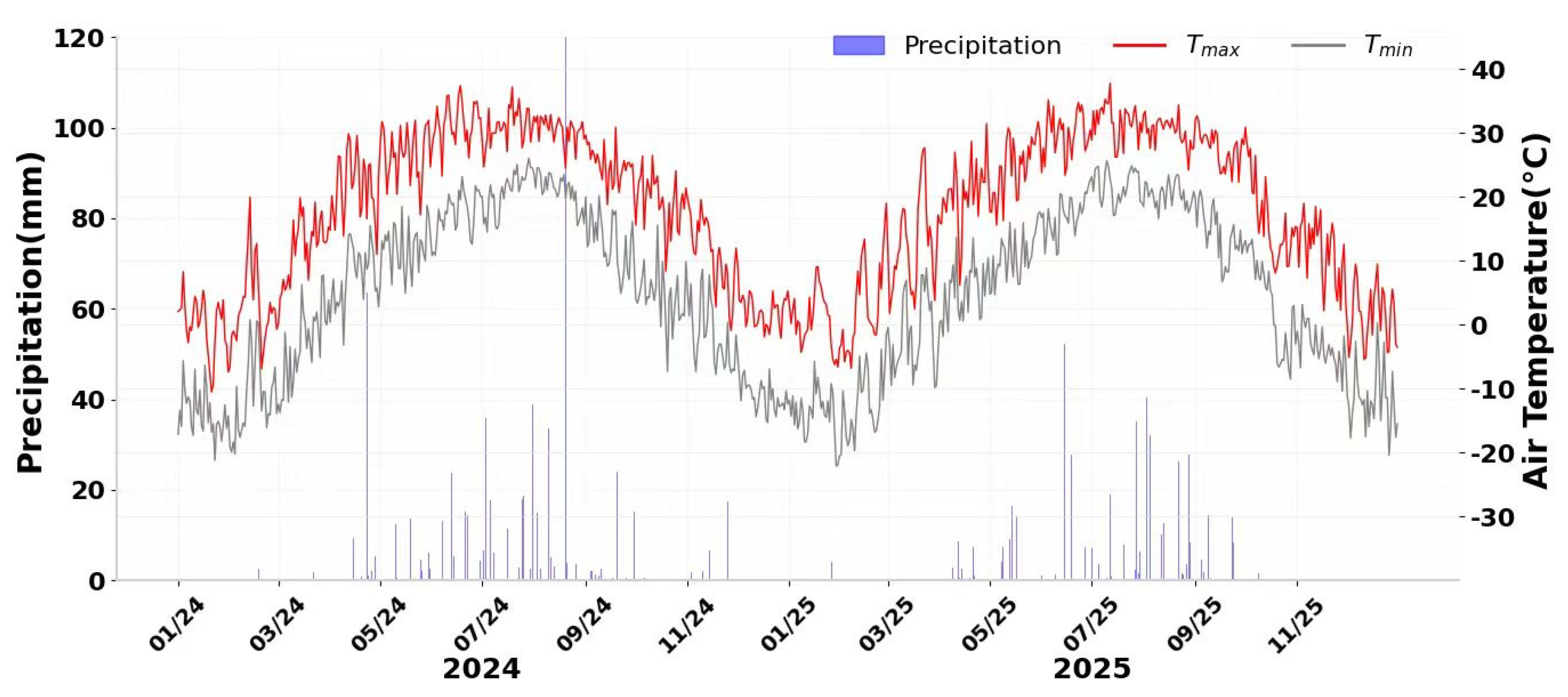
Figure 1. Daily precipitation and maximum and minimum air temperatures from 2024 to 2025. Tmax and Tmin represent the daily maximum and minimum temperatures, respectively.
Agronomy 16 01296 g001
Figure 2. Effects of different treatments on soil ALP (a), UE (b) and SC (c) activities. Error bars represent the standard deviation of the means (n = 3). Different letters above error bars indicate significant differences between treatments (p < 0.05). ALP, alkaline phosphatase; UE, urease; SC: sucrase. * p < 0.05, ** p < 0.01, *** p < 0.001; ns, not significant. Control, no fertilization; CF, conventional chemical fertilizer; M20, 20% organic fertilizer substitution; M40, 40% organic fertilizer substitution; M60, 60% organic fertilizer substitution.
Agronomy 16 01296 g002
Figure 3. Effects of different treatments on maize plant height (a), stem diameter (b), and yield (c). Error bars represent the standard deviation of the means (n = 3). Different letters above error bars indicate significant differences between treatments (p < 0.05). *** p < 0.001; ns, not significant. Control, no fertilization; CF, conventional chemical fertilizer; M20, 20% organic fertilizer substitution; M40, 40% organic fertilizer substitution; M60, 60% organic fertilizer substitution.
Agronomy 16 01296 g003
Figure 4. Venn diagram illustrates the shared and unique OTUs of bacterial (a) and fungal (b) communities. Non-metric multidimensional scaling (NMDS) ordination based on the Bray–Curtis distances showed the changes in bacterial (c) and fungal (d) communities under different treatments. Control, no fertilization; CF, conventional chemical fertilizer; M20, 20% organic fertilizer substitution; M40, 40% organic fertilizer substitution; M60, 60% organic fertilizer substitution.
Agronomy 16 01296 g004
Figure 5. Effects of different fertilization treatments on soil microbial community structure. Bacterial phylum level (a), fungal phylum level (b), bacterial genus level (c), fungal genus level (d). Control, no fertilization; CF, conventional chemical fertilizer; M20, 20% organic fertilizer substitution; M40, 40% organic fertilizer substitution; M60, 60% organic fertilizer substitution.
Agronomy 16 01296 g005
Figure 6. Effects of different fertilization treatments on soil microbial community diversity. Boxplots of alpha diversity indices (Chao1, Goods_coverage, Simpson, Shannon) for bacteria (a) and fungi (b) under different treatments. Different letters above error bars indicate significant differences between treatments (n = 3, p < 0.05). Control, no fertilization; CF, conventional chemical fertilizer; M20, 20% organic fertilizer substitution; M40, 40% organic fertilizer substitution; M60, 60% organic fertilizer substitution.
Agronomy 16 01296 g006
Figure 7. Heatmaps between soil nutrients and enzyme activity and the bacterial (a) and fungal (b) community at the genus level according to Spearman correlation. The intensity of the colour indicates the correlation coefficient (R) (red and blue indicate positive and negative correlations, respectively). * and ** indicate p < 0.05 and 0.01, respectively. EC, electrical conductivity; SOM, soil organic matter; AN, alkali-hydro nitrogen; AP, available phosphorus; AK, available potassium; TN, total nitrogen; TP, total phosphorus; TK, total potassium; ALP, alkaline phosphatase.
Agronomy 16 01296 g007
Figure 8. Mantel test showing the correlation among maize growth and yield and soil physicochemical properties in 2024 (a) and 2025 (b). The intensity of the box colour indicates the correlation coefficient (R) (red and blue indicate positive and negative correlations, respectively). *, ** and *** indicate p < 0.05, 0.01 and 0.001, respectively. EC, electrical conductivity; SOM, soil organic matter; AN, alkali-hydro nitrogen; AP, available phosphorus; AK, available potassium; TN, total nitrogen; TP, total phosphorus; TK, total potassium; ALP, alkaline phosphatase.
Agronomy 16 01296 g008
Table 1. The dosages of fertilizer application under different treatments (kg ha−1).
TreatmentsFertilization MeasureChemical FertilizerOrganic Fertilizer
NP2O5K2ONP2O5K2O
Controlno fertilization000000
CFconventional chemical fertilizer1809090000
M2020% organic fertilizer substitution14490903695.6327.74
M4040% organic fertilizer substitution108909072191.2655.48
M6060% organic fertilizer substitution729090108286.8982.40
Table 2. Effects of different treatments on soil physicochemical properties. Values are means ± standard deviation (n = 3). Different letters indicate significant differences among treatments (p < 0.05). * p < 0.05, ** p < 0.01, *** p < 0.001; ns, not significant. EC, electrical conductivity; SOM, soil organic matter; AN, alkali-hydro nitrogen; AP, available phosphorus; AK, available potassium; TN, total nitrogen; TP, total phosphorus; TK, total potassium. Control, no fertilization; CF, conventional chemical fertilizer; M20, 20% organic fertilizer substitution; M40, 40% organic fertilizer substitution; M60, 60% organic fertilizer substitution.
YearsTreatmentspHEC (μS cm−1)SOM (g kg−1)AN (g kg−1)AP (g kg−1)AK (g kg−1)TN (g kg−1)TP (g kg−1)TK (g kg−1)
2024Control7.66 ± 0.05 d71.72 ± 0.75 de15.78 ± 0.41 b87.75 ± 1.02 d26.24 ± 1.72 de101.27 ± 1.45 f1.06 ± 0.05 c1.17 ± 0.02 d27.87 ± 1.01 ef
CF7.68 ± 0.05 d74.76 ± 1.29 bcd16.82 ± 0.68 b90.07 ± 2.74 d27.88 ± 0.94 de127.59 ± 2.93 e1.22 ± 0.04 ab1.19 ± 0.01 d29.50 ± 0.55 de
M207.74 ± 0.04 cd74.48 ± 0.96 cd17.21 ± 1.18 b90.08 ± 0.52 d29.03 ± 0.81 cd136.29 ± 2.80 cd1.22 ± 0.04 ab1.30 ± 0.03 c31.24 ± 0.41 cd
M407.84 ± 0.06 abc73.77 ± 2.47 cd19.84 ± 1.57 a96.24 ± 1.52 c36.45 ± 1.59 b140.92 ± 4.04 c1.23 ± 0.01 ab1.42 ± 0.03 b33.81 ± 1.19 b
M607.91 ± 0.05 ab71.96 ± 2.58 de21.39 ± 1.44 a97.14 ± 1.67 c35.90 ± 1.22 b147.31 ± 3.00 b1.20 ± 0.02 b1.42 ± 0.03 b33.02 ± 1.12 bc
2025Control7.76 ± 0.10 cd73.69 ± 0.77 cd15.54 ± 0.26 b87.08 ± 0.52 d24.58 ± 1.88 e99.87 ± 1.70 f1.05 ± 0.07 c1.13 ± 0.02 d27.35 ± 0.68 f
CF7.76 ± 0.06 cd79.76 ± 1.51 a16.57 ± 0.88 b89.11 ± 3.96 d27.71 ± 2.43 de131.10 ± 3.43 de1.28 ± 0.01 a1.24 ± 0.11 cd27.61 ± 0.66 ef
M207.82 ± 0.04 bc76.66 ± 2.01 bc17.51 ± 0.88 b89.13 ± 0.66 d31.91 ± 2.23 c140.04 ± 5.56 c1.29 ± 0.04 a1.50 ± 0.03 b30.54 ± 1.81 d
M407.91 ± 0.07 ab77.77 ± 1.76 ab21.57 ± 1.78 a107.20 ± 1.36 a42.30 ± 2.52 a139.73 ± 3.75 c1.24 ± 0.04 ab1.74 ± 0.05 a37.15 ± 0.60 a
M607.95 ± 0.05 a70.14 ± 1.57 e20.96 ± 2.45 a101.71 ± 2.34 b43.56 ± 1.99 a153.56 ± 5.43 a1.29 ± 0.05 ab1.66 ± 0.12 a33.84 ± 2.12 b
Year****ns*****ns*****ns
Treatment***************************
Year × Treatmentns*ns*****nsns*****
Disclaimer/Publisher’s Note: The statements, opinions and data contained in all publications are solely those of the individual author(s) and contributor(s) and not of MDPI and/or the editor(s). MDPI and/or the editor(s) disclaim responsibility for any injury to people or property resulting from any ideas, methods, instructions or products referred to in the content.