1. Introduction
Tomatoes are among the most important greenhouse and field vegetable crops in the world due to their high agronomic and nutritional value, wide application in the food industry, and importance for human nutrition [
1,
2]. The quality and yield of the fruit primarily depend on the quality of the seedlings. Seedling studies allow us to understand how different growing conditions, fertilizers, and substrates affect the early development of the plant, its growth potential, and future yield [
3]. In this study, seedling quality is considered as a combination of morphological and physiological traits, including plant growth, leaf development, and photosynthetic performance. Healthy, well-developed seedlings ensure better plant adaptation during transplantation, higher productivity, and resistance to stress [
4,
5,
6]. The response of tomato seedlings to various cultivation innovations (e.g., digestate) may be important for implementing biotechnological solutions and developing sustainable agriculture [
5].
A variety of factors influence the quality of tomato seedlings. Key biometric and physiological indicators depend on the quality of the seeds, the growing substrate, and the specifics of the cultivation regimen [
7,
8]. The method of initial planting—whether through direct sowing or transplanting—also plays a significant role. Directly sown seedlings develop their root systems in the final growing substrate and may therefore be better adapted to its chemical and physical properties. In contrast, transplanted seedlings initially grow under different conditions and subsequently experience root disturbance and adjustment to new substrate conditions, which may increase their sensitivity to environmental stress. Directly sown seedlings tend to be more resilient to certain soil stresses, such as moisture deficiency. In contrast, transplanted seedlings generally exhibit more uniform growth and often yield more produce. Research comparing these two methods indicates that transplanted seedlings typically experience faster growth and tend to have larger shoot and root characteristics, including length, surface area, and volume [
9,
10]. However, these patterns may also depend on substrate characteristics and plant response to stress conditions.
Another important factor for the quality of seedlings is the substrate. Digestate is an organic material produced through anaerobic digestion. It is rich in nitrogen, phosphorus, potassium, and organic carbon [
11]. As a by-product of this biological process, organic materials such as animal manure, crop residues, and food waste are decomposed under oxygen-free conditions to produce biogas and a nutrient-rich residual material. This process represents an important pathway within the circular economy, where organic waste streams are converted into renewable energy and subsequently returned to agricultural systems as fertilizer or soil amendment. In this context, digestate contributes to closing nutrient cycles by recycling nitrogen, phosphorus, potassium, and organic matter, thereby reducing the need for synthetic fertilizers and supporting sustainable production systems [
12,
13]. Depending on feedstock and processing conditions, digestate composition may vary and is often separated into solid and liquid fractions with different agronomic characteristics. These fractions can be used directly or further processed (e.g., composted), and their effects on plants depend not only on nutrient supply but also on their influence on substrate properties and plant–soil interactions. In addition to acting as a nutrient source, digestate can modify the physical and chemical properties of the substrate, including pH, salinity, aeration, and water-holding capacity. This material enhances soil structure, boosts microbiological activity, and improves moisture retention, thereby reducing the need for synthetic fertilizers [
14]. The use of digestate can enhance the accumulation of dry biomass in plants, strengthen their root systems, and improve seedling development compared to traditional chemical fertilizers. Typically, this results in a greater increase in leaf width, stem thickness, and shoot length [
14,
15]. Scientific studies have indicated that using digestate can yield tomato harvests comparable to, or even greater than, those achieved with mineral fertilizers [
16,
17]. Additionally, digestate can enhance certain quality characteristics of the fruits produced. Research shows that optimal use of digestate not only boosts plant productivity but also supports long-term soil fertility, contributing to more sustainable agricultural practices [
18]. However, applying excessive amounts may create unfavorable conditions in the root zone and negatively affect plant growth and development. Therefore, an average fertilization rate typically yields the best results [
14].
High-quality seedlings facilitate quicker establishment after transplanting, promote early growth, and help reduce uneven plant growth [
3,
19]. This ultimately leads to higher expected yields and better fruit quality. Strong and well-balanced seedlings—characterized by thick stems, larger leaf areas, and developed root systems—tend to exhibit improved photosynthetic activity and faster development of generative organs [
7,
19,
20]. The quality of seedlings is commonly assessed using biometric indicators such as seedling height, stem thickness, leaf area, and root mass, all of which correlate with final yield and plant resistance to stress [
4,
20]. However, there is still limited information on how digestate used as a substrate component in different proportions influences seedling development, particularly when considering both morphological and physiological responses under different establishment strategies. Therefore, this study aimed to determine the effect of different concentrations of digestate in the substrate on the growth of tomato seedlings using both direct sowing and cultivation strategies (direct sowing and transplanting). Although digestate has been widely studied as an organic fertilizer, there is still limited information on how its proportion in substrate mixtures affects seedling development, particularly in relation to different establishment methods. It was hypothesized that moderate digestate concentrations would improve seedling physiological status due to increased nutrient availability, whereas higher concentrations would induce stress and suppress growth. It was also assumed that the response to digestate would differ between establishment methods, with transplanted seedlings being more sensitive to changes in substrate composition compared to directly sown seedlings due to differences in root development and adaptation.
2. Materials and Methods
2.1. Growing Conditions
The investigation was conducted at the Institute of Horticulture, Lithuanian Research Centre for Agriculture and Forestry (55.0830° N, 23.8235° E), in unheated greenhouses covered with double polymer film. The study focused on tomato cultivation using two distinct seedling establishment methods: transplantation and direct sowing into pots (factor A). To assess the impact of digestate, varying substrate concentrations were implemented (factor B): a control group consisting of peat (Profi 1—Durpeta, Lithuania), peat combined with 10% digestate, peat with 20% digestate, peat with 30% digestate, peat with 40% digestate, and peat with 50% digestate. Digestate was mixed with peat on a volume basis (v/v). The chemical and physical properties of the final peat–digestate mixtures were not determined, and therefore only the composition of the original digestate is reported. Each treatment consisted of four independent pots (n = 4), each containing one plant. Each pot was considered an independent biological replicate. Pots were arranged in a randomized layout within the greenhouse. The transplanted tomatoes were sown in mid-February, while the seedlings designated for direct sowing were planted at the end of February; both groups were maintained under identical conditions in a heated nursery. Although both groups were cultivated for 45 days, transplanted seedlings initially developed under nursery conditions prior to transfer to pots. Therefore, the two establishment methods may have differed in developmental stage at the time of measurement. Irrigation was administered as needed, and the seedlings were cultivated for 45 days. The object of this investigation was the Dutch tomato variety “Brooklyn F1” (Syngenta, Switzerland, Basel).
Before conducting the experiments, we determined the chemical composition (
Table 1) and harmful substance content of the digestate (
Table 2).
2.2. Biometric Measurements
For biometric measurements, the leaf area was measured using an automatic leaf area meter (Delta-T Devices, Wallingford, UK). To measure the roots, the substrate was removed from the plant roots, and they were carefully and thoroughly washed. The length of the roots was measured using a ruler with an accuracy of 1 mm. To determine the dry mass, water was drained from the washed roots before weighing. Shoots and roots were dried in a drying oven (Venticell, MBT, 2, Brno, Czech Republic) at 70 °C for 48 h. Root parameters were measured; however, they are not presented in this manuscript as the main focus was on above-ground and physiological responses. The fresh shoot and root weights were determined (using laboratory scales with an accuracy of 0.001 g) for 4 plants per treatment (n = 4). The plant stem’s diameter was measured using a caliper (accuracy of 0.1 mm) above the first embryonic leaves.
2.3. Photosynthetic Parameters
Non-destructive measurements of leaf chlorophyll (CHL), nitrogen balance (NBI), and flavonoid (FL) indexes were performed using the Dualex 4 Scientific® (FORCE-A, Orsay, France) meter.
Leaf gas exchange indices: photosynthesis rate (Pr, µmol CO2 m−2·s−1), transpiration rate (Tr, mmol·H2O·m−2·s−1), stomatal conductance (gs, mol·H2O·m−2·s−1), internal CO2 concentration (Ci, ppm), VpdL Vapor Pressure Deficit based on Leaf temperature (kPa) were measured using a portable photosynthesis system (LI-COR 6400XT, LI-COR, Lincoln, NE, USA) under the leaf chamber conditions of 23 °C, with a CO2 concentration of 400 µmol·mol−1 and 60% relative humidity, PPFD 1000 µmol·m−2·s−1. Measurements were performed on the third developed leaf where possible. In cases where seedlings had fewer developed leaves due to strong growth inhibition, measurements were conducted on the youngest fully developed leaf available. Measurements were performed for four plants per treatment (n = 4). For each plant, gas exchange was recorded continuously for 1 min, resulting in 19 readings per plant. Leaves were allowed to stabilize in the chamber prior to recording, and the 19 readings were averaged to obtain a single value per plant. These averaged values were used for statistical analysis.
Chlorophyll fluorescence was measured using an imaging-PAM fluorometer (M-Series MAXI-Version (Walz, Effeltrich, Germany)) [
21,
22]. Measurements of light-adapted steady state chlorophyll fluorescence (F’), light-saturated chlorophyll fluorescence (F’m), and F’0 were used to calculate the relative PSII (photosystem II) operating efficiency (ΦPSII). Dark-adapted (40 min) F0 and Fm measurement allowed the calculation of the maximum quantum efficiency of PSII (Fv/Fm). Before measurement, plants were kept in the dark to minimize all quenching processes (dark adaptation). Basal (Fo) and maximal dark fluorescence (Fm) measurements were made directly from the dark. The Imaging-PAM fluorometer uses actinic light to simulate daylight conditions and drive photosynthesis in plant samples. The actinic light intensity increased with each pulse, starting from 1 to 1251 μmol m
−2 s
−1. Measurements were performed for 4 plants per treatment (n = 4).
The Non-Photochemical Quenching (NPQ) coefficient is calculated as follows [
22]:
where:
Fm = maximum fluorescence yield in the dark-adapted state
Fm′ = maximum fluorescence yield under actinic illumination
The effective quantum yield of Photosystem II Y(II) was determined as follows:
where:
F′ = steady-state fluorescence yield under actinic light
Fm′ = maximum fluorescence yield obtained during a saturating pulse under the same light.
The electron transport rate (ETR) is generally calculated as follows:
where:
PAR = photosynthetically active radiation (μmol photons m−2 s−1)
0.5 assumes equal energy distribution between Psii and Psi
0.84 represents the typical leaf absorptivity value.
The ETR values were obtained directly from the imaging-PAM system and correspond to specific actinic light intensities applied during measurements rather than the maximum light level.
2.4. Statistical Analysis
Statistical analysis was performed using Microsoft Excel and Addinsoft XLSTAT 2025 XLSTAT statistical and data analysis (Lumivero, Long Island, NY, USA). Each plant was treated as an independent biological replicate (n = 4). For gas exchange measurements, repeated readings per plant were averaged before statistical analysis. Data were checked for normality and homogeneity of variance prior to ANOVA. Two-way analysis of variance (ANOVA) followed by Tukey’s honestly significant difference test (p < 0.05) for multiple comparisons was used to evaluate differences between means of measurements.
3. Results
Plant morphological parameters—such as plant height, stem diameter, leaf number, and leaf area—varied significantly depending on the amount of digestate used and the cultivation strategy (
Table 3). In the control group of transplanted plants, the average height was 43.1 cm. When 10% digestate was used, the height remained relatively stable at 40.9 cm. However, increasing the digestate amount to 20% resulted in a significant decrease of up to 53% compared to the control. In the 30–50% digestate treatments, the plants grew to only 1.1–1.4 cm, which is a staggering reduction of approximately 97–98% compared to the control, indicating severe phytotoxic effects and near-failure seedling establishment. The height of direct-sown plants was lower across all treatments, decreasing from 27.3 cm in the control group to 1.8 cm in the 50% digestate treatment, representing a decrease of up to 93% compared to the control. Similar trends were observed in the other parameters. The stem diameter of transplanted plants decreased from 5.78 mm in the control to between 0.53 mm and 0.80 mm in the 30–50% digestate treatments, representing a reduction of about 86–91%. For direct-sown plants, the stem diameter decreased from 4.41 mm to 1.03 mm, which is approximately 77% less than in the control group. The number of leaves in transplanted plants also declined substantially, from an average of 7.3 in the control group to 0.3–0.8 leaves, further indicating extremely suppressed development close to seedling failure, in the 30–50% treatments. Similarly, the number of leaves in direct-sown plants decreased from 5.9 to 0.8.
The most significant differences were observed in leaf area. In transplanted plants, leaf area reached 660.5 cm
2 in the control group and increased to 695.7 cm
2 with 10% digestate (
Table 3). However, in the 30–50% treatments, leaf area decreased to between 3.1 cm
2 and 28.6 cm
2, representing a reduction of approximately 96–99%. For direct-sown plants, leaf area decreased from 240.3 cm
2 in the control to just 3.3 cm
2 in the 50% digestate treatment, a decrease of about 99%. These results clearly indicate that higher concentrations of digestate were associated with significantly lower plant growth rates in both cultivation strategies.
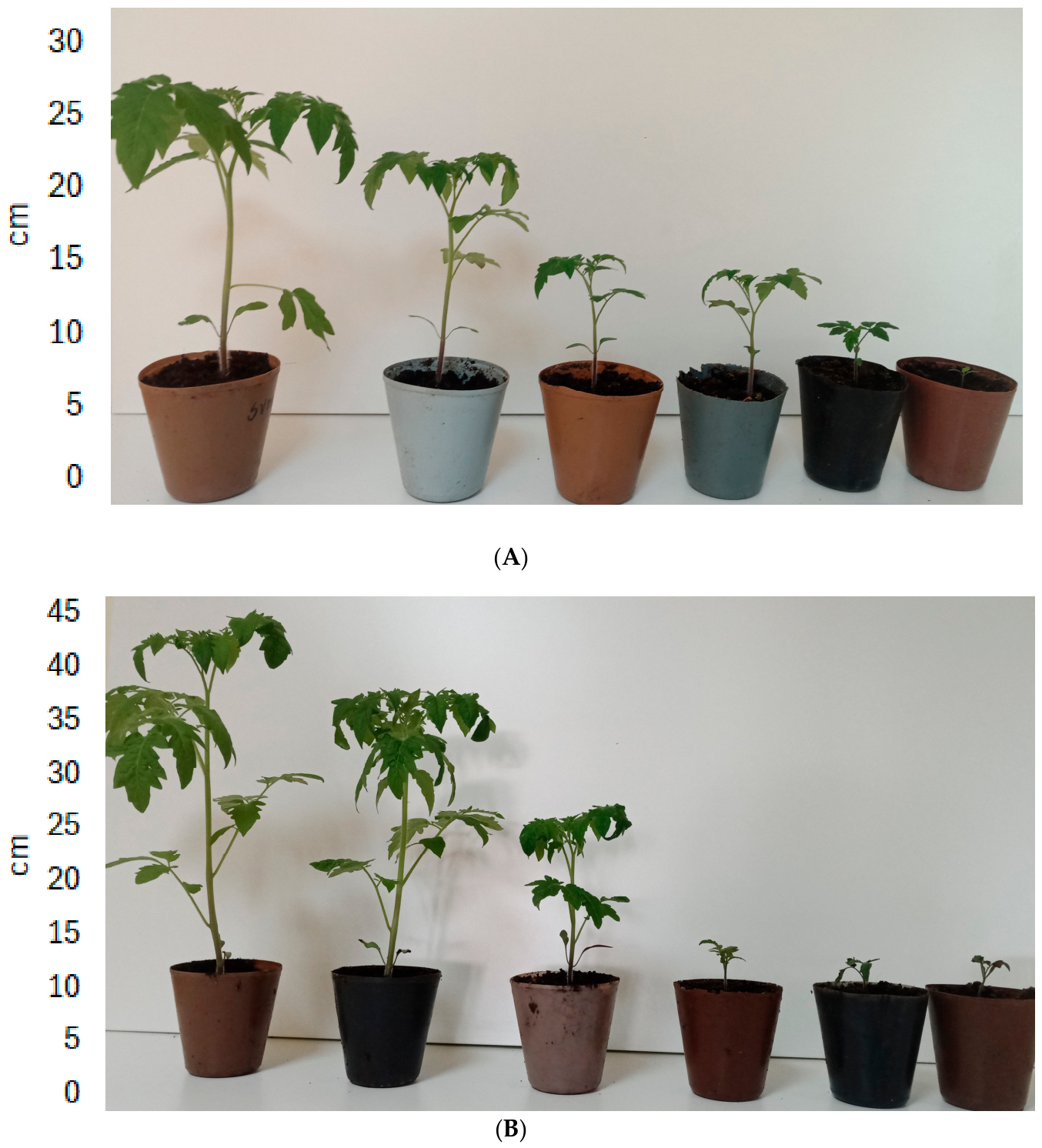
Representative images of tomato seedlings grown under different digestate concentrations are shown in
Figure 1, illustrating the strong growth inhibition observed at higher digestate levels.
The photosynthetic rate and stomatal conductance significantly varied depending on the digestate rate and growing strategy (
Table 4). In the control group of transplanted plants, the photosynthetic rate reached 12.66 µmol CO
2 m
−2 s
−1. When 10% digestate was used, this rate increased by 20% compared to the control. However, at a 20% digestate rate, photosynthesis remained relatively stable. In contrast, at 30% digestate, the photosynthetic rate decreased by up to 58% compared to the control, and with 40–50% digestate addition, it fell to just 3.31–3.77 µmol CO
2 m
−2 s
−1, which is 70–74% lower than the control. A similar trend was observed for stomatal conductance, as all digestate additions decreased these values. In direct-sown plants, the intensity of photosynthesis was lower, ranging from 6.88 µmol CO
2 m
−2 s
−1 in the control to 1.96 µmol CO
2 m
−2 s
−1 in the 50% digestate treatment, reflecting a decrease of up to 72% compared to the control. Stomatal conductance also fell from 0.101 to 0.041 mol H
2O m
−2 s
−1, representing a decrease of up to 59% compared to the control. The internal CO
2 concentration (Ci) in the transplanted plants was 332.41 µmol mol
−1 in the control, decreasing by 12% and 18% with the 10% and 20% digestate additions, respectively. At the 40–50% digestate addition, there was a dramatic reduction of up to 84% in Ci compared to the control. In direct-sown plants, Ci remained higher, ranging from 244.57 to 307.81 µmol mol
−1 in most treatments, except for the 30% digestate treatment, where Ci plummeted to 56.93 µmol mol
−1. The ratio of internal to ambient CO
2 concentration (Ci/Ca) in transplanted plants started at 0.87 in the control group. It decreased to 0.77 and 0.68 in the 10% and 20% digestate treatments, indicating a decline of about 11% and 21%, respectively. In the 30% digestate treatment, this ratio dropped significantly to 0.12, approximately 86% lower than the control. In the 40–50% digestate treatments, the Ci/Ca ratio ranged from 0.13 to 0.43. Conversely, the Ci/Ca values in direct-sown plants remained higher in most treatments, ranging from 0.62 to 0.78, with the lowest value observed in the 30% digestate addition. These results indicate that higher digestate rates are associated with lower gas exchange indices, particularly in the transplanted plant treatments.
Transpiration rate, chlorophyll index, flavanol index, and nitrogen balance index significantly differed with digestate content and cultivation strategy (
Table 5). In the transplanted plant control group, the transpiration rate was 3.20 mmol H
2O m
−2 s
−1, but as the digestate content increased to 20%, it decreased to 1.87 mmol H
2O m
−2 s
−1 (42% lower). A further increase in its content in the substrate to 30–50% resulted in a decrease in transpiration to 0.20–0.27 mmol H
2O m
−2 s
−1, representing a reduction of approximately 92–94% compared to the control. The transpiration rate of direct-sown plants in the control was 2.44 mmol H
2O m
−2 s
−1 and decreased to 1.16 mmol H
2O m
−2 s
−1 in the 50% digestate treatment (52% lower compared to control).
The highest chlorophyll index values were determined at 20% digestate—30.24 in transplanted and 29.86 in direct-sown plants, compared to 23.41 and 24.01 in control treatments. The flavanol index in most treatments ranged from 0.15 to 0.23, with the highest value (0.28) observed in the 50% digestate treatment of transplanted plants. The nitrogen balance index (NBI) in transplanted plants increased from 107.72 in the control to 203.57 at 20% digestate (about 89% higher than the control), but decreased to 90.90–100.61 in the 30–50% treatments. The NBI of direct-sown plants ranged from 125.22 to 161.13 across most treatments, with the highest value observed at 40% digestate.
Chlorophyll fluorescence parameters were significantly affected by digestate addition and cultivation strategy (
Table 6). The highest Fv/Fm value was observed in the 20% digestate treatment of transplanted plants (0.79)—3% higher than in the control. The lowest Fv/Fm values were observed in the 40–50% digestate treatments (3% lower than in the control).
The NPQ indicator also reached its highest value in the 20% digestate treatment of transplanted plants (3.05)—21% increase compared to the control. The lowest NPQ values were observed in the 40–50% digestate treatments of directly sown plants (1.86 and 1.55), which were 27% and 39% lower than the control, respectively.
The effective quantum efficiency of photosystem II Y(II) in the transplanted control plants reached 0.74 and was not statistically different from the direct-sown control plants (0.76). However, in the 50% digestate treatment, Y(II) decreased to 0.69 in transplanted and to 0.67 in direct-sown plants (7% and 12% lower compared to the control, respectively).
The electron transport rate (ETR) was highest in the 20% digestate treatment of transplanted plants—20.40, representing an increase of about 15% compared to the control. In the direct-sown plants with 20–30% digestate treatments, the ETR ranged from 18.05 to 18.43 (34–37% higher than in the control). The lowest ETR values were found in the 40–50% digestate treatments under both cultivation strategies (4.93–6.30), which were about 53–72% lower than the control. Our results indicate that lower digestate rates supported higher photosynthetic activity, while higher concentrations reduced both growth and physiological performance.
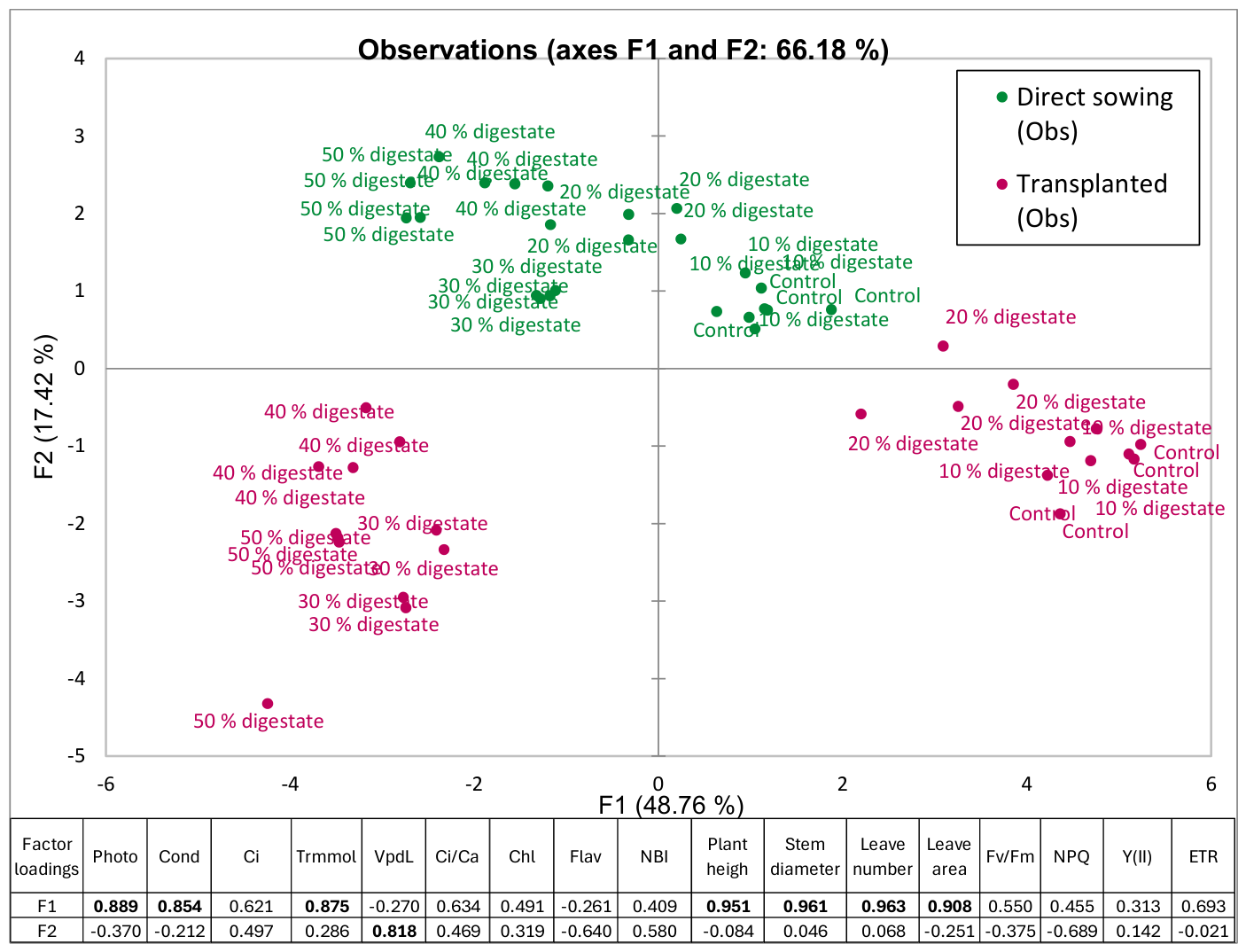
PCA analysis showed that the first two principal components explained 66.18% of the total data variation (F1—48.76%, F2—17.42%) (
Figure 2). The first component (F1) mainly represents the gradient of plant growth and photosynthetic activity, as it is most strongly correlated with plant height, stem diameter, leaf number, leaf area, photosynthesis intensity, stomatal conductance, transpiration rate and electron transport rate (ETR). Therefore, positive F1 values are associated with more intensive growth and more active physiological processes. The second component (F2) is associated with indicators of plant physiological regulation and metabolic state, such as vapor pressure deficit in leaves (VpdL), nitrogen balance index (NBI), intracellular CO
2 concentration (Ci) and Ci/Ca ratio, and in the negative direction—with flavanol index and non-photochemical energy dissipation (NPQ). The distribution of data points suggests a separation of cultivation strategies along the F2 axis: direct-sown variants cluster mainly in the positive part of F2, and transplanted plants in the negative part. Meanwhile, the effect of digestate concentrations is more pronounced along the F1 axis, which reflects the overall gradient of growth and photosynthetic activity intensity among the studied variants. However, PCA results should be considered as exploratory and descriptive, and do not provide direct evidence of underlying mechanisms.
4. Discussion
The potential for using digestate as a fertilizer is extensive. The results clearly demonstrate that digestate concentration is a major factor affecting tomato seedling growth and physiological responses. Nevertheless, the concentration differences between its fertilizing effects and potential toxicity to plants are minimal, making precise and specific studies crucial [
23,
24,
25]. Our data indicate a significant negative impact on plant morphological parameters as the digestate concentration increases, particularly when it exceeds 10–20%. At higher digestate concentrations, the extremely low growth and reduced leaf development indicate severe phytotoxic stress conditions rather than typical growth responses, indicating that these treatments approached seedling failure. This clearly demonstrates the inhibition of plant growth in both cultivation strategies, transplantation and direct sown. However, differences between establishment methods should be interpreted with caution, as they may reflect not only the cultivation strategy itself but also differences in plant age, developmental stage, initial seedling size, and potential transplant-related stress. Higher doses of digestate (30–50%) resulted in a dramatic reduction of height, stem diameter, leaf count, and especially leaf area, with reductions of up to 97–99% (
Table 3). These alterations may be associated with phytotoxic effects of digestate, such as increased salinity, ammonium accumulation, or nutrient imbalance, as reported in previous studies. The results align with findings from various studies regarding the phytotoxicity of digestate on plants, particularly at concentrations that exceed optimal levels. For instance, a study on tomatoes has shown that a growing medium containing 20–30% digestate reduced plant height by 65% compared to the control group [
26]. Similar inhibitory effects have also been reported in other crops, where high digestate concentrations negatively affected seed germination, biomass accumulation, and root development, mainly due to excessive nutrient availability and salinity stress [
14,
27]. Under these conditions, physiological measurements (e.g., photosynthesis, Ci, Ci/Ca, fluorescence parameters) should be interpreted with caution, as they reflect severely impaired plants rather than normal physiological functioning.
Additionally, leaf area decreased, which may be associated with phytotoxic effects such as ammonium accumulation, comparable to the 96–99% reduction observed at 30–50% digestate doses [
16]. Research has demonstrated that the application of digestate can yield varying effects based on its concentration. Specifically, low concentrations can serve as a beneficial organic fertilizer, while elevated levels may induce physiological stress or inhibit plant growth (
Table 1). Empirical studies conducted on tomatoes indicate that when digestate is utilized at appropriate rates or in conjunction with other fertilizers, it can enhance metrics such as plant height, stem diameter, chlorophyll content, and photosynthetic intensity [
28]. On the other hand, experiments with hydroponic systems have shown that higher digestate concentrations can severely inhibit tomato development. A study evaluating the use of biogas digestate as a nutrient solution found that higher concentrations significantly reduced seed germination, chlorophyll content, and overall plant productivity, which was attributed to excessive nutrient and salt levels in the solution [
27].
Digestate is characterized by high concentrations of readily available nitrogen, particularly ammonium, which can enhance plant physiological activity at moderate doses but may cause physiological stress when present in excess. Several recent studies have reported that digestate fertilization can increase photosynthetic activity and plant growth when applied at appropriate rates due to improved nutrient supply and soil fertility [
16,
28,
29]. However, excessive digestate concentrations may negatively affect plant physiological processes because of increased salinity, ammonium accumulation, or nutrient imbalance in the root zone. Such conditions can lead to partial stomatal closure and reduced CO
2 diffusion into the leaf, which ultimately limits photosynthetic carbon assimilation [
30,
31]. The strong decline in stomatal conductance and Ci observed in transplanted plants at higher digestate rates suggests that stomatal limitation was a key factor controlling photosynthetic activity (
Table 4). Similar responses have been reported in tomato cultivation systems where digestate or organic fertilizers at high concentrations altered root-zone chemical conditions and reduced physiological performance of plants [
18,
26].
Transpiration and leaf optical traits of tomato seedlings responded non-linearly to digestate rate, and this response clearly depended on the cultivation method (
Table 5). In directly sown seedlings, transpiration decreased more gradually with increasing digestate rate, and chlorophyll index, together with NBI, remained relatively high up to 40% digestate. Although these responses may reflect differences between establishment methods, no quantitative root analysis was included, and this explanation remains tentative. This agrees with studies showing that properly adjusted digestate or other organic waste-based fertilizers can maintain high leaf N and chlorophyll in tomato and related crops, if nutrient supply is balanced [
14,
25]. In contrast, transplanted seedlings receiving ≥30% digestate showed a sharp drop in transpiration together with lower NBI and higher flavanol index, indicating that excessive digestate can induce nutrient and/or osmotic stress, leading to stomatal closure and stimulation of protective phenolic synthesis in the leaves (
Table 5). This pattern is in line with work where high digestate doses reduced physiological performance despite providing large nutrient amounts, and with Dualex-based studies showing that indices derived from chlorophyll and flavanol signals (such as NBI) are sensitive indicators of departures from optimal nitrogen supply and stress-related phenolic accumulation [
32,
33]. Overall, these results support the view that low digestate rates can improve tomato seedling nitrogen status while maintaining sufficient transpiration, whereas high rates, especially in transplanted plants, increase the risk of physiological stress, highlighting the need to adapt digestate doses to the cultivation strategy to use this fertilizer safely and effectively (
Table 5).
Chlorophyll fluorescence measurements showed that tomato seedlings responded non-linearly to digestate rate, and this response clearly depended on the cultivation method (
Table 6). In both transplanted and directly sown seedlings, Fv/Fm values close to 0.78 together with the highest Y(II) and ETR at 20–30% digestate indicate that moderate organic nutrient supply (primarily at lower digestate levels) supported efficient PSII activity, which is consistent with reports that food-waste- or digestate-derived fertilizers can maintain tomato growth and photosynthetic performance at levels comparable to mineral fertilization when nutrient inputs are properly balanced [
25,
34]. At higher digestate levels (30–50%), however, fluorescence responses should be interpreted with caution, as they reflect severely impaired plants rather than normal physiological functioning. In contrast, the strong decline in ETR and the slight reduction in Fv/Fm at the highest digestate rates, particularly in transplanted seedlings, point to over-fertilization and associated osmotic or ionic stress, in line with studies showing that excessive rates of digestate-based or other organic fertilizers do not further improve tomato yield and may impair physiological performance [
14,
25], underlining the need to fine-tune digestate doses in seedling production systems (
Table 6). Although Fv/Fm values remained within the typical range for non-severely stressed plants, slightly lower values may indicate mild background stress under experimental conditions.
Overall, our findings confirm that digestate has a narrow window between beneficial fertilization and phytotoxicity in tomato, and that this window strongly depends on both dose and cultivation system. At low to moderate rates, digestate acted as an effective organic fertilizer, supporting seedling growth, leaf nitrogen status, and PSII efficiency, in agreement with field and fertigation studies reporting that digestate-based biofertilizers can sustain tomato yields and physiological performance comparable to, or even higher than, mineral fertilization when nutrient inputs are properly balanced. By contrast, high digestate concentrations severely reduced morphological growth, transpiration, and electron transport, indicating that the same product can quickly become phytotoxic if applied beyond crop requirements, which is consistent with reports of growth inhibition and reduced productivity in tomatoes and other horticultural crops under excessive digestate or food-waste-derived fertilizer inputs [
16,
18,
35,
36].
From a practical standpoint, the findings indicate that digestate cannot be used on tomato seedlings solely as an organic nitrogen source; instead, it necessitates careful rate adjustment and, when required, dilution or integration with other fertilizers. The pronounced adverse effects observed in transplanted seedlings subjected to high amounts of digestate suggest that sensitive developmental stages, characterized by partially developed root systems, are particularly susceptible to osmotic and ammonium stress. In contrast, direct-sown plants exhibit a wider tolerance range, which confirms previous findings that tomatoes’ response to digestate depends on both their growth stage and the method of fertilizer application. Collectively, these data advocate for the implementation of moderate digestate rates within sustainable fertilization strategies for tomato production, while emphasizing the importance of dose optimization and monitoring salinity and ammonium levels to prevent latent physiological stress that could impair growth, photosynthesis, and overall yield. However, it should be noted that the chemical and physical properties of the final peat–digestate mixtures (e.g., electrical conductivity, ammonium and nitrate concentrations, salinity, and water-holding characteristics) were not measured in this study. Therefore, the mechanisms underlying the observed plant responses cannot be directly confirmed and should be considered as potential explanations supported by the literature.