Article

Integrated Assessment of Stabilization in As- and Pb-Contaminated Mine Soils Using Fishery By-Product Shells: Implications for Soil Health and Crop Safety

1
Department of Environmental Engineering, Chosun University, Gwangju 61452, Republic of Korea
2
Department of Environmental Engineering, Incheon National University, 119 Academy-ro, Yeonsu-gu, Incheon 22012, Republic of Korea
*
Authors to whom correspondence should be addressed.
These authors contributed equally to this work.
Agronomy 2026, 16(12), 1183; https://doi.org/10.3390/agronomy16121183
Submission received: 9 May 2026 / Revised: 3 June 2026 / Accepted: 6 June 2026 / Published: 17 June 2026
(This article belongs to the Special Issue Advances in Soil Management and Ecological Restoration)

Abstract

Arsenic (As) and lead (Pb) contamination of soils surrounding abandoned mines threatens environmental safety and limits their potential for agricultural reuse. Although calcium-based materials are widely used for heavy metal stabilization, integrated assessments of shell-based stabilizers considering both contaminant immobilization and soil functionality remain limited. This study assessed the effectiveness of shell-based stabilizers derived from fishery by-products, namely cockle and manila clam shells, which are primarily composed of calcium carbonate (CaCO3), and their influence on soil health and crop safety. The shells were processed into natural and calcined forms and applied to As- and Pb-contaminated soils. Stabilization was evaluated using extraction tests, soil health indicators, and a lettuce cultivation experiment. The natural and calcined shell treatments reduced the extractable concentrations of As and Pb. Calcined shells exhibited higher immobilization efficiency due to Ca–As precipitation and the formation of calcium silicate hydrate and calcium aluminate hydrate phases. However, these treatments induced excessive alkalinity, negatively affecting soil chemical properties and overall soil functionality. In contrast, natural shell treatments provided a more balanced performance by reducing heavy metal mobility while maintaining favorable soil conditions. Lettuce grown under the stabilization–cover soil system showed at least an 87.4% reduction in As concentration compared with the control, while Pb was not detected in any stabilization-cover soil treatment. These results highlight the importance of evaluating shell-based stabilizers within an integrated framework that considers both contaminant immobilization and soil health.

1. Introduction

Heavy metals and semimetals have accumulated in soils for decades because of industrial development. Consequently, toxic elements such as arsenic (As) and lead (Pb), released from mining and metal smelting activities, have extensively contaminated the surrounding soils, posing persistent risks to human health and ecosystems. Globally, heavy metal contamination in abandoned mine areas has severely impaired the ecological functions and agricultural usability of soils, raising considerable environmental and social concerns [1]. Unlike organic contaminants, heavy metals exhibit long biological half-lives and strong non-biodegradability, allowing them to accumulate in soils over extended periods and to be transferred through the food chain, ultimately posing risks to human health [2]. Chronic exposure to arsenic can cause various adverse health effects, including skin lesions, cardiovascular and respiratory diseases, hypertension, and an increased risk of cancer [3]. Lead affects both the central and peripheral nervous systems, leading to neurodevelopmental disorders, as well as kidney dysfunction and gastrointestinal disturbances [4]. Consumption of crops grown in heavy metal-contaminated soils can result in the accumulation of these toxic elements in the human body, increasing long-term health risks. Therefore, it is essential to control the release of As and Pb and to minimize their transfer to crops in contaminated soils, particularly in areas surrounding abandoned mines. Recent studies on tobacco-growing soils have also emphasized that ecological and agricultural risks should be considered in addition to total heavy metal concentrations, as localized risks may occur even under relatively low overall pollution levels [5,6].
To address these risks, various soil remediation techniques have been developed. Soil remediation technologies can be broadly categorized into physical, chemical, and biological approaches. Physical methods, such as soil washing and flushing, remove contaminants through separation or relocation processes but are often associated with high costs and secondary environmental impacts. Chemical methods, including stabilization and solidification, reduce the mobility and bioavailability of contaminants through chemical reactions, making them suitable for in situ applications. Biological approaches, such as phytoremediation and microbial remediation, utilize plants or microorganisms to transform or immobilize contaminants, although their effectiveness is often limited by environmental conditions and longer treatment times. Among these methods, chemical stabilization has been widely applied in heavy metal-contaminated soils due to its cost-effectiveness and rapid reduction in contaminant mobility, making it particularly suitable for field-scale applications [7,8,9,10].
Stabilization is a widely used conventional restoration technique for treating heavy metal-contaminated soils. This approach typically employs inorganic materials such as cement and lime. However, cement-based stabilization gradually increases the mechanical strength of soil, thereby impairing plant growth and rendering the soil unsuitable for agricultural use. In recent years, environmental restoration studies have increasingly adopted approaches that utilize natural waste resources within the framework of the circular economy, aiming to minimize environmental burdens and enhance social acceptability by converting waste materials into high-value resources [7].
In this context, shell-based materials have emerged as promising alternative stabilizers. In the Republic of Korea, large quantities of shellfish waste (e.g., oyster and mussel shells) are generated annually from the seafood processing industry, creating significant disposal and environmental challenges. The primary component of shells is calcium carbonate (CaCO3), which can increase soil pH and promote the precipitation of metal carbonates, thereby reducing the mobility and bioavailability of heavy metals [11,12]. Based on these properties, shell materials have been investigated as potential stabilizing agents for heavy metal-contaminated soils [12,13,14]. In addition, the utilization of such waste resources aligns with the principles of the circular economy by converting discarded materials into value-added products for environmental remediation.
However, while such materials are effective for immobilizing heavy metals, their impacts on soil functionality and long-term agricultural usability remain insufficiently understood. Although carbonate-based calcium stabilization can be advantageous for heavy metal immobilization, it may also affect soil chemical balance, nutrient availability, and ecological functions. In particular, despite the potential for different stabilizer processing methods to distinctly influence soil functionality, quantitative comparisons of such functional variations remain limited. Soil health assessments provide an integrated framework for evaluating the physical, chemical, and biological properties of soils to determine their capacity to sustain ecological functions and long-term productivity [15,16,17,18]. Therefore, for the productive reuse of remediated soils, it is essential to evaluate not only changes in contaminant concentrations but also the overall state of soil health.
In practice, many remediated soils are still utilized for low-value applications such as landfill cover or backfilling, primarily due to regulatory frameworks that emphasize total contaminant concentrations rather than soil functional recovery [19,20]. Soils meeting legal safety thresholds frequently suffer from physicochemical degradation—such as reduced nutrient retention and impaired biological activity—during the remediation process [21,22,23]. These findings suggest that current remediation approaches may not adequately restore soil functionality, indicating the need for strategies that simultaneously address contaminant stabilization and soil health. However, previous studies on stabilization have primarily focused on reducing heavy metal mobility, with limited consideration of changes in soil functionality and agricultural suitability. In particular, the effects of shell-based stabilizers on soil health indicators and crop uptake have not been sufficiently evaluated. Therefore, a comprehensive assessment that considers both contaminant immobilization and soil functional quality is still required.
These limitations are particularly important in the context of soil reuse and management practices. Accordingly, the concept of green and sustainable remediation (GSR), which integrates environmental, social, and economic aspects of sustainability, has gained increasing attention in the field of soil remediation. GSR emphasizes not only contaminant reduction but also the long-term functionality and sustainability of remediated soils. Therefore, it provides a relevant framework for evaluating both contaminant stabilization and soil health in this study [7].
This study aimed to evaluate whether shell-based stabilizers can simultaneously achieve effective heavy metal immobilization while maintaining soil functional quality. To address this, natural and calcined shell materials were comparatively assessed in terms of (i) stabilization performance, (ii) changes in soil health using the Soil Health Index (SHI), and (iii) heavy metal uptake by lettuce. Through this integrated approach, this study examines the potential trade-off between contaminant stabilization and soil functionality and identifies suitable processing conditions for sustainable soil remediation.

2. Materials and Methods

2.1. Characteristic of Contaminated Soil

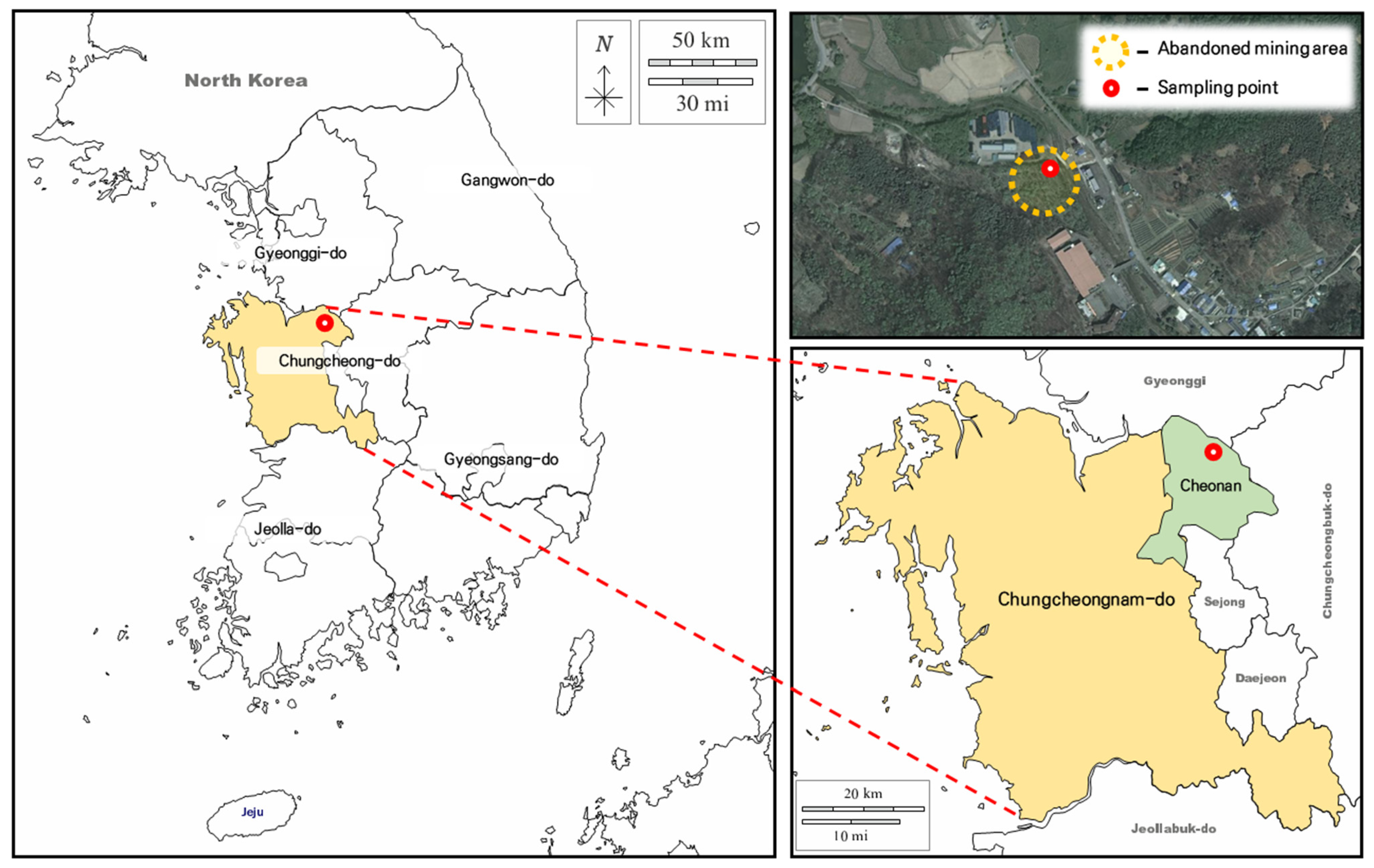
Contaminated soil was collected near an abandoned gold and silver mine (closed in 1982) in Cheonan, Chungcheongnam-do, Korea (Figure 1). Since its closure, As originating from abandoned waste rock and tailings has been detected several times in the surrounding reservoirs. Approximately 30 kg of contaminated soil was collected from the topsoil layer (0–30 cm) at a single sampling location near the mine and then air-dried for 7 days. The collected soil was thoroughly homogenized. For each experiment, soil portions were taken from multiple parts of the homogenized bulk sample to reduce subsampling bias among treatments. This sampling design improved laboratory-scale consistency but did not capture the spatial variability of As, Pb, and soil physicochemical properties across the mine-affected area. To determine heavy metal contents in the soil, 28 mL of aqua regia (7 mL of nitric acid + 21 mL of hydrochloric acid) was mixed with 3 g of the soil crushed to particle sizes below the 100 mesh (150 μm) standard sieve and heated in a Teflon acid cycle digestion vessel at 130 °C for two hours before extraction in accordance with the Korean Standard Test (KST) [24]. This digestion procedure is designed to determine the total metal content rather than to preserve the original chemical forms of the elements. The contaminated soil was found to have As (847.2 mg/kg) and Pb (247.1 mg/kg) contents exceeding the Korean warning standards for residential areas (Area 1; As: 25 mg/kg, Pb: 200 mg/kg) (Table 1). The physicochemical properties of the soil, including pH, electrical conductivity (EC), cation exchange capacity (CEC), organic matter (OM), and particle size distribution, were analyzed following the KST methods and relevant standard procedures [24,25,26]. Soil pH and EC were measured in a soil-to-water suspension ratio of 1:5 (w/v) according to the KST method. CEC was determined using a 1 M NH4OAc and 1 M acetic acid extraction, organic matter content was measured by loss-on-ignition (LOI) at 550 °C, and soil texture was analyzed using the pipette method [26]. The physicochemical properties of the soil are presented in Table 1. Samples were also crushed to particle sizes below #200 mesh (75 μm) and analyzed using X-ray fluorescence (XRF) (ARL PERFORM’X, Thermo Fisher Scientific, Waltham, MA, USA) to identify the composition of inorganic oxides in the soil; SiO2 (81.3%) was the major component (Table 2). The results are expressed in oxide form and reflect elemental composition rather than specific mineral phases.

2.2. Preparation and Characterization of Shell-Based Stabilizers

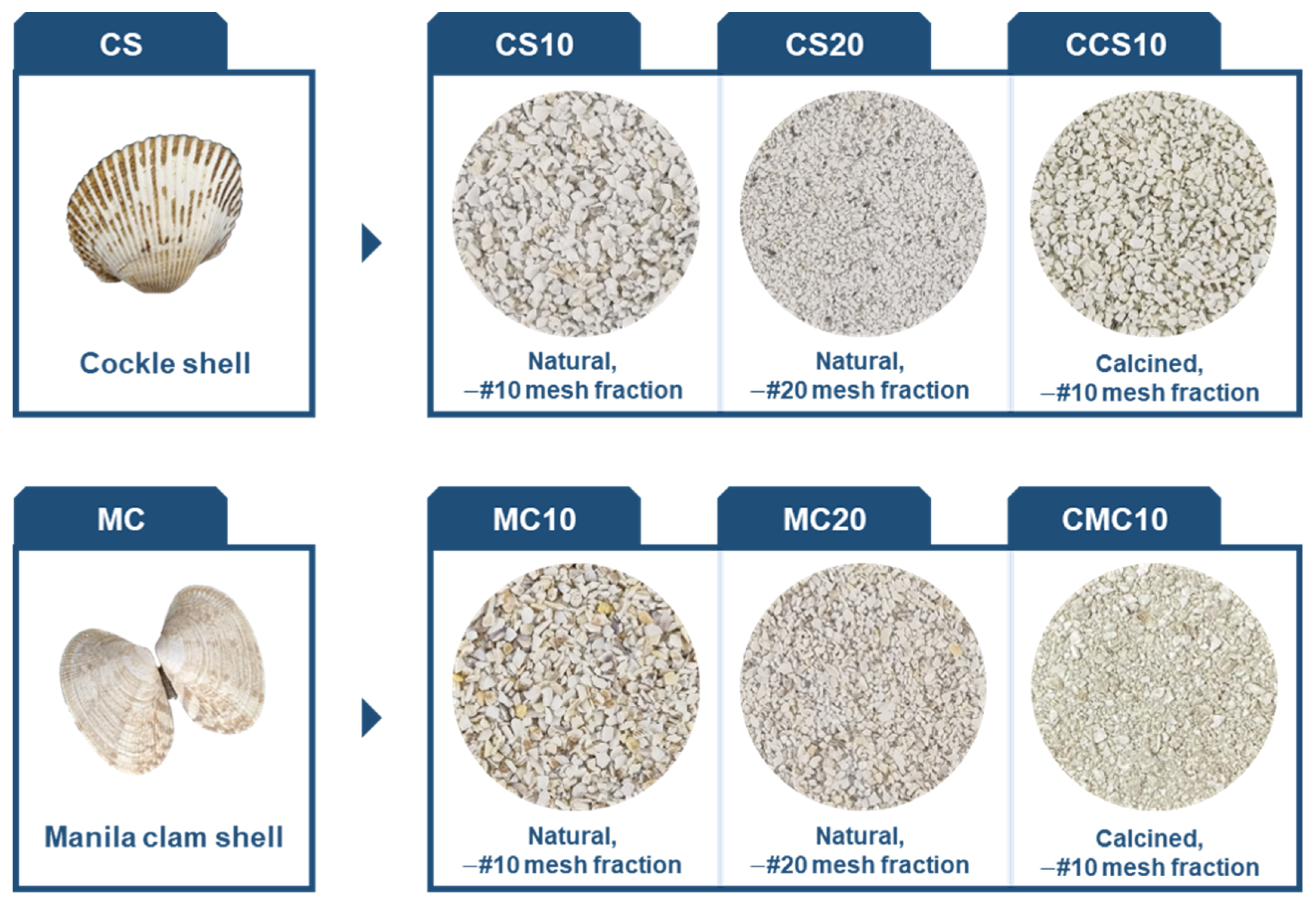
Cockle shells and manila clam shells, which are discarded by restaurants after removing the edible portions, were used in this study. The collected shells were immersed in freshwater for at least three days to remove salt and then washed under running water with a brush to eliminate foreign substances from their surfaces. After washing, the shell materials were dried and then crushed using a mechanical blender. The crushed shell particles were subsequently sieved into two particle size fractions. The −#10 mesh fraction (2.00–0.85 mm) refers to particles passing through a #10 sieve (2.00 mm) but retained on a #20 sieve (0.85 mm), whereas the −#20 mesh fraction (0.85–0.425 mm) refers to particles passing through a #20 sieve but retained on a #40 sieve (0.425 mm). Accordingly, the samples were designated as CS10 and MC10 for the −#10 mesh fraction, and CS20 and MC20 for the −#20 mesh fraction. Because the CaCO3 in shells is known to thermally decompose to CaO at approximately 848 °C [27], calcination was performed at 900 °C for two hours to ensure sufficient conversion of CaCO3 to CaO. The CS10 and MC10 samples were calcined under these conditions and were then designated as CCS10 and CMC10, respectively (Figure 2). The finer fractions (CS20 and MC20) were not subjected to calcination to maintain a clear comparison between particle size effects and thermal treatment effects. The chemical compositions of the prepared stabilizers were identified using XRF analysis (Table 2). The shell materials used in this study were derived from fishery by-products and are generally characterized by negligible heavy metal contents. XRF analysis confirmed that no significant heavy metals were detected. Furthermore, the characterization of the shell-based stabilizers focused on parameters directly related to stabilization mechanisms (e.g., pH and chemical composition), which play key roles in heavy metal immobilization. The pH values and organic matter contents of the stabilizers were evaluated using the same methods as those used for the assessment of soil properties.
Changes in the main components caused by calcination were evaluated using X-ray diffraction (XRD; X’Pert PRO MPD; PANalytical, Almelo, The Netherlands) analysis. The samples—cockle shells (CS), manila clam shells (MC), calcined cockle shells (CCS), and calcined manila clam shells (CMC)—were crushed to a #200 mesh (75 μm) particle size. XRD patterns were collected with a 2θ range of 5 to 60° and a step size of 0.02° (3 s/step). The observed peaks were analyzed using the Jade software v.7.1 [28] and PDF-2 reference data [29] for mineral identification.

2.3. Stabilization Treatment and Elution Test

For the stabilization treatment, contaminated soil (30 g) was mixed with CS and MC stabilizers derived from fishery by-products at various ratios. The stabilizers were applied to each experimental group at 2 to 10 wt% of the soil weight. Distilled water was added at 30 wt% relative to the soil weight to provide the moisture required for the stabilization reaction. To quantitatively compare the effects of the stabilizers, untreated soil was set as the control group. The stabilization conditions and sample configurations used in the experiment are summarized in Table 3. The experimental design was applied identically to both the CS and MC stabilizers. The stabilizers, soil, and moisture were uniformly mixed and then wet-cured in a sealed container for four weeks.
In the elution test to evaluate changes in the mobility of heavy metals, the 0.1 M HCl extraction method was applied by referring to the soil contamination test method [24]. The 0.1 M HCl extraction was applied as a conservative acid-extraction test to evaluate the potential mobility of heavy metals under strongly acidic conditions. The cured samples were mixed with 0.1 M HCl solution at a ratio of 1:5 (w:v), followed by stirring at 100 rpm for one hour. Then, the mixtures were centrifuged at 3000 rpm; the extracts were filtered through a 0.45 μm syringe filter and analyzed using inductively coupled plasma optical emission spectroscopy (ICP-OES) (Perkin Elmer Optima Model 5300DV, Waltham, MA, USA). The pH of the eluate was also measured after stabilization treatment. All analyses were conducted in duplicate, and the average value was reported as the final result. To ensure the accuracy and reliability of the experiment, QA/QC was performed by adding a standard substance (spiking, recovery rate > 95%) for every tenth sample.

2.4. Stabilization Mechanism Analysis

To investigate the stabilization mechanisms of As and Pb, SEM-EDX analysis combined with elemental mapping was employed to examine the spatial distribution and association of heavy metals with major elements such as Ca, Si, and Al. This approach enables the identification of co-localization patterns, which provide insight into precipitation and immobilization processes [11,12,30,31]. Among the stabilization treatment groups, the calcined stabilizer treatments at 10 wt% (CCS10 and CMC10) exhibited the highest reduction efficiency in heavy metal mobility and were therefore selected for analysis. A small amount of each sample was collected and mounted on carbon tape. The surfaces were coated with platinum and analyzed using Hitachi SU-8600 SEM (Hitachi, Tokyo, Japan) equipped with an Oxford Aztec (100 mm) EDX system (Horiba, Tokyo, Japan).

2.5. Soil Health Index Assessment Method

To evaluate the agricultural applicability of the soils, the health of both untreated contaminated soils and stabilized soils was assessed. Six indicators closely associated with crop growth and the characteristics of heavy metal-impacted agricultural soils were selected based on their relevance to soil functionality in heavy metal-contaminated agricultural soils (Table 4) [17,32]. For consistency in evaluation, the experiment was conducted using the 10 wt% stabilization treatment, which exhibited the highest stabilization efficiency.
Field capacity (FC), selected as a physical function, refers to the water remaining in the soil pores after the exclusion of gravitational water and reflects soil water retention associated with plant growth. After the fully saturated soil was drained for 24 h to remove gravitational water, the samples were dried at 105 °C to calculate the FC based on the weight difference before and after drying [23,33,34]. Soil respiration (SR), which can indirectly evaluate the metabolic activities of microorganisms and roots, was selected as a biological function indicator. A vial containing 15 mL of 0.5 M NaOH was placed alongside 100 g of wet soil in a sealed bottle, followed by incubation at 25 °C for 72 h [35]. The NaOH solution was then titrated with HCl, and the amount of CO2 generated was calculated. As for chemical functions, pH (1:5 H2O), CEC (1 M NH4OAc and 1 M acetic acid), organic matter content (LOI, 550 °C), and available phosphate (Av. P2O5; Mehlich-3 extraction method) were analyzed [24,25].
The results of each indicator were converted into a normalized score (NS) ranging from 0 to 1 to calculate the soil health index (SHI). Three types of standard scoring functions (SSF) were used for the conversion: (1) More is better, (2) Optimum, and (3) Less is better. Calculations were performed by applying suitable types of functions for each indicator (Table 5). The SSFs were converted into linear or nonlinear functional forms based on measured values (x) and predefined upper and lower threshold values (UT and LT, respectively). The corresponding formulae followed the same method as those described in previous studies [10,15,16,22]. The UT and LT values for each indicator were determined based on previous studies and the guidelines provided by the Rural Development Administration (RDA) [10,15,16,22,36].
S S F ( More   is   better ) = 1.0 ,         i f     x > U T 0.1 + 0.9 ( x L T ) U T L T ,         i f     x U T
where x is the measured value, LT and UT are the lower and upper threshold values, respectively, and SSF is the normalized score (0–1).
S S F ( O p t i m u m ) = 0.1 + 0.9 ( x L T 1 ) U T 1 L T 1 ,         if     L T 1 x U T 1 1.0 ,       if     U T 1 x L T 2 1.0 0.9 x L T 2 U T 2 L T 2 ,         if     L T 2 < x U T 2 0.1 ,         if     x < L T 1       o r       x > U T 2
where x is the measured value, LT1 and UT1 define the lower optimal range, LT2 and UT2 define the upper optimal range, and SSF is the normalized score (0–1).
S S F ( Less   is   better ) = 1.0 ,         i f     x < L T 0.1 0.9 x L T U T L T ,         i f     x L T
The variables are as defined above.

2.6. Crop Cultivation Evaluation

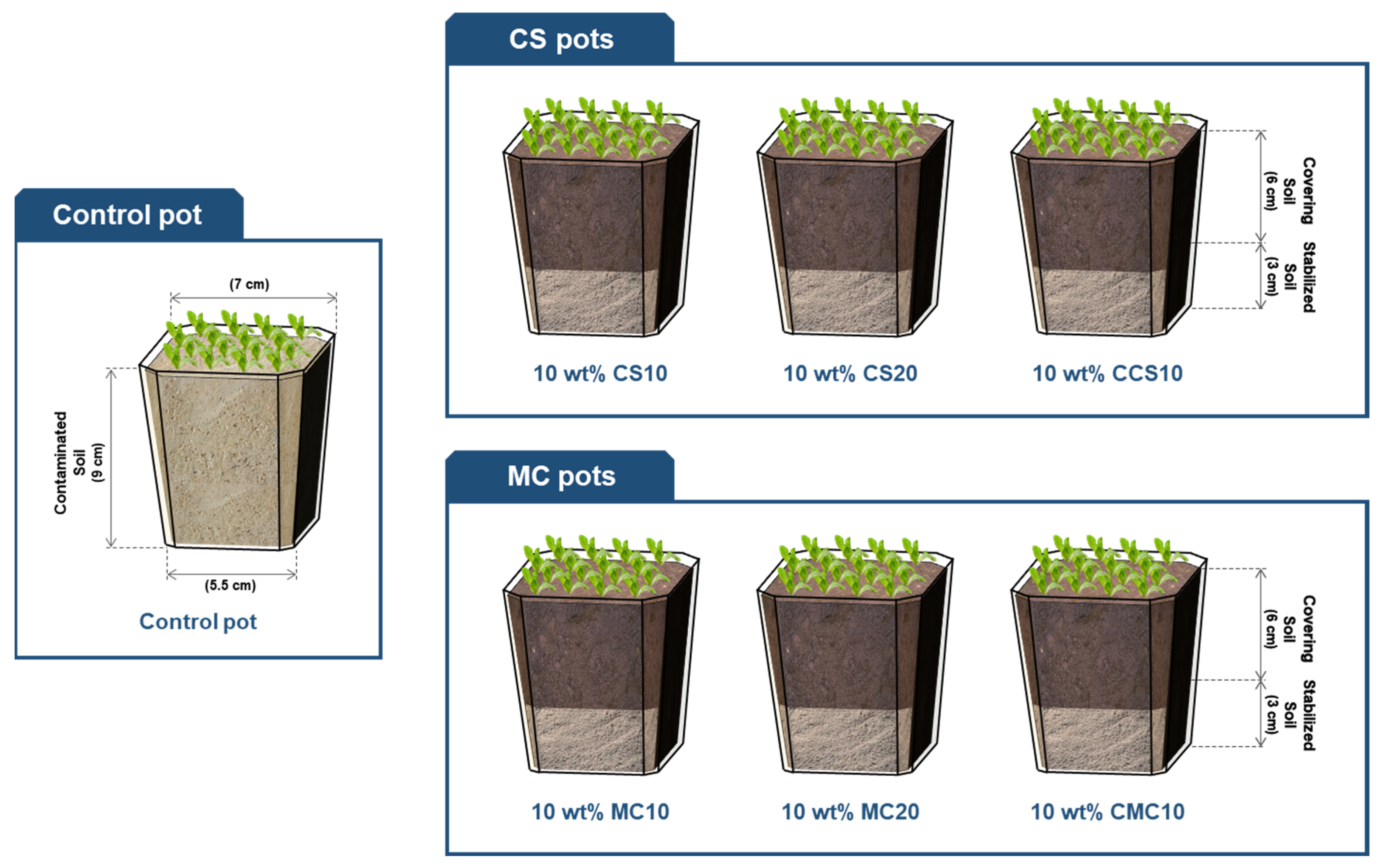
The crop cultivation experiment was designed as a scenario-based study to simulate both contaminated agricultural fields located near mining areas and sites where stabilization technology has been applied. The contaminated (control) and stabilized soils were cured for four weeks under moist conditions, following the wet-curing procedure described in Section 2.3. In this procedure, distilled water was added at 30 wt% relative to the soil weight to promote stabilization reactions under hydrated conditions. The cultivation experiment was performed using plastic pots. The pots had an upper diameter of 7 cm, a lower diameter of 5.5 cm, and a height of 9 cm (Figure 3). This pot size was selected for a controlled pot-scale screening experiment to compare plant growth and heavy metal uptake among treatments under identical indoor conditions, rather than to simulate full-scale crop production. The control pots were filled entirely with contaminated soil to a total height of 9 cm, representing untreated agricultural conditions near abandoned mine sites. In contrast, the stabilization treatment pots consisted of a 3 cm stabilized soil layer at the bottom and a 6 cm uncontaminated cover soil layer on top, simulating realistic post-remediation field conditions. The uncontaminated cover soil used in the cultivation experiment consisted of a commercial horticultural substrate and had a pH of 4.9, CEC of 23.3 cmolc/kg, and OM content of 51.5%. This design enabled a direct comparison between untreated contaminated soil conditions and practical post-remediation stabilization-cover soil conditions; therefore, an uncontaminated positive control was not included. This layered configuration proportionally represents a field-scale of a 20 cm stabilization layer beneath a 40 cm soil cover. This configuration followed the proportion of soil cover mentioned in the “Mine Rehabilitation Technology in the Republic of Korea” guidelines presented by the Korea Mine Rehabilitation and Mineral Resources Corporation (KOMIR) [37]. A stabilizer dosage of 10 wt% was applied to the stabilized soil layer, as this condition exhibited the highest stabilization efficiency among the tested dosages. Sixteen seeds of red lettuce were evenly distributed across each pot and cultivated under indoor conditions (25 °C, 78% relative humidity) for four weeks. Each treatment was performed in triplicate. At the end of the four-week cultivation period, lettuce roots were visually observed to extend into the stabilized soil layer, indicating direct root contact with the treated contaminated soil layer.
The edible portions of lettuce were harvested to measure the growth indicators (germination rate, leaf count, leaf length, and leaf weight). The collected samples were dried and pretreated using the nitric acid decomposition method provided by the Ministry of Food and Drug Safety (MFDS), Korea [38]. The sample solutions obtained were analyzed using ICP-OES to quantify the concentrations of heavy metals (As and Pb) translocated to lettuce. Based on these findings, we evaluated the effect of stabilization treatment on reducing the translocation of heavy metals to plants. All results are presented as mean ± standard deviation (SD, n = 3), and the results were interpreted based on observed trends rather than statistical mean comparisons.

3. Results and Discussion

3.1. X-Ray Diffraction Analysis

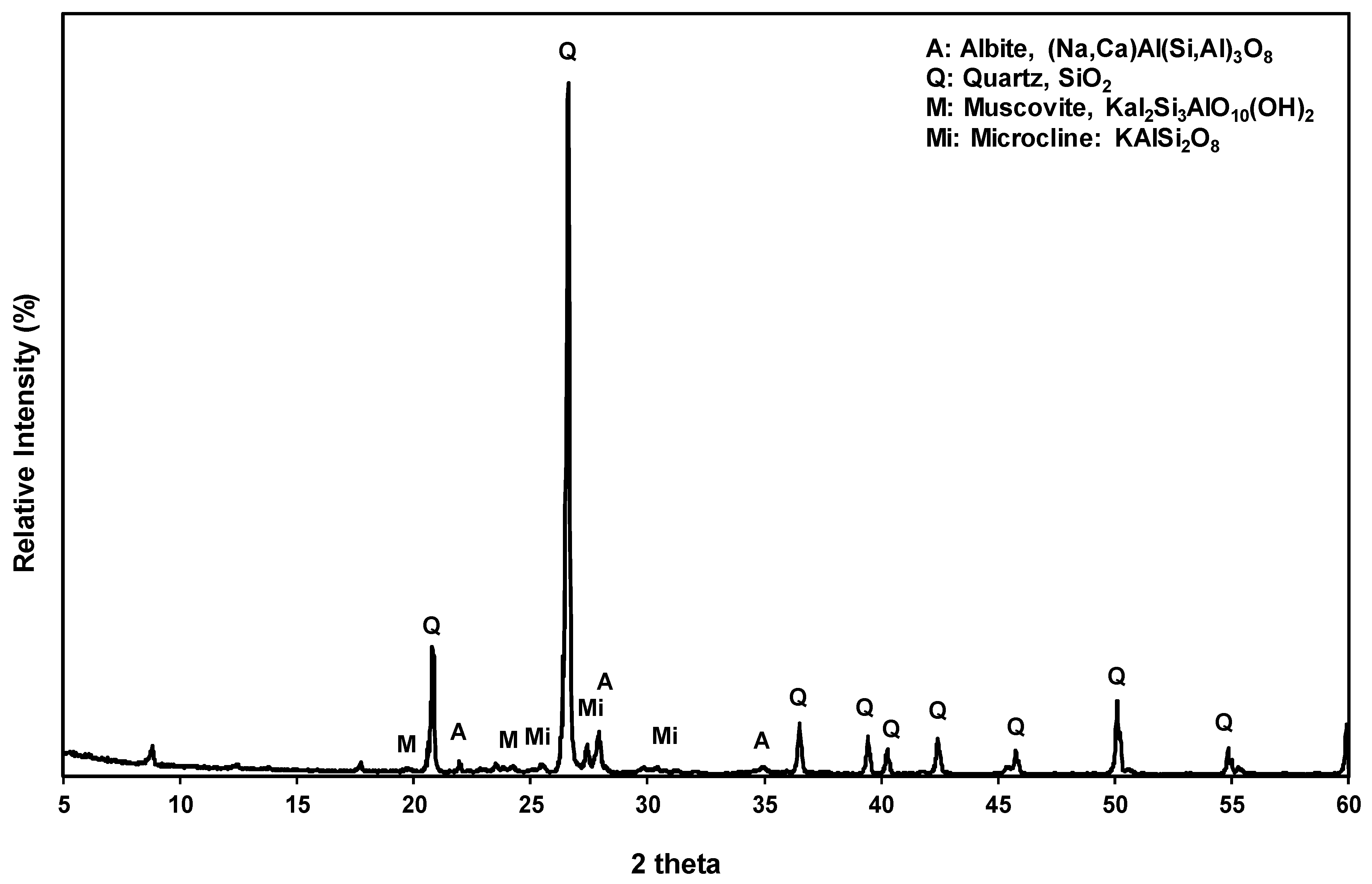
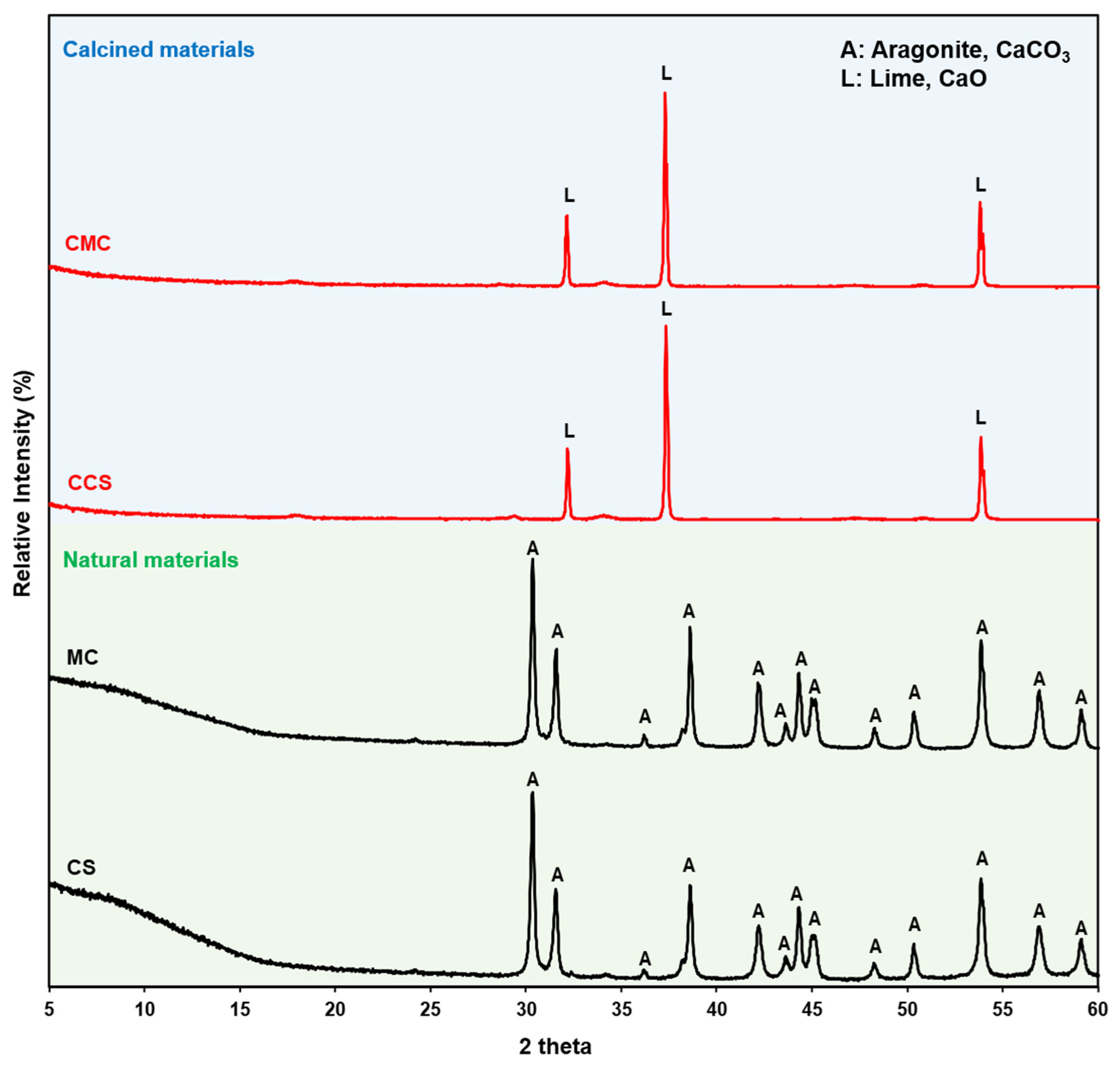
XRD analysis of the As- and Pb-contaminated soils collected from the mining area identified albite, quartz, muscovite, and microcline as the dominant mineral phases (Figure 4). Figure 5 presents the mineralogical changes in the stabilizers induced by calcination. A CaCO3 peak was observed for the natural materials (CS and MC) that were subjected to the crushing process alone. A CaO peak was observed for the calcined materials (CCS and CMC), which were treated at high temperatures. The transformation of CaCO3 to CaO during calcination increased the pH of CS and MC from weakly alkaline (pH 9.47 to 9.48) to strongly alkaline (pH 12.72) (Table 2). This increase in pH is attributed to the formation of calcium hydroxide upon hydration of CaO (CaO + H2O → Ca(OH)2), which generates a strong alkaline environment in the soil, creating favorable conditions for heavy metal immobilization.

3.2. Heavy Metal Contaminant Elution

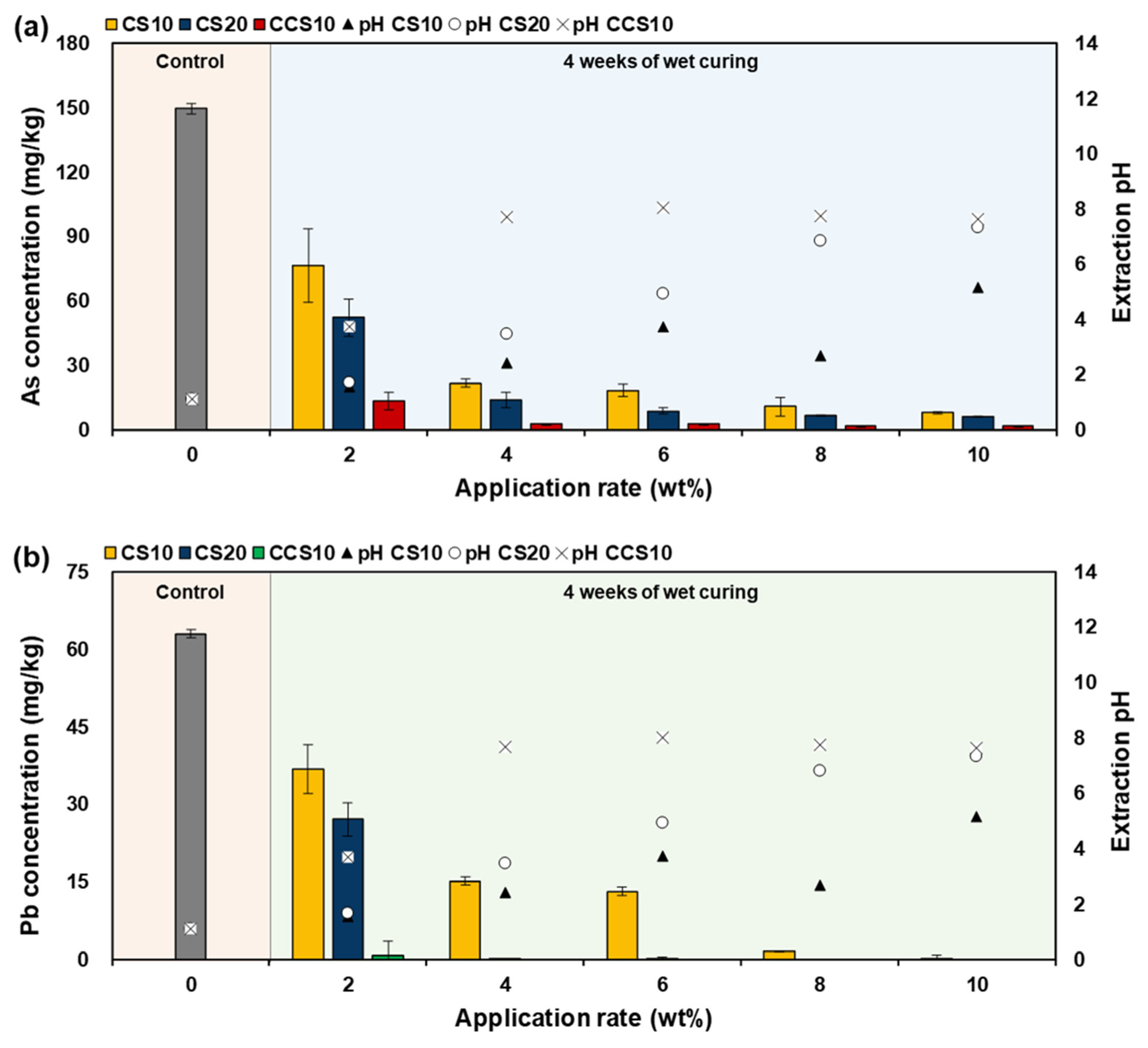
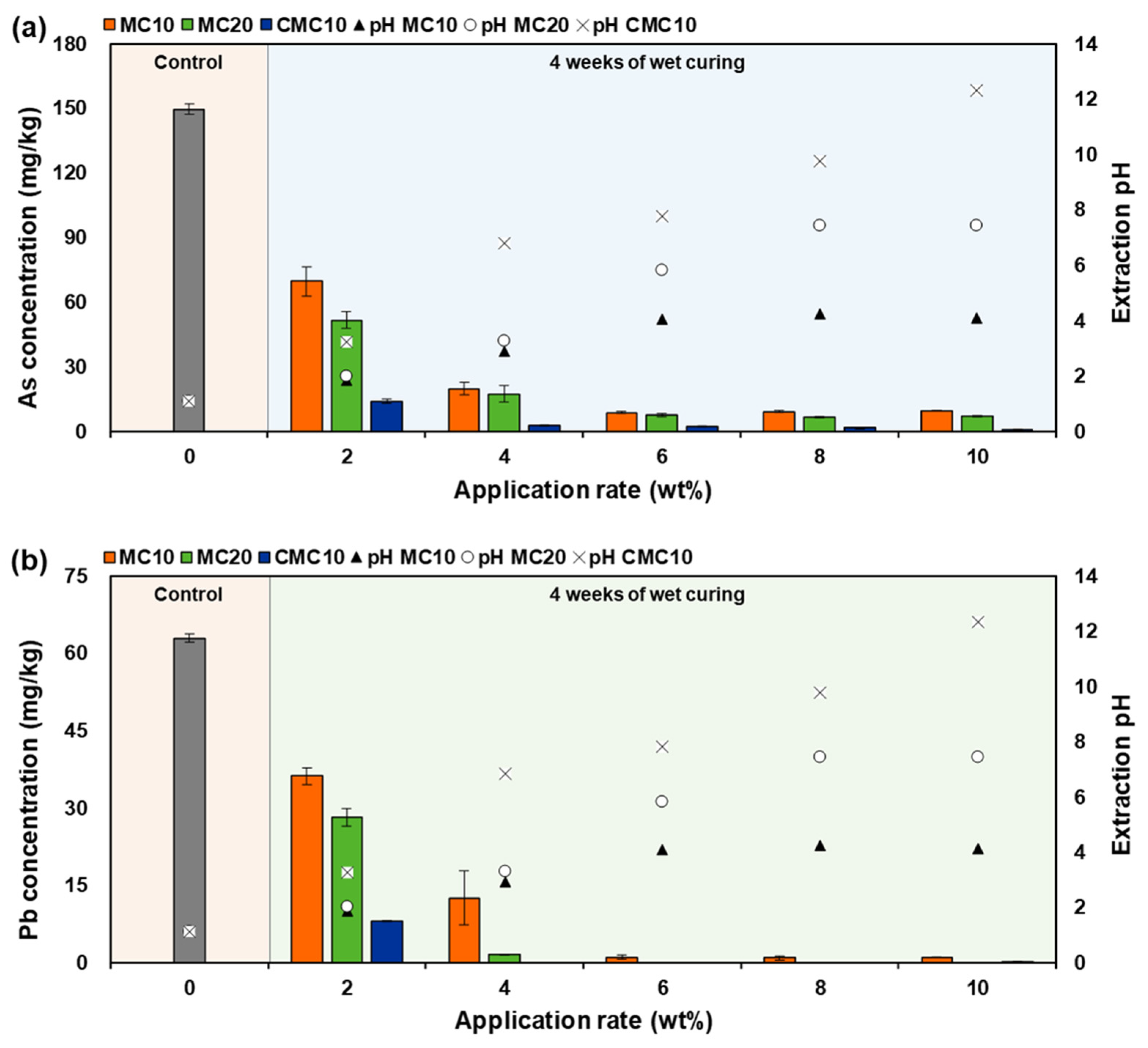
The leachable concentrations of As and Pb were determined using 0.1 M HCl extraction under strongly acidic conditions to evaluate the potential mobility of heavy metals in a conservative manner and to compare the relative stabilization performance of the shell-based treatments. In the control (contaminated soil), As and Pb were detected at 149.6 and 63.0 mg/kg, respectively, at an extraction pH of 1.23 (Figure 6 and Figure 7). These results indicate the high environmental risk posed by the high solubility of these metals in the absence of stabilization. Figure 6 and Figure 7 show the changes in the concentrations of As and Pb eluted from the soil cured for four weeks after treatment with the CS and MC stabilizers. Overall, a negative relationship was observed between the extraction pH and the eluted metal concentrations, indicating that stabilization efficiency is primarily associated with the alkalinity provided by the shell-based materials. For the natural shell treatments (CS and MC), As and Pb concentrations were reduced to 8.0–9.7 and 0.2–1.0 mg/kg at a 10 wt% dosage, respectively. A slight enhancement in stabilization efficiency was noted for the −#20 mesh fraction (CS20 and MC20) compared to the −#10 mesh (CS10 and MC10), which is attributed to the increased specific surface area and higher reactivity of the finer particles. In contrast, calcined CCS10 and CMC10 reduced the As and Pb levels in the soil by 87.2% to 98.5% in the 2 wt% treatment. In particular, no Pb was eluted in the 4 wt% CCS10 and CMC10 treatment alone.
Figure 4. XRD pattern of As- and Pb-contaminated soil.
Agronomy 16 01183 g004
The natural stabilizers were weakly alkaline CaCO3 materials (Table 2 and Figure 5). Dissolution of CaCO3 increased soil pH through proton consumption by carbonate species (CaCO3↔Ca2++CO32−; CO32−+H+↔HCO3). As H+ dissociates from weakly acidic functional groups (e.g., -OH and -COOH) on clay and organic matter surfaces, negative charges accumulate on clay and organic matter surfaces [30]. Therefore, adding CaCO3 to natural stabilizers increases the pH of the soil and the net negative charge, thereby increasing the adsorption of positive ions [39,40,41]. This adsorption is further enhanced through the formation of hydroxide complex ions such as PbOH+ [31,32]. In addition, the precipitation with OH, which is released as the soil pH increases, may cause the precipitation of the heavy metals in the form of hydroxides, reducing the mobility and bioavailability of these metals. The exchangeable forms of heavy metals change into more stable carbonate-bound fractions in soil with a high pH [14,42]. Therefore, in this study, the input of natural stabilizers also reduced heavy metal elution, likely due to the precipitation of Pb as insoluble carbonate phases such as cerussite (PbCO3) or hydrocerussite [Pb3(CO3)2(OH)2]. This interpretation is supported by the low solubility of these minerals, as indicated by the solubility product constant (Ksp) of cerussite (7.40 × 10⁻¹⁴) [43,44]. In summary, adding natural-based stabilizers, such as CaCO3, to the soil increases soil pH, thereby (1) increasing the adsorption of positive ions due to the increased net negative charges on the soil surface, (2) enhancing surface adsorption affinity through the formation of hydroxide complex ions, (3) reducing ion acceptability and mobility by inducing the precipitation of metal hydroxides, and (4) promoting long-term heavy metal stabilization via the formation of metal–carbonic acid complexes.
Figure 5. XRD patterns of stabilizers before and after calcination.
Agronomy 16 01183 g005
The elution of heavy metal contaminants was substantially lower in the CCS10 and CMC10 treatments. Specifically, the 2 wt% CS10 and CS20 treatments reduced the As contents by 48.8% and 65.1% and the Pb contents by 41.5% and 57.0%, respectively. In addition, the 2 wt% MC10 and MC20 treatments reduced the As by 53.4% and 65.4%, and Pb by 42.5% and 55.2%, respectively. The 2 wt% CCS10 and CMC10 treatments reduced As and Pb elution by at least 87.2%. The stabilization efficiency of the calcined stabilizers was 24.4% to 57.0% higher than that of the natural stabilizers. The XRD analysis confirmed that the high-temperature treatment converted the CaCO3 in CS and MC to CaO (Figure 5). In addition, the calcined material was a strong base (Table 2). Ahmad et al. [11] confirmed that Pb combined with Al, Si, and Ca in the soil after treatment with calcined eggshell, in which CaO was the primary active constituent. Islam et al. [12] reported that adding CaO to soil increased the pH and led to the formation of cementitious hydrates, such as calcium silicate hydrate (CSH) and calcium aluminate hydrate (CAH). Moon et al. [30] reported that CSH and CAH precipitates formed with Pb and Zn when the pH was increased via calcined starfish treatment. The higher extraction pH observed in the calcined stabilizer treatments indicates that the enhanced stabilization efficiency is primarily associated with the stronger alkalinity of CaO-derived materials. CaO forms Ca(OH)2 in the soil via hydration reactions, causing the release of Ca2+ and OH. The soil pH rises during this process, and reactions among Si, Al, and Ca2+ under strongly alkaline conditions may promote the formation of CSH and CAH-like structures. The CSH formed in soil can suppress the elution of heavy metals by forming structural barriers that impede the diffusion of leaching solutions. Therefore, in this study, Pb was stably immobilized in the soil as insoluble compounds, and As is known to be immobilized by Ca–As precipitation under highly alkaline pH conditions. Lim et al. [45] reported that the calcined starfish treatment stabilized the As, Pb, and Zn in the soil more effectively than the natural starfish via the formation of Ca–As precipitation. In addition, Moon et al. [13] confirmed that Ca–As precipitation (Ca4(OH)2(AsO4)2∙4H2O and NaCaAsO4∙7.5H2O) formed in the soil treated with lime, decreasing As elution.
Figure 6. Extractable concentrations of As (a) and Pb (b) after 4 weeks of wet curing, determined by 0.1 M HCl extraction in soils treated with cockle shell stabilizers.
Agronomy 16 01183 g006

3.3. Stabilization Mechanism

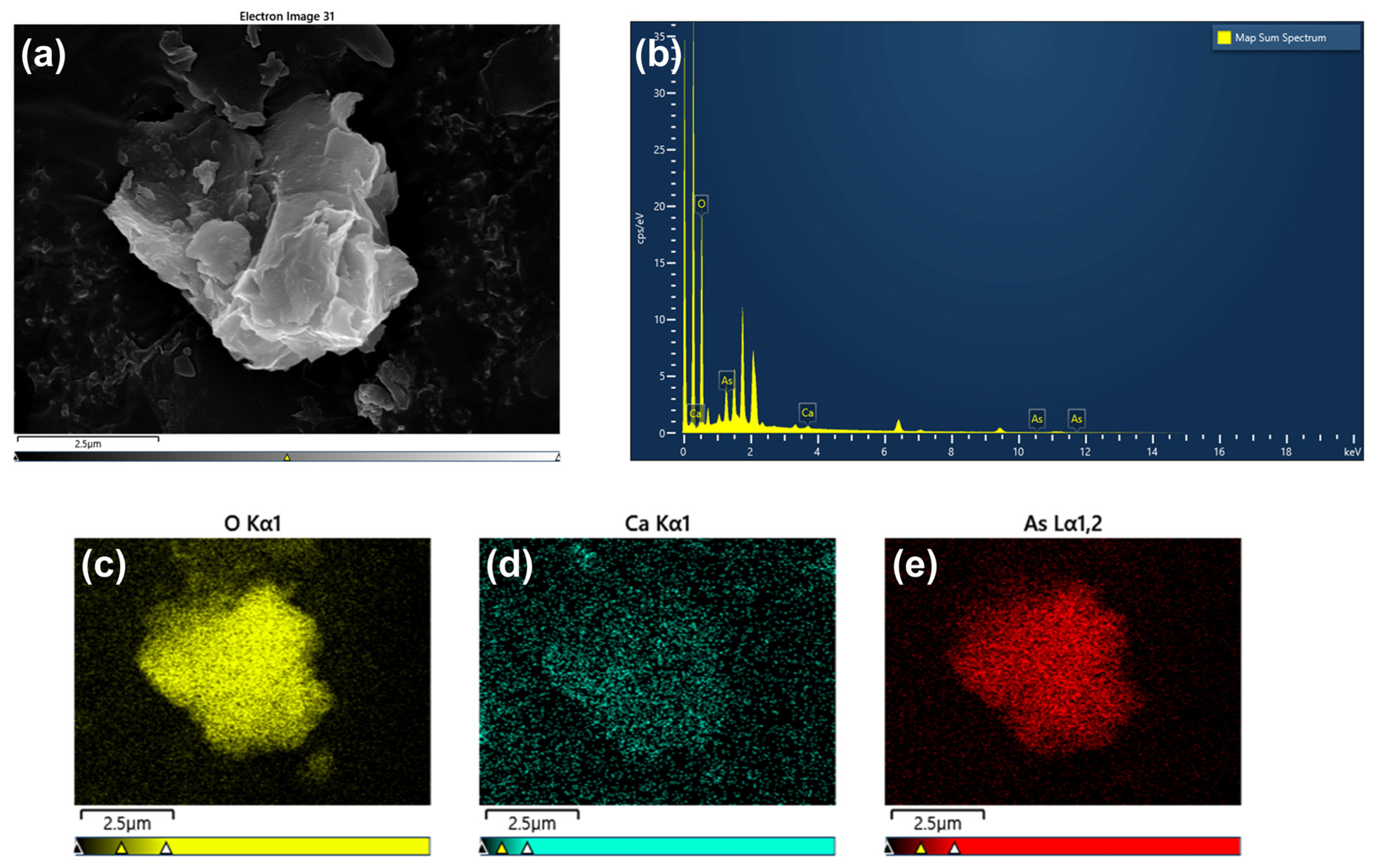
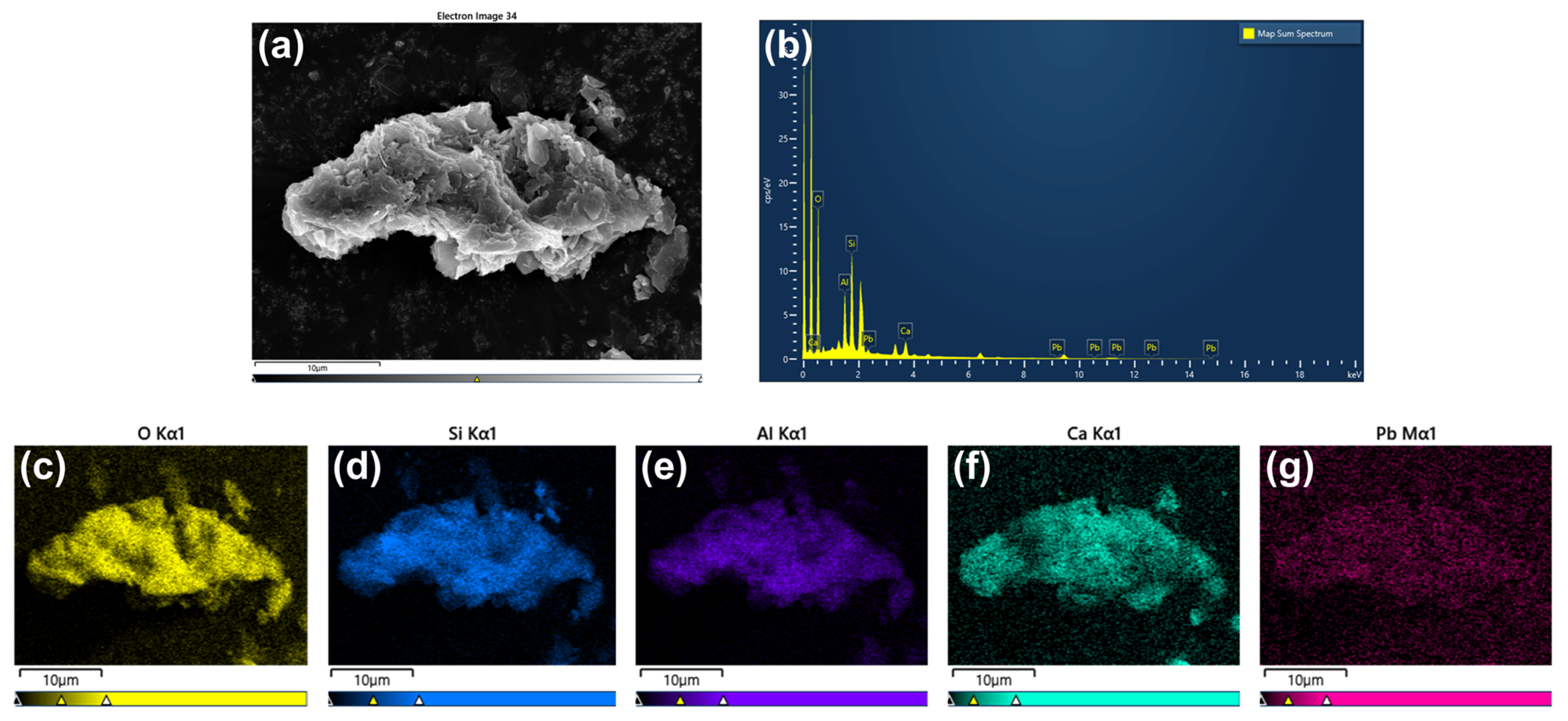
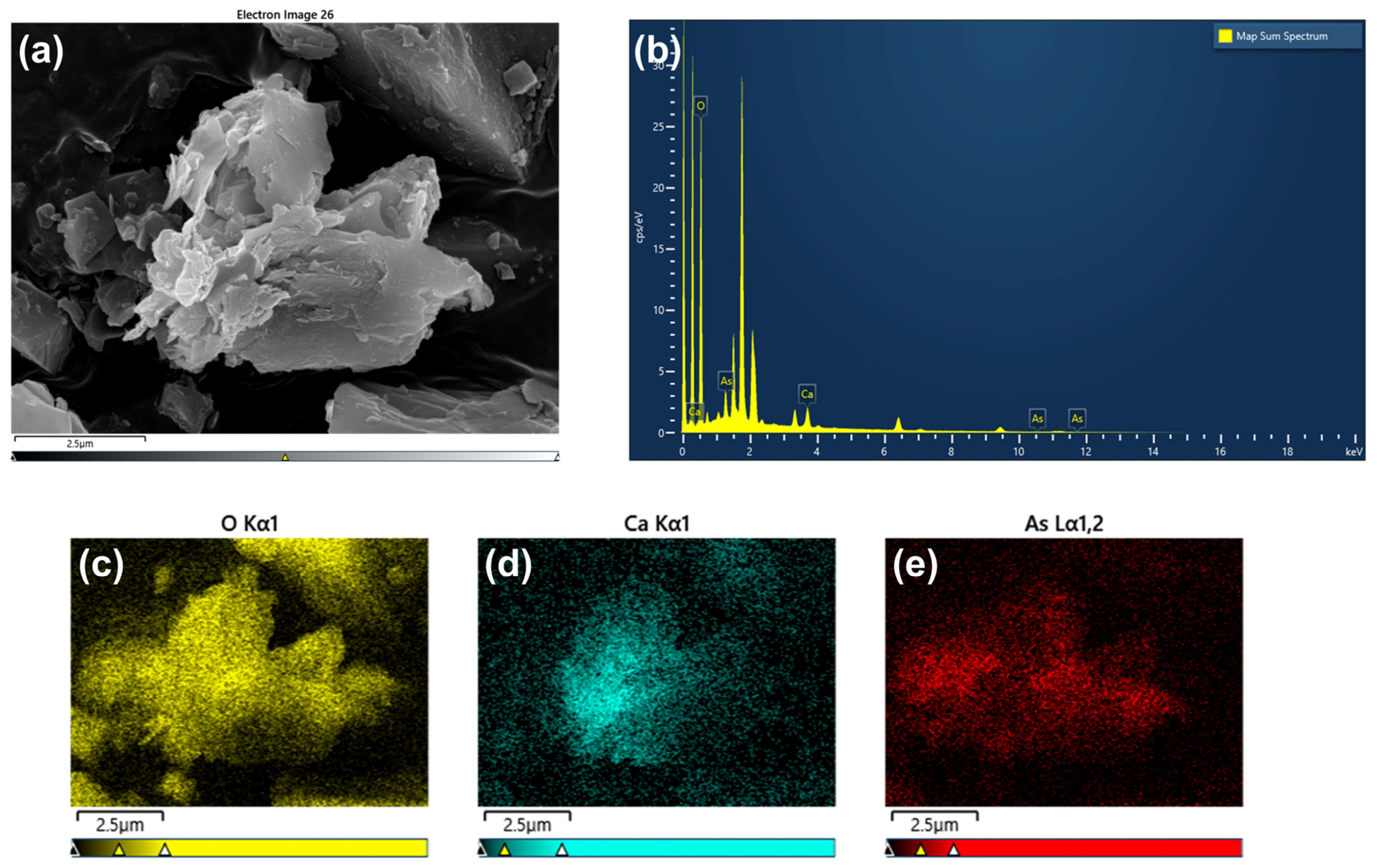
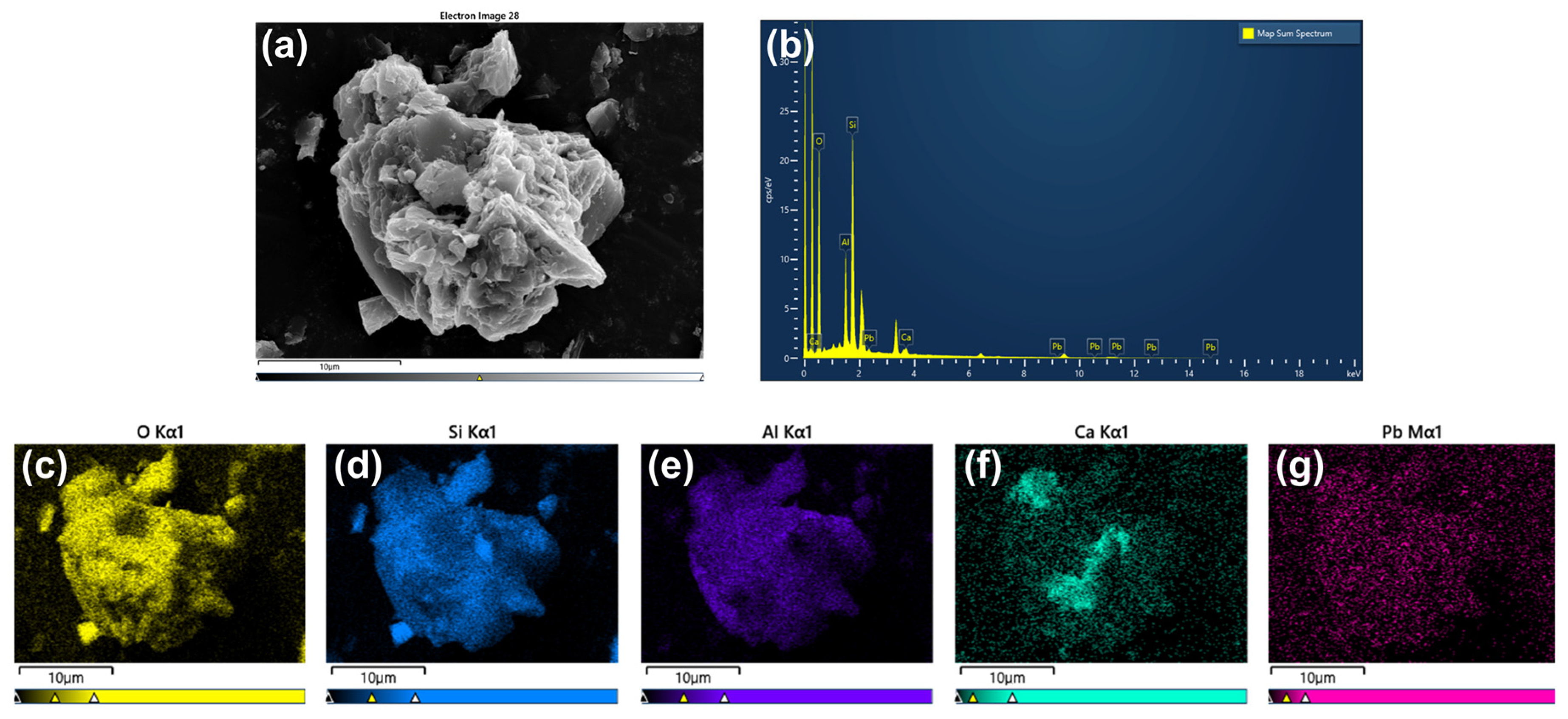
The SEM-EDX and SEM elemental dot maps were analyzed to identify the mechanisms of As and Pb immobilization due to CaO addition. Figure 8 and Figure 9 show the results for the 10 wt% CCS10 treatment, and Figure 10 and Figure 11 show the results for the 10 wt% CMC10 treatment. The spatial distribution of As tended to overlap with those of Ca and O, suggesting that As immobilization was associated with Ca-rich phases during stabilization (Figure 8 and Figure 10). Insoluble As compounds, such as Ca3(AsO4)2 and CaHAsO3, are formed in basic environments [45]. In this study, it is also highly likely that precipitation reactions actively occurred as the pH increased after stabilization treatment. This was interpreted as a key factor that markedly reduced heavy metal mobility by converting As into unavailable forms.
Figure 7. Extractable concentrations of As (a) and Pb (b) after 4 weeks of wet curing, determined by 0.1 M HCl extraction in soils treated with manila clam shell stabilizers.
Agronomy 16 01183 g007
Pb tended to colocalize with Si, Al, and Ca (Figure 9 and Figure 11). This colocalization reflected the changes in the mineral structure and the possible occurrence of hydration reactions caused by the input of stabilizers. In other words, Si and Al may have been eluted from the clay minerals in the soil because of CaO treatment, forming products such as CSH and CAH through reactions with water. Similar tendencies were also observed in a cement-based study [46] on Pb immobilization, which described the mechanism whereby Pb is incorporated and entrapped within the C-Pb-S-H gel structure. Akula et al. [47] reported that hydrated lime treatment promotes CSH formation by decreasing the crystallinity of silicate minerals (e.g., quartz and kaolinite) and promoting the release of amorphous silica. Hydration products immobilize heavy metals in an amorphous structure by capturing or adsorbing these heavy metals.
Therefore, the stabilization of As and Pb occurring after the CCS and CMC treatment applied in this study substantially reduced the mobility of these heavy metals via two mechanisms: (1) As retention by Ca-rich precipitates and (2) Pb association with Ca-Si-Al hydration products formed under alkaline conditions. While the proposed mechanisms are supported by SEM–EDX and SEM elemental dot maps, additional techniques such as sequential extraction could provide further insight into the fractionation and stability of heavy metals and should be considered in future research.
Figure 8. Formation of Ca-As precipitates in 10 wt% CCS10 treatment: (a) SEM image; (b) EDX spectrum; (ce) elemental distribution maps of O, Ca, and As.
Agronomy 16 01183 g008
Figure 9. Formation of pozzolanic reaction products in 10 wt% CCS10 treatment: (a) SEM image; (b) EDX spectrum; (cg) elemental distribution maps of O, Si, Al, Ca, and Pb.
Agronomy 16 01183 g009

3.4. Soil Health Index

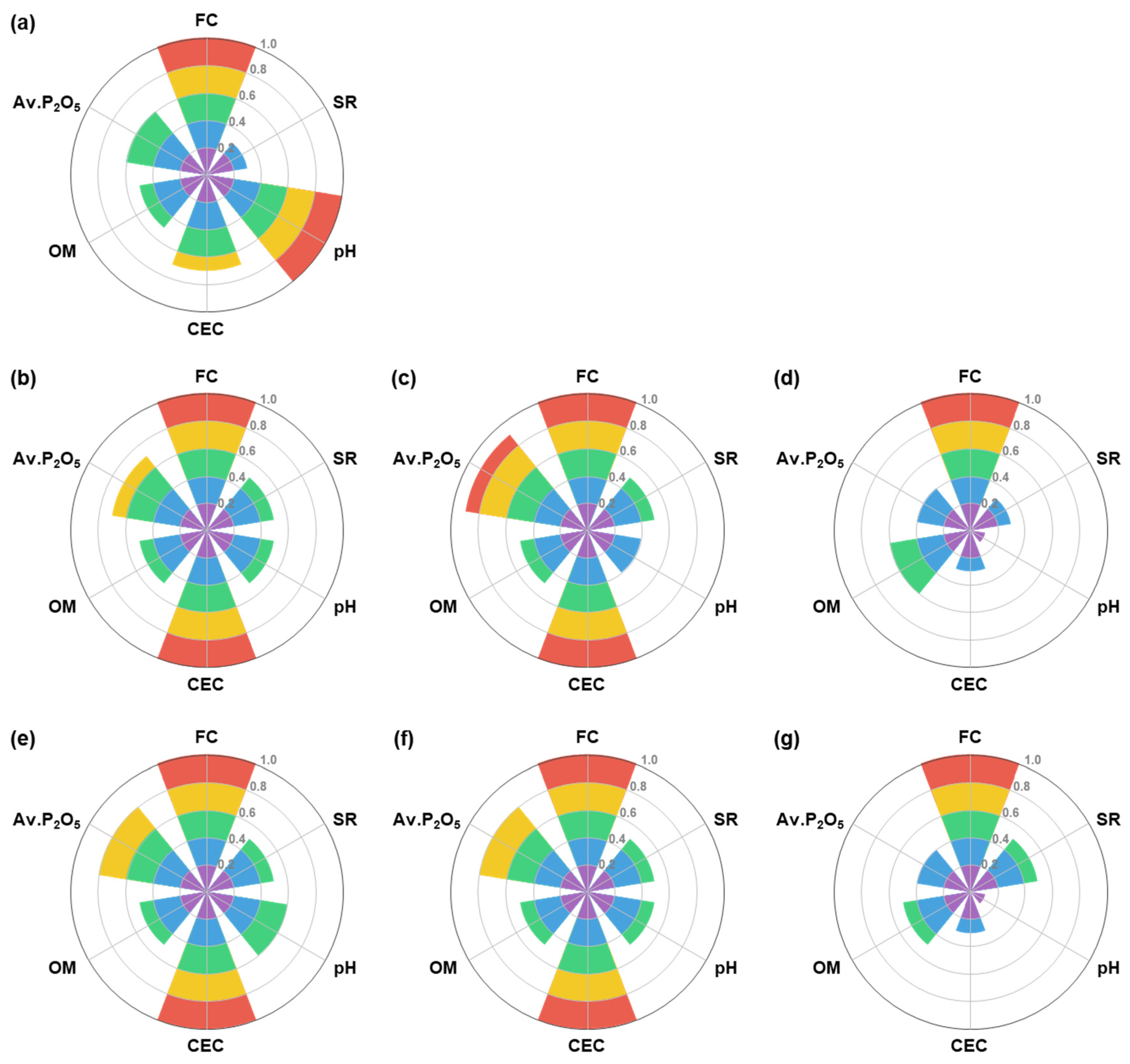
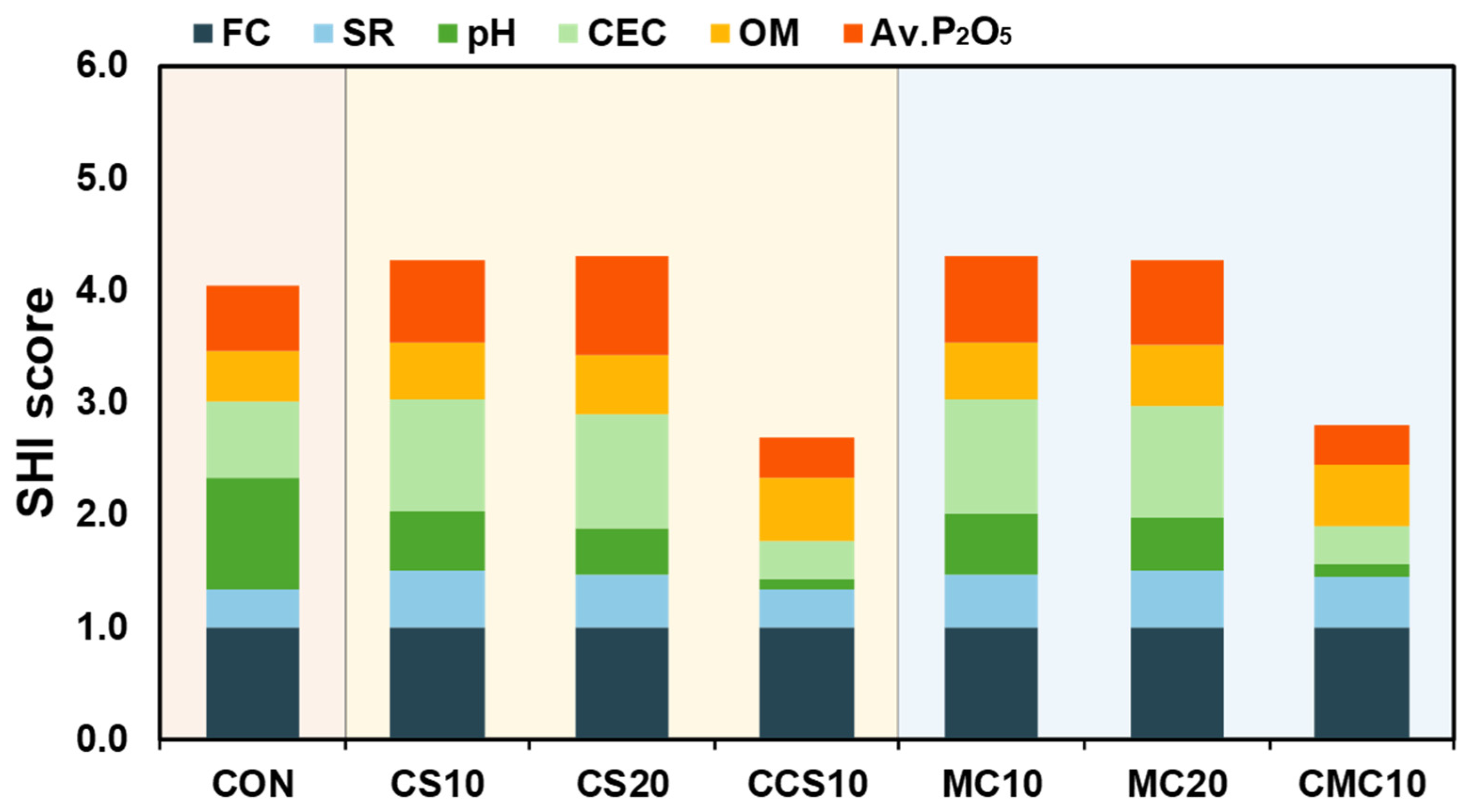
The Soil health index (SHI) was used to quantitatively compare soil functions following the application of stabilization technology. The measured indicator values shown in Table 6 were converted into normalized scores (0–1) using the SSF method, and the resulting normalized scores are illustrated in Figure 12. Figure 13 shows the integrated SHI values obtained by summing those scores. The SHI values were 4.3 for the natural shell treatments (CS10, CS20, MC10, and MC20), whereas the control showed 4.0, and the calcined treatments CCS10 and CMC10 exhibited relatively lower values of 2.7 and 2.8, respectively (Figure 13). These results indicate that the maintenance of soil functions differed depending on whether the stabilizer was calcined.
Figure 10. Formation of Ca-As precipitates in 10 wt% CMC10 treatment: (a) SEM image; (b) EDX spectrum; (ce) elemental distribution maps of O, Ca, and As.
Agronomy 16 01183 g010
Figure 11. Formation of pozzolanic reaction products in 10 wt% CMC10 treatment: (a) SEM image; (b) EDX spectrum; (cg) elemental distribution maps of O, Si, Al, Ca, and Pb.
Agronomy 16 01183 g011
The FC ranged from 16.9% to 22.1% in all treatments. No distinct differences in FC were observed among treatments, indicating that the stabilization process did not substantially affect soil water retention characteristics.
The SR in the contaminated soil (control) was 16.5 mg CO2/kg/day, and SR generally increased in the stabilized soils. However, because the shell-based stabilizers contain a carbonate phase, the CO2 measured by the NaOH alkali absorption method may include both biologically produced CO2 and abiotic CO2 associated with carbonate-related reactions [48,49]. Therefore, the SR results should not be interpreted as direct evidence of increased microbial activity [49]. Instead, SR was used only as an indicative biological-function parameter within the SHI framework. This represents a limitation of the present study, and future studies should apply methods that correct for abiotic CO2 contributions, such as inhibitor-corrected respiration or complementary microbial biomass/activity assays.
The chemical functions widely differed among the treatments. The pH of the control soil was 6.4, falling within the acceptable range (5.5 to 7.0) listed by the Rural Development Administration. The calcined stabilizer treatments (CCS10 and CMC10) showed strongly alkaline conditions (pH 11), resulting in reduced SHI scores. The pH of the rhizosphere is an important factor in determining the nutrient availability and microbial survival in the soil environment; excessive alkalization may hinder crop growth and cause certain nutrients (e.g., Fe and P) to be insoluble [50,51].
The cation exchange capacity (CEC) was 35 to 40 cmolc/kg in the natural CS and MC treatments, which exceeded the upper limit for agricultural soils (15 cmolc/kg) [10,16]. Stabilization treatments may increase soil CEC due to increases in soil pH and the addition of Fe- and Ca-bearing phases present in stabilizers [10]. In contrast, the calcined stabilizer treatments showed relatively low CEC values (4.1 cmolc/kg), which may be related to strongly alkaline conditions and the formation of new mineral phases during lime-based stabilization [31].
The organic matter (OM) content showed no substantial change after stabilization treatment, remaining close to the initial value (1.4%). Accordingly, the SHI scores associated with OM remained largely unchanged, indicating limited functional alteration related to organic matter. Organic matter plays various functional roles in soil, including stabilizing soil structure, retaining water, and providing microbial habitats. As a key component sustaining long-term soil ecological function and productivity [17], the absence of OM reduction suggests that stabilization did not substantially impair OM-based soil functions.
The available phosphate (Av. P2O5) content ranged from 32.1 to 46.6 mg/kg and was somewhat reduced in the calcined stabilizer treatments. This finding indicates that the CaO-based stabilizers formed insoluble compounds through reactions with phosphate. Phosphorus is a key nutrient for crop growth, and the retention of available phosphate is important for evaluating soil chemical functions. Lime application may enhance the mineralization of organic phosphorus through pH increase and stimulation of microbial activity; however, under high pH conditions, Ca-phosphate precipitation may reduce phosphate availability [10,51].
Overall, the SHI values of CCS10 and CMC10 were lower than those of the control, which may be attributed to the combined effects of elevated pH and reduced scores of certain chemical indicators. This interpretation is consistent with the findings of Wang et al. [7], who reported that cement-like stabilization can alter soil chemical environments and potentially reduce agricultural applicability. In contrast, the natural shell treatments effectively reduced heavy metal mobility while maintaining relatively moderate pH increases and preserving CEC and available phosphate. Therefore, although calcined shells may be suitable for risk reduction-focused strategies, natural shell treatments appear to be more appropriate when long-term soil function balance and agricultural reuse are considered.
Figure 12. Normalized scores (NS) of individual soil health indicators in contaminated and stabilized soils: (a) CON; (b) CS10; (c) CS20; (d) CCS10; (e) MC10; (f) MC20; (g) CMC10.
Agronomy 16 01183 g012
Figure 13. Soil health index (SHI) of contaminated and stabilized soils.
Agronomy 16 01183 g013

3.5. Crop Cultivation

The effects of the CS and MC stabilization treatments on reducing heavy metal bioavailability were examined by cultivating red lettuce in each treated soil for four weeks. The growth characteristics and heavy metal (As and Pb) uptake in the plants were then analyzed; the results are presented in Table 7. The growth of the lettuce in the control was generally limited, with an average leaf length of 2.4 cm, a total weight of 10.6 mg, and a germination rate of 56.3%. These findings suggest that the high concentrations of As and Pb present in the soil may have acted as toxic stressors, impairing root growth and nutrient absorption. The germination rate, leaf length, and weight in the stabilization treatments were 68.8% to 84.4%, 11.6 to 12.8 cm, and 288.1 to 317.8 mg, respectively, indicating substantially improved growth compared with the control. In particular, the highest germination rate (75.0%) and weight (317.8 and 295.9 mg, respectively) were observed in the CCS10 and CMC10 treatments, likely because the plant-growth-inhibiting factors were alleviated by the calcined stabilizers, which effectively reduced the bioavailability of heavy metals.
The As and Pb contents were 67.28 and 11.12 mg/kg in the lettuce cultivated in the control, respectively. In particular, the Pb content was more than 10 times higher than the limit for leafy vegetables (0.3 mg/kg) set by the MFDS [38]. Because an applicable regulatory limit for As in leafy vegetables was not provided in the Korean Food Code used in this study, and As was measured as total As in dried plant tissues, As uptake was interpreted based on relative reduction compared with the control rather than regulatory compliance. However, Pb was not detected in lettuce from any stabilization treatments, and the As concentration decreased by approximately 87–91% (6.12–8.51 mg/kg) compared with the control. Neither As nor Pb was detected in plants subjected to the CCS10 and CMC10 treatments, indicating that these treatments were the most effective in reducing heavy metal uptake by lettuce. In the stabilized treatment pots, lettuce roots were visually observed to extend into the stabilized contaminated soil layer after four weeks of cultivation, indicating that the plants were not completely isolated from the treated layer. Therefore, the reduction in As and Pb uptake should be interpreted as the combined effect of metal immobilization in the stabilized layer and the protective effect of the uncontaminated cover soil layer. These results suggest that shell-based stabilization, when applied with a cover soil layer, can reduce heavy metal transfer to crops under a practical post-remediation scenario. Nevertheless, because of the limited pot size and short cultivation period, the results should be interpreted as pot-scale evidence, and further validation using larger pots or field-scale trials is needed.

4. Conclusions

In this study, natural and calcined cockle shell (CS) and manila clam shell (MC) were evaluated as fishery by-product stabilizers for As- and Pb-contaminated soils surrounding abandoned mines. Both natural and calcined shell treatments reduced the acid-extractable mobility of As and Pb, and the calcined forms achieved the highest reduction efficiency of approximately 98%. SEM-EDX observations suggested that metal immobilization was associated with Ca- rich and Ca-Si-Al-rich phases.
However, SHI analysis showed that the high immobilization efficiency of calcined stabilizers was accompanied by functional trade-offs, including excessive pH increase and reduced available phosphate, which partially impaired soil functionality. In contrast, CS20 and MC20 provided a more balanced performance by achieving substantial metal immobilization while maintaining favorable soil properties. These results indicate that stabilizer selection should not rely solely on metal immobilization efficiency but should also consider soil health when remediated soils are intended for beneficial reuse.
The lettuce cultivation results further supported the potential applicability of shell-based stabilization under a cover-soil scenario by showing reduced metal transfer to plants. Overall, this study supports the potential use of fishery by-product-derived shell stabilizers for sustainable remediation and agricultural reuse-oriented management of heavy metal-contaminated soils, although long-term field validation and crop safety assessment remain necessary.

Author Contributions

Conceptualization, S.H.P. (Se Hyun Park) and D.H.M.; methodology, S.H.P. (Se Hyun Park) and D.H.M.; validation, S.H.P. (Se Hyun Park) and D.H.M.; formal analysis, S.H.P. (Se Hyun Park) and S.H.P. (Sang Hyeop Park); investigation, S.H.P. (Se Hyun Park), M.-W.K. and E.J.; data curation, S.H.P. (Se Hyun Park) and D.H.M.; writing—original draft preparation, S.H.P. (Se Hyun Park) and D.H.M.; writing—review and editing, S.H.P. (Sang Hyeop Park), M.-W.K. and E.J., C.K. and D.H.M.; supervision, D.H.M. and C.K.; funding acquisition, D.H.M. All authors have read and agreed to the published version of the manuscript.

Funding

This study was supported by a research fund from Chosun University, 2024.

Data Availability Statement

The original contributions presented in the study are included in the article, and further inquiries can be directed to the corresponding author.

Acknowledgments

During the preparation of this manuscript, the authors used GPT-5.2 for the purposes of text refinement, language editing, and structural improvement. The authors have reviewed and edited the output and take full responsibility for the content of this publication.

Conflicts of Interest

The authors declare no conflicts of interest.

Abbreviations

The following abbreviations are used in this manuscript:
AsArsenic
PbLead
GSRGreen and Sustainable Remediation
CSCockle shell
MCManila clam shell
CCSCalcined cockle shell
CMCCalcined manila clam shell
KSTKorean Standard Test
XRFX-ray Fluorescence
CECCation Exchange Capacity
OMOrganic Matter
LOILoss-on-ignition
XRDX-ray Diffraction
ICP-OESInductively Coupled Plasma Optical Emission Spectroscopy
SEMScanning Electron Microscopy
EDXEnergy Dispersive X-ray Spectroscopy
FCField Capacity
SRSoil Respiration
Av. P2O5Available phosphate
NSNormalized Score
SHISoil Health Index
SSFStandardized Scoring Function
LTLower Threshold Value
UTUpper Threshold Value
RDARural Development Administration
KOMIRKorea Mine Rehabilitation and Mineral Resources Corporation
MFDSMinistry of Food and Drug Safety

References

  1. Hou, D.; O’Connor, D.; Igalavithana, A.D.; Alessi, D.S.; Luo, J.; Tsang, D.C.; Sparks, D.L.; Yamauchi, Y.; Rinklebe, J.; Ok, Y.S. Metal contamination and bioremediation of agricultural soils for food safety and sustainability. Nat. Rev. Earth Environ. 2020, 1, 366–381. [Google Scholar] [CrossRef]
  2. Sarwar, N.; Imran, M.; Shaheen, M.R.; Ishaque, W.; Kamran, M.A.; Matloob, A.; Rehim, A.; Hussain, S. Phytoremediation strategies for soils contaminated with heavy metals: Modifications and future perspectives. Chemosphere 2017, 171, 710–721. [Google Scholar] [CrossRef]
  3. Hughes, M.F. Arsenic toxicity and potential mechanisms of action. Toxicol. Lett. 2002, 133, 1–16. [Google Scholar] [CrossRef]
  4. Ara, A.; Usmani, J.A. Lead toxicity: A review. Interdiscip. Toxicol. 2015, 8, 55. [Google Scholar] [CrossRef]
  5. Xi, W.; Ping, Y.; Cai, H.; Tan, Q. Source Identification and Apportionment of Heavy Metals in Tobacco Farmland Soils via Positive Matrix Factorization and Geochemical Indices. Pol. J. Environ. Stud. 2026. [Google Scholar] [CrossRef]
  6. Xi, W.; Ping, Y.; Cai, H.; Tan, Q. Levels, Distribution, and Sources of Heavy Metals in Tobacco-Growing Soils of Liancheng County: Insights From PCA and PMF Models. Int. J. Anal. Chem. 2026, 2026, 6078185. [Google Scholar] [CrossRef]
  7. Wang, L.; Rinklebe, J.; Tack, F.M.; Hou, D. A review of green remediation strategies for heavy metal contaminated soil. Soil Use Manag. 2021, 37, 936–963. [Google Scholar] [CrossRef]
  8. Liu, L.; Li, W.; Song, W.; Guo, M. Remediation techniques for heavy metal-contaminated soils: Principles and applicability. Sci. Total Environ. 2018, 633, 206–219. [Google Scholar] [CrossRef] [PubMed]
  9. Xu, D.-M.; Fu, R.-B.; Wang, J.-X.; Shi, Y.-X.; Guo, X.-P. Chemical stabilization remediation for heavy metals in contaminated soils on the latest decade: Available stabilizing materials and associated evaluation methods-A critical review. J. Clean. Prod. 2021, 321, 128730. [Google Scholar] [CrossRef]
  10. Kim, S.; Choi, J.; Jeong, S.-W. Changes in the health of metal-contaminated soil before and after stabilization and solidification. Environ. Pollut. 2023, 331, 121929. [Google Scholar] [CrossRef] [PubMed]
  11. Ahmad, M.; Hashimoto, Y.; Moon, D.H.; Lee, S.S.; Ok, Y.S. Immobilization of lead in a Korean military shooting range soil using eggshell waste: An integrated mechanistic approach. J. Hazard. Mater. 2012, 209, 392–401. [Google Scholar] [CrossRef] [PubMed]
  12. Islam, M.N.; Taki, G.; Nguyen, X.P.; Jo, Y.-T.; Kim, J.; Park, J.-H. Heavy metal stabilization in contaminated soil by treatment with calcined cockle shell. Environ. Sci. Pollut. Res. 2017, 24, 7177–7183. [Google Scholar] [CrossRef]
  13. Moon, D.H.; Dermatas, D.; Menounou, N. Arsenic immobilization by calcium–arsenic precipitates in lime treated soils. Sci. Total Environ. 2004, 330, 171–185. [Google Scholar] [CrossRef] [PubMed]
  14. Ok, Y.S.; Oh, S.-E.; Ahmad, M.; Hyun, S.; Kim, K.-R.; Moon, D.H.; Lee, S.S.; Lim, K.J.; Jeon, W.-T.; Yang, J.E. Effects of natural and calcined oyster shells on Cd and Pb immobilization in contaminated soils. Environ. Earth Sci. 2010, 61, 1301–1308. [Google Scholar] [CrossRef]
  15. Glover, J.D.; Reganold, J.P.; Andrews, P.K. Systematic method for rating soil quality of conventional, organic, and integrated apple orchards in Washington State. Agric. Ecosyst. Environ. 2000, 80, 29–45. [Google Scholar] [CrossRef]
  16. Lima, A.; Brussaard, L.; Totola, M.; Hoogmoed, W.; De Goede, R. A functional evaluation of three indicator sets for assessing soil quality. Appl. Soil Ecol. 2013, 64, 194–200. [Google Scholar] [CrossRef]
  17. Lehmann, J.; Bossio, D.A.; Kögel-Knabner, I.; Rillig, M.C. The concept and future prospects of soil health. Nat. Rev. Earth Environ. 2020, 1, 544–553. [Google Scholar] [CrossRef] [PubMed]
  18. Bone, J.; Head, M.; Barraclough, D.; Archer, M.; Scheib, C.; Flight, D.; Voulvoulis, N. Soil quality assessment under emerging regulatory requirements. Environ. Int. 2010, 36, 609–622. [Google Scholar] [CrossRef]
  19. Lee, S.-W.; Lee, W.-C.; Lee, S.-H.; Kim, S.-O. Changes of Soil Properties through the Remediation Processes and Techniques for the Restoration of Remediated Soils. Econ. Environ. Geol. 2020, 53, 441–477. [Google Scholar] [CrossRef]
  20. Kim, M.; Park, Y.; Chun, M.; Jung, M.; Kim, J. Management Strategies to Improve Recycling of Remediated Soil with Sustained Soil Health. J. Soil Groundw. Environ. 2023, 28, 59–67. [Google Scholar] [CrossRef]
  21. An, K.-H.; Kim, S.; Jeong, S.-W. Changes in Soil Properties after Soil Washing of Metal-contaminated Soil near the former Janghang Smelter. J. Korean Soc. Environ. Eng. 2020, 42, 482–492. [Google Scholar] [CrossRef]
  22. Kim, M.; Chun, M.; Kim, J.; Park, M. Evaluation of Soil Health Affected by Soil Remediation Technologies and Its Processes. J. Soil Groundw. Environ. 2021, 26, 36–46. [Google Scholar] [CrossRef]
  23. Yi, Y.M.; Sung, K. Soil Health Assessment of Soil Washing and Landfarming Treated Soils. J. Environ. Impact Assess. 2023, 32, 112–122. [Google Scholar] [CrossRef]
  24. Ministry of Environment (MOE). The Korean Standard Test (KST) Methods; Ministry of Environment (MOE): Sejong, Republic of Korea, 2008.
  25. National Academy of Agricultural Science (NAAS). Methods of Soil Chemical Analysis; Rural Development Administration (RDA): Jeonju, Republic of Korea, 2010; p. 313.
  26. National Academy of Agricultural Science (NAAS). Methods for Investigation and Analysis of Agricultural Soil Physical Properties (2022 Revision); Rural Development Administration (RDA): Jeonju, Republic of Korea, 2022.
  27. Gilchrist, J.D. Extraction Metallurgy, 3rd ed.; Pergamon Press: Oxford, UK, 1989; p. 145. [Google Scholar]
  28. MDI. Jade Version 7.1; Material’s Data Inc.: Livermore, CA, USA, 2005. [Google Scholar]
  29. ICDD. Powder Diffraction File. PDF-2 Database Release; International Centre for Diffraction Data: Newtown Square, PA, USA, 2002. [Google Scholar]
  30. Moon, D.H.; Hwang, I.; Koutsospyros, A.; Cheong, K.H.; Ok, Y.S.; Ji, W.H.; Park, J.-H. Stabilization of lead (Pb) and zinc (Zn) in contaminated rice paddy soil using starfish: A preliminary study. Chemosphere 2018, 199, 459–467. [Google Scholar] [CrossRef] [PubMed]
  31. Cherian, C.; Arnepalli, D.N. A critical appraisal of the role of clay mineralogy in lime stabilization. Int. J. Geosynth. Ground Eng. 2015, 1, 8. [Google Scholar] [CrossRef]
  32. Bünemann, E.K.; Bongiorno, G.; Bai, Z.; Creamer, R.E.; De Deyn, G.; De Goede, R.; Fleskens, L.; Geissen, V.; Kuyper, T.W.; Mäder, P. Soil quality–A critical review. Soil Biol. Biochem. 2018, 120, 105–125. [Google Scholar] [CrossRef]
  33. OECD. Guidelines for the Testing of Chemicals–Section 3 (Soil Testing); OECD: Paris, France, 2016. [Google Scholar]
  34. Shin, Y. Assessment of Soil Water Holding Capacity using MODIS Images and Soil Moisture Data Assimilation Scheme. J. Agric. Life Sci. 2024, 36, 348–361. [Google Scholar] [CrossRef]
  35. Hong, Y.K.; Kim, J.W.; Lee, D.J.; Kim, H.S.; Park, Y.H.; Kim, S.C. Effect of in-situ oxidation method on soil biological properties in total petroleum hydrocarbon contaminated soil. Korean J. Soil Sci. Fertil. 2023, 56, 90–100. [Google Scholar] [CrossRef]
  36. Rural Development Administration (RDA). Soil Management Technology for Agricultural Land; Rural Development Administration (RDA): Jeonju, Republic of Korea, 2022.
  37. Korea Mine Rehabilitation and Mineral Resources Corporation (KOMIR). Guidebook: Mine Rehabilitation Technology in Korea; Korea Mine Rehabilitation and Mineral Resources Corporation (KOMIR): Wonju, Republic of Korea, 2022. [Google Scholar]
  38. Ministry of Food and Drug Safety (MFDS). Korean Food Code; Ministry of Food and Drug Safety (MFDS): Seoul, Republic of Korea, 2022. Available online: https://various.foodsafetykorea.go.kr/fsd/#/ext/Document/FC (accessed on 6 January 2025).
  39. Hong, C.O.; Lee, D.K.; Chung, D.Y.; Kim, P.J. Liming effects on cadmium stabilization in upland soil affected by gold mining activity. Arch. Environ. Contam. Toxicol. 2007, 52, 496–502. [Google Scholar] [CrossRef]
  40. Zhao, X.-L.; Masaihiko, S. Amelioration of cadmium polluted paddy soils by porous hydrated calcium silicate. Water Air Soil Pollut. 2007, 183, 309–315. [Google Scholar] [CrossRef]
  41. Naidu, R.; Bolan, N.; Kookana, R.S.; Tiller, K. Ionic-strength and pH effects on the sorption of cadmium and the surface charge of soils. Eur. J. Soil Sci. 1994, 45, 419–429. [Google Scholar] [CrossRef]
  42. Cheng, S.-F.; Hseu, Z.-Y. In-situ immobilization of cadmium and lead by different amendments in two contaminated soils. Water Air Soil Pollut. 2002, 140, 73–84. [Google Scholar] [CrossRef]
  43. Zhao, Q.; Zhou, L.; Du, J.; Wang, G.; Pei, X. Amylopectin regulated mineralization of calcium carbonate and its application in removing of Pb (II). Cryst. Res. Technol. 2021, 56, 2100012. [Google Scholar] [CrossRef]
  44. Habte, L.; Shiferaw, N.; Khan, M.D.; Thriveni, T.; Ahn, J.W. Sorption of Cd2+ and Pb2+ on aragonite synthesized from eggshell. Sustainability 2020, 12, 1174. [Google Scholar] [CrossRef]
  45. Lim, J.E.; Sung, J.K.; Sarkar, B.; Wang, H.; Hashimoto, Y.; Tsang, D.C.; Ok, Y.S. Impact of natural and calcined starfish (Asterina pectinifera) on the stabilization of Pb, Zn and As in contaminated agricultural soil. Environ. Geochem. Health 2017, 39, 431–441. [Google Scholar] [CrossRef]
  46. Lee, D. Formation of leadhillite and calcium lead silicate hydrate (C–Pb–S–H) in the solidification/stabilization of lead contaminants. Chemosphere 2007, 66, 1727–1733. [Google Scholar] [CrossRef]
  47. Akula, P.; Little, D.N. Analytical tests to evaluate pozzolanic reaction in lime stabilized soils. MethodsX 2020, 7, 100928. [Google Scholar] [CrossRef] [PubMed]
  48. Haynes, R.J.; Naidu, R. Influence of lime, fertilizer and manure applications on soil organic matter content and soil physical conditions: A review. Nutr. Cycl. Agroecosyst. 1998, 51, 123–137. [Google Scholar] [CrossRef]
  49. Mordhorst, A.; Zimmermann, I.; Fleige, H.; Horn, R. Changes in soil aeration and soil respiration of simulated grave soils after quicklime application. J. Plant Nutr. Soil Sci. 2017, 180, 153–164. [Google Scholar] [CrossRef]
  50. Fageria, N.; Baligar, V. Ameliorating soil acidity of tropical Oxisols by liming for sustainable crop production. Adv. Agron. 2008, 99, 345–399. [Google Scholar] [CrossRef]
  51. Haynes, R. Effects of liming on phosphate availability in acid soils: A critical review. Plant Soil 1982, 68, 289–308. [Google Scholar] [CrossRef]
Figure 1. Sampling points of As- and Pb-contaminated soil around an abandoned mine.
Agronomy 16 01183 g001
Figure 2. Photographs showing the visual appearance of shell-based stabilizers prepared from cockle shells and manila clam shells.
Agronomy 16 01183 g002
Figure 3. Schematic diagram of the crop cultivation experiment.
Agronomy 16 01183 g003
Table 1. Physicochemical properties of As- and Pb-contaminated soil.
Soil PropertiesContaminated SoilRegulatory Limit
(Korean Warning Standard)
Contaminants
(mg/kg)
Total As847.225
Total Pb247.1200
pH (1:5)6.4 
EC (dS/m)0.18 
CEC (cmolc/kg)9.47 
OM (%)1.40 
Composition
(%)
Sand73.41 
Silt25.84 
Clay0.75 
TextureSandy loam 
Table 2. Major inorganic oxide composition of contaminated soil and stabilizers determined by X-ray fluorescence (XRF) analysis.
Major Chemical
Composition (%)
Contaminated SoilCSCCSMCCMC
SiO281.2780.3330.0310.3990.083
Al2O39.5040.1280.0170.1670.050
K2O2.7860.0250.0040.0220.011
Fe2O31.9460.1170.0100.0960.057
Na2O1.2351.0341.5700.9950.874
MgO0.7920.1480.1580.1460.114
CaO0.51994.88097.6394.7598.07
TiO20.1900.0090.0070.0090.005
P2O50.1680.0630.0470.1200.059
SO30.1030.4220.2300.4010.298
OM1.222.53-2.47-
pH6.49.4712.729.4812.72
Note: Chemical composition is expressed as oxide percentages based on XRF analysis; CS, cockle shells; CCS, calcined cockle shells; MC, manila clam shells; CMC, calcined manila clam shells.
Table 3. Experimental design for stabilization using cockle shell and manila clam shell.
Contaminated Soil (g)Stabilizer Dosage (wt%)Stabilizer Amount (g)DI Water (g)
30Control-9.00
2 wt%0.69.18
4 wt%1.29.36
6 wt%1.89.54
8 wt%2.49.72
10 wt%3.09.9
Table 4. Soil health indicators.
FunctionIndicatorMethodReference
PhysicalFCSaturation drainage drying method[21,31]
BiologicalSRAlkali absorption method[33]
ChemicalpH1:5 soil-to-water suspension[23]
CEC1 M NH4OAc & 1 M Acetic acid
OMLoss-on-ignition at 550 °C
Av. P2O5Mehlich-3 extraction method
Note: FC, field capacity; SR, soil respiration; CEC, cation exchange capacity; OM, organic matter; Av. P2O5, available phosphate.
Table 5. Experimental method of soil health indicators.
IndicatorUnitSSFLT1UT1LT2UT2Reference
FC% (w/w)More is better4.312.5  This study
SRmg CO2/kg/dayMore is better065  [20]
pH-Optimum4.55.579.5[13,34]
CECcmolc/kgMore is better015  [8,14]
OM7%More is better03.5  [34]
Av. P2O5mg/kgOptimum2550150300[20]
Note: SSF, standardized scoring function; LT and UT represent lower and upper threshold values, respectively. LT1–UT1 and LT2–UT2 indicate threshold ranges used for optimum scoring. Other abbreviations are defined in Table 4.
Table 6. Measured soil health indicators in contaminated and stabilized soils.
IndicatorUnitCONCS10CS20CCS10MC10MC20CMC10
FC% (w/w)18.818.019.622.116.918.219.2
SRmg CO2/kg/day16.528.626.416.526.429.725.3
pH-6.48.38.611.28.28.511.5
CECcmolc/kg9.540.035.74.137.537.44.1
OM%1.41.531.681.771.591.701.73
Av. P2O5mg/kg38.543.046.632.143.643.232.2
Table 7. Growth characteristics of lettuce and heavy metal concentrations in plant tissues.
PotGermination
(%)
Number of Leaves
(ea/pot)
Leaf
Length
(cm)
Weight
(mg)
Contaminants
(mg/kg)
AsPb
Regulatory Limit
(Korean Standard) 1
  ---0.30
CON56.3
(±5.9) 3
32.0
(±5.1)
2.4
(±0.1)
10.6
(±2.1)
67.28 (±5.65)11.12
(±0.56)
CS1068.8
(±0.0)
55.3
(±6.8)
12.8
(±0.5)
314.7
(±34.3)
8.51
(±1.75)
ND 2
CS2072.9
(±7.8)
50.7
(±3.3)
12.7
(±0.2)
316.1
(±8.3)
6.48
(±0.83)
ND
CCS1059.4
(±15.6)
54.0
(±6.2)
12.1
(±0.6)
317.8
(±14.0)
NDND
MC1071.9
(±9.4)
54.3
(±7.7)
12.3
(±0.1)
300.0
(±22.9)
8.01
(±0.63)
ND
MC2075.0
(±8.8)
52.7
(±5.6)
11.6
(±0.2)
288.1
(±11.7)
6.12
(±1.19)
ND
CMC1059.4
(±15.6)
56.5
(±4.5)
11.6
(±0.1)
295.9
(±20.2)
NDND
1 Standard for contaminants in leafy vegetables for the Korean Food Code by MFDS. 2 Not detected. 3 Standard deviation (n = 3).
Disclaimer/Publisher’s Note: The statements, opinions and data contained in all publications are solely those of the individual author(s) and contributor(s) and not of MDPI and/or the editor(s). MDPI and/or the editor(s) disclaim responsibility for any injury to people or property resulting from any ideas, methods, instructions or products referred to in the content.