Article

Cropping Pattern Optimization in Walnut–Potato Agroforestry: Physiological Mechanisms, Yield Formation, and Resource-Use Efficiency

Urumqi Comprehensive Experimental Station, Xinjiang Uygur Autonomous Region Academy of Agricultural Sciences, Urumqi 830091, China
*
Authors to whom correspondence should be addressed.
Agronomy 2026, 16(12), 1165; https://doi.org/10.3390/agronomy16121165 (registering DOI)
Submission received: 13 April 2026 / Revised: 8 June 2026 / Accepted: 11 June 2026 / Published: 15 June 2026

Abstract

Intercropping systems are beneficial for resource utilization; however, the spatial proximity of companion species leads to competition for shared resources, particularly light. A walnut–potato intercropping model was established to understand the photosynthetic and physiological mechanisms underlying yield and marketability responses. Three intercropping treatments were established based on the number of potato ridges between walnut tree rows: B1 (three ridges), B2 (five ridges), and B3 (seven ridges). All intercropping and monoculture (CK) plots used an identical double-row planting pattern per ridge. Results showed that ridge density induced significant physiological changes and yield impacts. Compared to CK, B3 significantly reduced soluble protein content, net photosynthesis (Pn), and antioxidant enzyme activities (SOD, CAT), while B1 and B2 showed intermediate, non-significant reductions. Peroxidase (POD) activity increased progressively with ridge number (B3 > B2 > B1 > CK), indicating dose-dependent shade stress. Intercellular CO2 concentration (Ci) was significantly elevated under all intercropping treatments, suggesting a predominantly non-stomatal, biochemical limitation on photosynthesis rather than water stress. Yield was highest in CK, followed by B1 and B2—which were statistically comparable to CK—while B3 yielded the least due to severe shading. Marketability declined sharply in B3, with fewer than half of tubers reaching commercial grade. Multivariate analysis showed distinct clustering of yield-associated variables (Pn, protein, marketability) separate from shade-stress indicators (POD, Ci) across treatments. These findings provide practical and scientific evidence to optimize walnut–potato intercropping configurations under the arid conditions.

1. Introduction

Intercropping is a well-known agricultural practice where two or more crop species are in spatial proximity within the same field. Unlike mixed cropping, where crops are typically sown without distinct row arrangements, intercropping involves defined planning. As a result, it is now widely practiced around the world within sustainable agriculture. Intercropping is primarily used to optimize land-use efficiency and maximize yield from limited resources. For example, tuber crops are frequently interplanted with plantation crops or fruit trees in many areas. The trees occupy upper canopy and deep soil resources, while the tuber crops utilize soil resources at a different depth. Potato is a classic and globally important tuber crop. It is a versatile crop used for food, feed, and industrial purposes [1]. It ranks as the world’s fourth-largest food crop and serves as an industrial raw material. Potato is among the few crops that can be grown in the majority of cultivation regions of China. In recent years, potato cultivation has grown steadily, making it the top potato-producing country in the world [2]. As a significant crop for adjusting agricultural planting structures and increasing farmers’ income, the potato holds substantial potential for further development. Potatoes prefer cool conditions and are tolerant of poor soil [3]. In early spring, potato–walnut intercropping is advantageous because the walnut trees have not yet leafed out. This allows for strong light penetration, which raises the soil temperature on the planting ridges. This promotes early sprouting of spring-sown potatoes. During the mid-to-late growth stages, the walnut foliage provides beneficial shading and cooling, effectively helping the potatoes avoid periods of high temperature and related diseases, thus favoring potato growth [4]. After the potato harvest, farmers often follow with replanting vegetables such as radishes and Chinese cabbage, or sometimes crops like soybeans and corn, thereby enhancing land use efficiency and increasing income.
Intercropping has been extensively practiced in major agricultural regions of China [5]; it is very common in the region. Potato cultivation is well established in the Xinjiang region. Southern Xinjiang, with its unique natural resources including abundant light and heat, significant diurnal temperature variation, and scarce rainfall, has developed the fruit tree industry as a characteristic strategic sector [6]. However, the continuous expansion of orchard areas has led to conflicts between crop farming and fruit cultivation [7,8]. The development and enhancement of the agroforestry intercropping models, a compound planting system based on ecological principles, have been developed at a fast speed to solve these problems. Optimizing the usage of light, heat, water, and soil resources can raise economic output by reasonable intercropping. It also reduces interspecific competition for nutritional elements and water with improved usage efficacy of farmland resources as well as enabling more reasonable and effective use [9]. In the intercropping system, the arrangement of trees and other crops directly influences the microenvironment [10], which can induce abiotic stress in intercropped plants [11]. Under such conditions, reactive oxygen species (ROS) can accumulate, leading to oxidative stress and membrane lipid peroxidation [12]. Plants have evolved antioxidant defense systems to scavenge ROS, including enzymatic components such as superoxide dismutase (SOD), peroxidase (POD), and catalase (CAT) [13]. Malondialdehyde (MDA) content serves as a reliable indicator of membrane lipid peroxidation and the degree of oxidative damage. In a recent related study, it was revealed that intercropping patterns significantly affect protective enzyme activities. The intercropping rations significantly improved the antioxidant enzyme activities in weight/maize intercropping [14]. In another example, lower MDA content and enzyme activities in relay intercropping treatments showed that the eggplant suffered less damage [15]. Therefore, investigating POD, CAT, SOD activities and MDA content in potato plants under different planting distances from walnut trees is essential to understand the physiological mechanisms of shade tolerance and interspecific competition.
Intercropping potatoes and fruit trees, especially in young orchards, contributes significantly due to the beneficial features such as high economic return [16], strong comparative benefits [17], the dual advantage of using productive land [16,18], and improvement of soil quality. Therefore, adopting fruit tree–potato intercropping can significantly enhance the benefits per unit area of orchard land [19]. It is a viable option for newly established orchards of apples, apricots, grapes, jujubes, and other species in cultivated regions. Nevertheless, within these agroforestry systems, competition for resources exists between the fruit trees and the grain or cash crops [20,21]. Therefore, the scientific design and configuration of these agroforestry systems is crucial.
In recent years, a shift has occurred in many traditional agricultural regions: farmers are now preferring fruit crops over field crops due to high market demand and industrial uses [22]. The total area of fruit trees has reached 504,000 hectares, accounting for approximately 80% of the total cultivated land in Southern Xinjiang (especially in Kashgar, Hotan, and the Kizilsu Kyrgyz Autonomous Prefecture). Among these, walnut cultivation has a particularly long history in the region. The walnut–potato intercropping model is widely practiced in the fruit-growing regions of Southern Xinjiang [23,24]. Factors such as tree size and canopy density affect the growth and development of the intercropped potatoes to varying degrees.
Previous research on agroforestry intercropping has generally focused on the photosynthetic characteristics of different crop varieties and the effects of shading levels [25]. A recent study reported that wheat–walnut intercropping influences pest and natural enemy populations [6]. In addition, studies on walnut intercropped with wheat and mung bean have revealed benefits for the environment, such as improved resource use efficiency [26]. However, there is a lack of substantial theoretical support regarding the mechanisms governing the photosynthetic characteristics of intercropped crops under different spatial configurations. This gap makes it difficult to accurately model how crops utilize light and heat resources within these systems. To address this gap, our study focuses on the walnut–potato intercropping model in Southern Xinjiang. Moreover, the impact of diverse planting distances on physiology, photosynthesis properties, and production of intercropped potatoes has also been discussed in depth. This reveals the regulating function of planting distance on potato physiology, photosynthesis properties, and population output for effectively establishing a theory to improve the walnut tree and crop planting pattern and make good use of the light resource in walnut tree-growing zones.

2. Materials and Methods

2.1. Experimental Site and Soil Conditions

A field experiment was conducted in 2024 in Zepu County, Kashgar Prefecture, Xinjiang Uygur Autonomous Region, China. The experimental site is situated in southwestern Southern Xinjiang, on the northern slopes of the Kunlun Mountains and the western edge of the Tarim Basin (76°52′0″–77°29′30″ E, 37°57′–38°19′ N). The altitude ranges from 1215 to 1490 m above sea level. The region has a warm temperate continental arid climate, with an average annual temperature of 11.7 °C and annual rainfall of only about 50 mm [27]. Despite the aridity, the area is agriculturally productive due to fertile soils, accessible water resources, rapid spring warming, and marked diurnal temperature variations that favor crop growth—conditions highly suitable for potato cultivation. The experimental field soil was classified as sandy loam of medium fertility, with alkaline reaction (pH 7.9–8.5), bulk density of 1.05–1.25 g cm−3, total porosity of 45–52%, mean total nitrogen of 0.78 g kg−1, mean available phosphorus of 18.5 mg kg−1, and mean available potassium of 215 mg kg−1.

2.2. Experimental Materials

The walnut orchard used in the experimental trial was 10 years old and underwent routine annual pruning. Tree height ranged from 3.5 to 5.0 m, with a crown diameter of 4.5–6.0 m. The walnut trees were planted in a north-south orientation at a spacing of 10 m between rows and 5 m between trees within the rows. The walnut cultivar was “Wen185”, an early-maturing, ultra-thin-shelled (paper-shell), high-yielding cultivar developed by the Wensu Walnut Research Institute of the Xinjiang Academy of Forestry Sciences (Wensu County, Xinjiang, China) [28]. The local conventional potato variety “Favorita” from Zepu County was used in this study. This variety was introduced to China from the Netherlands by the Ministry of Agriculture and is an early-maturing cultivar suitable for intercropping systems due to its compact growth habit and high yield potential [29]. Its morphological characteristics include an upright plant type with few branches, purple stems, and blue-violet corollas. The tubers are long-oval in shape with smooth, light-yellow skin, bright-yellow flesh, and few, shallow eyes with a concentrated set—traits that confer high market acceptability and commercial value.

2.3. Experimental Design

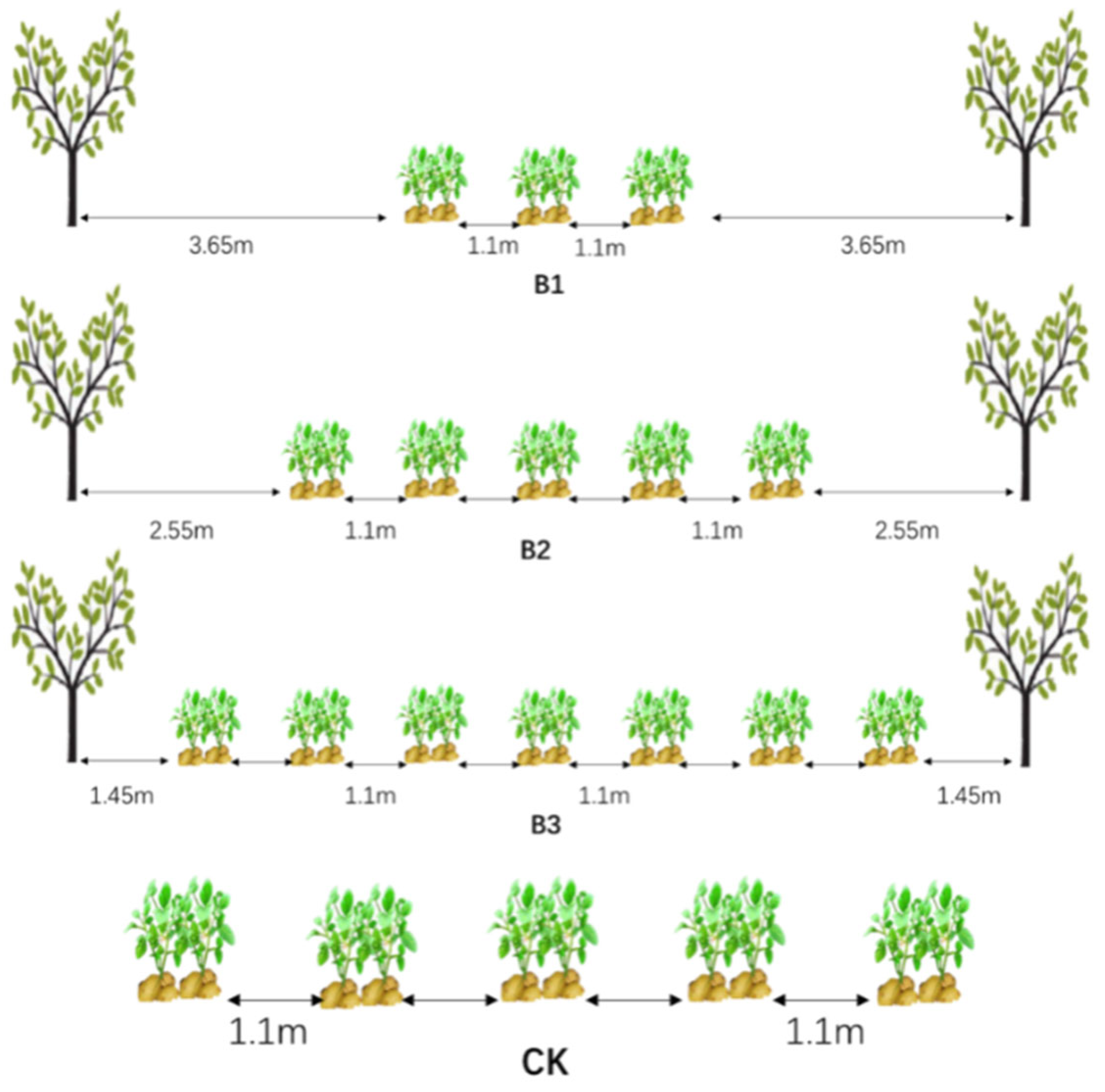
The experiment was arranged in a randomized complete block design (RCBD) with four treatments and three replications, for a total of 12 plots. Each plot measured 40 m2 (5 m × 8 m), oriented parallel to the north-south walnut tree rows and positioned within the inter-row space. The treatments consisted of (1) CK (Control): A monocropped potato system. Potatoes were planted on a single, large ridge in a double-row pattern (two rows per ridge) with a ridge spacing of 1.1 m. This served as the baseline. (2) Walnut–potato intercropping systems (B1, B2, B3): In these treatments, potatoes were cultivated between two parallel rows of walnut trees spaced 10 m apart (row-to-row) and 5 m apart (tree-to-tree within rows). The intercropping treatments varied based on the number of potato ridges established between the tree rows:
B1: Three potato ridges (double-row pattern per ridge);
B2: Five potato ridges (double-row pattern per ridge);
B3: Seven potato ridges (double-row pattern per ridge).
The B1, B2, and B3 treatments thus corresponded to progressively narrower potato cultivation belts (approximately 3.3 m, 5.5 m, and 7.7 m wide, respectively) centered within the 10 m inter-row space, creating a gradient of proximity to the walnut tree shade. All potato plots were established using mechanical ridging and plastic film mulching. Within each ridge, potatoes were planted in a double-row configuration. The plans were spaced at 25 cm. The spatial arrangement of ridges and walnut trees for each treatment is detailed in Figure 1. To ensure comparability and minimize confounding variables, all plots received uniform management throughout the growing season, including irrigation volume, fertilizer application rates, weeding, and pest control. Thus, any observed differences among treatments can be confidently attributed to the cropping system itself.

2.4. Plot Management Practices

Before plowing, 2 m3 of farmyard manure, 35 kg of diammonium phosphate, 15 kg of potassium sulfate, and 5 kg of urea were applied per mu. During the growing season, irrigation was applied four times in total. The first irrigation was conducted when the seedling height reached 10–15 cm, at which time 10 kg of urea per mu was top-dressed. For the subsequent two irrigations, 4 kg per mu of water-soluble NPK fertilizer (N:P:K = 13:5:27) was top-dressed. Irrigation was stopped 15 days before harvest. Intertillage and weeding were performed at the full seedling stage. During each growth stage (leaf unfolding stage, bud stage, initial flowering stage (BBCH 65), full flowering stage (BBCH 65)), 0.3% monopotassium phosphate was applied once as foliar spray. During the seedling stage, fungicides such as azoxystrobin + difenoconazole and mancozeb were sprayed to prevent diseases. “Dichongwang” (a soil insecticide) was used to drench the root zone to prevent cutworms and white grubs.

2.5. Enzyme Activities Measurements

Representative sampling and measurement points were established on potato plants from specific ridge positions relative to the walnut tree rows: the ridges adjacent to the north (N) and south (S) sides of the trees, and the middle ridge (M). Data was averaged for analysis. At the potato blooming stage, three uniformly growing representative plants were selected from the designated sampling points for each treatment. From each plant, the third fully expanded leaf from the top of the main stem was collected as a fresh sample. The leaf samples were rinsed with distilled water, gently blotted dry with filter paper, flash-frozen in liquid nitrogen, and subsequently stored at −80 °C. These samples were used to determine key physiological indicators: soluble protein content, malondialdehyde (MDA) content, peroxidase (POD), and catalase (CAT) [30]. The enzymes’ activities were assessed using commercially available kits from Grace Biotechnology, Suzhou, China (https://www.geruisi-bio.com/product/G0105W, accessed on 20 June 2025) [31]. Superoxide dismutase (SOD) activity was measured using WST-8 method using detection kits, Grace Biotechnology, Suzhou, China [32]. POD activity was determined by the guaiacol oxidation method, expressed as ΔOD470·min−1·g−1 FW. CAT activity was measured by H2O2 decomposition, expressed as μmol·min−1·g−1 FW. SOD activity was measured by the WST-8 inhibition method, with 1 U defined as 50% inhibition of WST-8 reduction, expressed as U·g−1 FW. MDA content was quantified by the TBA method, expressed as nmol·g−1 FW. Soluble protein content was determined by the Coomassie Brilliant Blue method (BSA standard), expressed as mg·g−1 FW. All assays followed the manufacturer’s protocol without modification.
These measurements were conducted according to the manufacturer’s instructions.

2.6. Determination of Photosynthetic Parameters

At the potato bud emergence stage (i.e., when flower buds first become visible, BBCH 51), a LI-6400XT portable photosynthesis system (LI-COR Biosciences, Lincoln, NE, USA) was used to measure photosynthetic parameters every 2 h from 9:00 to 19:00. Gas exchange measurements were conducted exclusively at the bud emergence stage, as this period represents the critical transition to tuber initiation when photosynthetic capacity most directly determines yield potential. The leaf chamber conditions were maintained as follows: flow rate 400 μmol·s−1, reference CO2 concentration 400 μmol·mol−1, photosynthetically active radiation (PAR) 1500 μmol·m−2·s−1, vapor pressure deficit (VPD) 1.2 kPa, and block temperature 28 °C. Readings were recorded after a stabilization period of 120–200 s, ensuring that Pn and Gs variations remained below 0.5% for at least 30 s [33]. For each treatment, three representative plants were selected, and fully expanded functional leaves from similar canopy positions were used to determine key photosynthetic indicators, including net photosynthetic rate (Pn), intercellular CO2 concentration (Ci), stomatal conductance (Gs), and transpiration rate (Tr).

2.7. Determination of Yield and Marketable Rate

At potato harvest, actual yield was measured, and yield components were analyzed. The entire plot was harvested at maturity (BBCH 97) to determine the actual yield per plot and count the marketable rate. Marketable tubers were defined as those free from deformities (no cracks, greening, or disease damage) with a single tuber weight ≥ 100 g, consistent with local commercial grading standards for fresh market potatoes. The yield per hectare was calculated based on the planting area of potatoes within the intercropping system. To make the yields of monocropped and intercropped potatoes comparable, the actual harvested yield of each treatment plot was converted to yield per hectare for comparative analysis.

2.8. Statistical and Data Analysis

All data were subjected to one-way analysis of variance (ANOVA) using a randomized complete block design (RCBD) framework with four treatments and three replications analyzed via Python (v3.10) using the ‘scipy.stats’ module. Prior to ANOVA, data were tested for normality and homogeneity of variances using Levene’s test. For the gas exchange variables (Pn, Gs, Ci, Tr), which were measured at six time points (09:00–19:00 h) across nine sub-samples per treatment, values were averaged per replicate prior to analysis to avoid pseudo-replication. Mean separation among treatments was performed using Bonferroni-corrected pairwise comparisons, and treatment means were assigned letter groups at a significance threshold of p ≤ 0.05. Results are reported as mean ± standard error (SE). Pearson correlation coefficients were calculated among all measured variables to assess inter-variable relationships. Principal component analysis (PCA) was conducted on standardized (z-score normalized) data to visualize multivariate treatment separation and identify variable loading patterns. All statistical analyses and data visualization were performed using R studio. All data were collected from replicates per treatment, and mean values were used for gray relation analysis (GRA) to ensure consistency with the treatment-level comparison. Data were normalized to eliminate dimensional effects using the initial value method and the analysis was performed as per the methodology of [34,35].

3. Results

3.1. Effects of Different Intercropping Spacings on Soluble Protein Content in Potato Leaves

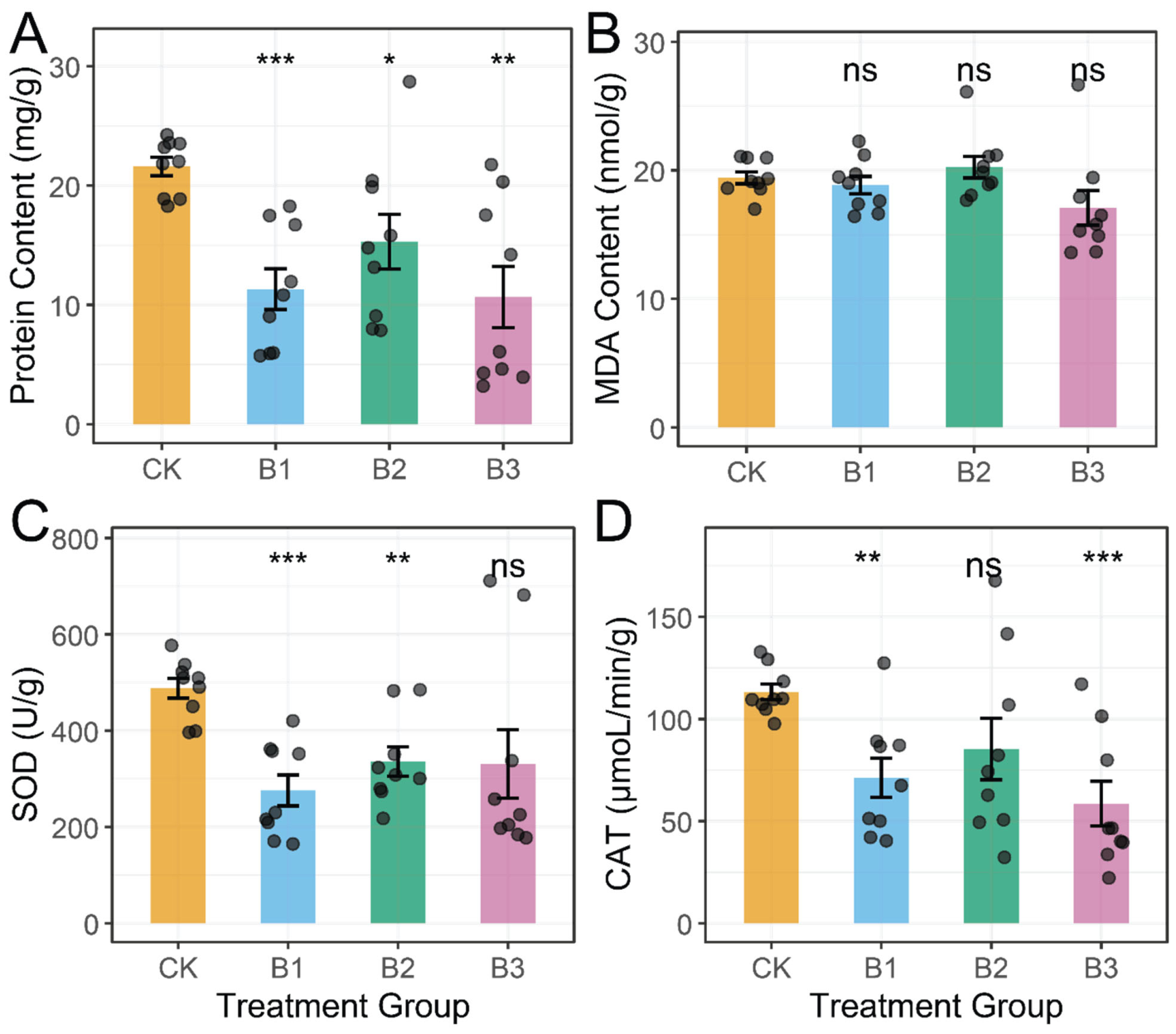
Soluble protein includes major enzymes, transporters, and regulators essential for plant metabolism. It is a key physiological indicator, reflecting a plant’s metabolic status, stress response, and potential productivity [36]. Therefore, total soluble protein was measured in all treatments. Figure 2A showed that the soluble protein content in potato leaves significantly differed among intercropping treatments. CK had the highest value at 21.5 mg/g, which was significantly higher compared with all other intercropped treatments (p < 0.001). For the intercropping groups, the B1 treatment had the minimum content, with 11.3 mg/g of soluble protein, and the B3 treatment had 10.6 mg/g, while B2 recorded an intermediate value of 15.2 mg/g. This suggests that walnut–potato intercropping suppresses protein synthesis in potato, with the effect being most severe under lower ridge density (B1) and mitigated somewhat under higher ridge density (B2).

3.2. Effects of Different Intercropping Spacings on MDA Content in Potato Leaves

Oxidative stress and resultant cellular damage are key indicators of plant stress [37]. MDA levels are measured in plants to link with stress levels. Our results showed that MDA content did not differ significantly among treatments (Figure 2B). CK, B1, B2, and B3 showed comparable levels of MDA, ranging from 17.0 to 20.2 nmol/g. This absence of significant change in membrane lipid peroxidation suggests that, despite the measurable reductions in photosynthetic rate and antioxidant enzyme activities under shade stress, the walnut–potato intercropping system did not induce severe oxidative membrane damage in potato leaves at the bud emergence stage (BBCH51).

3.3. Effects of Different Intercropping Spacings on SOD and CAT Content

The result revealed that SOD activity trends in the same way as CAT, with CK having the highest activity (487.8 µmol/min/g), which is significantly higher than B1 and B2 (Figure 2C,D). B2 had an increased CAT activity (275.8 µmol/min/g), which was not significantly different from CK. The steady decline in SOD activity in intercropped treatments indicates that walnut and potato intercropping negatively affects the plant’s enzymatic antioxidant mechanism. The trend suggests that B2 may represent a more balanced configuration, where stress is present but not overwhelming, allowing for partial maintenance. Catalase (CAT) activity followed a pattern-like SOD activity, with CK exhibiting the highest activity (113.2 µmol/min/g), significantly greater than B1 and B3 (p < 0.001 and p < 0.01, respectively). B2 showed moderately elevated CAT activity (85.3 µmol/min/g), not significantly different from CK. The consistent reduction in CAT activity across the majority of intercropped treatments shows that walnut–potato intercropping impairs the CAT activities. The trend suggests that B2 may represent a more balanced configuration, where stress is present but not overwhelming.

3.4. Effects of Different Intercropping Spacings on POD Content

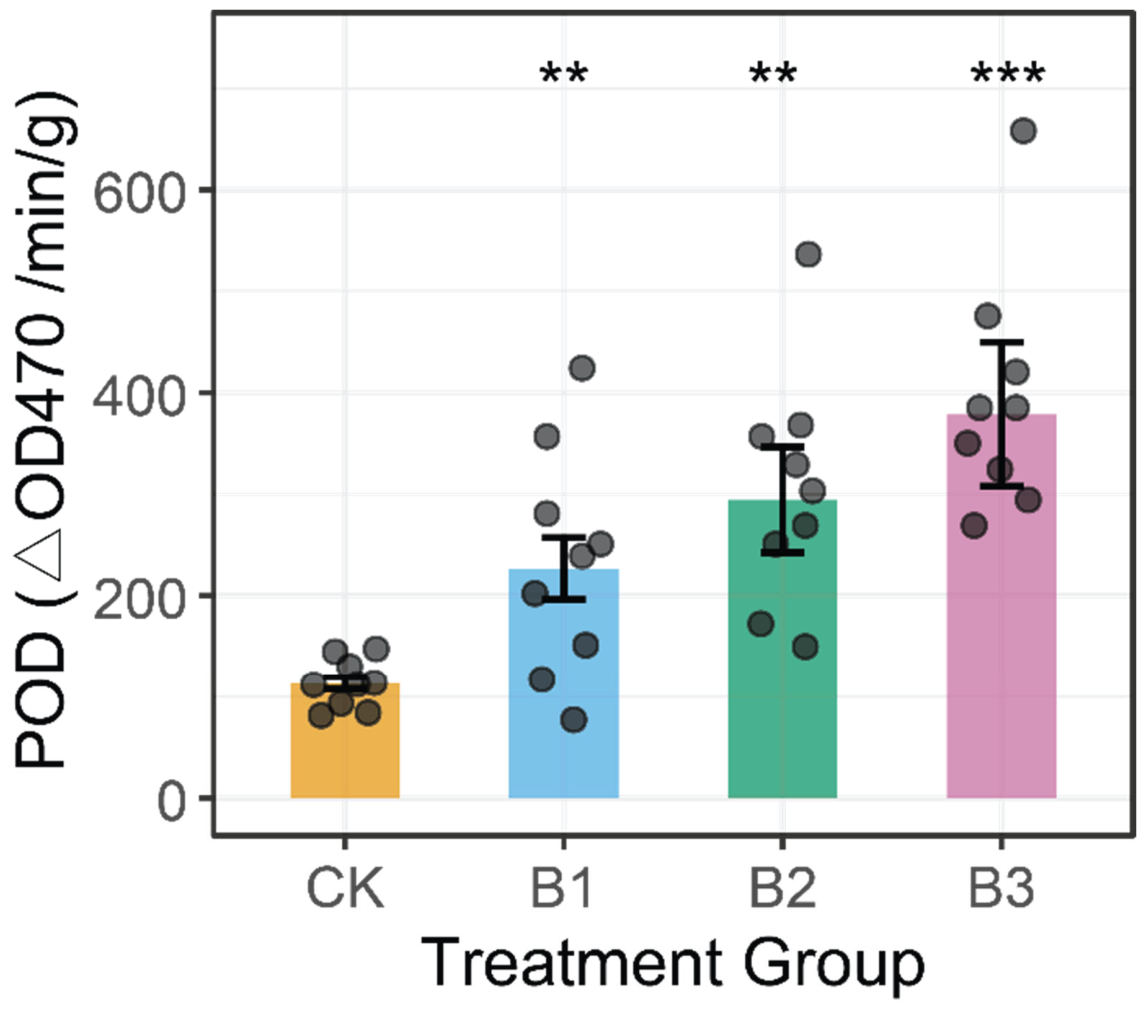
Peroxidase (POD) activity in potato leaves varied significantly among treatments (Figure 3). The control (CK) showed the lowest activity (106.7 U/g), whereas B3 showed the highest (403.7 U/g), a highly significant difference (p < 0.001). B1 and B2 displayed intermediate levels. B3 was significantly higher than CK and showed the highest level among intercropping treatments. Replicate data showed consistent responses per treatment. These results are consistent with an antioxidant response to shade-induced stress in the B3 intercropping configuration; however, POD activity alone cannot establish causality between shade stress and oxidative damage. The observed increase may reflect adaptive acclimation to reduced light availability rather than direct evidence of cellular injury. These results indicate that the B3 intercropping configuration strongly induces peroxidase activity.

3.5. Effects of Different Intercropping Spacings on Pn in Potatoes

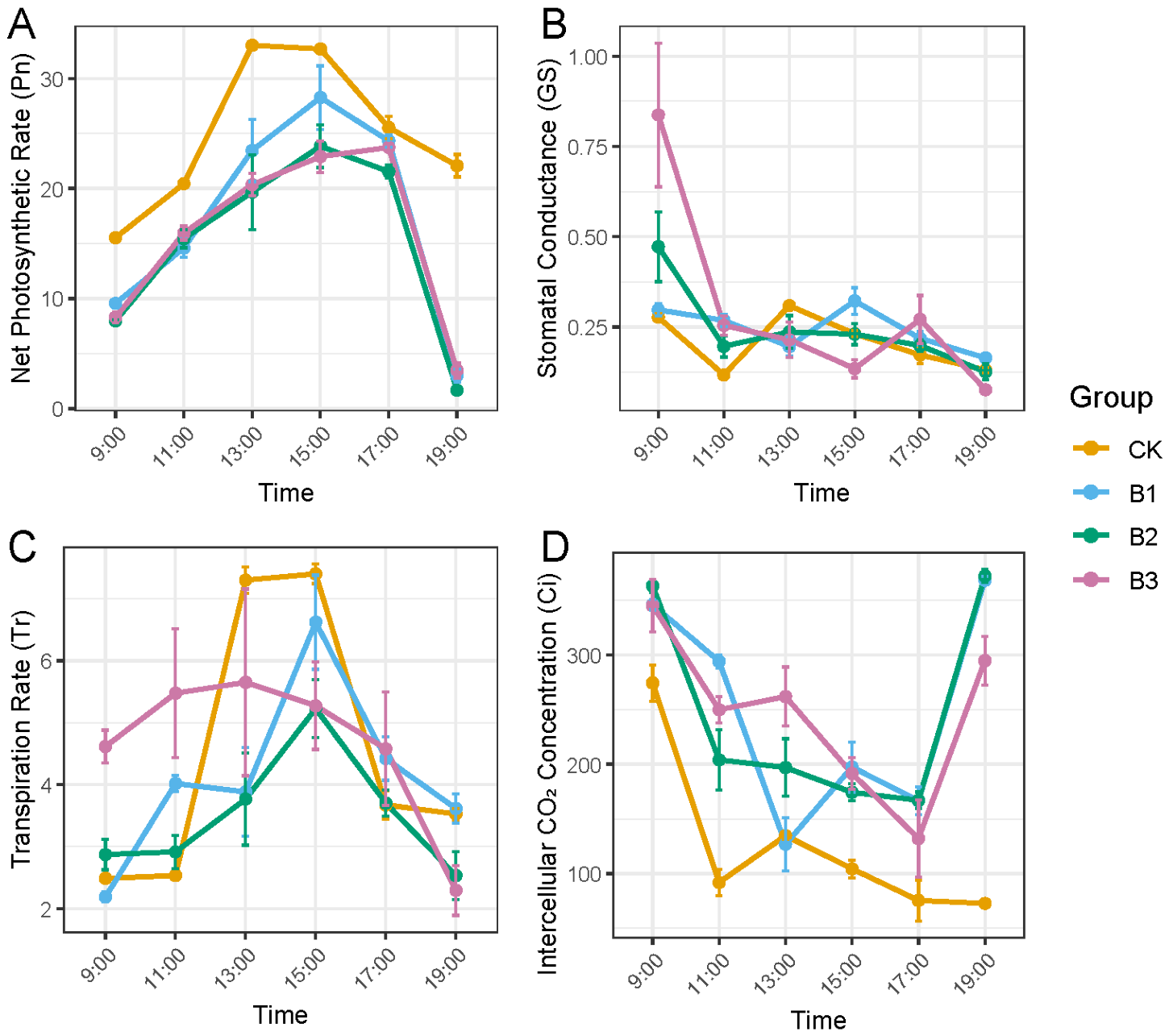
The net photosynthetic rate (Pn) was measured across all treatments and compared to the monocrop control (CK). A typical bimodal pattern was observed, characterized by a morning peak followed by a midday depression and a secondary afternoon peak. For CK, Pn increased rapidly from 9:00 (15.6 µmol·m−2·s−1) to a primary peak at 13:00 (33.8 µmol·m−2·s−1), followed by a midday depression to 33.2 µmol·m−2·s−1 at 15:00, before declining sharply after 17:00 to 22.1 µmol·m−2·s−1 at 19:00. This bimodal pattern—with the characteristic midday depression at 15:00—was evident in all treatments, though the magnitude varied with shade intensity.
The net photosynthetic rate showed a clear diurnal pattern, peaking around 13:00–15:00 for all groups before declining sharply in the late afternoon. The CK treatment consistently showed the highest Pn values throughout the day, indicating it was free from shading interference. All treatments showed a typical bimodal diurnal pattern, but the monocrop control (CK) maintained the highest net photosynthetic rate throughout the day (Figure 4A). Among intercropping systems, B2 showed the highest Pn during peak hours (up to 28.6 µmol m−2 s−1), followed by B3 and B1, which exhibited markedly lower rates (maxima of 24.1 and 21.8 µmol m−2 s−1, respectively). The sharp decline in Pn after 17:00 was most pronounced in CK and B2, while B1 and B3 maintained relatively stable but low rates until 19:00. This suggests that walnut trees suppress photosynthesis in potato, with B2 offering the least reduction in carbon assimilation capacity.

3.6. Effects of Different Intercropping Spacings on Stomatal Conductance (Gs) and Transpiration Rate (Tr) in Potatoes

Both stomatal conductance (Gs) and transpiration rate (Tr) showed strong diurnal patterns. Gs peaked early in the morning (09:00) and declined thereafter, while Tr peaked later, between 13:00 and 15:00, aligning with the period of maximum photosynthetic activity (Figure 4B,C). Treatment B3 showed the highest initial Gs at 09:00 but experienced the most rapid decline, correlating with its consistently lowest Tr values. This pattern suggests an effective stomatal regulation strategy to minimize water loss. In contrast, the CK treatment maintained moderate, stable Gs levels and exhibited the highest Tr during peak hours, reflecting greater stomatal openness and higher water use. Also, all the intercropping treatments (B1, B2, and B3) showed less Gs and Tr compared to CK after 11:00, implying that intercropping promoted stress-responsive decline in gas exchange and transpiration of water.

3.7. Effects of Different Intercropping Spacings on Intercellular CO2 Concentration (Ci) in Potatoes

Intercellular CO2 concentration (Ci) varied inversely with Pn and Gs in most cases, rising when photosynthetic activity was suppressed (Figure 4D). The CK treatment had a sharp decrease in Ci concentration from 09:00 to 13:00, indicating maximum CO2 assimilation. The B3 treatment had higher concentrations of Ci, indicating impaired CO2 fixation. It is observed that there has been a substantial rise in Ci in all treatment practices at 19:00, which can be attributed to stomata closure and decreased photosynthesis during the evening. Even though there has been a rise in Ci due to decreased photosynthesis in all treatment practices, it has been substantial in B1 and B3 practices. This further supports the fact that these two practices of intercropping create stressful conditions in potato plants.

3.8. Effects of Different Intercropping Spacings on Potato Yield Traits

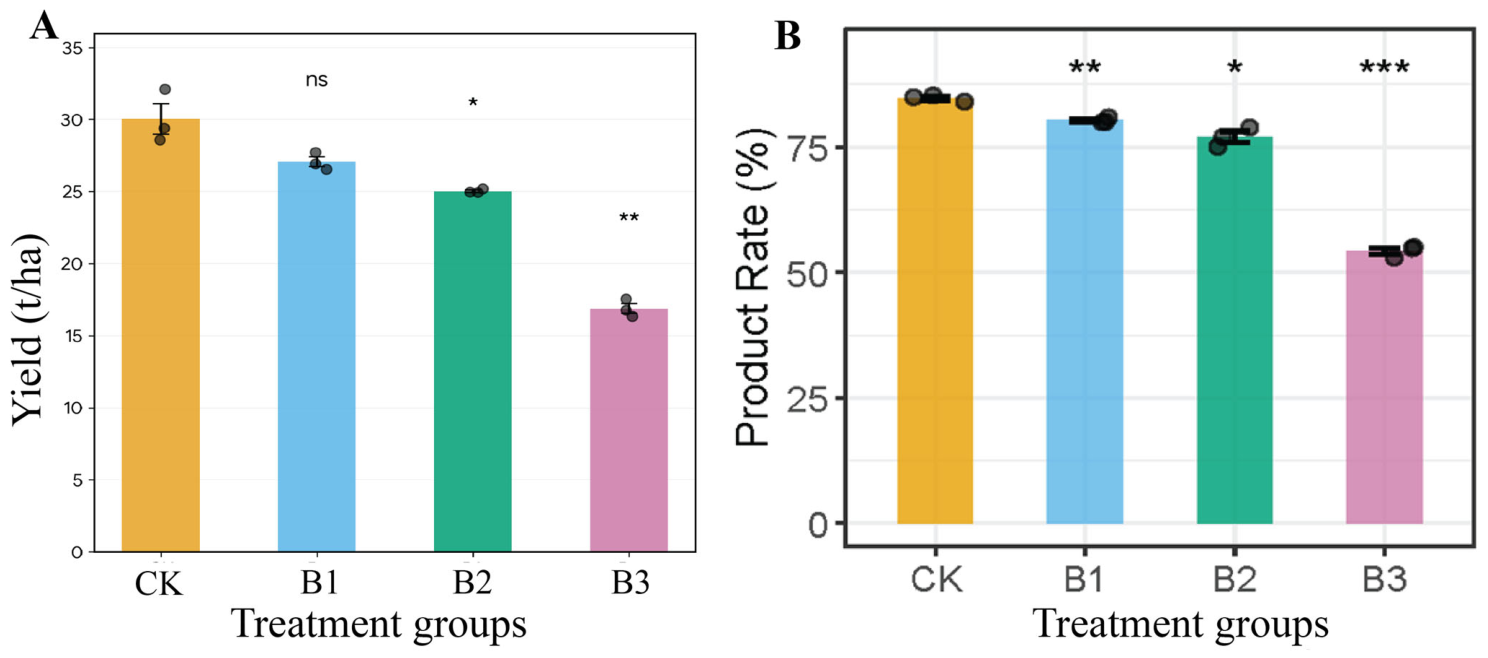
Monocropped potatoes (CK), free from walnut tree shading and root competition, exhibited stable physiological metabolism and achieved the highest yield. B1, with minimal walnut shading and lower potato density, received sufficient light in the mid-to-late growth stages and experienced weak intraspecific competition. It resulted in efficient production of photosynthetic products, along with the second-highest production. There was no difference in production in B1.
There was no significant difference in yield from monoculture in B1. B2, with moderate shading and an intermediate planting density, balanced light capture and resource use. B1 occupied a substantially larger land area per potato plant (10 m × 5 m inter-tree space with only three potato ridges), resulting in lower overall land-use efficiency and reduced economic returns from the walnut component due to fewer trees per hectare. B2 yield was moderately lower than both CK and B1; it achieved the optimal balance across different criteria like productivity, land use efficiency and physiological resilience. Along with medium soluble protein content and better stress resistance, it obtained a balance between photosynthesis efficiency and production, along with medium production. B3, having severe walnut shading because of the shortest distance between the plantation sites of B3 and walnut trees, along with the highest planting density of potatoes, received less illumination. This led to insufficient light per plant and intense competition, both intraspecific and with the trees. Along with its inferior physiological indicators, these factors resulted in the significantly lowest yield (Figure 5). The core mechanism underlying these yield differences in the intercropping system is that closer tree spacing increases shading, reducing photosynthetic rate and carbohydrate accumulation, while overly dense planting exacerbates intraspecific competition and inhibits growth. In contrast, the moderate.

3.9. Gray Relational Analysis Evaluation of Photosynthesis and Yield in the Intercropping System

Gray relational analysis (GRA) was employed to evaluate the relative contribution of photosynthetic parameters to yield. Unlike conventional correlation or regression analyses that require large sample sizes and strict distributional assumptions, GRA operates effectively with small datasets and does not require typical statistical prerequisites. For the walnut and potato intercropped system, it can be concluded that the main restricting factors were the net photosynthesis rate (Pn) and the stomatal conductance (Gs) with gray relations of 0.776 and 0.746, respectively (Table 1). The moderate spacing (2.55 m, B2) improved the in-canopy light environment. This created an efficient synergy between Pn and Gs, significantly enhancing both carbon assimilation and water use efficiency, which collectively drove its yield advantage. Spacings that were too close reduced photosynthetic efficiency because of light stress, verifying the decisive role that light environment regulation plays in optimizing the intercropping system. Therefore, optimization of tree spacing to avoid excessively close shading and regulation of planting density through control of the number of ridges is key for increasing yield in walnut–potato intercropping.

3.10. Intercropping Modulates Physiological Stress Responses and Yield

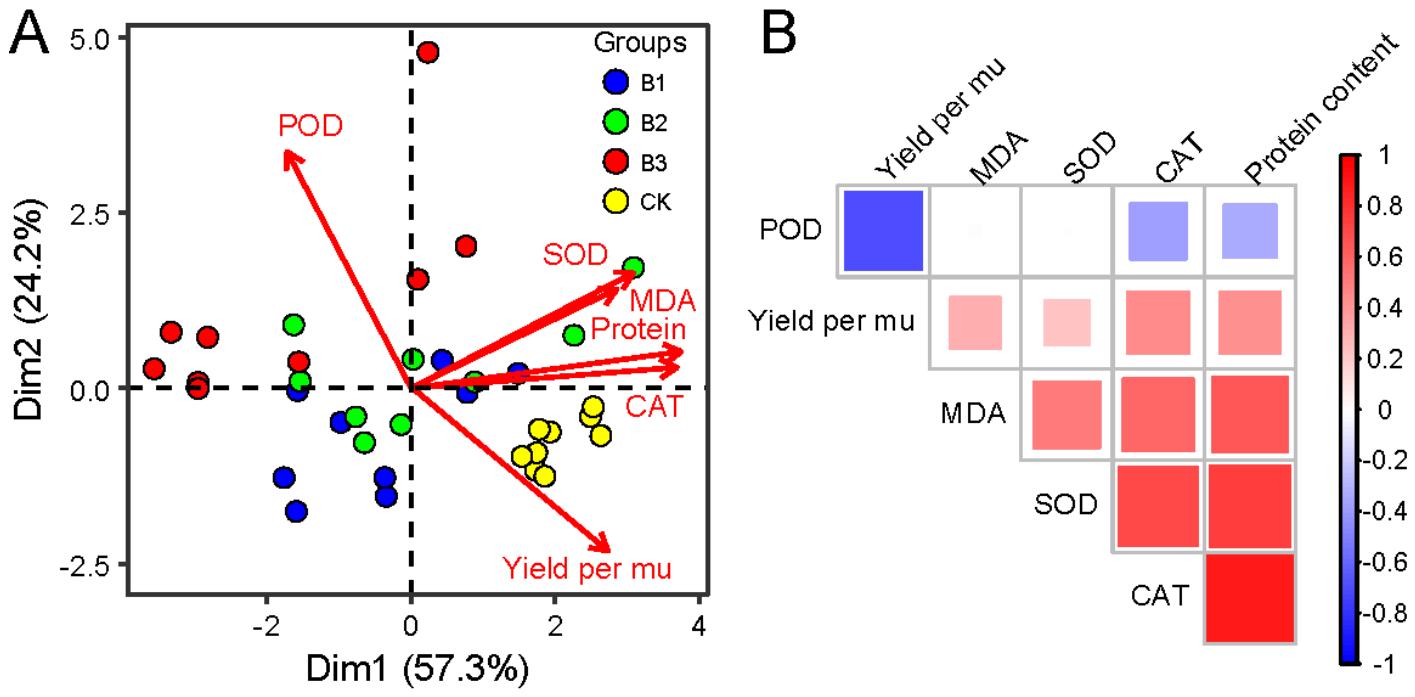
Our multivariate analysis clearly showed that the monocrop (CK) and the intercropped treatments (B1, B2, and B3) showed different physiological and yield characteristics. PCA (Figure 6A) showed that the first principal component (PC1, 57.3% variance) primarily separated CK from the intercropped groups. CK clustered positively along PC1, associated with higher values for yield and CAT activity, indicating the highest productivity and antioxidant capacity under monoculture. In contrast, the intercropped treatments (particularly B1 and B3) clustered negatively along PC1 and were associated with elevated levels of SOD, MDA, and soluble protein—markers commonly linked to oxidative stress and physiological adaptation. The correlation heatmap was generated to understand the relationship among the traits (Figure 6B). Findings showed that yield was strongly positively correlated with CAT activity and negatively correlated with SOD and MDA. This suggests that a robust, CAT-mediated antioxidant capacity supports higher yield in the non-stressed monoculture system. In contrast, increased SOD and MDA levels in intercropped systems indicate stress response, likely due to competition or altered microclimate under walnut trees. Notably, POD showed a strong negative association with yield. Overall, while intercropping induced measurable physiological stress (elevated SOD and MDA), the treatment with moderate spacing and density (B2) exhibited an intermediate position in the PCA, indicating a partially mitigated stress response.

3.11. Normalized Radar Chart

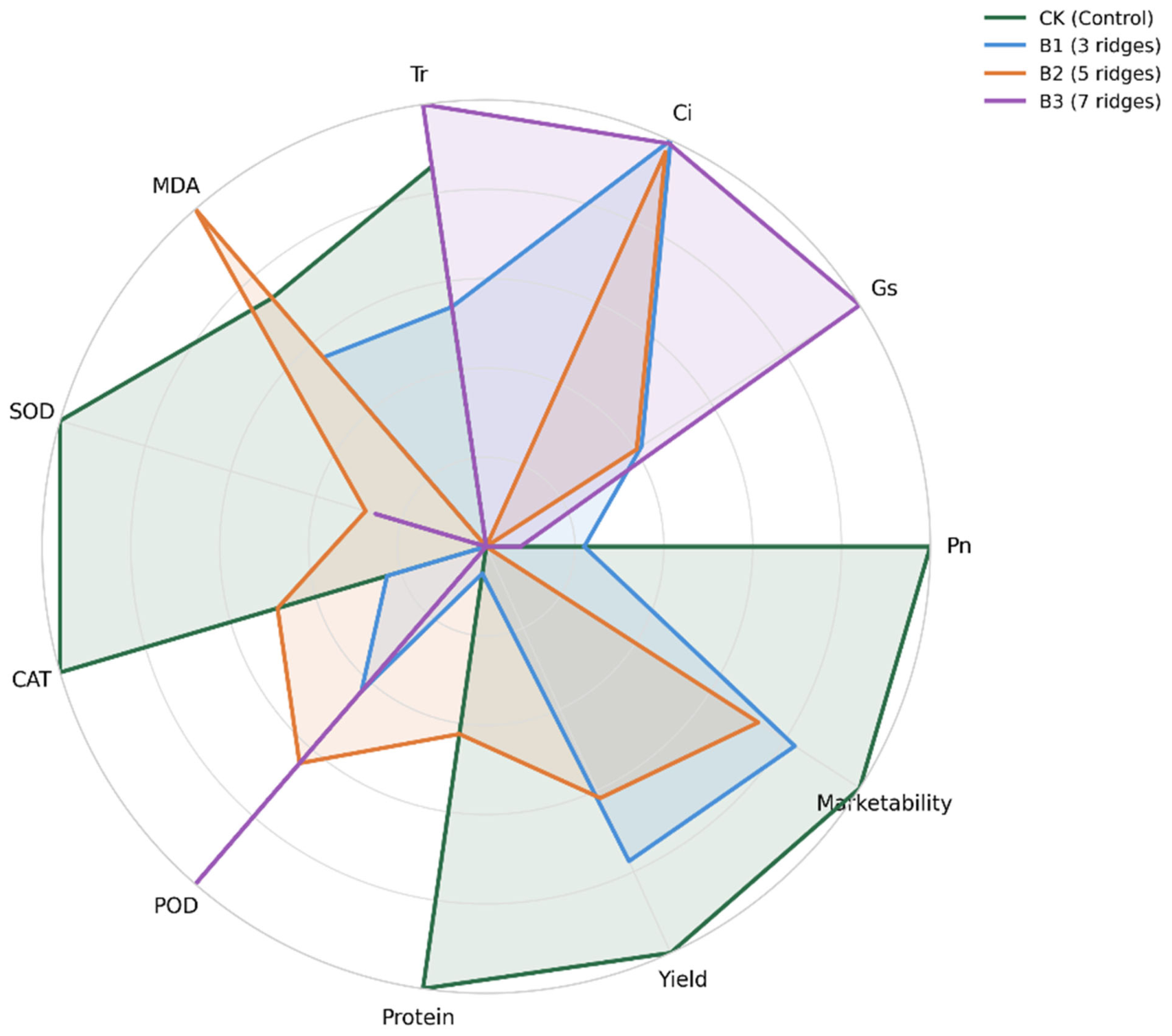
The radar chart plots all eleven variables on separate axes radiating from the center, with all variables normalized to a 0–1 scale so they are directly comparable. Each treatment is represented by a colored polygon (Figure 7). The area enclosed by a polygon indicates the overall performance of that treatment across all variables simultaneously. The CK polygon extends farthest on the Pn, protein, yield, marketability, and SOD axes—all variables where higher values represent better agronomic or physiological performance. The intercropping treatments (B1, B2, B3) extend further on POD, Ci, and Gs axes, which reflect stress responses and stomatal adjustments rather than performance. B2 occupies a middle position—closer to CK on yield and marketability axes than B3, while showing moderate stress enzyme induction. This visually reinforces the quantitative finding that B2 represents the best-performing intercropping treatment. Polygon of B3 treatment showed markedly smaller on the yield, protein, and Pn axes, confirming the agronomic inferiority of seven-ridge intercropping. Its extension toward POD and Ci reflects the heaviest shade stress in the experiment.

4. Discussion

The present study shows that intercropping potato with walnut trees significantly alters the physiological, biochemical, and agronomic performance of the understory crop. This fact is well studied in previous studies related to intercropping. This is a common phenomenon of temperate agroforestry systems, where competition for light and allelopathy are primary drivers [38]. The reduced photosynthetic efficiency is a response to lower light availability in intercropping systems [39]. While monocropping (CK) naturally performed better than the intercropped groups across the board—from photosynthesis to yield—not all intercropping setups struggled equally. We found that the B1 and B2 configurations were much more resilient than B3. This suggests that with the right intercropping layout, farmers can successfully balance walnut–potato agroforestry without seeing the sharp drop in productivity found in dense planting systems. These findings offer critical insights into optimizing walnut–potato agroforestry systems for sustainable land use without compromising productivity.

4.1. Walnut–Potato Intercropping Induces Physiological Stress with Spacing

The intercropping of potato with walnut trees significantly altered the physiological status of potato plants. The stress response in plants varied due to intensity depending on the spatial configuration. Geometry is an important factor in the intercropping system [40]. Monocrop potatoes showed higher biochemical performances, including the highest soluble protein content and catalase (CAT) activity (Figure 2). This is a clear indication that systemic suppression of metabolic machinery was observed in intercropped treatments, likely due to light limitation, root competition, or walnut allelopathy. Walnut is well known for its potent allelochemical that suppresses antioxidant enzyme activity—including CAT—in sensitive species [41]. Reduced CAT activity in intercropped potatoes aligns with documented responses to juglone exposure, which directly affects the reactive oxygen species (ROS) [42]. Moreover, the decline in antioxidant capacity and soluble protein content suggests the induction of oxidative stress, which could be attributed to both light limitation and the allelopathic influence of juglone [43]. Monocropped potatoes (CK) exhibited superior biochemical performance, including the highest soluble protein content and catalase (CAT) activity—indicators of robust metabolic capacity and antioxidant defense [44]. In contrast, all intercropped treatments showed suppressed protein synthesis and reduced CAT/SOD activity (Figure 2), suggesting resource limitation or allelopathic interference from walnut trees. Notably, B1 (widest spacing) showed the lowest protein levels, while B2 (moderate spacing) maintained intermediate values, implying that extreme spacing configurations—either too wide or too narrow—exacerbate stress. The elevated peroxidase (POD) activity in B3, despite its low yield, suggests a compensatory mechanism under severe shading and competition, where POD may play a role in scavenging reactive oxygen species when SOD/CAT systems are compromised [13]. Importantly, while MDA levels remained stable across treatments—indicating no severe membrane damage [13] —the consistent reduction in key antioxidants and proteins underscores chronic, sub-lethal stress that directly impairs growth potential.

4.2. Optimizing Spacing Is Critical for Balancing Agronomical Parameters

Photosynthetic performance and yield were strongly governed by the light modulated by walnut tree spacing and potato ridge density. The monocrop control (CK) showed the highest net photosynthetic rate (Pn) and transpiration rate (Tr). These high rates showed that plants were not facing any light stress and their stoma were functioning at peak efficiency. This aligns with the fact that unrestricted light availability maximizes photosynthetic electron transport and RuBisCO carboxylation efficiency in specialized plants.
Among intercropped systems, B2 emerged as the most balanced configuration, exhibiting the highest Pn during peak hours and moderate but functional gas exchange (Gs, Tr), which translated into a medium-yield outcome (Figure 4). This finding is consistent with studies on agroforestry light partitioning, where moderate shade (40–60% full sunlight) can enhance photosynthetic light-use efficiency [45].
These findings were similar to the results obtained from the gray relation analysis. The gray relation analysis also showed Pn and Gs as the primary drivers of yield. In contrast, plants in B3 treatment groups with relatively high shading resulted in the lowest yield. The Ci level in B3 potato plants was higher and Tr was minimal among all treated groups. B1, while less shaded, had low protein and antioxidant capacity, resulting in suboptimal carbon assimilation and only marginally better yield than B3. While B1 yield was statistically comparable to that of monoculture (CK) (p > 0.05), this configuration employed only three potato ridges within the 10 m inter-row space, resulting in substantially lower overall planting density and fewer potato plants per unit area. Consequently, B1 underutilized the available land area and reduced the walnut tree population density per unit area. Previous references show that walnut tree canopies often limit critical light (PAR) for the crops growing beneath them. This shading creates a high-stress environment where both photosynthetic efficiency and protein synthesis begin to drop [46]. Shading showed elevated Ci with minimal Tr, a pattern characteristic of non-stomatal limitation where reduced mesophyll conductance and carboxylation efficiency dominate over stomatal closure [47,48]. Multivariate analysis further confirmed that CK clustered separately from intercropped groups along axes defined by high yield and CAT, while B2 occupied an intermediate position (Figure 6) supporting the notion that moderate spacing optimizes the trade-off between light capture and stress tolerance.
Thus, successful agroforestry planning should prioritize spacing to maximize photosynthetic efficiency without overwhelming plant stress responses.

4.3. Yield and Marketability Aspects

The yield and marketability are core aspects of farming from agronomic perspective. The monoculture of potato showed the highest yield and product rate (84.2%) among all treatments. B1 with high spacing was the only treatment that showed comparable yields with no significant difference in product rate (79.6%) with monoculture (Figure 5A,B). This revealed that other intercropping treatments were significantly lower than monocropping. From a yield perspective, it was found that B1 is a practical option. It enables dual income from walnut nuts/timber and potato tubers without substantial loss in either quantity. The crop yield has partial influence on annual crop yield for the long-term ecological and economic benefits provided by trees in intercropping systems [49]. Findings showed that well designed intercropping can support dual production streams. The yield in B1 was not significantly different from monocrop potatoes. The comparable success of B1 was likely from an optimized balance where increased spacing from the tree row sufficiently mitigates light and allelopathy [38]. In contrast, B3 suffered dramatic reductions in both yield and product rate (56.5%), indicating that high-density planting near walnut trees severely compromises tuber formation and marketability. The elevated intercellular CO2 concentration (Ci) observed in B3 during the late afternoon further supports the notion of non-stomatal limitations, such as impaired Rubisco activity or sink strength, contributing to yield loss. Under conditions of optimal photosynthesis, increased stomatal conductance typically drives CO2 uptake, lowering Ci. Conversely, an elevated Ci under light suggests that non-stomatal limitations are the primary constraint [50]. The gray relational analysis indicated that the net photosynthetic rate (Pn) and stomatal conductance (Gs) were the key factors influencing yield in the intercropping system, with significantly higher relational degrees than transpiration rate (Tr) and intercellular CO2 concentration (Ci). Pn directly determines carbon assimilation efficiency, while Gs, by regulating CO2 intake, acts synergistically with Pn, collectively influencing dry matter accumulation [51]. In B2 (the five-ridge planting pattern at 2.55 m spacing), moderate shading stabilized Pn and maintained Gs in a state efficient for CO2 uptake, establishing a yield foundation characterized by “high photosynthetic efficiency—high gas exchange.” However, photosynthetic gas exchange alone does not fully explain the yield outcomes observed across treatments. The relationship between source activity (Pn, Gs) and sink capacity (tuber number, size, and marketability) must be considered. In B1, low planting density (three ridges) provided adequate source leaves per plant but limited total sinks per hectare, constraining overall yield potential despite comparable per-plant performance. In B3, severe shading reduced source strength, while high planting density intensified intraspecific competition for assimilates, restricting carbohydrate translocation to tubers and reducing marketable proportion. This decoupling suggests that yield loss in B3 arose from sink limitation and feedback inhibition of photosynthesis rather than oxidative damage. The success of B2 thus reflects an equilibrium where moderate shade maintained sufficient source activity without overwhelming sink capacity, optimizing the balance between carbon assimilation and tuber filling.
Our results present a solid conclusion where the efficient use of intercropping is highlighted. The study has certain limitations like the experiment conducted over a single growing season at one location, and single cultivars of potato (“Favorita”) and walnut (“Wen185”), restricting generalizability. Furthermore, this study measures potential allelopathic effects of walnut root exudates on potato growth.

5. Conclusions

The present study suggests that walnut–potato intercropping imposes a non-stomatal, biochemical limitation on photosynthesis, as evidenced by the significantly reduced net photosynthetic rate (Pn) and elevated intercellular CO2 concentration (Ci) across all intercropping treatments relative to monoculture. The monocrop (CK) maintained the highest levels of soluble protein (21.6 mg g−1 FW) and antioxidant enzyme activities (SOD and CAT), consistent with its superior photosynthetic capacity and unrestricted light environment. Peroxidase (POD) activity increased progressively from CK through B1, B2, and B3, constituting a dose-dependent shade-stress response; yet the malondialdehyde (MDA) content remained statistically unchanged across treatments, indicating that antioxidant defenses were sufficient to prevent oxidative membrane damage. Among the intercropping configurations, B2 (five ridges) emerged as the optimal arrangement: it achieved tuber yield (25,025 kg ha−1) and marketability (77%) statistically comparable to monoculture while sustaining productive intercropping with walnut. B3 (seven ridges) exceeded the shade tolerance threshold of potato, resulting in a 44% yield reduction and fewer than half of tubers reaching commercial grade, confirming that beyond a critical ridge density, shading becomes the dominant constraint on productivity. These findings establish ridge density as the primary management lever in walnut–potato systems and provide a quantitative basis for optimizing intercropping configurations in arid and semi-arid agroforestry systems.

Author Contributions

Conceptualization, methodology, software, J.L., R.Y. and Y.J.; data curation, writing—original draft preparation, Y.J., B.X., H.S. (Hui Sun) and X.Z.; visualization, investigation, Y.W., G.R. and H.S. (Hongfei Shen); supervision, fundings, R.Y. and Y.L.; software, validation, J.L., B.X. and Y.J.; writing—reviewing and editing, J.L., G.R. and Y.L. All authors have read and agreed to the published version of the manuscript.

Funding

This work was supported by the Key Research and Development Task Special Project of Xinjiang Uygur Autonomous Region: “Research on Key Technologies for Quality Improvement and Efficiency Enhancement in the Potato Industry in Xinjiang” (Grant No. 2022B02044) and the National Modern Agricultural Industry Technology System (Grant No. CARS-09-ES36).

Data Availability Statement

The original contributions presented in this study are included in the article. Further inquiries can be directed to the corresponding authors.

Acknowledgments

During the preparation of this manuscript/study, the authors used Qwen3.6-Plus, 3.6Plus for the purposes of language correction and revision. The authors have reviewed and edited the output and take full responsibility for the content of this publication.

Conflicts of Interest

The authors declare no conflicts of interest.

References

  1. Zaheer, K.; Akhtar, M.H. Potato production, usage, and nutrition—A review. Crit. Rev. Food Sci. Nutr. 2016, 56, 711–721. [Google Scholar] [CrossRef]
  2. Hu, X.; Jiang, H.; Liu, Z.; Gao, M.; Liu, G.; Tian, S.; Zeng, F. The global potato-processing industry: A review of production, products, quality and sustainability. Foods 2025, 14, 1758. [Google Scholar] [CrossRef]
  3. Muthoni, J.; Kabira, J. Potato production in the hot tropical areas of Africa: Progress made in breeding for heat tolerance. J. Agric. Sci. 2015, 7, 220. [Google Scholar] [CrossRef]
  4. Rafiq, M.; Shoaib, A.; Javaid, A.; Perveen, S.; Umer, M.; Arif, M.; Cheng, C. Exploration of resistance level against Black Scurf caused by Rhizoctonia solani in different cultivars of potato. Plant Stress 2024, 12, 100476. [Google Scholar] [CrossRef]
  5. Hong, Y.; Heerink, N.; van der Werf, W. Farm size and smallholders’ use of intercropping in Northwest China. Land Use Policy 2020, 99, 105004. [Google Scholar] [CrossRef]
  6. Gao, H.; Jia, S.; Liu, Y.; Shen, Y.; Li, G.; Zhao, S.; Ge, F. Influence of wheat-walnut intercropping on the Sitobion avenae and its predatory natural enemies. J. Asia-Pac. Entomol. 2024, 27, 102248. [Google Scholar] [CrossRef]
  7. Guzmán, G.; Boumahdi, A.; Gómez, J.A. Expansion of olive orchards and their impact on the cultivation and landscape through a case study in the countryside of Cordoba (Spain). Land Use Policy 2022, 116, 106065. [Google Scholar] [CrossRef]
  8. Hu, Q.; Gao, X.; Wang, S.; Wang, Q.; Qin, Y.; Zhang, W.; Lun, F.; Li, Z. Exploring the characteristics and driving forces of orchard expansion in ecological fragile region: A case study of three typical counties in the Loess Plateau. Front. Environ. Sci. 2023, 10, 1097236. [Google Scholar] [CrossRef]
  9. Yin, W.; Chai, Q.; Zhao, C.; Yu, A.; Fan, Z.; Hu, F.; Fan, H.; Guo, Y.; Coulter, J.A. Water utilization in intercropping: A review. Agric. Water Manag. 2020, 241, 106335. [Google Scholar] [CrossRef]
  10. Du, Q.; Chen, P.; Zheng, B.; Hu, Y.; Yang, W.; Yong, T. Screening Soybean for Adaptation to Relay Intercropping Systems: Associations between Reproductive Organ Abscission and Yield. Agronomy 2022, 12, 2379. [Google Scholar] [CrossRef]
  11. Shafiq, I.; Hussain, S.; Hassan, B.; Raza, A.; Ahmad, I.; Asghar, M.; Wang, Z.; Tan, T.; Li, S.; Tan, X. Crop responses and management strategies under shade and drought stress. Photosynthetica 2021, 59, 664–682. [Google Scholar] [CrossRef]
  12. Yang, T.; Ouyang, X.; Wang, B.; Tian, D.; Xu, C.; Lin, Z.; Ge, X.; Tang, L. Understanding the effects of tree-crop intercropping systems on crop production in China by combining field experiments with a meta-analysis. Agric. Syst. 2023, 210, 103705. [Google Scholar] [CrossRef]
  13. Gill, S.S.; Tuteja, N. Reactive oxygen species and antioxidant machinery in abiotic stress tolerance in crop plants. Plant Physiol. Biochem. 2010, 48, 909–930. [Google Scholar] [CrossRef] [PubMed]
  14. Hussain, S.; Wang, J.; Asad Naseer, M.; Saqib, M.; Siddiqui, M.H.; Ihsan, F.; Chen, X.; Ren, X.; Hussain, S.; Ramzan, H.N. Water stress memory in wheat/maize intercropping regulated photosynthetic and antioxidative responses under rainfed conditions. Sci. Rep. 2023, 13, 13688. [Google Scholar] [CrossRef] [PubMed]
  15. Wang, M.; Wu, C.; Cheng, Z.; Meng, H. Growth and physiological changes in continuously cropped eggplant (Solanum melongena L.) upon relay intercropping with garlic (Allium sativum L.). Front. Plant Sci. 2015, 6, 262. [Google Scholar] [CrossRef] [PubMed]
  16. Gitari, H.I.; Gachene, C.K.; Karanja, N.N.; Kamau, S.; Nyawade, S.; Sharma, K.; Schulte-Geldermann, E. Optimizing yield and economic returns of rain-fed potato (Solanum tuberosum L.) through water conservation under potato-legume intercropping systems. Agric. Water Manag. 2018, 208, 59–66. [Google Scholar] [CrossRef]
  17. Nyawade, S.O.; Karanja, N.N.; Gachene, C.K.K.; Gitari, H.I.; Schulte-Geldermann, E.; Parker, M.L. Intercropping Optimizes Soil Temperature and Increases Crop Water Productivity and Radiation Use Efficiency of Rainfed Potato. Am. J. Potato Res. 2019, 96, 457–471. [Google Scholar] [CrossRef]
  18. Gitari, H.I.; Nyawade, S.O.; Kamau, S.; Karanja, N.N.; Gachene, C.K.; Raza, M.A.; Maitra, S.; Schulte-Geldermann, E. Revisiting intercropping indices with respect to potato-legume intercropping systems. Field Crops Res. 2020, 258, 107957. [Google Scholar] [CrossRef]
  19. Gitari, H.I.; Nyawade, S.O.; Kamau, S.; K Gachene, C.K.; Karanja, N.N.; Schulte-Geldermann, E. Increasing potato equivalent yield increases returns to investment under potato-legume intercropping systems. Open Agric. 2019, 4, 623–629. [Google Scholar] [CrossRef]
  20. Wei, W.; Liu, T.; Zhang, S.; Shen, L.; Wang, X.; Li, L.; Zhu, Y.; Zhang, W. Root spatial distribution and belowground competition in an apple/ryegrass agroforestry system. Agric. Syst. 2024, 215, 103869. [Google Scholar] [CrossRef]
  21. Gao, L.; Xu, H.; Bi, H.; Xi, W.; Bao, B.; Wang, X.; Bi, C.; Chang, Y. Intercropping Competition between Apple Trees and Crops in Agroforestry Systems on the Loess Plateau of China. PLoS ONE 2013, 8, e70739. [Google Scholar] [CrossRef]
  22. Tian, C.; Shen, H.; Dai, J.; Tian, C.; Shen, H.; Dai, J. Analysis on Internal Growth Potential of Agriculture Under the Agricultural Structure Adjustment in Xinjiang. Asian Agric. Res. 2013, 5, 29–31. [Google Scholar]
  23. Barbault, N.; Dupraz, C.; Lauri, P.E.; Gosme, M. Insights into fruit tree models relevant to simulate fruit tree-based agroforestry systems. Agrofor. Syst. 2024, 98, 817–835. [Google Scholar] [CrossRef]
  24. Cui, S.S.; Guo, Z.Z.; Deng, F.B.; Li, G.; Yu, S.; Li, Y.X.; Ye, Q.; Jin, Q.; Zhang, R. Study on Nut Phenotypic Diversity of Ancient Walnut Germplasm Resources in Xinjiang. HortScience 2025, 60, 467–475. [Google Scholar] [CrossRef]
  25. Zheng, C.; Wang, R.; Zhou, X.; Li, C.; Dou, X. Photosynthetic and growth characteristics of apple and soybean in an intercropping system under different mulch and irrigation regimes in the Loess Plateau of China. Agric. Water Manag. 2022, 266, 107595. [Google Scholar] [CrossRef]
  26. Lu, S.; Zhang, J.; Meng, P.; Liu, W. Soil respiration and its temperature sensitivity for walnut intercropping, walnut orchard and cropland systems in North China. J. Food Agric. Environ. 2012, 10, 1204–1208. [Google Scholar]
  27. Li, Y.; Deng, M. Changes in crop water consumption in Xinjiang of China from 1989 to 2018: A Logarithmic Mean Divisia Index decomposition analysis. Front. Environ. Sci. 2022, 10, 1069002. [Google Scholar] [CrossRef]
  28. Hao, J.-L.; Yang, Y.-Q.; Wang, R.; Yang, M.-S.; Liao, C.-Y.; Chen, H.; Hu, H.-F. Effects of different harvest time on quality of walnut varieties wen 185 and xinxin 2. Acta Agric. Zhejiangensis 2022, 34, 2188–2198. [Google Scholar]
  29. Li, Y.; Wang, J.; Tang, J.Z.; Ma, X.Q.; Pan, X.B. Selecting planting date and cultivar for high yield and water use efficiency of potato across the agro-pastoral ecotone in North China. Trans. Chin. Soc. Agric. Eng. (Trans. CSAE) 2020, 36, 118–126. [Google Scholar]
  30. Yin, J.; Zhu, T.; Li, X.; Wang, F.; Xu, G. Phytoremediation of microplastics by water hyacinth. Environ. Sci. Ecotechnol. 2025, 24, 100540. [Google Scholar] [CrossRef]
  31. Sun, Z.; Li, J.; Guo, D.; Wang, T.; Tian, Y.; Ma, C.; Liu, X.; Wang, C.; Zheng, X. Melatonin enhances KCl salinity tolerance by maintaining K+ homeostasis in Malus hupehensis. Plant Biotechnol. J. 2023, 21, 2273–2290. [Google Scholar] [CrossRef]
  32. Guo, S.; Hu, X.; Yu, F.; Mu, L. Heat waves coupled with nanoparticles induce yield and nutritional losses in rice by regulating stomatal closure. ACS Nano 2024, 18, 14276–14289. [Google Scholar] [CrossRef]
  33. He, Y.; Yadav, V.; Bai, S.; Wu, J.; Zhou, X.; Zhang, W.; Han, S.; Wang, M.; Zeng, B.; Wu, X.; et al. Performance Evaluation of New Table Grape Varieties under High Light Intensity Conditions Based on the Photosynthetic and Chlorophyll Fluorescence Characteristics. Horticulturae 2023, 9, 1035. [Google Scholar] [CrossRef]
  34. Deng, J. Introduction to grey system theory. J. Grey Syst. 1989, 1, 1–24. [Google Scholar]
  35. Wang, J.; Zhang, X.; Han, Z.; Feng, H.; Wang, Y.; Kang, J.; Han, X.; Wang, L.; Wang, C.; Li, H. Analysis of physiological indicators associated with drought tolerance in wheat under drought and re-watering conditions. Antioxidants 2022, 11, 2266. [Google Scholar] [CrossRef]
  36. Grossmann, L.; McClements, D.J. Current insights into protein solubility: A review of its importance for alternative proteins. Food Hydrocoll. 2023, 137, 108416. [Google Scholar] [CrossRef]
  37. Demidchik, V. Mechanisms of oxidative stress in plants: From classical chemistry to cell biology. Environ. Exp. Bot. 2015, 109, 212–228. [Google Scholar] [CrossRef]
  38. Jose, S.; Gillespie, A.R.; Pallardy, S.G. Interspecific interactions in temperate agroforestry. Agrofor. Syst. 2004, 61, 237–255. [Google Scholar] [CrossRef]
  39. Gommers, C.M.M.; Visser, E.J.W.; Onge, K.R.S.; Voesenek, L.A.C.J.; Pierik, R. Shade tolerance: When growing tall is not an option. Trends Plant Sci. 2013, 18, 65–71. [Google Scholar] [CrossRef] [PubMed]
  40. Fedeli, S.B.; Leibler, S. Toward systems agroecology: Design and control of intercropping. Proc. Natl. Acad. Sci. USA 2024, 121, e2415315121. [Google Scholar] [CrossRef]
  41. Gillespie, A.R.; Jose, S.; Mengel, D.B.; Hoover, W.L.; Pope, P.E.; Seifert, J.R.; Biehle, D.J.; Stall, T.; Benjamin, T.J. Defining competition vectors in a temperate alley cropping system in the midwestern USA: 1. Production physiology. Agrofor. Syst. 2000, 48, 25–40. [Google Scholar] [CrossRef]
  42. Ahmad, T.; Suzuki, Y.J. Juglone in Oxidative Stress and Cell Signaling. Antioxidants 2019, 8, 91. [Google Scholar] [CrossRef]
  43. Mittler, R. Oxidative stress, antioxidants and stress tolerance. Trends Plant Sci. 2002, 7, 405–410. [Google Scholar] [CrossRef]
  44. Yadav, V.; Wang, Z.; Lu, G.; Sikdar, A.; Yang, X.; Zhang, X. Evaluation of watermelon germplasm and advance breeding lines against powdery mildew race‘2F’. Pak. J. Agric. Sci. 2021, 58, 321–330. [Google Scholar]
  45. Li, T.; Li, H.; Zhu, C.; Yang, K.; Lin, Z.; Wang, J.; Gao, Z. Unveiling the biological function of Phyllostachys edulis FBA6 (PeFBA6) through the identification of the fructose-1, 6-bisphosphate aldolase gene. Plants 2024, 13, 968. [Google Scholar] [CrossRef]
  46. Carrier, M.; Rhéaume Gonzalez, F.-A.; Cogliastro, A.; Olivier, A.; Vanasse, A.; Rivest, D. Light availability, weed cover and crop yields in second generation of temperate tree-based intercropping systems. Field Crops Res. 2019, 239, 30–37. [Google Scholar] [CrossRef]
  47. Farquhar, G.D.; von Caemmerer, S.V.; Berry, J.A. A biochemical model of photosynthetic CO2 assimilation in leaves of C3 species. Planta 1980, 149, 78–90. [Google Scholar] [CrossRef]
  48. Flexas, J.; Bota, J.; Galmés, J.; Medrano, H.; Ribas-Carbó, M. Keeping a positive carbon balance under adverse conditions: Responses of photosynthesis and respiration to water stress. Physiol. Plant. 2006, 127, 343–352. [Google Scholar] [CrossRef]
  49. Torralba, M.; Fagerholm, N.; Burgess, P.J.; Moreno, G.; Plieninger, T. Do European agroforestry systems enhance biodiversity and ecosystem services? A meta-analysis. Agric. Ecosyst. Environ. 2016, 230, 150–161. [Google Scholar] [CrossRef]
  50. Flexas, J.; Barbour, M.M.; Brendel, O.; Cabrera, H.M.; Carriquí, M.; Díaz-Espejo, A.; Douthe, C.; Dreyer, E.; Ferrio, J.P.; Gago, J.; et al. Mesophyll diffusion conductance to CO2: An unappreciated central player in photosynthesis. Plant Sci. 2012, 193–194, 70–84. [Google Scholar] [CrossRef]
  51. Lawson, T.; Blatt, M.R. Stomatal size, speed, and responsiveness impact on photosynthesis and water use efficiency. Plant Physiol. 2014, 164, 1556–1570. [Google Scholar] [CrossRef]
Figure 1. Intercropped design of walnut (Juglans regia) and potato (Solanum tuberosum). The intercropping models show the intercropping system used in the study. Three spacing models were shown with the monocrop potato system.
Agronomy 16 01165 g001
Figure 2. Differential biochemical activities among treatments. (A) Soluble protein, (B) Malondialdehyde levels, (C) Superoxide dismutase activity, and (D) Catalase (CAT) activity. Different letters or symbols indicate statistically significant differences: *** p < 0.001, ** p < 0.01, * p < 0.05, ns = not significant (p ≥ 0.05).
Agronomy 16 01165 g002
Figure 3. POD activity in all monoculture (CK) and walnut–potato intercropping systems (B1, B2, B3). Different letters or symbols indicate statistically significant differences: *** p < 0.001, ** p < 0.01.
Agronomy 16 01165 g003
Figure 4. Diurnal patterns of key photosynthetic and gas exchange parameters in potato under monoculture (CK) and walnut–potato intercropping systems (B1, B2, B3). (A) Net photosynthetic rate, (B) Stomatal conductance, (C) Transpiration rate and (D) Intercellular CO2 concentration.
Agronomy 16 01165 g004
Figure 5. Yield and product rate of potato under monoculture (CK) and walnut–potato intercropping systems. CK (monocrop control), B1 (three ridges), B2 (five ridges), and B3 (seven ridges). Yield (A); Production rate (B). Different letters or symbols indicate statistically significant differences: *** p < 0.001, ** p < 0.01, * p < 0.05, ns = not significant (p ≥ 0.05).
Agronomy 16 01165 g005
Figure 6. Multivariate analysis of physiological and yield traits in potato under monoculture (CK) and walnut–potato intercropping systems. CK (monocrop control), B1 (three ridges), B2 (five ridges), and B3 (seven ridges). (A) Principal component analysis (PCA) biplot of individual replicates. (B) Correlation heatmap among key physiological and yield traits.
Agronomy 16 01165 g006
Figure 7. Radar chart of normalized mean values (0–1 scale) for all measured variables across four treatments: CK (monocrop control), B1 (three ridges), B2 (five ridges), and B3 (seven ridges).
Agronomy 16 01165 g007
Table 1. Gray relational analysis results between photosynthetic parameters and yield.
Evaluation Index
IndexGray relation gradeRank
Pn (Net Photosynthetic Rate)0.7761
Gs (Stomatal Conductance)0.7462
Tr (Transpiration Rate)0.693
Ci (Intercellular CO2 Concentration)0.6444
Disclaimer/Publisher’s Note: The statements, opinions and data contained in all publications are solely those of the individual author(s) and contributor(s) and not of MDPI and/or the editor(s). MDPI and/or the editor(s) disclaim responsibility for any injury to people or property resulting from any ideas, methods, instructions or products referred to in the content.