Effect of Reduced Tillage and Weather Conditions on the Yield Formation of Selected Ancient and Modern Wheat Species



Abstract
1. Introduction
2. Materials and Methods
2.1. Site Description and Crop Management
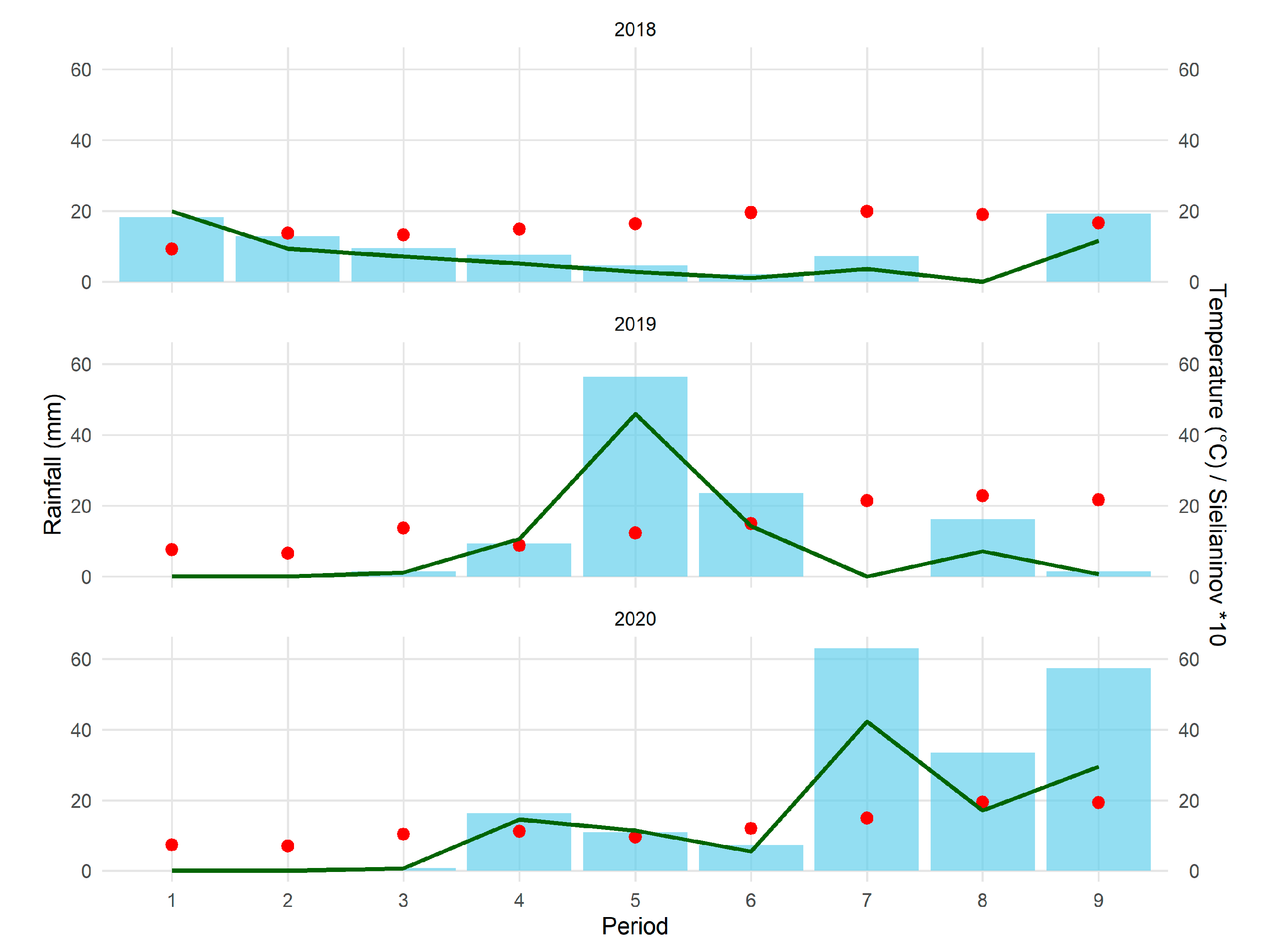
2.2. Weather Conditions
2.3. Experimental Treatments and Crop Management
2.4. Measurements of Biometric Traits and Yield
2.5. Statistical Analyses
3. Results
3.1. Triticum Sphaerococcum
3.2. Triticum Persicum
3.3. Triticum aestivum ssp. Vulgare
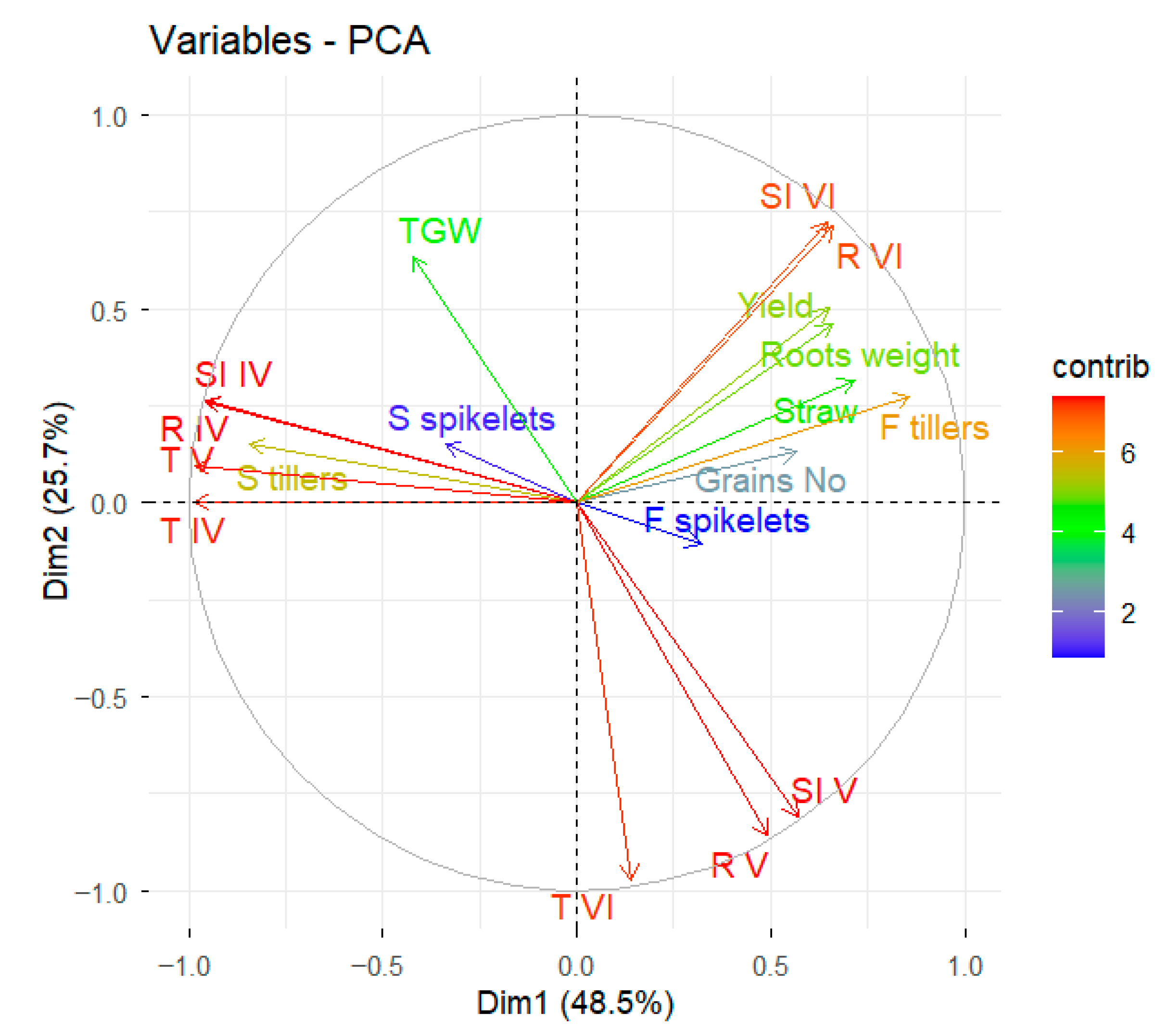
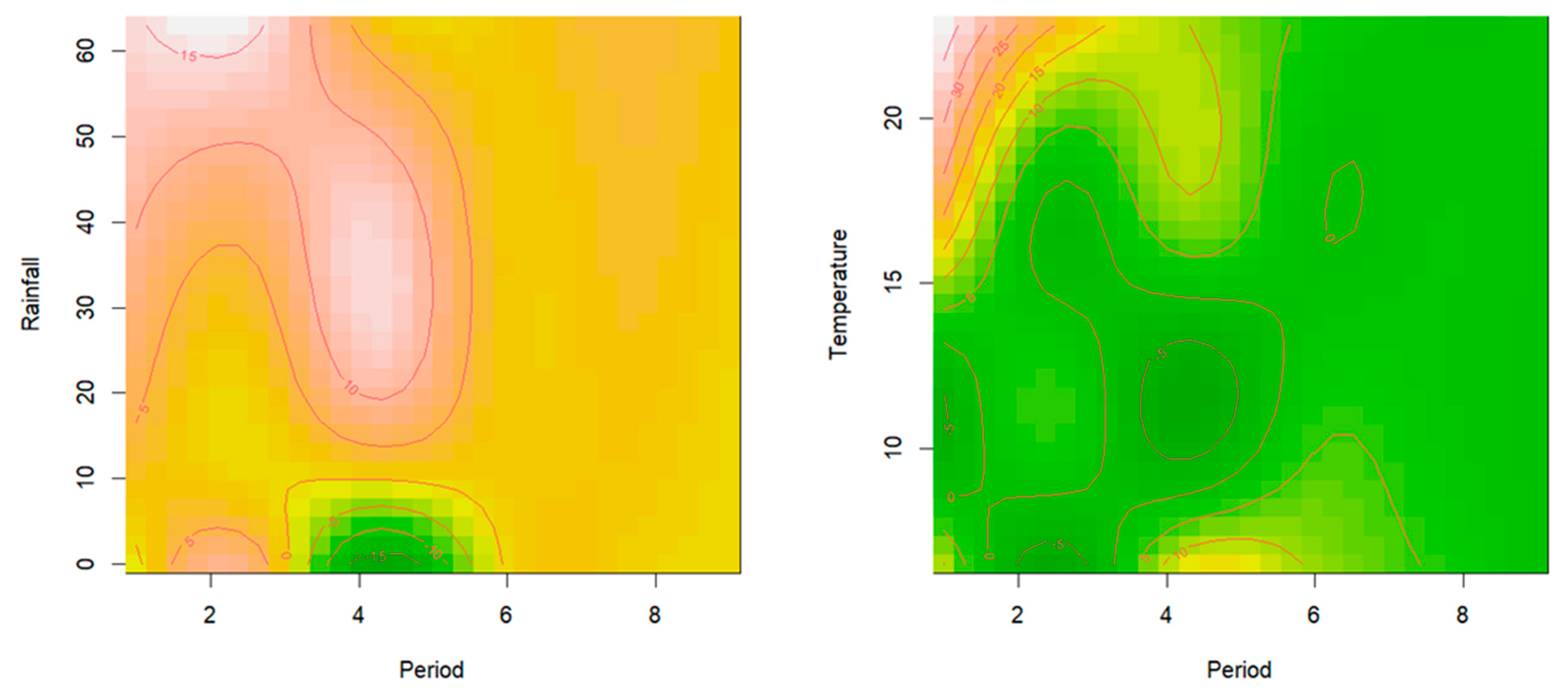
3.4. The Impact of Weather Conditions on Crop Yield
4. Discussion
4.1. Triticum Sphaerococcum
4.2. Triticum Persicum
4.3. Triticum aestivum ssp. Vulgare
5. Conclusions
Author Contributions
Funding
Data Availability Statement
Conflicts of Interest
References
- Arzani, A.; Ashraf, M. Cultivated ancient wheat (Triticum spp.): A potential source of health-beneficial food products. Compr. Rev. Food Sci. Food Saf. 2017, 16, 477–488. [Google Scholar] [CrossRef]
- Bavec, F.; Bavec, M. Organic Production and Use of Alternative Crops; CRC/Taylor & Francis: Boca Raton, FL, USA, 2006. [Google Scholar]
- Adhikari, S.; Kumari, J.; Bhardwaj, R.; Jacob, S.; Langyan, S.; Sharma, S.M.; Singh, A.; Kumar, A. Unlocking the potential of ancient hexaploid Indian dwarf wheat, Tritium sphaerococcum for grain quality improvement. PeerJ 2023, 11, e15334. [Google Scholar] [CrossRef]
- Knapowski, T.; Szczepanek, M.; Kozera, W.; Ducsay, L. Technological properties of ancient wheat species and common wheat grown organically under mouldboard ploughing and shallow tillage. Agriculture 2025, 15, 1937. [Google Scholar] [CrossRef]
- Kozera, W.; Szczepanek, M.; Knapowski, T.; Tobiašová, E.; Nogalska, A. Mineral composition and protein quality of organically grown ancient wheat under reduced tillage. J. Elem. 2023, 28, 773–791. [Google Scholar] [CrossRef]
- Skrajda-Brdak, M.; Konopka, I.; Tańska, M.; Szczepanek, M.; Sadowski, T.; Rychcik, B. Low molecular phytochemicals of Indian dwarf (Triticum sphaerococcum Percival) and Persian wheat (T. carthlicum Nevski) grain. J. Cereal Sci. 2020, 91, 102887. [Google Scholar] [CrossRef]
- Jiang, X.; Tian, J.; Hao, Z.; Zhang, W. Protein content and amino acid composition in grains of wheat-related species. Agric. Sci. China 2008, 7, 272–279. [Google Scholar] [CrossRef]
- Gaikwad, K.B.; Dawar, A.; Singh, A.; Babu, P.; Kumar, M.; Kumar, N.; Mazumder, A.K.; Kumar, R.; Pradhan, A.K.; Ansari, R.; et al. Trait phenotyping in an ancient Indian landrace of wheat Triticum sphaerococcum under optimum, terminal heat stress and deficit irrigation conditions. Genet. Resour. Crop Evol. 2024, 71, 2779–2795. [Google Scholar] [CrossRef]
- Gaikwad, K.B.; Mazumder, A.K.; Kumar, M.; Singh, A.; Ansari, R.; Saifi, N.; Joshi, M.A.; Babu, P.; Vikas, V.K.; Singh, S.K.; et al. Evaluating heat and drought resilience in ancient Indian Dwarf wheat Triticum sphaerococcum Percival using stress tolerance indices. Sci. Rep. 2025, 15, 18970. [Google Scholar] [CrossRef]
- Khorami, S.S.; Kazemeini, S.A.; Afzalinia, S.; Gathala, M.K. Changes in soil properties and productivity under different tillage practices and wheat genotypes: A Short-Term Study in Iran. Sustainability 2018, 10, 3273. [Google Scholar] [CrossRef]
- Marakoglu, T.; Carman, K. Wheat production using direct seeding, reduced tillage and conventional tillage in Middle Anatolia. Bulg. J. Agric. Sci. 2012, 18, 789–793. [Google Scholar]
- Singh, S.K.; Patra, A.; Chand, R.; Jatav, H.S.; Luo, Y.; Rajput, V.D.; Sehar, S.; Attar, S.K.; Khan, M.A.; Jatav, S.S.; et al. Surface seeding of wheat: A sustainable way towards climate resilience agriculture. Sustainability 2022, 14, 7460. [Google Scholar] [CrossRef]
- Stanisławska-Glubiak, E.; Korzeniowska, J. Effect of soil tillage systems on nutrient concentration in winter wheat plants. J. Food Agric. Environ. 2012, 10, 1353–1355. [Google Scholar]
- Armengot, L.; Blanco-Moreno, J.M.; Barberi, P.; Bocci, G.; Carlesi, S.; Aendekerk, R.; Berner, A.; Celette, F.; Grosse, M.; Huiting, H.; et al. Tillage as a driver of change in weed communities: A functional perspective. Agric. Ecosyst. Environ. 2016, 222, 276–285. [Google Scholar] [CrossRef]
- Berner, A.; Hildermann, I.; Fließbach, A.; Pfiffner, L.; Niggli, U.; Mäder, P. Crop yield and soil fertility response to reduced tillage under organic management. Soil. Tillage Res. 2008, 101, 8996. [Google Scholar] [CrossRef]
- Jaskulska, I.; Gałązka, A.; Jaskulski, D. Strip-till as a means of decreasing spatial variability of winter barley within a field scale. Acta Agric. Scand. Sect. B Soil. Plant Sci. 2019, 69, 516–527. [Google Scholar] [CrossRef]
- Lv, L.; Gao, Z.; Liao, K.; Zhu, Q.; Zhu, J. Impact of conservation tillage on the distribution of soil nutrients with depth. Soil. Tillage Res. 2023, 225, 105527. [Google Scholar] [CrossRef]
- Seitz, S.; Goebes, P.; Puerta, V.L.; Pereira, E.I.P.; Wittwer, R.; Six, J.; Heijden, M.G.A.; Scholten, T. Conservation tillage and organic farming reduce soil erosion. Agron. Sustain. Dev. 2019, 39, 4. [Google Scholar] [CrossRef]
- Stavi, I.; Lal, R.; Owens, L.B. On-farm effects of no-till versus occasional tillage on soil quality and crop yields in eastern Ohio. Agron. Sustain. Dev. 2011, 31, 475–482. [Google Scholar] [CrossRef]
- Zikeli, S.; Gruber, S. Reduced tillage and no-till in organic farming systems, Germany—Status quo, potentials and challenges. Agriculture 2017, 7, 35. [Google Scholar] [CrossRef]
- Cooper, J.; Baranski, M.; Stewart, G.; Nobel-de Lange, M.; Bàrberi, P.; Fließbach, A.; Peigné, J.; Berner, A.; Brock, C.; Casagrande, M.; et al. Shallow non-inversion tillage in organic farming maintains crop yields and increases soil C stocks: A meta-analysis. Agron. Sustain. Dev. 2016, 36, 22. [Google Scholar] [CrossRef]
- Su, Z.; Zhang, J.; Wu, W.; Cai, D.; Lv, J.; Jiang, G.; Huang, J.; Gao, J.; Hartmann, R.; Gabriels, D. Effects of conservation tillage practices on winter wheat water-use efficiency and crop yield on the Loess Plateau, China. Agric. Water Manag. 2007, 87, 307–314. [Google Scholar] [CrossRef]
- Wang, Z.; Liu, L.; Chen, Q.; Wen, X.; Liao, Y. Conservation tillage increases soil bacterial diversity in the dryland of northern China. Agron. Sustain. Dev. 2016, 36, 28. [Google Scholar] [CrossRef]
- Mori, N.; Ohta, S.; Chiba, H.; Takagi, T.; Niimi, Y.; Shinde, V.; Kajale, M.D.; Osada, T. Rediscovery of Indian dwarf wheat (Triticum aestivum L. ssp. sphaerococcum (Perc.) MK.) an ancient crop of the Indian subcontinent. Genet. Resour. Crop Evol. 2013, 60, 1771–1775. [Google Scholar] [CrossRef]
- Szczepanek, M.; Lemańczyk, G.; Nowak, R.; Graczyk, R. Response of Indian dwarf wheat and Persian wheat to sowing density and hydrothermal conditions of the growing seasons. Agriculture 2022, 12, 205. [Google Scholar] [CrossRef]
- Piotrowska-Długosz, A.; Długosz, J.; Kalisz, B.; Gąsiorek, M. Soil Microbial and Enzymatic Properties in Luvisols as Affected by Different Types of Agricultural Land-Use Systems and Soil Depth. Agronomy 2024, 14, 83. [Google Scholar] [CrossRef]
- Polish Norm PN-ISO 10390; Soil Quality—Determination of Soil pH. Polish Committee for Standardization: Warsaw, Poland, 1997.
- Polish Norm PN-R-04022; Chemical and Agricultural Analysis of Soil. Determining the Content of Available Potassium. Polish Committee for Standardization: Warsaw, Poland, 1996.
- Polish Norm PN-R-04023; Chemical and Agricultural Analysis of Soil. Determining the Content of Available Phosphorus. Polish Committee for Standardization: Warsaw, Poland, 1996.
- Polish Norm PN-R-04020; Chemical and Agricultural Analysis of Soil. Determining the Content of Available Magnesium. Polish Committee for Standardization: Warsaw, Poland, 1994.
- Polish Norm PN-R-04028; Chemical and Agricultural Analysis of Soil. Determining the Content of Nitrate and Ammonium Ions. Polish Committee for Standardization: Warsaw, Poland, 1997.
- Radzka, E.; Rymuza, K.; Wysokiński, A. Weather Conditions and Biostimulants Influence Nitrogen Acquisition from Different Sources by Soybean Plants. Agriculture 2023, 13, 114. [Google Scholar] [CrossRef]
- Szczepanek, M.; Piekarczyk, M.; Błaszczyk, K. Spatial distribution of soil macroelements, their uptake by plants, and green pea yield under strip-till technology. Agronomy 2024, 14, 711. [Google Scholar] [CrossRef]
- Szczepanek, M.; Lemańczyk, G.; Lamparski, R.; Wilczewski, E.; Graczyk, R.; Nowak, R.; Prus, P. Ancient wheat species (Triticum sphaerococcum Perc. and T. persicum Vav.) in organic farming: Influence of sowing density on agronomic traits, pests and diseases occurrence, and weed infestation. Agriculture 2020, 10, 556. [Google Scholar] [CrossRef]
- McDonald, J.H. Handbook of Biological Statistics, 2nd ed.; Sparky House Publishing: Baltimore, MD, USA, 2009; pp. 1–319. [Google Scholar]
- The Jamovi Project. Jamovi. (Version 2.6). [Computer Software]. 2024. Available online: https://www.jamovi.org (accessed on 21 December 2025).
- Kayan, N.; Ayter Arpacıoglu, N.G.; Kutlu, I.; Adak, M.S. Effects of different tillage, rotation systems and nitrogen levels on wheat yield and nitrogen use efficiency. Turk. J. Agric. Food Sci. Technol. 2020, 8, 1603–1611. [Google Scholar] [CrossRef]
- Andruszczak, S. Reaction of winter spelt cultivars to reduced tillage system and chemical plant protection. Zemdirb. Agric. 2017, 104, 15–22. [Google Scholar] [CrossRef]
- Armengot, L.; Berner, A.; Blanco-Moreno, J.M.; Mäder, P.; Sans, F.X. Long-term feasibility of reduced tillage in organic farming. Agron. Sustain. Dev. 2015, 35, 339–346. [Google Scholar] [CrossRef]
- Honsdorf, N.; Mulvaney, M.J.; Singh, R.P.; Ammar, K.; Burgueño, J.; Govaerts, B.; Verhulst, N. Genotype by tillage interaction and performance progress for bread and durum wheat genotypes on irrigated raised beds. Field Crop Res. 2018, 216, 42–52. [Google Scholar] [CrossRef]
- Wesołowska, S.; Daniłkiewicz, D.; Gawęda, D.; Haliniarz, M.; Rusecki, H.; Łukasz, J. The effect of tillage systems and weed control methods on the yield and quality of spelt grain (Triticum aestivum ssp. spelta L.). Agriculture 2022, 12, 1390. [Google Scholar] [CrossRef]
- Kulig, B.; Lepiarczyk, A.; Oleksy, A.; Kołodziejczyk, M. The effect of tillage system and forecrop on the yield and values of LAI and SPAD indices of spring wheat. Eur. J. Agron. 2010, 33, 43–51. [Google Scholar] [CrossRef]
- Mirzavand, J.; Moradi-Talebbeigi, R. Relationships between field management, soil compaction, and crop productivity. Arch. Agron. Soil Sci. 2021, 67, 675–686. [Google Scholar] [CrossRef]
- Szczepanek, M.; Siwik-Ziomek, A.; Lemańczyk, G.; Lamparski, R.; Graczyk, R. Effect of reduced tillage on soil enzyme activity, pests pressure and productivity of organically grown spring wheat species. Agronomy 2023, 13, 287. [Google Scholar] [CrossRef]
- Hussain, Z.; Luqman Hashim, S.; Jabran, K. Integrated effect of tillage and herbicides on wheat crop. Gesunde Pflanz. 2021, 73, 239–247. [Google Scholar] [CrossRef]
- Vakali, C.; Zaller, J.G.; Köpke, U. Reduced tillage in temperate organic farming: Effects on soil nutrients, nutrient content and yield of barley, rye and associated weeds. Renew. Agric. Food Syst. 2014, 30, 270–279. [Google Scholar] [CrossRef]
- Yildirim, M.; Dumlupinar, Z.; Taner, A. Effects of conventional and reduced tillage methods on some traits of wheat in cotton-wheat system. Kahramanmaraş Sütçü İmam Üniversitesi Tarım Ve Doğa Derg. 2018, 21, 678–685. [Google Scholar] [CrossRef]
- Sans, F.; Berner, A.; Armengot, L.; Mäder, P. Tillage effects on weed communities in an organic winter wheat–sunflower–spelt cropping sequence. Weed Res. 2011, 51, 413–421. [Google Scholar] [CrossRef]
- Darguza, M.; Gaile, Z. Yield and quality of winter wheat, depending on crop rotation and soil tillage. Res. Rural. Dev. 2019, 2, 29–35. [Google Scholar] [CrossRef]



| N-NO3 | N-NH4 | P | K | Mg | pH KCl | C-Org. % |
|---|---|---|---|---|---|---|
| mg kg−1 of Soil | mg 100 g−1 of Soil | |||||
| 4.18 | 4.36 | 11.21 | 15.31 | 5.58 | 7.01 | 1.11 |
| Year | April | May | June | ||||||
|---|---|---|---|---|---|---|---|---|---|
| 1–10 | 11–20 | 20–30 | 1–10 | 11–20 | 20–31 | 1–10 | 11–20 | 20–30 | |
| 2018 | 1.98 | 0.93 | 0.71 | 0.51 | 0.28 | 0.10 | 0.36 | 0.00 | 1.16 |
| 2019 | 0.00 | 0.00 | 0.11 | 1.06 | 4.59 | 1.42 | 0.00 | 0.71 | 0.07 |
| 2020 | 0.00 | 0.00 | 0.07 | 1.46 | 1.15 | 0.55 | 4.23 | 1.72 | 2.96 |
| Emergence | Leaf development | Tillering | Stem elongation | Booting | Heading/ flowering | Grain development | |||
| Year | Tillage Method | Grain Yield (Mg ha−1) | Straw Yield (Mg ha−1) | Grain Per Spike (No) | TGW (g) |
|---|---|---|---|---|---|
| 2018 | PL | 2.01 ± 0.129 a | 1.95 ± 0.144 a | 31.5 ± 0.432 a | 35.6 ± 3.99 a |
| SH | 2.29 ± 0.192 a | 2.01 ± 0.123 a | 28.1 ± 0.903 a | 36.1 ± 3.89 a | |
| ST | 2.32 ± 0.136 a | 2.56 ± 0.196 a | 27.4 ± 0.802 a | 37.1 ± 2.94 a | |
| 2019 | PL | 2.59 ± 0.140 a | 4.14 ± 0.106 a | 34.5 ± 3.34 a | 29.0 ± 0.63 a |
| SH | 2.63 ± 0.025 a | 3.99 ± 0.116 a | 30.4 ± 5.64 a | 27.3 ± 1.31 a | |
| ST | 2.71 ± 0.054 a | 3.94 ± 0.114 a | 31.8 ± 1.96 a | 26.5 ± 2.06 a | |
| 2020 | PL | 3.72 ± 0.054 b | 6.45 ± 0.358 ab | 26.4 ± 1.64 a | 31.7 ± 1.75 a |
| SH | 4.28 ± 0.084 a | 6.63 ± 0.855 a | 28.1 ± 1.12 a | 31.0 ± 1.04 a | |
| ST | 3.63 ± 0.231 b | 5.63 ± 0.314 b | 29.9 ± 1.49 a | 29.0 ± 0.68 a |
| Year | Tillage Method | Fertile Generative Tillers (No m−2) | Sterile Generative Tillers (No m−2) | Fertile Spikelets (No Spike−1) | Sterile Spikelets (No Spike−1) | Root Weight (DM of 30 Plants, g) |
|---|---|---|---|---|---|---|
| 2018 | PL | 211 ± 31.3 a | 96.0 ± 15.7 a | 13.5 ± 0.86 a | 5.53 ± 0.18 a | 3.06 ± 0.62 a |
| SH | 226 ± 14.1 a | 94.0 ± 11.4 a | 12.2 ± 0.28 a | 5.93 ± 0.37a | 4.21 ± 0.58 a | |
| ST | 230 ± 14.3 a | 103.3 ± 17 a | 12.8 ± 0.96 a | 5.70 ± 0.67 a | 4.96 ± 0.86 a | |
| 2019 | PL | 375 ± 24.2 b | 9.5 ± 0.58 a | 13.9 ± 0.48 a | 5.99 ± 0.19 a | 4.23 ± 0.17 b |
| SH | 437 ± 28.1 b | 8.7 ± 5.25 a | 14.4 ± 1.81 a | 5.28 ± 1.41 a | 4.71 ± 0.46 ab | |
| ST | 621 ± 56.2 a | 8.0 ± 3.27 a | 16.5 ± 0.29 a | 2.76 ± 0.25 a | 5.05 ± 0.64 a | |
| 2020 | PL | 604 ± 38.1 b | 1.5 ± 1.91 a | 15.0 ± 1.41 a | 4.50 ± 1.00 a | 9.63 ± 0.56 ab |
| SH | 725 ± 48.5 a | 1.5 ± 1.00 a | 12.3 ± 2.75 ab | 6.50 ± 1.00 a | 10.37 ± 0.46 a | |
| ST | 601 ± 67.5 b | 4.0 ± 1.41 a | 10.8 ± 3.59 b | 6.00 ± 1.41 a | 8.93 ± 0.45 b |
| Traits | Grain Yield | Fertile Generative Tillers | Grain Per Spike |
|---|---|---|---|
| Fertile generative tillers | 0.864 *** | ||
| Grain per spike | −0.291 | −0.119 | |
| TGW | −0.297 | −0.547 *** | −0.297 |
| Year | Tillage Method | Grain Yield (Mg ha−1) | Straw Yield (Mg ha−1) | Grain Per Spike (No) | TGW (g) |
|---|---|---|---|---|---|
| 2018 | PL | 0.77 ± 0.090 b | 1.76 ± 0.088 a | 15.0 ± 1.68 a | 32.0 ± 0.02 a |
| SH | 1.12 ± 0.139 a | 1.87 ± 0.147 a | 13.3 ± 1.47 a | 33.6 ± 0.99 a | |
| ST | 1.01 ± 0.073 a | 2.05 ± 0.085 a | 11.9 ± 0.71 a | 32.4 ± 0.12 a | |
| 2019 | PL | 1.28 ± 0.034 c | 3.51 ± 0.186 a | 19.3 ± 2.29 a | 27.2 ± 0.51 a |
| SH | 1.51 ± 0.014 b | 3.48 ± 0.265 a | 18.5 ± 1.59 a | 26.5 ± 1.88 a | |
| ST | 1.93 ± 0.082 a | 3.51 ± 0.162 a | 20.1 ± 2.45 a | 23.7 ± 1.55 b | |
| 2020 | PL | 2.36 ± 0.015 c | 5.53 ± 0.364 a | 27.3 ± 4.41 a | 26.1 ± 0.10 a |
| SH | 2.79 ± 0.091 b | 5.69 ± 0.413 a | 29.4 ± 2.35 a | 26.5 ± 0.81 a | |
| ST | 3.04 ± 0.187 a | 3.99 ± 0.325 b | 29.3 ± 2.82 a | 25.2 ± 0.92 a |
| Year | Tillage Method | Fertile Generative Tillers (No m−2) | Sterile Generative Tillers (No m−2) | Fertile Spikelets (No Spike−1) | Sterile Spikelets (No Spike−1) | Root Weight (DM of 30 Plants, g) |
|---|---|---|---|---|---|---|
| 2018 | PL | 65 ± 5.19 b | 50.7 ± 0.47 b | 10.4 ± 0.53 a | 4.63 ± 0.43 a | 2.98 ± 0.36 a |
| SH | 162 ± 1.41 a | 65.3 ± 0.47 ab | 10.1 ± 0.38 a | 4.23 ± 0.32 a | 4.15 ± 0.56 a | |
| ST | 97 ± 6.60 ab | 66.0 ± 2.83 a | 9.6 ± 0.73 a | 4.30 ± 0.45 a | 3.55 ± 0.36 a | |
| 2019 | PL | 292 ± 8.35 c | 42.0 ± 7.07 a | 10.8 ± 1.34 a | 2.48 ± 0.55 a | 2.99 ± 0.47 b |
| SH | 310 ± 14.7 b | 37.5 ± 9.29 a | 10.0 ± 0.46 a | 2.36 ± 0.17 a | 3.74 ± 0.58 ab | |
| ST | 333 ± 26.8 a | 8.5 ± 1.00 b | 10.9 ± 1.03 a | 2.20 ± 0.39 a | 4.61 ± 0.54 a | |
| 2020 | PL | 670 ± 35.3 b | 52.0 ± 10.1 a | 12.0 ± 1.15 a | 1.50 ± 0.58 a | 5.76 ± 0.91 b |
| SH | 713 ± 48.6 ab | 31.0 ± 2.31 b | 13.3 ± 2.87 a | 1.75 ± 0.96 a | 5.33 ± 0.97 b | |
| ST | 753 ± 26.1 a | 22.5 ± 9.81 b | 12.3 ± 0.96 a | 2.00 ± 0.82 a | 9.93 ± 0.81 a |
| Traits | Grain Yield | Fertile Generative Tillers | Grain Per Spike |
|---|---|---|---|
| Fertile generative tillers | 0.968 *** | ||
| Grain per spike | 0.898 *** | 0.931 *** | |
| TGW | −0.706 *** | −0.706 *** | −0.692 *** |
| Year | Tillage Method | Grain Yield (Mg ha−1) | Straw Yield (Mg ha−1) | Grain Per Spike (no) | TGW (g) |
|---|---|---|---|---|---|
| 2018 | PL | 2.95 ± 0.172 a | 1.73 ± 0.126 a | 25.1 ± 1.06 a | 41.7 ± 4.40 b |
| SH | 3.03 ± 0.161 a | 1.71 ± 0.128 a | 26.1 ± 1.76 a | 41.3 ± 3.38 b | |
| ST | 2.51 ± 0.232 b | 1.45 ± 0.152 a | 22.8 ± 2.52 a | 47.9 ± 0.40 a | |
| 2019 | PL | 3.56 ± 0.066 a | 1.50 ± 0.043 a | 28.7 ± 4.78 a | 23.5 ± 2.47 a |
| SH | 3.03 ± 0.051 b | 1.35 ± 0.112 a | 29.5 ± 4.00 a | 24.4 ± 1.36 a | |
| ST | 2.60 ± 0.115 c | 1.26 ± 0.185 a | 32.0 ± 1.29 a | 26.4 ± 1.92 a | |
| 2020 | PL | 5.84 ± 0.135 b | 4.34 ± 0.456 a | 32.4 ± 3.09 a | 39.5 ± 2.01 a |
| SH | 6.20 ± 0.061 a | 4.07 ± 0.419 a | 34.7 ± 1.99 a | 38.5 ± 0.998 a | |
| ST | 5.38 ± 0.172 c | 3.83 ± 0.486 a | 30.2 ± 4.01 a | 41.8 ± 1.94 a |
| Year | Tillage Method | Fertile Generative Tillers (No m−2) | Sterile Generative Tillers (No m−2) | Fertile Spikelets (No Spike−1) | Sterile Spikelets (No Spike−1) | Root Weight (DM of 30 Plants, g) |
|---|---|---|---|---|---|---|
| 2018 | PL | 304 ± 7.14 a | 57.33 ± 3.40 ab | 13.3 ± 1.16 a | 3.56 ± 0.56 a | 5.03 ± 0.16 a |
| SH | 306 ± 8.16 a | 34.00 ± 3.27 b | 12.7 ± 0.77 a | 3.43 ± 0.59 a | 5.97 ± 1.05 a | |
| ST | 268 ± 19.5 a | 79.33 ± 8.96 a | 12.2 ± 0.49 a | 3.93 ± 0.43 a | 5.53 ± 0.50 a | |
| 2019 | PL | 377 ± 12.4 a | 8.67 ± 0.94 a | 13.2 ± 1.37 a | 3.48 ± 0.71 a | 10.81 ± 1.34 a |
| SH | 369 ± 20.8 ab | 6.00 ± 1.63 a | 13.6 ± 1.04 a | 3.18 ± 0.74 a | 8.18 ± 1.47 b | |
| ST | 332 ± 8.64 b | 17.33 ± 5.19 a | 15.1 ± 0.35 a | 2.20 ± 0.14 a | 7.33 ± 0.94 b | |
| 2020 | PL | 523 ± 25.2 a | 1.00 ± 0.52 a | 13.0 ± 1.15 a | 2.00 ± 0.62 a | 13.80 ± 1.14 a |
| SH | 548 ± 27.0 a | 0.50 ± 0.38 a | 12.8 ± 1.71 a | 3.50 ± 0.91 a | 14.87 ± 1.51 a | |
| ST | 466 ± 27.2 b | 3.50 ± 0.99 a | 12.5 ± 2.08 a | 2.25 ± 0.66 a | 13.81 ± 1.15 a |
| Traits | Grain Yield | Fertile Generative Tillers | Grain Per Spike |
|---|---|---|---|
| Fertile generative tillers | 0.946 *** | ||
| Grain per spike | 0.575 *** | 0.667 *** | |
| TGW | 0.197 | −0.021 | −0.301 |
| Model Component | Term | Estimate/Edf | Test Statistic | Significance |
|---|---|---|---|---|
| Parametric | Intercept | 1.47 | t = 13.9 | *** |
| Parametric | Genotype | 1.30–2.65 | t = 12.7–25.8 | *** |
| Parametric | System | 0.34–0.53 | t = 3.27–5.13 | ** |
| Interaction | Genotype × System | (−0.04)–(−1.15) | t = −0.29–(−7.89) | * |
| Smooth | Period, Temperature | edf = 14.1 | F = 9.99 | *** |
| Smooth | Period, Rainfall | edf = 11.7 | F = 11.6 | *** |
| Random effect | Year | edf ≈ 0 | — | *** |
Disclaimer/Publisher’s Note: The statements, opinions and data contained in all publications are solely those of the individual author(s) and contributor(s) and not of MDPI and/or the editor(s). MDPI and/or the editor(s) disclaim responsibility for any injury to people or property resulting from any ideas, methods, instructions or products referred to in the content. |
© 2025 by the authors. Licensee MDPI, Basel, Switzerland. This article is an open access article distributed under the terms and conditions of the Creative Commons Attribution (CC BY) license.
Share and Cite
Szczepanek, M.; Nowak, R. Effect of Reduced Tillage and Weather Conditions on the Yield Formation of Selected Ancient and Modern Wheat Species. Agronomy 2026, 16, 96. https://doi.org/10.3390/agronomy16010096
Szczepanek M, Nowak R. Effect of Reduced Tillage and Weather Conditions on the Yield Formation of Selected Ancient and Modern Wheat Species. Agronomy. 2026; 16(1):96. https://doi.org/10.3390/agronomy16010096
Chicago/Turabian StyleSzczepanek, Małgorzata, and Rafał Nowak. 2026. "Effect of Reduced Tillage and Weather Conditions on the Yield Formation of Selected Ancient and Modern Wheat Species" Agronomy 16, no. 1: 96. https://doi.org/10.3390/agronomy16010096
APA StyleSzczepanek, M., & Nowak, R. (2026). Effect of Reduced Tillage and Weather Conditions on the Yield Formation of Selected Ancient and Modern Wheat Species. Agronomy, 16(1), 96. https://doi.org/10.3390/agronomy16010096