Article

Spray Deposition on Nursery Apple Plants as Affected by an Air-Assisted Boom Sprayer Mounted on a Portal Tractor


The National Institute of Horticultural Research, Konstytucji 3 Maja 1/3, 96-100 Skierniewice, Poland
*
Author to whom correspondence should be addressed.
Agronomy 2026, 16(1), 8; https://doi.org/10.3390/agronomy16010008
Submission received: 26 November 2025 / Revised: 11 December 2025 / Accepted: 15 December 2025 / Published: 19 December 2025
(This article belongs to the Section Agricultural Biosystem and Biological Engineering)

Abstract

Contemporary nurseries of fruit trees and ornamental plants constitute a key component in the production of high-quality planting material. At present, conventional technology dominates in nurseries in Poland and throughout the European Union. It is based on universal agricultural tractors working with numerous specialized machines—typically underutilized—including sprayers, inter-row cultivation equipment, fertilizer spreaders, and tree lifters. This concept entails several limitations and high investment costs. Because of the considerable size and turning radius of such machinery, a dense network of service roads (every 15–18 m) and wide headlands must be maintained. These areas, which constitute approximately 20% of the total surface, are effectively wasted yet require continuous agronomic maintenance. An alternative concept employs a set of implements mounted on a high-clearance portal tractor (1.6–1.8 m), forming a specialized unit capable of moving above the rows of nursery crops. The study objective of the research was to evaluate the air distribution generated by an air-jet system installed on a crop-spray boom mounted on a portal sprayer, and to assess spray deposition during treatments in nursery trees. Such a configuration enables the mechanization of a broader range of nursery operations than currently possible, while reducing investment costs compared with conventional technology. One still underutilized technology consists of sprayers with an auxiliary airflow (AA) generated by air sleeves. Mean air velocity was measured in three vertical planes, and they showed lower air velocity between 1.0 m and 5.5 m. Spray deposition on apple nursery trees was assessed using a fluorescent tracer. The experimental design consists of a comparative field experiment with and without air flow support, spraying at two standard working rates (200 and 400 L·ha−1) and determining the application of the liquid to plants in the nursery. The results demonstrated a positive effect of the AA system on deposition. At a travel speed of 6.0 km·h−1 and an application rate of 200 L·ha−1, deposition on the upper leaf surface was 68% higher with the fan engaged. For a 400 L·ha−1 rate, deposition increased by 47%, with both differences statistically significant. The study showed that the nursery sprayer mounted on a high-clearance portal tractor and equipped with an AA system achieved an increase of 58% in spray deposition on the upper leaf surface when the fan was operating at 200 L·ha−1 and 28% at 400 L·ha−1. Substantial differences were found between deposition on the upper and lower leaf surfaces, with the former being 20–30 times greater. Given the complexity of nursery production technology, sprayers that ensure the highest possible biological efficacy and high quality of nursery material will play a pivotal role in its development. At the current stage, AA technology fulfils these requirements.

1. Introduction

Poland is the largest producer of apples in the European Union and the world’s largest exporter of these fruits. It also accounts for approximately 75% of EU cherry production, making it the third-largest cherry producer globally. Assuming that old orchards must be replaced at least every 15 years, an estimated 9.0–10.0 million trees are required annually for replanting. Apple trees constitute the majority of nursery production (approximately 75%), followed by pear and sweet cherry trees (around 7% each), sour cherry trees (6%), and plum trees (4%). These values do not include trees intended for export as nursery stock. Without a reliable supply of high-quality planting material, maintaining the current position of Polish fruit growers will not be possible.
The nursery and ornamental plant sector produce high-value crops that demand more complex plant protection strategies and more intensive labour than conventional field crops. Modern fruit tree nurseries play a crucial role in supplying trees for commercial orchards, where high planting densities and rising quality requirements necessitate the use of more effective and precise plant protection techniques [1]. Although the nursery and horticultural sector is one of the fastest-growing segments of U.S. agriculture, relatively few studies have focused on optimizing spray strategies [2]. Owing to crop similarities, air-assisted application technologies developed for apple and citrus orchards are typically adapted for nursery trees. However, compared with orchard crops, nursery trees are generally narrower and more sharply tapered, which complicates pesticide application using conventional systems [3].
The intensive use of plant protection products (PPPs) has increased production costs and heightened the risk of pesticide contamination of soil, surface water, and groundwater—posing potential threats to nearby communities. This issue is particularly relevant because many nurseries are located near suburban or urban areas. Reducing PPP usage is therefore essential, as more than half of applied PPPs often drift to non-target areas [4]. For these reasons, continuous improvement is required not only in the quality and diversity of planting material but also in the production technologies used by the approximately 500 nurseries operating in Poland. Achieving these goals will be difficult, especially given the shrinking labour force, and will require the development of appropriate technical solutions that limit manual labour during nursery production.
Currently, two primary approaches dominate fruit tree nursery production technology. The first, conventional approach relies on a broad set of machines dedicated to specific operations, each attached to a universal agricultural tractor. The second approach involves machines operating with a portal (high-clearance) nursery carrier, forming—together with mounted or suspended implements—a specialized unit capable of moving above the rows of cultivated nursery plants. Such configurations enable the mechanization of a broader range of nursery operations while reducing investment costs compared with the conventional system.
In Poland and throughout the European Union, conventional technology predominates. It depends on standard agricultural tractors and numerous specialized nurseries implements, including sprayers, inter-row cultivation machinery, fertilizer applicators, and tree diggers. This approach entails several limitations and requires tractors of varying power and purpose, forcing nurseries to maintain a wide array of machines with low annual utilization, which increases investment costs. Furthermore, the considerable dimensions and turning radius of tractor–implement assemblies require a dense network of service lanes (every 15–18 m) and wide headlands. These areas, representing approximately 20% of the total surface area, are not used for tree production yet still require ongoing agronomic maintenance. Straddle tractor-based nursery production technology surpasses current systems built around universal agricultural tractors in terms of operational efficiency. This advantage is further reinforced by lower purchase and operating costs resulting from the reduced overall weight of the machine assembly. Additionally, none of the associated machines require a separate drivetrain or chassis. Implements configured in such a system offer improved manoeuvrability, enhancing operational efficiency and reducing the required headland width [5,6,7].
Spraying nursery plants is among the most challenging operations in chemical plant protection. This results not only from the high planting density (0.25 × 1.0 m) but also from the considerable height of the trees (up to 2.5 m). Gaps between young trees are also common. When conventional sprayers are used in orchards and nurseries, a substantial proportion of the pesticide is wasted because it is impractical for operators to adjust sprayer settings manually to match the size and shape of the target canopy once spraying has begun, given pest pressure and labour constraints [8].
Standard field sprayers, due to high spray drift and poor penetration of dense plant canopies, do not ensure sufficient biological efficacy in protecting nursery plants. When plants are sprayed from above using conventional boom sprayers and other traditional application methods, pesticide solutions rarely reach the middle and lower leaves [9], resulting in poor pest control in these canopy zones. Most of the applied spray deposits on the front side of the canopy, with minimal deposition on the back side. Consequently, pest control is generally weaker on the rear surfaces of plants [9,10]. Under conventional equipment and flow-rate estimation practices, most nursery crops are oversprayed. Less than 30% of applied pesticide reaches nursery canopies, while the remainder is lost [1].
To mitigate these limitations, field booms with vertical lances—typically positioned in each inter-row—are used, each fitted with four to six nozzles oriented perpendicular to the row direction. Although this configuration improves canopy penetration and slightly reduces drift, it also requires high spray volumes (up to 1000–1200 L·ha−1), resulting in reduced spraying efficiency. Therefore, more effective spraying techniques that operate with lower spray volumes (200–400 L·ha−1) are needed. A key element of such a system is a sprayer equipped with an air-assisted (AA) spray boom [11,12]. This unit is intended to replace commonly adapted field sprayers with horizontal booms—designed primarily for flat field crops—as well as the less common cannon-type fan-assisted sprayers. Although conventional spray booms are generally inexpensive, they often fail to achieve adequate canopy penetration [13,14]. Conversely, tractor-mounted cannon sprayers with radial fans can project spray jets over distances of 20–30 m, but the inability to control droplet-cloud movement presents a significant environmental contamination risk [15,16,17].
AA sprayers represent the most advanced plant protection technology for flat field crops (e.g., cereals, potatoes, tomatoes), where their application parameters and benefits are already well established. In contrast to standard spray booms, which rely solely on the kinetic energy of liquid discharged from nozzles, booms fitted with an auxiliary air stream actively support droplet transport into the canopy [18,19]. This promotes more uniform deposition of plant protection products (PPPs) on both upper and lower leaf surfaces. Biological efficacy is therefore substantially improved, allowing pesticide doses to be reduced by approximately 15–20% compared with conventional techniques. Operating costs are also lower, despite the higher purchase price of AA sprayers, owing to reduced PPP use and nearly double the operational capacity enabled by higher travel speeds (up to 12 km·h−1) and reduced spray volumes (50–100 L·ha−1) [20,21]. Timeliness of treatment is also increased, as AA sprayers can operate under wind conditions that preclude conventional spraying. At the same time, this technique is more environmentally sustainable because spray drift remains comparable at wind speeds of 8.5 m·s−1 to that observed during conventional spraying under optimal wind conditions (1.5 m·s−1). Wider adoption of AA technology remains limited by its higher initial cost and the increased tractor power required [22,23].
However, research on the use of this technology for protecting spatial crops remains scarce. Nevertheless, similar benefits may be expected in fruit tree nurseries. For this reason, it is necessary to determine not only the basic operating parameters—particularly spray volume and travel speed—but also the uniformity of air-stream distribution along the boom, which remains a practical challenge. To address these issues, studies were conducted to evaluate airflow distribution under laboratory conditions and spray deposition under commercial nursery production conditions. Despite certain similarities in the morphological characteristics of apple, pear, and cherry trees, fundamental differences exist in planting density and agronomic practices between orchards and nurseries. Consequently, the use of conventional sprayers does not meet the expectations of nursery planting-material producers. Adjusting sprayer operating parameters is recommended to achieve uniform spray deposition [23,24].
Accurate evaluation or comparison of spraying techniques requires measurement of two key factors: spray deposition and air-velocity distribution within the nursery canopy. Water-sensitive papers (WSPs) are widely used for spray-deposition assessment in spatial crops because they are inexpensive and provide easily interpretable visual data. However, they lack precision and exhibit several drawbacks. The poor correlation between spray coverage and deposition, along with the inability to detect fine droplets below 50 μm, is well documented [25,26]. More precise results are obtained using tracers and artificial targets. Chelated mineral tracers (B, Co, Cu, Fe, Mn, Mo, Zn) and fluorescent dyes are commonly used in spray-application experiments because they allow repeated sampling and provide accurate deposition measurements [27,28].
In the present study, a quantitative method using a fluorescent tracer was applied. Fluorescent tracers are widely used in agricultural spray-deposition assessments because they are inexpensive, relatively easy to use, and highly sensitive, enabling detection of very low spray deposits [29,30]. Air-assisted sprayers generate airflow that opens the canopy of spatial crops and conveys spray droplets into plant structures to maximize uniform distribution of the applied product [31,32]. Although AA sprayers allow more precise control of airflow direction and intensity than conventional sprayers, they require careful adjustment to maximize PPP deposition while minimizing environmental emissions [33,34]. Consequently, air-velocity distribution generated by AA systems is a critical parameter for determining spray deposition in the plant canopy [35,36]. Optimizing an air-emission system requires accurate estimation of its range and output using appropriate measurement instruments. Simple cup anemometers and Pitot tubes do not provide sufficient accuracy. Hot-wire anemometers are typically used to measure airflow in unidirectional ducts, limiting their usefulness in open-field conditions [37]. Three-dimensional ultrasonic anemometers are best suited for measuring sprayer-generated airflow because they measure all three velocity components and allow determination of airflow direction [38,39].
In summary, scientific literature on spraying techniques in fruit nurseries—particularly field sprayers equipped with air-assisted systems—remains limited.
The objective of the present research was to evaluate the air distribution generated by an air-jet system installed on a crop-spray boom mounted on a portal sprayer, and to assess spray deposition during treatments in nursery trees. This study responds to the growing demand from sprayer manufacturers and nursery producers for guidance on the optimal configuration of airflow outlets to improve the uniformity of PPP application. The experiment was conducted at the National Institute of Horticultural Research (InHort) in Skierniewice, Poland.

2. Materials and Methods

2.1. Experimental System Based on a Portal Tractor for Fruit-Tree Nurseries

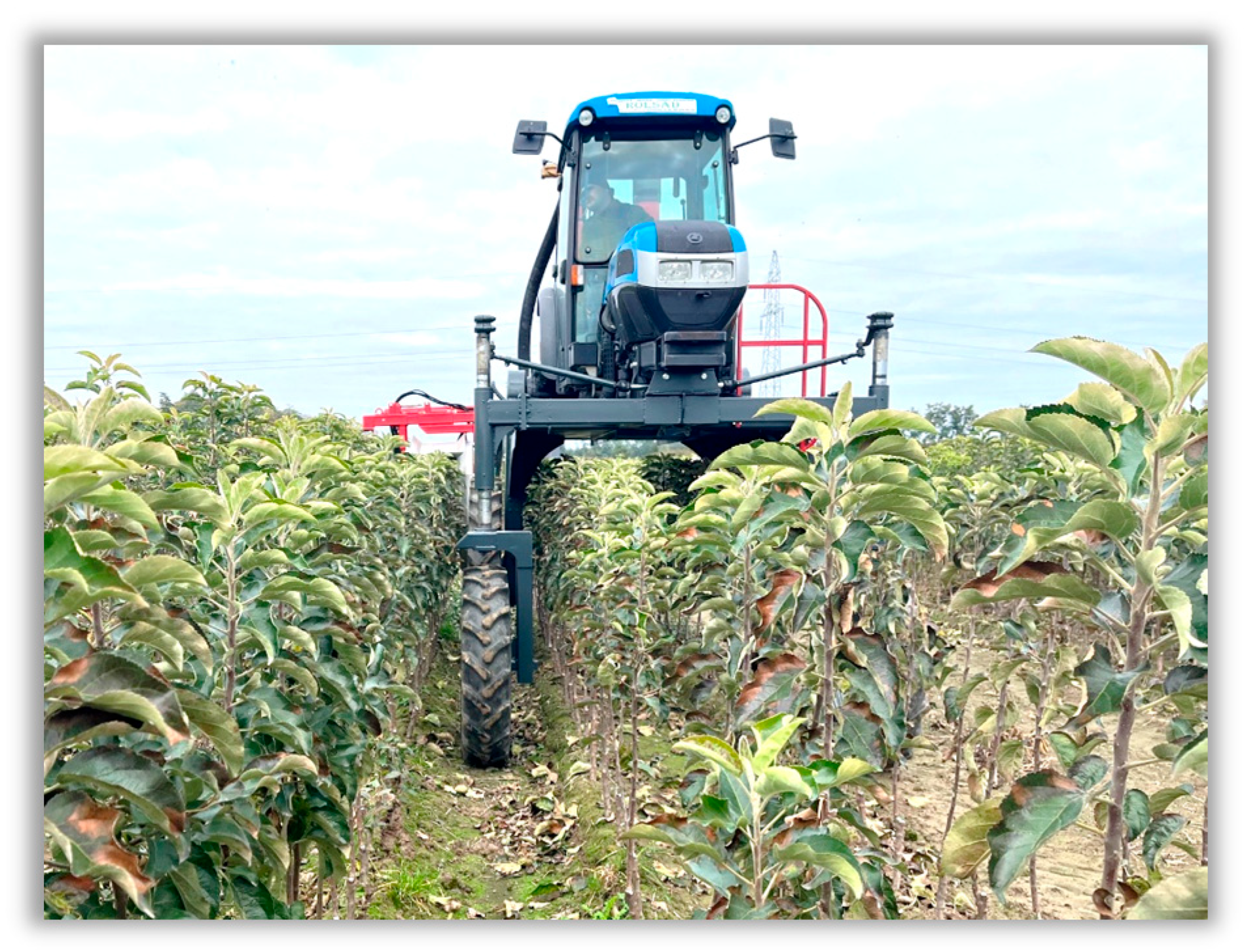
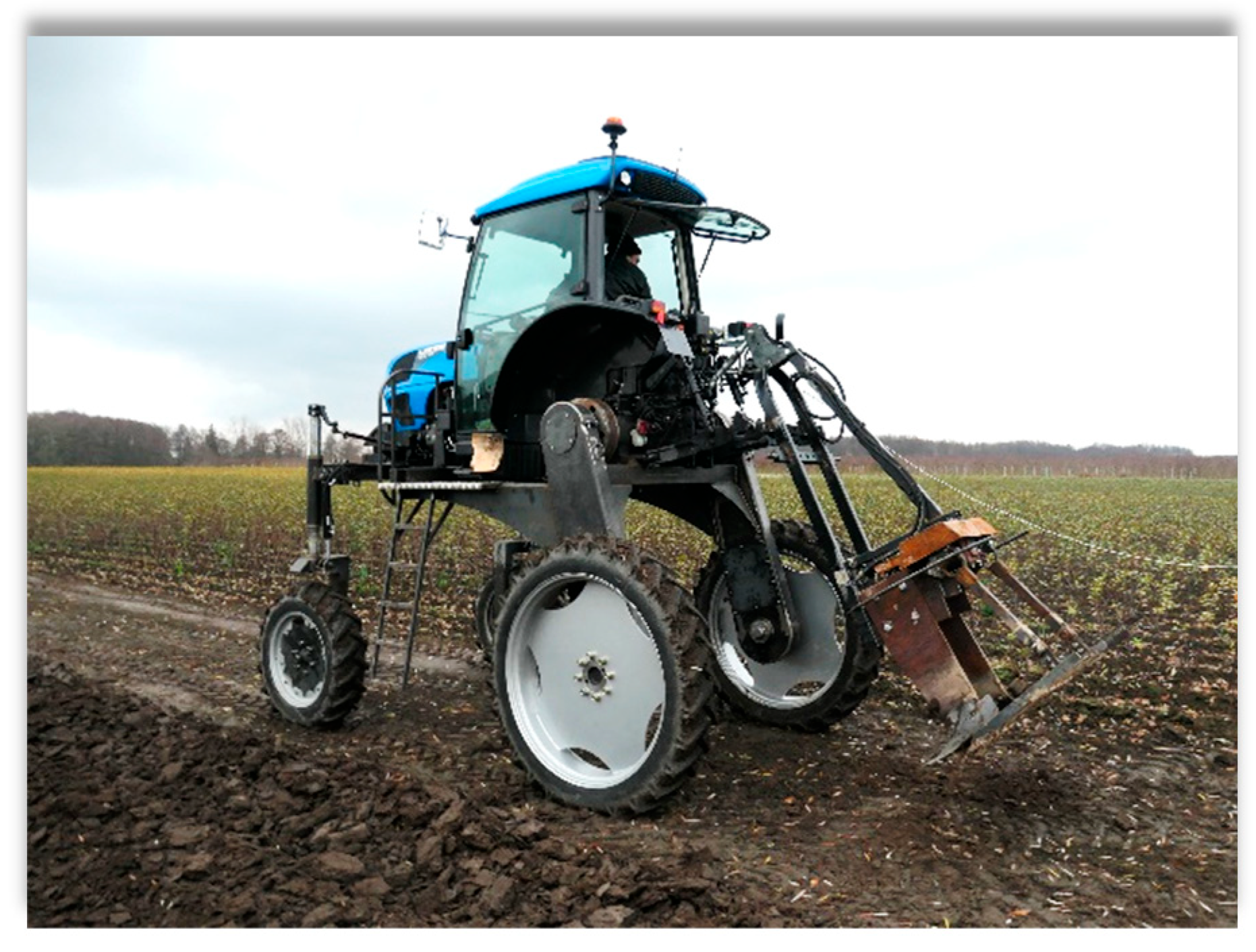
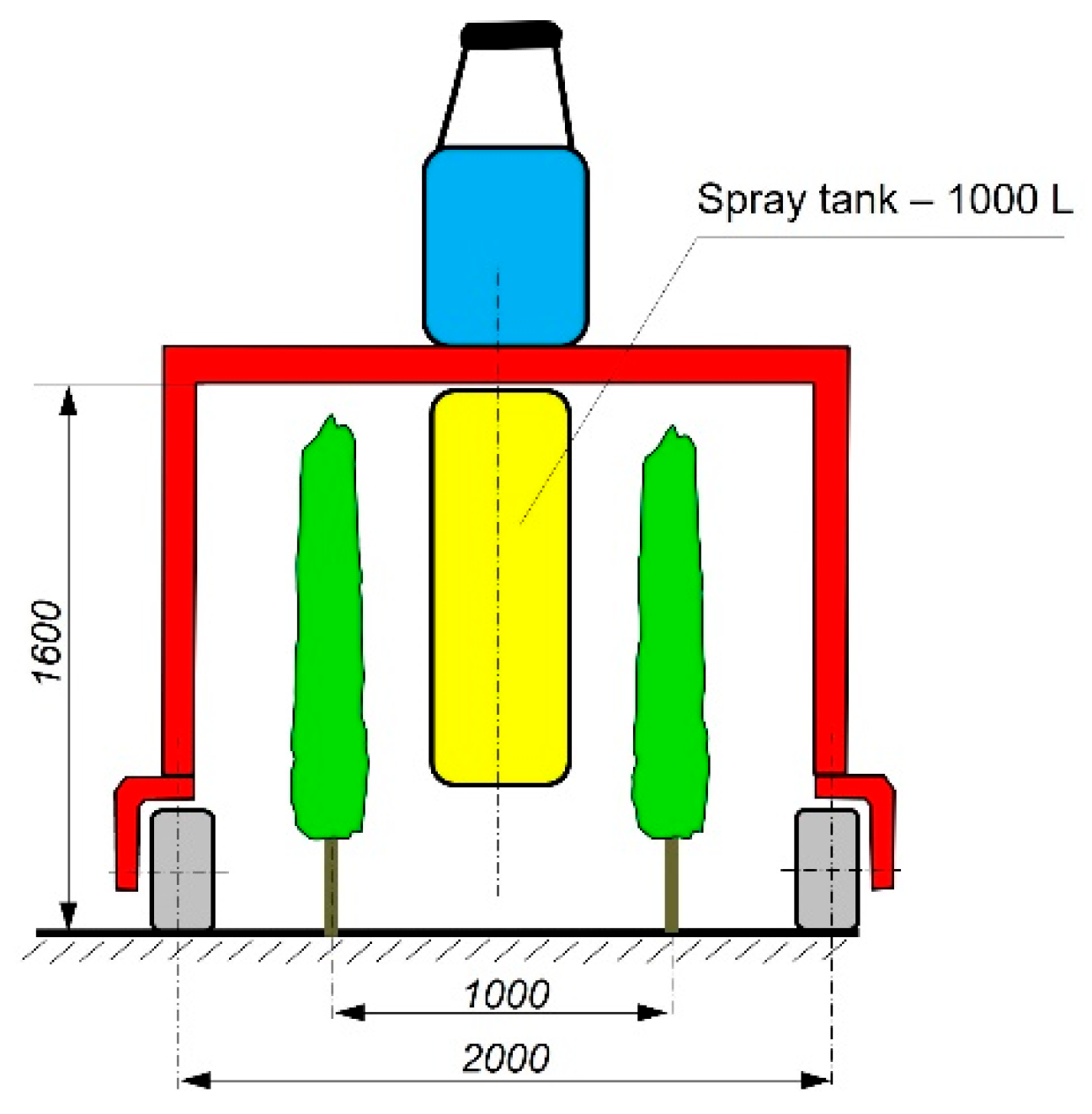
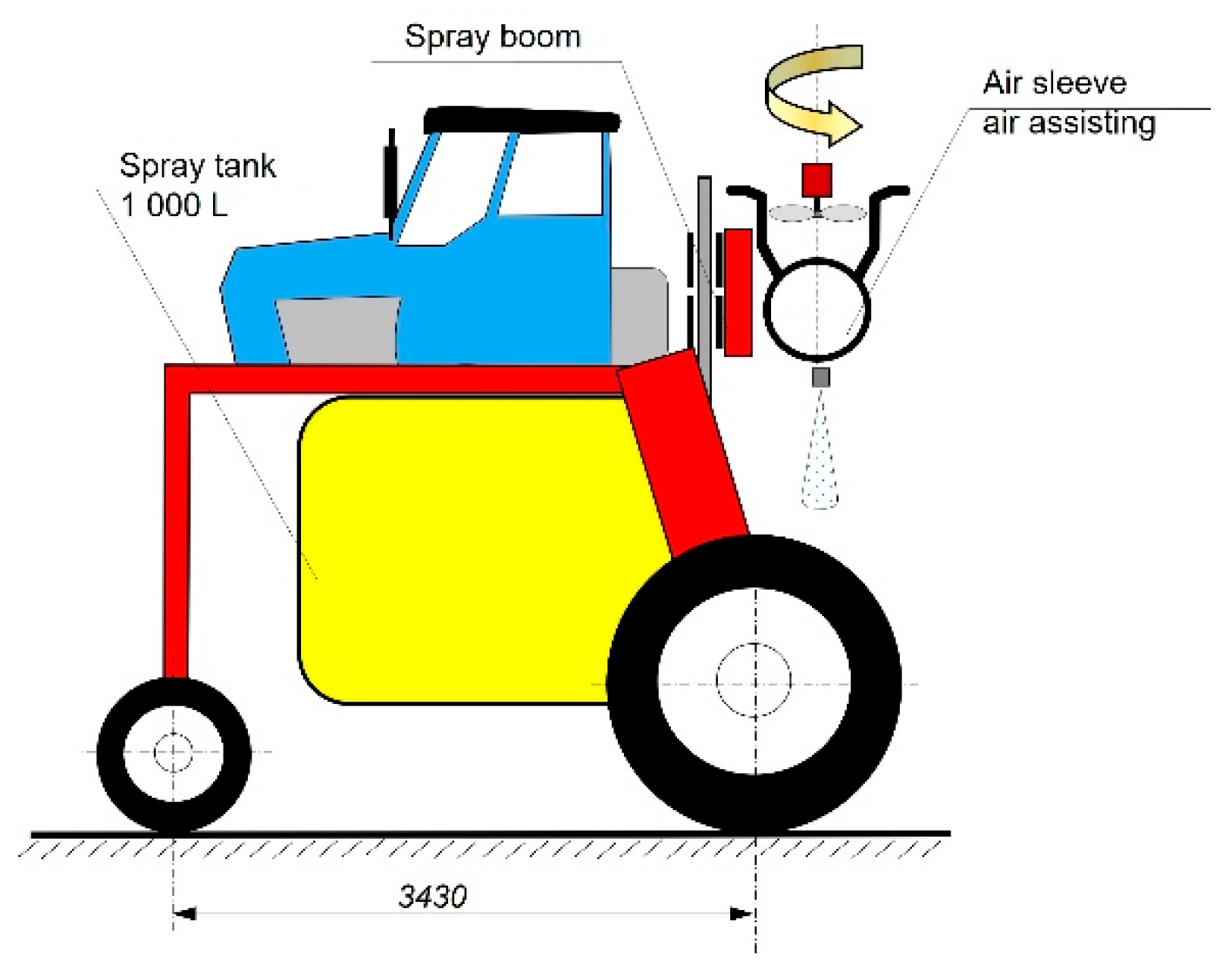
The key component of the machinery set dedicated to fruit-tree nurseries is a portal tractor equipped with a Local Positioning System (LPS), which enables autonomous movement along nursery crop rows without operator involvement, together with an air-assisted sprayer boom. The prototype machinery set was designed and constructed at InHort in cooperation with the company ROLSAD (Rawa Mazowiecka, Poland). The nursery portal tractor (Figure 1, Figure 2, Figure 3 and Figure 4) combines the characteristics of a conventional agricultural tractor and a high-clearance (1.76/1.73 m) mechanically driven carrier. Owing to its mechanical transmission, it provides substantial tractive performance and features a simple, functional design suitable both for crop maintenance and for the simultaneous plowing out of two tree rows, despite its low overall weight. The relatively lightweight and low-cost construction of the portal tractor is particularly noteworthy, especially when compared with expensive hydraulic high-clearance tractors, which generally remain beyond the financial capacity of an average nursery farm (Table 1).
Furthermore, none of the tractor mounted implements require a separate power transmission system or chassis, as they are mounted on or suspended from the supporting frame. As a result, the combined machines and implements are more manoeuvrable. This improves the handling of the nursery machinery set and reduces the required headland width, leading to significant savings in arable land (over 20%) compared with conventional technology using trailed machines. The same applies to the air-assisted sprayer. The main technical specifications of the portal tractor are presented in Table 1.
The boom frame is made of lightweight steel and aluminium profiles, allowing its installation on a portal tractor. The total working width can range from 12 to 18 m; however, in nurseries with high planting density, shorter sections of approximately 12–15 m are recommended. The experimental boom evaluated in this study has a working width of 15 m. A key functional feature is hydraulic adjustment of the boom height above the crop rows (typically 0.3–3.0 m), allowing precise adaptation of nozzle position to plant height and growth stage (Table 2).

2.2. Field Crop Sprayer with Air-Assisting

A sprayer intended for the chemical protection of fruit-tree nurseries was constructed using components commonly applied in conventional field and orchard sprayers. It consists of a hydraulically foldable spray boom and an air-delivery system powered by a hydraulically driven axial fan connected to a flexible synthetic air-distribution sleeve. Unlike standard spray booms, which rely solely on the kinetic energy of liquid discharged from nozzles to generate and direct droplets, air-assisted booms produce an organized air stream that facilitates droplet transport into the plant canopy. This enables effective deposition not only on the upper surfaces but also on the lateral and lower parts of young tree crowns, thereby substantially improving the biological efficacy of plant protection treatments.
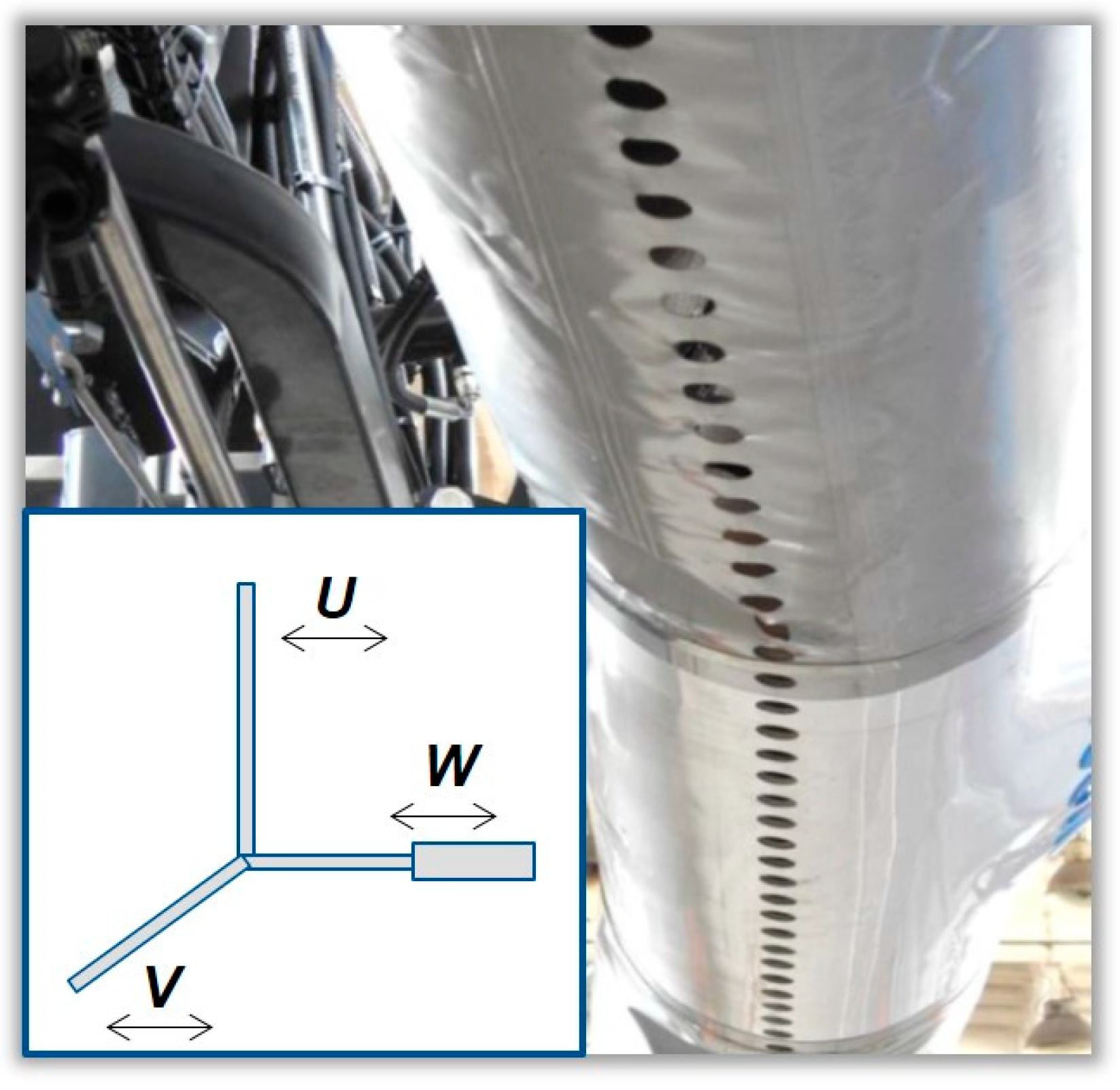
Air outlets are located along the lower portion of the sleeve in close proximity to the nozzles, which are arranged into spraying sections. During operation, air exits the sleeve through these outlets to form a downward-directed air curtain that transports spray droplets into the crop canopy. The curtain angle can be adjusted within a range of +30° to −20°, depending on wind direction and speed. Adjustment of the air-flow rate further enables regulation of spray reach according to the spatial distribution of target pests and diseases.
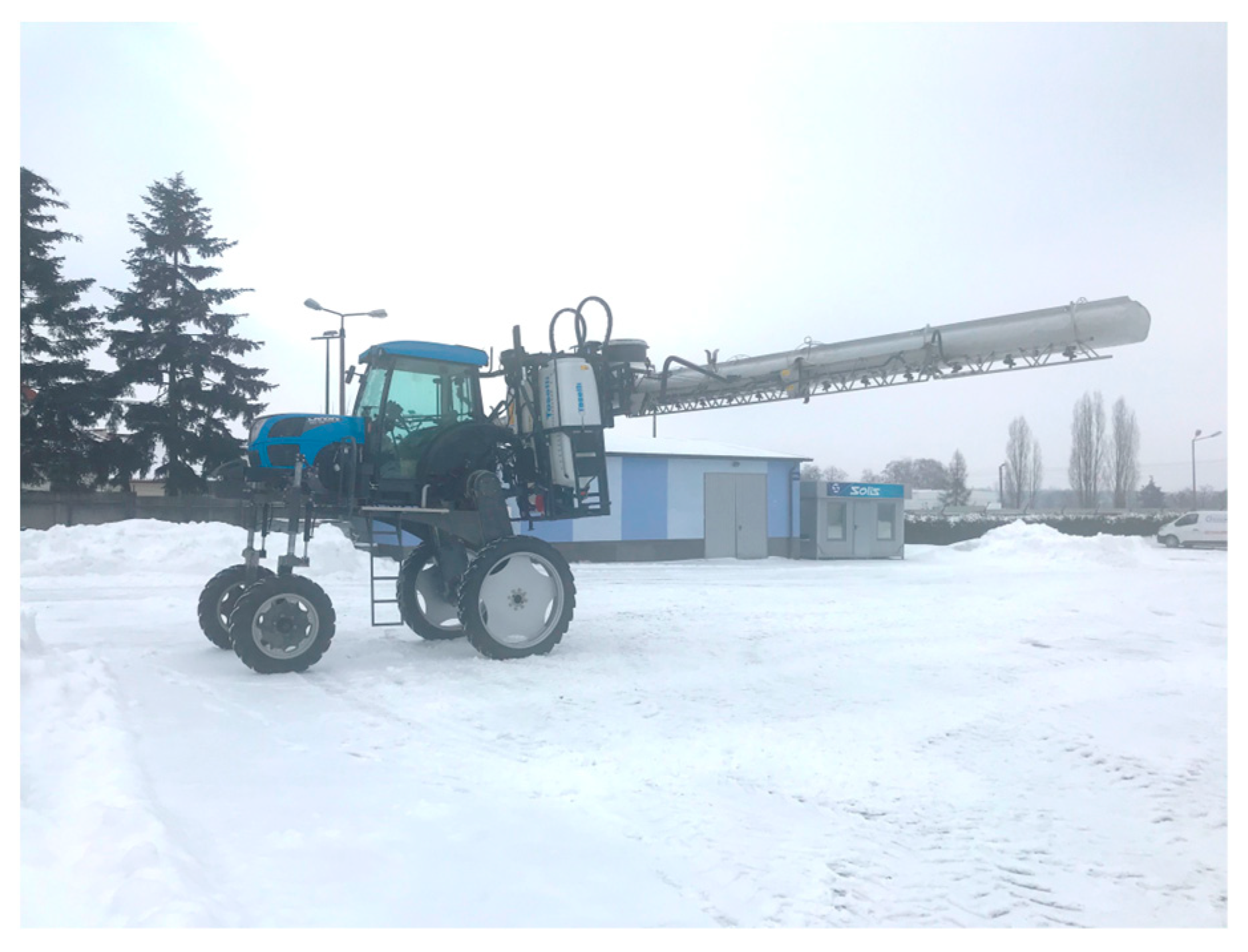
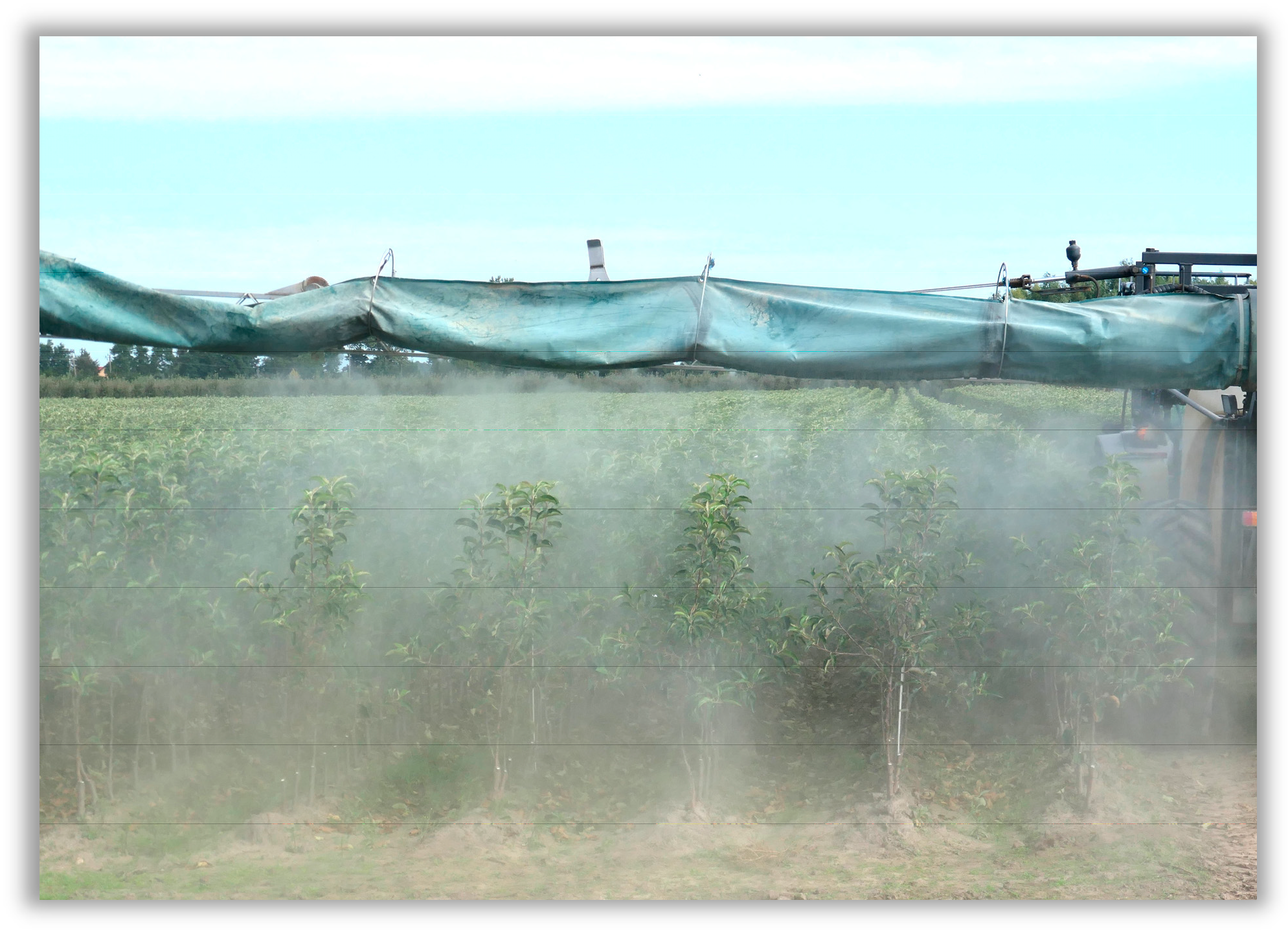
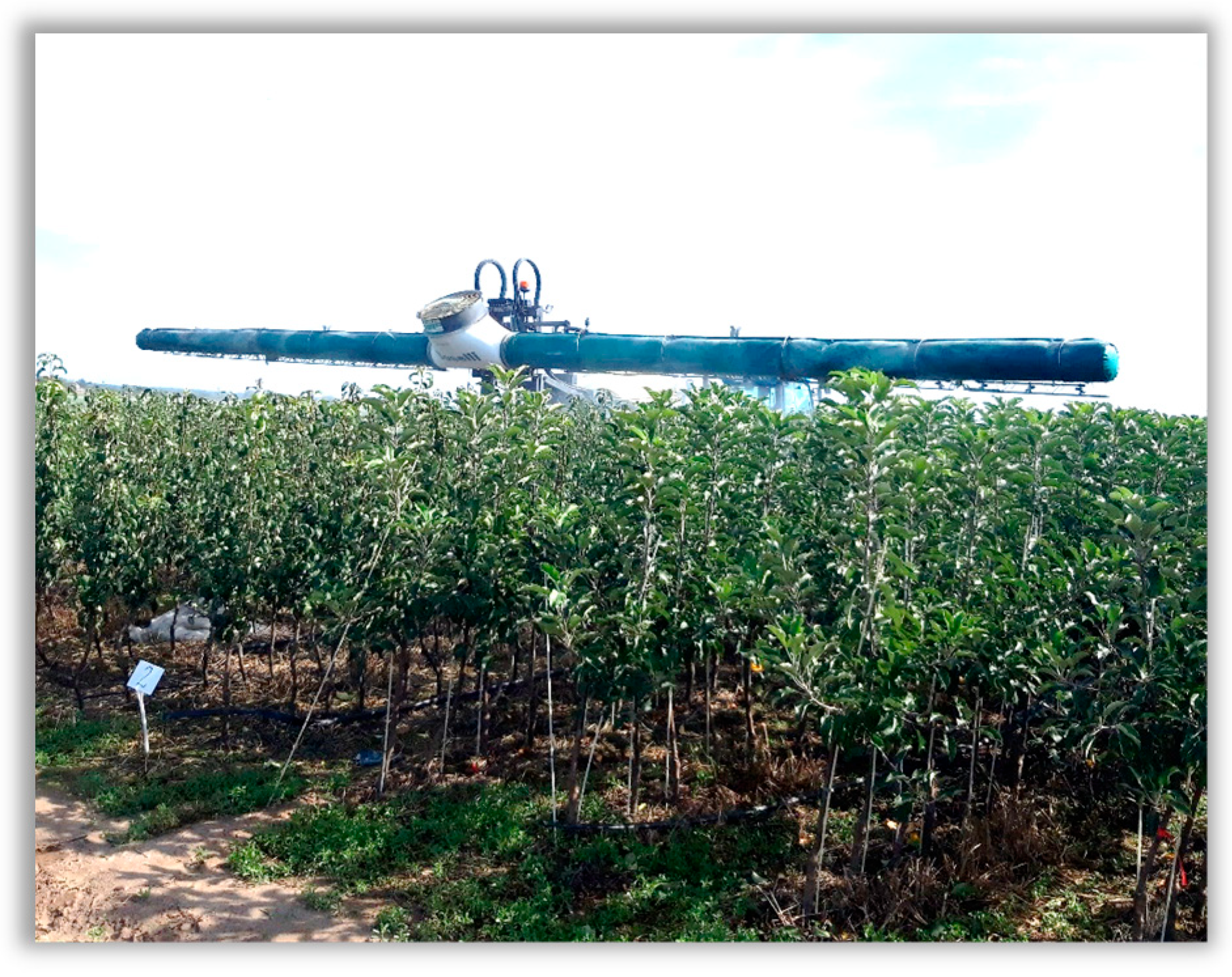
The assisting air stream enhances penetration of dense nursery crops by the spray liquid and markedly reduces spray drift beyond the target zone (Figure 5 and Figure 6). Reduced drift permits safe application of fine droplets, which provide superior surface coverage compared with coarse droplets. Nozzle holders are installed along the full boom length at a standard spacing of 0.5 m and fitted with LU 120 hydraulic nozzles. The main technical specifications of the air-assisted sprayer are presented in Table 2. The auxiliary air stream is expected to ensure sufficient spray penetration even in dense nursery canopies, although the optimal operating speed will be determined in subsequent tests.

2.3. Air Velocity Measurements

Selection of optimal design solutions and spatial configuration of the spray boom requires determination of the air-stream characteristics and the associated power demand. Moreover, precise spraying of spatially structured crops, including fruit-tree nurseries, necessitates adjustment not only of spray rate but also of airflow speed and direction, depending on crop morphology and prevailing weather conditions. For this purpose, a dedicated test rig for evaluating the air-emission system of the PSP spray boom was constructed, enabling the installation of various PSP boom configurations.
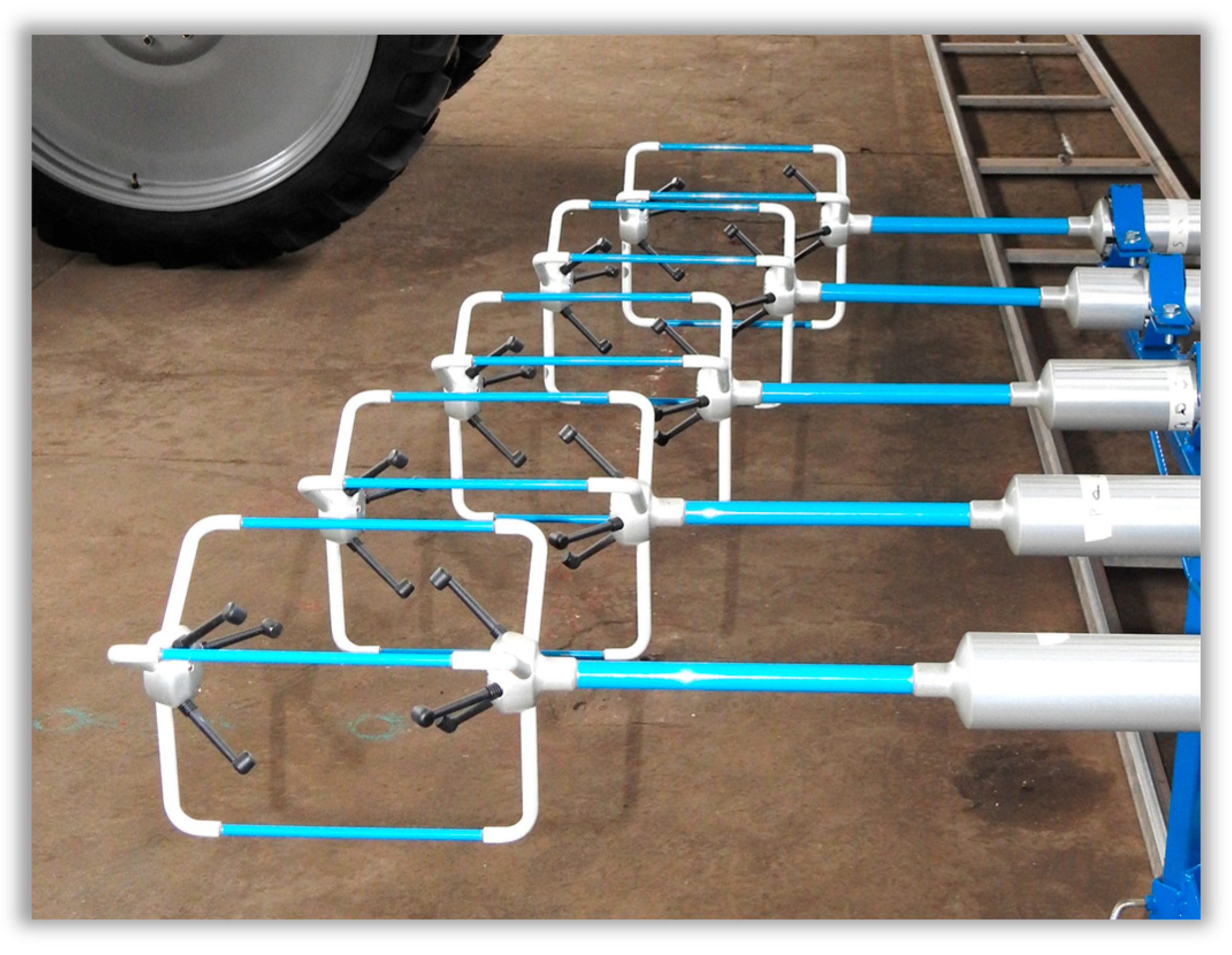
The rig consists of an aluminium rail track along which a measurement mast can be moved. The mast is equipped with five 3-D ultrasonic anemometers (Gill WindMaster, model 1590-PK-020/w, Gill Instruments Ltd., Lymington, UK) integrated with a microprocessor-based control and data acquisition unit (Figure 2). The test rig was specifically designed and manufactured for this study. The use of 3-D anemometry allowed determination of both air-flow velocity and direction. An electric drive system with thyristor speed control was used to operate the boom’s working components (Figure 7 and Figure 8).
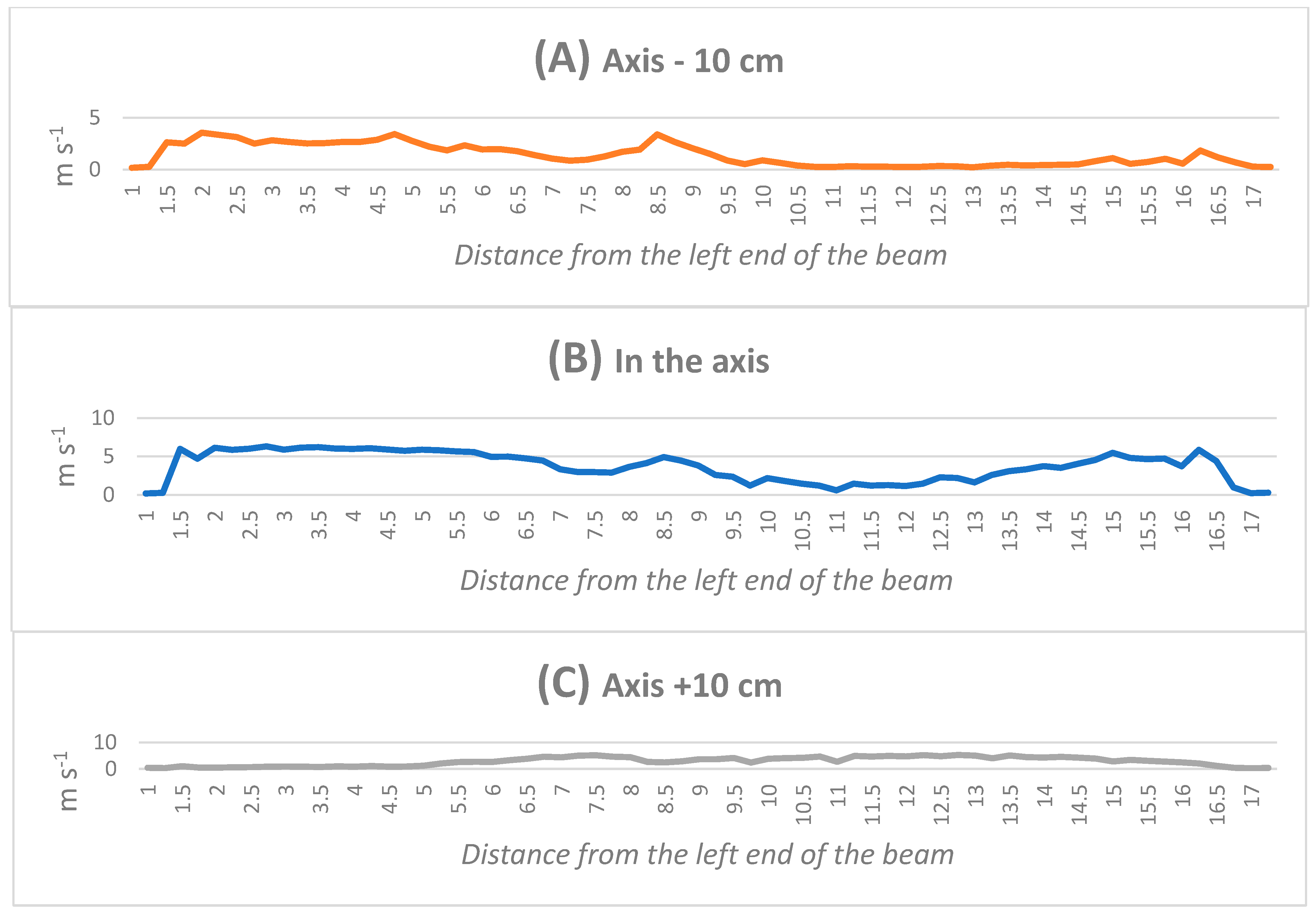
Air-flow measurements for the 15-m air-assisted boom were carried out at a distance of 0.5 m from the nozzles in three vertical planes: at the air-outlet plane and at 0.1 m upstream and 0.1 m downstream of this plane. Measurement points were spaced at 0.25-m intervals.

2.4. Spray Deposit-Field Experiment

Field experiments were conducted in Żdżary, central Poland (N 51.6585°, E 20.4712°), on the Andrzej & Szymon Nowakowscy Nursery Plantation, where trees were spaced 1.0 × 0.5 m, reached a height of 2.2 m and width 0.4 m Spraying of the test trees was performed using the prototype sprayer with an air-assisted spray boom described in Section 2.2. Spray deposit within the tree canopies was measured for two spray volumes (200 and 400 L ha−1). The selection of the proposed spray liquid doses and the speed of the treatment was made in consultation with leading nurserymen in Poland. The remaining treatment parameters are provided in Table 3. During spraying, the air-assisted boom was positioned 0.5 m above the tree tops, and LU 120 flat-fan nozzles (Lechler, Metzingen, Germany) were used. The operational parameters for all treatments are given in Table 3.
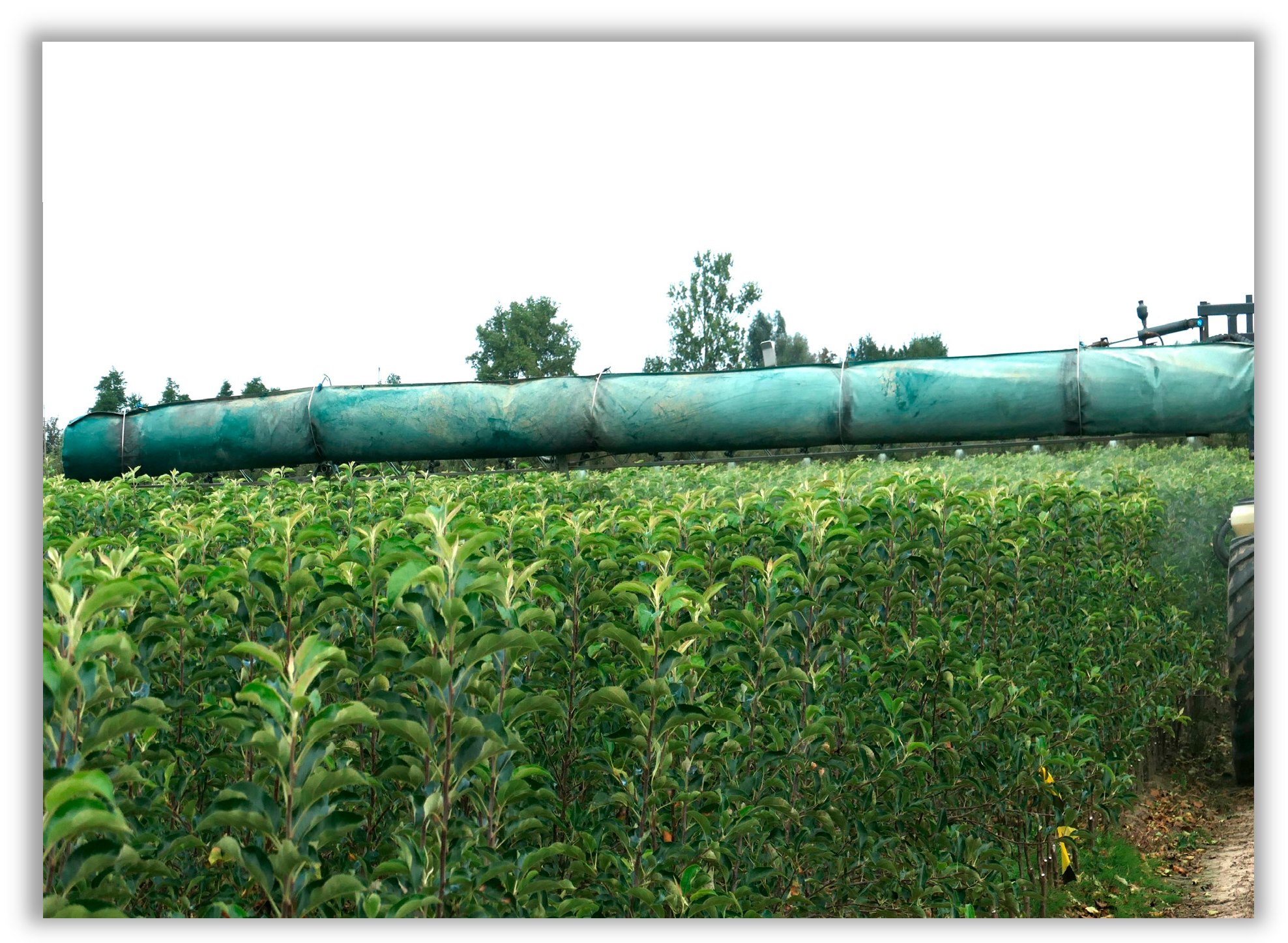
Atmospheric conditions during field studies—wind speed and direction, temperature, and humidity—are typically variable, making it difficult to achieve repeatable test conditions. Therefore, attempts have been made to conduct such experiments indoors using artificial plants to eliminate the influence of weather factors. However, preliminary tests revealed excessive variability of the artificial plants compared with natural nursery trees. Consequently, the field studies were carried out in a commercial fruit-tree plantation (Figure 9 and Figure 10).

2.5. Spray Deposit-Laboratory Measurements

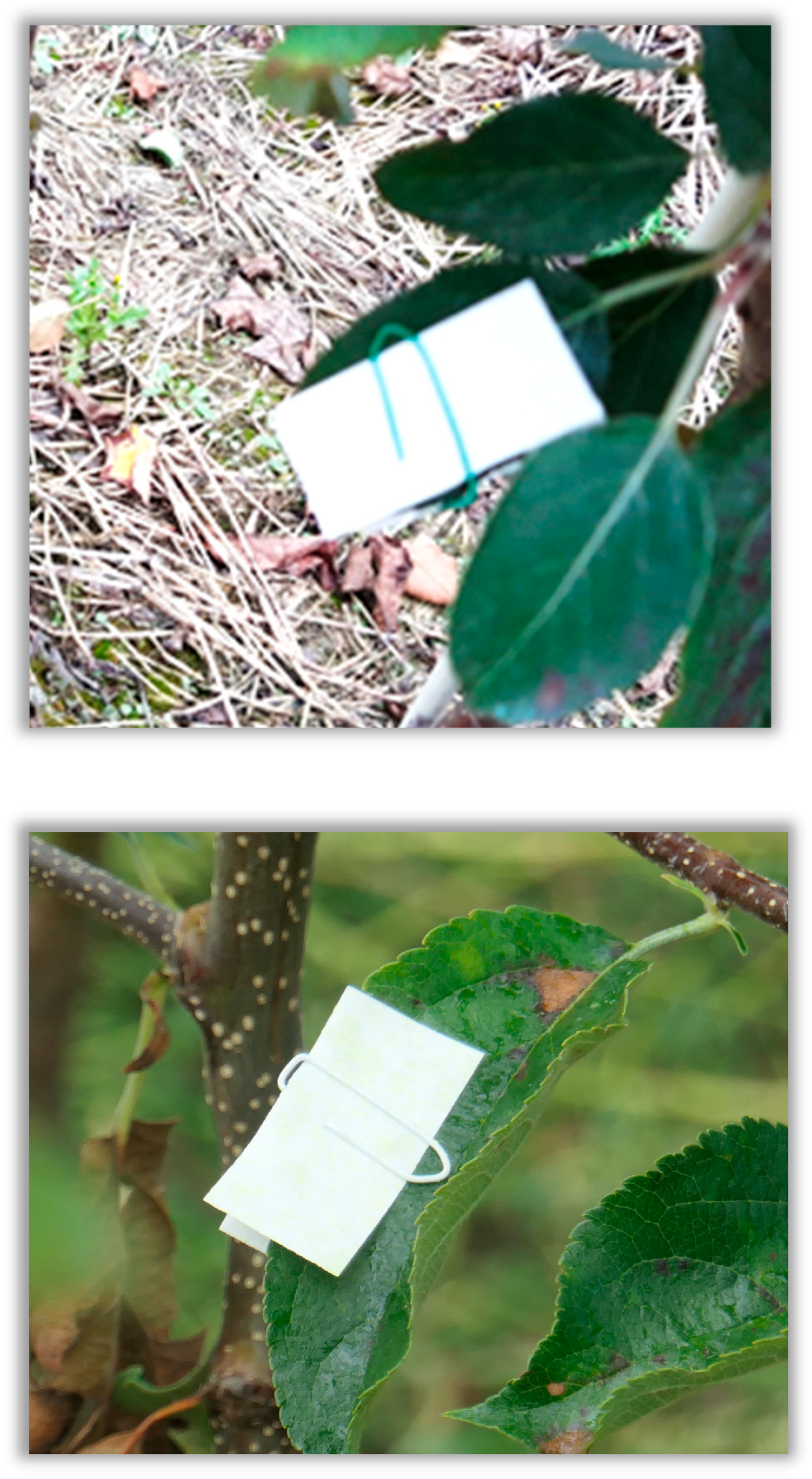
The in-canopy spray deposits were collected on artificial targets made of filter paper, which were attached on the upper and lower leaf surfaces at 3 locations on 6 trees (replication). This was quantified using a fluorescent tracer method. In-canopy deposit was collected on artificial targets (2.0 × 4.0 cm) made of filter paper (Ahlstrom Germany GmbH, Munich, Germany), which were attached to the upper and lower surfaces of three leaves on each of nine trees (replications) (Figure 11). The spray liquid consisted of a 0.25% aqueous solution of the fluorescent tracer BF7G—Acid Brilliant Flavine 7G (Waldeck GmbH & Co. KG, Havixbecker, 48161 Münster, Germany). This tracer exhibits high photostability, dissolves readily in water, and can be easily washed from leaf surfaces and artificial collectors. In-canopy spray deposit and off-target losses were assessed on both sides of the treated tree rows. Wind speed and direction, temperature, and relative humidity were recorded during the field trials.
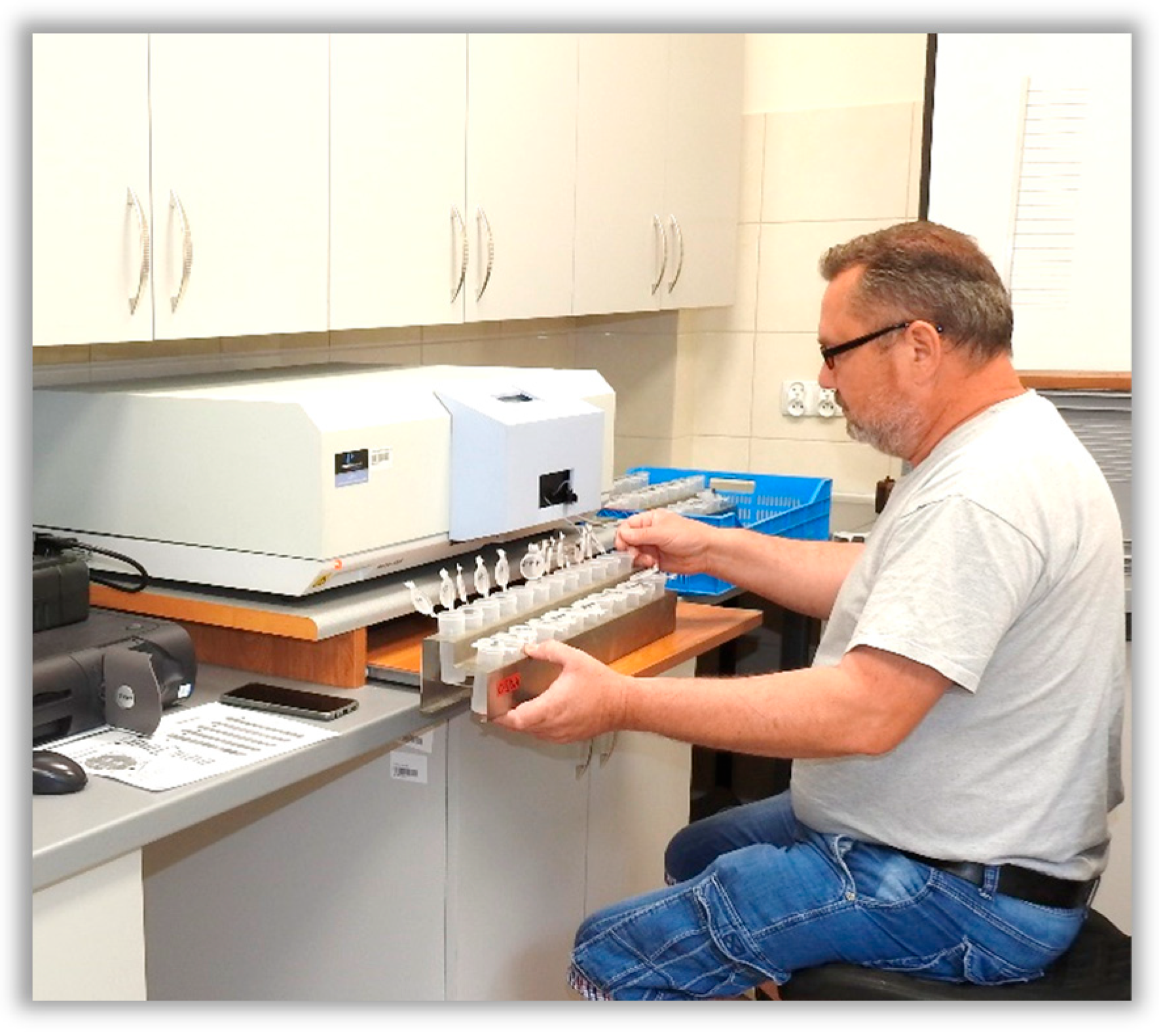
After spray application, the collectors were retrieved, placed in plastic snap-seal containers, and stored in darkness for subsequent processing. The fluorescent dye was extracted from each collector with 40 mL of deionized water. Following 5 min of shaking to release the tracer, dye concentration was determined using a PerkinElmer LS 55 fluorescence spectrometer (PerkinElmer Instruments, Beaconsfield, UK) (Figure 12). The resulting data were then converted to express tracer deposition in ng cm−2.

2.6. Statistical Analysis

To assess differences between means, a statistical analysis was performed. The data were analysed using multi-way analysis of variance (ANOVA) to determine the effect of the spraying technique on spray deposition within the trees. All analyses were carried out using STATISTICA 13. To improve conformity with the assumptions of normality and homogeneity of variance for the compared spray-liquid doses, sprayer operating speeds, and the two emission systems, deposition values of the fluorescent tracer obtained for the subpopulations representing the three sampled tree-crown zones were subjected to a Box–Cox transformation
[x′(λ) = (x^λ − 1)/λ], with λ = −0.046079.
Treatment means were separated using Duncan’s Multiple Range Test at p < 0.05.

3. Results and Discussion

3.1. Air Distribution Measurements—Indoor Tests

In the initial phase of airflow distribution research, the power requirement of the sprayer’s axial fan was determined. The study revealed a relatively low power requirement in the operating range of 1500–1900 rpm, which ranged from 2.97 to 5.51 kW (Table 4).
Achieving a uniform air stream along the boom sleeve of an air-assisted (AA) boom is difficult due to the structural characteristics of the air duct, which is typically made of flexible plastic material to allow folding of the boom at headlands. Although rigid boom designs are available, their considerably greater mass limits their use in long booms with large working widths. In contrast, the flexible sleeves commonly used in field-crop booms are significantly lighter but are manufactured from thinner and more elastic materials, which makes it difficult to install rigid, elongated air nozzles capable of ensuring satisfactory uniformity of the outgoing air stream. This problem has been repeatedly reported by AA sprayer operators and was one of the main motivations for undertaking the present study.
The indoor experiment on air distribution along the boom sleeve was performed under controlled, static conditions to eliminate the influence of wind. A dedicated experimental setup was constructed for this purpose. The AA boom was powered by an electro-hydraulic unit equipped with a thyristor-controlled speed regulator. The test stand included a measurement mast carrying five 3-D ultrasonic anemometers (Figure 7). During each measurement cycle, the mast travelled along a rail track positioned beneath the boom, and data from the anemometers were transmitted to a microprocessor-based data acquisition system. The use of 3-D anemometers enabled measurement of both the magnitude and direction of airflow; however, due to the large volume of recorded data, only selected results are presented here.
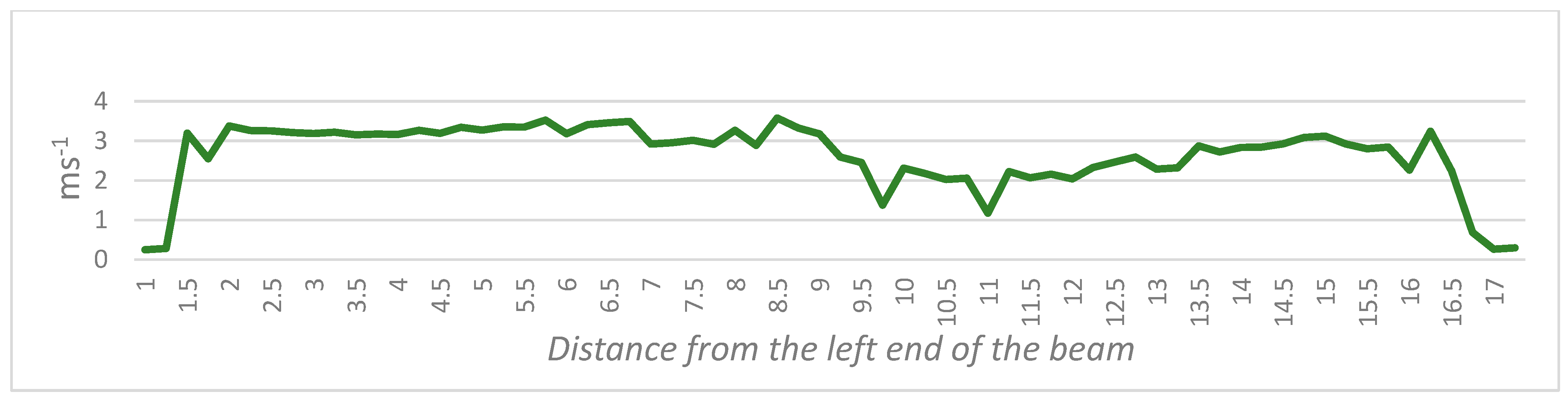
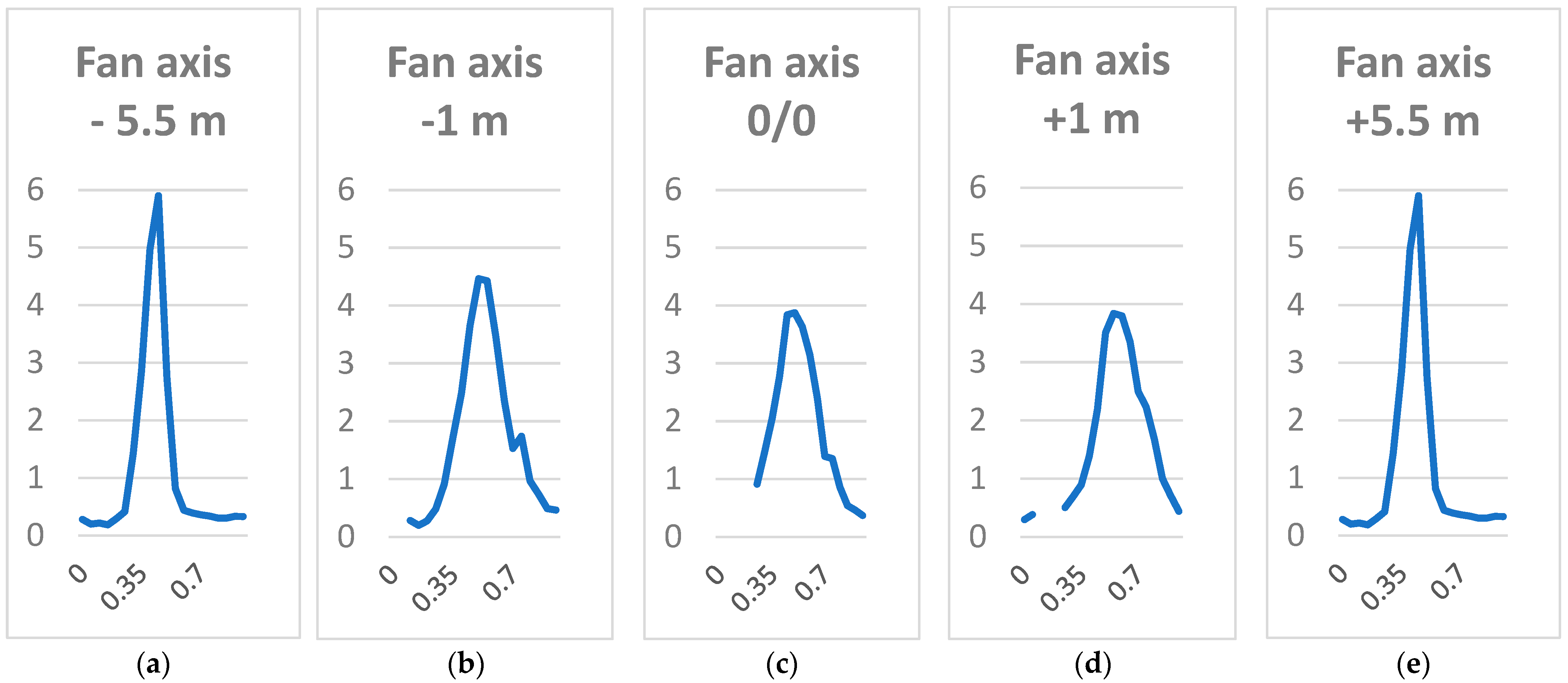
The most informative parameter was the mean air velocity measured in three vertical planes: one aligned with the axis of the outlet holes, and two additional planes positioned 0.1 m upstream and 0.1 m downstream of this axis. In the plane located upstream of the outlet axis, markedly lower air velocities were observed in the section between 1.0 m and 5.5 m (Figure 13 and Figure 14). A comparable effect was recorded on the opposite side of the sleeve, between 9.5 m and 16.0 m, in the plane located 0.1 m downstream of the outlet axis. To investigate this phenomenon in more detail, additional measurements of air-stream distribution were performed in five planes perpendicular to the boom, located in its central section. These measurements showed that maximum air velocity was approximately 2.0 m·s−1 lower along the fan axis and at +1.0 m from the axis compared with the velocities recorded at ±4.5 m). At the same time, the air-stream width increased by approximately 0.6 m. This effect was traced to misalignment of the outlet holes along the air sleeve (Figure 15).
Accordingly, a modification of the method used to attach the air sleeve to the field boom is recommended to improve air-curtain uniformity. It may also be expected that, during nursery spraying, the longer interaction time between the air–liquid stream and the plants will contribute to more uniform pesticide deposition. Therefore, despite the local non-uniformity of the air stream observed in the tests, the impact on overall spraying performance is likely to be minimal. Axial fans, unlike centrifugal fans, dominate in AA field booms designed for spraying flat crops because they feature a simple and durable construction and are relatively inexpensive. However, as confirmed by the present study, axial fans generate a considerably greater non-uniformity in airflow from the outlet holes distributed along the AA boom. Although the use of a centrifugal fan could be expected to improve airflow uniformity, it would also significantly increase power demand. Previous studies have shown that axial fans deliver approximately three times the airflow of a centrifugal fan at a comparable power consumption. Therefore, instead of replacing the axial fan with a centrifugal one, a more practical solution would be to develop an improved axial-fan design capable of achieving the desired uniformity of air distribution along the boom sleeve.

3.2. Spray Deposit

The research was conducted at the commercial nursery farm of A. & S. Nowakowski in Żdżary near Nowe Miasto on Pilica (Poland), which is managed according to carefully observed principles of plant protection and agronomic rules. The meteorological conditions (temperature, humidity, field wind speed) during the tests were measured using a portable meter (VelociCalc Plus–8386AM-GB (TSI Inc., St. Paul, MN, USA). During the field tests, a relatively low wind speed range (0.6–1.8 m·s−1) was observed, the air temperature range remained at 18–22 °C, and the air humidity was 39.9–54.1 throughout the entire study period (Table 5). The research involved measuring the application rate of the spray liquid using artificial samplers (filter paper) and fluorescence analysis after simulated spraying procedures.
The experiment was conducted at two forward speeds of the sprayer (6.0 and 9.0 km·h−1), of which the lower speed (6.0 km·h−1) is considered standard for plant protection treatments in flat field crops. Given the increasing trend toward enhancing the efficiency of agricultural machinery, including field sprayers, the study also assessed an above-standard spraying speed of 9.0 km·h−1.
The experimental plots were arranged in a randomized design, and data from comparable populations were normally distributed after transformation (Box-Cox); in some cases, transformation was not required. The mean values of spray deposition on nursery apple trees are presented in Table 6 and Table 7 and illustrated in Figure 16, Figure 17 and Figure 18. The results clearly indicate that leaf position significantly affects the amount of spray deposition, which in turn determines the uniformity of distribution and, consequently, the biological effectiveness of the treatment. The lowest deposition was recorded in the lower part of the trees, where access for the spray liquid is physically restricted. As the mean value of spray deposition in the tree canopy does not fully reflect the spatial distribution of spray within the plant, additional measurements were conducted separately on the upper and lower surfaces of the leaves—considered a more reliable method of assessment.
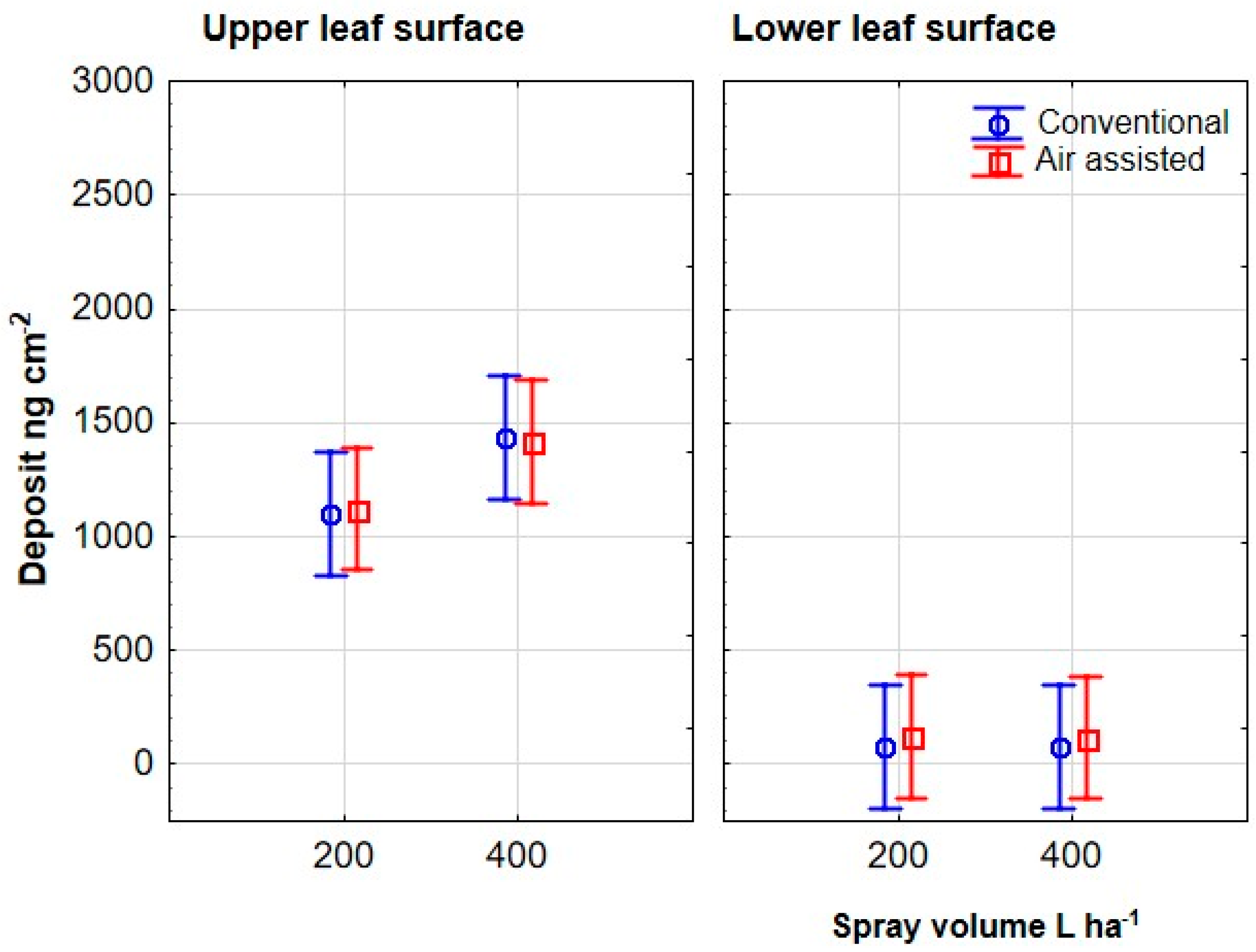
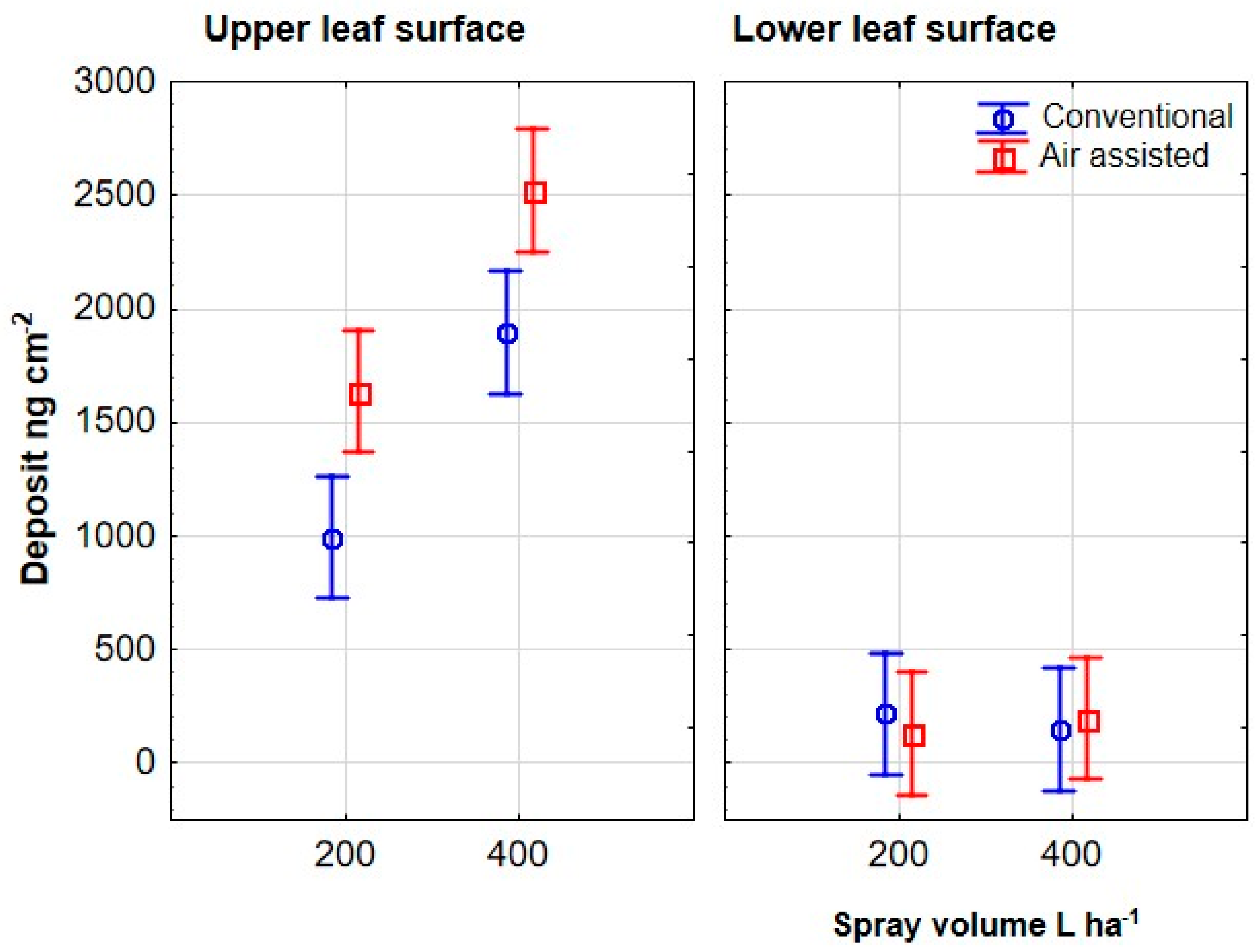
The results show a positive effect of AA system on spray deposition in nursery trees. When spraying at 6.0 km·h−1 with a spray volume of 200 L·ha−1, deposition on the upper leaf surface was 68% higher with the air-assisted sprayer compared to the conventional sprayer without air-assisting. For the 400 L·ha−1 application rate, the increase was 47%, and both differences were statistically significant (Figure 16 and Figure 17).
Nevertheless, considerable disparities were observed between spray deposition on the upper and lower surfaces of leaves for all treatments tested. Deposition on the upper surface was 20–30 times higher than on the lower surface. Ideally, plant protection products should evenly cover both leaf surfaces, as many pests and diseases (e.g., powdery mildew, spider mites) colonize the undersides of leaves. Moreover, critical physiological processes often occur on the lower surface, where the majority of stomata are located. Hence, uniform spray coverage of the lower surface is crucial for the uptake and action of systemic substances, and is essential for achieving high biological efficacy. In practice, however, coverage of the lower leaf surface remains challenging due to limited accessibility—resulting from sprayer nozzle orientation, airflow direction, and the natural shielding of lower leaf surfaces. The consequences of uneven coverage are varied, including reduced treatment efficacy, increased pathogen resistance, and greater environmental loading of PPPs.
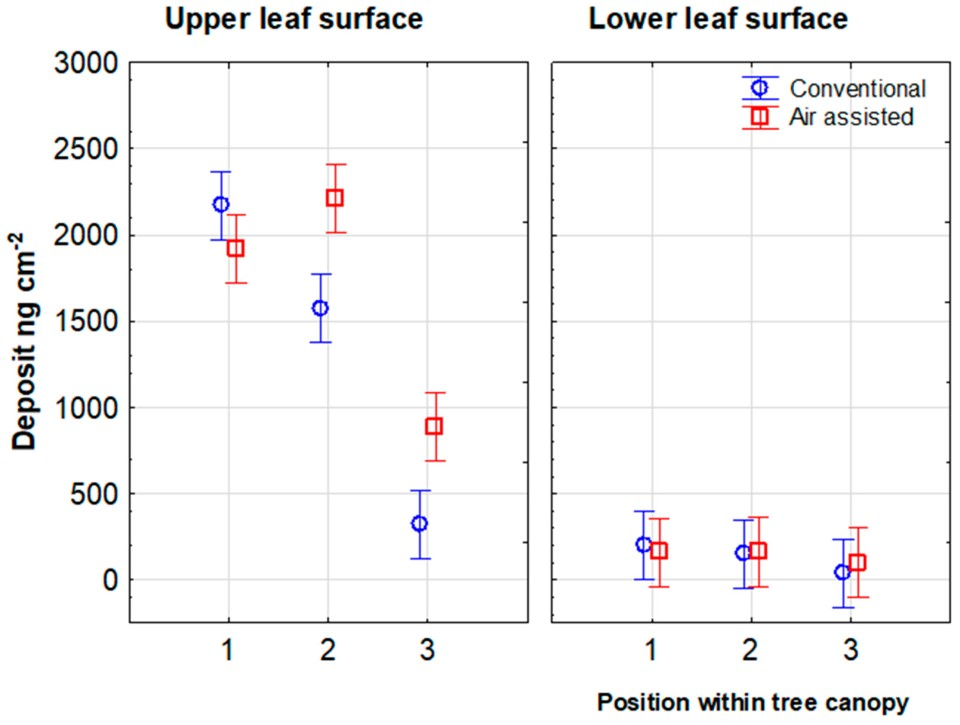
The spatial distribution of plant organs also plays a significant role in PPP deposition, as confirmed by the findings of this study. As expected, the highest spray deposition was observed on the uppermost parts of the trees and the upper surfaces of leaves. In these areas, no statistically significant differences were observed between the tested spraying techniques. However, on the upper surfaces of leaves located in the lower part of the trees, deposition was significantly greater when using the AA sprayer. At the same time, deposition on the lower surfaces of leaves did not differ significantly across the tested locations or sprayer types (Figure 18).
Increasing the sprayer speed from 6.0 to 9.0 km·h−1 did not yield the expected improvements (Figure 16 and Figure 17). This could be attributed to the backward deflection of the air curtain at higher travel speeds, especially when moving against the wind. Such deflection likely reduced spray penetration into the canopy, especially considering the high boom position and increased wind exposure. Further increasing the spraying speed (12–16 km·h−1) proved effective, resulting in increased spray liquid application compared to a conventional sprayer, but at the same time, the difference between the windward and leeward sides of the sprayer increased. However, the most uniform distribution was achieved at a speed of 8.0 km·h−1.
These results and observations emphasize the need for caution when spraying at elevated speeds (above 9–10 km·h−1), a practice increasingly adopted to improve machinery productivity. To mitigate the adverse effects of increased speed, it is advisable to equip spray booms with AA systems and incorporate adjustable airflow angle control. Although this would increase the overall weight and manufacturing cost of the sprayer, it would help counteract the drawbacks associated with high-speed operation. Ultimately, this should lead to improved biological efficacy and reduced PPP emissions to the environment.

4. Conclusions

The air-assisted (AA) system significantly improves the operational performance of sprayers intended for fruit-tree nurseries and should be recommended for practical horticultural use. Further refinement is nevertheless required to enhance the uniformity of airflow discharged through the perforations in the delivery sleeve. Incorporating mechanisms that enable adjustment of the airstream direction would also be beneficial, as this would allow correction of the air-curtain orientation under windy conditions.
The results demonstrated that the nursery sprayer mounted on a high-clearance tractor and equipped with the AA system increased spray deposition on the upper leaf surface by 68% when the fan was engaged. At the same time, fan operation (on/off) did not produce a statistically significant effect on deposition on the lower leaf surface.
The machinery set developed for mounting on a straddle, high-clearance tractor and dedicated to fruit-tree nurseries offers new opportunities for nursery production, particularly in economic and environmental terms. The economic advantages arise from two main factors: improved spray deposition with the fan engaged, which enables a reduction in plant protection product (PPP) use, and reduced water consumption combined with higher operational speed, which decreases fuel use and consequently lowers plant protection costs and CO2 emissions.
Implementation of the innovative AA-equipped sprayer—an essential component of the machinery set mounted on the nursery tractor—should also support sustainable-development strategies focused on conserving arable land. Narrower headlands and the elimination of driving lanes are estimated to provide approximately 20% savings in arable land, a non-renewable resource. Moreover, the use of machinery mounted on a high-clearance tractor will reduce the mass of the complete machine set by approximately 40%, lowering material and energy consumption in nursery production. The reduced mass and the associated technical innovations will also decrease the tractor’s engine power demand by 50%, ultimately reducing fuel consumption by 50% compared with existing systems. Mechanisation of nursery operations will not be feasible without an AA-system sprayer, which additionally reduces pesticide use by 15–20% and decreases environmental emissions. Operational advantages, notably improved manoeuvrability in nursery conditions relative to currently available machines, are also important.
Given the complexity of nursery production technology, a wide range of specialised machinery is required, with spray equipment playing a central role because it ensures high biological efficacy and the production of high-quality nursery material. Owing to the high economic value of nursery crops and strict quality standards, continued research into new plant-protection application techniques is necessary, with emphasis on the following areas:
– Spray-deposition uniformity on nursery trees,
– Air-emission systems capable of adjusting airflow output to plant height and canopy density in fruit-tree nurseries,
– Validating the obtained results in biological efficacy studies,
It is recommended also to evaluate both conventional and modified disease control machines, including analysis of economic aspects.

Author Contributions

Conceptualization, R.H. and G.D.; methodology, R.H. and G.D.; investigation, R.H. and W.Ś. and A.B. and A.G.; data curation, R.H. and P.K. and W.Ś. and P.B.; writing—original draft preparation, R.H.; writing—review and editing, G.D. and P.K. and A.G. All authors have read and agreed to the published version of the manuscript.

Funding

This research was co-financed by the Polish Agency for Enterprise Development and carried out as part of the project POIR.01.01.01-00-0138/17-“Portal carrier with a set of specialized machines for the production of nursery material”.

Data Availability Statement

The data presented in this study are available from the corresponding author on reasonable request.

Acknowledgments

We would like to thank the ROLSAD company in Rawa Mazowiecka for their support in the construction of the sprayer prototype and conducting field tests.

Conflicts of Interest

The authors declare no conflicts of interest.

References

  1. Zhu, H.; Derksen, R.C.; Guler, H.; Krause, C.R.; Ozkan, H.E. Foliar Deposition and Off-Target Loss with Different Spray Techniques in Nursery Applications. Trans. ASABE 2006, 49, 325–334. [Google Scholar] [CrossRef]
  2. Krause, C.R.; Zhu, H.; Fox, R.D.; Brazee, R.D.; Derksen, R.C.; Horst, L.E.; Zondag, R.H. Detection and Quantification of Nursery Spray Penetration and Off-Target Loss with Electron Beam and Conductivity Analysis. Trans. ASAE 2004, 47, 375–384. [Google Scholar] [CrossRef]
  3. Liu, X.; Liu, X.; Cui, H.; Yuan, J. Research Progress and Trend Analysis of Crop Canopy Droplet Deposition. Trans. Chin. Soc. Agric. Mach. 2021, 52, 1–20. [Google Scholar] [CrossRef]
  4. Gu, J.; Zhu, H.; Ding, W.; Wang, X. Characterization of Air Profiles Impeded by Plant Canopies for a Variable-Rate Air-Assisted Sprayer. Trans. ASABE 2014, 57, 1307–1315. [Google Scholar] [CrossRef]
  5. Young, R.E. Highly Maneuverable Nursery Straddle Vehicle. Trans. ASAE 1985, 28, 1031–1037. [Google Scholar] [CrossRef]
  6. Wang, G.; Li, Z.; Jia, W.; Ou, M.; Dong, X.; Zhang, Z. A Review on the Evolution of Air-Assisted Spraying in Orchards and the Associated Leaf Motion During Spraying. Agriculture 2025, 15, 964. [Google Scholar] [CrossRef]
  7. Foqué, D.; Pieters, J.G.; Nuyttens, D. Spray Deposition and Distribution in a Bay Laurel Crop as Affected by Nozzle Type, Air Assistance and Spray Direction When Using Vertical Spray Booms. Crop Prot. 2012, 41, 77–87. [Google Scholar] [CrossRef]
  8. Stallinga, H.; Michielsen, J.M.; Snoussi, M.; van Steenbergen, G. Recovery and Stability of Fluorescent Tracer Acid Yellow 250; Wageningen University & Research: Wageningen, The Netherlands, 2024; Volume 7. [Google Scholar] [CrossRef]
  9. Szarka, Z.A.; Kruger, G.R.; Golus, J.; Rodgers, C.; Perkins, D.; Brain, R.A. Spray Drift Deposition Comparison of Fluorimetry and Analytical Confirmation Techniques. Pest Manag. Sci. 2021, 77, 4192–4199. [Google Scholar] [CrossRef] [PubMed]
  10. Feng, F.; Dou, H.; Zhai, C.; Zhang, Y.; Zou, W.; Hao, J. Design and Experiment of Or-chard Air-Assisted Sprayer with Airflow Graded Control. Agronomy 2025, 15, 95. [Google Scholar] [CrossRef]
  11. Zhu, H.; Brazee, R.D.; Derksen, R.C.; Fox, R.D.; Krause, C.R.; Ozkan, H.E.; Losely, K. A Specially Designed Air-Assisted Sprayer to Improve Spray Penetration and Air Jet Velocity Distribution Inside Dense Nursery Crops. Trans. ASABE 2006, 49, 1285–1294. [Google Scholar] [CrossRef]
  12. Chen, Y. Development of an Intelligent Sprayer to Optimize Pesticide Applications in Nurseries and Orchards. Ph.D. Dissertation, The Ohio State University, Columbus, OH, USA, 2010. [Google Scholar]
  13. Wang, J.; Dong, X.; Yan, H.; Wang, J.; Zhang, T.; Zeng, Y. Experiment on Spraying Performance of Air-Assisted Boom Sprayer in Corn Field. Trans. Chin. Soc. Agric. Mach. 2015, 46, 79–84. [Google Scholar] [CrossRef]
  14. Derksen, R.C.; Krause, C.R.; Zondag, R.H.; Reding, M.E.; Fox, R.D. Effect of Application Variables on Spray Deposition, Coverage, and Ground Losses in Nursery Tree Applications. J. Environ. Hortic. 2006, 24, 45–52. [Google Scholar] [CrossRef]
  15. Zhu, H.; Zondag, R.H.; Derksen, R.C.; Reding, M.E.; Krause, C.R. Influence of Spray Volume on Spray Deposition and Coverage within Nursery Trees. J. Environ. Hortic. 2008, 26, 51–57. [Google Scholar] [CrossRef]
  16. Zhu, H.; Liu, H.; Shen, Y.; Zondag, R. Spray Deposition Inside Multiple-Row Nursery Trees with a Laser-Guided Sprayer. J. Environ. Hortic. 2017, 35, 13–23. [Google Scholar] [CrossRef]
  17. Zhu, H.; Derksen, R.C.; Krause, C.R.; Fox, R.D.; Brazee, R.D.; Zondag, R.H. Spray Deposition and Off-Target Loss in Nursery Tree Crops with Conventional Nozzle, Air Induction Nozzle and Drift Retardant. In Proceedings of the 2005 ASAE Annual Meeting, Tampa, FL, USA, 17–20 July 2005. [Google Scholar] [CrossRef]
  18. Jensen, P.K. Spray Drift and Deposition Uniformity with Conventional Technique and Hardi Twin Air Assistance at Two Wind Speeds. In Applied Crop Protection 2019; DCA Report 167; DCA—Nationalt Center for Fødevarer og Jordbrug: Slagelse, Denmark, 2020; pp. 113–118. [Google Scholar]
  19. Womac, A.R.; Ozkan, E.; Zhu, H.; Kochendorfer, J.; Jeon, H. Status of Spray Penetration and Deposition in Dense Field Crop Canopies. Trans. ASABE 2022, 65, 1107–1117. [Google Scholar] [CrossRef]
  20. Jeon, H.Y.; Zhu, H. Development of a Variable-Rate Sprayer for Nursery Liner Applications. Trans. ASABE 2012, 55, 303–312. [Google Scholar] [CrossRef]
  21. Piché, M.; Panneton, B.; Thériault, R. Field Evaluation of Air-Assisted Boom Spraying on Broccoli and Potato. Trans. ASAE 2000, 43, 793–799. [Google Scholar] [CrossRef]
  22. Fessler, L.; Fulcher, A.; Schneider, L.; Wright, W.C.; Zhu, H. Reducing the Nursery Pesticide Footprint with Laser-Guided, Variable-Rate Spray Application Technology. HortScience 2021, 56, 1572–1584. [Google Scholar] [CrossRef]
  23. Derksen, R.C.; Krause, C.R.; Zondag, R.H.; Reding, M.E.; Fox, R.D. Spray Delivery to Nursery Trees by Air Curtain and Axial Fan Orchard Sprayers. J. Environ. Hortic. 2004, 22, 17–22. [Google Scholar] [CrossRef]
  24. Salyani, M.; Miller, D.R.; Farooq, M.; Sweeb, R.D. Effects of Sprayer Operating Parameters on Airborne Drift from Citrus Air-Carrier Sprayers. Agric. Eng. Int. CIGR J. 2013, 15, 27–36. [Google Scholar]
  25. Cunha, J.P.; Chueca, P.; Garcerá, C.; Moltó, E. Risk Assessment of Pesticide Spray Drift from Citrus Applications with Air-Blast Sprayers in Spain. Crop Prot. 2012, 42, 116–123. [Google Scholar] [CrossRef]
  26. Foqué, D.; Dekeyser, D.; Zwertvaegher, I.; Nuyttens, D. Accuracy of a Multiple Mineral Tracer Methodology for Measuring Spray Deposition. Asp. Appl. Biol. 2014, 122, 203–212. [Google Scholar]
  27. Foqué, D.; Nuyttens, D. Effects of Nozzle Type and Spray Angle on Spray Deposition in Ivy Pot Plants. Pest Manag. Sci. 2011, 67, 199–208. [Google Scholar] [CrossRef]
  28. Nuyttens, D.; Windey, S.; Sonck, B. Optimisation of a Vertical Spray Boom for Green-house Spray Applications. Biosyst. Eng. 2004, 89, 417–423. [Google Scholar] [CrossRef]
  29. Ou, M.; Zhang, Y.; Wu, M.; Wang, C.; Dai, S.; Wang, M.; Dong, X.; Jiang, L. Development and Experiment of an Air-Assisted Sprayer for Vineyard Pesticide Application. Agriculture 2024, 14, 2279. [Google Scholar] [CrossRef]
  30. García-Ramos, F.J.; Vidal, M.; Boné, A.; Malón, H.; Aguirre, J. Analysis of the Air Flow Generated by an Air-Assisted Sprayer Equipped with Two Axial Fans Using a 3D Sonic Anemometer. Sensors 2012, 12, 7598–7613. [Google Scholar] [CrossRef] [PubMed]
  31. Dekeyser, D.; Foqué, D.; Duga, A.T.; Verboven, P.; Hendrickx, N.; Nuyttens, D. Spray Deposition Assessment Using Different Application Techniques in Artificial Orchard Trees. Crop Prot. 2014, 64, 187–197. [Google Scholar] [CrossRef]
  32. Panneton, B.; Lacasse, B.; Piché, M. Effect of Air-Jet Configuration on Spray Coverage in Vineyards. Biosyst. Eng. 2005, 90, 173–184. [Google Scholar] [CrossRef]
  33. Panneton, B.; Lacasse, B.; Thériault, R. Penetration of Spray in Apple Trees as a Function of Airspeed, Airflow, and Power for Tower Sprayers. Can. Biosyst. Eng. 2005, 47, 13–20. [Google Scholar]
  34. Gil, Y.; Sinfort, C. Emission of Pesticides to the Air During Sprayer Application: A Bibliographic Review. Atmos. Environ. 2005, 39, 5183–5193. [Google Scholar] [CrossRef]
  35. Salcedo, R.; Pons, P.; Llop, J.; Zaragoza, T.; Campos, J.; Ortega, P.; Gallart, M.; Gil, E. Dynamic Evaluation of Airflow Stream Generated by a Reverse System of an Axial Fan Sprayer Using 3D Ultrasonic Anemometers: Effect of Canopy Structure. Comput. Electron. Agric. 2019, 163, 104851. [Google Scholar] [CrossRef]
  36. García-Ramos, F.J.; Serreta, A.; Boné, A.; Vidal, M. Applicability of a 3D Laser Scanner for Characterizing the Spray Distribution Pattern of an Air-Assisted Sprayer. J. Sens. 2018, 2018, 5231810. [Google Scholar] [CrossRef]
  37. Van de Zande, J.; Barendregt, A.; Michielsen, J.; Stallinga, H. Effect of Sprayer Settings on Spray Distribution and Drift Potential When Spraying Dwarf Apple Trees. In Proceedings of the ASAE Annual International Meeting, Chicago, IL, USA, 28–31 July 2002; p. 021036. [Google Scholar]
  38. Dekeyser, D.; Duga, A.T.; Verboven, P.; Endalew, A.M.; Hendrickx, N.; Nuyttens, D. Assessment of Orchard Sprayers Using Laboratory Experiments and Computational Fluid Dynamics Modelling. Biosyst. Eng. 2013, 114, 157–169. [Google Scholar] [CrossRef]
  39. Taylor, W.A.; Andersen, P.G. A Review of Benefits of Air-Assisted Spraying Trials in Arable Crops. Asp. Appl. Biol. 1997, 48, 163–173. [Google Scholar]
Figure 1. Portal tractor–front view.
Agronomy 16 00008 g001
Figure 2. Portal tractor–side view.
Agronomy 16 00008 g002
Figure 3. Portal tractor working in the nursery.
Agronomy 16 00008 g003
Figure 4. Portal tractor with tree digger.
Agronomy 16 00008 g004
Figure 5. Air-Assisted Sprayer–rear view.
Agronomy 16 00008 g005
Figure 6. Air-Assisted Sprayer–side view.
Agronomy 16 00008 g006
Figure 7. Test stand for air flow measurements using 3-D ultrasonic anemometers.
Agronomy 16 00008 g007
Figure 8. Air-assisted sprayer–air sleeve perforation (bottom view).
Agronomy 16 00008 g008
Figure 9. Air assisted spray boom–air emission on.
Agronomy 16 00008 g009
Figure 10. Air assisted spray boom–air emission off.
Agronomy 16 00008 g010
Figure 11. Filter paper for spray deposit quantified using a fluorescent tracer method.
Agronomy 16 00008 g011
Figure 12. Fluorescent tracer concentration measurements using a PerkinElmer LS 55 fluorescent spectrometer (PerkinElmer Instruments, Beaconsfield, UK).
Agronomy 16 00008 g012
Figure 13. Air velocity measured in three vertical planes: (A) 10 cm in front of axis of the air outlets; (B) aligned with the axis of air outlets; (C) 10 cm behind the axis of air outlets.
Agronomy 16 00008 g013
Figure 14. Average air speed measured in a strip with a width of +/− 10 cm from the plane of the air stream outlet.
Agronomy 16 00008 g014
Figure 15. Air-stream velocity distribution in five planes (ae) perpendicular to the spray boom measured in the section between 1.0 m and 5.5 m.
Agronomy 16 00008 g015
Figure 16. Average spray deposit on upper and lower leaves surface at 6.0 km·h−1 and two spray volume (200 L·ha−1 and 400 L·ha−1) for conventional (blue) and air-assisted sprayer (red).
Agronomy 16 00008 g016
Figure 17. Average spray deposit on upper and lower leaves surface at 9.0 km·h−1 and two spray volume (200 L·ha−1 and 400 L·ha−1) for conventional (blue) and air-assisted sprayer (red).
Agronomy 16 00008 g017
Figure 18. Average spray deposit on upper and lower leaves surface at three leaf position within tree canopy for conventional (blue) and air-assisted sprayer (red).
Agronomy 16 00008 g018
Table 1. Selected Technical Data–Portal Tractor.
ParameterUnitValue
Dimensions (length × width × height)m4.0 × 2.21 × 3.97
Ground clearance (front/rear)m1.76/1.73
Wheelbasem2.66
Tire size9.5-42-0
Drive system Landini Rex 70F, capacitycm33300
Engine 3TA diesel, powerkW/HP50/68
TorqueNm280
Hydraulic pump capacityL/min52.3
PTO speedrpm540/750
Fuel tank capacityL57
Maximum lifting capacitykg2600
Number of gears (forward/reverse)12/12
Table 2. Selected Technical Data–Air-assisted sprayer (AA).
ParameterUnitValue
Dimensions (length × width × height)m3.3 × 2.5 × 2.98
Tank capacityL1000
Weightkg850
Power requirement–boomkW6.2
Power requirement–liquid pumpkW2.6
Boom–working widthm15
Boom–heightm0.3–3.0
Airflow ratem3/m of boom0.65
Air velocity (at 0.5 m height)m/s5.5
Spray liquid pump–capacityL/min160
Spray liquid pump–working pressureMPa2.0
Table 3. Technical parameters of air-assisted sprayer during the treatment in apple nursery plantation performed at spray volume 200 and 400 L∙ha−1.
Spray Dose
L·ha−1
AA *Air Velocity
m·s−1
Travel Velocity
km∙h−1
Nozzle TypesSpray Pressure
MPa
Spray Flow
L·min−1
Droplets Size
(BCPC)
200Off5.56.0LU 120-030.211.0fine
On5.56.0LU 120-030.211.0fine
Off5.59.0LU 120-030.381.5fine
On5.59.0LU 120-030.381.5fine
400Off5.56.0LU 120-050.312.0fine
On5.56.0LU 120-050.312.0fine
Off5.59.0LU 120-050.593.0fine
On5.59.0LU 120-050.593.0fine
(*) AA–Air-assisted spray boom.
Table 4. Power demand measurement results for an axial fan mounted on a sprayer air-assisted nursery sprayer.
Fan SpeedOil Pressure
Inlet
Oil Pressure OutletOil FlowPower
Consumption
rpmMPaMPaL/minkW
14117.20.422.40 2.54
15037.90.423.792.97
16088.70.525.733.52
17219.60.527.584.18
181610.50.529.244.87
190411.30.530.595.51
200312.10.632.326.19
Table 5. Weather conditions during spraying of the fruit tree nursery.
Spray Dose
L·ha−1
AA *Travel Velocity
km·h−1
Wind Velocity
m·s−1
Air
Humidity
%
Temperature
°C
200Off6.00.6–1.254.118
On6.01.6–1.853.819
Off9.01.3–1.852.822
On9.00.5–0.844.521
400Off6.00.6–0.944.522
On6.00.4–0.944.021
Off9.00.4–1.041.122
On9.00.7–1.239.922
(*) AA–Air-assisted spray boom.
Table 6. The ANOVA summary table for data sets of spray deposit in apple nursery, at lower and higher spray volume, at two travel speed and two leaf side.
Source of VariationSum of SquaresdfPercent of Totalp
Total10,715.671 0
Spray volume4.4910.0419012530.002199
Speed6.1610.0574859060.000342
Emission14.3310.1337293890
Leaf side371.2813.4648323440
Spray volume × Speed3.610.0335956590.006014
Spray volume × Emission0.1810.0016797830.532112
Speed × Emission0.8810.0082122720.173612
Spray volume × Leaf side3.9210.0365819400.004168
Speed × Leaf side0.0610.0005599280.729433
Emission × Leaf side0.0410.0003732850.761084
Spray volume × Speed × Emission0.0810.0007465700.685630
Spray volume × Speed × Emission0.0910.0008398910.660784
Spray volume × Emission × Leaf side0.6910.0064391680.229144
Speed × Emission × Leaf side1.1710.0109185890.117129
Spray volume × Speed × Emission × Leaf side0.1110.0010265340.623816
Error196.57416
Table 7. The ANOVA summary table for data sets of spray deposit in apple nursery, at lower and higher spray volume, at two travel speed and two leaf side.
EfektSum of SquaresdfpPercent of Total
Total10,715.6710
Emission14.33100.133729389
Position77.05200.719040433
Leaf side371.28103.464832344
Emission × Position8.3220.0000020.077643302
Emission × Leaf side0.0410.7049350.000373285
Position × Leaf side4.2120.0011170.039288257
Emission × Position × Leaf side0.4720.4666060.004386100
Error127.95420
Disclaimer/Publisher’s Note: The statements, opinions and data contained in all publications are solely those of the individual author(s) and contributor(s) and not of MDPI and/or the editor(s). MDPI and/or the editor(s) disclaim responsibility for any injury to people or property resulting from any ideas, methods, instructions or products referred to in the content.