Improving Soil Health and Rice Yields with the Application of Soil Amendments in Acidic Paddy Soils
 , and
, and
Abstract
1. Introduction
2. Materials and Methods
2.1. Site Description
2.2. Experimental Design
2.3. Sample Collection and Treatment
2.4. Sample Analysis
2.5. Statistical Analysis
3. Results
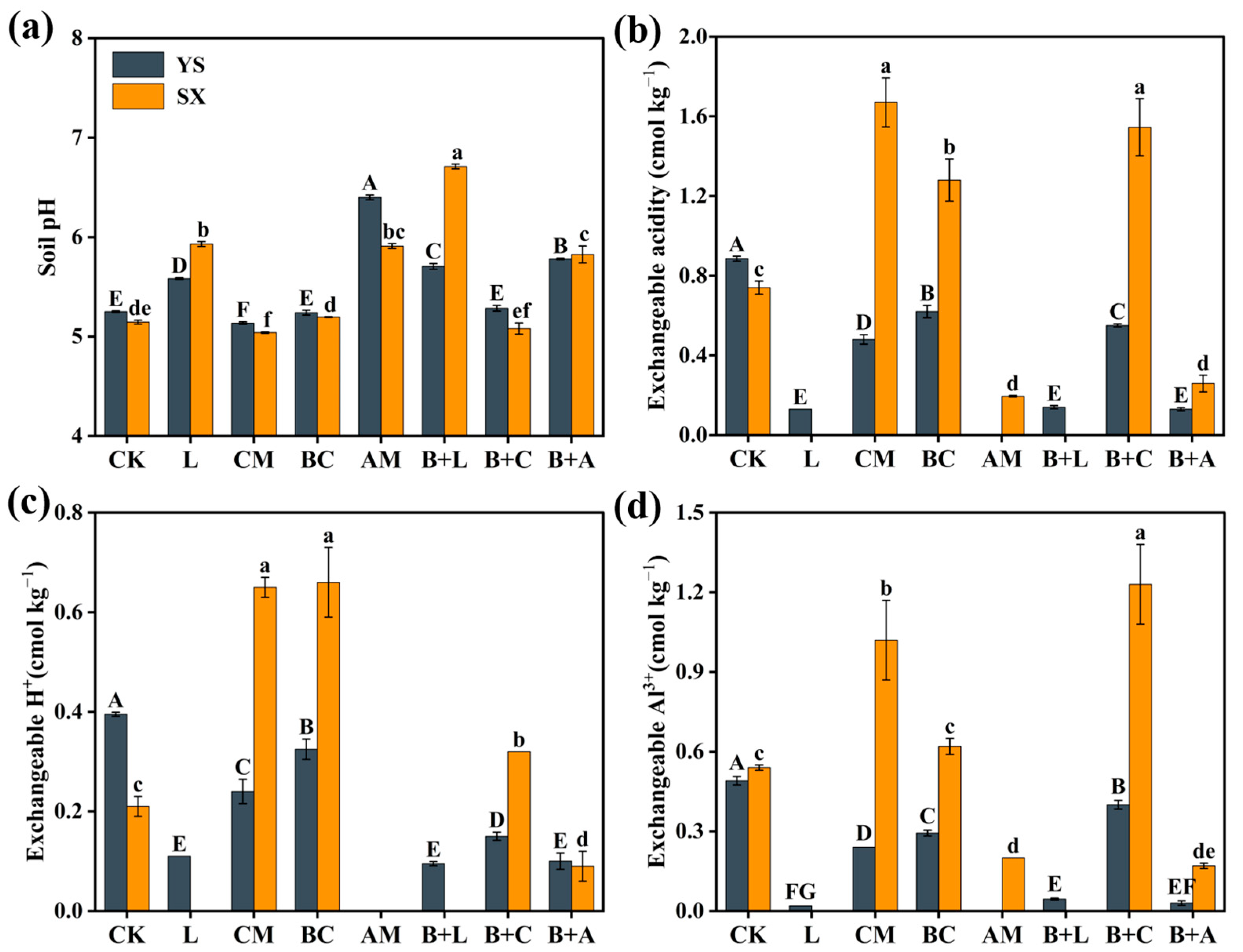
3.1. Effects of Amendments on Soil pH, Exchangeable Acidity, H+, and Al3+
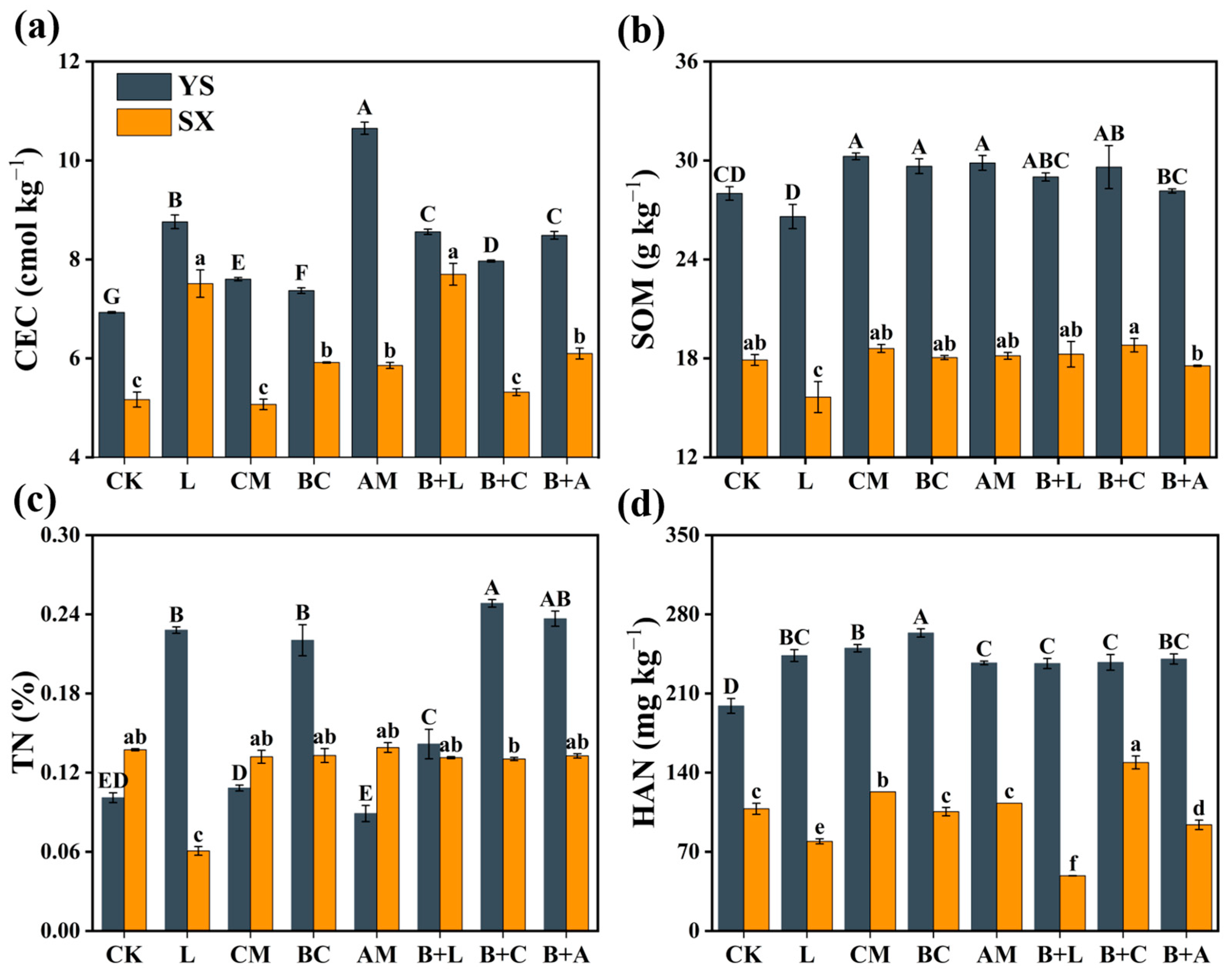
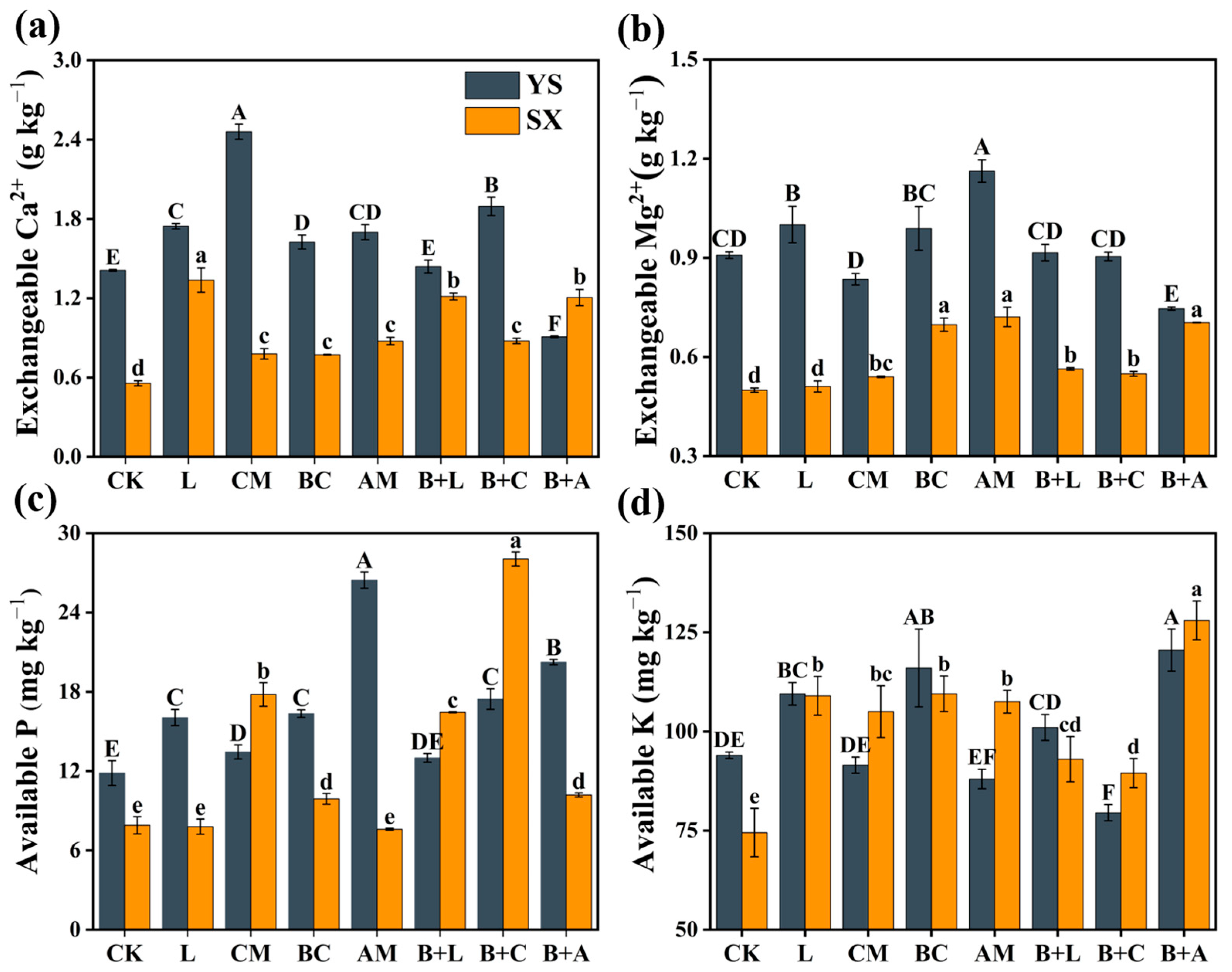
3.2. Effects of Amendments on Soil Nutrients
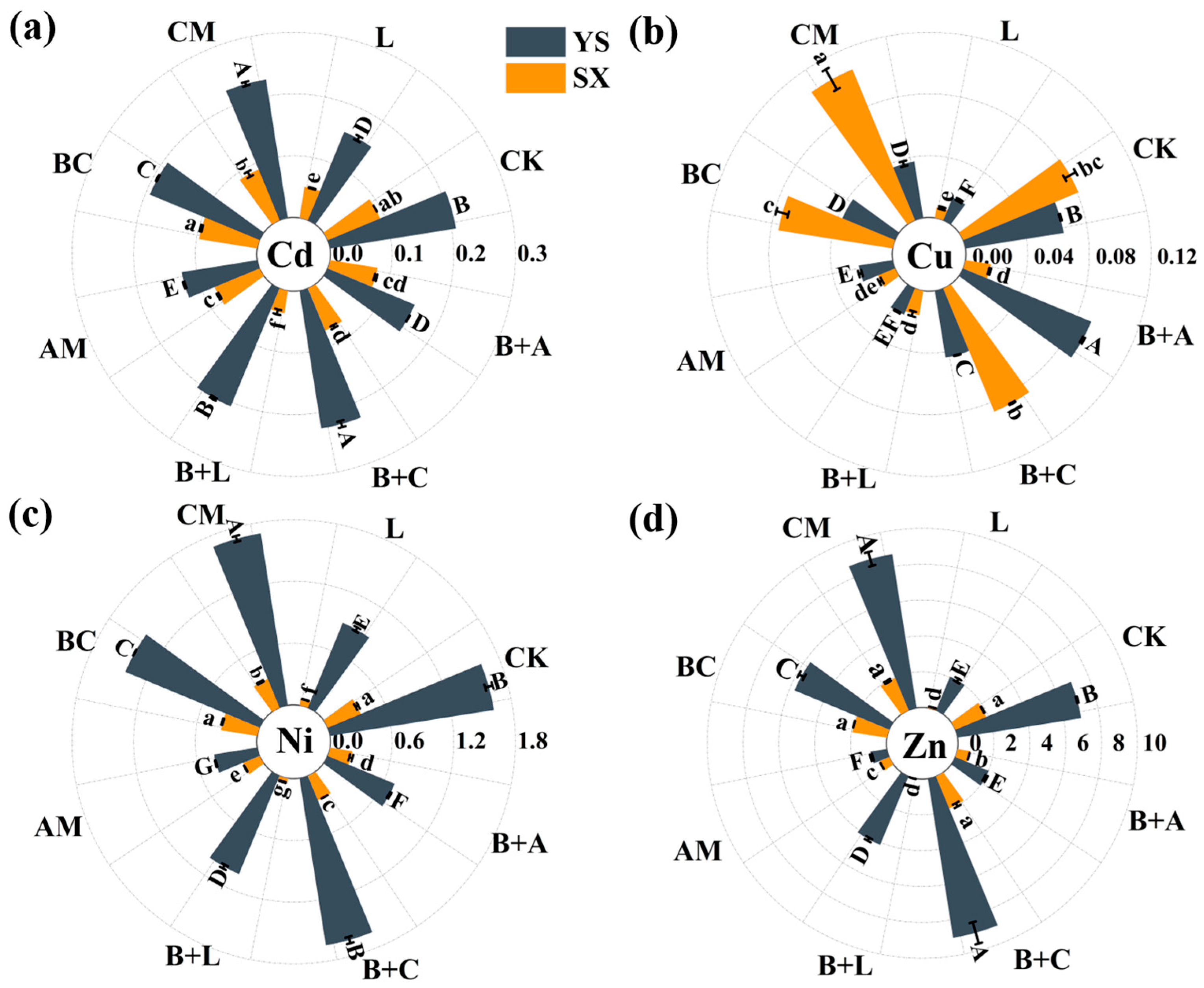
3.3. Effects of Amendments on Soil Bioavailable Cd, Cu, Ni, and Zn
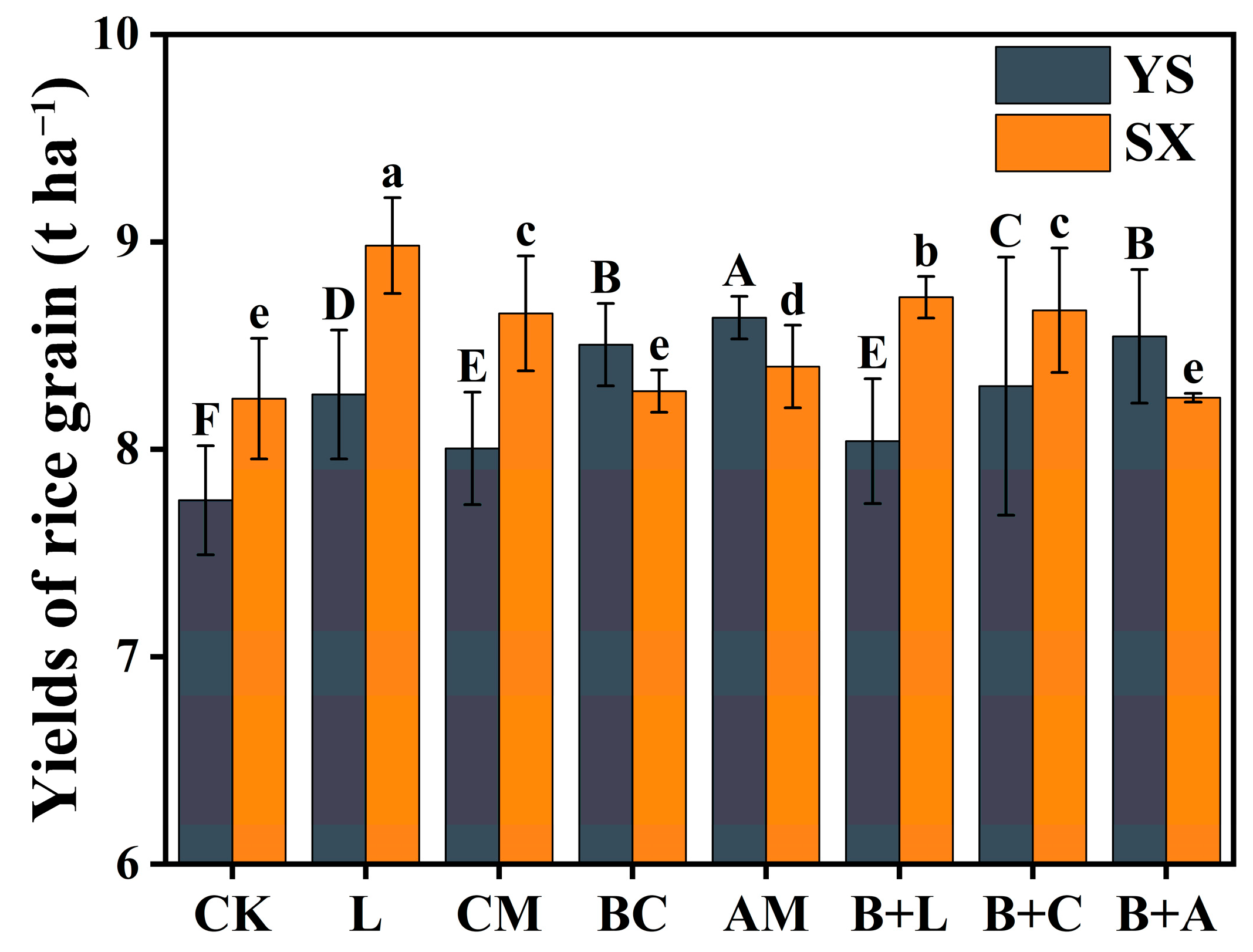
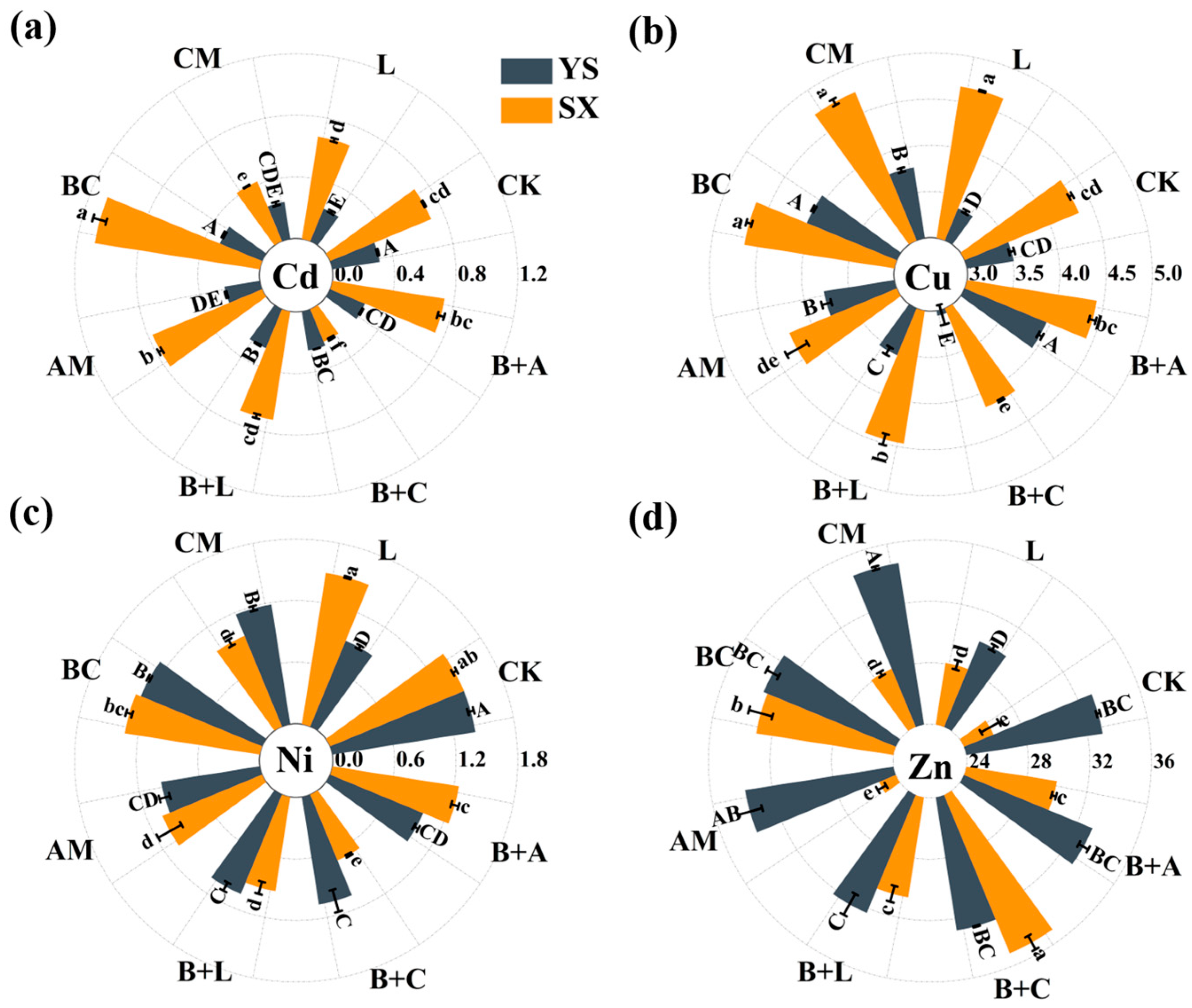
3.4. Effects of Amendments on Rice Yield and Heavy Metal Accumulation in Rice Grains
3.5. Cost Analysis
3.6. Soil Grade Analysis
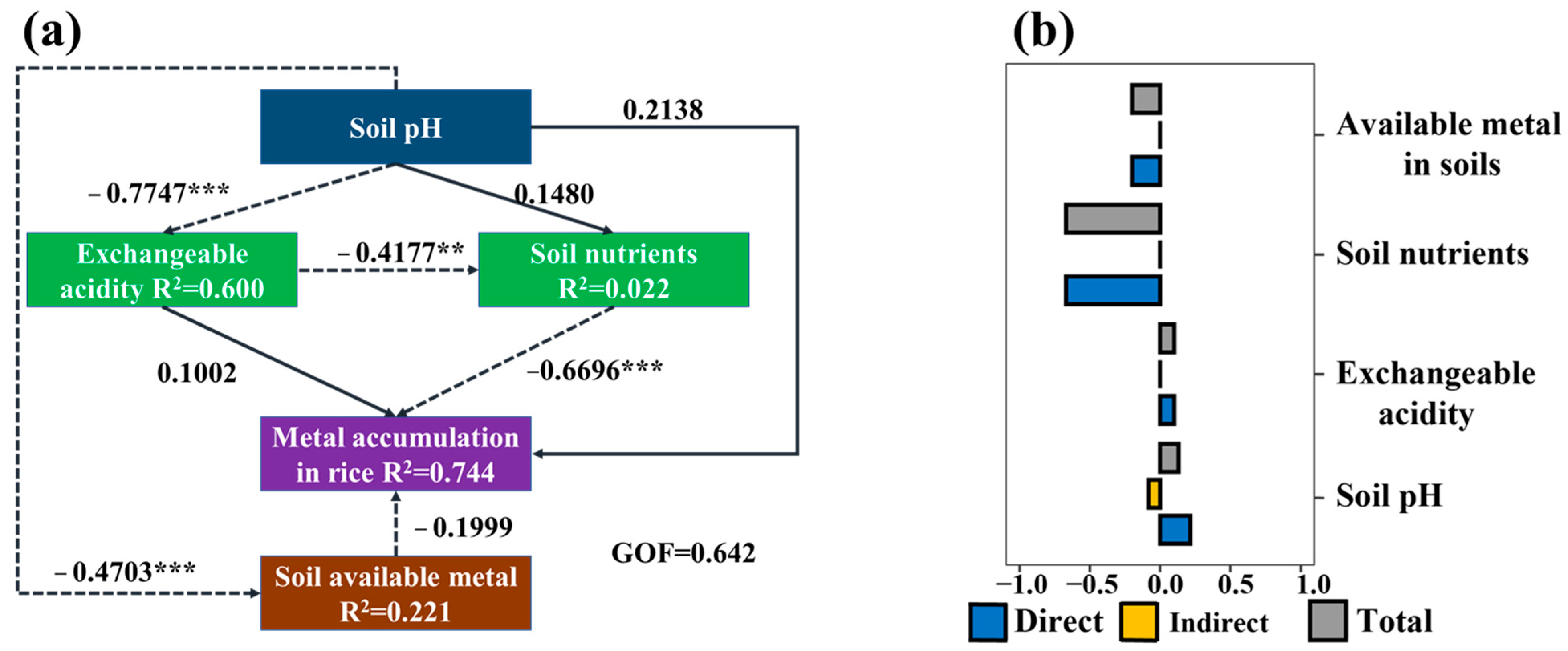
3.7. Structural Equation Modeling Analysis
4. Discussion
5. Conclusions
Supplementary Materials
Author Contributions
Funding
Data Availability Statement
Conflicts of Interest
References
- Guo, C.; Shabala, S.; Chen, Z.; Zhou, M.; Zhao, C. Aluminium tolerance and stomata operation: Towards optimising crop performance in acid soil. Plant Physiol. Biochem. 2024, 210, 108626. [Google Scholar] [CrossRef]
- Deng, X.; Xu, X.; Wang, S. The tempo-spatial changes of soil fertility in farmland of China from the 1980s to the 2010s. Ecol. Indic. 2023, 146, 109913. [Google Scholar] [CrossRef]
- Zhu, X.; Ros, G.H.; Xu, M.; Xu, D.; Cai, Z.; Sun, N.; Duan, Y.; de Vries, W. The contribution of natural and anthropogenic causes to soil acidification rates under different fertilization practices and site conditions in southern China. Sci. Total Environ. 2024, 934, 172986. [Google Scholar] [CrossRef]
- Zhang, L.; Zhao, Z.; Jiang, B.; Baoyin, B.; Cui, Z.; Wang, H.; Li, Q.; Cui, J. Effects of long-term application of nitrogen fertilizer on soil acidification and biological properties in China: A meta-analysis. Microorganisms 2024, 12, 1683. [Google Scholar] [CrossRef] [PubMed]
- Zhu, Q.; Liu, X.; Hao, T.; Zeng, M.; Shen, J.; Zhang, F.; De Vries, W. Modeling soil acidification in typical Chinese cropping systems. Sci. Total Environ. 2018, 613–614, 1339–1348. [Google Scholar] [CrossRef] [PubMed]
- Zhu, Q.; Liu, X.; Hao, T.; Zeng, M.; Shen, J.; Zhang, F.; de Vries, W. Cropland acidification increases risk of yield losses and food insecurity in China. Environ. Pollut. 2020, 256, 113145. [Google Scholar] [CrossRef]
- Jouichat, H.; Khiari, L.; Gallichand, J.; Ismail, M. Modeling temporal variation of soil acidity after the application of liming materials. Soil Tillage Res. 2024, 240, 106050. [Google Scholar] [CrossRef]
- Guo, Y.; Zhang, Z.; Liang, F.; Cao, W.; Wang, Y.; Chen, J.; Guo, J. Reconciling the different impacts of straw return on the bioavailability of heavy metals in Chinese croplands: An integrative meta-analysis. J. Environ. Manag. 2025, 391, 126633. [Google Scholar] [CrossRef]
- Alves, N.S.C.; Saran, L.M.; Pissarra, T.C.T.; de Melo, W.J.; Delarica, D.D.L.D.; Carlos, R.S.; de Melo, G.M.P.; Araújo, A.S.F.; Bertipaglia, L.M.A.; Donha, R.M.A. Nickel sources affect soil biological properties but do not affect sorghum growth. Chemosphere 2024, 354, 141722. [Google Scholar] [CrossRef]
- Perlatti, F.; Martins, E.P.; de Oliveira, D.P.; Ruiz, F.; Asensio, V.; Rezende, C.F.; Otero, X.L.; Ferreira, T.O. Copper release from waste rocks in an abandoned mine (NE, Brazil) and its impacts on ecosystem environmental quality. Chemosphere 2021, 262, 127843. [Google Scholar] [CrossRef] [PubMed]
- Zhu, H.; Chen, C.; Xu, C.; Zhu, Q.; Huang, D. Effects of soil acidification and liming on the phytoavailability of cadmium in paddy soils of central subtropical China. Environ. Pollut. 2016, 219, 99–106. [Google Scholar] [CrossRef] [PubMed]
- Wei, N.; Gu, X.; Wen, Y.; Guo, C.; Ji, J. Geochemical speciation and activation risks of Cd, Ni, and Zn in soils with naturally high background in karst regions of southwestern China. J. Hazard. Mater. 2025, 486, 137100. [Google Scholar] [CrossRef] [PubMed]
- Wang, L.; Liu, X.; Wang, Y.; Wang, X.; Liu, J.; Li, T.; Guo, X.; Shi, C.; Wang, Y.; Li, S. Stability and ecological risk assessment of nickel (Ni) in phytoremediation-derived biochar. Sci. Total Environ. 2023, 903, 166498. [Google Scholar] [CrossRef]
- Chen, G.; Shah, K.J.; Shi, L.; Chiang, P.-C.; You, Z. Red soil amelioration and heavy metal immobilization by a multi-element mineral amendment: Performance and mechanisms. Environ. Pollut. 2019, 254, 112964. [Google Scholar] [CrossRef]
- Jing, T.; Li, J.; He, Y.; Shankar, A.; Saxena, A.; Tiwari, A.; Maturi, K.C.; Solanki, M.K.; Singh, V.; Eissa, M.A.; et al. Role of calcium nutrition in plant Physiology: Advances in research and insights into acidic soil conditions—A comprehensive review. Plant Physiol. Biochem. 2024, 210, 108602. [Google Scholar] [CrossRef]
- Li, X.; Qiao, L.; Huang, Y.; Li, D.; Xu, M.; Ge, T.; Meersmans, J.; Zhang, W. Manuring improves soil health by sustaining multifunction at relatively high levels in subtropical area. Agric. Ecosyst. Environ. 2023, 353, 108539. [Google Scholar] [CrossRef]
- Wen, L.; Huang, F.; Rao, Z.; Cheng, K.; Guo, Y.; Tang, H. Paddy-Lilium crop rotation improves potential beneficial soil fungi and alleviates soil acidification in Lilium cropping coil. Agronomy 2024, 14, 161. [Google Scholar] [CrossRef]
- Bolan, N.; Sarmah, A.K.; Bordoloi, S.; Bolan, S.; Padhye, L.P.; Van Zwieten, L.; Sooriyakumar, P.; Khan, B.A.; Ahmad, M.; Solaiman, Z.M.; et al. Soil acidification and the liming potential of biochar. Environ. Pollut. 2023, 317, 120632. [Google Scholar] [CrossRef]
- Liao, P.; Huang, S.; Zeng, Y.; Shao, H.; Zhang, J.; van Groenigen, K.J. Liming increases yield and reduces grain cadmium concentration in rice paddies: A meta-analysis. Plant Soil 2021, 465, 157–169. [Google Scholar] [CrossRef]
- Das, S.; Jeong, S.T.; Das, S.; Kim, P.J. Composted cattle manure increases microbial activity and soil fertility more than composted swine manure in a submerged rice paddy. Front. Microbiol. 2017, 8, 1702. [Google Scholar] [CrossRef]
- Mir, N.R.; Mir, B.A.; Mavi, M.S.; Kapoor, N. Revitalizing soils: Biochar’s battle against heavy metal menace in plants—A review. Pedosphere 2025. [Google Scholar] [CrossRef]
- Pandey, V.; Yadav, R.; Khare, P. Adding mineral-enriched biochar to the rhizosphere reduces heavy metal toxicity on plants and soil microbes. J. Environ. Chem. Eng. 2024, 12, 113972. [Google Scholar] [CrossRef]
- Becerra-Agudelo, E.; López, J.E.; Betancur-García, H.; Carbal-Guerra, J.; Torres-Hernández, M.; Saldarriaga, J.F. Assessment of the application of two amendments (lime and biochar) on the acidification and bioavailability of Ni in a Ni-contaminated agricultural soils of northern Colombia. Heliyon 2022, 8, e10221. [Google Scholar] [CrossRef]
- Chen, L.; Guo, L.; Zhou, Q.; Liu, M.; Zhan, S.; Pan, X.; Zeng, Y. Response of soil fertility and Cu and Cd availability to biochar application on paddy soils with different acidification levels. Biomass Convers. Biorefin. 2022, 12, 1493–1502. [Google Scholar] [CrossRef]
- Long, X.; Yu, Z.; Liu, S.; Gao, T.; Qiu, R. A systematic review of biochar aging and the potential eco-environmental risk in heavy metal contaminated soil. J. Hazard. Mater. 2024, 472, 134345. [Google Scholar] [CrossRef] [PubMed]
- Abrol, V.; Sharma, P.; Shabir, H.; Kumar, A.; Brar, A.; Srinivasarao, C.; Lado, M. Synergistic benefits of biochar and polymer integration in rice-wheat system: Enhancing productivity, soil health, water use efficiency, and profitability. J. Soil Sci. Plant Nutr. 2024, 24, 4984–5000. [Google Scholar] [CrossRef]
- Xu, D.; Carswell, A.; Zhu, Q.; Zhang, F.; de Vries, W. Modelling long-term impacts of fertilization and liming on soil acidification at Rothamsted experimental station. Sci. Total Environ. 2020, 713, 136249. [Google Scholar] [CrossRef]
- Laurent, C.; Bravin, M.N.; Crouzet, O.; Pelosi, C.; Tillard, E.; Lecomte, P.; Lamy, I. Increased soil pH and dissolved organic matter after a decade of organic fertilizer application mitigates copper and zinc availability despite contamination. Sci. Total Environ. 2020, 709, 135927. [Google Scholar] [CrossRef] [PubMed]
- Pueyo, M.; López-Sánchez, J.F.; Rauret, G. Assessment of CaCl2, NaNO3 and NH4NO3 extraction procedures for the study of Cd, Cu, Pb and Zn extractability in contaminated soils. Anal. Chim. Acta 2004, 504, 217–226. [Google Scholar] [CrossRef]
- Wang, L.; Meng, J.; Li, Z.; Liu, X.; Xia, F.; Xu, J. First “charosphere” view towards the transport and transformation of Cd with addition of manure derived biochar. Environ. Pollut. 2017, 227, 175–182. [Google Scholar] [CrossRef]
- Jones, J.B., Jr. Soil test methods: Past; present, future use of soil extractants. Commun. Soil Sci. Plant Anal. 1998, 29, 1543–1552. [Google Scholar] [CrossRef]
- Song, F.; Xu, M.; Duan, Y.; Cai, Z.; Wen, S.; Chen, X.; Shi, W.; Colinet, G. Spatial variability of soil properties in red soil and its implications for site-specific fertilizer management. J. Integr. Agric. 2020, 19, 2313–2325. [Google Scholar] [CrossRef]
- Yuan, G.; Huan, W.; Song, H.; Lu, D.; Chen, X.; Wang, H.; Zhou, J. Effects of straw incorporation and potassium fertilizer on crop yields, soil organic carbon, and active carbon in the rice–wheat system. Soil Tillage Res. 2021, 209, 104958. [Google Scholar] [CrossRef]
- GB/T 33469-2016; Cultivated Land Quality Grade, General Administration of Quality Supervision, Inspection and Quarantine. National Standardization Management Committee: Beijing, China, 2016.
- Garbowski, T.; Bar-Michalczyk, D.; Charazińska, S.; Grabowska-Polanowska, B.; Kowalczyk, A.; Lochyński, P. An overview of natural soil amendments in agriculture. Soil Tillage Res. 2023, 225, 105462. [Google Scholar] [CrossRef]
- Anderson, G.C.; Pathan, S.; Easton, J.; Hall, D.J.M.; Sharma, R. Short- and long-term effects of lime and gypsum applications on acid soils in a water-limited environment: Soil chemical properties. Agronomy 2020, 10, 1987. [Google Scholar] [CrossRef]
- Mandal, S.; Pu, S.; Adhikari, S.; Ma, H.; Kim, D.; Bai, Y.; Hou, D. Progress and future prospects in biochar composites: Application and reflection in the soil environment. Crit. Rev. Environ. Sci. Technol. 2021, 51, 219–271. [Google Scholar] [CrossRef]
- Najafi, S.; Jalali, M. Effect of heavy metals on pH buffering capacity and solubility of Ca, Mg, K, and P in non-spiked and heavy metal-spiked soils. Environ. Monit. Assess. 2016, 188, 342. [Google Scholar] [CrossRef] [PubMed]
- Hu, J.; Yang, S.; Cornelis, W.M.; Huang, Q.; Qi, S.; Jiang, Z.; Qiu, H.; Xu, Y. Biochar amendment mitigates negative effects of controlled irrigation on paddy soil structure: Insights from micro-pore network analysis. Agric. Water Manag. 2025, 314, 109517. [Google Scholar] [CrossRef]
- Udeigwe, T.K.; Wang, J.J.; Zhang, H. Effectiveness of bauxite residues in immobilizing contaminants in manure-amended soils. Soil Sci. 2009, 174, 676–686. [Google Scholar] [CrossRef]
- Jia, A.; Song, X.; Li, S.; Liu, Z.; Liu, X.; Han, Z.; Gao, H.; Gao, Q.; Zha, Y.; Liu, Y.; et al. Biochar enhances soil hydrological function by improving the pore structure of saline soil. Agric. Water Manag. 2024, 306, 109170. [Google Scholar] [CrossRef]
- Bennett, J.M.; Marchuk, A.; Marchuk, S.; Raine, S.R. Towards predicting the soil-specific threshold electrolyte concentration of soil as a reduction in saturated hydraulic conductivity: The role of clay net negative charge. Geoderma 2019, 337, 122–131. [Google Scholar] [CrossRef]
- Song, P.; Ma, W.; Gao, X.; Ai, S.; Wang, J.; Liu, W. Remediation mechanism of Cu, Zn, As, Cd, and Pb contaminated soil by biochar-supported nanoscale zero-valent iron and its impact on soil enzyme activity. J. Cleaner Prod. 2022, 378, 134510. [Google Scholar] [CrossRef]
- Li, W.; Xu, B.; Song, Q.; Liu, X.; Xu, J.; Brookes, P.C. The identification of ‘hotspots’ of heavy metal pollution in soil–rice systems at a regional scale in eastern China. Sci. Total Environ. 2014, 472, 407–420. [Google Scholar] [CrossRef]
- Hamid, Y.; Tang, L.; Lu, M.; Hussain, B.; Zehra, A.; Khan, M.B.; He, Z.; Gurajala, H.K.; Yang, X. Assessing the immobilization efficiency of organic and inorganic amendments for cadmium phytoavailability to wheat. J. Soils Sed. 2019, 19, 3708–3717. [Google Scholar] [CrossRef]
- Xiao, Z.; Yin, S.; Chen, L.; Lan, W.; Dai, J.; Wang, L.; Jiang, L.; Xiao, Y. Ferrous sulfate amendment optimizes pig manure and rice straw composting: Reduced heavy metal bioavailability and enhanced plant growth under stress. J. Environ. Chem. Eng. 2025, 13, 118780. [Google Scholar] [CrossRef]
- Hussain, B.; Ashraf, M.N.; Shafeeq Ur, R.; Abbas, A.; Li, J.; Farooq, M. Cadmium stress in paddy fields: Effects of soil conditions and remediation strategies. Sci. Total Environ. 2021, 754, 142188. [Google Scholar] [CrossRef] [PubMed]
- Abedi, T.; Mojiri, A. Cadmium uptake by wheat (Triticum aestivum L.): An overview. Plants 2020, 9, 500. [Google Scholar] [CrossRef]
- Saengwilai, P.; Meeinkuirt, W.; Phusantisampan, T.; Pichtel, J. Immobilization of cadmium in contaminated soil using organic amendments and its effects on rice growth performance. Expo. Health 2020, 12, 295–306. [Google Scholar] [CrossRef]
- EU. Commission Regulation (EU) 2023/915 of 25 April 2023 on Maximum Levels for Certain Contaminants in Food and Repealing Regulation (EC) No 1881/2006; European Commission, Directorate-General for Health and Food Safety: Brussels, Belgium, 2023. [Google Scholar]



| Site | Treatments | Total Cost ($ ha−1) | Yield (t ha−1) | Total Income ($ ha−1) | Net Income ($ ha−1) |
|---|---|---|---|---|---|
| Yushan | CK | 417.83 | 7.75 | 3075.63 | 2657.80 |
| L | 626.74 | 8.26 | 3278.03 | 2651.29 | |
| CM | 856.55 | 8.00 | 3174.85 | 2318.30 | |
| BC | 1733.98 | 8.50 | 3373.27 | 1639.29 | |
| AM | 950.56 | 8.63 | 3424.87 | 2474.31 | |
| B + L | 1253.48 | 8.04 | 3188.74 | 1935.25 | |
| B + C | 1483.29 | 8.30 | 3293.90 | 1810.62 | |
| B + A | 2047.35 | 8.54 | 3389.15 | 1341.79 | |
| Shuxi | CK | 417.83 | 8.24 | 3270.02 | 2852.19 |
| L | 626.74 | 8.98 | 3562.65 | 2935.91 | |
| CM | 856.55 | 8.65 | 3432.87 | 2576.32 | |
| BC | 1733.98 | 8.28 | 3284.32 | 1550.34 | |
| AM | 950.56 | 8.40 | 3331.47 | 2380.92 | |
| B + L | 1253.48 | 8.73 | 3463.94 | 2210.46 | |
| B + C | 1483.29 | 8.67 | 3439.01 | 1955.72 | |
| B + A | 2047.35 | 8.25 | 3271.76 | 1224.41 |
| Site | Treatment | Composite Index | Soil Grade |
|---|---|---|---|
| Yushan | CK | 0.845 | 4 |
| L | 0.864 | 3 | |
| CM | 0.847 | 4 | |
| BC | 0.862 | 3 | |
| AM | 0.903 | 2 | |
| B + L | 0.866 | 3 | |
| B + C | 0.853 | 3 | |
| B + A | 0.885 | 2 | |
| Shuxi | CK | 0.803 | 6 |
| L | 0.832 | 4 | |
| CM | 0.825 | 5 | |
| BC | 0.816 | 5 | |
| AM | 0.841 | 4 | |
| B + L | 0.862 | 3 | |
| B + C | 0.838 | 4 | |
| B + A | 0.844 | 4 |
Disclaimer/Publisher’s Note: The statements, opinions and data contained in all publications are solely those of the individual author(s) and contributor(s) and not of MDPI and/or the editor(s). MDPI and/or the editor(s) disclaim responsibility for any injury to people or property resulting from any ideas, methods, instructions or products referred to in the content. |
© 2025 by the authors. Licensee MDPI, Basel, Switzerland. This article is an open access article distributed under the terms and conditions of the Creative Commons Attribution (CC BY) license.
Share and Cite
Liu, J.; Wang, T.; Lan, L.; Meng, Q.; Xu, J.; Hu, M.; Sajid, T.; Meng, J. Improving Soil Health and Rice Yields with the Application of Soil Amendments in Acidic Paddy Soils. Agronomy 2026, 16, 9. https://doi.org/10.3390/agronomy16010009
Liu J, Wang T, Lan L, Meng Q, Xu J, Hu M, Sajid T, Meng J. Improving Soil Health and Rice Yields with the Application of Soil Amendments in Acidic Paddy Soils. Agronomy. 2026; 16(1):9. https://doi.org/10.3390/agronomy16010009
Chicago/Turabian StyleLiu, Jian, Ting Wang, Lihua Lan, Qingjiu Meng, Jun Xu, Minjun Hu, Tehseen Sajid, and Jun Meng. 2026. "Improving Soil Health and Rice Yields with the Application of Soil Amendments in Acidic Paddy Soils" Agronomy 16, no. 1: 9. https://doi.org/10.3390/agronomy16010009
APA StyleLiu, J., Wang, T., Lan, L., Meng, Q., Xu, J., Hu, M., Sajid, T., & Meng, J. (2026). Improving Soil Health and Rice Yields with the Application of Soil Amendments in Acidic Paddy Soils. Agronomy, 16(1), 9. https://doi.org/10.3390/agronomy16010009