Article

Effect of Zinc Application on Maize Dry Matter, Zinc Uptake, and Soil Microbial Community Grown Under Different Paddy Soil pH


1
Faculty of Agriculture at Kamphaeng Saen, Kasetsart University, Kamphaeng Saen Campus, Nakhon Pathom 73140, Thailand
2
Graduate School of Bioagricultural Sciences, Nagoya University, Nagoya 464-8601, Japan
3
Department of Agronomy, Faculty of Agriculture, Kasetsart University, Bangkok 10900, Thailand
4
Department of Soil Science, Faculty of Agriculture, Kasetsart University, Bangkok 10900, Thailand
5
Agricultural Research and Technology Transfer Center, Faculty of Agriculture, Kasetsart University, Bangkok 10900, Thailand
*
Author to whom correspondence should be addressed.
Agronomy 2026, 16(1), 78; https://doi.org/10.3390/agronomy16010078 (registering DOI)
Submission received: 1 December 2025 / Revised: 21 December 2025 / Accepted: 25 December 2025 / Published: 26 December 2025

Abstract

Zinc (Zn) is often of deficient in paddy soils, and optimizing its application is crucial for improving maize productivity in intensive rice–maize cropping systems. This study aimed to develop practical Zn fertilizer strategies suitable for paddy soils with varying pH levels, thereby improving nutrient management and understanding of soil microbial responses. Field experiments were conducted during the 2020–2021 dry seasons at three sites: Chon Daen (pH 5.8), Noen Maprang (pH 6.7), and Lom Sak (pH 7.8). A two-factorial randomized complete block design with four replications was used, including four ZnSO4·H2O rates (0, 1.5, 3, and 6 times the DTPA-extractable Zn in soil) and two hybrid maize varieties, Suwan 5731 and Suwan 5819. Results showed that at Chon Daen, Zn application significantly enhanced shoot Zn uptake and soil Zn concentration, with SW5819 exhibiting greater Zn efficiency and biomass production. At Noen Maprang, Zn application did not significantly affect dry matter, while, at Lom Sak, Zn responses were moderate, though SW5819 maintained better growth and Zn uptake. Across sites, maize Zn efficiency was highest under acidic conditions and in SW5819. Soil microbial communities remained largely unaffected by Zn fertilization and were primarily influenced by soil pH, with Proteobacteria, Crenarchaeota, and Ascomycota dominating bacterial, archaeal, and fungal groups, respectively. These findings support the feasibility of Zn fertilization strategies to enhance both crop productivity and nutritional quality without altering the microbial community composition.

1. Introduction

Zinc is a micronutrient for many plant enzymes and proteins. It plays an important role in a wide range of processes, such as growth hormone production, seedling development, photosynthesis, and reproduction [1,2]. Zinc is transported via symplast pathways through a complex interaction of various mechanisms. Zinc is transported through the xylem to the phloem and is then remobilized from older to younger leaves [3]. Soil Zn fertilization facilitates Zn transport from roots to above-ground tissues and its redistribution to grains. This process enhances plant growth, increases yield, and promotes the biofortification of crops for better dietary nutrition [4]. Soil Zn deficiency occurs because Zn is poorly distributed and poorly soluble in soil solutions, resulting in widespread Zn deficiency in both crops and humans. The global Zn deficiency index indicates tropical regions still have widespread Zn deficiency in humans and soils, affecting crop yields and nutrient quality [1,4,5]. However, Zn solubility in soil solution depends on pH; in acidic soils, high Zn solubility often results from easy desorption and exchange processes on reactive soil mineral surfaces [6,7]. Meanwhile, increasing soil pH will decrease Zn solubility. The cause of high soil pH (>7) is due to a high content of CaCO3 of pedogenic origin [6]. The quantified Zn concentration (DTPA-Zn extractable) with different solubility in 150 paddy soils was measured, with soil pH ranging from ultra-acidic to slightly alkaline. The median values for acid soil and neutral soil were 2.0 and 0.95 mg/kg, respectively. Meanwhile, the median Zn concentration across all samples was 1.5 mg/kg [7], which is the reported critical soil level of Zn [6].
Maize (Zea mays L.) is highly sensitive to Zn deficiency, which occurs when Zn levels in maize leaves are less than 15 mg/kg [8]. Maize requires about 500 mg/ha of Zn to achieve a grain yield of 12 t/ha [9]. Maize yield is particularly influenced by Zn availability during key growth stages. Zinc translocation from root to shoot after uptake is influenced by many factors, and Zn accumulation in the grain depends on both remobilization from shoots and continued uptake during grain filling [10,11]. Moderate Zn application rates have been shown to improve biomass accumulation, crop growth rate (CGR), and pollen viability, which in turn increase kernel number and weight—particularly in apical (inferior) kernels that are often poorly filled under Zn deficiency [12,13,14]. Lui et al. [15] reported that the response level was highly correlated with the amount of Zn added to the soil. The optimum soil Zn concentration for attaining high yields was 4.7 mg/kg, and the Zn application rate was 50 kg Zn/ha, which also improved yields [15]. In Thailand, a report of Zn application in high-pH or calcareous soils was noted. Maize responded positively to rates of Zn application between 2 and 4 mg/kg of soil to increase Zn uptake in corn and grain yield [16], while in the field under high soil pH (pH 7.8), a moderate Zn rate (5–10 kg Zn/ha) optimized maize performance, grain Zn uptake, and soil Zn availability [13]. However, for soil Zn fertilizer management in maize production on paddy soil, it is important to consider the long-term effects of Zn fertilizer application. After 9 years of Zn fertilizer application, the bacterial communities in Zn-treated soils were distinct from those in untreated soils. In the soil, the four most abundant phyla were Actinobacteria, Proteobacteria, Acidobacteria, and Chloroflexi. The environmental factor, soil Zn concentration, and total Zn concentration were significantly correlated with bacterial community composition [17]. Additionally, an increase in soil Zn concentration can alter the functional gene structure of microbial communities and the abundance of specific gene families, with a threshold in gene family abundance between 5 and 10 kg Zn/ha across the analyzed Zn concentrations [18].
Maize is the most significant crop grown in Thailand. Domestic maize production increased from 1.33 million tons in 2023 to 2.01 million tons in 2024 [19], but it still does not meet the rising local demand, leading to grain imports. Climate variability and pest infestations, such as the fall armyworm, have negatively impacted maize yields [19]. The planted area allocated mainly to maize is 75.5% in the early rainy season, 15.0% in the late rainy season, and only 9.5% in the dry season, which affects grain yield distribution, whereas demand is almost uniformly distributed year-round. Therefore, the Thai government proposed new planting-area ratios for maize: 30% in the early rainy season, 20% in the late rainy season, and 50% in the dry season. This ratio will increase the maize planting area during the dry season from 5% to 50% by converting a rice-rice cropping sequence to a rice–maize sequence in paddy areas. The rice–maize cropping system is the most important emerging system, capable of producing yields similar to those of water-saving relative systems [20].
Despite considerable research on Zn fertilizer management in maize production, there remains a limited understanding of how Zn fertilization performs across different soil pH levels in flooded or rice-based cropping systems. Such soils may exhibit distinct chemical conditions that influence Zn availability and plant uptake differently from those in typical upland systems. These uncertainties highlight the need for further investigation to inform fertilizer strategies suited to similar transitional agroecosystems. To address this gap, the present study aimed to evaluate the effects of varying Zn application rates on the dry matter accumulation, Zn uptake, and grain yield responses of hybrid maize grown in different pH paddy soils and to provide information on the impact of agricultural practices related to Zn fertilizer management on soil microbial communities.

2. Materials and Methods

2.1. Sites Description

The three-field experiment was conducted in the dry season after rice cultivation from December 2020 to April 2021. The study sites were located in Chon Daen (CD) and Lom Sak (LS), Phetchabun province, and Noen Maprang (NM), Phitsanulok province, Thailand, where a rice–maize rotation system has been maintained consistently for a period exceeding five years: rice is cultivated during the rainy season, and maize during the dry season. Prior to maize planting, rice residues are incorporated into the soil following harvest plowing [13]. Meteorological data, including mean temperature and total precipitation, were recorded throughout the experimental period using a weather station installed at each of the three field sites (Table 1 and Figure S1).
Bulk soil samples were collected at 0–20 cm depth from the plot area before the experiment and analyzed for soil texture and chemical properties (Table 2).

2.2. Experimental Management and Design

The experimental field was laid out in a 4 × 2 factorial in a randomized complete block design (RCBD) with four replications. Zinc fertilizer was applied in the form of Zn sulfate monohydrate (ZnSO4·H2O), containing 36% elemental Zn. These application rates correspond to 0, 1.5, 3, and 6 times the baseline soil Zn concentration (0.55, 0.87, and 0.53 mg/kg in CD, NM, and LS, respectively), calculated to represent a gradient of Zn availability relative to the existing soil Zn status. The four rates equivalent to 0, 5, 10, and 20.6 kg Zn/ha per crop season in CD and LS, and 0, 8.8, 16.8, and 33.8 kg Zn/ha in NM. Zn fertilizer was applied at the V6 stage by banding to the soil surface at all experimental sites. Two varieties were selected: Suwan 5731 (SW 5731) and Suwan 5819 (SW 5819), new hybrid maize varieties recently developed and introduced by the National Corn and Sorghum Research Center, Thailand. The experiment plot size was 28 m2 (5.6 m × 5.0 m) with eight rows per plot. The seeds of each maize variety were sown using a manual planting machine, with two seeds per hill in eight rows per plot and thinned at two weeks after planting (WAP) to maintain one plant per hill. The density was 71,500 plants/ha, with a row spacing of 0.7 m and a plant spacing of 0.2 m. The N-P-K fertilizer was applied as follows, based on soil chemical analysis recommended by the Department of Agriculture, Thailand [21]. All plots were applied as follows: 125 kg N/ha (as urea), 65 kg P2O5/ha (as diammonium phosphate), and 65 kg K2O/ha (as potassium chloride) in CD, 125 kg N/ha, 35 kg P2O5/ha, and 65 kg K2O/ha in NM, and 105 kg N/ha, 35 kg P2O5/ha, and 65 kg K2O/ha in LS (Table S1). All field operations included immediate sprinkler irrigation after sowing, which was maintained weekly until maturity. Herbicide control at 21 WAP involved the use of Acetochlor and Atrazine. Emamectin benzoate and Spinetoram were applied to control fall armyworm outbreaks detected at 30 (V6), 40 (V10), and 63 (VT) days after planting [13].

2.3. Plant Sampling and Measuring

At the milking (R3) stage, leaves, stalks, and ear samples were collected, prepared, and analyzed for plant dry weight as described by Khongchiu et al. [13]. Plant samples were ground with a stainless-steel grinder. The 0.2 g of sample was digested with HNO3-HClO4 (2:1), and the solution was heated at 200 °C until dense white fumes appeared. The mixture was allowed to cool, and deionized water was added to bring the volume to 25 mL. The Zn concentration was determined by an atomic absorption spectrometer (iCE 3000; Thermo Scientific, Waltham, MA, USA). All results are expressed on a dry weight basis. The formula for Zn uptake was calculated as the content per area following Liu et al. [22].

2.4. Soil Sampling and Measuring

Soil samples were kept in all treatments at the milking (R3) stage of maize growth. Soil samples were air-dried and crushed to pass a 0.5 mm sieve. Soil pH was measured using a pH meter with a soil-to-water ratio of 1:1. Soil Zn concentration was determined by end-to-end shaking (180 rpm) for 2 h of 5 g of soil with 20 mL of 0.005 mol/L DTPA (diethylene triamine pentacetic acid), 0.01 mol/L and 0.1 mol/L TEA (tri-ethanol amine) buffered at pH 7.0 [23]. Zn concentrations in the extractants were determined by an atomic absorption spectrometer (iCE 3500; Thermo Scientific, USA). For soil microbial community analysis, the fresh soil samples were separately collected, sieved (<2 mm), transported to the laboratory in an ice box, and stored at −20 °C until use.

2.5. DNA Extraction, PCR Amplification, and Sequencing

Total DNA extraction was performed using a FastDNA SPIN Kit (MP Biomedicals, Cleveland, OH) from 0.5 g fresh soil following the manufacturer’s instructions. Extracted DNA was quantified using a PicoGreen dsDNA assay kit (Invitrogen, Thermo Scientific, Waltham, MA, USA) and Fluoroskan™ Microplate Fluorometer (Thermo Scientific, USA). The primer pairs 515F (5′-TGC TCG GCA GCG TCA GAT GTG TAT AAG AGA CAG GTG CCA GCM GCC GCG GTA A-3′) and 806R (5′-GTC TCG TGG GCT CGG AGA TGT GTA TAA GAG ACA GGG ACT ACH VGG GTW TCT AAT-3′) were used to amplify the V3-V4 region of the 16s rRNA gene. PCR conditions were 94 °C for 2 min, followed by 28 cycles of 94 °C for 30 s, 55 °C for 30 s, and 72 °C for 30 s, with final extension at 72 °C for 5 min.
The fungal primer pairs gITS7 5′-GTGAATCATCGAATCTTTG-3′ and ITS4 5′-TCCTCCGCTTATTGATATGC-3′ were used to amplify the ITS2 region. The PCR conditions were 94 °C for 4 min, followed by 30 cycles of 94 °C for 1 min 58 °C for 1 min, and 72 °C for 1 min, with final extension at 72 °C for 7 min. The PCR products were purified using AmPure XP bead (Beckman coulter, Brea, CA, USA) and quantified using a PicoGreen dsDNA assay Kit (Invitrogen). Dual indexed using the Nextera XT Index Kit v2 (Illumina, San Diego, CA, USA) according to the manufacturer’s instructions. Indexed amplicons were again purified using magnetic beads and quantified using a PicoGreen dsDNA Quantification Kit (Invitrogen). Samples were pooled in equal concentrations and sequenced on an Illumina MiSeq reagent Kit v3 (600 cycles, Illumina) according to the manufacturer’s instructions.

2.6. Statistical Analysis

The data were analyzed to Analysis of variance (ANOVA) of the measured parameters using STAR (Statistical Tool for Agricultural Research) software, version 2.0.1 [24]. The least significant difference (LSD) test was used to test the significant differences between treatments. The sequencing was conducted using an Illumina MiSeq platform and sequences were submitted to the NCBI database under the accession numbers PRJNA1371364 for bacteria and archaea and PRJNA1371415 for fungi. Paired-end raw sequencing reads were processed using QIIME 2 (version 2024.10) according to best-practice workflows. Denoising and amplicon sequence variant (ASV) inference were performed with the DADA2 plugin. ASVs were taxonomically classified using a naïve Bayes classifier trained on the relevant regions of reference databases: the SILVA database release 138 for the 16S rRNA gene and the UNITE database version 10 for the fungal ITS region. Non-target ASVs and singletons were filtered prior to downstream analysis. Microbial community composition and alpha- and beta-diversity metrics were calculated using standard QIIME 2 plugins. The sequence data were compared using R software (version 4.1.3). Alpha-diversity was evaluated using several major indices, including Chao1 and Shannon, and the indices were compared using a t-test. The beta-diversity was assessed by the non-metric multidimensional scaling (NMDS) based on the Bray–Curtis algorithm to analyze overall structural changes in the microbial communities. The relative abundance values of bacteria, archaea, and fungal taxa at phylum levels are more than 0.1% and at class levels are more than 1%. Spearman’s correlations were conducted between major microbial genera, maize growth parameters, and soil chemical properties to identify relationships with environmental variables, with significance set at p < 0.05.

3. Results

3.1. Dry Matter Accumulation and Shoot Zn Uptake at the Milking (R3) Stage

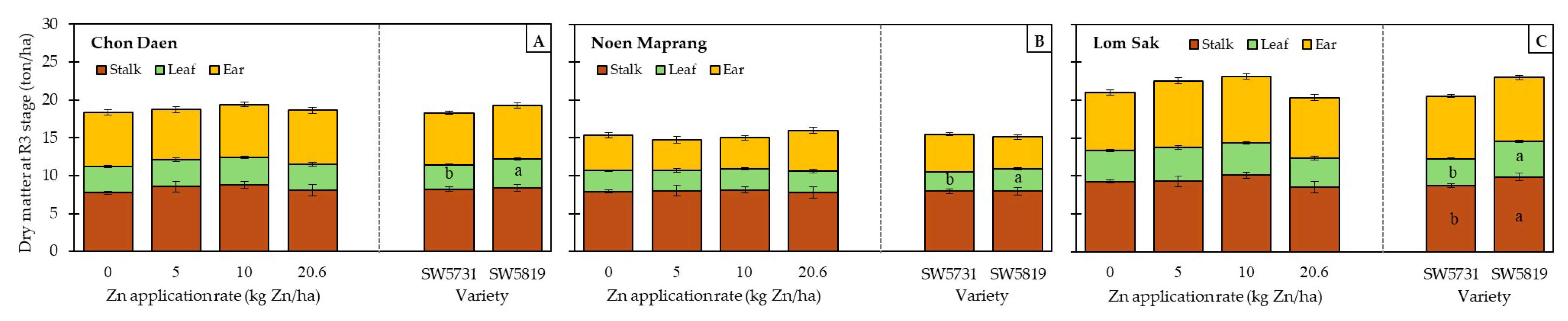
Dry matter accumulation at the R3 stage, under the interaction between Zn application rates and maize varieties in 2020, is presented in Figure 1. At the Chon Daen site, the interaction between Zn application rate and maize variety significantly affected leaf dry matter. In contrast, stalk and ear dry matter did not show significant differences (Figure 1A). Leaf dry matter of SW 5819 was significantly higher under Zn application rates of 5 and 10 kg Zn/ha compared with SW 5731 at 5 and 20.6 kg Zn/ha and the control (no Zn application), representing a 21–25% increase relative to SW 5731 under those treatments. Stalk dry matter constituted the largest portion of total biomass, followed by ear and leaf dry matter. Stalk dry matter ranged from approximately 7.5 to 9.2 t/ha, while ear dry matter varied from 6.3 to 7.6 t/ha with no significant differences among treatments. Total dry matter accumulation at the R3 stage ranged between approximately 17.7 and 19.5 t/ha across Zn application rates and maize varieties (Figure 1A). The main effect (Figure 2A) confirmed this varietal difference, with SW 5819 showing significantly greater leaf dry matter accumulation. Increasing Zn rates from 0 to 20.6 kg Zn/ha did not result in significant changes in total dry matter. Overall, these results suggest that maize dry matter production was more influenced by genetic variation between varieties than by Zn fertilization levels.
At Noen Maprang, the dry matter in different plant parts showed no significant interaction effect between Zn application rates and maize varieties (Figure 1B). Stalk dry matter ranged between 7.5 and 8.8 t/ha, leaf dry matter between 2.5 and 3.1 t/ha, and ear dry matter between 3.8 and 5.9 t/ha. The proportions of dry matter among plant parts remained consistent across all Zn application rates and maize varieties, suggesting that Zn supply under the prevailing soil conditions did not notably affect dry matter production or distribution in maize. Total dry matter at the R3 stage ranged from 14.6 to 16.0 t/ha. Zn application rates and maize varieties had no significant effect on partitioned dry matter (Figure 2B). While the leaf dry matter of variety SW5819 showed a slightly significantly higher dry matter compared with SW5731. These findings indicate that under the environmental and soil conditions at Noen Maprang, Zn application had minimal impact on dry matter accumulation and distribution, and maize growth was largely stable across treatments.
At Lom Sak, a significant Zn application rate × variety interaction was detected for leaf dry matter (p < 0.05; Figure 1C). Consequently, Zn effects were examined within each variety. SW5819 supplied with 5 kg Zn/ha produced significantly higher leaf dry matter (5.3 t/ha) than SW5731 at all Zn application rates, whereas leaf dry matter within SW5819 did not differ significantly among Zn treatments. Stalk dry matter ranged from 8.5 to 10.9 t/ha and ear dry matter from 7.5 to 9.3 t/ha. Compared with the control, ear dry matter increased by 7.8–20.8% with Zn application; however, at 20.6 kg Zn/ha, ear dry matter declined by 10.4% in SW5731 and 3.8% in SW5819. Total dry matter accumulation ranged from 19.8 to 24.6 t/ha. The main effect analysis confirmed that SW5819 accumulated significantly more total dry matter than SW5731, primarily due to greater leaf and stalk biomass, while Zn application rate had no significant main effect on total dry matter (Figure 2C).
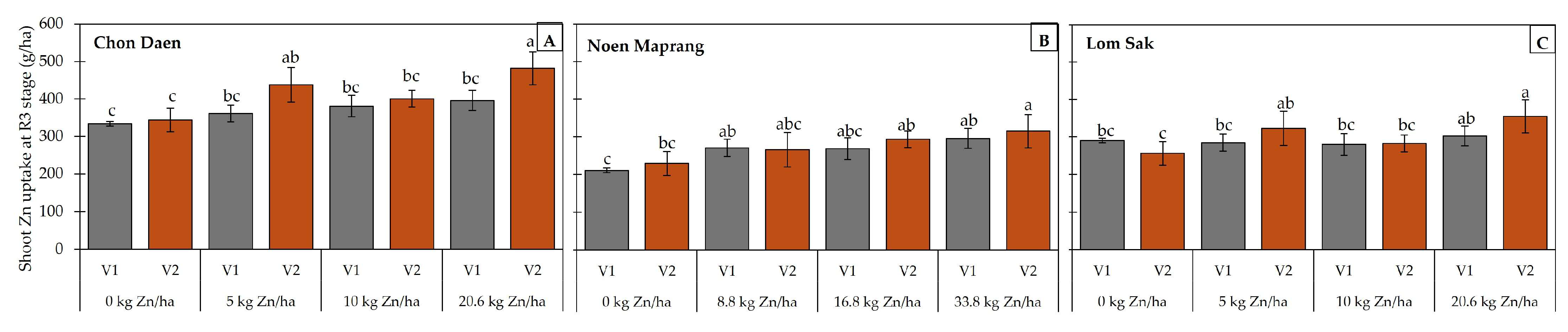
Shoot Zn uptake at the R3 stage varied among sites and was significantly influenced by Zn application rates, varieties, and their interactions (Figure 3 and Figure 4). At Chon Daen, a significant Zn application rate × variety interaction was observed (Figure 3A). The highest Zn uptake was recorded in SW5819 at 20.6 kg Zn/ha (approximately 481.7 g/ha) and SW 5819 at 5 kg Zn/ha (approximately 437.4 g/ha), while those without Zn application show lower than in all Zn treatments (333.3 and 343.6 g/ha in SW 5731 and SW 5819, respectively). Consistent with this interaction, the main effect analysis showed that shoot Zn uptake increased with Zn application rate and was significantly higher in SW5819 than in SW5731 (Figure 4A), indicating a strong Zn fertilization response and greater Zn accumulation capacity of SW5819 under acidic soil conditions.
At Noen Maprang, no significant interaction between Zn application rate and maize variety was detected for shoot Zn uptake (Figure 3B); therefore, only main effects are presented. Shoot Zn uptake increased progressively with increasing Zn application rate, ranging from approximately 210.9 g/ha in SW5731 without Zn to 314.9 g/ha in SW5819 at 33.8 kg Zn/ha. The main effect of Zn application rate showed a similar trend (Figure 4B), where total Zn uptake was lowest at 0 and 5 kg Zn/ha (250.0 and 238.4 g/ha, respectively) and highest at 10 and 20.6 kg Zn/ha (280.7 and 305.4 g/ha, respectively), while the main effect of maize variety was not significant, indicating comparable Zn uptake capacity between varieties at this site.
At Lom Sak, Zn application rate × maize variety interaction was significantly different in shoot Zn uptake at the R3 stage (Figure 3C). SW 5819 at 5 and 20.6 kg Zn/ha (322.8 and 355.0 g/ha, respectively) showed higher Zn uptake than SW 5819 at 10 kg Zn/ha and without Zn application (282.6 and 255.9 g/ha, respectively). SW 5731 at 20.6 kg Zn/ha was higher than Zn application rates at 5 and 10 kg Zn/ha, increasing approximately 6–8%. Despite these interaction effects, the main effects of Zn application rate and maize variety were not significant (Figure 4C); however, SW5819 consistently exhibited higher shoot Zn uptake than SW5731, with an average increase of 13.7% across Zn treatments.

3.2. Soil Zn Concentration and Soil pH

Soil Zn concentration at the R3 stage was reported in Table 3. At Chon Daen, application of 20.6 kg Zn ha−1 resulted in significantly higher soil Zn concentrations than the control across both maize varieties, reaching 4.50 mg/kg in SW5731 and 3.41 mg/kg in SW5819. The main effect of Zn application rate showed the highest soil Zn concentration at 20.6 kg Zn/ha (3.96 mg/kg), representing a 2.65-fold increase compared with no Zn application, whereas rates of 5 and 10 kg Zn/ha did not differ significantly from the control. The main effect of maize variety was not significant.
At Noen Maprang, soil Zn concentration also increased significantly with Zn application rate. The highest rate (33.8 kg Zn/ha) produced significantly greater soil Zn concentrations than the control in both varieties (4.50 and 3.89 mg/kg in SW5731 and SW5819, respectively). Main effect analysis confirmed that soil Zn concentration was greatest at 33.8 kg Zn/ha (4.20 mg/kg), while no significant varietal differences were observed.
At Lom Sak, soil Zn concentration increased with increasing Zn application rate. The application rates of Zn at 10 and 20.6 kg/ha were significantly higher than the rate without Zn application under SW 5731. The range of soil Zn concentration from 0.80 to 2.43 mg/kg under applied Zn fertilizer. The main effect of Zn application rate was significant at 20.6 kg Zn/ha relative to 0 and 5 kg Zn/ha, while no significant differences between maize varieties were detected.
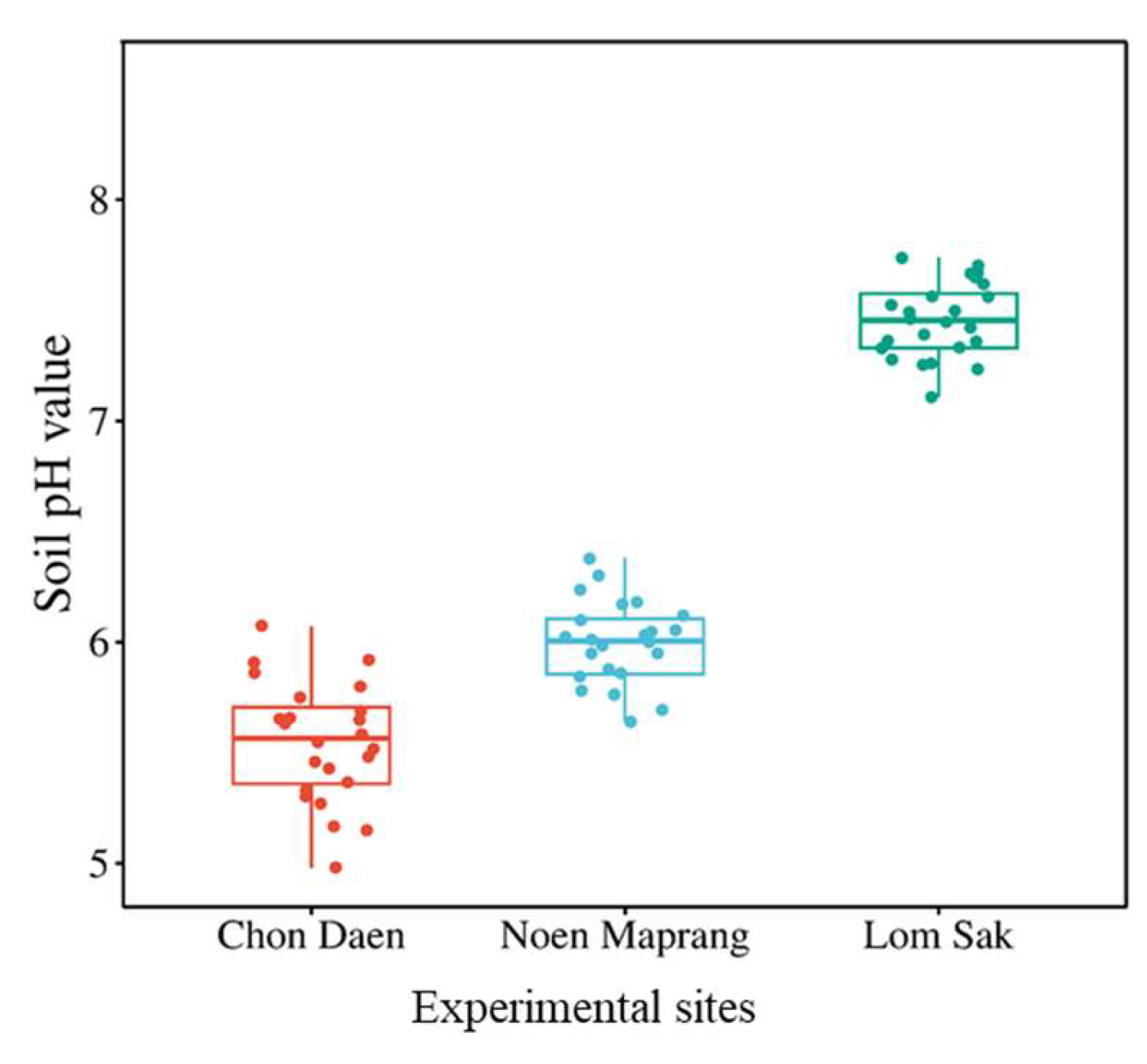
The soil pH values varied considerably among the three experimental sites (Figure 5). At Chon Daen, the soils were distinctly acidic, with pH values ranging from 4.98 to 6.1 and an average of 5.5. In contrast, Noen Maprang soils showed moderately acidic conditions, with pH values clustered between 5.6 and 6.4, and a median of about 6.0. Meanwhile, soil pH at Lom Sak was markedly more alkaline compared with the other sites, with pH values consistently ranging from 7.1 to 7.7 and a median of about 7.5. These results indicate site-specific differences in soil reaction, with Chon Daen representing strongly acidic soils, Noen Maprang moderately acidic soils, and Lom Sak slightly alkaline soils. Such differences are likely to influence soil Zn availability and the overall response of maize to Zn fertilization across sites.

3.3. Soil Bacterial and Archaeal Community

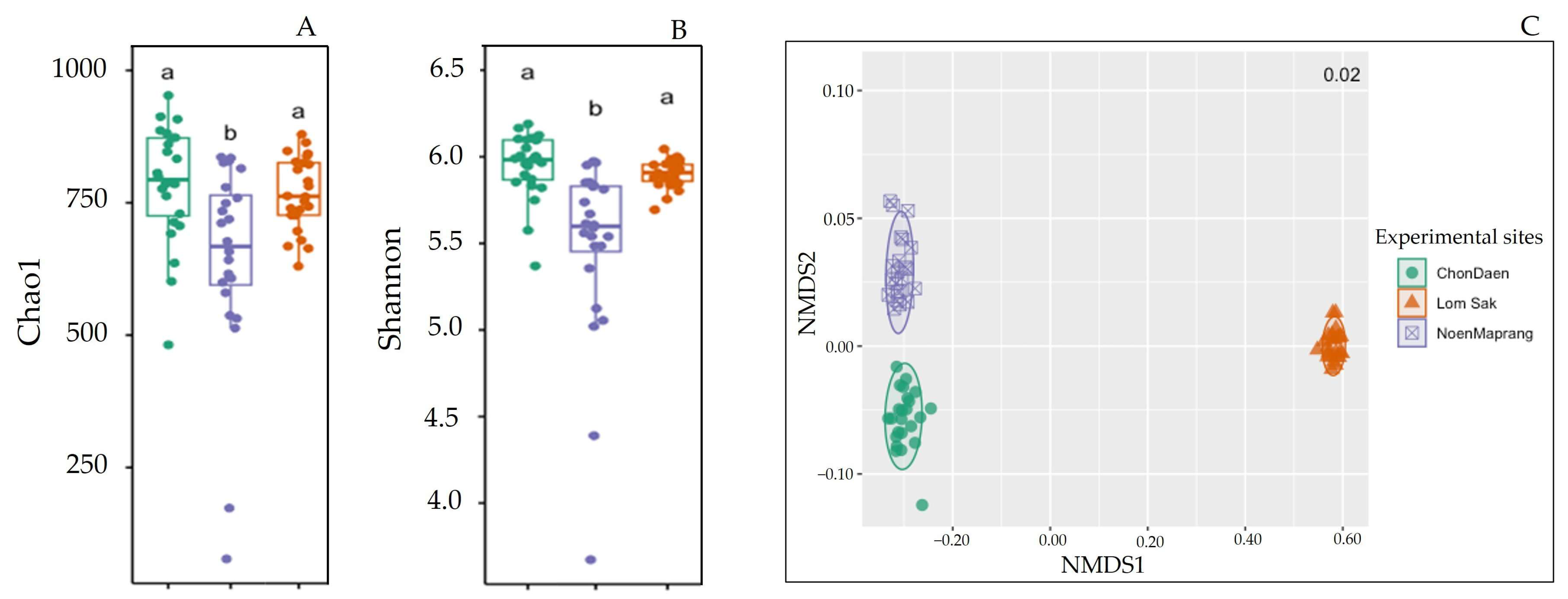
There were no significant differences in α- and β-diversity of bacterial and archaeal communities among the various Zn application rates and two maize varieties (Figure S2). However, soil bacterial and archaeal community structures differed significantly among the three experimental sites as a function of their contrasting soil pH level (Figure 6). The Chao1 and Shannon indices were used to indicate the α-diversity of the bacterial and archaeal communities, as shown in Figure 6A,B. The average Chao1 index values for bacterial and archaeal communities across the three experimental sites were 787.1, 642.3, and 767.4 in Chon Daen, Noen Maprang, and Lom Sak, respectively. The Shannon index values of bacterial and archaeal communities were 5.9, 5.5, and 5.9, respectively. The β-diversity analysis showed that the difference in soil pH influenced the composition of soil microbial communities. The nonmetric multidimensional scaling (NMDS) analysis demonstrated distinct clustering patterns among the three experimental sites (p = 0.02), indicating that location strongly influenced bacterial and archaeal community structure (Figure 6C).
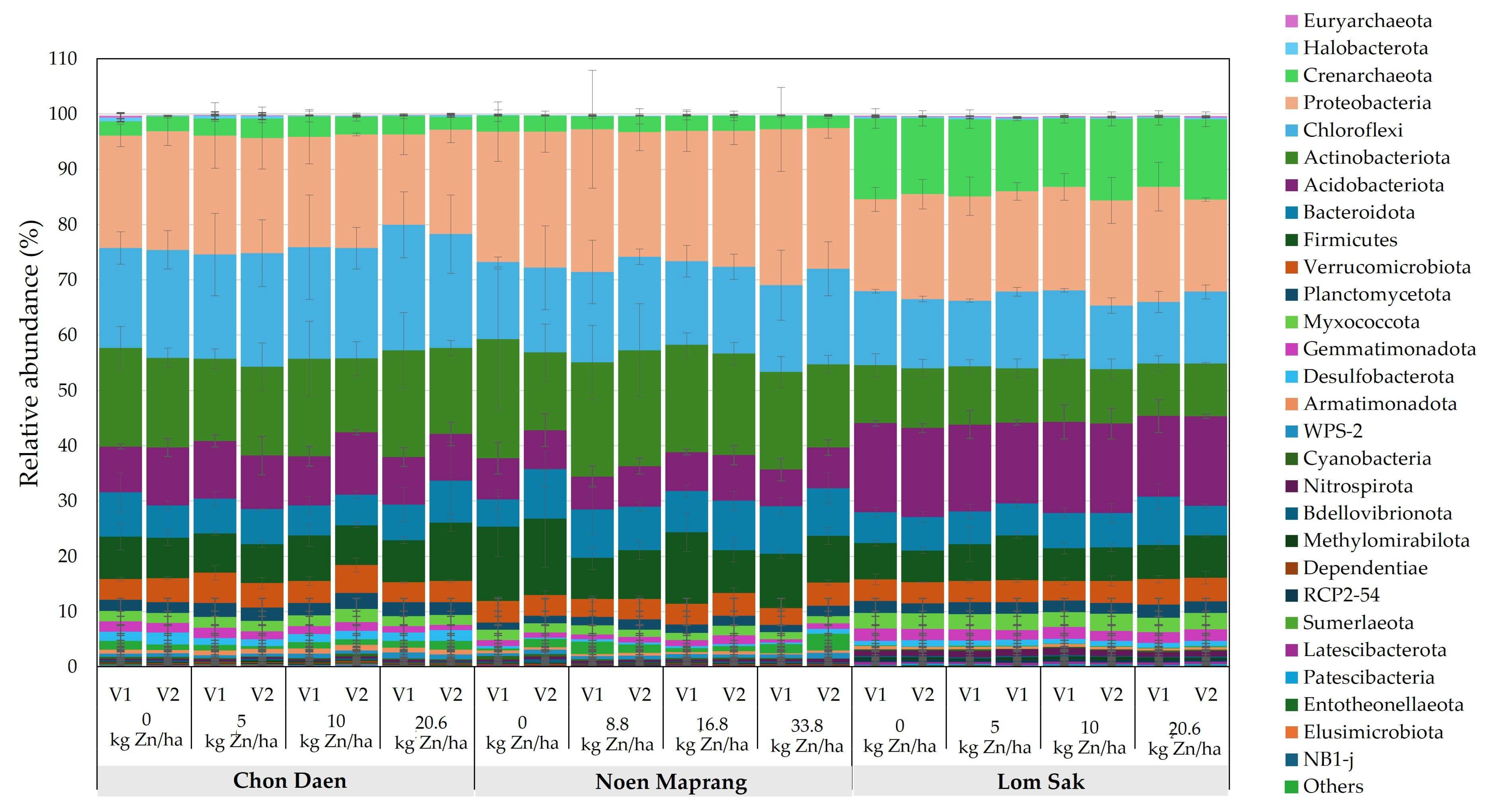
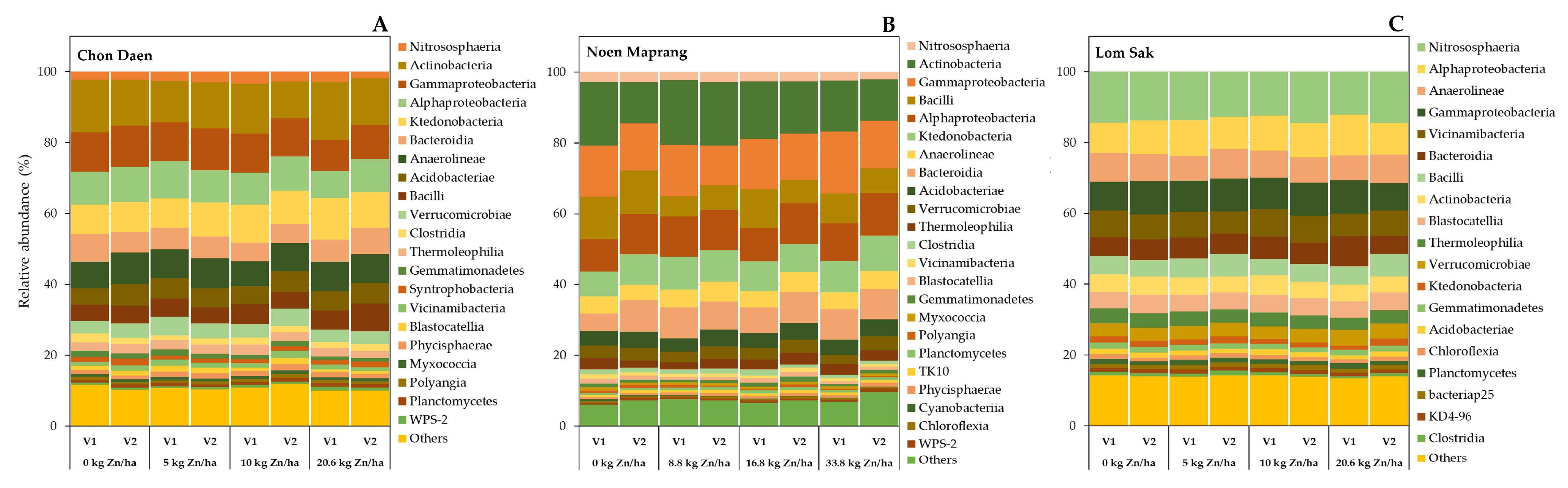
In Figure 7 and Figure 8, the relative abundance of the dominant phylum and class at ChonDaen, it was found that Proteobacteria, Chloroflexi, and Actinobacteria were the three most abundant phyla, with relative abundances of 16.4–21.5%, 18.1–22.7%, and 13.3–19.3%, respectively. Crenarchaeota was the dominant archaea in this soil, with a relative abundance range of 2.3–3.6% (Figure 7). In addition, the five most abundant bacteria in the class were Actinobacteria, Gammaproteobacteria, Alphaproteobacteria, Ktedonobacteria, and Anaerolineae, respectively. The most abundant archaeon at the class level was Nitrososphaeria (Figure 8A). At Noen Maprang, Proteobacteria, Chloroflexi, and Actinobacteria were the dominant bacterial phyla. The relative abundances were 22.5–28.2%, 13.9–17.3% and 14.1–21.5%, respectively. Crenarchaeota occupied 2.3–2.9% of community (Figure 7). The five most abundant classes at Noen Maprang were Actinobacteria, Gammaprotebacteria, Bacilli, Alphaproteobacteria, and Ktedonobacteria, respectively. Nitrososphaeria was the dominant archaeal class in the soil (Figure 8B). At Lom Sak, the four most abundant bacterial phyla were Proteobacteria, Chloroflexi, Actinobacteria, and Acidobacteria. The relative abundance was 16.6–20.8%, 11.1–13.8%, 9.5–10.8%, and 14.5–16.5%, respectively. These experimental fields had the highest Crenarchaeota abundance, exceeding those of other fields, with relative abundances ranging from 12.4% to 14.7% (Figure 7). The most abundant bacterial classes were Alphaproteobacteria, Anaerolineae, Gammaproteobacteria, Vicinamibacteria, and Bacteroidia. Nitrososphaeria had a higher relative abundance than the bacterial class (Figure 8C).

3.4. Soil Fungal Community

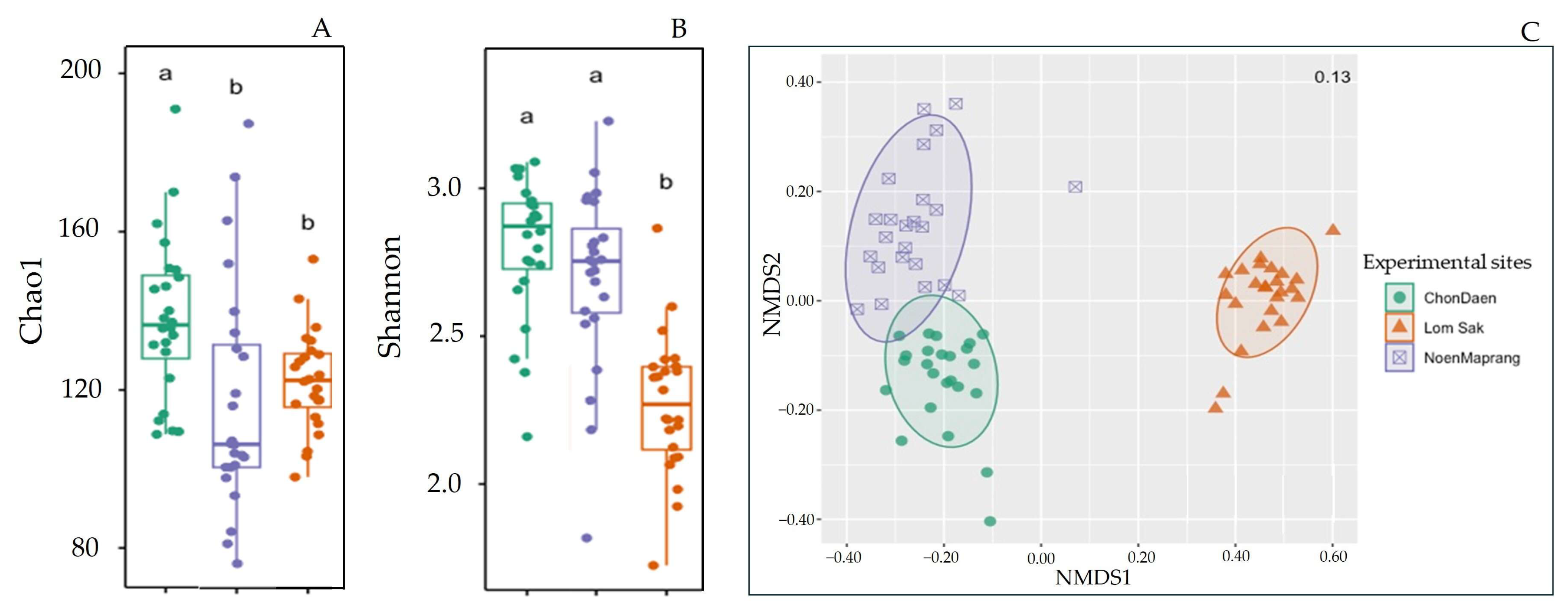
No significant differences in α- and β-diversity of fungal communities were observed across different Zn application rates and maize varieties (Figure S3). However, the three experimental sites, characterized by distinct soil pH levels, exhibited notable differences in their soil fungal communities (Figure 9). The Chao1 and Shannon indices were used to evaluate the α-diversity of soil fungal communities in soils with different pH levels. The Chao1 and Shannon indices were significant across different soil pH levels. The average Chao1 index values for the fungal community across the three experimental sites were 137.4, 112.5, and 124.1 in Chon Daen, Noen Maprang, and Lom Sak, respectively. The Shannon index values of bacterial and archaeal communities were 2.8, 2.7, and 2.3, respectively. Changes in soil microbial β-diversity under different Zn application rates and maize varieties in three different soil pH levels in paddy soils. The NMDS based on the Bray–Curtis algorithm was used to analyze overall structural changes in the fungal microbial communities. The soil pH showed significantly altered soil fungal community structure in paddy soil (Figure 9C).
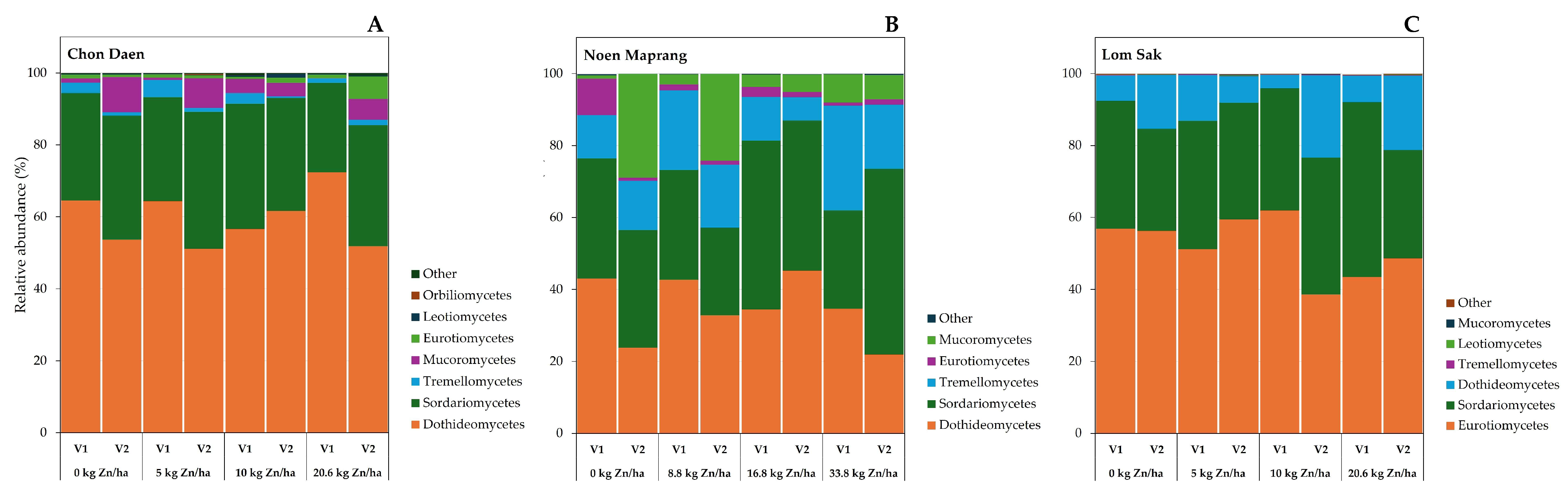
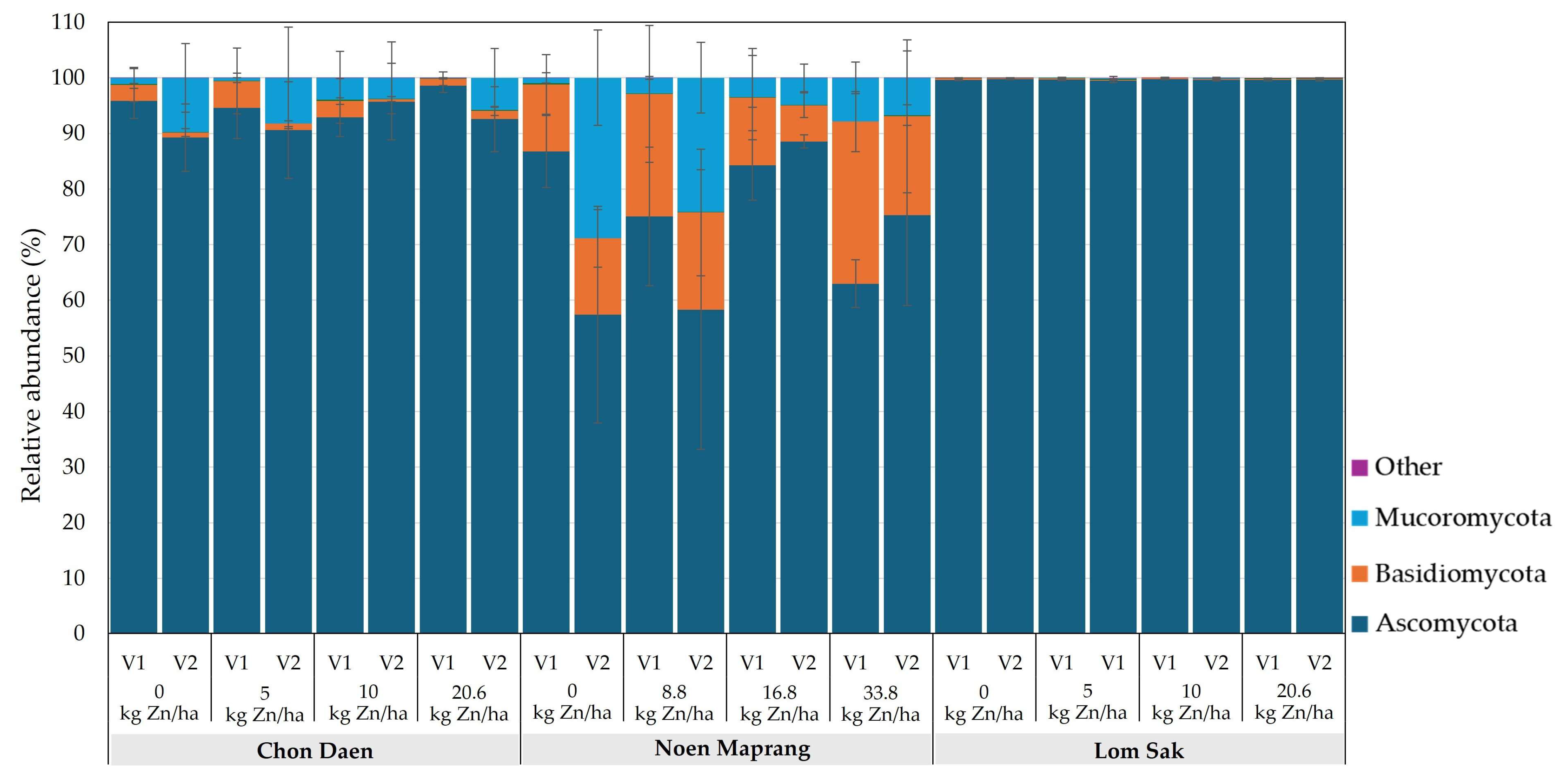
The relative abundance results for three experimental sites are shown in Figure 10. At Chon Daen, the main fungal phyla were Ascomycota, Mucoromycota, and Basidiomycota. The relative abundance ranges were 89.2–98.6%, 0.1–9.8%, and 0.4–4.8%, respectively. The fungal class was Dothideomycetes (51.1–72.4%), followed by Sordariomycetes (24.8–38.0%), Mucoromycetes (0.1–9.8%), Tremellomycetes (0.4–4.8%), and Eurotiomycetes (0.6–6.3%), respectively (Figure 11A). At Noen Maprang, the most abundant fungal phyla were Ascomycota (57.4–88.6%), Basidiomycota (6.5–29.2%), and Mucoromycota (1.0–28.8%), and classes were Soridiomycetes (24.4–51.6%), Dothideomycetes (21.9–42.5%), Tremellomycetes (6.5–29.2%), Mucoromycetes (1.0–28.8%), and Eurotiomycetes (0.9–10.0%) (Figure 11B). At Lom Sak, the most abundant fungal phyla were Ascomycota (99.5–99.7%) and Basidiomycota (0.1–0.3%). The main fungal classes were Eurotiomycetes (43.5–61.9%), Soridiomycetes (28.5–48.6%), Dothideomycetes (7.3–22.9%), Tremellomycetes (0.1–0.2%), and Leotiomycetes (0.03–0.2%) (Figure 11C).

3.5. Correlation Between Soil Microbial Community and Environmental Factors

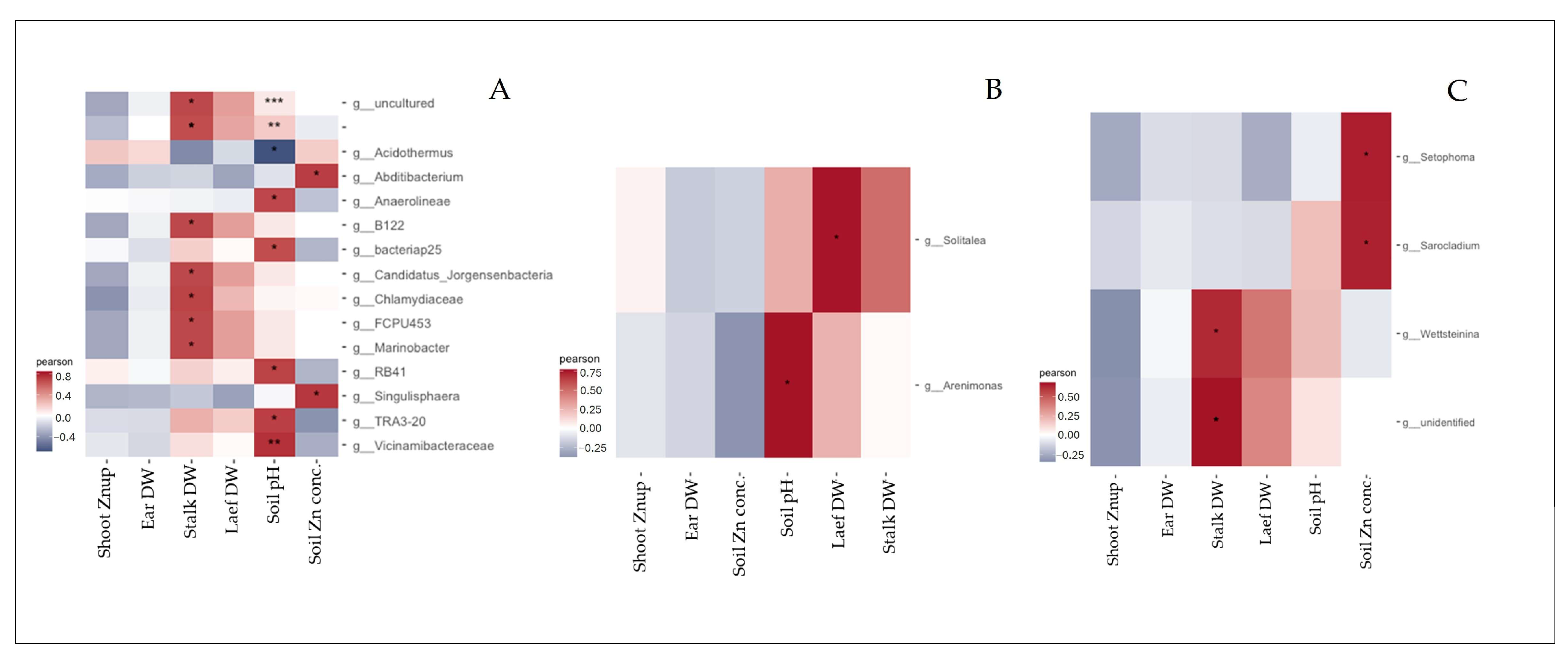
The correlation analysis revealed relationships among bacterial and archaeal genera, plant growth parameters, and environmental factors. The bacterial community, Marinobacter, FCPU453, Chalmydiaceae, Candidatus_Jorgensenbacteria, and B122 had a significant positive correlation with stalk dry weight. In addition, soil pH had a significant positive correlation with Vicinamibacteria, TRA3-20, RB41, bacteriap25, and Anaerolineae. In contrast, Acidothermus had a significant negative correlation with soil pH. Singulisphaera and Abditibacterium showed a significant positive correlation with soil Zn availability (Figure 12A). In Noen Maprang, the genus of Arenimonas showed a significant positive correlation with soil pH. In addition, leaf dry weight was positively correlated with genus Solitalea (Figure 12B). No factors were significantly correlated with the bacterial and archaeal community in the Lom Sak field.
Correlation between the soil fungal community and growth parameters and environmental factors was observed only in the Chon Daen experimental field (Figure 12C). The genus Setophoma in class Dothideomycetes and the genus Sarocladium in class Sordariomycetes were significantly related to the soil Zn concentration. Moreover, the genus Welttsteinina in the class Dothideomycetes was associated considerably with stalk dry weight accumulation. On the other hand, no factors were significantly correlated with the fungal community at the Noen Maprang and Lom Sak experimental sites.

4. Discussion

4.1. Effect of Zn Application on Biomass, Zn Accumulation, and Soil Zn Concentration

The effects of Zn fertilization on biomass production at the R3 stage varied significantly across the three different soil pH types, reflecting both environmental differences and site-specific soil conditions. At Chon Daen (pH 4.9–6.1), Zn fertilization significantly increased shoot Zn uptake (333.3 to 481.7 g/ha) (Figure 3A) and soil Zn concentration (up to 3.96 mg/kg) (Table 1). Variety SW 5819 showed superior Zn use efficiency and growth, indicating good adaptation to low pH (Figure 2A and Figure 4A). At Noen Maprang (pH 5.6–6.4), Zn availability was moderate, resulting in a limited response from maize. Zn uptake increased slightly (210.9 to 314.9 g/ha) (Figure 3B), but dry matter accumulation was stable (14.6–16.0 t/ha) (Figure 1B), suggesting the soil already supplied sufficient Zn for growth. At Lom Sak (pH 7.1–7.7), Zn fertilization improved ear dry matter by 7.8–20.8% (Figure 1C), and Zn uptake increased modestly (273.2 to 353.7 g/ha) (Figure 3C). The variety SW 5819 performed better than SW 5731, showing higher biomass and Zn uptake (Figure 2C and Figure 4C), yet overall benefits were limited by reduced Zn solubility under alkaline conditions.
Soil pH is the key factor influencing Zn distribution in soil, as it determines Zn solubility. Higher soil pH increases Zn adsorption onto soil particle cation exchange sites, thereby decreasing Zn availability in the soil solution [25]. The results showed that soil Zn concentration at Lom Sak was lower than at Chaon Daen and Noen Maprang (Table 3), where the soil pH was high (Figure 5). The difference in soil pH across the three experimental sites results in maize Zn concentrations exceeding the upper critical values reported in previous studies: 0.99 mg/kg [26] and 1.02 mg/kg [27].
The soil Zn concentration, extracted by the DTPA method, can be used to predict maize absolute yield response: high Zn response at <0.9 mg/kg, medium Zn response at 0.9–1.3 mg/kg, and low Zn response at >1.30 mg/kg [26]. A previous study showed that applying 10.0 kg of Zn/ha annually resulted in higher grain size, straw, and total Zn concentrations in maize and wheat than in the no-Zn treatment [28]. Additionally, applying biofertilizer inoculated with arbuscular mycorrhizal fungi (AMF) and supplemented with 20 mg Zn/kg Zn fertilizer enhanced photosynthesis, transpiration, and stomatal conductance. This treatment effectively promotes better growth and maize yield while preventing Zn deficiency or toxicity [29].

4.2. Effect of Zn Application on Soil Microbial Community Under Different Soil pH

The results of this study demonstrate that Zn application rates ranging from 5 to 33.8 kg Zn/ha had minimal impact on soil microbial community structure in paddy soils. This observation is consistent with a previous study that reported that moderate Zn application rates (5.7 kg Zn/ha) did not significantly affect microbial diversity, whereas higher rates (34.1 kg Zn/ha) had adverse effects on enzyme activities [17]. The stability of microbial communities observed in our study suggests that the applied Zn rates were within the tolerance range of soil microorganisms. Location emerged as the primary driver of microbial community variation, rather than Zn application, as supported by research showing that soil properties such as total nitrogen and organic carbon are significant factors influencing microbial community structure [30]. This finding suggests that inherent soil characteristics and environmental conditions have stronger effects on microbial communities than moderate fertilizer applications. Some studies have found that Zn fertilizer application can reduce microbial community diversity but increase the connectivity and metabolic function of bacterial networks, potentially improving soil function and crop productivity [30]. However, these changes were not observed in this study, likely due to differences in Zn application rates, soil types, or cropping systems.
The previous research suggests that microbial communities can adapt over time to fertilizer inputs, but this adaptation is typically slow and is more influenced by seasonal and environmental changes than by moderate fertilizer application [31,32]. The minimal impact of Zn application on microbial communities in this study contrasts with research showing that excessive Zn concentrations can adversely affect microbial growth and enzyme activities [33]. However, our applied rates were considerably lower than the toxic thresholds identified in greenhouse studies, explaining the lack of adverse effects observed. The dominance of Proteobacteria, Actinobacteria, and Bacteroidota across all locations corresponds with findings from other rice-based systems. Previous studies have identified these phyla as critical bacterial taxa in agricultural soils, particularly Actinobacteria, Bacteroidetes, Proteobacteria, and Chloroflexi, which play important topological roles in soil microbial networks [30]. The presence of these groups benefits soil health by promoting nutrient cycling and plant growth. In other rice-paddy experiments with higher Zn application rates (e.g., 30 kg Zn/ha), soil Zn application reduced bacterial community diversity but increased network connectivity and metabolic function [30]. Actinobacteria often increased in abundance, while Bacteroidetes were sometimes suppressed. Metabolic pathways such as lipid, amino acid, and carbohydrate metabolism and the biodegradation of xenobiotics were upregulated after Zn application [30].
Both Proteobacteria and Actinobacteria were dominant and stable across soil treatments and locations in this study, and their abundance was not significantly altered by Zn fertilizer application [Figure 7]. In comparable experiments, increased abundance of Actinobacteria following Zn application was linked to improved soil metabolic functions and enhanced plant nutrient uptake. In studies where Actinobacteria and Proteobacteria were enriched by Zn application, there were measurable increases in grain yield and Zn content in crops; for example, rice yields increased by 17–19% and Zn enrichment in grains. These phyla are recognized for their critical roles in soil health, including organic matter recycling, nutrient cycling, and plant growth promotion [34,35]. However, in this experiment, while these phyla remained abundant and stable, the primary drivers of yield improvement were likely the direct effects of Zn fertilization and site-specific factors, rather than dramatic shifts in these microbial groups.
The fungal community showed greater location-specific variation than bacterial communities, with Ascomycota dominating across all sites. This pattern is typical in agricultural soils, where Ascomycota often represents the most abundant fungal phylum. The variation in fungal community composition among locations may reflect differences in soil pH, organic matter content, and other physicochemical properties that influence fungal establishment and survival. Fungi generally showed less pronounced changes compared to bacteria, with community shifts more influenced by soil properties and moisture than by fertilizer application [36].
Correlation analyses showed that microbial-plant interactions are location-specific, emphasizing the need to consider local soil conditions in microbial-based agriculture. These findings highlight the importance of Zn management to optimize maize productivity and maintain soil microbial stability.

5. Conclusions

Maize dry matter accumulation and Zn uptake at the R3 stage were significantly affected by Zn application rate, maize variety, and their interaction, with SW 5819 consistently outperforming SW 5731 under Zn fertilization, particularly at Chon Daen and Lom Sak. No yield or uptake response to Zn was observed at Noen Maprang, indicating adequate native Zn supply at that site. Soil Zn concentrations increased with Zn application across all sites, confirming effective enhancement of Zn availability. The range of Zn applications (5–33.8 kg Zn/ha) in this study did not alter bacterial, archaeal, or fungal diversity, with microbial community composition driven mainly by soil pH and site-specific conditions rather than Zn inputs. These results emphasize that Zn fertilization can improve maize performance without disrupting soil microbial communities, but its effectiveness depends strongly on soil pH. This highlights the site-specific Zn management strategies to optimize maize grain yield and grain Zn biofortification while maintaining soil microbial stability.

Supplementary Materials

The following supporting information can be downloaded at https://www.mdpi.com/article/10.3390/agronomy16010078/s1. Figure S1: The daily precipitation, maximum and minimum temperature during the maize growing in the dry season from January to April 2021 at Chon Daen, Noen Maprang, and Lom Sak experimental sites. The red arrow indicates the time of planting, V6, tasseling (VT), milking (R3), and physiological maturity stage (PM) of maize growth; Figure S2: Alpha diversity of the soil bacterial and archaeal community: Chao1 index and Shannon index under the interaction effect between Zn application rates and maize varieties at Chon Daen (CD), Noen Maprang (NM), and Lom Sak (LS); Figure S3: Alpha diversity of the soil fungal community: Chao1 index and Shannon index under the interaction effect between Zn application rates and maize varieties at Chon Daen (CD), Noen Maprang (NM), and Lom Sak (LS); Table S1: The fertilizer rate for maize production in Thailand was analyzed based on soil chemical properties.

Author Contributions

Conceptualization, S.N., A.W., J.M., K.S. and P.K.; methodology, S.N., J.M., A.W., K.S. and P.K.; software, J.M. and P.K.; validation, P.K., J.M., S.N., A.W. and A.R.; formal analysis, J.M. and P.K.; investigation, S.N., A.W., J.M., K.S., O.K. and P.K.; resources, S.N., J.M., A.W., K.S., O.K. and P.K.; data curation, P.K., J.M., A.R. and S.N.; writing—original draft preparation, P.K.; writing—review and editing, S.N., A.W., J.M., K.S., O.K. and A.R.; visualization, J.M. and P.K.; supervision, S.N. and J.M.; funding acquisition, J.M. and S.N. All authors have read and agreed to the published version of the manuscript.

Funding

The Graduate School of Bioagricultural Sciences, Nagoya University, the Development of Smart Thai Agriculture Using Big Data (2018) project of the Office of the Ministry of Higher Education, Science, Research and Innovation (grant no. 2561NRCT71013), and the Agricultural Research Development Agency grant 2021 (grant no. PRP6405032480).

Data Availability Statement

The data presented in this study are available upon request from the first and corresponding author.

Acknowledgments

This research was supported in part by the Graduate Program Scholarship from The Graduate School, Kasetsart University, and the Graduate School of Bioagricultural Sciences, Nagoya University. We gratefully acknowledge the Crop Physio-Molecular Biology Laboratory, Department of Agronomy, Kasetsart University, and Laboratory of Information Science in Agricultural Lands, Graduate School of Bioagricultural Sciences, Nagoya University, for providing experimental facilities and technical assistance. All authors agreed to acknowledge this.

Conflicts of Interest

The authors declare no conflicts of interest.

References

  1. Alloway, B.J. Zinc in Soils and Crop Nutrition, 2nd ed.; International Zinc Association and International Fertilizer Industry Association: Paris, France, 2008. [Google Scholar]
  2. Stanton, C.; Sanders, D.; Krämer, U.; Podar, D. Zinc in Plants: Integrating Homeostasis and Biofortification. Mol. Plant 2022, 15, 65–85. [Google Scholar] [CrossRef]
  3. Jalal, A.; da Silva Oliveira, C.E.; Fernandes, G.C.; Horschut, B.; Furlani, E.; Henrique, P.; Galindo, F.S.; Martins, I.; Carvalho, M. Nanozinc and Plant Growth-Promoting Bacteria Improve Biochemical and Metabolic Attributes of Maize in Tropical Cerrado. Front. Plant Sci. 2023, 13, 1046642. [Google Scholar] [CrossRef] [PubMed]
  4. Jalal, A.; Júnior, E.F.; Teixeira Filho, M.C.M. Interaction of Zinc Mineral Nutrition and Plant Growth-Promoting Bacteria in Tropical Agricultural Systems: A Review. Plants 2024, 13, 571. [Google Scholar] [CrossRef] [PubMed]
  5. Mutambu, D.; Kihara, J.; Mucheru-Muna, M.; Bolo, P.; Kinyua, M. Maize Grain Yield and Grain Zinc Concentration Response to Zinc Fertilization: A Meta-Analysis. Heliyon 2023, 9, e16040. [Google Scholar] [CrossRef] [PubMed]
  6. Alloway, B.J. Soil Factors Associated with Zinc Deficiency in Crops and Humans. Environ. Geochem. Health 2009, 31, 537–548. [Google Scholar] [CrossRef]
  7. Wisawapipat, W.; Janlaksana, Y.; Christl, I. Zinc Solubility in Tropical Paddy Soils: A Multi-Chemical Extraction Technique Study. Geoderma 2017, 301, 1–10. [Google Scholar] [CrossRef]
  8. Schulte, E. Understanding Plant Nutrients Soil and Applied Zinc; Cooperative Extension Publications; University of Wisconsin: Madison, WI, USA, 2002; Available online: https://corn.aae.wisc.edu/Management/pdfs/a2528.pdf (accessed on 29 April 2020).
  9. Bender, R.R.; Haegele, J.W.; Ruffo, M.L.; Below, F.E. Nutrient Uptake, Partitioning, and Remobilization in Modern, Transgenic Insect-Protected Maize Hybrids. Agron. J. 2013, 105, 161–170. [Google Scholar] [CrossRef]
  10. Impa, S.M.; Morete, M.J.; Ismail, A.M.; Schulin, R.; Johnson-Beebout, S.E. Zn Uptake, Translocation and Grain Zn Loading in Rice (Oryza sativa L.) Genotypes Selected for Zn Deficiency Tolerance and High Grain Zn. J. Exp. Bot. 2013, 64, 2739–2751. [Google Scholar] [CrossRef]
  11. Waters, B.M.; Uauy, C.; Dubcovsky, J.; Grusak, M.A. Wheat (Triticum aestivum) NAM Proteins Regulate the Translocation of Iron, Zinc, and Nitrogen Compounds from Vegetative Tissues to Grain. J. Exp. Bot. 2009, 60, 4263–4274. [Google Scholar] [CrossRef]
  12. Singh, A.; Singh, A.; Gill, H.K. Zinc Biofortification through Biofertilizers, Foliar and Soil Application in Maize (Zea mays L.). J. Exp. Agric. Int. 2024, 46, 119–127. [Google Scholar] [CrossRef]
  13. Khongchiu, P.; Wongkaew, A.; Murase, J.; Sajjaphan, K.; Rakpenthai, A.; Kumdee, O.; Nakasathien, S. Zinc Application Enhances Biomass Production, Grain Yield, and Zinc Uptake in Hybrid Maize Cultivated in Paddy Soil. Agronomy 2025, 15, 1501. [Google Scholar] [CrossRef]
  14. Liu, D.-Y.; Zhang, W.; Liu, Y.-M.; Chen, X.-P.; Zou, C.-Q. Soil Application of Zinc Fertilizer Increases Maize Yield by Enhancing the Kernel Number and Kernel Weight of Inferior Grains. Front. Plant Sci. 2020, 11, 188. [Google Scholar] [CrossRef] [PubMed]
  15. Liu, D.-Y.; Zhang, W.; Yan, P.; Chen, X.-P.; Zhang, F.-S.; Zou, C.-Q. Soil Application of Zinc Fertilizer Could Achieve High Yield and High Grain Zinc Concentration in Maize. Plant Soil 2017, 411, 47–55. [Google Scholar] [CrossRef]
  16. Takrattanasaran, N.; Chanchareonsook, J.; Johnson, P.G.; Thongpae, S.; Sarobol, E. Amelioration of Zinc Deficiency of Corn in Calcareous Soils of Thailand: Zinc Sources and Application Methods. J. Plant Nutr. 2013, 36, 1275–1286. [Google Scholar] [CrossRef]
  17. Liu, Y.; Cao, W.; Chen, X.; Yu, B.-G.; Lang, M.; Chen, X.; Zou, C. The Responses of Soil Enzyme Activities, Microbial Biomass and Microbial Community Structure to Nine Years of Varied Zinc Application Rates. Sci. Total Environ. 2020, 737, 140245. [Google Scholar] [CrossRef]
  18. Navarrete, A.A.; Mellis, E.V.; Escalas, A.; Lemos, L.B.; Henrique, F.; Quaggio, J.A.; Zhou, J.; Tsai, S.M. Zinc Concentration Affects the Functional Groups of Microbial Communities in Sugarcane-Cultivated Soil. Agric. Ecosyst. Environ. 2017, 236, 187–197. [Google Scholar] [CrossRef]
  19. Office of Agricultural Economics. Agricultural Statistics of Thailand 2024; Office of Agricultural Economics, Ministry of Agriculture and Cooperatives: Bangkok, Thailand, 2025; pp. 29–33. Available online: https://oae.go.th/uploads/files/2025/05/06/13e8089a3f69ea96.pdf (accessed on 10 October 2025).
  20. Kadiyala, M.D.M.; Mylavarapu, R.S.; Li, Y.C.; Reddy, G.B.; Reddy, M.D. Impact of Aerobic Rice Cultivation on Growth, Yield, and Water Productivity of Rice-Maize Rotation in Semiarid Tropics. Agron. J. 2012, 104, 1757–1765. [Google Scholar] [CrossRef]
  21. Department of Agriculture. Fertilizer Recommendation Based on Soil Chemical Analysis for Economic Crops. Department of Agriculture, Ministry of Agriculture and Cooperatives. Available online: https://www.doa.go.th/apsrdo/?page_id=3241 (accessed on 2 November 2021).
  22. Liu, H.; Gan, W.; Rengel, Z.; Zhao, P. Effects of Zinc Fertilizer Rate and Application Method on Photosynthetic Characteristics and Grain Yield of Summer Maize. J. Soil Sci. Plant Nutr. 2016, 16, 95162016005000045. [Google Scholar] [CrossRef]
  23. Lindsay, W.L.; Norvell, W.A. Development of a DTPA Soil Test for Zinc, Iron, Manganese, and Copper. Soil Sci. Soc. Am. J. 1978, 42, 421–428. [Google Scholar] [CrossRef]
  24. IRRI. Statistical Tool for Agricultural Research (STAR). Biometrics and Breeding Informatics, PBGB Division. International Rice Research Institute: Los Baños, Philippines. Available online: https://news.irri.org/2013/08/irri-biometrics-group-releases.html (accessed on 1 March 2020).
  25. Gupta, N.; Ram, H.; Kumar, B. Mechanism of Zinc Absorption in Plants: Uptake, Transport, Translocation and Accumulation. Rev. Environ. Sci. Bio/Technol. 2016, 15, 89–109. [Google Scholar] [CrossRef]
  26. Barbieri, P.A.; Sainz, R.; Wyngaard, N.; Eyherabide, M.; Calvo, R.; Salvagiotti, F.; Correndo, A.A.; Barbagelata, P.A.; Espósito, G.P.; Colazo, J.C.; et al. Can Edaphic Variables Improve DTPA-Based Zinc Diagnosis in Corn? Soil Sci. Soc. Am. J. 2017, 81, 556–563. [Google Scholar] [CrossRef]
  27. Cuesta, N.M.; Wyngaard, N.; Rozas, H.S.; Calvo, N.R.; Carciochi, W.; Eyherabide, M.; Colazo, J.C.; Barraco, M.; Guertal, E.A.; Barbieri, P. Determining Mehlich-3 and DTPA Extractable Soil Zinc Optimum Economic Threshold for Maize. Soil Use Manag. 2020, 37, 736–748. [Google Scholar] [CrossRef]
  28. Kumar, D.; Patel, K.C.; Ramani, V.P.; Shukla, A.K.; Behera, S.K.; Patel, R.A. Influence of Different Rates and Frequencies of Zn Application to Maize–Wheat Cropping on Crop Productivity and Zn Use Efficiency. Sustainability 2022, 14, 15091. [Google Scholar] [CrossRef]
  29. Saboor, A.; Ali, M.A.; Ahmed, N.; Skalicky, M.; Danish, S.; Fahad, S.; Hassan, F.; Hassan, M.M.; Brestic, M.; EL Sabagh, A.; et al. Biofertilizer-Based Zinc Application Enhances Maize Growth, Gas Exchange Attributes, and Yield in Zinc-Deficient Soil. Agriculture 2021, 11, 310. [Google Scholar] [CrossRef]
  30. Xiao, Y.S.; Zhou, B.; Han, Z.; Liu, S.; Ding, C.; Jia, F.; Zeng, W. Microbial Mechanism of Zinc Fertilizer Input on Rice Grain Yield and Zinc Content of Polished Rice. Front. Plant Sci. 2022, 13, 962246. [Google Scholar] [CrossRef]
  31. Upadhyay, P.K.; Dey, A.; Singh, V.K.; Dwivedi, B.S.; Singh, R.K.; Rajanna, G.A.; Babu, S.; Rathore, S.S.; Shekhawat, K.; Rai, P.K.; et al. Changes in Microbial Community Structure and Yield Responses with the Use of Nano-Fertilizers of Nitrogen and Zinc in Wheat–Maize System. Sci. Rep. 2024, 14, 1100. [Google Scholar] [CrossRef]
  32. Yang, R.; Zhou, S.; Zhang, L.; Qin, C. Pronounced Temporal Changes in Soil Microbial Community and Nitrogen Transformation Caused by Benzalkonium Chloride. J. Environ. Sci. 2023, 126, 827–835. [Google Scholar] [CrossRef]
  33. Wyszkowska, J.; Boros-Lajszner, E.; Borowik, A.; Baćmaga, M.; Kucharski, J.; Tomkiel, M. Implication of Zinc Excess on Soil Health. J. Environ. Sci. Health Part B 2016, 51, 261–270. [Google Scholar] [CrossRef]
  34. Ahlawat, V.; Ahalawat, N.; Boora, N.; Dadarwal, R.S.; Dhanda, D.; Sangwan, P.; Kumar, V.; Kumar, R.; Yadav, P.K. Impact of Long Term Integrated Nutrient Management Practices on Soil Bacterial Diversity: A 16S RRNA-Based Metagenomic Approach. bioRxiv 2025, 639006. [Google Scholar] [CrossRef]
  35. Boukhatem, Z.F.; Merabet, C.; Tsaki, H. Plant Growth Promoting Actinobacteria, the Most Promising Candidates as Bioinoculants? Front. Agron. 2022, 4, 849911. [Google Scholar] [CrossRef]
  36. Han, L.; Qin, H.; Wang, J.; Yao, D.; Zhang, L.; Guo, J.; Zhu, B. Immediate Response of Paddy Soil Microbial Community and Structure to Moisture Changes and Nitrogen Fertilizer Application. Front. Microbiol. 2023, 14, 1130298. [Google Scholar] [CrossRef]
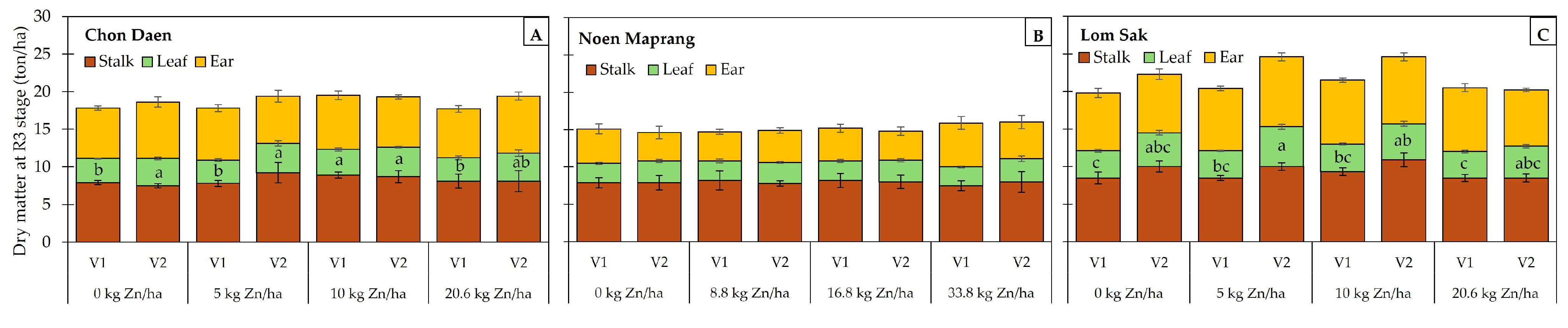
Figure 1. Dry matter accumulation in plant parts at the milking (R3) stage as influenced by the interaction effect of Zn application rates and maize varieties (V1: SW 5731, V2: SW 5819) at Chon Daen (A), Noen Maprang (B), Lom Sak (C) experimental sites in 2020. Data are mean values ± SE (n = 4). Different letters above the bars indicate significant differences in Zn application rates and maize varieties, as determined by the LSD test at p < 0.05.
Agronomy 16 00078 g001
Figure 2. Dry matter accumulation in plant parts at the milking (R3) stage as influenced by the main effect of Zn application rates and maize varieties at Chon Daen (A), Noen Maprang (B), and Lom Sak (C) experimental sites in 2020. Data are mean values ± SE (n = 4). Different letters above the bars indicate significant differences in Zn application rates and maize varieties, as determined by the LSD test at p < 0.05.
Agronomy 16 00078 g002
Figure 3. Zn uptake in maize at the milking (R3) stage as influenced by the interaction effect of Zn application rates and maize varieties (V1: SW 5731, V2: SW 5819) at Chon Daen (A), Noen Maprang (B), Lom Sak (C) experimental sites in 2020. Data are mean values ± SE (n = 4). Different letters above the bars indicate significant differences in Zn application rates and maize varieties, as determined by the LSD test at p < 0.05.
Agronomy 16 00078 g003
Figure 4. Zn uptake in maize at the milking (R3) stage as influenced by the main effect of Zn application rates and maize varieties at Chon Daen (A), Noen Maprang (B), Lom Sak (C) experimental sites in 2020. Data are mean values ± SE (n = 4). Different letters above the bars indicate significant differences in Zn application rates and maize varieties, as determined by the LSD test at p < 0.05.
Agronomy 16 00078 g004
Figure 5. Soil pH in bulk soil at silking at the Chon Daen, Noen Maprang, and Lom Sak experimental sites.
Agronomy 16 00078 g005
Figure 6. Alpha diversity of the soil bacterial and archaeal community: Chao1 index (A) and Shannon index (B) in different soil pH after applying Zn fertilizer. The nonmetric multidimensional scaling (NMDS) based on the Bray–Curtis algorithm to analyze overall structural changes in the bacterial and archaeal communities (C). Different letters above the bars indicate significant differences between experimental sites (p < 0.05).
Agronomy 16 00078 g006
Figure 7. Soil bacterial and archaeal community analysis in response to different interactions between Zn application rates and maize varieties (V1: SW 5731; V2: SW 5819). Relative abundance of the dominant phyla (relative abundance > 0.1%) of different Zn application rates and maize varieties in Chone Daen, Noen Maprang, and Lom Sak experimental fields.
Agronomy 16 00078 g007
Figure 8. Soil bacterial and archaeal community analysis in response to different interactions between Zn application rates and maize varieties (V1: SW 5731; V2: SW 5819). Relative abundance of the dominant class (relative abundance > 1.0%) at Chon Daen (A), Noen Maprang (B), and Lom Sak (C).
Agronomy 16 00078 g008
Figure 9. Alpha diversity of the fungal community: Chao1 index (A) and Shannon index (B) in different soil pH after applying Zn fertilizer. Nonmetric multidimensional scaling (NMDS) analysis of fungal communities based on the Bray–Curtis algorithm (C). Different letters above the bars indicate significant differences between experimental sites (p < 0.05).
Agronomy 16 00078 g009
Figure 10. Soil fungal community analysis in response to different interactions between Zn application rates and maize varieties (V1: SW 5731; V2: SW 5819). Relative abundance of the dominant phyla (relative abundance > 0.1%) of different Zn application rates and maize varieties in Chone Daen, Noen Maprang, and Lom Sak experimental fields.
Agronomy 16 00078 g010
Figure 11. Soil fungal community analysis in response to different interactions between Zn application rates and maize varieties (V1: SW 5731; V2: SW 5819). Relative abundance of the dominant class (relative abundance > 0.1%) at Chon Daen (A), Noen Maprang (B), and Lom Sak (C).
Agronomy 16 00078 g011
Figure 12. Correlation analyses of the genus of soil bacteria and archaea community with growth parameters and environmental factors (* p < 0.05, ** p < 0.01, *** p < 0.001) at Chon Daen (A), Noen Maprang (B), and correlation analyses of the genus of soil fungal community with growth parameters and environmental factors at ChonDaen (C). Note: Shoot Znup: shoot Zn uptake, DW: dry weight, Soil Zn conc.: soil Zn concentration.
Agronomy 16 00078 g012
Table 1. Geographical and climatic characteristics in the three study sites.
CharacteristicsSites
Chon DaenNoen MaprangLom Sak
GeographicLatitude (°N)16°12′28.0′′16°26′10.2′′16°45′00.4′′
Longitude (°E)100°51′17.4′′100°41′12.7′′101°10′17.9′′
ClimaticMean temperature (°C)28.428.827.6
Total precipitation (mm)243.2128.7272.2
Table 2. Soil characteristics information of soil texture, soil organic matter, soil pH, available phosphorus, exchangeable potassium, and extractable Zn for each experimental site.
CharacteristicsExperimental Sites
Chon DaenNoen MaprangLom Sak
Soil typeclayclay loamclay
Sand (%)304234
Silt (%)262824
Clay (%)443042
pH (1:1)5.86.77.8
Soil organic matter (%)0.350.911.63
Available phosphorus (mg/kg)1.5020.7526.84
Exchangeable potassium (mg/kg)27.5062.1860.45
DTPA-Zn (mg/kg)0.550.870.53
Note: DTPA-Zn, diethylenetriaminepentaacetic acid-extractable zinc.
Table 3. Soil Zn concentration at the milking stage (R3) as affected by Zn application rates and maize varieties in 2020.
Experimental SitesZn Application Rate (kg Zn/ha)VarietyMean
SW 5731SW 5819
Chon Daen01.52 ± 0.28 bc1.46 ± 0.20 c1.49 ± 0.22 B
52.23 ± 0.62 abc1.60 ± 0.05 bc1.91 ± 0.52 B
101.63 ± 0.47 bc1.67 ± 0.34 bc1.65 ± 0.37 B
20.64.50 ± 2.03 a3.41 ± 1.94 ab3.96 ± 1.88 A
Mean2.47 ± 1.572.03 ± 1.19
Source of
variation
Zn application rate**Variety (Var)ns
Zn × Var**
Noen Maprang01.54 ± 0.35 bc1.37 ± 0.05 c1.46 ± 0.24 C
8.82.85 ± 1.11 abc2.06 ± 0.52 bc2.46 ± 0.89 B
16.82.12 ± 0.43 abc2.64 ± 0.89 abc2.38 ± 0.69 BC
33.84.50 ± 1.01 a3.89 ± 1.40 ab4.20 ± 1.14 A
Mean2.75 ± 1.352.49 ± 1.2
Source of
variation
Zn application rate **Varietyns
Zn × Var**
Lom Sak00.52 ± 0.11 d1.46 ± 0.90 bcd0.99 ± 0.77 B
50.80 ± 0.12 cd1.21 ± 0.58 bcd1.00 ± 0.44 B
101.63 ± 0.45 abc1.70 ± 0.73 abc1.67 ± 0.75 AB
20.62.43 ± 0.78 a1.89 ± 0.61 ab2.16 ± 0.69 A
Mean1.35 ± 1.061.56 ± 0.67
Source of
variation
Zn application rate **Varietyns
Zn × Var**
Data represent the mean ± standard errors (n = 4). Different lowercase letters indicate significant differences in the interaction effect of treatments, and uppercase letters indicate significant differences in the main effect of Zn application rate and maize variety (p < 0.05). ns indicates no significant differences. ** indicate significant difference at p < 0.01, respectively.
Disclaimer/Publisher’s Note: The statements, opinions and data contained in all publications are solely those of the individual author(s) and contributor(s) and not of MDPI and/or the editor(s). MDPI and/or the editor(s) disclaim responsibility for any injury to people or property resulting from any ideas, methods, instructions or products referred to in the content.