Synchronizing the Panicle: A Spatiotemporal Network View of Phytohormones in Rice Grain Filling and Agronomic Regulation




Abstract
1. Introduction
2. Physiological Process of Rice Grain Filling
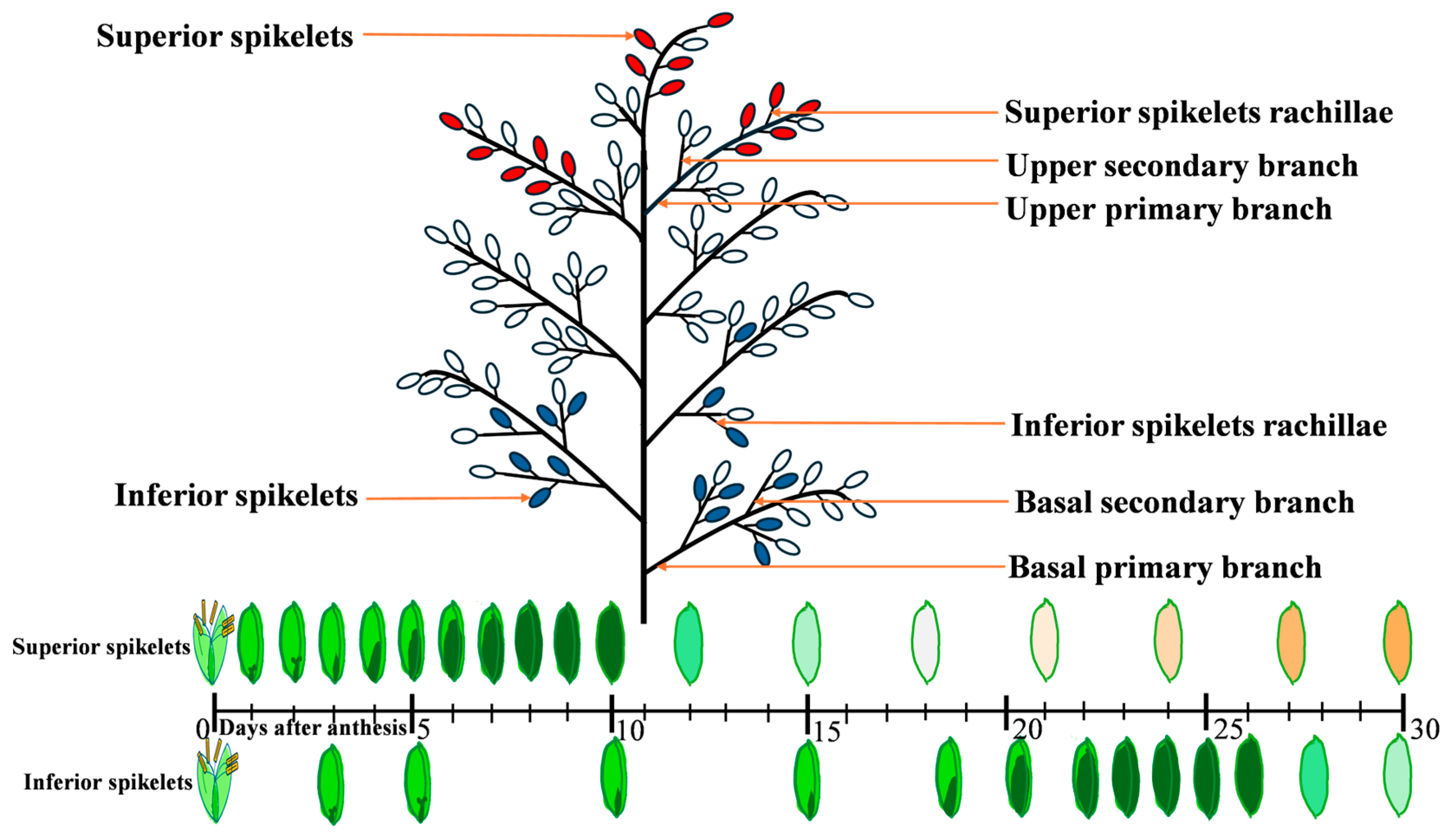
2.1. Filling Characteristics of Superior and Inferior Grains in Rice
2.2. Material Basis and Physiological Process of Rice Grain Filling
3. Regulatory Roles of Phytohormones in Grain Filling
3.1. Auxin
3.2. Cytokinin
3.3. Gibberellin
3.4. Abscisic Acid
3.5. Brassinosteroid
3.6. Ethylene
3.7. Polyamines
3.8. Phytohormonal Crosstalk: Setting the Stage for an Integrated Network
4. Synthesis: Towards an Integrated Phytohormonal Network Model for Grain Filling
4.1. Phytohormonal Spatiotemporal Dynamics and Their Regulatory Mechanisms During Grain Filling


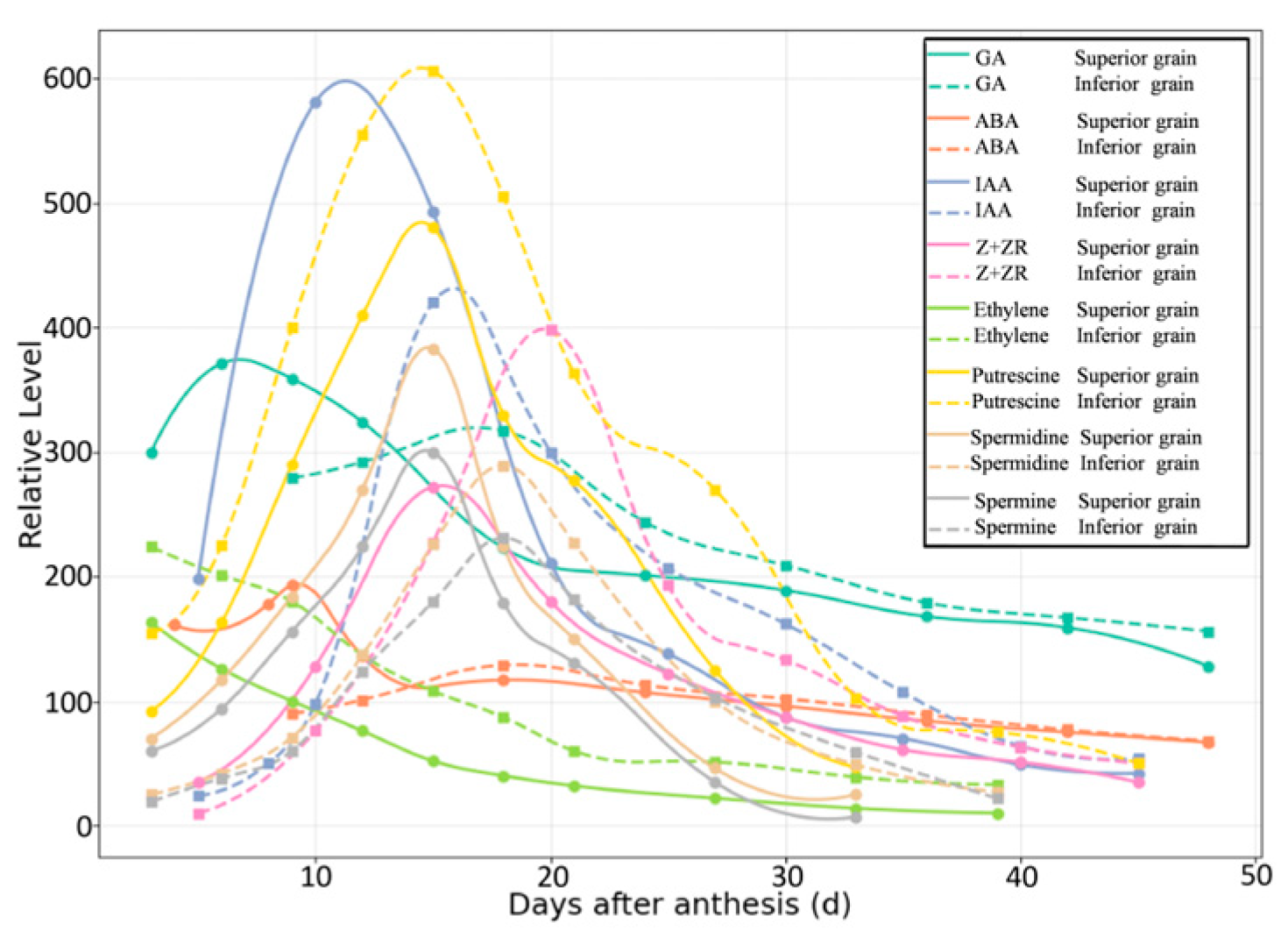
4.1.1. Dynamic Profiles Reveal “Temporal Asynchrony” and “Concentration Difference”
4.1.2. Biological Mechanisms Underlying “Temporal Asynchrony” and “Concentration Difference”
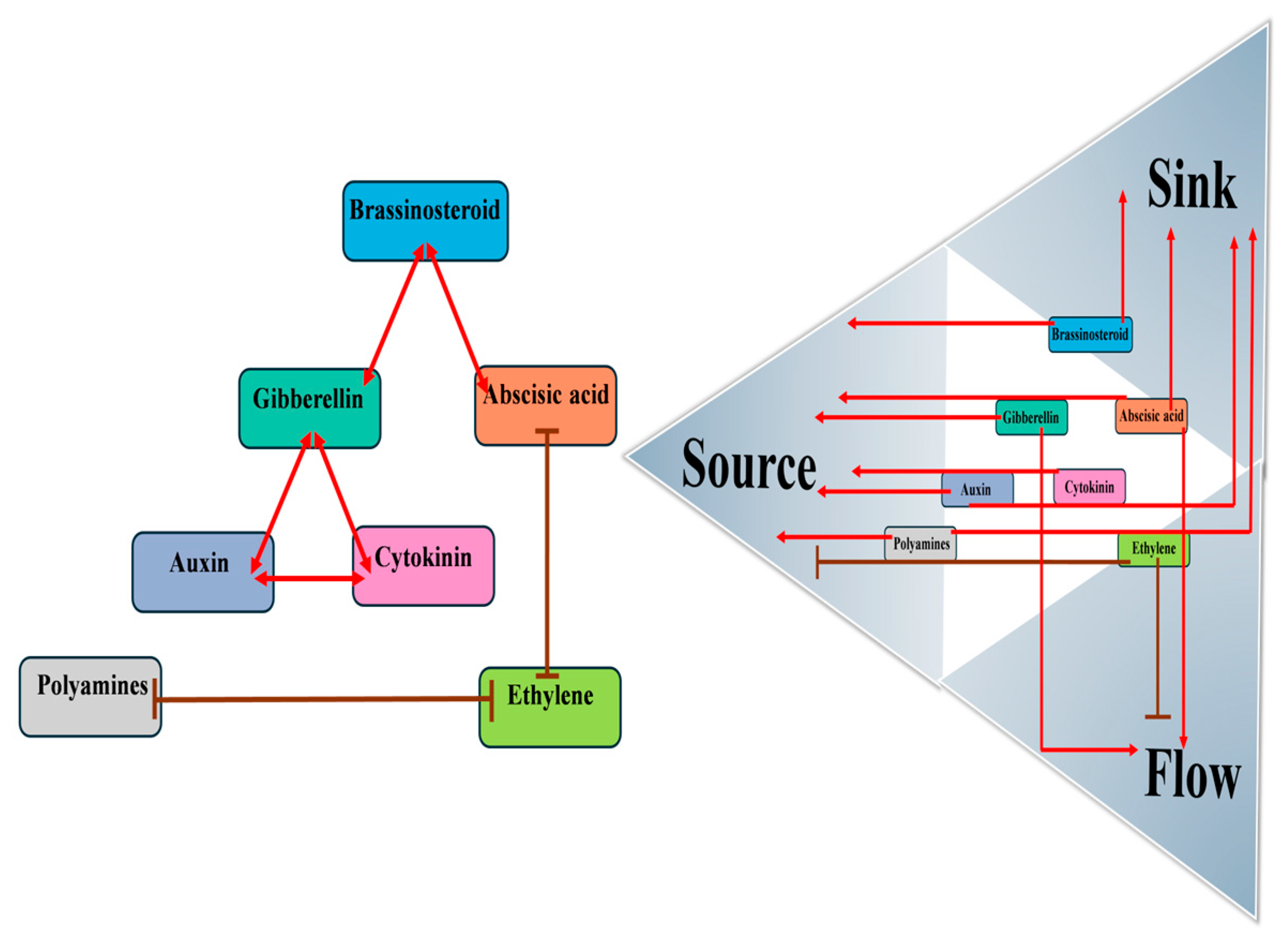
4.2. Core Interaction Nodes and Signal Integration
4.2.1. The ABA-ETH Antagonistic Node: The “Switch” Regulating the Balance Between Grain Filling and Senescence
4.2.2. The IAA-CK Synergistic Node: The “Engine” Driving Early Sink Capacity Establishment
4.2.3. GA’s Role in “Flow” Regulation: The “Logistics Channel” Ensuring Assimilate Supply
4.2.4. Modulatory and Reinforcing Roles of Other Phytohormones
4.3. Reprogramming of Phytohormonal Networks by Agronomic Practices
4.4. A Unified Working Model and Perspective
5. Prospects and Conclusions
5.1. Validating and Expanding the Phytohormonal Network Model
5.2. Translating Network Theory into Precision Management
5.3. Conclusions
Author Contributions
Funding
Data Availability Statement
Conflicts of Interest
References
- Mae, T.; Inaba, A.; Kaneta, Y.; Masaki, S.; Sasaki, M.; Aizawa, M.; Okawa, S.; Hasegawa, S.; Makino, A. A large-grain rice cultivar, Akita 63, exhibits high yields with high physiological N-use efficiency. Field Crops Res. 2006, 97, 227–237. [Google Scholar] [CrossRef] [Scilit]
- Yorobe, J.M.; Ali, J.; Pede, V.O.; Rejesus, R.M.; Velarde, O.P.; Wang, H. Yield and income effects of rice varieties with tolerance of multiple abiotic stresses: The case of green super rice (GSR) and flooding in the Philippines. Agric. Econ. 2016, 47, 261–271. [Google Scholar] [CrossRef] [Scilit]
- Murchie, E.; Pinto, M.; Horton, P. Agriculture and the new challenges for photosynthesis research. New Phytol. 2009, 181, 532–552. [Google Scholar] [CrossRef] [Scilit]
- Virk, P.; Khush, G.; Peng, S. Breeding to enhance yield potential of rice at IRRI: The ideotype approach. Int. Rice Res. Notes 2004, 29, 5–9. [Google Scholar]
- Horie, T. Can yields of lowland rice resume the increase that they showed in the 1980s? Plant Prod. Sci. 2005, 8, 257–272. [Google Scholar] [CrossRef] [Scilit]
- Normile, D. Reinventing Rice to Feed the World; American Association for the Advancement of Science: Washington, DC, USA, 2008. [Google Scholar]
- Seck, P.A.; Diagne, A.; Mohanty, S.; Wopereis, M.C.S. Crops that feed the world 7: Rice. Food Secur. 2012, 4, 7–24. [Google Scholar] [CrossRef] [Scilit]
- Beddington, J. Food security: Contributions from science to a new and greener revolution. Philos. Trans. R. Soc. B Biol. Sci. 2010, 365, 61–71. [Google Scholar] [CrossRef] [Scilit]
- Nelson, M.; Zak, K.; Davine, T.; Pau, S. Climate change and food systems research: Current trends and future directions. Geogr. Compass 2016, 10, 414–428. [Google Scholar] [CrossRef] [Scilit]
- Venkateswarlu, B.; Visperas, R.M. Source-Sink Relationships in Crop Plants. 1987. Available online: https://www.cabidigitallibrary.org/doi/full/10.5555/19880711391 (accessed on 20 May 2025).
- Saini, H.S.; Westgate, M.E. Reproductive development in grain crops during drought. Adv. Agron. 1999, 68, 59–96. [Google Scholar]
- Zahedi, M.; Jenner, C.F. Analysis of effects in wheat of high temperature on grain filling attributes estimated from mathematical models of grain filling. J. Agric. Sci. 2003, 141, 203–212. [Google Scholar] [CrossRef] [Scilit]
- Xi, M.; Xu, Y.; Sun, X.; Wu, W.; Zhou, Y. Effects of nitrogen fertilizer topdressing on grain filling and milling quality of the rice with high grain chalkiness. J. Agric. Sci. Technol. 2021, 23, 100–108. (In Chinese) [Google Scholar]
- Xue, J.; Chen, S.; Du, X.; Pan, G.; Wang, Y. Grain–filling characteristics of two different panicle rice varieties in Heilongjiang Province. Hubei Agric. Sci. 2014, 53, 2736–2742. (In Chinese) [Google Scholar]
- Ma, H.; Chen, X.; Wang, Z.; Zhu, Y.; Jiang, W.; Ren, G.; Ma, Z.; Wei, H.; Zhang, H.; Liu, G. Analysis on appearance and cooking taste quality characteristics of some high quality Japonica rice in China. Sci. Agric. Sin. 2021, 54, 1338–1353. (In Chinese) [Google Scholar]
- Xiong, D.; Ling, X.; Huang, J.; Peng, S. Meta-analysis and dose-response analysis of high temperature effects on rice yield and quality. Environ. Exp. Bot. 2017, 141, 1–9. [Google Scholar] [CrossRef] [Scilit]
- Mohammed, A.R.; Tarpley, L. Effects of high night temperature and spikelet position on yield-related parameters of rice (Oryza sativa L.) plants. Eur. J. Agron. 2010, 33, 117–123. [Google Scholar] [CrossRef] [Scilit]
- Zhao, X.; Zhang, T.; Wang, W.; Zhang, F.; Zhu, L.; Fu, B.; Li, Z. Time-course metabolic profiling in rice under low temperature treatment. Acta Agron. Sin. 2013, 39, 720–726. (In Chinese) [Google Scholar] [CrossRef] [Scilit]
- Geng, L.Q.; Wang, J.Y.; Chen, W.F. Effect of low temperature on panicle characters of rice during booting and grain filling period. Acta Agric. Boreali-Sin. 2009, 24, 107–111. (In Chinese) [Google Scholar]
- Xue, X.F. Effects of High Temperature and Light Intensity Stress During Grain Filling Period on Yield Formation and Grain Quality in Japonica Rice. Master’s Thesis, Yangzhou University, Yangzhou, China, 2010. (In Chinese) [Google Scholar]
- Xu, F.F. Study on the Utilization of Temperature and Light in the Formation of High Quality and High Yield of Japonica Rice in Huaibei Area. Master’s Thesis, Yangzhou University, Yangzhou, China, 2020. (In Chinese) [Google Scholar]
- Yu, X.; Cong, Y.; Cong, H.; Wang, Z. Study on relationship between meteorological factors and sowing date affecting rice grain filling. Acta Agric. Jiangxi 2024, 36, 1–9. (In Chinese) [Google Scholar]
- Yan, T.; Li, X.; Li, N.; Jiang, M.; Yang, Z.; He, Y.; Wang, C.; Wang, H.; Ma, J. Effect of nitrogen management and cultivation method on grain-filling characteristics and grain yield of indica hybrid rice. Chin. J. Eco-Agric. 2017, 25, 1485–1494. (In Chinese) [Google Scholar]
- Yu, J.X. Interaction Between Nitrogen Rates and Irrigation Regimes on Grain Yield and Quality and Its Physiological Mechanism in Rice. Master’s Thesis, Yangzhou University, Yangzhou, China, 2022. (In Chinese) [Google Scholar]
- Zhou, H.; Zhang, G.; Xiao, Y.; Tang, W.; Chen, L. Relationship between the conducting tissue in the first internode and the grain-filling of super large panicle rice restore line Rl126 and its derive combinations. Chin. J. Rice Sci. 2014, 28, 411–418. (In Chinese) [Google Scholar]
- Nonhebel, H.M.; Griffin, K. Production and roles of IAA and ABA during development of superior and inferior rice grains. Funct. Plant Biol. 2020, 47, 716–726. [Google Scholar] [CrossRef] [Scilit] [PubMed]
- Yang, J.-c.; Wang, Z.-Q.; Zhu, Q.-S. Regulation of ABA and GA to the grain filling of rice. Acta Agron. Sin. 1999, 25, 341–348. [Google Scholar]
- Uchiumi, T.; Okamoto, T. Rice fruit development is associated with an increased IAA content in pollinated ovaries. Planta 2010, 232, 579–592. [Google Scholar] [CrossRef] [Scilit]
- Dong, M.; Sang, D.; Wang, P.; Tang, C.; Yang, J. Variations in the milling quality of grains at different positions within a rice panicle. Sci. Agric. Sin. 2005, 38, 1973–1979. (In Chinese) [Google Scholar]
- Dong, M.; Sang, D.; Wang, P.; Zhang, W.; Yang, J. Difference in chalky characters of the grains at different positions within a rice panicle. Acta Agron. Sin. 2006, 32, 9. (In Chinese) [Google Scholar]
- Zhao, B.; Dong, M.; Zhang, H.; Zhu, Q.; Yang, J. Difference in quality characters of the grains at different positions within a hybrid rice panicle. J. Yangzhou Univ. 2006, 27, 5. (In Chinese) [Google Scholar]
- Zhao, S.R. Effects of Straw and Panicle Fertilizer Treatments on Grain Filling and Quality of Different Rice Varieties. Master’s Thesis, Yangzhou University, Yangzhou, China, 2022. (In Chinese) [Google Scholar]
- Liang, J.; Zhang, J.; Cao, X. Grain sink strength may be related to the poor grain filling of indica-japonica rice (Oryza sativa) hybrids. Physiol. Plant. 2001, 112, 470–477. [Google Scholar] [CrossRef] [Scilit]
- Yang, J.; Zhang, J.; Liu, L.; Wang, Z.; Zhu, Q. Carbon remobilization and grain filling in Japonica/Indica hybrid rice subjected to postanthesis water deficits. Agron. J. 2002, 94, 102–109. [Google Scholar] [CrossRef] [Scilit]
- Yang, J.; Zhang, J.; Wang, Z.; Liu, L. Post-anthesis development of inferior and superior spikelets in rice in relation to abscisic acid and ethylene. J. Exp. Bot. 2006, 57, 149–160. [Google Scholar] [CrossRef] [Scilit] [PubMed]
- Umemoto, T.; Nakamura, Y.; Ishikura, N. Effect of grain location on the panicle on activities involved in starch synthesis in rice endosperm. Phytochemistry 1994, 36, 843–847. [Google Scholar] [CrossRef] [Scilit]
- Iwasaki, Y.; Mae, T.; Makino, A.; Ohira, K.; Ojima, K. Nitrogen accumulation in the inferior spikelet of rice ear during ripening. Soil Sci. Plant Nutr. 1992, 38, 517–525. [Google Scholar] [CrossRef] [Scilit]
- Hu, N. Heredity Study on Plant Height and Panicle Caracters of Japonica Rice in Liaoning. Ph.D. Thesis, Shenyang Agricultural University, Shenyang, China, 2008. (In Chinese) [Google Scholar]
- Wang, T.D. A dynamic analysis of grain weight distribution during maturation of rice. J. Integr. Plant Biol. 1962, 10, 113–119. (In Chinese) [Google Scholar]
- Wang, Y.; Yao, Y.; Xu, J.; Li, T.; Jiang, J.; Cai, J. Fertilities of spikelets at different positions of the panicle in rice (Oryza sativa L.). Acta Agron. Sin. 1995, 21, 29–38. (In Chinese) [Google Scholar]
- Yang, J.C.; Liu, L.J. Effects of flowering time of spikelets on endosperm development in rice and its physiological mechanism. Sci. Agric. Sin. 1999, 32, 44–51. (In Chinese) [Google Scholar]
- Sikder, H.; Gupta, D. Physiology of grain in rice. Indian Agric. 1976, 20, 133–141. [Google Scholar]
- Mohapatra, P.; Patel, R.; Sahu, S. Time of flowering affects grain quality and spikelet partitioning within the rice panicle. Funct. Plant Biol. 1993, 20, 231–241. [Google Scholar] [CrossRef] [Scilit]
- Zhu, Q.S.; Cao, X.Z.; Luo, Y.Q. Growth analysis on the process of grain filling in rice. Acta Agron. Sin. 1988, 14, 182–193. (In Chinese) [Google Scholar]
- Zhu, Q.S.; Zhang, Z.J. Source-sink characteristics related to the yield in intersubspecific hybrid rice. Sci. Agric. Sin. 1997, 30, 8. (In Chinese) [Google Scholar]
- Zhang, Q.; Li, Z.; Fu, X.; Wu, C.; Jin, J. Changes of chlorophyll content and grain filling characteristics of the super high-yielding rice cultivars with different plant and panicle types. Acta Agron. Sin. 2005, 31, 9. (In Chinese) [Google Scholar]
- Ling, Q.H.; Yang, J.C. Studies on the “grain-leaf ratio” of population and cultural of high yield in rice plants. Sci. Agric. Sin. 1986, 3, 1–8. (In Chinese) [Google Scholar]
- Nawaz, A.; Farooq, M. Rice Physiology, in Rice Production Worldwide; Springer: New York, NY, USA, 2017; pp. 455–485. [Google Scholar]
- Yoshida, S. Fundamentals of Rice Crop Science; International Rice Research Institute: Los Baños, Philippines, 1981. [Google Scholar]
- Evans, L. Storage Capacity as a Limitation on Grain Yield. 1972. Available online: https://eurekamag.com/research/000/201/000201815.php (accessed on 20 December 2025).
- Tao, L.X.; Wang, X. Current status and advances of physiological barrier in sub-species hybrid rice seed setting. J. Agric. Sci. Technol. 2002, 4, 54. (In Chinese) [Google Scholar]
- Wang, X.; Tao, L.; Yu, M.; Huang, X. Effect of exogenous GA3 on “inter-grain apical dominance” and endogenous IAA in grain filling stage of hybrid rice. Physiol. Mol. Biol. Plants 2000, 26, 247–251. (In Chinese) [Google Scholar]
- Samonte, S.O.P.B.; Wilson, L.T.; McClung, A.M.; Tarpley, L. Seasonal dynamics of nonstructural carbohydrate partitioning in 15 diverse rice genotypes. Crop Sci. 2001, 41, 902–909. [Google Scholar] [CrossRef] [Scilit]
- Kumar, R.; Sarawgi, A.K.; Ramos, C.; Amarante, S.T.; Ismail, A.M.; Wade, L.J. Partitioning of dry matter during drought stress in rainfed lowland rice. Field Crops Res. 2006, 96, 455–465. [Google Scholar] [CrossRef] [Scilit]
- Yoshida, S. Physiological Aspects of Grain Yield. Annu. Rev. Plant Physiol. 1972, 23, 437–464. [Google Scholar] [CrossRef] [Scilit]
- Ntanos, D.A.; Koutroubas, S.D. Dry matter and N accumulation and translocation for Indica and Japonica rice under Mediterranean conditions. Field Crops Res. 2002, 74, 93–101. [Google Scholar] [CrossRef] [Scilit]
- Duan, M.; Sun, S.S. Profiling the expression of genes controlling rice grain quality. Plant Mol. Biol. 2005, 59, 165–178. [Google Scholar] [CrossRef] [Scilit] [PubMed]
- Nakamura, Y.; Yuki, K. Changes in enzyme activities associated with carbohydrate metabolism during the development of rice endosperm. Plant Sci. 1992, 82, 15–20. [Google Scholar] [CrossRef] [Scilit]
- Yang, J.; Zhang, J.; Wang, Z.; Zhu, Q.; Liu, L. Activities of enzymes involved in sucrose-to-starch metabolism in rice grains subjected to water stress during filling. Field Crops Res. 2003, 81, 69–81. [Google Scholar] [CrossRef] [Scilit]
- Yang, J.C.; Peng, S.B.; Gu, S.L. Changes in activities of three enzymes associated with starch synthesis in rice grains during grain filling. Acta Agron. Sin. 2001, 27, 157–164. (In Chinese) [Google Scholar]
- Kato, T. Change of sucrose synthase activity in developing endosperm of rice cultivars. Crop Sci. 1995, 35, 827–831. [Google Scholar] [CrossRef] [Scilit]
- Nakamura, Y.; Yuki, K.; Park, S.-Y.; Ohya, T. Carbohydrate metabolism in the developing endosperm of rice grains. Plant Cell Physiol. 1989, 30, 833–839. [Google Scholar] [CrossRef] [Scilit]
- Nakamura, Y.; Umemoto, T.; Takahata, Y.; Komae, K.; Amano, E.; Satoh, H. Changes in structure of starch and enzyme activities affected by sugary mutations in developing rice endosperm. Possible role of starch debranching enzyme (R-enzyme) in amylopectin biosynthesis. Physiol. Plant. 1996, 97, 491–498. [Google Scholar] [CrossRef] [Scilit]
- Zhu, J.; Yu, W.; Zhang, C.; Zhu, Y.; Liu, Q. New insights into amylose and amylopectin biosynthesis in rice endosperm. Carbohydr. Polym. 2020, 230, 115656. [Google Scholar] [CrossRef] [Scilit]
- Cheng, Y.; Dai, X.; Zhao, Y. Auxin biosynthesis by the YUCCA flavin monooxygenases controls the formation of floral organs and vascular tissues in Arabidopsis. Genes Dev. 2006, 20, 1790–1799. [Google Scholar] [CrossRef] [Scilit]
- Cheng, Y.; Dai, X.; Zhao, Y. Auxin synthesized by the YUCCA flavin monooxygenases is essential for embryogenesis and leaf formation in Arabidopsis. Plant Cell 2007, 19, 2430–2439. [Google Scholar] [CrossRef] [Scilit]
- Pagnussat, G.C.; Alandete-Saez, M.; Bowman, J.L.; Sundaresan, V. Auxin-dependent patterning and gamete specification in the Arabidopsis female gametophyte. Science 2009, 324, 1684–1689. [Google Scholar] [CrossRef] [Scilit]
- Fujino, K.; Matsuda, Y.; Ozawa, K.; Nishimura, T.; Koshiba, T.; Fraaije, M.W.; Sekiguchi, H. NARROW LEAF 7 controls leaf shape mediated by auxin in rice. Mol. Genet. Genom. 2008, 279, 499–507. [Google Scholar] [CrossRef] [Scilit]
- Yamada, M.; Greenham, K.; Prigge, M.J.; Jensen, P.J.; Estelle, M. The TRANSPORT INHIBITOR RESPONSE2 gene is required for auxin synthesis and diverse aspects of plant development. Plant Physiol. 2009, 151, 168–179. [Google Scholar] [CrossRef] [Scilit]
- Lee, M.; Jung, J.-H.; Han, D.-Y.; Seo, P.J.; Park, W.J.; Park, C.-M. Activation of a flavin monooxygenase gene YUCCA7 enhances drought resistance in Arabidopsis. Planta 2012, 235, 923–938. [Google Scholar] [CrossRef] [Scilit]
- Wu, D.; Cao, Y.; Wang, D.; Zong, G.; Han, K.; Zhang, W.; Qi, Y.; Xu, G.; Zhang, Y. Auxin receptor OsTIR1 mediates auxin signaling during seed filling in rice. Plant Physiol. 2024, 194, 2434–2448. [Google Scholar] [CrossRef] [Scilit]
- Kabir, M.H.; Liu, Q.; Yi, S.; Huang, Z.; Xiao, L. Dynamics of phytohormones and their relationship with chalkiness of early indica rice under different post-anthesis temperature regimes. Bangladesh J. Agric. Res. 2017, 42, 53–65. [Google Scholar] [CrossRef] [Scilit]
- Kato, T.; Sakurai, N.; Kuraishi, S. The changes of endogenous abscisic acid in developing grain of two rice cultivars with different grain size. Jpn. J. Crop Sci. 1993, 62, 456–461. [Google Scholar] [CrossRef] [Scilit]
- Wang, Z.; Yang, J.; Zhu, Q.; Zhang, Z.; Long, Y.; Wang, X. Reasons for poor grain plumpness in intersubspecific hybrid rice. Acta Agron. Sin. 1998, 24, 782–787. (In Chinese) [Google Scholar]
- Yang, J. Activities of Key Enzymes in Sucrose-to-Starch Conversion in Wheat Grains Subjected to Water Deficit during Grain Filling. Plant Physiol. 2004, 135, 1621–1629. [Google Scholar] [CrossRef] [Scilit]
- Wang, G.Q.; Li, H.X.; Feng, L.; Chen, M.X.; Meng, S.; Ye, N.H.; Zhang, J. Transcriptomic analysis of grain filling in rice inferior grains under moderate soil drying. J. Exp. Bot. 2019, 70, 1597–1611. [Google Scholar] [CrossRef] [Scilit] [PubMed]
- Wang, Z.; Xu, Y.; Chen, T.; Zhang, H.; Yang, J.; Zhang, J. Abscisic acid and the key enzymes and genes in sucrose-to-starch conversion in rice spikelets in response to soil drying during grain filling. Planta 2015, 241, 1091–1107. [Google Scholar] [CrossRef] [Scilit] [PubMed]
- Yang, J.; Zhang, J.; Wang, Z.; Zhu, Q.; Wei, W. Remobilization of carbon reserves in response to water deficit during grain filling of rice. Field Crops Res. 2001, 71, 47–55. [Google Scholar] [CrossRef] [Scilit]
- Tanabe, S.; Ashikari, M.; Fujioka, S.; Takatsuto, S.; Yoshida, S.; Yano, M.; Yoshimura, A.; Kitano, H.; Matsuoka, M.; Fujisawa, Y.; et al. A novel cytochrome P450 is implicated in brassinosteroid biosynthesis via the characterization of a rice dwarf mutant, dwarf11, with reduced seed length. Plant Cell 2005, 17, 776–790. [Google Scholar] [CrossRef] [Scilit]
- Cheikh, N.; Jones, R.; Gengeenbach, B. The effect of heat stress on carbohydrate metabolism from seed coats of Phaseolus vulgaris L. Plant Physiol. 1993, 80, 635–637. [Google Scholar]
- Morris, R.O.; Blevins, D.G.; Dietrich, J.T.; Durley, R.C.; Gelvin, S.B.; Gray, J.; Hommes, N.G.; Kaminek, M.; Mathews, L.J.; Meilan, R. Cytokinins in Plant Pathogenic Bacteria and Developing Cereal Grains. Funct. Plant Biol. 1993, 20, 621–637. [Google Scholar] [CrossRef] [Scilit]
- Van Staden, J. The synthesis, transport and metabolism of endogenous cytokinins. Plant Cell Environ. 1979, 22, 1463–1473. [Google Scholar] [CrossRef] [Scilit]
- Schreiber, B.M.N. The Role of Cytokinins in Maize Kernel Development; University of Minnesota: Minneapolis, MN, USA, 1990. [Google Scholar]
- Michael, G.; Seiler-Kelbitsch, H. Cytokinin content and kernel size of barley grain as affected by environmental and genetic factors 1. Crop Sci. 1972, 12, 162–165. [Google Scholar] [CrossRef] [Scilit]
- Yang, J.C.; Qiu, M.; Wang, Z.Q.; Liu, L.J.; Zhu, Q.S. Relationship between the cell proliferation and cytokinin contents in rice endosperm during its development. Acta Agron. Sin. 2004, 30, 11–17. (In Chinese) [Google Scholar]
- Zhao, B.-H.; Liu, K.; Zhang, H.-X.; Zhu, Q.-S.; Yang, J.-C. Causes of poor grain plumpness of two-line hybrids and their relationships to contents of hormones in the rice grain. Sci. Agric. Sin. 2006, 39, 10. (In Chinese) [Google Scholar] [CrossRef] [Scilit]
- Sekhar, S.; Panda, B.B.; Mohapatra, T.; Das, K.; Shaw, B.P.; Kariali, E.; Mohapatra, P.K. Spikelet-specific variation in ethylene production and constitutive expression of ethylene receptors and signal transducers during grain filling of compact-and lax-panicle rice (Oryza sativa) cultivars. J. Plant Physiol. 2015, 179, 21–34. [Google Scholar] [CrossRef] [Scilit]
- Shen, W. Role of OsU496A in the Regulation of Grain Filling by Auxin and Cytokinin in Rice. Master’s Thesis, Yangzhou University, Yangzhou, China, 2018. (In Chinese) [Google Scholar]
- Kurogochi, S.; Murofushi, N.; Ota, Y.; Takahashi, N. Identification of gibberellins in the rice plant and quantitative changes of gibberellin A19 throughout its life cycle. Planta 1979, 146, 185–191. [Google Scholar] [CrossRef] [Scilit]
- Suzuki, Y.; Kurogochi, S.; Murofushi, N.; Ota, Y.; Takahashi, N. Seasonal changes of GA1, GA19 and abscisic acid in three rice cultivars. Plant Cell Physiol. 1981, 22, 1085–1093. [Google Scholar] [CrossRef] [Scilit]
- Qin, Z.; Tang, X. Dynamics of some large biomolecules during the formation of rice endosperm. China Sci. 1984, 12, 1103–1110. [Google Scholar]
- Yang, J.; Zhang, J.; Wang, Z.; Zhu, Q. Hormones in the grains in relation to sink strength and postanthesis development of spikelets in rice. Plant Growth Regul. 2003, 41, 185–195. [Google Scholar] [CrossRef] [Scilit]
- Yang, J.; Zhang, J.; Wang, Z.; Zhu, Q.; Wang, W. Hormonal changes in the grains of rice subjected to water stress during grain filling. Plant Physiol. 2001, 127, 315–323. [Google Scholar] [CrossRef] [Scilit]
- Wang, R.; Yang, X.; Guo, S.; Wang, Z.; Zhang, Z.; Fang, Z. MiR319-targeted OsTCP21 and OsGAmyb regulate tillering and grain yield in rice. J. Integr. Plant Biol. 2021, 63, 1260–1272. [Google Scholar] [CrossRef] [Scilit]
- Wu, Y. Functional Analysis of Sucrose Transporters in Rice Grain Filling. Master’s Thesis, Nanjing Agricultural University, Nanjing, China, 2022. (In Chinese) [Google Scholar]
- Kende, H.; Zeevaart, J. The fiveb “classical” plant hormones. Plant Cell 1997, 9, 1197. [Google Scholar] [CrossRef] [Scilit]
- Brenner, M.L.; Cheikh, N. The Role of Hormones in Photosynthate Partitioning and Seed Filling, in Plant Hormones: Physiology, Biochemistry and Molecular Biology; Springer: New York, NY, USA, 1995; pp. 649–670. [Google Scholar]
- Clifford, P.E.; Offler, C.E.; Patrick, J.W. Growth regulators have rapid effects on photosynthate unloading from seed coats of Phaseolus vulgaris L. Plant Physiol. 1986, 80, 635–637. [Google Scholar] [CrossRef] [Scilit] [PubMed]
- Dewdney, S.; McWha, J. Abscisic acid and the movement of photosynthetic assimilates towards developing wheat (Triticum aestivum L.) grains. Z. fur Pflanzenphysiol. 1979, 92, 183–186. [Google Scholar] [CrossRef] [Scilit]
- Dong, M.; Gu, J.; Chen, P.; Liu, T.; Zhao, B. Difference of Abscisic Acid content in grains at different spikelet positions of rice and its relationship with grain filling. Plant Physiol. J. 2013, 49, 729–737. (In Chinese) [Google Scholar]
- Li, Y.; Li, X.; Fu, D.; Wu, C. Panicle Morphology Mutant 1 (PMM1) determines the inflorescence architecture of rice by controlling brassinosteroid biosynthesis. BMC Plant Biol. 2018, 18, 348. [Google Scholar] [CrossRef] [Scilit] [PubMed]
- Wang, S.; Chen, R.; Shi, Q.; Zhang, H.; Zhao, M.; Xu, J. Effects of exogenous epibrassinolide (epi-BR) application at flowering stage on rice. Crops 2012, 4, 62–65. (In Chinese) [Google Scholar]
- Li, Z.; Wang, S.; Jiang, W.; Zhang, S.; Zhang, S.; Xu, J. Physiological mechanisms of promoting source, sink, and grain filling by 24-Epibrassinolide (EBR) applied at panicle initiation stage of rice. Acta Agron. Sin. 2018, 44, 581–590. (In Chinese) [Google Scholar] [CrossRef] [Scilit]
- Wang, J.S. The Effects of 2,4-Epibrassinosteroid Application on Rice Grain-Filling and Yield. Master’s Thesis, Sichuan Agricultural University, Jilin, China, 2010. (In Chinese) [Google Scholar]
- Hu, Y.Q. The Physiological Mechanism of Brassinosteroids Regulating Carbon Metabolism and Grain Filling in Rice. Master’s Thesis, Jilin Agricultural University, Changchun, China, 2024. (In Chinese) [Google Scholar]
- Zhang, W.; Zhu, K.; Wang, Z.; Zhang, H.; Gu, J.; Liu, L.; Yang, J.; Zhang, J. Brassinosteroids function in spikelet differentiation and degeneration in rice. J. Integr. Plant Biol. 2019, 61, 45–65. [Google Scholar] [CrossRef] [Scilit]
- Panda, B.B.; Kariali, E.; Panigrahi, R.; Mohapatra, P.K. High ethylene production slackens seed filling in compact panicled rice cultivar. Plant Growth Regul. 2009, 58, 141–151. [Google Scholar] [CrossRef] [Scilit]
- Wang, J.C. Regulation of Polyamines and Ethylene to the Grain Filling of Rice. Ph.D. Thesis, Yangzhou University, Yangzhou, China, 2013. (In Chinese) [Google Scholar]
- Zhang, Z.C.; Xue, Y.G.; Wang, Z.Q.; Yang, J.C.; Zhang, J.H. The relationship of grain filling with abscisic acid and ethylene under non-flooded mulching cultivation. J. Agric. Sci. 2009, 147, 423–436. [Google Scholar] [CrossRef] [Scilit]
- Wilkinson, S.; Kudoyarova, G.R.; Veselov, D.S.; Arkhipova, T.N.; Davies, W.J. Plant hormone interactions: Innovative targets for crop breeding and management. J. Exp. Bot. 2012, 63, 3499–3509. [Google Scholar] [CrossRef] [Scilit] [PubMed]
- IBPGR-IRRI Rice Advisory Committee; International Board for Plant Genetic Resources. Descriptors for Rice, Oryza Sativa L.; International Rice Research Institute: Los Baños, Philippines, 1980. [Google Scholar]
- Smith, C.W.; Dilday, R.H. Rice: Origin, History, Technology, and Production; John Wiley Sons: New York, NY, USA, 2002. [Google Scholar]
- Mohapatra, P.K.; Sahu, S. Heterogeneity of primary branch development and spikelet survival in rice panicle in relation to assimilates of primary branches. J. Exp. Bot. 1991, 42, 871–879. [Google Scholar] [CrossRef] [Scilit]
- Gepstein, S.; Thimann, K.V. The role of ethylene in the senescence of oat leaves. Plant Physiol. 1981, 68, 349–354. [Google Scholar] [CrossRef] [Scilit]
- Gan, S.; Amasino, R.M. Making sense of senescence (molecular genetic regulation and manipulation of leaf senescence). Plant Physiol. 1997, 113, 313. [Google Scholar] [CrossRef] [Scilit]
- Beltrano, J.; Carbone, A.; Montaldi, E.R.; Guiamet, J.J. Ethylene as promoter of wheat grain maturation and ear senescence. Plant Growth Regul. 1994, 15, 107–112. [Google Scholar] [CrossRef] [Scilit]
- Hedley, C.; Ambrose, M. An analysis of seed development in Pisum sativum L. Ann. Bot. 1980, 46, 89–105. [Google Scholar] [CrossRef] [Scilit]
- Weber, H.; Borisjuk, L.; Wobus, U. Controlling seed development and seed size in Vicia faba: A role for seed coat-associated invertases and carbohydrate state. Plant J. 1996, 10, 823–834. [Google Scholar] [CrossRef] [Scilit]
- Wolswinkel, P. Transport of nutrients into developing seeds: A review of physiological mechanisms. Seed Sci. Res. 1992, 2, 59–73. [Google Scholar] [CrossRef] [Scilit]
- Mohapatra, R.; Mohapatra, P. Ethylene control of seed coat development in low and high sterile semidwarf indica rice cultivars. Plant Growth Regul. 2006, 50, 47–55. [Google Scholar] [CrossRef] [Scilit]
- Mohapatra, P.K.; Naik, P.K.; Patel, R. Ethylene inhibitors improve dry matter partitioning and development of late flowering spikelets on rice panicles. Aust. J. Plant Physiol. 2000, 27, 311–323. [Google Scholar] [CrossRef] [Scilit]
- Naik, P.K.; Mohapatra, P.K. Ethylene inhibitors enhanced sucrose synthase activity and promoted grain filling of basal rice kernels. Aust. J. Plant Physiol. 2000, 27, 997–1008. [Google Scholar] [CrossRef] [Scilit]
- Yang, J.; Zhang, J. Grain filling of cereals under soil drying. New Phytol. 2006, 169, 223–236. [Google Scholar] [CrossRef] [Scilit]
- Liao, B.; Wu, X.; Yu, Y.; Luo, S.; Hu, R.; Lu, G. Effects of mild alternate wetting and drying irrigation and mid-season drainage on CH4 and N2O emissions from rice paddies. Sci. Total Environ. 2020, 708, 135802. [Google Scholar]
- Wang, K.; Xu, F.; Yuan, W.; Wang, F.; Chen, G.; Zhang, Y.; Yang, J.; Zhang, J. Elevated CO2 enhances rice root growth under alternate wetting and drying. Food Energy Secur. 2022, 11, e442. [Google Scholar]
- Galston, A.W. Polyamines as Modulators of Plant Development. BioScience 1983, 33, 382–388. [Google Scholar] [CrossRef] [Scilit]
- Evans, P.T.; Malmberg, R.L. Do polyamines have roles in plant development? Annu. Rev. Plant Physiol. Plant Mol. Biol. 1989, 40, 235–269. [Google Scholar] [CrossRef]
- Bagni, N.; Torrigiani, P. Polyamines: A new class of growth substances. In Progress in Plant Growth Regulation: Proceedings of the 14th International Conference on Plant Growth Substances, Amsterdam, The Netherlands, 21–26 July 1991; Springer: Dordrecht, The Netherlands, 1992. [Google Scholar]
- Wang, Z.; Yang, J.; Zhu, Q.; Lang, Y. Effects of Exogenous polyamines on photosynthetic rate and grain plumpness in rice under water deficit stress. Rice Sci. 1998, 12, 185. (In Chinese) [Google Scholar]
- Kou, H.; Wang, B.; Wang, S.; Lü, J.; Lu, G. Relationship between Polyamine of grain and grain filling in Japonica rice. J. Shenyang Agric. Univ. 2004, 35, 336–339. (In Chinese) [Google Scholar]
- Lin, W.X.; Lin, Q.H.; Liang, Y.Y.; Wu, Z.Q. Influence of environmental conditions on genetic performance of cytoplasmic effects and nucleocytoplasmic interactions in hybrid rice IV, Effect of sterile cytoplasms on polyamine metabolism in hybrid rice under different application rates of nitrogen. Chin. J. Appl. Ecol. 1996, 7, 33–38. (In Chinese) [Google Scholar] [CrossRef] [Scilit]
- Ioannidis, N.E.; Kotzabasis, K. Effect of polyamines on photosynthesis of source and sink organs in rice (Oryza sativa L.). Plant Cell Physiol. 1988, 29, 1207–1213. [Google Scholar] [CrossRef] [Scilit]
- Cao, M. Polyamines and their Roles in Plant Physiology. Plant Physiol. J. 1984, 6, 1–5. (In Chinese) [Google Scholar]
- Yang, J.C.; Zhu, Q.S.; Wang, Z.Q.; Cao, X.Z. Polyamines in rice grains and their relations with grain plumpness and grain weight. Acta Agron. Sin. 1997, 23, 385–392. (In Chinese) [Google Scholar]
- Kai, L. Causes of poor grain plumpness of two-line hybrids and their relationships to the contents of hormones in the rice grain. Agric. Sci. China 2007, 6, 930–940. [Google Scholar] [CrossRef] [Scilit]
- Chen, L.; Deng, X.; Duan, H.; Tan, X.; Xie, X.; Pan, X.; Guo, L.; Luo, T.; Chen, X.; Gao, H.; et al. Canopy humidity and irrigation regimes interactively affect rice physiology, grain filling and yield during grain filling period. Agric. Water Manag. 2025, 307, 109143. [Google Scholar] [CrossRef] [Scilit]
- Acosta-Motos, J.R.; Rothwell, S.A.; Massam, M.J.; Albacete, A.; Zhang, H.; Dodd, I.C. Alternate wetting and drying irrigation increases water and phosphorus use efficiency independent of substrate phosphorus status of vegetative rice plants. Plant Physiol. Biochem. 2020, 155, 914–926. [Google Scholar] [CrossRef] [Scilit]
- Valluru, R.; Davies, W.J.; Reynolds, M.P.; Dodd, I.C. Foliar abscisic acid-to-ethylene accumulation and response determine rice spikelet fertility under water deficit stress. Front. Plant Sci. 2016, 7, 479. [Google Scholar]
- Wang, G.; Zhang, J. Carbohydrate, hormone and enzyme regulations of rice grain filling under post-anthesis soil drying. Environ. Exp. Botany 2020, 178, 104165. [Google Scholar] [CrossRef] [Scilit]
- Gong, Y.; Lei, Y.; Wang, Z.; Xu, H.; Cheng, X.; Chen, W. Nitrogen fertilizer application and optimized planting density enhance rice yield by improving the panicle type index and increasing the filling rate of inferior grains. Plants 2025, 14, 1690. [Google Scholar] [CrossRef] [Scilit] [PubMed]
- Liu, K.; Liang, X.; Wang, W.; Huo, Z.; Zhao, C. The research progress on the effects of phytohormones on rice grain filling and strategies for agricultural regulation. Plants 2025, 14, 2193. [Google Scholar] [CrossRef] [Scilit] [PubMed]
- Sekhar, S.; Gharat, S.A.; Panda, B.B.; Mohaptra, T.; Das, K.; Kariali, E.; Mohapatra, P.K.; Shaw, B.P. Identification and characterization of differentially expressed genes in inferior and superior spikelets of rice cultivars with contrasting panicle-compactness and grain-filling properties. PLoS ONE 2015, 10, e0145749. [Google Scholar] [CrossRef] [Scilit]
- Liu, B.; Meng, S.; Yang, J.; Wu, J.; Peng, Y.; Zhang, J.; Ye, N. Carbohydrate flow during grain filling: Phytohormonal regulation and genetic control in rice (Oryza sativa). J. Integr. Plant Biol. 2025, 67, 1086–1104. [Google Scholar] [CrossRef] [Scilit] [PubMed]
- Teng, Z.; Yu, H.; Wang, G.; Meng, S.; Liu, B.; Yi, Y.; Chen, Y.; Zheng, Q.; Liu, L.; Yang, J.; et al. Synergistic interaction between ABA and IAA due to moderate soil drying promotes grain filling of inferior spikelets in rice. J. Agric. Food Chem. 2022, 70, 10568–10581. [Google Scholar] [CrossRef] [Scilit] [PubMed]
- Ye, J.; Zhong, T.; Zhang, D.; Ma, C.; Wang, L.; Yao, L.; Zhang, Q.; Zhu, M.; Xu, M. The auxin-regulated protein ZmAuxRP1 coordinates the balance between root growth and stalk rot disease resistance in maize. Mol. Plant 2019, 12, 360–373. [Google Scholar] [CrossRef] [Scilit]
- Guzmán, Y.; Pugliese, B.; González, C.V.; Travaglia, C.; Bottini, R.; Berli, F. Spray with plant growth regulators at full bloom may improve quality for storage of ‘Superior Seedless’ table grapes by modifying the vascular system of the bunch. Postharvest Biol. Technol. 2021, 176, 111522. [Google Scholar] [CrossRef] [Scilit]
- Ivanchenko, M.G.; Muday, G.K.; Dubrovsky, J.G. Ethylene and auxin interactions regulate spikelet development in response to planting density in rice. Front. Plant Sci. 2021, 12, 689782. [Google Scholar]
- Chen, Y.; Teng, Z.; Yuan, Y.; Yi, Z.; Zheng, Q.; Yu, H.; Lv, J.; Wang, Y.; Duan, M.; Zhang, J.; et al. Excessive nitrogen in field-grown rice suppresses grain filling of inferior spikelets by reducing the accumulation of cytokinin and auxin. Field Crops Res. 2022, 283, 108542. [Google Scholar] [CrossRef] [Scilit]
- Peng, Y.; Chen, Y.; Yuan, Y.; Teng, Z.; Yi, Z.; Zheng, Q.; Yu, H.; Lv, J.; Wang, Y.; Duan, M.; et al. Post-anthesis saline-alkali stress inhibits grain filling by promoting ethylene production and signal transduction. Food Energy Secur. 2022, 11, e384. [Google Scholar] [CrossRef] [Scilit]


| Filling Characteristic | Synchronous Filling Type | Asynchronous Filling Type | Intermediate Type |
|---|---|---|---|
| Time difference in active filling phase | Small time difference between grain types | Superior grains initiate filling early | Intermediate between the two types |
| Inferior grains exhibit a significant lag in filling initiation | |||
| Filling rate | Both grain types exhibit a relatively high filling rate in the early stage | Superior grains have a high initial filling potential and filling rate | Intermediate between the two types |
| Inferior grains have a low initial filling potential and filling rate | |||
| Time to max filling rate | Superior and inferior grains reach their maximum filling rate at a similar time | Superior grains reach the maximum filling rate early | Intermediate between the two types |
| Reference | Final Grain-Filling Outcome | Perturbation to the Phytohormonal Network | Affected Hormones & Change | Agronomic Practice |
|---|---|---|---|---|
| [13,23,24,37,71,72,86,87] | Increased grain weight, but potentially greater grain-to-grain disparity: Overall sink capacity and average grain weight improve, but excessive nitrogen may exacerbate competition for assimilates in favor of superior grains, leading to relatively poorer filling of inferior grains. | Enhances the “Sink-Establishing Engine” and Sink Capacity: Increases cytokinin and brassinosteroid levels, synergizing with auxin to promote spikelet differentiation and endosperm cell division, thereby expanding potential sink capacity; however, it may also intensify apical dominance. | CK↑, BR↑, IAA↑ | Panicle Fertilization |
| [124,125,137,138,139] | Significant improvement in inferior grains, enhanced filling synchrony: Inferior grains initiate filling earlier and at a higher rate, effectively reducing the weight gap with superior grains, leading to more synchronous grain filling and an in-creased har-vest index. | Flips the “Grain-Filling Switch”: Moderate water stress induces ABA accumulation and suppresses ethylene synthesis. This shift in the antagonistic node delays senescence, promotes sucrose-to-starch conversion (particularly in inferior grains), and enhances remobilization of stem and sheath reserves. | ABA↑, ETH↓ | Post-Anthesis Mild Alternate Wetting and Drying (AWD) |
| [140,141,142] | Decreased grain plumpness, exacerbated asynchrony: Overall population seed-setting rate and grain plumpness decline, with a significant increase in unfilled or poorly filled inferior grains, leading to greater yield instability. | Exacerbates Apical Dominance and Inhibition: Canopy shading and intensified competition elevate ethylene emission in the plant. Ethylene accumulates in inferior grains, inhibiting their development, while resources are prioritized to apical, superior grains, aggravating the spatial heterogeneity of phytohormone distribution. | ETH↑, IAA↑, CK↓ | High Planting Density |
| [73,121,122,143,144,145,146,147] | Directed optimization of grain filling: Can be used to specifically alleviate stress (heat, drought) inhibition, delay senescence, or promote inferior grain filling, representing a forward-looking approach for “on-demand” regulation. | Precisely Intervenes at Network Nodes: Application of ABA analogs, ethylene inhibitors, or other growth regulators (e.g., paclobutrazol) directly and precisely adjusts specific phytohormone levels to correct unfavorable phytohormonal balances. | Targeted Modulation (e.g., ABA↑, ETH↓) | Exogenous Application of Chemical Regulators |
Disclaimer/Publisher’s Note: The statements, opinions and data contained in all publications are solely those of the individual author(s) and contributor(s) and not of MDPI and/or the editor(s). MDPI and/or the editor(s) disclaim responsibility for any injury to people or property resulting from any ideas, methods, instructions or products referred to in the content. |
© 2025 by the authors. Licensee MDPI, Basel, Switzerland. This article is an open access article distributed under the terms and conditions of the Creative Commons Attribution (CC BY) license.
Share and Cite
Ji, Z.; Wang, S.; Hu, Q.; Zhang, H.; Li, G. Synchronizing the Panicle: A Spatiotemporal Network View of Phytohormones in Rice Grain Filling and Agronomic Regulation. Agronomy 2026, 16, 60. https://doi.org/10.3390/agronomy16010060
Ji Z, Wang S, Hu Q, Zhang H, Li G. Synchronizing the Panicle: A Spatiotemporal Network View of Phytohormones in Rice Grain Filling and Agronomic Regulation. Agronomy. 2026; 16(1):60. https://doi.org/10.3390/agronomy16010060
Chicago/Turabian StyleJi, Zhendong, Sijia Wang, Qun Hu, Hongcheng Zhang, and Guangyan Li. 2026. "Synchronizing the Panicle: A Spatiotemporal Network View of Phytohormones in Rice Grain Filling and Agronomic Regulation" Agronomy 16, no. 1: 60. https://doi.org/10.3390/agronomy16010060
APA StyleJi, Z., Wang, S., Hu, Q., Zhang, H., & Li, G. (2026). Synchronizing the Panicle: A Spatiotemporal Network View of Phytohormones in Rice Grain Filling and Agronomic Regulation. Agronomy, 16(1), 60. https://doi.org/10.3390/agronomy16010060