Article

Short-Term Continuous Cropping of Dioscorea polystachya Alters the Rhizosphere Soil Microbiome and Degrades Soil Fertility


1
Institute of Crop Germplasm Resources, Shandong Academy of Agricultural Sciences, Jinan 250100, China
2
Institute of Agro-Food Science and Technology, Shandong Academy of Agricultural Sciences, Jinan 250100, China
3
Shandong Gubentang Health Industry Group Co., Ltd., Jinan 250101, China
4
Institute of Wetland Agriculture and Ecology, Shandong Academy of Agricultural Sciences, Jinan 250100, China
*
Author to whom correspondence should be addressed.
Agronomy 2026, 16(1), 59; https://doi.org/10.3390/agronomy16010059 (registering DOI)

Submission received: 24 October 2025 / Revised: 12 December 2025 / Accepted: 16 December 2025 / Published: 25 December 2025
(This article belongs to the Section Innovative Cropping Systems)

Abstract

Chinese yam (Dioscorea polystachya) serves as both a food crop and a traditional Chinese medicine herb, yet it suffers from severe continuous cropping obstacles, typically requiring a six-year fallow period before replanting. Long-term continuous cropping changes soil properties, including the concentration of N, P, and K, as well as bacterial composition, but the overall impact of short-term continuous cropping on important soil factors such as mineral elements, enzymes, and microbial composition still remains poorly understood. To elucidate how monoculture affects soil health, we collected rhizosphere soils from D. polystachya fields under one-, two-, and three-year continuous cropping in Chenji Town, and analyzed soil properties using general chemical methods, as well as microbial composition by Illuminar high-throughput sequencing of 16S rRNA and ITS1 regions. Furthermore, the correlation between soil properties and microbial communities was examined. The results showed that soil pH, cation exchange capacity, and organic matter content increased significantly in continuous cropping soil, whereas the concentrations of soil mineral elements (N, P, K, Ca, Mg, Na, Cu, Fe, Mn, Zn, S, and Si) decreased significantly, with the concentration of available P, K, Cu, and Zn decreased by 72.8%, 64.1%, 99.3%, and 79.4%, respectively, in 3-year continuously cropped soil. Enzyme activities, including sucrase, urease, and alkaline phosphatase, also showed a decrease of more than 81%. Fungal diversity and abundance were markedly reduced with cropping duration, whereas bacterial communities showed less response. Notably, pathogenic fungi such as Dactylonectria, Neocosmospora, and Ilyonectria, along with bacteria Streptomyces, became enriched. These microbial shifts were primarily associated with soil pH, available potassium, and alkaline phosphatase. Our study demonstrates that the decline in soil fertility coupled with pathogen buildup constitutes a major cause of the continuous cropping obstacle in Chinese yams. The results provide a scientific basis for developing targeted strategies to mitigate continuous cropping obstacles in Chinese yam production.

1. Introduction

Yam (Dioscorea spp.) represents the fourth most significant root and tuber crop globally, following potato, sweet potato, and cassava [1]. In 2023, worldwide yam production surpassed 89 million tons, with Africa leading in both cultivation area and output, establishing yams as a staple food source across the region. In China, Chinese yams (D. polystachya) are valued not only as a food crop but also as an officially recognized medicinal material in the Chinese Pharmacopeia. This species is rich in nutritional and bioactive constituents, including starch, amino acids, mineral elements, polysaccharides, allantoin, and other functional compounds [2]. Studies have demonstrated that Chinese yam exhibits multiple physiological benefits, such as immunomodulatory, antioxidant, cardiovascular protective, hypoglycemic, and hypolipidemic effects [3,4]. With growing public health awareness, market demand for Chinese yam products continues to rise. However, continuous cropping has led to a progressive decline in tuber yield and quality, accompanied by increased susceptibility to pests and diseases [5,6]. Elucidating the mechanisms underlying continuous cropping obstacles is therefore essential for developing targeted cultivation strategies and ensuring the sustainable production of high-quality Chinese yams.
Soil mineral elements and enzymes play crucial roles in nutrient cycling and crop productivity, yet their responses to continuous cropping are highly plant-dependent. Continuous cropping of T. farfara markedly decreased organic matter, available phosphorus, available potassium, alkaline nitrogen, and the activities of sucrose, catalase, and alkaline phosphatase [7]. In contrast, continuous cropping of F. cirrhosa increased organic matter, total nitrogen, available phosphorus, available potassium, and enzyme activity, while alkaline hazardous nitrogen (AHN) content decreased significantly [8]. These findings suggest that soil nutrient imbalance represents a key factor contributing to continuous cropping obstacles. While existing research has primarily focused on macronutrients (N, P, and K), the dynamics of medium and trace elements under continuous cropping remain poorly understood. Given the essential roles of these elements in plant growth and development, elucidating their changes in response to continuous cropping could provide new insights into the mechanisms underlying monoculture-induced soil degradation and inform more comprehensive strategies.
Rhizosphere soil microorganisms are vital in plant growth and development by participating in some important biological processes, including decomposition of organic matter, nutrient transformation, and cycling [9]. Certain bacteria and fungi can depolymerize and mineralize organic forms of N, P, and S into inorganic forms that are preferred and bioavailable for plants [9]. Soil microbial diversity and composition were significantly influenced by continuous cropping [10,11,12,13,14]. For instance, Yu et al. [10] reported that short-term peanut monocropping significantly influenced fungal community structure and led to the accumulation of soil fungal pathogens, while it did not affect the bacterial community. Ma et al. [15] observed that a 2-year L. brownii consecutive monoculture significantly decreased the diversity and abundance of soil bacteria but markedly increased the diversity and abundance of soil fungi. These divergent findings highlight the crop-specific effects of continuous cropping on soil microbial communities.
Shandong province is a major Chinese yam production region in northern China, with main cultivation areas in Weifang, Heze, Linyi, and Liaocheng. Among these, Chenji Town in Dingtao District, Heze City, has a long history of yam cultivation dating back to the late spring and autumn period. Yam tubers from Chenji are known for their distinctive quality—firm texture, high starch content, and tolerance to prolonged cooking—making them a primary source of income for local farmers. However, continuous cropping obstacles severely constrain local production, typically preventing replanting at the same site for at least six years. Yet, how the short-term continuous cropping influences soil properties, enzymes, and fungal and bacterial composition still remains poorly understood. A recent study by Yao et al. [6] on the long-term monoculture of Yongfeng yam reported soil acidification, along with increased concentrations of available potassium (AK) and phosphorus (AP), as well as elevated soil bacterial richness. The overall impact of short-term continuous cropping on soil properties in Chinese yam systems remains poorly characterized and warrants further investigation. To elucidate how monoculture affects soil health, we conducted a comprehensive analysis of rhizosphere soils from D. polystachya fields under one-, two-, and three-year continuous cropping in Chenji Town. We assessed not only general soil chemical properties, enzyme activities, and microbial community composition, but also quantified the concentrations of multiple medium and trace mineral elements. These results may provide a scientific basis for developing targeted strategies to mitigate continuous cropping obstacles.

2. Materials and Methods

2.1. Soil Collection

In November 2023, soil samples were collected from a Chinese yam planting station in Chenji, Heze City, Shandong Province (35.19°01′ N, 115°63′ E). The site is situated in the typical alluvial plain of the Yellow River, characterized by loose sandy soil with good permeability. The region experiences a temperate monsoon-influenced continental climate, with four distinct seasons, an average annual temperature of 18 °C, and an average annual rainfall of 650 mm.
Chinese yam was planted in April using a furrow cropping system. Tubers of Chinese yams were planted 20–30 cm apart, with 80 cm row spacing. Four treatments were included: unplanted soil adjacent to the cropping area as the control (C0), and soil cropped for one year (C1), two years (C2), and three years (C3). The size of each treatment plot was 30 m2. Fertilization and field management followed conventional local practices. In October, five tubers randomly collected from each plot were uprooted, and the soil adhering to the roots (rhizosphere soil) was collected. Soils from the five points were combined to form one composite sample. Three soil samples were prepared from each treatment.
All samples were immediately transported to the laboratory under low-temperature conditions. Each sample was divided into two portions: one was stored at −80 °C for microbial community analysis, and the other was air-dried, sieved to remove plant residues and stones, and prepared for chemical analysis.

2.2. Soil Analysis of Chemical Properties

pH was determined by mixing 10 g of soil with 25 mL of CO2-free distilled water, allowing the suspension to stand for 30 min, and then measuring with a pH meter (DZS-708L, Leici, Shanghai, China). Cation exchange capacity (CEC) was quantified using the ammonium acetate exchange method. Organic matter (OM) content was assessed by heating with potassium dichromate–sulfuric acid (Beijing Puxi General Instrument Co., Ltd., Beijing, China) and titrating with ferrous sulfate (Jinan Yuxing Chemical Co., Ltd., Jinan, China).
Total N (TN), total P (TP), K (TK), alkali hydrolyzed N (AN), available P (AP), and available K (AK) were determined using the same method as reported in Yang et al. [16].
Exchangeable sodium (ENa), magnesium (EMg), and calcium (ECa) were extracted with 1 mol/L ammonium acetate, and Ena was measured by flame photometry (FP640, Shanghai Yidian Analytical Instrument Co., Ltd., Shanghai, China), while EMg and ECa were measured by atomic absorption spectrophotometry (TAS 990, Beijing Puxi General Instrument Co., Ltd., Beijing, China).
Available sulfur (AS) was extracted using a phosphate solution and quantified via barium sulfate turbidimetry. Available silicon (ASi) was determined colorimetrically, and available boron (AB) was analyzed using the Azomethine-H colorimetric method. The available forms of zinc (AZn), manganese (AMn), iron (AFe), and copper (ACu) were extracted with a DTPA-CaCl2-TEA solution and measured by atomic absorption spectrophotometry (TAS 990, Beijing Puxi General Instrument Co., Ltd., Beijing, China).

2.3. Determination of Soil Enzyme Activity

Soil enzyme activities, including sucrase (SUC), urease (URE), catalase (CAT), and alkaline phosphatase (ALP), were determined using specific assay kits (Suzhou Comin Biotechnology Co., Ltd., Suzhou, China) according to the manufacturer’s protocols. Sucrase activity was quantified by the 3,5-dinitrosalicylic acid (DNS) colorimetric method, urease activity by indophenol blue colorimetry, catalase activity by the ammonium molybdate tetrahydrate method, and alkaline phosphatase activity using the disodium phenyl phosphate as substrate. Each analysis was performed with three technical replicates per sample.

2.4. Analysis of Soil Microbiome Using High-Throughput Sequencing

Microbial DNA from different soil samples was extracted using the DNA Extraction Kit (Omega Biotek, Norcross, GA, USA) following the manufacturer’s instructions. DNA purity and concentration were assessed using a NanoDrop Spectrophotometer (Thermo Scientific, Waltham, MA, USA). The V3–V4 hypervariable region of the bacterial 16S rRNA gene was amplified with primers 314F (5′-CCTAYGGGRBGCASCAG-3′) and 806R (5′-GGACTACHVGGGTATCTAAT-3′), while the fungal ITS1 region was amplified using primers ITS1F (5′-CTTGGTCATTTAGAGGAAGTAA-3′) and ITS2R (5′-GCTGCGTTCTTCATCGATGC-3′). PCR reaction was conducted at the following conditions: 98 °C for 1 min; 30 cycles of 98 °C for 10 s, 50 °C for 30 s, 72 °C for 30 s; and 72 °C for 5 min. Amplified products were normalized, and paired-end sequencing was performed on the Illumina NovaSeq 2500 platform at Novogene Biotechnology Co., Ltd. (Beijing, China).
The raw sequencing data were processed using the DADA2 pipeline within the QIIME2 platform (Version QIIME2-202202) to remove barcodes, primer sequences, repetitive sequences, and chimeric reads, resulting in high-quality amplicon sequence variants (ASVs). Bacterial ASVs derived from 16S rRNA gene sequencing were taxonomically annotated against the Silva 138.1 database (https://www.arb-silva.de/), while fungal ASVs from ITS1 sequencing were classified using the Unite v9.0 database (https://unite.ut.ee/). The Silva 138.1 database contained 1.98 million 16S sequences of bacteria, and the Unite v9.0 database contained 8.39 million fungal sequences. They were generally used to annotate bacterial and fungal species. The absolute abundance of ASVs was normalized using a standard sequence number corresponding to the sample with the fewest sequences.
The following analyses were conducted to show the characteristics of different soil cropping treatments on microbial structure and diversity:
(1)
Alpha diversityindices (Chao1 and Shannon) were calculated based on the normalized ASVs to assess species richness and community diversity of bacterial and fungal populations.
(2)
Venn diagrams were generated to visualize shared and unique ASVs across experimental treatments.
(3)
Principal coordinates analysis (PCoA) based on weighted unifrac distances was used to illustrate structural differences in microbial communities among treatments.
(4)
Linear discriminant analysis effect size (LEfSe) was used to identify biomarker taxa associated with each treatment.
(5)
Spearman correlation analysis and distance-based redundancy analysis (dbRDA) were conducted to examine relationships between soil properties and microbial community composition.

2.5. Statistical Analysis

A one-way analysis of variance (ANOVA) with Duncan’s test in SPSSPRO software (https://www.spsspro.com, accessed 19 March 2025) was performed to analyze the differences in the soil properties and enzyme activities. Differentially abundant microbial taxa across soil treatments were analyzed using a t-test. Alpha diversity indices were analyzed using the Tukey test. The significance of the correlation between soil chemical properties and microbial community was tested using the envfit function under the R environment.

3. Results

3.1. Effects of Continuous Yam Cultivation on Soil Chemical Properties

The pH, organic matter (OM) content, and cation exchange capacity (CEC) of the soils are summarized in Table 1. The control (uncropped) soil was slightly alkaline (pH 8.19), and the pH gradually increased with continuous cropping, reaching 8.90 in the three-year yam cultivation soil. Similarly, CEC exhibited a pronounced increasing trend with cropping duration, rising by 0.29-, 4.27-, and 4.23-fold in the one-, two-, and three-year soils, respectively, compared to the control. OM content was higher in the one-year cropped soil than in the control, and although it declined slightly in the second and third years, it remained elevated relative to the uncropped soil.
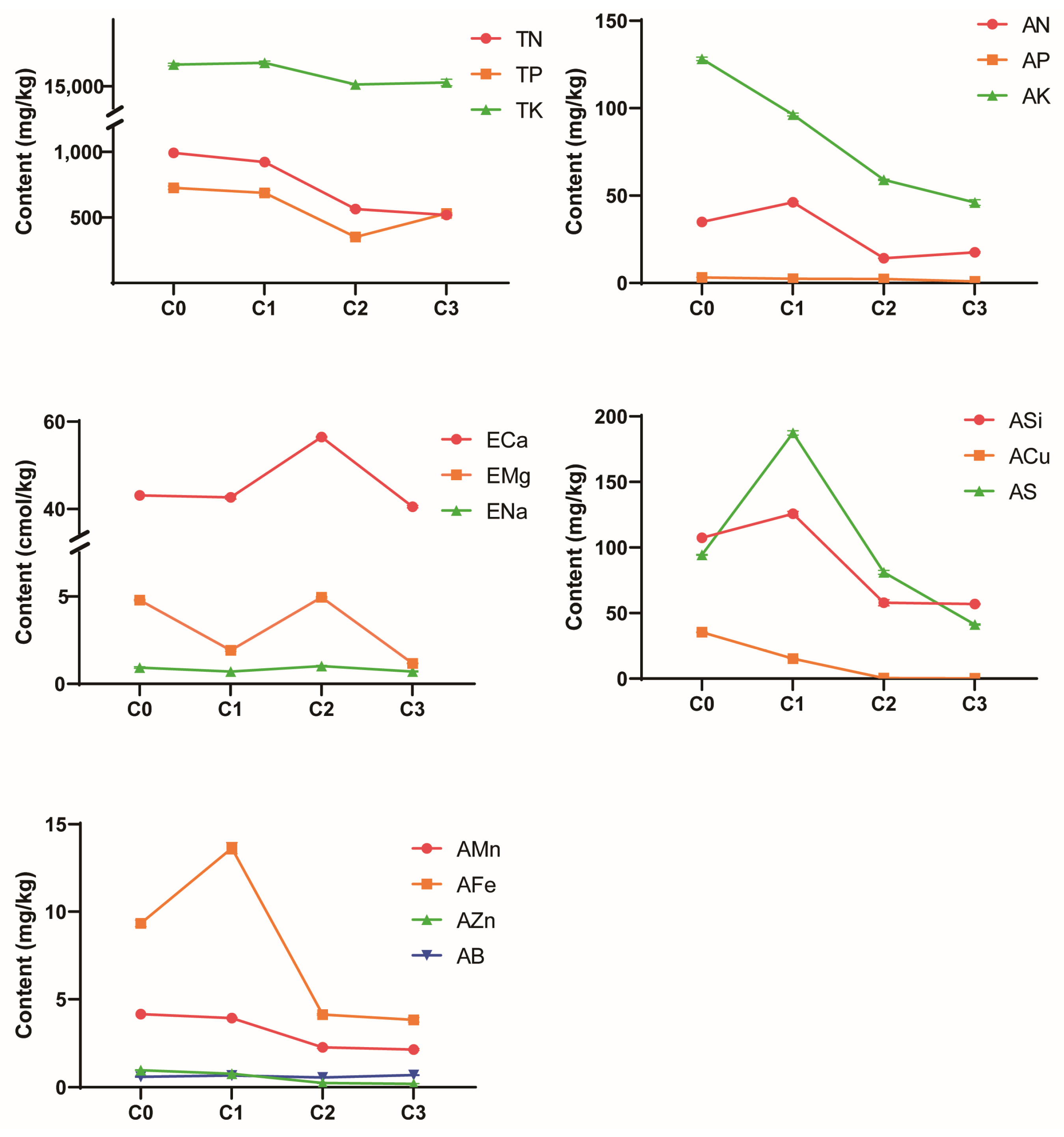
The concentrations of mineral elements across different soil treatments are presented in Figure 1. Total nitrogen (TN), total phosphorus (TP), and total potassium (TK) showed a declining trend with increasing years of yam cultivation. Similarly, available nitrogen (AN), available phosphorus (AP), and available potassium (AK) decreased in the two- and three-year continuous cropping soils, with AP and AK content in the three-year soil declining by 72.8% and 64.1%, respectively, compared to the uncropped control (C0).
Among the medium and trace elements, available sulfur (AS), available silicon (ASi), and available iron (AFe) exhibited a consistent pattern: an initial increase in the one-year soil (C1), followed by a sharp decrease of 56.8%, 69.2%, and 53.3% in the two-year soil (C2) relative to C1, and a more gradual decline in the three-year soil (C3). The contents of available copper (ACu), available manganese (AMn), and available zinc (AZn) decreased progressively with cropping duration (C0 > C1 > C2 > C3), with ACu and AZn in C3 dropping by 99.3% and 79.4%, respectively, compared to C0. Exchangeable calcium (ECa), magnesium (EMg), and sodium (ENa) decreased slightly in C1, increased in C2, and declined again in C3. In contrast, available boron (AB) remained relatively stable across all treatment groups.

3.2. Effects of Continuous Yam Cultivation on Soil Enzymatic Activity

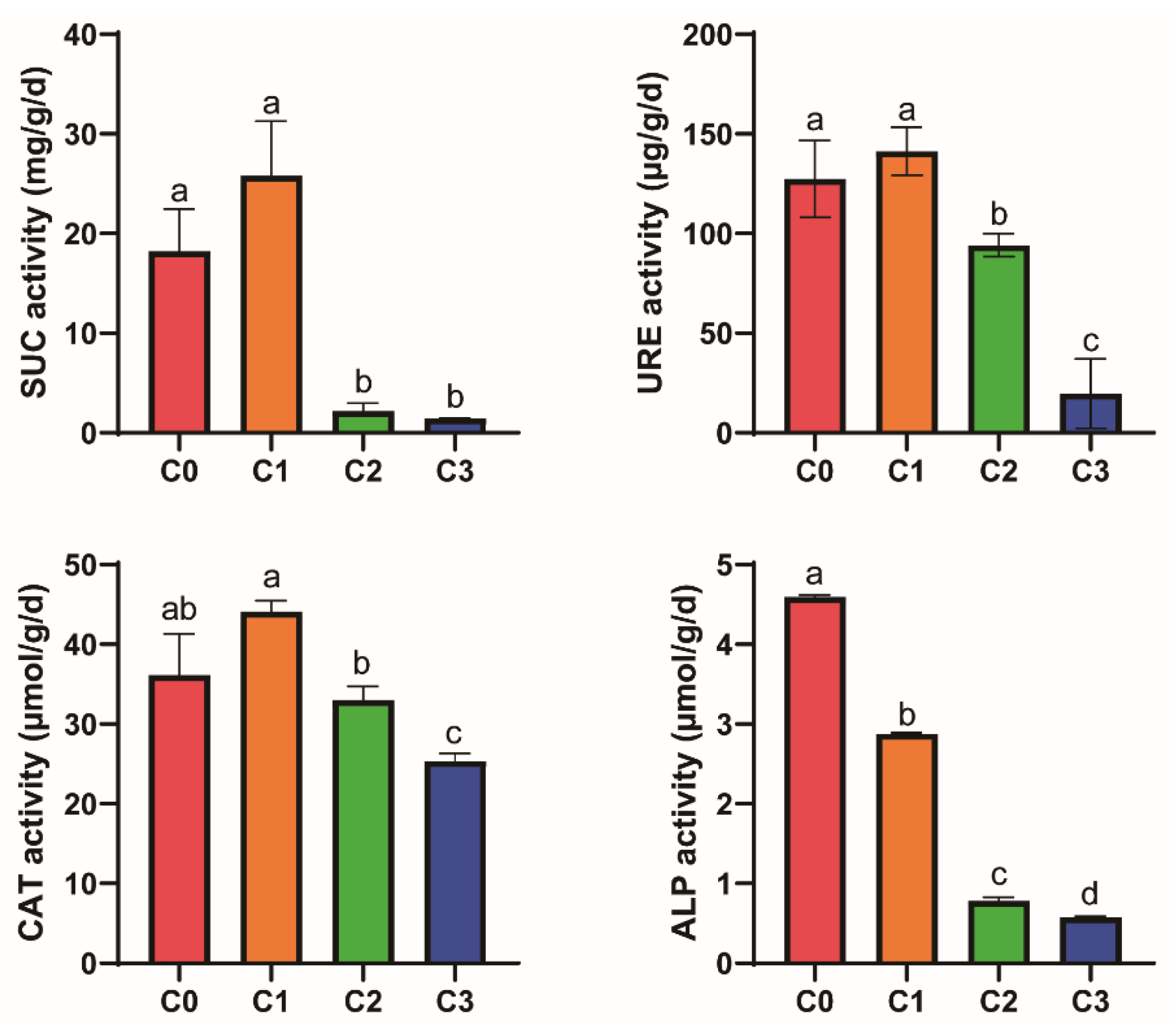
As shown in Figure 2, the activities of soil sucrase (SUC), urease (URE), and catalase (CAT) exhibited a consistent pattern: a slight increase in the one-year cropping soil (C1), followed by a significant decline in the two-year (C2) and three-year (C3) soils. Specifically, SUC and URE activities in C3 decreased by 92.3% compared to the uncropped control (C0). In contrast, alkaline phosphatase (ALP) activity decreased progressively with increasing cropping duration (p < 0.05), declining by more than 81% in both C2 and C3 relative to C0.

3.3. Effects of Continuous Yam Cultivation on Rhizosphere Microbial Community

3.3.1. Abundance and Diversity of Microbial Communities

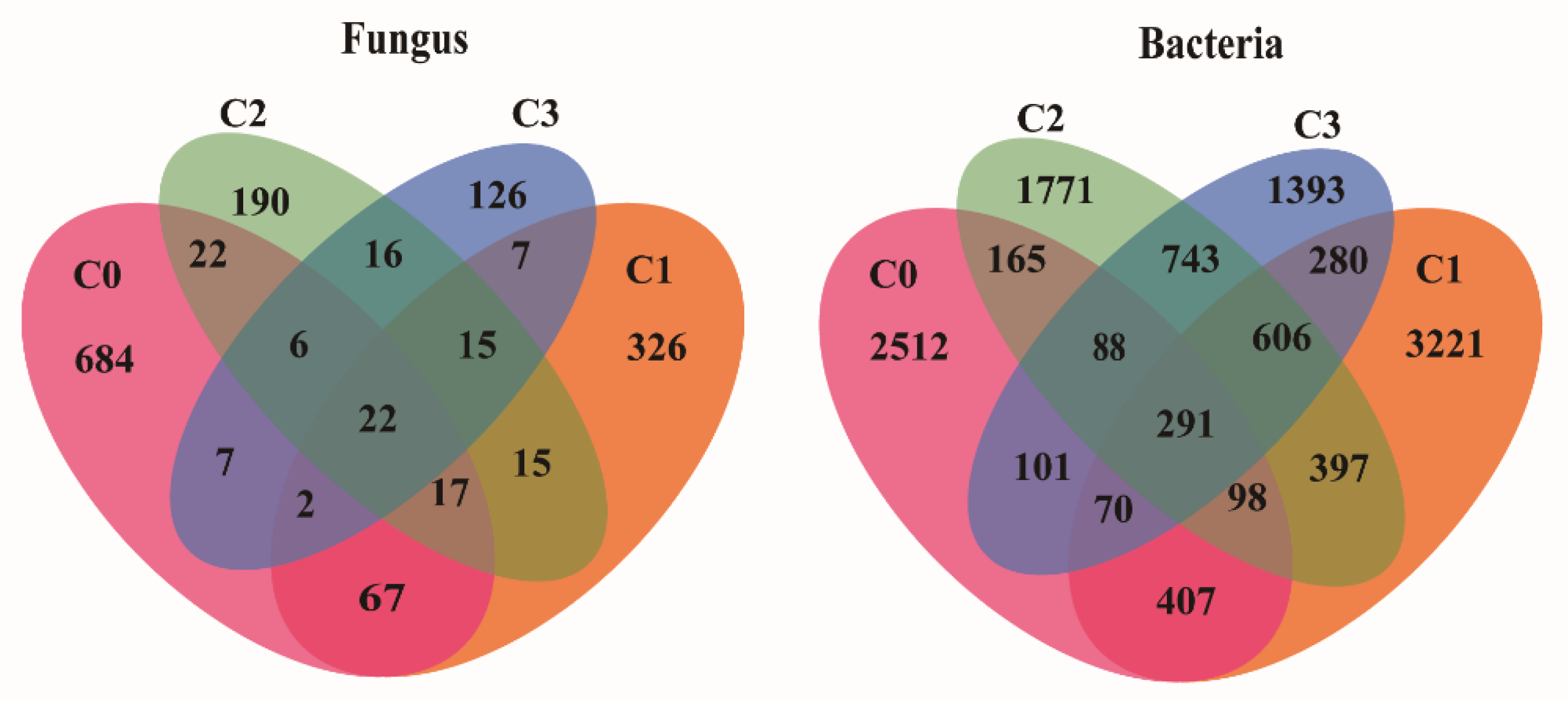
To characterize the rhizosphere microbial composition, high-throughput sequencing of the fungal ITS region and bacterial 16S rRNA gene was performed. For the ITS amplicon, a total of 1,177,107 high-quality sequences were obtained from the 12 soil samples. These sequences were clustered into 1527 fungal amplicon sequence variants (ASVs) using the DADA2 pipeline, with an average length of 261 bp. Taxonomic annotation against the UNITE v9.0 database classified the fungal communities into 12 phyla, 36 classes, 65 orders, 137 families, 239 genera, and 294 species. The total number of fungal ASVs decreased with increasing cropping duration, with 827, 471, 303, and 201 features identified in the C0, C1, C2, and C3 groups, respectively. Venn analysis (Figure 3) revealed that 22 ASVs were shared across all four soil treatments, while the number of unique fungal ASVs in C0, C1, C2, and C3 was 684, 326, 190, and 126, respectively.
For bacterial community analysis, 1,035,338 high-quality sequences were obtained and clustered into 15,555 bacterial ASVs, with an average length of 417 bp. Taxonomic classification against the SILVA 138.1 database assigned these sequences to 49 phyla, 120 classes, 260 orders, 327 families, 530 genera, and 243 species. The total number of bacterial ASVs across treatments was 3791 (C0), 5371 (C1), 4179 (C2), and 3572 (C3), respectively. Venn analysis (Figure 3) indicated that the number of unique bacterial ASVs was 2512 in C0, 3221 in C1, 1771 in C2, and 1393 in C3. These results demonstrate a general decline in unique microbial taxa with increasing years of continuous yam cultivation, although a transient increase in unique bacterial diversity was observed in the first year (C1).
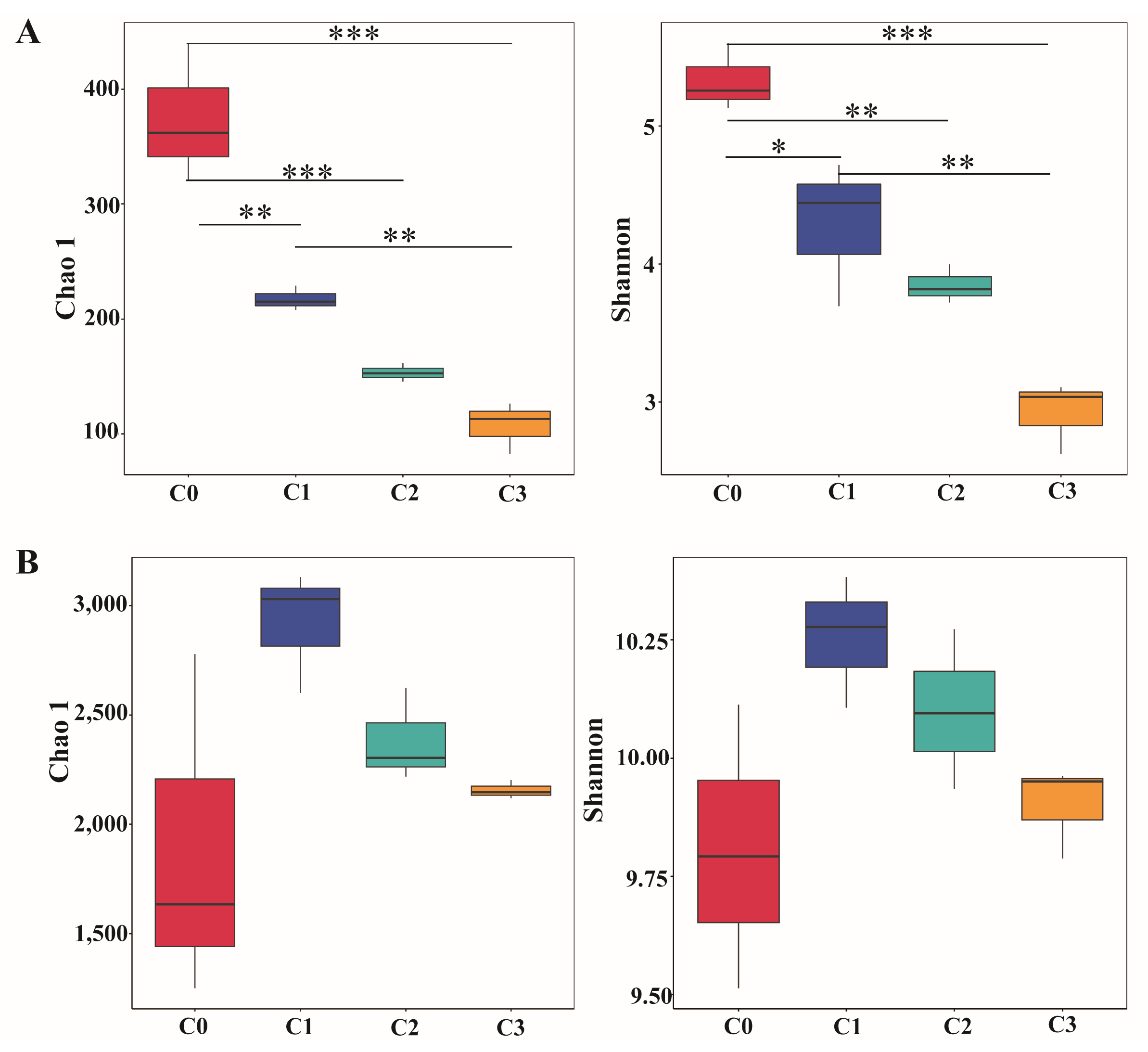
Alpha diversity analysis was performed to assess the effects of continuous cropping of Chinese yams on the abundance and diversity of rhizosphere bacterial and fungal communities (Figure 4). For fungi, both the richness index Chao1 and the diversity index Shannon in the control group (C0) were significantly higher than those in the continuous cropping groups (C1, C2, C3). Furthermore, fungal Chao1 and Shannon values in C1 were notably higher than those in C3. In contrast, no significant differences in bacterial Chao1 or Shannon were observed among the four treatment groups. These results indicate that continuous cropping significantly reduced fungal abundance and diversity, while its impact on bacterial communities was not obvious.

3.3.2. Microbial Community Structure

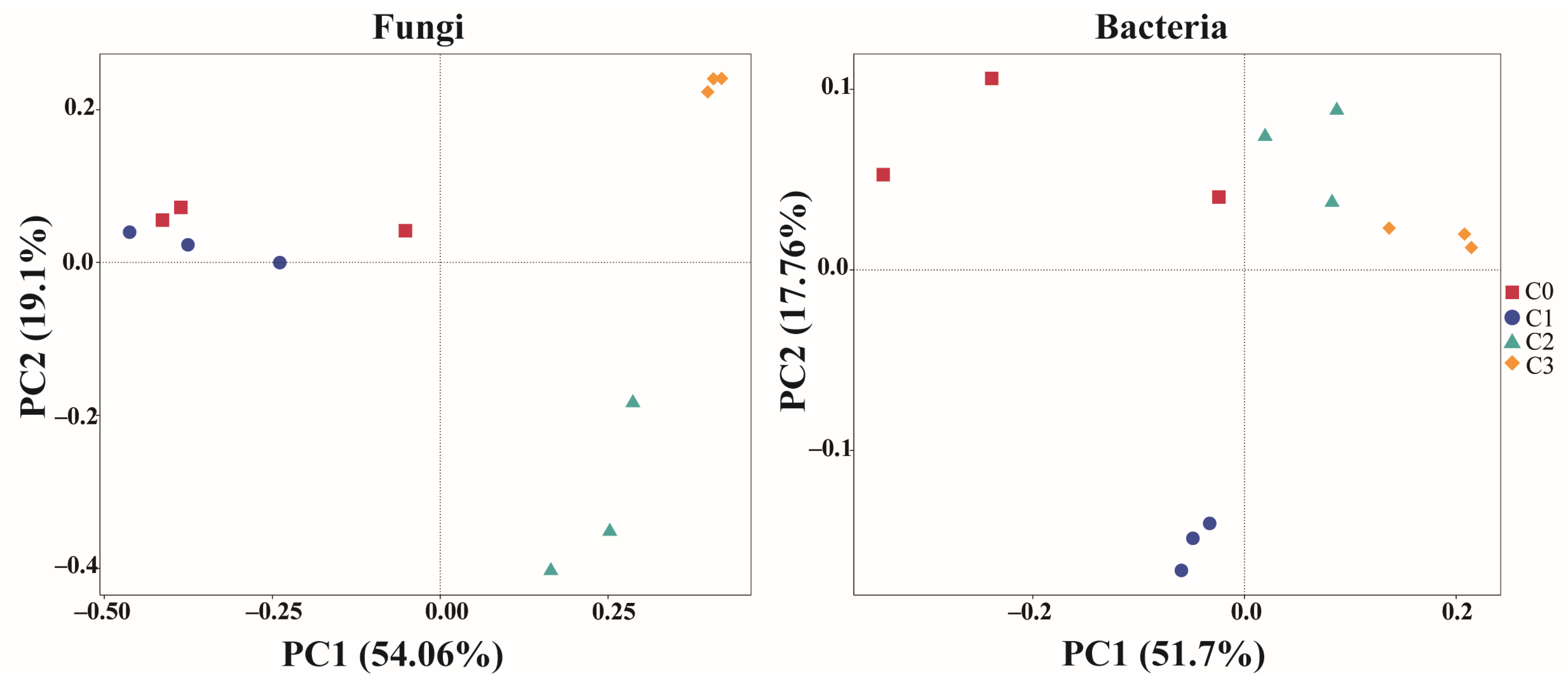
Principal coordinates analysis (PCoA) based on weighted unifrac distances was employed to evaluate similarities and differences in microbial community composition among and within sample groups. As visualized in Figure 5, the first principal coordinate explained 54.06% and 53.7% of the total variance for fungal and bacterial communities, respectively. In the fungal PCoA plot, samples from C0 and C1 were predominantly located in the upper-left quadrant, while those from C2 and C3 clustered in the right quadrants. Although C0 samples showed some dispersion and partial overlap with C1, distinct clustering was observed across cropping durations. In contrast, bacterial communities exhibited clear separation among most treatment groups. These results indicate that continuous yam cropping significantly altered the structure of both fungal and bacterial communities, with more pronounced successional shifts in fungi over time.

3.3.3. Relative Abundance of Fungal Communities at Phylum and Genus Level

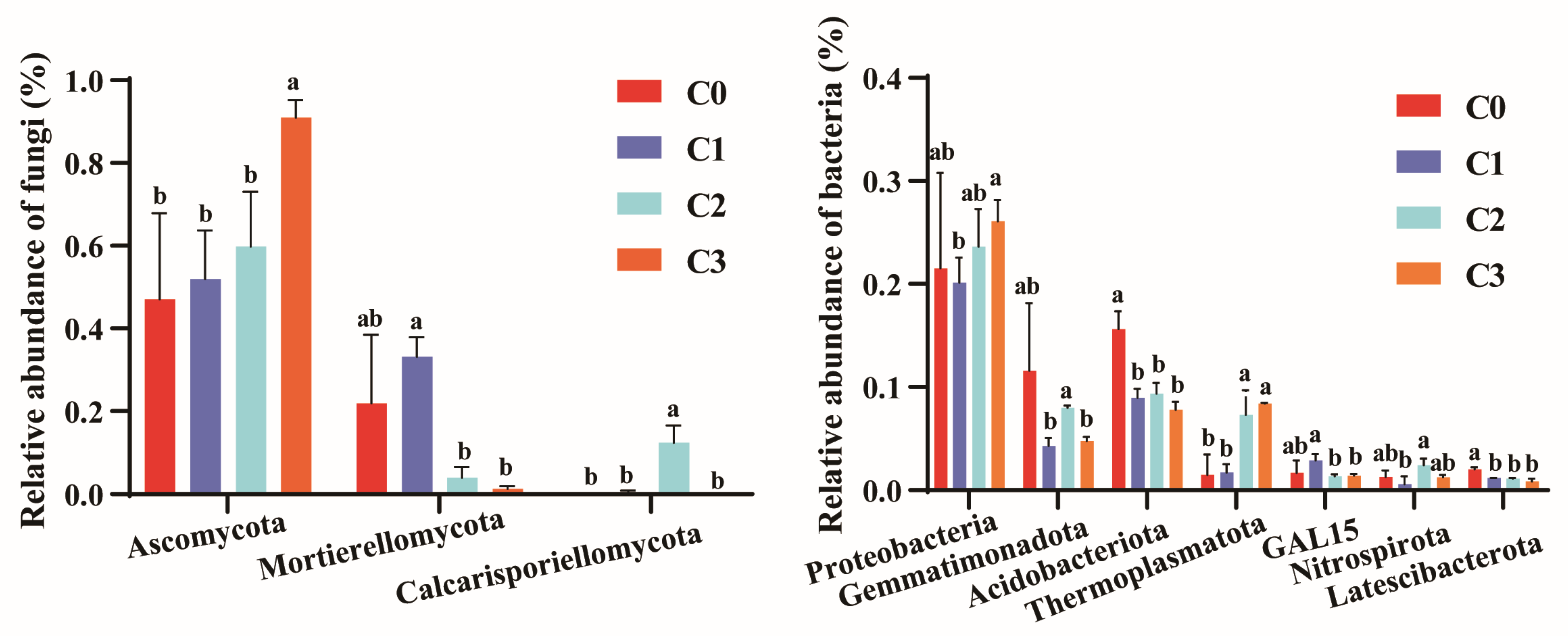
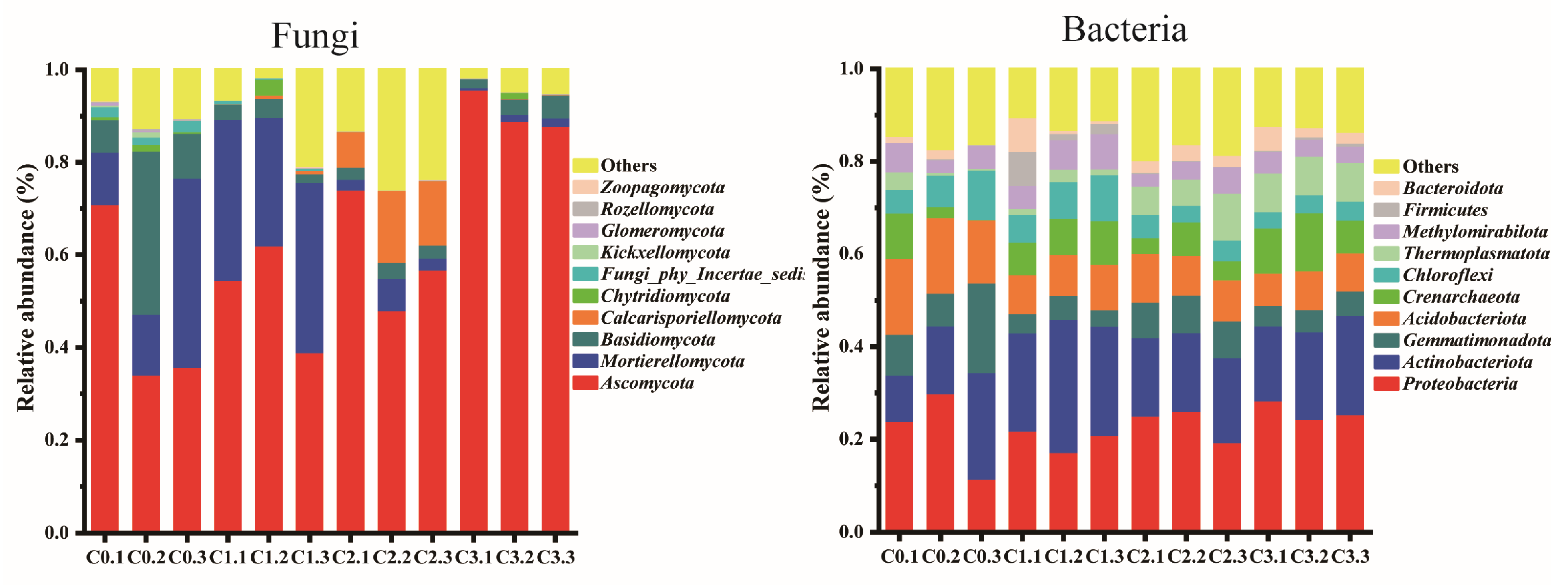
The relative abundances of the top 10 fungal phyla in rhizosphere soils were shown in Figure 6, with Ascomycota, Basidiomycota, and Mortierellomycota identified as the dominant phyla. Figure 7 illustrates the phyla whose relative abundances differed significantly among treatments according to t-test analysis. The relative abundance of Ascomycota increased with continuous cropping duration, rising by 93% in the three-year soil (C3) compared to the uncropped control (C0). In contrast, Mortierellomycota was most abundant in the one-year soil (C1) at 33.1%, which was 8.39 and 25.82 times higher than that in C2 and C3, respectively. Notably, Calcarisporiellomycota accounted for 7.7–15.5% of the fungal community in two-year cropping soils (C2), while its abundance remained below 0.1% in the other three treatments.
Among the top 30 fungal genera, continuous cropping significantly altered the relative abundance of 14 genera (Table 2). The dominant genera in uncropped soil (C0) included Mortierella, Chaetomium, Fungi_gen_Incertae_sedis, and Fusarium. Most of these genera declined significantly (p < 0.05) in the two- and three-year cropping soils, except for Chaetomium and Alternaria.
As the most abundant genus in C1, Mortierella decreased by 93.7% in C2 and 89.6% in C3 relative to C1. In C2, several genera were enriched, including Dactylonectria, Arthrobotrys, Calcarisporiella, Neocosmospora, Ilyonectria, Subulicystidium, and Campylospora. In C3, Brunneochlamydosporium, Arthrobotrys, Fusidium, and Ilyonectria became notably predominant. These results demonstrate that continuous yam cropping induces substantial shifts in fungal community composition at the genus level.

3.3.4. Relative Abundance of Bacterial Communities at the Phylum and Genus Level

Regarding bacterial communities, the dominant phyla across all soil samples were Proteobacteria, Actinobacteriota, Gemmatimonadota, and Acidobacteriota (Figure 6). As shown in Figure 7, the uncropped control soil (C0) exhibited significantly higher relative abundance of Acidobacteriota and Latescibacterota compared to the continuous cropping groups. The C1 soil showed a notable increase in the phylum GAL15 relative to C2 and C3. In the two-year cropping soil (C2), the relative abundance of Thermoplasmatota, Gemmatimonadota, and Nitrospirota increased by 3.29-, 0.86-, and 3-fold, respectively, compared to C1. The three-year soil (C3) was characterized by a higher abundance of Proteobacteria (26.1%) and Thermoplasmatota (8.35%) than both C0 (21.5% and 1.5%) and C1 (20.1% and 1.7%). Additionally, the low-abundance phylum Firmicutes increased from 0.13% in C0 to 0.42% in C3.
At the genus level, the relative abundance of the bacterial genus Polycyclovorans increased progressively with continuous cropping duration, rising from 0.1% in uncropped soil (C0) to 2.9% in the three-year soil (C3) (Table 2). In contrast, Lysobacter was significantly less abundant in C0 than in the cultivated soils. The one-year cropping soil (C1) showed elevated abundances of Gaiella and wb1-A12. Furthermore, Nitrospira was notably enriched in C2, while Streptomyces and Candidatus_Nitrosotenuis were more abundant in both C2 and C3 compared to the control (C0).

3.3.5. Distinct Microbial Taxa in Different Groups

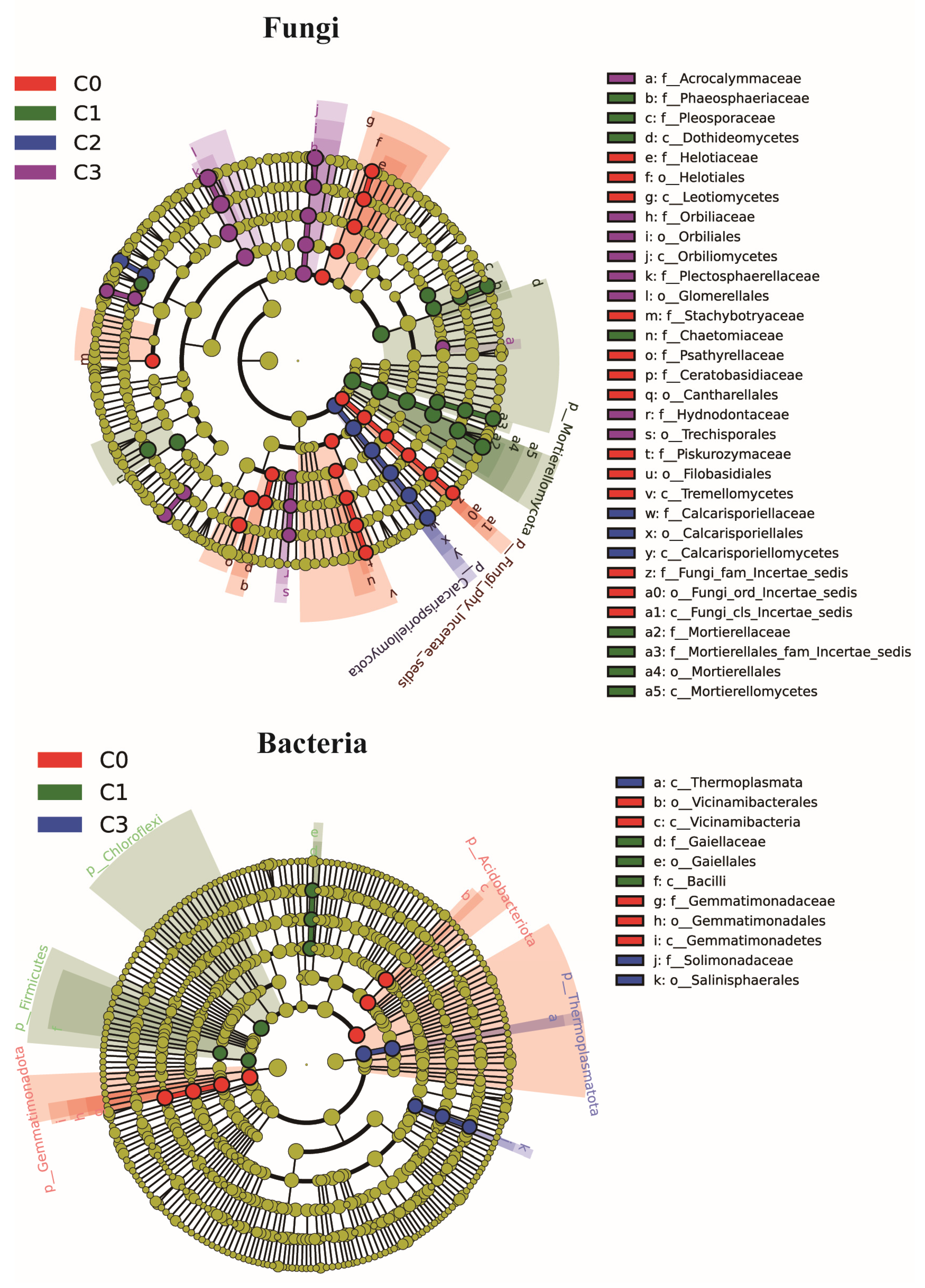
LEfSe analysis showed distinctly distributed fungi and bacteria in different treatments (Figure 8). The distinct fungi in the control group (C0) included the families Helotiaceae and Stachybotryaceae, along with the orders Cantharellales and Filobasidiales. The one-year cropping soil (C1) was characterized by the families Phaeosphaeriaceae, Pleosporaceae, and Chaetomiaceae, as well as the order Mortierellales. In the two-year soil (C2), the family Calcarisporiellaceae served as the dominant fungal biomarker. The three-year soil (C3) featured the families Acrocalymmaceae and Hydnodontaceae (Basidiomycota), together with the orders Orbiliales and Glomerellales, as distinctive fungal indicators.
As for bacteria, the characteristic biomarkers in the control group included the order Vicinamibacterales and the family Gemmatimonadaceae. The one-year cropping soil (C1) featured the family Gaiellaceae and the class Bacilli, while the three-year soil (C3) was distinguished by the class Thermoplasmata and the family Solimonadaceae.

3.3.6. Correlation Between Soil Environmental Factors and Microorganism Composition

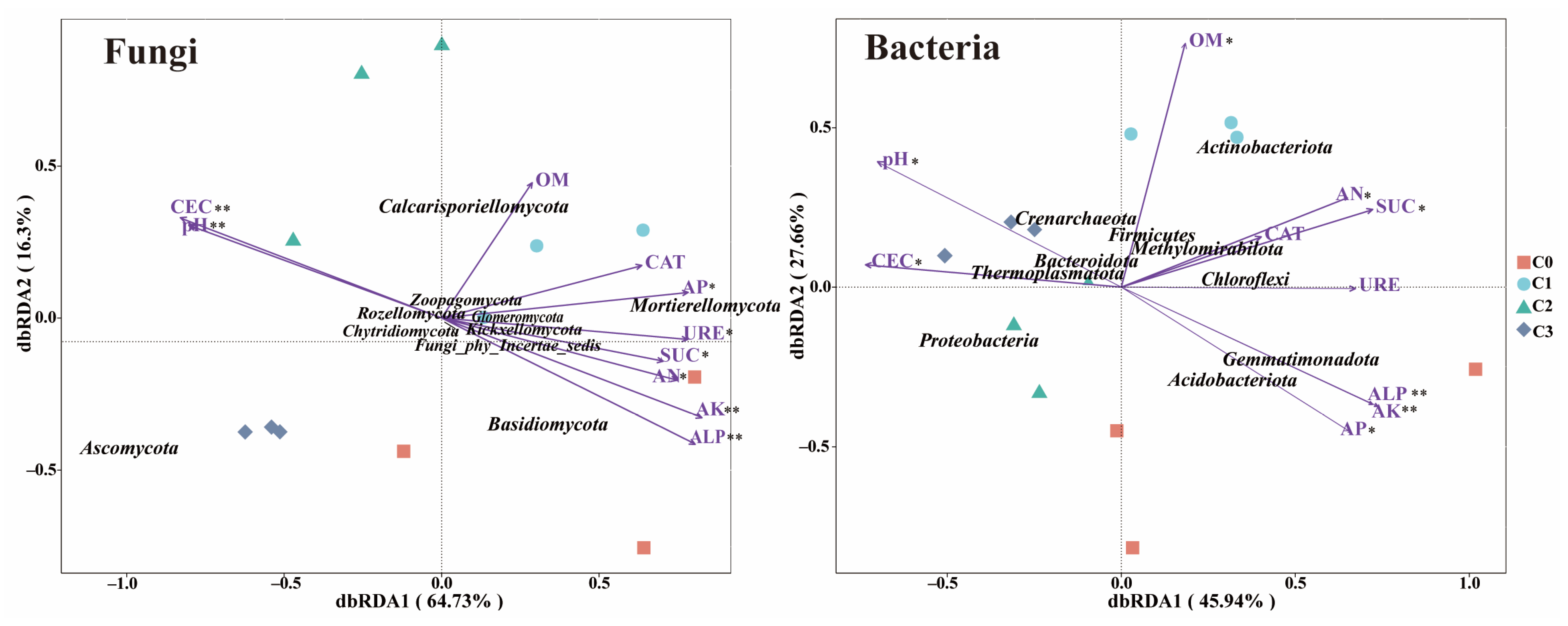
To assess the influence of environmental factors on microbial community structure, Bray–Curtis distance-based redundancy analysis (dbRDA) was performed. The analyzed variables included soil chemical properties (pH, OM, CEC, AN, AP, and AK) and enzyme activities (SUC, URE, ALP, and CAT). The results (Figure 9) indicated that these ten factors collectively explained 80.03% and 73.6% of the total variance in fungal and bacterial community composition, respectively. Notably, AN, AP, AK, SUC, URE, and ALP exhibited significant positive correlations with the fungal phylum Mortierellomycota, whereas pH and CEC were negatively correlated with the fungus. For bacterial communities, AP, AK, and ALP showed positive correlations with Acidobacteriota and Gemmatimonadota, while pH demonstrated a negative association. As summarized in Table S1, pH, CEC, AK, and ALP exerted strong influences on dominant fungal phyla, whereas AK and ALP were the primary factors affecting dominant bacterial phyla.
Spearman’s correlation analysis (Table S2) revealed that soil pH was negatively correlated with both fungal richness index Chao1 and diversity index Shannon, whereas CEC, AP, AK, and the activities of SUC, URE, CAT, and ALP showed significant positive correlations with Chao1 and Shannon.
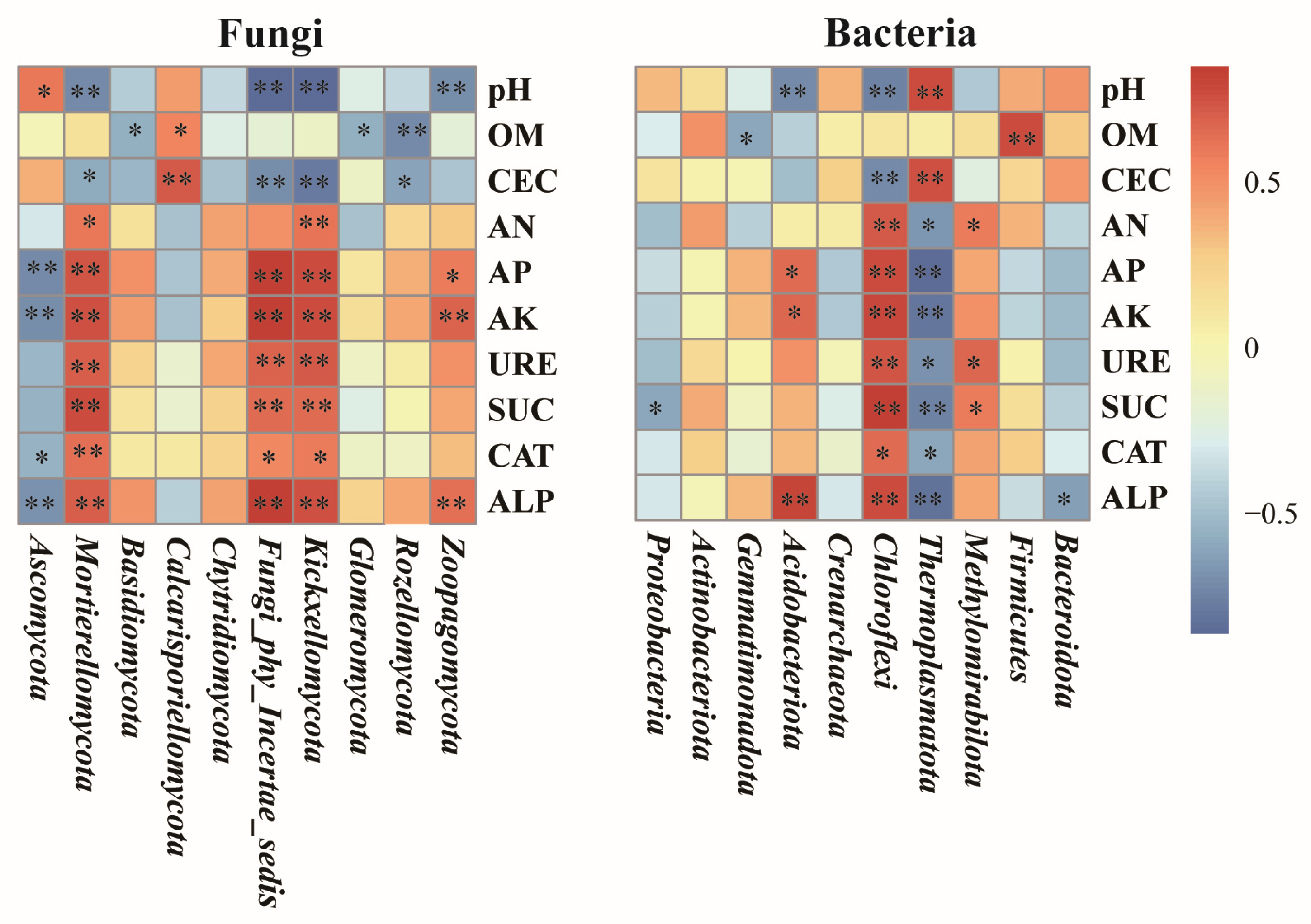
As illustrated in Figure 10, the dominant fungal phylum Ascomycota was positively correlated with pH but negatively correlated with AP, AK, CAT, and ALP. Conversely, Mortierellomycota exhibited negative correlations with pH and CEC, but positively correlated with AN, AP, AK, SUC, URE, CAT, and ALP, which is consistent with the dbRDA result. Kickxellomycota and Fungi_phy_Incertae_sedis showed similar correlations to Mortierellomycota with these soil chemical factors. In contrast, Basidiomycota, Calcarisporiellomycota, Glomeromycota, and Rozellomycota only correlated with pH, organic matter content, or CEC.
As for bacteria, OM content and CAT activity were positively correlated with bacterial abundance index Chao 1 and diversity index Shannon (Table S2). The dominant bacterial phyla Proteobacteria, Gemmatimonadota, and Bacteroidota had a negative correlation with SUC, OM, and ALP (p < 0.05). Acidobacteriota was negatively correlated with pH and positively correlated with AP, AK, and ALP. Similarly, Chloroflexi was negatively correlated with pH and CEC, but significantly positively correlated with AN, AP, AK, and four soil enzymes, including SUC, CAT, URE, and ALP (p < 0.01), especially strongly correlated with SUC, with a correlation coefficient r = 0.846. On the contrary, Thermoplasmatota was positively correlated with pH and CEC, and negatively correlated with AN, AP, AK, and four soil enzymes, with AP, AK, and ALP showing higher coefficients above 0.81. Firmicutes positively correlated with OM. There was no correlation between Actinobacteriota, Crenarchaeota, and the 10 soil factors.

4. Discussion

4.1. Effects of Continuous Yam Cropping on Soil Chemical Properties

Chinese yam cultivation under two- and three-year continuous cropping regimes induced significant alterations in soil nutrient profiles and environmental properties. A notable increase in soil pH was observed with prolonged cropping duration, a trend consistent with reports for other crops such as buckwheat [17], watermelon [18], tobacco [19], ginger [20], and potato [21]. Notably, Yao et al. [6] documented soil acidification following long-term monoculture of the Yongfeng yam. The divergent response may be attributed to variations in local soil type, plant species characteristics [19], fertilization [8], and climatic conditions. For instance, Xia et al. [19] demonstrated that different tobacco varieties elicited distinct pH changes in continuous cropping obstacle soils, underscoring the role of plant genotype in mediating soil chemical feedback.
We systematically analyzed changes in mineral element content in Chinese yam soils under different continuous cropping durations. The results revealed a marked decline in the concentrations of primary macronutrients (N, P, and K) and their available forms under successive cropping, a trend consistent with observations in soybean monoculture systems [22]. Furthermore, analysis of medium and trace elements showed that, with the exception of available boron, the contents of available Ca, Mg, S, Si, Na, Zn, Fe, Cu, and Mn were significantly reduced in the three-year cropping soil compared to the uncropped control. As Chinese yam tubers accumulate high levels of starch, mineral elements, and essential amino acids [23,24], notably potassium (>7727 μg/g DW) and magnesium (>228 μg/g DW), their growth and development depend substantially on the availability of C, N, S, P, K, and various micronutrients. The widespread depletion of these mineral elements in continuously cropped soils is likely to restrict yam growth, representing a key factor contributing to the continuous cropping obstacle. Therefore, supplementing organic fertilizers in combination with targeted micronutrient amendments could serve as an effective strategy to mitigate the adverse effects of continuous cropping in D. polystachya.
Soil enzymes are sensitive indicators of soil quality and are influenced by plant root secretions and soil microbial activities [25,26]. In this study, a significant reduction in sucrase, catalase, urease, and alkaline phosphatase activities was observed under continuous yam cropping, with declines of 81–92.3% for sucrase, urease, and alkaline phosphatase in the three-year soil. The decline in enzyme activities may be linked to the reduced availability of essential mineral elements, which is consistent with previous reports in millet [27], buckwheat [17], and T. farfara [7]. In contrast, several studies have documented increased activities of these enzymes under continuous cropping of F. cirrhosa [8], L. brownii [15], patchouli [28], and cucumber [13]. Gao et al. (2024) attributed such increases to the annual application of chemical and organic fertilizers [8]. Therefore, the combined application of organic and mineral fertilizers could represent an effective strategy to enhance soil enzyme activity, improve nutrient supply, and ultimately alleviate the continuous cropping obstacle in Chinese yams.

4.2. Effects of Continuous Cropping on Fungal and Bacterial Composition

The effect of continuous cropping on fungal and bacterial composition significantly influenced the bacterial community composition in D. polystachya rhizosphere soils. At the phylum level, the relative abundance of Acidobacteriota and Latescibacterota decreased markedly in continuously cropped soils compared to the uncropped control, while Thermoplasmatota exhibited a substantial increase. As ubiquitous and abundant members of soil bacterial communities, Acidobacteriota play crucial roles in establishing stable ecological systems through interactions with other soil components [29]. This declining trend of Acidobacteriota under continuous cropping has also been documented in monoculture systems of T. farfara [7] and L. brownii [15]. At the genus level, Lysobacter of the Proteobacteria phylum, Polycyclovorans, and Streptomyces increased their abundance in continuously cropped yams. Lysobacter species are known for their biocontrol capabilities against bacterial wilts [30], whereas certain Streptomyces species possess pathogenic potential, causing diseases such as potato common scab [31]. The enrichment of Streptomyces under continuous cropping aligns with findings in peanut monoculture systems [10]. Collectively, these results indicate that continuous cropping of D. polystachya simultaneously enhances both beneficial (Lysobacter) and potentially harmful (Streptomyces) bacterial genera, while reducing the abundance of beneficial phyla such as Acidobacteriota.
Continuous cropping exerted a more pronounced effect on fungal composition than on bacterial communities, leading to a significant reduction in fungal diversity and abundance. Notably, the relative abundance of Fusarium declined markedly in continuously cropped soils, a finding consistent with previous studies in Coptis chinensis [32], sweet potato [33], and soybean [22]. While many investigations have reported an increase in Fusarium under continuous cropping regimes [7], it is important to note that Fusarium represents a functionally diverse group within agricultural ecosystems [34], with its pathogenicity highly dependent on crop species and specific soil conditions [33]. In contrast, several other fungal genera were significantly enriched in the two- and three-year continuously cropped soils, including Dactylonectria, Arthrobotrys, Calcarisporiella, Neocosmospora, Brunneochlamydosporium, Fusidium, and Ilyonectria. Among these, Dactylonectria, Neocosmospora, and Ilyonectria have been identified as pathogenic fungi capable of causing stem rot and black root rot diseases in multiple crops such as strawberries [35], olives [36], potatoes [37], and Pinus armandii [38]. Bioorganic fertilizer application in potato soil has been proven to enhance microbial diversity and the relative abundance of beneficial soil microorganisms, as well as inhibit harmful soil pathogens [39], which provides a possible measure for improving Chinese yam production.

4.3. The Correlation of Soil Properties with Microbial Community Composition

Soil nutrient elements and enzymes have complex interactions with the microbial community. Previous reports demonstrated that soil bacterial communities were influenced by the contents of organic matter and soil available N, P, and K [20,40]. In this study, the dbRDA analysis revealed that pH, AP, AK, and ALP were significantly correlated with bacterial and fungal community composition, which is consistent with the results observed in continuously cropped potato soil [41]. Further research, using Spearman’s correlation coefficient analysis, demonstrated that fungal community diversity was correlated with previously listed factors except OM and AN, while bacterial diversity showed correlation only with OM and CAT. The dominant bacteria Acidobacteriota and fungus Mortierellomycota were negatively correlated with pH, which was in line with the report by Rousk et al. [42] and Song et al. [43].
Though our study involved the impact of short-term continuous cropping on soil properties and the correlations of some nutrient elements with microbial composition, how the continuous yam cropping influences the plant and soil metabolite composition still needs investigation.

5. Conclusions

In summary, this study demonstrated that continuous cropping of D. polystachya led to elevated soil pH, reduced levels of mineral elements, decreased key enzyme activities, and significant shifts in the structure and composition of fungal and bacterial communities—particularly through the enrichment of potentially pathogenic microorganisms. The fungal community was found to be more susceptible to these changes than the bacterial community. Variations in soil pH, available potassium, and alkaline phosphatase activity were identified as the primary factors driving the restructuring of the microbial community. These findings lay a theoretical foundation for understanding the mechanisms underlying the continuous cropping obstacle in Chinese yams. Further research could focus on exploring effective strategies to improve soil nutrient status and microbial community structure, thereby mitigating the adverse effects of continuous yam cropping.

Supplementary Materials

The following supporting information can be downloaded at: https://www.mdpi.com/article/10.3390/agronomy16010059/s1. Table S1: The correlation of chemical factors with fungal and bacterial community composition using dbRDA analysis; Table S2: Correlation of environmental factors with the alpha diversity of fungal and bacterial communities.

Author Contributions

Conceptualization, G.L.; Data curation, G.L., G.X. and X.B.; Formal analysis, G.L., W.L., X.C. and G.X.; Funding acquisition, Q.Z.; Investigation, G.L., X.C. and C.Y.; Methodology, G.L. and X.C.; Project administration, Q.Z.; Resources, Q.P., Z.M. and X.B.; Software, G.L.; Validation, W.L.; Visualization, G.L.; Writing—original draft, G.L.; Writing—review and editing, G.L. and W.L. All authors have read and agreed to the published version of the manuscript.

Funding

This research was funded by the Shandong Province Science and Technology-based Small and Medium-sized Enterprise Innovation Capacity Enhancement Project (2022TSGC2223), Shandong province public innovation service platform (2018JGX111), and Shandong Academy of Agricultural Sciences Qilu Agricultural Science Talent Cultivation (3237 Project) Academic Leader (SDNKYYC2022-032).

Data Availability Statement

The datasets that support this study are available from the corresponding author on reasonable request.

Acknowledgments

During the preparation of this manuscript, the authors used Deepseek (www.deepseek.com) for the purpose of improving the language and fluency of the text.

Conflicts of Interest

Authors Qinghua Pei and Zhikun Ma were employed by the company Shandong Gubentang Health Industry Group Co., Ltd. The remaining authors declare that the research was conducted in the absence of any commercial or financial relationships that could be construed as a potential conflict of interest.

Abbreviations

The following abbreviations are used in this manuscript:
OMOrganic matter
CECCation exchange capacity
ANAlkali hydrolyzed N
APAvailable P
AKAvailable K
SUCSucrase
UREUrease
CATCatalase
ALPAlkaline phosphatase

References

  1. Luo, G.F.; Podolyan, A.; Kidanemariam, D.B.; Pilotti, C.; Houliston, G.; Sukal, A.C. A review of viruses infecting yam (Dioscorea spp.). Viruses 2022, 14, 662. [Google Scholar] [CrossRef]
  2. An, L.; Yuan, Y.; Chen, H.; Li, M.; Ma, J.; Zhou, J.; Zheng, L.; Ma, H.; Chen, Z.; Hao, C.; et al. Comprehensive widely targeted metabolomics to decipher the molecular mechanisms of Dioscorea opposita thunb. cv. Tiegun quality formation during harvest. Food Chem. X 2024, 21, 101159. [Google Scholar] [CrossRef] [PubMed]
  3. Zhang, L.; Wang, S.; Zhang, W.; Chang, G.; Guo, L. Prospects of yam (Dioscorea) polysaccharides: Structural features, bioactivities and applications. Food Chem. 2024, 446, 138897. [Google Scholar] [CrossRef] [PubMed]
  4. Ren, X.; Hu, J.; Hong, Y.; Guo, Y.; Liu, Q.; Ran, Y. Extraction, separation and efficacy of yam polysaccharide. Int. J. Biol. Macromol. 2024, 281, 136167. [Google Scholar] [CrossRef] [PubMed]
  5. Ma, F.; Wang, R.; Zhu, J.; Zhang, Y.; Wang, Y.; Hu, W.; Bell, A.E.; Liu, X. Characterisation comparison of polysaccharides from Dioscorea opposita Thunb. growing in sandy soil, loessial soil and continuous cropping. Int. J. Biol. Macromol. 2019, 126, 776–785. [Google Scholar] [CrossRef]
  6. Yao, J.; Wu, C.; Fan, L.; Kang, M.; Liu, Z.; Huang, Y.; Xu, X.; Yao, Y. Effects of the long-term continuous cropping of Yongfeng yam on the bacterial community and function in the rhizospheric soil. Microorganisms 2023, 11, 274. [Google Scholar] [CrossRef]
  7. Huang, Z.; Wang, X.; Fan, L.; Jin, X.; Zhang, X.; Wang, H. Continuous cropping of Tussilago farfara L. has a significant impact on the yield and quality of its flower buds, and physicochemical properties and the microbial communities of rhizosphere soil. Life 2025, 15, 404. [Google Scholar] [CrossRef]
  8. Gao, D.; Gao, X.; Wang, Y.; Huo, H.; Wu, Y.; Yang, Z.; Zhang, H.; Yang, X.; Li, F.; Li, X. Effects of long-term continuous cultivation on the structure and function of soil bacterial and fungal communities of Fritillaria cirrhosa on the Qinghai-Tibetan Plateau. Sci. Rep. 2024, 14, 21291. [Google Scholar] [CrossRef]
  9. Jacoby, R.; Peukert, M.; Succurro, A.; Koprivova, A.; Kopriva, S. The role of soil microorganisms in plant mineral nutrition-current knowledge and future directions. Front. Plant Sci. 2017, 8, 1617. [Google Scholar] [CrossRef]
  10. Yu, T.; Hou, X.; Fang, X.; Razavi, B.; Zang, H.; Zeng, Z.; Yang, Y. Short-term continuous monocropping reduces peanut yield mainly via altering soil enzyme activity and fungal community. Environ. Res. 2024, 245, 117977. [Google Scholar] [CrossRef]
  11. Gao, Z.; Hu, Y.; Han, M.; Xu, J.; Wang, J. Effects of continuous cropping of sweet potatoes on the bacterial community structure in rhizospheric soil. BMC Microbiol. 2021, 21, 102. [Google Scholar] [CrossRef]
  12. Li, S.; Wei, H.; Qi, D.; Li, W.; Dong, Y.; Duan, F.A.; Ni, S.Q. Continuous planting American ginseng (Panax quinquefolius L.) caused soil acidification and bacterial and fungal communities’ changes. BMC Microbiol. 2024, 24, 473. [Google Scholar] [CrossRef] [PubMed]
  13. Huang, S.; Yu, J.; Hou, D.; Yue, H.; Zhang, D.; Li, Y.; Lyu, J.; Jin, L.; Jin, N. Response of soil microbial community diversity to continuous cucumber cropping in facilities along the Yellow River irrigation area. PLoS ONE 2023, 18, e0289772. [Google Scholar] [CrossRef]
  14. Gao, Z.; Hu, Y.; Han, M.; Xu, J.; Wang, J. Effects of continuous cropping of sweet potato on the fungal community structure in rhizospheric soil. Front. Microbiol. 2019, 10, 2269. [Google Scholar] [CrossRef] [PubMed]
  15. Ma, W.; Liao, X.; Wang, C.; Zhang, Y. Effects of four cropping patterns of Lilium brownii on rhizosphere microbiome structure and replant disease. Plants 2022, 11, 824. [Google Scholar] [CrossRef] [PubMed]
  16. Yang, L.; Wang, C.; He, X.; Liang, H.; Wu, Q.; Sun, X.; Liu, M.; Shen, P. Multi-year crop rotation and quicklime application promote stable peanut yield and high nutrient-use efficiency by regulating soil nutrient availability and bacterial/fungal community. Front. Microbiol. 2024, 15, 1367184. [Google Scholar] [CrossRef]
  17. Wang, Y.; Zhang, Y.; Li, Z.; Zhao, Q.; Huang, X.; Huang, K. Effect of continuous cropping on the rhizosphere soil and growth of common buckwheat. Plant Prod. Sci. 2020, 23, 81–90. [Google Scholar] [CrossRef]
  18. Gu, X.; Yang, N.; Zhao, Y.; Liu, W.; Li, T. Long-term watermelon continuous cropping leads to drastic shifts in soil bacterial and fungal community composition across gravel mulch fields. BMC Microbiol. 2022, 22, 189. [Google Scholar] [CrossRef]
  19. Xia, H.; Jiang, C.; Riaz, M.; Yu, F.; Dong, Q.; Yan, Y.; Zu, C.; Zhou, C.; Wang, J.; Shen, J. Impacts of continuous cropping on soil fertility, microbial communities, and crop growth under different tobacco varieties in a field study. Environ. Sci. Eur. 2025, 37, 5. [Google Scholar] [CrossRef]
  20. Wang, Q.; Song, J.; Zhang, J.; Qin, X.; Kang, Y.; Huang, S.; Zhou, S.; Chen, T. Effects of microbial agent application on the bacterial community in ginger rhizosphere soil under different planting years. Front. Microbiol. 2023, 14, 1203796. [Google Scholar] [CrossRef]
  21. Wang, X.; Duan, Y.; Zhang, J.; Ciampitti, I.A.; Cui, J.; Qiu, S.; Xu, X.; Zhao, S.; He, P. Response of potato yield, soil chemical and microbial properties to different rotation sequences of green manure-potato cropping in North China. Soil Tillage Res. 2022, 217, 105273. [Google Scholar] [CrossRef]
  22. Li, Y.; Shi, C.; Wei, D.; Gu, X.; Wang, Y.; Sun, L.; Cai, S.; Hu, Y.; Jin, L.; Wang, W. Soybean continuous cropping affects yield by changing soil chemical properties and microbial community richness. Front. Microbiol. 2022, 13, 1083736. [Google Scholar] [CrossRef]
  23. Wu, Z.; Jiang, W.; Mantri, N.; Bao, X.; Chen, S.; Tao, Z. Characterizing diversity based on nutritional and bioactive compositions of yam germplasm (Dioscorea spp.) commonly cultivated in China. J. Food Drug Anal. 2016, 24, 367–375. [Google Scholar] [CrossRef] [PubMed]
  24. Wang, P.; Shan, N.; Ali, A.; Sun, J.; Luo, S.; Xiao, Y.; Wang, S.; Hu, R.; Huang, Y.; Zhou, Q. Comprehensive evaluation of functional components, biological activities, and minerals of yam species (Dioscorea polystachya and D. alata) from China. LWT 2022, 168, 113964. [Google Scholar] [CrossRef]
  25. Schloter, M.; Dilly, O.; Munch, J. Indicators for evaluating soil quality. Agric. Ecosyst. Environ. 2003, 98, 255–262. [Google Scholar] [CrossRef]
  26. Gil-Sotres, F.; Trasar-Cepeda, C.; Leirós, M.C.; Seoane, S. Different approaches to evaluating soil quality using biochemical properties. Soil Biol. Biochem. 2005, 37, 877–887. [Google Scholar] [CrossRef]
  27. Zhang, P.; Xia, L.; Sun, Y.; Gao, S. Soil nutrients and enzyme activities based on millet continuous cropping obstacles. Sci. Rep. 2024, 14, 17329. [Google Scholar] [CrossRef]
  28. Gu, G.; Ul Haq, M.Z.; Sun, X.; Zhou, J.; Liu, Y.; Yu, J.; Yang, D.; Yang, H.; Wu, Y. Continuous cropping of Patchouli alters soil physiochemical properties and rhizosphere microecology revealed by metagenomic sequencing. Front. Microbiol. 2025, 15, 1482904. [Google Scholar] [CrossRef]
  29. Jones, R.T.; Robeson, M.S.; Lauber, C.L.; Hamady, M.; Knight, R.; Fierer, N. A comprehensive survey of soil acidobacterial diversity using pyrosequencing and clone library analyses. ISME J. 2009, 3, 442–453. [Google Scholar] [CrossRef]
  30. Gómez Expósito, R.; Postma, J.; Raaijmakers, J.M.; de Bruijn, I. Diversity and activity of Lysobacter species from disease suppressive soils. Front. Microbiol. 2015, 6, 1243. [Google Scholar] [CrossRef]
  31. Wang, L.; Liu, S.; Tian, G.; Pan, Y.; Wang, H.; Qiu, G.; Li, F.; Pang, Z.; Ding, K.; Zhang, J.; et al. Impacts of continuous potato cropping on soil microbial assembly processes and spread of potato common scab. Appl. Soil Ecol. 2025, 206, 105805. [Google Scholar] [CrossRef]
  32. Song, X.; Pan, Y.; Li, L.; Wu, X. Composition and diversity of rhizosphere fungal community in Coptis chinensis Franch. continuous cropping fields. PLoS ONE 2018, 13, e0193811. [Google Scholar] [CrossRef] [PubMed]
  33. Xiang, D.; Wu, Y.; Li, H.; Liu, Q.; Zhou, Z.; Chen, Q.; Zhang, N.; Xu, L. Soil fungal diversity and community composition in response to continuous sweet potato cropping practices. Phyton-Int. J. Exp. Bot. 2021, 90, 1247–1258. [Google Scholar] [CrossRef]
  34. Wakelin, S.; Warren, R.; Kong, L.; Harvey, P. Management factors affecting size and structure of soil Fusarium communities under irrigated maize in Australia. Appl. Soil Ecol. 2008, 39, 201–209. [Google Scholar] [CrossRef]
  35. Chen, Q.; Yin, S.; Zhang, X.; Ma, X.; Zhong, S.; Zhang, G. Dactylonectria species associated with black root rot of strawberry in China. Australas. Plant Pathol. 2021, 50, 501–511. [Google Scholar] [CrossRef]
  36. El-ddin, S.; Haleem, R. First record of Dactylonectria macrodidyma: A cause of olive root rot in Iraq. For. Pathol. 2022, 52, e12729. [Google Scholar] [CrossRef]
  37. Riaz, M.; Akhtar, N.; Msimbira, L.A.; Antar, M.; Ashraf, S.; Khan, S.N.; Smith, D.L. Neocosmospora rubicola, a stem rot disease in potato: Characterization, distribution and management. Front. Microbiol. 2022, 13, 953097. [Google Scholar] [CrossRef]
  38. Chen, W.; Fan, X.; Tian, C.; Li, F.; Chou, G. Identification and characterization of Neocosmospora silvicola causing canker disease on Pinus armandii in China. Plant Dis. 2023, 107, 3026–3036. [Google Scholar] [CrossRef]
  39. Tan, X.; Hu, X.; Liu, X.; Zhang, P.; Yang, S.; Xia, F. Bioorganic fertilizer can improve potato yield by replacing fertilizer with isonitrogenous content to improve microbial community composition. Agronomy 2024, 14, 2881. [Google Scholar] [CrossRef]
  40. Zhao, J.; Zhang, D.; Yang, Y.; Pan, Y.; Zhao, D.; Zhu, J.; Zhang, L.; Yang, Z. Dissecting the effect of continuous cropping of potato on soil bacterial communities as revealed by high-throughput sequencing. PLoS ONE 2020, 15, e0233356. [Google Scholar] [CrossRef]
  41. Qin, J.; Bian, C.; Duan, S.; Wang, W.; Li, G.; Jin, L. Effects of different rotation cropping systems on potato yield, rhizosphere microbial community and soil biochemical properties. Front. Plant Sci. 2022, 13, 999730. [Google Scholar] [CrossRef]
  42. Rousk, J.; Bååth, E.; Brookes, P.; Lauber, C.; Lozupone, C.; Caporaso, J.; Knight, R.; Fierer, N. Soil bacterial and fungal communities across a pH gradient in an arable soil. ISME J. 2010, 4, 1340–1351. [Google Scholar] [CrossRef]
  43. Song, S.; Yang, X.; Tang, R.; Zhang, Y.; Tang, Z. Soil properties and plant functional traits have different importance in shaping rhizosphere soil bacterial and fungal communities in a meadow steppe. mSystems 2025, 10, e00570-25. [Google Scholar] [CrossRef]
Figure 1. The concentrations of mineral elements in uncropped (C0) and 1 year (C1), 2 years (C2), and 3 years (C3) yam cropping soils. TN: total N; TP: total P; TK: total K; AN, alkali hydrolyzed N; AP: available P; AK, available K; ECa: exchangeable Ca; EMg: exchangeable MN; ENa: exchangeable Na; ASi: available Si; ACu: available Cu; AS: available S; AMn: available Mn; AFe: available Fei; AZn: available Zn; AB: available B.
Agronomy 16 00059 g001
Figure 2. Enzyme activities of uncropped (C0) and 1 year (C1), 2 years (C2), and 3 years (C3) yam cropping soils. SUC: sucrase; URE: urease; CAT: catalase; ALP: alkaline phosphatase. Different letters in the same figure indicate a significant difference at p < 0.05.
Agronomy 16 00059 g002
Figure 3. Venn diagram of fungal and bacterial ASVs distribution in rhizosphere soils of different yam cropping years.
Agronomy 16 00059 g003
Figure 4. Alpha-diversity of soil fungal (A) and bacterial (B) communities in rhizosphere soil of different yam cropping years. Analysis of variance (Tukey’s multiple comparison test) was used to test the significance of differences. *, **, and *** represent statistically significant difference at p < 0.05, 0.01 and 0.001, respectively.
Agronomy 16 00059 g004
Figure 5. Principal coordinate analysis (PCoA) of fungal and bacterial communities based on weighted unifrac distances.
Agronomy 16 00059 g005
Figure 6. The relative abundance of soil fungal and bacterial phyla communities in rhizosphere soil of different yam cropping years.
Agronomy 16 00059 g006
Figure 7. Relative abundance of fungal and bacterial phyla that are differently distributed in soil treatments. Different letters above the same phyla indicate values that are significantly different (p < 0.05).
Agronomy 16 00059 g007
Figure 8. LDA effect size (LEFse) analysis of fungal and bacterial communities. The taxa with significantly different abundances among different treatments are represented by dots of varying colors, and from the center outward, they represent the phylum, class, order, family, and genus levels. The circle size corresponds to relative abundance of the taxa. The yellow dots represent the taxa with no significant difference among the treatments, while dots with other colors indicate that relative abundance of these taxa was higher in the treatment represented by this color.
Agronomy 16 00059 g008
Figure 9. Distance-based redundancy analysis (dbRDA) of environmental factors with fungi and bacteria in different soil treatments. * and ** represent statistically significant differences at p < 0.05 and 0.01, respectively.
Agronomy 16 00059 g009
Figure 10. Spearman correlation analysis of environmental factors with the main phyla of fungal and bacterial communities. * and ** represent statistically significant differences at p < 0.05 and 0.01, respectively.
Agronomy 16 00059 g010
Table 1. Soil chemical properties of uncropped (C0) and 1 year (C1), 2 years (C2), and 3 years (C3) yam cropping fields.
C0C1C2C3
pH8.19 ± 0.04 d8.46 ± 0.03 c8.76 ± 0.04 b8.90 ± 0.04 a
Organic matter (g/kg)12.64 ± 0.16 d19.28 ± 0.15 a14.74 ± 0.11 b13.48 ± 0.03 c
CEC (cmol/kg)6.38 ± 0.15 c8.23 ± 0.08 b33.62 ± 0.28 a33.35 ± 0.18 a
Values are mean ± standard errors (n = 3); different letters in each row indicate a significant difference at p < 0.05.
Table 2. Relative abundance of fungal and bacterial genera that are differently distributed in soil treatments.
C0C1C2C3
Fungi
Mortierella0.199 ± 0.18 ab0.221 ± 0.099 a0.014 ± 0.004 b0.023 ± 0.007 b
Fungi_gen_Incertae_sedis0.021 ± 0.004 a0.005 ± 0.003 b0 b0 b
Fusarium0.019 ± 0.005 a0.025 ± 0.012 ab0.002 ± 0.001 b0 b
Chaetomium0.029 ± 0.042 b0.145 ± 0.046 a0.012 ± 0.012 b0 b
Alternaria0.008 ± 0.01 b0.073 ± 0.028 a0.002 ± 0.001 b0.002 ± 0 b
Dactylonectria0.013 ± 0.003 b0.002 ± 0.001 c0.175 ± 0.055 a0.035 ± 0.014 bc
Arthrobotrys0.01 ± 0.015 b0.005 ± 0.008 b0.139 ± 0.006 a0.152 ± 0.042 a
Calcarisporiella0 b0.005 ± 0.004 b0.124 ± 0.041 a0.001 ± 0 b
Neocosmospora0.018 ± 0.014 b0.034 ± 0.047 ab0.113 ± 0.023 a0.006 ± 0.003 b
Subulicystidium0 b0 b0.014 ± 0.003 a0.022 ± 0.01 ab
Campylospora0 b0 b0.013 ± 0 a0 b
Brunneochlamydosporium0.002 ± 0.001 b0.001 ± 0.002 b0.019 ± 0.02 b0.446 ± 0.043 a
Fusidium0 b0.009 ± 0.008 b0.03 ± 0.035 ab0.054 ± 0.012 a
Ilyonectria0.005 ± 0.001 c0.011 ± 0.009 abc0.017 ± 0.001 b0.026 ± 0.003 a
Bacteria
Gaiella0.01 ± 0.004 b0.042 ± 0.008 a0.012 ± 0.001 b0.009 ± 0.003 b
wb1-A120.007 ± 0.006 b0.021 ± 0.005 a0.002 ± 0.001 b0.006 ± 0.001 b
Lysobacter0.004 ± 0.003 b0.013 ± 0.003 a0.017 ± 0.005 a0.018 ± 0.014 a
Nitrospira0.013 ± 0 b0.006 ± 0.007 b0.024 ± 0.006 a0.012 ± 0.002 ab
Candidatus_Nitrosotenuis0.002 ± 0.002 b0.001 ± 0 b0.013 ± 0.004 a0.021 ± 0.006 a
Polycyclovorans0.001 ± 0.001 d0.008 ± 0.001 c0.015 ± 0.001 b0.029 ± 0.002 a
Streptomyces0.001 ± 0.001 c0.012 ± 0.012 abc0.007 ± 0.002 b0.03 ± 0.003 a
Values are means ± standard errors (n = 3). Different letters in each row indicate a significant difference at p < 0.05.
Disclaimer/Publisher’s Note: The statements, opinions and data contained in all publications are solely those of the individual author(s) and contributor(s) and not of MDPI and/or the editor(s). MDPI and/or the editor(s) disclaim responsibility for any injury to people or property resulting from any ideas, methods, instructions or products referred to in the content.