
Article

Exogenous Paclobutrazol Promotes Tiller Initiation in Rice Seedlings by Enhancing Sucrose Translocation

State Key Laboratory of Rice Biology, China National Rice Research Institute, Hangzhou 310006, China
*
Authors to whom correspondence should be addressed.
These authors contributed equally to this work.
Agronomy 2026, 16(1), 25; https://doi.org/10.3390/agronomy16010025
Submission received: 21 November 2025 / Revised: 10 December 2025 / Accepted: 17 December 2025 / Published: 22 December 2025
(This article belongs to the Section Innovative Cropping Systems)

Abstract

The inhibition of low-position tillering in machine-transplanted seedlings affects rice yields. Paclobutrazol (PBZ) is a plant growth regulator that can improve seedling quality and promote low-position tillering in machine-transplanted seedlings. However, the physiological mechanisms underlying the promotion of tiller bud formation induced by exogenous PBZ via sucrose transport remain unclear. Thus, rice cultivar ‘Yongyou 12’ was used to analyze the effects of different seeding rates and the application of exogenous PBZ, gibberellin (GA3), and water (control) on sucrose transport and metabolism as well as tiller bud development. Exogenous PBZ application combined with a low seeding rate significantly increased the number of tillers as well as seedling fullness (by 42.35%). Increases were also detected for the seedling cytokinin content, chlorophyll content (by 10.55%), and sucrose transport from leaves to the stem base. These changes were associated with the upregulated expression of sucrose transporter genes in leaves and the stem base, as well as increased activities of key sucrose-metabolizing enzymes in the stem base. Notably, the opposite trend was observed after exogenous GA3 was applied or a high seeding rate was used. Hence, a low seeding rate combined with exogenous PBZ application is useful for controlling seedling height, promoting the formation of low-position tillering, facilitate sucrose translocation from leaves to the stem base, and increasing sucrose metabolism in the basal part of rice plants. These findings provide a theoretical basis for optimizing low-position tillering in machine-transplanted seedlings.

1. Introduction

Rice (Oryza sativa L.) is one of the most important food crops worldwide. Currently, a decline in the labor force population has prompted a shift towards large-scale, simplified, and modern mechanical transplantation methods for rice cultivation [1,2,3]. Seedling quality significantly affects the regreening rate and final post-transplantation yield [4]. However, seeding rate is a critical factor influencing the quality of mechanically transplanted rice seedlings. High seeding density decreases ventilation and light penetration among seedlings, thereby decreasing seedling quality and adversely affecting the yield potential of varieties [5,6]. Furthermore, limited space in seedling trays and damage due to mechanical transplantation inhibits tiller initiation and development and results in a lack of low-position tillers (e.g., from the first and second leaves) [7], further delaying regreening. This deficiency is particularly evident during the continuous cropping of late rice. Specifically, the tillering advantage of hybrid rice may not be fully exploited, and machine transplanting with a long seedling age may lead to decreased yield. Decreasing seeding density (fewer seeds or seedlings per hole) improves seedling quality, thereby increasing the proportion of tillers at the second and third leaf positions post-transplantation [8]. Therefore, the development of robust seedlings capable of early low-position tillering capability is a key objective for optimizing mechanical transplantation.
In addition to strong seedlings, which are critical for mechanized rice production, the application of plant growth regulators represents an effective agronomic approach. Paclobutrazol (PBZ), a highly effective plant growth retardant, is widely applied during rice cultivation because it can be used to control plant height. It modifies the plant hormone status primarily by inhibiting gibberellin synthesis, decreasing the ethylene content, and promoting cytokinin synthesis [9]. A previous study showed that a PBZ soaking treatment can decrease the basal internode length by reducing the endogenous gibberellin (GA3) content in stem tissues. Concurrently, it increases endogenous zeatin and zeatin riboside (Z + ZR) levels, ultimately increasing the culm diameter and culm wall thickness [10]. These changes collectively contribute to improved stem robustness and provide favorable conditions for tillering.
Foliar PBZ applications can increase canopy light transmittance and the leaf photosynthetic capacity by regulating leaf morphology and stem structures [11]. Sucrose, which is the primary photosynthetic product, serves as the main source of carbon and energy in plants. Moreover, sugars are crucial signaling molecules that regulate various cellular processes, including growth, metabolism, and proliferation [12,13]. Sugars also play a significant signaling role in during bud growth and branching across diverse plant species [14,15,16]. For example, sugar levels, which are regulated by photosynthesis and DTN1, positively modulate NGR5 expression, thereby coordinating carbon and nitrate metabolism to control rice tiller bud growth [13]. Sucrose is the major sugar form and energy carrier for long-distance transport within plants. Its efficient transport from source (leaves) to sink (tiller sites at the stem base) and subsequent metabolism are critical for tillering, highlighting the importance of sucrose as a source of energy for processes associated with tillering [15,16,17,18]. Previous studies focused primarily on improving the tiller number or modifying the plant type. However, the specific role of PBZ in promoting the initiation of low-position tillers (key trait for mechanical transplantation) remains unexplored. Additionally, how exogenous PBZ affects sucrose transport and metabolism to promote tillering in seedlings, especially at low seeding rates, must be further elucidated to clarify the underlying mechanism.
In this study, experiments involving different seeding rates and spray-application treatments of indica–japonica hybrid rice cultivar ‘Yongyou 12’ were conducted to investigate how PBZ regulates hormone homeostasis, enhances photosynthesis, and drives sucrose transport and metabolism at the stem base to generate sufficient energy and substances for tillering, ultimately modulating plant height and promoting tillering via physiological mechanisms.

2. Materials and Methods

2.1. Plant Materials and Planting Method

‘Yongyou 12’, a three-line indica–japonica hybrid rice cultivar was selected for this study, which was conducted at the experimental base of the China Rice Research Institute in Fuyang District, Hangzhou City, Zhejiang Province, China (30°2′24″ N, 119°55′48″ E). (The cultivar exhibits robust stalks, abundant tillering capacity, significant yield advantages, and extensive cultivation coverage in production systems). A split-plot design was adopted, with seeding rate as the main plot and spray-application treatment as the subplot. Seedlings were cultivated in standard 9-inch seedling trays (58 cm long × 28 cm wide × 2.8 cm high). Rice seedling substrate from Jinhai Agricultural Development Co., Ltd. (Hangzhou, China),which served as the growth medium, mainly consisted of yellow soil, peat, coconut coir, vermiculite, perlite, and compound fertilizer (pH 5.87). An automated sowing assembly line (Model 2BPG-500; Saidelin Intelligent Equipment Co., Ltd., Hangzhou, China) was used for sowing. The following two seeding rates were applied: low seeding rate (approximately 18 g seeds per tray) and high seeding rate (approximately 90 g seeds per tray).
Before sowing, whole seeds were soaked in water for 48 h and then drained to remove excess water on the seed surface. Seeds were sown in trays and then germinated in darkness at 30–32 °C and >90% relative humidity for 48 h (i.e., when buds were approximately 1 cm long). All trays were transferred to an experimental field for the subsequent conventional cultivation of seedlings. During the seedling cultivation period, the plants were maintained under natural light conditions, with an average temperature of 32.57 °C and an average relative humidity of 64.04%.
Each main plot contained three subplots for PBZ (300 mg/L), GA3 (50 mg/L), and distilled water (control) spray-application treatments. Each treatment combination was replicated three times, with trays distributed randomly in the field. The effects of various PBZ concentrations (0, 100, 200, 300, and 400 mg/L) on seedling quality and tiller number were examined to determine the optimal concentration; relevant data are provided in the Appendix A (Table A1). Among the tested concentrations, 300 mg/L was considered optimal because it in-creased seedling vigor and tillering without causing excessive dwarfism or delaying panicle development. Although higher concentrations further improved certain traits, they also increased the risk of excessive growth inhibition. The selected concentration is in accordance with concentrations used in established nursery practices to minimize the possibility that treatments will adversely affect growth. For each tray, seedlings at the one-leaf and one-heart stage were sprayed with 30 mL treatment solution using a graduated spray bottle. Except for the specified treatments, seedlings were grown using standard agronomic practices for rice cultivation. Details regarding treatment combinations are provided in Table 1.

2.2. Analysis of Seedling Quality-Related Parameters

To assess seedling quality, a 7 cm × 7 cm sampling area was randomly selected in each seedling tray. For each treatment, three trays (biological replicates) were used for destructive sampling at 3, 6, and 12 days after spraying, with each measurement conducted in triplicate (technical replicates). The following parameters were examined: seedling height, leaf age, stem base width, seedling fullness [aboveground dry matter weight (mg)/seedling height (cm)], and tiller number.

2.3. Determination of Hormone Contents

Leaf and stem base samples were collected from seedlings in each replicate of different treatment groups at 3, 6, and 12 days after spraying. Approximately 0.5 g (fresh weight; FW) tissue was used for each hormone analysis. Samples were immediately frozen in liquid nitrogen and stored at −80 °C until analyzed. Gibberellin (GA3 + GA4) and cytokinin (ZR + DHZR + IPA) contents were determined using enzyme-linked immunosorbent assay (ELISA) kits as previously described [19]. ELISA kits were procured from China Agricultural University (Beijing, China).

2.4. Determination of Chlorophyll Contents

Fresh leaf samples were collected from rice seedlings at 3, 6, and 12 days after spraying. All leaves were soaked in 95% ethanol and incubated in a darkened container until they turned white. The absorbance of the extract was measured at 470, 649, and 665 nm using a SPECORD 200 spectrophotometer (Analytik, Jena, Germany). Chlorophyll a, chlorophyll b, and total chlorophyll contents were determined using a modified Arnon method [20,21].

2.5. Determination of Non-Structural Carbohydrate (NSC), Sucrose, Fructose, Glucose, and Starch Contents

Leaf and stem base samples were collected from seedlings at 3, 6, and 12 days after spraying. All samples were washed with distilled water, immediately frozen in liquid nitrogen for 15 min, and then stored at −80 °C for subsequent analyses.
The NSC content was calculated as the sum of the soluble sugar and starch contents. Briefly, 0.1 g fresh sample was added to 1 mL 80% ethanol and then thoroughly ground. The homogenate was transferred to a centrifuge tube and incubated in an 80 °C water bath for 40 min (the centrifuge tube was sealed tightly to prevent water loss). After cooling, the solution was centrifuged at 8000× g for 10 min at 25 °C. The soluble sugar content of the supernatant was determined using a commercial soluble sugar content assay kit (Suzhou Mengxi Biomedical Technology Co., Ltd., Suzhou, China). Notably, oluble sugars were not distinguished as glucose, sucrose, and fructose. The starch content was determined using a published anthrone method [22].
To analyze sucrose and fructose contents, 0.1 g tissue was triturated at room tem-perature, after which 1 mL extraction buffer was added before the sample was ground appropriately. The ground material was immediately transferred to a centrifuge tube, which was capped and then incubated for 10 min in a water bath set at 80 °C. Approx-imately 2 mg Reagent V (i.e., minimal quantity) was added, which was followed by a 30 min decolorization at 80 °C (tubes were tightly capped to prevent moisture loss), with 2–3 intermittent vortexing steps. Each sample was centrifuged at 4000× g for 10 min at 25 °C. The supernatant was collected for the subsequent analysis. To analyze glucose contents, approximately 0.1 g tissue was mixed with 1 mL distilled water and then homogenized to form a uniform slurry. After incubating for 10 min in a water bath set at 95 °C (tubes were tightly sealed to minimize evaporation), samples were cooled and then centrifuged at 8000× g for 10 min at 25 °C. The supernatant was retained for further use. Sucrose, fructose, and glucose contents were determined using a commercial kit (Suzhou Mengxi Biomedical Technology Co., Ltd., Suzhou, China) as previously described [23].

2.6. RNA Extraction from Leaves and the Stem Base of Seedlings and Quantitative Real-Time PCR (qRT-PCR) Analysis

The expression levels of the sucrose transporter genes OsSUT1 and OsSUT4 [24] were determined using 0.1 g stem and leaf samples from different cryopreserved materials. After extracting RNA, cDNA was obtained via reverse transcription using a gDNA Removal RT Master Mix (for qPCR) kit (Zhejiang Yisi De Biotechnology Co., Ltd, Hangzhou, China). A qRT-PCR analysis was completed using a 7500 real-time fluorescence quantitative PCR system (Applied Biosystems) and SYBR Premix Ex Taq™ kit. OsSUT1 and OsSUT4 expression levels were determined according to the 2−ΔΔCt method [23]. The stability of the expression of the internal reference gene (encoding actin) was vali-dated across all experimental conditions, with its minimal expression variability (Cq value) unaffected by treatments. Using this actin-encoding gene as the internal reference, transcription levels (i.e., mRNA levels) under low seeding rate and control (LC) and high seeding rate and control (HC) treatment conditions were set as the standard for calculating relative gene expression levels. Details regarding qRT-PCR primer sequences are provided in Table A2. Three biological replicates and three technical replicates were included in the qRT-PCR assay.

2.7. Determination of Soluble Acid Invertase (S-AI), Sucrose Phosphate Synthase (SPS), 6-Phosphofructokinase (PFK), Pyruvate Kinase (PK), Pyruvate Dehydrogenase (PDH), and Cytoplasmic Isocitrate Dehydrogenase (ICDHc) Activities

To analyze specific enzyme activities, 0.1 g frozen stem and 1 mL phosphate buffer were added to a mortar placed on ice. A pestle was used to grind the plant material. The resulting homogenate was centrifuged at 12,000× g for 10 min at 4 °C. The supernatant was collected to determine S-AI (EC3.2.1.26), SPS (EC2.4.1.14), PK (EC 2.7.1.40), and PFK (EC2.7.1.11) activities using commercial kits obtained from Suzhou Mengxi Biomedical technology Co., Ltd, Suzhou, China.
S-AI catalyzes the degradation of sucrose to form reducing sugars, which then react with 3,5-dinitrosalicylic acid to generate brownish-red amino compounds with a characteristic absorbance at 510 nm. Within a certain range, the increase in absorbance at 510 nm is proportional to the S-Ai activity, making it useful for measuring S-AI activity. SPS catalyzes the conversion of fructose-6-phosphate to sucrose phosphate. The reaction between sucrose phosphate ester and resorcinol may be detected on the basis of a color change, with a characteristic absorption peak at 480 nm. PFK activity was determined on the basis of its catalytic activity that converts fructose-6-phosphate and ATP to fructose-1,6-diphosphate and ADP. PK and lactate dehydrogenase further catalyze the oxidation of NADH to NAD+. The rate of the decrease in NADH abundance was determined according to the absorbance at 340 nm and then PFK activity was calculated.
Cytosolic isocitrate dehydrogenase (ICDHc EC 1.1.1.42) and pyruvate dehydrogenase (PDH; EC1.2.4.1) activities were determined using commercial test kits provided by Suzhou Mengxi Biomedical technology Co., Ltd, Suzhou, China. Briefly, approximately 0.1 g stem sample was mixed with 1 mL extract. Following an ice bath homogenization, the solution was centrifuged at 8000× g for 10 min at 4 °C. The supernatant was placed on ice before determining PDH and ICDHc activities.

2.8. Statistical Analysis

Data were analyzed using Microsoft Excel 2019, R (version 3.5.0), and GraphPad Prism 9.0 for visualization. A two-way or three-way analysis of variance (ANOVA) was conducted to evaluate the main effects and interacting effects of seeding rates, spray treatments, and number of days after treatment on seedling growth indices. In this model, all three factors were treated as fixed effects. Prior to an ANOVA, the assumptions of normality and homogeneity of variances were checked by conducting a Shapiro–Wilk test and Levene’s test, respectively. For factors with significant effects (p < 0.05), post hoc comparisons were performed using Duncan’s multiple range test to determine specific differences among treatments.

3. Results

3.1. PBZ Application Promotes Low-Position Tiller Initiation in Rice Seedlings

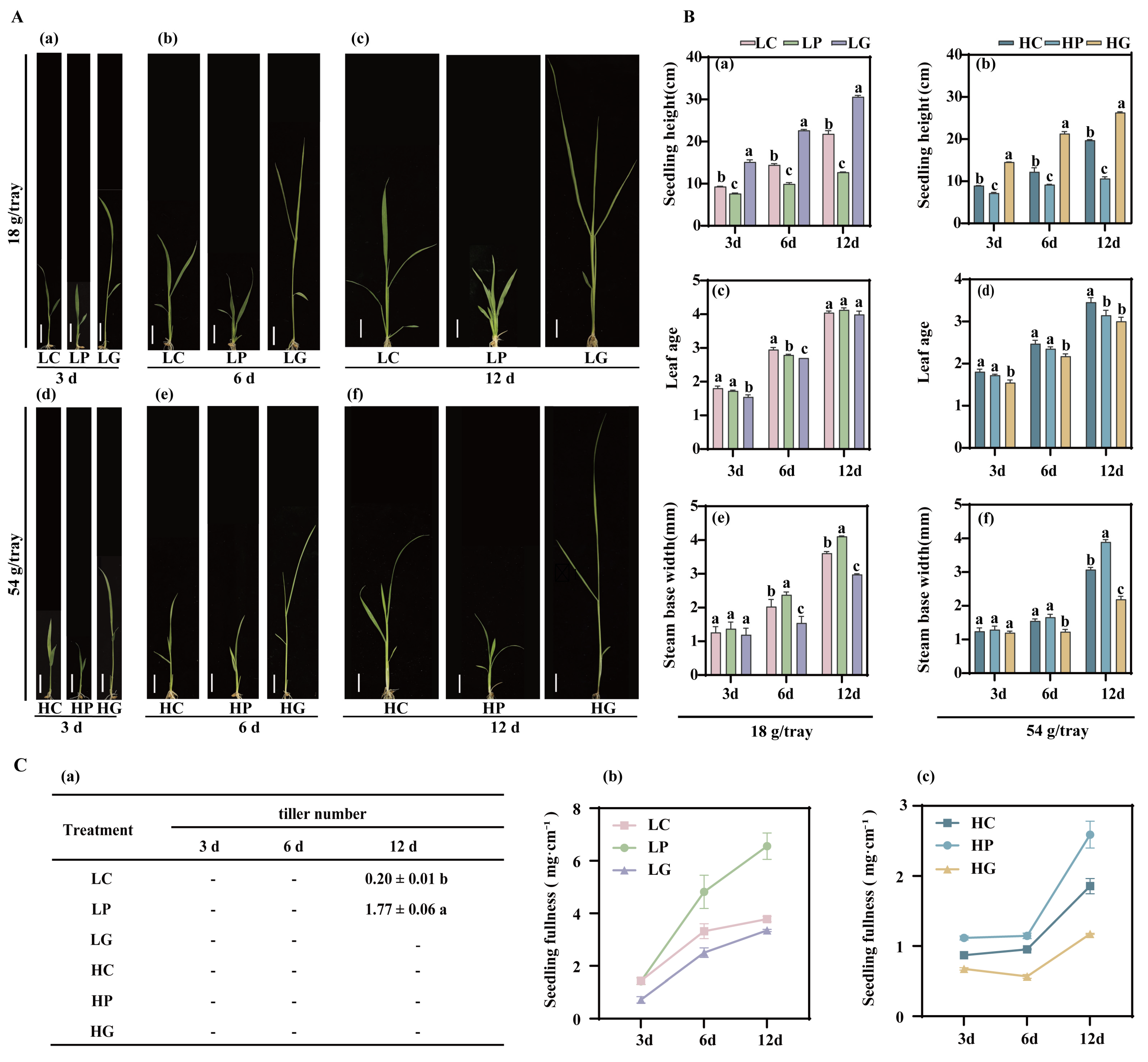
Significant differences in rice seedling growth and development were detected among the combined treatments (i.e., spraying and seeding rates) (Figure 1). Interestingly, tillering was initiated as early as 12 days post-treatment for seedlings in the low seeding rate and PBZ spraying (LP) treatment group (tiller number 8.85-times higher than that of the LC treatment group). By contrast, tillers were undetectable in the other treatment groups (Figure 1C(a)). An analysis of seedling quality revealed that exogenously applied growth regulators significantly affected seedling height. More specifically, the GA3 treatment significantly increased seedling height, whereas the spray application of PBZ had the opposite effect (Figure 1B(a,b)). Furthermore, spraying seedlings with GA3 resulted in significant decreases in leaf age (Figure 1B(c,d)); the difference between the effects of the other spray treatments was relatively small. As seedlings grew after treatments, the differences in the stem base width among treatments became more pronounced. The GA3 and PBZ treatments significantly decreased and increased the stem base width, respectively (Figure 1B(e,f)). Additionally, stem base widths were generally greater for the low seeding rate than for the high seeding rate. Moreover, spraying seedlings with GA3 significantly decreased seedling fullness (relative to that under LC conditions), while the PBZ treatment significantly increased seedling fullness by 42.35% (Figure 1C(b)). These results suggest that LP treatment conditions affect seedling height, while also increasing the stem base width and seedling fullness, thereby promoting robust seedling growth and facilitating the formation of low-position tillers.

3.2. PBZ Treatment Increases Cytokinin Content

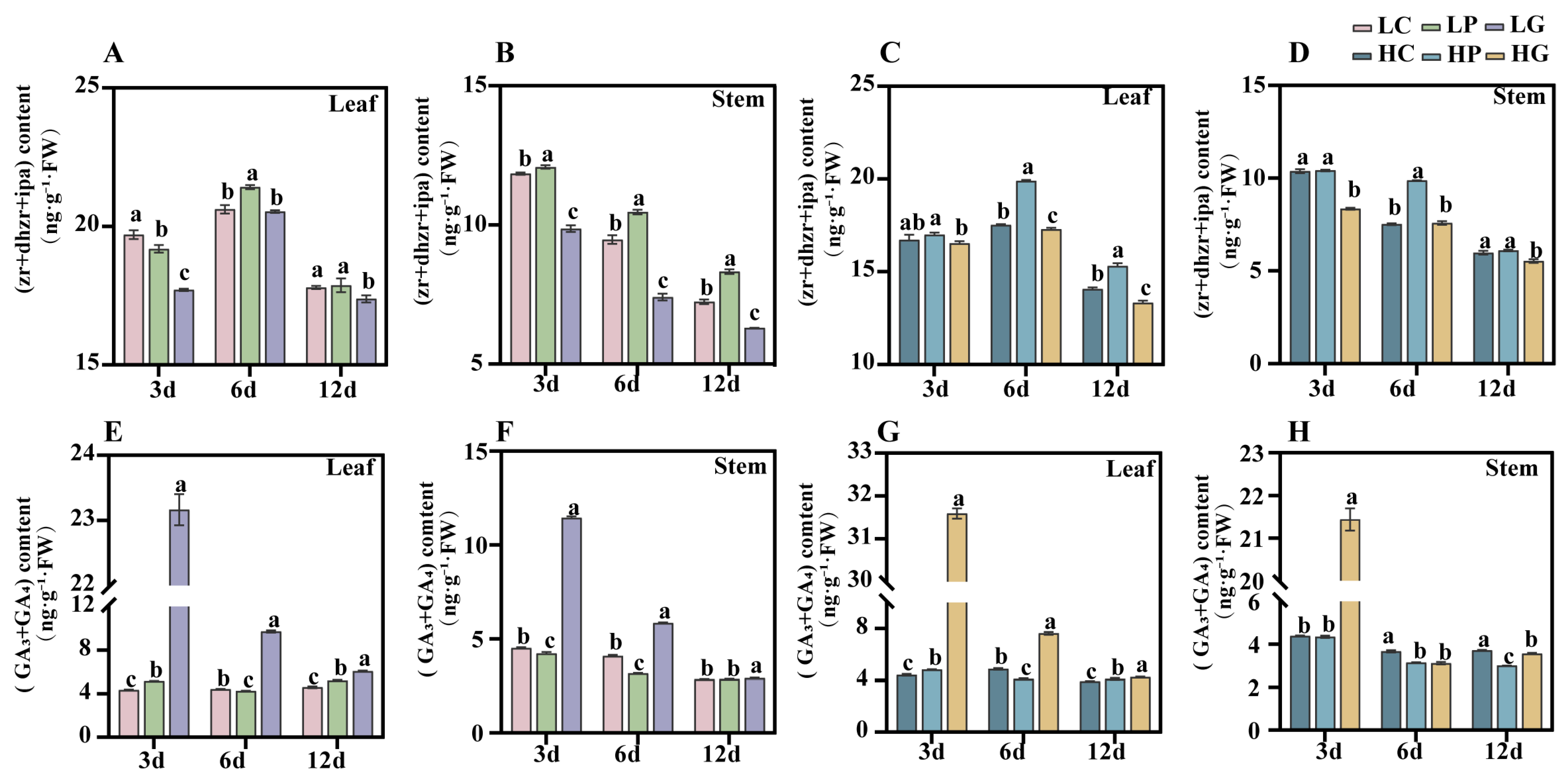
The application of exogenous growth regulators significantly affected seedling hormone contents (Figure 2). Compared with the control seedings, PBZ-treated seedlings had significantly higher cytokinin (ZR + DHZR + IPA) contents in the stem and leaves (Figure 2A–D), but they had significantly lower gibberellin (GA3 + GA4) contents (Figure 2E–H), especially at 6 days post-treatment. The opposite trend was observed following the GA3 treatment. The trends in hormone content changes were basically the same for both seeding rates, but the effects of the exogenous compounds were more significant for the low seeding rate than for the high seeding rate. Specifically, compared with the conditions, LP treatment conditions can increased the seedling cytokinin content by 4.64% (Figure 2A,B), thereby promoting cell division and growth, which is conducive to tillering. However, exogenous GA3 increased the gibberellin content (Figure 2E–H), promoted cell elongation, and significantly increased plant height, resulting in relatively thin seedlings. These results are consistent with the findings of the phenotypic analysis, further reflecting the significant regulatory effects of exogenous growth regulators on the hormone contents of seedlings obtained using different seeding rates, with important effects on tillering.

3.3. PBZ Treatment Increases Seedling Chlorophyll Contents

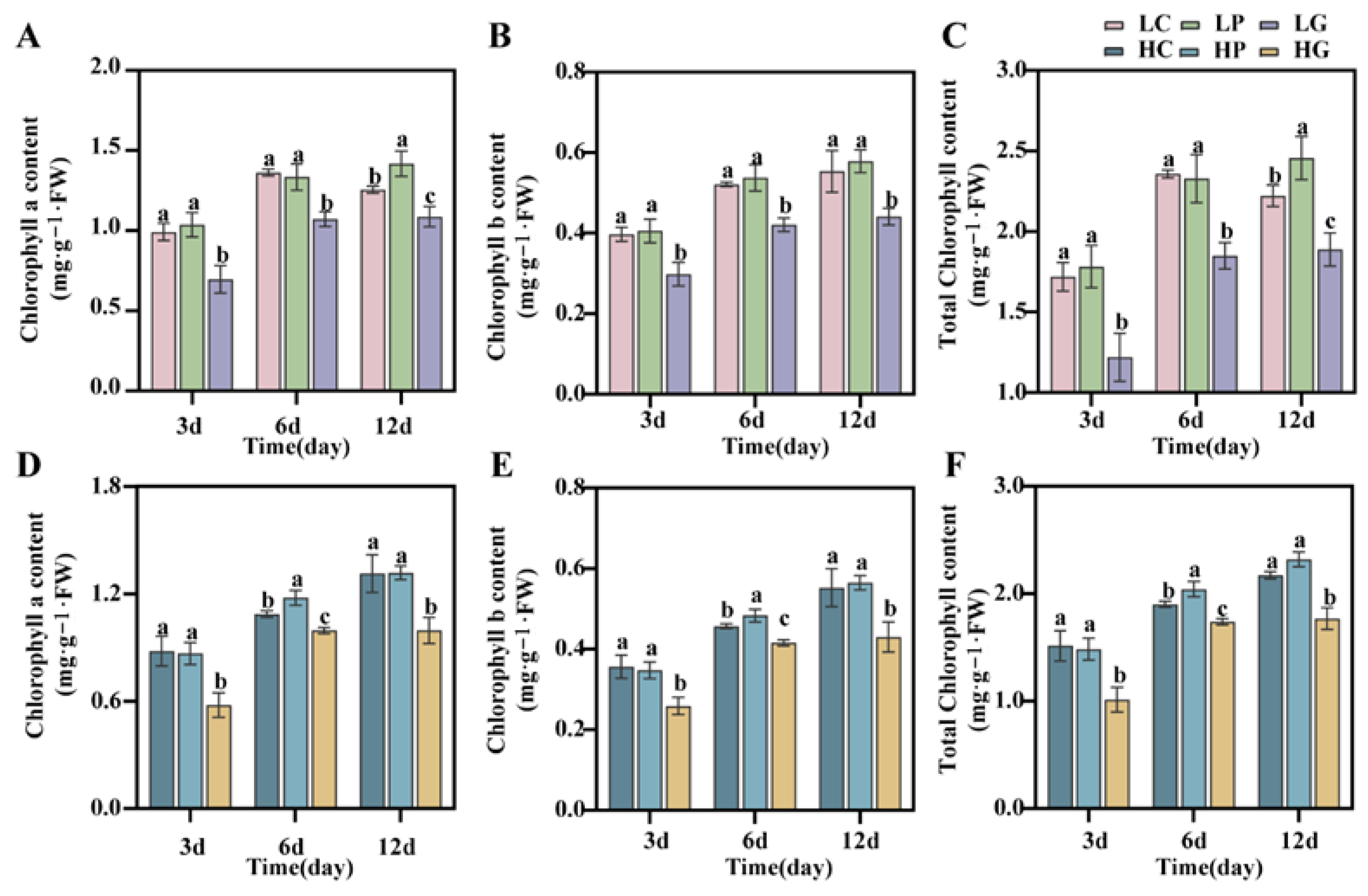
The LP treatment significantly increased chlorophyll contents (Figure 3). On day 12 post-treatment, the total chlorophyll content was significantly higher for the LP treatment group than for the LC and LG treatment groups (Figure 3C). More specifically, compared with the LC treatment, the chlorophyll content of the LP treatment increased the chlorophyll content by 10.55% by day 12 post-treatment, which coincided with the time point when low-position tillers emerged from seedlings. Although chlorophyll contents also increased for the high seeding rate combined and PBZ spraying (HP) treatment group, the increase was not as significant as that observed for the seedlings in the LP treatment group. The chlorophyll contents of the LG and HG treatments groups had the opposite trend. Therefore, for low seeding rates, the exogenous application of PBZ can increase foliar chlorophyll concentrations, leading to an increase in photosynthetic capacity.

3.4. PBZ Application Enhances Carbohydrate Accumulation in the Stem Base

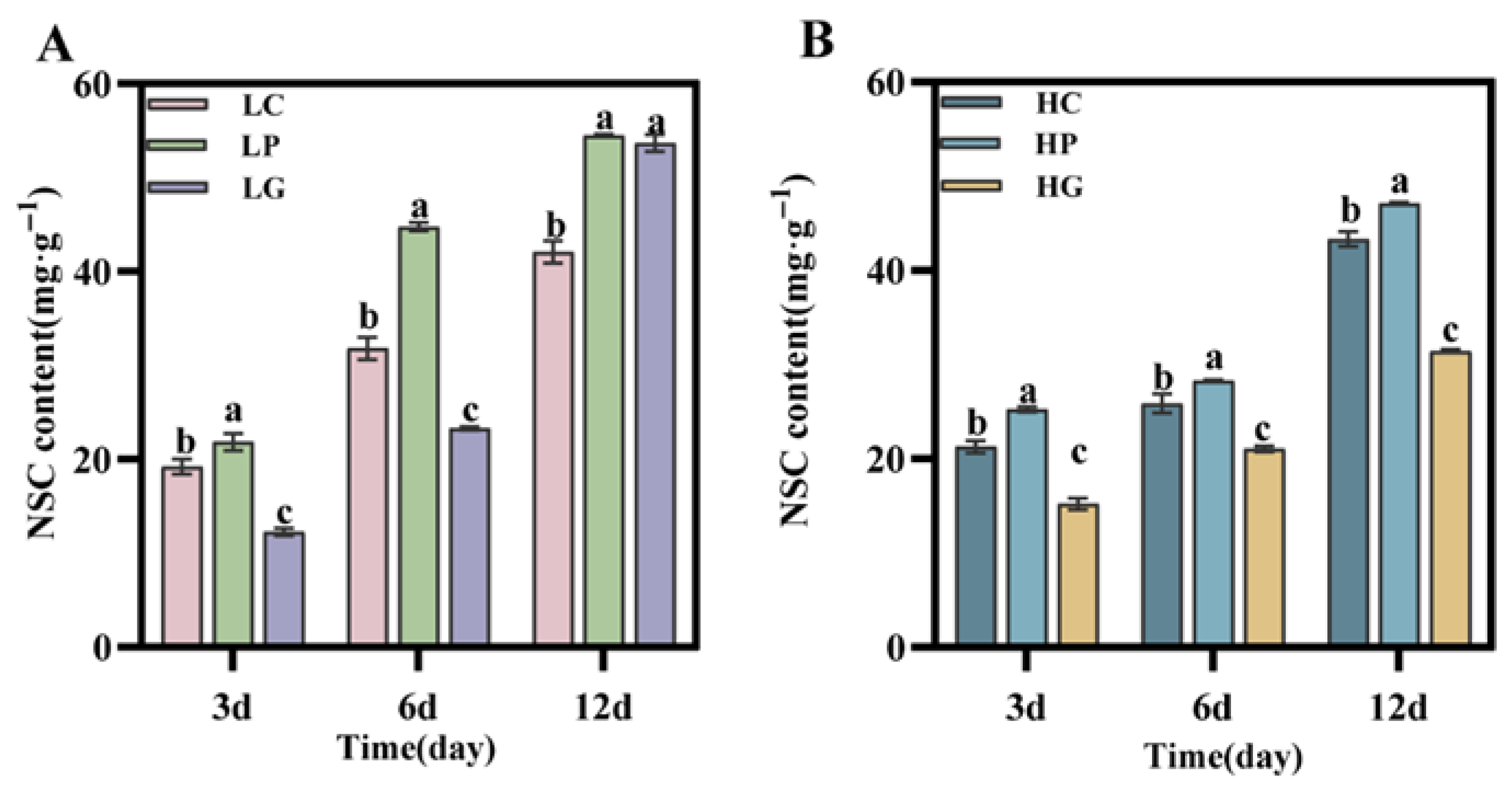
Exogenously applied PBZ significantly increased NSC levels in the stem base over time (Figure 4), peaking at 12 days post-treatment. Although the NSC content in the stem increased under both LP and HP treatment conditions, the change was more pronounced for the low seeding rate than for the high seeding rate. Additionally, for both seeding rates, the NSC content in the stem base of plants treated with PBZ was consistently higher than that of plants treated with GA3. These results suggest that NSC accumulation in the stem base of seedlings in the LP treatment group was conducive to the formation of robust seedlings with tillers.
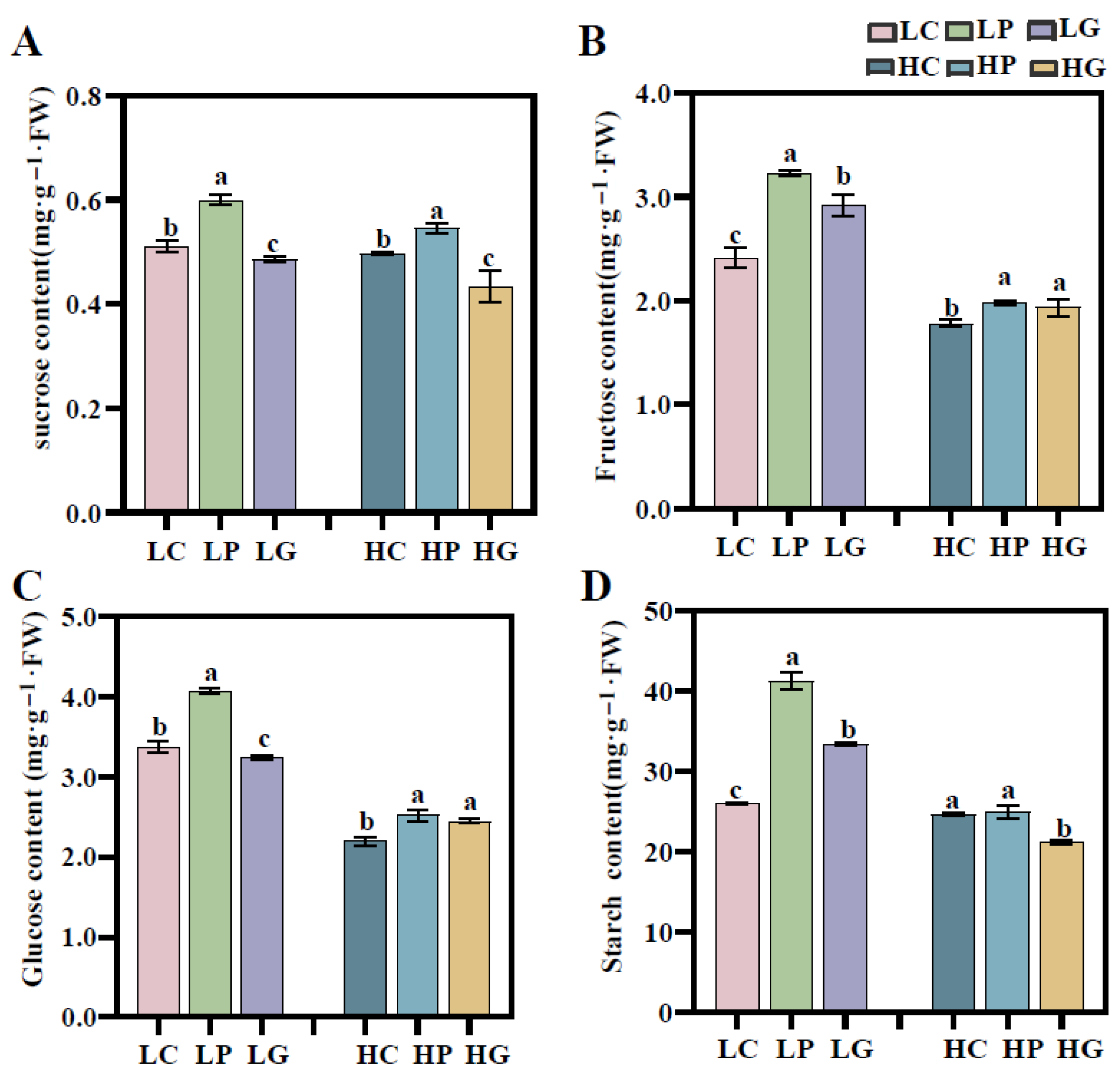
Further analyses indicated that under LP treatment conditions, tillers had formed by 12 days post-treatment. Moreover, carbohydrate contents in the stem base increased significantly (Figure 5). Carbohydrates are sources of energy and materials required for tillering. At 12 days after the LP treatment, sucrose, fructose, glucose, and starch contents in the stem base of seedlings increased significantly by 33.52%, 17.49%, 20.60%, and 58.77%, respectively (relative to the corresponding control levels). The accumulation of carbohydrates was greater for the low seeding rate than for the high seeding rate. These results imply that the LP treatment substantially increased carbohydrate contents. By contrast, at 12 days after the LG treatment, the sucrose content in the stem decreased; the increased sucrose consumption in the stem was likely associated with stem node elongation, which was consistent with the results of our phenotypic analysis. Accordingly, under growth conditions due to the low seeding rate, the application of exogenous PBZ promoted the transport of sucrose to the stem, with the resulting accumulation of sucrose in the stem leading to increased carbohydrate synthesis, thereby providing materials and energy for tillering.

3.5. PBZ Upregulates Sucrose Transporter Gene Expression

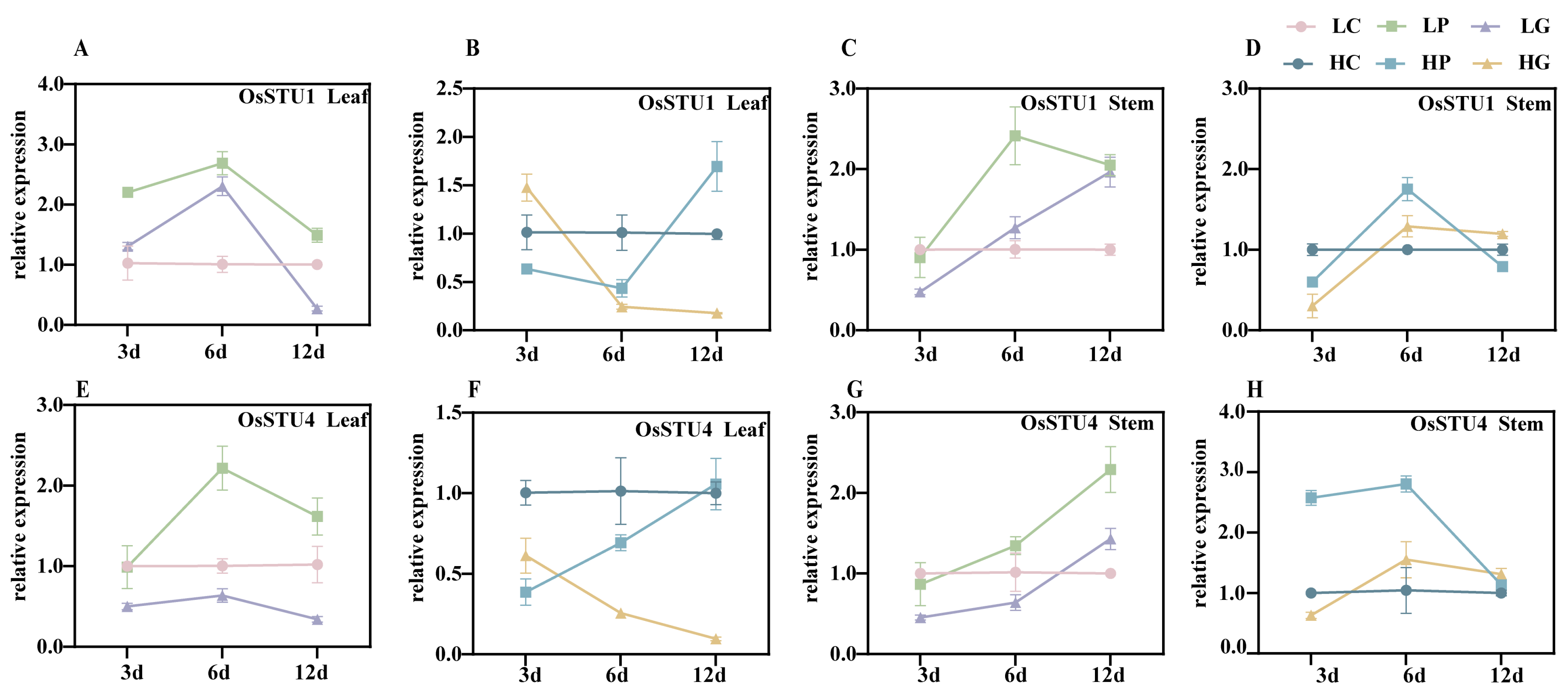
The expression levels of OsSUT1 and OsSUT4, which encode the main sucrose transporters in rice plants, increased significantly in leaves and the stem base after the LP treatment (Figure 6). By contrast, OsSUT1 and OsSUT4 expression levels in leaves decreased significantly following the LG treatment. The upregulated expression of these sucrose transporter genes was more obvious for the low seeding rate than for the high seeding rate. Thus, LP treatment conditions can promote the transport of sucrose synthesized in leaves to the stem base. Specifically, after 12 days under LP treatment conditions, sucrose was transported from leaves to the stem base, which is beneficial for tillering.

3.6. PBZ Enhances Sucrose-Metabolizing Enzyme Activities

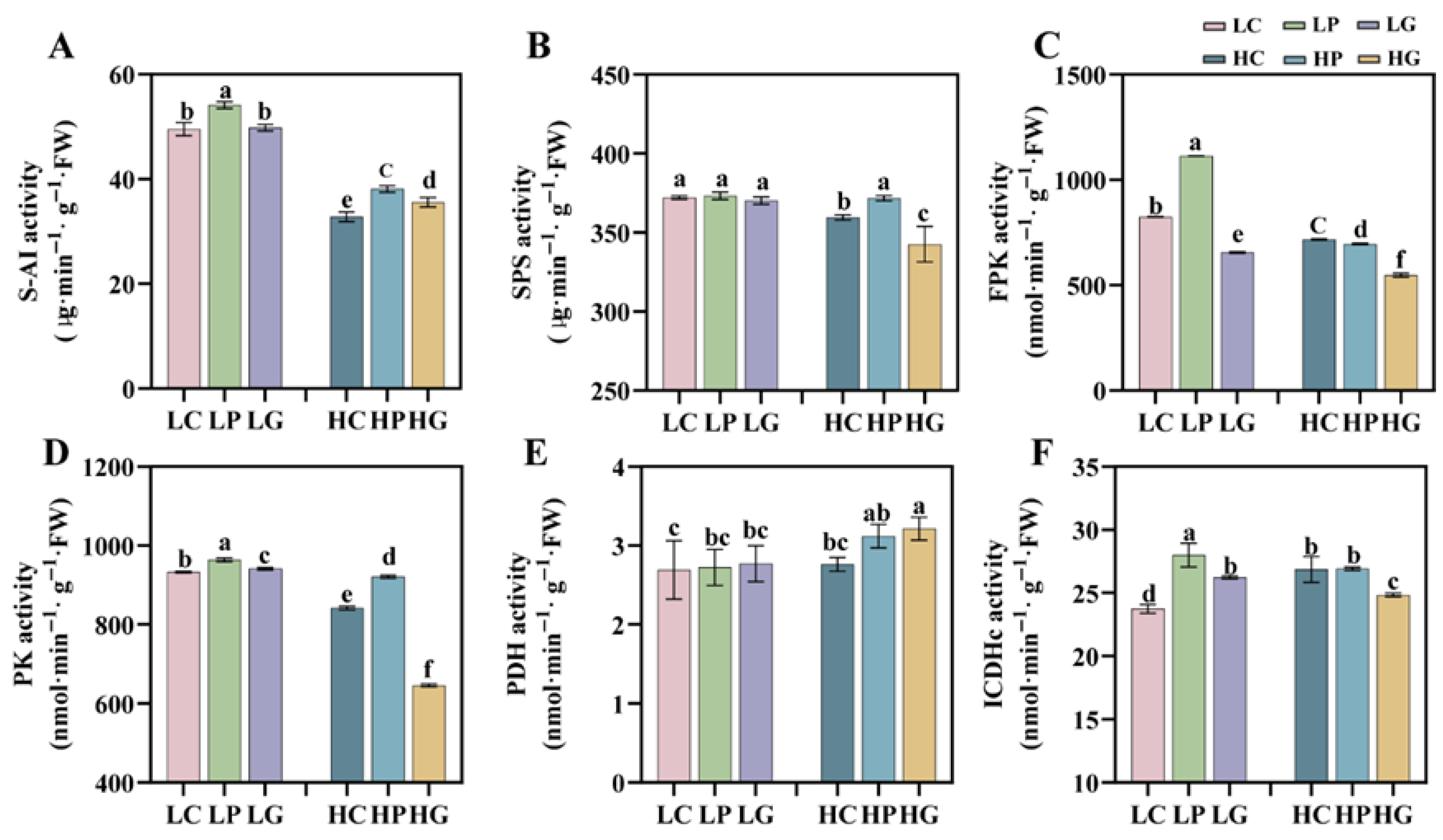
At 12 days post-treatment, the activities of key enzymes involved in sucrose hydrolysis, glycolysis, and the tricarboxylic acid cycle increased significantly in the stem base of seedlings in the LP treatment group (Figure 7). Sucrose accumulated in the stem base, providing materials for tiller formation. A comparison with the LC treatment group (control) revealed that S-AI (Figure 7A), PFK (rate-limiting enzyme) (Figure 7C), PK (Figure 7D), and ICDHc (Figure 7F) activities increased by 9.25%, 35.01%, 3.30%, and 17.81%, respectively, in the LP treatment group. Although the overall trends were consistent between the two seeding rates, the effects of exogenous PBZ were significantly greater for the low seeding rate than for the high seeding rate. This indicates that high sugar metabolism-related enzyme activities and sugar catabolism in PBZ-treated seedlings obtained using a low seeding rate provide sufficient energy for tiller initiation.

4. Discussion

4.1. PBZ Application Combined with a Low Seeding Rate Promotes Tiller Bud Development in Seedlings

Plant growth regulators, especially GA3 and PBZ, have crucial effects on plant development [25,26]. Zhu et al. [27] demonstrated that the application of exogenous PBZ can significantly decrease plant height, while increasing seedling stem thickness, thereby strengthening seedlings. In addition to chemical regulation, the seeding rate is a key factor affecting seedling quality and the success of mechanical transplantation. Recent studies [28,29,30] indicated that increasing planting density leads to a decrease in the hybrid rice stem base width and seedling fullness. However, precise drilling and low planting density can significantly improve seedling quality, decrease plant competition, alleviates the detrimental effects of limited nutrient availability, and promote dry matter accumulation [31,32]. The findings of the current study are in accordance with previously reported results. Tillering was detected after 12 days under LP treatment conditions, whereas it was undetectable after the other treatments (Figure 1). Compared with control seedlings, PBZ-treated seedlings were shorter, with increases in the stem base width and seedling fullness. However, the opposite trends were observed when the seeding rate was high seeding or exogenous GA3 was applied. Furthermore, this phenomenon was more pronounced for the low seeding rate than for the high seeding rate. These results are consistent with published findings [28], indicating that the synergistic effects of exogenous PBZ and a low seeding rate effectively promote seedling tillering. Additionally, mechanically transplantating of rice seedlings with tillers significantly increases the number of effective panicles, leading to increased yield. This conclusion was drawn from a comparative analysis of seedlings with and without tillers, which was performed to assess the effect of tillers on yield and related traits. Specific details regarding the relevant results are provided in the Table A3.

4.2. PBZ Enhances Sucrose Transport and Accumulation in Seedlings

Sucrose produced via photosynthetic activities involving chlorophyll. Previous studies showed that exogenously applied PBZ maintains chloroplast structural integrity, increases photosynthetic pigment concentrations, enhances the accumulation of photosynthetic products, and imporves photosynthetic efficiency [33,34,35,36]. In the current study, the LP treatment significantly increased photosynthetic pigment contents in seedlings (Figure 3), likely by promoting chlorophyll biosynthesis. This enhanced of photosynthetic capacity is critical because sucrose, which is the primary photosynthetic product [37,38], serves as both a substrate and energy source for tiller initiation. The efficiency of sucrose allocation in plants is primarily regulated by membrane-localized sucrose transporters [24]. In the present study, OsSUT1 and OsSUT4 were expressed at high levels under LP treatment conditions, which was in contrast to their low expression levels following the LG treatment. Increased expression of sugar transporter genes reportedly enhances sucrose production and translocation, with the resulting increase in carbohydrate contents in the stem base promoting rice tillering [39,40]. These findings are consistent with the tiller emergence observed in this study (Figure 1). Notably, sucrose transport and metabolism are intricately linked to sugar signaling pathways. In particular, trehalose-6-phosphate serves as a key signaling-related metab-olite that reflects sucrose availability and regulates sucrose use through its interaction with SnRK1, thereby influencing both carbon allocation and nitrogen metabolism [41]. Conversely, relatively low carbohydrate contents in the stem base may be due to altered sucrose allocation. These results imply that PBZ enhances the transport of sucrose from leaves to the stem base of the stem in seedlings and promotes sucrose accumulation to induce low-position tillering.

4.3. PBZ Coordinates Hormone Signaling and Enhances Sucrose Metabolism at the Stem Base

Tiller development is mainly mediated by two processes: the formation of axillary buds in leaf axils, and the subsequent elongation of these meristematic buds from a dormant state [2,12,32]. In plants, In plants, cytokinins are positive regulators of tillering and branching [17,42,43], whereas auxin and strigolactones typically suppress bud activation [12,44,45]. Additionally, PBZ inhibits gibberellin biosynthesis [9,46,47]. In the current study, the significant decrease in gibberellin contents under LP treatment conditions (Figure 2) was consistent with the mode of action of PBZ. Notably, the application of exogenous PBZ simultaneously promoted cytokinin accumulation (ZR + DHZR + IPA) in the stems and leaves (Figure 2), with the resulting hormone contents likely conducive to axillary bud activation. This is supported by the reported lack of tillering after a GA3 treatment [48].
Notably, sucrose and phytohormones may serve as signaling molecules that synergistically regulate tillering. For example, an increase in sucrose levels in the stem base may induce cytokinin biosynthesis and upregulate the expression of cytokinin signaling pathway genes, thereby potentially promoting tiller development [39]. In addition, increases in cytokinin contents enhance the activity of meristem cell activities and contribute to the regulation of meristem cell division, tillering, and stem growth [49,50,51]. Moreover, sucrose is the main carbohydrate transported in plants. After sucrose is translocated to sink tissues, the activation of sucrose metabolic pathways is crucial for maintaining the energy supply [23]. According to our data, the LP treatment increased the activity of key enzymes involved in sucrose hydrolysis (S-AI), glycolysis (PFK and PK), and the tricarboxylic acid cycle (ICDHc; a key enzyme in this cycle) (Figure 7). The increased enzyme activities may be related to increased sucrose metabolism and respiration in the stem base, which may help satisfy the energy demands associated with tiller development [52]. Collectively, these findings suggest that PBZ-induced sucrose accumulation in the stem base and the subsequent metabolic utilization of sucrose metabolism may induce tiller formation.
The study findings provide theoretical insights into tiller bud formation in machine-transplanted rice, but only one genotype was analyzed under controlled conditions, which may restrict the generalizability of the results. Future related research should comprehensively dissecting the molecular network underlying the regulatory effects of PBZ on sucrose transport and metabolism. Concurrently, utility of the combined treatment (i.e., PBZ application and low seeding rate) used in this study will be validated in large-scale field experiments. Further optimizing PBZ application rates and seeding rates for rice seedling cultivation may provide novel insights relevant to increasing rice production.

5. Conclusions

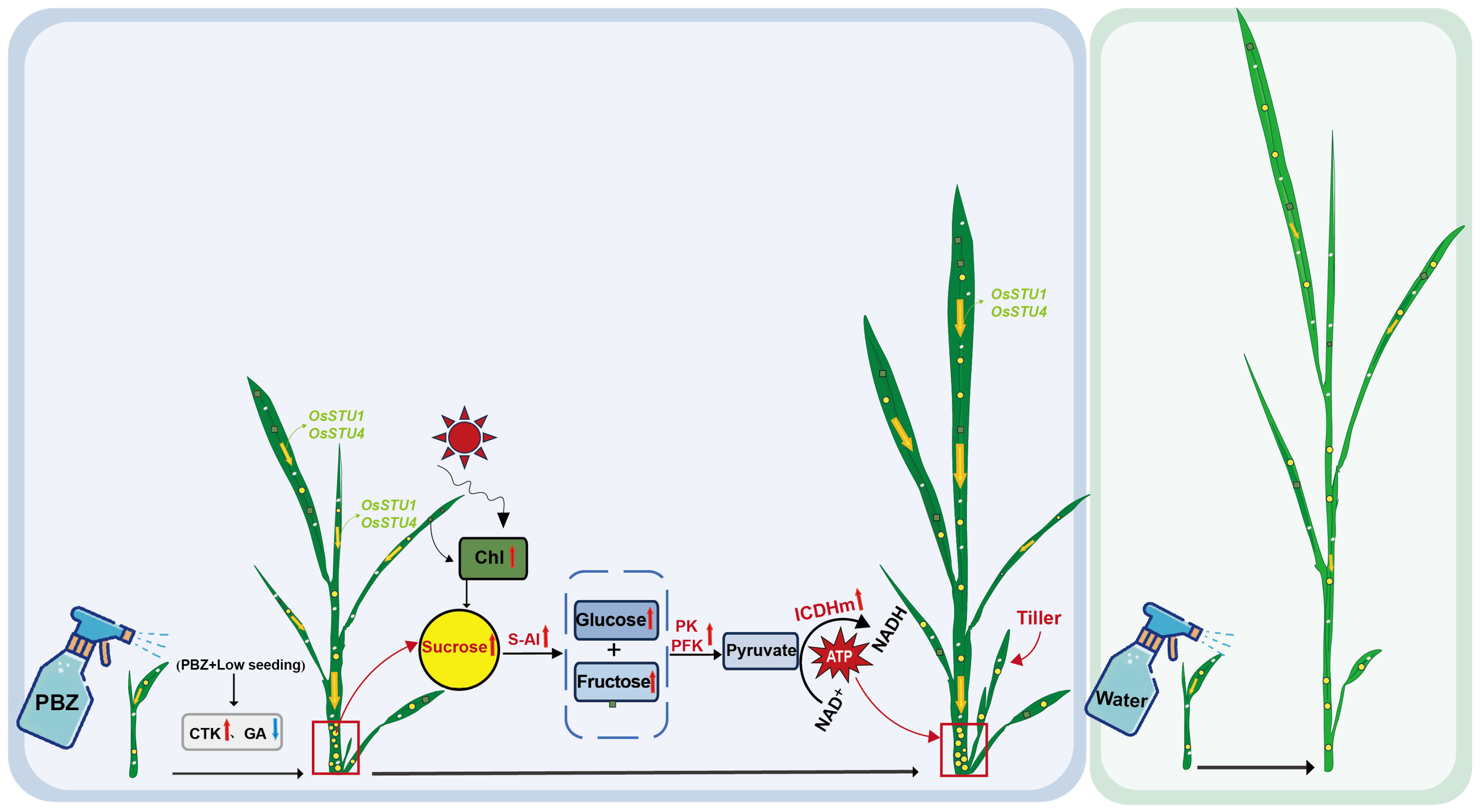
LP treatment conditions can restrict shoot elongation, while also promoting early tillering and low-position tillering. These changes are accompanied by increases in the leaf chlorophyll content and transport of photosynthetic assimilates to the stem base. The resulting accumulation of sucrose and increased sucrose metabolism in the stem base contribute to tiller formation (Figure 8).

Author Contributions

H.L. (Hui Li): Investigation, Data curation, Formal analysis, Software, Visualization, Writing—original draft. T.L.: Investigation, Data curation, Formal analysis, Software, Visualization, Writing—original draft. J.W.: Investigation, Visualization. H.L. (Huizhou Liang): Investigation, Data curation. Z.W.: Methodology, Software. J.X.: Formal analysis, Software. Y.Z. (Yikai Zhang): Software, Validation. H.C.: Supervision, Validation. Y.X.: Validation, Software. Y.Z. (Yuping Zhang): Conceptualization, Supervision, Project administration, Funding acquisition. Y.W.: Conceptualization, Funding acquisition, Writing—review and editing, Project administration. All authors have read and agreed to the published version of the manuscript.

Funding

This research was funded by Major Institute-level Scientific and Technological Tasks of the Chinese Academy of Agricultural Sciences (CAAS) (No. CAAS-CNRRI-2025-01), the National Key Research and Development Program (No. 2024YFD2000201), the National Natural Science Foundation of China (No. 32271983), and National Modern Agricultural Industrial Technology System (No. CARS-01-21).

Data Availability Statement

The original contributions presented in this study are included in the article. Further inquiries can be directed to the corresponding authors.

Conflicts of Interest

The authors declare no conflicts of interest. The funders had no role in the design of the study; in the collection, analyses, or interpretation of data.

Abbreviations

The following abbreviations are used in this manuscript:
CTKCytokinin
DHZRDihydrozeatin riboside
ICDHcIsocitrate dehydrogenase
IPAIsopentenyl adenine
IAAIndole Acetic Acid
NSCNon-structural carbohydrate
PBZPaclobutrazol
PFK6-phosphofructokinase
PKpyruvate kinase
qRT-PCRQuantitative real-time PCR
SPSSucrose phosphate synthase
SS-ISucrose synthase I
SLSStrigolactones
ZZeatin

Appendix A

Appendix A.1

Table A1. Effects of exogenous paclobutrazol spray concentrations on seedling quality and tillering.
CultivarSpraying Concentration (mg/L)LEAF AGEStem Base Width (mm)Seedling Height (cm)Tiller (Number)Seedling Plumpness
Yongyou 12 0 4.56 ± 0.14 a 3.38 ± 0.14 c 18.48 ± 1.13 a 0.00 ± 0.00 c 1.97 ± 0.04 c
100 4.63 ± 0.04 a 4.28 ± 0.44 b 12.65 ± 0.91 b 0.60 ± 0.20 b 2.98 ± 0.33 b
200 4.71 ± 0.06 a 4.92 ± 0.6 ab 10.58 ± 0.85 c 0.80 ± 0.20 b 3.54 ± 0.31 b
300 4.72 ± 0.10 a 5.53 ± 0.23 a 10.10 ± 0.36 c 1.13 ± 0.11 a 4.11 ± 0.33 a
400 4.56 ± 0.15 a 5.46 ± 0.73 a 9.21 ± 0.80 c 0.73 ± 0.11 b 4.22 ± 0.40 a
Data are presented as mean ± standard deviation (n = 3). Different lowercase letters indicate significant differences among different concentrations of paclobutrazol applied externally at the same time (p < 0.05).

Appendix A.2

Table A2. Primer sequences of real-time fluorescent quantitative PCR.
GeneForward Primer (5′–3′)Reverse Primer (5′–3′)
OsSUT1ATGTGGCTCTGTGGTCCTATTGCTCAACACACATCCTGTAAGAATA
OsSUT4TTCTCCCTACTTGGACTGCCACTCTTCCTGTTGCCAGACCTTGTCCACCT
actinTTATGGTTGGGATGGGACAAGCACGGCTTGAATAGCG

Appendix A.3

Table A3. The influence of transplanting seedlings with tillers and without tillers on yield and yield structure.
ArietyTreatmentProductive Panicle Number (×105·ha)The Number of Spikelet per PanicleSpikelet Fertility Rate (%)1000-Grain Weigh (g)Grain Yield (t·ha)
Yongyou
1540
Seedlings with tillers17.77 ± 0.29 *217.04 ± 11.4587.11 ± 1.0523.09 ± 0.267.75 ± 0.34 *
Seedlings without tillers16.76 ± 0.16211.38 ± 15.7586.91 ± 0.3322.18 ± 0.816.81 ± 0.26
* indicated significance at p < 0.05.

References

  1. Karim, M.R.; Alam, M.M.; Ladha, J.K.; Islam, M.S.; Islam, M.R. Effect of different irrigation and tillage methods on yield and resource use efficiency of boro rice (Oryza sativa). Bangladesh J. Agric. Res. 2014, 39, 151–163. [Google Scholar] [CrossRef]
  2. Huang, M.; Zou, Y.B. Integrating mechanization with agronomy and breeding to ensure food security in China. Field Crops Res. 2018, 224, 22–27. [Google Scholar] [CrossRef]
  3. Rashid, M.H.; Goswami, P.C.; Hossain, M.F.; Mahalder, D.; Rony, M.K.I.; Shirazy, B.J.; Russell, T.D. Mechanised non-puddled transplanting of boro rice following mustard conserves resources and enhances productivity. Field Crops Res. 2018, 225, 83–91. [Google Scholar] [CrossRef]
  4. Li, Y.H. Research of the Completion of High Yield Population and its Physiological and Ecological Characteristics of Bowl Mechanical-Transplanting Indica Hybrid Rice in Chengdu Plain. Master’s Thesis, Sichuan Agricultural University, Chengdu, China, 2017. [Google Scholar]
  5. Sasaki, R. Characteristics and seedling establishment of rice nursling seedlings. Jarq-Jpn. Agric. Res. Q. 2004, 38, 7–13. [Google Scholar] [CrossRef]
  6. Song, Y.S.; Zhang, H.C.; Dai, Q.; Huo, Z.Y.; Xu, K.; Wei, H.Y.; Zhu, C.C.; Sun, Z.; Yang, D.L.; Wang, W.Q.; et al. Seedling quality regulation of rice potted-seedling in mechanical transplanting. Trans. Chin. Soc. Agric. Eng. 2013, 29, 11–12. [Google Scholar] [CrossRef]
  7. Lü, W.S.; Zeng, Y.J.; Shi, Q.H.; Pan, X.H.; Huang, S.; Shang, Q.Y.; Tan, X.M.; Li, M.Y.; Hu, S.X. Ttillering and panicle formation characteristics of machine-transplanted early rice and its parameters of basic population formulae. Acta Agron. Sin. 2016, 42, 427–436. [Google Scholar] [CrossRef]
  8. Tang, C.H.; Wang, J.Q.; Chen, H.Z.; Zhang, Y.P.; Xiang, J.; Zhang, Y.K.; Wang, Z.G.; Huai, Y.; Chen, J.F.; Wang, Y.L. Effects of Hybrid Rice Seedling Quality in Drill-seeding Nursery on Grain Yield in Mechanical Transplanting. Chin. J. Rice Sci. 2025, 39, 245–254. [Google Scholar] [CrossRef]
  9. Soumya, P.R.; Pramod Kumar, P.K.; Madan Pal, M.P. Paclobutrazol: A novel plant growth regulator and multi-stress ameliorant. Indian J. Plant Physiol. 2017, 22, 267–278. [Google Scholar] [CrossRef]
  10. Liu, W.Y.; Cui, J.H.; Ran, C.; Zhang, Y.C.; Liang, J.N.; Shao, X.W.; Zhang, Q.; Geng, Y.Q.; Guo, L.Y. Paclobutrazol enhanced stem lodging resistance of direct-seeded rice by affecting basal internode development. Plants 2024, 13, 2289. [Google Scholar] [CrossRef] [PubMed]
  11. Liu, W.Y.; Gai, D.S.; Liang, J.N.; Cui, J.H.; Geng, Y.Q.; Zhang, Q.; Guo, L.Y.; Shao, X.W. Paclobutrazol enhances lodging resistance and yield of direct-seeded rice by optimizing plant type and canopy light transmittance. Field Crops Res. 2025, 331, 109882. [Google Scholar] [CrossRef]
  12. Wang, B.; Smith, S.M.; Li, J. Genetic regulation of shoot architecture. Annu. Rev. Plant Biol. 2018, 69, 437–468. [Google Scholar] [CrossRef] [PubMed]
  13. Wen, R.; Zhu, M.D.; Yu, J.M.; Kou, L.Q.; Ahmad, S.; Wei, X.J.; Jiao, G.A.; Hu, S.K.; Sheng, Z.H.; Zhao, F.L.; et al. Photosynthesis regulates tillering bud elongation and nitrogen--use efficiency via sugar-induced NGR5 in rice. New Phytol. 2024, 243, 1440–1454. [Google Scholar] [CrossRef]
  14. Takahashi, H.; Imamura, T.; Konno, N.; Takeda, T.; Fujita, K.; Konishi, T.; Nishihara, M.; Uchimiya, H. The gentio-oligosaccharide gentiobiose functions in the modulation of bud dormancy in the herbaceous perennial gentiana. Plant Cell 2014, 26, 3949–3963. [Google Scholar] [CrossRef] [PubMed]
  15. Barbier, F.; Péron, T.; Lecerf, M.; Perez-Garcia, M.-D.; Barrière, Q.; Rolčík, J.; Boutet-Mercey, S.; Citerne, S.; Lemoine, R.; Porcheron, B.; et al. Sucrose is an early modulator of the key hormonal mechanisms controlling bud outgrowth in Rosa hybrida. J. Exp. Bot. 2015, 66, 2569–2582. [Google Scholar] [CrossRef]
  16. Barbier, F.F.; Lunn, J.E.; Beveridge, C.A. Ready, steady, go! A sugar hit starts the race to shoot branching. Curr. Opin. Plant Biol. 2015, 25, 39–45. [Google Scholar] [CrossRef]
  17. Müller, D.; Waldie, T.; Miyawaki, K.; To, J.P.C.; Melnyk, C.W.; Kieber, J.J.; Kakimoto, T.; Leyser, O. Cytokinin is required for escape but not release from auxin mediated apical dominance. Plant J. 2015, 82, 874–886. [Google Scholar] [CrossRef]
  18. Patil, S.B.; Barbier, F.F.; Zhao, J.; Zafar, S.A.; Uzair, M.; Sun, Y.; Fang, J.; Perez--Garcia, M.D.; Bertheloot, J.; Sakr, S.; et al. Sucrose promotes D53 accumulation and tillering in rice. New Phytol. 2021, 234, 122–136. [Google Scholar] [CrossRef]
  19. Wang, Y.L.; Cui, Y.T.; Hu, G.H.; Wang, X.D.; Chen, H.Z.; Shi, Q.H.; Xiang, J.; Zhang, Y.K.; Zhu, D.F.; Zhang, Y.P. Reduced bioactive gibberellin content in rice seeds under low temperature leads to decreased sugar consumption and low seed germination rates. Plant Physiol. Biochem. 2018, 133, 1–10. [Google Scholar] [CrossRef] [PubMed]
  20. Arnon, D.I. Copper enzymes in isolated chloroplasts. polyphenoloxidase in beta vulgaris. Plant Physiol. 1949, 24, 1. [Google Scholar] [CrossRef]
  21. Zhang, P.; Wu, X.; Chen, Y.L.; Ji, G.M.; Ma, X.L.; Zhang, Y.P.; Xiang, J.; Wang, Y.L.; Wang, Z.G.; Li, L.T.; et al. Comparative transcriptome combined with morphophysiological analyses revealed carotenoid biosynthesis for differential chilling tolerance in two contrasting rice (Oryza sativa L.) genotypes. Rice 2023, 16, 52. [Google Scholar] [CrossRef]
  22. Mocready, R.M.; Guggolz, J.; Silviera, V.; Owens, H.S. Determination of starch and amylose in vegetables. Application to peas. Anal. Chem. 1950, 22, 1156–1158. [Google Scholar] [CrossRef]
  23. Wang, J.Q.; Li, H.; Lan, T.M.; Tang, C.H.; Zhang, P.; Chen, Y.L.; Chen, H.Z.; Xiang, J.; Zhang, Y.K.; Wang, Z.G.; et al. Positional differences of rice spikelet formation under high temperature are associated with sucrose utilization discrepancy. Environ. Exp. Bot. 2025, 232, 106114. [Google Scholar] [CrossRef]
  24. Aoki, N.; Hirose, T.; Scofield, G.N.; Whitfeld, P.R.; Furbank, R.T. The sucrose transporter gene family in rice. Plant Cell Physiol. 2003, 44, 223–232. [Google Scholar] [CrossRef]
  25. Bari, R.; Jones, J.D.G. Role of plant hormones in plant defence responses. Plant Mol. Biol. 2008, 69, 473–488. [Google Scholar] [CrossRef] [PubMed]
  26. Kariali, E.; Mohapatra, P.K. Hormonal regulation of tiller dynamics in differentially-tillering rice cultivars. Plant Growth Regul. 2007, 53, 215–223. [Google Scholar] [CrossRef]
  27. Zhu, L.H.; van de Peppel, A.; Li, X.Y.; Welander, M. Changes of leaf water potential and endogenous cytokinins in young apple trees treated with or without paclobutrazol under drought conditions. Sci. Hortic. 2004, 99, 133–141. [Google Scholar] [CrossRef]
  28. Deng, S.W.; Gao, P.L.; Wang, H.Y.; Chen, Y.L.; Wei, H.H.; Dai, Q.G. Effects of mixed planting on machine transplanting adaptability and grain yield of hybrid rice. Agriculture 2023, 13, 384. [Google Scholar] [CrossRef]
  29. Feng, Y.; Liu, M.Z.; Wang, K.T.; Ling, Y.F.; Hu, Q.; Zhang, H.C.; Zhang, H.P. Optimal seeding rate enhances seedling quality, mechanical transplanting quality, and yield in hybrid rice. Front. Plant Sci. 2024, 15, 1427972. [Google Scholar] [CrossRef]
  30. Hwang, W.H.; Jeong, J.H.; Lee, H.S.; Yang, S.Y.; Lee, C.G. Seeding rate and days for low-density transplant cultivation. Korean J. Crop Sci. 2021, 66, 112–119. [Google Scholar] [CrossRef]
  31. Wang, Y.L.; Zhu, D.F.; Chen, R.X.; Fang, W.Y.; Wang, J.Q.; Xiang, J.; Chen, H.Z.; Zhang, Y.P.; Chen, J.H. Beneficial effects of precision drill sowing with low seeding rates in machine transplanting for hybrid rice to improve population uniformity and yield. Sci. Agric. Sin. 2022, 55, 666–679. [Google Scholar] [CrossRef]
  32. Shao, W.Q.; Li, J.; Zhong, P.; Dong, Y.B.; Sun, C.M.; Zhuang, C.; Chen, C.; Zhang, A.K. Effects of tray seedling and sowing rate on quality of mechanical transplanting rice seedlings. J. Ofsouthern Agric. 2019, 50, 25–31. [Google Scholar] [CrossRef]
  33. Sheikh Mohammadi, M.H.; Etemadi, N.; Marab, M.; Aalifar, M.; Arab, M.; Pessarakli, M. Molecular and physiological responses of Iranian Perennial ryegrass as affected by Trinexapac ethyl, Paclobutrazol and Abscisic acid under drought stress. Plant Physiol. Biochem. 2017, 111, 129–143. [Google Scholar] [CrossRef]
  34. Xu, Q.; Ma, X.P.; Lv, T.B.; Bai, M.; Wang, Z.L.; Niu, J.R. Effects of water stress on fluorescence parameters and photosynthetic characteristics of drip irrigation in rice. Water 2020, 12, 289. [Google Scholar] [CrossRef]
  35. Xing, P.P.; Duan, M.Y.; Liu, Y.H.; Mo, Z.W.; Lai, R.F.; Tang, X.R. Enhancement of yield, grain quality characters, 2-acetyl-1-pyrroline content, and photosynthesis of fragrant rice cultivars by foliar application of paclobutrazol. J. Plant Growth Regul. 2022, 42, 748–758. [Google Scholar] [CrossRef]
  36. Xia, X.; Tang, Y.H.; Wei, M.R.; Zhao, D.Q. Effect of paclobutrazol application on plant photosynthetic performance and leaf greenness of herbaceous peony. Horticulturae 2018, 4, 5. [Google Scholar] [CrossRef]
  37. Tauzin, A.S.; Giardina, T. Sucrose and invertases, a part of the plant defense response to the biotic stresses. Front. Plant Sci. 2014, 5, 293. [Google Scholar] [CrossRef]
  38. Ruan, Y.L. Sucrose metabolism: Gateway to diverse carbon use and sugar signaling. Annu. Rev. Plant Biol. 2014, 65, 33–67. [Google Scholar] [CrossRef]
  39. Li, M.J.; Li, H.Y.; Zhu, Q.D.; Liu, D.; Li, Z.; Chen, H.F.; Luo, J.S.; Gong, P.; Ismail, A.M.; Zhang, Z.H. Knockout of the sugar transporter OsSTP15 enhances grain yield by improving tiller number due to increased sugar content in the shoot base of rice (Oryza sativa L.). New Phytol. 2023, 241, 1250–1265. [Google Scholar] [CrossRef] [PubMed]
  40. Assuero, S.G.; Lorenzo, M.; Ramírez, N.M.P.; Velázquez, L.M.; Tognetti, J.A. Tillering promotion by paclobutrazol in wheat and its relationship with plant carbohydrate status. N. Z. J. Agric. Res. 2012, 55, 347–358. [Google Scholar] [CrossRef]
  41. Figueroa, C.M.; Feil, R.; Ishihara, H.; Watanabe, M.; Kölling, K.; Krause, U.; Höhne, M.; Encke, B.; Plaxton, W.C.; Zeeman, S.C.; et al. Trehalose 6-phosphate coordinates organic and amino acid metabolism with carbon availability. Plant J. 2016, 85, 410–423. [Google Scholar] [CrossRef] [PubMed]
  42. Dun, E.A.; de Saint Germain, A.; Rameau, C.; Beveridge, C.A. Antagonistic action of strigolactone and cytokinin in bud outgrowth control. Plant Physiol. 2012, 158, 487–498. [Google Scholar] [CrossRef] [PubMed]
  43. Kieber, J.J.; Schaller, G.E. Cytokinin signaling in plant development. Development 2018, 145, dev149344. [Google Scholar] [CrossRef]
  44. Jia, L.Q.; Dai, Y.D.; Peng, Z.W.; Cui, Z.B.; Zhang, X.F.; Li, Y.Y.; Tian, W.J.; He, G.h.; Li, Y.; Sang, X.C. The auxin transporter OsAUX1 regulates tillering in rice (Oryza sativa). J. Integr. Agric. 2024, 23, 1454–1467. [Google Scholar] [CrossRef]
  45. Barbier, F.F.; Dun, E.A.; Kerr, S.C.; Chabikwa, T.G.; Beveridge, C.A. An update on the signals controlling shoot branching. Trends Plant Sci. 2019, 24, 220–236. [Google Scholar] [CrossRef]
  46. Setia, R.C.; Bhathal, G.; Setia, N. Influence of paclobutrazol on growth and yield of brassica-carinata a.br. Plant Growth Regul. 1995, 16, 121–127. [Google Scholar] [CrossRef]
  47. Sinniah, U.R.; Wahyuni, S.; Syahputra, B.S.A.; Gantait, S. A potential retardant for lodging resistance in direct seeded rice (Oryza sativa L.). Can. J. Plant Sci. 2012, 92, 13–18. [Google Scholar] [CrossRef]
  48. Liao, Z.G.; Yu, H.; Duan, J.B.; Yuan, K.; Yu, C.J.; Meng, X.B.; Kou, L.Q.; Chen, M.J.; Jing, Y.H.; Liu, G.F.; et al. SLR1 inhibits MOC1 degradation to coordinate tiller number and plant height in rice. Nat. Commun. 2019, 10, 2738. [Google Scholar] [CrossRef]
  49. Landrein, B.; Formosa-Jordan, P.; Malivert, A.; Schuster, C.; Melnyk, C.W.; Yang, W.; Turnbull, C.; Meyerowitz, E.M.; Locke, J.C.W.; Jönsson, H. Nitrate modulates stem cell dynamics in Arabidopsis shoot meristems through cytokinins. Proc. Natl. Acad. Sci. USA 2018, 115, 1382–1387. [Google Scholar] [CrossRef]
  50. Schwarz, I.; Scheirlinck, M.-T.; Otto, E.; Bartrina, I.; Schmidt, R.-C.; Schmülling, T.; Dodd, I. Cytokinin regulates the activity of the inflorescence meristem and components of seed yield in oilseed rape. J. Exp. Bot. 2020, 71, 7146–7159. [Google Scholar] [CrossRef]
  51. Zhang, W.; Tao, J.Y.; Chang, Y.Y.; Wang, D.J.; Wu, Y.Y.; Gu, C.X.; Tao, W.Q.; Wang, H.M.; Xie, X.N.; Zhang, Y.L. Cytokinin catabolism and transport are involved in strigolactone-modulated rice tiller bud elongation fueled by phosphate and nitrogen supply. Plant Physiol. Biochem. 2024, 215, 108982. [Google Scholar] [CrossRef]
  52. Mo, T.Y.; Wang, T.H.; Sun, Y.L.; Kumar, A.; Mkumbwa, H.; Fang, J.J.; Zhao, J.F.; Yuan, S.J.; Li, Z.C.; Li, X.Y. The chloroplast pentatricopeptide repeat protein RCN22 regulates tiller number in rice by affecting sugar levels via the TB1–RCN22–RbcL module. Plant Commun. 2024, 5, 101073. [Google Scholar] [CrossRef] [PubMed]
Figure 1. Seedling growth under different treatment conditions. (A) Representative images of rice seedlings obtained when a low seeding rate (ac) and high seeding rate (df) were combined with different spray treatments. Scale bar = 2 cm. (B) Effects of different spray treatments on the plant height (cm) (a,b), leaf age (c,d), and stem base width (mm) (e,f) of seedlings obtained when low (a,c,e) and high (b,d,f) seeding rates were used. Error bars represent the standard deviation (SD). (C) Effects of different spray treatments on tiller number per plant (a) and seedling fullness index (mg cm−1) (b,c) for seedlings obtained using the two seeding rates. Treatment codes are provided in Table 1. Data in the table are presented as the mean ± SD (n = 3). Error bars represent SD. Different lowercase letters indicate statistically significant differences among treatment groups at the same time point (p < 0.05, Duncan’s multiple range test following a three-way ANOVA).
Agronomy 16 00025 g001
Figure 2. Trends in hormone contents in leaves and the stem base under different treatment conditions. (AD) Effects of different spray treatments on total cytokinin (ZR + DHZR + IPA) contents (ng g−1 FW) in the leaves (A,C) and stem base (B,D) of seedlings obtained using low (A,B) and high (C,D) seeding rates. (EH) Effects of different spray treatments on gibberellin (GA3 + GA4) contents (ng g−1 FW) in the leaves (E,G) and stem base (F,H) of seedlings obtained using low (E,F) and high (G,H) seeding rates. Treatment codes are provided in Table 1. Data are presented as the mean ± SD (n = 3). Different lowercase letters indicate statis-tically significant differences among treatment groups at the same time point (p < 0.05, Duncan’s multiple range test following a three-way ANOVA).
Agronomy 16 00025 g002
Figure 3. Trends in chlorophyll contents in leaves under different treatment conditions. (AC) Effects of different spray treatments on chlorophyll a (A), chlorophyll b (B), and total chlorophyll (C) contents in the leaves of seedlings obtained using a low seeding rate. (DF) Effects of different spray treatments on chlorophyll a (D), chlorophyll b (E), and total chlorophyll (F) contents in the leaves of seedlings obtained using a high seeding rate. Units: (mg g−1 FW). Treatment codes are provided in Table 1. Data are presented as the mean ± SD (n = 3). Different lowercase letters indicate statistically significant differences among treatment groups at the same time point (p < 0.05, Duncan’s multiple range test following a three-way ANOVA).
Agronomy 16 00025 g003
Figure 4. Trends in the non-structural carbohydrate (NSC) content in the stem base of seedlings under different treatment conditions. (A) Effects of different exogenous spray treatments on the NSC content of seedlings obtained using a low seeding rate. (B) Effects of different exogenous spray treatments on the NSC content of seedlings obtained using a high seeding rate. Units: (mg g−1). Treatment codes are provided in Table 1. Data are presented as the mean ± SD (n = 3). Different lowercase letters indicate statistically significant differences among treatment groups at the same time point (p < 0.05, Duncan’s multiple range test following a three-way ANOVA).
Agronomy 16 00025 g004
Figure 5. Trends in carbohydrate contents in the stem base of seedlings 12 days after different exogenous spray treatments. (A) Effects of different treatments on sucrose contents. (B) Effects of different treatments on fructose contents. (C) Effects of different treatments on glucose contents. (D) Effects of different treatments on starch contents. Units: (mg g−1 FW). Treatment codes are provided in Table 1. Data are presented as the mean ± SD (n = 3). Different lowercase letters indicate statistically significant differences among treatment groups at the same time point (p < 0.05, Duncan’s multiple range test following a two-way ANOVA).
Agronomy 16 00025 g005
Figure 6. Relative expression levels of sucrose transporter genes (OsSTU1, OsSTU4) in leaves and the stem bases of seedlings under different treatment conditions. (AD) Relative expression of sucrose transporter genes in leaves at 3, 6, and 12 days after exogenous spray treatments. (EH) Relative expression of sucrose transporter genes in the stem base at 3, 6, and 12 days after exogenous spray treatments. Treatment codes are provided in Table 1. Data are presented as the mean ± SD (n = 3).
Agronomy 16 00025 g006
Figure 7. Sucrose metabolism-related enzyme activities in the seedling stem base after 12 days under different treatment conditions. (A) S-AI activity. (B) SPS activity. Units: (μg min−1 g−1 FW). (C) PFK activity. (D) PK activity. (E) PDH activity. (F) cytoplasmic isocitrate dehydrogenase (ICDHc) ac-tivity. Units: (nmol min−1 g−1 FW). Treatment codes are provided in Table 1. Data are presented as the mean ± SD (n = 3). Different lowercase letters indicate statistically significant differences among treatment groups at the same time point (p < 0.05, Duncan’s multiple range test following a two-way ANOVA).
Agronomy 16 00025 g007
Figure 8. Overview of how PBZ affects sucrose transport to regulate the tillering of rice seedlings obtained using a low seeding rates. After leaves are sprayed with PBZ, hormone levels are modulated, chlorophyll contents increased, and photosynthetic products are transported from the stem base. Concurrently, the expression levels of sucrose transporter genes (OsSTU1 and OsSTU4) are upregulated, leading to substantial sucrose accumulation in the stem base. Meanwhile, the activities of sucrose metabolic enzymes (S-AI, PK, PFK and ICDHc) increased, thereby enhancing sucrose metabolism and use. This process provides the material and energy required for the occurrence of tillering. Yellow arrows and yellow circles indicate the direction of sucrose transport and sucrose, respectively; black arrows represents biological processes; green square represents chlorophyll; white ellipse represents hormones; and red arrows indicate an increase in content. Upregulated genes are indicated in green. Sucrose in red font represents the substantial accumulation of this sugar. The seedling base with tillers and sprouts is outlined in red. The control treatment group is presented on the right.
Agronomy 16 00025 g008
Table 1. The treatment diagram of this experiment.
Test Treatment NumberTreatment
LCLow sowing rate, control
LPLow seeding rate, exogenous spraying PBZ
LGLow seeding rate, exogenous spraying GA3
HCHigh sowing rate, control
HPHigh seeding rate, exogenous spraying PBZ
HGHigh seeding rate, exogenous spraying GA3
Disclaimer/Publisher’s Note: The statements, opinions and data contained in all publications are solely those of the individual author(s) and contributor(s) and not of MDPI and/or the editor(s). MDPI and/or the editor(s) disclaim responsibility for any injury to people or property resulting from any ideas, methods, instructions or products referred to in the content.