Article

Effects of Biochar Addition on Topsoil Carbon–Nitrogen Cycling and CO2 Emissions in Reduced-Nitrogen, Film-Mulched Drip-Irrigated Silage Maize Systems

1
College of Forestry, Gansu Agricultural University, Lanzhou 730070, China
2
College of Agriculture and Ecological Engineering, Hexi University, Zhangye 734000, China
*
Authors to whom correspondence should be addressed.
Agronomy 2026, 16(1), 10; https://doi.org/10.3390/agronomy16010010
Submission received: 14 November 2025 / Revised: 7 December 2025 / Accepted: 18 December 2025 / Published: 19 December 2025
(This article belongs to the Section Soil and Plant Nutrition)

Abstract

This study conducted a systematic evaluation over two years (2023–2024) through field experiments to assess the regulatory effects of biochar on soil properties, carbon and nitrogen cycling, and CO2 emissions under mulched drip irrigation with varying nitrogen application levels. The core findings indicate that the effects of biochar are strongly dependent on the nitrogen levels. Under reduced nitrogen conditions, biochar demonstrated a synergistic benefit: with a 15% nitrogen reduction (N2-BC), it significantly enhanced soil water retention (increasing moisture by 68.6% at the tasseling stage); with a 30% nitrogen reduction (N1-BC), it improved soil structure (bulk density decreased by 2.1%, porosity increased by 4.3%). Additionally, biochar differentially activates soil carbon and nitrogen pools: under the 30% nitrogen reduction treatment (N1-BC), soil organic carbon increased to 8.34 g kg−1 during the jointing stage, while dissolved organic carbon reached 0.536 g kg−1 at tasseling, and total nitrogen content rose significantly. Notably, the regulatory effect of biochar on CO2 emissions shifted toward marked suppression as nitrogen input decreased (N1-BC), achieving a net cumulative reduction of 21.4% under deep nitrogen reduction treatment. Correlation analysis further integrated these processes, demonstrating that improvements in the soil physical structure are closely linked to enhanced carbon and nitrogen cycling. This study clarifies that in reduced-N systems, the application of biochar can synergistically achieve “carbon sequestration–nitrogen conservation–emission reduction,” providing a basis for developing green, low-C farmland production models.

1. Introduction

Excessive nitrogen fertilizer application in intensive agriculture has triggered numerous environmental problems, including soil acidification, water eutrophication through runoff and leaching, and enhanced emissions of greenhouse gases, such as nitrous oxide (N2O) [1,2,3]. Silage maize (Zea mays L.), a key forage crop with a high biomass yield and significant nitrogen demand, is cultivated under intensive systems [4]. However, the nitrogen use efficiency in traditional farming is often only 30–40%, leading to resource waste and environmental pollution [5].
Biochar, a porous carbon-rich material produced via biomass pyrolysis, has been shown to improve soil structure, increase porosity and water retention, and directly enhance soil organic carbon (SOC) stocks owing to its chemical stability [6,7,8,9]. In addition to these physical improvements, biochar significantly influences soil carbon and nitrogen cycling processes. It can reduce carbon mineralization by physically protecting organic matter within aggregates [10], although its net effect on CO2 emissions remains complex and context-dependent, with studies reporting both stimulatory and suppressive effects [11]. In the nitrogen cycle, biochar can regulate nitrification and denitrification processes, often leading to a significant reduction in N2O emissions [12,13,14]. The regulatory effect of biochar on soil carbon and nitrogen cycles primarily stems from its influence on the structure and activity of microbial communities [15,16]. For instance, in greenhouse soils, biochar can enhance soil carbon and nitrogen transformation by enriching key functional microorganisms, such as actinomycetes, and optimizing community functionality [17].
Introducing biochar into nitrogen fertilizer-reduced agricultural systems may further influence carbon–nitrogen coupling and the balance of greenhouse gas emissions by altering the soil microenvironment and microbial processes. In these systems, soil CO2 emissions are regulated by irrigation, fertilization, and crop growth dynamics [18]. Biochar can further modify these emissions through its porous structure, which can adsorb CO2, or by regulating microbial communities and enzyme activities [19,20]. However, the mechanism by which biochar interacts with different nitrogen reduction levels to regulate the key processes of the soil carbon–nitrogen cycle in the topsoil layer (0-10 cm), and ultimately affect the CO2 emission flux, remains unclear. This limits the optimized, mechanism-based application of biochar in sustainable agricultural systems.
Therefore, this study aimed to elucidate the patterns and mechanisms by which biochar regulates topsoil carbon and nitrogen cycles and CO2 emissions in a low-nitrogen, mulched, and drip-irrigated silage maize system. We focused on analyzing how biochar influences carbon and nitrogen transformation processes, microbial activity, and CO2 emission fluxes through coupled physical-biochemical pathways. The results are expected to reveal synergistic mechanisms and provide a theoretical foundation for developing efficient low-carbon silage maize production models.

2. Materials and Methods

2.1. Experimental Design

Field experiments were conducted over two consecutive growing seasons (2023 and 2024). The experimental site featured sandy loam soil that had been under continuous cultivation for over ten years. Prior to the experiment, the initial topsoil properties (0–20 cm depth) were as follows: bulk density of 1.51 g cm−3, pH of 7.92 (measured in a 1:5 soil:water suspension), soil organic carbon (SOC) content of 5.66 g kg−1, total nitrogen (TN) of 0.89 g kg−1, and total phosphorus (TP) of 0.37 g kg−1. The seasonal temperature and precipitation conditions are shown in Figure S1.
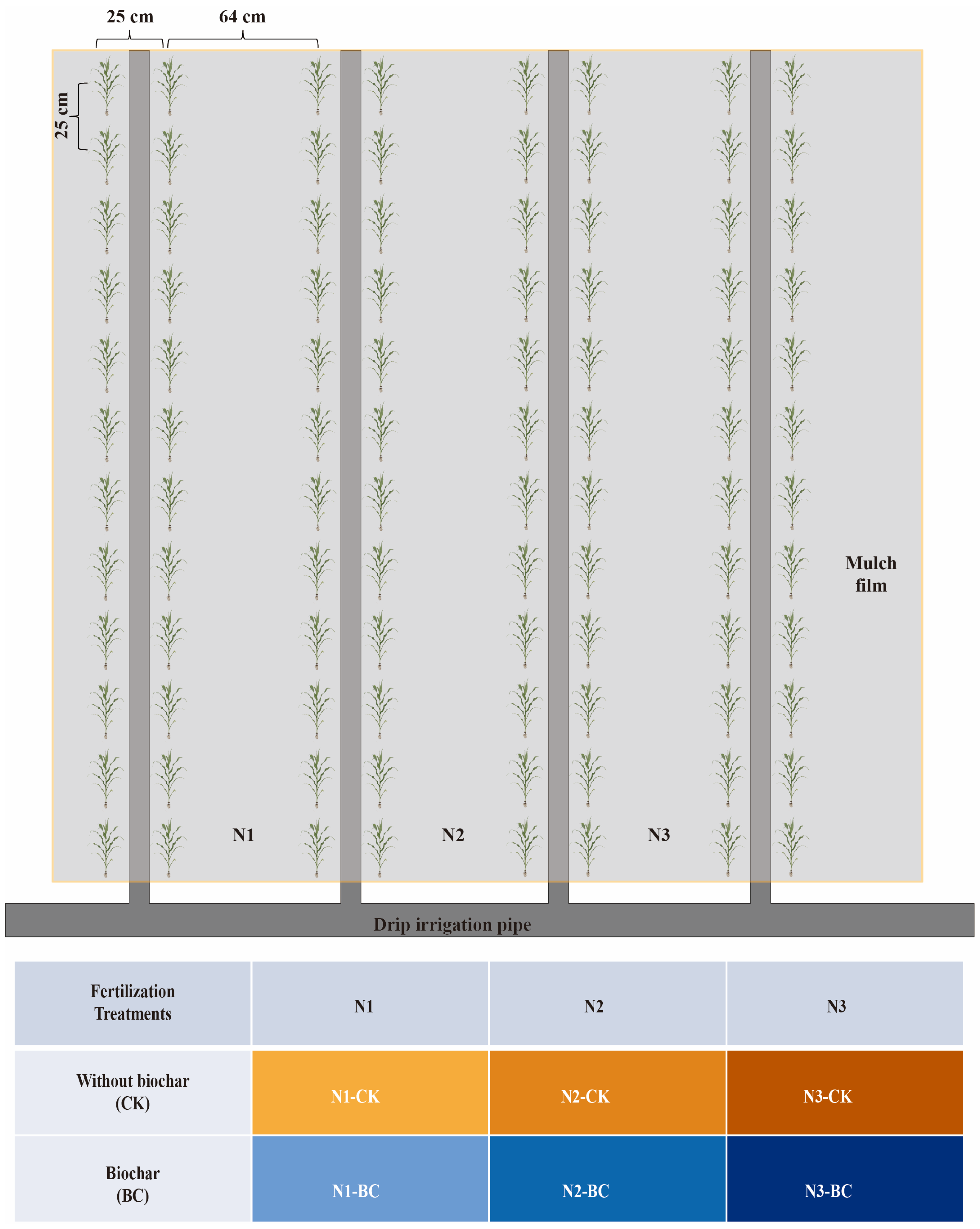
The experiment was conducted using a two-factor randomized complete block design with three replicates per treatment. The factors consisted of three levels of nitrogen (N) fertilization rate—N1 (246 kg N ha–1, a 30% reduction), N2 (298 kg N ha–1, a 15% reduction), both relative to the conventional rate, and N3 (351 kg N ha–1, conventional rate)—and biochar (BC) application at two levels—with BC (15 tons ha–1) and without (CK, control). The factorial combination resulted in six distinct treatment groups. The same experimental layout was maintained in both years, comprising a total of 18 plots annually, each measuring 10 m × 10 m and separated by 1 m-wide isolation belts to prevent cross-interference. The raw material of the used BC (Henan Jiahe Water Purification Materials Co., Ltd., Henan, Zhengzhou, China) consisted of corn stover pyrolyzed at 500 °C, a warming rate of 7.8 °C min−1. This material was in the form of black powder, with the following compositional characteristics: 695 m2 g−1 specific surface area, 0.38 cm3 g −1 pore volume, 174.52 g kg −1 SOC, 2.03 g kg −1 TN, 1.02 g kg −1 TP, and pH 9.82 [21]. A schematic representation of the experimental layout is presented in Figure 1.

2.2. Plant Materials and Growth Conditions

Silage maize (Zea mays L. cv. ‘Jinling 67’) was cultivated in both seasons under a transparent polyvinyl chloride (PVC) plastic film mulch and a drip irrigation system, representing the local conventional practice. The planting pattern, a wide-narrow row configuration with a plant spacing of 25 cm, narrow row spacing of 25 cm, and wide row spacing of 64 cm, was consistent across years, achieving a planting density of approximately 140,300 plants ha−1.
Biochar used was from corn stover via slow pyrolysis at 500 °C, as described in [21]. Its properties included a surface area of 695 m2 g−1, pH of 9.82, organic carbon of 174.52 g kg−1, total nitrogen of 2.03 g kg−1, and phosphorus of 1.02 g kg−1. It was applied at 15 t ha−1 by incorporating it into the 0–20 cm soil layer in April yearly.
Drip irrigation tapes with built-in emitters (30 cm spacing; flow rate of 2.2 L h−1 per emitter) were laid parallel to the planting direction. A unified irrigation schedule was applied to all treatments, commencing in late April and concluding in early-September. The total seasonal irrigation amount was 3757 m3 ha−1, with irrigation events typically scheduled at 7–10 d intervals and adjusted ac-cording to the crop water requirements and prevailing weather conditions. Field preparation before planting involved conventional tillage (plowing to a depth of 20–25 cm followed by harrowing), during which biochar was incorporated. Other management practices, including manual weed control and pest monitoring (with intervention only when thresholds were met), were uniformly applied across all plots following local conventional protocols for silage maize.
All management practices were consistent between the two years. The growing season extends from early May to early September. All treatments received uniform irrigation and fertilization. Fertigation was applied using a hydraulic proportional fertilizer pump, with urea (N, 46%), monoammonium phosphate (N, 11%; P2O5, 55%), and potassium chloride (K2O, 57%) as the fertilizer sources. The total nitrogen fertilizer was split-applied in the same proportions each season: 26.97% at the seedling stage, 41.20% at the jointing stage, and 31.84% at the tasseling stage. All other field management practices adhered to the local conventional protocols.

2.3. Soil Sample Collection

Soil samples were collected from 0 to 10 cm depth during key growth stages of maize in both 2023 and 2024: the seedling stage (late May), jointing stage (mid-June), tasseling stage (mid-July), and at harvest (mid-September).
Within each experimental plot, a composite soil sample was obtained by combining five sub-samples collected in a zigzag (“S”) pattern using a stainless steel soil auger (3 cm diameter). This compositing strategy was employed to capture within-plot heterogeneity and ensure the representativeness.
After collection, visible plant residues, roots, and stones were removed manually. The composite sample was then thoroughly homogenized by quartering the sample. The homogenized soil was passed through a 2 mm sieve. Each sieved sample was divided into two parts: one part was air-dried at room temperature for the analysis of soil physicochemical properties, and the other part was stored fresh at 4 °C for the determination of microbial biomass carbon and nitrogen.

2.4. Gas Sample Collection and CO2 Flux Measurement

Soil CO2 flux was measured using the static closed-chamber method during the growing seasons (May to September) of 2023 and 2024. Transparent PVC chambers (diameter 25 cm; height 50 cm) were placed on permanent base frames that were installed at the beginning of the experiment. Gas sampling was conducted approximately biweekly between 9:00 and 11:00 a.m. During each sampling, the chamber was sealed onto the base frame using a water-filled groove. Headspace gas samples (50 mL) were collected at 0, 10, 20, and 30 min after closure using a gas-tight syringe and stored in pre-evacuated vials. CO2 concentrations were analyzed within 48 h via gas chromatography (GC, Agilent 7890B).
The CO2 emission flux (F, mg CO2 m−2 h−1) was calculated based on the linear increase in concentration over time, chamber volume and area, and was adjusted for temperature. Fluxes were used only if the linear regression had an R2 > 0.95. Cumulative seasonal emissions were calculated using trapezoidal integration of the fluxes between the sampling dates over the entire measurement period [21]. Calculation formula for CO2 emission fluxes (F) during the measurement period:
F = C 2 × V × M 0 × 273 / T 2 C 1 × V × M 0 × 273 / T 1 A × ( t 2 t 1 ) × 22.4
where A is the basal area of the chamber (m2), V is the chamber volume (m3), M0 is the molar mass of CO2, C1 and C2 are the gas volume concentrations at the start and end of closure (mol mol−1), T1 and T2 are the air temperatures inside the chamber at the start and end of closure (°C), and t1 and t2 are the corresponding times (h).
Cumulative seasonal emissions (M, kg ha−1) were calculated by trapezoidal integration of the flux series over the entire measurement period: M = ∑(FN+1 + FN) × 0.5 × (tN+1 + tN) × 24 × 10−2.
Where FN denotes the CO2 flux (mg m−2 h−1) at the N-th sampling, tN is the time elapsed since the first sampling (days), and N is the total number of sampling events.

2.5. Soil Physical Index Measurement

The soil physical properties within the 0–10 cm depth were determined. The volumetric water content and soil temperature were monitored dynamically throughout the growing season, whereas the soil bulk density was measured once at the conclusion of the experiment.

2.6. Soil Carbon and Nitrogen Index Determination

All soil carbon and nitrogen indices were analyzed for the 0–10 cm soil depth. The specific indices and their determination methods are as follows.
Soil organic carbon (SOC): Determined using the external heating potassium dichromate method. Under heating conditions, soil organic carbon is oxidized by a potassium dichromate-sulfuric acid solution. The remaining potassium dichromate was titrated with ferrous sulfate, and the amount of potassium dichromate consumed was used to calculate the organic carbon content [22].
Microbial biomass carbon (MBC): Determined using the chloroform fumigation-K2SO4 extraction method. Equal amounts of fresh soil samples were taken; one was fumigated with ethanol-free chloroform for 24 h, and the other served as the non-fumigated control. Both are then extracted by shaking with 0.5 mol L−1 K2SO4 solution, and the organic carbon in the extract is measured using a TOC analyzer. The MBC content was calculated as the difference in organic carbon between the fumigated and non-fumigated extracts divided by a conversion coefficient (Kᴱᶜ = 0.45) [23].
Dissolved organic carbon (DOC): A fresh soil sample was weighed and directly extracted by shaking with 0.5 mol L−1 K2SO4 solution. The extract was filtered through a 0.45 μm membrane, and the organic carbon concentration in the filtrate was measured using a total organic carbon (TOC) analyzer.
Total nitrogen in soil (TN): Determined using the Kjeldahl method. In the presence of a catalyst, the soil sample was digested with concentrated sulfuric acid, converting all forms of nitrogen into ammonium nitrogen. After alkalization and distillation, ammonia is absorbed by boric acid and titrated with a standard acid [24].
Ammonium nitrogen (NH4+-N) and nitrate nitrogen (NO3-N): Fresh soil samples were extracted by shaking with 2 mol L−1 KCl solution, and the resulting clear extract was filtered. Ammonium nitrogen (NH4+-N) was determined using the indophenol blue colorimetric method, in which ammonium reacts with hypochlorite and phenol in an alkaline medium to form a blue indophenol compound, which is then measured colorimetrically. Nitrate nitrogen (NO3-N) was determined by ultraviolet spectrophotometry at 220 nm, with absorbance at 275 nm used for correction to eliminate interference from organic matter and other substances.

2.7. Statistical Analysis

Data analysis was performed using SPSS 26.0 with a two-way ANOVA to assess the effects of the nitrogen rate, biochar application, and their interaction. A repeated-measures analysis of variance (ANOVA) was applied to the temporal data (Table S1). Significant differences (p < 0.05) were examined using Fisher’s LSD test. Pearson correlation analysis was used to evaluate the relationships among the soil properties. All figures were prepared using Origin 2022 software. Data are presented as mean ± standard deviation (n = 3).

3. Results

3.1. Effects of Biochar Addition on the Physical Environment of Surface Soil

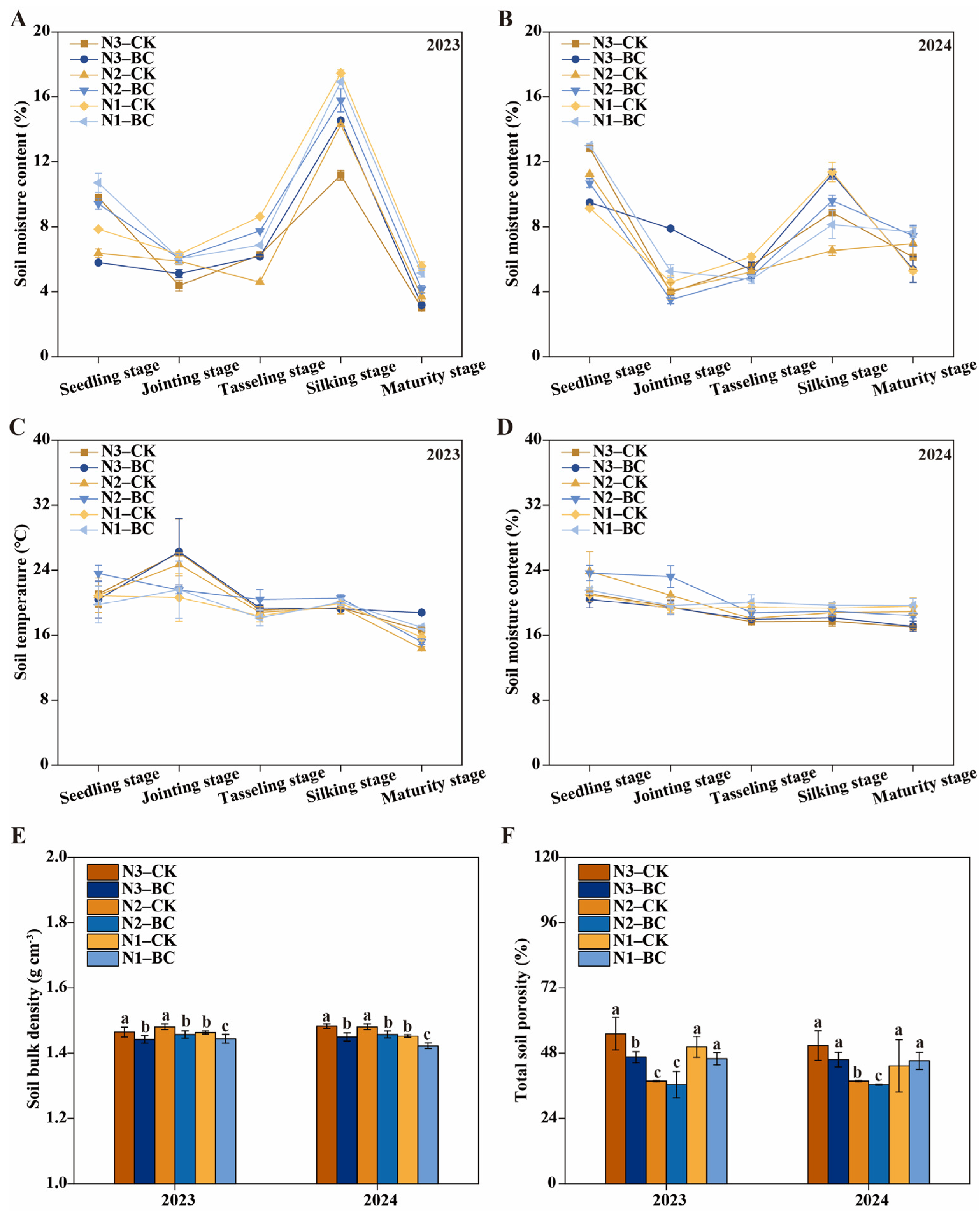
The addition of biochar significantly altered the physical properties of the topsoil (0–10 cm), and these effects were modulated by the nitrogen application levels. Biochar consistently enhanced water retention under reduced-N conditions across both growing seasons (Figure 2A,B). In the N2-BC treatment (15% nitrogen reduction), the volumetric water content was significantly higher than that in the N2-CK control, with the most pronounced differences occurring during the high water-demand stages. For instance, soil moisture during the tasseling stage of 2023 was 68.6% higher in N2-BC than that in N2-CK. A similar enhancement was observed in 2024, where the moisture content during silking increased from 6.54% in N2-CK to 9.60% in N2-BC.
Concurrent with moisture dynamics, biochar amendment induced phase-dependent shifts in soil temperature (Figure 2C,D). Under N2-BC treatment in 2023, the soil temperature at jointing was 21.55 °C, which was 12.8% lower than the 24.7 °C in N2-CK. In contrast, at maturity, the temperature in N2-BC (15.18 °C) exceeded that in N2-CK (14.35 °C) by 5.8%. This differential pattern was also evident in 2024, with N2-BC showing an 11.0% increase in jointing. A warming effect was similarly noted in the deep nitrogen reduction treatment (N1-BC), where the soil temperature at maturity in 2023 increased by 7.7% relative to the control.
These changes in the hydrothermal regime of the soil were paralleled by improvements in its physical structure, as confirmed by post-harvest measurements (Figure 2E,F). In the N1-BC treatment, soil bulk density decreased by approximately 2.0–2.1% across both years compared to N1-CK. Correspondingly, the total porosity in the 2024 N1-BC treatment increased by 4.3%, from 43.27% to 45.12%.

3.2. Effects of Biochar Addition on Carbon Pools in Surface Soil

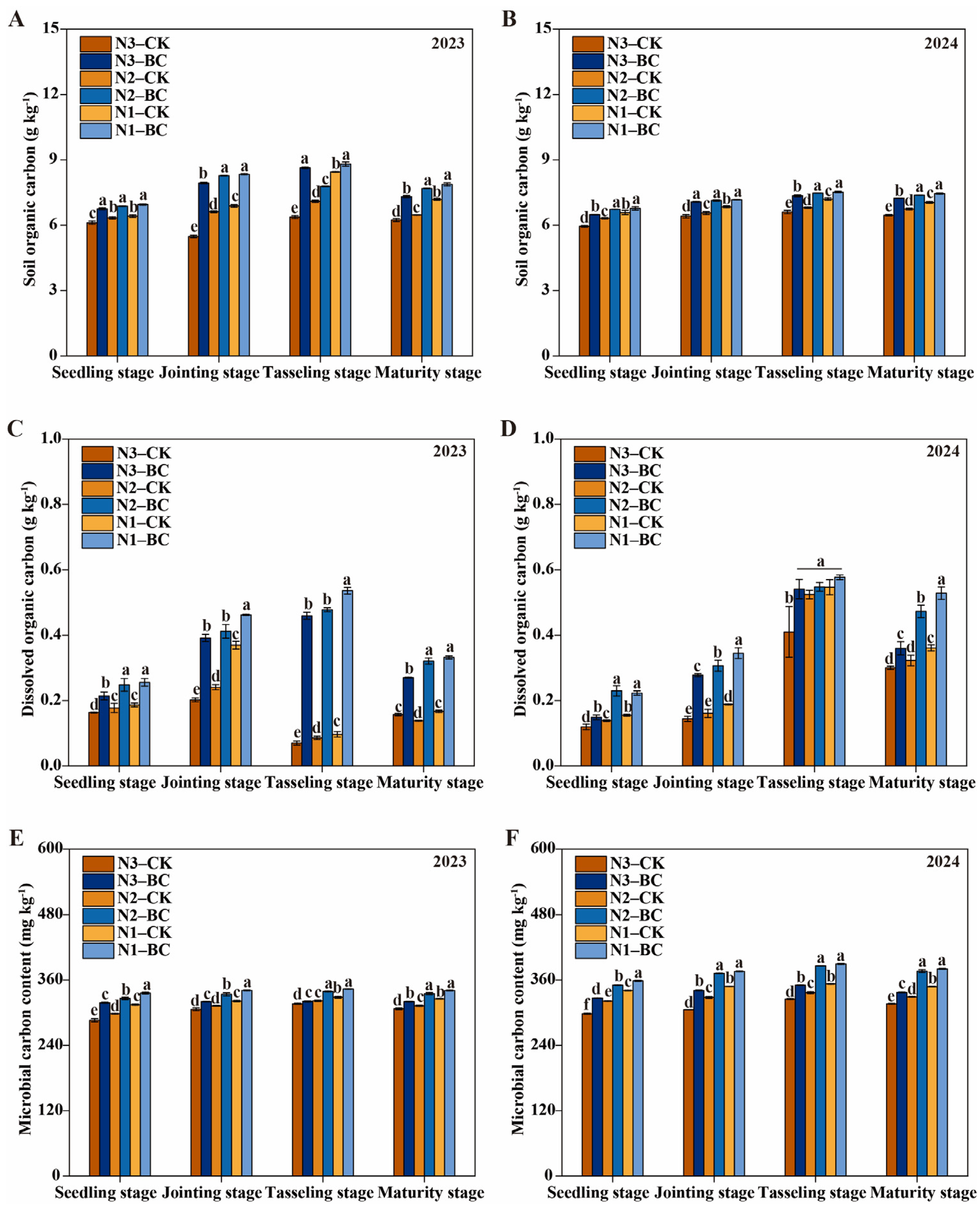
Biochar addition significantly increased the concentrations of all measured soil carbon fractions, with the magnitude of enhancement varying among carbon types and nitrogen levels (Figure 3). The soil organic carbon (SOC) content was elevated in the biochar-amended plots across the nitrogen treatments (Figure 3A,B). Under conventional nitrogen (N3-BC), SOC increased from 6.41 to 7.07 g kg−1 at the jointing stage in 2024, and from 6.61 to 7.36 g kg−1 at tasseling. In the reduced nitrogen treatment N2-BC, SOC at maturity in 2024 increased from 6.81 to 7.48 g kg−1.
A more pronounced response was observed for dissolved organic carbon (DOC), which exhibited the largest relative increase among the carbon pools (Figure 3C,D). During the tasseling stage of 2023, DOC concentrations increased by more than 455% across all nitrogen levels with biochar addition. For example, in the N3-BC treatment, DOC increased from 0.07 g kg−1 to 0.46 g kg−1. This enhancing effect persisted in 2024, with DOC levels during jointing increasing by over 83% in all biochar treatments compared to their respective controls.
Biochar amendment also consistently increased microbial biomass carbon (MBC) (Figure 3E,F). The most notable effect was observed under N2-BC treatment during the tasseling stage of 2024, where MBC increased from 336.74 mg kg−1 to 386.22 mg kg−1. During the seedling stage in 2023, MBC across biochar treatments was 6.8–11.2% higher than that in non-amended controls.

3.3. Effects of Biochar Addition on Nitrogen Availability in Surface Soil

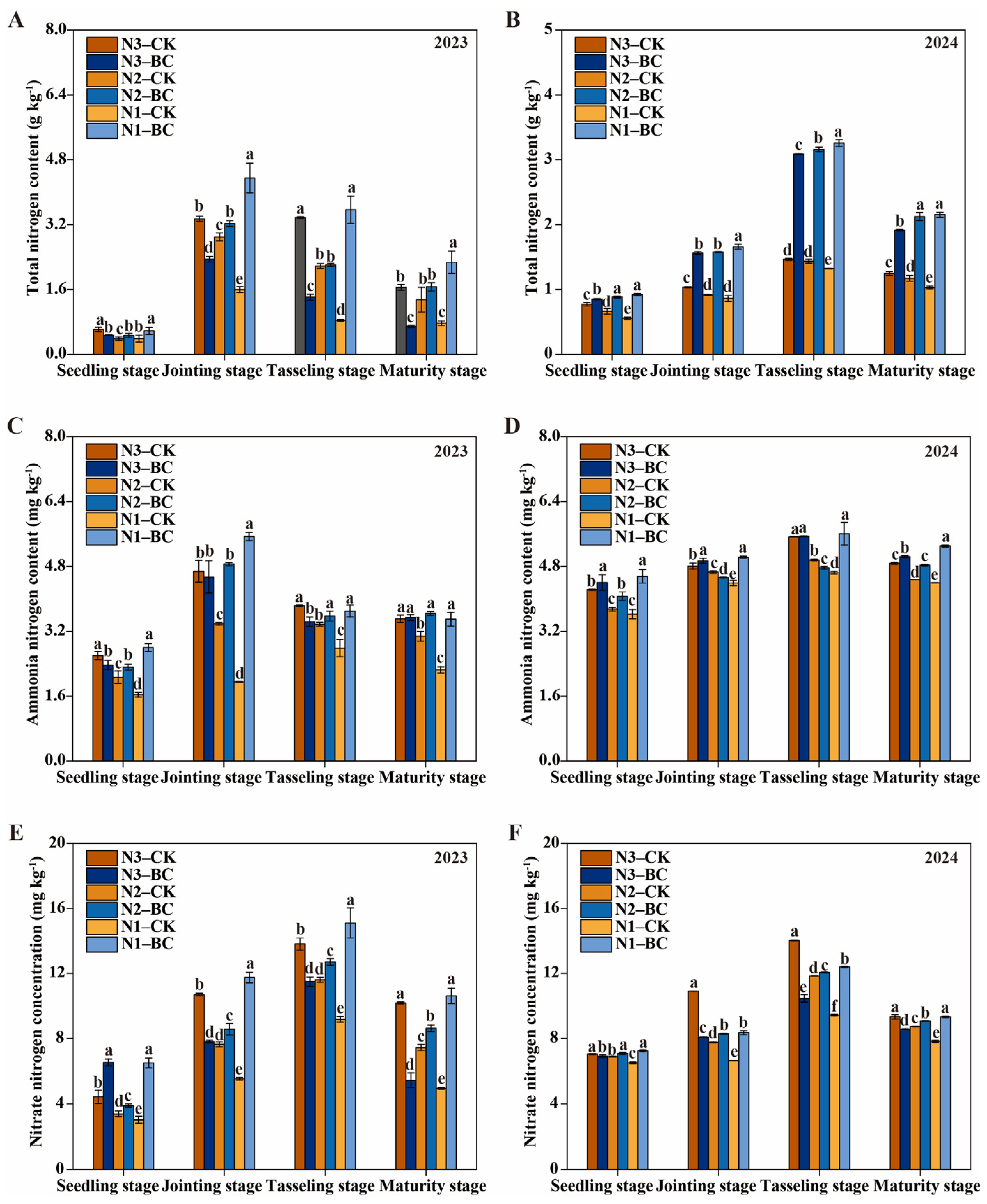
Biochar amendment significantly increased the concentrations of all measured soil nitrogen fractions compared to non-amended controls, with the most substantial enhancements occurring under reduced nitrogen regimes (Figure 4). The total soil nitrogen (TN) content showed a marked increase in the biochar treatments, particularly under nitrogen reduction (Figure 4A,B). In 2023, TN in the N1-BC treatment (30% nitrogen reduction) increased from 1.60 to 4.35 g kg−1 at the jointing stage and from 0.84 to 3.57 g kg−1 at tasseling, relative to the N1-CK. This enhancing effect continued in 2024, with TN in N1-BC increasing from 1.32 to 3.26 g kg−1 at tasseling. Under moderate nitrogen reduction (N2-BC), TN at tasseling in 2024 increased from 1.44 to 3.16 g kg−1.
Similarly, the concentrations of mineral nitrogen forms were elevated with biochar addition (Figure 4C,D). For ammonium nitrogen (NH4+-N), the N1-BC treatment in 2023 showed an increase from 1.95 to 5.54 mg kg−1 at jointing and from 1.63 to 2.80 mg kg−1 at the seedling stage. In 2024, ammonium nitrogen levels in N1-BC remained 14.5–25.7% higher than those in the control across growth stages.
Nitrate nitrogen (NO3-N) exhibited a parallel response, with notable increases under reduced nitrogen conditions (Figure 4E,F). In the 2023 N1-BC treatment, nitrate nitrogen increased from 5.54 to 11.74 mg kg−1 at jointing and from 3.03 to 6.50 mg kg−1 in the seedling stage. During the 2024 season, nitrate nitrogen in N1-BC was consistently 11.3% to 31.5% higher than that in the control.

3.4. Effects of Biochar Addition on CO2 Emission Flux and Accumulation

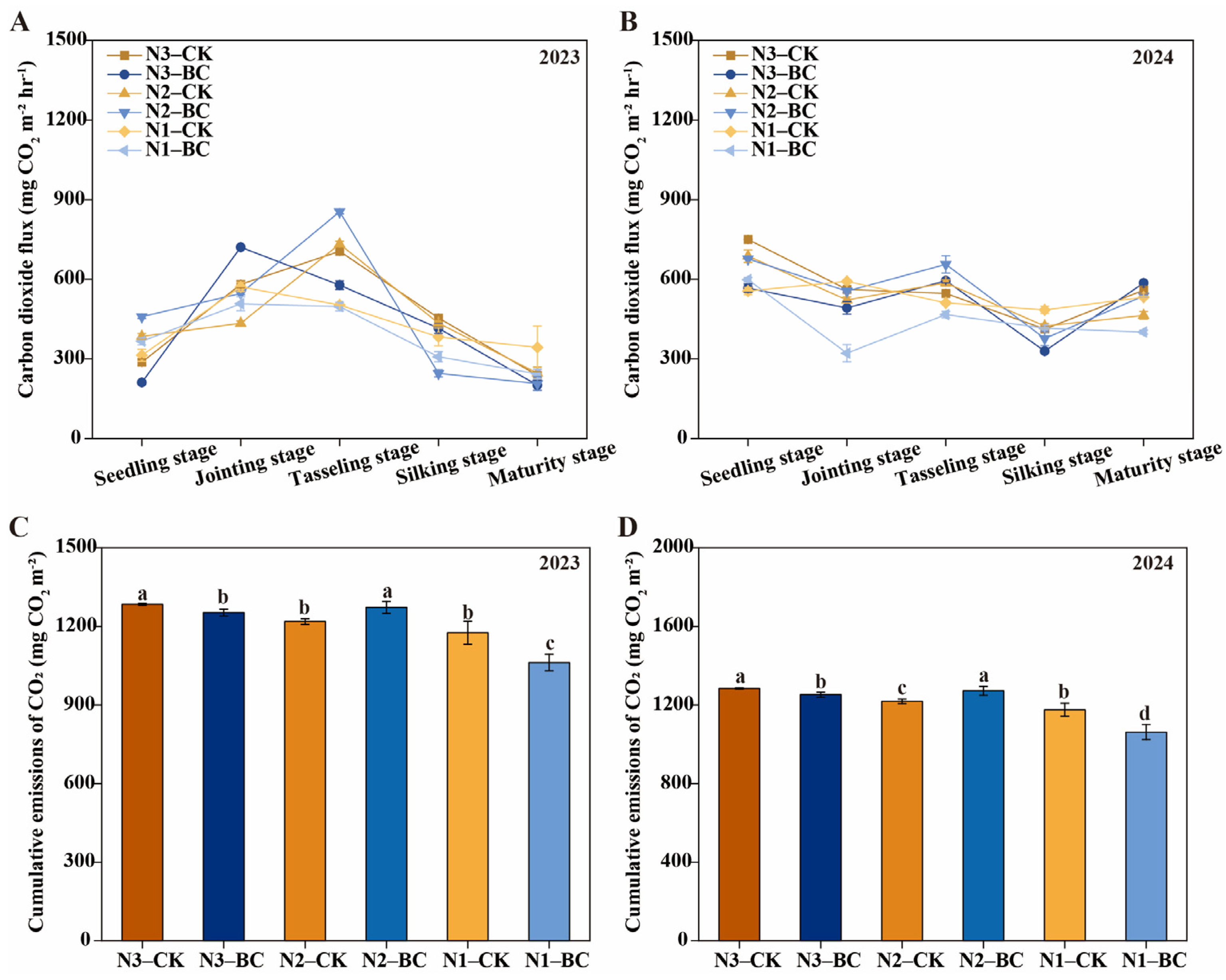
Biochar addition regulated soil CO2 emissions, with the direction and magnitude of the effect systematically varying with the nitrogen application level and crop growth stage (Figure 5A,B). The dynamics of CO2 flux differed between the treatments. Under conventional nitrogen application (N3-BC), biochar generally reduced flux compared to the N3-CK control. For instance, during the seedling stage in 2023, the flux decreased from 287.17 to 210.85 mg CO2 m−2 h−1, and during the silking stage in 2024, it decreased from 411.98 to 328.75 mg CO2 m−2 h−1. In contrast, under the moderate nitrogen reduction treatment (N2-BC), CO2 flux during the tasseling stage of 2023 was 16.6% higher than that in the N2-CK control (increasing from 732.53 to 854.22 mg CO2 m−2 h−1). Under deep nitrogen reduction (N1-BC), a pronounced suppression was observed during the jointing stage of 2024, with the flux decreasing by 45.7% compared to that of N1-CK.
The cumulative CO2 emissions over the entire growing season reflected these dynamics (Figure 5C,D). The most significant reduction occurred under the N1-BC treatment, where cumulative emissions decreased by 9.7% in 2023 (from 1175.41 to 1061.76 g CO2 m−2) and by 21.4% in 2024 (from 1221.58 to 959.66 g CO2 m−2) relative to the control. Under conventional nitrogen (N3-BC), the reduction in cumulative emissions was smaller, amounting to 2.5% in 2023 and 9.0% in 2024, respectively. In the N2-BC treatment, cumulative emissions showed a slight increase compared to that in the control.

3.5. Intrinsic Relationships Among Various Indicators in Surface Soil

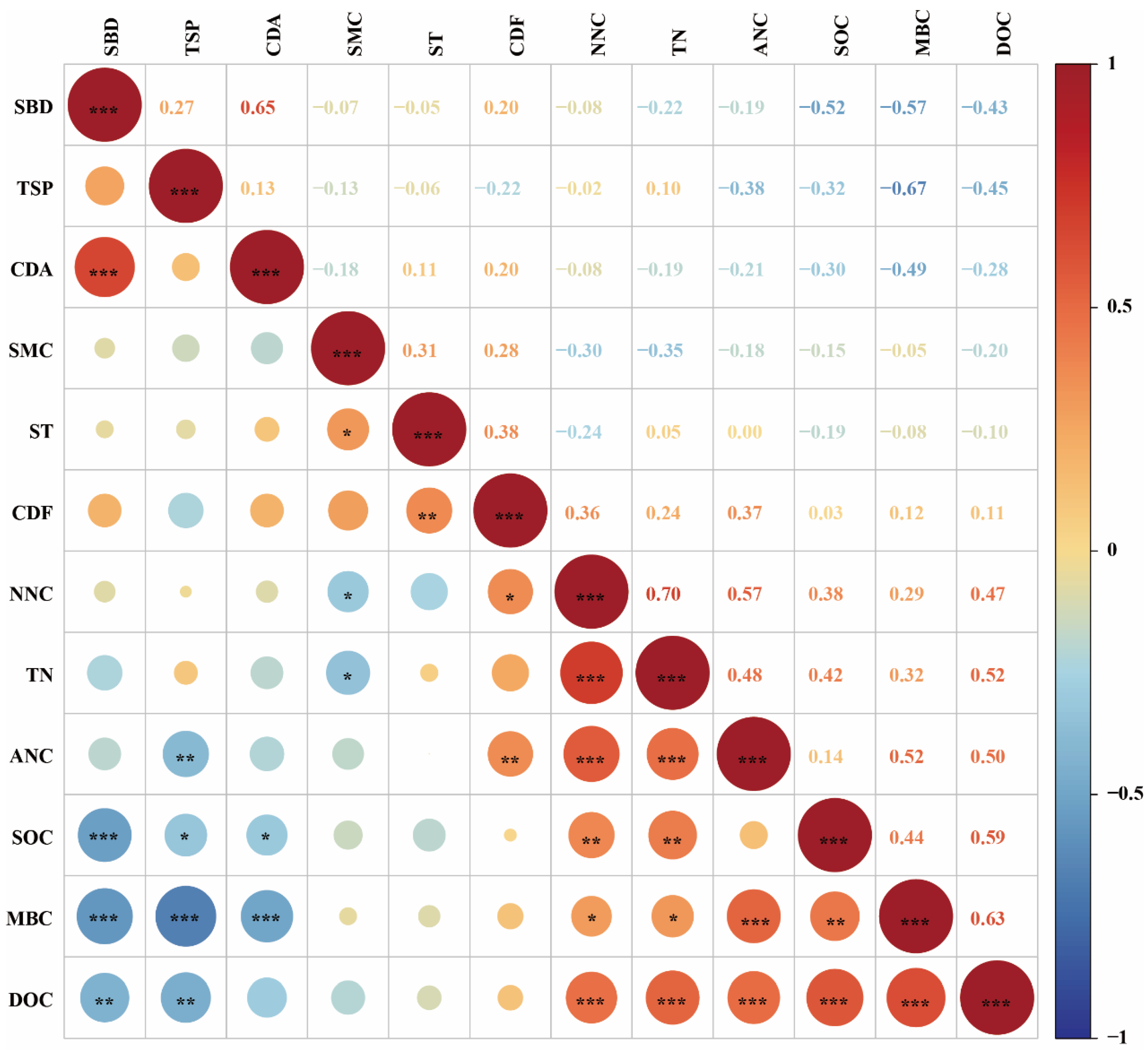
Correlation analysis revealed systematic relationships among the soil physical properties, carbon and nitrogen fractions, and CO2 emission indicators (Figure 6). The physical structure of the soil was correlated with the carbon pool components. Soil bulk density (SBD) was significantly negatively correlated with soil organic carbon (SOC; r = −0.52), microbial biomass carbon (MBC; r = −0.57), and dissolved organic carbon (DOC; r = −0.43). Total soil porosity (TSP) was negatively correlated with MBC (r = −0.67) and DOC (r = −0.45). Strong positive correlations were observed within the soil nitrogen pool. Total nitrogen (TN) showed significant positive correlations with both nitrate nitrogen (r = 0.70) and ammonium nitrogen (r = 0.48) concentrations. Positive linkages were also observed among the different carbon fractions. SOC was positively correlated with DOC (r = 0.59) and MBC (r = 0.44) concentrations.

4. Discussion

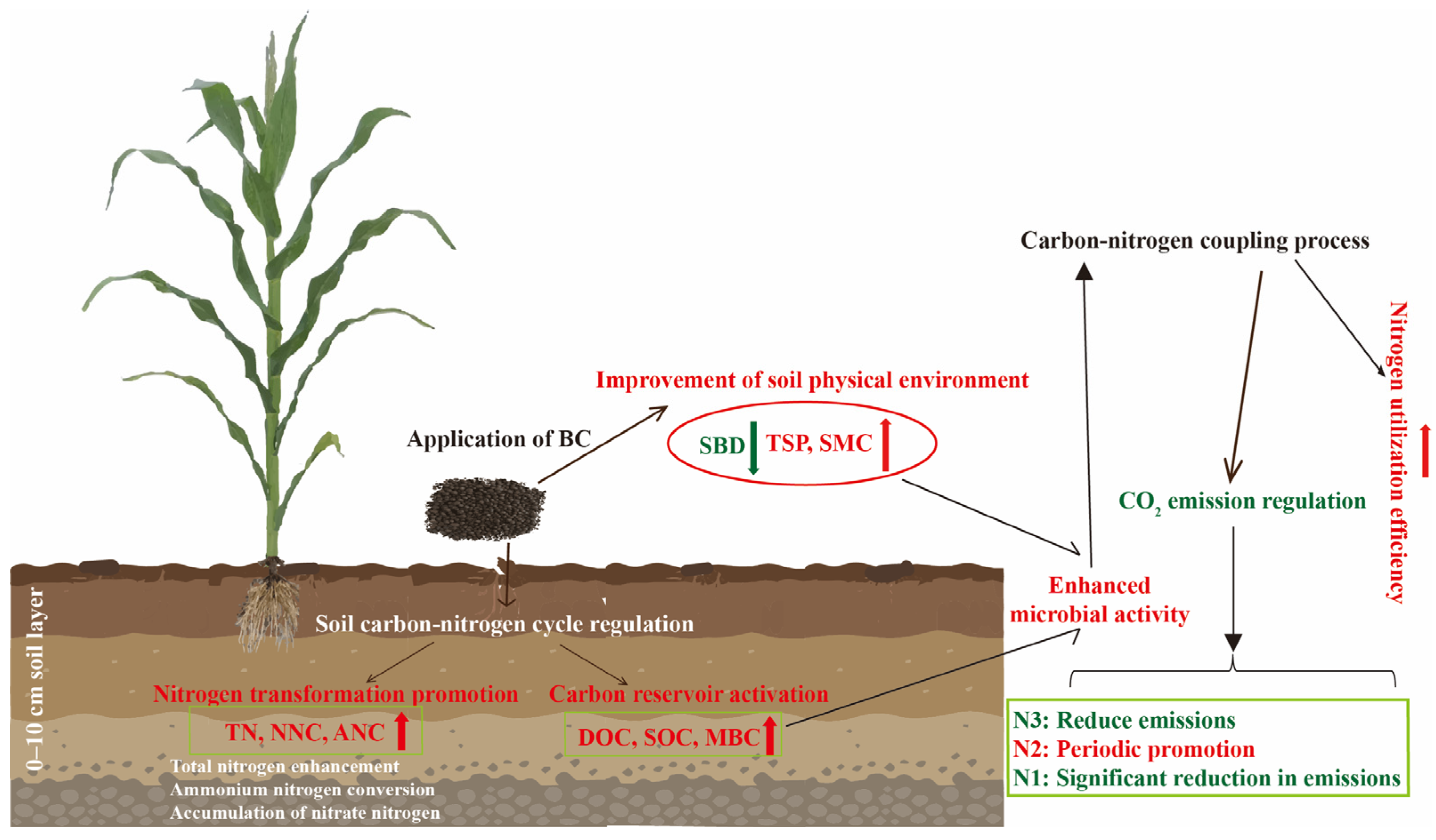
Through two consecutive years of field experiments, this study systematically revealed the multidimensional effects of biochar on soil physical properties, carbon and nitrogen cycling, and CO2 emissions in drip-irrigated maize systems under a plastic mulch. This study demonstrates that the effects of biochar on soil carbon, nitrogen, and greenhouse gas emissions are fundamentally dependent on the nitrogen fertilization levels. Crucially, biochar revealed its greatest potential under reduced nitrogen regimes, where it delivered synergistic improvements in soil fertility and significantly mitigated CO2 emissions (Figure 7). This finding provides a new perspective for understanding the mechanisms underlying biochar application in farmland.

4.1. Biochar Improves the Soil Physical Environment in a Nitrogen-Dependent Manner

This study demonstrated that biochar significantly improved the soil physical environment during nitrogen reduction. Under 15% nitrogen reduction with biochar (N2-BC) condition, biochar not only increased soil water retention compared to N2-CK (Figure 2A), a phenomenon attributable to its high porosity and specific surface area, which are known to enhance water holding capacity [25], but also exerted contrasting effects on soil temperature across growth stages. Specifically, it was associated with a lower temperature at jointing and a higher temperature at tasseling relative to the control (Figure 2C). Notably, this phase-dependent response may also be influenced by the dynamic shading effect of the maize canopy. The differential thermal effect likely stems from the inherent properties of biochar, such as its dark color, low thermal conductivity, and porous structure [26], which interact with the dynamic field conditions. For instance, during jointing, high canopy cover and soil moisture may accentuate the insulating properties of biochar, buffering heat transfer. Conversely, during tasseling, greater soil exposure may allow the radiative absorption of biochar to promote plant warming. Simultaneously, under 30% nitrogen reduction (N1-BC), biochar significantly reduced soil bulk density and increased total porosity compared with N1-CK (Figure 2E). This structural improvement is consistent with the known benefits of its porous nature [27] and is supported by detailed textural analyses of biochar [26]. Overall, biochar amendment is recognized as an effective strategy for improving soil structure, water retention, and nutrient conditions [28].

4.2. Differential Activation of Soil Carbon and Nitrogen Pools by Biochar

Biochar application induced the differential activation of soil carbon pools, characterized by a concurrent but distinct enhancement of both stable and active carbon fractions. As shown in Figure 3, biochar not only significantly increased the pool of stable soil organic carbon (SOC) but also disproportionately stimulated the concentrations of active carbon components, namely, dissolved organic carbon (DOC) and microbial biomass carbon (MBC). This effect was particularly pronounced under reduced-N conditions. The exceptional rise in DOC (e.g., >557.4% at tasseling) and the significant boost in MBC indicate a substantial shift in carbon cycling toward a more active and microbially driven state. We interpret this marked increase in active carbon fractions as a result of the combined conditions of our system: the addition of labile compounds from biochar itself, coupled with a film-mulched, drip-irrigated environment that likely enhanced the solubilization of native soil organic matter and stimulated rhizosphere activity. This general pattern of biochar-mediated shifts in carbon dynamics is consistent with the findings of earlier studies [29].
Concurrently, biochar exerted a strong synergistic effect on soil nitrogen availability, especially under nitrogen-reduced regimes (Figure 4). The dramatic increases in total nitrogen (TN), ammonium nitrogen, and nitrate nitrogen in treatments such as N1-BC indicate a powerful nitrogen retention capacity. This is likely achieved through a combination of physical adsorption by the porous structure of biochar, which reduces leaching losses, and the modulation of microbial nitrogen transformation processes (e.g., nitrification and denitrification) via changes in the soil microenvironment [3,30]. The co-occurrence of enhanced active carbon pools and improved nitrogen availability underscores the synergistic co-activation of soil carbon and nitrogen cycles. This synergy helps maintain and even enhance soil fertility and microbial metabolic activity, thereby supporting crop growth despite reduced mineral nitrogen input. The observed negative correlations between soil bulk density (SBD) and total porosity (TSP) with MBC may reflect biochar-induced alterations in pore architecture that modulate microbial habitat and substrate accessibility in the short term. Furthermore, the predominance of nitrate under oxic conditions suggests that microbial activity was driven more by biochar-derived labile carbon than by nitrogen availability, reinforcing the central role of carbon supply in sustaining soil function under N-reduced regimes.

4.3. Nitrogen-Level-Dependent Regulation of CO2 Emissions

Our results clearly demonstrate a nitrogen level-dependent regulatory mechanism of biochar on soil CO2 emissions (Figure 5). Under conventional nitrogen application (N3-BC), biochar suppressed CO2 flux (20.2–26.6% reduction compared to N3-CK), which aligns with reports of biochar-induced reductions under high-N conditions, potentially through alterations in microbial community structure [31]. In contrast, under moderate nitrogen reduction (N2-BC), a distinct pattern emerged, with a transient increase in CO2 flux (16.6% higher than N2-CK). This shift from suppression to stimulation coincided with the period of maximum soil DOC concentration (Figure 3C,D) and likely reflects a temporary priming effect, where the substantial input of labile carbon from biochar stimulated microbial respiration under moderate N limitation.
Most significantly, under deep nitrogen reduction (N1-BC), biochar application resulted in a net 21.4% decrease in cumulative CO2 emissions (Figure 5C). This ultimate suppression aligns with the integrated improvements in the soil environment documented in this study: the enhancement of soil structure (reduced bulk density and increased porosity; Figure 2E,F), which can promote physical carbon protection, coupled with significant increases in both soil carbon (SOC, Figure 3A,B) and nitrogen availability (Figure 4). These concurrent improvements are consistent with the role of biochar in promoting carbon stabilization and enhancing nutrient retention [32]. The significant correlations between reduced soil bulk density, increased carbon pools, and lower cumulative emissions (Figure 6) provide statistical support for this integrated pathway.
The promising findings of this study should be considered in their specific context. The observed synergistic effects were based on a single type of corn stover biochar applied in a film-mulched, drip-irrigated system over two years, with measurements focused on the 0–10 cm topsoil layer. While this provides clear proof of concept for nitrogen-dependent mechanisms in the surface horizon, the long-term persistence of these benefits, their generalizability to biochar with contrasting properties, their dynamics in deeper soil profiles, and the underlying microbial drivers warrant further investigation through long-term trials and integrated studies.

5. Conclusions

This study shows that biochar acts as a key mediator in reshaping carbon and nitrogen cycling in agroecosystems under nitrogen reduction strategies. Biochar’s effects on soil fertility and greenhouse gas emissions depend on nitrogen levels, providing a framework for targeted application. In deep nitrogen reduction, biochar creates a synergy between carbon sequestration, nitrogen retention, and emission reduction by improving soil structure, activating carbon and nitrogen pools, and promoting efficient microbial metabolism. This transforms yield maintenance and environmental protection trade-offs into co-benefits for farmers. Integrating biochar into reduced-nitrogen, film-mulched farming systems enables lower synthetic fertilizer use while maintaining soil health and reducing the carbon footprint. Future studies should focus on optimizing biochar for specific contexts and validating the long-term benefits of this practice.

Supplementary Materials

The following supporting information can be downloaded at: https://www.mdpi.com/article/10.3390/agronomy16010010/s1. Table S1: Summary of ANOVA Results for Main Effects and Interactions; Figure S1: Temperature and precipitation distribution during the 2023 and 2024 growing seasons.

Author Contributions

Z.J.: writing—original draft, Investigation, Formal analysis, Data curation. Y.L.: Investigation, Data curation, writing—review and editing, Formal analysis, Project administration. G.L.: Investigation, Methodology, Writing—review and editing, supervision, Funding acquisition. Y.T.: Investigation, writing—review and editing, supervision, Project administration, Funding acquisition. H.Z.: Supervision, Investigation, Formal analysis, Methodology. Y.Z.: Methodology, Supervision, Investigation, Validation. Y.X.: Methodology, Investigation, Validation, Project administration. B.W.: Methodology, Investigation, Validation, Project administration. All authors have read and agreed to the published version of the manuscript.

Funding

This work was supported by the Gansu Leading Talent Program (Grant No. GSBJLJ-2023-09); Gansu Provincial Education Department Young Doctor Support Project (Grant No. 2025QB-048); Research Program Sponsored by the State Key Laboratory of Aridland Crop Science of China (Grant No. GSCS-2024-16); Gansu Provincial Major Science and Technology Special Project (Grant No. 24ZD13NA019); 2025 Gansu Provincial Department of Agriculture and Rural Affairs Seed Industry Research Project (Grant No. ZYGG-2025-5); Centralized Guided Local Science and Technology Development Funds Project (Grant No. 24ZYQA023).

Data Availability Statement

Data from this study is available from the corresponding author upon reasonable request.

Acknowledgments

We would like to thank all the people who were involved in the field and laboratory work.

Conflicts of Interest

The authors declare no conflicts of interest.

References

  1. Zhang, H.; Pan, F.; Wen, Z.; Chen, W.; Zhou, C. Impacts of successive Chinese fir plantations on soil carbon and nitrogen dynamics: Conclusive insights from metagenomic analysis. J. Environ. Manag. 2025, 376, 124510. [Google Scholar] [CrossRef] [PubMed]
  2. Chen, Z.; Jin, P.; Wang, H.; Hu, T.; Lin, X.; Xie, Z. Ecoenzymatic stoichiometry reveals stronger microbial carbon and nitrogen limitation in biochar amendment soils: A meta-analysis. Sci. Total Environ. 2022, 838, 156532. [Google Scholar] [CrossRef] [PubMed]
  3. Xue, S.; Yi, X.; Peng, J.; Bak, F.; Zhang, L.; Duan, G.; Liesack, W.; Zhu, Y. Fulvic acid enhances nitrogen fixation and retention in paddy soils through microbial-coupled carbon and nitrogen cycling. Environ. Sci. Technol. 2024, 58, 18777–18787. [Google Scholar] [CrossRef] [PubMed]
  4. Mvila, B.G.; Pilar-Izquierdo, M.C.; Busto, M.D.; Perez-Mateos, M.; Ortega, N. Synthesis and characterization of a stable humic-urease complex: Application to barley seed encapsulation for improving N uptake. J. Sci. Food Agric. 2016, 96, 2981–2989. [Google Scholar] [CrossRef]
  5. Wang, B.; Huang, S.; Li, Z.; Zhou, Z.; Huang, J.; Yu, H.; Peng, T.; Song, Y.; Na, X. Factors driving the assembly of prokaryotic communities in bulk soil and rhizosphere of Torreya grandis along a 900-year age gradient. Sci. Total Environ. 2022, 837, 155573. [Google Scholar] [CrossRef]
  6. Shen, Z.; Jin, F.; Wang, F.; McMillan, O.; Al-Tabbaa, A. Sorption of lead by Salisbury biochar produced from British broadleaf hardwood. Bioresour. Technol. 2015, 193, 553–556. [Google Scholar] [CrossRef]
  7. Yang, X.; Liu, J.; McGrouther, K.; Huang, H.; Lu, K.; Guo, X.; He, L.; Lin, X.; Che, L.; Ye, Z.; et al. Effect of biochar on the extractability of heavy metals (Cd, Cu, Pb, and Zn) and enzyme activity in soil. Environ. Sci. Pollut. Res. 2016, 23, 974–984. [Google Scholar] [CrossRef]
  8. Fungo, B.; Lehmann, J.; Kalbitz, K.; Thionģo, M.; Okeyo, I.; Tenywa, M.; Neufeldt, H. Aggregate size distribution in a biochar-amended tropical Ultisol under conventional hand-hoe tillage. Soil Tillage Res. 2017, 165, 190–197. [Google Scholar] [CrossRef]
  9. Kim, H.S.; Kim, K.R.; Yang, J.E.; Ok, Y.S.; Owens, G.; Nehls, T.; Wessolek, G.; Kim, K.H. Effect of biochar on reclaimed tidal land soil properties and maize (Zea mays L.) response. Chemosphere 2016, 142, 153–159. [Google Scholar] [CrossRef]
  10. Zhang, M.; Cheng, G.; Feng, H.; Sun, B.; Zhao, Y.; Chen, H.; Chen, J.; Dyck, M.; Wang, X.; Zhang, J.; et al. Effects of straw and biochar amendments on aggregate stability, soil organic carbon, and enzyme activities in the Loess Plateau, China. Environ. Sci. Pollut. Res. 2017, 24, 10108–10120. [Google Scholar] [CrossRef]
  11. Fidel, R.B.; Laird, D.A.; Parkin, T.B. Impact of biochar organic and inorganic carbon on soil CO2 and N2O emissions. J. Environ. Qual. 2017, 46, 505–513. [Google Scholar] [CrossRef] [PubMed]
  12. Zheng, N.; Yu, Y.; Shi, W.; Yao, H. Biochar suppresses N2O emissions and alters microbial communities in an acidic tea soil. Environ. Sci. Pollut. Res. 2019, 26, 35978–35987. [Google Scholar] [CrossRef] [PubMed]
  13. Liu, Y.; Zhu, J.; Wu, Y.; Shu, L. Effects of biochar application on the abundance and structure of ammonia-oxidizer communities in coal-mining area. Chin. J. Appl. Ecol. 2017, 28, 3417–3423. [Google Scholar] [CrossRef]
  14. Harter, J.; Weigold, P.; El-Hadidi, M.; Huson, D.H.; Kappler, A.; Behrens, S. Soil biochar amendment shapes the composition of N2O-reducing microbial communities. Sci. Total Environ. 2016, 562, 379–390. [Google Scholar] [CrossRef]
  15. Harter, J.; El-Hadidi, M.; Huson, D.H.; Kappler, A.; Behrens, S. Soil biochar amendment affects the diversity of nosZ transcripts: Implications for N2O formation. Sci. Rep. 2017, 7, 3338. [Google Scholar] [CrossRef]
  16. Paz-Ferreiro, J.; Liang, C.; Fu, S.; Mendez, A.; Gasco, G. The effect of biochar and its interaction with the earthworm Pontoscolex corethrurus on soil microbial community structure in tropical soils. PLoS ONE 2015, 10, e0124891. [Google Scholar] [CrossRef]
  17. Zou, C.; Zhang, Y.; Zhang, Y.; Guo, X.; Li, M.; Li, T. Regulation of biochar on matrix enzyme activities and microorganisms around cucumber roots under continuous cropping. Chin. J. Appl. Ecol. 2015, 26, 1772–1778. [Google Scholar] [CrossRef]
  18. Wei, Q.; Xu, J.; Li, Y.; Liao, L.; Liu, B.; Jin, G.; Hameed, F. Reducing surface wetting proportion of soils irrigated by subsurface drip irrigation can mitigate soil N2O emission. Int. J. Environ. Res. Public Health 2018, 15, 2747. [Google Scholar] [CrossRef]
  19. Sadasivam, B.Y.; Reddy, K.R. Adsorption and transport of methane in landfill cover soil amended with waste-wood biochars. J. Environ. Manag. 2015, 158, 11–23. [Google Scholar] [CrossRef]
  20. Zhang, S.; Wang, L.; Wei, W.; Hu, J.; Mei, S.; Zhao, Q.; Tsang, Y.F. Enhanced roles of biochar and organic fertilizer in microalgae for soil carbon sink. Biodegradation 2018, 29, 313–321. [Google Scholar] [CrossRef]
  21. Lu, Y.; Tan, Y.; Li, G.; Yan, L.; Zhu, Y.; Xie, Y.; Wang, B.; Zhang, H.; Jiang, Z. Nitrogen fertilizer reduction and biochar addition change the microbial carbon and nitrogen use efficiency of farmland soils in arid areas. J. Environ. Manag. 2025, 394, 127669. [Google Scholar] [CrossRef]
  22. Walkley, A.; Black, I.A. An examination of the Degtjareff method for determining soil organic matter, and a proposed modification of the chromic acid titration method. Soil Sci. 1934, 37, 29–38. [Google Scholar] [CrossRef]
  23. Vance, E.D.; Brookes, P.C.; Jenkinson, D.S. An extraction method for measuring soil microbial biomass C. Soil Biol. Biochem. 1987, 19, 703–707. [Google Scholar] [CrossRef]
  24. Li, L.; Xia, T.; Yang, H. Seasonal patterns of rhizosphere microorganisms suggest carbohydrate-degrading and nitrogen-fixing microbes contribute to the attribute of full-year shooting in woody bamboo Cephalostachyum pingbianense. Front. Microbiol. 2022, 13, 1033293. [Google Scholar] [CrossRef] [PubMed]
  25. Adhikari, S.; Mahmud, M.A.P.; Nguyen, M.D.; Timms, W. Evaluating fundamental biochar properties in relation to water holding capacity. Chemosphere 2023, 328, 138620. [Google Scholar] [CrossRef]
  26. Liu, S.; Peng, S.; Zhang, B.; Xue, B.; Yang, Z.; Wang, S.; Xu, G. Effects of biochar pyrolysis temperature on thermal properties of polyethylene glycol/biochar composites as shape-stable biocomposite phase change materials. RSC Adv. 2022, 12, 9587–9598. [Google Scholar] [CrossRef]
  27. Wen, Y.; Xu, T.; Chang, W.; Li, K.; Fan, X.; Ping, Y.; Song, F. The synergistic effect of Rhizophagus irregularis and Biochar on the growth of Switchgrass under sodium-saline-alkali stress: Insights from soil mechanical property analysis. Mycorrhiza 2025, 35, 15. [Google Scholar] [CrossRef]
  28. Waheed, A.; Xu, H.; Qiao, X.; Aili, A.; Yiremaikebayi, Y.; Haitao, D.; Muhammad, M. Biochar in sustainable agriculture and Climate Mitigation: Mechanisms, challenges, and applications in the circular bioeconomy. Biomass Bioenergy 2025, 193, 107531. [Google Scholar] [CrossRef]
  29. Prommer, J.; Wanek, W.; Hofhansl, F.; Trojan, D.; Offre, P.; Urich, T.; Schleper, C.; Sassmann, S.; Kitzler, B.; Soja, G.; et al. Biochar decelerates soil organic nitrogen cycling but stimulates soil nitrification in a temperate arable field trial. PLoS ONE 2014, 9, e86388. [Google Scholar] [CrossRef]
  30. Xu, H.; Wang, X.; Li, H.; Yao, H.; Su, J.; Zhu, Y. Biochar impacts soil microbial community composition and nitrogen cycling in an acidic soil planted with rape. Environ. Sci. Technol. 2014, 48, 9391–9399. [Google Scholar] [CrossRef]
  31. Li, H.; Lin, L.; Peng, Y.; Hao, Y.; Li, Z.; Li, J.; Yu, M.; Li, X.; Lu, Y.; Gu, W.; et al. Biochar’s dual role in greenhouse gas emissions: Nitrogen fertilization dependency and mitigation potential. Sci. Total Environ. 2024, 917, 170293. [Google Scholar] [CrossRef]
  32. Gross, C.D.; Bork, E.W.; Carlyle, C.N.; Chang, S.X. Biochar and its manure-based feedstock have divergent effects on soil organic carbon and greenhouse gas emissions in croplands. Sci. Total Environ. 2022, 806, 151337. [Google Scholar] [CrossRef]
Figure 1. Schematic diagram of the experimental design. N1, 246 kg N ha–1; N2, 298 kg N ha–1; N3, 351 kg N ha–1; biochar (BC) application at two levels—with BC (15 tons ha–1) and without (CK). Each treatment was replicated three times, resulting in 18 plots. The farmland in the area uses drip irrigation under plastic film. The experimental plot size is 10 m × 10 m, and a 1 m buffer zone was established to avoid mutual interference.
Agronomy 16 00010 g001
Figure 2. Dynamics of physical indicators in the 0–10 cm soil layer. (A,B) Time series of soil volumetric water content in the 0–10 cm layer; (C,D) Time series of soil temperature in the 0–10 cm layer; (E,F) Soil bulk density in the 0–10 cm layer for each treatment after the experiment. Data are presented as the mean of three replicates (n = 3) with standard deviation given in parenthesis. Different letters indicate a significant difference at p < 0.05.
Agronomy 16 00010 g002
Figure 3. Carbon pools in the 0–10 cm soil layer. (A,B) Soil organic carbon (SOC) content in the 0–10 cm layer; (C,D) Dissolved organic carbon (DOC) content in the 0–10 cm layer; (E,F) Microbial biomass carbon (MBC) content in the 0–10 cm layer. Data are presented as the mean of three replicates (n = 3) with standard deviation given in parenthesis. Different letters indicate a significant difference at p < 0.05.
Agronomy 16 00010 g003
Figure 4. Dynamics of mineral nitrogen in the 0–10 cm soil layer. (A,B) Total nitrogen (TN) content in the 0–10 cm layer; (C,D) Ammonium nitrogen (ANC) content in the 0–10 cm layer; (E,F) Nitrate nitrogen (NNC) content in the 0–10 cm layer. Data are presented as the mean of three replicates (n = 3) with standard deviation given in parenthesis. Different letters indicate a significant difference at p < 0.05.
Agronomy 16 00010 g004
Figure 5. Seasonal dynamics and cumulative emissions of CO2 flux. (A,B) The curve of CO2 flux over time. (C,D) Cumulative CO2 emissions after harvest. Data are presented as the mean of three replicates (n = 3) with standard deviation given in parenthesis. Different letters indicate a significant difference at p < 0.05.
Agronomy 16 00010 g005
Figure 6. Heatmap of correlations among key indicators in the 0–10 cm soil layer. SMC, soil moisture content; ST, Soil temperature; SOC, soil organic carbon; DOC, dissolved organic carbon; MBC, microbial biomass carbon; TN, total nitrogen; SBD, soil bulk density; NNC, nitrate nitrogen content; ANC, ammonium nitrogen content. The darker the color, the greater the absolute value of r. * Means 0.01 < p < 0.05, ** means 0.001 < p < 0.01, and *** means p < 0.001.
Agronomy 16 00010 g006
Figure 7. Conceptual model of biochar regulation of carbon and nitrogen cycles in surface soil under nitrogen reduction systems. Biochar enhances microbial activity and optimizes carbon–nitrogen coupling processes through two pathways: improving soil physical structure (reducing bulk density, increasing porosity, enhancing water retention capacity, and temperature buffering effect) and activating carbon and nitrogen cycles (promoting organic carbon accumulation, increasing active carbon fractions, and enhancing nitrogen transformation). Ultimately, this achieves nitrogen-dependent regulation of greenhouse gas emissions—suppressing CO2 emissions under normal nitrogen application conditions and significantly reducing cumulative emissions under deep nitrogen reduction conditions, forming a synergistic mechanism of ‘improvement-activation-regulation.
Agronomy 16 00010 g007
Disclaimer/Publisher’s Note: The statements, opinions and data contained in all publications are solely those of the individual author(s) and contributor(s) and not of MDPI and/or the editor(s). MDPI and/or the editor(s) disclaim responsibility for any injury to people or property resulting from any ideas, methods, instructions or products referred to in the content.