Article

Response of Yield and Protein Content of Forage Mulberry to Irrigation in North China Plain


1
Shandong Institute of Sericulture, Yantai 264001, China
2
Shandong Academy of Agricultural Sciences, Jinan 250100, China
3
Shandong Engineering Technology Research Center, Yantai 264001, China
*
Author to whom correspondence should be addressed.
Agronomy 2025, 15(5), 1016; https://doi.org/10.3390/agronomy15051016

Submission received: 31 March 2025 / Revised: 19 April 2025 / Accepted: 22 April 2025 / Published: 23 April 2025
(This article belongs to the Section Water Use and Irrigation)

Abstract

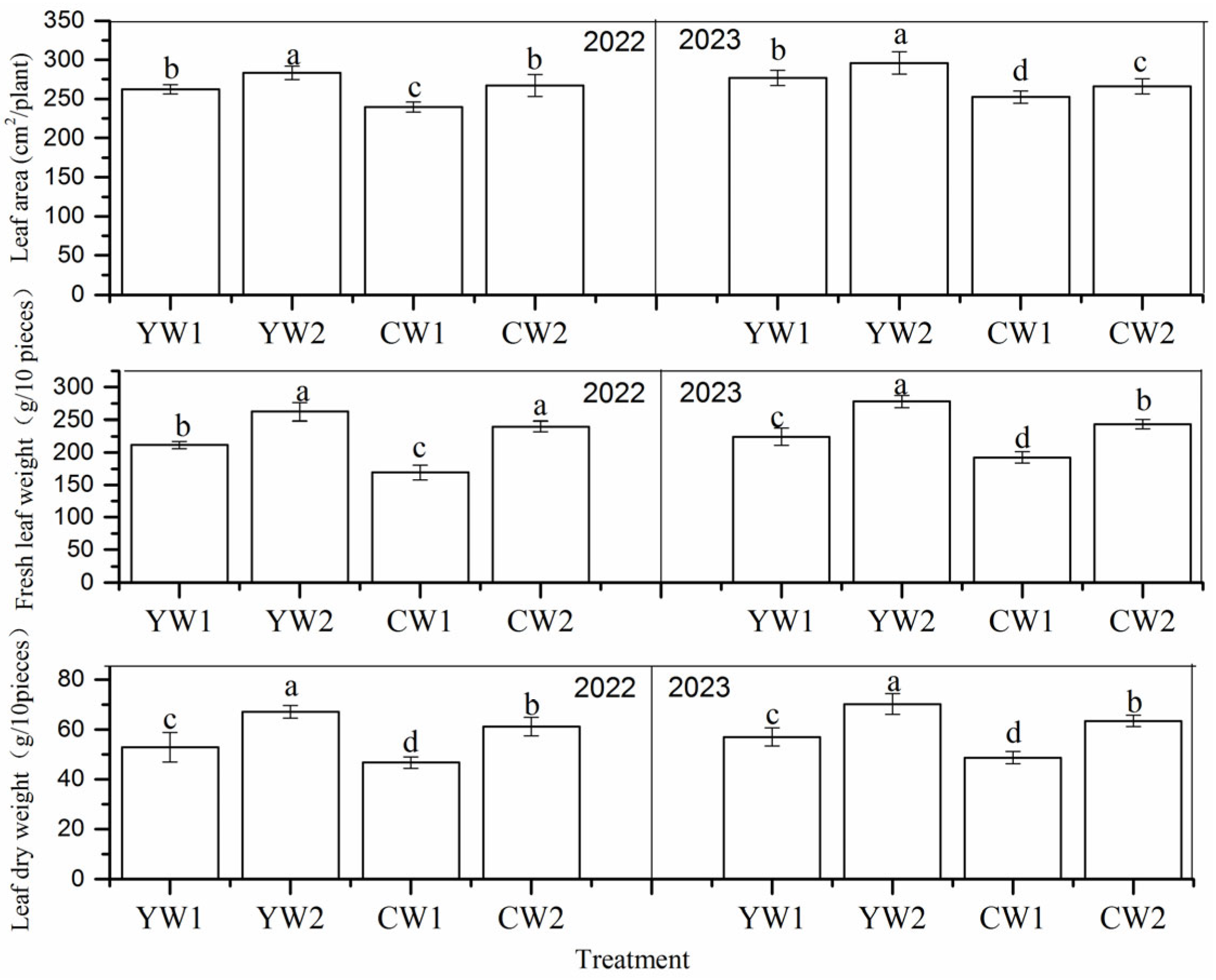
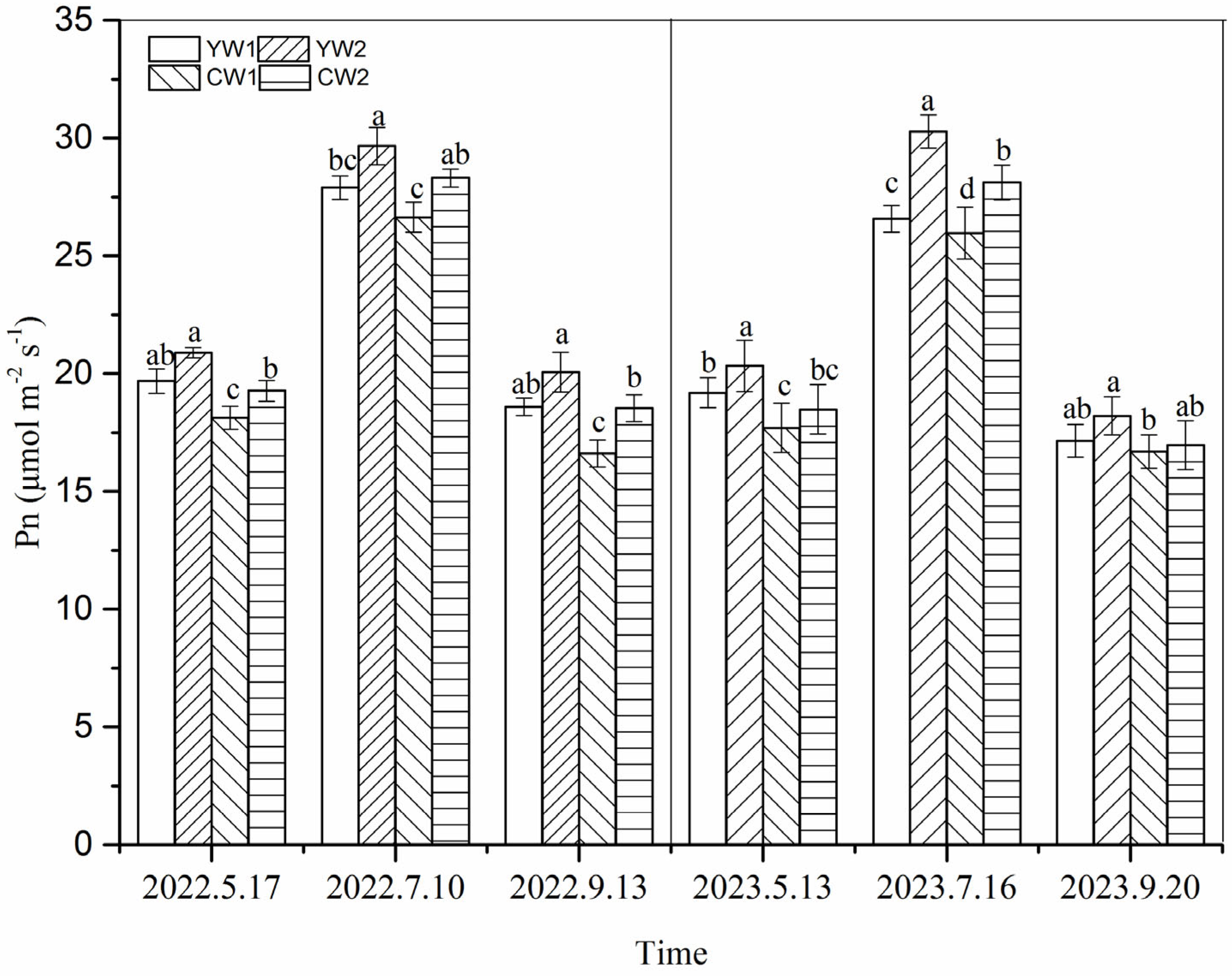
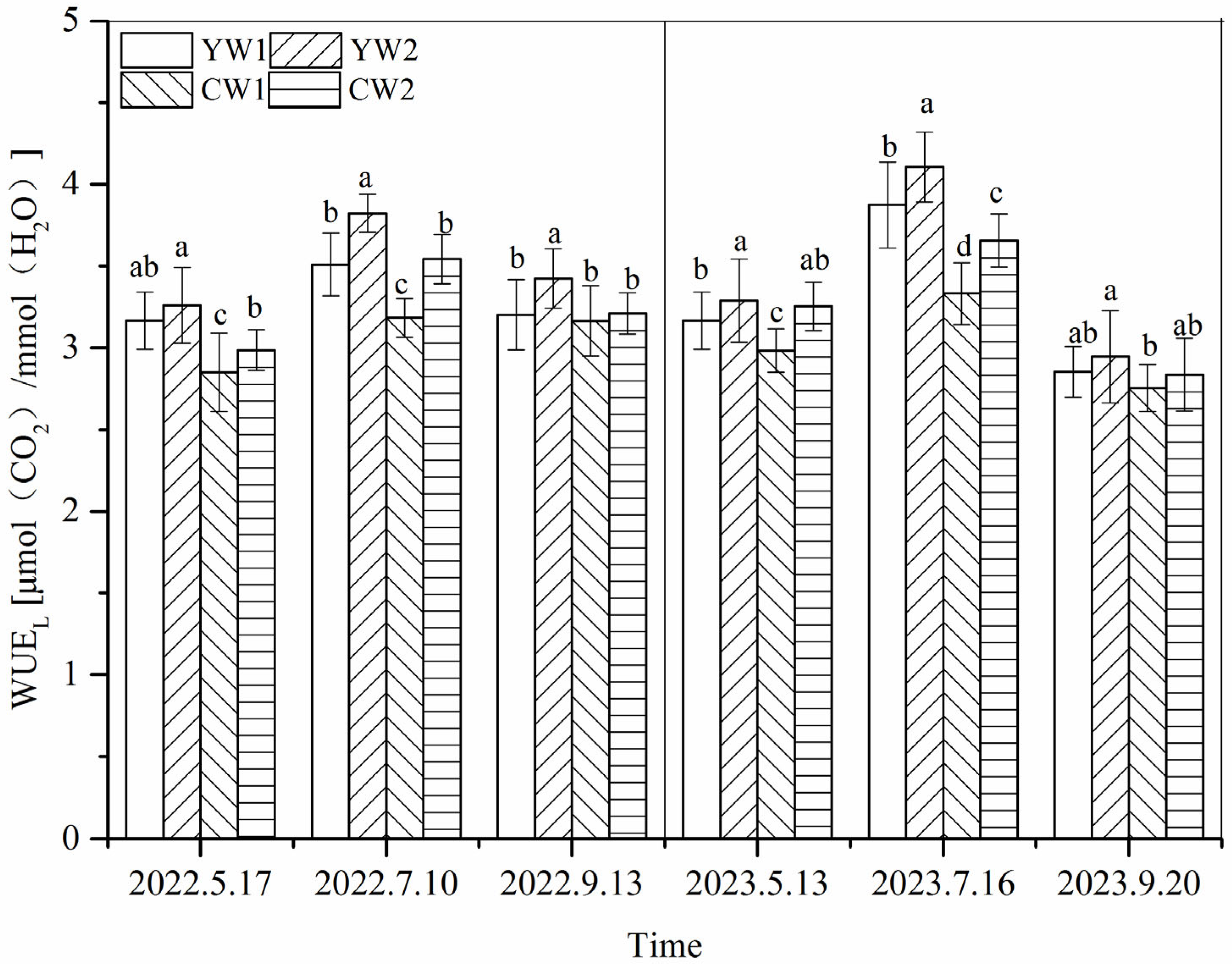
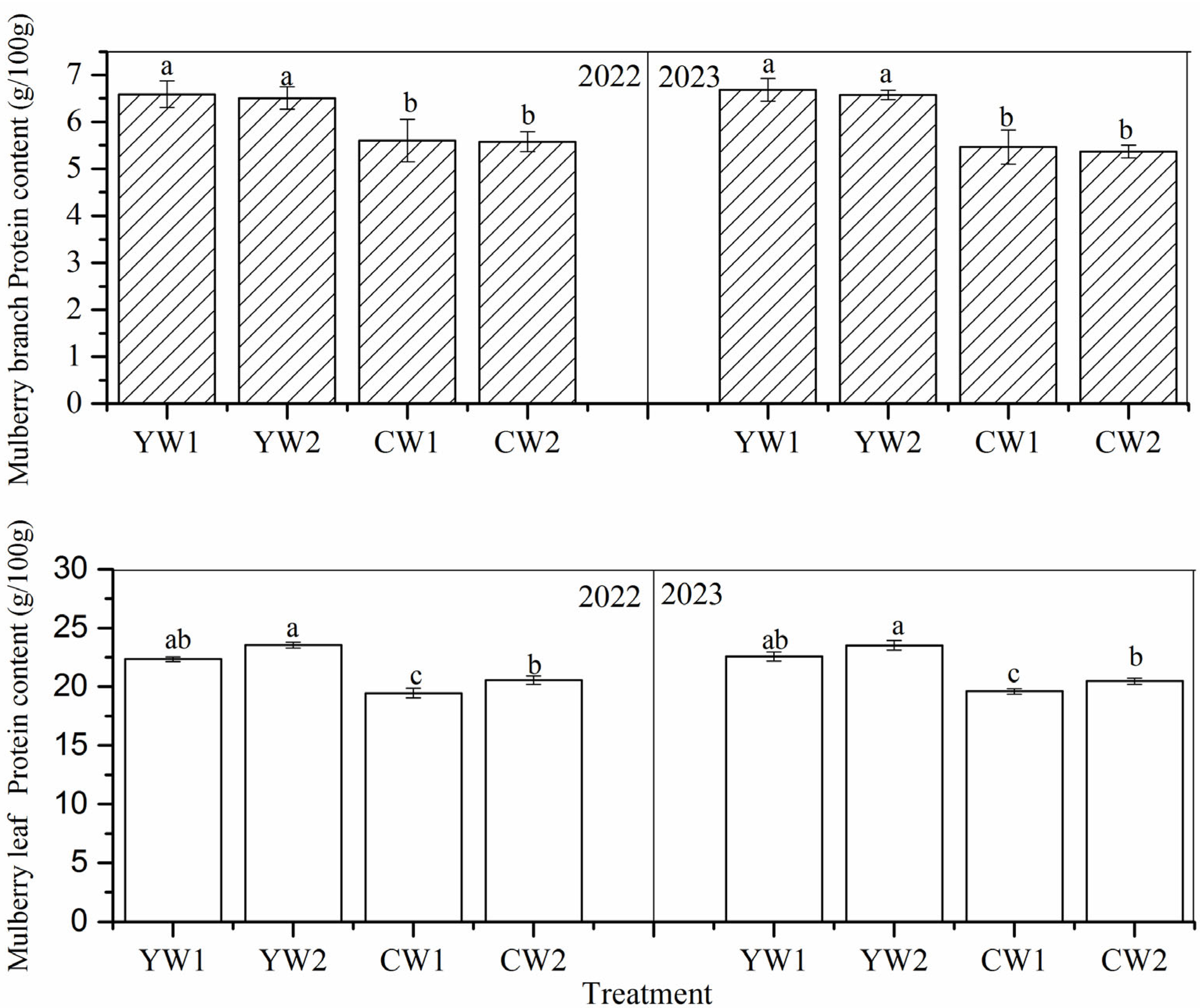
Mulberry (Morus spp.) is resilient to water deficit conditions, and the high protein content of its leaves means they can be used as forage. Therefore, it could be a valuable resource for alleviating the animal feed crisis, but it is crucial that its high productivity and stable traits are sustained to achieve this. We conducted a 2-year field experiment in the North China Plain (NCP), which investigated different irrigation levels (W1 = 15 mm, W2 = 30 mm) and genotypes (Feng Yuan No. 1, Feng Chi). This study demonstrates that using water-saving irrigation coupled with selected genotypes can increase the leaf yield and protein content. We measured various physiological and ecological indicators of mulberry, including the leaf area, fresh leaf weight, dry leaf weight, net photosynthetic rate, leaf water use efficiency (WUEL) under limited irrigation, protein content, and yield. The results from both years indicate that, under deficit irrigation conditions, Feng Yuan No. 1 exhibited drought resistance while maintaining relatively high and stable growth traits. When the irrigation amount was increased (W2 = 30 mm), the net photosynthetic rate and leaf water use efficiency of Feng Yuan No. 1 were significantly better than those of Feng Chi. Additionally, Feng Yuan No. 1 combined with the W2 irrigation treatment led to a higher protein content of leaves (19.98 g/100 g and 21.19 g/100 g) and greater yield of leaves and branches (9.79 t·ha−1 and 11.19 t·ha−1) in the two years. Furthermore, under deficit irrigation conditions, Feng Yuan No. 1 effectively compensated for yield losses caused by water scarcity.
Keywords: mulberry (Morus spp.); deficit irrigation; genotype; leaf water use efficiency (WUEL); photosynthetic rate (Pn) mulberry (Morus spp.); deficit irrigation; genotype; leaf water use efficiency (WUEL); photosynthetic rate (Pn)