Article

Effects of Tillage Practices on Soil Quality and Maize Yield in the Semi-Humid Region of Northeast China


1
College of Agronomy, Jilin Agricultural University, Changchun 130118, China
2
Research Institute of Agricultural Resources and Environment, Jilin Academy of Agricultural Sciences (Northeast Agricultural Research Center of China)/Northeast Key Laboratory of Crop Physiology, Ecology and Cultivation, Ministry of Agriculture and Rural Affairs, Changchun 130033, China
3
Institute of Straw Return Application Technology, Jilin Province Academy of Agricultural Machinery, Changchun 130022, China
*
Authors to whom correspondence should be addressed.
These authors contributed equally to this work.
Agronomy 2025, 15(12), 2851; https://doi.org/10.3390/agronomy15122851
Submission received: 18 November 2025 / Revised: 8 December 2025 / Accepted: 9 December 2025 / Published: 11 December 2025
(This article belongs to the Section Soil and Plant Nutrition)

Abstract

This study investigates the effects of different tillage practices on soil quality and maize yield in black soil farmland. Based on an eight-year continuous field plot experiment initiated in 2017, we examined the impacts of five tillage methods: conventional tillage (CT), no-tillage with straw mulching (NTS), subsoiling tillage with straw mulching (STS), harrow tillage with straw mulching and incorporation (HTS), and moldboard plowing tillage with straw incorporation (MPS). The focus was on soil structure, hydrothermal characteristics, organic matter, and nutrient content within the 0–40 cm soil layer, as well as maize dry matter accumulation and grain yield. The results indicate that, in 2023, compared to CT, STS significantly improved the soil structure and hydrothermal characteristic quality index (SHQI) in the 0–40 cm soil layer. Additionally, NTS, STS, HTS, and MPS significantly enhanced the soil organic matter and nutrient quality index (ONQI) in the 0–40 cm soil layer. NTS and STS increased the soil quality index (SQI) by 9.0% to 16.6% compared to the other treatments. Additionally, NTS, STS, HTS, and MPS significantly enhanced the soil organic matter and nutrient quality index (ONQI) in the 0–40 cm soil layer. In 2024, NTS and STS increased the soil quality index (SQI) by 9.0% to 16.6% compared to the other treatments. Furthermore, NTS and MPS significantly improved the SHQI in the 0–40 cm soil layer compared to CT. NTS and STS also significantly enhanced the ONQI in the 0–40 cm soil layer, while NTS, STS, and MPS increased the SQI by 7.3% to 22.6% compared to the other treatments. STS and MPS treatments significantly increased both hundred-kernel weight and grain yield compared to CT and NTS. Correlation and redundancy analyses revealed that SHQI in the 10–40 cm soil layer is a crucial factor affecting dry matter accumulation, yield, and its components in maize. In summary, in the semi-humid region of Northeast China, STS and MPS are cultivation techniques that optimize black soil quality and enhance maize grain yield.

1. Introduction

Tillage employs mechanical forces to regulate the availability and interactions of water, nutrients, air, and heat in soil. These alterations to the soil environment directly affect crop emergence and subsequent growth. However, long-term intensive tillage without sufficient nutrient replenishment can result in severe soil degradation, primarily due to soil erosion under insufficient protective measures and low surface vegetation cover [1]. Straw return, a sustainable agricultural practice, is mainly implemented through straw mulching or straw incorporation. This technique is increasingly adopted to protect soil and enhance fertility in agricultural systems [2,3]. When combined with tillage practices such as plowing, rotary tilling, and subsoiling, straw return regulates the placement of straw within the soil and the extent of straw–soil mixing. These modifications to the soil environment, in turn, govern crop growth and yield formation.
Soil quality refers to the capacity of soil to sustain crop productivity, maintain environmental quality, and support plant and animal health within ecosystems [4]. Tillage incorporates straw into the soil, increasing its surface area for microbial colonization and accelerating decomposition [5,6,7]. This enhanced decomposition improves soil fertility and significantly elevates soil enzyme activity. For example, Liu et al. [8] found that combining straw return with deep tillage significantly improved soil quality in the 0–20 cm layer and consequently increased maize yield. Their study further revealed that soil physical properties contributed more to yield than did chemical and biological properties, establishing them as a key factor in enhancing both soil quality and maize productivity. Regarding the impact of different farming practices on black soil fields, there is a lack of long-term studies using composite soil quality indices, and the relationship between soil quality and yield remains to be evaluated.
Different methods of straw return and tillage can significantly influence soil moisture and temperature during the early growth stages of maize, a critical period for crop development. In cool and temperate regions, no-tillage with straw mulch has been shown to lower soil temperatures, thereby slowing early crop growth and ultimately reducing yield [9,10]. Although long-term no-tillage with straw mulch effectively mitigates wind and water erosion and enhances soil water retention, excessively high soil moisture combined with low temperatures can hinder seed germination [11,12]. Furthermore, in clay-rich soils, long-term no-tillage can lead to soil compaction, which impedes water infiltration, restricts root growth, limits nutrient uptake, and consequently reduces crop yields [13,14]. Similarly, long-term continuous rotary tillage incorporates residues at a consistent depth [15,16]. The formation of compacted subsurface soil layers, known as plow pans, is primarily due to the combined effects of long-term shallow tillage with small-scale farm implements and clay particle deposition during precipitation. These layers exhibit a high bulk density and low total porosity, typically reducing soil aeration and permeability, thereby limiting crop root growth and yield. In a semi-humid region, Li et al. [17] identified reduced soil temperature under no-tillage with residue cover during the sowing-to-seedling stage as the main cause of maize yield reduction. In contrast, a study by Wang et al. [18] in a semi-arid region reported opposite conclusions, underscoring the need to adapt tillage practices to regional conditions. Plowing combined with residue incorporation effectively breaks up the plow pan, deepens the tillage layer, expands the soil water storage capacity, and improves moisture regulation in black soil [19]. Strip tillage alleviates seedbed compaction, raises soil temperature, conserves moisture, and improves the root-zone soil environment, thereby promoting crop growth and increasing yield [20]. Effective tillage creates favorable soil physical conditions by ensuring adequate aeration and plant-available water while keeping mechanical resistance low enough to permit unimpeded root growth. Soil acts as a reservoir for plants; however, crop production can be limited by physical conditions that restrict aeration and water availability or impose excessive mechanical resistance to root growth [21].
Maize cultivation in the black soil region of Northeast China occupies 38.6% of the national planting area and accounts for 42.2% of the total output, underscoring its critical role in ensuring China’s food security and sustainable agricultural development [22]. As China’s largest commercial maize base, the northeast spring maize area generates approximately 68 million tons of straw annually, representing 31.0% of the national total. However, the straw return rate remains below 20.0%, significantly lower than the global average [23]. Although various tillage and residue management practices are used worldwide, no single approach is universally optimal. Therefore, the selection of tillage practices must be tailored to local conditions, specific cropping systems, and long-term sustainability goals.
Based on an eight-year continuous field experiment, this study aims to (a) investigate the effects of different tillage practices on soil quality in black soil farmland; (b) analyze the impacts of various tillage practices on maize biomass accumulation, root distribution, and grain yield; and (c) clarify the correlations between soil quality, maize biomass accumulation, and grain yield. This study innovatively conducts a comprehensive analysis of the SHQI, ONQI, and 3D root distribution of maize root systems by comparing five widely adopted tillage practices in the Northeast Black Soil Region. The objective of this study is to identify suitable tillage methods and straw incorporation measures that synergistically enhance both soil quality and maize yield in this area.

2. Materials and Methods

2.1. Study Site and Experimental Description

This study was conducted between 2023 and 2024 at the Conservation Tillage Experimental Demonstration Base of the Jilin Academy of Agricultural Sciences in Fanjiatun Town, Gongzhuling City, China (43°45′ N, 125°01′ E, elevation 120 m). The long-term positioning experiment was initiated in 2017. The study area experiences a cold temperate continental climate, with a mean annual precipitation of 568 mm and a mean annual temperature of 4.5 °C. Cumulative rainfall from May to September was 416.5 mm in 2023 and 719.0 mm in 2024 (Figure 1). The experimental site follows a single-crop-per-year system with continuous maize cultivation. The soil is classified as silty clay loam (Mollisols according to USDA Soil Taxonomy). Before the experiment began in May 2017, the initial properties of the 0–20 cm soil layer were as follows: bulk density (BD) 1.4 g·cm−3, soil organic carbon (SOC) 17.3 g·kg−1, total nitrogen (TN) 1.5 g·kg−1, total phosphorus (TP) 0.5 g·kg−1, total potassium (TK) 19.0 g·kg−1, alkaline hydrolyzable nitrogen (AN) 124.8 mg·kg−1, available phosphorus (AP) 29.2 mg·kg−1, available potassium (AK) 196.9 mg·kg−1, and pH 6.1.
The experimental treatments comprised the following: conventional tillage (CT), no-tillage with straw mulching (NTS), subsoiling tillage with straw mulching (STS), harrow tillage with straw mulching and incorporation (HTS), and moldboard plow tillage with straw incorporation (MPS). Each treatment was arranged in 20 rows with a row spacing of 65 cm and a row length of 50 m, giving a plot area of 650 m2. All treatments were replicated three times. The test crop was maize (variety Fumin 985) planted at a density of 67,500 plants per hectare. Fertilizer was applied at rates of 224 kg N·ha−1, 96 kg P2O5·ha−1, and 112 kg K2O·ha−1. In the CT treatment, the full amount of fertilizer was applied in a single application during spring stubble removal and ridge formation. In the NTS, STS, and HTS treatments, fertilizer was placed deeply beside the seed row during no-till sowing. Sowing took place around 10 May each year, with harvesting around 5 October. Additional details on field management are provided in Table 1.

2.2. Plant Sampling and Testing

During the silking (R1) and maturity (R6) stages, three uniformly growing maize plants were selected from each plot. The plants were separated into five components: leaves, stems + sheaths, cobs + husks, grains, and roots. All components were oven-dried at 75 °C until constant weight to determine dry matter weight.
At the silking stage, root sampling was conducted using the Monolith 3D method [24]. A soil volume of 65 cm (length) × 19.5 cm (width) × 40 cm (depth) was extracted and divided into 24 smaller blocks, each measuring 10.8 cm × 19.5 cm × 10.0 cm. Root samples were carefully washed to remove non-root material and scanned with an Epson Perfection V700 root scanner (Seiko Epson Corp., Suwa, Japan). Root parameters were analyzed using WinRHIZO Pro 2019 software.
At harvest, a 20 m2 sampling area was established in each plot for yield evaluation. The number of productive ears and total fresh ear weight were recorded. Ten representative ears were selected to determine the average ear weight based on fresh weight and ear count. The following parameters were measured: kernel rows per ear, kernels per row, grain weight from the ten ears, hundred-grain weight, and grain moisture content. The final grain yield was calculated based on ears per hectare, kernels per ear, and hundred-grain weight, all adjusted to a standard moisture content of 14.0% [25].

2.3. Soil Sampling and Analysis

During the 2023–2024 growing season, soil temperature and moisture were monitored hourly from sowing to maturity using a ZDR-20T soil moisture and temperature logger (Hangzhou Zeda Instrument Co., Ltd., Hangzhou, China). After maize harvest, soil penetration resistance (PR) was measured with an SC-900 soil penetrometer. Soil samples and undisturbed core samples were collected along an “S”-shaped transect at depths of 0–10 cm, 10–20 cm, and 20–40 cm. Bulk density (BD) was determined using the oven-drying method, while capillary and non-capillary porosity were analyzed using the indoor core method [26]. The soil air-phase content was measured with a soil three-phase meter (Daiki Rika Kogyo Co., Ltd., Namegata, Japan), and the three-phase composition (R value) was calculated [17]. The soil three-phase composition reflects the combined distribution proportions of the three phases within the soil, and its variation determines differences in the soil structure. Water-stable aggregates were determined using an oscillating sieve analyzer (Shanghai Dema Information Technology Co., Ltd., Shanghai, China). The air-dried soil samples were sieved for subsequent analysis of soil nutrient properties. Additionally, during the 2023 silking stage, core and soil samples were taken using the Monolith 3D method [24] to evaluate soil structural characteristics.
Soil organic matter (SOM) was analyzed via potassium dichromate titration [27]. Total nitrogen (TN) and total phosphorus (TP) were determined using the Kjeldahl distillation method and the molybdenum–antimony anti-spectrophotometric method, respectively [28]. Total potassium (TK) and available potassium (AK) were measured via flame photometry [29]. Available phosphorus (AP) was analyzed using the NaOH fusion–molybdenum–antimony anti-spectrophotometric method [30], and alkaline hydrolyzable nitrogen (AN) was determined using the alkaline hydrolysis diffusion method [31].

2.4. Soil Quality Index Calculation

The soil quality index (SQI) was categorized into two distinct types: one reflecting the soil structure and hydrothermal properties (including soil penetration resistance (PR), bulk density (BD), three-phase R value, content of water-stable macro-aggregates, capillary porosity, non-capillary porosity, average soil moisture content, and average soil temperature) and the other representing soil organic matter and nutrient status (including SOM, TN, TP, TK, AN, AP, and AK) [32]. Calculating the soil quality index involves two steps: first, standardizing the indicator to obtain the linear score value of the indicator and, second, deriving the soil quality index using the soil quality index formula.
A linear scoring method was applied to standardize the measured values of soil indicators into unitless scores ranging from 0 to 1 [33,34]. When a higher indicator value contributes positively to soil quality, the “more is better” scoring function is used (Equation (1)). Conversely, for indicators where a lower value is desirable, the “less is better” function is applied (Equation (2)). In this study, BD, three-phase R value, and PR were scored using the latter approach. For indicators with an optimal range, either equation could be selected as appropriate, with values falling within the optimal range assigned a score of 1.
S L = X X m a x
S L = X m i n X
Here, SL is the linear score of the soil indicator, X is the measured value, and Xmax and Xmin are the maximum and minimum values of each soil indicator observed in this study [35].
The soil quality index area method was used to evaluate the SQI in this study [36]:
S Q I = 0.5 × i n s L 2 × sin 2 × π n
Here, n is the total number of indicators and π (3.14). The soil structure and hydrothermal property indicators, as well as the soil organic matter and nutrient status indicators, are substituted into the respective formulas to calculate the SHQI and ONQI.

2.5. Statistical Analyses

In SPSS 22.0 (IBM Corp., Armonk, NY, USA), a one-way analysis of variance (ANOVA) was performed to evaluate the effects of tillage practices on soil physicochemical properties, soil quality, and plant-related indicators, with Duncan’s multiple range test used for post hoc comparisons. The normality and homogeneity of variance were assessed using the Shapiro–Wilk test and Levene’s test. Pearson correlation analysis and linear regression were applied to examine the relationships between soil quality and plant parameters. Redundancy analysis (RDA) was conducted using Canoco 4.5 to further explore the interdependence between soil quality and plant indicators. All figures were generated using Origin 2024 (OriginLab Inc., Northampton, MA, USA).

3. Results

3.1. The Impact of Different Tillage Practices on Soil Structure and Hydrothermal Properties

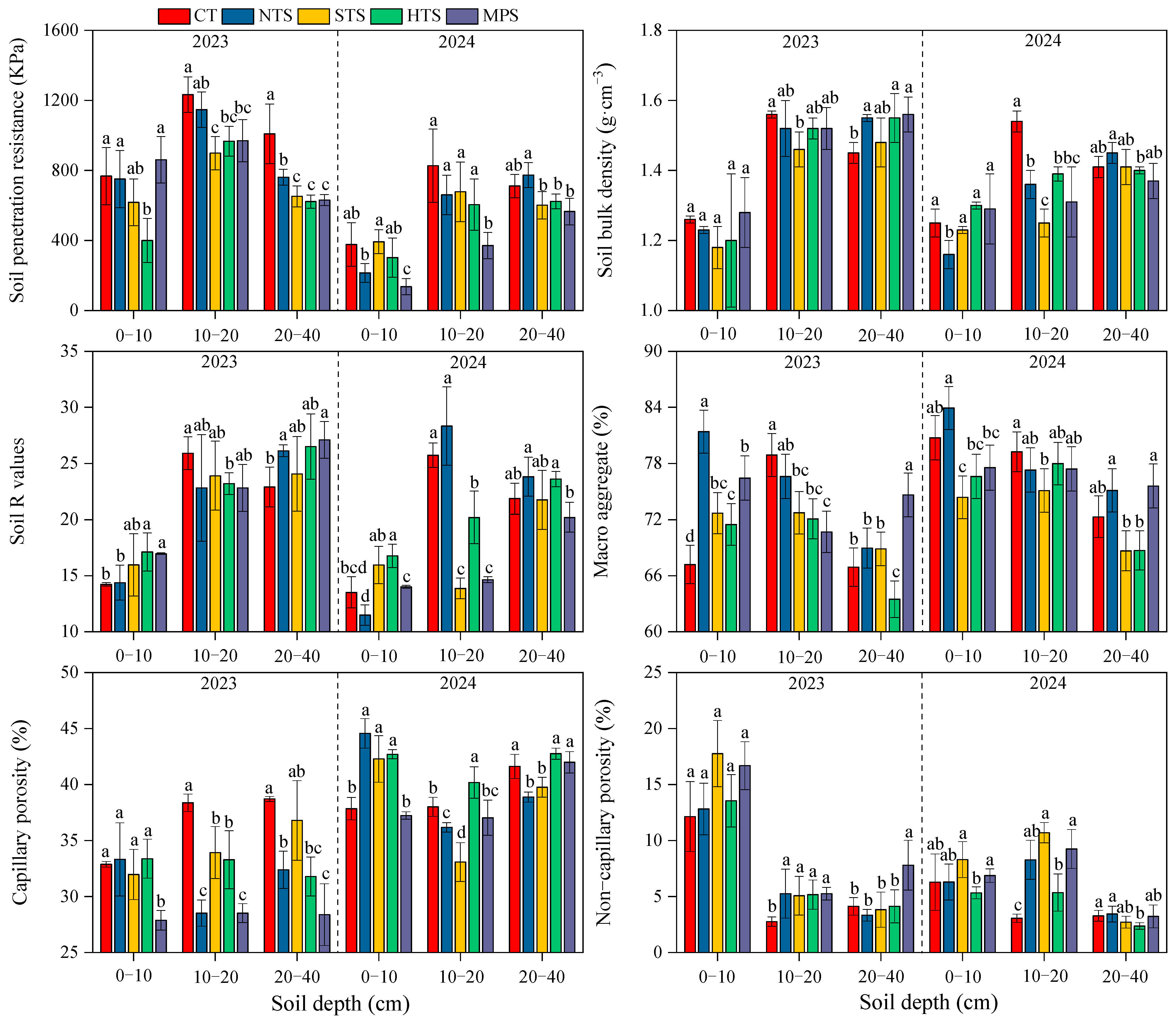
In 2023, compared with conventional tillage (CT), the subsoiling tillage with straw mulching (STS), harrow tillage with straw mulching and incorporation (HTS), and moldboard plowing tillage with straw incorporation (MPS) treatments significantly reduced bulk density (BD) in the 10–40 cm soil layer by 40.0–44.6%. The STS treatment decreased BD in the 10–20 cm layer by 6.9%, while HTS reduced the soil three-phase R value in the same layer. The no-tillage with straw mulching (NTS), STS, HTS, and MPS treatments significantly increased the macro-aggregates content in the 0–10 cm layer by 6.4–21.1%. In addition, these four treatments significantly reduced capillary porosity and increased non-capillary porosity in the 10–20 cm layer. The MPS treatment also significantly enhanced the macro-aggregates content and non-capillary porosity in the 20–40 cm layer (Figure 2, p < 0.05). In 2024, compared with CT, the MPS treatment significantly lowered soil penetration resistance (PR) in the 0–20 cm layer. The NTS, STS, HTS, and MPS treatments reduced BD in the 10–20 cm layer by 10.8–23.2%. The STS, HTS, and MPS treatments significantly decreased the R value in the 10–20 cm layer, while the NTS, STS, and HTS treatments significantly increased capillary porosity in the 0–10 cm layer and non-capillary porosity in the 10–20 cm layer (Figure 2, p < 0.05).
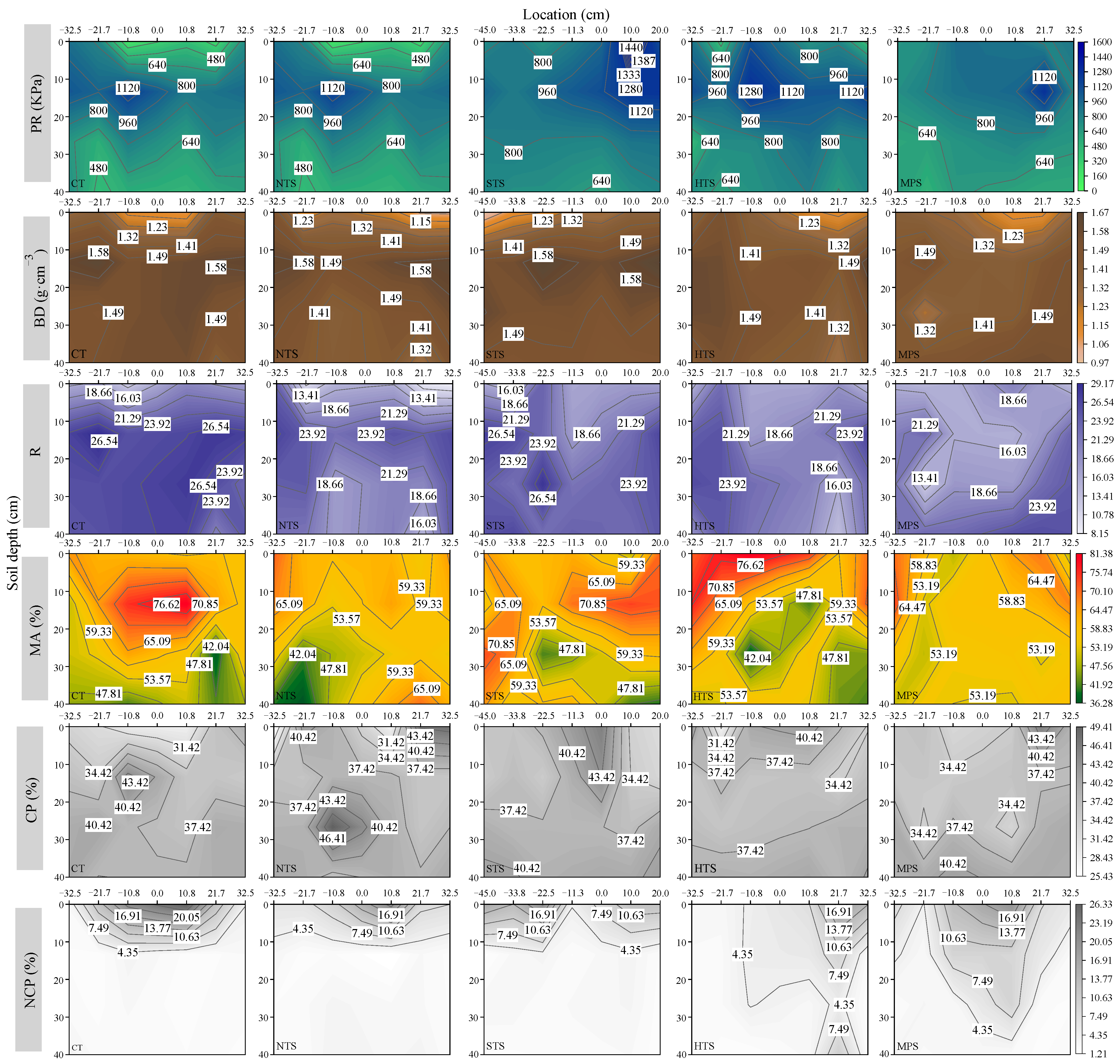
The profile distribution of soil penetration resistance (PR) was generally similar between the CT and NTS treatments, with the highest values observed in the 10–20 cm soil layer. In contrast, PR in the 0–40 cm layer under the MPS treatment was lower than that under all other treatments (Figure 3). The soil bulk density (BD) and macro-aggregate content across all treatments showed a consistent trend of being lower in the seedling zone (within 10.8 cm of the row) than in the inter-row area (10.8–32.5 cm from the row). The highest BD across the soil profile was found in the inter-row area of the CT treatment at the 10–20 cm depth. In deeper soil layers, the three-phase R value was lower in the inter-row area than in the seedling zone under the CT and NTS treatments, whereas in surface layers and under the remaining treatments, it was lower in the seedling zone. Overall, the macro-aggregate content tended to be higher in surface soils than in deeper layers. In the 0–20 cm layer, both capillary and non-capillary porosity were generally higher in the seedling zone than in the inter-row area across all treatments. An exception was the MPS treatment, which exhibited lower porosity in both categories within the seedling zone throughout the 0–40 cm soil profile.
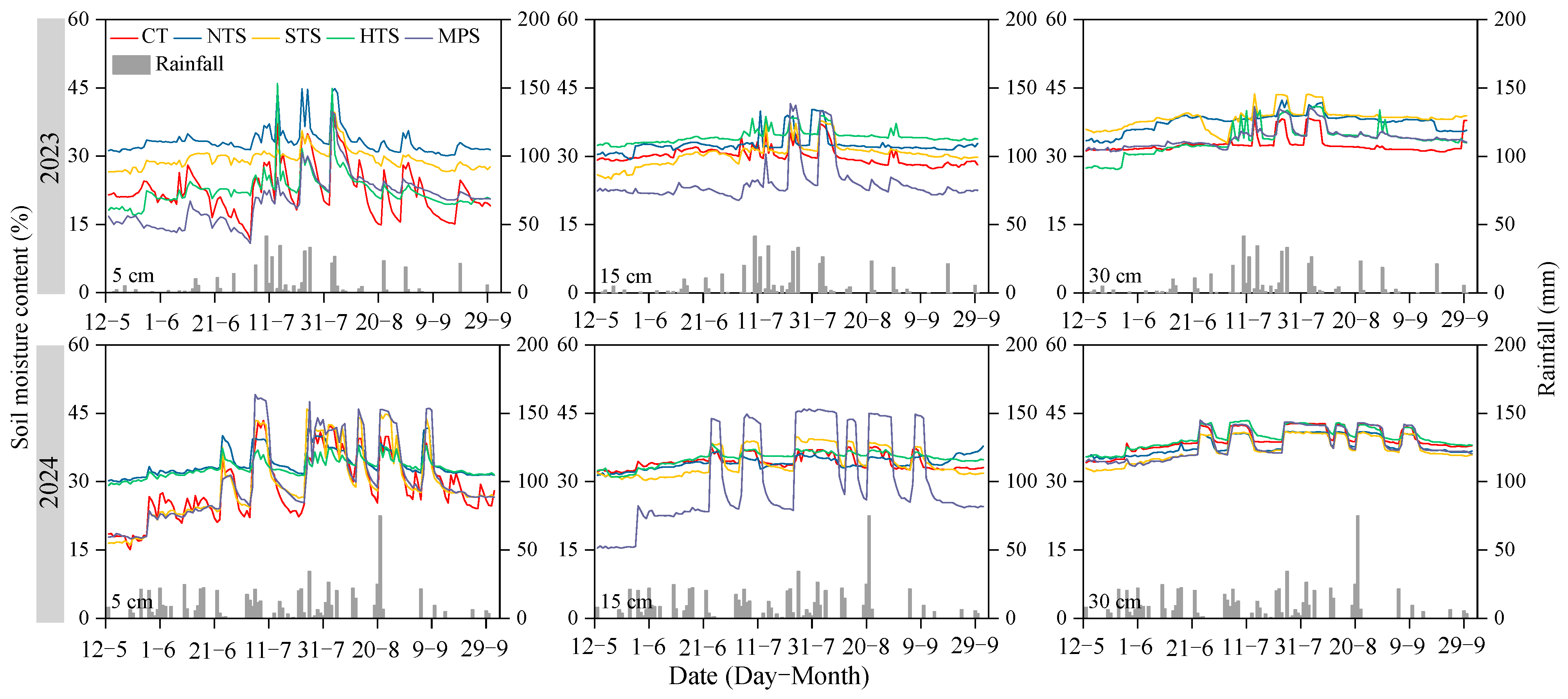
During the 2023 maize growing season, compared with CT, the NTS and STS treatments increased the soil moisture content by 7.0–10.8, 0.3–2.5, and 5.0–5.8 percentage points at depths of 5 cm, 15 cm, and 30 cm, respectively, with NTS showing the greatest improvement. The HTS treatment increased soil moisture by 4.3 percentage points at a 15 cm depth, while the MPS treatment increased it by 1.5 percentage points at a 30 cm depth (Figure 4). In the 2024 growing season, compared with CT, the NTS, STS, and MPS treatments increased the soil moisture content by 1.4–5.3 percentage points at a 5 cm depth and by 1.1–2.0 percentage points at a 30 cm depth; in addition, the MPS treatment increased soil moisture at a 15 cm depth by 0.8 percentage points.
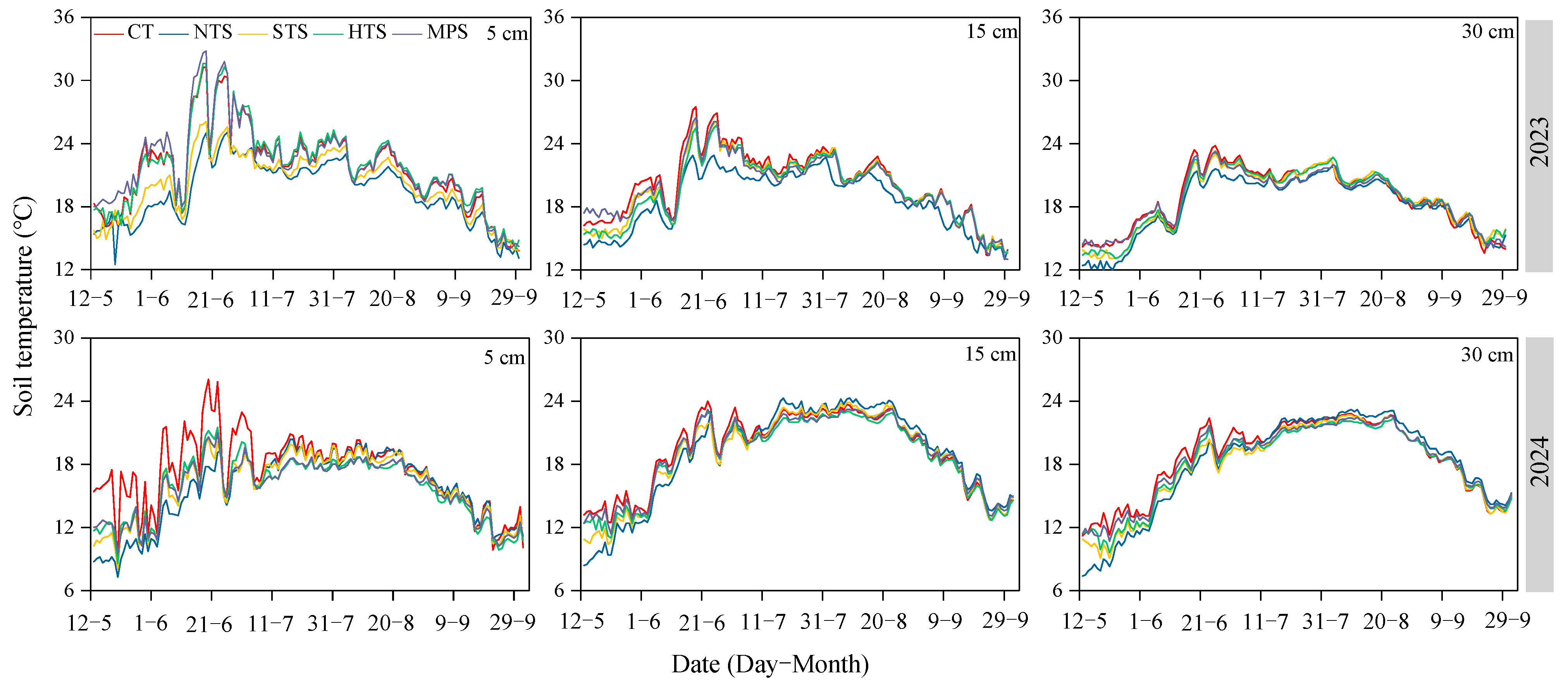
In 2023, compared with CT, the NTS and STS treatments reduced soil temperature at a 5 cm depth by 2.3 °C and 1.6 °C, respectively, while the HTS and MPS treatments increased it by 0.2 °C and 0.3 °C, respectively. At 15 cm and 30 cm depths, soil temperature under the NTS, STS, HTS, and MPS treatments decreased by 0.4–1.7 °C and 0.1–0.8 °C, respectively, with NTS resulting in the greatest reduction at both depths (Figure 5). During the 2024 growing season, compared with CT, the NTS, STS, HTS, and MPS treatments decreased soil temperature by 1.5–1.8 °C, 0.2–0.5 °C, and 0.3–0.7 °C at 5 cm, 15 cm, and 30 cm depths, respectively.

3.2. The Impact of Different Tillage Practices on Soil Organic Matter and Nutrient Content

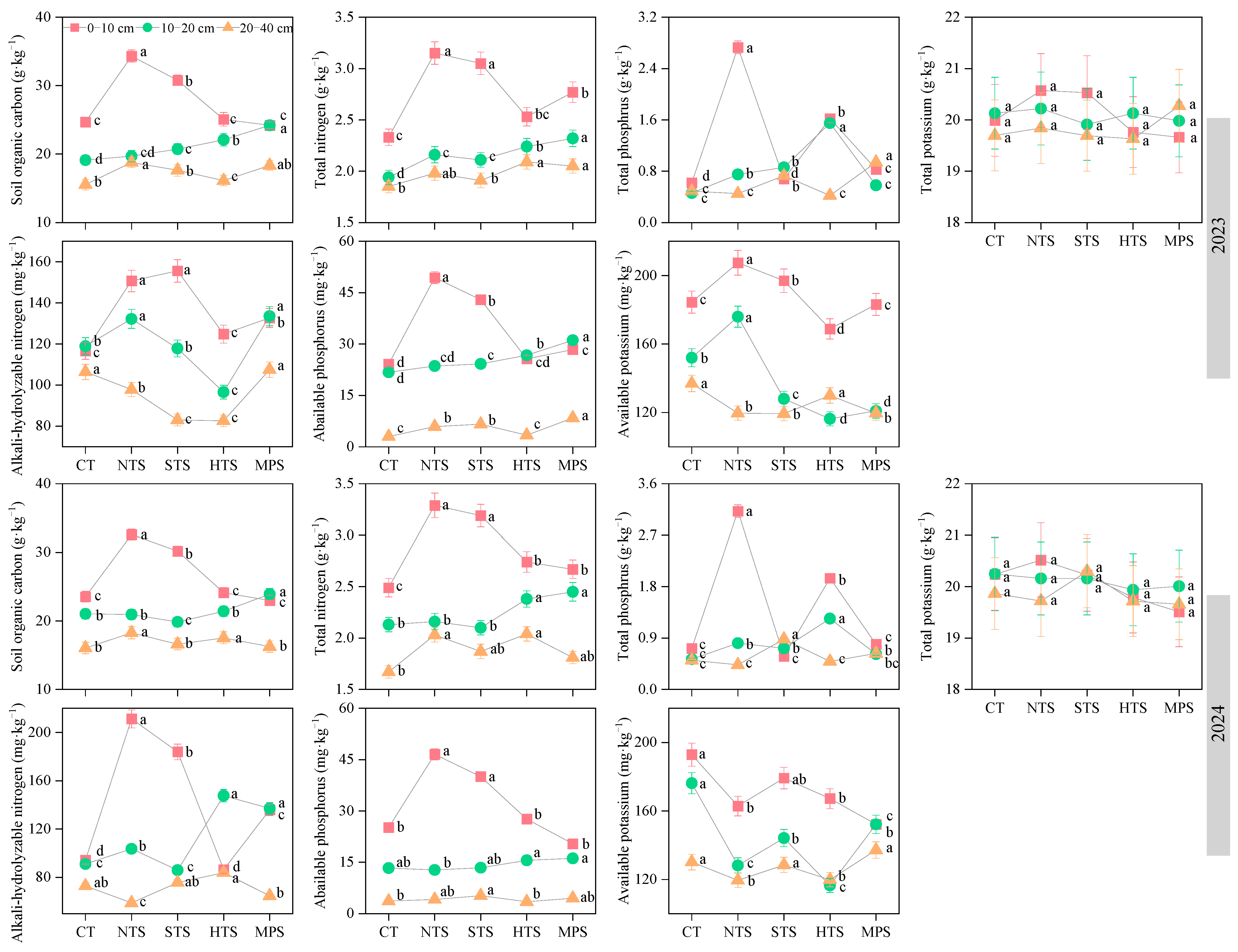
In 2023, compared with CT, the NTS and STS treatments significantly increased the contents of soil organic matter (SOM), total nitrogen (TN), alkaline hydrolyzable nitrogen (AN), available phosphorus (AP), and available potassium (AK) in the 0–10 cm soil layer. In the same layer, the NTS, HTS, and MPS treatments significantly increased the total phosphorus (TP) content, while MPS also increased the contents of TN, AN, and AP. In the 10–20 cm layer, STS, HTS, and MPS significantly enhanced the SOM, TN, and AP contents. NTS, STS, and HTS increased the TN content at this depth, with NTS also significantly raising the TP, AN, and AK contents. In the 20–40 cm layer, NTS significantly increased the SOM, TN, and AP contents; STS and MPS significantly improved the TP and AP contents; and HTS and MPS significantly increased TN content (Figure 6, p < 0.05).
In 2024, compared with CT, the NTS, STS, HTS, and MPS treatments significantly increased the TN content in the 0–10 cm soil layer. In the same layer, NTS and STS also raised the SOM, AN, and AP contents, while HTS and MPS significantly increased the TP and AN contents, respectively. In the 10–20 cm layer, all four treatments significantly enhanced the TP content, with HTS and MPS also increasing the SOM, TN, and AN contents. In the 20–40 cm layer, NTS significantly increased the SOM and TN contents; STS significantly raised the TP and AP contents; and HTS and MPS increased the TN and TP contents, respectively (Figure 6, p < 0.05).

3.3. The Impact of Different Tillage Practices on Soil Quality Index

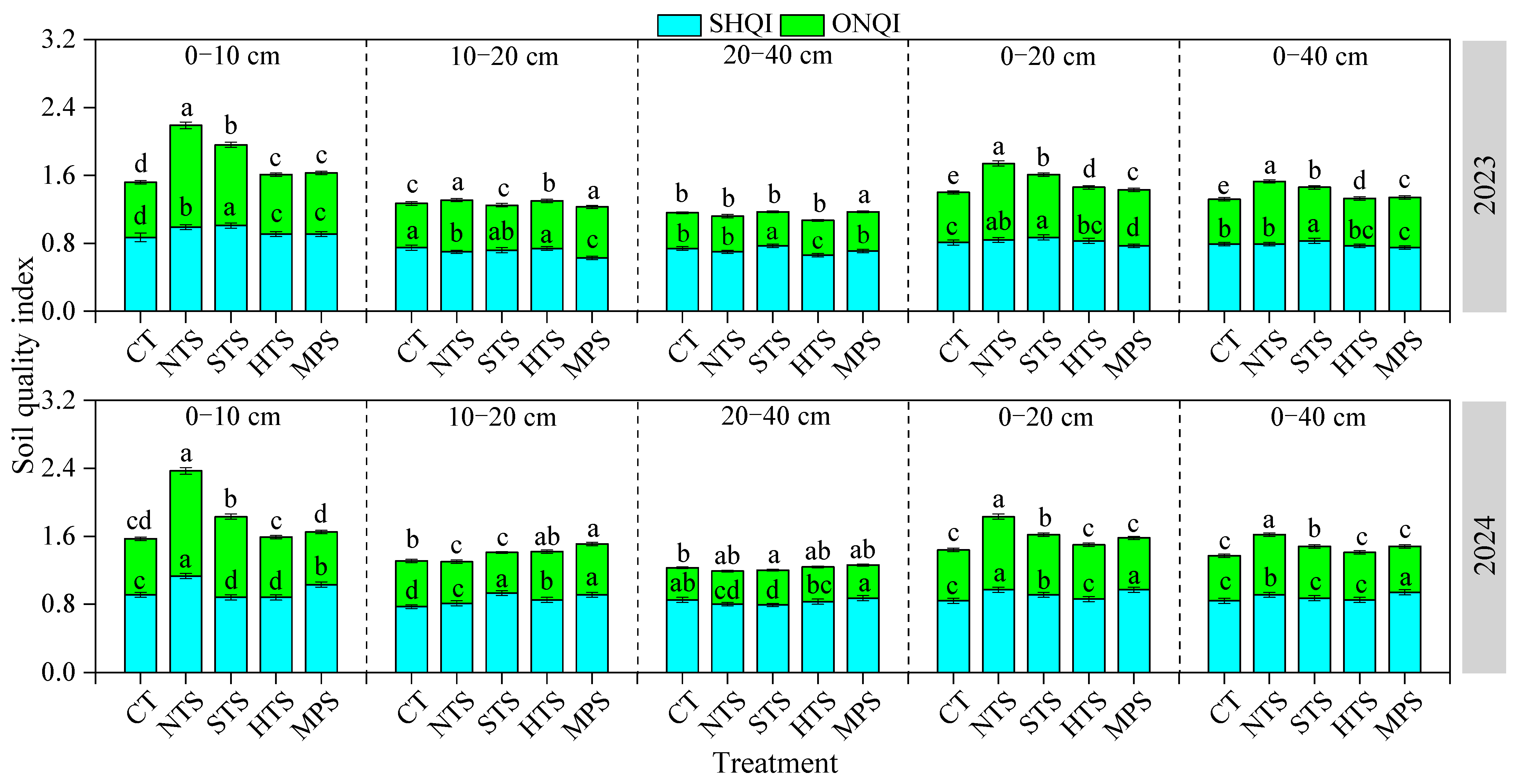
In 2023, compared with CT, the NTS, STS, HTS, and MPS treatments significantly increased both the soil structure and hydrothermal characteristics quality index (SHQI) and the soil organic matter and nutrient quality index (ONQI) in the 0–10 cm soil layer. In the 10–20 cm layer, NTS, HTS, and MPS significantly increased the ONQI, while in the 20–40 cm layer, STS and MPS significantly improved the SHQI and ONQI, respectively (Figure 7). A comprehensive analysis showed that STS significantly increased the SHQI across the 0–40 cm profile, while NTS, STS, HTS, and MPS all significantly enhanced the ONQI throughout this depth. Overall, the NTS and STS treatments increased the comprehensive soil quality indices by 9.0–16.6% compared with the other treatments.
In 2024, compared with CT, the NTS and MPS treatments significantly increased the SHQI in the 0–10 cm layer, while NTS and STS significantly improved the ONQI at the same depth. In the 10–20 cm layer, all four treatments (NTS, STS, HTS, and MPS) significantly enhanced the SHQI, and MPS also significantly increased the ONQI. Additionally, in the 20–40 cm layer, STS significantly raised the ONQI (Figure 7). A comprehensive analysis revealed that NTS and MPS significantly increased the SHQI across the 0–40 cm profile, whereas NTS and STS significantly improved the ONQI throughout this depth. Overall, the NTS, STS, and MPS treatments increased the comprehensive soil quality indices by 7.3–22.6% compared with the other treatments.

3.4. The Impact of Different Tillage Practices on Dry Matter Accumulation and Root Distribution in Maize

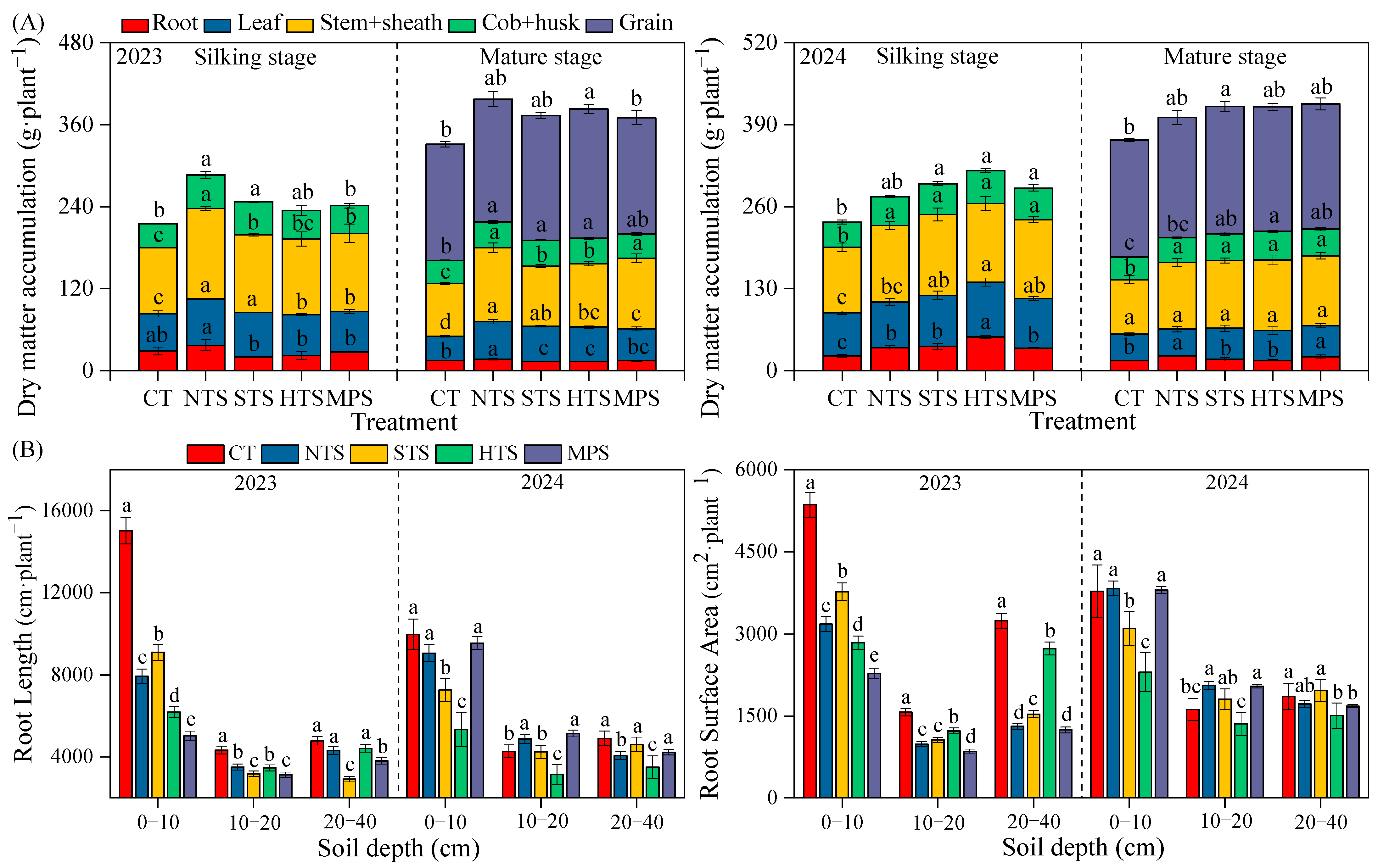
During the silking stage in 2023, compared with CT, the NTS, STS, HTS, and MPS treatments significantly increased leaf dry matter weight by 9.6–27.9%. The NTS and STS treatments also significantly increased the dry matter weight of stems + sheaths and cobs + husks, whereas the STS, HTS, and MPS treatments significantly reduced root dry matter weight (Figure 8A). At maturity in 2023, compared with CT, the NTS treatment significantly increased root dry matter weight. The NTS, STS, HTS, and MPS treatments also significantly increased the dry matter weight of leaves, stems + sheaths, and cobs + husks, and the HTS treatment significantly increased grain dry matter weight.
During the silking stage in 2024, compared with CT, the NTS, STS, HTS, and MPS treatments significantly increased the dry matter weight of roots and stems + sheaths. In addition, the STS, HTS, and MPS treatments significantly increased the dry matter weight of leaves and cobs + husks. At maturity in 2024, compared with CT, the NTS and MPS treatments significantly increased root dry matter weight; the NTS, STS, HTS, and MPS treatments significantly increased stem + sheath dry matter weight; the STS, HTS, and MPS treatments significantly increased cob + husk dry matter weight; and the STS treatment significantly increased grain dry matter weight (Figure 8A).
During the silking stage in both 2023 and 2024, the average root length in the 0–40 cm soil layer followed the order of CT > NTS > STS > MPS > HTS. Compared with CT, the NTS, STS, MPS, and HTS treatments reduced the average root length by 28.2–66.4%. During the same stage, the average root surface area followed the order of CT > STS > NTS > HTS > MPS. Relative to CT, these treatments decreased the average root surface area by 31.6–46.5% (Figure 8B).
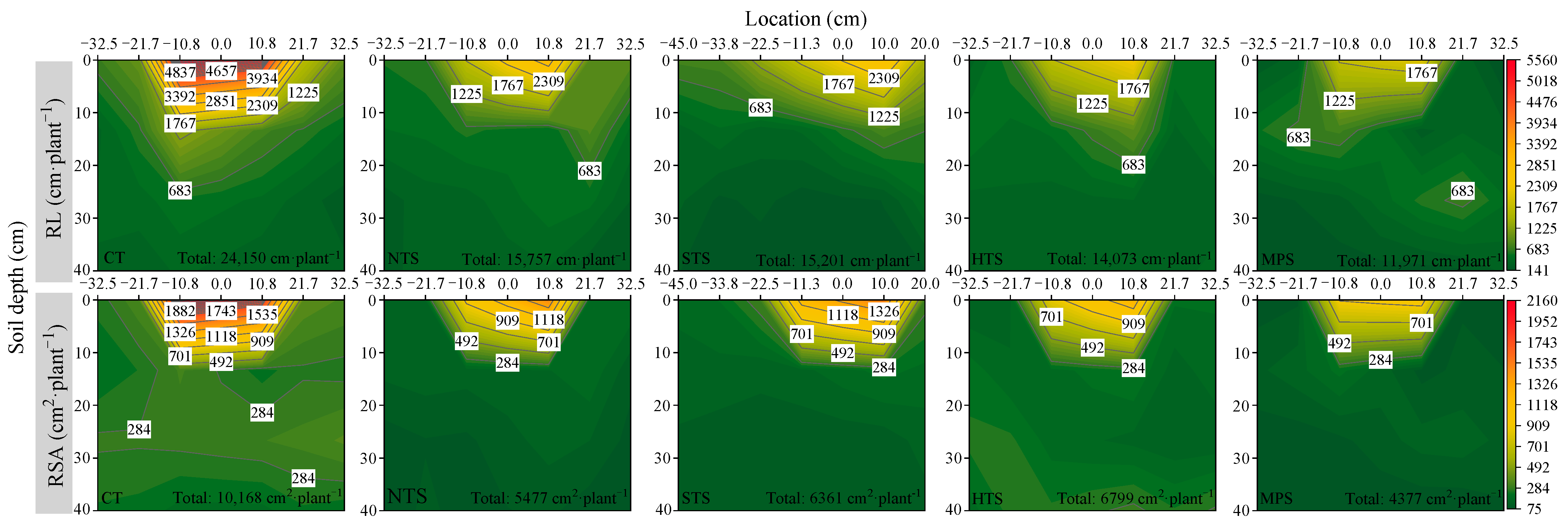
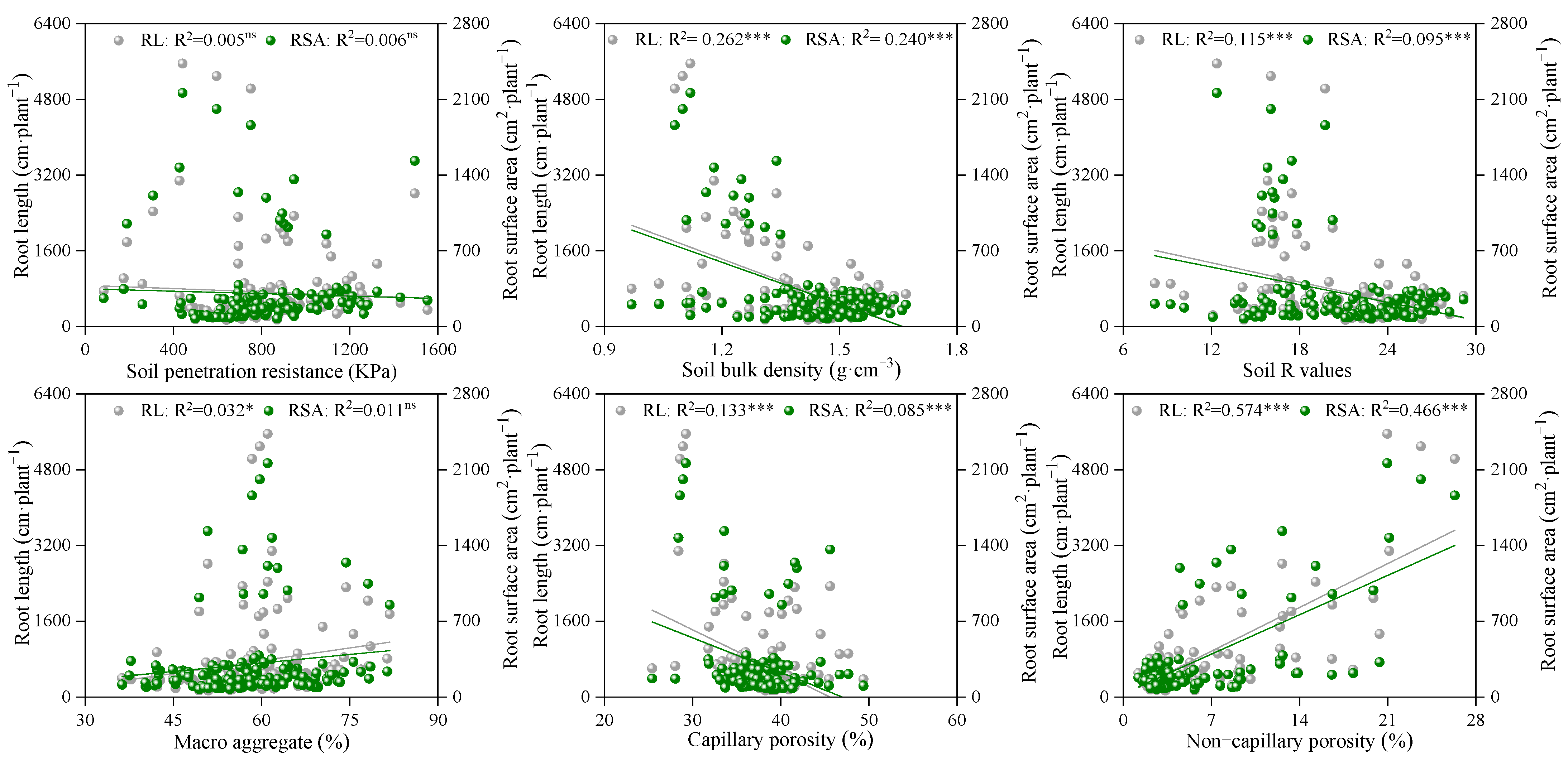
At the silking stage in 2023, root length in the 0–40 cm soil layer under CT was greater in the seedling belt than in the inter-row area. A similar trend was observed in the 0–30 cm layer under the HTS and MPS treatments (Figure 9). Under STS, both root length and root surface area were higher in the seedling belt in the 0–20 cm layer, but the opposite pattern was observed in the 20–40 cm layer. Under NTS, root surface area was greater in the seedling belt throughout the 0–40 cm profile, and root length was also higher in the seedling belt within the 0–10 cm and 20–40 cm layers. In terms of root length distribution, the CT and MPS treatments showed a higher proportion in the seedling belt (60.2% vs. 39.8% for CT; 52.3% vs. 47.7% for MPS), while all other treatments had a greater proportion of root length in the inter-row area. For root surface area distribution, all treatments exhibited a higher proportion in the seedling belt than in the inter-row area. A correlation analysis at the silking stage indicated that both root length and root surface area were significantly negatively correlated with BD, the R value, and capillary porosity but significantly positively correlated with non-capillary porosity. Root length was also significantly positively correlated with the macro-aggregate content (Figure 10).

3.5. The Impact of Different Tillage Practices on Maize Yield and Its Components

In 2023, compared with CT, the NTS treatment significantly increased kernels per spike by 8.8% (Table 2). No significant differences were observed among treatments in hundred-kernel weight, the number of spikes, or grain yield. In 2024, compared with CT, the NTS and MPS treatments significantly increased kernels per spike by 9.3% and 4.9%, respectively. The STS and MPS treatments significantly increased both hundred-kernel weight and grain yield relative to CT and NTS, with hundred-kernel weight increasing by 9.3–15.5% and grain yield by 12.2–18.8%. No significant differences in the number of spikes were detected among the treatments in 2024.

3.6. The Correlation Between Grain Yield, Plant Indicators, and Soil Quality

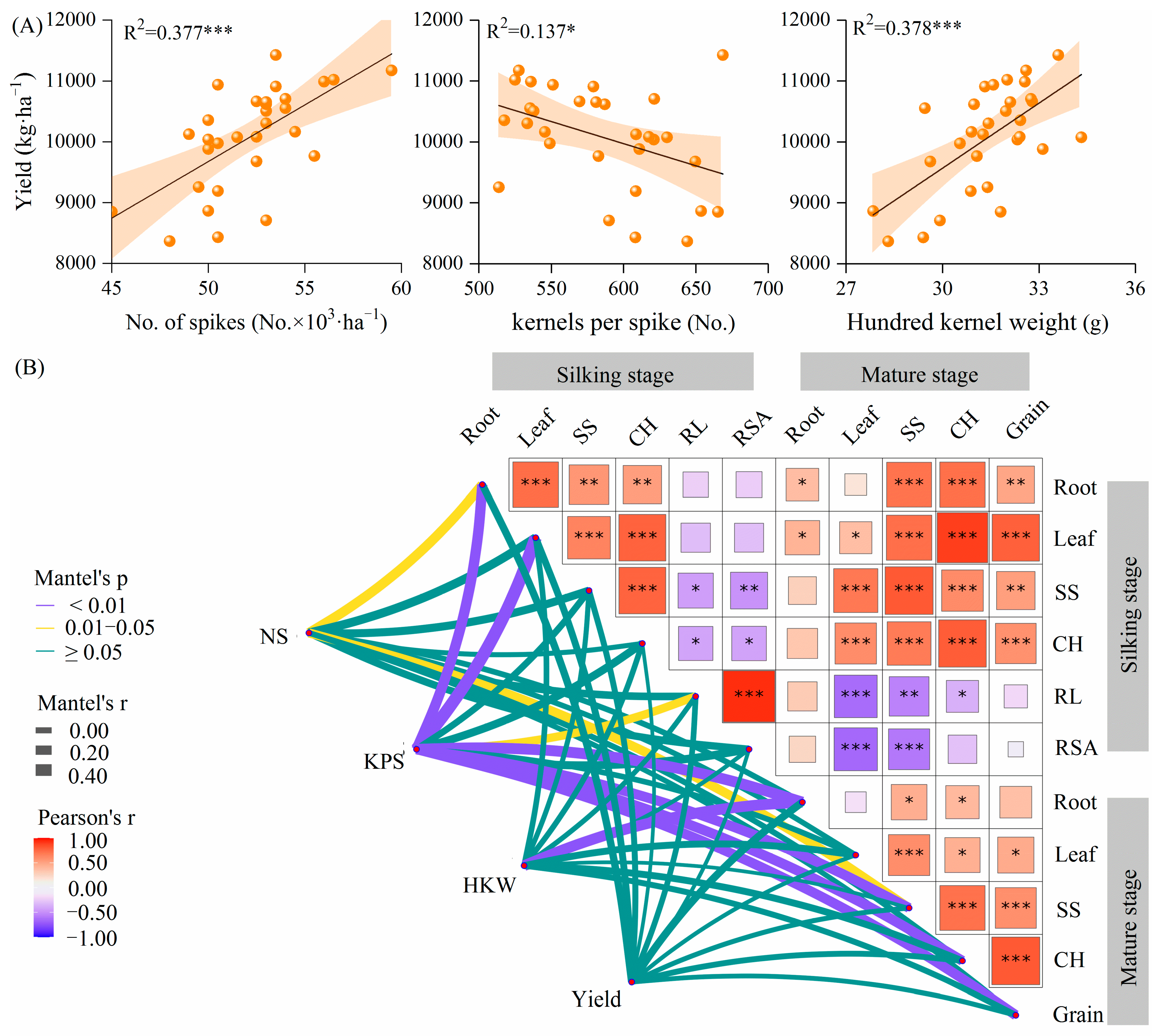
Maize grain yield showed a significant positive correlation with the number of spikes and hundred-kernel weight but a significant negative correlation with kernels per spike (Figure 11A). At the silking stage, both root length and root surface area were significantly negatively correlated with the dry matter weight of leaves and stems + sheaths at maturity. The dry matter weights of the corresponding plant components measured at the silking and maturity stages were significantly positively correlated. Significant correlations were also observed among the number of spikes, kernels per spike, root dry matter weight at silking, leaf dry matter weight at silking, and root length. At maturity, all dry matter accumulation components, except for leaf dry matter, showed significant correlations with kernels per ear. Productive ear number was significantly correlated with stem + sheath dry matter weight at maturity, and hundred-kernel weight was significantly correlated with root dry matter weight at maturity (Figure 11B).
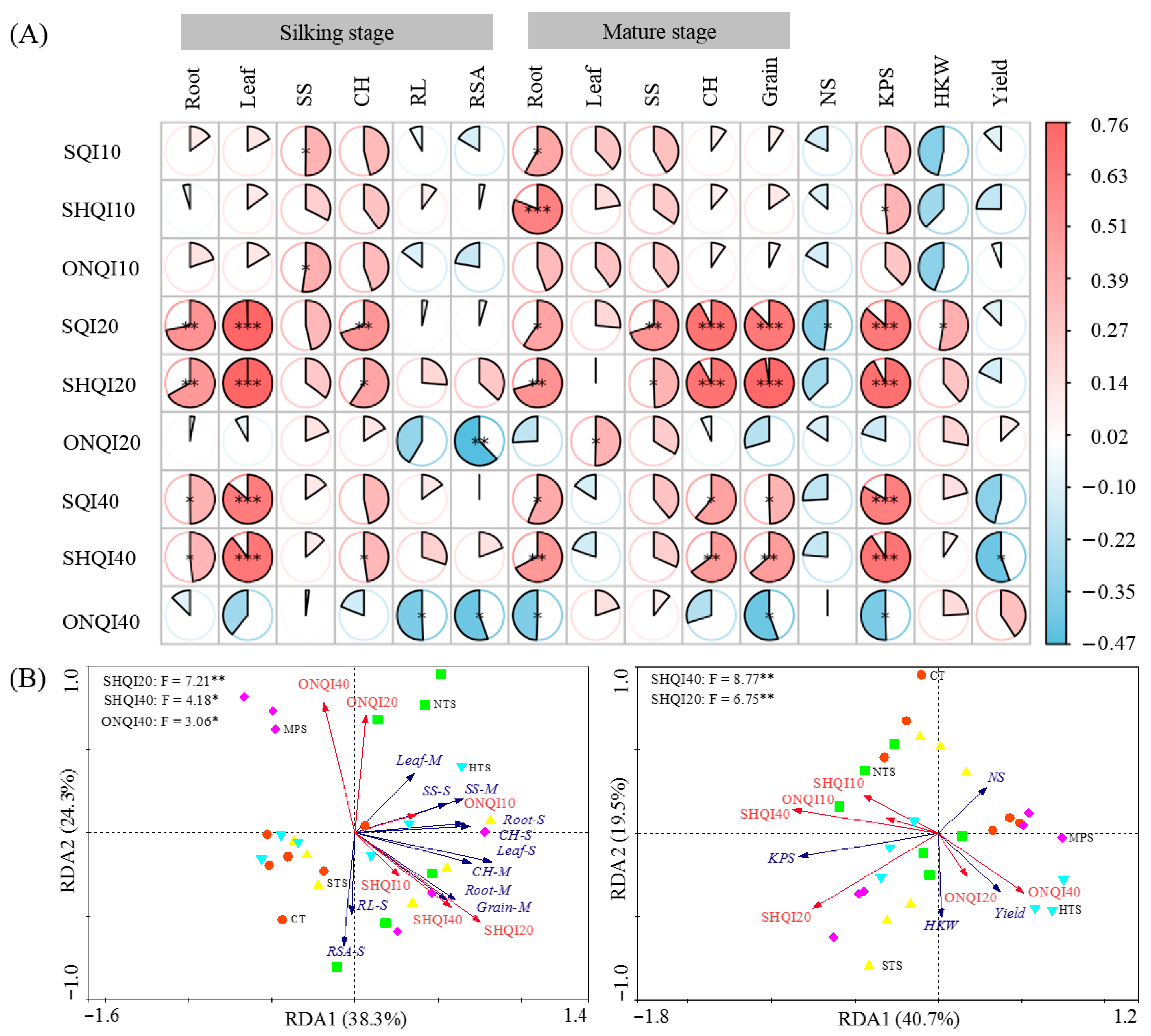
A correlation analysis indicated that the soil structure and hydrothermal characteristics quality index (SHQI) in the 0–10 cm layer was significantly positively correlated with root dry matter weight at maturity. In the 10–40 cm layer, both the soil quality index (SQI) and the soil organic matter and nutrient quality index (ONQI) showed significant positive correlations with root dry matter weight at silking, leaf dry matter weight at silking, root dry matter weight at maturity, cob + husk dry matter weight, and kernels per spike. In contrast, the ONQI in the 10–20 cm layer was significantly negatively correlated with root surface area at silking. The ONQI in the 20–40 cm layer was significantly negatively correlated with root length at silking, root surface area at silking, root dry matter weight at maturity, grain dry matter weight, and kernels per ear (Figure 12A). A redundancy analysis revealed that the soil quality indices explained 62.6% of the total variance in plant traits across the silking and maturity stages and 60.2% of the variance in grain yield and its components. The SHQI in the 10–40 cm soil layer and the ONQI in the 20–40 cm layer were significantly correlated with dry matter accumulation in various plant organs at both growth stages. Additionally, the SHQI in the 10–40 cm layer showed a significant correlation with grain yield and its components (Figure 12B).

4. Discussion

4.1. The Impact of Different Tillage Practices on Soil Quality

Over the two-year study, the STS and MPS treatments improved the soil structure and hydrothermal characteristics quality index (SHQI) in the 0–40 cm soil layer in 2023 and 2024, respectively. The STS treatment minimized soil disturbance, which promoted macro-aggregate formation, alleviated soil compaction, and fostered a favorable soil physical structure [37]. In contrast, the MPS treatment effectively broke up the plow pan, optimized the soil pore system, enhanced water infiltration during heavy rainfall, and reduced the risks of surface runoff and soil erosion—a mechanism consistent with the subsoiling effects reported by Abidela et al. [38] in Ethiopia. The NTS and STS treatments markedly improved the soil organic matter content and the organic nutrient quality index (ONQI) in the 0–40 cm soil layer relative to the other treatments. This enhancement can be attributed to the capacity of NTS and STS to mitigate soil structural degradation induced by machinery traffic, decelerate the mineralization rate of soil organic carbon, and promote organic matter accumulation in the topsoil [39]. The MPS treatment likewise elicited a significant increase in the ONQI within the 10–40 cm soil horizon; this effect arises from the soil profile inversion driven by moldboard plowing, which incorporates straw and root residues into the 30–35 cm soil depth, thereby delivering substantial organic carbon inputs to the 20–40 cm layer and facilitating organic matter sequestration, as well as improving soil nutrient bioavailability [40,41].
In 2024, the NTS, STS, and MPS treatments significantly improved the comprehensive soil quality index (SQI) in the 0–40 cm soil layer compared to CT. NTS treatment mitigate nutrient leaching and loss from the surface soil by forming a physical barrier with straw mulch while also enhancing organic matter accumulation and directly supplying available nutrients through straw decomposition [42,43,44]. Moreover, it increases topsoil enzyme activity and accelerates nutrient cycling, thereby improving nutrient availability in the surface layer. However, long-term no-tillage can lead to soil compaction, reducing pore connectivity and restricting crop root growth [45,46]. STS treatment disrupts the plow pan, thereby improving soil physical properties, increasing porosity, and enhancing water infiltration during high-rainfall periods. This effectively balances the soil water retention capacity with infiltration-driven moisture replenishment [47,48]. Furthermore, retaining stubble at a height of 40 cm returns about one-third of the total straw produced to the field, which helps mitigate soil and water loss, increases the soil organic matter (SOM) content, and improves overall soil quality [49,50]. MPS treatment causes the most substantial soil disturbance, thoroughly mixing organic matter throughout the plow layer and into the subsoil. It also improves the subsoil pore structure and water retention capacity. However, long-term use may deplete nutrient concentrations in the topsoil [51,52]. Harrowing with straw mulching and incorporation (HTS) treatment incorporates straw into the 0–20 cm soil layer, and this increased exogenous carbon input and significantly improved the ONQI in the topsoil compared to CT. CT treatment consists of ridge tillage to increase the soil surface area for thermal regulation and rotary tillage to loosen the topsoil. However, long-term reliance on shallow tillage with low-power machinery can lead to plow layer shallowing, plow pan thickening, and soil compaction [48]. Moreover, traditional tillage typically retains only about 10 cm of crop residues and roots on the surface, resulting in a severe deficit of organic matter returned to the soil and contributing to arable land degradation. In contrast, deep tillage practices such as STS and MPS disrupt the plow pan, loosen the subsoil, and increase soil porosity and pore connectivity, thereby promoting the improvement of deep soil fertility [52,53].

4.2. The Impact of Different Tillage Practices on the Distribution of Maize Roots

Crop root system development is highly dependent on the physical structure of the plow layer and its capacity to supply water and nutrients [54,55]. Favorable soil aeration facilitates crop uptake of water and nutrients, delays root senescence, and promotes root growth [56,57]. In this study, the root length and root surface area in the 0–10 cm soil layer under the CT treatment were significantly greater than those under the other treatments. This pattern is primarily attributed to long-term continuous shallow tillage, which promoted the formation of a compacted plow pan. As a result, the 10–20 cm soil layer exhibited a high bulk density and poor pore connectivity, restricting root elongation and penetration. These limitations led to a pronounced concentration of roots in the surface layer, forming a characteristic “shallow-rooting” distribution pattern [58]. Under NTS treatment, straw cover enhances topsoil moisture retention. However, long-term no-tillage can cause compaction in deeper layers, and as straw is mainly concentrated on the surface, nutrients accumulate in the topsoil while becoming depleted in deeper zones. Consequently, roots are more concentrated near the surface, and the total root biomass was lower than that under CT—a pattern reflecting the constraints imposed by subsoil compaction on root growth [59]. In contrast, STS treatment combines deep loosening with strip-based straw cover. Deep loosening creates permeable pores in the seedbed, facilitating vertical root penetration beyond 30 cm, while the moisture-conserving effect of straw strips further supports root development [60]. HTS treatment increases porosity in the 20–30 cm layer, thereby promoting root penetration [15]. However, by mixing straw into the 0–20 cm layer, HTS intensifies nutrient competition between soil microorganisms and roots during early growth stages, which suppresses initial root development. As a result, deep root growth under HTS was less pronounced than that under STS and MPS. MPS treatment restructures the soil pore architecture through full-depth tillage and supplies organic matter to deeper layers via straw burial. This leads to a more uniform root distribution throughout the 0–35 cm soil profile [61].

4.3. The Impact of Different Tillage Practices on Dry Matter Accumulation and Yield of Maize

Different tillage practices regulate the soil environment by altering the soil structure and determining the placement of returned straw, thereby influencing dry matter accumulation and partitioning in maize at the silking and maturity stages [50,62,63]. Maize grain yield is determined by the synergistic effects of the number of spikes, kernels per spike, and hundred-kernel weight, with the spatiotemporal patterns of dry matter accumulation and root morphology playing critical roles in this process. This study demonstrates that STS and MPS significantly increased grain yield under high-rainfall conditions. Compared with CT, these treatments increased the total dry matter at maturity by 14.5–20.3% and promoted a greater proportion of dry matter allocation to the grains. This improvement is attributed to the ability of STS and MPS to optimize the soil structure, enhance the soil structure and hydrothermal characteristics quality index (SHQI), and promote deeper root penetration along with an increased root length density [64]. These modifications extended nutrient uptake during grain filling and improved the translocation of photosynthetic assimilates to the grains, thereby increasing grain weight through enhanced assimilate transport capacity [65]. In contrast, the NTS treatment significantly increased kernels per spike compared with CT but did not significantly improve hundred-kernel weight or grain yield. This outcome may be attributed to subsoil compaction under long-term no-tillage, which limited late-stage root nutrient uptake and reduced the efficiency of assimilate partitioning to the kernels.
Interannual variability further highlighted the interaction between tillage practices and climatic conditions. In the relatively dry year of 2023, the topsoil resource enrichment strategy under NTS conferred better adaptation, whereas in the wetter year of 2024, the MPS treatment, with its improved subsoil structure, demonstrated greater advantages [64]. The STS treatment, integrating strip deep loosening with in-row straw placement, effectively balanced topsoil moisture conservation with subsoil permeability. This integrated approach maintained higher dry matter accumulation and yield stability across both years, demonstrating its long-term benefits through the coordination of soil structure and function. These findings align with those of Liu [66], who reported yield advantages for deep loosening with high stubble retention over no-till practices. Collectively, these results underscore the important role of soil structural and hydrothermal properties in determining crop dry matter accumulation and yield formation.

5. Conclusions

Based on a long-term experimental platform in the black soil region of Northeast China, this study evaluated the effects of different tillage practices on soil quality and maize growth in spring maize cropping systems. The results indicate that NTS treatment resulted in a higher soil quality index (SQI), which was mainly attributed to its significant improvement in the soil organic matter and nutrient quality index (ONQI). In contrast, STS and MPS treatments significantly enhanced the soil structure and hydrothermal characteristics quality index (SHQI), thereby establishing a more favorable soil physical environment for maize root growth. Furthermore, the SHQI exhibited a stronger promoting effect on dry matter accumulation and yield formation than the ONQI. Both the STS and MPS treatments increased maize yield under wet-year conditions and demonstrated greater interannual yield stability. Future research should focus on customizing straw return strategies and soil disturbance intensity according to regional climate characteristics, so as to achieve synergistic optimization of dry matter accumulation and partitioning.

Author Contributions

Y.Y.: Writing—original draft, Methodology. P.S.: Writing—review & editing. Y.R.: Investigation, Methodology. H.W.: Investigation, Project administration. X.L.: Project administration. Q.L.: Validation, Data curation. M.L.: Investigation. Y.W.: Resources, Supervision. Y.L.: Writing—review & editing, Funding acquisition, Conceptualization. J.Z.: Writing—review & editing, Project administration, Conceptualization. All authors have read and agreed to the published version of the manuscript.

Funding

This research was funded by the National Key Research and Development Program of China (2023YFD1500303); the Jilin Provincial Science and Technology Development Program (20230202023NC); the Jilin Provincial Innovation Project (CXGC2025RCY037).

Data Availability Statement

The data presented in this study are available on request from the corresponding author.

Conflicts of Interest

The authors declare no conflicts of interest.

References

  1. Hu, Y.; Li, X.; Guo, S.; Gao, X.; Ou, X.; Liu, B. On-Site Soil Dislocation and Localized CNP Degradation: The Real Erosion Risk Faced by Sloped Cropland in Northeastern China. Agric. Ecosyst. Environ. 2020, 302, 107088. [Google Scholar] [CrossRef]
  2. Chen, B.; Liu, E.; Tian, Q.; Yan, C.; Zhang, Y. Soil Nitrogen Dynamics and Crop Residues. A Review. Agron. Sustain. Dev. 2014, 34, 429–442. [Google Scholar] [CrossRef]
  3. Surekha, K.; App, K.; Reddy, M.N.; Satyanarayana, K.; Sta Cruz, P.C. Crop Residue Management to Sustain Soil Fertility and Irrigated Rice Yields. Nutr. Cycl. Agroecosyst. 2003, 67, 145–154. [Google Scholar] [CrossRef]
  4. Doran, J.W.; Zeiss, M.R. Soil Health and Sustainability: Managing the Biotic Component of Soil Quality. Appl. Soil Ecol. 2000, 15, 3–11. [Google Scholar] [CrossRef]
  5. Villamil, M.B.; Little, J.; Nafziger, E.D. Corn Residue, Tillage, and Nitrogen Rate Effects on Soil Properties. Soil Tillage Res. 2015, 151, 61–66. [Google Scholar] [CrossRef]
  6. Jin, K.; Sleutel, S.; Buchan, D.; De Neve, S.; Cai, D.; Gabriëls, D.; Jin, J. Changes of Soil Enzyme Activities Under Different Tillage Practices in the Chinese Loess Plateau. Soil Tillage Res. 2009, 104, 115–120. [Google Scholar] [CrossRef]
  7. Sun, R.; Zhao, B.; Zhu, L.S.; Xu, J.; Zhang, F. Effects of Long-Term Fertilization on Soil Enzyme Activities and Its Role in Adjusting-Controlling Soil Fertility. J. Plant Nutr. Fertil. 2003, 9, 406–410. [Google Scholar]
  8. Liu, C.; Si, B.; Zhao, Y.; Wu, Z.; Lu, X.; Chen, X.; Han, X.; Zhu, Y.; Zou, W. Drivers of Soil Quality and Maize Yield Under Long-Term Tillage and Straw Incorporation in Mollisols. Soil Tillage Res. 2025, 246, 106360. [Google Scholar] [CrossRef]
  9. Nichols, V.; Verhulst, N.; Cox, R.; Govaerts, B. Weed Dynamics and Conservation Agriculture Principles: A Review. Field Crops Res. 2015, 183, 56–68. [Google Scholar] [CrossRef]
  10. Zhang, S.X.; Chen, X.W.; Jia, S.X.; Liang, A.Z.; Zhang, X.P.; Yang, X.M.; Wei, S.C.; Sun, B.J.; Huang, D.D.; Zhou, G.Y. The Potential Mechanism of Long-Term Conservation Tillage Effects on Maize Yield in the Black Soil of Northeast China. Soil Tillage Res. 2015, 154, 84–90. [Google Scholar] [CrossRef]
  11. Keesstra, S.D.; Rodrigo-Comino, J.; Novara, A.; Giménez-Morera, A.; Pulido, M.; Di Prima, S.; Cerdà, A. Straw Mulch as a Sustainable Solution to Decrease Runoff and Erosion in Glyphosate-Treated Clementine Plantations in Eastern Spain. An Assessment Using Rainfall Simulation Experiments. Catena 2019, 174, 95–103. [Google Scholar] [CrossRef]
  12. Huang, X.; Wang, H.; Zhang, M.; Horn, R.; Ren, T. Soil Water Retention Dynamics in a Mollisol During a Maize Growing Season Under Contrasting Tillage Systems. Soil Tillage Res. 2021, 209, 104953. [Google Scholar] [CrossRef]
  13. Hu, R.; Liu, Y.; Chen, T.; Zheng, Z.; Peng, G.; Zou, Y.; Tang, C.; Shan, X.; Zhou, Q.; Li, J. Responses of Soil Aggregates, Organic Carbon, and Crop Yield to Short-Term Intermittent Deep Tillage in Southern China. J. Clean. Prod. 2021, 298, 126767. [Google Scholar] [CrossRef]
  14. Zhai, L.; Wang, Z.; Song, S.; Zhang, L.; Zhang, Z.; Jia, X. Tillage Practices Affect the Grain Filling of Inferior Kernel of Summer Maize by Regulating Soil Water Content and Photosynthetic Capacity. Agric. Water Manag. 2021, 245, 106600. [Google Scholar] [CrossRef]
  15. Raper, R.L.; Bergtold, J. In-Row Subsoiling: A Review and Suggestions for Reducing Cost of This Conservation Tillage Operation. Appl. Eng. Agric. 2007, 23, 463–471. [Google Scholar] [CrossRef]
  16. Shah, A.N.; Tanveer, M.; Shahzad, B.; Yang, G.; Fahad, S.; Ali, S.; Bukhari, M.A.; Tung, S.A.; Hafeez, A.; Souliyanonh, B. Soil Compaction Effects on Soil Health and Crop Productivity: An Overview. Environ. Sci. Pollut. Res. 2017, 24, 10056–10067. [Google Scholar] [CrossRef]
  17. Li, R.; Zheng, J.; Xie, R.; Ming, B.; Peng, X.; Luo, Y.; Zheng, H.; Sui, P.; Wang, K.; Hou, P.; et al. Potential Mechanisms of Maize Yield Reduction Under Short-Term No-Tillage Combined With Residue Coverage in the Semi-Humid Region of Northeast China. Soil Tillage Res. 2022, 217, 105289. [Google Scholar] [CrossRef]
  18. Wang, S.; Wang, H.; Hafeez, M.B.; Zhang, Q.; Yu, Q.; Wang, R.; Wang, X.; Li, J. No-Tillage and Subsoiling Increased Maize Yields and Soil Water Storage Under Varied Rainfall Distribution: A 9-Year Site-Specific Study in a Semi-Arid Environment. Field Crops Res. 2020, 255, 107867. [Google Scholar] [CrossRef]
  19. Zhang, N.; Chen, X.; Han, X.; Lu, X.; Yan, J.; Zou, W.; Yan, L. Responses of Microbial Nutrient Acquisition to Depth of Tillage and Incorporation of Straw in a Chinese Mollisol. Front. Environ. Sci. 2021, 9, 737075. [Google Scholar] [CrossRef]
  20. Chen, Q.; Zhang, X.; Sun, L.; Ren, J.; Yuan, Y.; Zang, S. Influence of Tillage on the Mollisols Physicochemical Properties, Seed Emergence and Yield of Maize in Northeast China. Agriculture 2021, 11, 939. [Google Scholar] [CrossRef]
  21. Tormena, C.A.; Karlen, D.L.; Logsdon, S.; Cherubin, M.R. Corn Stover Harvest and Tillage Impacts on Near-Surface Soil Physical Quality. Soil Tillage Res. 2017, 166, 122–130. [Google Scholar] [CrossRef]
  22. Cui, Y.; Liu, S.H.; Li, X.G.; Geng, H.; Xie, Y.; He, Y.H. Estimating Maize Yield in the Black Soil Region of Northeast China Using Land Surface Data Assimilation: Integrating a Crop Model and Remote Sensing. Front. Plant Sci. 2022, 13, 915109. [Google Scholar] [CrossRef] [PubMed]
  23. Liu, S.Y.; Fan, R.Q.; Yang, X.M.; Zhang, Z.H.; Zhang, X.Q.; Liang, A.Z. Decomposition of Maize Stover Varies With Maize Type and Stover Management Strategies: A Microcosm Study on a Black Soil (Mollisol) in Northeast China. J. Environ. Manag. 2019, 234, 226–236. [Google Scholar] [CrossRef] [PubMed]
  24. Kuchenbuch, R.O.; Gerke, H.H.; Buczko, U. Spatial Distribution of Maize Roots by Complete 3D Soil Monolith Sampling. Plant Soil 2009, 315, 297–314. [Google Scholar] [CrossRef]
  25. Wang, Z.Y.; Wang, X.L.; Long, A.R.; Ji, X.J.; Wang, D.C.; Jiang, Y.; Gong, X.W.; Qi, H. Optimizing Nitrogen Management Cooperates Yield Stability and Environmental Nitrogen Balance From the Perspective of Continuous Straw Incorporation. Field Crops Res. 2025, 333, 110121. [Google Scholar] [CrossRef]
  26. Flint, L.E.; Flint, A.L. Methods of Soil Analysis, Part 4. Physical Methods; Dane, J.H., Top, G.C., Eds.; SSSA Special Publications: Madison, WI, USA, 2002; pp. 241–253. [Google Scholar]
  27. Nelson, D.; Sommers, L.E. Total Carbon, Organic Carbon, and Organic Matter. In Methods of Soil Analysis: Part 2. Chemical and Microbiological Properties; SSSA Special Publications: Madison, WI, USA, 1982; pp. 539–579. [Google Scholar]
  28. Bremner, J. Determination of Nitrogen in Soil by the Kjeldahl Method. J. Agric. Sci. 1960, 55, 11–33. [Google Scholar] [CrossRef]
  29. Motsara, M.R.; Roy, R.N. Guide to Laboratory Establishment for Plant Nutrient Analysis; FAO: Rome, Italy, 2008. [Google Scholar]
  30. Hedley, M.J.; Stewart, J.W.B. Method to Measure Microbial Phosphate in Soils. Soil Biol. Biochem. 1982, 14, 377–385. [Google Scholar] [CrossRef]
  31. Dorich, R.A.; Nelson, D.W. Evaluation of Manual Cadmium Reduction Methods for Determination of Nitrate in Potassium Chloride Extracts of Soils. Soil Sci. Soc. Am. J. 1984, 48, 72. [Google Scholar] [CrossRef]
  32. Zhou, Y.; Ma, H.; Xie, Y.; Jia, X.; Su, T.; Li, J.; Shen, Y. Assessment of Soil Quality Indexes for Different Land Use Types in Typical Steppe in the Loess Hilly Area, China. Ecol. Indic. 2020, 118, 106743. [Google Scholar] [CrossRef]
  33. Yu, P.J.; Liu, S.W.; Zhang, L.; Li, Q.; Zhou, D.W. Selecting the Minimum Data Set and Quantitative Soil Quality Indexing of Alkaline Soils Under Different Land Uses in Northeastern China. Sci. Total Environ. 2018, 616–617, 564–571. [Google Scholar] [CrossRef]
  34. Andrews, S.S.; Karlen, D.L.; Mitchell, J.P. A Comparison of Soil Quality Indexing Methods for Vegetable Production Systems in Northern California. Agric. Ecosyst. Environ. 2002, 90, 25–45. [Google Scholar] [CrossRef]
  35. Askari, M.S.; Holden, N.M. Indices for Quantitative Evaluation of Soil Quality Under Grassland Management. Geoderma 2014, 230–231, 131–142. [Google Scholar] [CrossRef]
  36. Kuzyakov, Y.; Gunina, A.; Zamanian, K.; Tian, J.; Luo, Y.; Xu, X.L.; Yudina, A.; Aponte, H.; Alharbi, H.; Ovsepyan, L.; et al. New Approaches for Evaluation of Soil Health, Sensitivity and Resistance to Degradation. Front. Agric. Sci. Eng. 2020, 7, 282. [Google Scholar] [CrossRef]
  37. Balesdent, J.; Chenu, C.; Balabane, M. Relationship of Soil Organic Matter Dynamics to Physical Protection and Tillage. Soil Tillage Res. 2000, 53, 215–230. [Google Scholar] [CrossRef]
  38. Abidela Hussein, M.; Muche, H.; Schmitter, P.; Nakawuka, P.; Tilahun, S.A.; Langan, S.; Barron, J.; Steenhuis, T.S. Deep Tillage Improves Degraded Soils in the Sub-Humid Ethiopian Highlands. Land 2019, 8, 159. [Google Scholar] [CrossRef]
  39. Ussiri, D.A.N.; Lal, R. Long-Term Tillage Effects on Soil Carbon Storage and Carbon Dioxide Emissions in Continuous Corn Cropping System From an Alfisol in Ohio. Soil Tillage Res. 2009, 104, 39–47. [Google Scholar] [CrossRef]
  40. Sui, P.X.; Li, R.P.; Zheng, H.B.; Wang, H.; Yuan, Y.; Luo, Y.; Zheng, J.Y.; Liu, W.R. Long-Term Conservation Tillage Practices Directly and Indirectly Affect Soil Micro-Food Web in a Chinese Mollisol. Agronomy 2022, 12, 2356. [Google Scholar] [CrossRef]
  41. Chatterjee, A. Annual Crop Residue Production and Nutrient Replacement Costs for Bioenergy Feedstock Production in United States. Agron. J. 2013, 105, 685–692. [Google Scholar] [CrossRef]
  42. Chu, J.; Wang, L.; Jia, R.; Zhou, J.; Zang, H.; Wang, J.; Yang, Y.; Jiang, Y.; Wang, Y.; Peixoto, L.; et al. Straw Returning With No-Tillage Alleviates Microbial Metabolic Carbon Limitation and Improves Soil Multifunctionality in the Northeast Plain. Land Degrad. Dev. 2024, 35, 5149–5161. [Google Scholar] [CrossRef]
  43. Wang, Y.; Tu, C.; Cheng, L.; Li, C.; Gentry, L.F.; Hoyt, G.D.; Zhang, X.; Hu, S. Long-Term Impact of Farming Practices on Soil Organic Carbon and Nitrogen Pools and Microbial Biomass and Activity. Soil Tillage Res. 2011, 117, 8–16. [Google Scholar] [CrossRef]
  44. Zhong, S.; Sheng, Z.; Zheng, L.; Zheng, X.; Yang, Y.; Xiao, D.; Ai, B.; Zeng, H. Impacts of 25-Year Rotation and Tillage Management on Soil Quality in a Semi-Arid Tropical Climate. Chil. J. Agric. Res. 2021, 81, 3–13. [Google Scholar] [CrossRef]
  45. Vian, J.F.; Peigne, J.; Chaussod, R.; Roger-Estrade, J. Effects of Four Tillage Systems on Soil Structure and Soil Microbial Biomass in Organic Farming. Soil Use Manag. 2009, 25, 1–10. [Google Scholar] [CrossRef]
  46. Han, C.; Zhou, W.; Gu, Y.; Wang, J.; Zhou, Y.; Xue, Y.; Shi, Z.; Siddique, K.H.M. Effects of Tillage Regime on Soil Aggregate-Associated Carbon, Enzyme Activity, and Microbial Community Structure in a Semiarid Agroecosystem. Plant Soil 2024, 498, 543–559. [Google Scholar] [CrossRef]
  47. Liu, X.; Peng, C.; Zhang, W.; Li, S.; An, T.; Xu, Y.; Ge, Z.; Xie, N.; Wang, J. Subsoiling Tillage With Straw Incorporation Improves Soil Microbial Community Characteristics in the Whole Cultivated Layers: A One-Year Study. Soil Tillage Res. 2022, 215, 105188. [Google Scholar] [CrossRef]
  48. Wang, Y.; Yang, S.; Sun, J.; Liu, Z.; He, X.; Qiao, J. Effects of Tillage and Sowing Methods on Soil Physical Properties and Corn Plant Characters. Agriculture 2023, 13, 600. [Google Scholar] [CrossRef]
  49. Li, Y.M.; Wang, Y.M.; Qiu, G.W.; Yu, H.J.; Liu, F.M.; Wang, G.L.; Duan, Y. Conservation Tillage Facilitates the Accumulation of Soil Organic Carbon Fractions by Affecting the Microbial Community in an Eolian Sandy Soil. Front. Microbiol. 2024, 15, 1394179. [Google Scholar] [CrossRef] [PubMed]
  50. Yang, C.; Wang, X.; Li, J.; Zhang, G.; Shu, H.; Hu, W.; Han, H.; Liu, R.; Guo, Z. Straw Return Increases Crop Production by Improving Soil Organic Carbon Sequestration and Soil Aggregation in a Long-Term Wheat-Cotton Cropping System. J. Integr. Agric. 2024, 23, 669–679. [Google Scholar] [CrossRef]
  51. Yang, Y.; Wu, J.; Zhao, S.; Mao, Y.; Zhang, J.; Pan, X.; He, F.; van der Ploeg, M. Impact of Long-Term Sub-Soiling Tillage on Soil Porosity and Soil Physical Properties in the Soil Profile. Land Degrad. Dev. 2021, 32, 2892–2905. [Google Scholar] [CrossRef]
  52. Getahun, G.T.; Kätterer, T.; Munkholm, L.J.; Rychel, V.; Kirchmann, H. Effects of Loosening Combined With Straw Incorporation Into the Upper Subsoil on Soil Properties and Crop Yield in a Three-Year Field Experiment. Soil Tillage Res. 2022, 223, 105466. [Google Scholar] [CrossRef]
  53. Medvedev, V.V. Physical Properties and Spatial Distribution of the Plowpan in Different Arable Soils. Eurasian Soil Sci. 2011, 44, 1364–1372. [Google Scholar] [CrossRef]
  54. Ren, B.Z.; Li, X.; Dong, S.T.; Liu, P.; Zhan, B.; Zhang, J.W. Soil Physical Properties and Maize Root Growth Under Different Tillage Systems in the North China Plain. Crop J. 2018, 6, 669–676. [Google Scholar] [CrossRef]
  55. Xu, X.; Pang, D.W.; Chen, J.; Luo, Y.L.; Zheng, M.J.; Yin, Y.P.; Li, Y.X.; Li, Y.; Wang, Z.L. Straw Return Accompany With Low Nitrogen Moderately Promoted Deep Root. Field Crops Res. 2018, 221, 71–80. [Google Scholar] [CrossRef]
  56. Burton, A.L.; Lynch, J.P.; Brown, K.M. Spatial Distribution and Phenotypic Variation in Root Cortical Aerenchyma of Maize (Zea mays L.). Plant Soil 2013, 367, 263–274. [Google Scholar] [CrossRef]
  57. Bian, D.H.; Jia, G.P.; Cai, L.J.; Ma, Z.Y.; Eneji, A.E.; Cui, Y.H. Effects of Tillage Practices on Root Characteristics and Root Lodging Resistance of Maize. Field Crops Res. 2016, 185, 89–96. [Google Scholar] [CrossRef]
  58. Scarpare, F.V.; van Lier, Q.D.J.; de Camargo, L.; Pires, R.C.M.; Ruiz-Correa, S.T.; Bezerra, A.H.F.; Gava, G.J.C.; Dias, C.T.D.S. Tillage Effects on Soil Physical Condition and Root Growth Associated With Sugarcane Water Availability. Soil Tillage Res. 2019, 187, 110–118. [Google Scholar] [CrossRef]
  59. Nichols, V.A.; Ordóñez, R.A.; Wright, E.E.; Castellano, M.J.; Liebman, M.; Hatfield, J.L.; Helmers, M.; Archontoulis, S.V. Maize Root Distributions Strongly Associated With Water Tables in Iowa, USA. Plant Soil 2019, 444, 225–238. [Google Scholar] [CrossRef]
  60. Wang, X.; Liu, Z.; Pang, Y. Droplet Breakup in an Asymmetric Bifurcation With Two Angled Branches. Chem. Eng. Sci. 2018, 188, 11–17. [Google Scholar] [CrossRef]
  61. Frelih-Larsen, A.; Hinzmann, M.; Ittner, S. The ‘Invisible’ Subsoil: An Exploratory View of Societal Acceptance of Subsoil Management in Germany. Sustainability 2018, 10, 3006. [Google Scholar] [CrossRef]
  62. Canisares, L.P.; Grove, J.; Miguez, F.; Poffenbarger, H. Long-Term No-Till Increases Soil Nitrogen Mineralization but Does Not Affect Optimal Corn Nitrogen Fertilization Practices Relative to Inversion Tillage. Soil Tillage Res. 2021, 213, 105080. [Google Scholar] [CrossRef]
  63. Huang, T.; Yang, N.; Lu, C.; Qin, X.; Siddique, K.H. Soil Organic Carbon, Total Nitrogen, Available Nutrients, and Yield Under Different Straw Returning Methods. Soil Tillage Res. 2021, 214, 105171. [Google Scholar] [CrossRef]
  64. Xu, J.; Song, F.; Wang, Z.; Qi, Z.; Liu, M.; Guan, S.; Sun, J.; Li, S.; Zhao, J. Effects of Different Straw Return Methods on the Soil Structure, Organic Carbon Content and Maize Yield of Black Soil Farmland. Agronomy 2024, 14, 2011. [Google Scholar] [CrossRef]
  65. Yan, Q.; Wu, L.; Dong, F.; Yan, S.; Li, F.; Jia, Y.; Zhang, J.; Zhang, R.; Huang, X. Subsoil Tillage Enhances Wheat Productivity, Soil Organic Carbon and Available Nutrient Status in Dryland Fields. J. Integr. Agric. 2024, 23, 251–266. [Google Scholar] [CrossRef]
  66. Liu, Z.; Nie, L.; Zhang, M.; Zhang, S.; Yang, H.; Guo, L.; Xia, J.; Ning, T.; Jiao, N.; Kuzyakov, Y. Long-Term Subsoiling and Straw Return Increase Soil Organic Carbon Fractions and Crop Yield. J. Soil Water Conserv. 2023, 78, 234–244. [Google Scholar] [CrossRef]
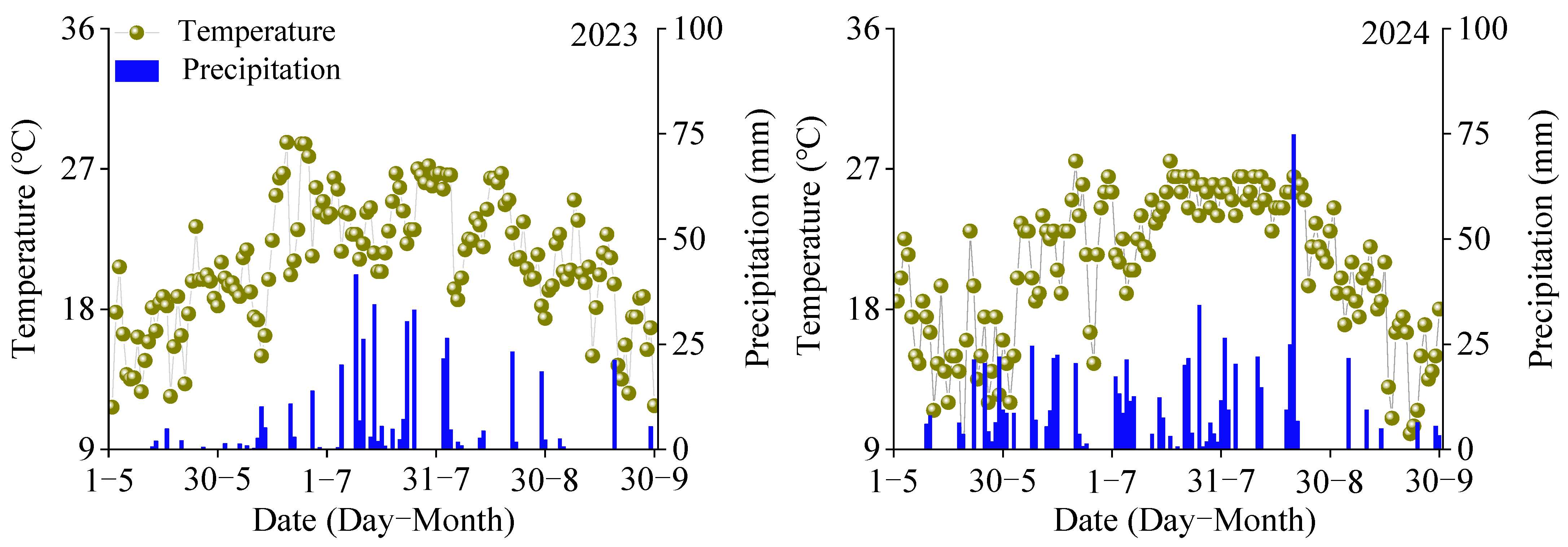
Figure 1. Temperature and precipitation during maize growth period.
Agronomy 15 02851 g001
Figure 2. The differences in soil structure characteristics under different tillage practices. CT, conventional tillage; NTS, no-tillage with straw mulching; STS, subsoiling tillage with straw mulching; HTS, harrow tillage with straw mulching and incorporation; MPS, moldboard plowing tillage with straw incorporation. Different lowercase letters denote significant differences across land use types (p < 0.05).
Agronomy 15 02851 g002
Figure 3. Distribution characteristics of soil structure profiles during the silk emergence stage of maize in 2023 under different tillage practices. CT, conventional tillage; NTS, no-tillage with straw mulching; STS, subsoiling tillage with straw mulching; HTS, harrow tillage with straw mulching and incorporation; MPS, moldboard plowing tillage with straw incorporation. PR, soil penetration resistance; BD, soil bulk density; R, soil R values; MA, macro-aggregate; CP, capillary porosity; NCP, non-capillary porosity.
Agronomy 15 02851 g003
Figure 4. Seasonal variations in soil moisture content under different farming practices. CT, conventional tillage; NTS, no-tillage with straw mulching; STS, subsoiling tillage with straw mulching; HTS, harrow tillage with straw mulching and incorporation; MPS, moldboard plowing tillage with straw incorporation.
Agronomy 15 02851 g004
Figure 5. Seasonal variations in soil temperature under different farming practices. CT, conventional tillage; NTS, no-tillage with straw mulching; STS, subsoiling tillage with straw mulching; HTS, harrow tillage with straw mulching and incorporation; MPS, moldboard plowing tillage with straw incorporation.
Agronomy 15 02851 g005
Figure 6. Differences in soil organic matter and nutrient content under different farming practices. CT, conventional tillage; NTS, no-tillage with straw mulching; STS, subsoiling tillage with straw mulching; HTS, harrow tillage with straw mulching and incorporation; MPS, moldboard plowing tillage with straw incorporation. Different lowercase letters denote significant differences across land use types (p < 0.05).
Agronomy 15 02851 g006
Figure 7. Differences in soil quality indices under different tillage practices. SHQI: soil quality index driven by soil structure and water-thermal properties. CT, conventional tillage; NTS, no-tillage with straw mulching; STS, subsoiling tillage with straw mulching; HTS, harrow tillage with straw mulching and incorporation; MPS, moldboard plowing tillage with straw incorporation. ONQI: soil quality index driven by soil organic matter and nutrients. Different lowercase letters indicate significant differences between treatments at each soil layer depth. Different uppercase letters indicate significant differences in soil quality indices between treatments at the 0–40 cm soil layer.
Agronomy 15 02851 g007
Figure 8. Differences in dry matter accumulation (A) and root distribution during silk emergence and maturity stages of maize (B) under different tillage practices. CT, conventional tillage; NTS, no-tillage with straw mulching; STS, subsoiling tillage with straw mulching; HTS, harrow tillage with straw mulching and incorporation; MPS, moldboard plowing tillage with straw incorporation. Different lowercase letters denote significant differences across land use types (p < 0.05).
Agronomy 15 02851 g008
Figure 9. Distribution characteristics of root length and root surface area profiles during the silk emergence stage of maize in 2023 under different tillage practices. CT, conventional tillage; NTS, no-tillage with straw mulching; STS, subsoiling tillage with straw mulching; HTS, harrow tillage with straw mulching and incorporation; MPS, moldboard plowing tillage with straw incorporation. RL, root length; RSA, root surface area.
Agronomy 15 02851 g009
Figure 10. Linear fitting of root length and root surface area during maize silk emergence with soil structural properties. RL, root length; RSA, root surface area. * p < 0.05; *** p < 0.001.
Agronomy 15 02851 g010
Figure 11. Correlation analysis between maize grain yield and plant traits. Fitting analysis of yield and yield components (A). Pearson correlations between dry matter accumulation indices during silking and maturity stages, and Mantel tests with maize yield components (B). NS, the number of spikes; KPS, kernels per spike; HKW, hundred-kernel weight; SS, stem + sheath; CH, cob + husk; RL, root length; RSA, root surface area. * p < 0.05; ** p < 0.01; *** p < 0.001.
Agronomy 15 02851 g011
Figure 12. Correlation analysis (A) and redundancy analysis (B) of soil quality index with plant growth and maize yield components during silk emergence and maturity stages. NS, the number of spikes; KPS, kernels per spike; HKW, hundred-kernel weight; SS, stem + sheath; CH, cob + husk; RL, root length; RSA, root surface area; SQI10, soil quality index in the 0–10 cm soil layer; SHQI10, soil structure and hydrothermal characteristics quality index in the 0–10 cm layer; ONQI10, soil organic matter and nutrient quality index in the 0–10 cm layer; SQI20, soil quality index in the 10–20 cm soil layer; SHQI20, soil structure and hydrothermal characteristics quality index in the 10–20 cm layer; ONQI20, soil organic matter and nutrient quality index in the 10–20 cm layer; SQI40, soil quality index in the 20–40 cm soil layer; SHQI40, soil structure and hydrothermal characteristics quality index in the 20–40 cm layer; ONQI40, soil organic matter and nutrient quality index in the 20–40 cm layer; -S, silking stage; -M, maturity stage. * p < 0.05; ** p < 0.01; *** p < 0.001.
Agronomy 15 02851 g012
Table 1. Field operation methods for different tillage practices.
TreatmentCodeOperation Methods
Conventional tillageCTAfter maize harvest in autumn, all aboveground straw is removed from the field. In spring, a rotary tiller is used for shallow stubble breaking and ridge formation, with an operating depth of 15 cm. The resulting ridges are 65 cm in width and 15 cm in height. During ridge preparation, compound fertilizer is applied in a single operation. Conventional seeders are used for sowing on the ridges, after which a land roller is employed for soil compaction.
No-tillage with straw mulchingNTSDuring the autumn mechanical harvest, all straw is chopped to segments ≤ 5 cm in length, is evenly spread on the soil surface, and receives no further treatment. In spring, no-till planters are used for flat planting with a row spacing of 65 cm.
Subsoiling tillage with straw mulchingSTSThe traditional 65 cm row spacing is reconfigured into a wide–narrow row pattern for flat cultivation, comprising a 90 cm wide row (straw band) and a 40 cm narrow row (seedling band). In spring, no-till planting is carried out in the previous year’s wide rows using a no-till planter. During the maize jointing stage, deep tillage is performed to a depth of 30–35 cm within the wide rows. After maize harvest, the aboveground straw is retained on the stubble band, while the seedling band is cleared. The following spring, a no-till planter is used to sow seeds in the narrow rows of the seedling band.
Harrow tillage with straw mulching and incorporationHTSDuring the autumn mechanical harvest, all straw is chopped into segments less than 20 cm in length and evenly distributed over the soil surface. A harrow-integrated combined tiller is then used for soil preparation, resulting in approximately 30% of the straw remaining on the surface and the remaining 70% being uniformly incorporated into the 0–20 cm tillage layer. In spring, a seedbed preparation machine is employed to further loosen the soil to a depth of 6–12 cm, creating a fine and firm seedbed suitable for sowing. Flat planting is subsequently carried out using a no-till planter with a row spacing of 65 cm.
Moldboard plowing tillage with straw incorporationMPSDuring mechanical harvesting, straw is subsequently chopped in a separate operation using a straw shredder. Prior to soil freezing, deep tillage is performed with a subsoiler to a depth of 30–35 cm. Following tillage, a heavy-duty harrow is used to level the soil surface and complete seedbed preparation. In spring, planting is carried out with a no-till planter at a row spacing of 65 cm.
Table 2. Differences in maize yield and its components under different tillage practices.
YearTreatmentNo. of Spikes
(No. ×103·ha−1)
Kernels Per Spike
(No.)
Hundred-Kernel Weight
(g)
Yield
(kg·ha−1)
CT52.83 ± 2.47 a532.87 ± 14.17 b30.92 ± 1.48 a10,358.58 ± 194.39 a
NTS51.00 ± 2.29 a578.93 ± 29.80 a31.04 ± 0.43 a10,336.46 ± 500.97 a
2023STS56.00 ± 3.50 a544.40 ± 22.22 b32.65 ± 0.12 a10,942.37 ± 257.26 a
HTS52.17 ± 1.44 a540.80 ± 9.27 b31.66 ± 0.28 a10,583.09 ± 323.34 a
MPS53.00 ± 3.50 a541.93 ± 39.43 b31.46 ± 0.52 a10,297.48 ± 924.35 a
CT53.00 ± 2.50 a594.01 ± 13.00 c30.13 ± 0.85 b8969.84 ± 705.30 b
NTS50.17 ± 2.26 a649.48 ± 5.14 a28.59 ± 0.92 b8970.81 ± 661.99 b
2024STS52.17 ± 1.89 a620.32 ± 45.05 abc32.94 ± 0.76 a10,654.73 ± 772.08 a
HTS49.83 ± 4.54 a632.61 ± 30.39 abc31.81 ± 0.93 ab9583.18 ± 987.13 ab
MPS51.33 ± 1.26 a623.57 ± 6.67 b33.02 ± 1.13 a10,065.24 ± 24.32 a
CT, conventional tillage; NTS, no-tillage with straw mulching; STS, subsoiling tillage with straw mulching; HTS, harrow tillage with straw mulching and incorporation; MPS, moldboard plowing tillage with straw incorporation. Different lowercase letters indicate significant differences (p < 0.05) in maize yield components among different tillage practices.
Disclaimer/Publisher’s Note: The statements, opinions and data contained in all publications are solely those of the individual author(s) and contributor(s) and not of MDPI and/or the editor(s). MDPI and/or the editor(s) disclaim responsibility for any injury to people or property resulting from any ideas, methods, instructions or products referred to in the content.