Article

Uncertainty Analyses of Arsenic Element Assessments in Cultivated Soils at Different Sampling Densities in High-Altitude Regions

1
Agro-Environmental Protection Institute, Ministry of Agriculture and Rural Affairs, Chinese Academy of Agricultural Sciences, Tianjin 300170, China
2
Xizang Runfeng Project Engineering Management Co., Ltd., Qamdo 854000, China
3
Agricultural and Animal Husbandry Science Promotion Service Center of Mangkang County, Qamdo 854000, China
4
Agricultural and Animal Husbandry Science Promotion Service Center of Dingqing County, Qamdo 854000, China
*
Authors to whom correspondence should be addressed.
Agronomy 2025, 15(12), 2755; https://doi.org/10.3390/agronomy15122755
Submission received: 19 October 2025 / Revised: 26 November 2025 / Accepted: 27 November 2025 / Published: 28 November 2025
(This article belongs to the Section Soil and Plant Nutrition)

Abstract

Monitoring and assessing the spatial heterogeneity of soil elements within cultivated land presents core challenges in precision agriculture. Uncertainty analysis methods and optimal sampling densities for arsenic (As) pollution risk assessments in typical high-altitude regions of the southeastern Qinghai–Tibet Plateau remain insufficiently studied. This study investigates arsenic contamination in cultivated soils of a representative high-altitude region. By combining multi-level grid deployment with random sampling, seven datasets with varying sampling densities (62, 98, 139, 221, 289, 394, and 570 samples) were collected from 612 monitoring sites. The results indicate significant arsenic enrichment in the study area, with concentrations reaching 3.6 times the national soil background value and 2.4 times the plateau soil background value. Compared to arithmetic mean and median analyses, the geometric mean evaluation demonstrates lower uncertainty across different sampling densities in ecological environment assessments, averaging 4.3%, thereby providing more accurate results. Significant directional anisotropy exhibits a pronounced quadratic trend. The strongest spatial correlation occurs along the northwest–southeast direction, with the spatial autocorrelation distance in the vertical direction being 2.39 times greater than in other directions. Increasing sampling density is a macro-level requirement for accurately assessing the environmental risk characteristics of arsenic in plateau ecosystems; however, it is not the only factor influencing the spatial variability of arsenic concentrations. By comprehensively considering model fitting parameters, spatial distribution patterns, and cost–benefit analysis, a moderate sampling density of 20 points per square kilometer was determined to be optimal. This density provides a basis for exploring the distribution patterns and dynamic monitoring of arsenic as a risk element in plateau environments, while also provide monitoring guidance for developing countries with limited and fragmented agricultural land areas.

1. Introduction

Healthy soil is the foundation of a robust agricultural ecosystem. As the primary medium, it promotes healthy crop growth to ensure food security while maintaining soil biodiversity and ecosystem services. Ultimately, it safeguards the food chain, human health, and well-being at their very foundation. With intensified human activities, cultivated soils face increasing risks from heavy metals and metalloids [1,2,3]. In addition to their hidden nature, cumulative effects, and persistence [4,5], arsenic (As) in high-altitude cultivated soils exhibits distinct and significant spatial variation, The coefficient of variation reached 72.2%, exhibiting higher heterogeneity than both chromium and copper [6]. However, research on this phenomenon remains limited, and precise sampling techniques for monitoring are lacking in practical agricultural settings. This situation poses serious threats to agricultural productivity, ecological security, and human health [7,8,9,10].
Recent scholarly research indicates that arsenic enrichment occurs in soils, sediments, rocks, hot springs, and surface waters across the Tibetan Plateau [11,12]. Easily weathered, arsenic-rich ultramafic rocks have been identified in the Himalayan suture zone, potentially serving as a significant source of high-arsenic sediments in natural water bodies. The Tibetan Plateau possesses abundant mineral resources due to its complex geological structure. Tibet hosts 32 mineral deposits, abundant geothermal resources, and high-altitude natural weathering processes that mobilize heavy metals while also providing rich sources. Intense tectonic movements generate mineral-bearing fluids rich in arsenic hydrothermal fluids within the deep mantle and crust. As a typical “sulfur-affinity element,” arsenic readily combines with sulfide ions. Consequently, it frequently occurs in association with or as a companion mineral to sulfide deposits of metals such as gold, copper, lead, zinc, and antimony. Regions abundant in mineral resources exhibit relatively higher background concentrations [13]. The mineral belt in southern Tibet (the Tethys-Himalayan polymetallic mineralization belt) contains significant arsenic resources [14]. In Tibet’s unique high-altitude environment, the transformation, mobility, and toxicity of arsenic are jointly governed by a set of interrelated key environmental factors [15]. Redox conditions serve as the dominant mechanism: anaerobic environments, such as poorly drained wetlands and river valleys, simultaneously dissolve arsenic-bearing iron oxides through microbial-mediated dissimilatory iron reduction, leading to large-scale arsenic release. These conditions also directly reduce less reactive, less toxic As(V) to more reactive, more toxic As(III), significantly increasing ecological risks. Organic matter acts as a “catalyst” in this process by accelerating anaerobic reduction reactions, serving as a carbon source for microorganisms, and competing with arsenic for adsorption sites, thereby further promoting arsenic desorption [16]. Tibetan soils generally exhibit neutral to alkaline pH conditions. While this environment is unfavorable for As(V) adsorption, it enhances the stability of As(III), collectively contributing to elevated arsenic concentrations in the aqueous phase [17]. Furthermore, although low temperatures may reduce microbial activity, frequent freeze–thaw cycles physically disrupt and release sequestered arsenic, creating transient anaerobic microzones that influence arsenic speciation [18]. Thus, the combined effects of these environmental factors collectively determine the biogeochemical behavior, potential toxicity, and spatial distribution patterns of arsenic in Tibet.
Spatial heterogeneity of soil properties is a fundamental issue in precision agriculture research. The accuracy of obtaining spatial distribution information is closely related to the number of sampling points. Scientifically determining sampling density not only effectively characterizes spatial variation patterns of soil properties but also significantly enhances evaluation efficiency and accuracy. Due to differences in spatial variability among pollutants and within the same pollutant across study areas, optimal sampling scales may vary considerably [19]. Arsenic, a typical soil contaminant, is classified as a Group 1 human carcinogen by the International Agency for Research on Cancer (IARC). The sources of arsenic in soil are complex, involving both natural (geogenic) and anthropogenic factors. Accurately assessing the ecological and health risks of soil arsenic and developing precise monitoring techniques form the foundation of risk management [20,21,22]. Establishing optimal monitoring density schemes, evaluating the overall pollution characteristics of regional soil contaminants, and analyzing their spatial variation patterns constitute the core objectives of soil metalloid pollution investigations [23]. In this process, the planning, design, and implementation strategies of sampling schemes—particularly the selection of site layout methods and sampling approaches—exert a decisive influence on accurately characterizing soil environmental quality [24,25]. NS-ISO 18400-104:2018 [26] provides general guidance for developing field investigation strategies and detailed guidance for formulating sampling strategies [27]. Similarly, during China’s first nationwide soil pollution survey, the sampling grid for farmland soils was set at 8 × 8 km, while at the site level, the soil sampling grid was 40 × 40 m [28]. Therefore, establishing a rational method to determine the optimal sampling scale for arsenic monitoring in cultivated soils of high-altitude study areas is crucial. However, research on the optimal sampling density for cultivated soils remains relatively scarce, with current studies predominantly focused on groundwater and air sampling [29].
Current mainstream soil sampling techniques can be categorized into three types: probability sampling, geostatistical methods, and environmentally factor-assisted sampling [30]. Among these, grid sampling is widely regarded by the international academic community as a fundamental strategy due to its advantages of strong operational standardization and high spatial coverage [31]. Determining the optimal sampling density is a critical decision in surveying and mapping work. This research requires striking a scientific balance between understanding spatial heterogeneity within the target area and achieving statistical efficiency under resource constraints. Research by scholars both domestically and internationally has generally focused on optimizing methods for intensive soil pollution surveys. Numerous studies have systematically investigated the impact of sampling density on the accuracy of regional soil pollution assessments using geostatistical methods such as Kriging interpolation. These studies have further revealed the multiscale spatial variation structure of soil heavy metals and its critical role in intensive sampling designs [32,33]. Some researchers have explored the optimal number of sampling points for assessing regional soil heavy metal contamination. Results indicate that as the spatial autocorrelation of heavy metals weakens, the ability of the semivariances function to characterize spatial heterogeneity progressively diminishes [34,35].
Given the high spatial heterogeneity in soil pollutant distribution, significant variations exist in how different sampling schemes characterize pollution patterns. A scientific understanding of these differences and the optimization of the sample size are crucial for accurately interpreting risk assessment results in specific regions. This study investigates arsenic (As) in typical high-altitude cultivated soils. By combining multi-level grid layout with random sampling, it systematically compares the concentration characteristics of soil As, the uncertainty in descriptive analysis, spatial distribution patterns, and variations under different sampling densities. It delves into the mechanisms by which different sampling schemes influence uncertainty in pollution characterization, providing scientific basis for optimizing sampling designs in long-term fixed-point monitoring. This approach aims to ensure the accuracy of spatial pattern predictions for soil arsenic while rationally allocating field sampling workloads, thereby offering theoretical foundations for refining heavy metal survey methodologies in high-altitude farmland soils.

2. Materials and Methods

2.1. Research Area Overview

The study area is situated in the southeastern Qinghai–Tibet Plateau of China, with elevations ranging from approximately 2500 to 5500 m (Figure 1). Characterized by numerous high-mountain gorges, the cultivated land is scattered and predominantly dryland. The primary crops cultivated in the study area are barley, corn, wheat, and buckwheat, with agriculture and animal husbandry as the main economic activities. The region experiences a plateau temperate semi-arid monsoon climate with pronounced vertical climatic zonation. The study area covers approximately 2000 hectares of farmland, primarily consisting of cold calcareous soils or Cambisols [36], with soil pH values ranging from 7.0 to 8.5. Arsenic is a common soil contaminant in high-altitude regions [8,9,10]. This area lies within the Hengduan Mountains of eastern Tibet, the Nyenchen Tanglha mineral belt, and the Ladakh-Gangdise polymetallic mineral belt. Due to this high geological background, weathering of parent material is a significant source of arsenic in the topsoil of the farmland [37].

2.2. Site Layout and Sample Collection Monitoring

A comprehensive approach combining systematic grid-based sampling and densified sampling in multi-mine areas was adopted. A total of 612 survey and monitoring points were established across 2000 hectares of cultivated land in the study area (At sites where intensive monitoring points account for less than 8% of the total sampling points in areas rich in mineral resources and localized geothermal activity) (Figure 1). At each sampling point, a five-point composite sampling method was used. Surface soil samples were collected from a depth of 0–20 cm using a wooden shovel. Excess soil was discarded using the quartering method, retaining approximately 1–2 kg as the composite sample for each point.
The samples were immediately placed in an insulated box containing ice packs and stored and transported in a light-protected environment at temperatures below 4 °C. Upon arrival at the laboratory, soil samples were processed in accordance with the standard GB/T 22105.2-2008 [38], titled “Soil Quality-Determination of Total Mercury, Total Arsenic, and Total Lead-Atomic Fluorescence Spectroscopy-Part 2: Determination of Total Arsenic in Soil.” (Detection limit: 0.01 mg/kg; Quantification limit: 0.03 mg/kg; Uncertainty: <10%; Recovery rate: 85–110%). The collected soil samples were stored in clean polyethylene or glass containers, air-dried indoors, pulverized, homogenized, and sieved through a 0.25–0.40 mm nylon mesh. Digestion was performed using a water bath heating method. Quality control was maintained by analyzing parallel samples for every 20 samples (GBW0 7391, GBW 7447, GBW 7389), utilizing standard materials produced by Agricultural Environmental Quality Supervision, Inspection and Test Center (Tianjin), Ministry of Agriculture and Rural Affairs, P. R. China. The arsenic (As) content in the soil was determined by atomic fluorescence spectroscopy (AFS 9130 YG-015).

2.3. Setting the Sample Point Density Gradient

The spatial distribution patterns of soil properties and the accuracy of their spatial interpolation are significantly influenced by the sampling scheme design and sample size. Based on regionalized variable theory, this study systematically investigates how sampling density affects the characterization of soil arsenic spatial heterogeneity and the accuracy of predictive models by constructing gradient datasets with varying sample densities.
Based on the technical standards outlined in China’s Technical Specification for Soil Environmental Monitoring (HJ/T 166-2004) [39], a multidimensional sample size optimization evaluation system has been established by integrating the quantitative indicator of spatial variability intensity (Coefficient of Variation, CV) with the sample representativeness evaluation parameter (Relative Deviation).
N = t2Cv2/m2
In the formula, N represents the number of samples; t denotes the selected confidence level (typically 95% for soil environmental monitoring), with the t-value at the given degrees of freedom being 1.645; Cv is the coefficient of variation (%), which can be estimated from prior research data; and m indicates the acceptable relative deviation (%). As m increases (i.e., the acceptable relative deviation grows, implying lower precision requirements), the required sample size N decreases. Soil environmental monitoring generally limits m to 20–30%. In regions without historical data or where soil variability is relatively low, Cv can be roughly estimated at 10–30%. Statistical analysis indicates that the coefficient of variation for arsenic in soil within the study area is 23.9%.
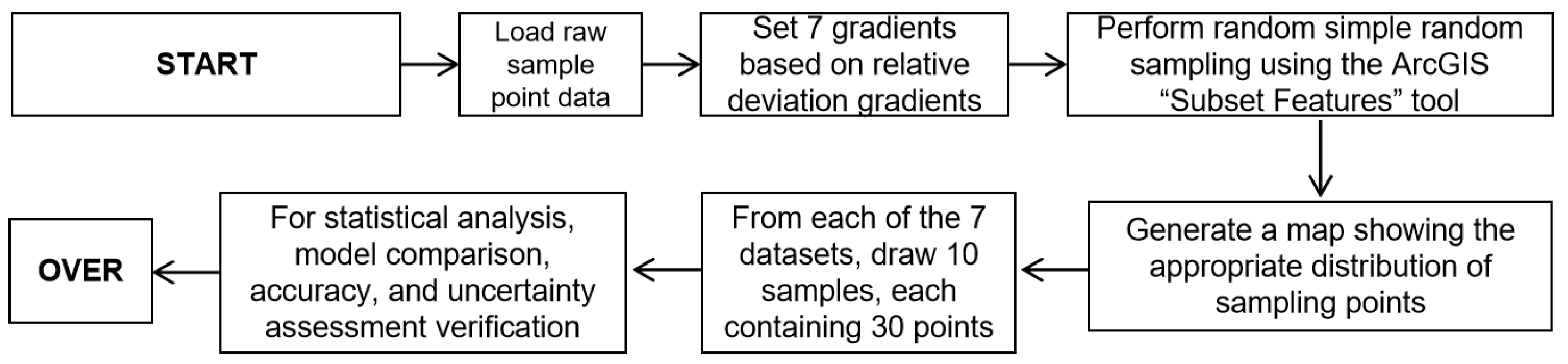
To compare the accuracy differences among spatial prediction models under varying sampling point density gradients, the function in ArcMap’s geostatistical module was used to sample model data at different density gradients and generate vector distribution maps of sampling points. The training set consisted of 612 sample points. From the dataset of 612 sample points across the 2000 ha study area, seven acceptable relative deviations ranging from 0.05 to 0.15 were randomly selected. These deviations were used to generate seven corresponding density-based sample point sets. This process generated seven corresponding density-graded sampling point sets [40], containing n = 570, 394, 289, 221, 139, 98, and 62 points, with the density scale increasing incrementally (Figure 2).
This study established multi-level grids within the research area based on varying sample sizes, covering areas of 3.2, 2.0, 1.4, 0.9, 0.7, 0.5, and 0.3 hectares, respectively. Within each grid, 10 sample sets were randomly and non-repetitively extracted, with each set comprising 30 samples to ensure sufficient subsample numbers (Table 1).

2.4. Acceptable Relative Deviation Value

Based on China’s Soil Environmental Quality Standard for Risk Control of Soil Pollution in Agricultural Land (GB15618-2018) [41], this study established risk screening values and control values for soil pollution in agricultural land. When contaminant levels are equal to or below the risk screening value, the soil pollution risk is considered low. When levels are equal to or below the risk control value but above the screening value, potential risks exist, such as agricultural products failing to meet quality and safety standards. When values exceed the risk control threshold, the soil pollution risk in agricultural land is high. The geometric mean, arithmetic mean, and median were used to characterize the overall level and distribution of regional soil arsenic concentrations. Using ArcGIS 10.6, this study employs semi-variogram analysis, Kriging interpolation techniques, and trend analysis to evaluate the spatial variation characteristics and pollution risks of arsenic content in soil.
To fully capture the trend characteristics of arsenic spatial distribution in cultivated soils, which are influenced by both structural and random factors, soil arsenic often exhibits significant overall spatial trends. These trends can interfere with the accuracy of spatial predictions. To improve prediction accuracy, trend removal is performed prior to interpolation. This study utilizes the Geostatistical Analyst module within the ArcGIS 10.6 (Esri, Redlands, CA, USA) platform. Using its Trend Analysis tool, the spatial trend of arsenic is quantitatively characterized to develop a spatial variability trend simulation model. By establishing a semivariogram model, the spatial correlation of arsenic content in cultivated soils is quantified, distinguishing the contributions of random and structural factors to its spatial distribution.
γ ( h ) = 1 2 N ( h ) i   = 1 N ( h ) Z ( x i )     Z ( x i + h ) 2
In the equation, γ ( h ) is the semi-variogram, reflecting the spatial variability of the variable; Z ( x i ) and Z ( x i + h ) are the observed values of the regionalized variable Z(X) at locations xi and xi + h, respectively; h is the lag; and N(h) is the number of sample points at distance h.
The three core parameters of the semi-variogram—Nugget, Partial Sill, and range—each carry distinct ecological significance. The nugget characterizes spatial variation caused by random factors; the partial sill reflects variation induced by structural factors; and the range (a) indicates the effective extent of spatial autocorrelation. Specifically, a block gold coefficient (Co/(Co + C)) below 0.25 indicates strong spatial autocorrelation, values between 0.25 and 0.75 denote moderate autocorrelation, and values above 0.75 suggest weak autocorrelation [42].
Furthermore, the study employed ordinary kriging to develop spatial prediction models for soil arsenic under various sampling densities [43]. By simulating its spatial distribution patterns, the model’s goodness-of-fit and predictive performance were systematically evaluated. This established a quantitative relationship between soil property prediction accuracy and sampling density, thereby creating a technical methodology for identifying optimal sampling density schemes.

3. Results

3.1. Uncertainty Analysis of Soil As Concentration Assessment

An analysis of the total arsenic content from 612 sampling points in the study area (Table 2) reveals the following: 192 points are classified as Level 1 low-risk sites, 397 points as Level 2 medium-risk sites, and 23 points as Level 3 high-risk sites. Medium- to high-risk sites constitute the majority, accounting for 68.6%. The maximum arsenic concentration reached 193.43 mg/kg, with an average value of 40.57 mg/kg. This average is 3.6 times higher than the national soil background value and 2.4 times higher than the plateau soil background value, indicating significant arsenic enrichment within the study area.
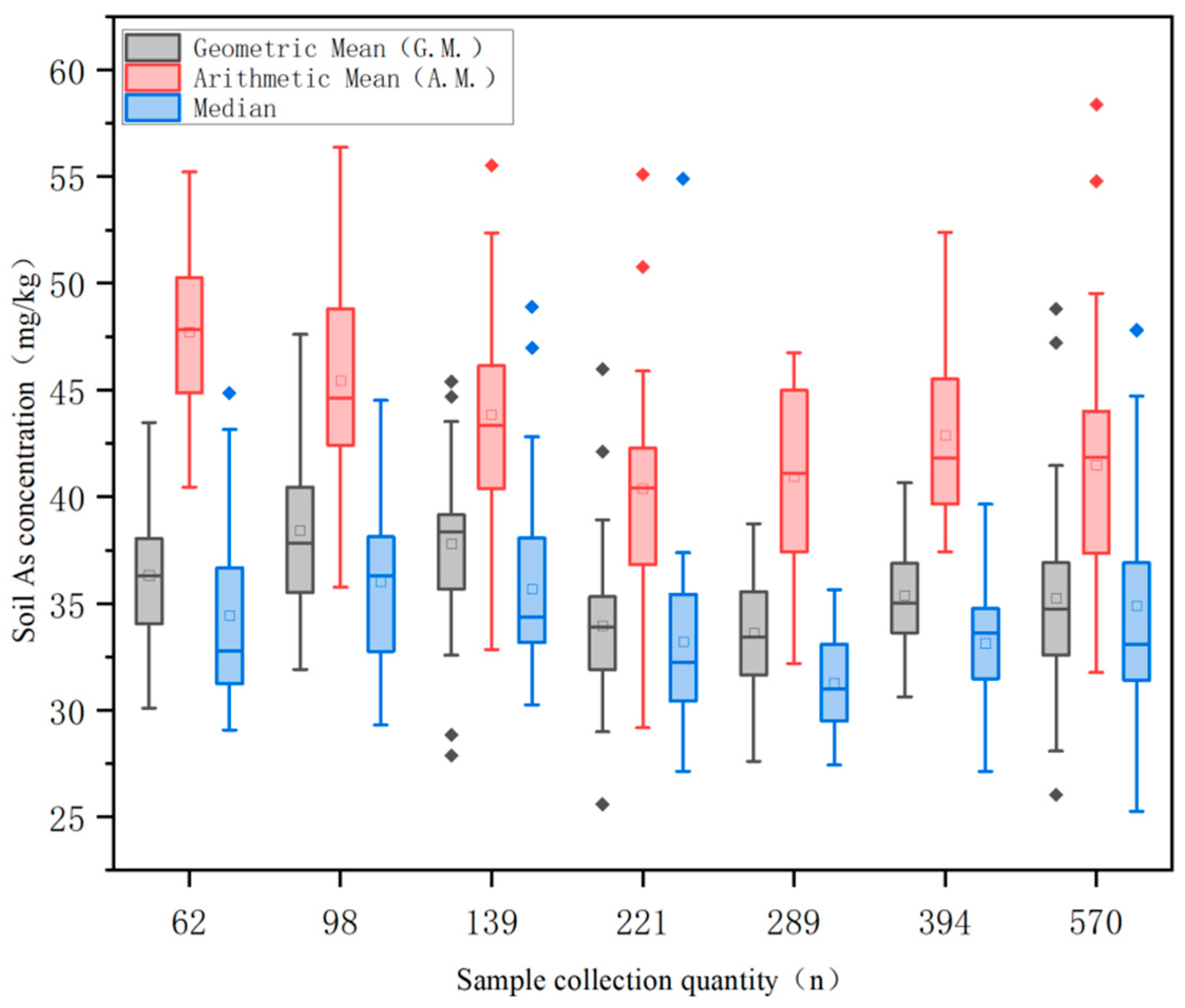
Significant differences exist in the statistical variability of arsenic concentrations in cultivated soils across different sampling sites within the study area (Figure 3). The arithmetic mean range was 41.46 mg/kg to 47.73 mg/kg, the set mean ranged from 33.62 mg/kg to 38.43 mg/kg, and the median fell between 31.27 mg/kg and 36.02 mg/kg. Under fixed sampling density conditions, the dispersion levels of the geometric mean, arithmetic mean, and median arsenic concentrations at sampling points exhibit distinct variations. Box plot analysis indicates that the interquartile range (IQR) of the arithmetic mean is significantly greater than that of the geometric mean and median, confirming that the variability of the arithmetic mean is more pronounced within the same sampling site. This suggests that when the dataset contains a small number of abnormally high values, using the arithmetic mean to characterize the overall level of arsenic contamination in regional farmland soils results in greater uncertainty in the assessment outcome, whereas the uncertainty is lower when using the geometric mean.
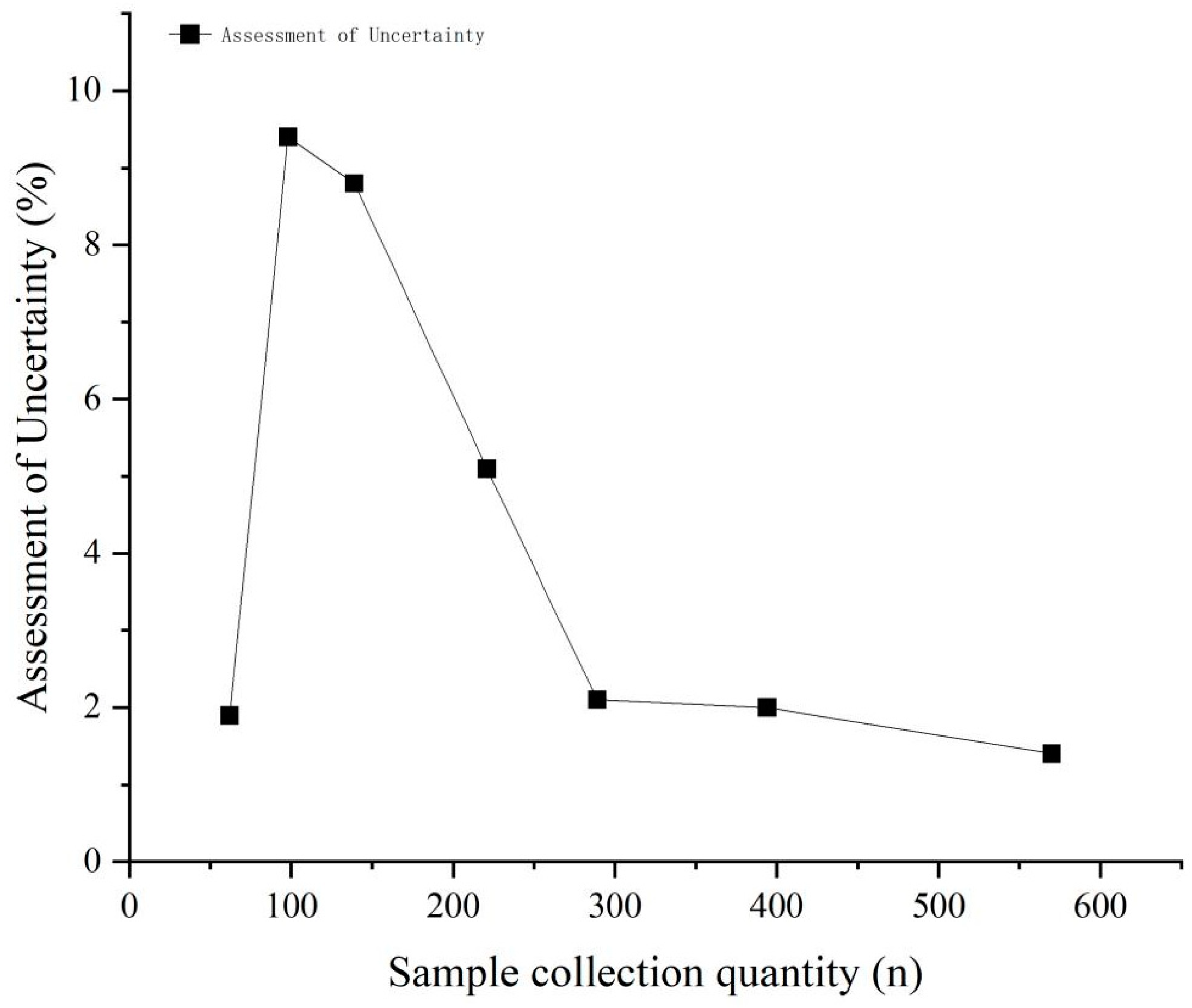
To further validate the accuracy of the geometric mean in assessing regional arsenic concentrations at varying sampling densities, the geometric mean of soil arsenic concentrations across all 612 sampling points within the study area was used as the reference value. The geometric mean uncertainties for arsenic concentrations in sample sets comprising 570, 394, 289, 221, 139, 98, and 62 sampling points were 1.4%, 2.0%, 2.1%, 5.1%, 8.8%, 9.4%, and 1.9%, respectively, with an average uncertainty of 4.3% (Figure 4). For sample sets ranging from 98 to 570 sampling points, the uncertainty in arsenic concentration assessment using the geometric mean decreases sequentially, followed by the median. The figure also shows that as sampling density increases, these three statistical measures of central tendency converge. Notably, the low uncertainty observed for the 62-point sample set may be a special case resulting from the small sample size and random sampling.

3.2. Soil As Concentration Characteristics and Spatial Distribution Trends

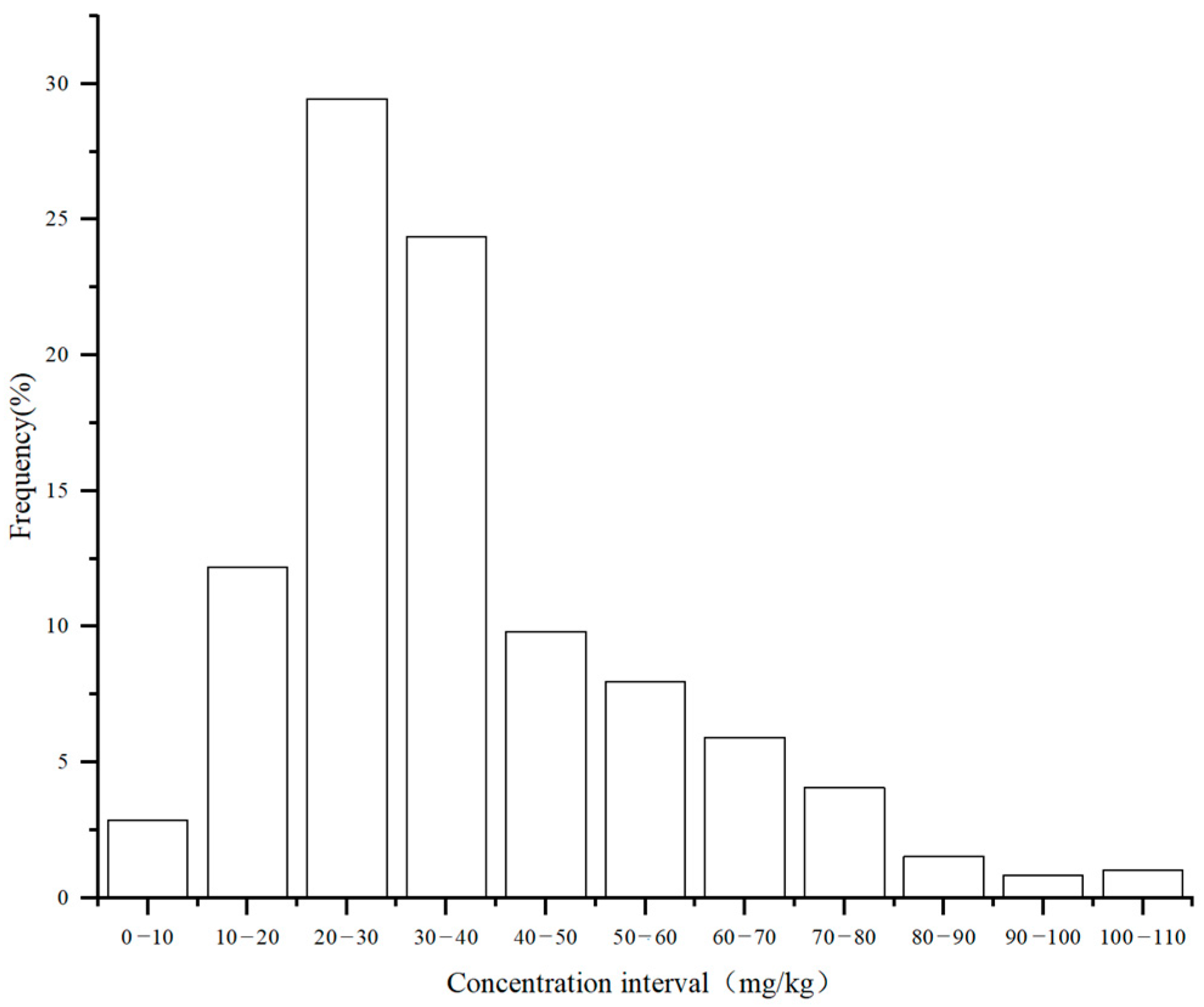
Arsenic (As) content data in cultivated soils within the study area exhibited a significantly positively skewed distribution, characterized by a pronounced right-skewed frequency histogram. This indicates that the majority of soil samples were concentrated in the lower concentration range. However, a small number of discrete, exceptionally high-value samples caused the overall distribution to have a long tail extending toward higher values. To meet the prerequisites for subsequent parametric statistical analysis, the original As content data underwent standardization using mean ± 3 standard deviations and logarithmic transformation. The resulting data, as assessed by histograms, better conformed to the theoretical requirements for geostatistical analysis (Figure 5), thereby producing a more stable, reliable, and accurate spatial interpolation result.
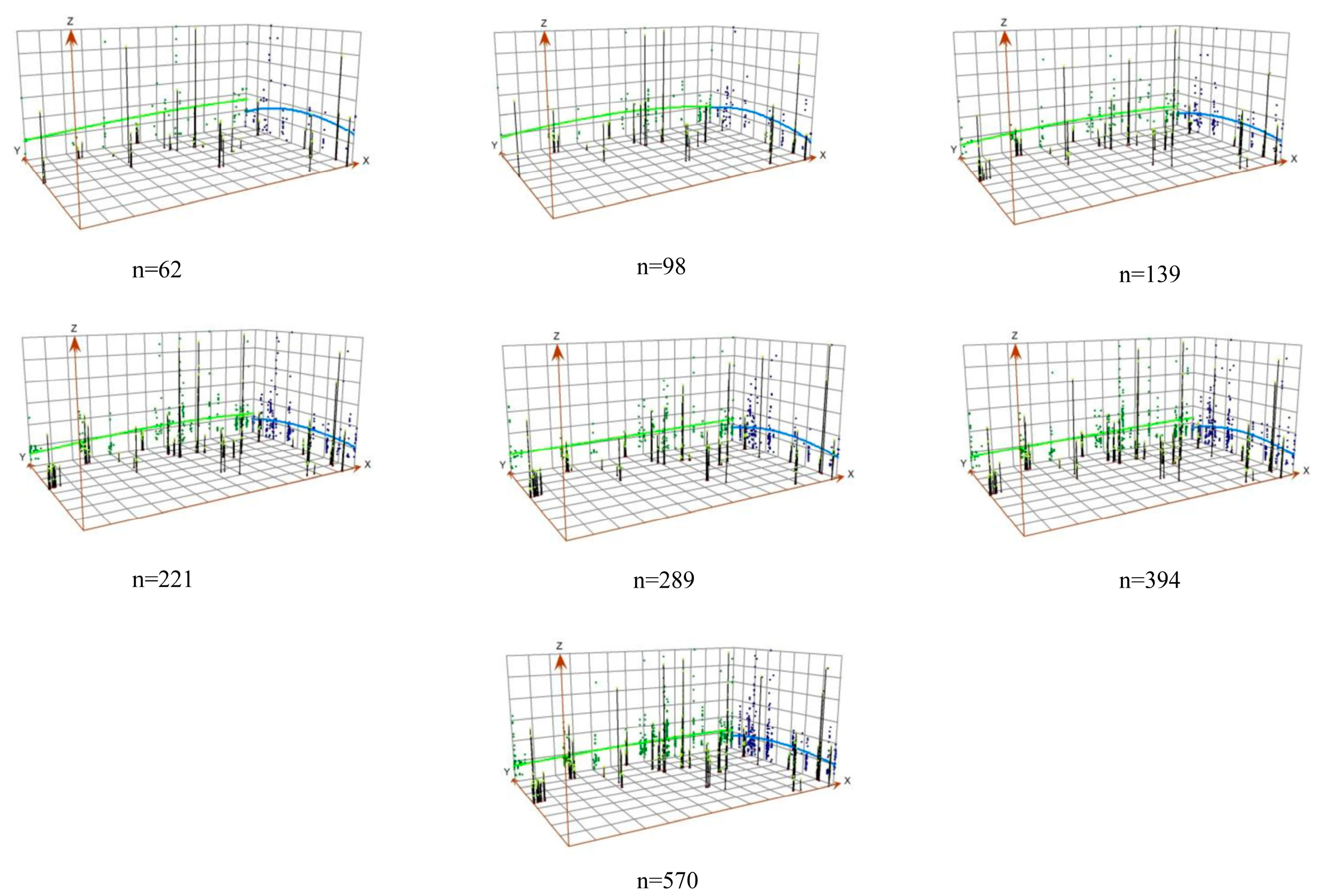
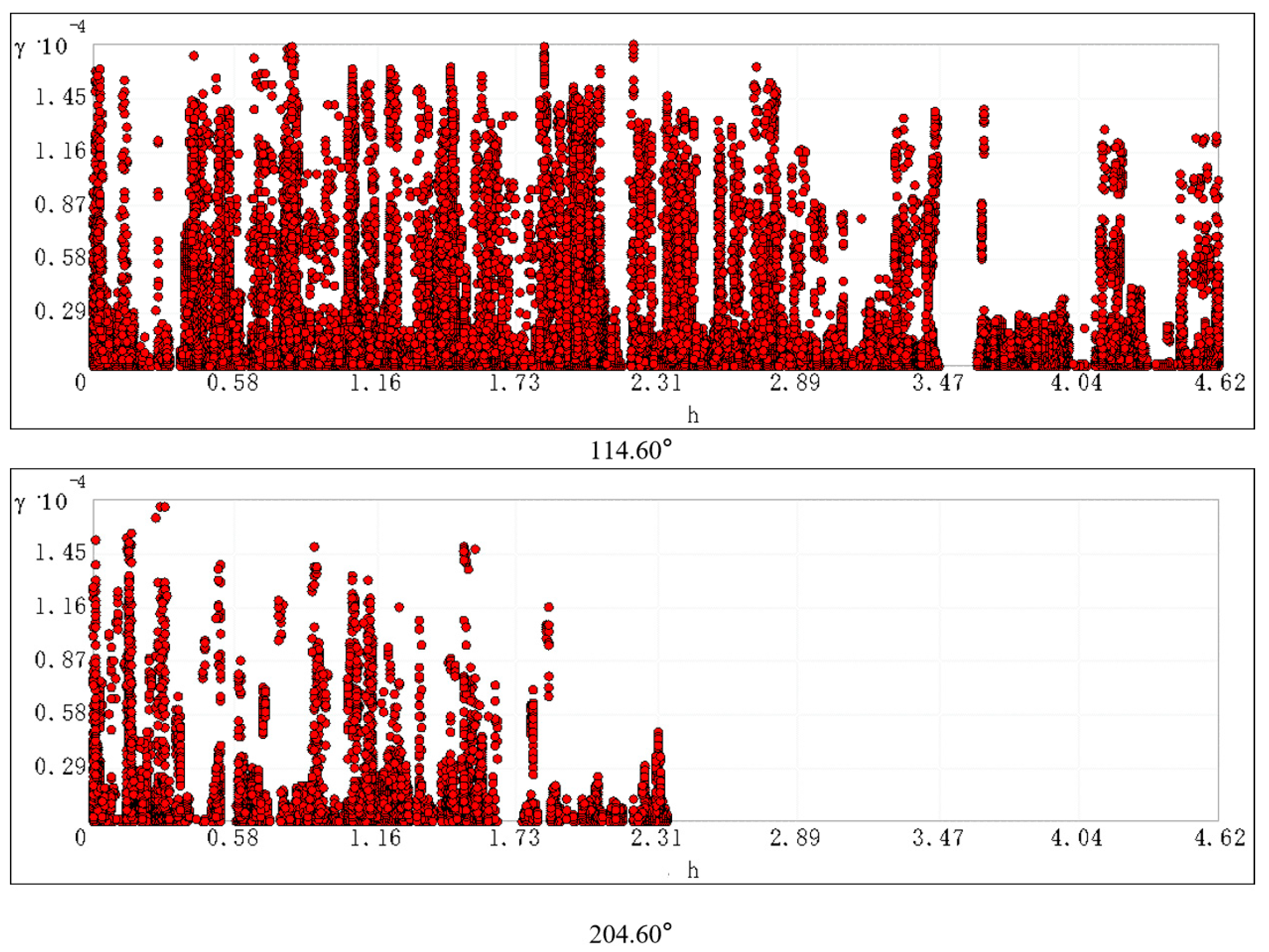
ArcGIS geostatistical trend analysis results indicate that the spatial distribution of arsenic concentration in cultivated soil within the study area exhibits distinct patterns and high consistency across different sample point densities. Projections along the north–south (YZ plane) and east–west (XZ plane) directions show varying degrees of curvature (Figure 6), with the north–south direction displaying greater prominence (blue line). This suggests a strong second-order polynomial trend effect in the dataset, primarily influenced by the east–west direction. Therefore, modeling trends using a second-order polynomial model is appropriate. This model also clearly characterizes the dataset’s trend as exhibiting strong directional anisotropy. At this scale, factors influencing the data are more complex or uneven along the north–south plane compared to the east–west plane. Curvature along the north–south axis exhibits a negative correlation with the spatial density of sampling points—curvature increases in areas of lower density. Simultaneously, spatial statistical tools (directional distribution) were applied to analyze the full dataset from 612 locations. The rotation angle of the anisotropic ellipse was 114.6°, with a primary-secondary range ratio of 2.39. This further confirms that the strongest spatial correlation occurs in the northwest–southeast direction, where the spatial autocorrelation distance (range) is 2.39 times greater perpendicular to this direction. The covariance cloud map also supports this finding (Figure 7).

3.3. Spatial Variability Analysis of Soil As

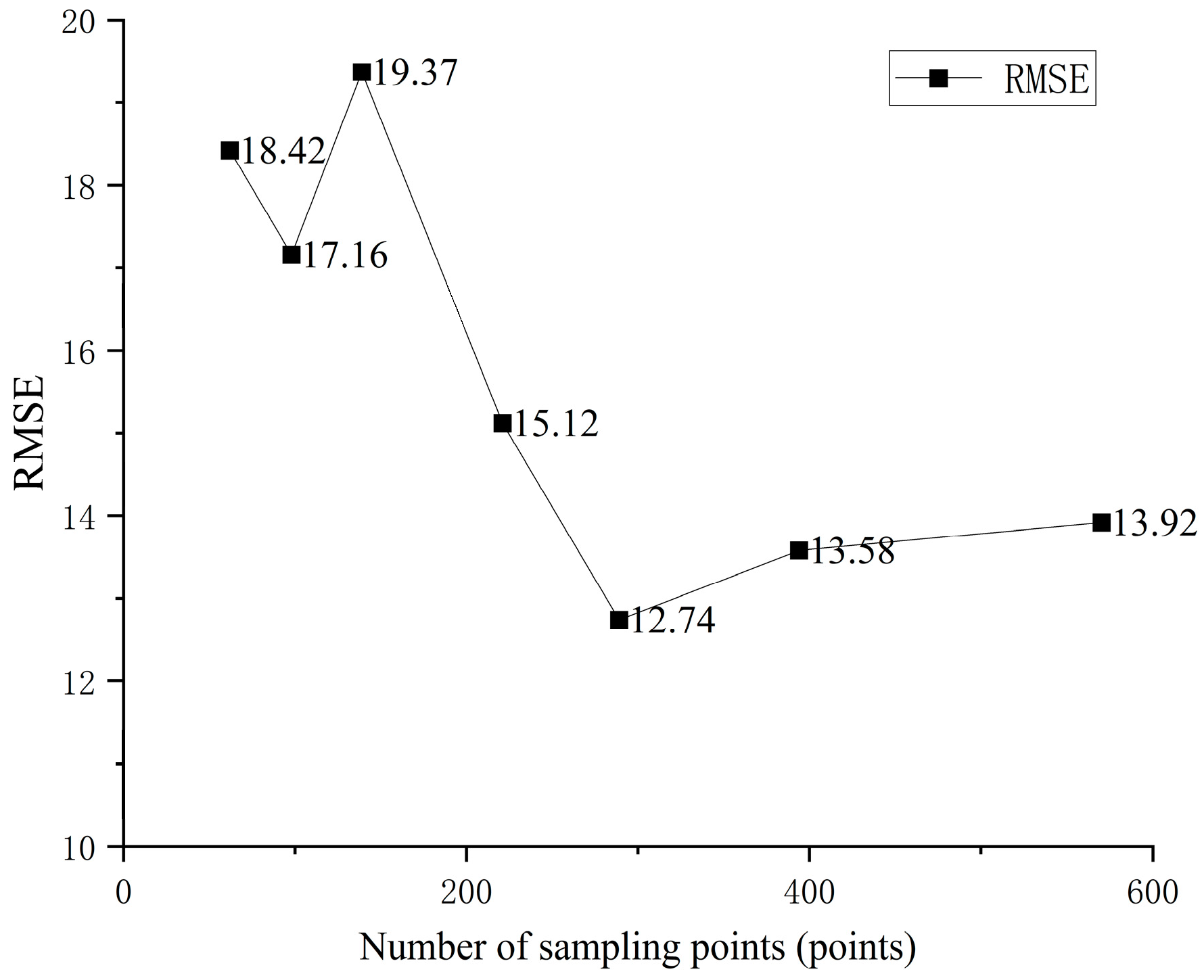
Analysis results from the independent dataset cross-validation method indicate that models with higher sampling densities exhibit superior spatial prediction accuracy compared to those with lower sampling points (Figure 8). When the sampling density reaches at least 289 points, the accuracy decline becomes smaller and the curve flattens. It suggested that the minimum sample size should not fall below 289 points.
The results indicate that the coefficient of determination for the semi-variance function model shows an increasing trend with the number of sampling points. When the number of sampling points reached 394 and 570, the coefficient of determination R2 exceeded 0.75, indicating a high level of fitting accuracy, with the spherical model being the optimal choice. Comparing the number of sampling points with the spatial variation ratio (block coefficient) revealed no linear relationship, suggesting that sampling density is not the sole factor influencing spatial variability. Furthermore, the distribution characteristics of sampling points significantly impact the model’s ability to characterize spatial variation. As shown in Table 3, except for the full sample dataset, the spatial variation ratios of semivariograms for different sampling densities all exceed 0.75, indicating very weak spatial correlation among variables. This indicates that at lower densities, the impact of random factors or data heterogeneity increases. The range of spatial variation for the eight sampling density datasets, including the full dataset, ranged from 1471 to 4503 m. Among these, the dataset with 98 sampling points exhibited the smallest range at 1471 m, while the dataset with 612 points—the highest density—showed the largest range at 4503 m.

3.4. Optimal Sampling Density Analysis

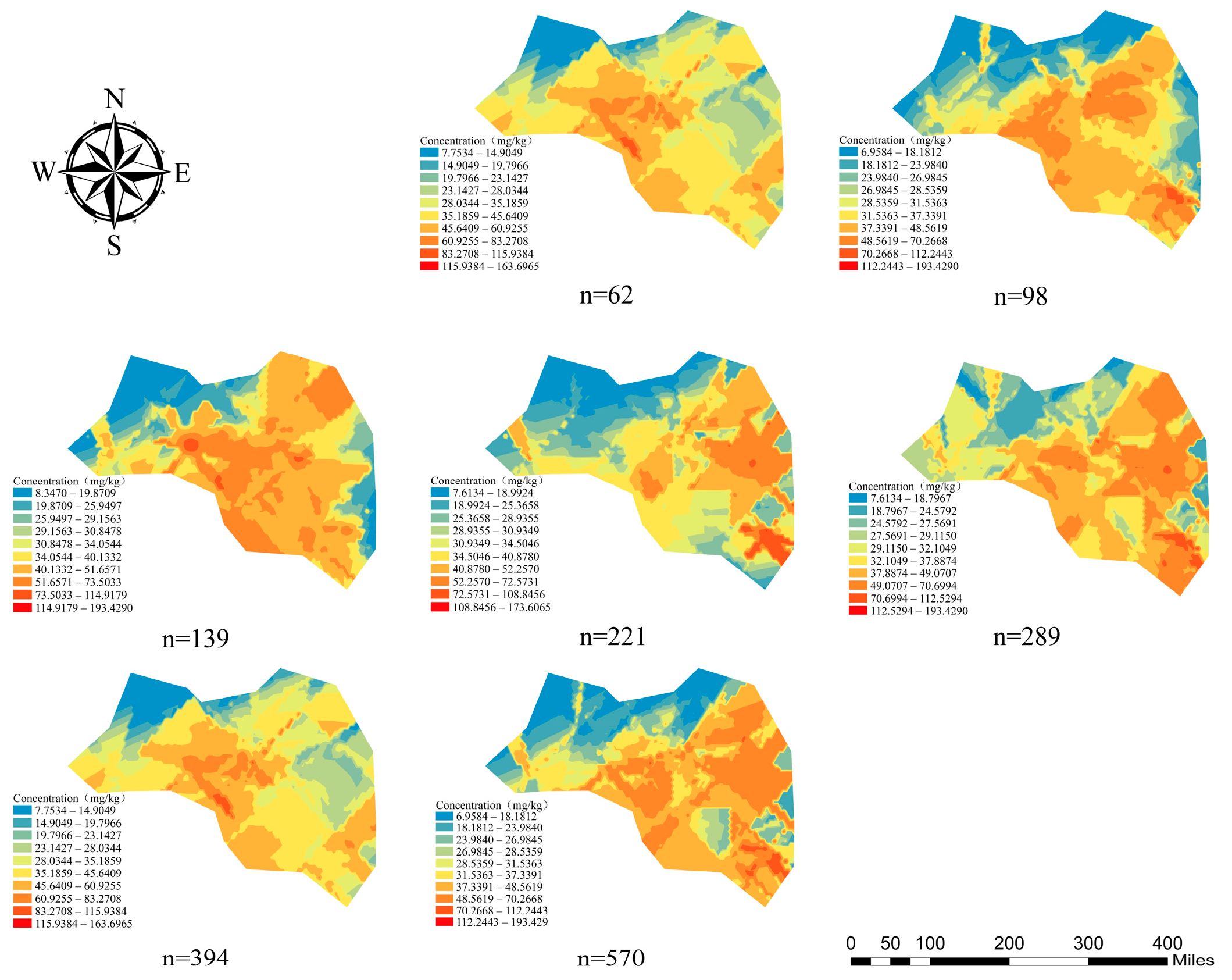
Based on the optimal semi-variogram fitting parameters from Table 3, a spatial distribution model of arsenic (As) content in cultivated soils was simulated using ordinary Kriging interpolation (Figure 9). The results indicate that, under different sampling densities, the overall distribution trend of As across the study area remains consistent. Lower concentrations are observed in the northwest and southeast, while higher concentrations are prevalent in the central region. As the number of samples decreased, a smoothing effect emerged. When the analysis scale (resolution) became too coarse—below 289 sampling points—noticeable local overestimation occurred, failing to effectively capture the spatial characteristics of the study target. This masked micro-scale variation features and resulted in high prediction uncertainty. Based on the preceding spatial variability analysis, maintaining at least 394 sampling points (20 points per square kilometer) within the study area represents the optimal observational scale for accurately capturing the spatial structure of this region.

4. Discussion

4.1. Arsenic in the Study Area Exhibits Enrichment Characteristics

Using the geometric mean results in the lowest uncertainty when accurately assessing arsenic concentrations in cultivated soils within this region, followed by the median
Typical high-altitude regions in China serve as strategic mineral reserve bases. Within the study area, significant arsenic enrichment in soil was observed, with medium-to-high risk sites (Levels II and III) accounting for 68.6% of the total—an indicative feature of arsenic accumulation in cultivated soils of typical high-altitude zones [44,45,46]. This finding aligns with the research conclusions of Mu Xiulin et al. regarding the spatial distribution of arsenic [47]. National soil background surveys conducted during the Seventh Five-Year Plan period revealed distinct regional patterns in arsenic distribution across China [48,49]. The study area, located in the Hengduan Mountains of eastern Tibet, the Nyenchen Tanglha mineral belt, and the Ladakh-Gangdise polymetallic mineral belt, shows that weathering of parent materials is a major source of elevated arsenic and heavy metals in surface soils of cultivated fields [50]. Heavy metals such as arsenic (As), cadmium (Cd), chromium (Cr), nickel (Ni), vanadium (V), and lead (Pb) are distributed globally across areas with varying geological background levels [51]. Europe is one of the world’s major regions with high geological arsenic backgrounds, where local soil arsenic concentrations reach 6 to 20 times the global average (5 mg/kg) [52]. Beyond mineralization processes induced by geological activity under high background conditions, random factors such as coal combustion related to residential and industrial use, transportation emissions, and regional distribution patterns also exert influence [53,54]. Three statistical measures of central tendency—geometric mean, arithmetic mean, and median—serve as core indicators for describing data representativeness and function as fundamental tools in descriptive statistics and mathematical analysis [55,56,57]. Following an uncertainty analysis within the field of ecological and environmental monitoring data research, conventional statistical methods exhibit differences in evaluating arsenic concentration characteristics and risk uncertainty under varying sampling densities. Among these, the geometric mean yields the lowest uncertainty in assessment results when characterizing data, followed by the median, which also proves highly efficient for environmental monitoring [58]. Fernanda Figueiredo reached consistent conclusions regarding the median statistic for monitoring normally distributed contaminated data [59]. The study area lies within the collision zone between the Indian and Eurasian plates, where major structural belts (such as the Yarlung Tsangpo Suture Zone and the Pangong-Nujiang Suture Zone) exhibit a near-east–west orientation. These deep, large-scale fault zones serve as migration pathways for elements like arsenic, leading to its enrichment along the faults in an east–west direction. Concurrently, the antimony–arsenic mineralization belt in southern Tibet, The east–west structural-magmatic belt controls the high-value background zones for arsenic [60]. Environmental data often exhibit high skewness and contain outliers, indicating that the geometric mean is typically the optimal choice for representing the “average level” in environmental monitoring. Shen Zhicheng’s team reached the same conclusion in their analysis of severely Cd-contaminated soil areas in a specific region [33]. Moreover, as sampling density and the number of sampling points increase, assessment results become more precise. A larger sample size directly reduces the variability of estimates, more accurately reflects the spatial heterogeneity of elements, improves confidence intervals, and supports the identification of pollution patterns and sources, thereby reducing decision-making risks.
In recent similar studies, Zhou Jinhua et al. analyzed the accumulation of various heavy metal pollutants in peas grown in agricultural fields in the Yunnan region. They found that the enrichment coefficients for arsenic, cadmium, chromium, and lead were 0.11, 0.52, 0.10, and 0.13, respectively. Compared to this study, the enrichment capacities for arsenic, chromium, and lead were higher, while that for cadmium was lower [38]. Peng Yi et al.’s study on the lead-zinc enrichment characteristics of Rumex nepalensis near the mining area of Hanyuan County showed that the lead enrichment coefficient of Rumex nepalensis was approximately 0.40, which is higher than that observed in this study [43]. Fang Hui et al. reported that the enrichment coefficient of cadmium in Guizhou rapeseed ranged from 0.956 to 1.234, the lead enrichment coefficient ranged from 0.2 to 0.3, and the chromium enrichment coefficient ranged from 0.021 to 0.035. Compared with this study, the enrichment coefficients for cadmium and lead were similar, while that for chromium was relatively higher [44,45]. Zhao Yuhong et al. analyzed the heavy metal enrichment coefficients of Rumex nepalensis in the Lawu mining area of Damxung County, Lhasa City, Tibet Autonomous Region. Their results showed that the enrichment coefficient of Rumex nepalensis for lead was 0.78 and for cadmium was 0.21 [47]. Li Xue et al. studied the accumulation characteristics of heavy metals in soil by the main cultivated varieties of highland barley in the “One River and Two Rivers” basin of Tibet. Their research indicated that the enrichment coefficient range for mercury in different highland barley varieties was 0.0065–0.042, for chromium was 0.0024–0.081, for arsenic was 0.002–0.0052, and for lead ranged from 0.0004 to 0.0035 [43]. Overall, this study aligns relatively well with current research on the enrichment capacity of agricultural plants in similar areas of the Qinghai–Tibet Plateau, while the adsorption capacity of plants in lower-altitude areas appears to be comparatively weaker.

4.2. The Dataset from the Study Area Exhibits a Pronounced Quadratic Polynomial Trend with Significant Directional Anisotropy

The spatial distribution of arsenic concentrations in cultivated soils within the study area displays distinct patterns and high consistency across different sampling densities, with more pronounced differences observed between the northern and southern regions. The dataset reveals a strong second-order polynomial trend, clearly indicating pronounced directional anisotropy. The primary influence originates from the northwest–southeast direction, while factors affecting the data along the north–south axis are more complex and uneven. These findings suggest that modeling the spatial variability of arsenic in high-altitude cultivated soils is best accomplished using a second-order polynomial model. Modeling the spatial variability trends of arsenic in cultivated soils in typical high-altitude areas of the southern Qinghai–Tibet Plateau is best achieved using a second-order polynomial model. This also indicates that factors influencing arsenic content distribution are not solely dependent on background values. Research by Cullen, W.R. further demonstrates that the contribution ratio between natural and anthropogenic factors is 3:2 [61]. The impact of human agricultural activities cannot be overlooked, particularly the input of irrigation water and the use of fertilizers and pesticides, which simultaneously increase total arsenic in the soil environment and indirectly elevate its bioavailability [62]. The northwest–southeast direction exhibits a larger cultivated land area than the vertical direction, coupled with a higher elevation gradient, further influencing spatial heterogeneity characteristics. The study area is situated near the Three Rivers Belt. The complex northward influence in the southern region may stem from pronounced elevation differences and variations in agricultural structure [63]. The low east–west curvature correlates with the division of the Cenozoic potassium-rich magmatic porphyry in the Three Rivers Belt into three segments from north to south, as well as the plateau’s overall location within the Gangdese polymetallic mineralization belt [64]. The quadratic polynomial model revealed a negative correlation between the curvature of the north–south trend and the spatial density of sampling points, indicating that areas with lower density exhibit greater curvature. This suggests that insufficient sampling can easily generate spurious complex trends. As sampling density increases, the model more accurately captures overall spatial variability, filtering out local noise to reveal a more robust, near-linear large-scale north–south trend across the study area. This result further confirms that adequate sampling density is crucial for accurately assessing environmental and ecological risk characteristics of arsenic in plateau regions [33].

4.3. Sampling Density Is Not the Only Factor Affecting Spatial Variability in the Study Area. Considering Model Fitting Parameters, Spatial Distribution Patterns, and Cost–Benefit Analysis, a Moderate Sampling Density of 20 Points per Square Kilometer Represents the Optimal Monitoring Density

Through simulation analysis using the semi-variogram model, it was found that the high spatial variability of arsenic in high-altitude areas resulted in relatively small differences in simulation assessment outcomes. The semi-variance function model fit indicated that sampling density is not the sole factor influencing spatial variability. Optimizing the spatial arrangement of sampling points proves more effective for capturing spatial variability characteristics than merely increasing sampling density. The distribution pattern of sampling points significantly impacts the model’s ability to characterize spatial variability [65]. The positive correlation between sample point density and range length filters out micro-scale process factors, allowing meso- and macro-scale factors to dominate the spatial distribution patterns of arsenic. Spatial dependence shifts to the macro-scale, becoming controlled by large-scale factors such as slope and parent material. This phenomenon may stem from biases in model parameter estimation caused by highly variable features at low sampling scales. Inferring semivariances with insufficient sampling density fails to capture true spatial variability. Li Weiyou [66] offered a similar explanation when determining optimal sampling densities for spatial interpolation of organic matter in a county-level study. Overall, the number of sample points showed a positive correlation with the range of variation (p < 0.01), indicating that high-density sampling obscures micro-scale variability by filtering out micro-scale process signals and allowing meso- and macro-scale process signals to dominate the spatial pattern. Zhu Zenghong’s research on optimizing evaluation point layout for soil organic matter in county-level farmland also demonstrated that small-scale variation characteristics are masked by large-scale correlations [29]. Generally, the optimal sampling density threshold balances spatial pattern resolution efficiency with hotspot identification accuracy. Appropriate sampling density enhances sampling efficiency, reduces research costs, and provides robust data support for subsequent studies [67]. By analyzing model fitting parameters and spatial distribution patterns, while balancing spatial pattern resolution efficiency with hotspot identification accuracy and cost-effectiveness, it can be inferred that the minimum sampling requirement for arsenic in high-altitude areas within this study region is 394 samples. At a sampling density of 20 points per square kilometer, this density maintains pollution boundary identification accuracy comparable to high-density sampling while reducing the high sampling costs associated with remote high-altitude areas. Previous studies on cadmium spatial distribution and multi-heavy-metal sampling scales suggest optimal densities of 4–11 points per square kilometer [68,69]. This study further determined the optimal sampling density for arsenic in typical high-altitude areas of the southern Tibetan Plateau. It provides a basis for exploring the distribution patterns and dynamic monitoring of arsenic as a risk element in plateau environments, while also offering monitoring guidance for developing countries with small agricultural areas and fragmented land parcels.

5. Conclusions

This study employs statistical techniques to characterize the spatial distribution of the metalloid arsenic in the southeastern Qinghai–Tibet Plateau. By analyzing data uncertainty, precision, trends, and semivariances, it identifies spatial patterns of contamination risk. The analysis ultimately quantifies the uncertainty in risk assessment outcomes and recommends the optimal sampling density scale. The conclusions are as follows.
(1)
Significant arsenic enrichment was observed in the study area, with concentrations reaching 3.6 times the national soil background value and 2.4 times the plateau soil background value.
(2)
Compared to arithmetic mean and median analyses, geometric mean evaluation demonstrates lower uncertainty across different sampling densities in ecological environment assessments, averaging 4.3%, and thus provides more accurate results.
(3)
Significant directional anisotropy exhibits a pronounced quadratic trend. Modeling spatial variation trends confirms that the strongest spatial correlation occurs along the northwest–southeast direction, with the spatial autocorrelation distance in the vertical direction reaching 2.39 times greater than in other directions.
(4)
Increasing sampling density is a macro-level requirement for accurately assessing the environmental risk characteristics of arsenic in plateau ecosystems. However, it is not the only factor influencing the spatial variability of arsenic concentrations. By comprehensively considering model fitting parameters, spatial distribution patterns, and cost–benefit analysis, a moderate sampling density of 20 points per square kilometer was determined to be the optimal monitoring density. This approach provides a monitoring framework for China’s Qinghai–Tibet Plateau and for developing countries with limited arable land and fragmented parcels.

Author Contributions

Y.Y.: Conceptualization, Methodology, Visualization, Writing—original draft, and Project administration. H.W.: Data curation, Project administration, and Writing—original draft. T.M.: Resources, Writing—review & editing, Funding acquisition, and Supervision. K.Y.: Project administration, Investigation, and Data curation. J.G.: Methodology, Visualization, and Validation. Z.Z.: Methodology and Project administration. R.S.: Writing—review & editing, Supervision, and Resources. D.W. and Z.D.: Investigation and Formal analysis. All authors have read and agreed to the published version of the manuscript.

Funding

Funds for Science and Technology Innovation Project from the Chinese Academy of Agricultural Sciences (2025-CAAS-CXGC-SRG).

Data Availability Statement

The original contributions presented in this study are included in the article. Further inquiries can be directed to the corresponding authors.

Conflicts of Interest

Author Hongwei Wu was employed by the company Xizang Runfeng Project Engineering Management Co. The remaining authors declare that the research was conducted in the absence of any commercial or financial relationships that could be construed as potential conflicts of interest.

References

  1. Wienhold, B.J.; Andrews, S.S.; Karlen, D.L. Soil quality: A review of the science and experiences in the USA. Environ. Geochem. Health 2004, 26, 89–95. [Google Scholar]
  2. Hou, D.Y.; Jia, X.Y.; Wang, L.W.; McGrath, S.P.; Zhu, Y.G.; Hu, Q.; Zhao, F.J.; Bank, M.S.; O’Connor, D.; Nriagu, J. Global Soil Pollution by Toxic Metals Threatens Agriculture and Human Health. Science 2025, 388, 316–321. [Google Scholar] [CrossRef] [PubMed]
  3. Theocharopoulos, S.P.; Wagner, G.; Sprengart, J.; Mohr, M.E.; Desaules, A.; Muntau, H.; Christou, M.; Quevauviller, P. European soil sampling guidelines for soil pollution studies. In Science of the Total Environment; Elsevier B.V.: Amsterdam, The Netherlands, 2001; Volume 264, pp. 51–62. [Google Scholar]
  4. Zhang, B.C.; Jia, T.Z.; Peng, S.Z.; Yu, X.H.; She, D. Spatial distribution, source identification, and risk assessment of heavy metals in the cultivated soil of the Qinghai–Tibet Plateau region: Case study on Huzhu County. Glob. Ecol. Conserv. 2022, 35, e02073. [Google Scholar] [CrossRef]
  5. Yang, L.; Yang, J.; Min, Q.; Liu, M.C. Impacts of non-agricultural livelihood transformation of smallholder farmers on agricultural system in the Qinghai-Tibet Plateau. Int. J. Agric. Sustain. 2022, 20, 302–311. [Google Scholar] [CrossRef]
  6. Gong, C.; Wen, L.; Lu, H.; Wang, S.; Liu, J.; Xia, X.; Liao, Z.; Wangzha, D.; Zhaxi, W.; Tudan, J.; et al. Correction: Ecological, environmental risks and sources of arsenic and other elements in soils of Tuotuo River region, Qinghai-Tibet Plateau. Environ. Geochem. Health 2024, 46, 483. [Google Scholar] [CrossRef] [PubMed]
  7. Wang, C.; Deng, L.; Zhang, Y.; Zhao, M.; Liang, M.; Lee, L.-C.; Cristhian, C.-O.; Yang, L.; He, T. Farmland phytoremediation in bibliometric analysis. J. Environ. Manag. 2024, 351, 119971. [Google Scholar] [CrossRef]
  8. Ma, X. Heavy metals remediation through lactic acid bacteria: Current status and future prospects. Sci. Total Environ. 2024, 946, 174455. [Google Scholar] [CrossRef] [PubMed]
  9. Pan, S.H.; Wang, K.Y.; Wang, L.; Wang, Z.B.; Han, Y.Y. Risk Assessment System Based on WebGIS for Heavy Metal Pollution in Farmland Soils in China. Sustainability 2017, 9, 1846. [Google Scholar] [CrossRef]
  10. Chen, J.H.; Su, M.C.; Yeh, M.F.; Lin, W.J.; Yu, T.Y.; Yeh, M.C. Predicting and regulating potential zone for heavy metal re-contaminated farmland: Case study in Taiwan. Environ. Dev. 2025, 54, 101147. [Google Scholar] [CrossRef]
  11. Wang, X.T.; Dan, Z.; Cui, X.Q.; Zhang, R.X.; Zhou, S.Q.; Wenga, T.; Yan, B.B.; Chen, G.Y.; Zhang, Q.Y.; Zhong, L. Contamination, ecological and health risks of trace elements in soil of landfill and geothermal sites in Tibet. Sci. Total Environ. 2020, 715, 136639. [Google Scholar] [CrossRef]
  12. Huang, X.; Sillanp, M.; Gjessing, E.T.; Vogt, R.D. Water Quality in the Southern Tibetan Plateau: Chemical Evaluation of the Yarlung Tsangpo (Brahmaputra). River Res. Appl. 2011, 27, 113–121. [Google Scholar] [CrossRef]
  13. Cao, H.W.; Pei, Q.M.; Yu, X.; Cao, A.B.; Chen, Y.; Liu, H.; Zhang, K.; Liu, X.; Zhang, X.F. The long-lived partial melting of the Greater Himalayas in southern Xizang, constraints from the Miocene Gyirong anatectic pegmatite and its prospecting potential for rare element minerals. China Geol. 2023, 6, 303–321. [Google Scholar]
  14. Weng, R.G.; Chen, G.H.; Huang, X.; Tian, F.; Ni, L.F.; Peng, L.; Liao, D.Q.; Xi, B. Geochemical Characteristics of Tailings from Typical Metal Mining Areas in Tibet Autonomous Region. Minerals 2022, 12, 697. [Google Scholar] [CrossRef]
  15. Fendorf, S.; Michael, H.A.; van Geen, A. Spatial and Temporal Variations of Groundwater Arsenic in South and Southeast Asia. Science 2010, 328, 1123–1127. [Google Scholar] [CrossRef] [PubMed]
  16. Li, J.; Wang, A.T.; Ye, T.R.; Wang, Q.; Qiu, J.L.; Fang, B.; Yuan, G.L. Unraveling the behaviors and significances of waste biomass ashes as underlying emission sources of soil polycyclic aromatic hydrocarbons in Tibetan Plateau. Environ. Pollut. 2020, 266, 115134. [Google Scholar] [CrossRef]
  17. Dixit, S.; Hering, J.G. Comparison of Arsenic(V) and Arsenic(III) Sorption onto Iron Oxide Minerals: Implications for Arsenic Mobility. Environ. Sci. Technol. 2003, 37, 4182–4189. [Google Scholar] [CrossRef] [PubMed]
  18. Zhu, S.; Huang, X.; Ma, F.; Wang, L.; Duan, X.; Wang, S. Catalytic Removal of Aqueous Contaminants on N-Doped Graphitic Biochars: Inherent Roles of Adsorption and Nonradical Mechanisms. Environ. Sci. Technol. 2018, 52, 8649–8658. [Google Scholar] [CrossRef]
  19. He, Q.H.; Zhang, Z.X.; Yi, C. 3D fluorescence spectral data interpolation by using IDW. Spectrochim. Acta Part A Mol. Biomol. Spectrosc. 2008, 71, 743–745. [Google Scholar] [CrossRef]
  20. Liu, J.S.; Wang, J.; Xu, X.Y.; Fu, Y. Accumulation characteristics and risk assessment of Cr, Ni, As, Hg in urban soil of major cities in China. Environ. Sci. Technol. 2025, 48, 145–160. [Google Scholar]
  21. Zhang, D.S.; Han, S.; Wang, J.Y.; Tao, R.; Wang, R.; Liang, Y. Remediation effect and passivation mechanism of iron-modified biochar for arsenic and mercury co-contamination. Environ. Eng. Technol. 2025, 1–14. Available online: https://kns.cnki.net/kcms2/article/abstract?v=-PyPURV5YK0Amx5H7llzmtgD2Rlamz9cq5YSVPFQiUIjVSZx0tNKJhmmNSi7U8IPy2bye2CNzNI6db9YoJZnDWCJKCsqLGzcyeOm7Q537pR3EntQoJJB0XSMzsR0okcc8RseapCckfQYI_do7hENW9a9xvk3-z-n4ehfZYjoK4WfEY_lurH554Jar4dCmKqIZhGZtXfshHA&uniplatform=NZKPT&captchaId=a96fea26-7866-4166-ae42-0826154bfb19 (accessed on 1 October 2025).
  22. Bhandari, G.; Atreya, K.; Scheepers, P.T.J.; Geissen, V. Concentration and distribution of pesticide residues in soil: Non-dietary human health risk assessment. Chemosphere 2020, 253, 126594. [Google Scholar]
  23. Yuan, L.; Li, F.C.; Zhang, Q.X.; Li, H.X.; Zhou, Y.Z.; Han, S.B.; Geng, H.J.; Li, H.Y. Characteristics, Ecological Risk Assessment, and Source Apportionment of Soil Heavy Metals in the Zhangbei County of the Plateau of Inner Mongolia. Environ. Sci. 2025, 1–14. [Google Scholar]
  24. Nie, X.R.; Hu, Z.Q.; Ruan, M.Y.; Zhu, Q.; Sun, H. Remote-Sensing Evaluation and Temporal and Spatial Change Detection of Ecological Environment Quality in Coal-Mining Areas. Remote Sens. 2022, 14, 345. [Google Scholar] [CrossRef]
  25. Chen, W.D.; Cai, Y.K.; Zhu, K.; Wen, J.; Lu, Y.T. Spatial heterogeneity analysis and source identification of heavy metals in soil: A case study of Chongqing, Southwest China. Chem. Biol. Technol. Agric. 2022, 9, 50. [Google Scholar] [CrossRef]
  26. NS-ISO 18400-104:2018; Soil Quality–Sampling–Part 104: Strategies. Standard Norge: Lysaker, Norway, 2018.
  27. Yang, S.J.; Lee, B.T.; Kim, S.O.; Park, S.H. Review of microplastics in soils: State-of-the-art occurrence, transport, and investigation methods. J. Soils Sediments 2024, 24, 779–792. [Google Scholar] [CrossRef]
  28. Qiao, P.W.; Dong, N.; Lei, M.; Yang, S.C.; Gou, Y.L. An effective method for determining the optimal sampling scale based on the purposes of soil pollution investigations and the factors influencing the pollutants. J. Hazard. Mater. 2021, 418, 126296. [Google Scholar] [CrossRef] [PubMed]
  29. Milillo, T.M.; Sinha, G.; Gardella, J.A., Jr. Use of geostatistics for remediation planning to transcend urban political boundaries. Environ. Pollut. 2012, 170, 52–62. [Google Scholar] [CrossRef]
  30. Huang, S.H.; Pu, L.J.; Xie, X.F.; Zhu, M.; Kan, B.Y.; Tan, Y.F. Review and Outlook of Designing of Soil Sampling for Digital Soil Mapping. Acta Pedol. Sin. 2020, 57, 259–272. [Google Scholar]
  31. Fan, Y.; Liu, H.B.; Wu, W. Evaluation to Soil Heavy Metals’ Pollution and the Study of Reasonable Sampling Number. Chin. J. Soil Sci. 2008, 2, 369–374. [Google Scholar]
  32. Meng, Q.M.; Liu, Z.J.; Borders, B.E. Assessment of regression kriging for spatial interpolation–comparisons of seven GIS interpolation methods. Cartogr. Geogr. Inf. Sci. 2013, 40, 28–39. [Google Scholar]
  33. Shen, Z.C.; Sun, Z.J.; Xu, J.W.; Shi, H.D. Uncertainty analysis of regional cultivated land soil cadmium pollution assessment under different sampling densities. J. Agro-Environ. Sci. 2024, 43, 2545–2552. [Google Scholar]
  34. Liu, Q.; Sun, J.K.; Chen, Y.P.; Xia, J.B. Spatial Variability of the Soil Heavy Metal with Different Sampling Scales. Chin. J. Soil Sci. 2009, 40, 1406–1410. [Google Scholar]
  35. Zimmer, D.; Kiersch, K.; Baum, C.; Meissner, R.; Müller, R.; Jandl, G.; Leinweber, P. Scale-Dependent Variability of As and Heavy Metals in a River Elbe Floodplain. CLEAN-Soil Air Water 2011, 39, 319–413. [Google Scholar] [CrossRef]
  36. Chen, D.S. Permafrost Carbon Release Risk Assessment in Qinghai Province Based on Multiple Permafrost Product Data Sets. Master’s Thesis, Qinghai Normal University, Xining, China, 2023. [Google Scholar]
  37. Hu, P.J.; Zhan, J.; Liu, J.; Li, X.Y.; Du, Y.P.; Wu, L.H.; Luo, Y.M. Research Progress on the Causes, Risks, and Control of High Geological Background of Heavy Metals in Soils. Acta Pedol. Sin. 2023, 60, 1363–1377. [Google Scholar]
  38. GB/T 22105.2-2008; Soil quality—Analysis of Total Mercury, Arsenic and Lead Contents—Atomic Fluorescence Spectrometry—Part 2: Analysis of Total Arsenic in Soils. Standards Press of China: Beijing, China, 2008.
  39. HJ/T 166-2004; Ministry of Environmental Protection of China. Technical Specification for Soil Environmental Monitoring. China Environmental Science Press: Beijing, China, 2004.
  40. Zhu, Z.H. Research on the Optimization Method of Soil Organic Matter Evaluation Points in Cultivated Land at the County Level. Master’s Thesis, Anhui University of Science and Technology, Huainan, China, 2024. [Google Scholar]
  41. GB 15618-2018; Ministry of Ecology and Environment & State Administration for Market Regulation. Soil Environmental Quality—Risk Control Standard for Soil Contamination of Agricultural Land. China Environmental Science Press: Beijing, China, 2018.
  42. Zhang, Z.X.; Yu, Y.L.; Li, Y.Q.; Jiao, S.Y.; Dong, Z.; Han, G.D.; Xu, Z.Y. Effects of grazing intensity on soil organic carbon and its spatial heterogeneity in desert steppe of Inner Mongolia. Acta Ecol. Sin. 2021, 41, 6257–6266. [Google Scholar] [CrossRef]
  43. Rokhana, D.B.; Kris, S.; Maria, O.D.; Eka, S.; Erma, S. Machine learning and topological kriging for river water quality data interpolation. AIMS Environ. Sci. 2025, 12, 120–136. [Google Scholar]
  44. Du, H.L.; Wang, J.S.; Wang, Y.; Yao, Y.B.; Liu, X.Y.; Zhou, Y. Contamination characteristics, source analysis, and spatial prediction of soil heavy metal concentrations on the qinghai-tibet plateau. J. Soils Sediments 2023, 23, 2202–2215. [Google Scholar] [CrossRef]
  45. Qi, J.; Lu, X.; Sai, N.; Liu, Y.; Du, W. Heavy metal concentrations in soil and ecological risk assessment in the vicinity of Tianzhu Industrial Park, Qinghai-Tibet Plateau. PeerJ 2024, 12, e18510. [Google Scholar] [CrossRef] [PubMed]
  46. Li, X.T.; Zhang, C.C.; Wang, A.F.; Zhang, T.L.; He, Z.Y.; Zhao, Y.J.; Liu, B.W.J.; Zhou, Z.W. Research progress on environmental behavior of arsenic in Qinghai-Tibet Plateau soil. J. Environ. Sci. 2025, 153, 237–250. [Google Scholar] [CrossRef]
  47. Mu, X.L. Predictive modeling and risk assessment of soil-maize transport of cadmium and arsenic in the active state in upland areas. Beijing Jiaotong Univ. 2023, 153, 237–250. [Google Scholar]
  48. Ye, S.L.; Wang, L.Y.; Liu, T.C. Study of solidification and stabilization of heavy metals by passivators in heavy metal-contaminated soil. Open Chem. 2022, 20, 1–9. [Google Scholar] [CrossRef]
  49. China National Environment Monitoring Centre. Background Values of Soil Elements in China; China Environmental Science Press: Beijing, China, 1990. [Google Scholar]
  50. He, L.; Wu, C.; Zeng, D.M.; Cheng, X.M.; Sun, B.B. Distribution of Heavy Metals and Ecological Risk of Soils in the Typical Geological Background Region of Southwest China. Rock Miner. Anal. 2021, 40, 384–396. [Google Scholar]
  51. Reimann, C.; Garrett, R.G. Geochemical background- concept and reality. Sci. Total Environ. 2005, 350, 12–27. [Google Scholar]
  52. Göd, R.; Zemann, J. Native arsenic-realgar mineralization in marbles from Saualpe, Carinthia, Austria. Mineral. Petrol. 2000, 70, 37–53. [Google Scholar] [CrossRef]
  53. Liu, X.L.; Gao, W.H.; Wei, T.; Dong, Z.W.; Shao, Y.P. Distribution characteristics of heavy metals in Tibetan Plateau surface soils and its significance for source tracing of heavy metal deposition in surrounding glacial areas. China Environ. Sci. 2024, 44, 2198–2207. [Google Scholar]
  54. Li, Y.; Yu, Y.L.; Ding, S.Y.; Dai, W.J.; Shi, R.G.; Cui, G.Y. Application of machine learning in soil heavy metals pollution assessment in the southeastern Tibetan plateau. Sci. Rep. 2025, 15, 13579. [Google Scholar] [CrossRef]
  55. Thelwall, M. The precision of the arithmetic mean, geometric mean and percentiles for citation data: An experimental simulation modelling approach. J. Informetr. 2016, 10, 110–123. [Google Scholar] [CrossRef]
  56. Abyani, M.; Asgarian, B.; Zarrin, M. Sample geometric mean versus sample median in closed form framework of seismic reliability evaluation: A case study comparison. Earthq. Eng. Eng. Vib. 2019, 18, 187–201. [Google Scholar] [CrossRef]
  57. Smothers, C.D.; Sun, F.; Dayton, A.D. Comparison of arithmetic and geometric means as measures of a central tendency in cattle nematode populations. Vet. Parasitol. 1999, 81, 211–224. [Google Scholar] [CrossRef] [PubMed]
  58. Vogel, R.M. The geometric mean? Commun. Stat.-Theory Methods 2022, 51, 82–94. [Google Scholar] [CrossRef]
  59. Figueiredo, F.; Gomes, M.I. The total median statistic to monitor contaminated normal data. Qual. Technol. Quant. Manag. 2016, 13, 78–87. [Google Scholar] [CrossRef]
  60. Cullen, W.R.; Reimer, K.J. Arsenic speciation in the environment. Chem. Rev. 1989, 89, 713–764. [Google Scholar] [CrossRef]
  61. Zhou, L.; Xu, Z.F.; Fan, P.K.; Zhou, Z.W. Enrichment of arsenic in the Yarlung Tsangpo basin, Southern Tibetan Plateau: Provenance, process, and link with tectonic setting. Appl. Geochem. 2024, 165, 105964. [Google Scholar] [CrossRef]
  62. Liang, W.; Zhang, Y.C.; Yang, Z.S.; Li, Z.Q.; Liu, Y.C.; Liu, Y.F.; Liu, Q.Y.; Sun, Q.Z.; Fu, Q.; Hou, Z.Q. Multiphase and polystage metallogenic process of the Zhaxikang large-size Pb-Zn-Ag-Sb polymetallic deposit in southern Tibet and its implications. Acta Petrol. Et Mineral. 2014, 33, 64–78. [Google Scholar]
  63. Yue, G.L.; Gui, X.X.; Song, L.Q.; Li, M.; Cui, X.F.; Tian, X.M. Soil Geochemical Characteristics and Prospecting Potential of the Daweng Gold Mine in Eastern Xizang. Geol. Explor. 2023, 59, 1204–1216. [Google Scholar]
  64. Huang, W.T.; Wang, J.T.; Xia, X.P.; Ci, L.; Luosang, J.C.; Yang, Y.; Zhu, J.T.; Liang, H.Y. The key constrations on large-scale mineralization of Cenozoic potassic alkaline rocks in the Eastern Tibet-Sanjiang Belt. Acta Petrol. Sin. 2025, 41, 693–710. [Google Scholar]
  65. Man, J.; Chen, Y.; Fan, H.; Chen, Q.; Yao, Y. Optimizing Soil Sampling with Information. Entropy at Heavy-Metal Sites. ACS EST Eng. 2023, 3, 1350–1358. [Google Scholar] [CrossRef]
  66. Li, W.Y.; Duan, L.X.; Xie, H.X.; Hu, B.F.; Zhou, Q.; Luo, J. Determination of Reasonable Sample Density for Spatial Interpolation of Soil Organic Matter in Cultivated Land of County Region Based on Conditional Latin Hypercube Sampling. Chin. J. Soil Sci. 2022, 53, 505–513. [Google Scholar]
  67. Li, K.; Du, H.F.; Wu, K.N.; Jiang, H.L.; Liu, P.J.; Xu, W.W. Suitable Interpolation Method and Reasonable Sampling Quantity of Cd Pollution Index in Soil. Chin. J. Soil Sci. 2016, 47, 1056–1064. [Google Scholar]
  68. Qin, X.Z.; Zheng, H.W.; He, R.C.; Ding, W.J.; Zhang, J.; Cui, G.N.; Shi, P.L.; Xie, Y.F. Optimal grid scale and sampling design optimization method for heavy metal pollution investigation in farmland soil. J. Environ. Eng. Technol. 2021, 11, 861–868. [Google Scholar]
  69. Wang, S.W.; Feng, J.; Liu, G.; Zhang, T.J. Multi-nesting Spatial Scales of Soil Heavy Metals in Farmland. Trans. Chin. Soc. Agric. Mach. 2013, 44, 128–135. [Google Scholar]
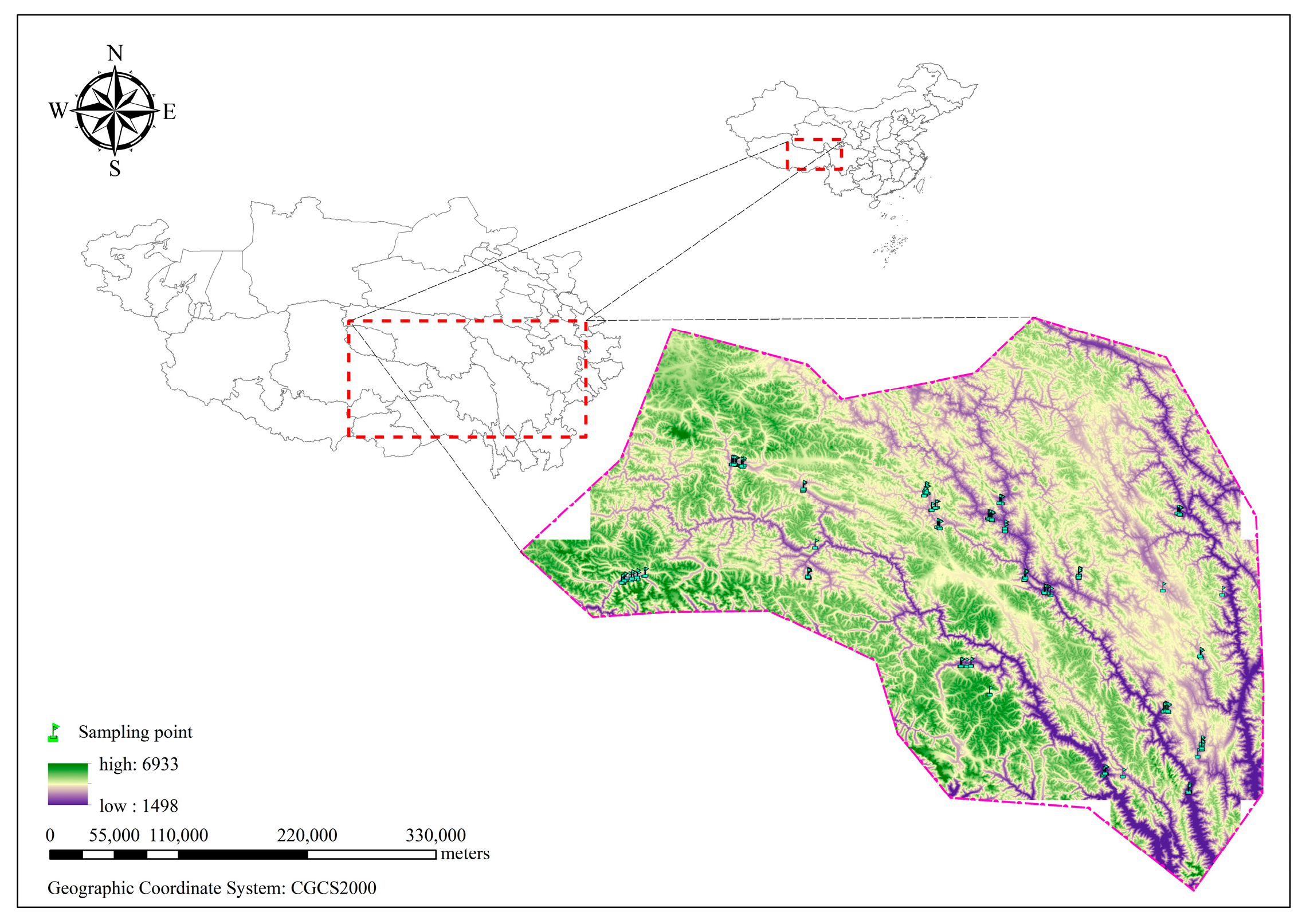
Figure 1. Distribution map of monitoring points. (The scale bar indicates only the scale of the elevation model diagram on the right).
Agronomy 15 02755 g001
Figure 2. Density Subset Generation Flowchart.
Agronomy 15 02755 g002
Figure 3. Sample statistical description box diagram at different research scales.
Agronomy 15 02755 g003
Figure 4. Uncertainty analysis of geometric mean at different sample point densities.
Agronomy 15 02755 g004
Figure 5. Soil As Frequency Distribution Map.
Agronomy 15 02755 g005
Figure 6. Trend analysis of As at different density gradient. (The X-axis represents the east–west coordinate, the Y-axis represents the north–south coordinate, and the Z-axis represents the measured value of the analysis variable).
Agronomy 15 02755 g006
Figure 7. Covariance Cloud Map.
Agronomy 15 02755 g007
Figure 8. Cross-Validation Distribution Map for Different Density Gradients.
Agronomy 15 02755 g008
Figure 9. Kriging interpolation results of sampled data under different sampling densities. (Geographic Coordinate System: CGCS2000).
Agronomy 15 02755 g009
Table 1. Sample sets with varying sample point densities based on the acceptable relative deviation gradient.
Acceptable Relative Deviation ValueNumber of Sampling Points per Sample (n)Number of Samples per Sample SetNumber of Sample SetsSampling Density
(Points/km2)
Estimated Sampling Costs (¥)
0.0557030102917,400
0.0639430102012,000
0.072893010159000
0.082213010116600
0.10139301074200
0.1298301053000
0.1562301031800
Table 2. Distribution and proportion of As.
LevelRisk CharacteristicsNumber of Sample PointsPercentage (%)National Arsenic Background Values in SoilBackground Arsenic Levels in Tibetan Soils
Level 1Low risk19231.211.2 mg/kg18.6 mg/kg
Level 2Moderate risk39764.9
Level 3High risk233.7
Table 3. Variogram models and related parameters of As with different density gradients.
Number of Sampling Points (Points)Optimal ModelCoefficient of Determination (R2)Spatial Variation Ratio
Co/(Co + C)
Range (a)
62Gaussian model0.3270.9742710
98Spherical model0.4090.9331471
139Spherical model0.4560.8241921
221Gaussian model0.5550.8462512
289exponential Model0.6580.8892911
394Spherical model0.7530.8752271
570Spherical model0.7610.9003527
612Spherical model0.8560.7194503
Note: The coefficient of determination (R2) indicates the relative goodness of fit or theproportion of variance explained by the model.
Disclaimer/Publisher’s Note: The statements, opinions and data contained in all publications are solely those of the individual author(s) and contributor(s) and not of MDPI and/or the editor(s). MDPI and/or the editor(s) disclaim responsibility for any injury to people or property resulting from any ideas, methods, instructions or products referred to in the content.