Article

Implications of Weedy Rice in Various Smallholder Transplanting Systems

1
Department of Agronomy, National Chung Hsing University, Taichung 40227, Taiwan
2
Crop Science Division, Taiwan Agricultural Research Institute, Ministry of Agriculture, Taichung 413008, Taiwan
*
Author to whom correspondence should be addressed.
Agronomy 2025, 15(12), 2754; https://doi.org/10.3390/agronomy15122754
Submission received: 30 October 2025 / Revised: 24 November 2025 / Accepted: 26 November 2025 / Published: 28 November 2025
(This article belongs to the Special Issue Weed Biology and Ecology: Importance to Integrated Weed Management)

Abstract

Weedy rice (Oryza sativa L.) presents a formidable challenge in global paddy cultivation due to its morphological similarity to cultivated rice, making its eradication difficult. To address this, an integrated weed management system (IWMS) was developed and collected across various regions in Kaohsiung, Taiwan, from 2018 to 2020. This study evaluated the efficacy of the IWMS in controlling the spread of weedy rice through systematic applications in three distinct agricultural zones: Meinong Contractual (MC), Meinong Public Stock (MP), and Shanlin Public Stock (SP). The data reveal a consistent decline in weedy rice invasion with sustained implementation of the IWMS, alongside improvements in seed purity and corresponding grain quality. These enhancements not only mitigate the adverse effects on seed purity but also elevate grain quality, thereby curtailing yield losses and bolstering economic returns. Further analysis indicates that the patterns of weedy rice invasion correlate strongly with geographical and agronomic variables, such as the source of seedlings, land preparation techniques, field management, and the sharing of agricultural implements. Consequently, raising farmer awareness and providing specialized training on management strategies are crucial for effective prevention of weedy rice.

1. Introduction

Weed infestation is a common biotic stress in paddy fields, leading to yield reduction and quality decline. Except for barnyard grass [Echinochloa crus-galli (L.) P. Beauv.], weedy rice (Oryza sativa L.) is the most competitive weed, resulting in yield loss of 16% in Vietnam, 50% in Italy, 46% to 58% in Greece, 27% to 45% in the United States, and 60% to 100% in Malaysia [1]. Due to its weedy traits, such as semi-dwarfism, delayed heading, and high shattering etc., removing weedy rice from infested fields is quite difficult. Our previous results indicated that early shattering contributes to wide dispersal of seeds [2]. Furthermore, strong competitiveness for nutrition and tolerance of stress make weedy rice harmful to cultivated rice [3,4]. Since their morphology in early stages are similar, it is difficult to identify weedy rice from cultivated rice. Weedy rice belongs to the genus Oryza, the same as cultivated rice [5].
Previously, studies have indicated that weedy rice propagates primarily through three mechanisms: seed-mediated contamination [2,6,7], seedling emergence from soil seed banks [8,9,10], and pollen-mediated introgression [11,12,13]. With the progressive mechanization of agricultural production, particularly in paddy cultivation, the sharing of mechanical harvesters among farms has exacerbated the inadvertent mixing of weedy rice seeds with cultivated rice seeds. Such cross-contamination has been documented in regions such as Taiwan. In recent years, the contamination rate between cultivated and weedy rice has ranged from 0.02% to 6.36%, with a median value of 0.28% [14]. Consequently, weedy rice infestations can readily spread from contaminated fields to previously uninfested ones [15,16].
Some cultivation systems such as direct seeding and ratoon cropping provide more opportunities for weedy rice seeds to accumulate in soil [2,5,7,17,18]. Under these systems, more weedy rice seeds can be saved in soil seed banks, resulting in stronger damage due to weedy rice in the upcoming cropping season. Moreover, volunteer seedlings from previous crops are another probable contaminant, specifically, weedy rice with stronger shattering [19,20,21]. Finally, because of close genetic relationships between weedy rice and cultivated rice, introgression can easily happen between the populations through natural hybridization [8,22,23]. For example, the gene flow from cultivated herbicide-resistant rice to weedy rice significantly raised the difficulty of weed management in Brazil [24,25]. Farmers have difficulties distinguishing between weedy and cultivar. One of the effective means is breaking the spread of weedy rice. Research suggests that the spread path of weedy rice should be blocked with careful consideration of climate and agricultural practices adopted [8]. However, diverse agricultural practices are adopted all over the world, making it difficult to apply one certain method throughout the world. Therefore, it is urgent to customize weedy rice control methods depending on different situations, including climate, farmers’ habits, and cropping systems.
Historical records from 1906 to 1921 indicate that red rice control measures were systematically implemented in Taiwan, effectively mitigating seed contamination problems in subsequent decades. Until 1959, certain red rice landraces were still recommended for cultivation in regions with limited irrigation capacity [26]. A 2020 survey reported that the contemporary dissemination of red rice was predominantly associated with mechanical transplanting and the shared use of agricultural machinery, facilitating its northward propagation from earlier-planted, warmer southern regions [2]. The contribution of pollen-mediated gene flow to this spread appears negligible, with most contamination events arising from seed or seedling contamination. Currently, more than 80% of Taiwan’s rice cultivation area is devoted to japonica rice, creating extensive opportunities for outcrossing and genetic introgression between japonica cultivars and Taiwan weedy rice (TWR) [2]. The predominance of transplanted rice and continuous cropping systems, both highly mechanized, further exacerbates the potential for admixture. Socioeconomic analyses reveal that Taiwanese rice farmers can be broadly categorized into three operational groups; approximately 62.5% engage in public procurement, 29.4% participate in contract farming, and only 8.1% are primarily responsible for seedling nursery production [14]. These structural characteristics of the farming system provide critical insight into potential contamination pathways and management priorities.
In weedy rice contaminated areas, people can use color sorters to remove weedy rice and unwanted seeds. However, this is inefficient and the effects of weedy rice on rice quality are still unclear. Thus, producing an effective control strategy is important. In our previous work, we designed a series of weedy rice control strategies named the integrated weed management system (IWMS) [2]. We suggested that for smallholder rice farmers in Taiwan, three procedures to prevent weedy rice were (1) usage of certified rice seeds, (2) flooding and proper land preparations after harvesting, and (3) application of pre-herbicide after transplanting. To reveal the system’s effectiveness, in the present study, we collected grain samples from cultivation area adopted those strategies in Taiwan, and assessed weedy rice contamination levels and rice quality to evaluate benefit of the control strategy on both yield conservation and quality confirmation across different rice producing systems.

2. Materials and Methods

2.1. Samples Collection and Grouping

To assess the implications of weedy rice in various smallholder trans-planting systems, this experiment revealed the effects of the IWMS weed control strategies on weedy rice prevention. We provided a series of weed manage methods to some rice growers and sampled from their production. In Taiwan, one grower usually manages several fields located on different land parcels via the same practice. As a result, samples collected from land parcels managed by an individual grower were recognized as an identical seed lot. Information from each of the seed lots and their corresponding land parcels was recorded for analysis.
The cultivation area of all samples in the present study was located in Kaohsiung, Taiwan. According to their location and product buyer, samples were divided into three groups. Samples in the Meinong Contractual (MC) group were cultivated in Meinong district, Kaohsiung, managed under a contractual farming system, following strict regulation. Meinong Public Stock (MP) samples were also cultivated in the Meinong district, but without certain regulations. Their production was operated by the government to supply public grain. The Shanlin Public Stock (SP) samples were cultivated in Shanling district, Kaohsiung, not following specific regulations and were purchased by the government to become public stock grain as well. Samples were collected in the first cropping season of 2018, 2019, and 2020; 2018 is recognized as the basic year that the weed manage methods were applied after harvest. The agricultural practices applied in three groups before and after 2018 are listed in Table 1. A famous high-quality Taiwan rice cultivar, Kaohsiung 147 (KH147), was cultivated in the MC group, while another popular high-yield Taiwan rice cultivar, Taitung 30 (TT30) was cultivated in the MP and SP groups.

2.2. Sample Processing

Grain samples were first dried to 13~15% seed moisture content to obtain grain weight. Then, they were dehulled with a TAKA-YAMA MTH-35A polisher (TAKA-YAMA, Taichung, Taiwan) to obtain the brown rice weight. After that, total kernel number were estimated by dividing the brown rice weight by the thousand-grain weight, measured by random sampling from each group from each year. Finally, weedy rice was hand-separated from each sample, and the weedy rice contamination rate was defined as the proportion of weedy rice mixed in the brown rice.
In addition to effect of agricultural practice on weedy rice prevention, we also aimed to explore the relationship of weedy rice contamination and grain quality. Therefore, samples of KH147 and TT30 were separated and some of these were randomly chosen to measure their head rice rate, milled rice rate and chalky kernel rate. First, brown rice samples were milled with a YAMAMOTO VP-32 rice polisher (YAMAMOTO, Osaka, Japan) to obtain the milled rice weight. Next, the milled rice rate was calculated as the proportion of milled rice weight to brown rice weight. Last, each sample was analyzed for three times with TMPZ-A rice quality detector (TOP Cloud-agri, Hangzhou, China) to obtain the average head rice rate and chalky kernel rate.

2.3. Data Analysis and Visualization

Data processing and statistical analyses were performed using R software version 4.1.2 [27]. First, to reveal relationship between geographical factors and weedy rice contamination, we visualized the contamination rates on a map using ggplot2 [28] and ggmap packages [29]. Cadastral boundary data were obtained from the Meinong Farmers’ Association and Shanlin Farmers’ Association and converted to geographic coordinates using the sf [30] and rgdal [31] packages through a WGS84 projection transformation (EPSG:4326). To quantify the relationships between weedy rice contamination and three key grain quality parameters—head rice rate, milled rice rate, and chalky kernel rate—simple linear regression analyses were conducted using the lm function in R [32] with default parameters. The resulting regression models were visualized with the base R plot function [32]. For improved interpretability, the dataset for each cultivar was stratified into six groups based on contamination rate. Within each group, the mean and standard deviation values of head rice rate, milled rice rate, and chalky kernel rate were computed to illustrate variation patterns across contamination levels. Analysis of variance (ANOVA) was performed using the “agricolae” package [33] to evaluate variations among populations. For variables that reached a significant level, Fisher’s protected least significant difference test (LSD test) was applied to determine significant differences among groups.

3. Results

3.1. Weedy Rice Contamination and Management

3.1.1. Weedy Rice Contamination

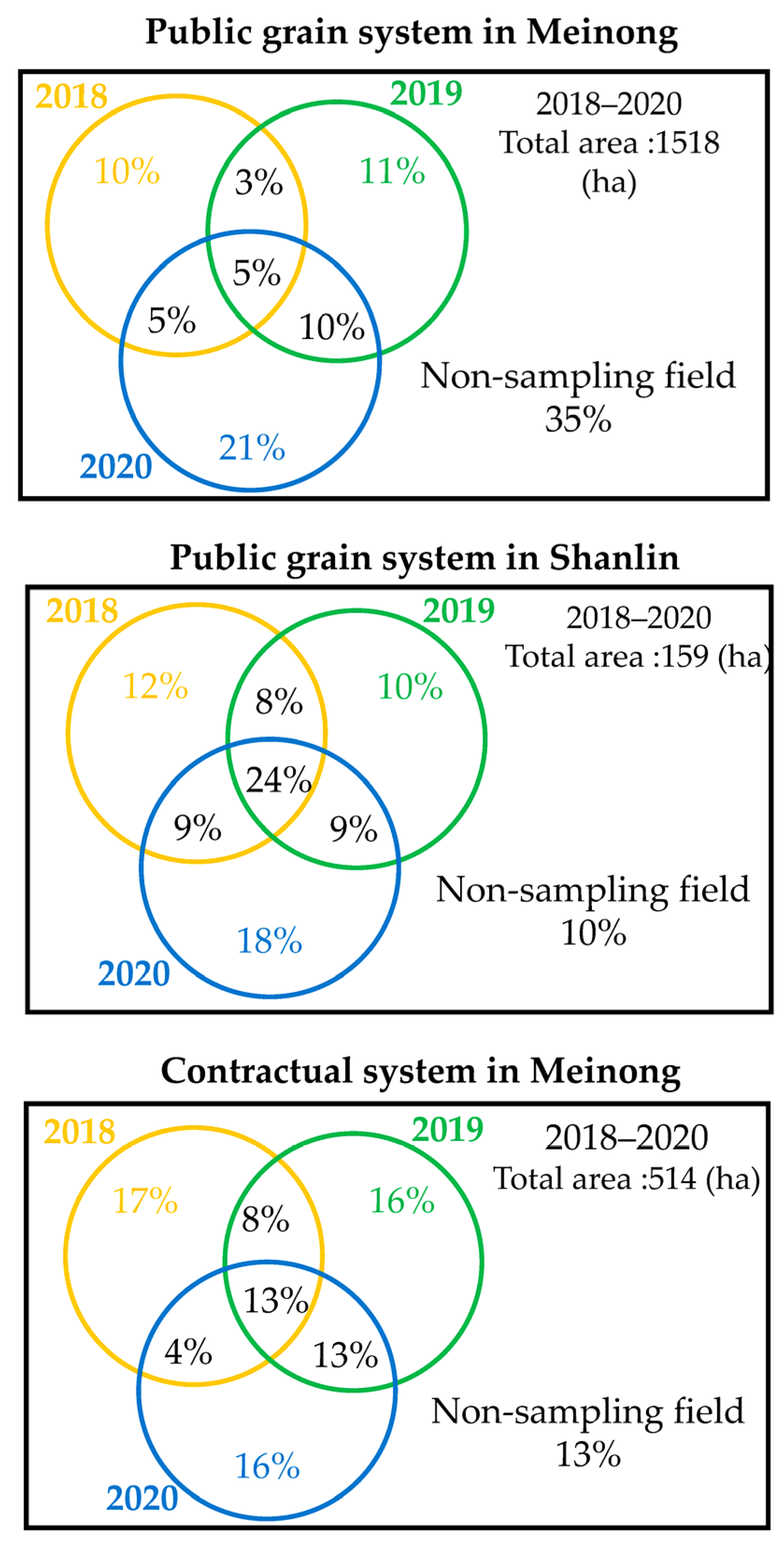
The dataset encompassed a total of 3852 seed lots in two districts, respectively, Meinong and Shanlin in Kaohsiung city (Figure 1). The two regions exhibited distinct rice production systems. Meinong encompassed two models, MC and MP, whereas Shanlin was characterized by the SP model (Table 1). The sampling distribution of the three models is presented; 13% of the MP area and 35% of the MC area were not sampled in Meinong, while unsampled areas accounted for 10% of the SP model in Shanlin (Figure 2).
In 2018, 2019, and 2020, measurements revealed noteworthy trends in weedy rice contamination across different groups. The results indicated the Meinong Contractual (MC) group consistently reported the lowest rates of contamination annually. In contrast, the Shanlin Public Stock (SP) group exhibited higher median and mean contamination rates than the Meinong Public Stock (MP) in 2018 and 2019 (Table 2). However, by 2020, the mean contamination rate for SP sharply declined to 1.59‰, significantly lower than MP’s rates. The maximum contamination rates further illustrated this trend, with MC consistently showing the lowest values each year, whereas MP exhibited the highest, ranging from 0‰ to 575‰.
This pronounced reduction across both MC and SP from 2018 to 2020 suggests that the Integrated Weed Management System (IWMS) effectively mitigated weedy rice proliferation in these settings. Yet, the surge to 575.49‰ in MP in 2020 hints at localized issues that skewed the average, despite a lower median rate. Notably, over half of the seed lots in MC were from fields identified as ‘clean’, signaling a substantial triumph of IWMS in curtailing weedy rice within this group.

3.1.2. Geographical Distribution of Weedy Rice Contamination

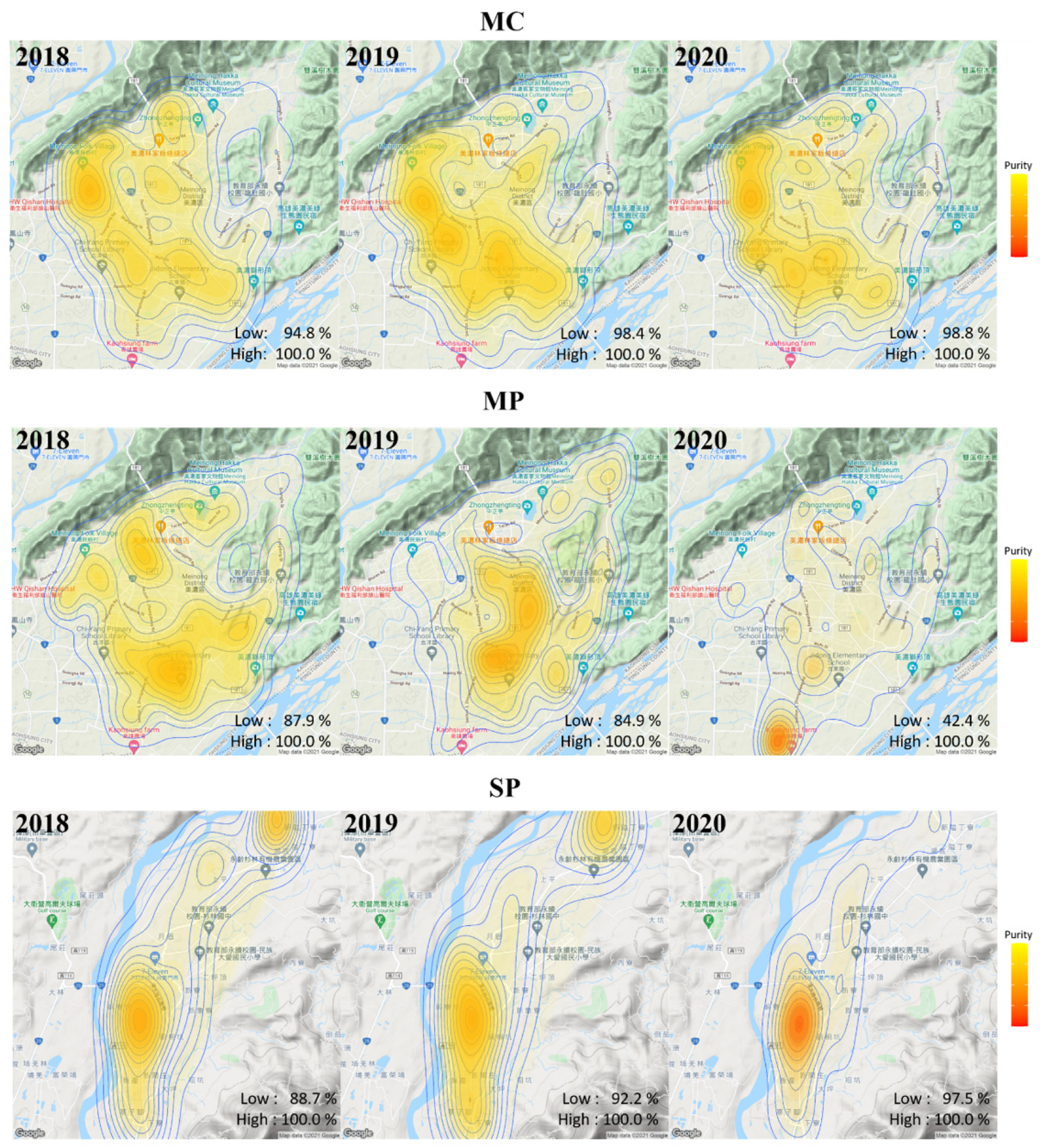
The contamination rate of weedy rice observed in the field is likely to be related to local cultivation practices. Therefore, in investigating regional disparities, cadastral data linked to each seed lot were analyzed, with findings displayed in Table 2. MC boasted the highest coverage of sampled area, contrasting sharply with MP’s limited scope. This is because MC involved contractual cooperation between farmers and the farmers’ association, providing clearer information on farmers’ backgrounds and ensuring higher compliance, which facilitated sample collection. The mapping of weedy rice contamination rates onto geographical coordinates (Figure 3) revealed distinct patterns among the groups. Both MC and SP maintained consistent contamination distributions over the three years, whereas MP exhibited variability annually, suggesting regional influences on the efficacy of IWMS. Although the spatial distribution of seed contamination was similar between MC and SP over the three years, seed purity in the MC model increased from 94.8% in 2018 to 98.8% in 2020, whereas in the SP model it ranged from 88.7% to 97.5%. This difference may be attributed to the SP cultivation system, in which rice production is grown only once cropping season per year, thereby reducing the seed bank in the soil.

3.2. Weedy Rice Contamination and Grain Quality

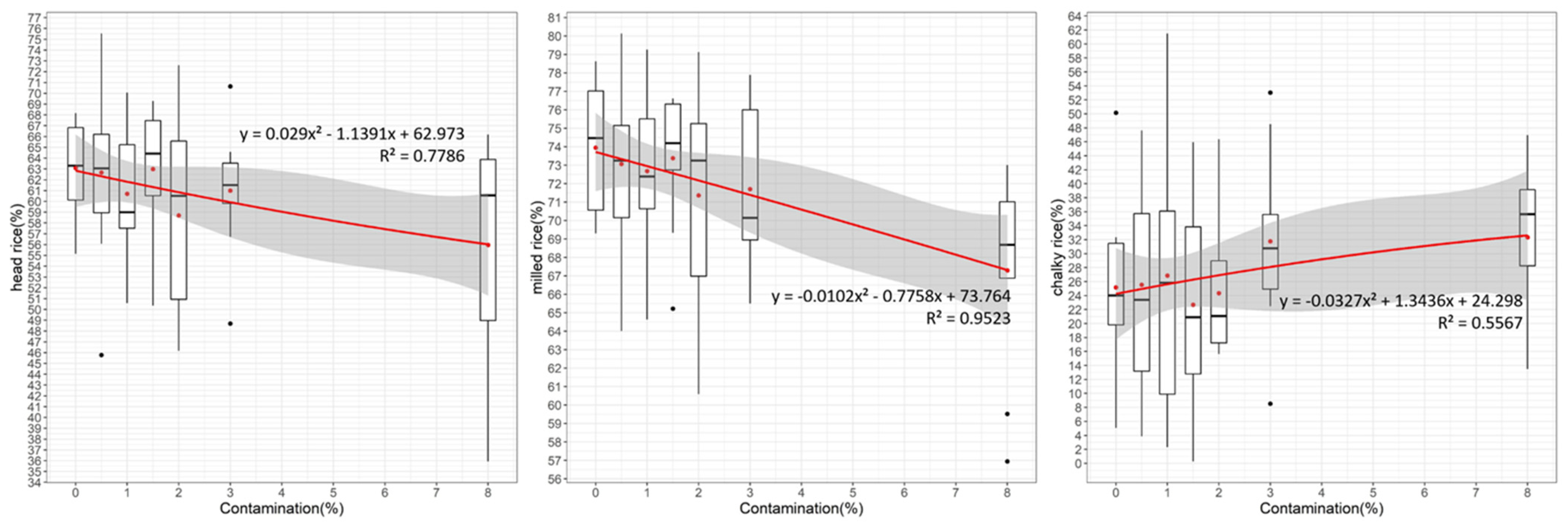
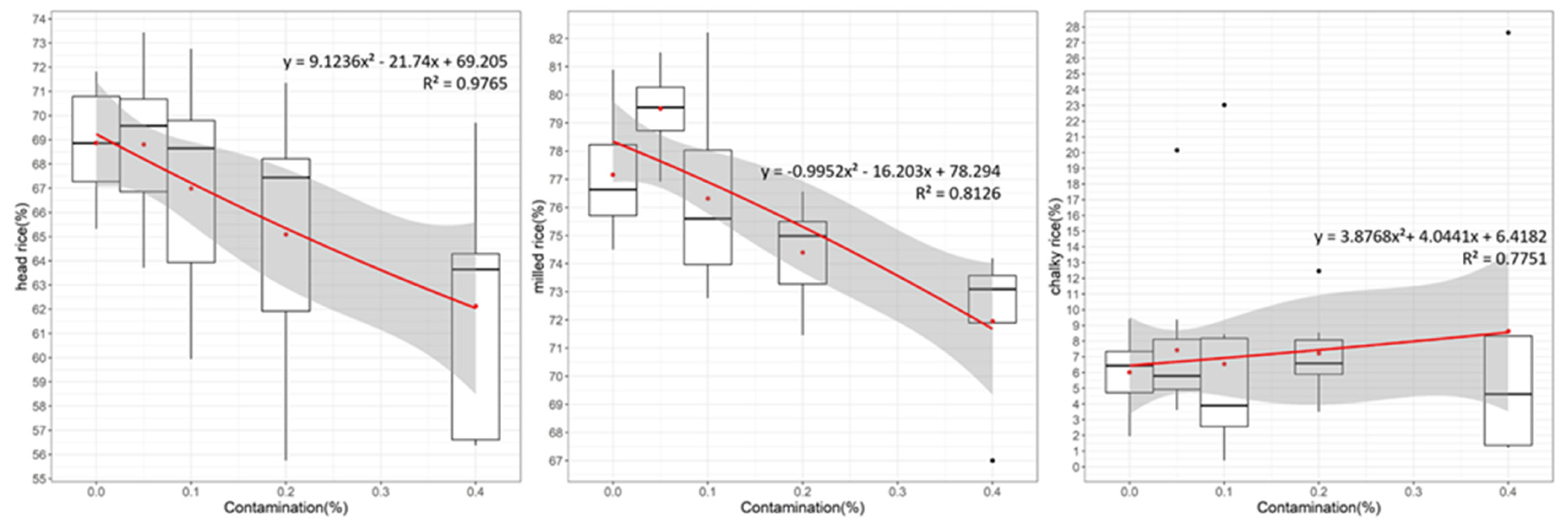
Weedy rice is known to cause detrimental effects not only on yield but also on grain quality. To ascertain the impact of weedy rice invasion on grain quality, samples from KH147 and TT30 cultivars were analyzed for key quality indicators such as milled rice rate, head rice rate, and chalky kernel rate. Scatter plots and corresponding linear equations (Figure 4 and Figure 5) elucidated the relationships between weedy rice contamination and these quality metrics. The results showed that in KH147, the percentage of head rice decreased with increasing contamination rate, exhibiting a negative correlation (R2 = 0.78). A similar trend was observed for the milled rice rate (R2 = 0.85). In contrast, the chalky grain rate of KH147 showed a positive but weaker correlation with contamination (R2 = 0.56) (Figure 4). On the other hand, the variety TT30 displayed trends similar to those of KH147, except that its chalky grain rate exhibited a stronger positive correlation (R2 = 0.77) (Figure 5). These findings indicated that contamination by weedy rice reduces rice quality, particularly by lowering the milled rice rate and head rice rate, and increasing the proportion of chalky grains. Further, the linear regression results also suggested that KH147 is more resilient to contamination effects than TT30, maintaining superior head and milled rice rates under lower contamination pressures.
Data aggregation by contamination rate (Table 3) highlighted significant variability, likely due to the limited dataset size. This is because KH147 was sampled within the MC’s farmer pool, whereas TT30 was collected from the MP and SP. Additionally, as contamination increased, TT30’s chalky kernel rate rose, whereas the head rice and milled rice rates for both cultivars declined. The contamination rate for KH147 in MC was markedly lower than that for TT30, underscoring differential impacts across cultivars and groups. The two varieties were developed with different breeding objectives in Taiwan. KH147 is an aromatic rice variety, selected primarily for grain quality, with breeding goals focused on minimizing the influence of environmental factors and biotic stresses. In contrast, TT30 was bred for high yield due to its efficient nitrogen utilization, which makes it more susceptible to increased chalky grain rates, thereby affecting grain quality.

4. Discussion

4.1. Weedy Rice Management and Agricultural Practices

4.1.1. Seed-Mediated Contamination

Regarding global paddy rice production, more than 50% of rice-cultivated areas are under transplanting systems. Transplanting systems have higher yield potential, mainly due to the protection from weeds during the rice seedlings’ initial growth period [34,35]. However, this may also be the reason for the contamination by weedy rice. Seed-mediated contamination is one of the major ways that weedy rice spreads, including using unclean seedlings and sharing agricultural implements [21,36]. In Taiwan, most rice growers purchase seedlings from nurseries [14]. If cultivated rice seeds used by the nursery are not certified, it is possible that they are contaminated by weedy rice seeds. Only a small amount of contaminant weedy rice seeds in cultivated rice seeds can cause considerable damage in fields [17].
In the present study, growers in the MC group had been asked to purchase seedlings from nurseries using certified seeds before introduction of IWMS. This may be one of the majors reason why weedy rice contamination of their product was the lowest throughout the three years (Table 2). After introduction of the IWMS, most of the SP group growers also tended to purchase seedlings from those nurseries who used certified seeds (Table 1), which contributed a lot to the dramatic decrease in the weedy rice contamination rate from 2018 to 2020 (Table 2). In contrast, some MP growers still purchased seedlings from nurseries using uncertified seeds (Table 1), which probably made the weedy rice contamination rate in the MP group the highest in 2020 (Table 2). Because the low temperature in Northern Taiwan delays the growth of seedlings and makes them useless for transplanting, long distance seedling transfer is common in Taiwan, promoting long distance seed-mediated weedy rice contamination [14].
Another common situation that seed-mediated weedy rice contamination happens in is agricultural implement sharing [18,37]. Since most of rice growers in Taiwan are small holders, implement sharing is an important way to cut costs. However, if implements are shared between weedy rice-infested fields and clean fields without completely cleaning up, this becomes a great opportunity for weedy rice to invade the clean fields [2,17,38,39].
Because of geographical limitation, growers of in the SP group used to share implements with their neighbors only. Instead, open geographical structure of Meinong made long=distance implement sharing easier for growers in the MP group (Table 1). This may be one of the reasons why weedy rice contamination rates kept decreasing in SP but stopped dropping in MP from 2019 to 2020. Figure 2 also shows some evidence that geographical features lead to regional differences in weedy rice contamination patterns among groups. Only the MP group had different contamination rate distributions on the maps across the three years. We suggest that the open geography Meinong gave the weedy rice more opportunity to transfer through the region through transport of seedlings or sharing implements, which caused strong regional invasion and changed the distribution.

4.1.2. Soil Seed Bank

Volunteer seedlings from the soil seed bank are another major route of weedy rice invasion, especially in direct-seeded rice (DSR) [40,41]. Owing to desired traits like early shattering, weedy rice seeds can easily accumulate in the soil seed bank [42,43]. Some agricultural practices, such as dry tillage and fallowing, allow these seeds to keep dormancy till the following cropping season and become volunteer seedlings [40]. To solve this problem, wet tillage or other kinds of land preparation that keep land moist before seedling transplanting are recommended [44,45]. These kinds of land preparation promote weedy rice seed germination before seedlings are transplanted, helping farmers remove them easily [46].
In this study, we found that dry tillage and fallowing were widely adopted before 2018. Thus, we highlighted the importance of wet tillage between the first and second cropping season when we introduced IWMS in the regions (Table 1). This was the most important alteration in the MC group with the application of IWMS. A happy cooperation led to steady decline of weedy rice contamination rate in group MC (Table 2). Unlike the Meinong district which is full of water resources, the Shanling district usually faces water restriction in winter due to its location and geographical features. Therefore, it was sometimes difficult to apply wet tillage in the SP group, especially in the region along foot of the mountain, far from the river and at the end of the irrigated area (Figure 2). This limitation made the contamination rate of SP remain the highest in 2019.
Another common solution against volunteer seedlings is pre-emergent herbicide [45,46]. However, the depth of seeds saved in the soil seed bank is usually uneven, making volunteer seedlings germinate at different times. Hence, germination-delayed seedlings might escape from containment, because complex factors in the field could affect weed seed germination under natural conditions [47]. As a result, we suggested increasing herbicide application times to extend the efficacy (Table 1). This was the other alteration applied in the MC and SP group, which may have been one of the important factors contributing to the decreased contamination rate.
Straw burning was also a popular method of preventing volunteer seedlings [48]. It was not only beneficial for weedy rice prevention, but also induced straw decomposition. However, this operation has been banned by the government for over twenty years in Taiwan; in our previous study, we found weedy rice contamination grew from then on [14]. According to the present study, we suggest that wet tillage should be a favorable alternative.

4.1.3. Pollen-Mediated Contamination

In addition to contamination via seeds, seedlings, or the soil seed bank, pollen-mediated admixture could also occur in weedy rice populations (e.g., in direct-seeded fields or through pollen flow from herbicide-resistant weedy rice). Previous studies have shown that long-distance admixture primarily arises from seedling transport or shared agricultural machinery in Taiwan’s transplanted rice production system. However, only 3% (17/552) of collected Taiwan weedy rice lines are highly heterozygous indica–japonica hybrids, which could be attributed to pollen-mediated contamination [2]. Taiwan weedy rice populations are mainly indica cultivars carrying the DGWG-sd1 recessive semi-dwarf gene, while japonica cultivars occupy approximately 90% of the cultivated area. Because offspring of pollen-mediated admixture often exhibit greater plant height than semi-dwarf japonica varieties, these can be easily identified and removed at maturity, due to the pronounced height difference. Consequently, during the heading stage, tall weedy rice plants can be manually removed with minimal effort.

4.2. Grain Quality and Variety

Weedy rice invasion has been found to cause yield loss and rice quality reduction in numerous studies [49,50]. Singh et al. [37] concluded that weedy rice invasion damage morphophysiological characteristics of grains, including milling rice yield, head rice rate, and chalky rice rate. Chalky endosperm was found to decrease kernel strength and lower head rice rate [51]. Color sorting, which is used to remove weedy rice seed from harvested grains, is one solution to this problem for some growers. However, removing weedy rice seeds after harvest cannot advance grain quality. In the present study, we analyzed the grain quality of KH147 and TT30 from samples with different contamination rates (Table 3). Limited by the data structure, range of samples contamination rate of KH147 was extremely smaller than TT30. Nevertheless, we can still roughly conclude that the grain quality of KH147 was more easily affected by weedy rice invasion than that of TT30 (Figure 3). In Taiwan, KH147 is a widely used high-quality cultivar, while TT30 is a well-known high-yield cultivar. When weedy rice invasion explodes, yield loss usually quickly arises for high-quality cultivars. However, the current results suggest that even if the yield loss of the high-yield cultivar seems to be slight, grain quality may be harmed significantly. Thus, weedy rice prevention should be an important focus in rice cultivation.

4.3. Benefit of IWMS

Weedy rice invasion limits rice production. In severe cases, farmers were even forced to dispose of the harvest to reduce the loss [52]. The Clearfield rice production system (CPS) was one previous weedy rice manage method [16] known for its negative effect on the environment, because of the possibility of increased herbicide resistance in weedy rice, gained from Clearfield rice via gene flow. Widespread use of herbicide is also harmful to the environment [20,53]. In our previous study, we proposed a series of clean and environment friendly weedy rice management methods [2,14], later named IWMS. In the present study, we provided this to growers, who were grouped as MC, MP, and SP. From the results, we summarize that it can effectively control weedy rice invasion. It not only reduced the weedy rice contamination rate but also maintained the grain quality.
The results of this study demonstrate that when the contract-farming cultivar KH147 grown in the MC region experienced an increase in weedy rice contamination from 0% to 0.4%, the milled-rice rate (78%) declined by approximately 6%, while the head-rice rate (69%) decreased substantially to 62%. This reduction in grain quality corresponds to an estimated economic loss of nearly NTD 16 million across the 300 ha production zone, assuming a market value of NTD 83 per kg of milled rice [54]. In contrast, the MP and SP regions, where the high-yielding cultivar TT30 predominates, exhibited a rise in contamination from 0% to 2%, resulting in a 3% decline in milled-rice rate (from 73% to 70%) and a 2% decline in head-rice rate (from 59% to 57%). The estimated economic loss for the 1200 ha conventional-cultivation area was approximately NTD 12 million, based on a market price of NTD 40 per kg [54]. These quantitative outcomes underscore that even low-level contamination can impose substantial economic penalties, primarily through diminished processing efficiency and reduced market value.
Although the present estimation excluded secondary variables such as market volatility, climatic fluctuations, and post-harvest quality deterioration, the data nevertheless indicate that IWMS can confer significant agronomic and economic benefits. However, grower compliance remains a crucial determinant of IWMS efficacy (Table 1). Only farmers in the MC region, operating under contractual obligations, fully implemented all recommended measures. Farmers in the SP region showed comparatively high voluntary adoption, whereas participation in the MP group—the largest production category—remained low to moderate.
Disparity in adoption intensity is likely to be a primary explanatory factor for the regional variation in IWMS effectiveness. Comparable challenges regarding farmer participation were noted in our previous investigation [14] and further corroborated [16]. Accordingly, future promotion of IWMS should prioritize the enhancement of farmers’ awareness, technical capability, and training opportunities. Strengthening these socio-behavioral dimensions will be fundamental to achieving long-term suppression of weedy rice populations and ensuring the sustainable management of Taiwan’s paddy agroecosystems.

5. Conclusions

In the present study, we emphasize the importance of using certified seedlings, wet tillage, and additional application of pre-emergent herbicide in the promotion of our weedy rice manage strategy (IWMS). We not only show the efficiency of IWMS for weedy rice prevention, but also demonstrate that weedy rice invasion is harmful for grain quality. Geographical features and growers’ acceptance should be considered to make the application of IWMS successful.

Author Contributions

Conceptualization, D.-H.W. and Y.-T.H.; methodology, C.-P.L. and Y.-T.H.; software, C.-Y.T. and P.-R.D.; formal analysis, C.-Y.T. and P.-R.D.; writing—original draft preparation, D.-H.W. and Y.-T.H.; writing—review and editing, D.-H.W. and Y.-T.H.; visualization, D.-H.W. and Y.-T.H.; supervision, D.-H.W. and Y.-T.H.; funding acquisition, D.-H.W. All authors have read and agreed to the published version of the manuscript.

Funding

This research was partially supported by the Ministry of Science and Technology, Taiwan, R.O.C. (Grant Nos. 108-2628-B-055-001, 109-2628-B-055-001, 110-2628-B-055-001, and 111-2313-B-055-001-MY3).

Data Availability Statement

The original contributions presented in the study are included in the article, further inquiries can be directed to the corresponding author.

Acknowledgments

We thank Shih-Min Chen, Pei-Jhen Wu, and other staff members of the Rice Laboratory, TARI for their invaluable assistance in trait collection. This research is partially supported by the “General Agricultural Science and Technology Programs” funded by the Council of Agriculture, Taiwan, R.O.C. (Grant No. 110AS-14.1.4-CI-C3) and by the Ministry of Science and Technology, Taiwan, R.O.C. (Grant No. 108-2628-B-055-001, 109-2628-B-055-001, 110-2628-B-055-001 and 111-2313-B-055-001-MY3).

Conflicts of Interest

The authors declare no conflicts of interest.

Abbreviations

The following abbreviations are used in this manuscript:
CPSClearfield rice production system
DSRDirect-seeded rice
IWMSIntegrated Weed Management System
KH147Kaohsiung 147
MCMeinong Contractual
MPMeinong Public Stock
SPShanlin Public Stock
TT30Taitung 30
TWRTaiwan weedy rice

References

  1. Durand-Morat, A.; Nalley, L.L. Economic Benefits of Controlling Red Rice: A Case Study of the United States. Agronomy 2019, 9, 422. [Google Scholar] [CrossRef]
  2. Wu, D.H.; Gealy, D.R.; Jia, M.H.; Edwards, J.D.; Lai, M.H.; McClung, A.M. Phylogenetic Origin and Dispersal Pattern of Taiwan Weedy Rice. Pest Manag. Sci. 2020, 76, 1639–1651. [Google Scholar] [CrossRef]
  3. Burgos, N.R.; Norman, R.J.; Gealy, D.R.; Black, H. Competitive N Uptake between Rice and Weedy Rice. Field Crops Res. 2006, 99, 96–105. [Google Scholar] [CrossRef]
  4. Fogliatto, S.; Ferrero, A.; Vidotto, F. How Can Weedy Rice Stand Against Abiotic Stresses? A Review. Agronomy 2020, 10, 1284. [Google Scholar] [CrossRef]
  5. Chauhan, B.S.; Singh, K.; Ladha, J.K.; Kumar, V.; Saharawat, Y.S.; Gathala, M. Weedy Rice: An Emerging Threat for Direct-Seeded Rice Production Systems in India. J. Rice Res. 2013, 1, 106. [Google Scholar] [CrossRef]
  6. He, Z.; Jiang, X.; Ratnasekera, D.; Grassi, F.; Perera, U.; Lu, B.R. Seed-Mediated Gene Flow Promotes Genetic Diversity of Weedy Rice within Populations: Implications for Weed Management. PLoS ONE 2014, 9, e112778. [Google Scholar] [CrossRef]
  7. Imaizumi, T. Weedy Rice Represents An Emerging Threat to Transplanted Rice Production Systems in Japan. Weed Biol. Manag. 2018, 18, 99–102. [Google Scholar] [CrossRef]
  8. Hsu, W.C.; Wu, D.H.; Chen, S.W.; Castillo, S.A.C.; Huang, S.D.; Li, C.P.; Wang, Y.P. Insights into the Genetic Spatial Structure of Nicaraguan Weedy Rice and Control of its Seed Spread. Pest Manag. Sci. 2022, 78, 3685–3696. [Google Scholar] [CrossRef] [PubMed]
  9. Noldin, J.A.; Chandler, J.M.; McCauley, G.N. Seed Longevity of Red Rice Ecotypes Buried in Soil. Planta Daninha 2006, 24, 611–620. [Google Scholar] [CrossRef]
  10. Carney, J.A. ‘With Grains in Her Hair’: Rice in Colonial Brazil. Slavery Abolit. 2004, 25, 1–27. [Google Scholar] [CrossRef]
  11. Cui, Y.; Song, B.K.; Li, L.F.; Li, Y.L.; Huang, Z.; Caicedo, A.L.; Jia, Y.; Olsen, K.M. Little White Lies: Pericarp Color Provides Insights into the Origins and Evolution of Southeast Asian Weedy Rice. G3 Genes Genomes Genet. 2016, 6, 4105–4114. [Google Scholar] [CrossRef] [PubMed]
  12. Wongtamee, A.; Maneechote, C.; Pusadee, T.; Rerkasem, B.; Jamjod, S. The Dynamics of Spatial and Temporal Population Genetic Structure of Weedy Rice (Oryza sativa f. spontanea Baker). Genet. Resour. Crop Evol. 2017, 64, 23–39. [Google Scholar] [CrossRef]
  13. Londo, J.P.; Schaal, B.A. Origins and Population Genetics of Weedy Red Rice in the USA. Mol. Ecol. 2007, 16, 4523–4535. [Google Scholar] [CrossRef]
  14. Huang, Y.F.; Wu, D.H.; Wang, C.L.; Du, P.R.; Cheng, C.Y.; Cheng, C.C. Survey of Rice Production Practices and Perception of Weedy Red Rice (Oryza sativa f. spontanea) in Taiwan. Weed Sci. 2021, 69, 526–535. [Google Scholar] [CrossRef]
  15. Gao, P.; Zhang, Z.; Sun, G.; Yu, H.; Qiang, S. The Within-Field and Between-Field Dispersal of Weedy Rice by Combine Harvesters. Agron. Sustain. Dev. 2018, 38, 55. [Google Scholar] [CrossRef]
  16. Dilipkumar, M.; Kumar, V.; Song, B.; Olsen, K.M.; Chuah, T.; Ahmed, S.; Qiang, S. Weedy Rice (Oryza spp.). In Biology and Management of Problematic Crop Weed Species; Academic Press: New York, NY, USA, 2021; pp. 285–309. [Google Scholar]
  17. Chauhan, B.S.; Abeysekera, A.S.; Wickramarathe, M.S.; Kulatunga, S.D.; Wickrama, U.B. Effect of Rice Establishment Methods on Weedy Rice (Oryza sativa L.) Infestation and Grain Yield of Cultivated Rice (O. sativa L.) in Sri Lanka. Crop Prot. 2014, 55, 42–49. [Google Scholar] [CrossRef]
  18. Nadir, S.; Xiong, H.B.; Zhu, Q.; Zhang, X.L.; Xu, H.Y.; Li, J.; Dongchen, W.; Henry, D.; Guo, X.Q.; Khan, S.; et al. Weedy Rice in Sustainable Rice Production. A Review. Agron. Sustain. Dev. 2017, 37, 46. [Google Scholar] [CrossRef]
  19. Thurber, C.S.; Reagon, M.; Olsen, K.M.; Jia, Y.; Caicedo, A.L. The Evolution of Flowering Strategies in US Weedy Rice. Am. J. Bot. 2014, 101, 1737–1747. [Google Scholar] [CrossRef]
  20. Svizzero, S. Weedy Rice and the Protracted Initial Domestication of Asian Rice. Acad. Lett. 2021, 2, 2176. [Google Scholar] [CrossRef]
  21. Hsu, Y.T.; Wang, Y.C.; Du, P.R.; Li, C.P.; Wu, D.H. Morphological Diversity and Crop Mimicry Strategies of Weedy Rice Under the Transplanting Cultivation System. Agronomy 2025, 15, 984. [Google Scholar] [CrossRef]
  22. Xia, H.B.; Wang, W.; Xia, H.; Zhao, W.; Lu, B.R. Conspecific Crop-Weed Introgression Influences Evolution of Weedy Rice (Oryza sativa f. spontanea) Across A Geographical Range. PLoS ONE 2011, 6, e16189. [Google Scholar] [CrossRef]
  23. Yao, N.; Wang, Z.; Song, Z.J.; Wang, L.; Liu, Y.S.; Bao, Y.; Lu, B.R. Origins of Weedy Rice Revealed by Polymorphisms of Chloroplast DNA Sequences and Nuclear Microsatellites. J. Syst. Evol. 2021, 59, 316–325. [Google Scholar] [CrossRef]
  24. Gealy, D.R.; Mitten, D.H.; Rutger, J.N. Gene Flow between Red Rice (Oryza sativa) and Herbicide-Resistant Rice (O. sativa): Implications for Weed Management. Weed Technol. 2003, 17, 627–645. [Google Scholar] [CrossRef]
  25. Merotto Jr, A.; Goulart, I.C.; Nunes, A.L.; Kalsing, A.; Markus, C.; Menezes, V.G.; Wander, A.E. Evolutionary and Social Consequences of Introgression of Nontransgenic Herbicide Resistance from Rice to Weedy Rice in Brazil. Evol. Appl. 2016, 9, 837–846. [Google Scholar] [CrossRef]
  26. Huang, T.C. Rice Production in Taiwan: Evolution and Policies. In Taiwan Rice History; Deng, Y.Z., Li, C.L., Li, R.X., Eds.; Chinese Agronomy Press: Taipei, Taiwan, 1999; pp. 19–42. [Google Scholar]
  27. Ihaka, R.; Gentleman, R. R: A Language for Data Analysis and Graphics. J. Comput. Graph. Stat. 1996, 5, 299–314. [Google Scholar] [CrossRef]
  28. Wickham, H. ggplot2: Elegant Graphics for Data Analysis; Springer: New York, NY, USA, 2016; ISBN 978-3-319-24277-4. Available online: https://ggplot2.tidyverse.org (accessed on 29 October 2025).
  29. Kahle, D.; Wickham, H. ggmap: Spatial Visualization with ggplot2. R J. 2013, 5, 144–161. [Google Scholar] [CrossRef]
  30. Pebesma, E. Simple features for R: Standardized support for spatial vector data. R J. 2018, 10, 439–446. [Google Scholar] [CrossRef]
  31. Bivand, R.; Keitt, T.; Rowlingson, B.; Pebesma, E.D.Z.E.R.; Sumner, M.; Hijmans, R. Rgdal: Bindings for the Geospatial Data Abstraction Library; R Package Version 2019; R Foundation for Statistical Computing: Vienna, Austria, 2019; Volume 1. [Google Scholar]
  32. R Core Team. R: A Language and Environment for Statistical Computing; R Foundation for Statistical Computing: Vienna, Austria, 2016; Available online: http://www.R-project.org/ (accessed on 29 October 2025).
  33. de Mendiburu, F. Agricolae Tutorial; Version 1.3-5; Universidad Nacional Agraria: La Molina, Peru, 2021. [Google Scholar]
  34. Choudhary, A.K.; Thakur, R.C.; Kumar, N. Effect of Integrated Nutrient Management on Soil Physical and Hydraulic Properties in Rice-Wheat Crop Sequence in NW Himalayas. Indian J. Soil Conserv. 2008, 36, 97–104. [Google Scholar]
  35. Dass, A.; Shekhawat, K.; Choudhary, A.K.; Sepat, S.; Rathore, S.S.; Mahajan, G.; Chauhan, B.S. Weed Management in Rice Using Crop Competition-A Review. Crop Prot. 2017, 95, 45–52. [Google Scholar] [CrossRef]
  36. Baraibar, B.; Westerman, P.R.; Carrión, E.; Recasens, J. Effects of Tillage and Irrigation in Cereal Fields on Weed Seed Removal by Seed Predators. J. Appl. Ecol. 2009, 46, 380–387. [Google Scholar] [CrossRef]
  37. Singh, V.; Burgos, N.R.; Singh, S.; Gealy, D.R.; Gbur, E.E.; Caicedo, A.L. Impact of Volunteer Rice Infestation on Yield and Grain Quality of Rice. Pest Manag. Sci. 2017, 73, 604–615. [Google Scholar] [CrossRef]
  38. Chauhan, B.S. Strategies to Manage Weedy Rice in Asia. Crop Prot. 2013, 48, 51–56. [Google Scholar] [CrossRef]
  39. Saha, S.; Patra, B.C.; Munda, S.; Mohapatra, T. Weedy Rice: Problems and Its Management. Indian Soc. Weed Sci. 2014, 46, 14–22. [Google Scholar]
  40. Marahatta, S.; Chaudhary, S.K.; Gyawaly, P.; Sah, S.K.; Karki, T.B. Ecological Weed Management Practices and Seedbed Preparation Optimized the Yield of Dry Direct Seeded Rice in Sub-Humid Condition of Chitwan, Nepal. J. Agric. For. Univ. 2017, 1, 89–101. [Google Scholar]
  41. Shrestha, M.; Baral, B.; Dulal, P.R. A Review on Weed in Direct Seeded Rice (DSR). Sustain. Food Agric. 2021, 2, 99–104. [Google Scholar] [CrossRef]
  42. Nunes, A.L.; Delatorre, C.A.; Merotto, A., Jr. Gene Expression Related to Seed Shattering and the Cell Wall in Cultivated and Weedy Rice. Plant Biol. 2014, 16, 888–896. [Google Scholar] [CrossRef] [PubMed]
  43. Zhao, C.; Xu, W.; Song, X.; Dai, W.; Dai, L.; Zhang, Z.; Qiang, S. Early Flowering and Rapid Grain Filling Determine Early Maturity and Escape from Harvesting in Weedy Rice. Pest Manag. Sci. 2018, 74, 465–476. [Google Scholar] [CrossRef]
  44. Fogliatto, S.; Vidotto, F.; Ferrero, A. Effects of Winter Flooding on Weedy Rice (Oryza sativa L.). Crop Prot. 2010, 29, 1232–1240. [Google Scholar]
  45. Mansor, M.; Karim, S.R.; Abidin, Z. Effects of Farmers’ Cultural Practices on the Weedy Rice Infestation and Rice Production. Sci. Res. Essays 2012, 7, 609–615. [Google Scholar] [CrossRef]
  46. Mispan, M.S.; Bzoor, M.; Mahmod, I.; Md-Akhir, A.H.; Zulrushdi, A. Managing Weedy Rice (Oryza sativa L.) in Malaysia: Challenges and Ways Forward. J. Res. Weed Sci. 2019, 2, 149–167. [Google Scholar] [CrossRef]
  47. Singh, M.; Bhullar, M.S.; Chauhan, B.S. Influence of Tillage, Cover Cropping, and Herbicides on Weeds and Productivity of dry Direct-Seeded Rice. Soil Tillage Res. 2015, 147, 39–49. [Google Scholar] [CrossRef]
  48. Narwal, S.; Sindel, B.M.; Jessop, R.S. Tillage and Residue Burning Affects Weed Populations and Seed Banks. Commun. Agric. Appl. Biol. Sci. 2006, 71, 715–723. [Google Scholar]
  49. Vidotto, F.; Ferrero, A. Interactions between Weedy Rice and Cultivated Rice in Italy. Ital. J. Agron. 2009, 4, 127–136. [Google Scholar]
  50. Abraham, C.T.; Jose, N. Weedy Rice Invasion in Rice Fields of India and Management Options. J. Crop Weed 2014, 10, 365–374. [Google Scholar]
  51. Bao, J. Rice Milling Quality. In Rice; Elsevier: Amsterdam, The Netherlands, 2019; pp. 339–369. [Google Scholar]
  52. de Avila, L.A.; Noldin, J.A.; Mariot, C.H.; Massoni, P.F.; Fipke, M.V.; Gehrke, V.R.; Merotto, A., Jr.; Tomita, F.M.; Matos, A.B.; Facioni, G.; et al. Status of Weedy Rice (Oryza spp.) Infestation and Management Practices in Southern Brazil. Weed Sci. 2021, 69, 536–546. [Google Scholar]
  53. Bzour, M.I.; Zuki, F.M.; Mispan, M.S. Introduction of Imidazolinone Herbicide and Clearfield® Rice between Weedy Rice—Control Efficiency and Environmental Concerns. Environ. Rev. 2018, 26, 181–198. [Google Scholar] [CrossRef]
  54. Ministry of Agriculture. Annual Report of 2020 Agricultural Statistics. 2020. Available online: https://agrstat.moa.gov.tw/sdweb/public/book/Book.aspx (accessed on 11 May 2025).
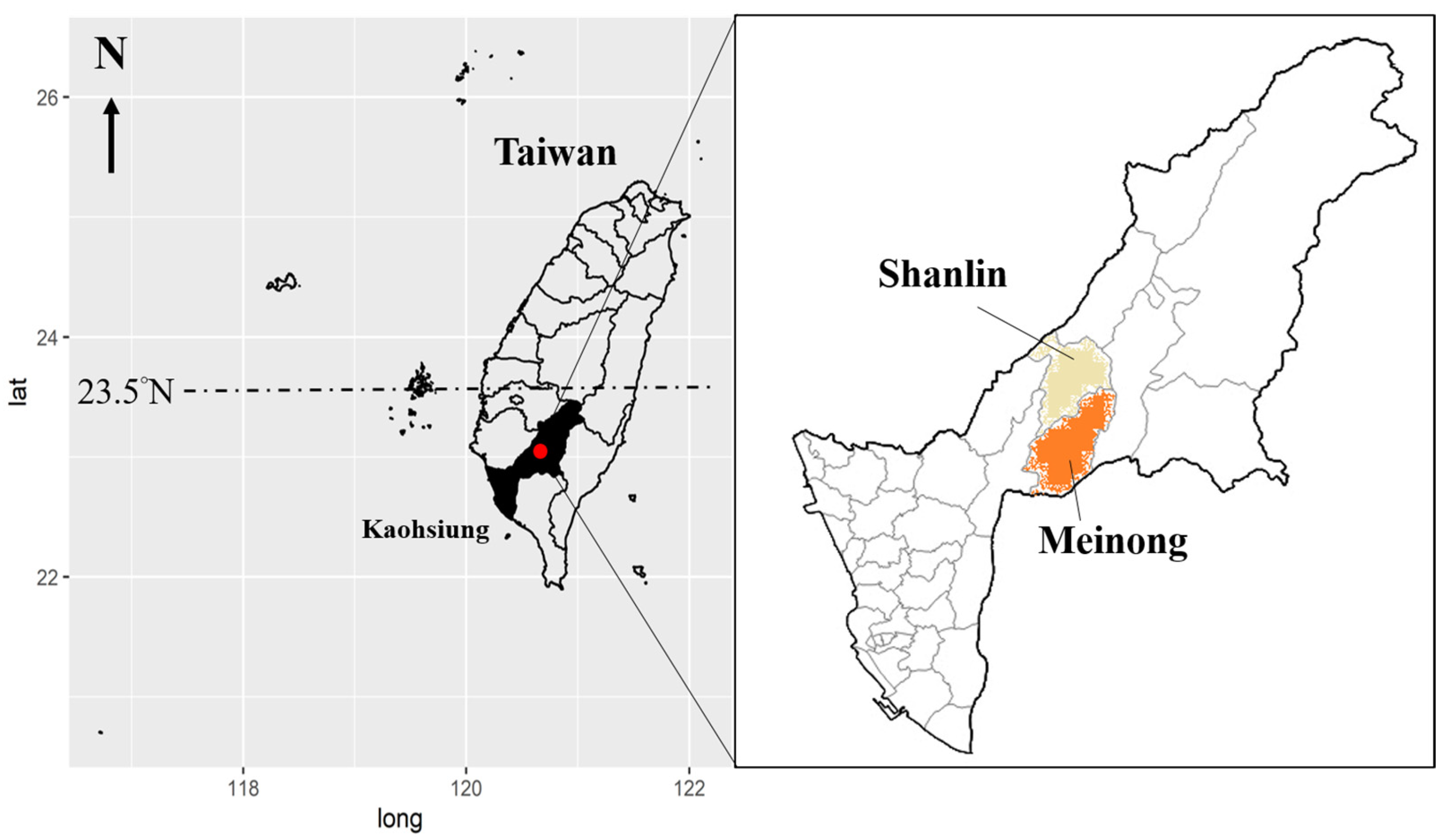
Figure 1. Location of sampling sites. Yellow dots indicate sampling sites in SP, orange dots indicate sampling sites in MP and MC, located in Shanling district and Meinong district, Kahsiung, Taiwan, respectively.
Agronomy 15 02754 g001
Figure 2. Sampling field rate in Meinong contractual and public grain systems, and in the Shanlin public grain system. Yellow, green, and blue represent sampling field rates in 2018, 2019, and 2020, respectively.
Agronomy 15 02754 g002
Figure 3. Seed purity distribution of MC, MP, and SP across 2018, 2019 and 2020 on maps. The color intensity indicates seed purity. When weedy rice invasion was more severe, the seed purity was lower, and the color in the figure is closer to red.
Agronomy 15 02754 g003
Figure 4. Boxplots of head rice rate (%), milled rice rate (%), and chalky kernel rate (%) of KH147 grouped by seed purity (%). Red dots indicate means of each group, red lines indicate regression lines, and equations and correlation coefficients are labeled above the regression lines.
Agronomy 15 02754 g004
Figure 5. Boxplots of head rice rate (%), milled rice rate (%), and chalky kernel rate (%) of TT30 grouped by seed purity (%). Red dots indicate means of each group, red lines indicate regression lines, and equations and correlation coefficients are labeled above the regression lines.
Agronomy 15 02754 g005
Table 1. Summary of weedy rice invasion in collected data. Cultivar, management, grain quality requirement, and IWMS from 2018 to 2020 in Meinong Contractual, Meinong Public, and Shanlin Public.
FactorSub-FactorIWMSMeinong ContractualMeinong PublicShanlin PublicWR Source
Systematic conditionCultivar KH147TT30TT30
ManagementFollowing certain regulation under contractual systemSmallholder not following certain regulationSmallholder not following certain regulation
Grain quality requirementHigh levelNo certain requirementNo certain requirement
First crop seasonSource of seedlingsBefore IWMSPurchased from certain nurseries using certified seedPurchased from numerous nurseries using uncertified seeds or some farmers saved seeds by themselvesPurchased from a few nurseries using uncertified seedsSeed mediated contamination
After IWMSPurchased from certain nurseries using certified seedSome purchased from nurseries using certified seed, some purchased from nurseries using normal seedPurchased from certain nurseries using certified seed
Agricultural implement Sharing with neighbors in a small areaSharing with growers across a big areaSharing with neighbors in a small area
Land preparation Dry tillageDry tillageDry tillageSeedlings from soil seed bank
Crop RiceRiceRice
Cropping system TransplantingTransplantingTransplanting
Number of preemergent herbicide application timesBefore IWMS10–11
After IWMS20–12
Second crop seasonNumber of weedings1–20–10–1
Land preparationBefore IWMSNo-tillageDry tillageDry tillage
After IWMSWet-tillageDry tillageWet tillage or dry tillage
Cropping system (crop)FallowingRotation (green manure)Rotation (green manure)
Inter-seasonCropping system (crop)Rotation (red bean)FallowingFallowing
Acceptance of IWMS EnforceMedianHigh
Awareness of weedy rice invasion HighLowMedian
Table 2. Contamination rate, clean field number and proportion, and land parcel sampling area of different group from 2018 to 2020.
GroupTotal Area (ha)YearThousand-Grain Weight of Brown Rice (g)Seed LotLand Parcel
Seed Lot NumberContamination (‰)Clean FieldLand Parcel NumberSampling Area (ha)Sampling Area Coverage (%) †
Mean ± SDMinMedianMaxField NumberProportion (%)
MC300201821.32740.76 ± 3.230.000.3152.229835.771040206.6268.87
201920.33090.73 ± 1.120.000.5616.434915.861250245.3781.79
202021.02700.45 ± 1.040.000.0011.9314252.591176224.7374.91
MP1200201822.767911.30 ± 15.330.005.85121.237210.601890347.0028.92
201921.67356.90 ± 12.170.003.14143.11243.272322417.4234.79
202023.711626.30 ± 44.560.000.48575.4925021.513628630.6352.55
SP130201824.712918.11 ± 16.310.0015.28113.1621.5542978.7960.61
201924.212910.58 ± 13.120.006.2077.4953.8842479.1860.91
202022.11651.59 ± 2.940.000.8025.2595.4548692.7071.31
† Coverage rate = Sampling Area/Total Area.
Table 3. Rice quality (milled rice rate, head rice rate, and chalky kernel rate) of KH147 and TT30 under different contamination conditions.
CultivarContamination (‰)Number of SamplesMilled Rice Rate (%)Head Rice Rate (%)Chalky Kernel Rate (%)
KH14701073.32 ± 2.67 a†68.87 ± 2.20 a9.02 ± 7.69 a
0–11371.99 ± 2.34 a68.89 ± 2.69 a6.53 ± 4.75 a
1–2973.30 ± 2.67 a66.72 ± 4.08 a6.85 ± 6.52 a
2–3274.69 ± 2.63 a65.77 ± 7.90 a4.60 ± 5.57 a
3–4370.89 ± 3.63 a58.88 ± 4.70 b11.51 ± 14.14 a
>4372.86 ± 0.86 a63.24 ± 6.67 b4.77 ± 3.48 a
TT3001572.19 ± 3.91 a63.10 ± 3.73 a24.84 ± 11.17 a
0–103969.90 ± 3.85 b60.73 ± 5.82 a28.40 ± 13.90 a
10–202073.01 ± 4.99 a62.02 ± 6.73 a25.24 ± 15.45 a
20–301470.49 ± 4.24 a58.58 ± 7.22 a26.32± 9.83 a
30–40471.71 ± 4.34 a61.57 ± 2.14 a42.09 ± 10.38 a
>40867.35 ± 5.92 b55.37 ± 10.51 b31.92 ± 12.66 a
† Values are expressed as the mean and standard deviation of each group, and means within a column within the same cultivar followed by the same letter(s) are not significantly different at 5% level, according to Fisher’s protected LSD test.
Disclaimer/Publisher’s Note: The statements, opinions and data contained in all publications are solely those of the individual author(s) and contributor(s) and not of MDPI and/or the editor(s). MDPI and/or the editor(s) disclaim responsibility for any injury to people or property resulting from any ideas, methods, instructions or products referred to in the content.