Article

Small Peptide Fertilizers Derived from Instant Catapult Steam Explosion Technology: Molecular Characterization and Agronomic Efficacy

1
State Key Laboratory of Soil and Sustainable Agriculture, Changshu National Agro-Ecosystem Observation and Research Station, Institute of Soil Science, Chinese Academy of Sciences, Nanjing 210008, China
2
Research Institute for Environmental Innovation (Suzhou), Tsinghua, Suzhou 215004, China
3
Henan Xinlianxin Chemical Industry Group Co., Ltd., Xinxiang 453731, China
4
University of Chinese Academy of Sciences, Nanjing 211135, China
*
Author to whom correspondence should be addressed.
Agronomy 2025, 15(12), 2734; https://doi.org/10.3390/agronomy15122734
Submission received: 11 October 2025 / Revised: 19 November 2025 / Accepted: 24 November 2025 / Published: 27 November 2025
(This article belongs to the Section Agricultural Biosystem and Biological Engineering)

Abstract

In modern agriculture, small peptide fertilizers (SPFs) have emerged as a promising tool to enhance crop growth, yield, and stress resilience. However, the influence of raw materials and innovative preparation methods on SPF characteristics and agronomic performance remains underexplored. This study introduces instant catapult steam explosion (ICSE), a novel thermomechanical technology, for synthesizing SPFs from fish, soybean meal, and sheepskin. The molecular, chemical, and nutritional properties of the SPFs were then characterized using methods including gel permeation chromatography (GPC), Fourier transform infrared spectroscopy (FTIR), and HPLC/LC-MS. The research aims to characterize the molecular, chemical, and nutritional profiles of resulting SPFs and evaluate their effects on rice and rapeseed growth, yield, and nitrogen use efficiency (NUE). ICSE-generated SPFs exhibited distinct properties based on raw materials. Fish-derived SPF1 had a narrow molecular weight distribution, high small peptide content (573 mg g−1), and free amino acids (0.478 mg g−1), while sheepskin-derived SPF3 showed the lowest values (386 mg g−1 and 0.366 mg g−1, respectively). Fourier-transform infrared spectroscopy (FTIR) confirmed the presence of peptide bonds and functional groups, with variations in peak intensities reflecting differences in raw materials. Field trials revealed that SPF1 significantly improved rice and rapeseed growth parameters, including plant height, SPAD values, and flag leaf area, compared to controls. Yield increases of 10.36% (rice) and 11.74% (rapeseed) were observed for SPF1, alongside the highest NUE (42.3–43.4%). Soybean meal-derived SPF2 showed moderate performance, while SPF3 had minimal effects. These findings validate ICSE for sustainable SPF production and emphasize the importance of selecting raw materials to optimize fertilizer outcomes and enhance crop productivity.

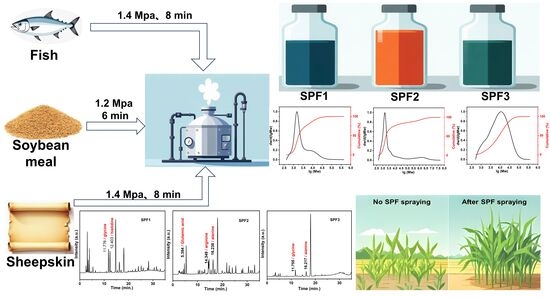
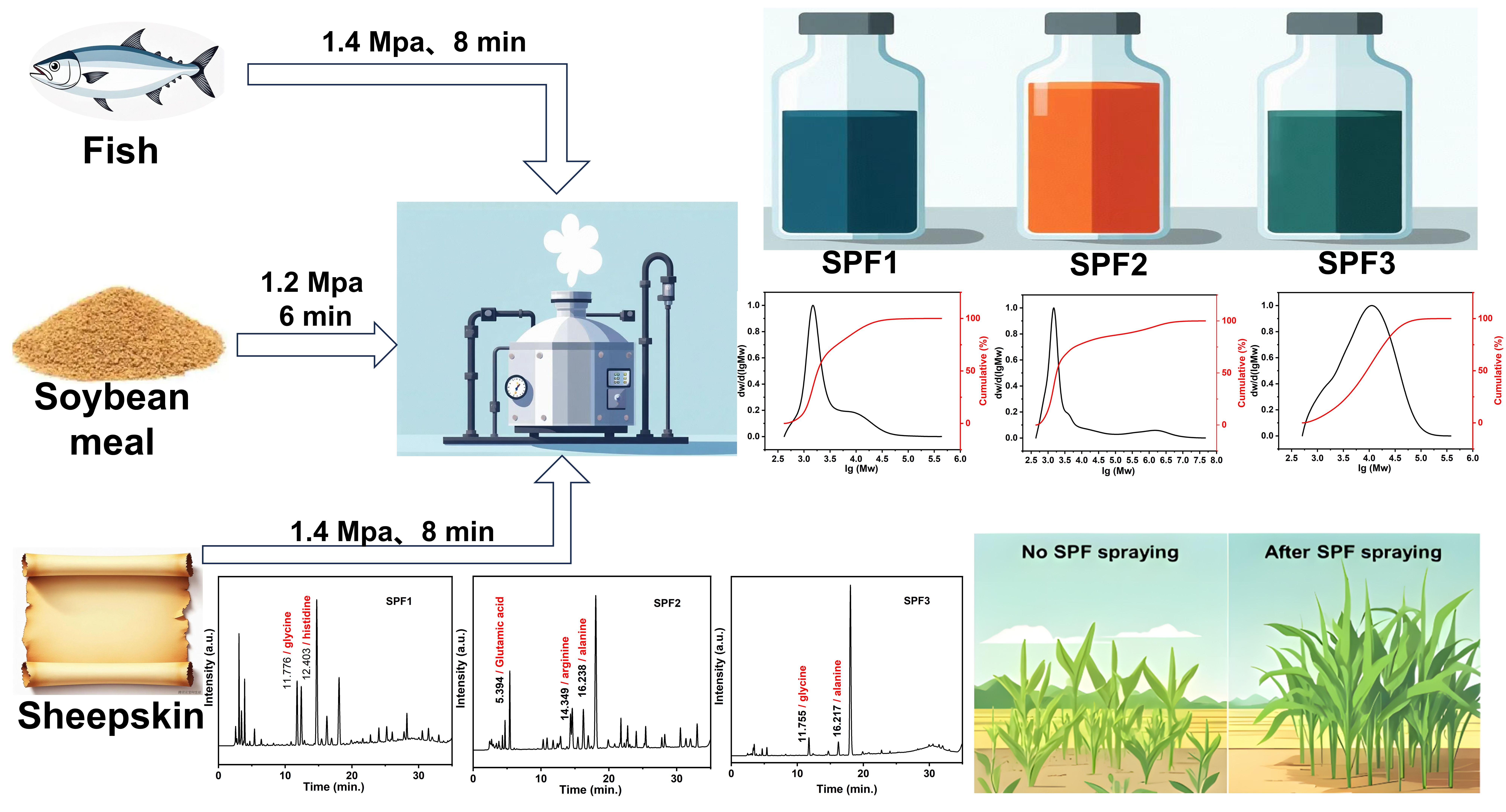
Graphical Abstract

1. Introduction

In the development process of modern agriculture, the rational application of fertilizers plays a crucial role in enhancing crop growth, improving yield, and improving quality [1]. Small peptide fertilizers (SPF), a novel type of fertilizer, have great application potential in agriculture and multiple positive impacts on crop growth and development [2,3]. Derived from natural protein sources via enzymatic hydrolysis, these fertilizers contain small peptides (5–100 amino acids) that act as critical signaling molecules. They regulate plant growth, developmental processes, and adaptive responses to environmental stresses [4]. Emerging evidence shows that bioactive peptides provide wide-ranging benefits in agriculture. They stimulate root growth (e.g., by increasing lateral root density and root hair proliferation) and enhance photosynthetic capacity through boosted chlorophyll biosynthesis and RuBisCO activity. This cascade amplifies carbon assimilation rates, leading to accumulation of starch and sucrose in source tissues, which subsequently drives grain/fruit biomass enhancement via optimized photo assimilate partitioning [5]. Additionally, SPFs exert regulatory effects on the physiological metabolism of crops. They can activate endogenous plant enzymes, thereby enhancing crop stress resistance, including resistance to drought, cold, disease, and pests [6]. In terms of quality, SPF can promote the synthesis of substances such as proteins and sugars in fruits, thereby improving their taste, color, and nutritional value [7]. From a sustainable agriculture perspective, using SPF helps reduce the need for traditional chemical fertilizers. This decreases their negative environmental impact, which is crucial for ensuring sustainable agricultural development.
Currently, there are various methods for preparing SPF [8,9]. The standard methods mainly include solvent extraction, enzymatic decomposition, microbiological fermentation, and chemical synthesis [10]. Chemical synthesis involves complex preparation processes that require specialized equipment and skilled technicians. It relies heavily on large volumes of organic solvents and expensive reagents, resulting in high production costs.
Additionally, this method may cause environmental pollution [11]. Enzymatic hydrolysis and microbial fermentation are currently the most commonly used methods for polypeptide preparation due to their advantages, including mild reaction conditions and environmental friendliness [12]. Nevertheless, controlling these processes is relatively complex, and it is challenging to stabilize the yield and purity of the product [13,14]. Exploring a simple, efficient, economical, and environmentally friendly preparation method is the prerequisite for further promoting the large-scale use of SPF in the field.
Meanwhile, instant catapult steam explosion (ICSE) represents an advanced integrated thermomechanical chemical approach, evolved from conventional steam explosion techniques. Distinguished by its unique cylinder-piston ejector mechanism, ICSE completes the explosion cycle within 0.0875 s, embodying remarkable energy efficiency, rapid processing, and eco-friendliness [15]. Unlike traditional steam ejection methods, ICSE leverages a distinct cross-sectional pressure differential to generate intense force, eliminating the need for prolonged high-temperature and high-pressure treatment. This technology is a physical processing method that uses instantaneous high-temperature, high-pressure steam to act on materials, causing their internal structures to expand and rupture [16]. Moreover, unlike both enzymatic and fermentative approaches, which often leave residual chemicals or microbial byproducts, ICSE is a purely physical process, enhancing eco-friendliness and reducing downstream purification costs. In recent years, research has been conducted on the application of ICSE technology to enhance straw utilization efficiency [17], grease extraction [18,19], and rapid detoxification [20]. However, its application in SPF preparation remains underexplored, mainly with no relevant studies reported to date.
In this study, we employed the ICSE technology to prepare SPFs from fish, slaughterhouse sheepskin, and soybean meal as raw materials. The three prepared SPFs were evaluated indoors, and their effects were further assessed through foliar spraying in rice and rapeseed cultivation. The study aims to achieve the following specific objectives:
(1)
Prepare SPFs from three distinct protein sources (fish, soybean meal, and slaughterhouse sheepskin) using ICSE under optimized processing parameters;
(2)
Systematically characterize the molecular, chemical, and nutritional properties of the resulting SPFs through advanced analytical techniques, including gel permeation chromatography, Fourier-transform infrared spectroscopy, and HPLC/LC-MS;
(3)
Evaluate the effects of ICSE-derived SPFs on growth, yield, and nitrogen use efficiency in rice and rapeseed through carefully designed field trials.

2. Materials and Methods

2.1. Materials

The fish used in this study were collected from Taihu Lake in Suzhou, Jiangsu Province, China. Specifically, the species was identified as silver carp, with its scientific name being Hypophthalmichthys molitrix. For sourcing, the silver carp was purchased from Suzhou Taihu Ecological Fishery Development Co., Ltd. (Suzhou, China)—a government-certified supplier that offers traceable freshwater fish. The fish provided by this supplier had consistent specifications: each individual weighed 1.0–3.0 kg, and all were adult fish aged 2–3 years, ensuring uniformity in raw material quality for subsequent experiments.
Slaughterhouse sheepskin was purchased from Nanyang, Henan province, China. Sheep breed and skin type: The sheepskin used was from small-tailed Han sheep—a major local breed in Henan Province with standardized skin characteristics (thickness: 1.2–1.5 mm; collagen content: ~30% dry weight). This breed is widely raised in northern China, and its skin is commercially available through standardized slaughterhouse channels.
Soybean meal was purchased from Nehe Grain Group Co., Ltd., Heilongjiang Province. Soybean meal specifications: Soybean meal specifications: The soybean meal was of high-protein type (crude protein content: 43–45% dry weight; moisture: <12%), meeting the national standard GB/T 19541-2017 for Feed Grade Soybean Meal [21].
Lactic acid (AR grade) is purchased from Tianjin Damao Chemicals Reagent Factory. The rice and rapeseed varieties used in the field trials were Lingliangyou 211 (rice) and Zaoza 7 (rapeseed), respectively. All chemicals used in the present study were of analytical reagent grade.

2.2. Preparation of SPFs

SPFs were prepared directly in one step through ICSE equipment (QB-300, Suzhou, China). The detailed steps were as follows:
The detailed method for raw material pretreatment can be found in Text S1 in Supplementary Materials:
ICSE Equipment Operation:
Load the pretreated raw material-water mixture into the QB-300 ICSE equipment’s reaction cylinder (volume: 500 mL); Seal the cylinder and start to heat up to reach the target pressure (1.2–1.4 MPa), with a pressure rise rate of 0.2 MPa/min (to avoid local overheating of raw materials); Maintain the target pressure for the set holding time (6–8 min) to ensure steam penetrates the raw material matrix and disrupts protein peptide bonds; Trigger instantaneous pressure release (0.0875 s, the equipment’s inherent parameter) via the cylinder-piston ejector mechanism—this sudden pressure drop causes rapid expansion of water in the raw material, breaking proteins into small peptides [22]. To determine the optimal process parameters, we screened the time and pressure variables based on yield and small-peptide content as evaluation criteria (Table S1). Finally, we identified the optimal set of preparation process parameters (Table 1).
Collect the exploded product (a homogeneous slurry) and add 4% (w/w) lactic acid (to inhibit microbial growth during storage) to obtain the final SPF (SPF1: fish-derived; SPF2: soybean meal-derived; SPF3: sheepskin-derived). Calculate the yield by comparing the quality of the raw materials with that of the solid filter residue.

2.3. Characteristics of SPFs

The molecular weight of SPFs was determined via gel permeation chromatography (GPC) (PL-GPC50, Agilent Technologies Inc., Santa Clara, CA, USA). The functional group of SPFs was characterized via Fourier infrared spectroscopy (FTIR) (Nicolet iS50, Thermo Fisher Scientific Inc., Waltham, MA, USA). The amino acid composition of the SPFs was determined via high-performance liquid chromatography/liquid chromatography–mass spectrometry (HPLC/LC-MS) (LC-MS-2020, Shimadzu Corporation, Kyoto, Japan). Element content was determined via inductively coupled plasma optical emission spectrometer/mass spectrometry (ICP-OES/MS) (iCAP6300, Thermo Fisher Scientific Inc., Waltham, MA, USA). The contents of N, P2O5, K2O, and organic matter of SPFs were determined according to the method NY/T 525-2021. The small peptide content of SPF was determined according to the method QBHHS JC006-2013, and the total free amino acid content was determined via ninhydrin colorimetry. The content of N, P2O5, K2O, organic matter, small peptides, and the total free amino acids was detected three times in a repetition.

2.4. Design of Field Experiment

2.4.1. Test Site Environment

The test site was located in the Xinlianxin Agricultural Demonstration Park, Furongdun Town, Pengze County, Jiujiang City, Jiangxi Province, China (30°06′ N, 116°22′ E), with a subtropical monsoon climate, abundant rainfall, sufficient light, and a relatively short frost period. The average annual temperature ranged from 14 °C to 17 °C, the average annual sunshine hours were 1928.5 h, and the average annual precipitation was 1100–1500 mm. The months with high precipitation were concentrated from April to July. According to the World Reference Base for Soil Resources (WRB) classification system, the soil type in this study is Gleyic Anthrosols. The soil in the experimental area was slightly alkaline (pH 7.85) and had a relatively low organic matter content (10.1 g kg−1). It contains a low level of nutrients, including nitrogen (total N, NO3-N, NH4+-N), phosphorus (total P, available P), and potassium (available K). In terms of soil texture, clay and silt account for a large proportion, while sand makes up 7.85%, indicating an overall clayey soil texture (Table 2).

2.4.2. Experimental Design

The experiment consists of four treatments: F + W (conventional fertilization + Spraying water control group), F + SPF1, F + SPF2, and F + SPF3. And the conventional fertilization was 180 kg N·ha−1, 90 kg P2O5·ha−1, and 144 kg K2O·ha−1 for the rice season; 180 kg N·ha−1, 72 kg P2O5·ha−1, and 72 kg K2O·ha−1 for the rapeseed season. The experimental plots were randomly allocated, and each treatment was carried out three times, resulting in a total of 12 experimental plots. Each plot measures 5 m in length and 7 m in width, with a total of 12 plots. The width of the boundary ridges for each residential plot is 50 cm. Rice seedlings were transplanted on 10 July 2024, at a density of 16.5 cm × 30 cm, while rapeseed seedlings were transplanted on 20 October 2024, at 25 cm × 35 cm. N, P, and K fertilizers were applied with a base-topdressing ratio of 6:4. For the rice season, topdressing was applied during the tillering stage. In contrast, for rapeseed, topdressing was applied during the mid-seedling stage. SPF was applied via foliar spraying on 31 July (tillering stage), 31 August (Heading Stage), and 30 September (Ripening Stage) for the rice season, and on 10 December (Seedling Stage), 31 January (Bolting Stage), and 10 March next year (Flowering Stage) for the rapeseed season, at a concentration of 100 mg/L and a rate of 40 L·mu−1 (one hectare is approximately equal to 15 mu). Spray an equal amount of water on the control group, labelled as F + W. Other field management practices, including irrigation, weed control, and pest management, were conducted in strict accordance with the local standardized cultivation technical procedures for rice and rapeseed.

2.4.3. Determination of Plant Growth Indicators: N Uptake, Grain Yield, and Nitrogen Use Efficiency

SPAD values of the third leaf at the top were measured after 1 week of the third SPF application. At the harvest stage, rice plant height, flag leaf length, flag leaf width, and flag leaf area were determined ten times in a repetition. For rapeseed, plant height, SPAD values, effective branch number, primary effective branch number, secondary effective branch number, effective silique number on the main raceme, effective silique number on secondary branches, total effective silique number per plant, and silique length were measured ten times in a repetition.
At the harvest stage, yield and yield component factors were determined. Additionally, plant nitrogen uptake was measured using the micro-Kjeldahl procedure to calculate nitrogen use efficiency (NUE) [22].

2.4.4. Statistical Analysis

The AI tools were used for sentence revision and polishing. All statistical analyses were conducted using the BM SPSS Statistics 23 software. Comparisons of various treatments were evaluated using analysis of variance (ANOVA). The data were checked for normality and homogeneity of variance before conducting ANOVA. Mean separation tests (Duncan’s multiple range test) were used to determine significant differences among treatments. The differences in means and correlation coefficients were considered significant when p < 0.05. Graphical representations of the data were created using Origin 2021 software, facilitating precise and informative visualization of the results.

3. Results

3.1. Molecular Weight Distribution of SPFs

The molecular weight (Mw) distribution of the three peptide fertilizers (SPF1, SPF2, and SPF3) was analyzed via Gel Permeation Chromatography (GPC), and the results are presented in Figure 1A–C.
For SPF1, as shown in Figure 1A, the GPC curve exhibits a distinct peak. The differential distribution curve (black curve) rises sharply to a maximum around lg (Mw) = 3.15, indicating a relatively narrow range of molecular weights concentrated in the lower–molecular–weight region. The cumulative distribution curve (red) begins to increase gradually at lower lg (Mw) values. It approaches 100% as lg (Mw) increases, suggesting that most of the peptides in SPF1 have molecular weights within a specific lower range.
SPF2 (soybean meal–derived) displays a GPC curve (Figure 1B) with a peak that is even narrower and taller compared to SPF1. The differential curve peaks at around lg (Mw) = 3.15 as well, but the peak is more pronounced, suggesting a higher degree of molecular weight homogeneity. The cumulative curve shows a more rapid increase than SPF1, which indicates that the molecular weights of peptides in SPF2 are more concentrated in a very narrow lower–molecular–weight interval.
In contrast, SPF3 (sheepskin-derived) has a GPC curve (Figure 1C) with a peak shifted to a higher lg (Mw) value, around lg (Mw) = 4.0. The differential distribution curve is broader than that of SPF1 and SPF2, indicating a wider molecular weight range. The cumulative distribution curve rises more slowly initially. It spans a broader range of lg (Mw) to reach 100%, suggesting that SPF3 contains peptides with a broader molecular-weight distribution, including both lower- and higher–molecular–weight fractions.

3.2. Infrared Spectroscopy Analysis of SPFs

The infrared spectra of SPF1, SPF2, and SPF3 are presented in Figure 1D, with curves a, b, and c representing SPF1, SPF2, and SPF3, respectively.
In the hydroxyl (-OH) region (around 3400–3200 cm−1), all three SPFs show absorption peaks, indicating the presence of hydroxyl groups, which could be from residual water or hydroxyl–containing amino acid side chains. SPF1 (curve a) has a relatively broad and intense–OH peak, suggesting a higher content of hydroxyl–bearing moieties or more bound water. SPF2 (curve b) exhibits a narrower and slightly less intense–OH peak compared to SPF1, while SPF3 (curve c) has an–OH peak that is intermediate in width and intensity between the two. This result is significant because it can affect the solubility and hydrophilicity of fertilizers, thereby altering their interaction with leaf surfaces [23].
For the C–H stretching vibrations (around 3000–2800 cm−1), distinct peaks are observed for each SPF. SPF1 shows a set of C–H peaks with moderate intensity. SPF2 has C–H peaks that are more intense, which might be due to the higher content of aliphatic amino acids in soybean meal–derived peptides. SPF3 displays C–H peaks with an intensity that is lower than that of SPF2 but higher than that of SPF1, reflecting the different carbon–hydrogen–containing structures from sheepskin–derived peptides.
In the carbonyl (C = O) region (around 1700–1600 cm−1), all three SPFs show prominent peaks, characteristic of peptide bonds (amide I band). SPF1 has a C = O peak with a certain width and intensity. SPF2’s C = O peak is sharper and more intense, indicating a higher degree of order or a specific configuration of peptide bonds in soybean meal–derived peptides. SPF3 presents a C = O peak that is broader than that of SPF2, suggesting a more diverse arrangement of peptide bonds in sheepskin–derived peptides.
Regarding the C–N and N–H vibrations (amide II and III bands, around 1500–1200 cm−1), there are noticeable differences among the three SPFs. SPF1 shows a relatively complex pattern with multiple overlapping peaks. SPF2 has more defined and intense peaks in this region, which could be associated with the specific amino acid composition from soybean meal, leading to characteristic amide band vibrations. SPF3 exhibits peaks in the C–N and N–H region that are less intense and more spread out compared to SPF2, and also differs from SPF1 in terms of peak positions and intensities. Additionally, the “partially broad” region marked in Figure 1D shows variations among the three SPFs. SPF1 has a relatively less pronounced broad feature; SPF2 shows a moderate broadness. In contrast, SPF3 shows a more distinct broad band, which may be related to the presence of various secondary structures or intermolecular interactions in sheepskin–derived peptides. The C-N and N-H peaks, along with the peptide bond peak, confirm the presence of peptide linkages [17].

3.3. Component Analysis of SPFs

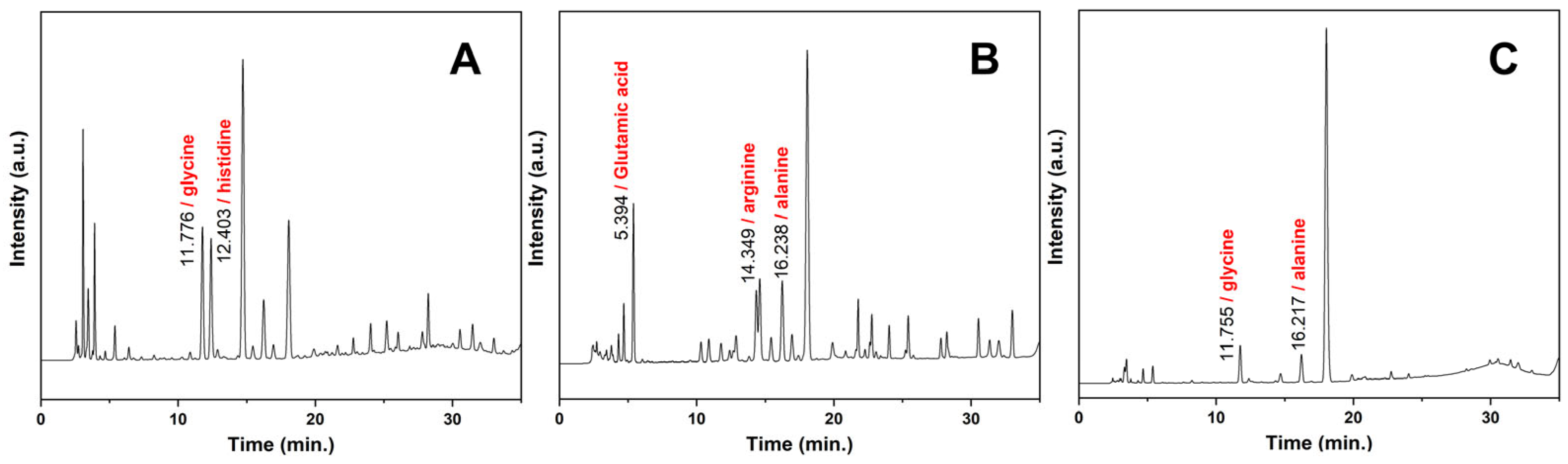
The fish-based peptide fertilizer, notable peaks corresponding to glycine (retention time: 11.776 min) and histidine (retention time: 12.403 min) were observed (Figure 2A and Table S2). These peaks indicate the presence of these specific amino acids in the fish–derived peptide fertilizer. The presence of glycine and histidine can have important implications for plant nutrition. Glycine is a simple amino acid that is readily absorbed by plants and may play a role in various physiological processes, such as protein synthesis and stress responses. Histidine, on the other hand, can be involved in metal ion chelation and may help plants cope with heavy metal stress or regulate nutrient uptake [24].
The soybean-based peptide fertilizer showed prominent peaks for glutamic acid (retention time: 5.394 min), arginine (retention time: 11.349 min), and alanine (retention time: 16.235 min) (Figure 2B and Table S2). Glutamic acid is an essential amino acid for plants, as it is involved in nitrogen metabolism and can act as a neurotransmitter in plant signaling pathways. Arginine is known for its role in enhancing plant stress tolerance and promoting root development [25]. Alanine, like glycine, can contribute to protein synthesis and energy metabolism in plants. The identification of these amino acids in the soybean-based peptide fertilizer suggests that it may offer a unique nutritional profile compared to the fish-based one.
For the sheepskin-based peptide fertilizer in Figure 2C, the prominent peaks were associated with glycine (retention time: 11.755 min) and alanine (retention time: 16.217 min). Although glycine and alanine were also detected in other peptide fertilizers, their relative abundances and the overall chromatographic patterns differed. These differences could be due to the distinct protein sources and the processing methods used for each raw material. The specific combination and proportion of amino acids in the sheepskin-based peptide fertilizer may influence its bioavailability and effectiveness in promoting plant growth.
In addition, SPF1 had a relatively high small peptide content, likely due to its fish-based source. SPF2 has a comparable N content to SPF1 but lower P2O5 and K2O, and a moderately small peptide content (Table 3). SPF3 has the lowest N, P2O5, and K2O among the three, with the smallest peptide content. These differences suggest that the source of raw material significantly affects the nutrient composition of peptide-based fertilizers. The levels of other potentially hazardous elements in the three types of small–peptide fertilizers are all within safe thresholds (Table S3), according to the industry standards for organic water-soluble fertilizers NY/T 3831-2021 [26].

3.4. Effects on the Growth of Rice and Rapeseed

The effects of spraying different peptide fertilizers (SPF1, SPF2, SPF3) on the growth of rice and rapeseed were investigated, and the results are presented in Table 4 and Table 5.
For rice (Table 4), in terms of plant height, the F + W treatment had the lowest value at 114.3 cm, while the F + SPF1 (120.1 cm), F + SPF2 (119.9 cm), and F + SPF3 (119.4 cm) treatments showed significantly higher plant heights, SPF application increased rice plant height compared to water spraying.
The SPAD value, which reflects chlorophyll content, was highest in the F + SPF1 treatment (47.4), followed by F + SPF3 (46.3), F + SPF2 (43.7), and F + W (42.1). SPF1 and SPF3 significantly increased chlorophyll content in rice leaves compared with water (Table 4).
For flag leaf length, the F + SPF1 treatment had the longest flag leaves (34.3 cm), while F + W (29.5 cm), F + SPF2 (30.3 cm), and F + SPF3 (32.4 cm) had shorter flag leaves. Flag leaf width showed a similar trend, with F + SPF1 (1.46 cm), F + SPF2 (1.45 cm), and F + SPF3 (1.44 cm) having wider flag leaves than F + W (1.39 cm). Correspondingly, the flag leaf area was largest in F + SPF1 (50.11 cm2), and F + SPF2 and F + SPF3 had similar flag leaf areas to F + W. This result might be attributed to the rich amino acid composition in fish–derived peptides, which could promote nutrient uptake and photosynthesis. F + SPF2 and F + SPF3 also showed positive effects, though with varying magnitudes of improvement.
For rapeseed (Table 5), the plant height was lowest in the F + W treatment (119.3 cm) and highest in F + SPF2 (123.8 cm), with F + SPF1 (122.5 cm) and F + SPF3 (123.6 cm) showing significantly higher plant heights than F + W. The SPAD value was highest in F + SPF1 (45.5), followed by F + SPF2 (45.3), F + SPF3 (44.4), and F + W (42.1), indicating that all SPF treatments increased chlorophyll content in rapeseed compared to water.
Regarding the height of effective branches, F + W had the highest value (30.4), while F + SPF1 (24.2) had the lowest, and F + SPF2 (26.5) and F + SPF3 (26.9) were intermediate. The number of primary effective branches was highest in F + SPF1 (11.3), followed by F + SPF2 (11.1) and F + W (9.7); F + SPF3 (9.8) had fewer primary effective branches. For the number of secondary effective branches, F + SPF1 (14.6) had the highest number, followed by F + SPF2 (14.1), F + SPF3 (13.8), and F + W (12.9). Silique length was longest in F + SPF1 (6.1 cm), followed by F + SPF2 (5.7 cm), F + SPF3 (5.6 cm), and F + W (4.9 cm).
The distinct impacts of different peptide-based foliar fertilizers on rice and rape-seed growth can be further dissected. For rice, the fish–derived SPF1 seems to have a more pronounced effect on flag leaf development. Flag leaves play a crucial role in photosynthesis, and enhanced flag leaf parameters could lead to increased photosynthetic efficiency, thereby promoting overall plant growth. Fish-based fertilizers are rich in bioavailable nitrogen and trace elements, which are essential for leaf expansion and chlorophyll synthesis.

3.5. Effects on the Yield and NUE of Rice and Rapeseed

The impacts of different SPF (SPF1, SPF2, SPF3) treatments on the yield and nitrogen use efficiency (NUE) of rice and rapeseed were examined, and the results are shown in Table 6 and Table 7.
For rice (Table 6), in terms of yield–component factors, the number of ears per mu in the F + SPF1 treatment (20.32) was significantly higher than that in the F + W treatment (18.98), and F + SPF2 (19.11) and F + SPF3 (19.75) also showed higher values. The number of effective grains per ear followed a similar trend, with F + SPF1 (155.42) having the highest count, followed by F + W (130.45), F + SPF2 (141.71), and F + SPF3 (145.38). The 1000—grain weight was highest in F + SPF1 (27.5), F + SPF2 (27.1), and F + SPF3 (27.6), while F + W had the lowest value (24.2).
Yield increased significantly in the SPF-treated groups. F + SPF1 achieved the highest yield (9276 kg hm−2), with a yield increase rate of 10.36%. F + SPF2 (8793 kg hm−2) had a 4.62% yield increase, and F + SPF3 (8902 kg hm−2) had a 5.91% increase, all significantly higher than F + W (8405 kg hm−2). NUE was also enhanced by SPF application, with F + SPF1 (42.3%), F + SPF2 (41.2%), and F + SPF3 (42.4%) showing higher NUE than F + W (38.4%).
For rapeseed (Table 7), considering yield–component factors, the number of main inflorescence siliques in F + SPF1 (71.2) was much higher than that in F + W (51.2) and F + SPF3 (52.4), while F + SPF2 (65.3) was intermediate. The number of siliques on primary branches was highest in F + SPF1 (373.2), followed by F + SPF2 (314.3), F + SPF3 (309.6), and F + W (304.4). The total number of siliques per plant was highest in F + SPF1 (644.2) and F + W (559.9), and in F + SPF2 (564.9) and F + SPF3 (567.4), it was lower. The number of effective siliques was highest in F + SPF1 (25.5), compared to F + W (22.4), F + SPF2 (22.1), and F + SPF3 (22.2). The 1000–grain weight was similar across all treatments, ranging from 3.96 to 3.99 g. SPF treatments significantly improved the yield.
Yield was significantly improved by SPF treatments. F + SPF1 had the highest yield (191.3 kg per mu), with a yield increase rate of 11.74%. F + SPF2 (184.3 kg per mu) had a 7.65% increase, and F + SPF3 (174.3 kg per mu) had a 1.81% increase, all higher than F + W (171.2 kg per mu). NUE was also higher in SPF-treated groups, with F + SPF1 (43.4%) and F + SPF2 (40.3%) showing better NUE than F + W (39.6%) and F + SPF3 (39.9%).
In summary, the application of SPFs had positive effects on the yield and NUE of both rice and rapeseed. SPF1 consistently showed the most significant improvements in yield–component factors, yield, and NUE for both crops, while SPF2 and SPF3 also exhibited beneficial effects, though to a lesser extent than SPF1. These results indicate that SPFs, especially SPF1, have the potential to enhance crop productivity and nitrogen utilization in agricultural systems.

4. Discussion

4.1. Advantages of ICSE Technology in SPF Preparation: Comparison with Traditional Methods and Parameter Optimization

ICSE technology offers distinct advantages in the preparation of small peptide fertilizer (SPF), addressing key limitations of traditional methods documented in existing research. Chemical synthesis requires complex equipment, large volumes of organic solvents, and high production costs, while also posing environmental pollution risks [11]. Enzymatic hydrolysis and microbial fermentation, currently the most common methods for polypeptide preparation [12], face challenges in process control, leading to unstable product yields and purity [13]. In contrast, ICSE is a purely physical process that relies on instantaneous, high-temperature, high-pressure steam (1.2–1.4 MPa) and rapid pressure release (0.0875 s) to rupture protein structures. This condition eliminates residual chemicals or microbial byproducts, enhancing eco-friendliness and reducing downstream purification costs—an advantage not observed in traditional methods. For example, unlike enzymatic hydrolysis, which may leave enzyme residues [14], ICSE-treated SPFs (SPF1, SPF2, SPF3) require only the addition of 4% lactic acid for preservation, simplifying post-processing.
Optimizing ICSE parameters across different raw materials further highlights its adaptability, a feature rarely reported in studies of conventional steam explosion. Yu et al. emphasized that traditional steam explosion often requires prolonged high-temperature and high-pressure treatment, which can degrade peptides [15]. ICSE, however, adjusts parameters based on raw material characteristics: fish (SPF1), with ~75% natural moisture, requires no additional water and optimal conditions of 1.4 MPa for 8 min, yielding the highest small peptide content (573 mg·g−1); soybean meal (SPF2) needs a 1:4 (w/v) water ratio and milder 1.2 MPa for 6 min to avoid equipment blockage, resulting in moderate peptide content (421 mg·g−1); sheepskin (SPF3), with high collagen content, uses a 1:0.6 (w/v) water ratio to prevent peptide dilution, though its 386 mg·g−1 peptide content remains the lowest. This parameter customization aligns with Jacquet et al.’s finding that steam explosion efficacy depends on raw material structure, but ICSE’s faster processing (0.0875 s explosion cycle) surpasses traditional steam explosion in preserving peptide integrity [16].

4.2. Correlation Between SPF Molecular–Chemical Properties and Raw Material Characteristics

The molecular weight of peptides is closely related to their biological activity and is a key factor in the production of bioactive peptides [27,28]. The molecular weight distribution, functional group composition, and nutrient content of the three SPFs are strongly driven by raw material type, consistent with prior research on protein-derived fertilizers [29,30,31]. GPC analysis shows SPF1 (fish-derived) has a narrow molecular weight distribution concentrated at lg (Mw) = 3.15, SPF2 (soybean meal-derived) an even more homogeneous distribution at the same lg (Mw), and SPF3 (sheepskin-derived) a broader distribution shifted to lg (Mw) = 4.0. This aligns with Gao et al.’s observation that fish proteins, with consistent amino acid sequences, hydrolyze into uniform small peptides [32]. The active peptides derived from soybeans, although there are many types, are dominated by low-molecular-weight ones [33,34]. However, collagen’s rigid triple-helix structure resists hydrolysis, explaining SPF3′s larger peptide fragments, which are consistent with its broader GPC peak [35,36].
The FTIR analysis confirmed the presence of characteristic peptide bond absorptions (amide I band, 1700–1600 cm−1) alongside -OH, C-H, and C-N/N-H vibrations in all SPFs, yet with significant variations in intensity and profile [37]. SPF1’s broad -OH stretching band around 3400–3200 cm−1 suggests a higher content of bound water and hydroxyl-containing amino acids [38]. SPF2 exhibited intense aliphatic C-H stretching vibrations between 2926 and 2853 cm−1, indicating a high abundance of aliphatic amino acids, which is a recognized trait of plant-derived proteins like those from soybean. In contrast, SPF3 displayed broad and complex absorptions in the C-N/N-H region (1500–1200 cm−1), which can be attributed to the diverse secondary structure conformations, particularly collagen-like triple helices, prevalent in animal hide-derived peptides.
Nutritionally, the elemental and amino acid analyses aligned with these spectroscopic observations. SPF1’s superior levels of free amino acids (0.478 mg·g−1) and K2O (0.29 mg·g−1) are characteristic of nutrient-rich, bioavailable fractions often obtained from fish processing byproducts. Conversely, SPF3’s lower total nitrogen (11.4 mg·g−1) and free amino acid (0.366 mg·g−1) content corroborates the typical lower nutrient density but unique structural composition of collagen peptides. HPLC profiling further identified unique functional amino acids: SPF1’s richness in glycine and histidine is associated with promoting plant stress resistance and nutrient uptake; SPF2’s high glutamic acid and arginine content are crucial for enhancing nitrogen metabolism in plants; while SPF3’s limited amino acid diversity (primarily glycine and alanine) explains its weaker direct nutritive value but suggests potential for sustained release due to its specific structural properties.

4.3. Growth Promotion of SPFs in Rice and Rapeseed

Field trials show SPFs differentially enhance rice and rapeseed growth, yield, and nitrogen use efficiency (NUE). SPF1 exhibits the strongest effects: rice plant height and SPAD value were higher than the control (F + W), while increasing the rapeseed primary effective branches and silique length. This aligns with Ahuja et al.’s finding that fish-based fertilizers are rich in bioavailable nitrogen and trace elements, which are essential for leaf expansion and chlorophyll synthesis [39]. Fish protein peptides boost chlorophyll synthesis and leaf development. And SPF1’s high small peptide content enables rapid absorption, activating endogenous enzymes and promoting photosynthesis [6].
SPF1’s yield advantages stem from optimized yield components, consistent with Liao et al.’s research on polypeptide urea [5]. These improvements reflect SPF1’s ability to regulate reproductive development, which is likely via peptide-mediated hormone balance [40]. In contrast, SPF2 showed milder effects. This phenomenon is attributed to the inherent properties of plant-based proteins compared to animal proteins; they tend to be more hydrophobic, prone to aggregation, and structurally inflexible, which may reduce their bioavailability and subsequent regulatory effects on crop growth [41]. SPF3 exhibited minimal growth-promoting benefits, which may be attributed to the low peptide bioavailability typically associated with collagen-derived products [42,43].
These results collectively confirm that SPFs with small, homogeneous peptides and rich nutrients (e.g., SPF1) outperform those with large fragments or low nutrient content, which is consistent with the consensus in peptide fertilizer research that bioavailability determines agronomic efficacy. Furthermore, the SPFs produced by this process are applied in rice and rapeseed cultivation, and it does not cause potential metal element pollution to the crops and soil, thus meeting the requirements of green and safe agricultural production of grains.

5. Conclusions

This study demonstrates the feasibility of using ICSE technology to produce SPFs from diverse protein sources, revealing significant variations in their chemical properties and agronomic performance that depend on the raw materials. Fish-based SPF1 stood out with its homogeneous molecular weight distribution, high bioactive peptide content, and superior ability to enhance crop growth, yield, and NUE in rice and rapeseed. Soybean meal-based SPF2 offered moderate benefits, while sheepskin-based SPF3 showed limited efficacy, likely due to lower peptide diversity and nutrient content.
It is important to note that the present study was conducted at a single geographical site and over one growing season for each crop. While the results clearly demonstrate the significant potential of the peptide fertilizers, particularly SPF1, their general applicability across a wider range of soil types and climatic conditions requires further validation. Future multi-location and multi-season trials are therefore necessary to confirm the robustness and broad-spectrum efficacy of these findings.

Supplementary Materials

The following supporting information can be downloaded at: https://www.mdpi.com/article/10.3390/agronomy15122734/s1, Table S1: HPLC chromatographic information of SPFs; Table S2: HPLC chromatographic information of SPFs; Table S3: Elemental Content of SPFs.

Author Contributions

X.L., Z.Y., J.Z. and X.Z. were responsible for data curation. J.Z. was responsible for management and coordination of research activity planning and execution. X.L. and Z.Y. were responsible for investigations. X.Z. was responsible for conceptualization. X.Z. and Z.Y. were responsible for funding acquisition. X.Z. was responsible for project administration. X.L. and J.Z. were responsible for reviewing and editing. All authors have read and agreed to the published version of the manuscript.

Funding

This work was financially supported by the Postdoctoral Fellowship Program (Grade C) of China Postdoctoral Science Foundation (GZC20241789) and Jiangsu Funding Program for Excellent Postdoctoral Talent (2024ZB623).

Data Availability Statement

The raw data supporting the conclusions of this article will be made available by the authors on request.

Acknowledgments

This work was financially supported by the Postdoctoral Fellowship Program (Grade C) of China Postdoctoral Science Foundation (GZC20241789) and Jiangsu Funding Program for Excellent Postdoctoral Talent (2024ZB623). We thank Shiyanjia Lab (www.shiyanjia.com) for the FTIR and XPS analyses. And acknowledge AI tools (ChatGPT 4) for the assistance in correcting the structure and grammar of the sentences in this article.

Conflicts of Interest

Author Jie Zhang was employed by the company Henan Xinlianxin Chemical Industry Group Co., Ltd.. The remaining authors declare that the research was conducted in the absence of any commercial or financial relationships that could be construed as a potential conflict of interest.

References

  1. Chen, C.; Pan, J.J.; Lam, S.K. A review of precision fertilization research. Environ. Earth Sci. 2014, 71, 4073–4080. [Google Scholar] [CrossRef]
  2. Wang, J.L.; Liu, Z.M.; Wang, Y.; Cheng, W.; Mou, H.J. Production of a water-soluble fertilizer containing amino acids by solid-state fermentation of soybean meal and evaluation of its efficacy on the rapeseed growth. J. Biotechnol. 2014, 187, 34–42. [Google Scholar] [CrossRef] [PubMed]
  3. Lu, S.Q.; Xiao, F. Small Peptides: Orchestrators of Plant Growth and Developmental Processes. Int. J. Mol. Sci. 2024, 25, 7627. [Google Scholar] [CrossRef]
  4. Hellens, R.P.; Brown, C.M.; Chisnal, M.A.W.; Waterhouse, P.M.; Macknight, R.C. The Emerging World of Small ORFs. Trends Plant Sci. 2016, 21, 317–328. [Google Scholar] [CrossRef] [PubMed]
  5. Liao, S.; Deng, F.; Zhou, W.; Wang, L.; Li, W.; Hu, H.; Pu, S.L.; Li, S.X.; Chen, Y.; Tao, Y.F.; et al. Polypeptide urea increases rice yield and nitrogen use efficiency through root growth improvement. Field Crop Res. 2024, 313, 109415. [Google Scholar] [CrossRef]
  6. Panthi, U.; McCallum, B.; Kovalchuk, I.; Rampitsch, C.; Badea, A.; Yao, Z.; Bilichak, A. Foliar application of plant-derived peptides decreases the severity of leaf rust (Puccinia triticina) infection in bread wheat (Triticum aestivum L.). J. Genet. Eng. Biotechnol. 2024, 22, 100357. [Google Scholar] [CrossRef]
  7. Lei, H.; Zhang, J.; Jia, C.H.; Feng, J.J.; Liang, L.D.; Cheng, Q.S.; Li, T.; Hao, J.H. Foliar application of fish protein peptide improved the quality of deep-netted melon. J. Plant Nutr. 2023, 46, 3683–3696. [Google Scholar] [CrossRef]
  8. Wang, W.Q.; Liu, Z.C.; Liu, Y.J.; Su, Z.J.; Liu, Y.G. Plant polypeptides: A review on extraction, isolation, bioactivities and prospects. Int. J. Biol. Macromol. 2022, 207, 169–178. [Google Scholar] [CrossRef]
  9. Akyüz, A.; Tekin, I.; Aksoy, Z.; Ersus, S. Plant Protein Resources, Novel Extraction and Precipitation Methods: A Review. J. Food Process Eng. 2024, 47, e14758. [Google Scholar] [CrossRef]
  10. Feng, L.; Wang, Y.; Yang, J.; Sun, Y.F.; Li, Y.W.; Ye, Z.H.; Lin, H.B.; Yang, K. Overview of the preparation method, structure and function, and application of natural peptides and polypeptides. Biomed. Pharmacother. 2022, 153, 113493. [Google Scholar] [CrossRef]
  11. Somehsaraie, M.H.A.; Vavsari, V.F.; Kamangar, M.; Balalaie, S. Chemical Wastes in the Peptide Synthesis Process and Ways to Reduce Them. Iran. J. Pharm. Res. 2022, 21, e14758. [Google Scholar] [CrossRef]
  12. Cruz-Casas, D.E.; Aguilar, C.N.; Ascacio-Valdes, J.A.; Rodriguez-Herrera, R.; Chavez-Gonzalez, M.L.; Flores-Gallegos, A.C. Enzymatic hydrolysis and microbial fermentation: The most favorable biotechnological methods for the release of bioactive peptides. Food Chem. 2021, 3, 100047. [Google Scholar] [CrossRef] [PubMed]
  13. Martínez-Augustin, O.; Rivero-Gutiérrez, B.; Mascaraque, C.; de Medina, F.S. Food Derived Bioactive Peptides and Intestinal Barrier Function. Int. J. Mol. Sci. 2014, 15, 22857–22873. [Google Scholar] [CrossRef] [PubMed]
  14. Li-Chan, E.C.Y. Bioactive peptides and protein hydrolysates: Research trends and challenges for application as nutraceuticals and functional food ingredients. Curr. Opin. Food Sci. 2015, 1, 28–37. [Google Scholar] [CrossRef]
  15. Yu, Z.D.; Zhang, B.L.; Yu, F.Q.; Xu, G.Z.; Song, A.D. A real explosion: The requirement of steam explosion pretreatment. Bioresour. Technol. 2012, 121, 335–341. [Google Scholar] [CrossRef]
  16. Jacquet, N.; Maniet, G.; Vanderghem, C.; Delvigne, F.; Richel, A. Application of Steam Explosion as Pretreatment on Lignocellulosic Material: A Review. Ind. Eng. Chem. Res. 2015, 54, 2593–2598. [Google Scholar] [CrossRef]
  17. Yu, X.; Sun, X.; Dong, J.; Wu, L.; Guo, W.; Wang, Y.; Jiang, X.; Liu, Z.; Zhang, M. Instant catapult steam explosion pretreatment of wheat straw liquefied polyols to prolong the slow-release longevity of bio-based polyurethane-coated fertilizers. Chem. Eng. J. 2022, 435, 134985. [Google Scholar] [CrossRef]
  18. Zhang, S.Y.; Pan, Y.G.; Zheng, L.L.; Yang, Y.; Zheng, X.Y.; Ai, B.L.; Xu, Z.M.; Sheng, Z.W. Application of steam explosion in oil extraction of camellia seed (Camellia oleifera Abel.) and evaluation of its physicochemical properties, fatty acid, and antioxidant activities. Food Sci. Nutr. 2019, 7, 1004–1016. [Google Scholar] [CrossRef]
  19. Yu, G.W.; Guo, T.T.; Huang, Q.D.; Shi, X.W.; Zhou, X. Preparation of high-quality concentrated fragrance flaxseed oil by steam explosion pretreatment technology. Food Sci. Nutr. 2020, 8, 2112–2123. [Google Scholar] [CrossRef]
  20. Xie, H.; Li, Z.M.; Wang, Z.M.; Mao, G.T.; Zhang, H.S.; Wang, F.Q.; Chen, H.G.; Yang, S.; Tsang, Y.F.; Lam, S.S.; et al. Instant Catapult Steam Explosion: A rapid technique for detoxification of aflatoxin-contaminated biomass for sustainable utilization as animal feed. J. Clean. Prod. 2020, 255, 120010. [Google Scholar] [CrossRef]
  21. GB/T 19541-2017; Feed Raw Material: Soybean Meal. National Standard of the People’s Republic of China: Beijing, China, 2017.
  22. Zhang, H.R.; Liu, H.; Qi, L.W.; Xv, X.; Li, X.; Guo, Y.J.; Jia, W.; Zhang, C.H.; Richel, A. Application of steam explosion treatment on the collagen peptides extraction from cattle bone. Innov. Food Sci. Emerg. 2023, 85, 103336. [Google Scholar] [CrossRef]
  23. Wang, X.; Zhang, Y.; Xu, W.Y.; Cheng, J.R.; Liu, J.J.; Pei, W.X.; Wang, J.F.; Chuang, S.C. Amino acid fertilizer strengthens its effect on crop yield and quality by recruiting beneficial rhizosphere microbes. J. Sci. Food Agric. 2023, 103, 5970–5980. [Google Scholar] [CrossRef]
  24. Nascimento, L.; Richardson, G.; Melo, P.; Barroca, N. The hidden power of glycine: A small amino acid with huge potential for piezoelectric and piezo-triboelectric nanogenerators. Chem. Eng. J. 2025, 510, 161514. [Google Scholar] [CrossRef]
  25. Zhang, J.; Liu, S.X.; Hu, C.Y.; Chen, X.J.; Sun, X.; Xu, N.J. Physiological and Transcriptome Analysis of Exogenous L-Arginine in the Alleviation of High-Temperature Stress in Gracilariopsis lemaneiformis. Front. Mar. Sci. 2021, 8, 784586. [Google Scholar] [CrossRef]
  26. NY/T 3831-2021; Organic Water-Souluble Fertilizers: General Regulations. Chinese Agricultural Industry Standard (CAIS): Beijing, China, 2021.
  27. Hong, H.; Fan, H.B.; Chalamaiah, M.; Wu, J.P. Preparation of low-molecular-weight, collagen hydrolysates (peptides): Current progress, challenges, and future perspectives. Food Chem. 2019, 301, 125222. [Google Scholar] [CrossRef]
  28. Neklyudov, A.D.; Ivankin, A.N.; Berdutina, A.V. Properties and uses of protein hydrolysates (Review). Appl. Biochem. Microbiol. 2000, 36, 452–459. [Google Scholar] [CrossRef]
  29. Zhang, Y.-M.; Ye, D.-X.; Liu, Y.; Zhang, X.-Y.; Zhou, Y.-L.; Zhang, L.; Yang, X.-L. Peptides, new tools for plant protection in eco-agriculture. Adv. Agrochem 2023, 2, 58–78. [Google Scholar] [CrossRef]
  30. Hayes, M.; Bleakley, S. Peptides from plants and their applications. In Peptide Applications in Biomedicine, Biotechnology and Bioengineering; Woodhead Publishing: Cambridge, UK, 2018; pp. 603–622. [Google Scholar]
  31. Chalamaiah, M.; Dinesh kumar, B.; Hemalatha, R.; Jyothirmayi, T. Fish protein hydrolysates: Proximate composition, amino acid composition, antioxidant activities and applications: A review. Food Chem. 2012, 135, 3020–3038. [Google Scholar] [CrossRef] [PubMed]
  32. Gao, R.C.; Yu, Q.Q.; Shen, Y.; Chu, Q.; Chen, G.; Fen, S.Y.; Yang, M.X.; Yuan, L.; McClements, D.J.; Sun, Q.C. Production, bioactive properties, and potential applications of fish protein hydrolysates: Developments and challenges. Trends Food Sci. Technol. 2021, 110, 687–699. [Google Scholar] [CrossRef]
  33. Wen, L.; Bi, H.; Zhou, X.; Zhu, H.; Jiang, Y.; Ramadan, N.S.; Zheng, R.; Wang, Y.; Yang, B. Structure and activity of bioactive peptides produced from soybean proteins by enzymatic hydrolysis. Food Chem. Adv. 2022, 1, 100089. [Google Scholar] [CrossRef]
  34. Sui, X.; Zhang, T.; Jiang, L. Soy Protein: Molecular Structure Revisited and Recent Advances in Processing Technologies. Annu. Rev. Food Sci. Technol. 2021, 12, 119–147. [Google Scholar] [CrossRef] [PubMed]
  35. Kirkness, M.W.H.; Lehmann, K.; Forde, N.R. Mechanics and structural stability of the collagen triple helix. Curr. Opin. Chem. Biol. 2019, 53, 98–105. [Google Scholar] [CrossRef] [PubMed]
  36. Matinong, A.M.E.; Pickering, K.L.; Waterland, M.R.; Chisti, Y.; Haverkamp, R.G. Gelatin and Collagen from Sheepskin. Polymers 2024, 16, 1563. [Google Scholar] [CrossRef] [PubMed]
  37. Hamm, P.; Lim, M.H.; Hochstrasser, R.M. Structure of the amide I band of peptides measured by femtosecond nonlinear-infrared spectroscopy. J. Phys. Chem. B 1998, 102, 6123–6138. [Google Scholar] [CrossRef]
  38. Ryu, B.; Shin, K.H.; Kim, S.K. Muscle Protein Hydrolysates and Amino Acid Composition in Fish. Mar. Drugs 2021, 19, 377. [Google Scholar] [CrossRef]
  39. Ahuja, I.; Dauksas, E.; Remme, J.F.; Richardsen, R.; Løes, A.-K. Fish and fish waste-based fertilizers in organic farming–With status in Norway: A review. Waste Manag. 2020, 115, 95–112. [Google Scholar] [CrossRef]
  40. Li, X.; Zhu, L.P.; Wang, H.Q.; Zhou, X.; Wang, M.H.; Li, L.B.; Liu, F.; Sun, J.; Xiao, G.H. Peptide Hormone-Mediated Regulation of Plant Development and Environmental Adaptability. Adv. Sci. 2025, 12, e06590. [Google Scholar] [CrossRef]
  41. Day, L.; Cakebread, J.A.; Loveday, S.M. Food proteins from animals and plants: Differences in the nutritional and functional properties. Trends Food Sci. Technol. 2022, 119, 428–442. [Google Scholar] [CrossRef]
  42. Oztug, M. Bioactive Peptide Profiling in Collagen Hydrolysates: Comparative Analysis Using Targeted and Untargeted Liquid Chromatography-Tandem Mass Spectrometry Quantification. Molecules 2024, 29, 2592. [Google Scholar] [CrossRef]
  43. Stührwohldt, N.; Schaller, A. Regulation of plant peptide hormones and growth factors by post-translational modification. Plant Biol. 2019, 21 (Suppl. 1), 49–63. [Google Scholar] [CrossRef]
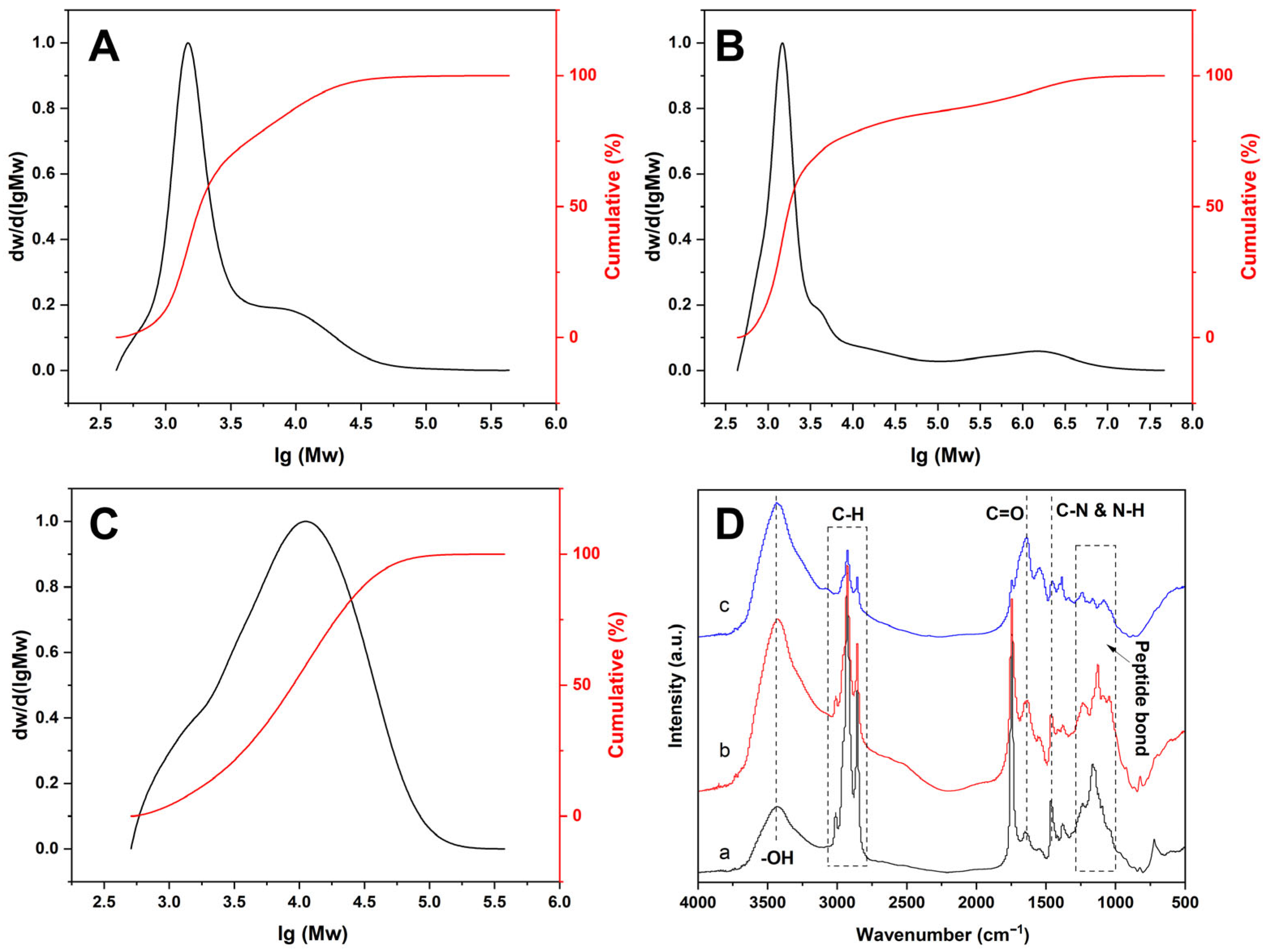
Figure 1. GPC curve of SPF1 (A), SPF2 (B), SPF3 (C), and FTIR spectra (D) of SPFs. The a, b, and c in panel (D) represent SPF1, SPF2, and SPF3, respectively.
Agronomy 15 02734 g001
Figure 2. HPLC spectra of SPF1 (A), SPF2 (B), and SPF3 (C).
Agronomy 15 02734 g002
Table 1. The optimal preparation process of SPF.
Raw MaterialsWater/Raw Material RatioPressure (MPa)Time (min)Label
Fish-1.48SPF1
Soybean meal41.26SPF2
Slaughterhouse sheepskin0.61.48SPF3
Table 2. Basic physical and chemical properties of the test site.
pHOrganic Matter
g kg−1
TP
g kg−1
AP
mg kg−1
AK
mg kg−1
Total N
g kg−1
NO3-N
mg kg−1
NH4+-N
mg kg−1
Clay
g kg−1
Silt
g kg−1
Sand
g kg−1
7.8510.10.8910.2102.50.8095.2417.2297.0353.078.5
Note: TP, total phosphorus; AP, Available phosphorus; AK, Available potassium; Total N, total nitrogen.
Table 3. Nutrients, amino acids, and small peptide content.
TreatmentN
(mg g−1)
P2O5
(mg g−1)
K2O
(mg g−1)
Total Free Amino Acids (mg g−1)Small Peptide Content (mg g−1)
SPF114.9 ± 0.8 a0.3 ± 0.06 a0.29 ± 0.01 a0.478 ± 0.08 a573 ± 14 a
SPF215.1 ± 0.9 a0.2 ± 0.04 a0.23 ± 0.03 b0.462 ± 0.02 a421 ± 18 b
SPF311.4 ± 0.8 b0.2 ± 0.05 a0.15 ± 0.01 c0.366 ± 0.05 b386 ± 10 c
Note: Values within a column followed by different lowercase letters are significantly different according to Duncan’s multiple range test at p < 0.05. The same footnotes apply to all subsequent tables unless otherwise specified.
Table 4. Effects of SPFs spraying on growth indicators of rice.
TreatmentPlant Height (cm)SPADFlag Leaf Length (cm)Flag Leaf
Width (cm)
Flag Leaf Area
F + W114.3 ± 2.2 b42.1 ± 0.9 b29.5 ± 1.1 c1.39 ± 0.06 b30.75 ± 0.7 b
F + SPF1120.1 ± 2.6 a47.4 ± 1.1 a34.3 ± 1.3 a1.46 ± 0.03 a50.11 ± 1.1 a
F + SPF2119.9 ± 1.9 a43.7 ± 0.9 b30.3 ± 1.2 c1.45 ± 0.04 a32.95 ± 0.7 b
F + SPF3119.4 ± 3.2 a46.3 ± 1.1 a32.4 ± 0.9 b1.44 ± 0.05 a34.98 ± 0.9 b
Table 5. Effects of F spraying on growth indicators of rapeseed.
TreatmentPlant Height (cm)SPADHeight of Effective Branches (cm)Number of Primary Effective BranchesNumber of Secondary Effective BranchesSilique Length (cm)
F + W119.3 ± 2.1 b42.1 ± 0.8 b30.4 ± 1.3 a9.7 ± 1.3 b12.9 ± 1.4 b4.9 ± 0.02 b
F + SPF1122.5 ± 2.4 a45.5 ± 0.9 a24.2 ± 1.5 c11.3 ± 1.2 a14.6 ± 1.3 a6.1 ± 0.04 a
F + SPF2123.8 ± 2.4 a45.3 ± 0.7 a26.5 ± 0.9 b11.1 ± 1.6 a14.1 ± 1.6 a5.7 ± 0.03 a
F + SPF3123.6 ± 2.9 a44.4 ± 1.1 a26.9 ± 1.3 b9.8 ± 1.4 b13.8 ± 1.2 ab5.6 ± 0.06 a
Table 6. Effects of SPFs on rice yield, yield component factors, and NUE.
TreatmentNumber of Ears Per MuNumber of Effective Grains Per Ear1000-Grain Weight (g)Yield (kg hm−2)Yield Increase RateNUE (%)
F + W18.98 ±1.4 b130.45 ± 3.8 b24.2 ± 0.2 c8405 ± 50.2 c-38.4
F + SPF120.32 ± 1.7 a155.42 ± 4.1 a27.5 ± 0.4 a9276 ± 53.3 a10.36%42.3
F + SPF219.11 ± 1.1 a141.71 ± 4.1 a27.1 ± 0.3 a8793 ± 51.7 a4.62%41.2
F + SPF319.75 ± 1.2 a145.38 ± 4.1 a27.6 ± 0.6 a8902 ± 67.1 a5.91%42.4
Table 7. Effects of SPFs on rapeseed yield, yield component factors, and NUE.
TreatmentNumber of Effective SiliquesNumber of Effective Siliques1000-Grain Weight (g)Yield
(kg Per Mu)
Yield
Increase Rate (%)
NUE
(%)
Number of Main Inflorescence SiliquesNumber of Siliques on Primary BranchesNumber of Siliques on Secondary BranchesTotal Number of Siliques Per Plant
F + W51.2 ± 1.3 c304.4 ± 1.9 b204.3 ± 1.4 a559.9 ± 18.3 b22.4 ± 2.2 b3.96 ± 0.1 a171.2 ± 8.4 c-39.6
F + SPF171.2 ± 1.7 a373.2 ± 4.1 a199.7 ± 2.1 a644.2 ± 9.6 a25.5 ± 2.7 a3.99 ± 0.2 a191.3 ± 11.4 a11.7443.4
F + SPF265.3 ± 2.1 b314.3 ± 2.6 b185.3 ± 1.1 b564.9 ± 8.7 b22.1 ± 1.9 b3.97 ± 0.1 a184.3 ± 15.1 b7.6540.3
F + SPF352.4 ± 1.5 c309.6 ± 3.2 b205.4 ± 2.2 a567.4 ± 10.5 b22.2 ± 26 b3.96 ± 0.1 a174.3 ± 9.9 c1.8139.9
Disclaimer/Publisher’s Note: The statements, opinions and data contained in all publications are solely those of the individual author(s) and contributor(s) and not of MDPI and/or the editor(s). MDPI and/or the editor(s) disclaim responsibility for any injury to people or property resulting from any ideas, methods, instructions or products referred to in the content.