Article

Risk Assessment and Source Apportionment of Heavy Metals in Agricultural Soil Across Yinchuan, China

1
School of Earth System Science, Tianjin University, Tianjin 300072, China
2
Agro-Environmental Protection Institute, Ministry of Agriculture and Rural Affairs, Tianjin 300170, China
3
Ningxia Hui Autonomous Region Agricultural Environmental Protection Monitoring Station, Yinchuan 750001, China
*
Author to whom correspondence should be addressed.
Agronomy 2025, 15(12), 2726; https://doi.org/10.3390/agronomy15122726
Submission received: 3 November 2025 / Revised: 21 November 2025 / Accepted: 25 November 2025 / Published: 26 November 2025
(This article belongs to the Section Soil and Plant Nutrition)

Abstract

Approximately 1.1% of global soils exceed the safety thresholds. Yinchuan is one of the key grain production bases, and the quality of its agricultural soil directly impacts the quality of agricultural products. To investigate the heavy metal contamination status of surface agricultural soil in Yinchuan, this study collected 325 agricultural soil samples from the city to analyze the concentrations of five heavy metal elements—As, Hg, Pb, Cd, and Cr—and conducted a risk assessment and quantitative source apportionment of soil heavy metal contamination. The results indicate that the majority of the study area is classified as having a lightly polluted level with moderate ecological risks. The order of the over-standard rates is Hg > Cd > Pb > Cr > As. The soil in the study area is generally weakly alkaline, which has a relatively low impact on the migration and transformation of heavy metal elements. High-value areas of heavy metals are all located near the Yellow River floodplain. They are significantly affected by the agricultural and industrial wastewater discharge from the upper reaches of the Yellow River. The Absolute Principal Component Score-Multiple Linear Regression (APCS-MLR) model analysis identified the sources of soil heavy metal pollution as natural sources (37.29%), agricultural sources (25.50%), coal combustion sources (20.18%), and industrial-transportation sources (17.04%). The positive matrix factorization (PMF) model explained that the sources of heavy metals in the soil were natural sources (22.42%), agricultural activities (24.46%), coal combustion sources (26.70%), and traffic sources (26.42%). Overall, the results indicate that there is a certain degree of metal pollution in the agricultural soil of Yinchuan, which is significantly influenced by human activities.

1. Introduction

Soil constitutes the foundation of ecosystems and serves as a critical medium for the sustenance of plant and animal life. Numerous essential physical, chemical, and biological processes take place within the soil, underpinning the functions of terrestrial ecosystems. As the fundamental support system for the Earth’s surface ecosystems, soil plays a central role in maintaining global food security, conserving water resources, and preserving biodiversity. However, in recent years, the rapid expansion of industrial and agricultural activities has intensified soil pollution. Contaminants such as industrial effluents, agricultural wastewater, chemical fertilizers, pesticides, and atmospheric deposition have contributed significantly to this issue [1,2]. Heavy metals have become a significant focus in soil pollution studies due to their high toxicity, low biodegradability, and persistent nature. These metals resist degradation within organisms and tend to accumulate along food chains, posing serious threats to human health [3,4]. Soil heavy metal contamination has become a matter of global concern. According to the National Soil Pollution Status Survey Bulletin in 2014 [5] 19.4% of monitored cultivated soil sites in China exceeded regulatory standards for heavy metals. Exceedance rates for As, Hg, Pb, Cd, and Cr were reported as 2.7%, 1.6%, 1.5%, 7.0%, and 1.1%, respectively. Heavy metals in agricultural soils originate from a variety of sources—agricultural practices, industrial operations, transportation, atmospheric deposition, and natural geological processes all contribute to their accumulation in farmland. Due to the complex origins and ecological risks of heavy metals, assessing pollution levels and accurately identifying their sources are essential steps toward effective contamination control. Such efforts are crucial for the restoration of farmland ecosystems, the assurance of food safety, and the long-term protection of ecological sustainability.
Soil repair technologies for heavy metal contamination are difficult to obtain and require significant economic investment. Current research on soil heavy metals focuses on two aspects: pollution assessment methods and source apportionment. These approaches evaluate contamination levels, identify contributing sources, and quantify their respective contributions, thereby offering a theoretical basis for the remediation and management of polluted soils [5]. There are a variety of methods available for assessing soil heavy metal pollution. These include the single-factor pollution index, the Nemerow comprehensive pollution index [6], the geo-accumulation index, and the potential ecological risk index [7,8]. Each category of assessment method possesses its own characteristics and limitations. Consequently, researchers typically employ a combination of multiple assessment methods to evaluate soil heavy metal contamination. Such methods help characterize soil pollution by incorporating spatial distribution patterns of heavy metals [9]. Jin et al. [10] employed the Nemero comprehensive pollution index and soil geo-accumulation index to investigate heavy metals in paddy soils along National Highways G107 and G312 in southern Henan. Based on spatial distribution patterns, they identified road traffic as one of the contributing factors to heavy metal accumulation in the adjacent soils. Ma et al. [11] analyzed soil heavy metal contamination in agricultural regions using the single-factor index method and the geo-accumulation index method, finding that Cd exhibited the most severe pollution. To trace the origins of heavy metals, commonly applied techniques include principal component analysis (PCA), absolute principal component score-multivariate linear regression (APCS-MLR), and positive matrix factorization (PMF), among others [9,12]. Ren et al. [13] collected and reviewed research data from 112 Chinese scholars spanning two decades (1998 to 2019), employing the APCS-MLR model to identify sources of several heavy metals and discern the overall trend in agricultural soil heavy metal contamination within China. The results indicated that Cd, Hg and Zn exhibited a high degree of similarity in their pollution source composition, with the primary inputs stemming from human productive activities (including industrial and agricultural production). The sources of Cu and Cr were predominantly natural environmental in origin. The source composition for Pb was the most complex, with both natural and anthropogenic activities contributing significantly. In soil pollution studies, current research primarily focuses on the topsoil layer (0–20 cm). This layer interacts the most directly with human activities and atmospheric deposition, making its heavy metal enrichment patterns more indicative of anthropogenic pollution sources. As a result, topsoil serves as an effective and representative medium for contamination investigations [14]. As the Yellow River flows through Yinchuan, supplying ample water resources, the city became an important commercial grain production base. However, long-term sewage irrigation and intensive agricultural practices have led to notable heavy metal contamination in the local agricultural topsoil. In addition, industrial activities linked to urbanization have further contributed to heavy metal accumulation, resulting in discernible pollution in some agricultural zones of Yinchuan [15,16].
This study examines five major heavy metals in the topsoil of Yinchuan’s farmland. Through analysis of their spatial distribution, we can evaluate the contamination status, identify pollution sources, and quantify their contributions. The findings are expected to provide a scientific foundation for promoting the development of high-standard farmland in the region.

2. Materials and Methods

2.1. Study Area

Yinchuan is located in northwest China, at the heart of the Ningxia Plain and the Yellow River irrigation district, along the upper reaches of the Yellow River with the Helan Mountain range to its west (37°29′ N–38°52′ N, 105°48′ E–106°52′ E). It serves as one of the key central cities in the northwest region. Covering a total area of 9025.38 km2, Yinchuan administers Xingqing District, Jinfeng District, Xixia District, Yongning County, Helan County, and Lingwu City. The area features extensive flat terrain—including alluvial plains, river valley plains, and floodplains—highly suitable for agriculture. The Yellow River flows through the entire region, supplying ample water resources and supporting one of China’s four historic irrigation districts: the Ningxia Yellow River Diversion Irrigation District, an important commercial grain production base. It exhibits a typical temperate continental climate, with an annual average temperature of 11.0 °C, annual precipitation of 261.4 mm, and annual sunshine duration of 2655.7 h.

2.2. Sample Collection

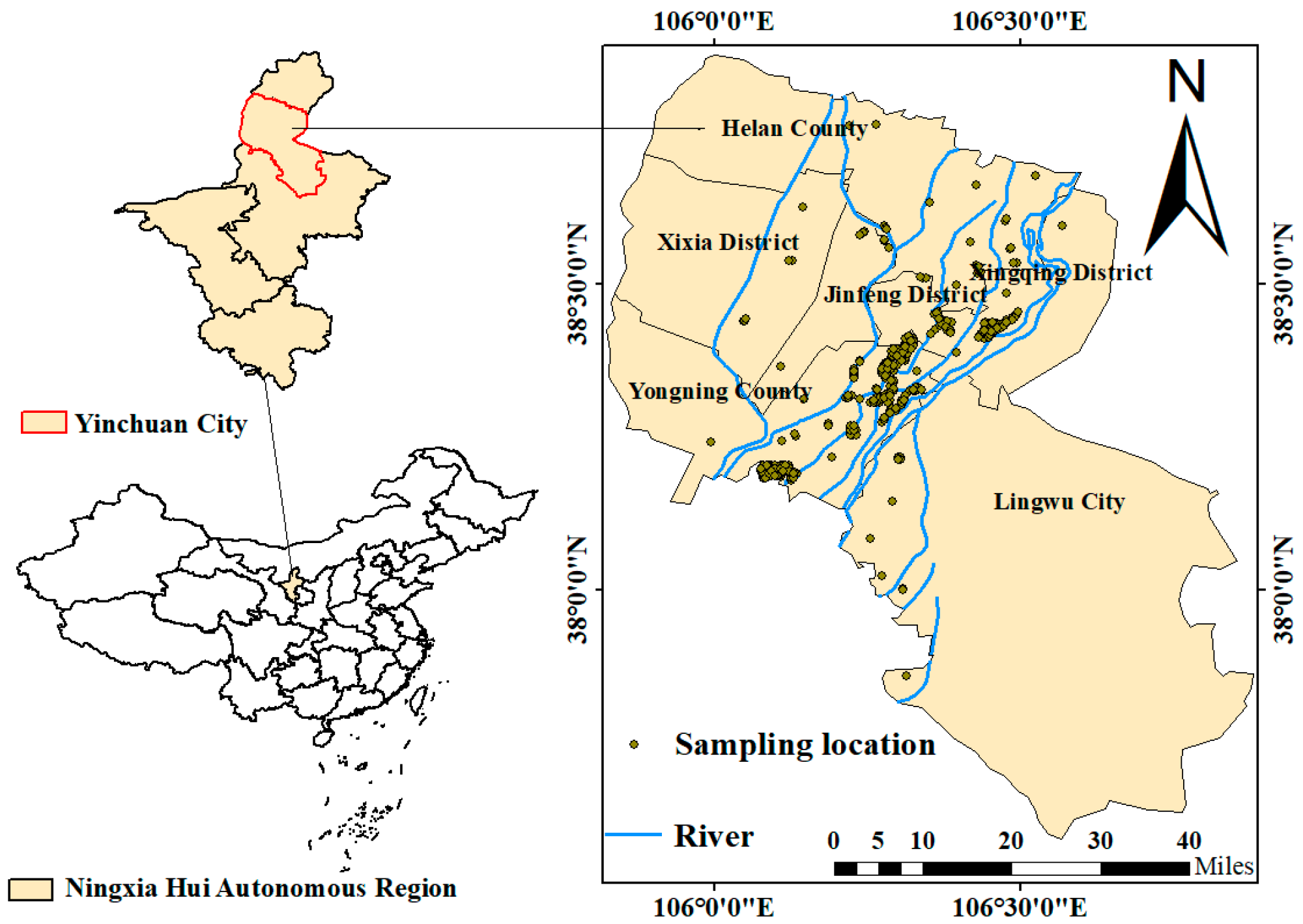
In April 2024, 325 surface soil (0–20 cm) samples were collected across various districts of Yinchuan, with sampling sites determined based on the distribution of major rivers and farmland areas (Figure 1). Emphasis was placed on key pollution risk zones within the central alluvial plain [17].
Prior to field collection, we systematically identified potential sampling points using ArcGIS 10.8 based on remote sensing imagery of the Yinchuan region. At each designated site, we removed the surface vegetation carefully and collected surface soil samples using a wooden shovel following the five-point sampling method. The collected soil was thoroughly mixed by quartering, and a composite sample of at least 1 kg was placed into a labeled PE ziplock bag. Sampling coordinates, farmland type, and soil classification were recorded on site.
After natural air-drying, we removed impurities such as stones, gravel, and plant/animal debris. Grind the soil using a mortar and sieve through a 100-mesh screen before digestion. Determine heavy metal concentrations (As, Hg, Pb, Cd, Cr) in the soil using Atomic Fluorescence Spectrometer 8510 (Tianjin, China) and ICP PQ (Tianjin, China) with the method detection limits of 0.01 mg/kg for As, 0.002 mg/kg for Hg, 2.1 mg/kg for Pb, 0.03 mg/kg for Cd, and 1.0 mg/kg for Cr. The sampling, collection and analysis methods for heavy metals in farmland soils of Yinchuan were conducted following the Technical Rules for Monitoring the Environmental Quality of Farmland Soils (NY/T 395-2012), published by the Ministry of Agriculture and Rural Affairs of China in Beijing, China in 2012, and the Technical Specification for Soil Environmental Monitoring (HJ/T 166-2004), published by the Ministry of Ecology and Environment in Beijing, China in 2004. The standard material employed for testing was the national standard reference material GBW07401a (GSS-1a). Concurrently, we established and implemented a quality assurance system to achieve precision and accuracy control in the experiments, with relative deviations maintained within 10%.

2.3. Heavy Metals Pollution Assessment

The evaluation of soil heavy metal pollution employs the single-factor pollution index method, the Nemero comprehensive pollution index method, the geo-accumulation index method, and the potential ecological risk index method to assess the current state of agricultural soil contamination in the region.

2.3.1. Single-Factor Pollution Index

The single-factor pollution index method provides a direct reflection of the contamination level of a specific indicator such as heavy metals in soil. The index formula is as follows:
P i = C i S i
Pi is the single-factor pollution index for heavy metals in soil, Ci is the measured concentration of heavy metals in soil (mg/kg), and Si is the reference value for heavy metal evaluation standards in soil (mg/kg). Here we use the background values of Yinchuan soil as the heavy metal pollution evaluation standard.

2.3.2. Nemerow Comprehensive Pollution Index (PN)

The Nemerow pollution index method, originally proposed by Nemerow for water quality assessment, is now widely applied in evaluating soil heavy metal contamination. The Nemerow comprehensive pollution index formula is as follows:
P N   = P i m a x 2   +   P i a v g 2 2
PN is the comprehensive pollution index for all heavy metals in the soil, Pimax is the maximum single-factor pollution index value for each heavy metal element in the soil, Piavg is the average single-factor pollution index value for each heavy metal element in the soil, and the classification of Nemerow comprehensive pollution levels is shown in Table 1.

2.3.3. Geo-Accumulation Index (Igeo)

The geo-accumulation index method accounts for the influence of natural geological processes on background values and the impact of human activities on heavy metal contamination. It enables the study of variations in soil heavy metal elements relative to geological background values, serving as an effective indicator for assessing heavy metal pollution levels in soils and sediments. The geo-accumulation index formula is as follows:
I geo   = log 2 C s i K   ×   C n i
Igeo is the geo-accumulation index, C s i is the measured concentration of heavy metal i in soil (mg/kg), and C n i is the background value of heavy metals in soil (mg/kg). K is the correction factor (accounting for variations in soil heavy metal background values due to regional rock differences, typically set at 1.5).

2.3.4. Potential Ecological Risk Index (PERI)

The Potential Ecological Risk Index method comprehensively reflects the pollution levels of multiple heavy metals. It also considers differences in their toxicity levels, synergistic effects, and transformation processes. Its formula is as follows:
E i   =   T i   ×   C i S i
RI = i = 1 n E i
Ei is the potential ecological risk index for heavy metal i, Ti is the toxicity coefficient for heavy metal i (TAs = 10, THg = 40, TCd = 30, TCr = 2, TPb = 5), Ci is the measured concentration of heavy metal i in soil, Si is the reference value for the evaluation standard of heavy metal i in soil, RI is the potential ecological risk index for heavy metals in soil, and n is the total number of heavy metal types included in the risk assessment.

3. Results

3.1. Spatial Distribution Characteristics of Heavy Metals in Soil

Descriptive statistics of heavy metal concentrations in the soil provide an initial assessment of soil contamination in the Yinchuan. The mean concentrations (mg/kg) of As, Hg, Pb, Cd, and Cr were 9.88 ± 2.31, 0.0444 ± 0.0185, 24.4 ± 3.52, 0.263 ± 0.0833, and 61.58 ± 13.8, respectively (Table S1). The screening values for soil contamination risk of agricultural land for heavy metals, as listed in the Soil environment quality—Risk control standard for soil contamination of agricultural land (GB 15618-2018) published by Ministry of Ecology and Environment of China in Beijing, China in 2018, were not included in this paper. This is because heavy metal concentrations at virtually all sampling points remained below the screening values; consequently, we adopted local soil background values as the evaluation criteria. The soil background values for As, Hg, Pb, Cd, and Cr in Yinchuan are 11.00, 0.017, 22.00, 0.12, and 61.00 mg/kg, respectively (Table S2) [18]. The mean values of heavy metals surpassed the local soil background levels except for As, the average concentrations of Hg, Pb, Cd, and Cr were 2.61 times, 1.11 times, 2.19 times, and 1.01 times the soil background values, respectively. These results suggest a discernible accumulation of heavy metals across the study area.
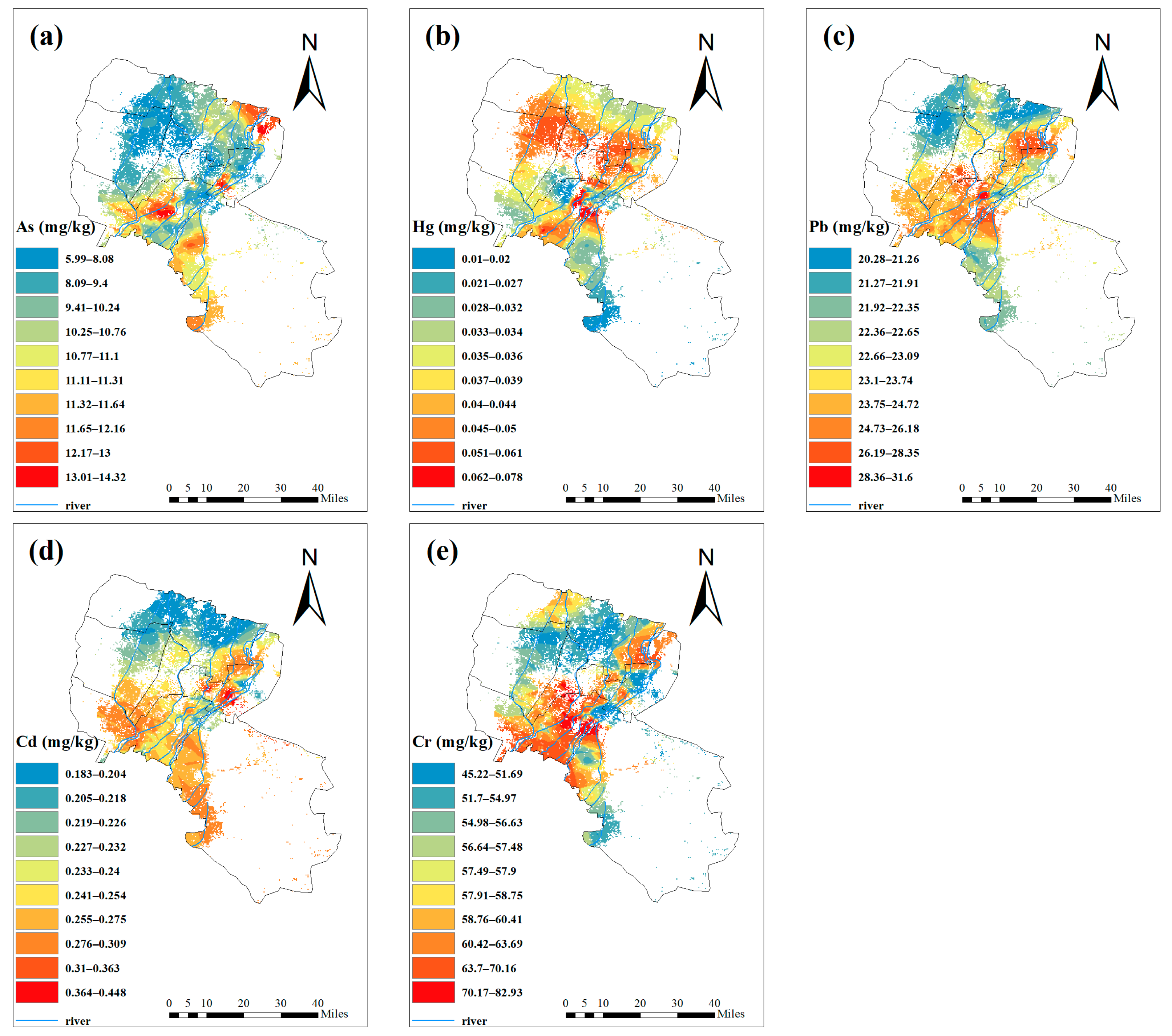
The spatial distribution patterns of the five heavy metals are illustrated in Figure 2. Elevated concentrations are mainly concentrated within the Yellow River floodplain, particularly in areas adjacent to the river channel. Among the elements, As, Pb, Cd, and Cr display broadly similar spatial patterns. Their high-value zones are primarily clustered in the southwestern and central parts of the study area, showing a general decline from south to north. These anomalies are scattered along the Yellow River in Yongning County and Xingqing District. Pb and Cr, in particular, exhibit strong spatial similarity, implying a possible common origin. In contrast, the distribution of Hg shows a different trend, characterized by higher values in the north and lower in the south. Its high-concentration areas form isolated hotspots that may reflect diverse input sources.

3.2. Risk Assessment of Heavy Metal Pollution in Soil

3.2.1. Evaluation of Single-Factor Pollution Index and Nemero Comprehensive Pollution Index

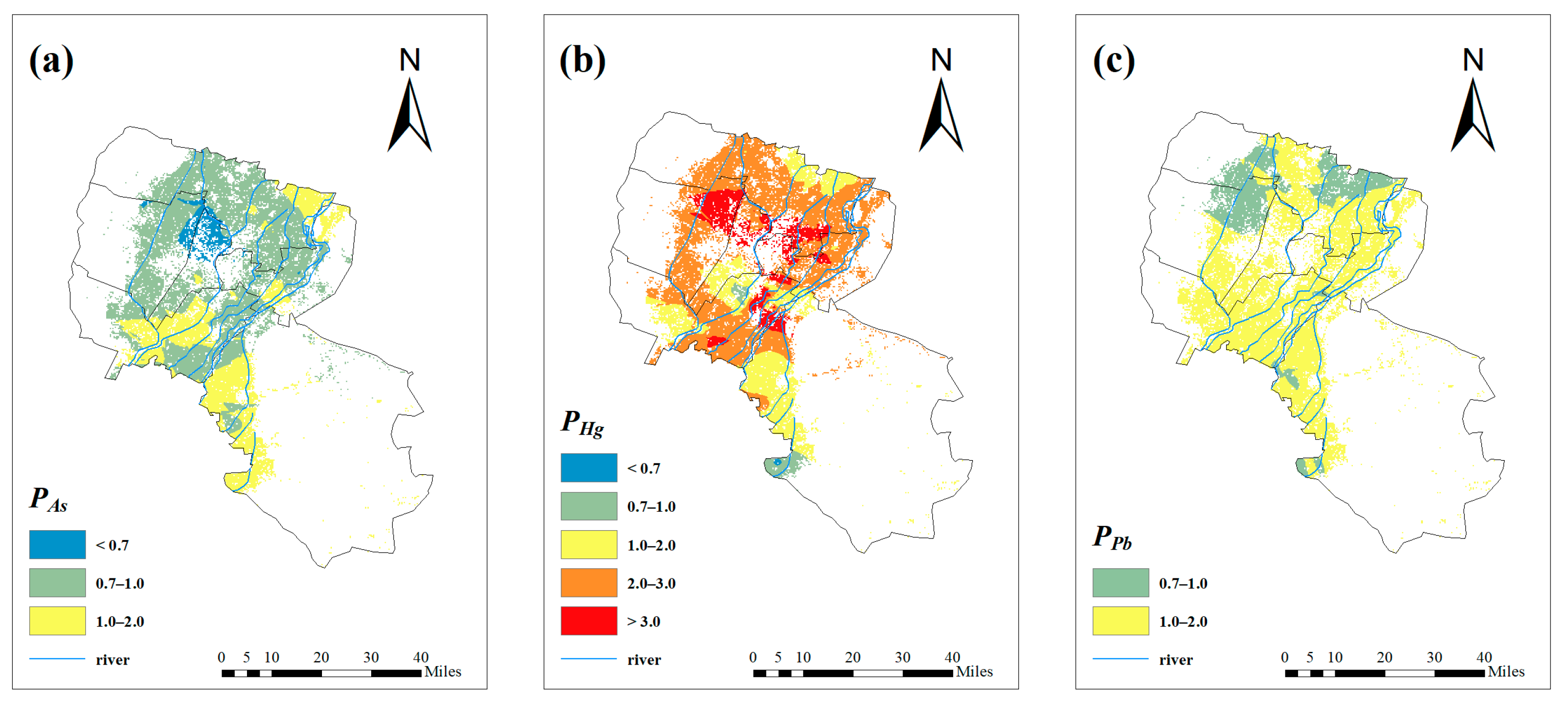
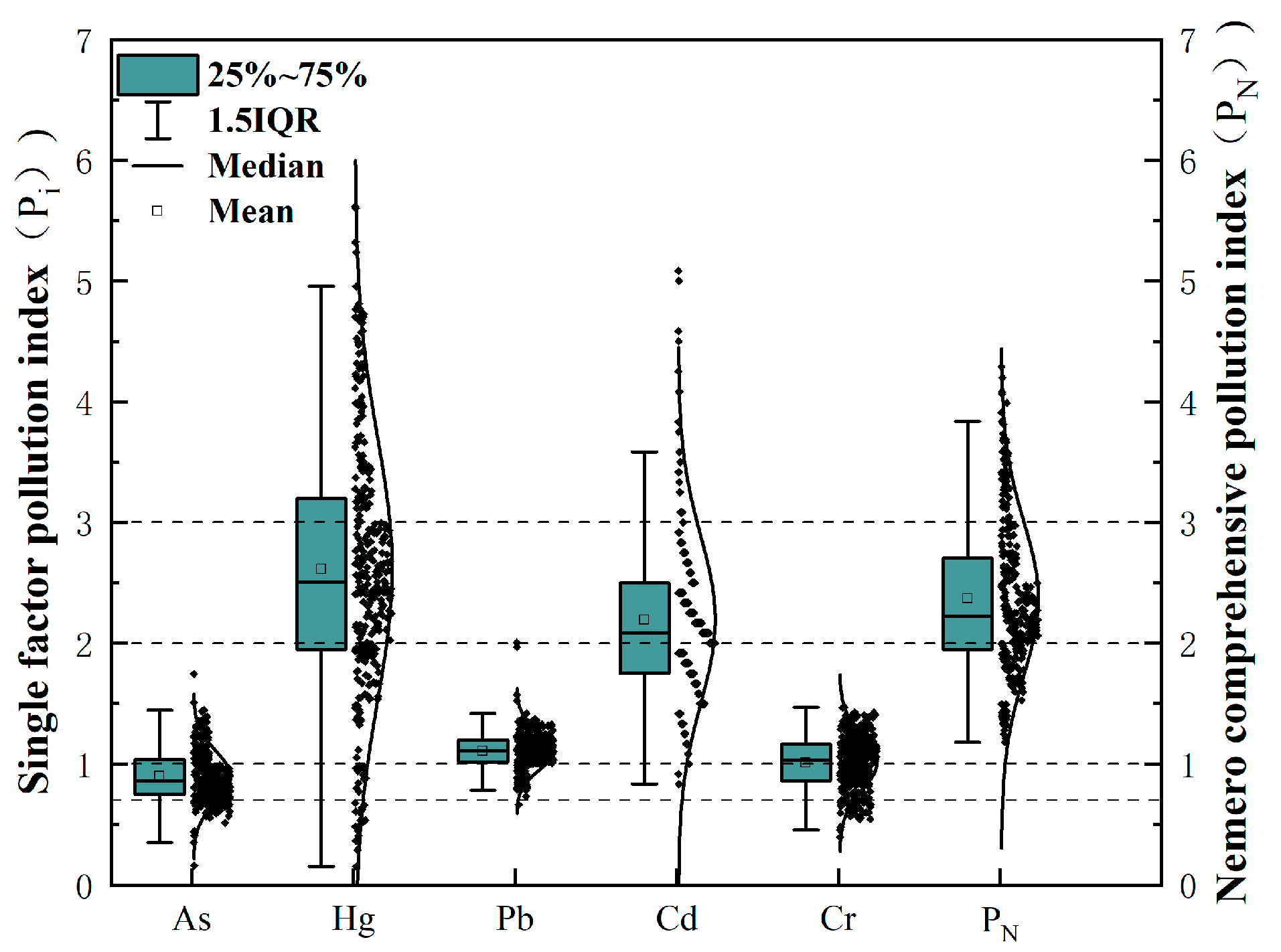
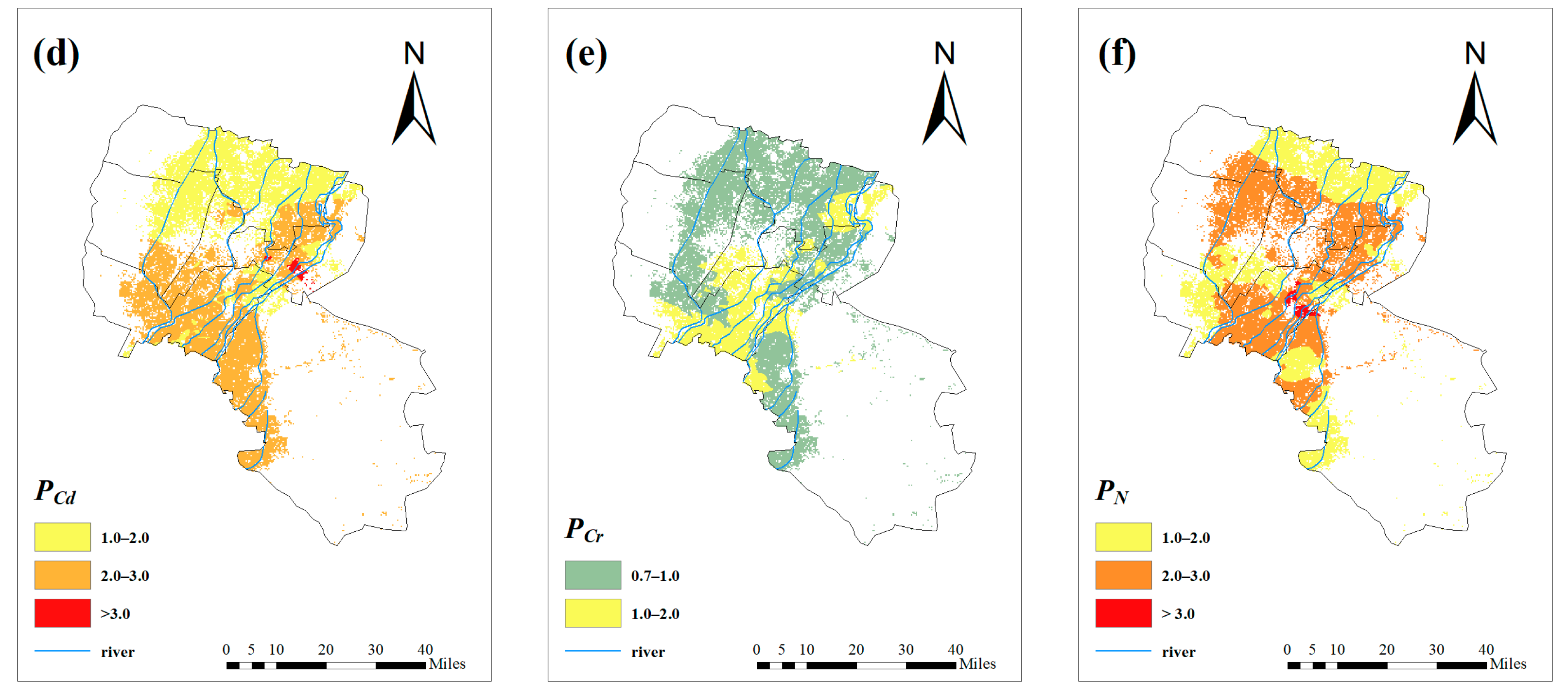
The single-factor pollution index and Nemero comprehensive pollution index evaluation methods were employed to assess the risk level of heavy metal pollution in the surface soil (Figure 3). Based on mean values, the single-factor pollution index ranks the enrichment levels of heavy metals as follows: Hg > Cd > Pb > Cr > As. Among these, Hg and Cd show relatively high pollution degrees, corresponding to moderate and light-to-moderate pollution levels, respectively. Furthermore, the box plots for Hg and Cd exhibited longer box lengths and a greater number of outliers, suggesting that Hg and Cd demonstrated significant spatial variability, potentially influenced by intense local human activities (Figure 3). The mean Nemerow comprehensive pollution index across the study area was 2.370, with 53.85% of sampling points classified as moderately polluted. Combined with the continuous high-value distribution zones shown in Figure 3, these results collectively indicated that the agricultural soils in the region were under a state of moderate pollution, which was concentrated in the central region of Yinchuan (Figure 4).

3.2.2. Evaluation of Geo-Accumulation Index

Analysis of geo-accumulation index indicates distinct pollution patterns among the heavy metals. Over 98% of sampling points showed no pollution for As and Pb, while no pollution detected for Cr at any sampling point (Table 2). In contrast, Cd exhibited light pollution at 77.85% of the sampling points. Hg contamination was more pronounced, with only 12.62% of sites classified as uncontaminated. Overall, the soils remained uncontaminated by As, Pb, and Cr. Hg and Cd showed light contamination across most areas, with localized zones reaching moderately light pollution levels (Figure S1).

3.2.3. Potential Ecological Risk Assessment

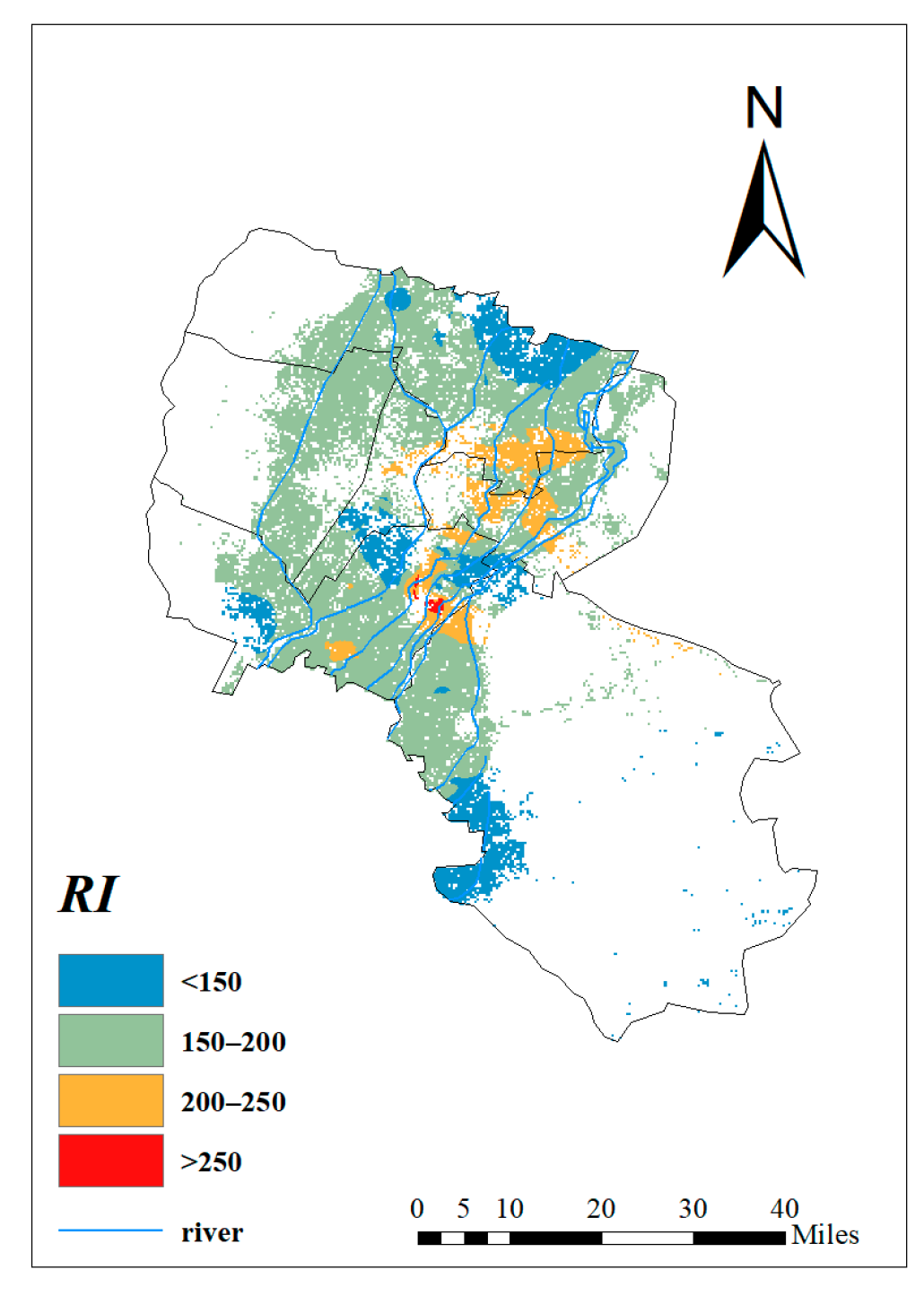
The potential ecological risk index (RI) for soils indicates an overall moderate ecological risk level (Table 3). Across the sampling sites, 61.85% were classified as moderate risk and 33.23% as high risk. The spatial distribution of RI closely aligns with that of the potential ecological risk indices for Hg and Cd (Figure 5), particularly Hg (Figure S2). These results identify Hg and Cd as the dominant contributors to ecological risk in the agricultural soils of the region.
Analysis of heavy metal concentrations in soil provides preliminary insights into heavy metal contamination in the study area. In Yinchuan’s surface soils, the maximum measured values of all five heavy metals exceeded local background levels, while minimum values remained below these thresholds. With the exception of As, the average concentrations of heavy metals were all elevated above background values. The order of exceedance ratios was Hg > Cd > Pb > Cr > As, reflecting a discernible accumulation of heavy metals in the region (Table S1). The study also found that the soil pH ranged from 6.45 to 8.95, with a mean value of 8.21, indicating generally weak alkalinity throughout the study area. This pH range exerts limited influence on the migration and transformation of heavy metal elements. Variability in heavy metal distribution was assessed using the coefficient of variation (CV). Higher CV values suggest more uneven spatial distribution and greater influence from external inputs, primarily anthropogenic activities. As, Hg, Pb, Cd, and Cr all exhibited moderate variation (10–100%), with Hg showing the highest CV, pointing to significant human-induced disturbance, particularly for Hg. Single-factor pollution index analysis revealed severe Hg contamination in 28.62% of sampling points —far exceeding levels of the other elements—and moderate pollution in 44.00% of sites, indicating an overall moderate pollution status for Hg. Cd pollution was slightly less severe, with 41.54% and 47.38% of sampling points classified as lightly and moderately polluted, respectively, reflecting a light-to-moderate pollution level overall. Geographically, Cd-contaminated areas were mainly located in central and southern Yinchuan City, as well as along the Yellow River shoreline in Zhangzheng Town, Xingqing District. Field surveys identified extensive farmland in these zones, suggesting a linkage between agricultural activities and Cd accumulation. Hg contamination was predominantly distributed in southern and north-central Yinchuan. Geo-accumulation index results showed that 90% of sampling points exhibited light pollution or below by As, Pb, and Cr. This finding aligns with previous research by Lai et al. [15]. Both evaluation methods consistently indicate low contamination levels for As, Pb, and Cr across the study area.
Overall, the spatial distribution of heavy metals showed that high-concentration areas were located within the Yellow River floodplain, with Xingqing District and Yongning County exhibiting particularly elevated heavy metal concentrations. Zhang [19] found that due to agricultural and industrial pollution from the upper reaches of the Yellow River, water samples from the lower reaches of the Yellow River in Ningxia within the Yellow River diversion irrigation area showed elevated heavy metal concentrations, and crops in these areas contained heavy metals exceeding regulatory limits. This suggests that the pollution in Xingqing District and Yongning County may result from their location within the Yellow River diversion irrigation area with long-term agricultural cultivation. Irrigation water used in farming was impacted by industrial discharges upstream, leading to continuous accumulation of heavy metals in the soil. Concurrently, industrial exhaust emissions and coal-fired heating contributed to atmospheric deposition of heavy metals into the soil, further elevating soil concentrations.

3.3. Analysis of Heavy Metal Pollution Sources in Soil

3.3.1. PCA and APCS-MLR Source Analysis

PCA identified three principal factors as potential sources of heavy metal pollution which collectively explained 72.66% of the total variance in the original indicators, effectively reflecting the variability of the five heavy metal elements (Table S3). Factor 1, accounting for 26.47% of the total variance, showed strong associations with As, Cr, and Pb. Factor 2 explained 23.29% of the variance and was primarily linked to Cd and Pb. Factor 3 contributed 22.90%, with Hg as the most strongly loaded element, while Pb and Cr displayed weaker loadings. The results suggest that As and Cr were mainly influenced by Factor 1, Cd by Factor 2, and Hg by Factor 3. This was consistent with the cluster analysis results, where both Hg and Cd were clustered together, suggesting they may originate from distinct pollution sources (Figure S3). In contrast, Pb exhibited affinities with multiple factors, reflecting a mixed influence from several pollution sources.
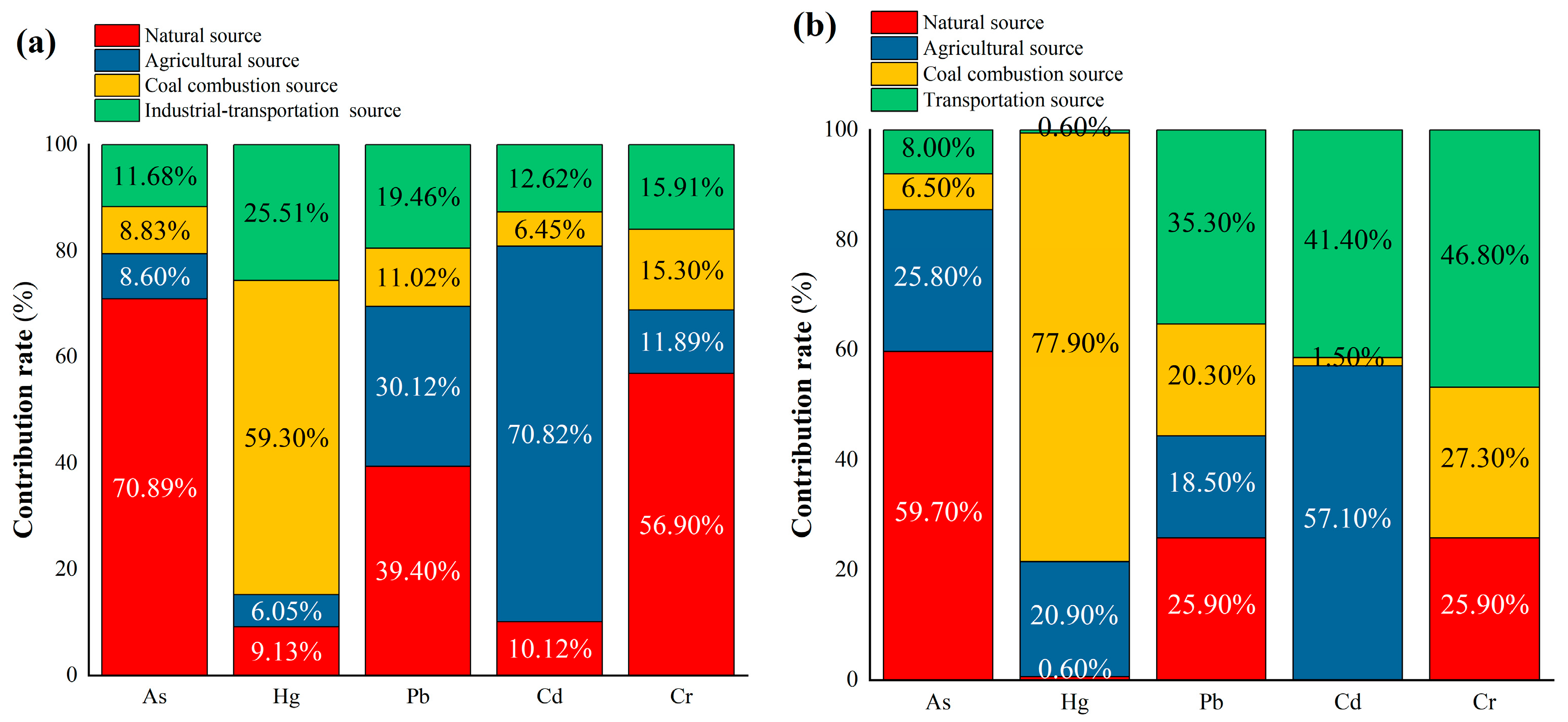
Based on PCA, the APCS-MLR model can be applied to quantify the contribution rates of various pollution sources (Figure 6a). The heavy metals As and Cr showed relatively low pollution levels, accompanied by low variation coefficients (23.34% and 22.37%). Previous research has indicated that As and Cr are predominantly influenced by geochemical processes [20], pointing to natural factors as their primary control. Therefore, factor 1 is interpreted as representing natural sources associated with parent material and weathering processes. This interpretation is consistent with the results of Xia et al. [21], who also identified natural origins as the main source of Cr in the urban core of Yinchuan.
Factor 2 showed a dominant contribution from Cd (70.82%), which was widely recognized as an indicator element of agricultural activities including the excessive application of phosphate fertilizers and pesticides [15]. Field surveys revealed that local farmland management relied heavily on phosphorus fertilizers, especially in Yongning County, Helan County, Xingqing District, and parts of Lingwu City where high Cd concentrations coincide with elevated fertilizer application rates [22]. This factor also contributed to Pb accumulation. Previous studies suggested that plastic mulch usage in agricultural production leads to Pb accumulation [23]. Accordingly, the same areas exhibiting high Cd levels also exhibited high plastic mulch usage [22]. Therefore, these patterns identified factor 2 as agricultural sources.
Factor 3 primarily contributed to Hg, explaining 59.30% of its accumulation. Globally, Hg emissions have been largely attributed to anthropogenic sources [24]. At the local scale, elevated Hg levels were consistently observed in industrial zones and densely populated urban centers. Industrial and mining activities, particularly coal combustion and waste incineration, released Hg into the atmosphere, which subsequently deposited into agricultural soils through atmospheric pathways [25]. The observed “core–radial” spatial pattern of heavily contaminated Hg areas further supported this interpretation, confirming factor 3 as representative of industrial coal combustion sources.
The APCS-MLR model identified a fourth source contributing to all five heavy metals, with relatively higher contributions to Hg (25.51%) and Pb (19.46%) (Figure 6a). Analysis of Pb pollution indices showed inconsistent results across evaluation methods. Under the single-factor pollution index, 77.23% of sampling points indicated light Pb pollution, whereas the geo-accumulation index classified 98.77% of points as uncontaminated. Since both methods referenced Yinchuan soil background values, the discrepancy suggested that Pb concentrations at most sites were only marginally elevated above natural levels. Pb was commonly regarded as a tracer for traffic-related emissions [26], and the study area contained numerous factories and farmland roads. Lead-containing dust from motor vehicle exhaust emissions and tire brake pad wear dispersed throughout the surface soil via wet and dry deposition. Consequently, it exhibited both linear and radial distribution patterns, leading to differing Pb pollution levels under various evaluation methods. This is also related to the selection of evaluation methods, consistent with the findings of Han et al. [27]. Additionally, spatial patterns of Pb concentrations and single-factor indices resembled those of Cd. The same unknown source also contributed substantially to Hg. While these metals mainly stem from industrial and transportation activities, transportation was not typically a major source of Hg. Thus, this unknown source was interpreted as a mixed source combining industrial and traffic-related emissions.

3.3.2. PMF Source Analysis

In this study, PMF was applied to quantitatively apportion the sources of heavy metals in the farmland soils of Yinchuan. The results were combined with those derived from the APCS-MLR model to determine the contribution rates of local pollution sources. Using EPA PMF 5.0, heavy metals exhibited a minimum signal-to-noise (S/N) ratio of 7.3, reflecting satisfactory data quality. Then we tested several factor numbers during the modeling process, with the optimal solution identified as a four-factor configuration which was consistent with the factor number determined by the APCS-MLR model (Figure 6b).
PMF model results indicated that As, Cr, and Pb were predominantly associated with Factor 1, with contribution rates of 59.70%, 25.90%, and 25.90%—consistent with the APCS-MLR outcomes. The geo-accumulation factors for As, Pb, and Cr all indicated no pollution, supporting the interpretation of factor 1 as natural sources. The small-scale fan-shaped enrichment of As in northern Yinchuan was likely derived from As-bearing minerals weathered from Helan Mountain sedimentary rocks and transported by hydrological processes into the alluvial plain.
Factor 2 showed the highest contribution to Cd (57.10%), along with notable influences on As, Hg, and Pb. Agricultural practices such as fertilizer and pesticide application, wastewater irrigation, and manure using represented major sources of these elements. Long-term utilization of animal feeds containing As, Pb, and Cd additives, followed by land application of manure, further contributed to soil accumulation [5,20,28]. Spatial distribution maps revealed that high-concentration areas such as Wutongshu Town in southern Yinchuan largely overlap with intensive farmland zones, confirming factor 2 as an agricultural source.
Factor 3 exhibited the strongest association with Hg, contributing 77.90% of its content and indicating a distinct emission pathway. High-value Hg areas were concentrated near the main urban district, aligning spatially with industrial zones. Hg was widely recognized as a tracer of industrial coal combustion, entering soils through atmospheric deposition [25]. The occurrence of Pb in this factor also corresponded to coal combustion characteristics, supporting the identification of factor 3 as industrial coal-burning emissions.
Factor 4 contributed substantially to Cr, Cd, and Pb. Previous studies noted that Cd in farmland soils may originate not only from agriculture but also from traffic-related sources such as tire wear and lubricant leakage, with vehicle-emitted Cd transported via airborne particulates [29]. As established markers of traffic influence, Cr and Pb further supported this interpretation. High-concentration zones of these elements are located near Lingwu City, where major transport routes including the Yinkun and Guqing expressways intersected farmland areas. Factor 4 was therefore identified as a traffic source.

4. Discussion

Analysis of model performance showed R2 values ranging from 0.65 to 0.815 for the APCS-MLR model, while the PMF model achieved R2 values above 0.95 for all elements except Pb (0.40). Both models demonstrated strong fitting performance, supporting the reliability of their source apportionment results. The two models consistently identified industrial coal combustion as the primary source of Hg. Previous studies generally believed that soil Hg originated from industrial coal combustion [30], consistent with the conclusions of this study. This element exhibited the highest CV (41.63%) among the five metals, with 91.08% of sampling points exceeding Yinchuan’s background values—reflecting substantial anthropogenic influence (Table S1). Spatial distribution patterns revealed core high-value zones concentrated in central Xingqing District, Jinfeng District, and northern Yongning County. These urban centers, located near industrial clusters such as the Jinfeng industrial zone and Helan industrial zone, further corroborated coal combustion as the dominant Hg source. Cd was generally considered to originate from agricultural activities (such as the application of phosphate fertilizer and pesticides) [31], and both models in this study attributed Cd contamination to agricultural activities. Measured Cd concentrations were notably elevated, with some sites surpassing the soil pollution risk screening value. The high coefficient of variation underscored significant human-derived inputs. The single-factor pollution index distribution (Figure 4d) indicated that most sampling points exhibited light or higher contamination levels. Spatially, high Cd values were concentrated in core irrigation zones of central-southern Yinchuan, including Yongning County, Helan County, and the southern riverside areas of Xingqing District, displaying a diffuse distribution pattern typical of agricultural sources. These findings confirmed agricultural practices as the main contributor to Cd accumulation in local soils.
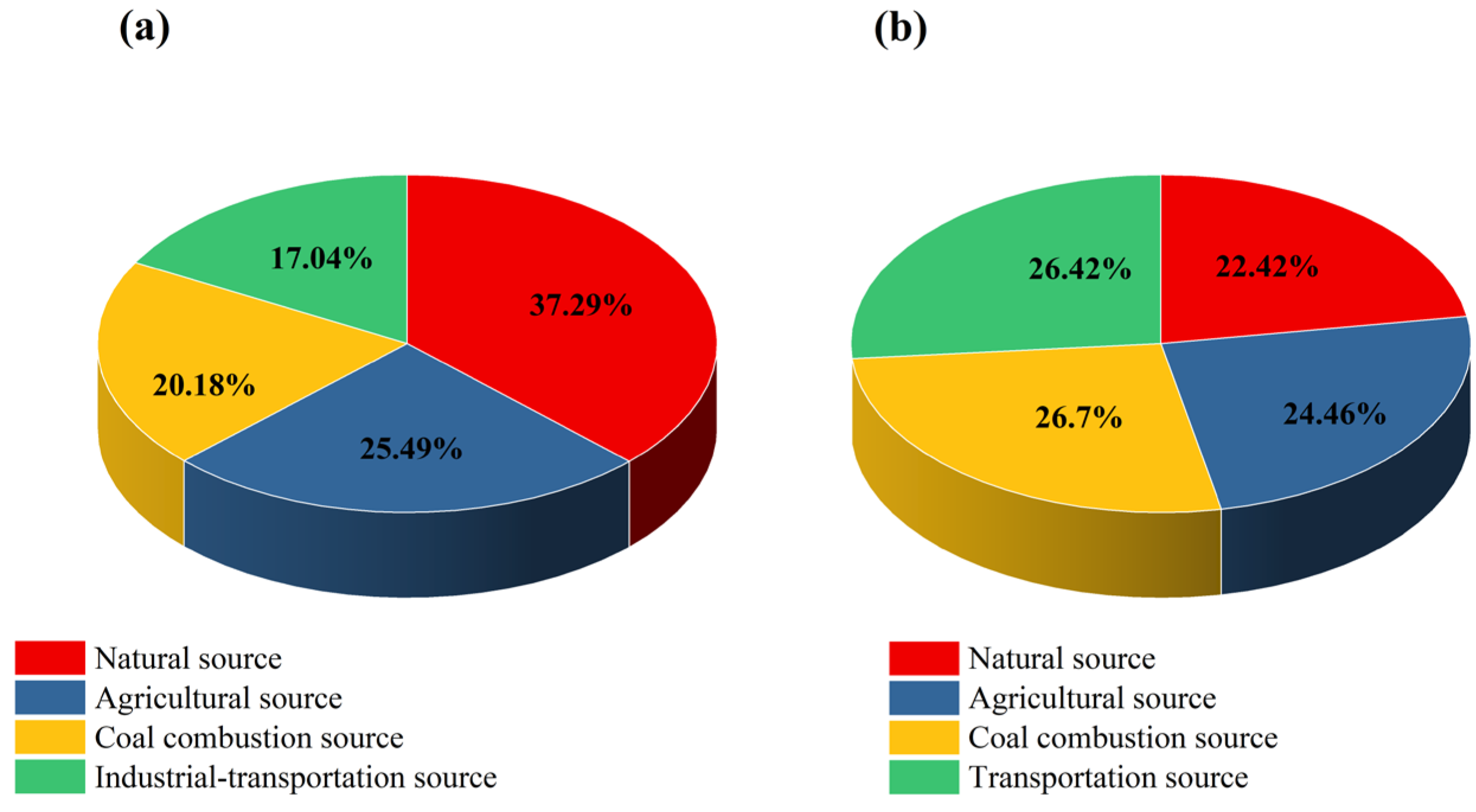
The largest discrepancy lies between natural and transportation sources. The APCS-MLR model analysis indicated that Cr was most heavily influenced by natural parent rock weathering, with natural sources contributing an average of 37.29% to the five heavy metals, while the combined industrial activity-transportation source contributed 17.04% (Figure 7a). PMF model analysis indicated Cr was most significantly influenced by natural parent rock weathering and transportation, with the former contributing an average of 22.42% to the five heavy metals and the latter contributing an average of 26.42% (Figure 7b). In comparison, the PMF model considered agricultural sources for As and transportation sources for Cr. Integrating heavy metal element correlations and spatial concentration distribution maps, the partial influence of transportation on Cr aligned with the strong correlation between Cr and Pb observed in the correlation analysis (Figure S3), and the strong relationship between the two elements was frequently employed as an indicator of traffic sources [32]. Meanwhile, the spatial distribution map of As revealed that high-value areas were predominantly located east of Helan Mountain (Figure 2a). Studies on arsenic speciation in strata indicate that arsenic in Neoproterozoic-Cambrian formations primarily exists in mobile forms (exchangeable, carbonate-bound, and sulphide-bound) [33]. The exposed sections of Helan Mountain encompass strata developed during this period, suggesting that background arsenic levels in the vicinity may be elevated. Differences in background values may explain the divergent As source identification results between the two methods. Additionally, there were research indicated that the APCS-MLR model was more suitable for small-scale traceability studies in factories and enterprises, while the PMF model was better suited for large-scale traceability investigations at the county or city level [34]. Given the extensive scope of the study area in this research, the PMF model is more appropriate.
Overall, the two heavily polluted elements, Hg and Cd, were primarily influenced by industrial and agricultural activities. Other elements were additionally affected by transportation and natural sources, while Pb tended to originate from multiple sources, which was consistent with the findings of Ren et al. [13]. The two models can mutually validate and complement each other, providing theoretical support for addressing heavy metal contamination in Yinchuan’s agricultural soils.

5. Conclusions

(1)
Among the five heavy metals (As, Hg, Pb, Cd, Cr) analyzed in Yinchuan soils, the average concentrations of all elements except As exceeded the local background values. Hg displayed the highest exceedance ratio combined with a large coefficient of variation, reflecting the strongest anthropogenic influence. These results demonstrated significant heavy metal accumulation in local farmland soils.
(2)
The surface soils of Yinchuan farmland generally reached a moderate contamination level, with severe localized pollution by Hg and Cd. High Hg concentrations primarily occurred in northern industrial zones, while Cd hotspots clustered in large-scale farmland areas. The average potential ecological risk index reached 186.96, indicating moderate risk overall, with Hg and Cd identified as the primary risk contributors.
(3)
The source analysis revealed complex origins for the five heavy metals. Both the APCS-MLR and PMF models identified four pollution sources: natural parent material weathering, agricultural activities, industrial coal combustion, and transportation. Hg primarily derived from coal combustion emissions, while Cd mainly originated from agricultural practices. Cr was influenced by both natural and transportation sources, and Pb exhibited the most complex mixed-source characteristics with comparable contributions from multiple pathways.

Supplementary Materials

The following supporting information can be downloaded at: https://www.mdpi.com/article/10.3390/agronomy15122726/s1, Figure S1: Spatial distribution of geo-accumulation index (a. Hg, b. Cd) in agricultural soils of Yinchuan based on GIS analysis; Figure S2: Spatial distribution of potential ecological risk index for heavy metals (a. Hg, b. Cd) in agricultural soils of Yinchuan based on GIS analysis; Figure S3: Cluster analysis diagram of heavy metals; Table S1: Descriptive statistics of heavy metals in Yinchuan soil; Table S2: The Screening values for soil contamination risk in agricultural land (Soil pH in the study area ranged from 6.45 to 8.95; consequently, this table presented data solely within this range); Table S3: Rotating factor matrix.

Author Contributions

Conceptualization, R.S., J.M., K.Y. and S.D.; methodology, Y.L. (Yiming Liu) and T.Y.; validation, Y.L. (Yiming Liu), T.Y. and S.D.; formal analysis, Y.L. (Yiming Liu) and T.Y.; investigation, Y.L. (Yiming Liu), H.L., Y.L. (Yan Li) and K.Y.; data curation, Y.L. (Yiming Liu) and T.Y.; writing—original draft preparation, Y.L. (Yiming Liu) and T.Y.; writing—review and editing, S.D. and X.L.; visualization, Y.L. (Yiming Liu) and T.Y.; funding acquisition, S.D. and X.L. All authors have read and agreed to the published version of the manuscript.

Funding

This work was supported by Key Research and Development Program of Ningxia Hui Autonomous Region (Grant No. 2023BEG01002); the National Natural Science Foundation of China (No. 42473071).

Data Availability Statement

The original contributions presented in this study are included in the article/Supplementary Material. Further inquiries can be directed to the corresponding author.

Conflicts of Interest

The authors declare no conflicts of interest.

References

  1. Tang, S.; Yang, K.; Liu, F.; Peng, M.; Li, K.; Yang, Z.; Liu, X.; Guo, F.; Ma, H. Overview of heavy metal pollution and health risk assessment of urban soils in Yangtze River Economic Belt, China. Environ. Geochem. Health 2022, 44, 4455–4497. [Google Scholar] [CrossRef]
  2. Wu, H.; Xu, C.; Wang, J.; Xiang, Y.; Ren, M.; Qie, H.; Zhang, Y.; Yao, R.; Li, L.; Lin, A. Health risk assessment based on source identification of heavy metals: A case study of Beiyun River, China. Ecotoxicol. Environ. Saf. 2021, 213, 112046. [Google Scholar] [CrossRef]
  3. Gu, Y.-G.; Gao, Y.-P.; Lin, Q. Contamination, bioaccessibility and human health risk of heavy metals in exposed-lawn soils from 28 urban parks in southern China’s largest city, Guangzhou. Appl. Geochem. 2016, 67, 52–58. [Google Scholar] [CrossRef]
  4. Rehman, K.; Fatima, F.; Waheed, I.; Akash, M.S.H. Prevalence of exposure of heavy metals and their impact on health consequences. J. Cell. Biochem. 2018, 119, 157–184. [Google Scholar] [CrossRef] [PubMed]
  5. Wang, J.; Wu, H.; Wei, W.; Xu, C.; Tan, X.; Wen, Y.; Lin, A. Health risk assessment of heavy metal (loid) s in the farmland of megalopolis in China by using APCS-MLR and PMF receptor models: Taking Huairou District of Beijing as an example. Sci. Total Environ. 2022, 835, 155313. [Google Scholar] [CrossRef]
  6. Guo, W.; Zhao, R.; Zhang, J.; Bao, Y.; Wang, H.; Yang, M.; Sun, X.; Jin, F. Distribution characteristic and assessment of soil heavy metal pollution in the iron mining of Baotou in inner Mongolia. Environ. Sci. 2011, 32, 3099–3105. [Google Scholar]
  7. Hu, J.; Yang, X.; Chi, H.; Liu, X.; Lu, N.; Liu, Y.; Yang, S.; Wen, X. Transport, pollution, and health risk of heavy metals in “soil-medicinal and edible plant-human” system: A case study of farmland around the Beiya mining area in Yunnan, China. Microchem. J. 2024, 207, 111958. [Google Scholar] [CrossRef]
  8. Tholley, M.S.; George, L.Y.; Wang, G.; Ullah, S.; Qiao, Z.; Ling, S.; Wu, J.; Peng, C.; Zhang, W. Risk assessment and source apportionment of heavy metalloids from typical farmlands provinces in China. Process Saf. Environ. Prot. 2023, 171, 109–118. [Google Scholar] [CrossRef]
  9. Anaman, R.; Peng, C.; Jiang, Z.; Liu, X.; Zhou, Z.; Guo, Z.; Xiao, X. Identifying sources and transport routes of heavy metals in soil with different land uses around a smelting site by GIS based PCA and PMF. Sci. Total Environ. 2022, 823, 153759. [Google Scholar] [CrossRef]
  10. Jin, M.; Tang, M.; Liu, J.; Zhang, J.; Xiao, R. Multi-Index Assessment of Heavy Metal Contamination and Ecological Risks in Paddy Soils Along National Highways in Southern Henan Province, China. Agronomy 2025, 15, 1348. [Google Scholar] [CrossRef]
  11. Ma, Y.; Ning, J.; Yang, H.; Zhang, L.; Xu, C.; Huang, C.; Liang, J. Distribution Characteristics, Risk Assessment, and Source Analysis of Heavy Metals in Farmland Soil of a Karst Area in Southwest China. Land 2024, 13, 979. [Google Scholar] [CrossRef]
  12. Bhuiyan, M.A.H.; Karmaker, S.C.; Bodrud-Doza, M.; Rakib, M.A.; Saha, B.B. Enrichment, sources and ecological risk mapping of heavy metals in agricultural soils of dhaka district employing SOM, PMF and GIS methods. Chemosphere 2021, 263, 128339. [Google Scholar] [CrossRef]
  13. Ren, S.; Song, C.; Ye, S.; Cheng, C.; Gao, P. The spatiotemporal variation in heavy metals in China’s farmland soil over the past 20years: A meta-analysis. Sci. Total Environ. 2022, 806, 150322. [Google Scholar] [CrossRef]
  14. Yang, Y.; Liu, L.; Chen, M.; Lai, J.; Wang, Y.; Hao, Y. Characterization and source analysis of topsoil heavy metal pollution in Nanjing, Yangtze River Delta Region. China Environ. Sci. 2024, 44, 3910–3918. [Google Scholar]
  15. Lai, J.; Yang, D.; Liu, L.; Ma, F.; Wang, Y. Characteristics and source identification of heavy metal pollution in shallow topsoil in Yinchuan City. China Environ. Sci. 2024, 44, 4496–4506. [Google Scholar]
  16. Liu, B.; Ma, X.; Ai, S.; Zhu, S.; Zhang, W.; Zhang, Y. Spatial distribution and source identification of heavy metals in soils under different land uses in a sewage irrigation region, northwest China. J. Soils Sediments 2016, 16, 1547–1556. [Google Scholar] [CrossRef]
  17. Ningxia Hui Autonomous Region Bureau of Statistics. Survey Office of the National Bureau of Statistics in Ningxia. In Ningxia Statistical Yearbook; Ningxia Hui Autonomous Region Bureau of Statistics: Yinchuan, China, 2023. [Google Scholar]
  18. Cheng, H.; Li, K.; Li, M.; Yang, K.; Liu, F.; Cheng, X. Geochemical background and baseline value of chemical elements in urban soil in China. Earth Sci. Front. 2014, 21, 265–306. [Google Scholar]
  19. Zhang, M. Characteristics of Heavy Metal Pollution in the Yellow River Irrigation Area of Ningxia Plain and Source Analysis of Two Land Use Types; Minzu University of China: Beijing, China, 2020. (In Chinese) [Google Scholar]
  20. Fei, X.; Lou, Z.; Xiao, R.; Ren, Z.; Lv, X. Contamination assessment and source apportionment of heavy metals in agricultural soil through the synthesis of PMF and GeogDetector models. Sci. Total Environ. 2020, 747, 141293. [Google Scholar] [CrossRef] [PubMed]
  21. Xia, D.; Wang, B.; Yu, Y.; Jia, J.; Nie, Y.; Wang, X.; Xu, S. Combination of magnetic parameters and heavy metals to discriminate soil-contamination sources in Yinchuan—A typical oasis city of Northwestern China. Sci. Total Environ. 2014, 485, 83–92. [Google Scholar] [CrossRef]
  22. Yinchuan Municipal Bureau of Statistics. Survey Office of the National Bureau of Statistics in Yinchuan. In Yinchuan Statistical Yearbook; Yinchuan Municipal Bureau of Statistics: Yinchuan, China, 2023. [Google Scholar]
  23. Su, C. A review on heavy metal contamination in the soil worldwide: Situation, impact and remediation techniques. Environ. Skept. Crit. 2014, 3, 24. [Google Scholar]
  24. Liu, R.; Wang, Q.; Lu, X.; Fang, F.; Wang, Y. Distribution and speciation of mercury in the peat bog of Xiaoxing’an Mountain, northeastern China. Environ. Pollut. 2003, 124, 39–46. [Google Scholar] [CrossRef]
  25. Liu, H.; Zhang, Y.; Yang, J.; Wang, H.; Li, Y.; Shi, Y.; Li, D.; Holm, P.E.; Ou, Q.; Hu, W. Quantitative source apportionment, risk assessment and distribution of heavy metals in agricultural soils from southern Shandong Peninsula of China. Sci. Total Environ. 2021, 767, 144879. [Google Scholar] [CrossRef]
  26. Xu, H.; Wu, X.; Jiang, Q.; Ma, L.; Yu, J. Distribution characteristics and ecological risk assessment of soil heavy metals of the city belt of Ningxia along the Yellow River. Environ. Sci. Technol. 2024, 47, 165–174. (In Chinese) [Google Scholar]
  27. Han, G.; Feng, J.; Sun, J. Development and application of ecological risks assessment for heavy metals from road traffic. J. Henan Norm. Univ. (Nat. Sci. Ed.) 2015, 43, 98–102. [Google Scholar]
  28. Hu, Y.; Cheng, H.; Tao, S.; Schnoor, J.L. China’s ban on phenylarsonic feed additives, a major step toward reducing the human and ecosystem health risk from arsenic. Environ. Sci. Technol. 2019, 53, 12177–12187. [Google Scholar] [CrossRef]
  29. Pardyjak, E.; Speckart, S.; Yin, F.; Veranth, J. Near source deposition of vehicle generated fugitive dust on vegetation and buildings: Model development and theory. Atmos. Environ. 2008, 42, 6442–6452. [Google Scholar] [CrossRef]
  30. Hu, J.; Zheng, L.; Liu, S.; Chen, Y.; Li, C.; Ni, J.; Chen, Y.; An, S. Quantifying the impacts of coal mining activities on topsoil using Hg stable isotope: A case study of Guqiao mining area, Huainan City. Environ. Pollut. 2023, 335, 122378. [Google Scholar] [CrossRef]
  31. Camata, F.; Capurcos, R.; Delino, E.; Estorico, G. Assessing the Sources and Risks of Heavy Metals in Agricultural Soils: A Comprehensive Review. Int. J. Innov. Sci. Res. Technol. 2025, 10, 2318–2327. [Google Scholar]
  32. Yisa, J.; Jacob, J.O.; Onoyima, C.C. Identification of sources of heavy metals pollution in road deposited sediments using multivariate statistical analysis. J. Emerg. Trends Eng. Appl. Sci. 2011, 2, 658–663. [Google Scholar]
  33. Lu, X.; Zhang, X. Environmental geochemistry study of arsenic in Western Hunan mining area, P.R. China. Environ. Geochem. Health 2005, 27, 313–320. [Google Scholar] [CrossRef] [PubMed]
  34. Li, P.; Wu, T.; Jiang, G.; Pu, L.; Li, Y.; Zhang, J.; Xu, F.; Xie, X. An integrated approach for source apportionment and health risk assessment of heavy metals in subtropical agricultural soils, Eastern China. Land 2021, 10, 1016. [Google Scholar] [CrossRef]
Figure 1. Distribution chart of sampling site.
Agronomy 15 02726 g001
Figure 2. Spatial distribution of heavy metal content ((a). As, (b). Hg, (c). Pb, (d). Cd, (e). Cr).
Agronomy 15 02726 g002
Figure 3. Boxplot of single-factor pollution index and Nemero comprehensive pollution index of heavy metals in soils (classify the sampling points according to the criteria in Table 1 using dotted lines).
Agronomy 15 02726 g003
Figure 4. Spatial distribution of single-factor pollution index ((a). As, (b). Hg, (c). Pb, (d). Cd, (e). Cr) and Nemero comprehensive pollution index (f) of heavy metals in soils.
Agronomy 15 02726 g004aAgronomy 15 02726 g004b
Figure 5. Spatial distribution of potential ecological risk index.
Agronomy 15 02726 g005
Figure 6. Source apportionment of soil heavy metal by APCS-MLR (a) and PMF (b).
Agronomy 15 02726 g006
Figure 7. Average contributions of soil heavy metal based on APCS-MLR (a) and PMF (b).
Agronomy 15 02726 g007
Table 1. Classification criteria of single-factor and Nemero comprehensive pollution indices.
PiPollution DegreePNPollution Degree
P i     0.7 Clean P i     0.7 Clean
0.7   <   P i     1 Relatively clean 0.7   <   P i     1 Relatively clean
1   <   P i     2 Light pollution 1   <   P i     2 Light pollution
2   <   P i     3Moderate pollution 2   <   P i     3Moderate pollution
P i     3Heavy pollution P i     3Heavy pollution
Table 2. Pollution degree of heavy metals in soil sampling sites based on the geo-accumulation index.
ElementMean
(mg/kg)
Pollution Degree
None
(Igeo < 0)
Light
(0 ≤ Igeo < 1)
Moderately Light
(1 ≤ Igeo < 2)
Moderate
(2 ≤ Igeo < 3)
Moderately Heavy
(3 ≤ Igeo < 4)
Heavy
(4 ≤ Igeo < 5)
Extreme
(Igeo ≥ 5)
As−0.78199.38%0.62%0.00%0.00%0.00%0.00%0.00%
Hg0.63712.62%58.77%28.62%0.00%0.00%0.00%0.00%
Pb−0.45198.77%1.23%0.00%0.00%0.00%0.00%0.00%
Cd0.48111.69%77.85%10.46%0.00%0.00%0.00%0.00%
Cr−0.611100%0.00%0.00%0.00%0.00%0.00%0.00%
Table 3. Evaluation of potential ecological risk index.
Pollution IndexMean
(mg/kg)
Pollution Degree
Light
(RI ≤ 100)
Moderate
(100 < RI ≤ 200)
High
(200 < RI ≤ 300)
Very High
(300 < RI ≤ 400)
Extreme
(RI ≥ 400)
RI186.963.69%61.85%33.23%1.23%0.00%
Disclaimer/Publisher’s Note: The statements, opinions and data contained in all publications are solely those of the individual author(s) and contributor(s) and not of MDPI and/or the editor(s). MDPI and/or the editor(s) disclaim responsibility for any injury to people or property resulting from any ideas, methods, instructions or products referred to in the content.