Article

Study on the Difference of Cadmium Extraction from Sedum alfredii and Sedum plumbizincicola Based on Population Characteristics

1
Hunan Provincial Key Laboratory of Stress Biology, College of Agriculture, Hunan Agricultural University, Changsha 410125, China
2
Hunan Institue of Microbiology, Hunan Academy of Agricultural Sciences, Changsha 410125, China
3
Yuelushan Laboratory, Changsha 410082, China
4
Longping Branch, College of Biology, Hunan University, Changsha 410125, China
*
Authors to whom correspondence should be addressed.
These authors contributed equally to this work.
Agronomy 2025, 15(11), 2595; https://doi.org/10.3390/agronomy15112595
Submission received: 1 October 2025 / Revised: 23 October 2025 / Accepted: 10 November 2025 / Published: 11 November 2025
(This article belongs to the Section Plant-Crop Biology and Biochemistry)

Abstract

A two-year field study was performed to evaluate the cadmium (Cd) phytoremediation potential of two hyperaccumulators, Sedum alfredii (S.A.) and Sedum plumbizincicola (S.P.), in contaminated farmland. Biomass and Cd uptake in both species followed logistic growth models. S.A. reached maturity about 20 days earlier than S.P., with optimal harvest timing at the early late-flowering stage (early–mid May), compared to the full late-flowering stage (early June) for S.P. The primary Cd-accumulating organs were stems and flowers in S.A. and leaves and stems in S.P. Under identical conditions, S.P. exhibited higher theoretical biomass, Cd content, bioconcentration factor (BCF), and Cd uptake, supported by transcriptomic data showing upregulation of metal transporter and stress-related genes under Cd exposure. However, S.P. demonstrated greater environmental sensitivity and lower stress resistance, resulting in more variable real-world remediation efficiency than S.A. It is recommended to harvest at flowering stages, enhance biomass in key Cd-accumulating tissues, and select species based on local conditions. Future work should aim to breed Sedum varieties with greater biomass, Cd accumulation capacity, and stress tolerance. This study provides actionable insights for optimizing the timing and species selection in Cd phytoremediation.

1. Introduction

With industrial development, soil pollution caused by heavy metals has become increasingly prominent, and its potential threat to human health has attracted the attention of the world [1]. Phytoremediation technology is highly regarded for its cost-effectiveness and environmental friendliness, and the use of hyperaccumulator plants to remove heavy metals has been widely practiced worldwide [2,3]. Cadmium (Cd) is a highly toxic, non-degradable, and bioaccumulative heavy metal. Intensive human activities, particularly industrial discharges (e.g., mining, smelting, and electroplating) and agricultural practices (e.g., application of phosphate fertilizers and sewage sludge), release and continually accumulate Cd in the environment, posing a serious threat. Cd pollution ranks first among major inorganic pollutants in China, with a point source exceeding a rate of 7.0% [4].
Sedum alfredii (S.A.) and Sedum plumbizincicola (S.P.) [5,6] are classical phytoremediation plants with the ability to hyper-accumulate Cd and Zn. All of them are perennial herbs, predominantly growing in shaded habitats such as under forest canopies; they can also thrive normally on waste heaps and slag deposits. Their advantages in removing Cd from soil include the following: large biomass, strong Cd extraction, wide distribution, multiple harvests, barren and drought resistance, etc. They are ideal materials for studying the mechanism of heavy metal hyperaccumulation and detoxification, and practical research of phytoremediation in farmland [3,7]. Under natural conditions, the shoots Cd content of S.P. accounts for 0.04% of the biomass [8], and the cadmium content in S.A. and S.P. leaves can be as high as 5677 mg kg−1 and 15,057 mg kg−1 [9], respectively.
Previous studies have found that multiple plantings do not affect the uptake efficiency of Cd by S.P., and the Cd uptake ability of S.P. is positively related to soil pollution and the fertilization level of the soil [10,11]. Various agronomic and physiological interventions, including soil amendments, hormone applications, and intercropping systems, have been explored to enhance the Cd uptake efficiency in Sedum species [12,13,14,15,16,17,18,19,20,21]. Moreover, studies have shown that intercropping with different crops could alter the photosynthesis rate, transpiration rate, and water-using efficiency of S.P., and change the ability to accumulate and remove Cd and Zn from soil [16,18,21]. While numerous studies have focused on the cadmium accumulation mechanisms in Sedum species or on single species, reports addressing practical remediation concerns—such as the key factors governing the actual remediation efficiency of plant populations in field settings and the comparative performance between different Sedum species—remain scarce. This study aims to systematically compare the growth dynamics, Cd accumulation patterns, and redistribution mechanisms of S.A. and S.P. under field conditions, thereby providing a scientific basis for optimizing the phytoremediation of Cd-contaminated farmland.

2. Materials and Methods

2.1. Overview of the Experimental Site

The experimental site is located in a fallow area of Hunan Province, China (113°03′26.30″ E, 28°26′19.02″ N). The area has a subtropical monsoon climate with distinct seasons, characterized by abundant heat, sufficient rainfall, and ample sunshine. The temperature ranges from 15/25 °C in spring to 18/36 °C in early autumn, and 5/15 °C from late autumn to winter. The annual precipitation ranges from 1000 mm to 1200 mm.

2.2. Experimental Design

Field experiments were conducted from 2021 to 2023. The seedlings of S.A. and S.P. were obtained from the Breeding Base of Environmental Restoration Plant Seedlings of the Key Laboratory for Agro-Environment in Midstream of Yangtze Plain, Ministry of Agriculture and Rural Affairs, P. R. China. The quality of the seedlings reached the standards of Grade I seedlings [22]. Both species were cultured and transplanted at the same time, with transplanting dates in November 2021 and 2022. The planting distance was 30 cm × 10 cm, with a density of 3.0 × 10⁵ plants ha−1. The experimental field featured a flat terrain and uniform soil fertility, with a total area of approximately 3000 m2. Each species was arranged in a randomized complete block design with three replicates per species. Each species planted around 1500 m2, and the field management measures (including but not limited to irrigation, fertilization, and pest and weed control) were consistent. The soil properties of the test plots are shown in Table 1.

2.3. Sampling and Processing

2.3.1. Plant Sampling and Processing

After transplantation, plant samples of each Sedum species were collected every month before the budding stage, and every half-month (in 2021) or every week (in 2022), starting from the budding stage. For each replicate, 3–4 Sedum plants with uniform growth that were consecutively planted in the same row were selected. For each Sedum species, at least 3 replicates were sampled each time. The samples were washed with deionized water and separated into four (roots, stems, leaves, and flowers) or two parts (flower branches and leaf branches). Flowering branches referred to the branches that grow independently from the stolon of the S.A. or from the top of the main stem of S.P., flowering but without leaves. Leaf branches referred to other branches that have leaves. All samples were dried at 105 °C for 30 min and at 75 °C until a constant weight was reached and were then weighed to calculate the biomass of each part. The samples were finely ground to pass through a 0.25 mm sieve and then stored in a sealed container for future use.

2.3.2. Soil Sampling and Processing

Before planting Sedum each year, field soil was sampled according to a checkerboard pattern, and it was repeated three times. The samples were then air-dried, purified of impurities, ground, and sieved through a 0.25 mm sieve for further use. The total Cd of soil was extracted by microwave digestion with HNO3-H2O2-HF, then the total Cd content in the solution was measured by ICP-MS (iCap-Q, Thermo Scientific, Wilmington, DE, USA), and the available Cd content was measured by the DTPA extraction method. Other basic physical and chemical properties of the soil were determined according to the Soil and Plant Analysis Council (2010). The total Cd in the plant samples was extracted with HNO3-HClO4, and measured by ICP-MS. All reagents used in the sample analysis were a high-purity grade, and the internal standard applied for quality control was a Certified Reference Material (rice: GSB-22). All laboratory vessels employed in the analytical procedures were initially soaked overnight in a 5% nitric acid solution, followed by thorough rinsing with clean deionized water prior to use.

2.3.3. Phenological Period Observation

The seedling stage referred to the period from transplanting a plant to its rapid growth. The vigorous growing stage referred to the period from 50% of the plant growth in the field until the plant height no longer increased and the crown width no longer expanded. The budding stage referred to the period beginning when 30% of the plants in the field developed flower buds until all the buds had appeared and only a few flowers had bloomed. The initial flowering stage referred to the period between a few plants blooming and 30% of the plants blooming in the field. The full flowering stage referred to the period when 30% of the plants in the field bloomed until all the flowers were in full bloom, and a small portion of the flowers began to brown and wither. The flower withering stage was defined as more than 30% of petals in the field browning to wilting.

2.3.4. Yield Measurement

In this study, the harvest time in the first year was obtained based on the experience of the previous authors [9] (Zhu et al., 2019), and in order to determine the harvest time of the two Sedum species more precisely, the harvest time in the second year (2022) was delayed by one month compared with the first year (2021). The best harvest time for the two Sedum species was found to be the respective flower withering stage, so the yield measurement in the first year was the last harvest (17 May, when S.A. had entered the terminal flowering stage, and S.P. was in full flowering stage), and the yield measurement in the second year was the respective terminal flowering stage (25 May for S.A. and 17 June for Sedum plumbizincicola).

2.4. RNA Sequencing Analysis

A hydroponic experiment was conducted in a controlled climate chamber set at 26 °C/18 °C (day/night), with a 14 h/10 h photoperiod and 60% relative humidity. The plants were cultivated in Hoagland’s nutrient solution. One hundred individuals each of S.A. and S.P. were grown. Initial sampling was performed 15 days after germination, when new roots had emerged, which was designated as day 0 of treatment. Subsequently, the plants of each variety were evenly divided into two groups: one group was exposed to Cd supplementation, while the other served as the control without Cd. After 30 days of continued cultivation, a second sampling was conducted, corresponding to day 30 of treatment. For each sampling, five plants constituted one biological replicate, and three replicates were collected per treatment. All samples were sent to Seqhealth Corporation (Wuhan, China) for RNA-seq analysis. Gene expression levels were calculated by fragments per kilobase of transcript, per million fragments mapped (FPKM). DESeq2 was used to identify the differentially expressed genes (DEGs). The differentially expressed genes (DEGs) were annotated and analyzed based on the following databases: Nr (NCBI non-redundant protein sequences), Nt (NCBI non-redundant nucleotide sequences), Pfam (protein family), KOG/COG (clusters of orthologous groups of proteins), Swiss-Prot (a manually annotated and reviewed protein sequence database), KO (KEGG ortholog database), and GO (gene ontology). Gene ontology (GO) enrichment analysis of the differentially expressed genes (DEGs) was conducted by the GOseq R packages 1.54.0 [23]. KOBAS 3.0 software was used to test the statistical enrichment of differential expression genes in KEGG pathways [24,25].

2.5. Data Processing and Analysis

(1)
Cd uptake proportion of each organ (%) = [organ dry biomass (g) × Cd content of the organ (mg kg−1)]/[shoots dry biomass (g) × Cd content of shoots (mg kg−1)] × 100%.
(2)
Theoretical Cd uptake (g Ha−1) = shoots dry biomass (g plant−1) × Cd content of shoots (mg kg−1) × 300,000 (plants Ha−1)/106.
(3)
Measured Cd uptake (g Ha−1) = measured yield (kg Ha−1) × Cd content of shoots (mg kg−1)/106.
(4)
Theoretical yield (kg Ha−1) = shoots dry biomass (g plant−1) × 300,000 (plants Ha−1)/103.
(5)
Measured yield (kg Ha−1) = shoots dry biomass per unit area (kg m−2) × 10,000.
(6)
Logistic Equation:
y = y max 1 + e a bx
In the logistic equation, a and b are constants.
To investigate the physiological differences between two Sedum species, all data were subjected to independent sample t-tests using Origin Pro 2021 (Origin Lab, Northampton, MA, USA). Prior to the analysis, the normality of the data distribution was confirmed. When the variances were homogeneous, an independent sample t-test was employed; when the variances were heterogeneous, Welch’s test was used instead. All figures were plotted using Origin Pro 2021.
Differential gene expression analysis was performed using the Majorbio Cloud Platform (https://cloud.majorbio.com/page/tools.html, accessed on 7 August 2024). Raw sequencing data were quality-controlled with fastp. De novo transcriptome assembly was conducted using Trinity (v2.15.1, Broad Institute, USA and The Hebrew University of Jerusalem, Israel. https://github.com/trinityrnaseq/trinityrnaseq/wiki, accessed on 7 August 2024), and the initial assembled sequences were optimized and filtered with TransRate (http://hibberdlab.com/transrate/, accessed on 8 August 2024) and BUSCO (Benchmarking Universal Single-Copy Orthologs, http://busco.ezlab.org, accessed on 8 August 2024), followed by reassessment. All assembled transcripts were aligned against six public databases (NR, Swiss-Prot, Pfam, COG, GO, and KEGG) for functional annotation. Diamond (https://github.com/bbuchfink/diamond, accessed on 10 August 2024) and HMMER (ftp://selab.janelia.org/pub/software/hmmer3/3.0/hmmer-3.0.tar.gz, accessed on 10 August 2024) were employed to summarize the annotation results across these databases. Gene and transcript expression levels were quantified using RSEM (http://deweylab.github.io/RSEM/, accessed on 10 August 2024). Based on the obtained read counts, DEGs were identified via DESeq2 (http://bioconductor.org/packages/stats/bioc/DESeq2/, accessed on 10 August 2024). These DEGs were subsequently annotated with GO terms using Diamond and mapped to KEGG pathways through ID mapping. Enrichment analyses for GO terms and KEGG pathways were carried out using Goatools (https://github.com/tanghaibao/GOatools, accessed on 10 August 2024) and KOBAS (https://cloud.majorbio.com/, accessed on 11 August 2024), respectively.

3. Results

3.1. Phenophase

The phenological stage governs the cadmium accumulation dynamics in hyperaccumulator plants, directly influencing phytoextraction efficiency. To investigate the difference between S.A. and S.P., we initially investigated their phenophase and discovered that the significant increase in shoot biomass of S.A. happened in early March, while that of S.P. appeared in late March, indicating that S.A. entered the vigorous growing stage earlier than that of S.P (Table 2). However, the duration of the vigorous growing stage of S.P. is less than two months, which was shorter than that of S.A, with about three months. The budding and flowering duration of S.A. was from early to mid-April and late April to late May, respectively; the budding and flowering duration of S.P. was correspondingly from late April to early May and mid-May to mid-June. Further analysis discovered that compared with S.P., the budding and flowering stages of S.A. were about 20 days earlier (Table 2).

3.2. Dynamics of Dry Biomass, Cd Content, and Uptake Amount

In the practical application of phytoremediation for Cd-contaminated farmland using Sedum species, only the shoots and not the roots were harvested for further study. This is attributed to the fine, scattered root system, low root biomass, and weak Cd removal capacity of the roots. The shoots’ dry biomass of S.A. reached a maximum at the flower withering stage. Thereafter, leaf senescence and abscission occurred over time, and the biomass gradually decreased. In contrast to S.A., S.P. did not show a large-scale leaf senescence or abscission. The experiment was conducted over two years and the harvest times for the first and second years were 17 May and 18 June, respectively. The change in dry biomass can be fitted by the logistic equation. A comparison of the shoot dry biomass of both Sedum species (Figure 1A) revealed that in the first year, S.A. had entered the flower withering stage, while S.P. had just entered the full flowering stage. Accordingly, the shoots’ dry biomass of S. A. was significantly higher than that of S. P. In the second year, the harvest period was delayed by one month. Notably, the dry biomass of S.A. was significantly decreased after the flower withering stage, while the shoots’ dry biomass of S.P. remained at a relatively high level (Figure 1A).
The plant Cd content of both Sedum species gradually increased over the planting time (Figure 1B). The Cd concentration in S. A. exhibited a “rapid-slow-rapid” accumulation pattern: the first rapid increase occurred at the seedling stage, and in the growing season, the accumulation rate of Cd slowed down and continued until the budding stage. The second phase of rapid Cd concentration increase in S.A. was initiated at the initial flowering stage until the end of the vigorous growing stage. After the end of the terminal flowering stage, no further increase in S.A.’s Cd concentration was observed. In contrast, S.P. showed continuous Cd concentration elevation throughout the planting period, resulting in a significantly higher shoot Cd concentration in S.P. than in S.A. at harvest. The logistic equation was applied to fit the total plant Cd uptake. Results indicated that after entering the budding stage, the total Cd uptake of S.P. became progressively higher than that of S.A. (Figure 1C).

3.3. Agricultural Traits and the Distribution Pattern of Cd in Sedum

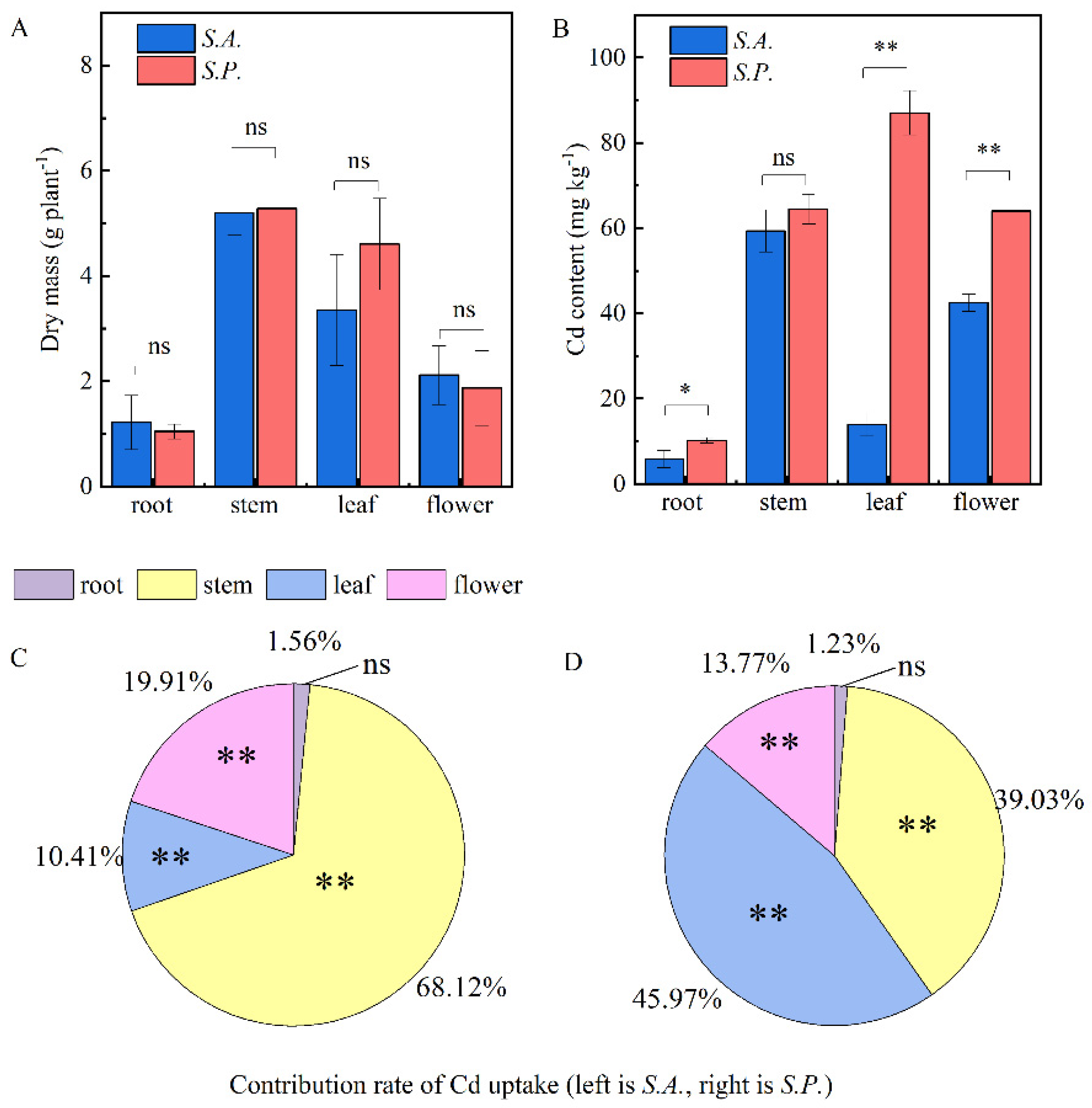
In the comparison of Cd content between S.A. and S.P over the two years, the Cd content in S.P. was significantly higher than that in S.A. To investigate the reasons for this difference, the dry matter and Cd content of roots, stems, leaves, and flowers were further analyzed (Figure 2). The results showed no significant differences in the dry biomass of roots, stems, leaves, and flowers. The Cd content in the stem was similar between the two Sedum species. However, the Cd content in the roots, leaves, and flowers of S.P. was significantly higher than that of the S.A, particularly in the leaves and flowers: i.e., the Cd content in the leaves and flowers of S.P. was 6.2 and 1.5 times higher than that of S.A., respectively. We further calculated the contribution rate of the Cd uptake by the different organs and discovered that the contribution rate of the Cd uptake by the root system of both Sedum species was the lowest, ranging from 1.23% to 1.56%. The stem had the highest contribution rate to Cd uptake in S.A. (68.13%), followed by the flower (19.91%), and the leaf (10.41%). For S.P., the organ with the highest contribution rate to the Cd uptake was the leaf (45.97%), followed by the stem (39.03%), and the flower (13.77%).
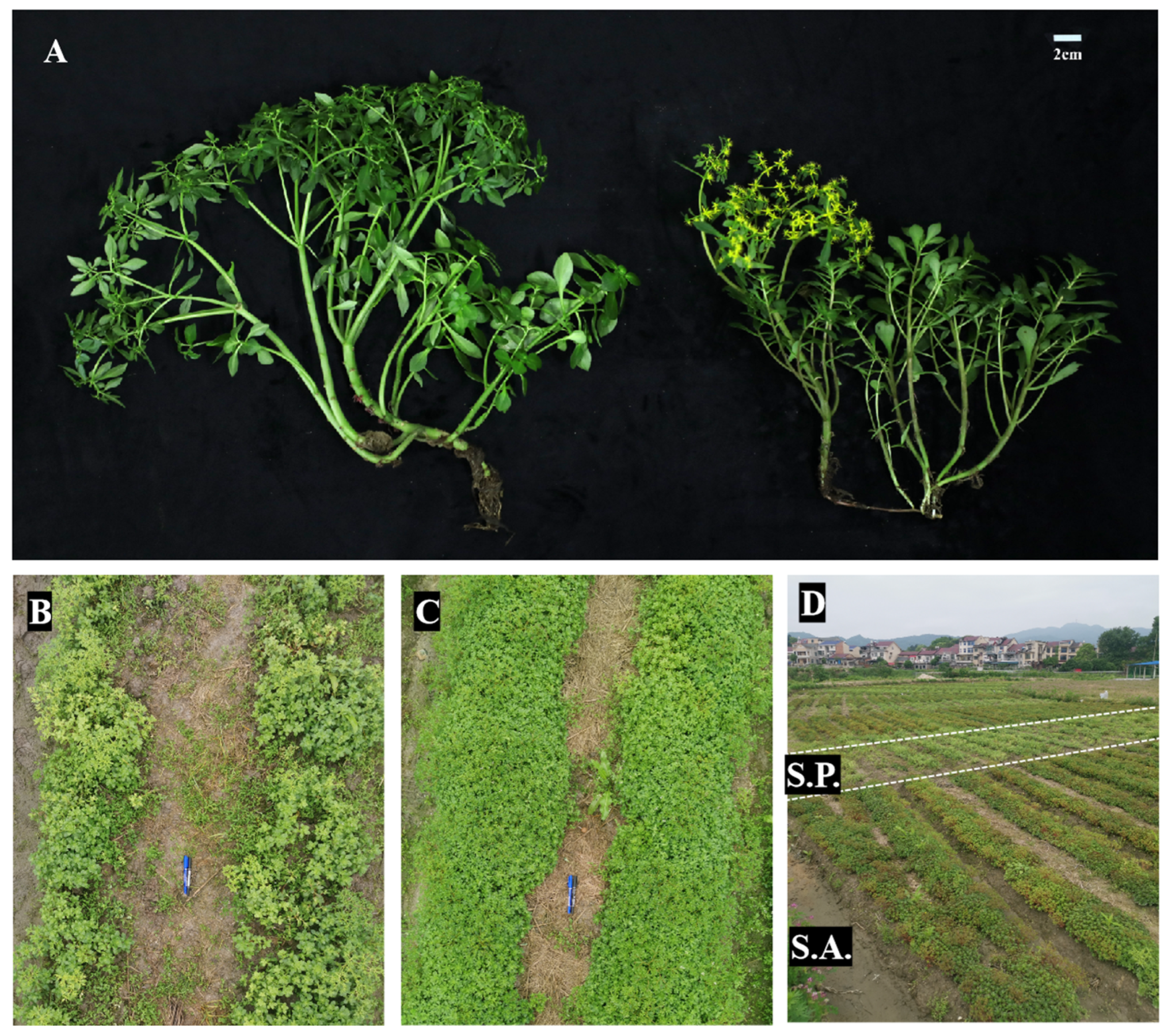
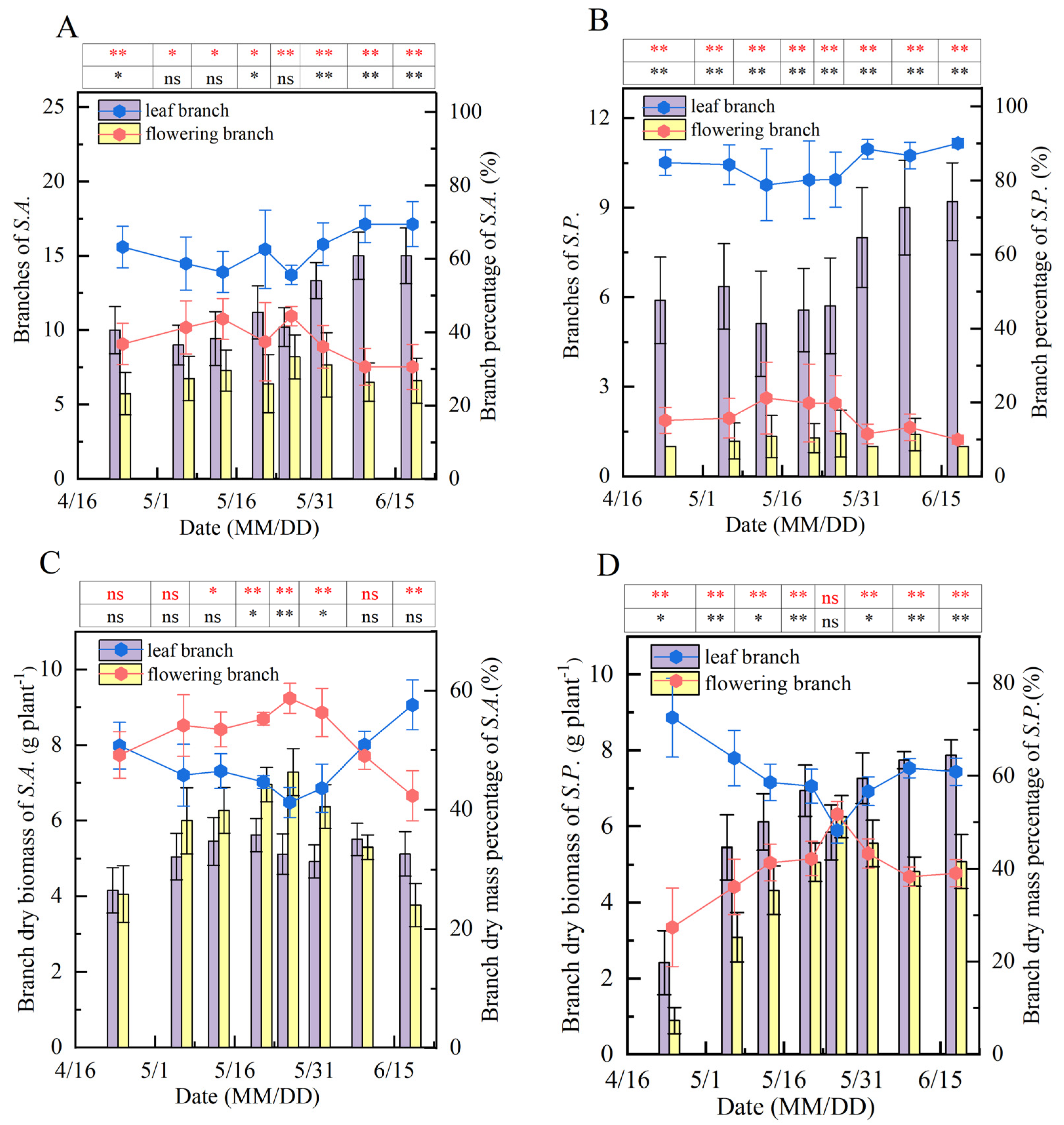
To investigate what caused the differences in Cd accumulation in the organs of the two Sedum species, the agronomic traits of the two Sedum plants were analyzed. As shown in Figure 2, there were no significant differences in the dry biomass and Cd content in the stem between S.A. and S.P., but the interspecific differences in the leaves and flowers were found to be significant. Meanwhile, the differentiation, attachment sites, and morphology of the flowering branches and leaf branches were all different between the two species. Under the cultivation condition of one season per year, the main stem of S.A. during the seedling stage was an erect stem with attached leaf branches, and a large number of cluster buds were differentiated from the base of the stem. After entering the vigorous growing stage, these buds gradually developed into leaf branches (mostly) and flowering branches (fewer). As branching increased, the main stem gradually became prostrate and developed adventitious roots (Figure 3A). The number of leaf branches gradually increased with plant growth and could reach more than ten. The number of flowering branches was usually fewer than that of leaf branches, and unlike leaf branches, the number of flowering branches did not increase after differentiation was completed. The difference in the number of flowering and leaf branches reached an extremely significant level with plant growth (Figure 4A–D). After entering the budding stage, the dry biomass of the leaf branches of S.A. gradually increased with plant growth and reached the maximum value at the end of flowering. Then, the leaves started to fall off until only the bare stems remained. This indicated that the shoot biomass of S.A. was the largest at the flower withering stage, which was the best time for harvesting.
Compared with the stoloniferous stem in S.A., the main stem of S.P. grew horizontally and was stronger (Figure 3A). However, affected by the folding characteristics of the fleshy stem, the main stem was often broken as the mass of the leaf branches increased, resulting in a significant reduction in the biomass and harvest index.
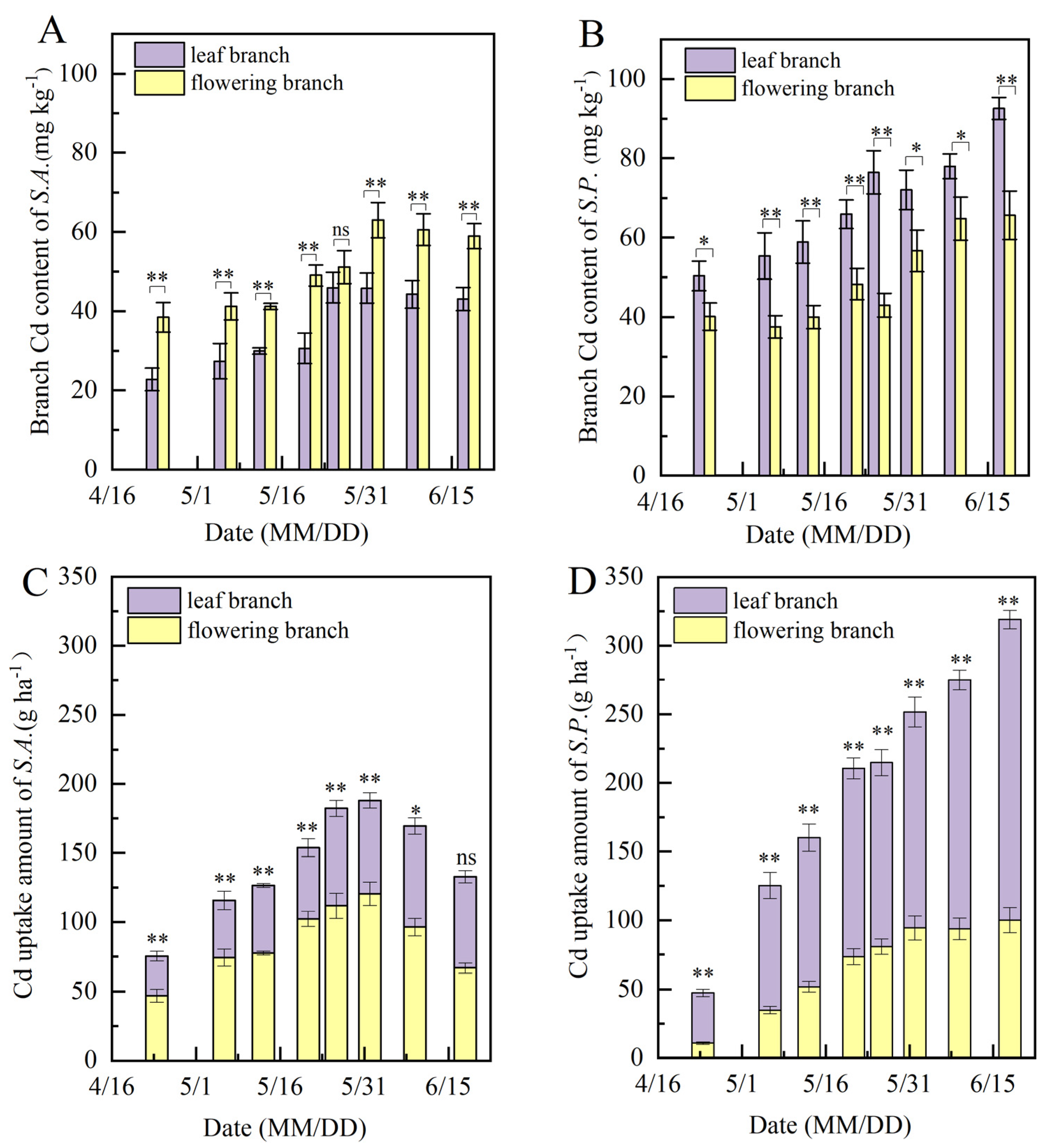
The top of the main stem differentiated into flowering branches (1–2 branches, no leaves), and the dry biomass of the flowering branches reached its maximum during the full flowering stage and then gradually decreased. From the flowering stage onward, the Cd content in the flower and leaf branches of both Sedum species gradually increased with the planting time (Figure 5). The Cd content of the flowering branches and leaf branches of S.A. reached their maximum values at the end of the flower withering and then tended to stabilize and no longer increase. Finally, the Cd content in the flowering branches of S.A. was 1.11–1.69 times higher than that in the leaf branches. However, the Cd content in the leaf branches of S.P. was 1.20–1.78 times that of the flowering branches. Further interspecific comparison showed that the Cd content in the leaf branches of S.P. was significantly higher than that of S.A. in the same sampling period.
As described above, the highest Cd accumulation occurred during the flower withering stage, which lasted for about ten days. In S.P., the Cd uptake amount and shoot biomass continued to increase during the flower withering stage, but the growth rate was slow. Thus, considering the maximum shoot biomass in S.A. and the time cost in S.P., the optimal harvest time for both species was during the flower withering stage (Figure 5).

3.4. Plant Yield, Cd Uptake Efficiency, and Bioconcentration Factors (BCF)

During the harvest period, the Cd content (71.82–82.04 mg kg−1) and BCF (85.17–109.39) of S.P. were significantly higher than those of S.A. (52.59–49.01 mg kg−1 and 62.36–66.41, respectively). Therefore, the theoretical yield of S.P. (3845.50–3887.59 kg ha−1) was higher than that of S.A. (3573.00–3719.46 kg ha−1), and likewise, the Cd uptake amount in S.P. (276.17–318.95 g ha−1) was also significantly higher than that of S.A. (187.89–182.30 g ha−1) (Table 3).
Two years of field cultivation experiments showed that S.A. had a strong stress tolerance, a high survival rate (92.61–95.21%), good plant growth, and a high yield. Compared with S.A., S.P. had weaker stress resistance: for example, due to excessive rainfall in winter and spring during the planting season, some S.P. seedlings showed water-soaked rot on the roots and stems, with wilted leaves, and in severe cases, the leaf stalks and even the entire plants rotted and withered. This resulted in a reduced survival rate (49.86% to 62.68%) and lower yield. Although S.P. had a high Cd content, due to the lower yield, the amount of Cd extracted (137.71–199.91 g ha−1) from the soil was significantly lower than the theoretical values (276.17–318.95 g ha−1). Among them, the measured Cd uptake rate of S.P. planted in the 2020–2021 season (137.71 g ha−1) was lower than that in the 2021–2022 season (199.91 g ha−1). This was because S.P. planted in 2020–2021 had a high survival rate (62.68%) and the highest plant Cd content in S.P. was planted in 2020–2021, resulting in the highest measured Cd removal rate. S.P. exhibited higher Cd accumulation efficiency and yield potential than S.A., indicating that it is more suitable for phytoremediation.

3.5. Transcriptomes of S.A. and S.P. Differentially Respond to Cd Stress

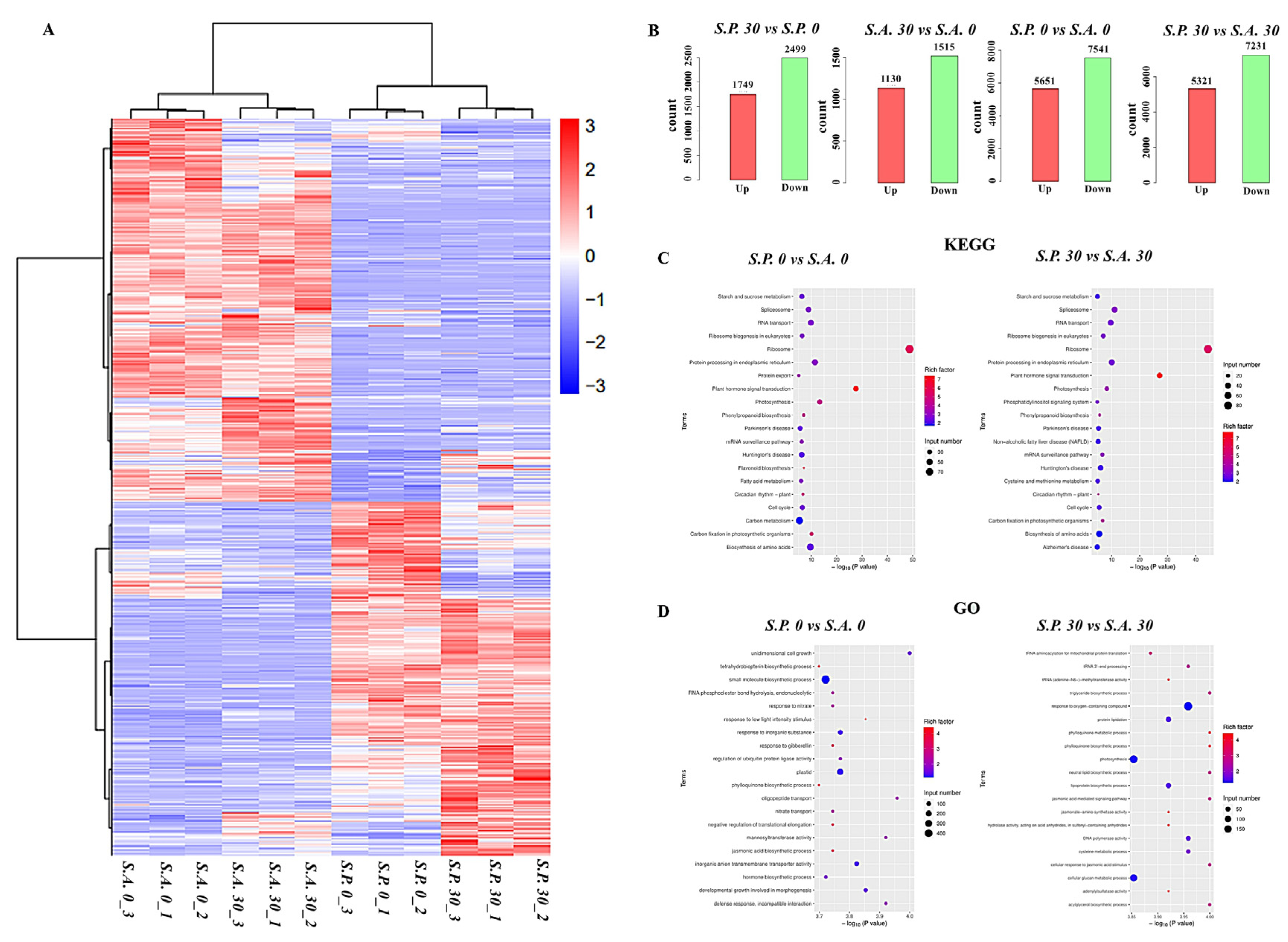
In the field assays, we have demonstrated that S.A. and S.P. showed different uptake characteristics and responses to Cd contamination, hinting that they might possess distinct mechanisms on the molecular level. Yet, few in-depth studies have been conducted to investigate the molecular basis conferring the Cd uptake and tolerance between S.A. and S.P. Therefore, the Cd-induced transcriptomes in S.A. and S.P. were compared in a hydroponic system, with or without cadmium chloride. As demonstrated by the data from RNA sequencing, the transcriptomes were well grouped and clearly separated (Figure 6A,B), validating the consistency of intragroup samples. A total number of 2645 and 4248 DEGs (differentially expressed genes) were induced by cadmium in S.A. and S.P., respectively. Interestingly, cadmium treatment upregulated 1130 genes and downregulated 1515 genes in S.A., while cadmium treatment upregulated 1749 genes and downregulated 2499 genes in S.P. (Figure 6B). The downregulated genes dramatically outnumbered the upregulated genes, both in S.A. and S.P., suggesting that a high dosage of cadmium posed negative effects on gene expression. Moreover, more DEGs were identified in S.P. compared to S.A. when under cadmium stress. It is speculated that the robustness of molecular responses in S.P. probably contributed to its higher tolerance and better growth performance in cadmium-contaminated soil.

4. Discussion

4.1. Phenological and Agronomic Responses

Phenology is a key indicator that reflects the dynamic changes in crop growth patterns and is directly related to yield [26]. In practice, scientific field management is often based on phenology. In this study, the growth stages of S.A. were about 20 days earlier than those of S.P. The rapid growth period of S.A. and S.P. started in late March and early April, respectively. To ensure sufficient nutrient supply during the vigorous growing stage of Sedum species, fertilizers should be applied before the start of the vigorous growing stage. At the flower withering stage, the biomass of S.A. and S.P. reached their maximum values, and then many of the leaves of S.A. began to fall off, leading to a reduction in the biomass, which was not the case for S.P. Therefore, from the perspective of yield, the best harvest time for S.A. is the beginning of the flower withering stage (mid-to-late May), and for S.P., it is the entire flower withering stage (early June).

4.2. Cd Uptake and Organ Distribution

The different growth patterns of the two Sedum species are the main reasons for the differences in the dynamic changes in Cd content in their shoots. The Cd content and uptake amount in the leaves of S.A. were significantly lower than those in the stems. During the vigorous growing stage, the stem–leaf ratio of S.A. was lower than that in the flowering stage, which led to a slow increase in Cd content during this period. However, in S.P., the Cd distribution ratio in the organs was less affected by phenology; thus, its Cd content continuously increased over the planting time and was less influenced by phenological changes. This result is consistent with a previous study [27]. However, Yin et al. (2019) [17] reported that the Cd content in the shoots of S.P. showed a low–high–low trend with growing, which is different from the results of this study. The two possible reasons are as follows. First, the Cd content in S.P. seedlings in that study was higher than 100 mg kg−1, but in the current study, the Cd content was less than 5 mg kg−1, and the Cd content of seedlings is negatively correlated with the Cd uptake amount of plants [22]. Secondly, in that study, the shading treatment was carried out in the late growth stage, with a reduced light intensity and photosynthetic rate, as well as a lowered transpiration rate and water use efficiency, leading to a significant decrease in Cd content in stems and leaves [16,19]. In contrast to [17], our study demonstrates that phytoremediation strategies should prioritize low-Cd seedlings to prevent secondary contamination upon their decay; additionally, moderately increasing transpiration proves effective in promoting plant Cd accumulation.
The Cd content in the leaves of S.P. was significantly higher than that in S.A. in this study. The dry biomass and Cd content in the roots of both Sedum species were much lower than those in the shoots, with the contribution of 1.23–1.56% in the roots and 98% in the shoots. However, the accumulation of Cd in different organs of the two Sedum species was greatly different, with the order of stem > flower > leaf > root in S.A., and the order of leaf > stem > flower > root in S.P. (Figure 2). Since Cd in S.A. is preferentially stored in young tissues [28], the stems and flowers with continuous growth were the priority for Cd storage and thus had a greater Cd uptake rate than the leaves. The Cd in S.P. is mainly stored in parenchyma cells, such as cortex in stem and mesophyll in leaf [29]. After entering the flowering stage, the dry biomass and Cd content of the leaf branches of S.P. continued to increase, and the continuous growth of stems and leaves provided more space for Cd storage. Therefore, it was inferred that promoting flowering branch differentiation and stem dry biomass accumulation in S.A., or promoting leaf branch differentiation and leaf dry biomass accumulation in S.P., through appropriate cultivation measures, could be an effective method to improve uptake efficiency in practice. At the same time, the high abundance of metallothionein-encoding genes in S.P. ensured the mobility of Cd ions, promoted long-distance transport, and increased the Cd tolerance [7,8,30].

4.3. Molecular Mechanisms

As two close relatives belonging to the same genus, both S.A. and S.P. have considerably high cadmium uptake efficiency and tolerance to cadmium. Previous studies have found that the expression levels of genes encoding metallothioneins (HMA2, HMA4, ZIPs, NRAMP3, YSLs, and MTL) in the leaves of S.P. were higher than those in S.A., indicating that S.P. is more effective for Cd storage and accumulation [31]. Similar findings were also observed in this study. By comparison of the gene expression profiles in S.A. and S.P. plants in the control group and cadmium-stressed group, thousands of differentially expressed genes were spotted. The most dramatic gene sets induced by cadmium were “ribosome”, “plant hormone and signaling system”, “biosynthesis of amino acids”, “carbon fixation in photosynthetic organisms”, “photosynthesis”, and “spliceosome”, etc., by KEGG analysis. Interestingly, the pathways termed “carbon fixation in photosynthetic organisms”, “photosynthesis”, and “spliceosome” were differentially impacted by cadmium in S.A. and S.P. In detail, “carbon fixation in photosynthetic organisms” and “photosynthesis” were less impacted in S.P., suggesting that S.P. plants probably had higher capacity and resilience to cadmium stress. Upregulated photosynthetic pathway genes in S.P. may underline their sustained biomass under Cd stress. By contrast, the “spliceosome” pathway showed a higher enrichment factor in S.P., highlighting a potential role of alternative splicing of mRNA in response to cadmium stress. By GO analysis, a tremendous distinction was found between S.A. and S.P., suggesting that S.A. and S.P. plants might deploy different biological processes to combat the cadmium stress.

4.4. Practical Implications and Limitations

In this study, both Sedum species were planted in the autumn, and their shoot biomass grew slowly during the winter and spring seedling stage, with growth mainly focusing on the roots. S.A. entered the vigorous growing stage earlier, which may indicate that S.A. roots earlier and sprouts earlier than S.P. in the early spring, and S.A. is better adapted to lower-temperature environments. Zhu et al. (2019) [9] studied the phytoremediation of hyperaccumulators S.A. and S.P. on Cd/Zn-contaminated soil and compared their effects. They found that the Cd content of S.P. was significantly higher than that of S.A., which is consistent with the results of this study. However, Zhu et al. (2019) [9] argued that S.P. exhibits a superior adaptability and growth performance compared with S.A. under field conditions. In contrast, in the present study, the survival rate of S.P. was only 49–62%, far lower than that of S.A. (over 90%, Figure 3). Therefore, although the theoretical yield and uptake values of S.P. were greater than those of S.A., the measured values were lower than those of S.A. Additionally, in Zhu et al.’s (2019) [9] study, when the yield was measured, S.A. had entered the late flower withering stage, and its leaves began to fall off and rot extensively, which resulted in low measured values for S.A. This once again proved that harvesting in the early period of the flower withering stage could ensure a higher shoot dry biomass and uptake efficiency of S.A. In addition, the fertilizer application was consistent for both Sedums in the current study, but these two Sedum species have different fertilizer requirements. Therefore, there were phenomena such as the main stem of S.P. being easily broken and S.A. declining in the late stage of the flower withering stage. Therefore, it is necessary to strengthen the research on the nutrient requirements of the two Sedums separately, and to supplement nitrogen, potassium, and other elements in a timely and appropriate manner, to increase the stem thickness of S. P. while improving its flexibility, and to delay the decline period of S. A.
In this study, the low survival rate of S.P. may be due to infection with Plectosphaerella cucumerina. After infection with Plectosphaerella cucumerina, the shoots and stems first showed water-soaked decay, leaf wilting, and finally, the petioles and even the entire plant rotted and withered, with a field incidence rate of 20–50% [32]. After surviving from the seedling stage, the rapid increase in the shoot biomass of S.P. could easily cause the breakage of the main stem, resulting in a lower harvest ability, and the wound caused by the main stem breakage could easily lead to pathogen invasion. High incidence of disease and easy breakage of the main stem were the main reasons for the low shoot biomass and Cd uptake rate of S.P. in this study. The higher Cd accumulation and theoretical yield in S.P. indicated that S.P. has a higher potential and effectiveness for Cd uptake and remediation than S.A. (Figure 1C, Table 3). Thus, its low survival rate and harvest coefficient are urgent problems that need to be addressed. For waterlogged soils, S.A. is not recommended for phytoremediation. Meanwhile, the planting density should be strictly controlled, and row and plant spacing shall be no less than 10 cm, Zhu et al. (2019) [9], so as to avoid the occurrence of diseases induced by excessive planting density. However, S.A. has fast rooting and a high survival rate, and is not susceptible to disease, suggesting that its adaptability and stress resistance are stronger than those of S.P. [33], and thus it requires further study.

5. Conclusions

S.A. exhibited a growth period that was approximately 20 days shorter than that of S.P. After flowering, the plants of both Sedum species began to senesce; therefore, harvesting at the flowering stage could maximize Cd removal efficiency. In S.A., the stem contributed more to Cd removal than the flowers and leaves, whereas in S.P., the leaf showed a greater contribution than the stem and flowers. In practical remediation applications, tailored cultivation strategies could be implemented to enhance biomass and Cd accumulation specifically in the stems of S.A. and the leaves of S.P., thereby improving overall Cd removal. Although the theoretical remediation efficiency of S.P. was higher than that of S.A., its field performance was often compromised by environmental stresses and susceptibility to diseases, which could impair remediation outcomes. In contrast, S.A. demonstrated a stronger stress tolerance and more consistent remediation performance. Therefore, the appropriate Sedum species should be selected based on specific environmental conditions in real-world remediation practices. In light of these findings, future research should focus not only on increasing plant biomass and Cd uptake, but also on enhancing stress resistance—through breeding or improved cultivation techniques—to ensure more reliable remediation effects.

Author Contributions

Conceptualization, J.C., Y.D. (Yanjiao Dai), H.J., and M.D.; Data curation, J.C., Y.D. (Yan Deng), X.C., and A.H.; Formal analysis, Y.D. (Yanjiao Dai); Investigation, Y.D. (Yan Deng); Methodology, Y.D. (Yanjiao Dai); Project administration, J.C. and M.D.; Resources, H.J.; Software, X.C.; Supervision, H.J. and M.D.; Writing—original draft, J.C. and Y.D. (Yanjiao Dai); Writing—review and editing, Y.D. (Yan Deng), X.C., A.H., H.J., and M.D. All authors have read and agreed to the published version of the manuscript.

Funding

This work was funded by the National Key Research and Development Program of China, grant number 2022YFD1700104-2, Research Project of Hunan Provincial Department of Ecology and Environment, grant number HBKT-202222, Hunan Provincial Science and Technology Talent Recruitment Project, grant number 2023TJ-N19, and Natural Science Foundation of Hunan Province, grant number 2022JJ40212.

Data Availability Statement

The original contributions presented in the study are included in the article; further inquiries can be directed to the corresponding authors.

Acknowledgments

During the preparation of this manuscript, the authors used DeepSeek-V3.2-Exp for the purposes of English language polishing. The authors have reviewed and edited the output and take full responsibility for the content of this publication.

Conflicts of Interest

The authors declare no conflicts of interest. The funders had no role in the design of the study; in the collection, analyses, or interpretation of data; in the writing of the manuscript; or in the decision to publish the results.

Abbreviations

The following abbreviations are used in this manuscript:
CdCadmium
S.A.Sedum alfredii
S.P.Sedum plumbizincicola
BCFBioconcentration factors

References

  1. Xin, J. Enhancing soil health to minimize cadmium accumulation in agro-products: The role of microorganisms, organic matter, and nutrients. Environ. Pollut. 2024, 348, 123890. [Google Scholar] [CrossRef] [PubMed]
  2. Chen, W.; Li, H. Cost-Effectiveness analysis for soil heavy metal contamination treatments. Water Air Soil Pollut. 2018, 229, 126. [Google Scholar] [CrossRef]
  3. Huang, R.; Dong, M.; Mao, P.; Zhuang, P.; Paz-Ferreiro, J.; Li, Y.; Li, Y.; Hu, X.; Netherway, P.; Li, Z. Evaluation of phytoremediation potential of five Cd (hyper) accumulators in two Cd contaminated soils. Sci. Total Environ. 2020, 721, 137581. [Google Scholar] [CrossRef]
  4. Huang, B.; Xin, J.; Dai, H.; Zhou, W. Effects of Interaction between cadmium (Cd) and selenium (Se) on grain yield and Cd and Se accumulation in a hybrid rice (Oryza sativa) system. J. Agric. Food Chem. 2017, 65, 9537–9546. [Google Scholar] [CrossRef] [PubMed]
  5. Zhou, Y.; Jiang, P.; Ding, Y.; Zhang, Y.; Yang, S.; Liu, X.; Cao, C.; Luo, G.; Ou, L. Deciphering the distinct associations of rhizospheric and endospheric microbiomes with capsicumplant pathological status. Microb. Ecol. 2025, 88, 1. [Google Scholar] [CrossRef] [PubMed]
  6. Zhu, X.; Tu, C.; Zhou, J.; Yang, S.; Li, Y.; Wu, L.; Newman, L.A.; Luo, Y. Cadmium phytoextraction by Sedum alfredii and Sedum plumbizincicola: Mechanisms, challenges and prospects. Int. J. Phytoremediation 2025, 27, 852–860. [Google Scholar] [CrossRef]
  7. Peng, J.; Yi, H.; Gong, J. Isolation and characterization of cadmium tolerant gene SpMT2 in the hyperaccumulator Sedum plumbizincicola. Chin. J. Biotechnol. 2020, 36, 541–548. [Google Scholar] [CrossRef]
  8. Peng, J.-S.; Din, G.; Meng, S.; Yi, H.-Y.; Gong, J.-M. Enhanced metal tolerance correlates with heterotypic variation in SpMTL, a metallothionein-like protein from the hyperaccumulator Sedum plumbizincicola. Plant Cell Environ. 2017, 40, 1368–1378. [Google Scholar] [CrossRef]
  9. Zhu, H.; Zhou, L.; Yang, F.; Liang, S.; Zhao, Q. Phytoremediation Effects and Contrast of Sedum alfredii and Sedum plumbizincicola on Cd/Zn Contaminated Soil. Ecol. Environ. Sci. 2019, 28, 403–410. [Google Scholar] [CrossRef]
  10. Zhou, T.; Zhu, D.; Wu, L.; Xing, W.; Luo, Y.; Christie, P. Repeated phytoextraction of metal contaminated calcareous soil by hyperaccumulator Sedum plumbizincicola. Int. J. Phytoremediation 2018, 20, 1243–1249. [Google Scholar] [CrossRef]
  11. Fan, Y.; Li, Z.; Zhou, T.; Zhou, S.; Wu, L.; Luo, Y.; Christie, P. Phytoextraction potential of soils highly polluted with cadmium using the cadmium/zinc hyperaccumulator Sedum plumbizincicola. Int. J. Phytoremediation 2019, 21, 733–741. [Google Scholar] [CrossRef] [PubMed]
  12. Bai, J.; Tan, C.; Cao, X.; Zhou, Q.; Huang, S.; Peng, X.; Deng, Y.; Sun, L. Effect of three organic acids on the remediation efficiency of Sedum plumbizincicola and soil microbial quantity. J. Soil Water Conserv. 2020, 34, 318–324. [Google Scholar] [CrossRef]
  13. Wang, P.; Rao, S.; Fang, J.; Lv, Y.; Zhao, A.; Ye, Z.; Fu, W. Organic materials could improve the phytoremediation efficiency of soil potentially hazardous metal by Sedum alfredii Hance. Phyton-Int. J. Exp. Bot. 2022, 91, 1529–1542. [Google Scholar] [CrossRef]
  14. Lu, Q.; Chen, S.; Li, Y.; Zheng, F.; He, B.; Gu, M. Exogenous abscisic acid (ABA) promotes cadmium (Cd) accumulation in Sedum alfredii Hance by regulating the expression of Cd stress response genes. Environ. Sci. Pollut. Res. 2020, 27, 8719–8731. [Google Scholar] [CrossRef]
  15. Chen, Z.; Liu, Q.; Chen, S.; Zhang, S.; Wang, M.; Munir, M.A.M.; Feng, Y.; He, Z.; Yang, X. Roles of exogenous plant growth regulators on phytoextraction of Cd/Pb/Zn by Sedum alfredii Hance in contaminated soils. Environ. Pollut. 2022, 293, 118510. [Google Scholar] [CrossRef]
  16. Chen, S.; Yan, K.; He, Y.; Zhan, F.; Zu, Y.; Li, Y.; Chen, J.; Li, B. Effect of shading on the accumulation characteristics of Cd, Pb and Zn of Sedum plumbizincicola. Chin. J. Eco-Agric. 2021, 30, 409–418. [Google Scholar] [CrossRef]
  17. Yin, Z.-Y.; He, J.-Q.; Qin, H.; Liu, D.-H.; Deng, L.; Chang, H.-W.; Gui, J.; Li, Z.; Zhou, T. Effect of film mulching on plant growth and cadmium uptake by Sedum plumbizincicola. J. Agro-Environ. Sci. 2019, 38, 1043–1050. [Google Scholar] [CrossRef]
  18. Chen, G.-H.; Zu, Y.-Q.; Zhan, F.-D.; Li, B.; Li, Y. Effects of passivators on the growth and cadmium accumulation of intercropped maize and Sedum plumbizincicola. J. Agro-Environ. Sci. 2019, 38, 2103–2110. [Google Scholar] [CrossRef]
  19. Guan, Y.-J.; Liu, H.-Y.; Sun, X.; Zhu, R.-F.; Zhao, J.; Zhang, Y.-B.; Wu, L.-H. Effects of intercropping on growth and Cd/Zn Uptake by Sedum plumbizincicola and Excoecaria cochinchinensis. J. Agro-Environ. Sci. 2021, 40, 347–354. [Google Scholar] [CrossRef]
  20. Li, X.; Zhu, Y.; Zhu, J.; Wang, P.; Tang, C.; Liu, Z. Remediation and micro-Ecological regulation of cadmium and arsenic co-contaminated soils by rotation of high-biomass crops and Sedum alfredii Hance: A field study. Sustainability 2022, 14, 5717. [Google Scholar] [CrossRef]
  21. Tong, W.; Cao, X.; Jiang, J.; Wang, X.; Liu, G.; Song, J.; Afsheen, Z.; Yang, X.E. Study on the remediation patterns of rotation or intercropping between hyperaccumulator Sedum alfredii and oil crops in cadmium and lead co-contaminated agricultural soils. J. Zhejiang Univ. (Agric. Life Sci.) 2021, 47, 212–222. [Google Scholar] [CrossRef]
  22. Dai, Y.; He, A.; Hu, Z.; Bai, L.; Zhao, S.; Nie, Y.; Chen, J. Study of quality grading standards on Sedum plumbizincicola seedlings for phytoremediation. J. Zhejiang Univ. (Agric. Life Sci.) 2022, 48, 473–482. [Google Scholar] [CrossRef]
  23. Young, M.D.; Wakefield, M.J.; Smyth, G.K.; Oshlack, A. Gene ontology analysis for RNA-seq: Accounting for selection bias. Genome Biol. 2010, 11, R14. [Google Scholar] [CrossRef]
  24. Mao, X.; Cai, T.; Olyarchuk, J.G.; Wei, L. Automated genome annotation and pathway identification using the KEGG Orthology (KO) as a controlled vocabulary. Bioinformatics 2005, 21, 3787–3793. [Google Scholar] [CrossRef]
  25. Kanehisa, M.; Araki, M.; Goto, S.; Hattori, M.; Hirakawa, M.; Itoh, M.; Katayama, T.; Kawashima, S.; Okuda, S.; Tokimatsu, T.; et al. KEGG for linking genomes to life and the environment. Nucleic Acids Res. 2008, 36, D480–D484. [Google Scholar] [CrossRef] [PubMed]
  26. Richardson, A.D.; Keenan, T.F.; Migliavacca, M.; Ryu, Y.; Sonnentag, O.; Toomey, M. Climate change, phenology, and phenological control of vegetation feedbacks to the climate system. Agric. For. Meteorol. 2013, 169, 156–173. [Google Scholar] [CrossRef]
  27. Song, W.; Wang, J.; Zhai, L.; Ge, L.; Hao, S.; Shi, L.; Lian, C.; Chen, C.; Shen, Z.; Chen, Y. A meta-analysis about the accumulation of heavy metals uptake by Sedum alfredii and Sedum plumbizincicola in contaminated soil. Int. J. Phytoremediation 2022, 24, 744–752. [Google Scholar] [CrossRef]
  28. Hu, Y.; Tian, S.; Foyer, C.H.; Hou, D.; Wang, H.; Zhou, W.; Liu, T.; Ge, J.; Lu, L.; Lin, X. Efficient phloem transport significantly remobilizes cadmium from old to young organs in a hyperaccumulator Sedum alfredii. J. Hazard. Mater. 2019, 365, 421–429. [Google Scholar] [CrossRef]
  29. Hu, P.; Wang, Y.; Przybyłowicz, W.J.; Li, Z.; Barnabas, A.; Wu, L.; Luo, Y.; Mesjasz-Przybyłowicz, J. Elemental distribution by cryo-micro-PIXE in the zinc and cadmium hyperaccumulator Sedum plumbizincicola grown naturally. Plant Soil 2015, 388, 267–282. [Google Scholar] [CrossRef]
  30. Zhang, P.; Zhang, S.; Zhang, Z.; Li, M.; Liu, Y.; Zhang, X.; Bai, N.; Ma, M.; Peng, J. SpHIPP45 gene from Sedum plumbizincicola specically mediates cadmium tolerance. Plant Physiol. J. 2022, 58, 1346–1352. [Google Scholar] [CrossRef]
  31. Peng, J.-S.; Wang, Y.-J.; Ding, G.; Ma, H.-L.; Zhang, Y.-J.; Gong, J.-M. A pivotal role of cell wall in cadmium accumulation in the crassulaceae hyperaccumulator Sedum plumbizincicola. Mol. Plant 2017, 10, 771–774. [Google Scholar] [CrossRef] [PubMed]
  32. Chen, J.; Zhong, J.; He, A.G.; Ji, X.H.; Hu, Z.X.; Dai, Y.J. First report of Sedum plumbizincicola wilt caused by Plectosphaerella cucumerina in China. Plant Dis. 2020, 104, 287. [Google Scholar] [CrossRef]
  33. Dai, Y.; Chen, J.; Mao, Y.; Jiang, H.; Zhao, W.; Peng, J.; Li, R.; Wang, Y.; Guo, P.; Zhang, M.; et al. Lipid-mediated photoprotection confers strong light resilience in hyperaccumulator Sedum alfredii. Plant Sci. 2025, 360, 112688. [Google Scholar] [CrossRef] [PubMed]
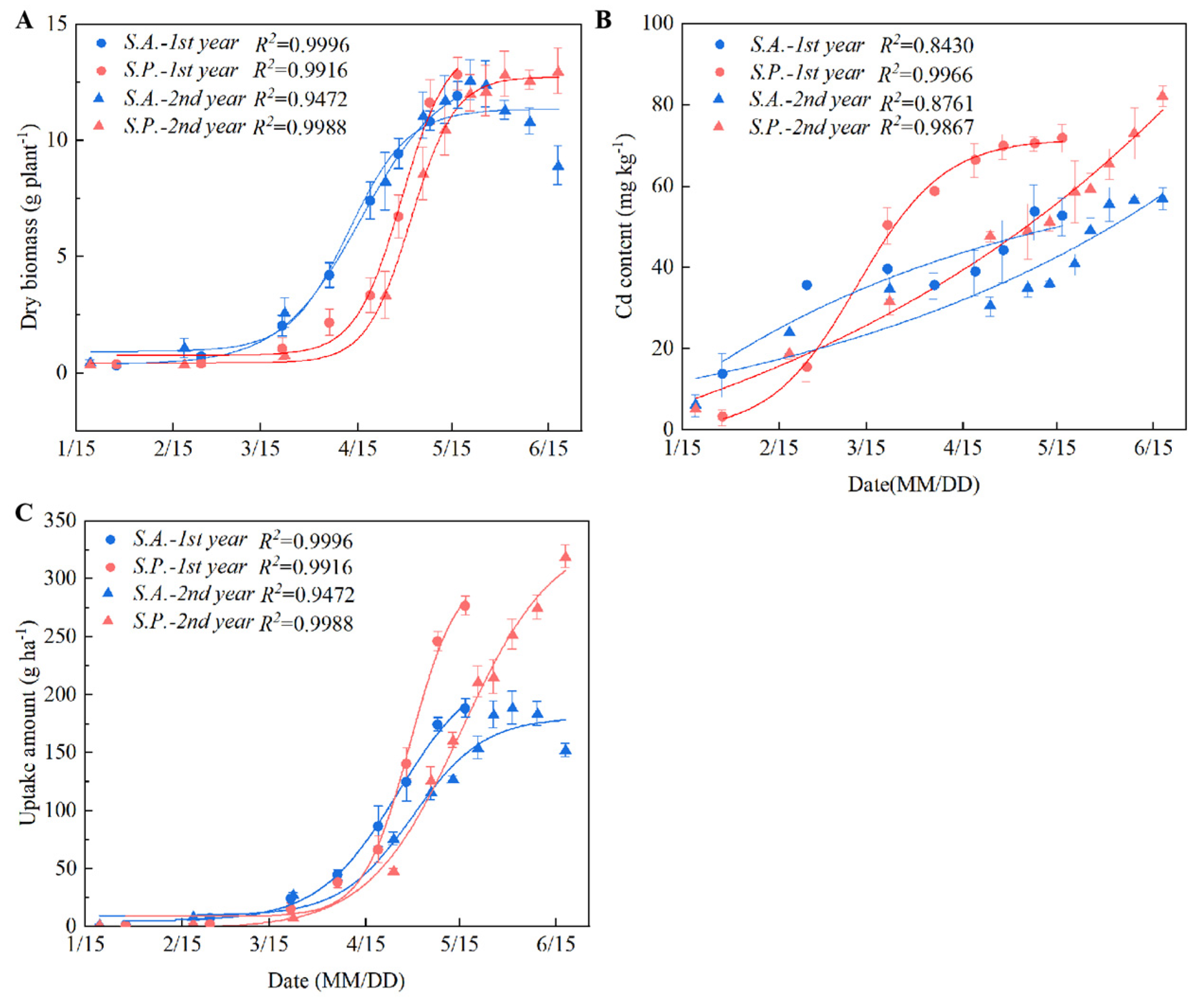
Figure 1. Dynamics of shoots dry biomass (A), Cd content (B), and uptake amount (C), with planting time. The bars indicate the standard error of the mean. Logistic equations were used to fit the dry biomass, Cd content, and uptake amount of Sedum (p-value is 0.05, n ≥ 24 in the first year and n ≥ 33 in the second year). In the plots, blue and red represent S.A. and S.P., respectively, while circles and triangles denote the first and second year of the experiment.
Agronomy 15 02595 g001
Figure 2. Dry biomass, Cd content, and contribution rate of Cd uptake in different organs. Histogram (A), dry biomass of each organ of the two Sedum species; histogram (B), Cd content of each organ of the two Sedum species; pie chart (C), contribution rate of Cd uptake in S.A.; pie chart (D), contribution rate of Cd uptake in S.P. The bars indicate the standard error of the mean. *, **, and ns indicate significant, highly significant, and no significant differences between species in the histogram. **, and ns indicate highly significant, and no significant differences among organs in the pie chart.
Agronomy 15 02595 g002
Figure 3. Morphology comparison of Sedum plants between the two species and their growth in the field. The left side is S.P. and the right side is S.A., in figure (A). Figure (B) and (C) are S.A. and S.P., respectively. Figure (D) illustrates the flowering stage, where S.P. and S.A. are cultivated. Notably, S.A. exhibits more vigorous growth.
Agronomy 15 02595 g003
Figure 4. Branch development comparison of Sedum plants between the two species. Bar chart is left axis, dotted line chart is right axis. The bars indicate the standard error of the mean. The symbols in the table above each figure indicate statistical differences at the t-test level, where the upper row represents the differences for the line graph and the lower row denotes those for the bar graph. *, **, and ns indicate significant, highly significant, and no significant differences between leaf branches and flowering branches.
Agronomy 15 02595 g004
Figure 5. Cd content (A,B) and uptake amount (C,D) in leaf branches and flowering branches. The bars indicate the standard error of the mean. *, **, and ns indicate significant, highly significant, and no significant differences between leaf branches and flowering branches.
Agronomy 15 02595 g005
Figure 6. Comparative analysis of differentially expressed genes (DEGs) of S.P. and S.A. grown in cadmium-free and cadmium-contaminated hydroponic media for 0 and 30 d. (A). Heatmap of the gene expression value (FPKM). (B). Number of differences in gene expression. KEGG (C) and GO (D) term enrichment analyses of differentially expressed genes between S.P. and S.A.
Agronomy 15 02595 g006
Table 1. Basic properties of soil in test plot.
YearpHTotal Cadmium
mg kg−1
Effective Cadmium
mg kg−1
Total Nitrogen
g kg−1
Total Phosphorus
g kg−1
Total Potassium
g kg−1
Alkaline Nitrogen
mg kg−1
Available Phosphorus
mg kg−1
Available Potassium
mg kg−1
Organic Matter
g kg−1
1st year5.00.840.422.230.8035.20184.2523.13120.2538.53
2nd year4.90.750.382.310.7031.13156.6730.53102.6739.37
Table 2. Phenological stages and timing of growth phases in S.A. and S.P.
SedumSeedling StageVigorous Growing StageBudding StageFlowering Stage
Initial Flowering StageFull
Flowering Stage
Terminal Flowering Stage
S.A.Transplanting date-20 February20 February–15 May5 April–20 April21 April–25 April26 April–6 May6 May–25 May
S.P.Transplanting date-20 March5 April–20 May25 April–10 May11 May–14 May15 May–25 May26 May–15 June
Table 3. Inter-annual remediation effects analysis between S.A. and S.P.
YearSedumCd Content
(mg kg−1)
BCFYield (kg ha−1)Uptake Amount (g ha−1)
Theoretical ValueMeasured ValueTheoretical ValueMeasured Value
2020–2021S.A.52.59 b62.36 b3573.00 b3308.94 a187.89 b174.00 a
S.P.71.82 a85.17 a3845.50 a1917.54 b276.17 a137.71 b
2021–2022S.A.49.01 b66.41 b3719.46 a3541.46 a182.30 b173.58 a
S.P.82.04 a109.39 a3887.59 a2436.65 b318.95 a199.91 a
The different letters in the same column indicate the significant differences between varieties within the same year at p < 0.05.
Disclaimer/Publisher’s Note: The statements, opinions and data contained in all publications are solely those of the individual author(s) and contributor(s) and not of MDPI and/or the editor(s). MDPI and/or the editor(s) disclaim responsibility for any injury to people or property resulting from any ideas, methods, instructions or products referred to in the content.